



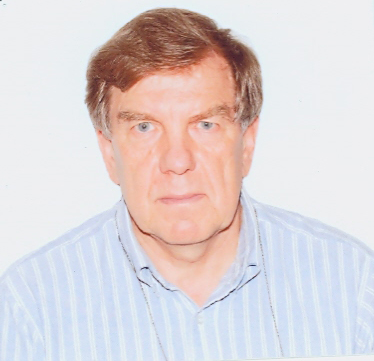
Alexander S. Lipatov
Senior Research Scientist · Non-Tenure Track
Goddard Planetary Heliophysics Institute
About
Alexander S. Lipatov born in Moscow, Russia. He obtained his
Engineer-Physicist in Aerodynamics and Thermodynamics (MS, 1969) and Candidate of Sciences degree in Plasma Physics (PhD, 1972) from Faculty of Aerophysics and Applied Mathematics, Moscow Institute of Physics and Technology (State University).
In 1988 he obtained his Doctor of Sciences degree in Theoretical and Mathematical Physics from Space Research Institute USSR/Russian Academy of Sciences (IKI RAS). In 1995 he has been awarded the scientific title “Professor of Space Physics” from the Russian State Committee for Higher Education. He worked in IKI for more than 24 years, starting as research scientist and finishing as Professor/Lead Scientist. He also worked for more than 23 year as Professor at the Faculty of Problems of Physics and Power Engineering, Moscow Institute of Physics and Technology (State University). During 1990-1993 he fulfilled duties of Deputy Head at the Affiliated Chair (Department) “Space Physics” at the above University. The Chair is based at IKI RAS and at that time involved two specializations: “Space Physics” and “Computational Physics”.
His research in collaboration with academicians, Profs. D.Sci.’s R.Z. Sagdeev,
A.A. Galeev, and L.M. Zelenyi included a global hybrid–drift-kinetic–multifluid multiscale modeling of the interaction of the solar wind with magnetosphere of the Earth, Moon,
Venus, comets and extra-solar planets. He had also performed a hybrid/fully kinetic simulation of wave-particle interactions at the front of collisionless shocks and in the plasma systems with reversed magnetic field configuration.
Since 1992 he occupied long term visiting Professor positions in the USA, Germany and Canada.
He worked more than 17 years as a Senior Scientist at GPHI/GEST UMBC (673) in a collaboration with Drs. E.C. Sittler, J.F. Cooper, R.E. Hartle, M. Sarantos, B. Giles, D. Gershman, and L. Avanov, and his duty was a 3D hybrid-kinetic simulation of the plasma environment near Titan, Europa, Moon, the Solar Probe Plus, and Magnetospheric Multiscale mission.
Research interests
My basic research interests concern numerical simulation
in astrophysical and laboratory plasmas:
(a) Global multidimensional multiscale hybrid (fluid-kinetic)
simulation of the interaction of the solar wind
with the magnetosphere of the planets - the Earth, moons,
Venus, Mars, comets, etc.
(b) Hybrid/kinetic multiscale simulation of turbulent processes, particle heating and acceleration at the front of
collisionless shocks and magnetic field reconnection in the plasma systems with reversed magnetic field
configuration with application to solar flares, magnetosphere of the planets, bow shocks, interplanetary shocks and the termination shock.
(c) Hybrid simulation of the (plasma and dust) beam propagation in space plasma.
(d) Boltzmann simulation of the interaction of atoms
from the local interstellar medium with the heliosphere (including charge exchange and photoionization processes).
(e) Kinetic modeling of the background plasma-spacecraft interaction.
(g) Multiple blast waves from distributed charges in geo-space plasmas.
Teaching interests
For more than 20 years Prof. D.Sc. A.S. Lipatov worked
in Moscow Institute of Physics and Technology (State University) at the Chair "Space Physics" which is located in Space Research Institute USSR/Russian Academy of Sciences (IKI RAS). In particular, he taught the following courses for
undergraduate and graduate students:
"Numerical Methods for Space Research" (1973 - 1979),
"Introduction to Computational Physics" (1980 - 1993),
"Numerical Methods for Space and Plasma Physics (1994-1996). These courses (I-III) (64 academic hours) included an introduction to the theory of numerical schemes,
numerical methods in magnetohydrodynamics, numerical methods in plasma physics and applications of these methods to the investigation of MHD and kinetic processes in space plasma systems: planetary magnetospheres, nonmagnetic planets and comets, heating and acceleration of particle at
collisionless shocks, heating and acceleration of particle under
magnetic field reconnection in neutral current layers (magnetotails), and generation of waves by beam and pickup ions in an inhomogeneous background.
The seminars (32 academic hours) included the study of details of simulation processes and computer training (simulation of relatively simple problems). The problems were solved in the following steps: formulation of the physical
phenomenon, development of a mathematical model, discrete model, numerical algorithm, design of a computer experiment, and diagnostic of simulation results.
In both the Lectures and Seminars Prof. D.Sc. A.S. Lipatov has used recent publications from internationally recognized
journals: J. Geophysical Research,
Geophysical Research Letters, Space Sci. Review,
Planetary and Space Science, Physical Research Letters,
Physics of Fluids, Plasma Physics, J. Computational Physics},
Computer Physics Communications,
and textbooks: L.A. Artsymovich and R.Z. Sagdeev "Plasma Physics for Physicists (1976); F.F. Chen "Introduction to Plasma Physics and Controlled Fusion;
R.W. Hockney and J.W. Eastwood, " Computer Simulation Using Particles" (1881) (he was a translator of this textbook into Russian (1987)); C.K. Birdsall and A.B. Langdon "Plasma Physics via Computer Simulation" (1985);
"Multiple Time Scale', ed. J.U. Brackbill and B.I. Cohen (1985);
T. Tajima "Computational Plasma Physics: With Applications to Fusion and Astrophysics" (1988); "Computer Space Plasma Physics: Simulation Techniques and Software", ed. H. Matsumoto and Y. Omura (1993);
A.A. Samarskii "Introduction to the theory of finite-difference
schemes" (1973), G.I. Marchuk "Introduction to the Computational Mathematics" (1973);
S.K. Godunov and V.S. Ryabenkii {it Finite-difference schemes} (1973); A.S. Lipatov "The Hybrid Multiscale Simulation Technology. An Introduction with Application to Astrophysical and Laboratory Plasmas", Springer-Verlag, Berlin, Heidelberg, New York, 2002 (PP. 1-403).
Administrative Duty
From the beginning of Jan. 1990 until August 1993 A.S. Lipatov occupied the position of Deputy Head of Basic Speciality (chair, subfaculty) "Space Physics" (including the "Space Physics" and "Computational Physics" basic
specialities). These duties included all kinds of problems associated with the activity of the Basic Chair: preparation of lecture and seminar schedules, allocation of teaching loads (lectures, seminars and graduated students) among
professors, attestation of scientific work to graduated students (each semester), selection of claimants (candidates) to student after exams, and the organization and conducting of the regular meetings of the members of the Chair. A.S. Lipatov participated (together with Head of Speciality - Director
IKI RAS, Prof. A.A. Galeev) in the development of a strategy for training specialists in Physics and Applied Mathematics in collaboration with Heads of other Specialities, Dean and Rector of the Moscow Institute of Physics and Technology.
MS theses supervised
Victor A. Lobachev (now in the USA)
Andrei Kovtun
Andrei Malgichev (now in the USA)
Igor N. Syrovatskii
Julya Krasheninnikova
PhD theses advised
(in collaboration with R.Z. Sagdeev, A.A. Galeev, V.D. Shapiro
and V.I. Shevchenko in part of computer simulations)
Alexander P. Kirpichnikov
Iskander U. Yusupov
Alexander L. Taktakisvili (now in the UMBC/NASA GSFC, aleksandre.taktakishvili-1@nasa.gov)
A.S. Lipatov has been involved in consulting of the following PhD students during his Professorships: Horsten Bagdonat, Alexander Bosswetter, Joachim Muller (adviser Prof. Dr. Uwe Motschmann, Univ. of Braunschweig, Germany);
Ludmila Vshivkova ( adviser Prof. Robert Rankin, Dept. of Physics, Univ. Alberta, Canada).
Education
- Other, Space Plasma Physics/Theoretical and Mathematical Physics — Moscow Institute for Physics and Technology (State Universtity) (1995)
-
Other, Theoretical and Mathematical Physics
— Space Research Institute USSR/Russian Academy of Sciences (1988) ``Numerical Simulation of Plasma Processes under the Interaction of the Solar Wind with Planetary Magnetospheres",
-
Ph D, Plasma Physics
— Moscow Institute of Physics and Technology (1972) "Propagation of hydromagnetic waves in the three-dimensional model of magnetosphere"
-
Other, Aerodynamics and Thermodynamics
— Moscow Institute of Physics and Technology (1969) Two-Phase Flows ....
Publications
- Effects of multiscale phase-mixing and interior conductance in the lunar-like pickup ion plasma wake. First results from 3-D hybrid kinetic modeling 2018
- Global effects of the transmitted interplanetary shock wave propagation through the Earth's inner magnetosphere: First results from 3-D hybrid kinetic modeling 2016
- 3D hybrid modeling of the plasma environment near Titan for T5 encounter 2012
- Jovian plasma torus interaction with Europa. E12 pass: 3D hybrid kinetic modeling 2012
- The heavy ($Na^+$) and light ($He^+$, $H_2^+$, $H^+$) pickup ion dynamics near the moon: 3D hybrid modeling 2012
- Nonlinear Magnetic Field Line Resonances. Effect of Hall Term on Plasma Compression: 1D Hall-MHD Modeling 2009
- The Interaction of the Neutral Interstellar Component with the Heliosphere 2000
- The Interaction of Heavy Interstellar Atoms with the Heliosphere 1999
- Interaction of the Solar Wind with the Local Interstellar Medium 1998
- The Acceleration of Pickup Ions at Shock Waves: Test Particle-Mesh Simulations 1998
- The Interaction of Neutral Interstellar H with the Heliosphere: A 2.5D Particle-Mesh Boltzmann Simulation 1998
- 2.5-D hybrid code simulation of the solar wind interaction with weak comets and related objects 1997
- Solar Wind-Pluto Interaction Revised 1997
- 3-D and 2.5-D hybrid multiscale simulation technology: application to study of forced nonstationary processes at tangential discontinuities 1996
- Numerical Kinetic Simulation of the One-dimensional Structure of Oblique and Quasi-Perpendicular Collisionless Shocks 1996
- Hybrid simulation of comet Shoemaker-Levy 9 interaction with Jovian bow shock 1994
- Hybrid simulation of whistler waves generation and current closure by a pulsed tether in the ionosphere 1994
- Numerical simulation of the one-dimensional structure of a quasiperpendicular collisionless shock 1994
- One- and two-dimensional hybrid simulation of tangential discontinuities 1994
- Two-dimensional hybrid simulation of whistler and Alfv'en wave generated by plasma beams in tangential discontinuities 1994
- Numerical simulation of the bow shocks near comets and planets 1993
- Numerical simulation of whistler formation at the front of the collisionless shocks 1992
- Numerical simulation of the structure of oblique collisionless shocks including electron inertia 1991
- Numerical simulation of two-dimensional structure of oblique Earth's bow shock. 1. The calculation of the shock structure 1991
- Particle heating and acceleration by collisionless shocks 1991
- Numerical simulation of the structure of collisionless supercritical shocks 1990
- Numerical simulation of the interaction of solar wind with comets 1989
- Numerical simulation of the cometary shocks waves 1988
- Numerical Simulation of Plasma Processes under the Interaction of the Solar Wind with Planetary Magnetospheres 1987
- Numerical modeling of circumcometary quasiparallel shocks 1987
- Numerical simulation of quasiparallel cometary shocks 1987
- Two-dimensional numerical simulation of the relaxation of cometary ions and MHD turbulence in the flow of the Solar wind around a cometary atmosphere 1987
- Two-dimensional numerical simulation of the structure of a quasiperpendicular shock wave near the Earth and electron acceleration 1987
- Numerical modeling of the interaction of the solar wind with cometary plasma 1985
- Numerical simulation of shock waves near comets: structural features and energy dissipation mechanisms 1985
- Numerical Simulation of the Explosion Growth of Magnetic Island and Particle Acceleration 1985
- Plasma processes in cometary atmospheres 1984
- The dynamics of the energetic proton bursts in the course of the magnetic field topology reconstruction in the Earth's magnetotail 1984
- Particle acceleration during the development of a tearing instability 1982
- The study of magnetic islands dynamics 1982
- Dynamics of magnetic field reconnection in a neutral sheet as an Alfv'en pulse passes 1979
- Numerical investigation of the collapse of Langmuir waves in a magnetic field 1977
- Numerical simulation of the effects of the magnetic field induced by plasma flow past nonmagnetic planets 1976
- Three-dimensional structure of the plasma wake of the Moon 1976
- Hydromagnetic wave propagation in a three-dimensional magnetosphere.II. 1974
- Method "Guiding Center in Cell" in the three-dimensional nonstationary problem on Interaction of the solar wind plasma with conducting model of the Moon 1974
- Numerical investigation of the structure 3D MHD wave generated by the oscilation of the boundary of the magnetosphere (in russian) 1972
- Some characteristics of magnetic dipole emission in a plasma with finite conductivity 1972
- Three-dimensional hydromagnetic disturbances generated by a magnetic dipole in an anisotropic plasma 1972
- Questions of propagation of the MHD waves inside the magnetosphere of the Earth (in russian) 1971
- 3-D hybrid kinetic modeling of the interaction between the solar wind and lunar-like exospheric pickup ions in case of oblique/quasi-parallel/parallel upstream magnetic field
- Deformation and disintegration of liquid droplets in a gas flow
Presentations
- Effects of transmitted interplanetary impulse interaction with plasmaspheric plume: First results from 3-D hybrid kinetic modeling 2018
- Hybrid fluid-kinetic model for transmitted shock in the inner magnetosphere 2017
- Hybrid kinetic modeling of shocks in astrophysical and laboratory plasmas: PIC vs CPK vs CPK/FMM(SFK) concepts 2017
- Global Effects of the Interplanetary Shock Propagation through the Earth's Inner Magnetosphere: 3D hybrid kinetic modeling 2015
- Hybrid kinetic modeling of the inner magnetosphere 2015
Grants and Contracts
- IRAD NASA GSFC 2018
- Van AllenM Probes Mission 2017
- Lunar Pickup Ions: Exospheric or Surface Orgin? 2017
- Interaction between shock waves and inner magnetosphere. Hybrid kinetic modeling 2015
- Interaction between the solar wind and lunar-like object. Hybrid kinetic modeling 2014
- NASA ``Van Allen Probes Project"
Research in Progress
- Global effects of the interplanetary shock wave propagation through the Earth's inner magnetosphere: 3-D hybrid kinetic modeling, 2015
- Hybrid kinetic modeling of the interaction between shocks and plasmasphere and radiation belts 2015
- Hybrid kinetic modeling of the interaction between the Moon and the solar wind 2014