



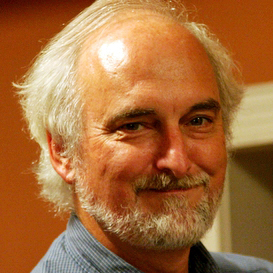
Professor Tim W. Finin
Research Professor · Non-Tenure Track
Department of Computer Science and Electrical Engineering
College of Engineering and Information Technology
He/Him/His/Himself
About
Tim Finin has over 50 years of experience in applying artificial intelligence to problems in information systems and language understanding. His current research is focused on representing and reasoning with knowledge graphs, analyzing and extracting information from text, and enhancing security and privacy in information systems. He is an ACM fellow, a AAAI fellow, an IEEE technical achievement award recipient, and was selected as the UMBC Presidential Research Professor in 2012. He received an S.B. degree in Electrical Engineering from MIT and a Ph.D. degree in Computer Science from the University of Illinois at Urbana-Champaign. He has held positions at UMBC, Unisys, the University of Pennsylvania, Johns Hopkins University, and the MIT AI Laboratory. He is currently a Research Professor at UMBC and is the director of the UMBC Center for Artificial Intelligence.
Research interests
Artificial intelligence (AI), machine learning, knowledge graph technology, multiagent systems, natural language processing (NLP), computational linguistics, knowledge and database systems, applications involving cybersecurity, social media, mobile and pervasive computing
Teaching interests
Artificial intelligence, language understanding, knowledge graphs, cybersecurity
Education
-
Ph D, Computer Science
— University of Illinois at Urbana Champaign (1980) The Semantic Interpretation of Compound Nominals
-
MS, Computer Science
— University of Illinois at Urbana Champaign (1977) An Interpreter and Compiler for Augmented Transition Networks
-
BS, Electrical Engineering
— Massachusetts Institute of Technology (1971) Three Problems in Analyzing Scenes
Publications
- Knowledge Graph-driven Tabular Data Discovery from Scientific Documents 2023
- PrivacyLens: A Framework to Collect and Analyze the Landscape of Past, Present, and Future Smart Device Privacy Policies, 2023
- Quantum-Assisted Greedy Algorithms 2022
- Delegated Authorization Framework for EHR Services using Attribute Based Encryption 2021
- Creating cybersecurity knowledge graphs from malware after action reports 2020
- Fine and Ultra-Fine Entity Type Embeddings for Question Answering 2020
- Knowledge Graph Fact Prediction via Knowledge-Enriched Tensor Factorization 2019
- Delegated Authorization Framework for EHR Services using Attribute Based Encryption 2019
- Cyber-Security at the Grassroots: American Local Governments and the Challenges of Internet Security 2018
- Modeling the Evolution of Climate Change Assessment Research Using Dynamic Topic Models and Cross-Domain Divergence Maps 2017
- Thinking Fast, Thinking Slow! Combining Knowledge Graphs and Vector Spaces 2017
- Automating Cloud Services Lifecycle through Semantic Technologies 2014
- Detecting data exfiltration by integrating information across layers 2013
- A policy-based cloud broker for the VCL platform 2013
- ACM HotMobile 2013 poster: an energy efficient semanticcontext model for managing privacy on smartphones 2013
- CAST: Context-Aware Security and Trust framework for MobileAd-hoc Networks using policies 2013
- Comparing and Evaluating Semantic Data Automatically Extracted from Text 2013
- Extracting Cybersecurity Related Linked Data from Text 2013
- Improving Word Similarity by Augmenting PMI with Estimatesof Word Polysemy 2013
- Semantic Message Passing for Generating Linked Data fromTables 2013
- Quantum Annealing based Binary Compressive Sensing
- LINT: Knowledge Graph Embeddings using Linear Tensor Factorization
- Tensor Based Inference in Knowledge Graphs
- T-Rho: Let's grow Multi-Dimensional Data
- Extending Multi-relational Data Coverage with Tensor Decomposition
Presentations
- After 75 Years of AI, Can Machines Think? 2024
- What generative AI systems know about cybersecurity 2023
- Evaluating what generative AI systems know about cybersecurity 2023
- Constructing and Using Knowledge Graphs for Cybersecurity 2020
- From Strings to Things: Populating Knowledge Bases from Text 2016
- Semantics for Big Data (,) Security and Privacy 2014
Grants and Contracts
- Digital Twin for Wildfire Worldwide 2025
- Workshop on Human-Machine Integrated Formations 2024
- Optimizing Knowledge Graph Reasoning for High-Performance Computing Environments 2023
- Collaborative Research: EAGER SaTC-EDU: Artificial Intelligence and Cybersecurity: From Research to the Classroom 2021
- OnRamp II Research: 2020
- ONRAMMP II 2020
- Life-cycle Management of Shop-Floor-to-Top-Floor Manufacturing Services 2020
- Beyond Watson 2018
- IPA Agreement 2016
- Systematically boosting clinical impact of linked open data in genetic medicine 2016
- Beyond Watson Research Support 2015
- Ensuring Secure Cloud Services using Policy-based Approaches 2015
- Semantic Modeling for Smart Manufacturing Architecture and Solution Stack 2014
- Semantic Modeling for Smart Manufacturing Architecture and Solution Stack 2014
- EarthCube Building Blocks: Collaborative Proposal: GeoLink - Leveraging Semantics and Linked Data for Data Sharing and Discovery in the Geosciences 2014
- Semantic Open Information Extraction for RFPs 2014
- Situational Awareness for Cybersecurity -- Cloud Security and Service Agreements 2014
- EAGER: Collaborative Research: EarthCube Building Blocks, Leveraging Semantics and Linked Data for Geoscience Data Sharing and Discovery 2013
- TWC: Medium: Collaborative Proposal: Policy Complaint In 2012
- Information-rich programming for semantically enriched web tables 2012
- NetSE: Large: Collaborative Research: Platys: From Position to Place in Next Generation Networks 2009
- (MURI -08) A Framework for Managing the Assured 2008
- SparqSSM: A Lightweight Hybrid State Space Framework for Fast SPARQL Query Generation and Conversation on Personal Lifelong Knowledge Graphs
Courses Taught
- Introduction to Artificial Intelligence