All posts by: UMBC News Staff


Thomas Schaller, Political Science, Op-Ed in the Baltimore Sun

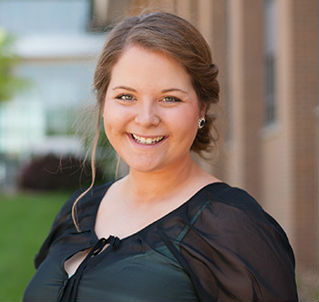
Tom SchallerIn his latest column in the Baltimore Sun, Political Science Professor and Chair Thomas Schaller writes about the increasingly competitive Maryland gubernatorial election. He compares the campaign strategy of Connie Morella, a former moderate Republican congresswoman from Maryland’s 8th District, to Republican candidate Larry Hogan, stating that Hogan needs to focus on certain issues to have a chance at winning the election.

“The Sun’s new poll shows Mr. Brown leading Mr. Hogan statewide by 7 points, a margin similar to the average yielded by the three previous statewide polls. Among men, Mr. Hogan leads by 8 points, 43 percent to 35 percent,” Schaller writes. “But Mr. Brown’s lead among women — 49 percent to 33 percent — is twice that. Mr. Hogan is within striking distance, but he can win only if he keeps the focus exclusively on topics related to job growth, the economy, state spending and fiscal management.”

To read Schaller’s full column in the Baltimore Sun titled, “The Connie Morella effect,” click here.

Eric Ford, Shriver Center, Advises Prospective College Students on Paths to Success in College Express

First-generation and underrepresented minority students can face unique challenges in applying to college and completing their degrees. In an article in College Express, Eric Ford, director of operations for the Shriver Center’s Choice Program, writes about his conversations with four college graduates about the support systems that helped them succeed.

Ford identifies several common factors that helped the students graduate, including high parental expectations, dedicated guidance counselors, and supportive university programs. Ford also discussed UMBC’s Choice Program as providing new opportunities for students who might not otherwise see college as a realistic possibility. He shared, “The Choice Program is just one component of a multifaceted partnership seeking to remove some of the many barriers faced by first-generation college students, and it has shown positive outcomes…exemplifying the shared responsibility between universities, public [K-12] schools, and individuals in breaking down barriers to higher education.”

Click here to read “Common Denominators: College Success Factors Among Minority and First-Generation Students” in College Express.

UMBC: Inviting Inspiration

Inviting Inspiration

UMBC celebrates the grand opening of the Performing Arts and Humanities Building.

From the moment its doors opened for fall 2014 classes, students, faculty, staff, and visitors alike have taken delight in UMBC’s new Performing Arts and Humanities Building (PAHB), which offers exceptional venues for performances and lectures, settings for teaching and research, and opportunities for interdisciplinary collaboration.

“It’s an inviting space,” said Scott Casper, Dean of the College of Arts, Humanities, and Social Sciences. “It’s a space for every student on campus to experience the performing arts and humanities, for our entire campus community to come together around cultural events, and for people throughout greater Baltimore to participate in UMBC’s vibrant cultural life.”

The PAHB provides new, state-of-the-art facilities for arts and humanities departments and programs. The building is designed to enhance UMBC’s teaching, research, and public outreach, and to heighten the visibility of the arts and humanities as major components of campus and community life.

“This new building, the largest on our campus, speaks to the central role that the arts and humanities play in shaping our students as thinkers and as citizens,” noted President Freeman Hrabowski. “It is designed to foster interaction and collaboration, and it supports the kind of interdisciplinary work that inspires our students and helps them develop as innovators and leaders.”

The PAHB is home to the departments of Ancient Studies, Dance, English, Music, Philosophy, and Theatre; the James T. and Virginia M. Dresher Center for the Humanities; the Center for Innovation, Research and Creativity in the Arts; the Humanities Scholars Program; and the Linehan Artist Scholars Program. Its major public venues, which will host dozens of lectures and performances annually, include a concert hall, a proscenium theatre, the Dance Cube, a black box theatre, the Music Box, and a lecture hall.

The 180,000 square foot building, first envisioned in 2004, is situated on 4.8 acres on the west side of Hilltop Road adjacent to the Fine Arts, Engineering, and ITE buildings. The PAHB is a natural extension of the campus to the north, creating a strong relationship with neighboring buildings and enhancing the circulation of the campus.

Recognition

In fall 2014, the PAHB received two significant accolades from the architecture and design community. The American Institute of Architects Baltimore chapter, at its annual Excellence in Design gala, awarded the PAHB the top prize in its Higher Education category, and the Urban Land Institute bestowed upon the building its 2014 Wavemaker Award, which recognizes projects that are truly unique, innovative, and visionary.

“The Performing Arts and Humanities Building,” said The Baltimore Sun’s fine arts critic, Tim Smith, “makes quite a statement from almost every angle — the sun-reflecting, stainless-steel-wrapped Concert Hall; the glass-enclosed Dance Cube jutting from the structure; views of the downtown Baltimore skyline from upper floors.”

Sustainability

The PAHB is a “very energy efficient building,” notes campus architect Joe Rexing, citing features such as its white reflective roof and water management system. “Inside the building, finishes and materials were selected for their low VOC (volatile organic compounds), so they don’t off-gas — materials such as latex paints, carpets that are very green, and sustainable products made of recycled materials. We use certified wood that comes from sustainable forests. And a lot of other finishes that you see inside the building are made from recycled construction materials.”

The building has been awarded LEED Silver status, following the guidelines set out by the United States Green Building Council (USGBC) to identify buildings as “green.” LEED, or Leadership in Energy and Environmental Design, is an internationally recognized mark of achievement in building specifications. Permanent flat screen displays located in the building’s lobbies offer more detail on the PAHB’s sustainable features and LEED certification.

Public Art

One of the most exciting aspects of the Performing Arts and Humanities Building actually stands just outside the building’s entrance: a significant new work of public art, Forum, by Thomas Sayre. The Maryland Public Art Initiative funded the design and construction of the artwork through the Maryland Commission on Public Art and the Maryland State Arts Council. As required in legislation passed in 2013, the Maryland Public Art Initiative integrates public art enhancements into all state-funded construction and renovation projects.

Sayre’s work was selected following a national call for entries. “After much reflection and discussion,” said Timothy Nohe, director of the Center for Innovation, Research, and Creativity in the Arts and member of the selection panel, “the committee voted Sayre’s concept as the most reflective of UMBC’s vision of a public art installation that invites community engagement, reflects the passage of time, and embraces the values and culture of UMBC.”

Thomas Sayre has designed and built public art projects throughout the world and has participated in design teams for civic, educational, and museum buildings. “Forum was designed as a stand-alone art experience viewed as a sculpture,” he explained, “but it is also to be experienced as a place. The space created by the sculpture can be entered, can be occupied, and can be used. The composition is designed to create a place for conversation, for the meeting of small classes, a place where spontaneous and planned performances are encouraged.”

Already, the sculpture site has become a point of convergence for the campus community — students, faculty, and staff gather under its arches to read, converse and contemplate. In November, it will host an epic reading of Homer’s Iliad, presented by the Department of Ancient Studies.

Grand Opening Celebration

The campus community is invited to celebrate the grand opening of the Performing Arts and Humanities Building at a ribbon cutting ceremony on Friday, October 17, from 3 to 4 p.m. in the concert hall. A reception, building tours, and “open house” events will follow the ceremony.

For information about upcoming events in the PAHB, visit UMBC’s Arts & Culture Calendar.

(10/17/2014)

Meet the Newest Alums: Carpenter, Scheerer, Krach, and Berghaus

UMBC is always full of hard-working people who aspire to do great things, and the class of 2014 is no exception. Today, we wanted to share with you what some of our recent graduates are planning to do with their Retriever education.

Carpenter2014-7121_mod Sondheim Public Affairs Scholar Meghan Carpenter, political science, used her interest in politics to to focus on education policy. She was the director of the Office of Community and Government Relations in the Student Government Association and a Governor’s Summer Intern at the Maryland State Department of Education. As a student, Carpenter proposed a budget to the Maryland General Assembly that would aim to reduce textbook prices. She now works as the Director of Policy and Research for the
Eric Ebersole campaign for State Delegate.

Scheerer2014-7071_modEditor of the Technology Section in The Retriever Weekly for several years, Emily Scheerer, computer science, was also a Center for Women in Technology Scholar, and interned with the Department of Defense and Booz Allen Hamilton. During her spare time, she worked as a UMBC Welcome Week Leader (Woolie) and was president of the UMBC Ballroom Dance Team. Now, Scheerer plans to continue her education at UMBC and earn an M.S. in computer science.

Krach2014-6853_modKelsey Krach, cultural anthropology and Spanish, was both a Sondheim Scholar and a valedictorian finalist for the Class of 2014. She interned with the Citizens Planning and Housing Association and Amnesty International USA. Krach also lead an Alternative Spring Break so other students could learn about refugees in Baltimore, won the Outstanding Student in Anthropology Award, and became a member of many honor societies. She now plans to do non-profit community development work.

ABerghaus2014-6824_mod native of Germany, Kim Berghaus, physics, dedicated her time at UMBC to her school work and the Women’s Tennis team. She earned the Outstanding Graduating Senior Physics Award, the Joseph F. Mulligan Memorial Lectureship, and was name the Matt Skalsky Outstanding UMBC Scholar. Berghaus was also excellent on the court. She was named the Most Valuable Player for the 2014 season, was a member of the America East Tennis All-Academic Squad, and was the first Retriever to be nationally ranked in women’s tennis. Her freshman year, she was named America East Conference Rookie of the Year and Most Valuable Player. Berghaus now works in Dr. Giuliano Scarcelli’s Lab at the Harvard Medical School.

Read more about the Class of 2014!

Preminda Jacob, Visual Arts, Examines Visual Culture and Indian Politics in Scroll

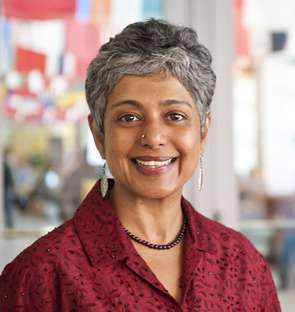
When J Jayalalithaa, a film star turned prominent politician, was convicted of charges involving financial assets, her supporters in the state of Tamil Nadu responded to the verdict by creating billboards and posters representing their feelings of anger and loss. Preminda Jacob, visual arts, spoke to Scroll about the historic connections between cinema and state politics in Tamil Nadu. 
Jacob focused on how Jayalalithaa used images to promote her political career and connect with supporters. “Over the space of half century the population has been very adept on how to read these images,” she said.

Jacob is the author of Celluloid Deities: The Visual Culture of Cinema and Politics in South India.

Click here to read “How Jayalalithaa used posters to transform herself from a film star into the Amma of Tamil Nadu” in Scroll.

UMBC: Student Advocate

Student Advocate

Gov. O’Malley appoints Sondheim Scholar Catherine Cano as 2014–15 MHEC student commissioner.

The Maryland Higher Education Commission (MHEC) sets state policies on tuition rates, academic programs and many other issues that affect every college student in Maryland. As the commission works this year, one UMBC student is making her voice heard on behalf of students in those important debates.

In August, Governor Martin O’Malley appointed Catherine Cano ’16, political science, as the Student Commissioner to MHEC for the 2014-2015 school year. This prestigious position will allow Cano to advocate for students and their educational institutions, weigh in on state plans for postsecondary education, review proposals for new academic programs and help the commission understand how its policies affect those who attend the state’s colleges and universities.

“Ms. Cano’s leadership in the community and at UMBC exemplifies her commitment to learning and serving diverse populations,” said MHEC Acting Secretary Catherine M. Shultz in a news release announcing the appointment. “I look forward to her playing a critical role in our discussions regarding the expansion of Maryland’s postsecondary opportunities for traditional and non-traditional students alike.”

Cano brings a commitment to diversity and a determination to help Maryland institutions of higher education lower the achievement gap among first-generation college students to her service on the commission. As a member of the Sondheim Public Affairs Scholars Program, Cano already has developed a strong interest in educational policy and deepened her personal resolve to make a difference in that field.

“My main job is to be a voice for students,” says Cano, who assists in teaching the Introduction to an Honors University (IHU) seminar for first year students and is the Student Life intern for service and volunteerism.

The key experience in Cano’s path to the appointment has been work she has accomplished as a volunteer at the Regional Institute for Children and Adolescents (RICA) – a residential/day treatment school facility for emotionally disturbed youth. Cano has implemented several self-sustaining projects at RICA, including creating an auxiliary board for the school, establishing life skills workshops for students using a UMBC BreakingGround grant, and organizing college tours for graduating students with the goal of getting every senior into tech programs or community college with less than a semester of remedial classes. She now leads a group of UMBC volunteers at RICA every week.

Cano is the third UMBC student appointed as a MHEC Student Commissioner in the past eight years. Joshua Michael ’10, political science and secondary education, and Alexia Van Orden ’06, history, ’08 M.P.P., legal policy, and ’13 Ph.D., education policy, served on the commission during the 2007-2008 and 2010-2011 school years, respectively. Both UMBC alumni continue to work in education – Michael as a mathematics teacher at the Commodore John Rogers School, and Van Orden as a research analyst at MHEC.

David Hoffman, Assistant Director of Student Life for Civic Agency, says the university’s three MHEC commissioners share qualities that have made them excellent student representatives for the commission. “What Cano, Michael and Van Orden have in common is confidence and the ability to speak knowledgably about state policy and the policy making process,” he observes. “They share a sense that they will make meaningful contributions to a statewide policy making body.”

Cano wants to bring UMBC’s spirit of student participation and diversity to a commission that sets the tone and practice for all postsecondary institutions in Maryland. “One of the reasons that I really love UMBC is how diverse it is and how all populations of our students do really well, but that’s not the case for every university,” she says. “I’m really excited to try and work on ways and initiatives for these students to succeed.”

(10/15/2014)

Calling All Retriever Believers!

retriever believer_crowd

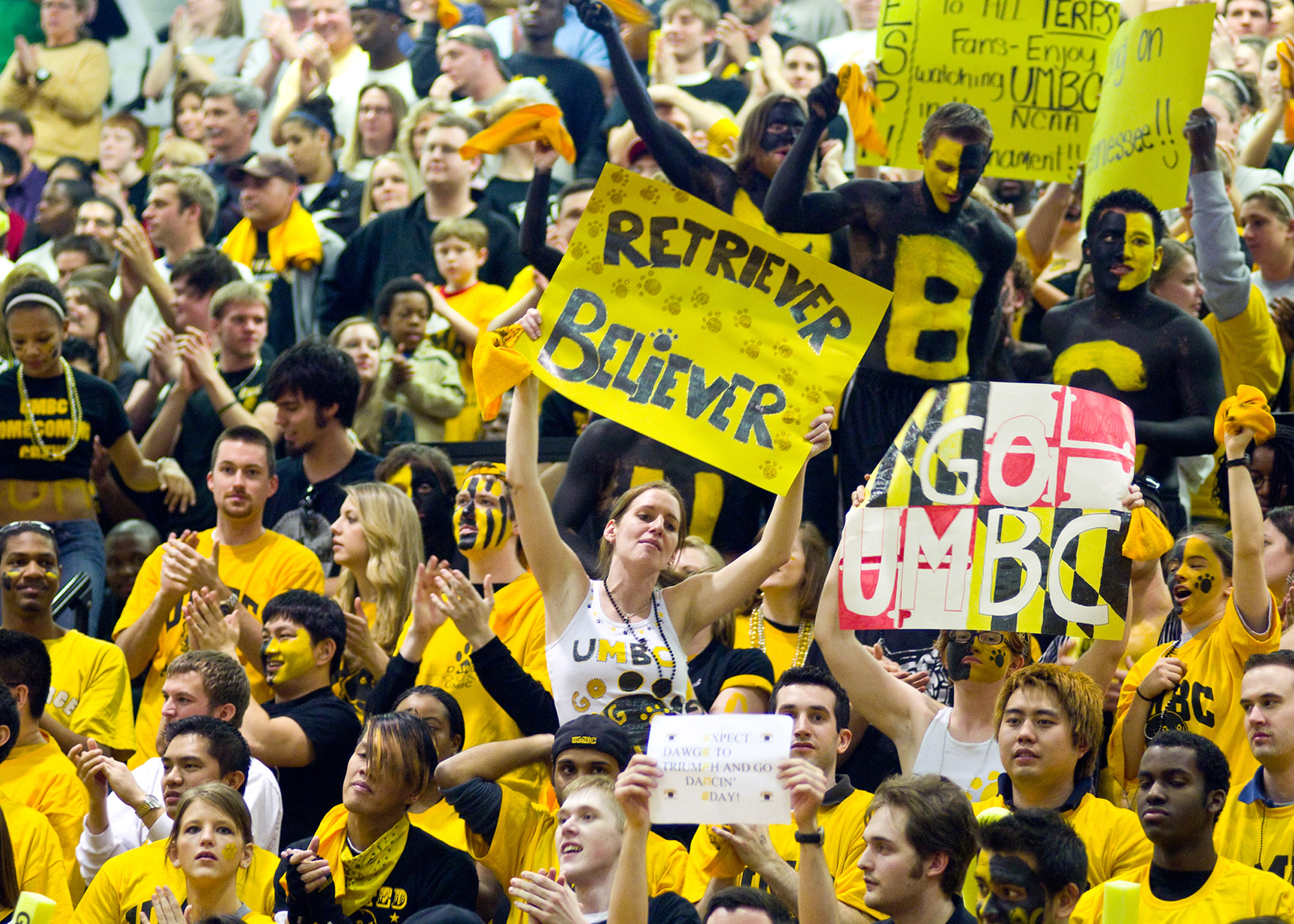
We need your help! The Fall 2014 issue of UMBC Magazine will explore the history – and the future course – of UMBC Athletics. We need YOU – alumni at UMBC – to help us tell that story with photos of your time as a student athlete or even as a fan of Retriever sports.

Editors at UMBC Magazine will select the best photos to appear in the forthcoming issue. Please email photos to retrievernet@umbc.edu. (And please scan them at the highest resolution possible.) You can also share your stories and photos on Facebook or Twitter using #houseofgrit.

Go O’s!

Baltimore has been practically giddy in the wake of the Orioles’ first round playoff win, which ushers the team into the Championship Series and one step closer to the World Series. And as the O’s get ready to take on the Kansas City Royals, we’d like to take a moment to highlight two UMBC alums who have also recently made the Orioles-related news.

Sergeant First Class Michael Zambito ’99, geography, was honored in Oriole Park’s Salute to Military Service during Game 1 of the Orioles playoffs last Thursday. The Salute is sponsored by the O’s and Bank of America and honors local service men and women for their service and sacrifice. Zambito attended UMBC on the GI Bill.

http://www.youtube.com/watch?v=u5Ai9A0j4eQ

And Lauren Hall ’10, psychology and sociology; ’14 M.A., sociology, has been making the social media rounds with her clever parody of Lorde’s “Royals.” As the video steadily climbs towards 75,000 views, Hall is understandably overwhelmed by the enthusiastic reception. “I think it’s kind of funny,” Hall said in a WBALTV interview, “I wasn’t expecting the response that I got.” Hall is currently a University of Maryland research analyst.

And if any of you folks are on Twitter, keep an eye on #wewontstop. Let’s keep it trending all the way to a World Series win.

Center for Aging Studies Receives National Institute on Aging Grant for Adult Day Services Research

UMBC’s Center for Aging Studies has received a grant for well over one million dollars from the National Institute on Aging (NIA) to research Adult Day Services (ADS). The research project, “Adult Day Services: Cultural Contexts and Programming Effects,” will focus on understanding the ways that ADS programming affects clients.

More than 250,000 clients and family caregivers participate in more than 4,500 adult day centers across the country today. Adult Day Services provides a place for adults who need assistance during the day so they are able to continue living at home. By researching daily life in ADS, the Center for Aging Studies plans to inform service providers, consumers, policymakers, and health care professionals of the benefits and concerns that affect the quality of life and care in ADS.

Robert Rubinstein, Professor of Sociology and Anthropology and Director of the Center of Aging Studies, is the primary investigator on the grant. Dr. Rubinstein will lead a research team that has extensive experience in aging research and represents the anthropology, sociology, psychology and gerontology disciplines and reflects the center’s interdisciplinary approach. The team includes Center for Aging Studies Associate Director Ann Christine Frankowski, researcher Mary Nemec, and researcher and project coordinator Gina Hrybyk. The researchers will conduct extensive personal interviews with ADS clients, family members and friends, directors, and staff and volunteers at facilities throughout Maryland to more fully understand the ADS experience.

Scott Casper, CAHSS Dean, in Talking Points Memo

On October 9, Talking Points Memo (TPM) published a story analyzing the recent controversial College Board decision to release a revised framework on the way AP U.S. history is taught. Since the decision was released two years ago, it has drawn backlash from many who call the new framework unpatriotic and revisionist.

Scott Casper

Scott Casper, Dean of the College of Arts, Humanities and Social Sciences and Professor of History, was quoted extensively in the story and commented on recent shifts in American history education. Casper, who edits the “Textbooks and Teaching” section of the Journal of American History, said the debate isn’t exactly new. He said the new framework reflects a shift in teaching history in that more colleges and high schools are emphasizing “historical thinking skills.” He also noted there’s been a shift in topics covered, including incorporating the stories of women, African-Americans and immigrants to a greater extent.

Commenting on the concept of revisionist history, Casper said: “Those who criticize the teaching of what they call revisionist history are certainly part of a long tradition because every time we learn more about the past, we are revising our understanding of the past,” he said. “So in a sense, history is always revisionist.”

To read the full article, click here.

George Derek Musgrove, History, on WAMU’s Metro Connection

On Friday, September 26, WAMU, the NPR affiliate in Washington, D.C., aired a discussion on the history of gentrification and political representation in the nation’s capital. The segment ran on Metro Connection, a weekly news magazine program.

Derek Musgrove

George Derek Musgrove ’97, history, associate professor of history, was interviewed for the story and provided historical context and analysis of gentrification in Washington. Musgrove discussed “The Plan,” a concept that newspaper columnist Lillian Wiggins wrote about in the 1970s and believed would transform the city.

“She believed that whites in D.C. had a plan to come back and take over the city — both its real estate, its physical space, and its politics,” Musgrove said during the segment. He added that it’s important to look more deeply at what Wiggins was describing given the demographics of the city at the time: “I think there were a number of things that caused people to look at The Plan as a viable explanation for what was happening around them,” he said. A major factor, he explained, was “our lack of statehood, and Congress’s ability to meddle in the city’s affairs.”

In a separate segment, Musgrove noted that, “D.C. has had a post-industrial economy for its entire history.” He identified four waves of gentrification in D.C., each lining up with expansion of the federal government. In the 1970s and 80s, there was a burst of development in what had become very poor inner city neighborhoods.

“The rate of displacement in places like Adams Morgan, Logan Circle, Columbia Heights, was astonishing. I mean absolutely astonishing. Developers would buy up in certain cases whole streets, and send out notices: ‘Please get out in the next month, we’re going to be fixing these places up.’ And renters, by the year 1978 just revolted.”

To listen to the full segments, click below:
Is Gentrification in D.C. Going According to “The Plan?”
Why Did African Americans Leave Georgetown?

Donald Norris, Public Policy, on WJZ and WYPR, in the Washington Post

Ahead of Tuesday’s Maryland gubernatorial debate, Public Policy Professor and Chair Donald Norris analyzed what was at stake in the debate and what each candidate needed to accomplish.

Donald Norris UMBC

In an interview on WJZ Channel 13, Norris said, “what each candidate needs to accomplish at the debates is first to look personable so that they don’t turn people off with their demeanor. And secondly, they have to not make any mistakes.” He added, “different people are going to have different perspectives on who wins or who loses — again — unless somebody makes a really big mistake,” Norris added.

On WYPR, Norris commented on the potential impact of the debates. “Debates don’t matter much, especially gubernatorial debates, because nobody watches them,” Norris said. He noted that because debates don’t generally draw a large audience, it would take a major mistake by one of the candidates for voters to notice.

“If somebody makes a big blunder it’ll be all over the television, all over the radio, in the newspaper —  you know: ‘Brown stumbles badly, Hogan doesn’t remember where Annapolis is’ whatever it may be,” Norris said.

Norris was also quoted in a Washington Post article published on October 11 about Gov. Martin O’Malley’s approval ratings.

To read, watch and listen to the full stories, click below:
The Stage is Set for the First Gubernatorial Debate on Oct. 7 (WJZ)
What’s at Stake at First Governor’s Race Debate? (WYPR)
As O’Malley’s approval rating falls, Md. voters not confident in his presidential bid (Washington Post)