All posts by: UMBC News Staff


UMBC Hosts College Affordability Roundtable with Senators Cardin and Mikulski

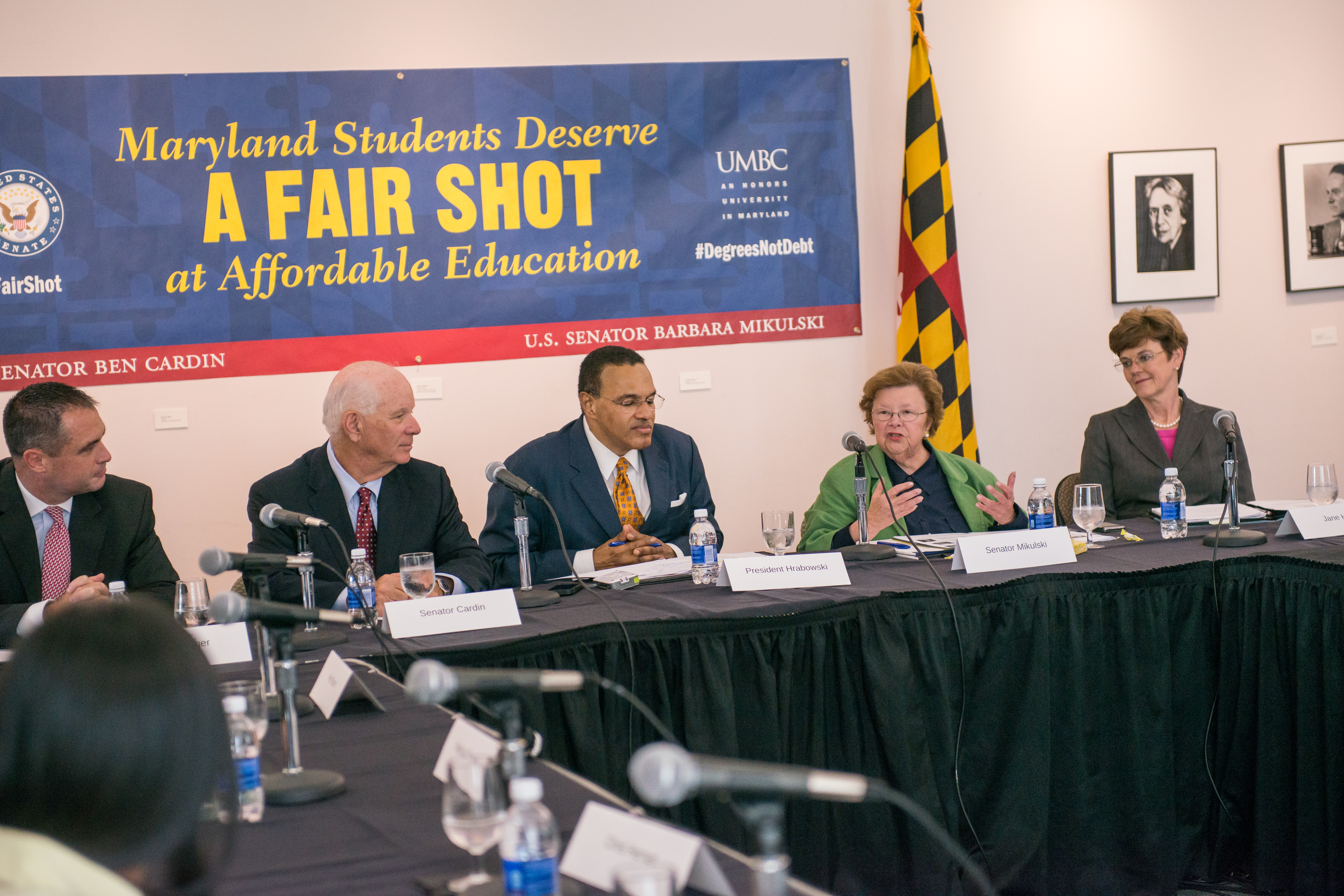
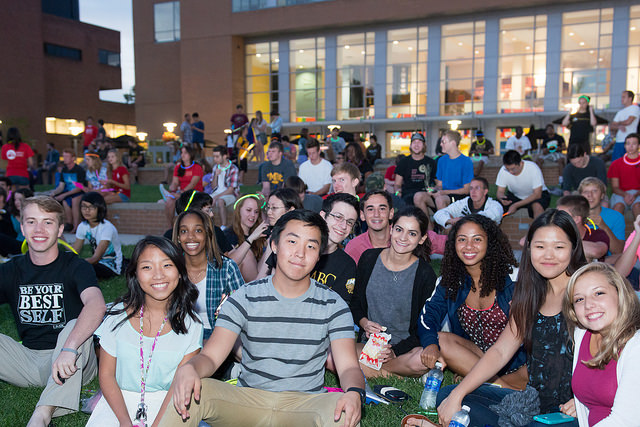
College_Affordability-0302President Freeman Hrabowski, UMBC experts, and several current undergraduate students met with Maryland’s U.S. Senators Ben Cardin and Barbara Mikulski on Thursday, Sept. 4 to discuss the ways loan debt impacts students’ college experiences, future plans, and careers.

The College Affordability Roundtable, hosted by UMBC, gave the Senators an opportunity to hear directly from students about how they are financing their education, their experiences with financial aid programs and services, and the challenges of course and graduate completion related to accumulated debt.

College_Affordability-0306Throughout the event’s open—and often candid—dialogue, UMBC students shared their stories about financing their higher education and explained its impact on their lives and aspirations. Many of the students echoed concerns when dealing with college affordability, such as understanding and navigating complex state, federal, and private financial aid programs.

UMBC experts in financial assistance, advising and counseling offered their perspectives to the group and emphasized the importance of submitting financial aid applications sooner and establishing a plan to ensure students are successful in their degree path.

Interviews from two UMBC students, Chris Harried and Lisa Dang, can be heard in a recent WBAL Radio story covering the event.

Meet the Alumni Leadership: Erin Griffiths ’05

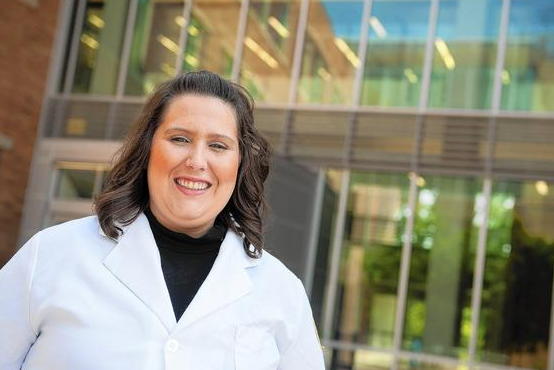
Name: Erin Griffiths ‘05, sociology
Employer: Commissioned Corps of the U.S. Public Health Service (USPHS) and U.S. Food and Drug Administration (FDA)
Alumni Leadership Role: Vice President of the Chapter of Black and Latino Alumni (CBLA)

Q: Where are you from originally?
Washington, DC

Q: What’s your favorite UMBC memory?
Spending time with my friend while she worked at the front desk of Hillside [apartments].

Q: Why are you involved in an alumni board or chapter?
I think it is important to “pay it forward,” since I am now more established. I met some great people while attending UMBC. I want to support attendance at UMBC, so other people are able to have a great college experience and great careers.

Q: Why do you think it’s important to support UMBC?
It is always important to reflect and remember where you came from. The education at UMBC is exceptional and the foundation that I received helped prepare me for graduate school.

Q: Do you have a favorite hobby or pastime?
Singing.

Q: What is the most recent book you’ve read?
The Four Agreements by Don Miguel Ruiz.

Read more about the Chapter of Black and Latino Alumni!

Thomas Schaller, Political Science, on MSNBC

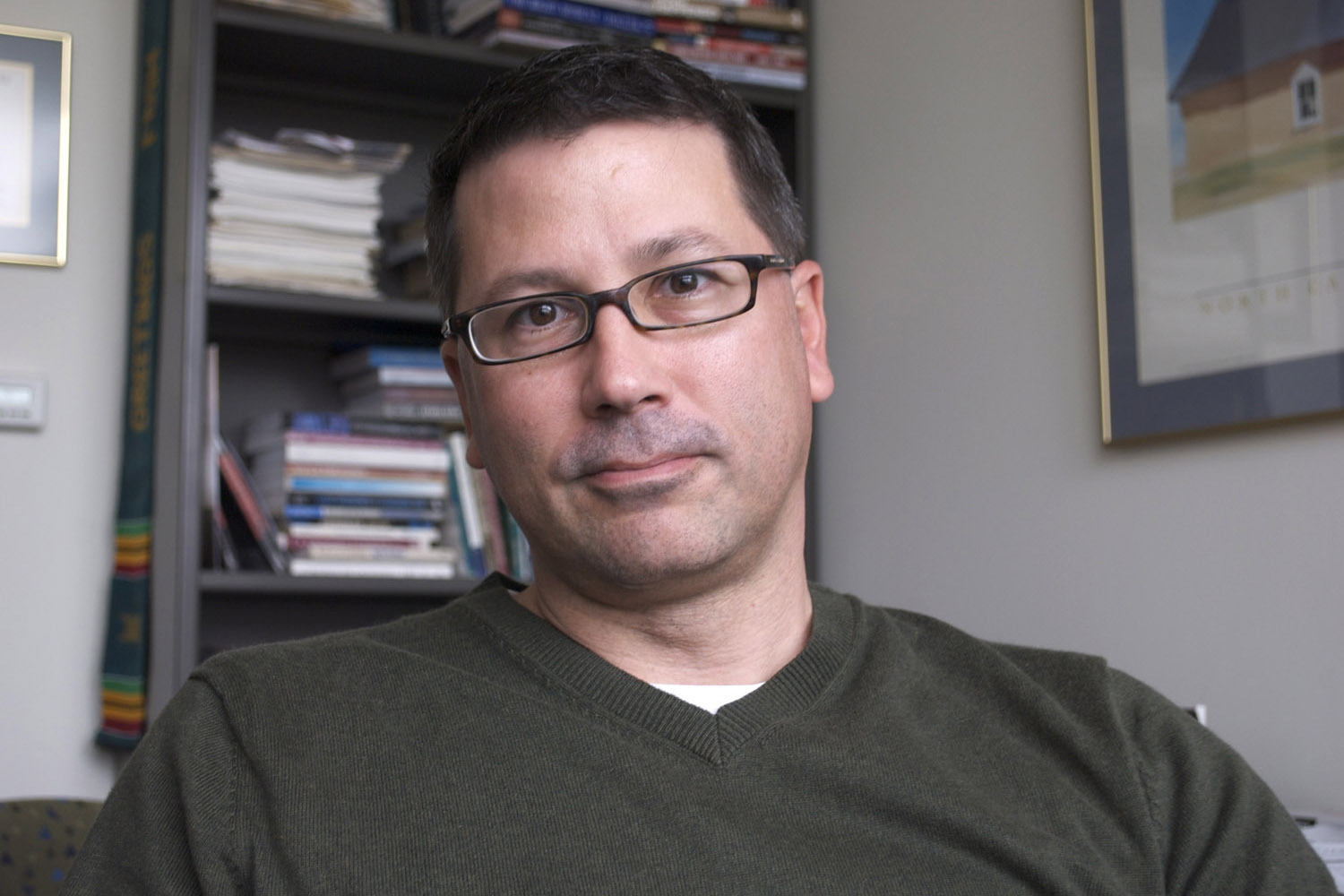
Tom SchallerOn Sunday, September 7, Political Science Professor and Chair Thomas Schaller appeared on MSNBC’s “Up with Steve Kornacki,” to analyze the future of the Democratic party in the South. Schaller is author of Whistling Past Dixie: How Democrats Can Win Without the South (Simon and Schuster 2006).

Schaller participated in an engaging panel discussion with political consultant Steve Jarding, NBC News Senior Political Reporter Perry Bacon Jr., and MSNBC Political Analyst Joan Walsh. The group discussed what the 2016 presidential election could look like in the South for Hillary Clinton and how it may be different from the 2008 and 2012 elections.

“Clinton’s states are Louisiana, Arkansas, Tennessee…Kentucky. Obama’s states are new South states, the states with the most non-native Southerners: Florida, Virginia, North Carolina,” Schaller said. “So Democrats are going to win in the South, but they aren’t going to win in the ‘bubba’ states.” He added, “the notion that Democrats are going to win with economic populism…if they can’t win on economic populism after the greatest financial crisis in 60 years, then when are they going to win? When are white, working class Southerners going to move Democratic if not in 2007, 2008, 2009?”

To view Schaller’s main segment on the program, click here. Links to other parts of the segment can be found in the “more clips like this” section.

UMBC Featured in The Baltimore Sun’s Special Section on Education

The Shriver Center’s Governor’s Summer Internship Program (GSIP) and the Department of Geography and Environmental Systems’ Costa Rica Field Course were featured in The Baltimore Sun‘s September special section on education.

Collin Wojciechowski ’13, political science and media and communication studies, and Michele Wolff, Director of The Shriver Center, were quoted in an article focusing on a hands-on approach to learning politics and government. Wojciechowski, who is currently special assistant to the Deputy Chief of Staff in Governor Martin O’Malley’s office, said part of his experience that led to his job came thanks to GSIP: “It gives you a chance to directly shadow a whole range of people and specifically people who are higher levels directly,” he said.

The program introduces Maryland college students to the unique challenges and rewards of working within state government and interns work for ten weeks during the summer in state government agencies. Wolff said, “it’s really important for students to see the relevancy of what’s happening around them while they are in college,” adding, “through programs like this they see the relevancy of what’s happening outside the college experience. They see that not only does it have an impact on them, but they can have an impact on what’s around them.”

In an article focused on experiential learning, Maggie Holland, Assistant Professor of Geography and Environmental Systems, and Honors College student and environmental science major Clare McCauley were quoted about UMBC’s Costa Rica Field Course. The course provides students with service opportunities and field experience while being immersed in another culture.

“As I understand experiential learning,” Holland said, “it’s the whole toolbox. It’s about linking the classroom outward.” In describing her positive experience in the program, McCauley noted, “If I can’t plant some trees and get along with my neighbor, then all these sustainable, conservatory actions really mean nothing.”

To read complete versions of both articles, click below:
Learning politics and government hands-on
Experiential learning

George Derek Musgrove, History, in The Philadelphia Tribune

An article published September 7 in The Philadelphia Tribune discusses the case of U.S. Rep. Chakka Fattah, a ten term representative from Philadelphia who is facing corruption allegations, charges and guilty pleas surrounding his family. George Derek Musgrove ’97, history, associate professor of history, is quoted in the article and discusses the case of Fattah Sr. and his son, Fattah Jr., explaining that children of Black political families often go into businesses connected to their parents’ political power.

Derek Musgrove“There is a much higher percentage of white political families that produce their wealth from non-government related private businesses than there are Black ones,” Musgrove told The Tribune. “The children of many Black political families reproduce their class position by going into business[es] that are somehow connected to their parents’ political power. This may make them more susceptible to investigators looking for influence peddling.”

Musgrove added: “These young men grow up with the privileges associated with their parents’ status and take them for granted. Their children did not necessarily have an organic connection to these communities and that can sometimes lead them to use these communities for their own gain. They tend to have the same opportunities for graft afforded their white peers but not the same political protections.”

To read the full article in The Philadelphia Tribune titled, “Fattah not the first Black political family with money troubles,” click here.

Stories of a Big City Farm Girl, Vol. 2

Editor’s Note: This is the second in a series of three posts from Lexi, our summer intern here in the Alumni Communications office, about her experiences as a new-to-Baltimore student.

In my last post, I described how different the driving conditions in Baltimore are from rural Delaware. Multiple lane highways, aggressive drivers, lots of honking, and mis-informed GPSes always created interesting adventures.

But did you know that in Delaware, a lot of high schools don’t require you to learn how to parallel park during driver’s ed? Well, Milford High School didn’t at least. We just had to be able to park between the lines, navigate the bumps of the backroads, and not panic when passing the chicken trucks or tractors on the highway. The horrors of parallel parking didn’t hit me until college, as I had never driven in any type of city conditions, let alone tried to park sideways in between two cars that were worth more than my entire college education.

photo via TripAdvisor

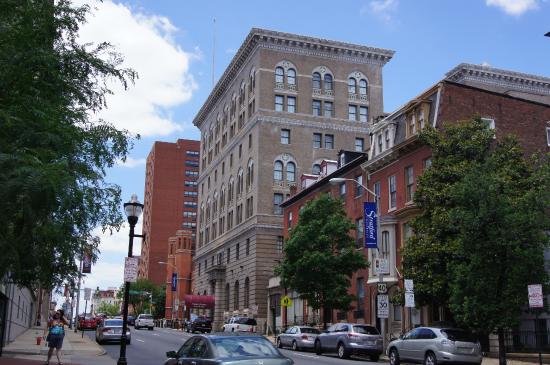
My first “lesson” came when I had to go to a museum for an art class. There was a definite trend with my art class excursions causing me more trouble than they were worth. I had to go to the Walters Art Museum in Mount Vernon. I knew I’d only be there for about an hour, and there was no way I was going to pay for the parking garages in Baltimore, so street parking was my only option. After circling the area and managing to go down every one-way street there was in
Mount Vernon, I found a spot. It was a
parallel spot, and on the left side. I was ready.

I stopped my car, put on my blinker, and then panicked. I had never parallel parked before, let alone parked on the left side of the street. Thank goodness there wasn’t any traffic. I gently tapped my accelerator to back up, but I had turned the wheel too far. I had turned my car in a little arch in the middle of the street. I pulled up next to the compact car in front of me, and tried again. This time, I managed to get almost all the way into the spot, but didn’t turn the wheel enough, and again sat almost in the middle of the street. Third time’s the charm, right? Mirror to mirror, I backed my car into the spot, one inch at a time. But this time, I had it. I could feel it. My car glided into the spot with no problems, I straightened it out, put it in park, and screamed.

I had never been more proud of myself in my life (OK, that’s a slight exaggeration, but I was very happy). I began congratulating myself, turned up the radio, sang along a little bit to Train’s “Hey Soul Sister,” and then realized my windows were down and people were staring. Blushing and laughing, I calmly got out of the car and went to pay for my spot. I was still so excited and embarrassed that I couldn’t get money out of my wallet. But, I thought, you just parallel parked all by yourself.

When I got back to my dorm, I told one of my friends, who then laughed at me, and made me go back outside and learn how to parallel park. While he sat next to me, his roommate sat in the back, and they both took turns shouting directions at me as I tried to recreate my parking skills in the back road next to Potomac Hall. Cars drove by, we all kept yelling, people stared, and we all got frustrated. But, in the end, I had learned how to parallel park. By the time we were finished, I couldn’t help but think, When I go home for the summer, I’m going to forget how to do all of this.

-Lexi Coon

9 Things the Class of 2018 Needs to Know

Students enjoy a movie on the Quad during the first week of classes.

College is a new experience for everyone, but with the help of our alumni we can make it a little easier for our newest Retrievers! Take a look at these suggestions to make  the transition to life at UMBC even easier. 

  1. Your college experience is what you make it! Stretch your boundaries, get out there, get involved! ~Mitali Parmar ’13, health administration & policy and sociology

  2. Go to things you don’t think you’ll like. The best friends you’ll make are the ones who aren’t exactly like you! ~Arooj Rana ’06, psychology

  3. I always wish I studied abroad in undergrad. Make sure you do something to extend your academics: good internship, research, etc. ~Christine Osazuwa ’11, interdisciplinary studies

  4. Don’t ever be afraid to ask questions – if you have a question, I am sure that others have the same question and are too afraid to ask it. ~Christina Huynh ’11, information systems management

  5. UMBC has a lot of awesome professors who really care about undergraduates, which is something that can’t be found everywhere. Take advantage of this by getting to know some of your favorite professors. Many professors at UMBC are delighted to have students stop by office hours, if only to chat about what was discussed in class that week. Professors can serve as professional mentors even after you graduate. ~Jennifer Mercer ’12, interdisciplinary studies

  6. Balance and moderation is my tip. Freshman year is a great year to begin to make friendships that should carry throughout your college experience. Don’t be afraid to join and try new groups, meet people you may not have ever interacted with in high school. However, don’t over extend yourself. It’s so important to maintain a good balance with your school work and classes. A few mistakes early on can and will affect your other years. ~Nate Dissmeyer ’07, information systems management

  7. It’s totally okay to change your major, change your career plan, and change your roommates. If you’re feeling overwhelmed, take a few deep breaths; you’re going to be okay. ~Jess El-Zeftawy ’08, political science, ’12 M.P.P., public policy

  8. Start looking for internships NOW! and eat on the first floor of the Administration building. You’ll avoid the Commons madness. ~Amanda Winters ’11, media and communication studies

  9. There will be people here that like you for you so don’t be afraid to express yourself. ~Patricia Reynolds ’09, English

Join the conversation on Twitter: #RetrieverWisdom

Alums in the News: Moriarty, LaClair, Mayhew, and Macchi

Here at UMBC, we take pride in what our alums accomplish after graduation. Take a moment to see which Retrievers have been on the move and making news!

As Baltimore’s Gamescape, an exhibit at Artscape, moved out of MICA and into the Single Carrot Theatre, Jonathon Moriarty ‘13, computer science and visual arts, prepared to present his game, CAVE, to judges and guests.

photo via BaltimoreGamer.com

Gamescape promotes the rise of “indie developers,” or those who don’t work for big companies.

Moriarty, who first got involved with the exhibit as a member of the game developers club at UMBC, returned for his fifth year at the exhibit as a full-time game developer.

“The rise of indie developers… it’s something that’s happening really the world over and it’s the result of tool sets previously unavailable due to large amounts of money,” said Moriarty to the City Paper. Read more in Technical.ly and the City Paper.

Screen Shot 2014-08-21 at 1

Danielle LaClair ’08, social work, had no reason to worry when her tuition payment plan for Howard County Community College was cancelled.

Recently, the Pathway Scholarship Program, which grants “a county government-funded scholarship designed to make college affordable for county residents in need,” gave $2.5 million to 1,300 student–including LaClair. “It’s eased a lot of my worrying. These scholarships make going back to school that much easier,” said LaClair to The Baltimore Sun. Read more here.

On November 6, 2014, the UMBC Department of Visual Arts IMDA (imaging and digital arts) program will host Neja Tomšič of Slovenia along with Icelandic Fulbright Scholar Jaimes Mayhew ‘10, imaging and digital arts.

This Catalyst event, which will take place from 12 p.m. to 1 p.m., is designed to work with IMDA graduate students in the ITE 110 Flex Lab. Read all of the information here.

photo via LexieMountain.com

Alexandra Shaw Macchi ’14, M.F.A., was recently published in City Paper under her pen name Lexie Mountain. Throughout her article, she addresses the passing of H. Res 676, which gives citizens the ability to sue the president, and the epidemic of imported snails used for moisturizers eating away at Floridian homes. Find her full article here.

Shawn Bediako, Psychology, Receives 2014 Champion Award from the Sickle Cell Disease Association of America

Psychology Associate Professor Shawn Bediako has received the 2014 “Champion Award” from the Sickle Cell Disease Association of America (SCDAA). The prestigious award is given annually to individuals who have made a significant impact in the sickle cell community.

Shawn Bediako

Bediako has done extensive research on sickle cell disease, including race and social attitudes and optimism and perceived stress. In addition to his research, Bediako is also engaged in several community-based projects and was selected in 2008 by Governor Martin O’Malley to serve on the Statewide Steering Committee on Comprehensive Services for Adults with Sickle Cell Disease, a committee that he has chaired since 2010.

Bediako will be honored in October for his dedication to sickle cell disease during the SCDAA’s Annual Convention in Baltimore. Past recipients of the Champion Award include: Clarice Reid, MD, Marilyn Gaston, MD, Congressman Danny Davis (IL), Elliott Vichinsky, Carlton Haywood, PhD, Hertz Nazaire and actor Sidney Poitier.

Scott Farrow, Economics, Named Economics Coordinator for the Department of Homeland Security’s National Center on the Risk and Economic Analysis of Terrorism Events (CREATE)

Economics Professor Scott Farrow has been named part-time economics coordinator for the Department of Homeland Security’s National Center on the Risk and Economic Analysis of Terrorism Events (CREATE). The center was established in 2004 and is an interdisciplinary national research center based at the University of Southern California. The center is comprised of a team of experts from around the country who work to identify where terrorist attacks may occur and what the economic consequences of those attacks may be.

On the website announcement that states Farrow will lead CREATE’s economic efforts, it reads: “CREATE researchers are making conceptual and empirical advances in developing a comprehensive consequence analysis framework. CREATE embeds this cost analysis in the broader risk-based framework, including the impact of behavioral economics, and further integrates these efforts by providing the estimates of benefits and costs related to risk management applications.”

To read more about CREATE, click here. To read the official announcement naming Farrow economics coordinator, click here.

Dennis Coates, Economics, in The Baltimore Sun

After the nonprofit Washington 2024, an organization that is supporting bringing the 2024 Summer Olympics to Washington, D.C., recently launched its website, The Baltimore Sun published an article examining what Maryland’s role would be in hosting the Olympics, which still remains largely undefined.

Economics Professor Dennis Coates was quoted in the story and said in order for D.C. to manage hosting the Olympics, it would need to host events in Maryland.

“I think there is no way D.C. can manage it if they don’t get a buy-in from Maryland,” said Coates. “They’re probably going to use facilities at FedEx [Field].” He added: “The problem I would have as the governor is, ‘You want us to contribute but what are we getting in return?’ When people look at this, it won’t be the Maryland Olympics. It will be the Washington Olympics.”

Staging the Olympics “probably doesn’t make sense financially,” Coates said. “But if it makes sense anywhere, this is as likely a place as any. I say that because we have lots of stadiums in place and basketball arenas that can be used for gymnastics competitions. We also have pretty good roads, a good Metro system and excellent airports. In that regard, we would have lower costs. We wouldn’t have to build all those things.”

To read the full article in The Baltimore Sun, click here.

Laura Hussey, Political Science, in The Christian Post

Research by Laura Hussey, an associate professor of political science, and Geoffrey Layman, a professor of political science at University of Notre Dame, was the focus of a recent article published in The Christian Post about voting habits of Catholics. In their research, Hussey and Layman found that a minority of Catholics were both pro-life and pro-welfare, and those that were showed little ambivalence in their vote choice.

Laura HusseyThe following is an excerpt from the article which explains the reasoning for this that Hussey found from her research: “One reason, Hussey and Laymen found, is that PW/PL Catholics incorrectly assume that the Democratic candidates they vote for are pro-life. Forty-three percent of PW/PL Catholics believed a pro-choice Democratic candidate was pro-life, which was much higher than the rate of misperception among other Catholics. Hussey described the misperception as a psychological coping strategy to deal with the cognitive dissonance that results from being PW/PL.”

“Pro-life, pro-welfare Catholics generally seem to deal with this dissonance by projecting their church’s [views on abortion], which also happens to be their own view … onto their candidate of choice,” Hussey said during a recent panel presentation in which she presented her research. These Catholics are “not agonizing” about their vote choice, she added, because their “policy knowledge of politicians is pretty inaccurate.”

To read more about Hussey’s research and to read the full article titled, “Why Do Many Pro-Life Catholics Vote Democrat?” click here.