



In its Summer 2014 retirement guide, Baltimore Magazine published an article exploring what modern retirement means to the “baby boom” generation. Erickson School Dean Judah Ronch was quoted extensively in the story and commented on how American society’s notions of aging are outdated.

“Younger boomers don’t want to eat at 5 p.m.,” said Ronch when discussing the changing nature of continuing-care retirement communities (CCRCs). He said today’s retirees aren’t necessarily looking for a quiet place to live out their golden years surrounded by people similar to them: “the CCRC is based on a model of aging as leisure and decline,” Ronch said. “I’m hearing from CCRC operators that younger boomers are saying the model doesn’t work for them.”
In the article, Ronch noted that the baby boom generation is rethinking its concept of what home means to them. “Creative solutions come as second nature to boomers,” he said. He added co-housing and group-living arrangements are becoming more common. “This is a generation that knows about groups. We grew up with group therapy, consciousness-raising, and political activism. I expect to see a landscape of options.”
The importance of technology was discussed in the story, and Galina Madjaroff, a clinical assistant professor at the Erickson School, said developers should recognize the vast market potential. “Most technology is being developed for the 25-35 age group,” said Madjaroff, who specializes in technology and older adults. “There’s a huge gap between what the older generation needs and what the industry is providing.”
Helena Mentis, an assistant professor of information systems, said wearable technology such as FitBit, which is a bracelet that monitors sleep and physical activity, among other inputs, “has taken off with healthy twenty somethings.” But that technology could also be used for older folks “to make sure they’re moving enough,” and in some cases, “to see if they’re engaging in social interaction.” Mentis also discussed the potential benefits of Google Glass and Wii Fit.
To read the full article in Baltimore Magazine titled, “A boomer’s guide to 65,” click here.



 helping the university’s 200- and 400-yard medley relay teams finish at the top of the America East Conference.
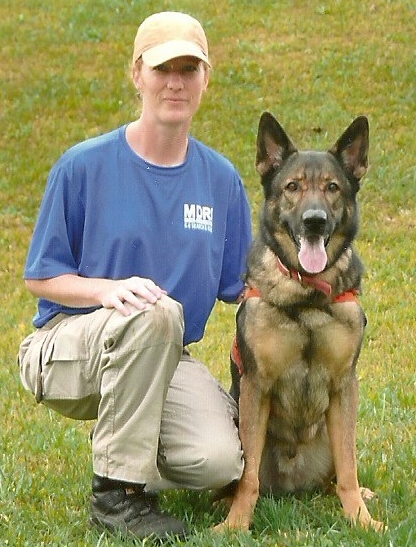 Kakavas and Z–a German shepherd–volunteer with the
  res of land, and the number of dogs sent out depends on the situation. Her longest search was in Pennsylvania, searching for an infant. Kakavas said the trip took 13 hours of searching spaced out over two days. She and Z have also traveled as far away as Peru, called in by local law enforcement to search for a missing hiker. “The search area was the side of an entire mountain,” she said, recalling the stress of the event. Other trips have included night searches for missing persons in natural disaster areas.