All posts by: UMBC News Staff


Alums in the News: Loftus, Bok, Severance, Penn

Congratulations to these UMBC alums whose accomplishments have been recognized both inside and outside of UMBC. Take a moment to read what they have been up to!
matthew_loftus_headshot_(2)

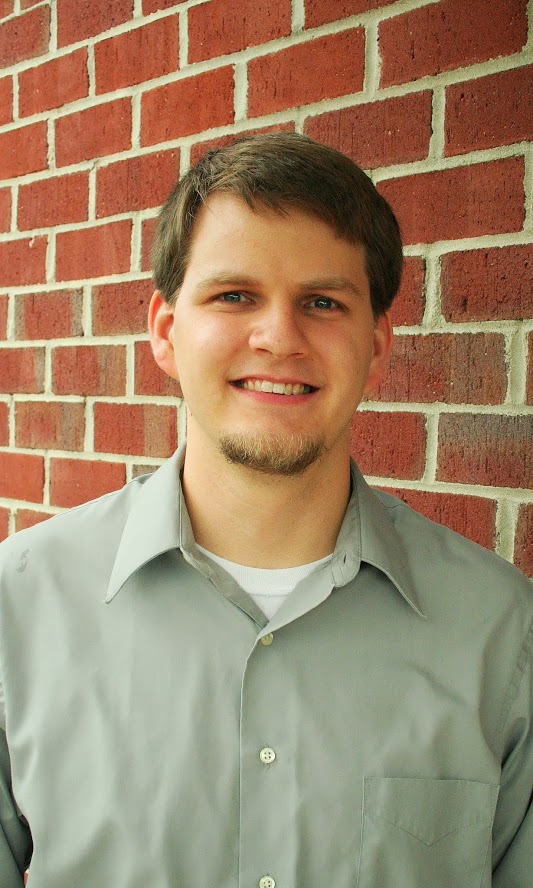
Matthew Loftus ‘07, chemistry, grew up in Bel Air, Maryland, with ample resources, attended UMBC, and is now a family physician. But now, after joining the New Song Community Church, a branch of the Presbyterian denomination he attended as a child, Loftus and his family have relocated to Sandtown, Maryland as an evangelist to connect with residents and provide mental health services.

Loftus, like many other relocators, was much better off than many of his neighbors. He is now training Sandtown residents to lead small group discussion on issues like stress and grief, so that they too can lead their community. While there may be some lingering resentment between his family and the new neighbors, he told  Al Jazeera America he thinks the general feeling is “Well, Matthew and [his wife] Maggie, they’re a little weird, but they’re nice people, and we’re nice people, and this is a cheap place to own a house.” Read the full article.

photo via Arthropoda

The mantis shrimp, a small, marine crustacean that lives in the ocean’s reefs, has one of the most complex visual systems known to science. In an interview with the Science World Report, Michael Bok ‘07, M.S. molecular biology and ’13, Ph.D. biological science, talks about the newest findings on the shrimps’ eyes.

The optics on the shrimps’ eyes create a type of UV color vision, an effect “akin to putting red-tinted glasses over your eyes that block other wavelengths of light,” Bok said, but this effect is being done at a cellular level. Science Codex also spoke with Bok regarding this discovery. Bok explained, “Their eyes may sense and respond to complex visual inputs without the need to think very hard about it.”

photo via nilesbarton.com

Rachel Severance ‘07, political science, currently holds a job as an associate in the Litigation Department of Niles, Barton & Wilmer, LLP and was recently appointed to serve on the Board of the Eubie Blake National Jazz Institute and Cultural Center in Baltimore.

On June 25, 2014, Severance was honored as one of the 28 people awarded “20 in their Twenties,” who are considered the most influential young leaders in Maryland by The Daily Record. Read her bio.

Jason PennJason Penn ‘03, biological science, has been a Maryland delegate to the American Association for Justice and has clerked for the Honorable Clayton Greene. Now Penn represents victims of medical malpractice at a national firm, Janet, Jenner & Suggs, LLC. Recently, the National Trial Lawyers extended an invitation to Penn as a member of the “Top 40 Under 40,” a professional organization of outstanding young lawyers in a state or region. Read more about Penn’s accomplishments.

Round-Up: UMBC In the News, 7/18

One of the things that makes UMBC great is how wonderful our alumni, students, faculty, and staff are. Because of these amazing people, UMBC often finds itself “in the news,” so each week, we’ll be sharing with you a round-up of the most newsworthy achievements from our community.

Find more news here!

Visual Ecology, Tom Cronin

A new book written by Tom Cronin and colleagues — the publisher’s note says:

“Visual ecology is the study of how animals use visual systems to meet their ecological needs, how these systems have evolved, and how they are specialized for particular visual tasks. Visual Ecology provides the first up-to-date synthesis of the field to appear in more than three decades. Featuring some 225 illustrations, including more than 140 in color, spread throughout the text, this comprehensive and accessible book begins by discussing the basic properties of light and the optical environment. It then looks at how photoreceptors intercept light and convert it to usable biological signals, how the pigments and cells of vision vary among animals, and how the properties of these components affect a given receptor’s sensitivity to light. The book goes on to examine how eyes and photoreceptors become specialized for an array of visual tasks, such as navigation, evading prey, mate choice, and communication.”

Update: The Guardian post 

LA Times: Mantis shrimp wear tinted shades to see UV light, Tom Cronin and Michael Bok

“When you look at a mantis shrimp, you see a vivid lobster-like crustacean whose forearms can strike with the force of a .22-caliber bullet. But when a mantis shrimp looks at you, we have no idea what it sees. That’s because the mantis shrimp possesses one of the most complex eyeballs on the planet, an organ that allows it to perceive a rainbow of colors in both the visible and ultraviolet spectrum without the massive brainpower required for human vision,” so writes Julia Rosen of the Los Angeles Times.

Rosen’s story, Mantis shrimp wear tinted shades to see UV light, tells of Tom Cronin and Michael Bok’s paper. Cronin is a professor of biology and Bok a graduate student who has now moved on to a post doc at Lund University.

The paper, which was recently published in the journal, Current Biology, reported that, “that that mantis shrimp use a set of filters to separate ultraviolet light into discrete colors that get picked up by the animals’ photoreceptors.”

U.S. News, Colleges Work to Engage Women, Minorities in STEM Fields, Penny Rheingans

Delece Smith-Barrow of U.S. News & World Report, recently wrote about the importance of engaging women and minorities in STEM fields. Smith-Barrow interviewed UMBC’s Penny Rheingans, director for the Center of Women in Technology (CWIT).

Smith Barrow wrote: “If students struggle in class and have few peers and faculty that look like them, it’s easy for them to think, “maybe I’m not supposed to be here, either,” says Penny Rheingans, director for the Center for Women in Technology at the University of Maryland—Baltimore County.

Prospective college students who are women or underrepresented minorities can determine if a school can help them in their STEM endeavors by finding out what resources colleges offer these kinds of students.

The Center for Women in Technology at UMBC​ provides mentoring services, ​seminars that discuss topics such as networking and time management and a number of other resources, Rheingans says. A living and learning residence community provided through the program caters to women and men in STEM, but the former group dominates.

“Eighty-five percent of students who live on our floor are women,” she says.

Rheingan encourages prospective students to keep an eye out for school environments that have structures in place that support women. “You’re looking for a community,” she says. Visiting the college and talking to current students is one way to find out about the community, she says.”


Say Something: Jesse Smith

The Chronicle has just featured math major and Meyerhoff Scholar Jesse Smith in their Say Something audio series.

Smith talks about his experience with the Meyerhoff program and how peer
connections through the program have given him a sense of confidence and
what is possible to achieve in his career. The article also links to the
HHMI story about the Meyerhoff Replication Project.

Visual Arts Welcomes First Long-Term, Artist-in-Residence, Neja Tomšič

imageThe first long-term, artist-in-residence for UMBC’s Department of Visual Arts, hosted by IMDA and the Visiting Artists Lecture Series, is Slovenian artist Neja Tomšič. Tomšič will be in residence for five weeks this fall, from October 9 until November 12. There will be several public events and many opportunities to interact with Neja Tomšič.

Neja Tomšič co-founded the Museum of Transitory Art (MoTA) in 2008 and has been involved in strategic planning, international collaborations and development of an artist residency program. MoTA is a multidisciplinary platform dedicated to the research, production and presentation of transitory, experimental and live art forms. For the past two years Tomšič has also been in charge of MoTA’s educational programming and has developed an online platform, together with various Polish organizations, to archive and share public programs such as artists talks, workshops, discussions and symposia. She hopes to research practices of archiving transitory works and strategies for audience development and engagement.

This residency was made possible by CEC ArtsLink. ArtsLink Residencies offer artists and arts managers from 37 overseas countries five-week residencies at non-profit arts organizations throughout the US. The program enables artists and communities across the US to share artistic practices with artists and arts managers from abroad and engage in dialogue that advances understanding across cultures.

Please contact Lisa Moren, Visual Arts, for more information on exchanges with her this fall.

Career Q&A: Roberta Sabin ’90 Ph.D., computer science

Every so often, we’ll chat with an alum about what they do and how they got there. Today we’re talking with Roberta Sabin ‘90 Ph.D., computer science, about her career as a professor and her recent teaching excursion to Malawi on a Fulbright Scholar grant.

Roberta Sabin headshotName: Roberta Sabin ’90 Ph.D., computer science
Job Title: Professor Emerita of Computer Science at Loyola; Fulbright Scholar

Q: You were the first woman to graduate from UMBC with a Ph.D. in computer science. What did that feel like?

A: It was great, and it’s something I’m really proud of. It was an effort of myself and my family.

I feel like it was a quality degree that I’ve really been able to build on – the beginning of my research career was in the same area my dissertation was in and I was able to attend conferences and meet people from around the world.

Q: What is your favorite memory of UMBC?

A: My dissertation defense was pretty vivid. I spent many many many hours here working on my proposal and the final defense, and I remember the faculty – especially Dr. Samuel Lomonaco – being very supportive and helpful. I also remember that before I presented, I was puttering around and someone asked me about the coffee, because I was the only woman. It was a public defense so not all the people knew me. It was a definite indication of the time.

Q: How did it feel to be awarded the Fulbright? Why Malawi?

A: My motto is “try and try again.” I had tried in 2004 for a Fulbright to Vietnam and got close. I’ve had a lifelong interest in Africa, so I thought applying again for a Fulbright to Africa would be a good way to use my time after retiring from Loyola.

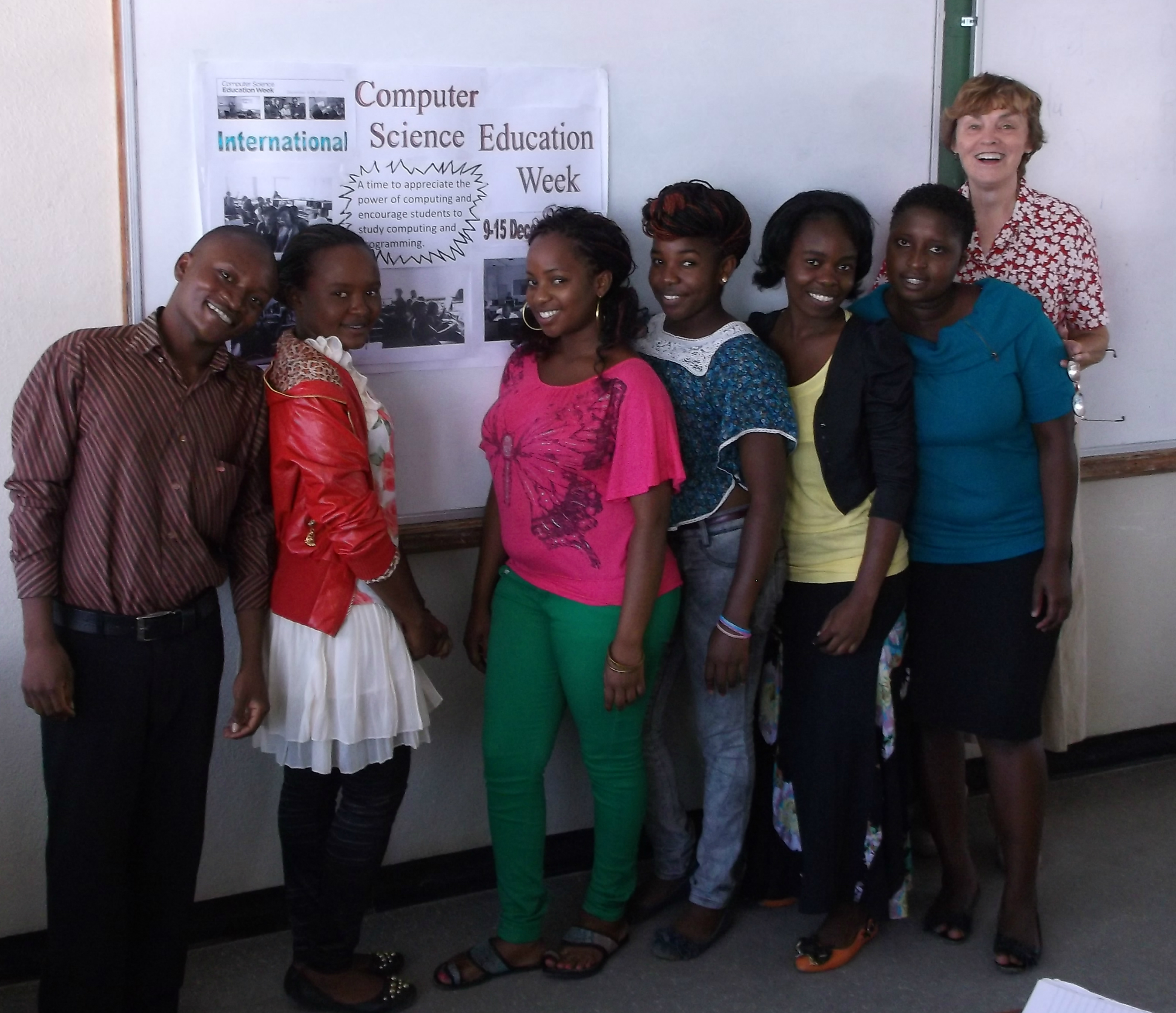
Sabin and her students in Malawi

Q: What was your time like in Malawi?

A: We were there for one semester, from September of 2013 through February of 2014. It is truly a different world. It’s rich in many ways, especially regarding the quality of the people – they’re friendly, hardworking, and peace-loving – but it lacks natural resources like oil, coal, etc. so it’s very poor. College is a privilege and the students take it very seriously.

I’ve kept in touch with a number of the students since I left – I’ve heard from about 15 or 20. It’s wonderful to be able to continue a relationship and I’d love to go back.

Q: As you reflect on your career, can you tell us a little bit more about yourself and why UMBC was your school of choice?

A: I’m a native Baltimorean and a product of an all-women education (secondary school and college). I was always interested in math and politics, and at one time thought I might be president. I got a lot of encouragement [growing up] – there was an assumption that women could do anything, and that underlined my whole education.

I taught secondary level mathematics for about 15 years. During that time I took a course in programming that was offered by the school system and was bitten by the excitement of programming. I also realized there was a tremendous need for instructors in computer science (this was about 1980), so I enrolled at Hopkins for a Master’s in just that. At that time I was teaching at Coppin State with Dr. Hrabowski – he was my dean, he hired me, so I saw him regularly. I completed my Master’s at Hopkins and was then recruited, in a sense, by Loyola to teach computer science. The big deciding factor to come to UMBC was Loyola offering to support me while I got my Ph.D.

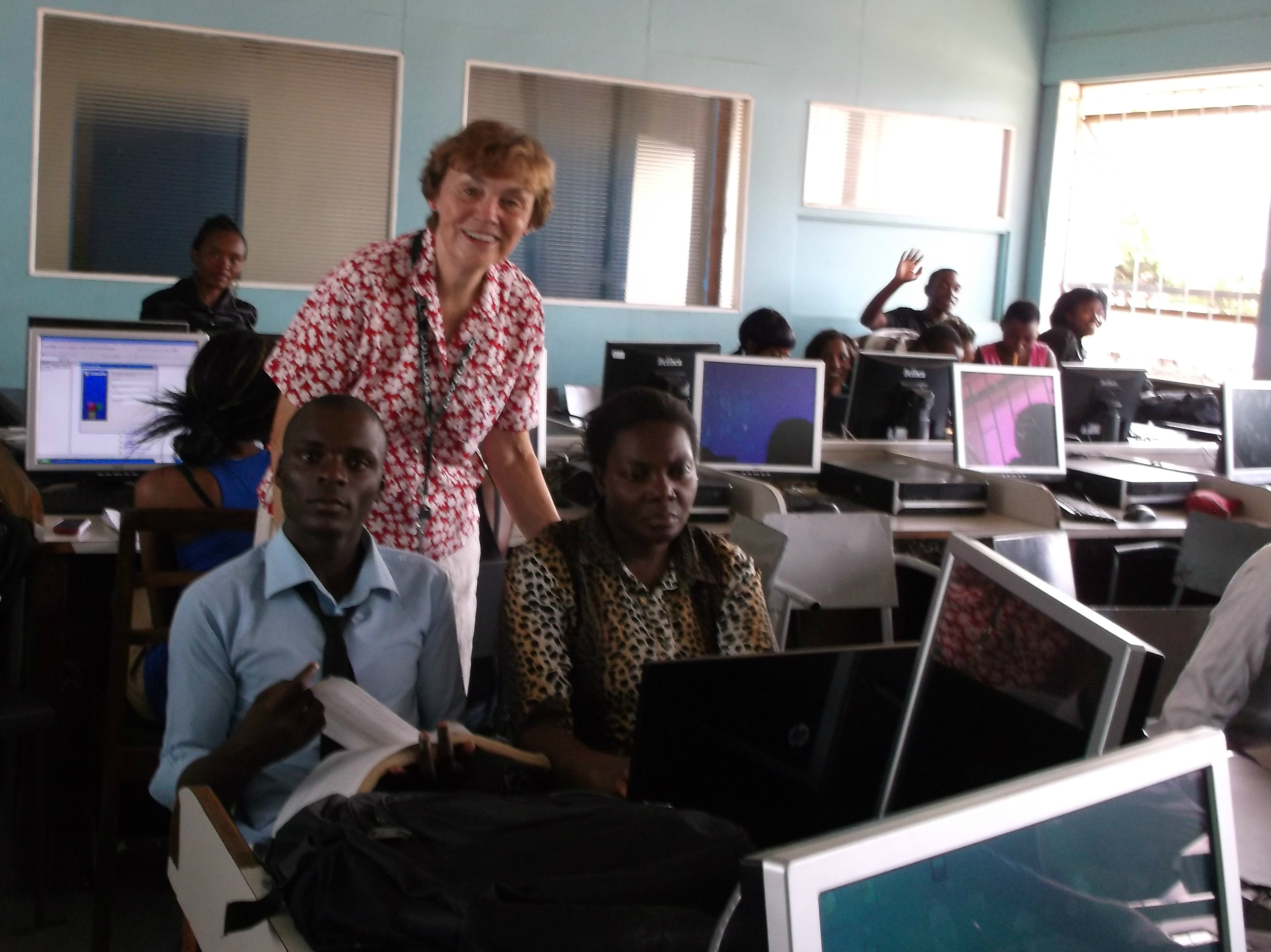
Sabin in the classroom

Non-traditional students like me were welcomed [at UMBC]; they made my time here as smooth as possible. It was a stressful time for me – by then I was married and had two children under the age of six.

Q: What advice would you give to UMBC students now?

A: Computer science and teaching make an unbeatable combination. There are continuous changes and intellectual challenges [in computer science], and it’s a lively and active professional group. Plus, technology is so needed. People who are interested in communicating about technology are needed and that’s what teaching is all about. Especially if you’re female – students need to see young women who are excited about that.

Have a story of your own to share? Tell us about it!

UMBC Recognized in New World University Rankings

The Center for World University Rankings (CWUR) 2014 global list recognizes UMBC as one of the top higher education institutions in the world. CWUR places UMBC in the top 2.3% of 22,000 colleges and universities worldwide, at #505.

The CWUR global ranking assesses quality of education (alumni who have won major international awards); alumni employment (as CEOs in companies worldwide); quality of faculty (faculty who have won major international awards); research publications, influence and citations; broad impact; and international patent filings.

In addition to excelling in these areas, UMBC is home to a diverse global community of scholars — both students and faculty — and recently launched a unique Global Studies program. This major gives students the robust cross-cultural foundation they need to act on issues of global significance. UMBC also offers compelling interdisciplinary programs in Asian Studies and Africana Studies.

A remarkable number of UMBC students study and research abroad each year, including several with prestigious Fulbright awards. Numerous courses, research programs, and co-curricular programs also focus on international collaboration, including UMBC’s Engineers Without Borders initiative to help residents of Insongo, Kenya reliably access clean drinking water.

UMBC is one of three University System of Maryland institutions on the list, which also includes the University of Maryland, College Park, and the University of Maryland, Baltimore. U.S. institutions with a CWUR ranking similar to UMBC include George Mason University and Syracuse University. Clemson University, whose president is UMBC alumnus James P. Clements ’85, MS ’91, Ph.D. ’93, is also included in the list.

Click here to see the full rankings for the top 1000 institutions on the global list. The institutions include 229 U.S. universities, along with universities from dozens of other nations, such as China, Japan, the United Kingdom, France and Canada.

Retrievers Represent UMBC in the Women in Cybersecurity Conference

Taken from the WiCyS Flickr album

During the past school year, several UMBC students traveled to Nashville, Tennessee to partake in the first-ever Women in Cybersecurity Conference.

Thanks to our wonderful donors, Emily Scheerer ’14, computer science; Christina Malliakos ’14, computer science; Emily McMurray ’14, computer science; and Ruth Coradin ’16, computer science and applied linguistics, were able to receive supplementary funding for their trip out west. The money was raised through a crowd-funded project undertaken by the Center for Women in Technology (CWIT). When the need for additional funding arose, CWIT reached out to its alumni and friends and rallied community support to ensure that the students would be able to attend the conference.

At workshops on subjects such as cryptography and technical industry, the Retrievers were able to network both themselves and their skills to others in the computer science industry. “I think it is great to be in a place where everyone has the same types of goals as you. The focus of the conference was so specific, it was great to know that other students are going through the same experiences as me, and the professionals have made it through the journey that I am on my professional career,” said Malliakos about her experience at the Women in Cybersecurity Conference. Guests included Emily Shen of the MIT Lincoln Lab and the director of NSA’s training division.

Although the conference was only two days, the experience has had a lasting impact on Scheerer, Malliakos, and Coradin. “I am truly thankful for the opportunity to be a part of such a rewarding experience. I have stayed in touch with both mentors and peers that I met at the conference,” says Coradin.

Thanks again to all of our donors involved in this endeavor!

Learn more about our other student projects here!


Solitary Refinement

UMBC alumnus Ben Marcin ’80 traveled the world with his camera. But he has found acclaim investigating the often bitter poetry, beauty and truth in local landscapes.

s14-feat-solitary-aThe photographs of Ben Marcin ’80, economics, are gaining a much wider audience of late. His work has been shown at venues including the Delaware Art Museum, The Center for Fine Art Photography in Ft. Collins, Colo., and at the C. Grimaldis Gallery in Baltimore – where he is currently represented and recently had a solo show this past winter. His photos are also in a number of group shows this summer, including at the Houston Center for Photography (“Photolucida Presents: How One Thing Leads To Another”); Towson University’s Center for the Arts Gallery (“Artscape 2014: Home: Human = Cage: Cockatoo” from July 10 to August 9) and the Griffin Museum of Photography, Boston (“Peter Urban Legacy 20th Annual Juried Exhibition” from July 10 to August 31).

Marcin’s work is also starting to be seized upon by those working in urban planning and writing about the larger forces at work in American culture. Marcin’s photographs have been featured in online galleries at The Paris Review, The Huffington Post, on Slate and in Wired, and twice in recent months on The Atlantic’s “City Lab” website.

The appeal of Marcin’s work to the larger audiences of policymakers and pundits is clear. His photographs engage with great issues of our time – urban blight and gentrification, homelessness, the vast expanses of rural America seemingly disconnected from our wired world – and yet they never slide into didacticism or agit-prop. The power of his art resides in the stark and unflinching eye of the photographer – and the images he captures with his lens.

UMBC Magazine asked Marcin to talk about his own artistic journey and introduce our readers to some of the series of images that are gripping the public imagination.

Continue reading “Solitary Refinement” →