All posts by: UMBC News Staff


Doug Frey, CBEE, Chosen As Yale’s Horvath Memorial Lecturer

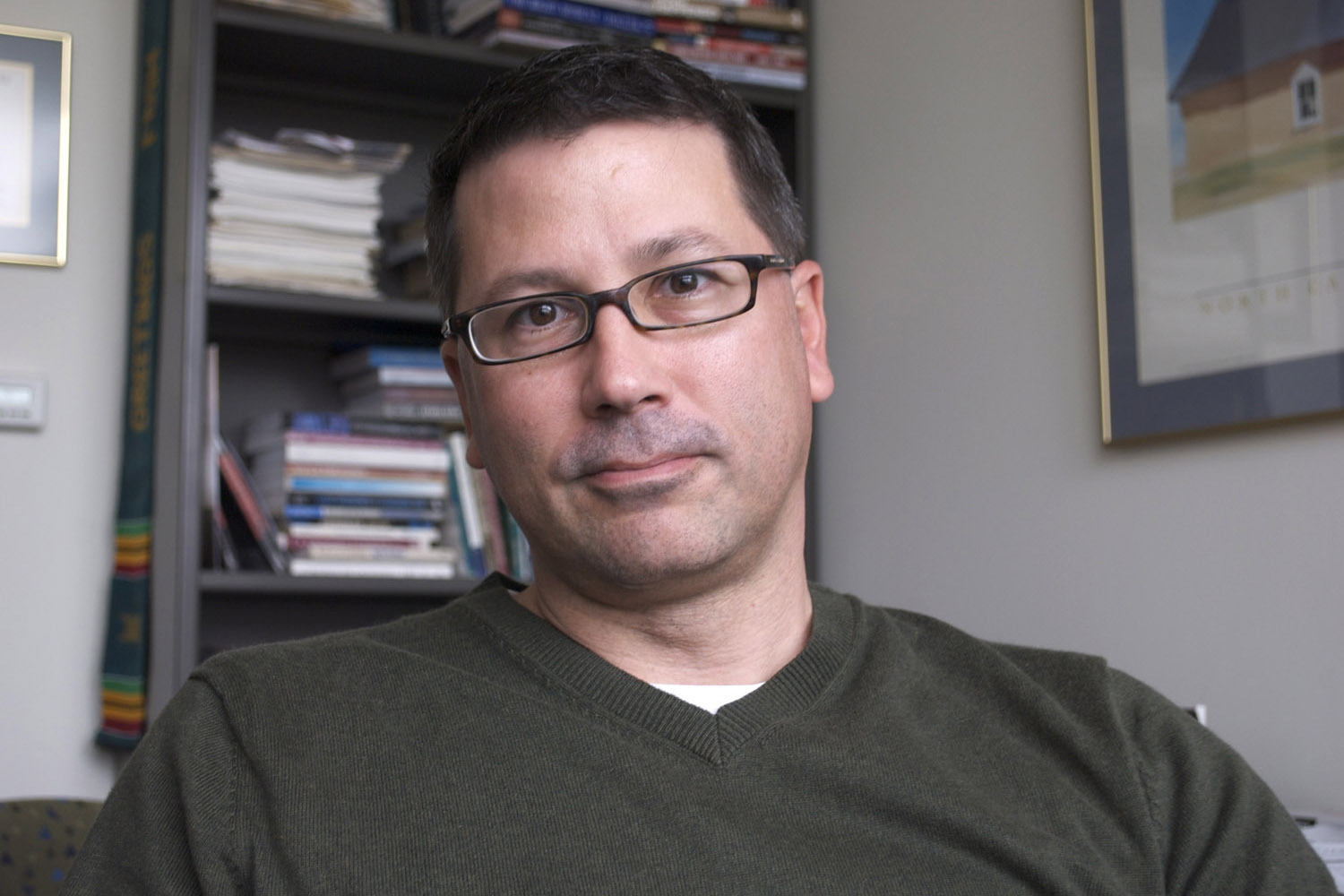
Doug Frey, Chemical and Biochemical Engineering, will be this year’s Horvath Memorial Lecturer at Yale University.

The prestigious Csaba Horvath lecture series is in memory of Professor Csaba Horvath, who is responsible for developing High Performance Liquid Chromatography (HPLC), without which modern chemistry and biotechnology would be difficult, if not impossible. The lecture is sponsored by Yale’s School of Engineering and Applied Science and The Goizueta Foundation.

Dr. Frey will speak on new methods and applications for the chromatography of biological macromolecules at Yale on April 16.

Dance and Music Faculty Receive MSAC Individual Artist Awards

Several faculty members and alumna, Heather Moss ’07, English, were awarded Individual Artist Awards by the Maryland State Arts Council (MSAC) this month.

The Maryland State Arts Council Individual Artist Awards are monetary prizes given to a select group of artists each year. This year the Maryland State Art Council awarded 89 artists with prizes ranging from $1,000 to $6,000 to “advance their artistic careers.”

Awarded in the category of Classical Music Solo Performance:

  • Lisa Cella, Music
  • James Crossland, Music
  • Jacqueline Pollauf, Music
  • Airi Yoshioka, Music

Awarded in the category of Choreography:

  • Adrienne Clancy, Dance

Awarded in the category of Solo Dance Performance:

  • Sandra Lacy, Dance

Awarded in the category of Poetry:

  • Heather Moss ’07, English

The Maryland State Arts Council will host an event honoring the awardees Saturday, May 17 beginning at 7 p.m. in the American Visionary Art Museum.


UMBC Reaches 10,000 Applications

The Office of Undergraduate Admissions and Orientation has reached a major milestone: receiving over 10,000 applications for the Fall 2014 entering freshmen class! This represents a 50% increase in applications in the last five years, and is the first time we’ve hit the 10,000 applications mark.

This milestone comes at a time when many institutions are experiencing declines in applications. Why the boost for UMBC? Yvette Mozie-Ross, associate provost for enrollment management, shares, “Very academically talented students increasingly identify UMBC as a top choice for a high quality, high value undergraduate education.”

“This increase in applications reflects how our reputation is becoming increasingly national,” says Dale Bittinger, director of the Office of Undergraduate Admissions and Orientation. “It also could not have happened without the hard work of an extremely dedicated staff in Undergraduate Admissions and Orientation, as well as our campus partners such as Institutional Advancement, Division of Information Technology, and all the faculty and staff who support our recruitment and yield efforts.”

Thomas Schaller, Political Science, in Sabato’s Crystal Ball

A new guest column in Sabato’s Crystal Ball by Political Science Professor Thomas Schaller argues that future ratification of constitutional amendments will become increasingly unlikely as state legislatures and the national government become more divided.

Tom SchallerSchaller writes as this year marks the centennial anniversary of the 17th Amendment, several former and current Republican members of Congress are moving to repeal the amendment, which mandates the popular election of U.S. Senators.

“Although the movement to repeal the 17th Amendment is likely to fizzle, the fact is plans to amend the Constitution are mostly a waste of time because, other than a widely popular and highly-unifying suggested change, it is probably almost impossible to ratify or even propose amendments in our highly-polarized nation and divided national government,” Schaller writes.

“The bottom line? America hasn’t adopted an amendment in the traditional, proposed-then-ratified-soon-thereafter fashion in more than 40 years, and it may be a long time before it happens again,” he adds.

To read the full column in Sabato’s Crystal Ball, click here.

Robert Provine, Psychology, in Slate

Robert ProvineAn article published March 25 in the online magazine Slate examines the factors that cause humans to laugh. The story cites the work and research of Psychology Professor Robert Provine that helps explain why humans laugh.

“For his book, Laughter: A Scientific Investigation, Provine engaged in what he called ‘sidewalk neuroscience,’ tracking and observing real-world laughter,” the article states.

The authors write that Provine’s research helps illustrate the reasons human laugh usually aren’t in response to something that is humorous.

“Provine discovered that the laughter of our everyday lives isn’t for the most part in response to anything resembling jokes,” the authors note. “Instead, most of it occurs in conversations that, out of context, don’t seem funny at all. Provine’s discoveries suggest that laughter is inherently social, that at its core it’s a form of communication and not just a byproduct of finding something funny.”

To read the full article in Slate, click here. Provine was also interviewed about the same topic on “The Arlene Bynon Show” on Sirius XM radio. Additional coverage can be found on Salon.com by clicking here.

UMBC: Honor Roll

Honor Roll

Presidential Faculty and Staff Awards recognize exceptional service to UMBC.

On Wednesday, April 2, 2014, UMBC will celebrate the exceptional performance, leadership and service of seven members of our campus community at the Presidential Faculty and Staff Awards Ceremony.

“The Presidential Faculty and Staff Awards Ceremony is an important annual tradition for the UMBC community,” says President Freeman Hrabowski. “Our faculty and staff are dedicated to fulfilling the university’s mission and vision, and this event gives us the opportunity to honor their professional achievements and commitment to our campus.”

The 2014–2017 Presidential Teaching Professor is Marie desJardins, professor of computer science and electrical engineering. desJardins, who joined the UMBC faculty in 2001, was named one of UMBC’s ten “Professors Not to Miss” in 2011. She is known on campus and throughout her professional community for her research in artificial intelligence and her dedication to innovative classroom teaching and student mentoring.

Robert L. Rubinstein, professor of sociology and anthropology, is the 2014–2017 Presidential Research Professor. Rubinstein, who came to UMBC in 1997, is a cultural anthropologist and one of the top researchers in his field, both nationally and internationally. His work is providing significant insight into the lives and experiences of older Americans, particularly in the areas of environment and aging, childlessness in later life, and long-term care.

Kevin D. Joseph ‘87, assistant director in the Division of Information Technology’s Business Systems Group, will receive the 2014–2015 Presidential Distinguished Staff Award, Professional Staff. Joseph began his tenure in the Division of Information Technology over 27 years ago, when he first served as a student worker and then full-time developer. He is known for his leadership, congeniality and caring nature, while his initiatives help make UMBC the model of a technology campus for enterprise solutions.

Susan Augsburger Velli ‘88, business services specialist in the Department of Music, will be honored with the 2014–2015 Presidential Distinguished Staff Award, Non-Exempt Staff. Velli joined the UMBC Department of Music staff in 2000, and has served the University System of Maryland since 1991. Her colleagues see her as the hub of a fast-paced department, and her professionalism and management and organizational skills are an asset to the department and its people.

Jeff Leips, associate professor, biological sciences, will be recognized as recipient of the 2014 University System of Maryland Board of Regents’ Faculty Award for Excellence in Teaching. Leips, who joined the faculty in 2001, is making groundbreaking contributions to interdisciplinary undergraduate education in the life sciences. His work has generated new research opportunities, new courses and new minors, all of which will have a significant and far reaching positive influence not only on UMBC’s students, but also on the faculty and institution itself.

The 2013–2014 Jakubik Family Endowment Award will go to Justine Marie Johnson, associate director of the Meyerhoff Graduate Fellows Program. She began her UMBC career in 1999, and her efforts have helped establish UMBC as a national model for doctoral STEM diversity. Under Johnson’s leadership and mentoring, the Meyerhoff Graduate Fellows Program has undergone tremendous growth.

This year, the awards ceremony also will include the presentation of the first Karen L. Wensch Endowment Award for Outstanding Non-Exempt Staff. President Hrabowski endowed the award in honor of Karen Wensch, who retired in 2010 as executive administrative assistant to the president, after 40 years of outstanding service to the campus. The award recognizes a non-exempt staff member who demonstrates exceptional dedication to the UMBC community and a commitment to extraordinary work performance.

The first recipient of the Wensch award is Jane Gethmann, assistant to the chair in the Department of Computer Science and Electrical Engineering, who came to UMBC in 1971. Gethmann is known as the glue that holds the department together, going above and beyond her responsibilities. In addition to assisting the chair and handling administrative and financial duties, Gethmann also takes the lead when additional resources are needed or when she sees a way to increase efficiency in the department.

The Presidential Faculty and Staff Awards Ceremony begins at noon, on Wednesday, April 2, 2014, in the University Center Ballroom. All UMBC faculty and staff are encouraged to attend.

For more information about the ceremony and the award winners, please visit the event website.

(03/27/2014)

Liz Walton, Dance, in Washington Post and New York Times

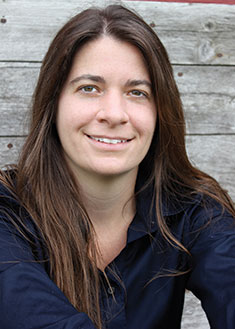
liz2Two articles — which included interviews with Liz Walton, dance –were featured in the Washington Post and New York Times last week. The pieces, focused predominately around the history, success and upcoming reunion of the Paul Taylor Dance Company, featured discussions with Paul Taylor alumni, including Liz Walton on her involvement in the company during the 1950’s and 60’s.
Read the interviews, “A family reunion with the Paul Taylor Dance Company” and “Institutional Memory Onstage: Paul Taylor Alumni Return for 60th Anniversary Celebration”

Maryland Art Place Announces 2014 Imprint Artist: Steven H. Silberg

Maryland Art Place (MAP) is pleased to announce this year’s IMPRINT Artist, Steven. H. Silberg and his selected image, stemming from a series of work titled, “For Love (089-b)”. In its third year, MAP honors one singular contemporary artist who has demonstrated excellence within their selected media through its annual print reproduction program, IMPRINT.

The goal of the IMPRINT program is support artists by increasing the visibility of their work, and by promoting sales. Artists benefit by being highlighted on MAP’s website, and through the sale of a funded artist print reproduction. MAP will also sell the reproduction at its annual benefits, or offer them as sponsor incentives, which furthers the artist name and work. The selected artwork will officially launch in conjunction with MAP’s Annual Spring Benefit, Out of Order, Friday, April 4, 2014.

The body of work entitled “Reductive Video” by Steven H. Silberg borrows the choice to depict changes in movement (either as individual frames or wholly contained in a single image) and applies it to the technical rendering of images. Using custom software written in Max/MSP/Jitter, video is broken down to reveal only the pixels that change from frame to
frame, no longer implying form, but instead the shape of what has changed from the previous frame. Re-sequenced as video, the individual frames become reminiscent of Muybridge’s silhouetted running horse. These individual frames are also layered to become a single image, showing changes in shape, reminiscent of Marey’s use of lines on soldier’s uniforms – depicting a “wire frame” of physical movement.

“For Love (089-b)” presents only the reduction of a video into a single print. Changes in motion and movement are layered to create impressions of these on-screen activities. Highlighting the divergence of form from content, this exploration of the “Reductive Video” process uses appropriated source material from online amateur pornographic video-sharing websites. Silberg received his MFA from MICA in 2004 and his BFA from the University of Delaware in 1997. He is a Lecturer in Foundations, concentrating in Photography and Video, at UMBC.

Out of Order (OOO) is a unique way to get involved with Baltimore’s growing art scene, while supporting one of Baltimore’s most established contemporary arts organizations. Revenue generated at Out of Order directly supports MAP’s programs, exhibitions and opportunities throughout the year furthering MAP’s mission. OOO will take place Friday, April 4 at 218 West Saratoga Street Baltimore, MD 21201. For more information
contact: Emily Sollenberger at emily@mdartplace.org.

Maryland Art Place (MAP) inspires, supports, and encourages artistic expression through innovative programming, exhibitions, and educational opportunities while recognizing the powerful impact art can have on our community. MAP creates a dynamic environment for artists of our time to engage the public by nurturing and promoting new ideas. MAP has served as a critical resource for contemporary art in the Mid-Atlantic since 1981. MAP is supported by the Maryland State Arts Council and The Citizens of Baltimore County.

For more information contact: paul@mdartplace.org or call 410.962.8565.

Nicole King and Michelle Stefano, American Studies, in City Paper

In their second article in a series of essays for the “City Folk” section in City Paper, American Studies Assistant Professor Nicole King and Folklorist in Residence Michelle Stefano profile Courtney Speed, a cosmetologist and community leader. The essay, titled, “Days of their lives,” was published March 26.

The article focuses on Speed and her devotion to Turner Station, a neighborhood at the tip of Dundalk in Baltimore County where she has lived since the 1960s. King and Stefano describe Speed’s time working at a barbershop that her husband owned, and later opening the Thomas and Martha Allmond Economic Development Center which trains young people and adults with special needs to run a business. It also serves as an incubator for the Henrietta Lacks Museum.

King and Stefano write that Speed worries about the Turner Station community changing due to developers taking over the neighborhood: “Speed would love to see Turner Station remain the utopian community she recalls from its heyday,” the authors write.

You can read the full essay in City Paper here.

COEIT Uses Constellation Energy’s Education Award For Undergraduate Research

UMBC’s College of Engineering and Information Technology is using an Energy Education Award from Constellation Energy to provide energy research opportunities for a significant number of undergraduate students.

This semester, students in IS 420: Advanced Database Development received technology to collect the power consumption data of different appliances and devices. They are also working to build a web-portal (GUI), which will capture human actions, energy behavior and footprint over a specific period.

Project involvement encourages the students to think differently about energy systems and promotes advanced study and career preparation in the energy industry. The Constellation project helps students gain a greater sense of social awareness and deeper understanding of energy system technologies, as well as enhance their basic research and development skills through this hands-on experience. By combining their intrinsic research abilities and inspiration, the students will become conscious about the importance of being a responsible energy user in their daily lives and beyond.

Read more about the Energy Education Award here.

Moving in Place: Jill Sisson Quinn ’97, English

The habitat in central Maryland where Jill Sisson Quinn ’97, English grew up isn’t very different from the habitat in central Wisconsin where she lives now. The birds, insects, and trees are similar; you can use the same field guides, she says. Yet when she moved to the Midwest in 2005, she had traded a place full of rivers for one full of lakes, and “it was a huge problem for me,” she says. “I would wake up in the middle of the night and I would feel like I was moving to another planet.”
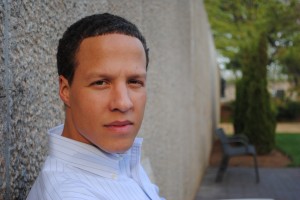
Is this homesickness, or an acute sensitivity to one’s environment? Quinn’s work suggests that the two things tangle like roots from different plants, complicating where personal experience starts and human nature begins. The essays in her 2010 collection, Deranged: Finding a Sense of Place in the Landscape and in the Lifespan, are remarkable literary hybrids designed to explore these complications. In one piece, she weaves a discussion of Lucy, the 3.2-million-year-old skeleton of a human ancestor, alongside a remembrance of Fatso, a tree near her childhood home. In another, a breakup is a launchpad for thinking about shrinking forests, and how life at their edges is different than their interiors.

The shifting definition of place is a constant in Deranged, and she refers often to her childhood home – more precisely, the branches of the Patapsco River not far from it. As she writes in the book’s introduction, “I like to believe that there is some un-faulty guide steering me home, and hope that if I am not there now, I soon will be.”

Quinn has been publishing these lyric essays since 2001, but their sensibility is predated by the interest in science and literature she cultivated as a student. When she arrived at UMBC, she was committed to writing poetry, inspired in part by what she had learned about astronomy.

“I remember reading the textbook religiously,” she says. “I remember it talking about stars and the birth and death of stars, and how stars aren’t really alive but that we owe our existence to stars, because the atoms that make up our bodies were formed in the centers of stars. I never read a textbook that personified things and gave this eminence to them. That really moved me.”

She wrote her honors thesis on the work of Heather McHugh, a poet who draws heavily on nature. “She’s always been an environmental writer,” says James C. McKusick, her thesis advisor, who is now dean of the Davidson Honors College at the University of Montana. “Both in her prose and her poetry, she reflects deeply on people’s relationships with place, or with humankind’s relationship with the natural world. She reflects on that in a way that a poet should, with a lot of concrete imagery – a lot of deeply thought and felt images.”

Quinn’s writing process involves a lot of walking – 6.7 miles every day with her dog, to be exact – and a lot of thinking about connections: “I discover something in nature that’s weird, like a wasp, or these beautiful rocks, and I’ve got this question in my head. I know I’m going to connect them, and then I research the nature, and the connection grows out of that.”

Last year Quinn received a $30,000 Rona Jaffe Foundation Writers’ Award, given annually to emerging women writers. The prize has allowed her to take a half-time sabbatical from her job as a high-school English teacher. She’s currently at work on her second book, titled The Doctrine of Signatures, which leverages her close study of nature to address larger spiritual questions. This is perhaps an unlikely pursuit for a nature writer, who’s generally expected to be a John McPhee-like rover. But in Quinn’s particular line of work, depth trumps breadth.

“I’m not a traveler,” she says. “I don’t think I’ll ever exhaust Wisconsin or Maryland.”

– Mark Athitakis

Read the full issue of the Winter 2014 UMBC Magazine.

George Derek Musgrove, History, in The Washington Post

Derek MusgroveA recent Washington Post column explores the possibility of District Mayor Vincent Gray being indicted on federal criminal charges while running for reelection. Gray has said he wouldn’t resign if the charges were brought and would defend himself at trial.

George Derek Musgrove ’97, history, assistant professor of history, was interviewed for the column and offered his perspective on what a trial would mean for Gray if he were to continue governing.

A trial “would be horrible — it would just be a magnification of the current situation,” Musgrove said. He added such a spectacle would hurt the city’s relations with Congress and hamper Gray’s performance.

Musgrove is currently writing a book about race and democracy in the District. To read the full column in The Washington Post, click here.