All posts by: UMBC News Staff


Jason Schiffman, Psychology, in The Daily Beast

An article published February 9 in The Daily Beast titled “What Military Base Shootings Reveal about the Mental Health Debate” examines if better mental health screening can prevent future tragedies from occurring.

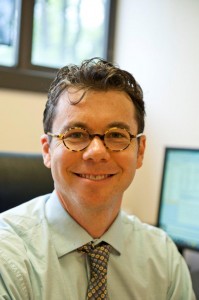
Jason Schiffman

Psychology Associate Professor Jason Schiffman was interviewed for the story and is currently a staff member at Maryland’s Center for Excellence on Early Intervention for Serious Mental Illness. In the article, he argues early treatment for people experiencing symptoms of psychosis and schizophrenia can help prevent them from causing harm to themselves or others.

“Studies show one in 5 people in their early phases of psychosis will have a suicide attempt, which is a really high number,” Schiffman said. He is working with his team of researchers to identify young people with psychosis in order to help them get on a path towards leading a life they want to live.

“They may not have the full symptoms of psychosis, such as delusions, or beliefs held onto tenaciously despite evidence to the contrary. They may not be hearing voices or believe the FBI has planted a microchip in their tooth,” Schiffman explains. “But a lot of times people who eventually develop psychosis have anxiety symptoms early on. They suffer from distress that they can’t exactly explain.”

In the article, Schiffman also points to other countries such as Norway and Australia which dedicate money and resources to reducing stigma associated with mental illness.

“In Norway, mental health concerns are not considered something you have to hide or something that makes you a bad person,” said Schiffman. “In Australia, they approach young people from a community-oriented perspective. Mental health centers are kind of like YMCAs, where young people are playing pool, talking, not stigmatized into hiding who they are.”

You can read the full article in The Daily Beast here.

UMBC: Making a Mark

Making a Mark

A UMBC mathematician finds the right equation for biologists

Kathleen Hoffman, a professor of mathematics and statistics at UMBC, works in math biology, but she often felt that her biology colleagues didn’t really understand what she was doing.

“The work I did was very foundational in mathematics and it didn’t really help them design an experiment or impact their way of thinking,” Hoffman says. So after she got tenure, Hoffman did something most mathematicians wouldn’t think of doing: she took a sabbatical, got funding from the National Science Foundation and joined a biology lab.

“I called it an immersion program,” says Hoffman, “because what I wanted to do was like learning a new language, where you just go to the country and live there, and that’s what I did.”

Hoffman had done her homework. She knew she wanted to work with Avis Cohen, a professor of biology at the University of Maryland, College Park who researches lampreys – a kind of a jawless fish that sucks the blood out of other fish – and how they swim. Scientists study lamprey locomotion because these fish possess neurons similar to those that power human locomotion, but thousands and thousands of orders of magnitude fewer in number – and thus much easier to study.

Joining Cohen’s lab brought about a fundamental change in Hoffman’s research, introducing her to an interdisciplinary group of mathematicians, biologists, and engineers all working on lampreys. “We had the best meetings,” says Hoffman, “because we were such an interdisciplinary group and it was predominantly women, which is very unusual in mathematics.”

Hoffman’s task was to mathematically model neurons. “The model pushes you in the right direction experimentally,” she explains. In developing the equations for the model, however, Hoffman had to grapple with lamprey biology.

“You don’t know what you’re trying to model if you don’t understand the biology,” she says. “But I wouldn’t say I sit down and understand the biology and then start writing math. It’s a process. I understand a little bit of the biology, and then I do a little bit of the math, and then I go back.”

One colleague says that Hoffman’s work modeling work is critical for the biologists and other researchers on the team to understand locomotion and design their experiments. “The problem of locomotion is difficult to understand without mathematics,” says Tim Kiemel, a research assistant professor in the department kinesiology at the University of Maryland, College Park.

Hoffman eventually needs the power of computing to actually “do” the modeling. But before she dives into programming, she starts out using a pencil and paper to define the problem and pose the right questions.

“Sometimes you just have to sit there and stare at it,” Hoffman says. “Sometimes you have to do a lot of calculation, or sometimes you just have to let it stew.”

(02/07/14)

UMBC: Planting A Seed

Planting a Seed

New grants grow UMBC’s research partnership with UMB

Faculty members at Maryland universities conduct important research that may provide relief for spinal cord injury victims, or develop new targeted methods to deliver drugs through nanotechnology.

More and more of that vital work is being conducted in collaborations between faculty at UMBC and the University of Maryland, Baltimore (UMB).

The latest venture to expand the research partnership between the two neighboring universities (separated by less than seven miles) is a joint UMBC-UMB Research and Innovation Partnership Seed Grant Program that pairs primary investigators from each university to conduct research as a team. Successful partners are offered research funding of up to $75,000 over twelve months to pursue their collaboration.

The program’s first grant recipients were announced at a ceremony and poster session held at UMBC’s Albin O. Kuhn Library on February 11, 2014. Those selected for the awards included faculty in UMBC’s College of Natural and Mathematical Science and College of Engineering and Information Technology, as well as researchers in the University of Maryland School of Medicine and University of Maryland School of Pharmacy.

At the announcement ceremony, UMB Chief Academic and Research Officer and Senior Vice President Bruce Jarrell observed that the Seed Grant Program represents the deepening of a relationship that already includes cooperation on a joint graduate school and the Institute of Marine Environmental Technology (IMET) as well as a panoply of curricular efforts in areas such as the life sciences, gerontology, health informatics and social work.

“These collaborations already exist,” Jarrell observed. “And we’re proud to have UMBC as a partner.”

UMBC President Freeman A. Hrabowski, III, is enthusiastic about the projects selected for the initial round, which include investigations that may influence the course of research into cancer, strokes and muscle degeneration.

“The Seed Grant Program is a means by which both universities can better discover each other’s strengths and needs to see how we can better collaborate,” says Hrabowski.

Jay Perman, President of the University of Maryland, Baltimore, says increased partnership between the two universities is a key element of his vision. “I cannot stress enough the importance we place on our collaborative relationship with our colleagues at UMBC. The partnerships that UMBC and UMB have enjoyed for years are real, longstanding collaborations, and have been extremely successful, if not widely known.”

At the state level, the research partnerships fostered by the Seed Grant Program will further extend Maryland’s research profile and aid in securing vital funding from federal agencies, private foundations and other funding sources.

William E. Kirwan, Chancellor of the University System of Maryland (USM), praises the new program for its “focus on cutting-edge science and health concerns” and its emphasis on interdisciplinary teamwork.

“It is this type of structured collaboration.” Kirwan says, “that will enable both UMBC and UMB—as well as the USM—to reach their full potential, and to take full advantage of the opportunities before us.”

The first five teams to receive UMBC-UMB Research and Innovation Partnership Seed Grants are:

* Kathleen Hoffman, professor of mathematics (UMBC) and Asaf Keller, professor of anatomy and neurobiology (UMB), are exploring the chronic pain of patients with spinal cord injury and how computational modeling may help analyze the neurobiological changes in the central nervous system after such injuries.

* Martin Schneider, professor of biochemistry and molecular biology (UMB) and Bradford E. Peercy, assistant professor of mathematics (UMBC) are combining forces to analyze a transcription factor (Foxo1) in skeletal muscle that activates genes in a pathway that leads to the breakdown of muscle protein. They hope to develop protocols and models that will provide new approaches to controlling this factor.

* Charles Bieberich, professor of biological sciences (UMBC) and Paul Shapiro, associate professor of pharmaceutical sciences (UMB) are working on a more targeted use of a promising cancer treatment called “kinase inhibition.” Currently kinase inhibition creates resistance over time, so Bieberich and Shapiro are looking for more selective paths to inhibit portions of an enzyme that allows cancer cells to multiply without shutting down other functions in the process.

* Marie-Christine Daniel, associate professor of chemistry and biochemistry (UMBC) and Peter Swaan, professor of pharmaceutical sciences (UMB) are exploring how nanotechnology might improve the delivery of drugs (increased dosage, or better targeting) by examining a class of molecules known as “dendrons.”

* Tulay Adali, professor of computer science and electrical engineering (UMBC) and Kelly Westlake, assistant professor of physical therapy and rehabilitation science (UMB) are exploring how using a powerful computational tool (independent vector analysis) can aid in navigating variability in cognitive neural function and better help the recovery of stroke victims.

A call for proposals for the next round of the UMBC-UMB Research and Innovation Partnership Seed Grant Program will be issued on April 15, 2014.

(02/12/14)

Meet the Staff: Jessie Orsburn

picAt Alumni Relations, we spend a lot of time focusing on and communicating with our wonderfully supportive alums. However, we’ve decided to turn the tables and take time to get to know the people behind the scenes, the staff members at Alumni Relations who make things happen. Today we’ll be hearing from Jessie Orsburn ’14, English, the new Alumni Relations intern for the Spring 2014 semester. She’ll be contributing to the UMBC Giving blog and is looking forward to being a part of the UMBC Alumni Relations team.

Name: Jessie Orsburn
Job Title: A&D Communications intern
Focus Area: UMBC Giving blog writer
Years at UMBC: Three
Grad year (if alum): NA

Q: Where are you from originally?

A: I was born in Chicago and lived in California for several years before moving to Maryland’s 21228 (Catonsville), which is where I’ve been since I was five.

Q: What do you love most about UMBC?

A: I love the passion for learning and teaching seen from students and teachers. There is something about UMBC that just feels different from other universities. At UMBC, people care about education, about making a difference, about being a part of something bigger than themselves. I’ve always loved that about UMBC. I also love the diversity.

Q: What’s your favorite thing about your job?

A: This is only my first day on the job, but already I am intrigued by Alumni Relations and their aim to build students’ and alums’ interest and involvement in UMBC and giving back to the UMBC community. Not to mention, the staff members I have met so far are awesome!

Q: Have you ever done anything crazy or out of the ordinary?

A: I once took a missions trip to Africa where I had the opportunity to meet and work with the people of QwaQwa, a small town in the southern part of the continent. I also got to hold a baby lion cub, no big deal.

Q: If you could be a superhero, who would you pick and why?

A: I would have to say Superman; I mean, who doesn’t want to be Superman? Not only would I be able to fly, which is the greatest super power ever, but I would be able to help people with innumerable tasks and never get tired. Rescue a cat from a tree, prevent a ship from sinking, fly an elderly person across the street, remove debris and rubble from disaster areas and the list goes on.

Nicholas Magliocca ’12 Ph. D., GES, and Erle Ellis, GES, in PLOS ONE

Decisions on how to use land are influenced by environmental, economic, political and cultural factors. Because of these various factors, it is difficult to understand how decisions made at the local level affect changes in land-use on a global scale.

A new article in PLOS ONE by Nicholas Magliocca, a computational research associate at the National Socio-Environmental Synthesis Center (SESYNC) and former UMBC postdoc, Daniel G. Brown of University of Michigan and Erle C. Ellis of UMBC’s Department of Geography and Environmental Systems addresses these issues.

The article describes how the authors used an agent-based model as a virtual laboratory to explore how land-use decisions in test sites in the U.S., Laos and China were influenced by global and local processes. The researchers found the model outcomes confirmed that population, environmental  factors and market influences shaped land-use decisions across various land systems. Read the article at plosone.org, and a summary on the SESYNC blog.

Round-Up: UMBC in the News

One of the things that makes UMBC great is how wonderful our alumni, students, faculty and staff are. Because of these amazing people, UMBC often finds itself “in the news,” so each week, we’ll be sharing with you a round-up of the most newsworthy achievements from our community.

Check out all the other great campus news on Insights Weekly.

Mark Your Calendars for March!

Make it a March (and April) to remember by joining us for these great events coming soon:

Admissions Receptions
Various Dates

Are you a proud Retriever Believer? There are a variety of ways alumni can volunteer to give back to the UMBC community. One unique opportunity is to attend one of our many spring Admissions Receptions. These events are offered through Alumni Relations and the Admissions Office. The first two receptions will be held in March:

  • Tuesday, March 11, 7 – 9 p.m., Baltimore (Hilton)
  • Tuesday, March 25, 7 – 9 p.m., North Bethesda (Rockville/Strathmore)

Get more details and volunteer through our website.

Dessert & Discussion: Family Voices
Wednesday, March 12, 6:30 p.m.

Join us for a spring Dessert and Discussion with Professor Wendy Salkind (theatre) and two fellow alums for a reading of Harold Pinter’s early radio play, Family Voices.
Following the reading of this short play, Professor Salkind will informally respond to audience reactions to Pinter’s characters, and his Absurdist techniques in theatrical form. RSVP now!

Early-Bird Ticket Sales!
Wine Tasting and Silent Auction
Friday, April 25, 7 p.m

This is no average trip to the library. Get dressed to the nines and join fellow UMBC alumni and guests for an elegant party in the beautiful and historic George Peabody Library. Located in picturesque Mt. Vernon, the George Peabody Library will be a studied backdrop to an evening filled with jazz, excellent company, refined refreshments and fine wine. Your attendance and participation in the silent auction will benefit the Alumni Association Scholarship for current UMBC students. This event is brought to you by the UMBC Chapter of Young Alumni.

The ticket price includes unlimited wine tastings and heavy hors d’oeuvres. Purchase your tickets now until March 7 for the early bird price of $30.

Ann Christine Frankowski, Center for Aging Studies, in The New York Times

In a recent article in The New York Times blog “The New Old Age,” author Paula Span wrote about the Office of Inspector General’s report on Medicare payments for vacuum pumps. The report stated Medicare was paying “grossly excessive” prices for the devices.

Ann Christine Frankowksi, senior research scientist for UMBC’s Center for Aging Studies in the department of sociology and anthropology, was quoted in the article commenting on ageist perceptions of sexuality.

“The general concept is that older people are asexual, that they don’t have, or shouldn’t have, any thoughts about sex,” said Frankowski, whose research has included sexual behavior and policies in assisted living. “There’s a bias against it.”

You can read the full article in The New York Times here.

N. Jay Jaffee Photographs from Public to Personal’ Reviewed in the Baltimore Sun

The photography exhibition currently on display in the Albin O. Kuhn Library Gallery, N. Jay Jaffee Photographs from Public to Personal, 1947-1997, received praise this week in the Baltimore Sun.

The review discusses the personal background and career of Jaffee, in relation to his “visceral” and “compelling” photographs of New York City life. The author Tim Smith states that, “N. Jay Jaffee might not be among the best known American photographers of the 20th century, but a sizable and engrossing exhibit of his works at the University of Maryland, Baltimore County, makes it obvious that he deserves much wider recognition.”

Read “UMBC presents exhibit of N. Jay Jaffee photos: New Yorker had keen eye for scenes of the city and its people” at the Baltimore Sun‘s website.

N. Jay Jaffee Photographs from Public to Personal, 1947-1997 is on display in the Library gallery though Sunday, March 23. Learn more at our Arts and Culture Calendar.

Artwork by Jason Hughes, IMDA, in the New York Times

This week, a project by Jason Hughes, IMDA, was included in a New York Times Education Life slideshow that highlights the work of students whose art creatively solves a problem. One of only 17 featured artworks, Hughes’ limited edition Artistic Futures Savings Bonds aim to raise and sustain support for future artworks. He says, “they can be bought for $100 and increase in value every six months, to $250 in 10 years. Art patrons can trade in the bond toward the acquisition of a new work or hold onto it as an artwork itself.”

View the full slideshow including Hughes’ work: “Students Get Creative”

The piece will also be included in an education supplement of the New York Times this Sunday, February 9. Learn more about Hughes’ artwork at his portfolio website.

Project by Charlotte Keniston, IMDA, in Peace Corps Blog

MFA candidate and Shriver Peaceworker Fellow, Charlotte Keniston was featured this week in the National Peace Corps Association blog. The article, “Returned Volunteer Takes on Food Deserts of Baltimore,” discusses an ongoing project by Keniston that tackles food challenges in Baltimore. Keniston cites her Peace Corps experience in Guatemala and her involvement as a Shriver Fellow as a major influence in her work saying, “While in Guatemala, I spent a lot of time cooking and eating with people. I learned that healthy food doesn’t just nourish the body, but growing food and eating it together can also nourish the community . . . The conversations I had in weekly Peaceworker sessions challenged me to view my neighborhood through a ‘Peace Corps’ lens- to see the possibility for positive change.”

Learn more about Keniston’s work, including her A Full Plate project — in which Baltimore area participants “discuss what food means to them in relation to their families, their communities, their health, power, place and spirituality” — at her website. Her work will be on display in the 2014 MFA Thesis Exhibition at the CADVC this April.

Student Scholarship Q&A: Kaitlyn Golden, psychology

Every so often, we highlight the importance of student scholarships by introducing you to the very students they help to succeed. Today, we’re featuring Kaitlyn Golden, a senior psychology major who is also a Shattuck Family Entrepreneurial Scholarship recipient. This scholarship was established to recognize and celebrate outstanding UMBC students who have demonstrated an interest in entrepreneurship, high academic potential and drive, and an exceptional value system and commitment to the community.

Name: Kaitlyn Golden
Grad year/major: May 2014, psychology
Affiliation: Sondheim Public Affairs Scholars Program, Honors College

Q: Why did you decide to attend UMBC?

A: My sister attended UMBC, and so I wanted to do something different. But with encouragement from my family, I took a tour during the fall of my senior year in high school and really liked the campus. When we got to Academic Row, I saw the library pond and the green trees arching overhead, and I remember thinking, “Wow, I could definitely go here.” I’ve always felt really fond of Academic Row and the library pond ever since then – they helped change my mind about UMBC, and helped me appreciate the school’s beauty.

That spring, I found out I’d been accepted into the Sondheim Public Affairs Scholars Program and the Honors College, and so I knew then that I was definitely going to go to UMBC.

Q: What’s been the most amazing discovery you’ve made so far as a student here?

A: People here at UMBC are boundlessly generous and giving of their time, energy, wisdom and patience. From my peers, mentors and professors, I’ve learned about many different social justice issues. My most amazing discovery was how students can make change in the world, and from this, I realized my own personal power and strength. This year, I have also realized how, in so many ways, we are not isolated beings; we need the support of people who love us to move forward.

Q: What was your time like in the Shattuck Family Internship Program?

A: While most students were using the scholarship during the spring semester to complete internships, I interned during the summer. I spent five weeks working at a non-profit in Baja California, Mexico. Prior to my internship, during the spring semester, I attended three speaker sessions sponsored by the Alex. Brown Center. All Shattuck recipients were invited to have breakfast with Molly and Mayo Shattuck, which was really fun. I loved meeting the other interns, who were doing such great work at their respective sites. The program thus prepared me very well for my time in Mexico and gave me a solid foundation of knowledge and support.

Q: How important is it to you as a student to get scholarship support?

A: Scholarships make my education possible. Without financial assistance, I would not be free to pursue some of the wonderful opportunities I’ve had at UMBC, such as research, volunteering, playing club Ultimate and being involved in many organizations. In addition to the Shattuck Program’s financial assistance, I am also a member of Sondheim Public Affairs Scholars Program. The Sondheim Program helped me financially during my college career, and gave me a solid foundation to learn about public service and public affairs. Scholarship support gave me the time to become a freer, more well-rounded thinker and an involved student.

Q: What did you do with the scholarship money you received?

A: The Shattuck Program’s grant enabled me to pay for my plane ticket to Mexico, my baggage fees and it also covered most of my living expenses while I was there. I felt really lucky to be able to do international service without worrying about the financial stress of traveling to another country.

Q: What would you say to the people who provided your scholarship?

A: Thank you! Thank you, thank you, thank you. The Shattucks’ generosity is incredible. Both Molly and Mayo Shattuck are inspiring and great examples of leading a positive and giving life. I really admire both of them for their innovations, like their internship program, and all of the service work they do in the Baltimore community.

Q: What do you hope to do after graduation and why?

A: My favorite quote is derived from the Bible and immortalized by John F. Kennedy: “To those whom much is given, much is expected.” I believe in this very strongly. I have been given very much, and after college graduation I want to give back. I plan to serve both domestically and internationally. I am applying to several AmeriCorps programs and the Peace Corps. After this service, I will pursue a Ph.D. in Community Psychology. I plan on using my degree to work for food justice, access and sustainability within communities of immigrants and refugees in the United States.