All posts by: UMBC News Staff


Celebrating MLK Day

As we celebrate Martin Luther King Jr. Day, check out UMBC’s online exhibit “For All the World to See,” which focuses on the civil rights movement.

For All the World to See: Visual Culture and the Struggle for Civil Rights is organized by the Center for Art, Design and Visual Culture, University of Maryland, Baltimore County in partnership with the Smithsonian National Museum of African American History and Culture. Through a host of media—including photographs, television and film, magazines, newspapers, posters, books, and pamphlets—the project explores the historic role of visual culture in shaping, influencing, and transforming the fight for racial equality and justice in the United States from the late-1940s to the mid-1970s. For All the World to See includes a traveling exhibition, website, online film festival, and richly illustrated companion book.

If you’re in Texas, the exhibit will be coming your way on January 28. Be sure to see if it’s making a stop in a town near you!

For more information, read our story about the exhibit from an issue of the UMBC Magazine.

Thomas Schaller, Political Science, Op-Ed in The Baltimore Sun

In his latest op-ed published January 14 in The Baltimore Sun, political science professor Thomas Schaller comments on the current state of today’s media, arguing the most popular stories are ones that feed off of emotion and feelings of moral superiority.

Tom Schaller

“In today’s media age, whether in the regular news or so-called reality television, the best stories are those for which viewers and listeners need almost zero information or background as a point of entry,” Schaller writes.

In his column titled “The outrage machine,” Schaller mentions certain programs and stories that tend to draw out emotion and feelings of superiority and cautions viewers: “all this tele-voyeurism coarsens the way we feel toward others. The mix of disgust, bemusement, horror or loathing generated from our couches can’t possibly make us more empathetic toward neighbors and compatriots.”

You can read the full op-ed in The Baltimore Sun here.

Tim Finin appointed co-editor of CACM Viewpoints

Tim Finin, Computer Science and Electrical Engineering, has been appointed as a co-editor of the Viewpoints section of the Communications of the ACM, the monthly magazine of the Association for Computing Machinery.

Established in 1957, CACM is sent to all ACM members (currently over 100,000) and is considered “the leading print and online publication for the computing and information technology fields”. CACM’s Viewpoints section is publishes short articles expressing opinions and views that pertain to issues of broad interest to the computing community, covering a wide range of topics, including scientific, technical, educational and social. Each month a handful of articles are published from those contributed by a set of distinguished ACM columnists and submitted by ACM members and computing professionals.

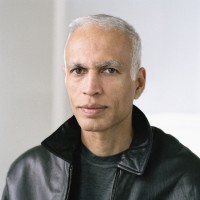
Manil Suri, Mathematics, Op-Ed in The Times of India

In an op-ed published in The Times of India on January 12, mathematics professor and affiliate professor of Asian studies Manil Suri wrote about the nuclear terrorism threat in South Asia. The column was written in response to the revelation that a captured Indian terrorist was hoping to obtain a nuclear bomb from Pakistan to plant in the Indian city of Surat.

ManilSuriHeadShot

In the column titled “The nuclear nightmare,” Suri comments on the current nuclear threat between Pakistan and India: “With enough nuclear warheads to wipe each other out, India and Pakistan are in a classic configuration of mutually assured destruction,” he writes. “The danger of nuclear escalation has made the cost of starting even a conventional war too high, no matter what the provocation.”

With the region on high alert, Suri also calls for both countries to tone down the nuclear threat and to use restraint as a way to avoid catastrophe, writing “restraint, rather than emotion, is needed to ensure the nuclear red line is never crossed.”

You can read the full op-ed in The Times of India here.

Kate Brown, History, Writes Op-Ed for Al Jazeera America

In an Al Jazeera America op-ed titled “Two decades later, ex-Soviet republics reject absolute independence,” history associate professor Kate Brown writes that a combination of self-governance and economic integration is essential for former Soviet states in a global economy.

In the column, Brown cites the example of ongoing protests in Ukraine’s capital, Kiev, against the Ukrainian president’s refusal to sign European Union agreements that would facilitate trade.

“The anxiety over economic well-being is not limited to Ukraine. Citizens in almost all the ex–Soviet republics are registering displeasure with their states’ autonomy at a rate that just about matches the indebtedness of those countries,” she writes.

Brown also writes that citizens in ex-Soviet republics are becoming more international and populist than nationalist in their political beliefs and that “crowds on the street want to be a part of broader international associations, which would give them the right to travel, trade and express themselves freely.”

Referencing past experience of ex-Soviet republics, Brown writes that “international associations combined with local self-governance may just be the new formula for sovereignty in a global economy.”

You can read the full op-ed in Al Jazeera America here.

Adelstein ’96, bio chem, brings tech firm to bwtech@UMBC

UMBC1Mike Adelstein ’96, biochemistry & molecular biology, CEO of Potomac Photonics, recently moved the 31-year-old tech company to bwtech@UMBC. Potomac specializes in microfabrication and can machine a variety of materials at a size that cannot be achieved using conventional processes (think smaller than a hair follicle).

According to the Baltimore Business Journal, the move is expected to be good for both the company and the UMBC campus community:

Adelstein […] sees the move as a potential recruiting tool. Potomac will be utilizing interns as well as graduate students for some of its work, he said. It will give Potomac a good way to try the students out and see if it would like to bring them on as full-time employees.

View the Potomac Photonics press release or read the article from the Baltimore Business Journal.

Adelstein '96, bio chem, brings tech firm to bwtech@UMBC

UMBC1Mike Adelstein ’96, biochemistry & molecular biology, CEO of Potomac Photonics, recently moved the 31-year-old tech company to bwtech@UMBC. Potomac specializes in microfabrication and can machine a variety of materials at a size that cannot be achieved using conventional processes (think smaller than a hair follicle).
According to the Baltimore Business Journal, the move is expected to be good for both the company and the UMBC campus community:

Adelstein […] sees the move as a potential recruiting tool. Potomac will be utilizing interns as well as graduate students for some of its work, he said. It will give Potomac a good way to try the students out and see if it would like to bring them on as full-time employees.

View the Potomac Photonics press release or read the article from the Baltimore Business Journal.

UMBC: The Right Wavelength

The Right Wavelength

UMBC professor Tim Brennan appointed chief economist of the FCC.

Public policy and economics professor Tim Brennan has had a distinguished career as an educator, researcher and expert on communications and media. Now, thanks to his scholarship and experience disentangling complex telecommunications issues, he has been called on to serve as chief economist for the Federal Communications Commission (FCC).

Brennan has been an economist with the U.S. Department of Justice Antitrust Division and senior economist for the White House Council of Economic Advisors. He has also served as a staff consultant to the Federal Trade Commission, advised on competition law internationally, and received the Distinguished Service Award last year from the Public Utility Research Center.

“I am very pleased that Tim Brennan has agreed to join the Commission as our chief economist,” FCC Chairman Tom Wheeler said in a news release. “His long and distinguished consideration of regulation, competition, and monopoly issues will enable him to contribute immediately and materially to our work.”

Brennan’s research has focused on antitrust, copyright, telecommunications, media policy, electricity markets, and related fields. He is also a senior fellow with Resources for the Future, a nonprofit social science research organization that seeks to improve global policymaking on environmental and natural resource issues.

As FCC chief economist, Brennan will work closely with Chairman Wheeler and will serve as an advisor and provide support for all FCC members and staff. “I expect to learn a lot, and it is an honor,” says Brennan.

The FCC deals with a range of complex issues, including industry mergers, subsidy programs and technology transition. The Commission has a number of leading economists on staff, but has also brought in scholars from academia for several years to provide outside perspectives and essential advice on challenging issues. Previous chief economists include Steven Wildman from Michigan State University and Marius Schwartz from Georgetown University.

Brennan’s background and experience will enable him to make significant contributions, and Chairman Wheeler says he brings “a wealth of knowledge and experience to the Commission.”

The chief economist position is housed in the Office of Strategic Planning at the FCC. Brennan will work full-time at the agency for at least seven months.

(01/13/2014)

Roy Meyers, Political Science, on WYPR’s Maryland Morning

Maryland Governor Martin O’Malley is sending his final budget to the General Assembly this week. Political science professor Roy Meyers was a guest on WYPR’s Maryland Morning on January 13th and analyzed what the budget will look like and what Gov. O’Malley’s priorities will be.

Roy Meyers (UMBC)

“I think he’s probably going to stay the course. He’s going to claim credit for the innovations he’s made over the previous years and also try to promote additional job creation,” Meyers said.

He described potential ways Gov. O’Malley could create jobs with the budget including investments in infrastructure and education.

“The long term strategy of the administration is to try to build human capital and make investments in infrastructure. So for example, the increase in the gas tax last year has been creating jobs and it will continue to create jobs over the next couple of years,” Meyers added.

You can listen to the interview on Maryland Morning in its entirety here.

Constantine Vaporis, Asian Studies, in Education About Asia

Asian studies program director Constantine Vaporis was recently interviewed in Education About Asia as part of an interview series with recipients of the AAS Franklin Buchanan Prize. Vaporis was the 2013 award winner for his book Voices of Early Modern Japan: Contemporary Accounts of Daily Life During the Age of Shoguns.

vaporis

Education About Asia praised Vaporis for “producing a superb pedagogical tool” and interviewed him about his extensive scholarship on Tokugawa Japan and research methods for his book.

In addition to the interview, the magazine published a review of Voices of Early Modern Japan.  The reviewer, Kathleen Krauth, writes:

[The book] is a remarkable work in that it not only offers educators many topics and themes from the early modern era of Japan but also emphasizes how to read and understand a primary document. Because Vaporis’s text successfully presents content and skills, it serves as a model of how to meet the many demands of our jobs. High school and postsecondary teachers of Japan and Asia will find this book valuable for their teaching.

The interview and book review appeared in Volume 18, Number 3 winter edition of the magazine.

Tom Cronin, Biology, in WIRED

What’s the Absurd Creature of the Week in WIRED science? Why it’s none other than one of biologist Tom Cronin’s favorite sea critters, the mantis shrimp. And the eyes of these creatures are Cronin’s specialty and that’s where he comes into the article.

“As with bees or flies or crabs, they are compound eyes, but unlike those creatures, mantis shrimp “have a very unusual adaptation in that multiple parts of the same eye view the same point in space,” said biologist Tom Cronin of the University of Maryland, Baltimore County, “which is sort of like having multiple eyes in one, in a way.” Whereas we use two eyes to judge distance, mantis shrimp can do that with a single eye.”

“On top of that, some mantis shrimp can see a variety of colors in ultraviolet, so “they’re seeing colors that no other animal can see, in a sense,” said Cronin. “Basically color is a property of the nervous system so it’s not really present in the real world, but they can see aspects of the ultraviolet that nothing else can see.”

There are some neat photos with the article and some videos. Well worth a read.