All posts by: UMBC News Staff


Donald Norris, Public Policy, in The Baltimore Sun

When Maryland state lawmakers return to Annapolis this week to begin the annual legislative session, raising the minimum wage, the state online health insurance exchange, and stormwater fees are expected to be leading items on the agenda.

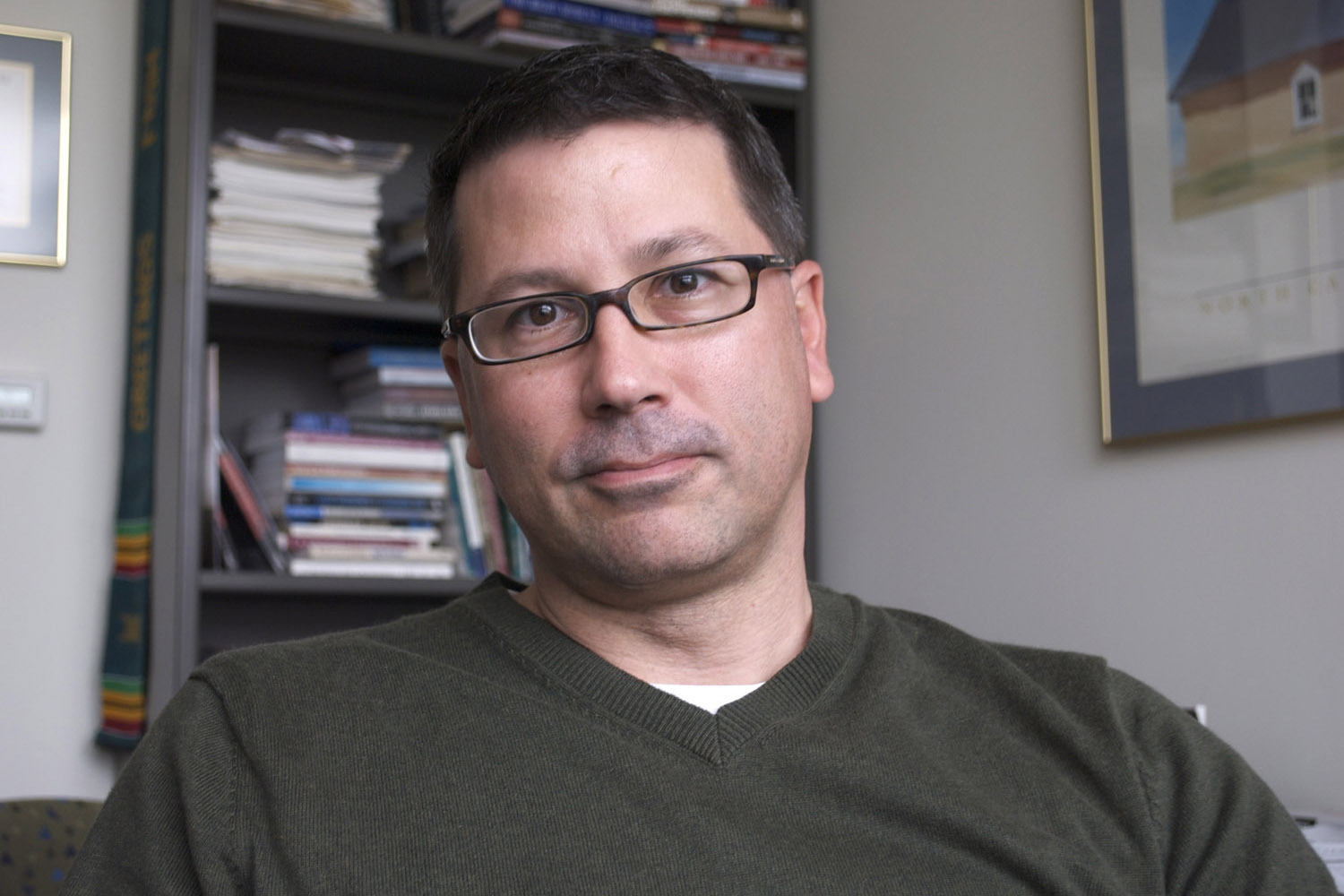
Donald Norris UMBCThe session comes this year in the midst of an election season where campaigning overlaps with lawmaking. The filing deadline is February and many sitting lawmakers are running for higher office. In an article in The Baltimore Sun, public policy professor and chair Donald Norris said legislative sessions during election years tend to be politics-heavy  without significant legislative achievements.

“I suspect there will be a fair amount of posturing on a variety of issues,” Norris said.

You can read the full article in The Baltimore Sun here.

Retriever Love: Catherine and Josh Kruder

Kruder_Snow_blogpostEditor’s note: Students come to UMBC to get an education, but they end up getting so much more. Catherine ’12, English, and Josh Kruder ’11, computer science, happened to fall in love. Lucky for us, they were generous enough to share their story.

“My husband and I just celebrated our one-year wedding anniversary, after meeting and falling in love at UMBC in 2009. Now, this isn’t your run-of-the-mill Retriever love story. There was no eying each other in Chemistry 101; and there was no relating to common interests at a Resident Student Association movie night.

You see, my mom had been taking classes at the university and when I got there in 2008, I was still living at home and we were carpooling to school. In February 2009, she came home one night gushing about this “really cute” boy in her class with “these adorable blue eyes and blonde hair!” She said, “You come see me tomorrow and I will introduce you”… you know with that all-assuring “I got this” smirk on her face. Needless to say, children aren’t really that fond of their parents’ advice, and certainly not when it comes to dating! Did I mention that my mom was taking Computer Science classes? “Oh no,” I thought. “Geek alert!” But I decided to go anyway, just for the fun of it.

Kruder_concert_blogpostThe next day, I walked into her classroom and see her talking to, well, a really cute, blonde-haired, blue-eyed guy! Go figure. She introduces us, we make small talk about my major and how hard their professor was, and when it’s time for class to start, I go to leave. I barely get out the door before I hear my mom’s voice trickle off, “I know I don’t look old enough to have a daughter, Josh. Isn’t she beautiful?” This would have been what they call a “face-palm” moment. Forget the subtleties, that boy was definitely scared off!

That night is one I’ll never forget. My mom came home with her goofy smile that reeked of accomplishment and pride.

Mom: “So, how are we going to do this? I could give him your phone number. Or… you could email him!”
Me: “Mom, I don’t want to be some creeper, weirdo. What if he already has a girlfriend?”
Mom: “All is fair in love and war.”
Me: “Why don’t I just Facebook him.”
Mom: “Oh, you can do that? Yes, do that.”

Kruder_Wedding_blogpostThe next day, I got my friend request confirmed and an unread message from that really cute boy in my mom’s class. And three days later, we had our first date and we’ve been inseparable ever since. We were married on September 22, 2012.

Looking back, I joke with my husband, “You know you were set up, right?” He smiles and nods his head, “I know… and I’m okay with that.” And then there’s the always hilarious disclaimer, “You can never complain about my family… you knew the crazy before ever meeting me!”

I tell you this because the details matter. I wouldn’t have found my soul mate at UMBC if it hadn’t been for my mom. I got my fairytale… even if it was sort of picked out for me.”

If you met your sweetheart at UMBC, send your pictures and story to retrievernet@umbc.edu and you could be featured here, too!

Thomas Schaller, Political Science, Op-Ed in The Baltimore Sun

In his year-end op-ed in The Baltimore Sun for 2013, political science professor Thomas Schaller looks back 100 years to New Year’s Day 1914. Throughout the column, Schaller recounts what the political landscape looked like when the country hadn’t yet fought two major wars and the federal income tax was only a year old. The year 1914 also included election changes with the first round of senators elected by popular vote.

Tom SchallerSchaller notes he normally writes about highlights and major happenings in Maryland or national politics and culture, but wrote his year-end column “Reflect on, don’t fetishize, the past” to argue obsessing over the political past can be a perilous exercise.

“Reflecting upon the past can be a useful thought experiment,” Schaller writes. “Fetishizing the past — and presuming that somehow our country was better when it was simpler or less democratic — is dangerous business. On New Year’s Day, as ever, it’s best to turn our sights in the only direction that matters: toward the future.”

You can read the full op-ed in The Baltimore Sun here.

Dennis Coates, Economics, in The Sacramento Bee

A proposed NBA arena in downtown Sacramento would have an $11.5 billion economic impact, according to a study commissioned by the mayor’s political action committee. The group is designed to make the case for the city’s proposed $258 million subsidy for the arena.

Economics professor Dennis Coates was interviewed for an article in The Sacramento Bee about the report. He argued against studies such as the one in Sacramento, saying sports stadiums simply move money from one part of the city to another as consumers spend money on tickets for sporting events rather than other forms of entertainment.

“Basically they are just PR documents,” Coates said. “I’m pretty sure people eat and drink even if they don’t have a team in town that night,” he added.

You can read the full article in The Sacramento Bee here.

Chess Team Places 2nd in “World Series” of College Chess

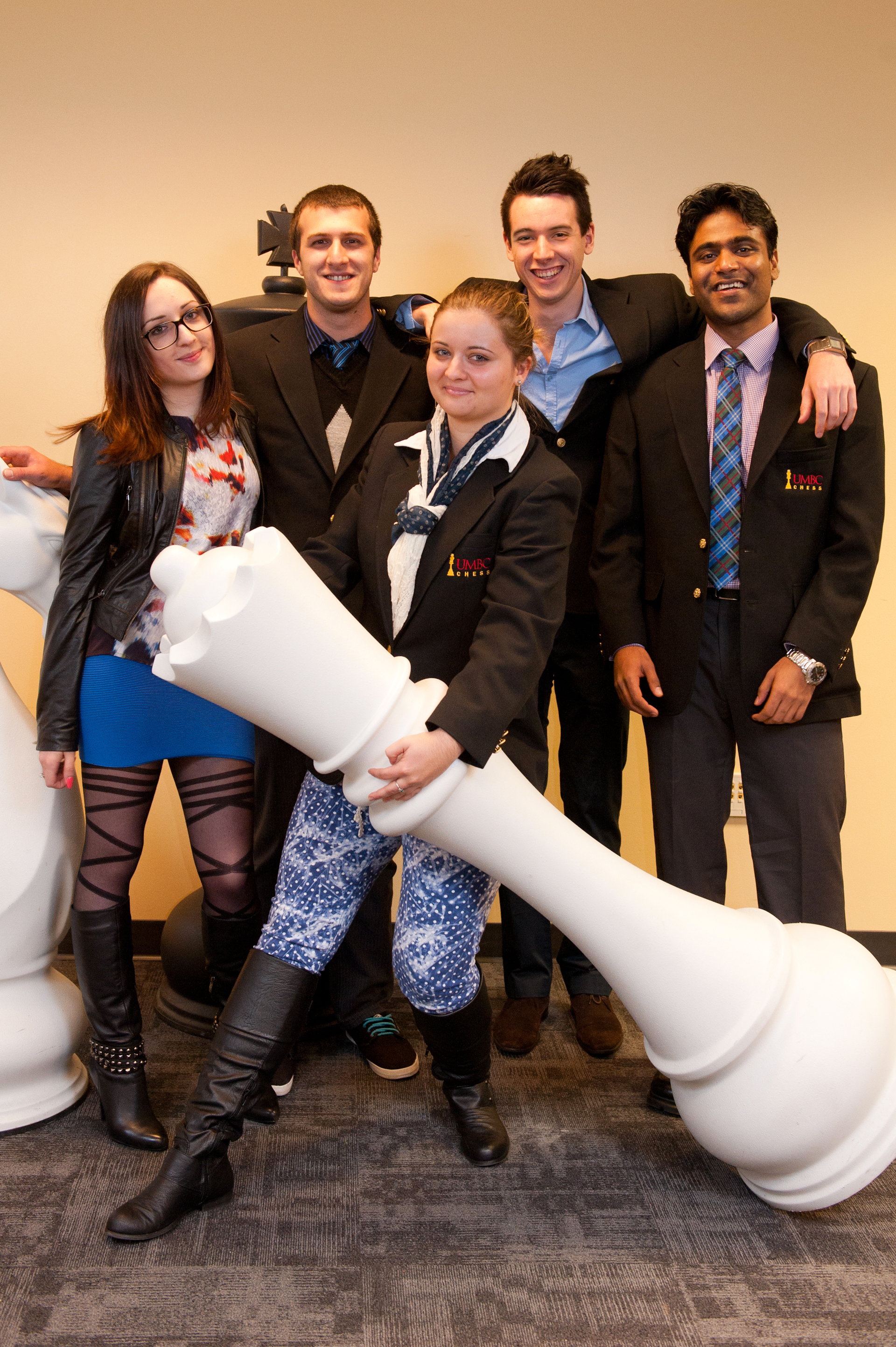
Congratulations to the UMBC Chess team for placing second in the 2013 Pan-Am Intercollegiate Team Chess Championship held December 27-30, 2013 at Texas Tech. The team will advance to the “Final Four” of chess to be held in New York City in the Spring along with Webster Univ. (1st), Illinois (3rd) and Texas Tech (4th).

During the championship, UMBC defeated the University of West Indies, the University of Toronto, the University of Texas, Brownsville, Webster University C, and the University of Texas, Dallas A. UMBC’s only loss was to Webster University A, in round three. UMBC Team B won the Division V prize.

The UMBC Chess Team A for the 2013 Pan-Am Champioship had the following members.

UMBC chess team fun chess2013-5308

  • Board 1: GM Niclas Huschenbeth (USCF rating 2610)
  • Board 2: GM Akshayraj Kore (2519)
  • Board 3: M Levan Bregadze (2469)
  • Board 4: IM and WGM Nazi Paikidze (2378)
  • Alternate: WGM Sabina Foisor (2315)

Read more about the Pan Am.

A Lifetime of Giving Comes Full Circle

When she began her college search, the Honorable Wanda Keyes Heard ‘79, political science, knew very little about UMBC. But when she and her family — then living in Long Island, New York — returned from a visit to schools in the DC area, they decided to stop by the new university in Catonsville. That chance decision would change Wanda’s life.

“I fell in love with UMBC,” she says. That means a lot coming from Wanda, whose father Sterling Keyes, was a veteran educator and civil rights activist who impressed upon her from an early age the importance of education. And so she came to UMBC, where she would study political science and launch her career as a lawyer and then Baltimore Circuit Court judge.

When Wanda lost her father a year ago, she found herself making another decision about her future–the decision of what to do with her estate. In honor of her father’s legacy and her own experience at UMBC, she decided to establish a planned gift to the university.  “When you leave the earth, you can’t take it [money] with you,” she explains. “What better way is there to honor your life than to give back? I know UMBC will make good use of the money.”

Wanda’s decision isn’t surprising. Throughout her career as a judge for the Baltimore City Circuit Court, she has been paying it forward. She’s an avid supporter of UMBC’s Second Generation scholarship, and she’s also given students–many of them from her alma mater–the opportunity to gain invaluable career experience as interns in her office. It’s that kind of experience that rounds out an education and launches careers.

As Wanda is quick to tell you, UMBC was truly where her life and career got started. “I received an excellent education there, and that set me on the road to law school and being a judge,” she says. “Once UMBC has put its print on you, you can do anything you want to.”

In Wanda’s case, that print was indelible, and was made by her experiences both in and out of the classroom. Wanda was active in the Student Government Association, joined the Zeta Phi Beta Sorority and worked as a Resident Assistant. Each and every one of those activities left a distinct mark on her, she says, and showed her the importance of getting involved with and contributing to her community. In fact, for Wanda, education, service and giving back are inextricably intertwined.

“If you went to UMBC, giving back comes naturally,” she says. And that dedication to service and giving will now come full circle. Through her planned gift to UMBC, Wanda is ensuring future generations will have the same amazing educational and career opportunities that she did.

Learn more about making a planned gift like Wanda’s.

UMBC Stands Out in the Crowd

Stroll near The Commons on most weekdays and you’ll see tables piled high with tasty baked goods. The students at these tables are asking for help – spare change, really – to fund their clubs’ latest and greatest pursuits in a way that hasn’t changed much since the university opened in 1966.

But now these passionate student appeals are getting a boost from the power of the people . . . and the internet. UMBC recently unveiled a new crowdfunding website that allows students to harness their personal relationships to bring in support for their own projects on campus. The site – which focuses on university needs as well as student causes – gives students a way to easily use social media to publicize, track and aggregate philanthropic campaigns.

“We are incredibly excited to work with student groups to help them understand the ins and outs of philanthropy through crowdfunding,” says Dayna Carpenter, UMBC’s director of annual giving. “Our students are very motivated to do good in this world, and this is an important element of their education.”

UMBC’s crowdfunding site already boasts colorful channels to help student causes. Visitors can help the SAE Mini Baja team get to their next competition, help the Down and Dirty Dawg Band produce their next CD, or even send students from Engineers Without Borders to Kenya to dig wells.

“Without the help and support of things like our fundraising page, we wouldn’t be able to receive stipends, buy new equipment, pay for instrument repairs, or put out CDs,” says Drew Ballantine, a UMBC senior and member of the Down and Dirty Dawg Band. “These donations allow us to continuously grow by doing more things each year, like adding more performances or playing new music.”

Donors can also support university giving that directly benefits current students, including LGBTQ initiatives on campus or the Stay Black and Gold Fund for those who have emergency financial needs.

“I love the crowdfunding model because it gives us the chance to give back to what we really care about,” says Chris Magaha ’03, information systems management. “And you can see exactly where the money is going to go.”

And that’s exactly why UMBC made the venture into crowdfunding. It gives students a chance to share their projects with the world and get the support they need, while donors can find projects they’re passionate about and see their gifts have an immediate impact.

“The crowdfunding site really is the best of all worlds,” says Dayna. “Even though it’s still new, people have responded very positively. We’re eager to see how this effort continues to grow.”

Check out our featured crowd funding initiatives.

Stuart Schwartz, CUERE, on the Marc Steiner Show

On December 17, Stuart Schwartz, a senior research scientist at the Center for Urban Environmental Research and Education (CUERE) was a guest on the Marc Steiner Show.

Schwartz discussed his latest research which uses a kind of Asian radish

“This radish can grow to the size of something between a fat carrot and an egg plant,” says Schwartz to Steiner.

“It’s able to penetrate pretty compacted soils,” adds Schwartz.

And says Schwartz, “We’ve been looking at compacted soils in Baltimore because that creates a lot of runoff.”

Planting these radishes on vacant lots, says Schwartz, is a natural low cost way to address run off problem without having to bring in bulldozers to de-compact the soil.

Find out how the radishes help control run off.


A Day in the Life of a UMBC Student

Since UMBC opened its doors in September of 1966, a lot has changed. Thanks to donors like you, this place has grown and expanded in unbelievable ways. But one thing that hasn’t changed is the focus on a well-rounded college experience. From sunrise to sunset, UMBC hums with activity. Students shift from class, research and creative endeavors to sporting events, festivals and concerts. They work together everyday to build a vibrant and dynamic campus community. Just like there is no typical day at UMBC, there is no typical UMBC student. So we thought you might enjoy the chance to catch a glimpse at today’s UMBC through the eyes of one of those students, Tolu Omokehinde, a Meyerhoff Scholar and Biochemistry major with a passion for time lapse photography.

Take a moment to invest in students like Tolu.

A Bench of His Own

There’s a bench just outside UMBC’s Public Policy building. It’s a quiet, unassuming bench. But if you take a moment to read its engraved plaque, you’ll see there’s a story behind that bench — a story about a man named Jim Kruger.

Jim is a 2013 graduate of UMBC, but in many ways, he’s very different from his classmates. For starters, Jim’s a grandfather. He came to UMBC through Maryland’s Golden ID program, which helps people over 60 return to school to earn or complete a degree.

When he graduated from high school, Jim went straight to the Community College of Baltimore County. But, in the way that it does, life happened. Jim and his wife Kathy got married and had kids. As any parent knows, working and raising a family takes time and energy, and so Jim left school to devote himself to raising his beautiful family and running his own business. But as his kids got older and he moved into retirement, Jim had an idea.

“As I watched my daughters graduate [from college],” he says, “I realized, ‘I should do that, too.’”

He went back and finished his associate’s at CCBC, then decided he’d seize the chance to transfer to UMBC and earn his bachelor’s degree. He met with an admissions counselor and decided to study political science. He still remembers his very first class with Professor Laura Hussey. “She owned the classroom,” he recalls. “I was so impressed with her.”

Jim found that he loved being in the classroom. In particular, he enjoyed the wide range of perspectives and experiences that his classmates brought to the coursework. He found himself with a whole new group of friends and mentors.

Jim also got involved outside the classroom. “I took advantage of the full range of the UMBC experience,” he says. He and his wife regularly attend theatre productions and he likes to take his grandsons to basketball games. It’s no surprise how integral he became to the UMBC community.

When Jim walked across the stage to receive his diploma in May 2013, Kathy knew she wanted to commemorate the occasion with a meaningful gift. She settled on a bench, which would beautify the campus and give Jim a place to rest when he was walking between classes, since he had decided to continue on as a graduate student at UMBC.

“He’s enjoyed being here,” says Kathy. “To me, it was a nice connection.”

Jim, of course, loves the bench. “It’s the perfect gift,” he says. “That’s community–it makes people linger and talk.”

Learn more about how you can invest in UMBC.

Sunil Dasgupta, Political Science, in USIP’s “The Iran Primer”

Sunil Dasgupta, director of UMBC’s political science program at the Universities of Shady Grove, was recently interviewed for a Q&A on the status of Iran/Indian relations in the United States Institute of Peace “The Iran Primer.”

Sunil Dasgupta

Of the course of the interview, Dasgupta provides insight into the complex relationship between Iran and India and how it has evolved over the last three decades.

“New Delhi has had relatively close ties to Tehran since the mid-1980s, but India has recalibrated relations over the last few years as Iran became the litmus test for its ties with Washington,” Dasgupta said.

He also describes how Tehran’s controversial nuclear program has affected ties between the two countries.

“New Delhi welcomed the nuclear deal struck by Iran and the world’s six major powers in November 2013, which it hopes will eventually lead to the lifting of sanctions. India’s one concern, however, is that Iran’s return to the global oil market will cut its interest in trading oil with New Delhi in Indian rupees — on terms favorable to India,” Dasgupta said.

You can read the full Q&A on the USIP website here.