All posts by: UMBC News Staff


Manil Suri, Math and Fashion

Manil Suri was featured in a “Math and Fashion” episode on the
Scholastic website. This is their first episode with the specific aim of
popularizing mathematics among school kids by tying it to a popular
theme.

SONY DSC

Tim Gunn, the super host of the hit TV series “Project Runway” introduced Suri, where he talked about math for about 90 seconds right near the beginning of the 26 minute show. The famous fashion designer, Diane von Furstenberg, also talks about how math is useful in her line of work.

Watch the video

Manil Suri, Math and Fashion, Scholastic

Manil Suri was featured in a “Math and Fashion” episode on the
Scholastic website. This is their first episode with the specific aim of
popularizing mathematics amongst school kids by tying it to a popular
theme.

Tim Gunn, the super host of the hit TV series “Project Runway” introduces
Suri, and he talks about math for about 90 seconds right near the
beginning of the 26 minute show. The famous fashion designer, Diane von
Furstenberg, also talks about how math is useful in her line of work.

Watch the video

Kimberly Moffitt, American Studies, on the Marc Steiner Show

Challenges facing adjunct professors were among topics of discussion on the  “Marc Steiner Show” on Wednesday, November 13.  Kimberly Moffitt, assistant professor of American Studies, joined other panelists in talking about many of the issues adjunct professors are dealing with, including low pay, little job security, and often no benefits.

The discussion covered a wide range of issues, including how many of the struggles adjunct professors face ultimately end up trickling down to the students they teach.

“For me, I’m always trying to think about the students for these types of issues, so when I think about what the future looks like, it feels like a great loss to our students in terms of great teachers,” Moffitt said.

Joining Moffitt in the discussion were Ericka Blount Danois, adjunct professor at the University of Maryland, Mark Chalkley, adjunct professor, Baltimore City Community College and Community College of Baltimore County and Mary Kambic, adjunct professor, Baltimore City Community College and Community College of Baltimore County (CCBC).

You can listen to the full segment on the “Marc Steiner Show” here.

Maurice Berger, CADVC, Latest Essay in New York Times

In the latest essay for his Race Stories column for the New York Times, Maurice Berger, CADVC, discusses Civil Rights Photographer Jon Lewis’ pictures of farm workers outside of the Jim Crow South. Berger writes about Lewis’ “precise and moving” documentation of the Delano Grape Strike that, “offers great insights about the strike and the canny understanding of photography of its leader, Cesar Chavez.”

Read “A Civil Rights Photographer, and a Struggle, Are Remembered” at the New York Times Lens Blog.

Berger’s Race Stories column has featured several essays centered upon race and photography including, Malcolm X as image maker, Ken Gonzales-Day, images of emancipation, the photographs of Deborah Will, the civil rights work of James Karales, and the woman in a civil rights photo, fifty seven years later.

John Rennie Short, Public Policy, on Radio New Zealand

Tokyo recently won the right to host the 2020 Summer Olympic Games, and the start of the 2014 Winter Olympics in Sochi, Russia is just a few months away.

As the Olympics have made headlines in recent weeks, Public Policy Professor John Rennie Short has been in the news for his proposal that the Summer Olympics should be held at a permanent site every four years.  He was recently interviewed by Radio New Zealand on its award-winning program “This Way Up” about the idea.

John Rennie Short

“Moving it every four years seems to be incredibly expensive and socially disruptive when why don’t we host it in one site? There’s obviously lots of cost at the beginning, but the costs are evened out,” he said.

Short described how establishing a permanent site would create a “global place” where events could be held beyond the Olympics such as conferences, meetings and concerts where people from all around the world, not just athletes, could come.

He also discussed the idea of growing material interest in the Olympics and how the games keep getting larger each year.

“Every city has a major displacement, major cost, and the real driving force for permanently moving the Olympic Games, it comes from developers who actually cash in big time if they can successfully get land cheap and sell it more expensive,” Short said.

You can listen to the full, 12-minute interview on Radio New Zealand here.

John Rennie Short was also recently interviewed by KCBS News Radio in San Francisco about his proposal.  You can find more information on that here.

Alum Gives Back Through GiveCamp

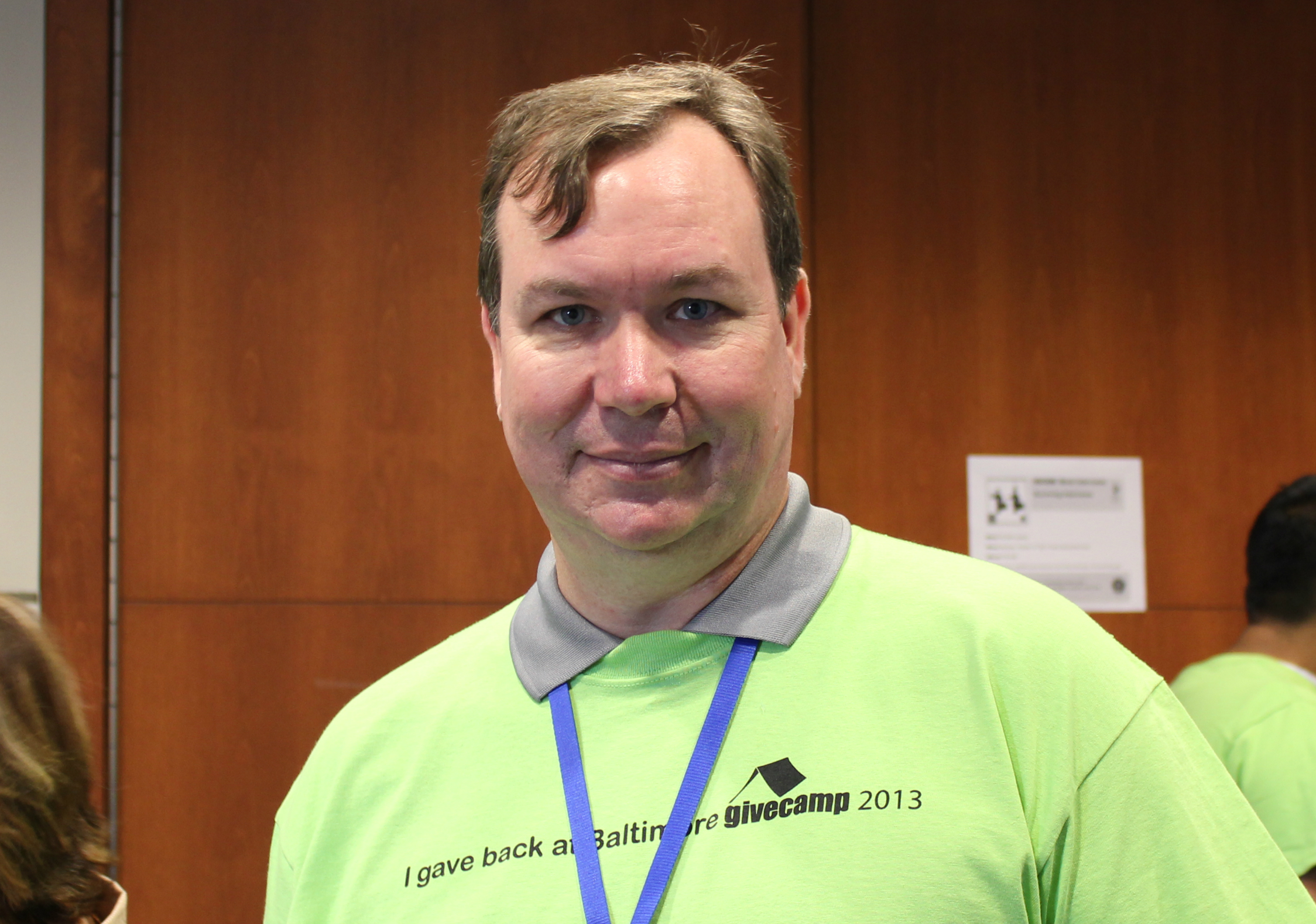
GiveCamp_McCawOn October 18-20, UMBC hosted the third annual Baltimore GiveCamp, which was organized by Douglas McCaw ‘99, information systems. During this weekend-long hack-a-thon, more than 230 software developers, designers and database administrators donating their time to help 30 non-profit organizations complete various technical projects.

Due to its central location and ability to provide the necessary IT infrastructure, McCaw thought UMBC would be the perfect spot. “I also felt it would be a good opportunity for students to meet and work with professionals in the IT business.” A few students have participated over the years, and McCaw hopes for even more student involvement in the future.

McCaw first heard about GiveCamp – a national event developed by Chris Koenig – as a member of the Central Maryland Association of .net Developers (CMAP). McCaw knew it was something he wanted to bring to Baltimore, so he worked with CMAP to organize a Central Maryland GiveCamp chapter.

Since the event began three years ago, it has continually expanded to offer more and better services. One key change? Offering lectures on social media, which allows the non-profit representatives a chance to learn how to use current technologies to their advantage. And that’s what GiveCamp is all about – helping the dedicated people at these non-profits get skills and services they wouldn’t otherwise have access to.
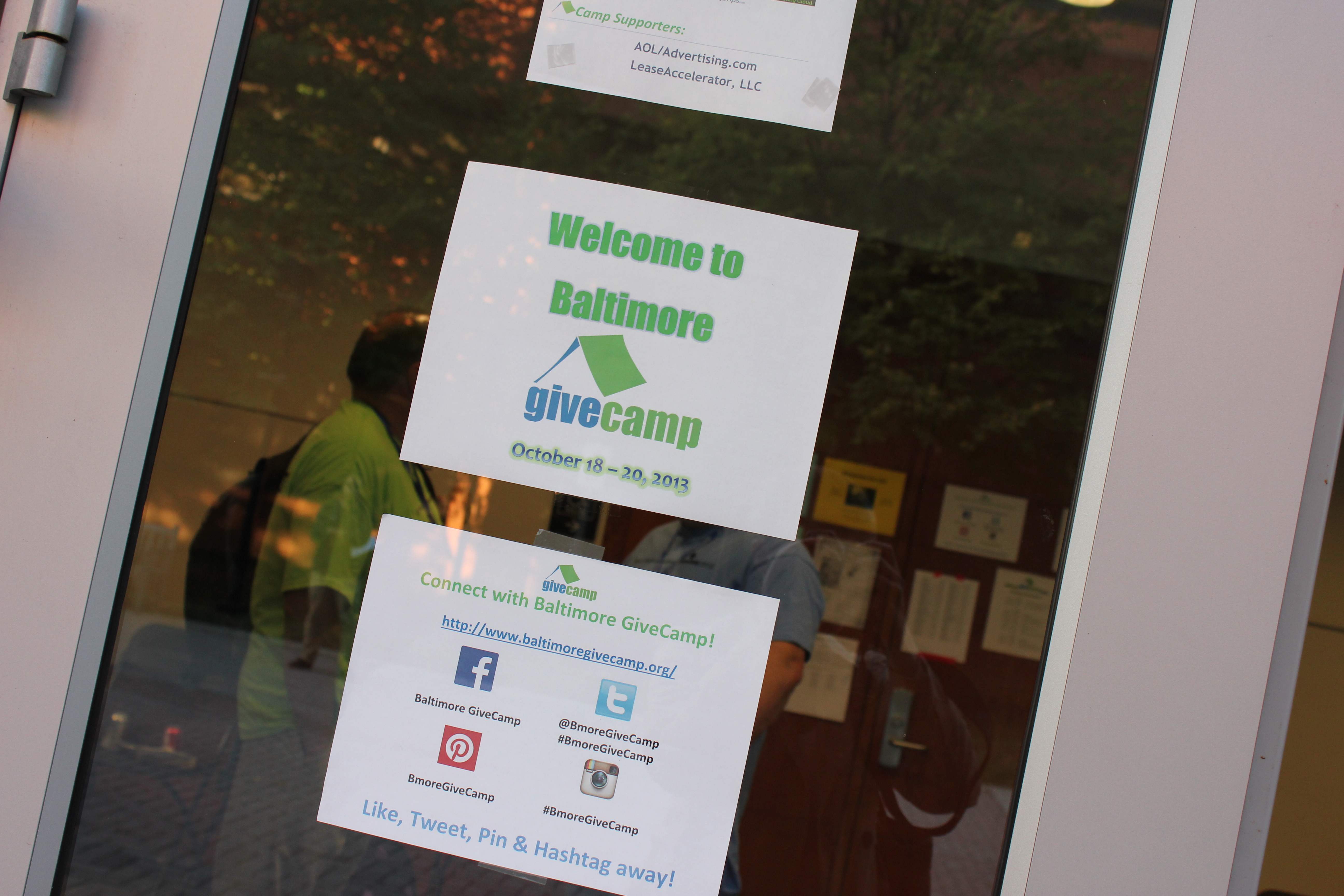
GiveCamp_doorThis year, one particular project stuck out for McCaw because it exemplified what is at the heart of GiveCamp. A non-profit that provides food and nutrition counseling for homebound residents needed a website, but they lacked the funds to make it happen. GiveCamp volunteers developed a website for them, which saved them time and money, and allowed them to expand their operations so they can continue to help people in need.

Projects like these revolutionize the way the non-profits work, but more than that, they represent an enormous philanthropic effort. Since McCaw launched his GiveCamp chapter, hundreds of developers have given of their time and talent, and the value of the services they offer has grown to more than $500,000. And he hopes to continue growing the Baltimore GiveCamp as a major event in the software development community.

“I would like to see the program include more non-profits, more attendance and more people from the community. We also hope to add more specialized programs that could help non-profits navigate technology, as well as help students and professionals gain experience in development.”

If you’re interested in taking part in next year’s GiveCamp, whether as a volunteer or a non-profit, registration opens in the spring and can be done on its website. Those interested in planning GiveCamp, please contact McCaw at douglas.mccaw@jhuapl.edu.

In honor of National Philanthropy Day, we compiled a list of other Retrievers, like McCaw, who are giving back. Read about them here.

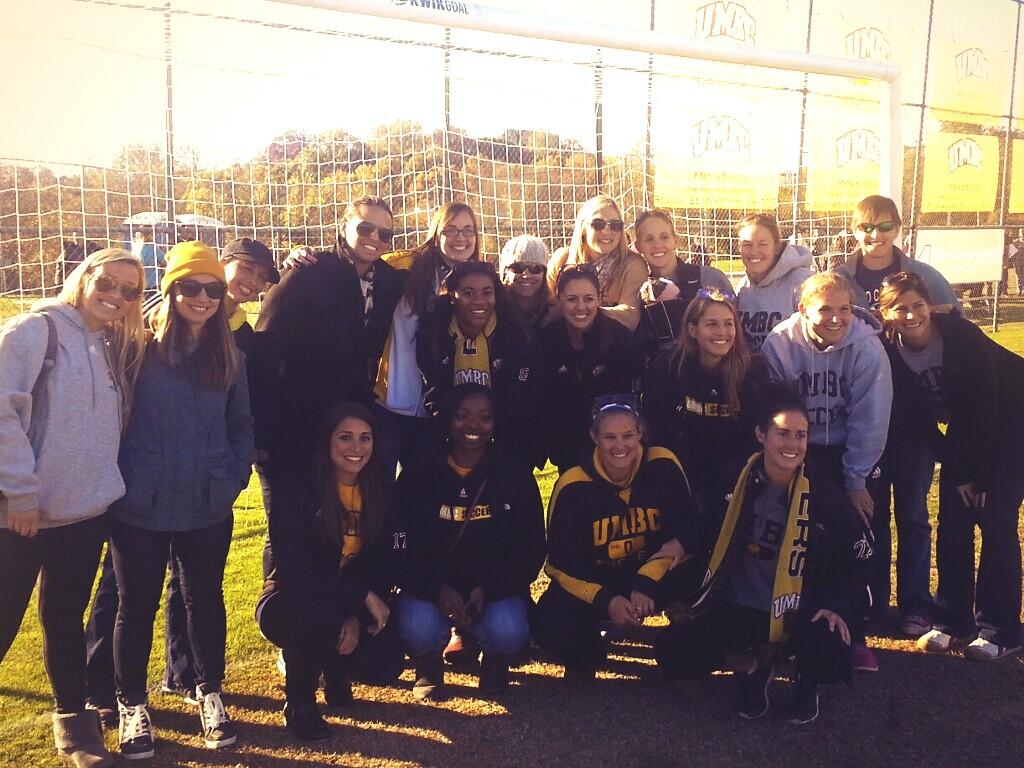
UMBC Women’s Soccer – On the Road to the NCAA!

UMBCsoccerAlums_blog111413

Congratulations to the UMBC women’s soccer team on their America East title win! It’s been so much fun to watch such an exciting season – the entire UMBC community is cheering you on.

Good luck at Virginia Tech tomorrow! We know you’ll kick some Hokie butt.

Upal Ghosh, Chemical, Biochemical, and Environmental Engineering, in the Dover Post

Cleaning up polluted sediments isn’t an easy task. Standard remediation methods include dredging contaminated sediments or capping with clean sand. Both procedures are costly and disruptive to the existing ecosystem.

Enter Upal Ghosh.ghosh

Ghosh, who researches the effects of toxic pollutants on the environment, had developed a way of using the charcoal, the same kind found in home water filters, to effectively bottle up the contamination and keep it out of the ecosystem.

Ghosh’s idea had been tried successfully before, but only to a small degree, Greene said. Ghosh did some reconnaissance of Mirror Lake and agreed the procedure could work on a larger scale.

Ghosh’s method is less expensive and less disruptive to the environment. On November 4 the State of Delaware’s Department of Natural Resources and Environmental Control started spreading Ghosh’s pellets across Mirror Lake in Dover.

The project not only covers the 3.5 acres of the lake and its immediate environs, but stretches down the St. Jones River to just past the Court Street Bridge.

Making the project the largest of its kind in the country.

Tests have shown the charcoal infusion can contain up to 90 percent of PCBs and up to 84 percent of mercury contamination. The result is that a process that could have taken between four and seven decades, if allowed to proceed naturally, could mean a safer Mirror Lake within the decade.

And that is good news for the residents of Dover.

Read the complete article in the Dover Post.

Devin Hagerty, Political Science, Op-Ed in Inside Higher Ed

This fall marks the first semester of the global studies major, an interdisciplinary program that integrates courses in 12 departments and trains students to develop research, critical thinking, writing and language skills. 

Devin Hagerty

Global Studies Program Director and Political Science Professor Devin Hagerty wrote an op-ed published in Inside Higher Ed that introduces the program and argues that a liberal arts education is essential in developing a “global competence” among students:

Broadly defined, global competence is “the capacity and disposition to understand and act on issues of global significance.” Its central elements include knowledge of world affairs — cultural, economic, and political; proficiency in communicating with people in and from other societies, both verbally and in writing; the ability to appreciate multiple perspectives and respect cultural diversity; and the intellectual and psychological flexibility to adapt to unfamiliar and rapidly changing circumstances.

Hagerty describes how majors in the program take courses in economics, geography and environmental systems and history among others and are required to study abroad and achieve fluency in a foreign language.

“Developing the skills that we hope to instill in UMBC’s global studies majors is an inherently interdisciplinary mission,” Hagerty wrote.

You can read the full op-ed in Inside Higher Ed here.


Production by Alan Kreizenbeck, Theatre, at David Mikow Art Gallery

comfort/drones, an original production by Alan Kreizenbeck, theatre, will open in the David Mikow Art Gallery, Friday, November 17 at 7 p.m. The play, based on the writings of Wallace Shawn, is embedded with questions about morality. It is the first play to take place in the David Mikow Art Gallery, operated by Carolyn Forestiere, political science, and Asher Mikow. A group discussion will follow the performance.

Performances will take place Friday and Sunday, November 17 and 19, and Saturday and Sunday, November 23 and 24, at 7pm each evening.

The David Mikow Art Gallery is located at 1002 Vineyard Hill Road, Catonsville, MD 21228. Learn more and reserve tickets at the gallery’s website.

Ellen Handler Spitz, Honors College, Hosts Enchantment Theater of Philadelphia

Honors College Professor Ellen Handler Spitz, under the auspices of Honors College Director Simon Stacey, invited Enchantment Theater Company of Philadelphia to present two, two and a half-hour long workshops in her classes last week.

Great Books-2013 Enchantment Theater

Enchantment co-directors Jennifer and Landis Smith screened scenes from their latest production, spoke on their use of classical music (Rimksy-Korsakov’s “Scherezade”), masks, gigantic puppets, fabrics, projections and sleight-of-hand magic to create evocative, nearly wordless imaginings of tales from “The Arabian Nights.”

Dr. Spitz’s students, having read and studied several tales from the Nights, donned masks and experienced first-hand the processes of transformation from text to theater and from words to gesture and mime.

Lia Purpura, English, in The New Yorker

English Department Writer in Residence Lia Purpura is featured in the latest edition of The New Yorker. The magazine published her poem “Future Perfect” in its November 18th edition. You can read the poem in The New Yorker here (subscription required). The full text of the poem is below:

Lia Purpura

Future Perfect

Where you were
before you were born,
and where you are
when you’re not anymore
might be very close.
Might be the same place,
though neither is
as slippery
as being here but
imagining where
you will have been –
that point
where things land,
are finished, over, and
gone but not yet.

–Lia Purpura