All posts by: UMBC News Staff


Helen Burgess, English, Selected for NEH Review Panel

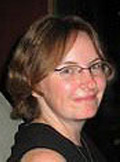
English Associate Professor Helen Burgess has been selected for a National Endowment for the Humanities (NEH) review panel for the Digital Humanities Start-Up Grant Program.

Helen Burgess

The grant program is designed to encourage innovation in all aspects of the digital humanities.  The panel reviews proposals that involve approaches to new media, e-literature, innovative uses of technology, and new digital modes of publication.

The NEH Digital Humanities Start-Up Grants have averaged 151 applications per competition over the last five years, and the program has issued an average of 26 awards each year.

You can find more information about the grant program here.

Marjoleine Kars, History, on WAMU’s The Diane Rehm Show

A movie released last month tells the story of Solomon Northup, a free black man from upstate New York who was kidnapped and sold into slavery.  “Twelve Years a Slave” powerfully depicts that slavery was driven by violence and examines its moral and economic costs.

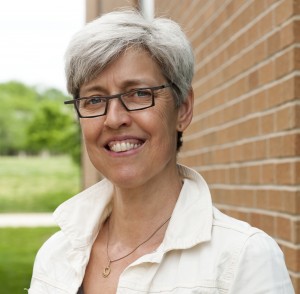
Marjoleine Kars

History Associate Professor and Chair Marjoleine Kars participated in a panel discussion about the movie Thursday on nationally-syndicated The Diane Rehm Show. During the discussion, Kars commented on the significance of the film and why it’s important in understanding slavery.

“This culture of terror that it produces almost makes it almost impossible for people to resist, and makes large slave rebellions like the one I’m studying in the Caribbean so rare, and it shows that terror in a way that I think audiences can really identify with,” Kars said.

Other panelists included David Blight, professor and director, Gilder Lehrman Center for the Study of Slavery, Resistance, and Abolition at Yale University, Richard America, adjunct professor, Georgetown University Business School, and Laurent Dubois, director, the Forum for Scholars and Publics at Duke University.

Dr. Kars is currently working on a book about a massive slave rebellion in the 1760s in the Dutch colony of Berbice (now part of the Republic of Guyana).

You can listen to the full segment on The Diane Rehm Show here.

UMBC: The Power of Images

The Power of Images

UMBC’s Imaging Research Center employs innovative strategies to help researchers across the disciplines share their vision.

For 25 years, UMBC’s Imaging Research Center (IRC) has taken an entrepreneurial approach to leveraging new technologies and emerging media platforms to help researchers across the disciplines tell their stories using a wide range of visual media.

In the late 1980s, when the IRC was founded, personal computers were only just emerging and mobile phones didn’t exist. Now, in 2013, the IRC’s state-of-the-art facilities enable research in 3D visualization, immersive technologies, interactive installations, feature-length films, social media, and mobile device applications.

A hub of campus research activity, the IRC works with faculty and researchers in departments and centers across the disciplines. “At the Imaging Research Center here at UMBC, we use the broadest definition of the word ‘imaging,’” says Dan Bailey, director of the Imaging Research Center. “We work with NASA to help the general public understand our climate and our place in the universe. We’ve created a unique and comprehensive visualization of early Washington, D.C. We’ve created virtual sets for theatre, and we’ve brought inanimate objects to life in impossible and aesthetic ways.”

The IRC is also an educational facility where faculty and undergraduate, graduate and doctoral students engage in real-world, project-oriented, creative and collaborative research to complement learning in the classroom and prepare students for further learning and life after the university. The IRC continues to imagine new directions for interdisciplinary research in combination with technologically advanced media that communicate to and resonate with the general public.

A short video presenting the work of UMBC’s Imaging Research Center.

A Distinctive Approach

What makes the Imaging Research Center distinct from centers at other universities working with media and visualization? It focuses on the broadest spectrum of giving voice to knowledge. Many centers, usually based in STEM fields, successfully focus on visualizing data, new media technologies, and the effort to communicate important facts through media. Another group of centers, usually based in the Social Sciences and Humanities, successfully focuses on communication, media, and their impact on individuals, specific groups, and cultures.

The IRC posits that it is important to bring together these seemingly disparate research areas to effectively innovate media that engage audiences with important knowledge. In many situations, this process is synergistic and non-linear. Instead of new data being discovered by one group, then visualized by another, explained and disseminated by a third, and finally judged for effectiveness by a fourth, the process is increasingly circular, iterative, interactive, and trans-disciplinary.

The IRC, with its broad mission, extensive labs, and diverse skill-sets, is able to support and add to this holistic approach. By building stories across disciplines, the work of the IRC reveals new insights.

For example, this year the IRC is working with NASA/Goddard to create a highly sophisticated and technical “Science On The Sphere” movie that explains a pivotal mission to measure global precipitation. Simultaneously the IRC is participating in Critical Participatory Action Research (CPAR) discussions at The City University of New York (CUNY) and has begun working with UMBC’s Language Literacy and Culture program to bring a CPAR institute at UMBC.

From another angle, while the IRC is programming a successful iPad application for the National Academy of Sciences, it is partnering with the Maryland Institute College of Art to create a community-based social media site: “Art Plus Justice.” This interactive, map-based site brings together individuals and organizations working at the intersection of art and social justice in Baltimore City.

Autonomous research projects are also underway at the IRC that demonstrate a transdisciplinary approach. “Mapping Baybrook,” a multi-faceted research effort by Professors Nicole King of American Studies and Steve Bradley of Visual Arts, studies the industrial “boom and bust” cycle of Baltimore’s Curtis Bay area and its effect on the community. The project simultaneously collects data, studies patterns, disseminates information and communicates with the local community.

The IRC has a long history of active-learning programs that engage undergraduate and graduate students in professional research activities. The past year also shows growth in cross-disciplinary activity with students. Students from Computer Science and Electrical Engineering (CSEE) and Information Systems are working on programming; students from English, Public Policy, and Political Science are writing daily blogs for USDemocrazy ; and Visual Arts students are designing animations.

Meanwhile PhD and MFA candidates are working on “Who We Am”, a blog that maintains a transdisciplinary discussion among researchers looking at the factors in human behavior.

October 8 Salon

In October 2013, in celebration of the IRC’s 25 years, a special “Salon” event was held, at which more than one hundred cultural leaders from the greater Baltimore-Washington community were given a “behind the scenes” peek at the IRC’s lab spaces and dozens of projects, both finished and in progress. Special guests for the evening included MacArthur grant recipient and choreographer Liz Lerman, and the director of cultural affairs at the National Academy of Sciences, JD Talasek.

“There’s a lot to say about what artists and scientists have in common: passion, inquiry, obsessiveness, a kind of delight in tedium…There are also things that separate us, and that’s very interesting too,” remarked Lerman during a panel discussion with Mr. Talasek and IRC associate director Lee Boot that focused on the IRC’s transdisciplinary approach to problem solving.

“Our structures of knowledge are very different than they used to be, and we need to find other places to find answers. Why would you continue to search for an answer if somebody in another discipline has the answer, or an answer?” added Mr. Talasek.

Learn more about the Salon here.

Looking Forward

It is intriguing to speculate what technology might be in the hands of the IRC as the next 25 years unfold, especially as we reflect on the technological leaps of the past quarter century, but there is one thing about which Dan Bailey is certain. “We want to impact the 21st Century by training excellent researchers,” he says. “We want to place graduates, undergraduates, post-baccalaureates in real world, collaborative, hands on, meaningful research situations.”

For more information on the IRC and its initiatives, including its work since the 1980s, visit its website and its Vimeo channel.

(11/1/2013)

UMBC Alums and Faculty to Present “comfort/drones”

This November, the David Mikow Gallery—which is run by UMBC professor of political science Carolyn Forestiere—will host its first theatre performance. The play, “comfort/drones” is an original by UMBC professor Alan Kreizenbeck, and it will be performed by UMBC alumni: Rachel Hirshorn ’04, acting; Kevin James ’09, acting; and Daniel Friedman ’13, acting and psychology.

From the David Mikow Gallery’s release:

The play is based on the writings of Wallace Shawn and asks “What are the consequences of moral behavior?” After the performance, we hope to engage our guests in a lively discussion based on themes derived from the play.

Read more and reserve tickets.

Learn more about alumni events and services.

Find us on Facebook. // Follow us on Twitter.

Stuart Schwartz, CUERE, in the Baltimore Sun and TakePart

Radishes: They’re not just for salad anymore. In fact, they may be useful for controlling runoff into the Chesapeake.

Stuart Schwartz, senior scientist with UMBC’s Center for Urban Environmental Research and Education, spoke with Tim Wheeler, an environmental reporter for The Baltimore Sun, for Wheeler’s article, “Radishes get tryout as runoff fighters.”

Wheeler writes: “City and most suburban soil is badly in need of aeration, Schwartz said. He and other researchers have found that even grass-covered ground, just below the surface, is often as dense and impermeable as concrete. Anything heavier than a light rain runs off, washing fertilizer, organic matter and other pollutants into storm drains and nearby streams.”

As it turns out, planting radishes might just help control runoff in urban areas.

“Daikon radishes, a long, white variety of the red ones that often grace salads, can grow taproots as big as a person’s arm. When farmers plant them after a late-summer harvest, their roots bore down through the soil, loosening it. Then, after winter frosts kill the plants, the roots decay, leaving behind deep openings that allow rain to soak in,” writes Wheeler. He continues, further down in the piece, “The deep-rooted radish offers a relatively low-cost, low-tech way to break up urban soil, according to Schwartz, who spent only about $50 for the seed mix. The vacant lot on Perlman Place was provided through a partnership with the city and with Civic Works, a nonprofit that runs Real Food Farm nearby in Clifton Park. The lot is one the city is leasing to Civic Works for expanding its urban agriculture initiative.”

To learn more about radishes, agriculture, runoff and the environment you can also read, Clare Leschin-Hoar’s piece, in TakePart, “Can Radishes Be The Secret Weapon In Protecting Our Water from Big Farming’s Runoff?”

Thomas Schaller, Political Science, Op-Ed in The Baltimore Sun

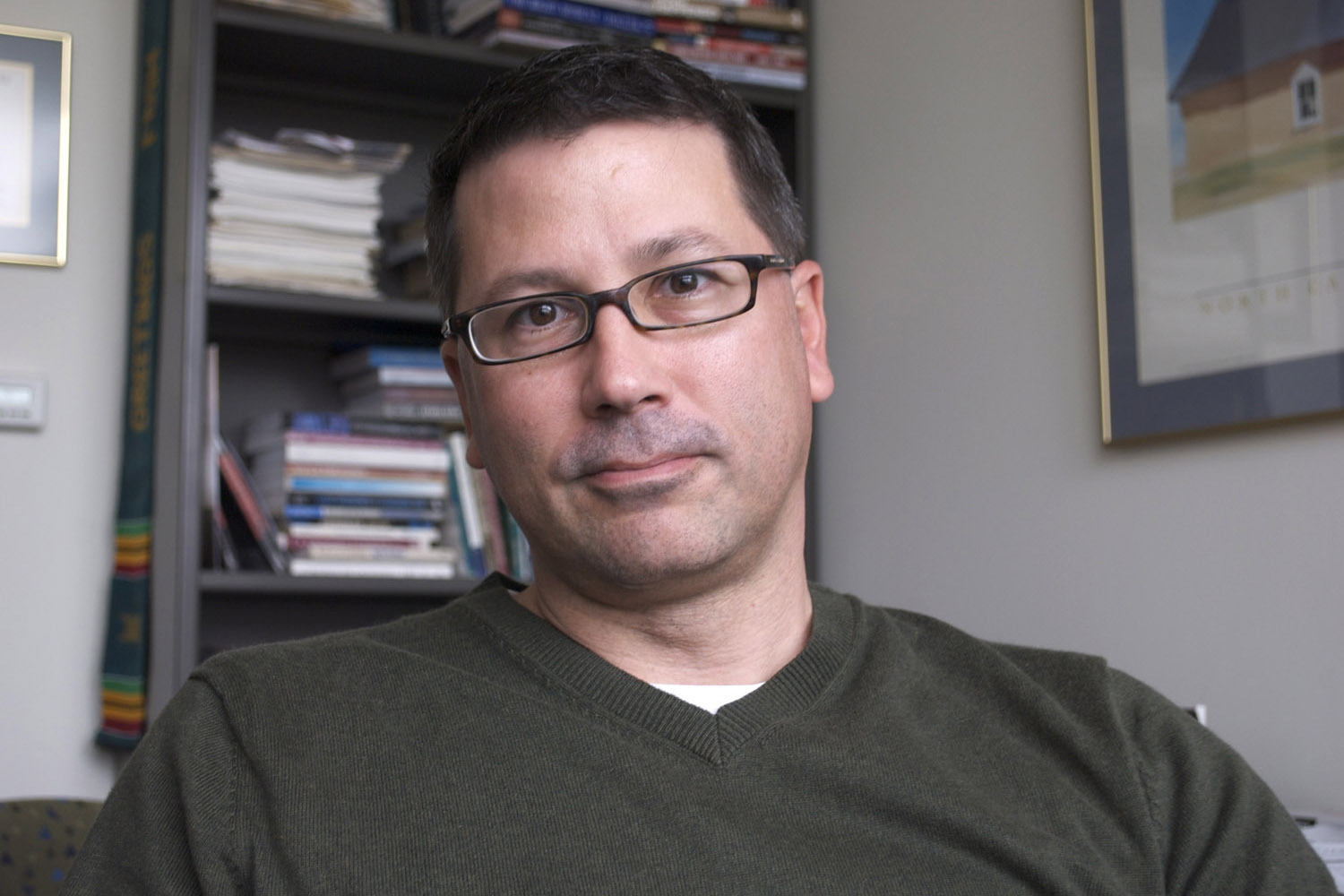
In his latest opinion column in The Baltimore Sun, Political Science Professor Thomas Schaller responds to an op-ed he wrote last month about the Western Maryland Initiative, an effort that calls for the state’s five western-most counties to secede from the state.

Tom Schaller

Schaller suggests that if people in those counties dislike Maryland’s politics, a solution is to move to a neighboring state that better reflects their ideology:

Among the blessings of our federal system are the variations across the 50 states. Conservatives usually champion these differences and states’ rights; indeed, they frequently employ the “vote with your feet” metaphor to encourage persons or businesses unhappy with one state’s political-electoral environment to find another state where they can start a business, buy a home or just gamble for a few hours. One of them, Texas Gov. Rick Perry, just stopped by Maryland to make that very point.


He also provides examples of people who recently moved from Western Maryland to West Virginia, including former Republican Rep. Roscoe Bartlett.

You can read the full column Don’t secede; vote with your feet in The Baltimore Sun. 

UMBC: The Body Electric

The Body Electric

UMBC researchers forge links between tech and medicine

Monitoring significant developments in a patient’s health outside a hospital setting can be challenging, but two UMBC researchers – Tinoosh Mohsenin and Gymama Slaughter – have won separate grants from the National Science Foundation (NSF) to help meet those challenges.

Mohsenin received a $100,000 grant from the NSF to develop signal processing architecture to detect seizures. The award of $150,000 to Slaughter from the foundation was to pursue work on nanoelectric probe arrays.

Not only does the work done by these two UMBC professors have important implications for basic medical science, but it is also research that may also provide more insight into how we think and feel, or improve how people with disabilities navigate in the world.

Watch and Wear

When patients are in a hospital, they often are connected to a myriad of monitoring devices attached to various parts of their body. Any changes are noted quickly by doctors or nurses.

Outside the hospital, however, it is more difficult to monitor for important warning signs of distress. The parent of a child with juvenile epilepsy, for instance, must watch until their child goes to sleep and be ready to act for signs of distress – because just before sleep is usually when such seizures occur. The fear and uncertainty of epilepsy for both patients and caregivers puts limits on their independence and reduces their quality of life.

Research pursued by Tinoosh Mohsenin – an assistant professor of computer engineering at UMBC – aims to give those parents (and patients everywhere) monitoring devices and systems as good as those provided in a hospital.

Mohsenin runs UMBC’s Energy Efficient High Performance Computing Lab, which is involved with the design and implementation of various signal processing algorithms and hardware that require real time processing within a limited power budget. Working with professor of computer science and electrical engineering Tim Oates at the computer science department and researchers at the University of Maryland Medical Center, she is developing wearable monitors to detect when someone is having a seizure no matter where they are.

A wearable seizure monitoring and alerting system could provide greater independence for patients with epilepsy. The technology available at present to monitor for seizures outside hospitals is bulky and uncomfortable. The current devices usually are worn in caps with electrodes attached to the head. They use a great deal of power, all drawn from batteries.

Worse yet, these devices are subject to a lot of noise due to movement of cap and a high number of false positives – and may not distinguish between a seizure and the patient brushing their teeth.

“There are not very efficient devices for people who suffer from epilepsy or those people whose epilepsy cannot be treated with medication,” she says.

At present, the only physiological signals measured by most of epilepsy monitors are electroencephalograph (EEG) signals. But Mohsenin envisions a device that measures even more indicators – including heart rate, oxygenation, and sweat/sudomotor response. She also wants to add an accelerometer for motion detection, which would pick up shaking and recognize if the patient falls.

What Mohsenin envisions is a monitor with a comfortable headband that would measure EEG signals, and an arm band that would contain an accelerometer and could measure other signals such as pulse.

“It has to be very accurate,” says Mohsenin, who even has ambitions for the device to call for medical assistance when it detects a seizure in a patient who is alone.

Each device would have to be trained for each patient because seizures and patients vary. And the device must also work within a “power budget” that uses as little power as possible with long battery life.

Presently Mohsenin and Oates are working on the variety of representations and machine learning algorithms to extract useful information from multi-physiological signals for such a device. The amount of computation the devices have to do is daunting, she says. She is concentrating mostly on creating the processor hardware and its low power implementation.

Mohsenin and colleagues at Georgia Institute of Technology are also working on another personalized wearable biomedical project – a wireless and wearable intraural device in the form of dental retainer that allows individuals with tetraplegia to access computers, drive wheelchairs, and control their environments.

Going for Gold

One of the key problems in monitoring brain activity is physiological. To place brain monitors on a patient requires major surgery, in which holes are drilled into the skull and part of the skull is lifted up. A relatively large, flat, and rigid device is then inserted. It is a process is fraught with peril.

Gymama Slaughter, an assistant professor of computer science and electrical engineering, is exploring how nanotechnology might produce a device that can monitor brain activity without such risk.

In the Bioelectronics Lab she created from the ground up at UMBC, Slaughter is working in the nano-scale on artifacts so small they are at molecular or near molecular scale.

The brain monitoring device she is working on is like a pyramid, literally one cubic millimeter in size with a tip pitch of 20 nanometers. (A millimeter is 4/100th of an inch.)

She is using gold for the device because it is an excellent electrical conductor, perfect for measuring electrical activity, and yet causes no adverse reaction in the body.

The device is also small enough to be inserted with a conventional syringe and flexible enough to be comfortable. It can also conform to the shape of the brain and be placed between the brain and the skull.

“A seven-gauge syringe will do it,” she observes, “and [the device] will enable large number of neurons to be interfaced simultaneously,” she said. The result is a monitor that will enable hundreds, thousands, or even millions of simultaneous electrophysiological recordings.

These neurosensors will collect data on brain activity, including what happens when a patient acquires Parkinson’s disease, strokes, epilepsy, brain damage, or Alzheimer’s.

“It might eventually measure how people behave,” says Slaughter. “What happens in the brain during anger, jealousy, or sadness?” It may also help understand researchers understand brain disorders such as obsessive compulsive disorder.

Slaughter is also working on a number of other projects: one monitor will give a running count of blood sugar in diabetics and deliver insulin when blood sugar is high to help people with diabetes avoid the usual complications, and another monitor tracks what happens when brain cells react to the brain toxins involved in Parkinson’s disease.

She is also pursuing a project to harvest energy from within the body to power bio-implantable devices without using external battery with the hope to improve individual’s well-being. Slaughter adds that the realization of energy harvesting from within the body is an attractive proposition not only for sensing and actuating, but also may have uses for electronics and defense technologies.

– Joel N.Shurkin

(10/30/13)

UMBC: THE BODY ELECTRIC

THE BODY ELECTRIC

UMBC researchers forge links between tech and medicine

Monitoring significant developments in a patient’s health outside a hospital setting can be challenging, but two UMBC researchers – Tinoosh Mohsenin and Gymama Slaughter – have won separate grants from the National Science Foundation (NSF) to help meet those challenges.

Mohsenin received a $100,000 grant from the NSF to develop signal processing architecture to detect seizures. The award of $150,000 to Slaughter from the foundation was to pursue work on nanoelectric probe arrays.

Not only does the work done by these two UMBC professors have important implications for basic medical science, but it is also research that may also provide more insight into how we think and feel, or improve how people with disabilities navigate in the world.

WATCH AND WEAR

When patients are in a hospital, they often are connected to a myriad of monitoring devices attached to various parts of their body. Any changes are noted quickly by doctors or nurses.

Outside the hospital, however, it is more difficult to monitor for important warning signs of distress. The parent of a child with juvenile epilepsy, for instance, must watch until their child goes to sleep and be ready to act for signs of distress – because just before sleep is when they usually such seizures occur. The fear and uncertainty of epilepsy for both patients and caregivers puts limits on their independence and reduces their quality of life.

Research pursued by Tinoosh Mohsenin – an assistant professor of computer engineering at UMBC –aims to give those parents (and patients everywhere) monitoring devices and systems as good as those provided in a hospital.

Mohsenin runs UMBC’s Energy Efficient High Performance Computing Lab, which is involved with the design and implementation of various signal processing algorithms and hardware that require real time processing within a limited power budget. Working with professor of computer science and electrical engineering Tim Oates at the computer science department and researchers at the University of Maryland Medical Center, she is developing wearable monitors to detect when someone is having a seizure no matter where they are.

A wearable seizure monitoring and alerting system could provide greater independence for patients with epilepsy. The technology available at present to monitor for seizures outside hospitals is bulky and uncomfortable. The current devices usually are worn in caps with electrodes attached to the head. They use a great deal of power, all drawn from batteries.

Worse yet, these devices are subject to a lot of noise due to movement of cap and a high number of false positives – and may not distinguish between a seizure and the patient brushing their teeth.

“There are not very efficient devices for people who suffer from epilepsy or those people whose epilepsy cannot be treated with medication,” she says.

At present, the only physiological signals measured by most of epilepsy monitors are electroencephalograph (EEG) signals. But Mohsenin envisions a device that measures even more indicators – including heart rate, oxygenation, and sweat/sudomotor response. She also wants to add an accelerometer for motion detection, which would pick up shaking and recognize if the patient falls.

What Mohsenin envisions is a monitor with a comfortable headband that would measure EEG signals, and an arm band that would contain an accelerometer and could measure other signals such as pulse.

“It has to be very accurate,” says Mohsenin, who even has ambitions for the device to call for medical assistance when it detects a seizure in a patient who is alone.

Each device would have to be trained for each patient because seizures and patients vary. And the device must also work within a “power budget” that uses as little power as possible with long battery life.

Presently Mohsenin and Oates are working on the variety of representations and machine learning algorithms to extract useful information from multi-physiological signals for such a device. The amount of computation the devices have to do is daunting, she says. She is concentrating mostly on creating the processor hardware and its low power implementation.

Mohsenin and colleagues at Georgia Institute of Technology are also working on another personalized wearable biomedical project – a wireless and wearable intraural device in the form of dental retainer that allows individuals with tetraplegia to access computers, drive wheelchairs, and control their environments.

GOING FOR GOLD

One of the key problems in monitoring brain activity is physiological. To place brain monitors on a patient requires major surgery, in which holes are drilled into the skull and part of the skull is lifted up. A relatively large, flat, and rigid device is then inserted. It is a process is fraught with peril.

Gymama Slaughter, an assistant professor of computer science and electrical engineering, is exploring how nanotechnology might produce a device that can monitor brain activity without such risk.

In the Bioelectronics Lab she created from the ground up at UMBC, Slaughter is working in the nano-scale on artifacts so small they are at molecular or near molecular scale.

The brain monitoring device she is working on is like a pyramid, literally one cubic millimeter in size with a tip pitch of 20 nanometers. (A millimeter is 4/100th of an inch.)

She is using gold for the device because it is an excellent electrical conductor, perfect for measuring electrical activity, and yet causes no adverse reaction in the body.

The device is also small enough to be inserted with a conventional syringe and flexible enough to be comfortable. It can also conform to the shape of the brain and be placed between the brain and the skull.

“A seven-gauge syringe will do it,” she observes, “and [the device] will enable large number of neurons to be interfaced simultaneously,” she said. The result is a monitor that will enable hundreds, thousands, or even millions of simultaneous electrophysiological recordings.

These neurosensors will collect data on brain activity, including what happens when a patient acquires Parkinson’s disease, strokes, epilepsy, brain damage, or Alzheimer’s.

“It might eventually measure how people behave,” says Slaughter. “What happens in the brain during anger, jealousy, or sadness?” It may also help understand researchers understand brain disorders such as obsessive compulsive disorder.

Slaughter is also working on a number of other projects: one monitor will give a running count of blood sugar in diabetics and deliver insulin when blood sugar is high to help people with diabetes avoid the usual complications, and another monitor tracks what happens when brain cells react to the brain toxins involved in Parkinson’s disease.

She is also pursuing a project to harvest energy from within the body to power bio-implantable devices without using external battery with the hope to improve individual’s well-being. Slaughter adds that the realization of energy harvesting from within the body is an attractive proposition not only for sensing and actuating, but also may have uses for electronics and defense technologies.

– Joel N.Shurkin

(10/30/13)

UMBC: Soccer Story

Home Team

Retriever Fever and spirited fans lift UMBC Men’s Soccer to even greater heights.

The sun rises and crews get to work cutting the plush Riviera Bermuda grass, repainting lines and repairing divots with green dyed sand.

UMBC has the only Bermuda grass field in the America East Conference and it has to be pristine for the next game. Plus, with the growing success of UMBC soccer, there’s a good chance the field will see a lot more action throughout the fall.

As the defending America East champion, UMBC men’s soccer team is familiar with the thrill of victory. However, the 2013 season marks a lot of firsts for the team, including cracking the top ten in both the National Soccer Coaches Association of America (NSCAA) and Top Drawer Soccer rankings. The team currently ranks 7th in NSCAA and 6th in Top Drawer Soccer, and have already clinched a spot in the six-team America East championships. UMBC women’s soccer is seeing similar success, completing the best turnaround in conference history by going from last in the conference a season ago to capturing its first-ever regular season title.

“We have maintained a quality program for quite some time, but these are heights we have not scaled before and this marks an exciting, new era for our team,” said Steve Levy, Associate Athletic Director.

UMBC’s unprecedented success comes at a time when soccer has never been more popular in the United States. With the 2014 World Cup less than 12 months away, that interest will only continue to grow. But if you were to visit UMBC campus on a game night, you’d think the Cup was just days away.

Our students and alumni have a strong tradition of supporting the UMBC soccer program. Each fall, “Retriever Fever” sweeps the campus community, bringing with it a surge of school spirit and camaraderie. Halls are decorated, events are planned and thousands of students converge on the campus for Homecoming week, all leading up to the men’s soccer match. This year, more than 1,700 attended the Saturday game.

“Every year we draw more and more fans and alumni back to campus as a community, while the events and support get better and better,” said Anthony Adams, Men’s Soccer Associate Head Coach. “I would challenge anyone to come to a men’s soccer game and not see tremendous school spirit.”

Despite having fewer resources when compared to other top university programs in the country, UMBC has continued to consistently rank well in game attendance and participation. During the 2012 soccer season, the university was 13th in attendance nationally, and numbers are up from 995 to 1,228 per game in 2013.

Nowhere is this school spirit and support more evident than right on the sidelines. Each home game, thousands of students, alumni and fans turn out—complete with banner flag, rally drum, matching apparel and organized chants. Lot 17, named for the original spot where fans would gather before and after each game, has been a way for UMBC’s soccer fans to get organized. Following the 2010 season, men’s soccer saw a significant rise in attendance at home games after an appearance in the 2010 NCAA tournament, advancing to the second round. With help from an enthusiastic men’s soccer club team, Lot 17 was formed and is a now quintessential part of the school’s soccer heritage. The fan-based group often travels to away games and can be found taking over opposing stadiums with their cheering.

Soccer is a sport I am very passionate about,” said Edward “Teddy” Tibert, a UMBC club soccer player and lead organizer for Lot 17. “I think that’s what makes it great—we’re so unique from other schools in the sense that the greatness of soccer isn’t taken away by all the shine that football brings.”

This Saturday at 1 p.m., the America East Conference action continues as UMBC men’s soccer travels to UMass Lowell to battle the River Hawks. Women’s soccer will host their America East semifinal game this Sunday at 1 p.m. at Retriever Soccer Park. For tickets and more information, visit www.umbcretrievers.com.

(10/30/13)

• 410-455-1000 •
UMBC is an Equal Opportunity and Affirmative Action Institution

Jason Schiffman, Psychology, on WYPR’s Maryland Morning

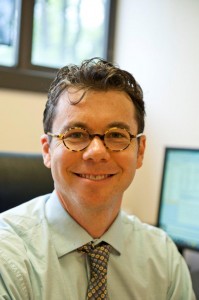
“An ounce of prevention is worth a pound of medicine,” says Psychology Associate Professor Jason Schiffman when describing treatment of psychosis.

Jason Schiffman

Schiffman is a staff member at the new “Center for Excellence on Early Intervention for Serious Mental Illness.” The center’s mission is to identify young people with psychosis or at risk for the specific symptom that makes violence more likely. The program aims to get them into immediate treatment and to provide support.

In an interview Monday on WYPR’s Maryland Morning, Schiffman outlined how early treatment of people with psychosis or showing signs of developing it is critical in getting those individuals on a path towards leading a life they want to live.

“The field has really moved towards understanding that the earlier we intervene, the better the life trajectory of individuals on a route with these symptoms or on a journey having these experiences,” Schiffman said.

He also described how the new center will focus on collaborative work to provide the best possible treatment and support.

You can listen to the full interview here.