
All posts by: UMBC News Staff


Up on the Roof – Fall 2013

UMBC President Freeman A. Hrabowski, III, takes your questions.

In 2007, you signed the American College & University Presidents’ Climate Commitment. Are we making progress to become a more sustainable UMBC?

– Richard Byrne ’86

Any priority that becomes critical to the future of the university will require attention from people at all levels of the institution, whether we are talking about increasing the number of students from low-income backgrounds who succeed at the university, or strengthening our reputation and visibility in the arts and humanities. The President, the provost, the deans, the faculty, the staff and the students have to work collectively with our alumni and external partners to think through the best and most effective strategies.

The same is true when we think about sustainability. From the beginning, when I was asked to sign the commitment, what was most important to me was that the campus already had shown a commitment to sustainability in a variety of ways.

That commitment was there early in my presidency. We made decisions about bwtech@UMBC and the portion of that land that would be focused on sustainability through the Conservation and Environmental Research Area (CERA). The campus’s interest in sustainability also played a big part in how we decided to expand the Retriever Activities Center (RAC).

Green space is important on this campus. Many people don’t realize how different the campus looks today from 25 or 30 years ago, and that difference is not simply a matter of more buildings.  It is a difference that has resulted from a philosophy focused on increasing the green space on campus. We have respected and expanded the green space on campus. We’ve made decisions about parking lots versus parking decks. It also has meant tearing up some of the concrete from the 1960s and planting grass, and planting the trees that encircle the campus now.

Signing the commitment was important because our campus community said that we wanted to make sustainability one of our values, and we needed “stretch goals.” Clearly, this is a goal that we will have to stretch to reach.

I’ll never forget having a student write to me at the time and say that my signing the commitment was done for publicity purposes. My response was: “Watch the actions of the campus. I’m not going to try to prove anything to you. Judge us by what we do. Judge us by the updates and the progress reports.”

We have been very active in trying to make progress on every level, from the construction of new buildings to LEED standards to new initiatives in our curriculum. I think it’s important to remember the research, the teaching, and the outreach components of the effort. It has been encouraging to see how many UMBC faculty members have been involved in their research and teaching in sustainability efforts. From the new programs we have created in environmental science and environmental engineering to the work in interdisciplinary studies that focuses on sustainability. What could be more exciting than our role in the new Institute of Marine and Environmental Technology (IMET) at the Inner Harbor, where we’re doing research and creating new technologies in that important field?

So we have made substantive efforts across the board to highlight the importance of this work and to attract more students into the field.  Even the book we have selected for our UMBC New Book Experience in 2013 – Hot: Living Through the Next Fifty Years on Earth, by Mark Hertsgaard – focuses on the environment and sustainability.

We have made substantial progress since I signed the commitment. UMBC has reduced our carbon footprint by more than 13 percent since 2007 – even with a 15 percent increase in the university’s enrollment and the addition of new buildings on campus.

But the best way I can talk about sustainability as UMBC’s President is to make the point that it’s all around us in everything that we’re doing – sitting in rooms set at a temperature that saves electricity, making choices about how we travel, or the creation of new academic programs of the future. The key has been to pay attention to the issue of climate change, have ways of measuring our effectiveness and progress, and also create opportunities to discuss not only our successes, but also the challenges we face.
NSF PROMISE AGEP Grant Funded; UMBC is Lead Partner

UMBC is pleased to announce that the National Science Foundation grant for PROMISE: Maryland’s Alliance for Graduate Education and the Professoriate (AGEP) has been funded. UMBC is the lead campus on this University System of Maryland-wide, $1.75 million, 3.5 year grant. UMBC’s primary partners will continue to be the University of Maryland, College Park and the University of Maryland, Baltimore, and all of the campuses within the USM will participate.

Signature programs will continue with funding for graduate students from USM’s campuses to attend activities such as Dissertation House and Summer Success Institute (SSI). Programming and mentoring for postdoctoral fellows throughout the system will also be expanded. New activities include the annual graduate student research and careers conference that will build on the recommendations of the Council of Graduate Schools’ report “Pathways Through Graduate School and Into Careers” and an annual conference for undergraduates to learn about opportunities in graduate school. Finally, Professors in Training (PROF-it) students will have opportunities for mentored teaching experiences at campuses across the USM, and several community colleges.

The National Science Foundation’s AGEP program is intended to increase significantly the number of domestic students receiving doctoral degrees in the sciences, technology, engineering, and mathematics, with special emphasis on those population groups underrepresented in these fields.

Akshayraj Kore Becomes New UMBC Chess Champion

Last weekend International Grandmaster Akshayraj Kore from India  (FIDE rating 2481) earned the title of 2013-2014 UMBC Chess Champion by being the top UMBC student to finish the UMBC Chess Championship held Sept 14-15 in the Commons.  Kore is a new MS student in CS.Former UMBC chess team member National Master Aaron Khan (2390) won the 5-round Swiss System tournament with 4.5 points in a dramatic finish, drawing International Master Levan Bregadze (2396) from Georgia and unexpectedly defeating Kore and International Grandmaster Niclas Huschenbeth (2537) from Germany.

The 2013-2014 UMBC Chess Team will comprise Niclas Huschenbeth, Akshayraj Kore, Levan Bregadze, Nazi Paikidze from Georgia, and Sabina Foisor from Romania.  Paikidze and Foisor are International Woman Grandmasters, and Paikidze is also an International Master.  The team is preparing to compete at the 2013 Pan-Am Intercollegiate Championship, which will take place December 27-30 at Texas Tech.


Govind Rao, CAST, on Protein Expression in Genetic Engineering and Biotechnology News

Govind Rao, a professor of chemical, biochemical, and environmental engineering as well as the director for the Center for Advanced Sensor Technology (CAST) was recently quoted in Genetic Engineering and Biotechnology News.

“Advances in DNA biology, particularly those of the past three decades, catalyzed the emergence and expansion of experimental approaches to manipulate gene expression. Subsequently, these advances impacted protein science, a field that found itself increasingly positioned at the juncture of technology, science, and art,” wrote Richard Stein, in the article.

“We are trying to make bioprocessing more intelligent and provide a greater degree of measurement at all stages,” said Govind Rao, Ph.D., professor of chemical, biochemical, and environmental engineering and director of the Center for Advanced Sensor Technology at the University of Maryland, Baltimore County (UMBC). A major effort in Dr. Rao’s lab is focused on developing noninvasive, disposable sensors to actively monitor culture parameters during growth.

“Most biological processes are very complex, and many parameters change during the growth of a culture,” added Dr. Rao. Recently, Dr. Rao and colleagues described the use of triple disposable noninvasive optical sensors that can be positioned inside culture flasks, and revealed that pH, oxygen level, and carbon dioxide level can be dynamically monitored during E. coli fermentation to collect information that would not be routinely available from shake flasks.

According to a paper co-authored by Dr. Rao in Biotechnology Progress in 2012, the sensitive element of the disposable noninvasive optical sensors is a thin, luminescent patch affixed inside the flask. The paper also noted that small electronic devices for excitation and fluorescence detection are positioned outside the shake flask for noninvasive monitoring.”


Tim Finin, CSEE, on Personal Computing in the Washington Times

“New sales figures show slow the decline of the personal computer is accelerating, with consumers abandoning the desktop units in droves in favor of more portable devices.

New figures from the International Data Corp. show 1 million fewer PC shipments than tablets in the third quarter of this year,” wrote Nathan Porter of the Washington Times.

The article, addresses the question, will PC’s soon be a thing of the past with the increasing popularity of tablets?

Not so, says Tim Finin a professor in Computer Science and Electrical Engineering, ”

“While I think this trend will continue, there are still going to be many people who will need to use PCs,” said Tim Finin, an engineering professor at the University of Maryland, Baltimore County.”

Caringi Earns More Conference, National Honors; Retrievers Rise in National Polls

For the second consecutive week, UMBC senior forward Pete Caringi III (Perry Hall, Md./Calvert Hall) has earned the America East Conference Men’s Soccer Player of the Week award. In addition, the Retriever striker was named College Soccer News’ National Player of the Week for games ending Sept. 8, 2013.

Caringi and his teammates are off to a 4-0-0 start and have risen to Top 25 status in both the College Soccer News (No. 24) and Top Drawer Soccer (No. 25) men’s collegiate soccer polls.

Caringi has scored two goals apiece in each of UMBC’s four games to date. He is the fastest to the eight-goal mark in school history, edging past Andrew Bulls who scored seven goals through four games in 2009.

Caringi’s 32 career goals are now 7th on UMBC’s all-time list. He struck in the 16′ and 56′ to give UMBC a 2-0 edge in the 3-1 victory over Central Connecticut on Sept. 5 and tallied in the 28′ and 73′ in the 3-1 triumph versus St. Francis Brooklyn on Sept. 7.

Joel Katz, Visiting Artist Lecture (9/25)

JoelKatzThe Department of Visual Arts is pleased to present a lecture by Joel Katz, Wednesday, September 25 at 7 pm in the Albin O. Kuhn Library Gallery.
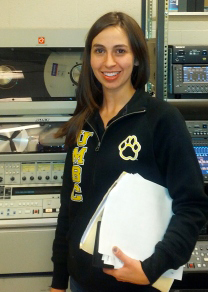
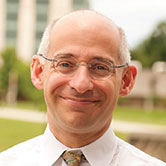
Artist and designer Joel Katz, University of the Arts, Philadelphia University, is internationally known for his information design and wayfinding systems.  Major wayfinding projects include: Walk!Philadelphia; Ride!Philadelphia, bus shelter maps and historical panels; Central City Portland, Oregon; Downtown Omaha, Nebraska; and schematic design for the MIT Master Plan, which won an Honor Award from the Society for Environmental Graphic Design (SEGD).

Katz’s photography has been exhibited and published in both the U.S. and abroad, and his design work is in the collections of the Museum of Modern Art and the Cooper-Hewitt Museum, New York, and the Museum of Modern Art, Tokyo and Kyoto. He was made an honorary life member of the International Pediatric Nephrology Association for his work visualizing the function of infants’ kidneys.

Learn more about this event at our Arts and Culture Calendar.


Morningstar ’15 Recipient of Newcombe Scholarship

jf9ftt

Natalie Morningstar, a junior majoring in Computer Engineering, has been awarded a Charlotte Newcombe Foundation Scholarship. The Charlotte W. Newcombe Foundation is an independent foundation begun in 1979 by the estate of Mrs. Newcombe, a Philadelphia philanthropist.  Since 1981, the Foundation has provided scholarship funding for mature women students at UMBC.

This fall, Natalie will participate in the “Returning Women Mentor Program,” which is a peer mentoring initiative that the Women’s Center at UMBC is introducing to better facilitate productive and ongoing connections among the scholars in their programs.

Natalie is also a CWIT Affiliate and part of the first cohort of Transfer Scholars in IT and Engineering (T-SITE). T-SITE is funded by an NSF-funded S-STEM grant and will serve 30 transfer students as part of the larger CWIT Scholar and Affiliates community through 2017.

When asked how she came to choose computer engineering as a major, Natalie said “Before transferring to UMBC I studied a mix of motion picture film, digital multimedia production and computer science. Both classroom and work experiences helped to expose me to a number of theories and applications, which ultimately lead me to my interest in computer engineering.”

With such a broad range of interests, she will have many options for what to do after finishing her computer engineering degree. “Right now I have a broad interest”, she reports, “and have not decided which specific field I want to pursue. I really enjoyed my work in signal processing at my summer computer engineering internship at Ventura Solutions, Inc. and I hope to gain exposure to other fields as well so I can narrow my focus.”

This post originally appeared on the CSEE news blog.

UMBC: New Faces

New Faces

UMBC was recently named once again as a “Great College to Work For” in a national poll of employees conducted by the Chronicle of Higher Education, so it’s no surprise that the university is attracting stellar new talent to its faculty and academic leadership.

We asked six newly appointed leaders and faculty at UMBC what attracted them to join our community.

Scott CasperScott E. Casper is UMBC’s new dean of the College of Arts, Humanities and Social Sciences (CAHSS). He comes to the university from the University of Nevada, Reno, where he was interim dean of the College of Liberal Arts and a professor of history.

As I learned more about UMBC, I particularly appreciated its commitment to a world-class undergraduate education for all of our students, including honors-level experiences and community engagement; its growing profile as a research university in the arts, humanities, and social sciences; and the broad participation of faculty and staff in charting the university’s course.

I’m especially excited by the range of disciplines and programs within CAHSS. We span the disciplines (Theatre to Geography & Environmental Systems), the centuries (Ancient Studies to Media and Communication Studies), and the globe (Asian Studies, Africana Studies, and now Global Studies). During my interview, I had the pleasure of meeting several outstanding, recently hired faculty members, as well as students in CAHSS’s Scholars programs (Sondheim, Linehan, and Humanities) — and those conversations demonstrated how UMBC lives its vision.

I was also really attracted to our location, because I’m a historian of the 19th-century United States who has done substantial work in this area – specifically at Mount Vernon – and because I grew up in Virginia and have family not far away.


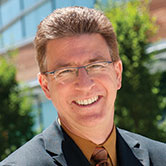
Viviana MacManusViviana MacManus is an assistant professor of gender and women’s studies. She received her Ph.D. at the University of California, San Diego in the department of literature in 2011. That same year, MacManus was named as one of UMBC postdoctoral fellows for faculty diversity – a program designed to support promising scholars who are committed to diversity in the academy and prepare them for possible tenure track appointments at the university.
I feel welcome and wanted here. The warm and supportive community within the department of gender and women’s studies was a major reason why I stayed at UMBC. I felt supported intellectually, community-wise on campus, and personally. I had the support that I needed to succeed.

It also said a lot to me that UMBC valued the liberal arts and humanities enough to invest in hiring new faculty in gender and women’s studies, and investing in the humanities overall. The fellowship gave me time and support to transition from graduate school to the faculty. I designed my own classes, but also had the time to do my own research. I learned how to balance that, which I think is hard for new faculty right out of graduate school.

I think I’m super fortunate. I keep telling everyone that I think I won the jackpot.


Karl Steiner Karl V. Steiner is UMBC’s new vice president for research. Steiner arrived on campus in late August from the University of Delaware, where he was senior associate provost for research development and a professor of electrical and computer engineering and biomedical engineering.
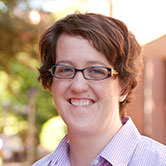
Coming from the University of Delaware, I have known about UMBC and the exciting developments underway on this campus for some time. When I was approached about the position of vice president for research, I took a closer look at the campus and its research portfolio, and I was positively impressed by the existing research activities and the strengths of the faculty on this campus. There also was a clear sense of pride across the UMBC community about how far this campus has developed over the past two decades in its relatively young history, and an expressed desire to expand the research impact of UMBC.

My goal is now to work with the faculty and with campus leadership to position UMBC to grow its research engine, to put in place or strengthen the infrastructure required to compete at the next level, to establish innovative and mutually beneficial collaborations with local, regional and national partners, and to serve as a catalyst, promoting the unique strengths of UMBC within the state and on the national level.


Erin GreenErin Green is an assistant professor of biological sciences. She took her Ph.D. at University of California, Berkeley and arrives at UMBC fresh from postdoctoral work at Stanford University.
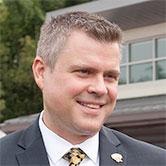
I was drawn to UMBC because it promotes excellence in both scientific research and undergraduate and graduate education. The department of biological sciences offers me a great opportunity to work with accomplished and dedicated colleagues, pursue cutting-edge research and interact with a talented and diverse pool of students. Also, being surrounded by the biomedical research hub centered in the Baltimore/Washington DC region will enrich my research program and provide a stimulating learning environment for my students.


Tim HallTim Hall is UMBC’s new director of athletics, physical education and recreation. Hall comes to UMBC from the University of Missouri-Kansas City (UMKC), where he was director of athletics for six years.
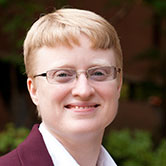
UMBC’s commitment to the comprehensive student-athlete experience was one of the main attractions for me. Academic success and athletics success are not seen as mutually exclusive at UMBC.

The faculty and staff of this university are first rate. And Freeman A. Hrabowski, III is one of the finest leaders in higher education. Having the opportunity to work for him and learn from him was another thing I found very appealing.

I am also proud to lead a department that is part of one of the finest divisions of student affairs in higher education. Maryland is also a beautiful part of the country, and it is close to our home in northeast Ohio.


Scott CasperRachael K. Hinkle is an assistant professor of political science. She comes to UMBC from Washington University in St. Louis, where she received her Ph.D. in May. She also received a J.D. with high distinction from Ohio Northern University College of Law in 2003.
The major thing that attracted me to UMBC was the sense of campus-wide determination to excel in both teaching and research. I decided to pursue an academic career because I enjoy and thrive in both environments, so I was excited to join a university which would both push me to maximize my potential in teaching and research, and also provide me with the resources necessary to do so.

The political science department at UMBC is full of people who are both amazing scholars and amazing people. Their support and advice will be invaluable as I launch my career.

(9/18/13)

Exhibition Curated by Lisa Moren, Visual Arts, Features Panel with Anupam Joshi, CSEE

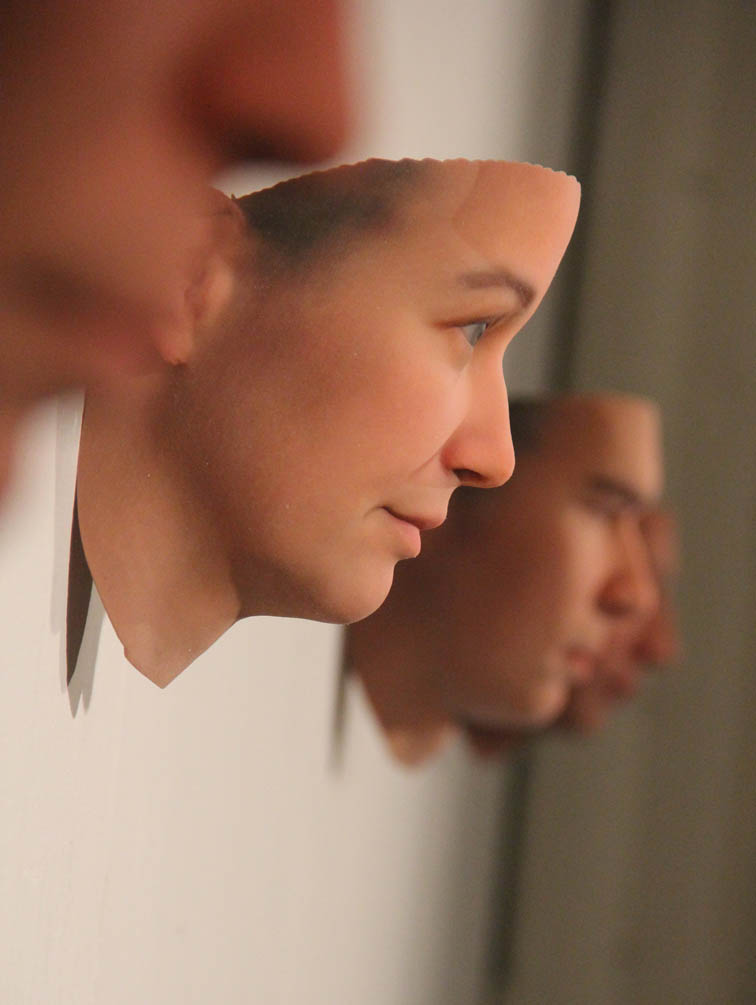
dewey-HagborgA panel discussion for the exhibition, Cyber In Securities, curated by Lisa Moren, visual arts, and presented by the Washington Project for the Arts will take place Saturday, September 21 at 3 pm in the Pepco Edison Place Gallery.

Participants in the panel, moderated by Moren, will include, Kevin Bankston, senior counsel and director of Free Expression Project, Center for Democracy and Technology; Heather Dewey-Hagborg, information artist and PhD candidate, electronic arts, Rensselaer Polytechnic Institute; David Rokeby, interactive sound and video installation artist; and UMBC faculty member, Anupam Joshi, computer science and electrical engineering, director of the Center for Cybersecurity.

“Cyber In Securities is an exhibition that addresses the growing concern among a cross-generational group of artists whose enthusiasm about new media is complicated by the suspicion that the good will of their shared digital consciousness is being used against them.”

Cyber In Securities is on view through Sept. 27 at Pepco Edison Place Gallery. Learn more about the exhibition here.

Image: Heather Dewey-Hagborg, Stranger Visions (detail), 2012-2013, portrait masks created from found DNA the artist collected in public places in NYC.

Manil Suri, Mathematics, to Speak at National Book Festival

On Sunday, September 22 at 12:55, Manil Suri, professor of mathematics, will speak at Washington D.C.’s National Book Festival. The festival will be help on the National Mall on September 21 and 22.

More information about the festival can be found here, and more information about Suri’s presentation can be found here.

Join the Celebration of the University System of Maryland

The University System of Maryland (USM) is 25 years old. And you are invited to participate in the celebration.

Throughout the 2013-14 academic year, the USM is observing this milestone with a look at the positive impact that USM has had—and continues to have—on the quality of life in Maryland and beyond. We’ve created a micro site that includes a timeline, a link to the story of how the system came to be, and some interesting facts about the system’s impact.

We’ve also transformed the USM Facebook page into the official 25th-anniversary party site. Be sure to LIKE the University System of Maryland on Facebook for regular updates and your chance to win prizes monthly.

There’s history to learn, information to share, an array of prizes to win, and enough pride to go around. Above all, there’s thanks to all who make it possible for the University System of Maryland to serve students and other individuals, communities, and the many organizations comprising the state’s public and private sectors with innovation, commitment, and excellence.

Visit the micro site at: www.usmd.edu/25. And be sure to LIKE the University System of Maryland on Facebook. Don’t miss the opportunity to join the celebration.

We offer special thanks to the sponsors whose donations have made this celebration possible. They are:

Barry Gossett, vice chair of the University System of Maryland Board of Regents; CareFirst BlueCross BlueShield; Delmarva Power; MICROS Systems, Inc.; PNC Foundation; The Classic Catering People; The Whiting-Turner Contracting Company; and the University System of Maryland Foundation.

For more information, contact:
Anne Moultrie
301.445.2722
amoultrie@usmd.edust