
All posts by: UMBC News Staff


Career Q&A: Jennifer Mercer ’12, INDS, Intern with Free State Legal Project

Every so often, we’ll chat with an alum about what they do and how they got there. Today we’re talking with student attorney Jennifer Mercer ’12, interdisciplinary studies, about how her time at UMBC helped prepare her for her work with the FreeState Legal Project and how both experiences are shaping her future career.

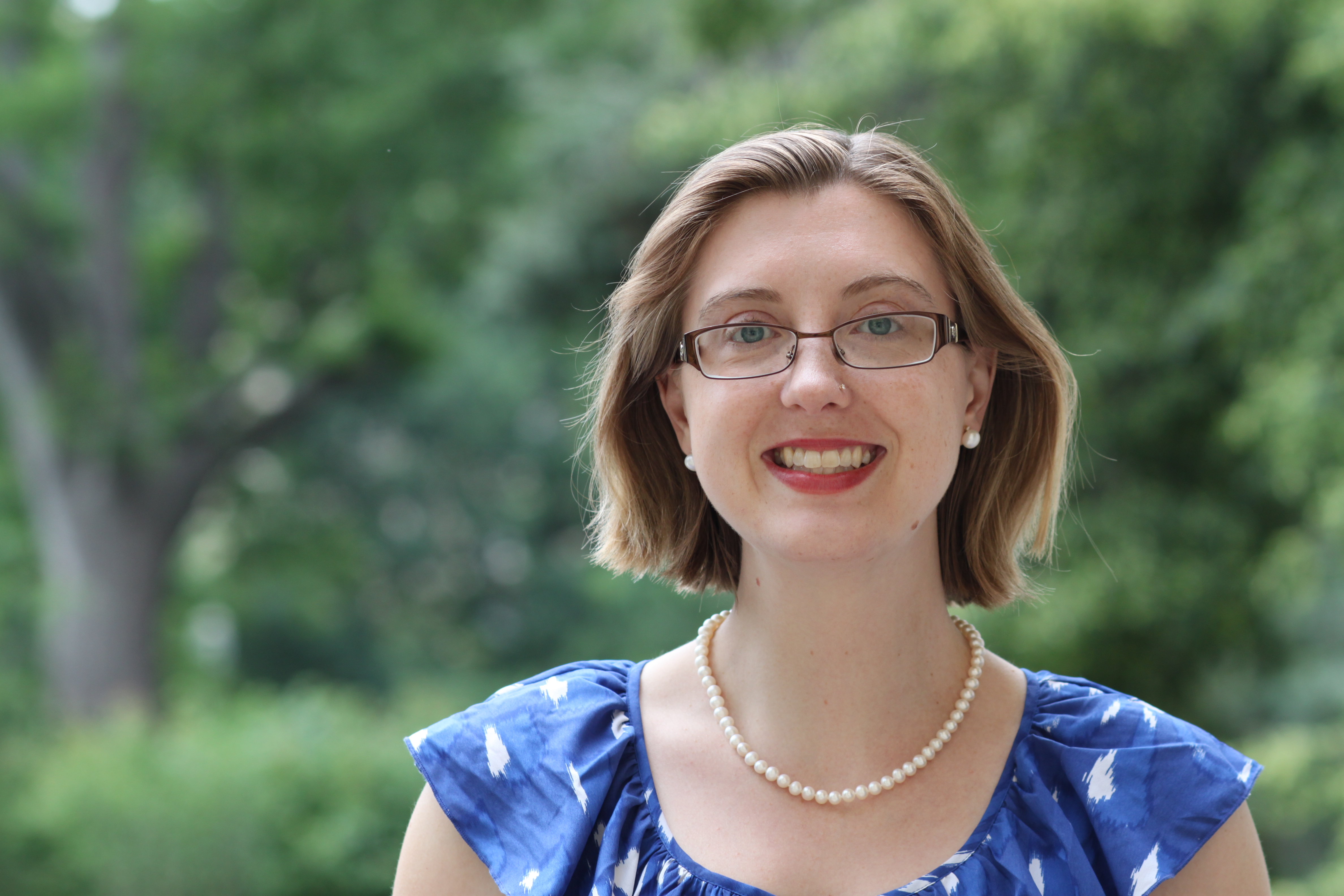
Jennifer Mercer at GraduationName: Jennifer Mercer
Job Title: Student Attorney
Employer: FreeState Legal Project

Q:  Tell us a little about how you wound up at UMBC. What’s your background?

A: I am originally from Lutherville, Maryland. When I was in high school, I got a postcard in the mail for the Just for Juniors visit day. To be honest, I didn’t want to go because I thought I wanted to go to college out of state. My mother made me go, however. Once I went, I had a very positive experience. It’s hard to describe, but I felt a certain energy in the air on campus. The students seemed to be excited to be there. The professors I spoke to seemed to be genuinely interested in me. Needless to say, I am sure I was not the first prospective student to be powerfully impressed upon by Dr. Hrabowski’s words. And to think that if I’d had my way, I would have blown it off! I learned a lesson no teenager particularly relishes: my Mom was right.

I liked UMBC so much, I just couldn’t wait until I graduated high school to enroll. I spent my senior year of high school taking classes part time, then taking six credits per semester at UMBC as part of the concurrent enrollment/Young Scholars Program. I got a head start on college, and knew I was where I needed to be.

Q:  You’re in the middle of an internship right now, so a few questions: What have learned so far? What are you most excited about working on this summer? How do you feel this internship will help you in your career?

A: Interning for FreeState Legal Project has been a wonderful experience so far. My clients are low-income members of the LGBT community. I help them get access to critical legal services which they need but cannot afford. Since FreeState is very small, no two days are the same, as there is so much to be done! We are a fairly new organization, but we have grown tremendously in the past few years. This is due in no small part to founder and Executive Director Aaron Merki ’05, political science, who is also a UMBC graduate (and UMBC’s Rising Star Alumnus of the Year in 2010).

I have learned a great deal already about the substantive law issues affecting low-income LGBT clients, such as family law issues, legal name and gender changes, discrimination cases, immigration, and more. Due to the rapid and relatively recent advance of society’s acceptance of LGBT people, there is a striking lack of legal precedent in these areas. Therefore, a large part of my job is researching issues and constructing the best possible work product out of limited information. I do this with my clients in mind, as important parts of their lives depend on it. After my work is reviewed by my supervisors, it gets sent to clients or to the court. I’m proud to do work that makes a direct impact.

It is hard to pick a thing that I am most excited about, but the first thing that came to mind was my work on juvenile justice. FreeState sponsors a LGBT Youth Roundtable which consists of leaders from many agencies which impact the lives of LGBT youth. I work on the Juvenile Justice Subcommittee along with several juvenile public defenders and prosecutors. Right now, I am surveying existing research on the state of incarcerated LGBT youth in order to develop strategies for further research. We are looking at best practices for caring for these youth, and will draft a model policy to show to policymakers. The assignment is perfect for me, considering my senior capstone project (and URCAD presentation) was about incarcerated adolescent girls more generally. I have the opportunity to build on my existing knowledge, which is wonderful.

I think the most vital skills I am learning come from the actual interactions I have with my clients. Learning how to talk to clients, who are often distressed at their situation, and to meet their problems with legal solutions, is critical. That being said, I think it is equally important to be able to take out the legalese when speaking to clients. I do my best to make sure they understand what is going on with their cases, and answer their questions as needed. My internship is teaching me how to be a compassionate, client-focused attorney. That is something I will use for my whole career, as are the connections I have made with others in the legal community who are similarly minded.

Q:  Tell us about your career plans for the future. What would you like to do after law school? Were there any lessons you learned, in particular, at UMBC that have stuck with you?

A: I came into law school with the experience I had as an undergraduate intern at the Office of the State’s Attorney for Baltimore City, Juvenile Division (thanks Shriver Center!). Between that internship and my coursework at UMBC, I knew I wanted to become a public interest attorney. While it is absolutely true that public interest attorneys do not make as much money as their colleagues in the firm world, I know that this path is for me. My experience at UMBC helped to give me that confidence.

I plan to spend my entire career doing public interest work on behalf of people who would otherwise not have access to the justice system. I hope that when I retire someday, I can look back at my career and know that it has changed lives. I am aware that these might be seen as lofty goals by some, but my time at UMBC taught me that I can achieve more than I may believe. If you would have told me when I was in high school that my college career would have gone so well, that I would apply to and be accepted to five different law schools, that I would choose a top tier law school and secure an internship I love helping clients who need it, I would not have believed you. And yet here I am!

Q:  Is there a particular class or professor who really inspired you?

A: It would be impossible to fully describe my UMBC experience without acknowledging the Interdisciplinary Studies department. The great thing about INDS is that truly does not limit students, but encourages them to pursue their intellectual interests at the highest level. My departmental adviser was INDS Assistant Director Steven McAlpine, who nurtured my curiosity and allowed it to grow and blossom. Former INDS (now POLI) faculty member Dr. Lisa Vetter also helped me along, giving me advice when I needed it. The course that stuck with me the most was Civil Rights, taught by Dr. George LaNoue. The lessons I learned in that course have proven practical in this line of work. Additionally, that course introduced me to the power of law to uplift the downtrodden.

Q:  What advice would you give to students considering UMBC?

A: My advice to prospective UMBC students is to keep an open mind, and not to limit yourself based on what you think you want. Once you’re here, get to know the faculty. I still work with some of the adjunct professors I had at UMBC, including Profs. Carrie Evans and Terry Hickey. Just the other day, I had dinner with someone I originally met because she was a guest speaker in Prof. Hickey’s Problem Solving in the Urban Black Community class.  We talked about the work I have been doing, and she gave me some advice. I still see Prof. McAlpine at his monthly drum circle performances. The relationships you build with faculty can be very enriching, so stop by during office hours and get to know them.

Q: What is your favorite UMBC memory?

A: I have a lot of great memories of UMBC, but many of my favorite memories are related to my experience as a member of the UMBC Down and Dirty Dawg Band. I played clarinet for all four years. The time I spent playing at basketball games, traveling during the conference tournaments, and just spending time with my pep band friends was time very well spent. I have an incurable case of Retriever Fever!

Bill LaCourse, Dean of CNMS, in The Baltimore Sun

In a recent Baltimore Sun article on engaging underprivileged and minority students in science, Bill LaCourse, dean of the college of natural and mathematical sciences, voiced the importance of creating a strong community to support student learning and success.

Students who come to college unprepared often need remediation, said LaCourse. UMBC has decided to change the approach of throwing 800 students into an introductory science class to let everyone sink or swim, because too many were sinking. Today, the school works to ensure that students feel more supported and have a small community of fellow students to turn to for help.

UMBC makes The Princeton Review’s 2013 list of green colleges

2013-green-guideFrom innovative student ideas to campus programs and campaigns, UMBC is going green—and getting noticed. The Princeton Review has recognized UMBC as a college raising the bar on sustainability in its 2013 Guide to 322 Green Colleges.

The annual guide profiles higher education institutions in the U.S. and Canada that demonstrate a strong commitment to sustainability in their academic offerings, campus infrastructure, activities and career preparation.

To determine which schools qualify, colleges and universities are rated based on institutional data such as the school’s energy consumption, green transportation programs, and the level of dedication for sustainability in and out of the classroom.

UMBC was noted for its successful student programs, including the Biodiesel Club’s sustainability project and a student-driven initiative to bring a farmer’s market and community garden to campus. The list also highlighted UMBC’s efforts to increase its renewable energy resources, the new LEED certified Performing Arts and Humanities Building, and its educational campaign for recycling.

For All the World to See’ is An Artforum ‘Critics’ Pick’

The traveling exhibition For All the World to See: Visual Culture the Struggle for Civil Rights curated by Maurice Berger, CADVC, and organized by the CADVC has been selected as a critic’s pick for Artforum Magazine by Chelsea Haines. Haines describes the exhibition as one that, “provides a historical mirror for our current moment of global unrest, in which demands and claims over cultural ownership have spurred almost as much social momentum as the toppling of states.”

Read the review of the exhibition at Artforum’s website.


Maurice Berger, CADVC, Latest Essay in New York Times

In the latest essay for his Race Stories column for the New York Times, Maurice Berger, CADVC, discusses the Russian-American Photographer Vincent Soboleff’s pictures of Native Alaska.

Berger writes about Soboleff and the storytelling power of his imagery, especially when compared to other photos of the time. Before digesting the race-related implications of the images, he discusses the importance of the unique pictures:

As 19th-century Native Americans were forced to adapt to a world dynamically altered by war, racial brutality, disease and displacement, photographic depictions of them habitually trafficked in stereotypes built on an implicit comparison between the new, “civilized” Indian and the tradition-bound “savage.” Mr. Soboleff’s pictures were more respectful of, and ultimately more informative about, his subjects, despite the fact that the Russian Orthodox Church, which began working in Alaska in the mid-18th century, was actively proselytizing in the Tlingit community.

Read “A Russian-American Photographing Native Alaska” at the New York Times Lens Blog.

Berger’s Race Stories column has featured several essays centered upon race and photography including, Malcolm X as image maker, Ken Gonzales-Day, images of emancipation, the photographs of Deborah Will, the civil rights work of James Karales, and the woman in a civil rights photo, fifty seven years later.

Marc Steiner Show reairs episode on African American women and feminism with UMBC’s Jodi Kelber-Kaye

On Wednesday, July 17, the Marc Steiner Show reaired its episode on the 162nd anniversary of Sojourner Truth’s “Ain’t I a Woman?” followed by a discussion on African American women and feminism. Jodi Kelber-Kaye, associate director of the honors college, joined singer and activist, Lea Gilmore; Dream Hampton, journalist and cultural commentator; and A. Adar Ayira, project manager of the More in the Middle Campaign for Associated Black Charities for a conversation about the growing divide between the feminist movement and African American women.

“The word feminism is a more recent invention, and if we want to say it was invented out of white women’s movements we could easily say that,” Kelber-Kaye said. “Black women’s rights people have always had a dissonant relationship with that term.”

Listen to the full episode »

Project of Visual Arts Faculty, Lynn Cazabon, Neal McDonald, in Leonardo

The artist statement for Lynn Cazabon, visual arts, and Neal McDonald’s, visual arts, multimedia project, Junkspace, 2012, will appear in the Vol 46. No 5 issue of Leonardo — Transactions.

Leonardo is a peer-reviewed academic journal published by the MIT Press covering the application of contemporary science and technology to the arts and music.

http://www.leonardo.info/transactions.html

Junkspace is a time and location sensitive video installation and corresponding iOS App that superimposes two forms of waste, one earth—bound (electronic waste) and the other celestial (orbital debris).” Learn more, or download the app at the installation’s website.

Dr. Kimberly Moffitt, American Studies, on the Marc Steiner Show

Following the acquittal of George Zimmerman, Kimberly Moffitt, assistant professor in the Department of American Studies, and other guests discuss what this decision means, specifically with regard to race and the justice system.

“Even in our text we talk about how the black body is revered and reviled, simultaneously – and this is even more poignant when you think about the black male body as being that space where we place upon it something we love,” Moffitt said. “When we think about sports, immediately we think about black men and their athletic ability to perform at sports—and we love that part of that body. But that’s the same body, even in the midst of playing a sport, that we also criminalize, that we villainize, in many ways. And, we haven’t been able to remove the reviling part of that black body to accept people as human beings.”

Listen to the full two-hour special »

Hydrologist Claire Welty, CUERE, takes NBC Learn on a tour of Baltimore’s urban streams, The Baltimore Sun

“NBC Learn, an educational division of the television network, came to Baltimore recently to report on how the physical alteration of streams in urban areas makes it that much harder for them to handle polluted storm-water runoff. It highlights research on area streams that’s being led by Claire Welty, a hydrologist at University of Maryland Baltimore County,” writes Tim Wheeler of the Baltimore Sun.

Welty, the Director, Center for Urban Environmental Research and Education (CUERE) and professor of chemical, biochemical, and environmental engineering takes NBC Learn on a tour of Baltimore’s streams.

“With NBC correspondent Anne Thompson narrating, Welty shows and tells how the loss of vegetation along stream banks and their channeling through concrete culverts deprives them of natural ability to filter out the pollution that causes algae blooms locally and dead zones far downstream in the Chesapeake Bay. The culprits are nutrients – notably nitrates from fertilizer, animal waste and even fallout from air pollution – washed off city streets, parking lots and yards whenever it rains,” continues Wheeler.

Watch the video
Read the story

Robert Deluty, Graduate School, Interviewed for Boloji.com

Robert Deluty, UMBCIn an interview with Boloji.com, one of India’s most popular e-magazines, UMBC’s Robert Deluty revealed the origins of his transformation into a poet and shared a few select pieces spanning more than 20 years.
According to Dr. Deluty, associate dean of the graduate school, he did not discover his talent for writing poetry until he was in his late 30’s when he adapted a “long-winded, self-righteous, and boring” essay into his first published poem expressing his views on entitlement. It was published in The Baltimore Evening Sun newspaper.

Surprisingly, however, it was his 30-plus years as a psychology professor and practicing clinician that drew him to pursue poetry. “When I provide therapy as a psychologist and when I write poetry, my goals are typically the same: to connect with my audience, to relieve burdens, and to promote greater awareness and insight,” said Deluty.

Deluty’s poems and essays have been published in newspapers, journals, and anthologies such as The Wall Street Journal, Modern Haiku, Psychiatric Times and the Journal of Poetry Therapy. His 42nd book, Saluting from the Shore, will be published in August 2013.

Read the full interview »

Career Q&A: Executive Director Brigitte Pribnow Moore ’05, theatre

Every so often, we’ll chat with an alum about what they do and how they got there. Today, we’re talking with executive director of Young Playwrights’ Theater, Brigitte Pribnow Moore ’05, theatre, about what it’s like to combine multiple interests and skills into one awesome career. 

Brigitte MooreName: Brigitte Pribnow Moore
Job Title: Executive Director
Employer: Young Playwrights’ Theater
Scholarships Received at UMBC: UMBC University Fellow 2001-2005

Q:  Tell us a little about how you wound up at UMBC. What’s your background?

I came to UMBC from a small town in Connecticut. I knew I wanted to study theatre, and I heard that UMBC’s BFA in Acting program was a “hidden gem.” I came out for an audition and I fell in love. The year I started at UMBC, the theatre department was a small program with a brilliant faculty providing rigorous artistic training, and producing innovative, high-quality performances with fairly limited resources. It has been such a joy watching UMBC’s theatre program grow in resources and recognition over the past decade, and the new Performing Arts and Humanities Building is a beautiful addition to the campus. I am so excited to see what future theatre students create and share in that space.

Q:  You’ve been able to combine multiple loves/skills into a career. How did you figure out that you wanted to do all those things, and do you have any advice for other folks who find themselves with multiple, diverse career interests?

I left UMBC with an incredible artistic education, but I also had the opportunity to explore a wealth of liberal arts courses outside my department. I spent my time at UMBC completing my theatre degree, but I also took classes that ranged from political science, to film history, to statistics, to non-western civilizations. I participated in volunteer and part-time work outside UMBC that complemented my interests, serving on political campaigns and writing and editing a weekly newsletter for a statewide advocacy organization. When I graduated, I did not have a solid career plan, but I had a rich and varied academic foundation, a network of community contacts in Baltimore and DC, and a strong sense of the impact I wanted to have on the world. I didn’t leave UMBC with a career goal. I left with a mission. And that mission carried me through almost a decade of diverse jobs that included working on union organizing campaigns, serving as the legislative director for two Maryland state delegates, and, ultimately, running Young Playwrights’ Theater.

My advice for other folks with a variety of interests: don’t put yourself in a box. Dive deep and excel in your major, but dare to take classes outside your discipline, and to engage boldly with the rich and diverse off-campus community that surrounds UMBC. Also, wait on grad school until you have worked for a few years and know exactly what, if anything, you need to learn to succeed in your career. If you’re like me, you may not be where you expected, and your evolving interests and needs may surprise you.

Q:  Tell us about your career. Were there any lessons you learned, in particular, at UMBC that you carried with you into your work?

I currently serve as the Executive Director of Young Playwrights’ Theater, a DC-based nonprofit that uses the arts to inspire young people to realize the power of their own voices and stories. I feel incredibly lucky to have found myself in a career that allows me to make a living doing something I love, and my time at UMBC was instrumental in helping me to discover and pursue and my dreams. The study of theatre is, at its heart, the study of what it means to be human – to relate and connect with others and to ponder and pursue one’s place in the world. My classes taught me a great deal about the art of theatre, but they also taught me the art of empathy, critical and analytical thinking, and persuasive communication. I left UMBC with an intellectual and interpersonal toolkit that helped me in every professional task I took on – from writing an impactful speech for a political candidate, to inspiring a donor to support a cause, to effectively leveraging the talents of a professional team.

Q:  Is there a particular class or professor who really inspired you?

All of them? Seriously, the UMBC theatre department employs such brilliant, talented, and caring instructors. I felt privileged to know and learn from each of them. I did have a particularly inspiring experience in a directing class I took with Christopher Owens. I learned so much about the power of good stories, and I discovered that I was happiest and most comfortable in artistic and professional roles that allowed me to direct people and resources toward a big picture vision. That class was transformational for me.

Q:  What advice would you give to students considering UMBC?

Pull your application materials together and send them along. UMBC is special place with a wealth of opportunities to learn and explore with gifted, caring professors and a diverse, talented community of students. You won’t regret your decision.

UMBC: Big Dreams Meet Big Opportunity

Big Dreams Meet Big Opportunity.

Daly City doesn’t get as hot as Baltimore, says Perry Ogwuche, a rising senior majoring in computer science and mathematics. This is the first time he has been to California, but he’s not there on vacation. Ogwuche and Randi Williams ’16, computer engineering, are spending their summer hard at work as members of the second class of CODE2040 fellows.

CODE2040 is a fellowship program designed to help black and Latino students advance their careers as technology professionals. “Just taking CS [computer science] classes is not enough to build a career in Silicon Valley, New York and some of these other tech hubs,” says Amy Schapiro, manager of program operations at CODE2040. “The industry is looking for people that show a lot of initiative and passion for their work.”

The program focuses on black and Latino talent because there is a visible lack of proportional representation and diversity in technology companies. This is important, Schapiro says, because having a team with different perspectives can mean the difference between success and failure in developing solutions to complex problems.

As two of 18 CODE2040 fellows, Ogwuche and Williams put UMBC in a class with MIT, Carnegie Mellon and Stanford as the only universities to have more than one student receive this prestigious fellowship.

CODE2040 fellows work full-time in internships with some of the hottest startups in the San Francisco Bay Area and participate in special programming to promote their career development. Students visit companies such as LinkedIn and Google, and the program provides a speaker series, mentorship from industry professionals, and executive coaching on a group and individual basis. “What they get out of those resources by the end of the summer is a comprehensive view of the opportunities in the tech industry,” Schapiro notes.

“I wake up daily with a heart of gratitude toward the founders of the program,” says Ogwuche. “We’ve had the opportunity to meet so many inspiring leaders in the tech space, from high tech entrepreneur and venture capitalist Ben Horowitz to the founders of Dropbox and Piazza. I can’t imagine expanding my professional network on my own in such a short period of time.”

“It’s pretty cool,” says Williams. “We got to talk to the founder of DropBox. We get to have one-on-one conversations [with technology professionals] and they give us advice on things like how to start a business. It’s a once-in-a-lifetime opportunity.”

The internship is the most time-intensive component of the program. Ogwuche is working at Redbeacon, a technology firm that connects home-service professionals with job requests from homeowners. Ogwuche is a software engineer and spends his days writing code. “It’s definitely a learning experience,” he says, “I face some challenging problems, but I have a lot of resources and a lot of help.”

Williams is interning with Jawbone, a wearable device and audio technology company known for its noise-eliminating Bluetooth headsets. She is working in web development and maintaining the company’s server. In the process, she’s developing important skills, including learning to code in CSS, HTML and Python. But she says that what she likes most about the program is how it emphasizes giving back. Fellows participate in community service projects around the Bay Area and alumni continue to stay involved with the program as mentors.

What’s next? Williams, a Meyerhoff scholar and Center for Women In Technology (CWIT) affiliate, dreams of having her own company someday. Ogwuche’s plans are more immediate. He shares, “I’m looking forward to coming back and being an ambassador on campus for the CODE2040 program.”

UMBC students interested in applying for the CODE2040 fellowship in 2014 should visit the CODE2040 website.

(7/12/13)