All posts by: UMBC News Staff


Works by Kelley Bell, Lynn Cazabon, Jill Fannon and Vin Grabill selected for LUX

The work of Visual Arts faculty members Kelley Bell, Lynn Cazabon and Vin Grabill, and Imaging and Digital Arts alumna Jill Fannon has been selected to be featured in LUX, the 2012 Maryland Art Place’s annual fall benefit gala and juried invitational exhibition, highlighting Maryland state artists working specifically in photography and digital media. Lynn Cazabon, Jill Fannon and Vin Grabill will exhibit photography, Kelley Bell will present digital media.

The LUX exhibition opens as part of the Maryland Art Place’s annual fall gala on November 9 and will be on view until December 15. On the night of the gala, all of the artwork in the LUX exhibition will be available for purchase in silent auction format starting at 7pm at Maryland Art Place, Power Plant Live!. There will be a closing reception — free and open to the public — on Thursday, December 13 from 6-8pm. Find more information here.

Robert Deluty, Graduate School, in The Faculty Voice

Robert Deluty, associate dean of the Graduate School, has published 23 poems in the October 2012 issue of The Faculty Voice.

All of the poems have an academic theme and all previously appeared in one of Dr. Deluty’s published books.  The poems are written in senryu, a form of short poetry of Japanese origin similar to haiku. Poems include:

inquiring
how to reference tweets.
in his term paper

and

young art student
struggling to control the strokes.
painting his first nude

All of the poems, which appeared in the October 30 issue of the newsletter, can be read here.

UMBC and Four Md. Community Colleges Partner to Ensure More Transfer Students Succeed in STEM

The University of Maryland, Baltimore County (UMBC) is pleased to announce today a $2.6 million grant from the Bill & Melinda Gates Foundation to build a national model for ensuring more transfer students earn degrees in science, technology, engineering and math. Anne Arundel Community College, the Community College of Baltimore County, Howard Community College and Montgomery College will work with UMBC on the “STEM Transfer Student Success Initiative.”

Sarah Gantz of the Baltimore Business Journal wrote:

“Transfer students account for about 38 percent of UMBC’s new students in STEM fields and largely come from the initiative’s partner community colleges.

“How they succeed depends quite a lot on the transition and this is one of the really important issues of why a standard bridging model doesn’t work,” said Philip Rous, provost at UMBC.”

The foundation’s grant will allow UMBC and its community college partners to:
Better align their STEM curricula, reducing lost credits and the need for students to retake courses. Improve academic and career advising, heavily utilizing online tools.
Create programs, such as peer mentoring and transfer seminars, to better support students during the transition from a two-year to four-year college. Develop a robust “Transfer STEM Scholar Pathway” that lays out a clear program of study, from community college to university to graduation. Disseminate guiding principles and best practices to the national higher education community.

Alexandra Tilsley of Inside Higher Education wrote:

“Transfer students in STEM fields face the any community college transfer might face: courses that don’t line up, credits that don’t transfer, trouble adjusting to the class size or format, a lack of a community feeling. Those problems, however, are often more acute for STEM students. After all, 500-person lecture classes are more common in science departments, and requirements are often more stringent in those fields, too; an engineering student who takes the wrong class in his first year at community college will likely have a harder time finishing a bachelor of science degree in four years than an English student would have with a bachelor of arts.

“There are all sorts of differences,” said Bill LaCourse, dean of the College of Natural and Mathematical Sciences at UMBC. “And yes, we have students coming from high school, but there are all kinds of first-year programs. Transfer students … come in not knowing exactly what to do because we never gave them the grounding to understand what it takes or what it entails.”

Supported by a three-year grant from the Gates Foundation, this project will not only serve as a national model, but also stands to directly benefit more than 1,000 Maryland students in the next few years and thousands more in years to come.”

In less than ten years, jobs requiring postsecondary education or training will account for more than 60 percent of all new jobs in the United States, and demand for workers in the STEM fields will be particularly acute. Accordingly, Maryland has set a goal of raising the proportion of the state’s adults with college degrees to 55 percent by 2025, with an added emphasis on STEM degrees. The state’s goal mirrors a national one supported through the work of the Bill & Melinda Gates Foundation.

The STEM Transfer Student Success Initiative recognizes that shaping the transfer process to better support students is crucial to meeting the nation’s education goals. The initiative builds on the Gates Foundation’s existing postsecondary work, as well as UMBC’s longstanding commitment to helping students of all backgrounds succeed in the sciences. The university’s highly-successful Meyerhoff Scholars Program, for example, serves as a national model for sending students on to earn Ph.D.’s in the STEM fields.

Anne Rubin, History, Named President of the Society of Civil War Historians

Anne Rubin, associate professor of history, has been named the president of the Society of Civil War Historians. Rubin is the author of A Shattered Nation: The Rise and Fall of the Confederacy, 1861-1868

The Society of Civil War Historians (SCWH) is an association of scholars dedicated to exploring slavery, the sectional crisis, Civil War, emancipation, and reconstruction roughly from the 1830s through 1880. SCWH’s goal is to bring greater coherence to the historical field by encouraging the integration of social, military, political, and other forms of history and generally to promote the study of the Civil War era.

In a video for the blog “The Civil War Monitor,” Rubin discusses her new role and her aspirations for the next two years of her presidency.

“I’d like the society to have a voice in the ongoing conversation about the Civil War sesquicentennial,” Rubin said. “I’d like us also to have more of a digital presence, more of a social media presence.  We’re historians, we like the past, but the digital world is upon us and it’s a great tool for outreach and to get the message of the society out there to a broader and younger public.”

The video can be seen here.

Jodi Kelber-Kaye, Honors College, in the Baltimore Messenger

Jodi Kelber-Kaye, associate director of the honors college, was featured in a recent Baltimore Messenger story on phone banking for marriage equality.  Kelber-Kaye has joined the pro-marriage equality efforts at Bolton Street Synagogue.

“I’m extraordinarily hopeful” that Question 6 will pass, Kelber-Kaye told the paper. Kelber-Kaye was one of the plaintiffs in a 2004 lawsuit challenging a state ban on same-sex marriages

The story, “Bolton Street Synagogue trying to get out the vote for marriage equality,” appeared online on October 22.

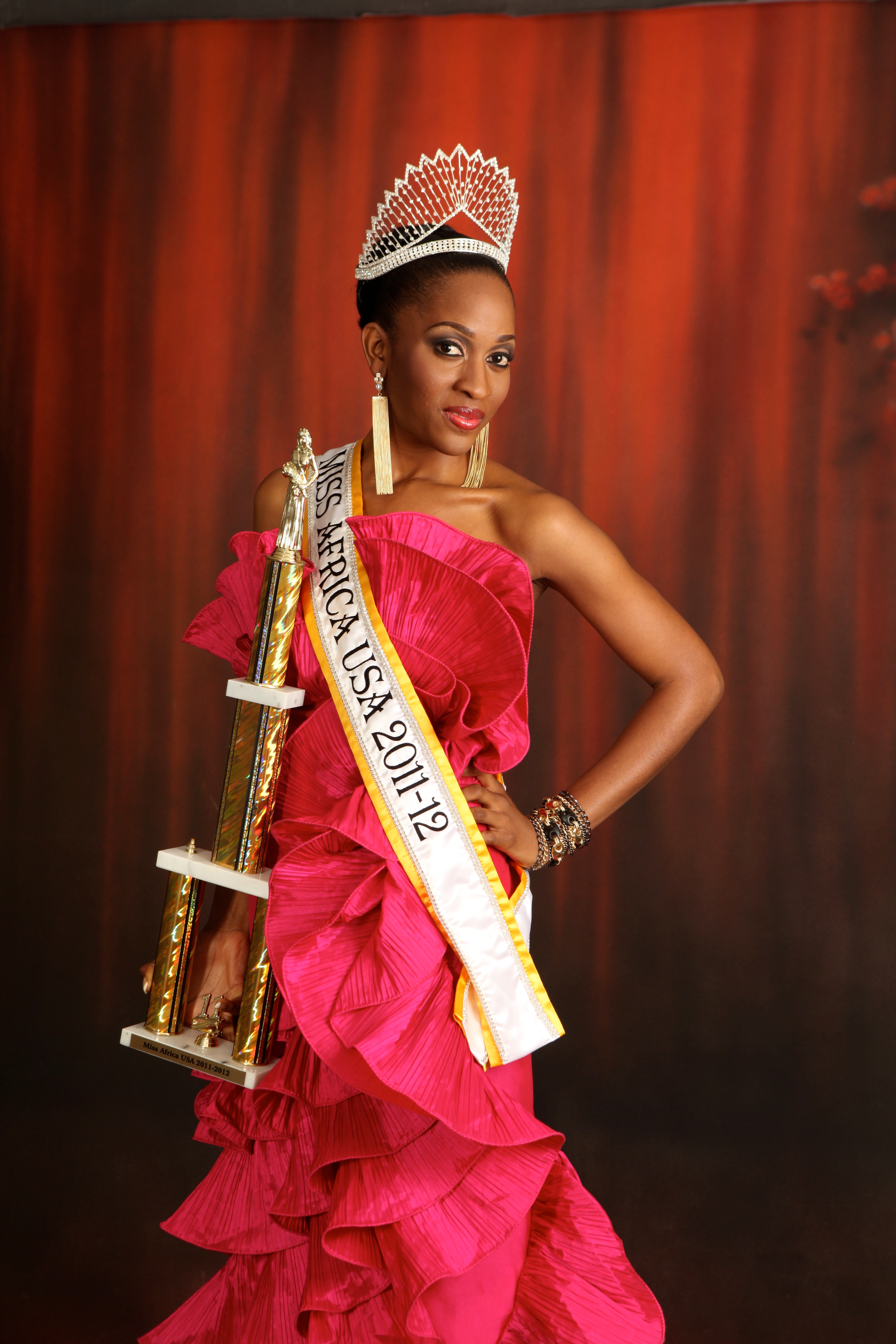
Ghyslaine Tchouaga, Biological Sciences, Reigns as Miss Africa USA

Student Ghyslaine Tchouaga, biological sciences, is currently serving as Miss Africa USA.

Tchouaga, who goes by “Gigi,” was crowned Miss Africa on November 13, 2011 in Silver Spring, Maryland. She is a Cameroonian native, born and raised in Yaoundé. She moved to the United States six years ago to pursue her education.

Tchouaga appeared on Afrotainment television’s  “Point of View” to discuss why she chose to compete in a beauty pageant.  “The reason I got involved with Miss Africa USA is because it has a beautiful purpose. You have a platform, and the focus is on what you can bring to the African continent,” she said.

She also appeared on the network’s “Samy Priso Show,” where she said that the humanitarian efforts she is participating in through the pageant are helping to prepare her to possibly attend a graduate program in public health.

Tchouaga plans to use her title as Miss Africa USA 2011-12 to raise awareness and funds to Fight Against Hunger in the Horn of Africa, particularly in Somalia; promote the education of orphans in Cameroon; and provide medical equipment, supplies and medications to underserved communities in Cameroon.

She also plans to promote self-help, entrepreneurship and empowerment amongst Cameroonian youths by establishing an Afripolitan Club.

The Miss Africa USA Pageant is the biggest pageant that features African Queens in the United States of America. The pageant is a celebration of African beauty in North America through a showcase of culture, talent and leadership. The pageant is committed to building the self-esteem of young African women and empowering them as goodwill ambassadors to serve communities in need. The goal of the Miss Africa USA pageant is to groom a new generation of African women leaders to impact their communities in Africa, America and the rest of the world.

You can follow Tchouaga’s reign as queen through Miss Africa USA’s Facebook page.

VCU’s Qin Wang Speaks at Stat Colloquium (10/26)

The Department of Mathematics and Statistics hosts Dr. Qin Wang of Virginia Commonwealth University (VCU) for its Fall 2012 Statistics Colloquium this Friday, October 26, from 11am to 12pm in Room 401 of the Mathematic and Psychology (MP) building.

Dr. Wang’s contribution for this week is entitled “A general SDR approach via Hellinger integral of order two.” It deals with the concept of sufficient dimension reduction (SDR), which according to the abstract is “a useful tool to study the dependence between a response and a multidimensional predictor.” The focus will be on a new approach to SDR called the Hellinger Integral of order two, a collaboration between Wang and Drs. Xiangrong Yin at University of Georgia and Frank Critchley at The Open University of UK, and which has a number of advantages such of minimal assumptions, relative effiency, and its unitary aspects of previous methodologies, among others.

Refreshments will be available in MP 422 before the event. Those desiring to meet with Dr. Wang should e-mail Dr. Yaakov Malinkovsky at yaakovm@umbc.edu.

Chris Hennigan, Chemical, Biochemical, and Environmental Engineering, Lectures on Aerosols in Atmosphere (10/26)

The Center for Urban Environmental Research and Education (CUERE) welcomes  Dr. Chris Hennigan, Associate Professor of Chemical, Biochemical, and Environmental Engineering, as guest for the seminar “Closing the Gap on Missing Sources of Organic Aerosol in the Atmosphere” this Friday, October 26th.

The seminar is the latest for CUERE’s Fall 2012 Seminar Series, which has been held annually since 2003. It begins at 2 PM, and will be hosted in Room 206 of the Technology Research Center, and is free and open to the public.

George Derek Musgrove, History, on The Root

An op-ed by George Derek Musgrove, assistant professor of history, recently appeared on The Root DC blog on the Washington Post website.

In the piece, Musgrove and co-author Chris Myers Asch discuss why current discussions of gentrification in the Washington D.C. region can be so heated.

“Simply put, people do not want to be gone or forgotten,” they write.

“Displacement and struggles over who “owns” the city have a long history in Washington. Ours is a city both Southern and transient, where the constant churn of newcomers has amplified the importance of place and rootedness.”

The authors conclude that “We must also help create the conditions in which a diverse population can flourish now and in the future.”

The story, “Not gone, not forgotten: Struggling over history in a gentrifying D.C.” appeared online on October 19.

UMBC Staff Present Program at the 19th National Conference on Students in Transition

Diane Lee, Jill Randles and Jarrett Kealey from the Office of Undergraduate Education, along with Sarah Jewett from the Office of the Provost, presented “UMBC Transfer Seminars: The Future of Transfer Student Success” at the 19th National Conference on Students in Transition in Philadelphia on October 15.

The annual conference provides the opportunity to share and learn from each other the latest trends, initiatives, best practices, ideas, research and assessment strategies focused on supporting student success.

bwtech@UMBC Helps Jump-Start Small Companies

bwtech@UMBC Helps Jump-Start Small Companies

It started back in 1989 – with two trailers and just five companies. By 2006, the bwtech@UMBCResearch and Technology Park was a major player – boasting 42 companies, bringing thousands of jobs to Maryland, and generating $100 million in income. Now, six years later, bwtech just topped 100 companies and is widely recognized as one of the top parks for nurturing small companies.

There are about 20 incubators in Maryland, but bwtech is one of only two working to grow the region’s cybersecurity industry. Twenty-four companies call the cyber incubator home, along with the CyberHive, a unique venture which provides a virtual incubator for companies outside the region and physical space for networking. The incubator’s contributions were recognized last year, when Ellen Hemmerly, president and executive director of bwtech, received the 2011 Innovator of the Year Award from The Daily Record.

“I’ve been involved in incubators for twenty years,” says Hemmerly, who has spent 15 of those years at bwtech. “In all my years of working with area incubators, the bwtech cyber incubator is the fastest growing and has much potential economic impact.” That, she says, is due in large part to its relationship to UMBC and to its partnerships with both the private and public sectors, such as Northrop Grumman and the Maryland Department of Economic Business Development.

But, it’s not all about cyber. For bwtech diversity is key. While cyber accounts for 40 percent of the companies at bwtech, the life sciences make up 40 percent and clean energy 10 percent. The remaining 10 percent are organizations dedicated to training and research.

There’s no question that the diversity of companies at bwtech contributes to the park’s success.

“With diverse companies developing innovative products and services in cybersecurity, clean energy and life sciences, bwtech@UMBC addresses the most compelling issues we face as a state and as a nation.” says Christian Johansson, Secretary of the Maryland Department of Business and Economic Development.

The defining characteristic that draws all the park’s activity together is a focus on nurturing early stage companies.

For example, the Life Sciences and Clean Energy Tech incubators host a monthly round table where 10 to 15 CEOs gather. Sometimes the research park will bring in an outside speaker, says David Fink, director of entrepreneurial services at bwtech. The bwtech park also supports entrepreneurs-in-residence, who help companies not only define their goals, but achieve them.

Kimberly Brown, CEO of Amethyst Technologies, values the opportunities to connect with other companies. Other CEOs, such as Eric Fiterman of Rogue Networks, say that having access to the entrepreneurs-in-residence is key to learning about business. “I’m just an average Joe,” says Fiterman, “I’ve never done this before.”

Kathleen Turano, President of Plant Sensory Systems agrees. “We were new to the business world,” says Turano, a former professor at Johns Hopkins University School of Medicine, “and the most attractive feature of bwtech@UMBC was the mentoring service.” That experience, she says, was invaluable. It also appears to have paid off. Turano’s company, Plant Sensory Systems, entered a collaboration this past October with DuPont Pioneer to evaluate proprietary genes for increasing the nitrogen use efficiency in corn.

Delali Dzirasa, CEO of the cybersecurity company Fearless Solutions, says Victor Hess, his entrepreneur-in-residence, tells him to focus. More than once, Hess has helped Dzirasa take a step back: “He’ll tell me that I’m kind of looking at too much.”  

Companies like Brown’s, Turano’s, Fiterman’s and Dzirasa’s usually come into the incubator with a couple of people and stay for a few years. Then they “graduate” and become accelerator companies, moving into more long-term space at the park.

In its six years at bwtech, Amethyst Technologies has grown from two to 24 people, starting in the incubator and quickly moving to the accelerator. The company stays for the creative energy of the park and the financials, says Brown. “We get lab space at a below-market price.”

The company started with 400 square feet of office space; now it’s up to 4,000 square feet of office space and 1,000 square feet of wet lab space.

As companies grow, they can take advantage of partnerships with large, mature companies that work with bwtech, and sometimes call it home. Take for example, the Northrop Grumman Cync Program, a partnership between Northrop Grumman and the cyber incubator. The Cync Program, as it’s called, is designed to grow companies that commercialize cyber technology. The program, which has seven companies, provides rent-free space and cyber business expert support.

“One of the goals,” says Chris Valentino, director of cyber at Northrop Grumman, “is to help them build their brand.”

After all, nurturing small companies that will meet the product and service demands of the 21st century is what bwtech is all about.

(10/17/12)


Kimberly Moffitt, American Studies, on Midday with Dan Rodricks

On Friday, October 13, Kimberly Moffitt, assistant professor of American studies, discussed the vice presidential debate on WYPR’s Midday with Dan Rodricks.

Rodricks opened the discussion by asking if the vice presidential debate mattered.  Most viewers found the debate entertaining, but would anything that the vice presidential nominees said change voters’ minds?

“I do think this was a sideshow, but it was a pretty entertaining one for us all,” said Moffitt. “These are two individuals who do matter, but they aren’t the voices we want to hear most significantly in the election.  They made a difference in terms of reenergizing, for both camps, this interest in what’s happening.”

The full conversation can be heard here.