All posts by: UMBC News Staff


Robert Provine, Psychology, mentioned in NPR’s “Krulwich Wonders”

NPR host and blogger Robert Krulwich devoted the May 26 edition of his blog Krulwich Wonders to a post entitled “A Puzzle: Why Aren’t They Laughing?”.

The post discusses a popular internet video ostensibly involving a Belgian television interviewer laughing at the “strange” voices of an interviewee and an audience member. Krulwich wrote of how the stone-faced reaction of the general audience in the video contradicts the findings of Robert Provine, professor of psychology. “It seems unnatural and seems to contradict what neuroscientist Robert Provine says about laughing — that it’s contagious, that ‘we laugh when we hear other people laugh. This is an automatic kind of thing.’ I thought, could this be evidence that Provine’s theories need amending?” Krulwich writes.

The answer to the puzzle – which leaves Provine’s theories intact – can be found in the original post.

Vin Grabill, Visual Arts: Latest Video “Wet” and The Light Ekphrastic

Visual Arts associate professor and chair Vin Grabill’s latest experimental video Wet has been making the rounds for the past few months, including being show at the 2012 Athens International Film & Video Festival at Ohio University this past April and at the Tenement Street Workshop’s Second Annual Snowballs Film Festival in New York City June 3rd. Describing the piece, Grabill says on the video’s site that, ” I collaborated with computer animator Francisco Olivares to create a waterspout sequence designed to overwhelm a series of abstracted TV scenes. A second animated water sequence depicts the flooding of the physical detritus of our media infrastructure. Additional interludes depicting wetness round out the video’s visual episodes.”

Grabill’s work was also featured in last month’s edition of the online quarterly journal The Light Ekphrastic. Gabrill’s two pieces are another collaboration, this time with Baltimore writer Danielle Ariano, and entitled Black Fridayand “Dishes.” The concept was to pair writers and poets with visual arts and have them switch off, with Grabill’s “Black Friday” inspiring Ariano’s “Holding,” and the writer’s “Anger” inspiring Grabill’s “Dishes.”

Rachel Wilkinson, English, in BmoreMedia

In a June 5 article entitled “What’s the Buzz? Beehives Burgeon in Baltimore Backyards,” Rachel Wilkinson, adjunct professor of English, recently reported on the local beekeeping community for the website BmoreMedia.

Over the course of the piece, Wilkinson explores a number of facets to the practice and its prevalence within Maryland, noting that there are 1,751 registered beekeepers with about 12,000 colonies in 1800 locations according to the state’s Department of Agriculture, and that “[a]ccording to to state apiarist Jerry Fischer, Baltimore alone was home to about 29 registered beekeepers keeping more than 100 colonies in 45 locations as of February.”

Wilkinson also looks into the personalities and motivations of those who have chosen to pursue the beekeeping in the area. “Beekeepers are part thrill-seekers, part environmentalists. Concerned with ecology and sustainability, gardeners often find beekeeping the obvious next step. Keeping the pollinators results in more fruit, vegetables and flowers in your garden,” she writes.

UMBC Memorial Service for Judy Shinogle

To celebrate the life of our colleague and friend Judy Shinogle, the Maryland Institute for Policy Analysis and Research, and the Department of Public Policy, will hold a memorial service on Tuesday, June 26 from 4-5:30 p.m. in the Commons Skylight Room. There will be an opportunity for members of the audience to share their memories of Judy.
Read more about Judy here.
In lieu of flowers, memorial donations may be sent to the Judith A. Shinogle Memorial Fund (make checks payable to UMBC Foundation), UMBC, 8th Floor Administration, 1000 Hilltop Circle, Baltimore, MD 21250; or AKC Canine Health Foundation, P.O. Box 900061, Raleigh, NC 27617 (www.akcchf.org).
Contact Jean Tolson (jtolson@umbc.edu410-455-1086) if you have any questions.

Erle Ellis, Geography and Environmental Systems, in Greenwire

In a June 6 piece for E&E Publishing’s daily environmental news website Greenwire, associate professor Earl Ellis, geography and environmental systems, spoke with reporter Paul Voosen in regards to the U.N.’s release of its fifth Global Environmental Outlook (GEO-5) ahead of this month’s “Rio+20: United Nations Conference on Sustainable Development” to be held in Rio De Janeiro.

The article focused on GEO-5’s emphasis on “planetary boundaries” as an important aspect of future environmental policy, which “are roughly based on the limits estimated during the past 10,000 years of human activity, and… have been seized upon by policymakers seeking a guide to the future of life on Earth”, wrote Voosen. Ellis, a co-author of the paper “Planetary Opportunities: A Social Contract for Global Change Science to Contribute to a Sustainable Future” for BioScience with a number of other scientists which calls for a middle path that “increase[s] the probability of achieving societal benefits while reducing negative outcomes for Earth systems”, told Voosen that the “physical boundaries” concept remains questionable on a number of issues ranging from its scientific weaknesses to its overemphasis in the media, concluding that “many [scientists] are convinced that focusing on the [boundaries] approach will weaken, rather than strengthen, the role of science in informing society in environmental decision making.”

The original article “Rio+20: Ahead of summit, U.N. report embraces ‘boundaries'” can be read at Greenwire‘s website here.

Tim Nohe, Visual Arts, Collaborates on “My Station North” Exhibition, Interviewed on WYPR

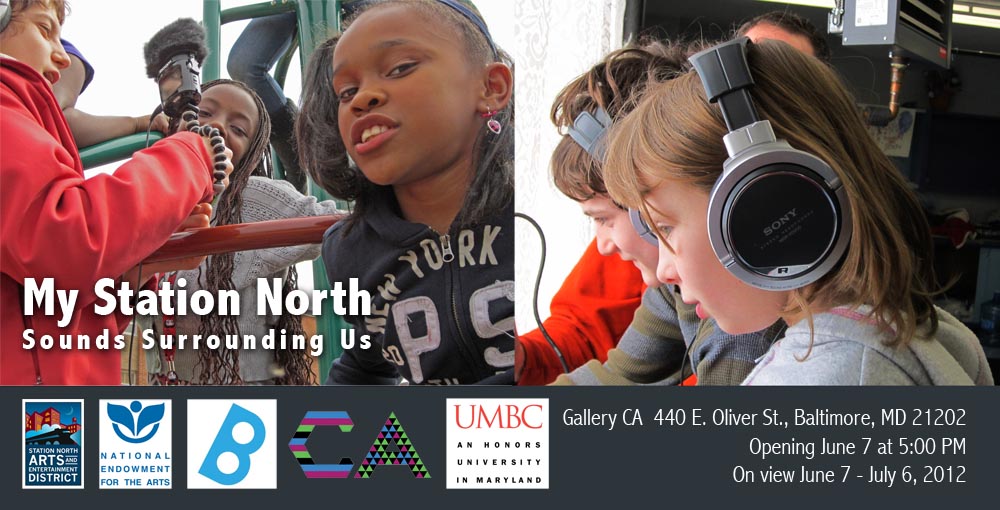
Associate Professor Timothy Nohe, Visual Arts, and Charlotte Keniston ’14, Imaging and Digital Arts, recently collaborated with students from the Baltimore Montessori Public Charter School for a project documenting the school’s Station North neighborhood. The project My Station North: Sounds Surrounding Us involved Nohe and Keniston providing five students ages 10-11 simple point-and-shoot cameras and audio recorders to go and interact with the diverse collection of area residents, ranging from bricklayers, to bike shop collective members, to artists based in the Copycat Building. The results are to be exhibited at an installation opening in Gallery CA at the City Arts building on June 7th at 5:00 p.m.

Speaking on June 5th with Tom Hall for WYPR’s Maryland Morning, Nohe spoke of his  and Keniston’s motivations for working with the students at Baltimore Montessori, saying, “We really wanted students to get out and walk the neighborhood and really meet people, and really see the environment. To knit the school closer into the neighborhood. That’s a neighborhood that thinks of itself as Station North, but also is Greenmount West, and we were trying to tie these two entities together.”

My Station North: Sounds Surrounding Us will be on view at the Gallery CA from June 7th to July 6th.

President Hrabowski on NPR’s Tell Me More (6/6)

President Hrabowski will appear on NPR’s Tell Me More on June 6. He talks to host Michel Martin about the importance of higher education, how families can weigh the costs and benefits of college and why UMBC is investing heavily in the arts and humanities.

Locally, you can hear the program on WRAU-88.3 FM or WAMU-88.5 FM from 2 pm to 3 pm. You can also listen online. President Hrabowski’s segment is expected to air about 40 minutes into the program.

Marie desJardins and Penny Rheingans, Computer Science, USA TODAY College

Should computer science be a required course for today’s college students? That’s the question posed by USA TODAY reporter Sonia Su.

UMBC’s Marie desJardins tell Su that, “Being a smart computer user is like being a smart consumer — the more you understand how it works, the more you can benefit from it,”

Su writes, “In her introductory computer science class for non-majors, desJardins said she emphasizes key concepts, one of which is that computational thinking is, as its core, about problem solving, which is useful for everyone.”

desJardins tells Su, “I find that my students often do not really know how to think clearly about a problem, identify the constraints and goals and analyze different alternative solutions,” said desJardins. “Computer science requires you to do all of these things, and to do them very clearly and precisely because computers only understand clear and precise instructions.”

But is computer science fun? Would students enjoy it?

Su writes, “UMBC Professor Penny Rheingans said she went to college expecting to major in something in the social sciences, but after taking a computer science course her first semester, she discovered something she loved.”

Rheingans told Su, “I found computing to be both incredibly frustrating and incredibly addicting,” Rheingans said in an email. “I love the challenge of building something to solve a problem and the satisfaction of figuring out why my creation isn’t working and fixing it.”

Rebecca Boehling Named Director of the International Tracing Service in Germany

From Freeman Hrabowski, President, and Philip Rous, Provost Designate & Senior Vice President for Academic Affairs

We are delighted to announce that Rebecca Boehling, professor of history and director of the James T. and Virginia M. Dresher Center for the Humanities, has been named the next Director of the International Tracing Service (ITS) in Bad Arolsen, Germany. The ITS is unique in scope and significance, serving victims of Nazi persecutions and their families by documenting their fate, preserving crucial and indispensable historical records, and making its rich archive available for research.

Dr. Boehling was appointed unanimously by the eleven-member state International Commission, which supervises the work of the ITS, at its recent annual meeting in Paris. She will take a leave of absence from UMBC and begin her directorship on January 1, 2013.

Dr. Boehling’s impressive academic work makes her a natural choice for the position. She is an expert in the history of the Holocaust, World War II, and the early postwar period in Germany. She has studied and researched in Germany and had a research fellowship at the U.S. Holocaust Memorial Museum and the Leo Baeck Institute in New York. Last year, she co-authored with Uta Larkey Life and Loss in the Shadow of the Holocaust: A Jewish Family’s Untold Story, based on the family letters of Suzanne Ostrand-Rosenberg, professor of biological sciences at UMBC. She will also bring important administrative experience to the ITS.

Dr. Boehling’s appointment is a testament to the international reputation she has earned for her scholarship while at UMBC. She hopes to connect UMBC students with research opportunities at ITS. We invite you to read more about Dr. Boehling’s appointment here.

Please join us in congratulating Dr. Boehling on this exciting opportunity.

Ryan Bloom, English, in the New Yorker, Mentioned in Slate

The never-ending battle between advocates of the prescriptive and descriptive schools of language was touched off in the last few weeks, starting with a May 14 article in The New Yorker titled “The English Wars”, written by the magazine’s dance critic Joan Acocella. Weighing in with Acocella on the side of the prescriptive approach was lecturer Ryan Bloom,  English, who in a May 29 blog post on The New Yorker‘s website noted one contradiction in particular on the part of many descriptivists:

“When it comes time for them to write their books and articles and give their speeches about the evil, élitist, racist, wrongheadedness of forcing the ‘rules’ on the masses, they always do so in flawless, prescriptive English. Ensconced behind a mask of noble ends, something obscenely disingenuous is happening here. How easy it is for a person who is already part of the linguistic élite to tell others who are not that they don’t need to be,” he wrote.

The response from many on the opposing side was swift, with Harvard psychologist/linguist Steven Pinker writing in to the online magazine Slate that “most writers who have given serious thought to language are neither kind of iptivist”, while also stating that “[t]he fact that many prescriptive rules are worth keeping does not imply that every pet peeve, bit of grammatical folklore, or dimly remembered lesson from Miss Grundy’s classroom is worth keeping. Many prescriptive rules originated for screwball reasons, impede clear and graceful prose, and have been flouted by English’s greatest writers for centuries.”

Mark Shriver to Read at Enoch Pratt Library

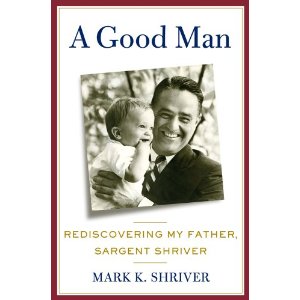
The Shriver Center would like to announce that Mark Shriver will read from his book A Good Man at the Enoch Pratt Library’s Wheeler Auditorium on June 7 at 6:30 p.m.

In the intimate portrait of an extraordinary father-son relationship, Shriver discovers the moral principles that guided his legendary father and applies them to his own life.

Freeman Hrabowski will introduce Shriver. Hrabowski and Shriver worked together to headquarter the Choice program at UMBC and establish The Shriver Center.

Shriver is Senior Vice President for Save the Children’s U.S. Programs, which work to ensure a fair start for all children in the United States, including the nearly one in four living in poverty.

More information about the event can be found here.

Have Ambition, Will Travel

Have Ambition, Will Travel

For a number of UMBC students, the end of the semester is just the beginning of the adventure. They’ve been invited to the 62nd annual Meeting of the Nobel Laureates, or won Boren awards and Fulbrights to pursue their academic and research ambitions across the globe.

“These are students who stretch the boundaries and want to do something different,” said Brian Souders, associate director of international education services, who helps usher students through the process of applying for Fulbright and Boren awards.

This year, UMBC students earned a record number of Fulbrights: five awards, with one student still waiting to learn if her research will be funded. The students who received Fulbright awards are Vivian Ekey ’11, political science and modern languages and linguistics, who is conducting research in Brazil; Ryan Max ’11, biochemistry, who will teach English in Laos; David Anguish ’12, political science, who will do research in Mexico; Achsah Joseph ’12, media and communication studies and interdisciplinary studies, who will teach English in Malaysia; and Elena Mawyer ’12, modern languages and linguistics, who will teach English in Spain. If selected, Madeline Hall ’12, environmental studies, will do research in New Zealand.

“I’m excited to have the opportunity for an immersive international experience in a culture markedly different from anything that I’ve known,” said Max.

The UMBC environment, Souders said, helps students develop into good candidates for Fulbright awards. “We encourage things like undergraduate research and study abroad, and the fact that the students have faculty members who are willing to help them with the content areas is so helpful,” he said.

“The reason I chose to attend UMBC in the first place was their highly integrated undergraduate language program,” said Mawyer. “I feel like I have a strong background to navigate not only the use of my second language but also any cultural differences that I may encounter during my time in Madrid.”

Fulbright winners aren’t the only students who will be traveling the world after they graduate: UMBC is also sending two graduating seniors to the 62nd Nobel Laureate Meeting in Lindau, Germany. Robert Wardlow ’12 and Patrice Starck ’12, both biochemistry and molecular biology, are among 500 “young researchers” invited to the conference to exchange ideas with Laureates and other young scientists.

“I was shocked that I had been chosen out of the thousands nominated,” said Starck. “It is an honor to attend such a prestigious meeting. This is a once in a lifetime opportunity.”

“For me this invitation gives me the confidence that comes from knowing that other people have taken faith in my aptitude and potential as a young scientist,” said Wardlow. His research concerns chemical signaling of heart cells and the potential therapeutic benefits of stem cells, while Starck is investigating vaccines for the HIV virus

This is the third year in a row that UMBC has sent students to the meeting; past attendees include Phillip Fitzgerald ’11, biochemistry and molecular biology, and Benyam Kinde ’10, biological sciences.

“By attending this meeting, I will interact with people that have been extremely successful and helped to shape the modern face of science in their respective fields. It will be inspirational for me to be in their company. Hopefully by making connections and learning from the other attendees, I will be able to grow to have a similar impact in whatever field I eventually choose to pursue,” said Wardlow.

Opportunities for international travel through prestigious awards aren’t only available to recent graduates, however. One award that current students can take advantage of is the Boren program, which funds U.S. undergraduate and graduate students to study and research in areas of the world that are critical to U.S. interests.

The Middle East is a region that I have long been fascinated by, so I decided to study Arabic when I came to UMBC,” said Stevenson Ramsey ’13, political science, who received a Boren Scholarshipfor the study of advanced level Arabic in Jordan next year. “The Boren scholarship provides an avenue to further my study of the Arabic language, so it was a perfect fit for me.”

“The semester before my application, I had taken a class on U.S. national security policy. Given the nature of the Boren award, this class turned out to be immeasurably helpful in writing my application essays,” said Ke Tang ’14, visual arts, political science and history, who will also study Arabic in Jordan on a Boren Scholarship.

For the first time, UMBC also has a graduate student Boren recipient: Kate Witt ’13, M.A., intercultural communication, received a Boren Fellowship to study Portuguese and conduct immigration reform studies with the Bolivian migrant community in Brazil.   

“The [intercultural communication] faculty strongly supported my interest in Boren and made themselves available for draft reviews and discussions regarding my research topic,” she said. “I’m thrilled at the opportunity to conduct my thesis research in Brazil. The Boren Fellowship makes my once far-fetched research topic possible.”

Molly Bradtke ’13, English, history and Asian studies, is an alternate for the Boren Scholarship for her planned study abroad program in Beijing and Harbin, China.

(5/31/12)