New Music. Experimental. Avant-garde. Contemporary.
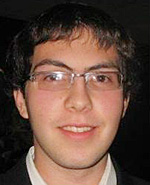
Their music has been described in many ways, and in November Jeff Arnal ’97, John Dierker ’88, Will Redman ’98, Jonathan Vincent ’97 and former student Marc Miller, will combine their efforts as a cohesive group for the first time. The event, which promises to raise questions and welcome new discoveries, mirrors how the five musicians met at UMBC, through music.
“This particular group has never performed together before as a quintet, but we have worked together in other capacities,” said Redman, percussionist and organizer of the event. “Even though we all work in the avant-garde or experimental realm, we have very different approaches to what we do.”
Brooklyn resident Arnal, a new father, is a percussionist who accompanies modern dance classes and teaches private lessons. Dierker, a first wave reedman, has been influencing the Baltimore music scene for more than 20 years with his improvisational, versatile style. Miller, former member of the Baltimore band Oxes, now plays with Dierker and Redman in Microkingdom, and is known for his use of a telecaster, Fender tube amp and volume pedal. Redman, also a new dad, not only plays in Microkingdom but is also a composer and teacher at Towson University and recently completed a massive graphic score, Book. Vincent, who runs a music teaching business in Washington, DC, has written an apocalyptic noise rock opera and two vaudeville musicals based on works by Jean Genet and Gore Vidal.
Linking the musicians’ connections to one another is as hard as explaining their music in one word. But one thing that brought them together was music at UMBC.
Vincent made connections with Arnal and Mike Cerri, former studio director and professor, and began experimenting. There other members of the November quintet became acquainted.
“Arnal somehow convinced Cerri to let us use an entire room in the music department. We collected recording equipment, old car parts and a broken electric piano in the room with two baby grand pianos tuned a quarter tone apart,” Vincent said.
“I slept in there, learned music I never thought I could play but eventually did, and we practiced there for many times a week with the mysterious saxophone player named John Dierker, whom we discovered playing late at night in a locked room on the third floor.”
When it comes to learning about the experimental sound perfected in that lone studio, one name was continuously mentioned.
“I think we’d all agree that studying with Professor Stuart Saunders Smith was a significant formative experience in all our musical lives,” Redman said. “I can only speak for myself when I say that Smith had an incredibly profound influence on the direction that my musical career took.”
“I played a cassette tape of my music for him, and he looked at me with an expression that suggested a mandate for an instant reappraisal of my whole world view. I literally felt alive again,” said Vincent.
Of his experience with Smith, Arnal said his world was “turned upside down” and everything “started to look and sound different.” He said Smith played a large role in his interest in improvisation and experimental music.
Smith had equal praise for this group of former students, stating it was their “strong personalities” that aided in their success.
“I encourage each student to let composition emerge from their unique self, unfeathered by commercial culture. And each of them did that,” Smith said. “Ninety-eight percent of making art is hard work, and all of these composers work hard. They always have. I’m very proud of them.”
Presented by the UMBC Department of Music’s TNT series, this performance will be Thursday, November 6, at 8 p.m., in the Fine Arts Recital Hall. To purchase tickets, order online through MissonTix or call 410-752-8959. Tickets will also be available at the door.
Students who’ve participated in the International Field Research Program in Switzerland come back with something to talk about. For one week in June, they have the opportunity to travel to Switzerland for field research study, where they are immersed in the Swiss culture and influenced by Swiss habits and policy. When they return, some have solidified their future career paths and others have decided to go in a new direction.
“This course has played a critical role in my decision to continue my education beyond my undergraduate degree,” said Lauren Atkinson ’08. “This program has been my most positive memory of UMBC.”
The Switzerland trip is one part of a three-credit course, Introduction to International Field Research (IFR): Culture, Policy and Practice. Students enroll in either Sociology/Health Administration and Policy Program 403 or Sociology 663 during the spring semester and then travel to Switzerland June 15-21, 2009 to complete their research. They are able to choose their own subject areas, and most students pick topics related to their intended field of study. For many, it is a first-time study abroad experience.
“This class is open to all majors and is a good course for those who want an introduction to international research,” said Cathy McDonnell, program coordinator. “Through this experience students learn basic qualitative field research methods that can be useful in a variety of personal and employment situations.”
Research conducted in past years have been wide ranging, including Swiss health insurance, adolescent health, drug rehabilitation, HIV, environmental protection, the impact of global warming, public transportation, juvenile justice, immigrant health, and emergency preparedness. Past students’ majors have included health administration and policy, sociology, dance, psychology, economics, public policy and biology – just to name a few.
For students interested in doing research with a focus on health policy or long-term care while in Switzerland, a scholarship opportunity is available – Health Scholars Travel Fellowships are awarded based on GPA and an application essay. This scholarship provides financial assistance and academic honor to students’ CVs and resumes.
Along with academic honor and new research knowledge, students also gain a sense of camaraderie among their peers. McDonnell said students come back from the program saying they’ve found “friends for life” through this experience.
Students interested in applying for the 2009 International Field Research Program in Switzerland still have time to apply. Health Scholars Travel Fellowships are still available for those interested in health-related research topics. All applications are due Friday, December 5. For more information and a complete application, visit http://www.umbc.edu/happ/health/IFR.htm. Students may also contact Cathy McDonnell at cat@umbc.edu with questions.
Baltimore’s well-known and diverse neighborhoods are linked by a lesser-known urban trail that is described by W. Edward Orser, UMBC professor of American studies, in his new book, The Gwynns Falls: Baltimore Greenway to the Chesapeake Bay. Orser’s book uncovers the environmental and human record of this 15-mile urban landscape that binds the city’s Westside, a path Orser refers to as “Baltimore’s string of pearls.”
The trail follows the Gwynns Falls for most of its route, linking roughly 2,000 acres from the hills of the city’s northwest border at the end of Interstate 70 to waterside gateways at the Inner Harbor and Middle Branch. Along the way, the area’s history is evident at sites once occupied by flourishing mills and in the tracks and viaducts of still-active rail lines, among the earliest in America.
The trail connects 30 Baltimore neighborhoods, from the city’s most affluent to some now experiencing economic stress. The Gwynns Falls also explains the role of race in shaping the heritage and social character of these neighborhoods along the Gwynns Falls.
“Indelibly marking the experience of residents of those communities, past and present, is the history of race relationstraditions of racial segregation and discrimination, as well as the ongoing struggle for equality and opportunity,” Orser writes in the book’s preface.
A member of the UMBC faculty since 1969, Orser’s community studies projects have provided American studies students with important research and fieldwork experiences investigating the social and cultural aspects of Baltimore-area communities, including the Gwynns Falls. A recent example includes students in the current senior American Studies Honors Program, who recently read the book, then accompanied Orser on a field trip to sites along the trail.
“In follow-up essays, the studentsKatelyn Chiarello ‘09, Susan Kane ‘09, Samantha McGarity ‘08 and Alex Hyland ‘09 – wrote about how the history of the area could be interpreted to school or public groups, especially highlighting such topics as Native American and African American heritage, environmental history and social activism,” said Orser.
Orser conducted research for the 30 informational panels that have been placed along the trail by the Gwynns Falls Trails Council under a grant from the National Park Service’s Chesapeake Gateways program.
The Gwynns Falls amplifies Orser’s research beyond what could be conveyed on the panels.
“The book covers the distinctive rowhouse communities of southwest Baltimore, the streetcars that once passed through to Catonsville and Woodlawn, the three members of the National Baseball Hall of Fame who grew up playing on westside sandlots and the decades of community opposition to the proposed east-west expressway through critical sections of parks now used by the trail,” said Orser.
Click play to view stops along the trail with commentary by Ed Orser.
New Music. Experimental. Avant-garde. Contemporary.
Their music has been described in many ways, and in November Jeff Arnal ‘97, John Dierker ‘88, Will Redman ’98, Jonathan Vincent ’97 and Marc Miller, former student, will combine their efforts as a cohesive group for the first time. The event, which promises to raise questions and welcome new discoveries, mirrors how the five musicians met – at UMBC, through music.
“This particular group has never performed together before as a quintet, but we have worked together in other capacities,” said Redman, percussionist and organizer of the event. “Even though we all work in the avant-garde or experimental realm, we have very different approaches to what we do.”
Brooklyn resident Arnal, a new father, is a percussionist who accompanies modern dance classes and teaches private lessons. Dierker, a first wave reedman, has been influencing the Baltimore music scene for more than 20 years with his improvisational, versatile style. Miller, former member of the Baltimore band Oxes, now plays with Dierker and Redman in Microkingdom, and is known for his use of a telecaster, Fender tube amp and volume pedal. Redman, also a new dad, not only plays in Microkingdom but is also a composer and teacher at Towson University and recently completed a massive graphic score, Book. Vincent, who runs a music teaching business in Washington, DC, has written an apocalyptic noise rock opera and two vaudeville musicals based on works by Jean Genet and Gore Vidal.
Linking the musicians’ connections to one another is as hard as explaining their music in one word. But one thing that brought them together was music at UMBC.
Vincent made connections with Arnal and Mike Cerri, former studio director and professor, and began experimenting. There other members of the November quintet became acquainted.
“Arnal somehow convinced Cerri to let us use an entire room in the music department. We collected recording equipment, old car parts and a broken electric piano in the room with two baby grand pianos tuned a quarter tone apart,” Vincent said.
“I slept in there, learned music I never thought I could play but eventually did, and we practiced there for many times a week with the mysterious saxophone player named John Dierker, whom we discovered playing late at night in a locked room on the third floor.”
When it comes to learning about the experimental sound perfected in that lone studio, one name was continuously mentioned.
“I think we’d all agree that studying with Professor Stuart Saunders Smith was a significant formative experience in all our musical lives,” Redman said. “I can only speak for myself when I say that Smith had an incredibly profound influence on the direction that my musical career took.”
“I played a cassette tape of my music for him, and he looked at me with an expression that suggested a mandate for an instant reappraisal of my whole world view. I literally felt alive again,” said Vincent.
Of his experience with Smith, Arnal said his world was “turned upside down” and everything “started to look and sound different.” He said Smith played a large role in his interest in improvisation and experimental music.
Smith had equal praise for this group of former students, stating it was their “strong personalities” that aided in their success. He tried to help them by encouraging them to pursue new avenues.
“I encourage each student to let composition emerge from their unique self, unfeathered by commercial culture. And each of them did that,” Smith said. “Ninety-eight percent of making art is hard work, and all of these composers work hard. They always have. I’m very proud of them.”
Presented by the UMBC Department of Music’s TNT series, this performance will be Thursday, November 6, at 8 p.m., in the Fine Arts Recital Hall. To purchase tickets, order online through MissonTix or call 410-752-8959. Tickets will also be available at the door.
Working with the Johns Hopkins Medical Institutions (JHMI) and Erickson School, Yager and the IDL team are constructing solutions to address the complex challenges in pediatric medicine. Under Yager’s leadership, the team at IDL develops a wide array of solutions to improve safety, patient care, communications and family well being. Yager believes that bringing the design process into the healthcare setting can positively influence not only the individual patient experience but the overall quality of medical care. An artist, designer, and innovator, Yager continuously researches and oversees prototype design and the production of new technologies and processes to simplify and make more efficient and more effective the healthcare process and delivery to improve patient health outcomes.
“For years the mantra has been, how will technology challenge older adults?” he said. “My mantra is how technology can be a source of stimulation, such as stimulation of the brain or a tool to help exercise the aging body.”
Yager credits his Center for Art, Design and Visual Culture (CADVC) as the underpinning of his interest. CADVC’s 20-year mission of exploring the social and cultural issues that are directly linked to visual culture has earned the Center great success. The IDL tackles similar social issues, keeping the future in mind.
“Design will be one of the most important disciplines in the next 20 years,” he said. “In business, design is a critical success factor in differentiating companies and products in a competitive marketplace. Design can contribute to solutions that directly address social problems. Design impacts business that positively affects our global market and economy. Design thinking helps you consider more deeply and more broadly the many dimensions of the global questions that must be addressed.”
The principle IDL partner alongside Yager is George Dover, M.D., the pediatrician-in-chief and given professor of Pediatrics at JHMI. Dr. Dover finds the collaboration mutually beneficial.
“The collaboration with David Yager and the UMBC graduate students has opened up a whole new area of innovation and problem solving in the Children’s Center,” Dover said. “Our rounds have a completely new dimension, which has led to some real advances in communication, in patient care and in the area of design.”
And now that Yager has received the USM Elkins Professorship, he feels even more progressive advancements will be made.
“This support will give us the opportunity to hire students, purchase more equipment, tools and software, and our discoveries will be realized sooner with this award.”
Yager’s artwork can be viewed as part of the Visual Arts Faculty Exhibition 2008 from Thursday, October 30, to Saturday, December 13. The event was organized by the CADVC and features work from UMBC’s visual arts faculty and staff including the areas of film, video, animation, photography, graphic design, print media, installation and performance.
The Elkins Professorship honors those with a record of achievement in a particular discipline, evidence of achievement beyond one’s discipline, a demonstrated desire to lead students and the ability to pursue opportunities beyond the USM level. For more information on the USM Wilson H. Elkins Professorship, go to http://www.usmd.edu/usm/academicaffairs/elkins.html.
To learn more about the Innovation and Design Laboratory, go to http://idl.umbc.edu/.
According to Chief Research Officer and Co-founder Frank Turano, the company is focused on two booming markets for plant-based technology: biofuels and agriculture. “We move genes into plants that increase their ability to grow,” said Turano.
Since starting the company in 2007, Frank and Kathleen Turano have received grants from the National Science Foundation and the U.S. Department of Energy. Their latest honor is a Maryland Daily Record’s Innovator of the Yearaward. This puts them in the running for Top Innovator of the Year, which will be presented Wednesday, October 15.
“We’re very excited about the nomination,” said Frank Turano. “It’s nice to see our work get some recognition and validation.”
The Innovator of the Year award honors “people with vision” and those “with the ability to see a need and fill it.” The Turanos recognized an environmental need and decided to use their technology to increase the nitrogen efficiency of plants, which helps save farmers money while reducing the environmentally harmful runoff. This also helps the global green picture, since nitrogen-based fertilizer production has a heavy carbon footprint.
“One of the major costs for farmers to increase productivity is nitrogen-based fertilizer,” said Turano. “Unfortunately, about 50 percent of that nitrogen runs off into rivers and streams, which is a problem for the Chesapeake Bay and other waterways.”
Another Plant Sensory Systems research project is working to increase the production of plant seed oil, an important component of biodiesel and other alternative fuels. Their lab is full of racks of Arabidopsis plants, a species related to cabbage and mustard which are valued by researchers since they go from seed to flower in just five to six weeks.
Before becoming an entrepreneur, Turano was an associate professor of biology and genetics at The George Washington University and prior to that worked for 10 years as a plant molecular biologist and geneticist at the U.S. Department of Agriculture.
Kathleen Turano was formerly a professor at The Johns Hopkins University School of Medicine.
The Turanos are excited to be at UMBC. “We chose bwtech@UMBC because of its track record for launching successful businesses and its interactive environment. We have been very pleased with our choice. We receive excellent support from the staff and ongoing critical advice regarding how to grow our business,” said Kathleen Turano.
To learn more about Plant Sensory Systems, click the play button below.
During his study abroad, former Humanities ScholarJack Mullee ‘08 rode the Argentina subway like every other passenger. So, how did that lead him to a Fulbright Scholarship?
“I’m a people watcher,” Mullee said. “I spent hours watching groups of salesmen, wondering what their stories were and how these people acted in unison to create a culture.”
During the five months he was in Argentina, Mullee, who graduated with degrees in American studies and sociology, watched for patterns related to the informal economy on the subway. Searching for answers, he tried to connect with the people. He befriended a magician, bought tissues from a middle-aged woman and read political manifestos scribbled on walls. He rode the subway for hours, interviewing natives. But no one seemed to know who these people were.
“No one could offer me a definitive statement on who they were or what they were doing,” Mullee said. “Salespeople and performers were the most reliably present and yet most invisible group on the subway.”
And now his unanswered questions are taking him back toward Argentina. Mullee will return to Argentina in February 2009 on a Fulbright Scholarship and embark on a nine-month exploration. Through ethnographic interviews with salespeople working on the subways, he’ll examine Buenos Aires’ informal economy in hopes of understanding how this network operates and why.
But a Fulbright was on his mind before his study abroad. Using advice from Asynith Palmer ’06, another Humanities Scholar, Mullee started working on his application before he left for Argentina, and his onsite research helped solidify his idea. He cites connections like these, along with individual attention, as some of the greatest benefits of the Humanities Scholars Program.
“Being part of the program was a great experience,” he said. “Everyone is so nice and interested in you. It really affords you a sense of confidence.”
Mullee said he was inspired by the Humanities Scholars Program from the beginning of his freshman year at UMBC. Regular meetings held by the program and Study Abroad office helped prepare him not only for his trip to Argentina but the Fulbright application process. A year before his trip, he sat down with Study Abroad Assistant Director Brian Souders to discuss what university he would attend. Souders helped Mullee find the perfect fit not only academically but individually.
“I try to help students like Jack find an environment that meets not only their academic needs but personal interests,” Souders said. “During one of our meetings, I found that Jack was a big backpacker. To me that opened up Chile and Argentina as they both have easy access to the outdoors and cultures rich in natural beauty.”
Mullee also met with UMBC’s Fulbright Scholarship Committee who helped critique his personal statement, proposal and resume. The committee also held professional interviews with candidates to prepare them for the official Fulbright Committee Interview.
Mullee is one of more than 1,450 U.S. citizens who will travel abroad for the 2008-09 academic year through the Fulbright U.S. Student Program, sponsored by the U.S. Department of State, Bureau of Educational and Cultural Affairs. When he returns from Argentina in November 2009, he hopes to continue his studies and work toward a Ph.D. in either anthropology or sociology.
The 12-week program, which accepts about 100 students each year, is geared toward students interested in science or engineering. Students spend their summers working with top researchers in one of the world’s leading research organizations, surrounded by their peers. Their ages range from freshmen just finishing their first year to recent graduates.
“Students are able to interact with 130 other engineers from throughout the country both in a personal and professional way,” said Teresa Viancour, associate vice provost for undergraduate education.
NIST-SURF allows students to see the possibilities of a potential career in science or engineering by providing real-world research opportunities, Viancour said. Students engage in research by working with mentors in specific labs and presenting their projects at a Colloquium at the end of the summer.
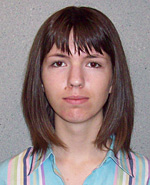
“It was real research I was doing, and it will be used as real research,” said sophomore computer science major Nadezhda Serova. “I was working in the real world on a smaller scale.”
Most UMBC students who attended the program said they’d apply again, just for experience in a different field.
With help from the Office of Undergraduate Education, students are not alone in the NIST-SURF application process. Services include editing and proofreading personal essays, helping build resumes and submitting applications for the students. The Office also hopes to work with the Writing Lab and possibly the Career Services Center in the future. Since the Office of Undergraduate Education has become involved with the process, the number of accepted students has gone from one to ten in three years. And numbers are expected to grow.
“There is a lot of research on the UMBC campus but not enough for everyone,” Viancour said. “Students may not be able to do it all in 12 weeks at the program, but they can see the possibilities and where a career in science or engineering could take them.”
For more information or to learn about other opportunities available through the Office of Undergraduate Education, visit www.umbc.edu/undergrad_ed/research/.
Learn more about the UMBC students who attended the 2008 NIST-SURF.
Academic Standing: 1st year Graduate Student Major: Mechanical Engineering NIST Laboratory: Building and Fire Research Talk Title: “Characterization of Local Mechanical Properties in Epoxy Nanocomposites”
Jeong-O Jeong
Academic Standing: Senior Major: Engineering NIST Laboratory: Electronics and Electrical Engineering Talk Title: “Development of Software Tools for Extracting Model Parameters of SiC Power Diodes”
Andrew Avi Schuldenfrei
Academic Standing: Junior Major: Biological Sciences NIST Laboratory: Chemical Science and Technology Talk Title: “Observations of the Oxidation of Pentacene Thin Films in Air by Photoluminescence Spectroscopy”
Nadezhda Serova
Academic Standing: Sophomore Major: Computer Science NIST Laboratory: Materials Science and Engineering Talk Title: “Non-Linear Polymer Film Thickness Gradients Through Flow Coating”
Kimberly Shurupoff
Academic Standing: Senior Major: Mathematics & Psychology NIST Laboratory: Building and Fire Research Talk Title: “Large Building Evacuation”
Christopher Simms
Academic Standing: 1st year Graduate Student Major: Chemistry NIST Laboratory: Chemical Science and Technology Talk Title: “Fundamental Interaction Mechanisms of Engineered Nanomaterials with DNA”
Julian Spiegler
Academic Standing: 1st year Graduate Student Major: Mechanical Engineering NIST Laboratory: Building and Fire Research Talk Title: “An Energy Model of the IAQVG Test House”
Malcolm Taylor
Academic Standing: Senior Major: Engineering NIST Laboratory: Information Technology Talk Title: “Parallel Covering Array Generation: The Future of Combinatorial Testing”
New Media Studio Captures Leadership Award for Digital Storytelling Efforts
UMBC’s New Media Studio has won a Centers of Excellence Award from the New Media Consortium (NMC), the highest honor bestowed by the NMC. Given annually, the Studio received the award for “leadership in capturing and disseminating digital stories across the institution.” Studio Director Bill Shewbridge, Video Producer Paul Iwancio and Multimedia Designer Aaron Weidele accepted the award at NMC’s 2008 Summer Conference at Princeton University in Princeton, New Jersey.
“We are very honored,” Shewbridge said. “We look at the NMC as our peers. We go there for inspiration and to forge collaborations.”
This year, UMBC joined the Rochester Institute of Technology as 2008 recipients. Modeled after the MacArthur “Genius Grants,” the Centers of Excellence Award involves an anonymous nomination process with no predefined categories of awards.
Although the award process is secretive, Shewbridge noted the Studio was specifically cited for its work with the Charlestown Digital Story Project workshop, an effort that paired UMBC students and staff with residents from the Charlestown Retirement Community. Funded by Retirement Living TV, the Charlestown Project won the Telly Award in 2007 and has produced more than 30 digital stories from personal photos, artifacts and memories. In fact, some stories may air on Retirement Living TV in the future.
“The process has become as rewarding as the outcome,” Shewbridge said. “It’s intergenerational, and real bonds are formed. It’s a personal experience being communicated.”
Some UMBC students who worked specifically with the Charlestown project went on to work at the Maryland Film Office, the Smithsonian in Washington, D.C. and non-profit associations throughout the area, Shewbridge said.
In addition to its work with students, the Studio hopes to host more workshops for faculty and staff, similar to the “Train the Trainer” workshop in Summer 2008. This workshop was hosted in partnership with the Center for Digital Storytelling (CDS) in Berkeley, California, and held just a few days before the Studio won the Centers of Excellence award.
The Studio will also host a booth at Homecoming 2008 for all attendees.
“We’re going to have a story booth where participants can make their own digital stories,” Shewbridge said.
To learn more about the video projects produced by the New Media Studio, go to www.umbc.edu/studio/.
UMBC’s nationally recognized politic analyst Tom Schaller had a front-row seat at the Democratic National Convention as a correspondent for Salon.com.
Schaller, associate professor of political science, was in Denver, Colorado, August 25-29 covering the presumptive nomination of Sen. Barack Obama as the Democratic candidate for president.
Follow Schaller’s reports from Salon.com’s political War Room.
Author of Whistling Past Dixie: How Democrats Can Win Without the South, Schaller predicts a tight race that will focus on pivotal swing states in the Southwest and upper Midwest.
“The candidate who gets the lion’s share of the vote in the Midwest and the Southwest will be the 44th president,” Schaller said.
Below, Schaller previews what to expect during the final stretch of the 2008 presidential election:
A twice-monthly political columnist for the Baltimore Sun and contributing writer for Salon, Schaller has published commentaries in The New York Times, Washington Post, Los Angeles Times, The Boston Globe, The New York Daily News, The American Prospect and The New Republic and has appeared on ABC News, The Colbert Report, MSNBC, National Public Radio’s “All Things Considered“ and “Talk of the Nation” programs, The Tavis Smiley Show and C-SPAN’s Washington Journal. Schaller has given lectures on American politics in Brazil, India, Italy, Nepal, Saudi Arabia and Turkey on behalf of the U.S. State Department.
UMBC Mentor/Alumnus: Karen J. Carpenter President/Artistic Director eCity Corporation
“I like providing opportunities for interns to apply classroom and creative knowledge in a real-world environment.”
Year of Graduation: 2002 Major(s)/Degree: Ph.D. in Language, Literacy and Culture; area: Visual Literacy Favorite Course at UMBC: Classes on new media, merging of word and image and multiculturalism
Intern: Nikki Jahangiri eCity Corporation
“The most valuable part of my internship experience was learning how to establish a strong corporate identity to ensure the business success of our clients.”
Expected Graduation: May 2010 Major: Graphic Design with a Minor in Art History Favorite Course at UMBC: Foundations in Leadership
Triangle Universities Nuclear Lab at Duke University
UMBC Mentor/Alumnus: Michael Ronquest Post-Doctoral Fellow Triangle Universities Nuclear Lab
“I love teaching and the chance to pass on what I’ve learned.”
Year of Graduation: 2000 Major(s)/Degree: B.S. in Physics Other Education: Ph.D.; University of Virginia Favorite Course at UMBC: Quantum Mechanics
“I have learned a lot from this internship. Perhaps the most valuable part of my experience has been gaining knowledge of LabVIEW and learning how to write complicated programs in LabVIEW to control the motion of stepper motors.”
Expected Graduation: 2010 Major: Physics Favorite Course at UMBC: Modern Physics
CSC, Innovations Center
UMBC Mentor/Alumnus: Michael Panichello Senior Systems Administrator CSC, Innovations Center
“When students have the ability to work in a professional environment prior to graduation, it gives them the opportunity to embark on a successful career.”
Year of Graduation: 2006 Major(s)/Degree: B. S. in Information Systems Management B. S. in Geography and Environmental Sciences Certificate, Geographic Information Systems Favorite Course at UMBC: Business Management
UMBC Mentor/Alumnus: Michael Tavener Software Developer II CSC, Innovations Center
“Interns are always extremely eager to learn. Working alongside an intern means working alongside a highly motivated individual. This, in turn, means that interns are always fun to work with.”
Year of Graduation: 2008 Major(s)/Degree: B. S. in Computer Science Favorite Course at UMBC: Scripting Languages
Intern: Scott Barasch CSC, Innovations Center
“I come to work every day and address dynamic challenges that are unique to the workplace environment as well as the cutting edge of advanced computing and information science methods, practices and theories.”
Expected Graduation: May 2009 Major: Computer Science Favorite Course at UMBC: Data Structures
Intern: Adam M. Kutzko CSC, Innovations Center
“In addition to gaining work experience, particularly valuable is the opportunity to work with colleagues who understand the intern experience and what its like to juggle work, school, family and social lives at the same time.”
Expected Graduation: May 2010 Major: Information Systems Favorite Course at UMBC: Introduction to Computer Programming
Lockheed Martin Nanotechnology IRAD (Internal Research and Development)
“Sometimes when you get so focused on your day-to-day work, it is really easy to narrow your vision and dismiss new ideas. Interns provide extra insights that are not normally considered. These insights challenge conventional points of view and open paths for innovation and creativity. Each of the interns I have been privileged to work with has continually provided this insight, making them an invaluable addition to our team.”
Year of Graduation: 2006 Major(s)/Degree: B.S. in Mechanical Engineering Other Education: Currently in UMBCs Masters in Mechanical Engineering Program Favorite Course at UMBC: Machine Design
Intern: Carla de Castro Lockheed Martin, Nanotechnology IRAD
“A UMBC alumni mentor is a wealth of knowledge on two legs. I believe that my mentor can truly relate to my experiences, having endured the same difficult engineering courses and participated in similar extracurricular activities. When I was unsure about working part time at Lockheed Martin through the school year, my mentor utilized those insights to advise me accordingly. I feel that those levels of understanding and support are highly beneficial, and I am thankful that I can count on my UMBC alumni mentor to provide them.”
Expected Graduation: May 2009 Major: Mechanical Engineering Favorite Course at UMBC: The Structure and Properties of Engineering Materials
Northwestern Mutual Financial Network
UMBC Mentor/Alumnus: David Picket Operations Manager Northwestern Mutual Financial Network
“I like giving someone the opportunity to gain real-world experience, while allowing them to apply what they have learned from UMBC.”
Year of Graduation: 2007 Major(s)/Degree: B.S. in Financial Economics Favorite Course at UMBC: Analysis of Derivative Securities
Intern: David A. Indek Northwestern Mutual Financial Network
“I found gaining real-world experience in a working environment the most valuable aspect of my internship. It also provided me with more insight into what career I will pursue upon graduating.”
Expected Graduation: May 2009 Major: Financial Economics & Political Science Favorite Course at UMBC: Money and Capital Markets
ATK Space Systems
UMBC Mentor/Alumnus: Michael DeIuliis Program Manager ATK Space Systems
“Kristin is an excellent worker. She is a quick study, a good problem solver and she makes a genuine contribution to the work we do here at ATK Space Systems. Kristin has engaged herself in our engineering and manufacturing processes in such a way that she alleviates a lot of the every day support tasks that would normally pull me away from my work. We hope to add her to our engineering staff when she graduates next year.”
Year of Graduation: December 2006 Major(s)/Degree: B.S. in Mechanical Engineering Favorite Course at UMBC: Elements of Aerospace Engineering and Design
Intern: Kristin Crizer ATK Space Systems
“I support product engineers in the manufacturing process of heat pipes. I find the hands-on work to be the most valuable. I get to see heat pipes in different parts of the manufacturing process, watch different procedures and tests, help to solve problems as they arise and support a project from start to finish. Mike is a great hands-on mentor because he spends a lot of time explaining the concepts of heat pipes to me using heat pipes and sketches for clarification.”
Expected Graduation: May 2009 Major: Mechanical Engineering Favorite Course at UMBC: The Structure and Properties of Engineering Materials
Second Language Testing, Inc.
UMBC Mentor/Alumnus: Justin Kelly Language Aptitude Coordinator Second Language Testing, Inc.
“I love that interns are eager to learn about my area of specialization and can contribute in important ways to the research mission that is the foundation of our organization.”
Year of Graduation: 2000 Major(s)/Degree: B.A. in Spanish/Applied Linguistics (MLL) Other Education: M.S., Theoretical Linguistics, Georgetown University, 2006; Ph.D. Candidate (ABD), Theoretical Linguistics (Syntax-Semantics Interface), Georgetown University Favorite Course at UMBC: Don Quijote de la Mancha and Syntax
Intern: Yujung Son Second Language Testing, Inc.
“I loved helping produce language tests in various formats throughout the intern experience. Also, creating language aptitude items in Korean allowed me to learn the difference between my native language, Korean, and English, which I found a great asset for my future studies.”
Expected Graduation: December 2008 Major: Instructional System Development concentration on ESOL/Bilingual Favorite Course at UMBC: Grammar of American English for ESOL teachers
Intern: Sunyoung Park Second Language Testing, Inc.
“By creating Korean version aptitude tests, I am getting keen on my own language in terms of its grammar and standard written structures, which I didnt really care about that much before. It helps me figure out that teaching a language requires a special training regardless of being a native speaker of the language. Connecting this experience to my career after graduation, I am becoming more confident in teaching English as a qualified language teacher.”
Expected Graduation: December 2008 Major: Instructional System Development concentration on ESOL/Bilingual Favorite Course at UMBC: Human Learning and Cognition
Vision Systems & Technology
UMBC Mentor/Alumnus: Clinton Totten Software Engineer Vision Systems & Technology, Inc.
“An intern brings a lot of positive energy to the workplace and new out-of-the-box thinking. It gives me a chance to share my ideas and knowledge with a student and work on my own leadership skills. Also, I am able to get a non-biased and fresh perspective on workflow.”
Year of Graduation: 1999 Major(s)/Degree: B.S. in Biological Sciences Favorite Course at UMBC: Genetics
Intern: Stephen Kawata Vision Systems & Technology, Inc.
“With my experience at VSTI, I value the knowledge Ive gained from the various areas of expertise in the company. I get to learn how IT is used in the real business world. I am able to learn useful information from my mentor as well as other co-workers. I value the opportunity to be part of a team working on a specific project and be part of the VSTI employee team as a whole.”
Expected Graduation: May 2009 Major: Information Systems Favorite Course at UMBC: User Interface Design
GE Healthcare
UMBC Mentor/Alumnus: Bruce Berlage Mechanical Engineer GE Healthcare
“I enjoy the enthusiasm interns bring. I also enjoy helping them learn and aiding them in any way that I can. Its a great chance to help out others in their career development.”
Year of Graduation: 1997 Major(s)/Degree: B.S. in Mechanical Engineering Other Education: Enproco Design and Drafting Institute 2-year Mechanical Design and Drafting course Favorite Course at UMBC: Advanced Material Science
Intern: Kevin Hooper GE Healthcare
“I am working on systems that will help premature babies who are sick become well. This is very rewarding. I also value the relationships that I am building with the employees here and the vast positions that they hold. It is a very friendly and open environment.”
Expected Graduation: December 2008 Major: Mechanical Engineering Favorite Course at UMBC: Mechanics of Materials
Cera Products, Inc.
UMBC Mentor/Alumnus: Charlene Riikonen (Charlene Dale at UMBC) President/CEO Cera Products, Inc.
“Interns bring new ideas, energy and fresh approaches to ways we have been accustomed to presenting our image to the world. For example, our visual art interns have taken our old art and re-shaped it so that our products look fresher and more timely. Our production engineer, who was an intern for several months before coming on full time, is coming up with ways to streamline steps in manufacturing, which should help us produce more efficiently and possibly save money in the process. This is a win-win approach, where the interns learn but we do, too!”
Year of Graduation: 1980 Major(s)/Degree: B.A. in American Studies Other Education:Some masters work in business; various technical courses in manufacturing and production Favorite Course at UMBC: Southern American Literature and Photography
UMBC Mentor/Alumnus: David Dunn Production Engineer Cera Products, Inc.
“I like being able to guide the interns when I can and learn from them”
Year of Graduation: 2008 Major(s)/Degree: B.S. in Chemical Engineering Favorite Course at UMBC: Chemical Engineering
Intern: Jennifer Hong Cera Products, Inc.
“This internship provided real-world, practical experience in my field. Also, I was fortunate to be working in such a close environment, where the president of CERA was available right down the hallway. This made it easier for me to stay in close contact with her in case any problems or issues came up.”
Expected Graduation: May 2009 Major: Graphic Design with a Minor in Art History Favorite Course at UMBC: Introduction to Art and Media Studies
Intern: Matthew Curtin Cera Products, Inc.
“Gaining real world experiences and working with clients has been a very valuable experience for me.”
Expected Graduation: May 2009 Major: Visual Arts – Graphic Design and Media Communications Favorite Course at UMBC: Introduction to Art and Media Studies