All posts by: UMBC News Staff


Grit & Glory: NCAA Men’s Soccer Semifinals

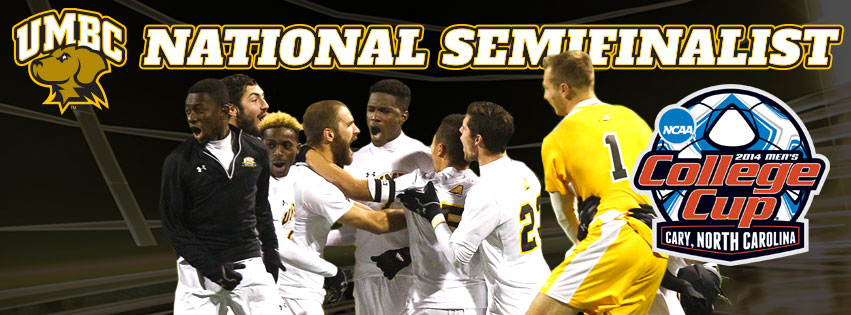
College Cup FB Cover PhotoThe UMBC Men’s Soccer Team will travel to Cary, North Carolina, for a semifinal match in the NCAA Division I Men’s Soccer Championship against the University of Virginia on Friday, December 12, at 5 p.m. This marks the first time in UMBC history that one of our teams has advanced to the Final Four in a Division I tournament.

We’re all very excited here at UMBC and we want you to be involved in this historic occasion no matter where you are. Whether you watch the game decked out in black and gold at a local restaurant or travel to Cary to see the action firsthand, you can find all the information you need on our College Cup website.

Go Dawgs!

School of Public Policy Hosts Forum on Maryland’s Health Services Cost Review Commission (HSCRC)

Public Policy Forum

Maryland is in the process of implementing a new all-payer model for hospital payment. Under this system, the federal government permits the statewide Health Services Cost Review Commission (HSCRC) to regulate hospital prices. The Centers for Medicare and Medicaid Services (CMS) approved the all-payer model effective January 1, 2014.

On Friday, December 5, the UMBC School of Public Policy hosted a forum at the Columbus Center in downtown Baltimore to examine how hospitals and health care providers are adapting to the new model and its effect the people it serves.

Robert Murray, President of Global Health Payment LLC, and Donna Kinzer, Executive Director of the HSCRC, provided detailed overviews of the history of hospital payments in Maryland and a description of the new system and how it shifts focus to patients with the goal of improving health outcomes and controlling costs. Kinzer discussed how the new model will increase efficiency and will align payment with new ways of organizing and providing care.

Following Murray and Kinzer’s presentations, Stephen Jencks, an independent consultant and member of the Maryland Health Services Cost Review Commission, shared how the new model can save costs by increasing care such as prevention, effective management of chronic disease, and care that responds to family and patient preferences.

Stuart Guterman, Vice President for Medicare and Cost Control, The Commonwealth Fund, examined trends in hospital spending nationally and discussed the relationships between hospital payments and costs to talk about the HSCRC’s impact in Maryland in a national context.

The forum, titled, “Controlling Hospital and Health Care Spending in Maryland in the Era of Budget Caps,” was sponsored by the UMBC School of Public Policy, the Maryland Institute for Policy Analysis and Research (MIPAR), the Hilltop Institute, CareFirst, and LifeBridge Health. The event was organized by UMBC Public Policy Professor David Salkever. For more information, click here.

Meet our Newest Alums: Donovan, Amazu, Fung Chim, and Connor

UMBC is always full of hard-working people who aspire to do great things, and the class of 2014 is no exception. Today, we wanted to share with you what some of our recent graduates are planning to do with their Retriever education.

After winning the Maryland Sea Grant to
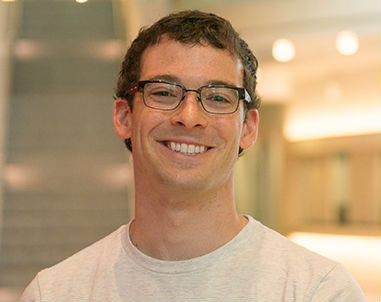
study the health of the Chesapeake Bay, Donovan2014-0162_modMitchell Donovan, M.S. geography and environmental systems, was also able to present his work at the Scientific and Technical Advisory Committee’s Chesapeake Bay workshop. Donovan’s research has been used to justify amending future models of sediment and contaminant sources. He now plans to fulfill his Fulbright Research Grant at the University of Turku, Finland, and earn his Ph.D. in watershed sciences at the Utah State University.

Chinwendu Amazu, biochemistry and molecular biology, came in to UMBC as a Meyerhoff Scholar, a MARC U*Star Trainee, and a Howard Hughes Medical Institute Scholar. With her hard work she joined the Phi Beta Kappa Society and the Golden Key International Honor Society. Amazue also  won the Faculty Award for Excellence in Biochemistry, Robert and Jane Meyerhoff Award, among others. Along with tutoring her peers in general and organic chemistry, Amazu has worked with research scientists at the Johns Hopkins Malaria Research Institute, the University of Maryland School of Medicine, and the Washington University School of Medicine in St. Louis. She plans to continue working towards an M.D./Ph.D. at the Washington University School of Medicine.

Cho Fung Chim, psychology, used his
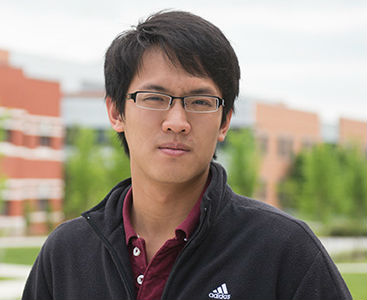
talents while at UMBC to work as a research Chim2014-0183_modassistant at Robin Barry’s Couple and Family Research Lab and in Charissa Cheah’s Culture, Child, and Adolescent Development Lab. For his honors thesis, Chim managed all of the work, from beginning to end. He wrote the research question, completed the literature review, and analyzed the collected data. Graduating with a 4.0, he now plans to continue his work with family counseling, especially those who have immigrated to the U.S., and
pursue an M.A. in counseling psychology at
Johns Hopkins University.

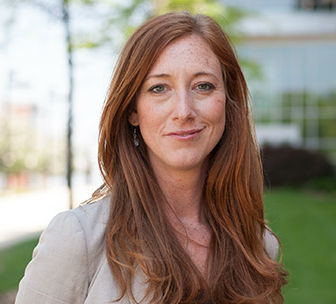
Connor2014-6863_modAfter facing a life-threatening illness, non-traditional student Amy Connor, biochemistry and molecular biology, stepped back from her work as an artist and found a passion for science. Her goal now is to “inspire young students to think critically and creatively about science.” Connor plans to obtain a master’s degree in education from UMBC and teach chemistry.

Find out more about the Class of 2014!

Chancellor Brit Kirwan is a Finalist for Marylander of the Year

kirwanUniversity System of Maryland Chancellor William “Brit” Kirwan has been selected as a finalist for The Baltimore Sun’s 2014 Marylander of the Year. The winner will be announced by the end of the year, and public vote will factor into the decision. Click here to vote for Chancellor Kirwan.
Dr. Kirwan has served as chancellor of the University System of Maryland since 2002 and is a national leader in higher education issues. He chairs the National Research Council Board of Higher Education and Workforce, co-chairs the Knight Commission on Intercollegiate Athletics, and serves as a member on the boards of the Maryland Chamber of Commerce, Greater Baltimore Committee, Economic Alliance of Greater Baltimore, and the Maryland Business Roundtable for Education.

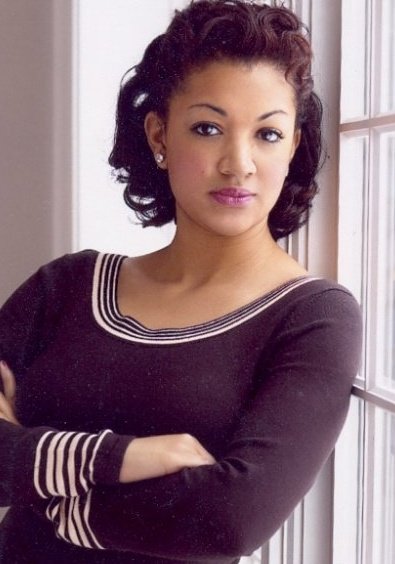
Meet the Alumni Leadership: Erica Reaves ’04, ’11

Name: Erica L. Reaves ​’04, biological science, ‘11 M.P.P., public policy
Employer: The Henry J. Kaiser Family Foundation​
Alumni leadership roles: Cohort Representative for the Meyerhoff Scholars, Publicity Chair for the Chapter of Black and Latino Alumni (CBLA), member of Omicron Delta Kappa ​

Q: Where are you from originally?elr
​Columbus, Ohio​.

Q: What’s your favorite UMBC memory?
Orientation Week, August 2000, ​and Quadmania 2001 (my first Quadmania, where I purchased my first cell phone).

Q: Why are you involved in an alumni board or chapter?
I really enjoy working with fellow alumni and UMBC staff to develop programs/events that promote school spirit and support UMBC’s dedicated students, faculty, and staff.

Q: Why do you think it’s important to support UMBC?
​UMBC is such a nurturing, diverse community of scholars. As a scholarship recipient, I feel compelled to give back — my time, money, and other resources — as much as possible. Despite the generosity of many, I know that individuals and their families miss out on having the UMBC experience because of financial constraints.

Q: If stuck on a desert island with a CD player and only one CD, which CD would that be?
Lauryn Hill, Miseducation of Lauryn Hill.

Q: What is the most recent book you’ve read?
​I am currently reading Outliers by Malcolm Gladwell​.

Read more about the CBLA!

Anupam Joshi named an IEEE Fellow

CSEE Professor Anupam Joshi has been named an IEEE Fellow, recognized for his for contributions to security, privacy and data management in mobile and pervasive systems. This designation is conferred by the IEEE Board of Directors on individuals with an outstanding record of accomplishments in any of the IEEE fields of interest and is recognized by the technical community as a prestigious honor and an important career achievement. No more than 0.1% of the total IEEE voting membership can be selected in xlargea year.
Dr. Joshi joined UMBC’s faculty in 1998 and currently is the Oros Family Professor of Technology and Director of the UMBC Center for Cybersecurity. He previously held faculty appointments at the University of Missouri, Columbia and Purdue University. He received a Ph.D. in Computer Science from Purdue University and a B. Tech in Electrical Engineering from the Indian Institute of Technology, Delhi. While at UMBC he has taught both undergraduate and graduate courses in operating systems, mobile computing and security. He developed and teaches an Honors College seminar on “Privacy and Security in a Mobile Social World”. He has mentored nine Ph.D. graduates and a large number of M.S. students.
Joshi has made many contributions to the design, analysis and development of intelligent systems for mobile, social and secure computing. Twenty years ago he was one of a handful of researchers who recognized that mobility introduced new challenges for data management, security and privacy over and above those brought about by wireless connectivity. His key insight was to model mobile and pervasive systems as distributed systems that are both open, in that they do not pre-identify a set of known participants, and dynamic, in that the participants change regularly.
He observe that applications on mobile devices require greater degrees of decision making and autonomy as they become increasingly sophisticated and intelligent and can’t always assume connectivity to central servers. Entities in these pervasive computing systems must exchange information about the data and services offered and sought and their associated security and privacy policies, negotiate for information and resource sharing, be aware of their context, and monitor for and report on suspicious or anomalous behavior. Dr. Joshi has addressed these challenges across the stack, from network protocols to data management to policy controlled interactions between autonomous entities.
Much of his research has been done in collaboration with colleagues in industry such as IBM, Microsoft, Northrop Grumman and Qualcomm. It has been funded by not just them, but also NSF, DARPA, AFOSR, ARL, NIST and other federal agencies. Joshi has published prolifically with more than 200 publications in refereed journals and conferences, many of which are highly cited. He has served as the General or Program Chair of many key conferences including the IEEE International Conference on Intelligence and Security Informatics which will be held in Baltimore in May 2015.
The IEEE is the world’s leading professional association for advancing technology for humanity. Through its 400,000 members in 160 countries, it is a leading authority on a wide variety of areas ranging from aerospace systems, computers and telecommunications to biomedical engineering, electric power and consumer electronics. Dedicated to the advancement of technology, the IEEE publishes 30 percent of the world’s literature in the electrical and electronics engineering and computer science fields, and has developed more than 900 active industry standards.
[This story was reposted from CSEE website]

UMBC Named One of Baltimore’s Top Workplaces for 2014

15365064460_649cdd1abb_zThe Baltimore Sun has again named UMBC as one of Baltimore’s Top Workplaces. UMBC ranked no. 7 in the Large Employers category, which includes those with over 400 employees.

The list was compiled after analyzing the results of a confidential employee survey that measured job satisfaction, organizational health, and engagement. The survey was conduction by WorplaceDynamics, an independent research company.

A common thread that unites the companies and institutions on the Top Workplaces list is the opportunity to perform meaningful work. “The work I do and my team does is valued by UMBC, and I feel part of something important and meaningful,” one employee wrote. Another shared, “We truly make a positive difference in the lives of students, faculty, and staff. Our reach extends beyond to the global community as well.”

UMBC is distinctive as the only university on the Top Workplaces list, and also consistently appears on the Chronicle of Higher Education’s top academic workplaces list. 

Click here for more information.

UMBC: Men’s Soccer Advances to Final 4

Destiny’s Darlings

UMBC Men’s Soccer Kicks Into the Final Four

On a chilly night in Omaha, Nebraska, UMBC’s men’s soccer squad reached giddy heights that a Division I team in any sport at the university has never touched before: the Final Four of a national collegiate tournament.

After 110 hard-fought and scoreless minutes against the No. 12-ranked Creighton Bluejays, the Retrievers snatched a 4-3 win on penalty kicks.

UMBC’s “Road Warriors” (15-5-4) have travelled to four different stadiums and won four straight games against nationally-ranked opponents to earn their place among the elite teams in college soccer.

“We were destined to be here,” said UMBC men’s soccer head coach Pete Caringi, Jr. in a press conference after the victory.

The Retrievers played with immense composure throughout the first 90 minutes of the game, shutting down a Creighton squad previously unbeaten on its home field in NCAA tournament history. The two ten-minute overtime sessions were a study in contrasts. The Retrievers came close to scoring on a few occasions in the first overtime, while Creighton nearly snatched a victory in the second overtime period.

With a place in the NCAA College Cup on the line in a penalty kick shootout, standout sophomore goalkeeper Billy Heavner made an impressive stop on the first Creighton attempt and watched the second Bluejay attempt hit a goalpost. The Retrievers then scored on four of their five penalty kicks, with senior midfielder Mamadou Kansaye, senior defender Jordan Becker and junior forward/midfielder Michael Scott scoring penalties to set up a winning conversion by senior forward Kay Banjo.

“We feel like we belong here,” Heavner said in a press conference held after the victory. “We feel like we belong at this level….But we have more work to do.”

The UMBC men’s soccer squad has achieved this athletics milestone by taking a different path to success. The university and its athletics department share a vision to seek excellence for UMBC’s student athletes in the classroom as well as on the field.

In a recent interview with UMBC Magazine, UMBC athletics director Tim Hall said: “My own beliefs about intercollegiate athletics and academics are congruent with the leadership of the university. I believe that success in athletics and success in academics are not mutually exclusive. You can be successful and balanced in both.”

It’s a vision that’s paying off with a UMBC squad that is now in the Final Four.

Last week, Heavner was presented with the inaugural America East Elite 18 award, which recognizes student-athletes competing in conference championship matches who possess high academic and athletic achievements. In addition to being one of the catalysts on UMBC’s amazing postseason run, Heavner also maintains a 4.0 GPA as a major in financial economics.

The UMBC men’s and women’s soccer teams also earned National Soccer Coaches Association of America (NSCAA) Team Academic Awards for the 2013-14 academic year for posting cumulative team grade point averages of 3.0 or better. UMBC was one of only 188 schools that had both men’s and women’s programs recognized in the NSCAA awards.

To see video highlights of the historic win, explore detailed game accounts and statistics, and obtain information on obtaining tickets to next Friday’s national semifinal game in Cary, N.C., head to umbcretrievers.com.

(Updated 12/5/2014)

Carlo DiClemente, Psychology, Appointed to National Advisory Council on Alcohol Abuse and Alcoholism

Carlo DiClementePsychology Professor Carlo DiClemente has been appointed to the National Advisory Council on Alcohol Abuse and Alcoholism. The council advises and makes recommendations to the U.S. Health and Human Services (HHS) secretary, the National Institutes of Health (NIH) secretary, and the National Institute on Alcohol Abuse and Alcoholism (NIAAA) director on research program and policy matters in the field of alcohol abuse and alcoholism.

The council consists of 15 members appointed by the HHS secretary who are leaders in scientific disciplines relevant to NIAAA activities, including public health, behavioral and social sciences, public policy, law, health policy, economics, and management.

DiClemente’s research focuses on smoking cessation, motivation and stages of change for a variety of health behaviors, understanding the mechanism of change in alcohol and substance abuse, and Screening, Brief Intervention, and Referral to Treatment (SBIRT) training in medical residency programs.

Last year, DiClemente received a Lifetime Achievement Award from the Addictive Behaviors Special Interest Group (AB-SIG) of the Association for Behavioral and Cognitive Therapies (ABCT). To learn more, click here.

The National Advisory Council on Alcohol Abuse and Alcoholism appointment is a four-year term. To learn more about the council, click here.

George La Noue, Public Policy and Political Science, Writes Op-Ed for The Chronicle of Higher Education

As many college athletic programs are preparing for the postseason and finishing fall regular season schedules, there has been an ongoing public discussion about the future of “mid-major” athletics. George La Noue, professor emeritus and research professor of public policy and political science, wrote an op-ed published in The Chronicle of Higher Education in which he analyzed the current state of mid-major athletic programs and discussed what he called their “muddled future.”

George LaNoue

“While media attention is overwhelmingly focused on big-time intercollegiate athletics, a crisis is developing for most of the 351 Division I institutions that cannot afford to play at that level,” wrote La Noue.

La Noue discussed how the NCAA changed its governing structure this year to give more influence to 67 universities in the Power Five football conferences, which left the mid-major programs outside of those conferences to face financial challenges.

“Those colleges are now faced with substantially increasing their athletic expenditures to try to preserve the pretense of Division I status. The Power Five institutions have budgets of three, four, or even five times as much as that of most mid-majors. They also now have NCAA authority to offer enhanced ‘full cost’ multiyear financial-aid packages to their recruits. The current playing field is decidedly not level. Division I is an unhappy family. Institutional choices for the leftovers will not be easy.”

To read the full op-ed titled “The Muddled Future of Mid-Major Athletics,” click here.

Leading the Way: Supporting Students Beyond the Classroom

Dr. Ana María Schwartz Caballero, associate
professor of Spanish and second language
education, is something of a fixture here at UMBC: she’s worked at the university in various capacities for the past 30 years, mostly bouncing between the Language and Education Departments, but always making sure to stay closely involved with students.

However, you won’t find her just on UMBC’s campus. Since Dr. Schwartz Caballero is heavily involved in Baltimore’s Hispanic and Latino community, you’re just as likely to find her running a meeting of the Latino/Hispanic Faculty Association. Or walking through City Hall with the rest of the members of Mayor Rawlings-Blake’s Hispanic Commission. Or presenting her research on language teaching and learning to the Alliance for the Advancement of Heritage Languages.

So, it should come as no surprise that Dr. Schwartz Caballero was selected to receive the 2014 NFL Hispanic Heritage Leadership Award at a special presentation ceremony during the Ravens’ September 28 game.

It should also come as no surprise that she chose to donate the $2,000 grant that came with the award to UMBC’s Esperanza Scholarship Fund. “My heart has always been with the students I work with and the community here at UMBC,” says Dr. Schwartz Caballero. “I couldn’t think of giving money to anyone else.”

Which is exactly why she chose the Esperanza Scholarship: it supports undergraduate and graduate students of Latino or Hispanic ancestry and/or students committed to the advancement of minorities, especially of Latino or Hispanic descent. And, as faculty advisor for the Hispanic/Latino Student Union, as well as a member of the UMBC Hispanic and Latino Student Admissions Advisory Group, Dr. Schwartz Caballero knows that students need all the support they can get. “I know that students struggle. They work hard, juggling jobs and schoolwork, and that can be very stressful.”

For students of immigrant families, though, it can be even more difficult. “Students from families that are just beginning to be established here often lack the financial support available to others,” explains Dr. Schwartz Caballero. “And, in many cases, the students themselves, on top of working and going to school, are also supporting their families however they can.”

And Dr. Schwartz Caballero is doing what she can to help, too. “It takes a long time to build up the funds for something like that [the Esperanza Scholarship], and any donation can help build that base. I just hope it makes someone’s life a little easier.”

Support the Esperanza Scholarship Fund.

Pres. Hrabowski Calls for Institutional Culture Change at White House Summit

photo 1On Thursday, President Hrabowski attended the second White House Summit on College Opportunity. The summit gathered together hundreds of college presidents and heads of foundations and non-profit organizations, as well as President Obama, First Lady Michelle Obama and Vice President Biden.

Dr. Hrabowski participated in a panel on innovation, along with Tennessee Governor Bill Haslam, Arizona State President Michael Crow, Carnegie Mellon University’s Open Learning Initiative Founding Director Candace Thille and Udacity founder Sebastian Thrun. In the panel, Dr. Hrabowski focused on the need for institutional culture change in order to develop and implement truly effective higher education innovations that support student success. “One of the challenges is that we sometimes pit one culture against another,” he says. “Math and science are part of the liberal arts. We need people who can think broadly, put technology in perspective.”

Watch video of the Summit below. Dr. Hrabowski’s panel begins at 59:50.
[youtube https://www.youtube.com/watch?v=YcsIq92XZqw]

Read coverage of the Summit below.

Tracking the Second White House Summit (The Chronicle Storify)
At Second Higher Ed Summit, Obama Administration Mixes Praise and Accountability (Inside Higher Ed)
White House summit calls for using data to boost graduation rates (The Hechinger Report)
White House summit seeks to boost college graduation rates (Christian Science Monitor)