All posts by: Sarah Hansen, M.S. '15


UMBC continues to advance biotech in Maryland through new $900K biomanufacturing grant

A growing list of programs and partnerships is positioning UMBC as a leader in developing Maryland’s biotech and biomanufacturing workforce. UMBC has just received a $900,000 grant from the National Institute for Innovation in Manufacturing Biopharmaceuticals (NIIMBL) to develop and implement a short-term biomanufacturing career training program. Four universities, all classified as minority-serving institutions (MSIs), received funding for similar programs, which will be adapted from a curriculum first developed at Texas A&M University.

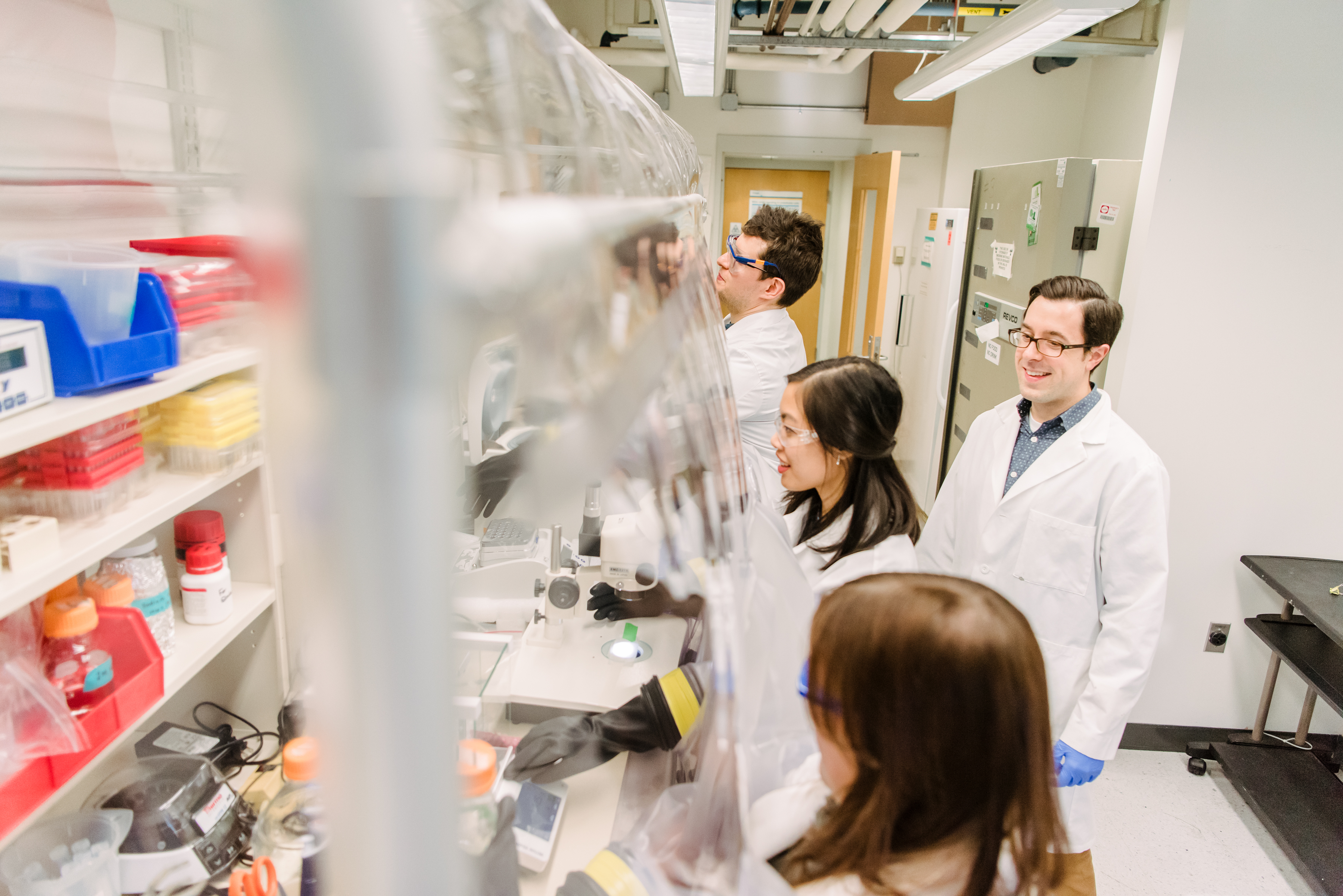
UMBC will offer the biomanufacturing training program at its Universities at Shady Grove (USG) campus in Rockville, Maryland. It will be similar to UMBC’s Biotech Boot Camp, which trained people who had lost their jobs during the pandemic for new careers in biotech. The boot camp has run twice so far, both times focusing on cell culture techniques and broader “wet lab” skills.

Montgomery County government and WorkSource Montgomery partnered with UMBC to offer the original boot camps at no cost to the students. The new biomanufacturing training program will also be free to participants the first time it is offered, thanks to the support from NIIMBL.

The biotech industry is booming in the BioHealth Capital Region, which ranks #4 among the top biopharma clusters in the country. The pandemic has drawn even more attention to the biopharma industry, so the need for qualified local workers in a range of biotech roles has never been greater.

“We are driven by the vision that Maryland can be a leader in biotech,” says Bill LaCourse, dean of the College of Natural and Mathematical Sciences (CNMS) at UMBC. “We’re establishing strong pathways to develop the workforce, where students and professionals have an array of choices about how to get to the biotech career they want and that the region needs.”

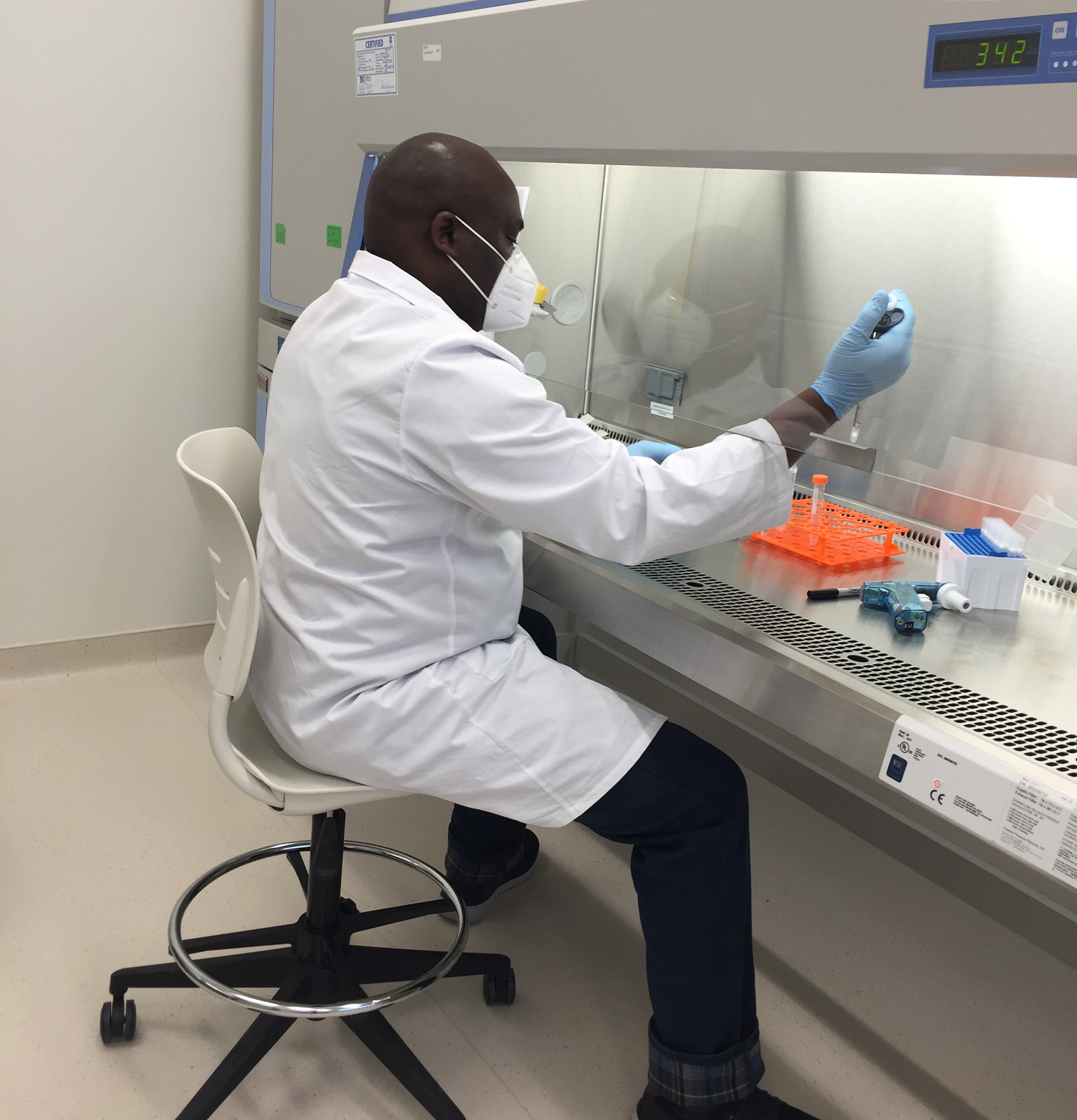
Man sits on a stool at a fume hood, wearing a lab coat and pipetting
A participant in the Biotech Boot Camp at USG in February 2021 practices their pipetting technique. Photo by Annica Wayman.

Opportunities at every level

The new NIIMBL program is just one of those choices. UMBC’s Translational Life Science Technology (TLST) bachelor’s degree program, fully launched in 2019 in partnership with Montgomery College, was the college’s first new major developed in response to the growing need for biotech workforce development in the region. The TLST program bridges fundamental knowledge in the life sciences with industry-specific applications, practical laboratory skills, and an understanding of the regulatory process for biopharmaceuticals.

“The launch of the TLST program has led to a lot of education and partnership opportunities,” says Annica Wayman ’99, M6, mechanical engineering, and associate dean for Shady Grove affairs in CNMS. “It’s allowed UMBC to address gaps in the workforce that already existed, and that became even more prominent with the pandemic. We jumped in to help to fill those gaps in a variety of ways.”

The TLST program, which has just launched a bioinformatics track, dovetails with the Master of Professional Studies in Biotechnology, also offered at USG. The master’s program is ideal for both recent TLST program graduates and professionals already in biotech seeking to advance their careers.

“We’re trying to build the education pathway that runs in parallel with the career pathways for students in biotech,” Wayman says.

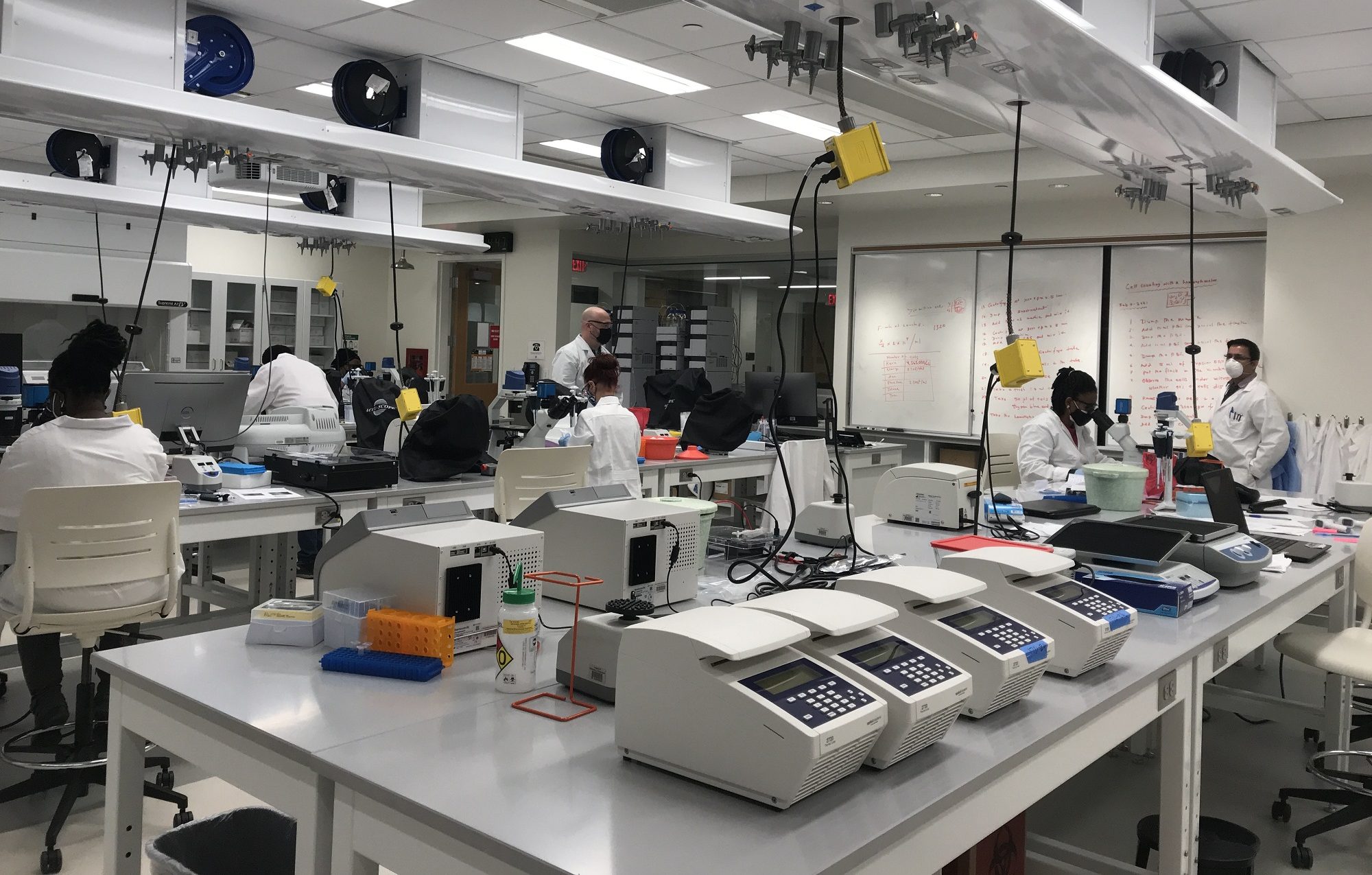
open laboratory space with lots of machines and a handful of students at work spread around the room
Participants in the Biotech Boot Camp at USG, Feb 2021. Photo by Annica Wayman.

Engaging with industry

UMBC has also cultivated a growing number of partnerships with individuals, industry, government agencies, and regional community colleges that strengthen its offerings. A Biotechnology Advisory Committee includes representatives from companies such as Kite Pharma, Catalent, AstraZeneca, and American Gene Technologies, all of which have facilities in the region. Agencies like the National Institutes of Health (NIH) and National Institute of Standards and Technology (NIST) are also on the committee.

“They’re helping us to refine our curriculum to make sure we’re educating students on the things that industry needs,” Wayman says. “They’re also helping us determine what other gaps we could fill.” 

For example, another huge growth area is biomanufacturing process development. With increasing automation and the need for large-scale production of some biopharmaceutical products, there are opportunities to improve the way biomanufacturing facilities operate.

UMBC’s biotech curricula often directly touch industry, as well. TLST courses regularly include guest lecturers from regional companies, and students must complete an internship in order to graduate. TLST classes have also included interviewing support and networking sessions with potential employers, such as members of the Frederick Innovative Technology Center, Inc.

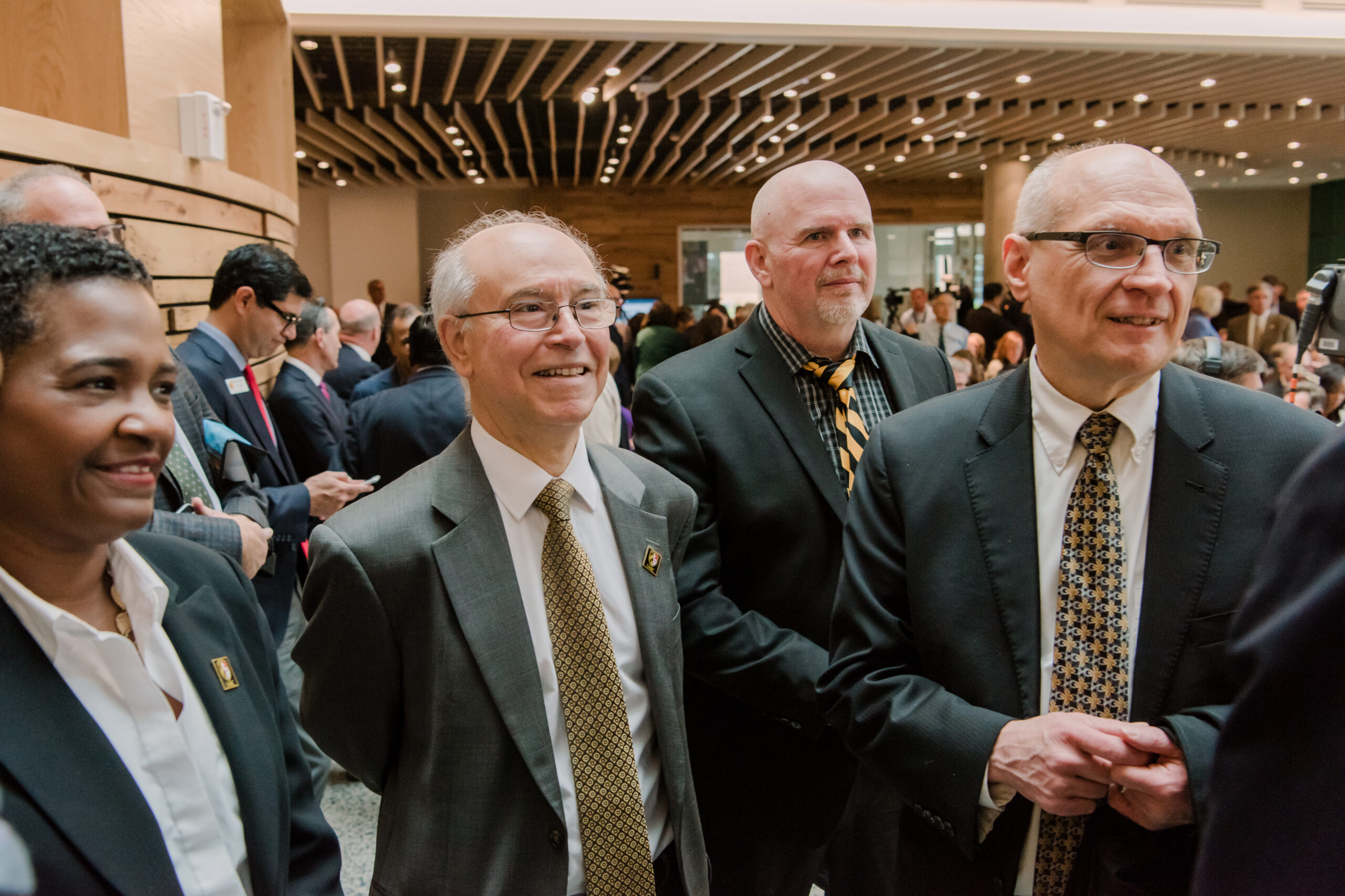
Four people in business attire conversing in a large open atrium, many more people behind them
(l to r): Annica Wayman, Antonio Moreira, Keith Bowman, Bill LaCourse. Photo by Marlayna Demond ’11 for UMBC at the grand opening of the BSE building at USG.

Productive partnerships

UMBC’s new partnership with Aberdeen Proving Ground (APG), the U.S. Army facility near Aberdeen, Maryland, will further enhance opportunities for students across the region. APG has built a robust relationship with Harford Community College, while UMBC already has a thriving relationship with Montgomery College and has been deepening its relationship with Frederick Community College. The new APG partnership, still in its early stages, will create opportunities to enhance UMBC’s relationship with Harford Community College, as well.

“We’ve now built this education partnership alliance with Aberdeen Proving Ground, because we’re looking to provide a pathway for these students through their biotech career,” Wayman says. “They can go from Harford Community College to the TLST program, and have Aberdeen be that partner running throughout who provides experiential opportunities and eventually jobs for these students.”

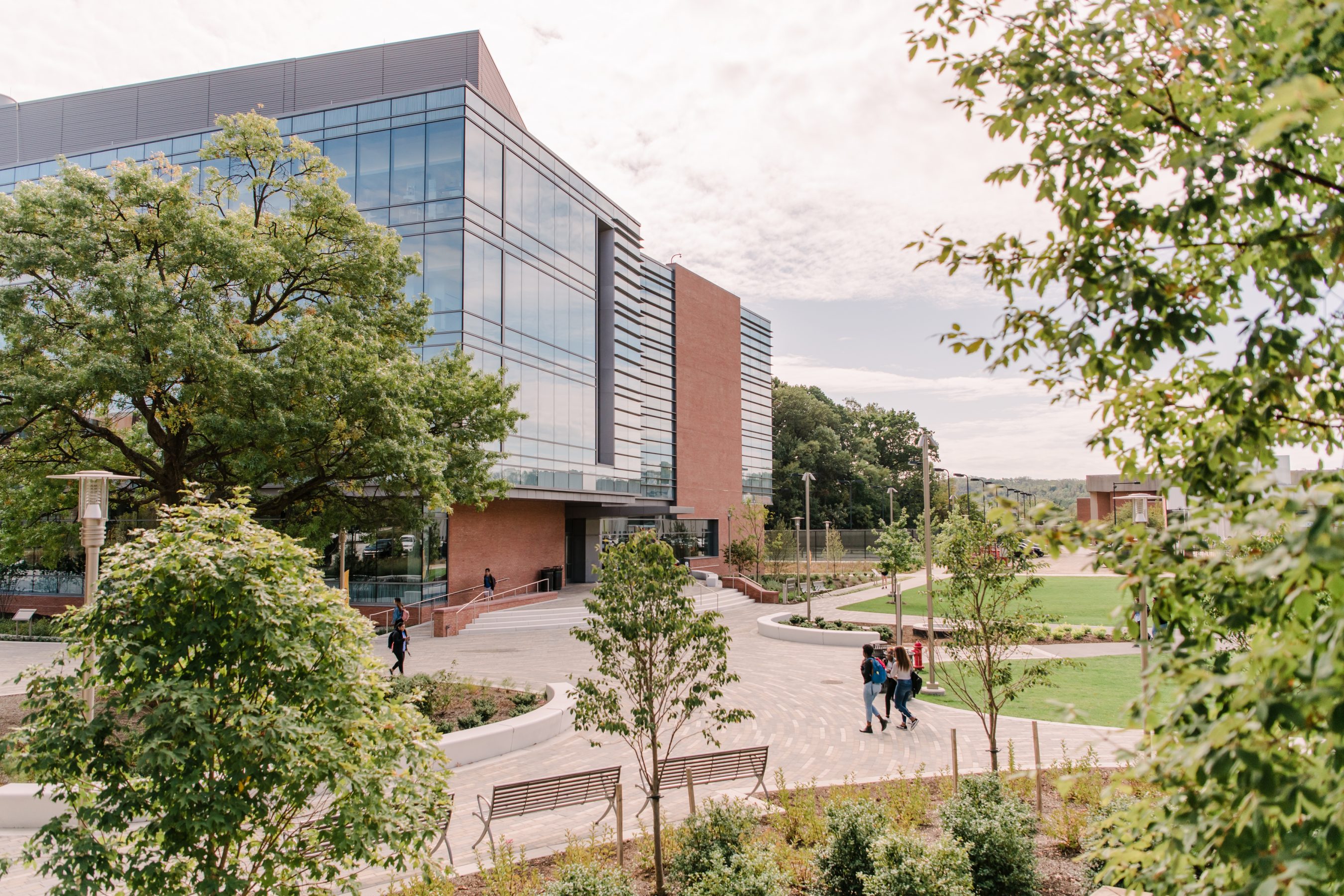
Campus shot of exterior of ILSB
UMBC’s Interdisciplinary Life Sciences Building offers state-of-the-art spaces for research and teaching. Photo by Marlayna Demond ’11 for UMBC.

An economic engine

Antonio Moreira, vice provost for academic affairs, has seen the potential for Maryland to be a biotechnology leader for years, with UMBC as a major driver of growth. Maryland’s strength “is the result of a life sciences ecosystem that includes federal agencies, major research universities, hundreds of biotechnology companies and strong community colleges,” he says. While this growth has been in process for some time, he notes that the pandemic has brought the need for a robust biotech sector into sharp relief.

“As a component of the Maryland biotechnology ecosystem, UMBC is a major resource for preparing the workforce needed to develop and manufacture critical therapies,” Moreira explains. Given a shortage in this workforce, “the students graduating from the universities need to be prepared to hit the ground running as they join these biotechnology companies.”

The innovative partnerships UMBC is developing with industry, government, and community colleges are creating opportunities for students to gain the complex skills needed to contribute to the growing biotech industry and to pursue careers in high-demand fields. “All these projects, programs, and partnerships are helping fulfill the mission of UMBC as an economic engine and source of workforce development in the state,” Dean LaCourse says.

“We are implementing our shared vision to build a workforce for the biotech industry right here, with the people in Maryland,” LaCourse continues. “We want Maryland businesses to look out their windows to find that workforce that they need—and it’s looking good.”

Header image: Charmaine Hipolito ’20 (right) and Titina Sirak ’20, both graduates of the TLST program, use the microscopes in a teaching lab at the Universities at Shady Grove in 2019. Photo by Marlayna Demond ’11 for UMBC.

New study led by UMBC’s Qianqian Song furthers understanding of atmospheric dust’s role in climate

Tiny particles of mineral dust in the atmosphere transport nutrients around the globe, influence cloud cover and precipitation, and affect how much heat the planet reflects or absorbs. Although these abundant particles play an important role in overall climate, they are still poorly understood. A new study in Atmospheric Chemistry and Physics led by Qianqian Song, Ph.D. candidate in atmospheric physics at UMBC, sheds new light on how dust moves through the atmosphere and how that’s changed over time. The findings also lay the groundwork for further studies to examine dust’s role in climate and its global movement in more detail.

In their study, Song; Zhibo Zhang, professor of physics; and colleagues used data collected between 2007 and 2019 by NASA satellites to distinguish dust from among all the tiny particles in the atmosphere, called aerosols. Smoke and particles that enter the air from the sea’s surface are other examples. MODIS, an instrument on the Aqua satellite, detects dust based on the size of the particles. CALIOP, an instrument on the CALIPSO satellite, can detect dust based on its shape, which tends to be irregular rather than spherical.

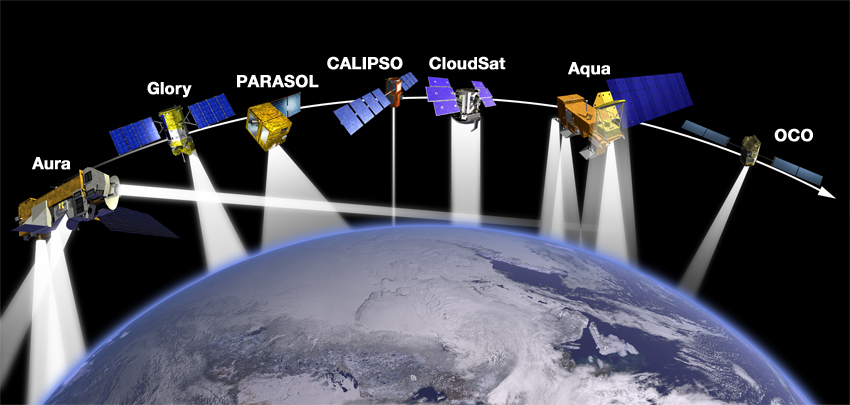
Digital rendering of seven NASA satellites orbiting Earth.
A train of several satellites, including CALIPSO and Aqua, orbits Earth in formation. Each one collects different kinds of data about clouds and aerosols, generating a more comprehensive picture. Rendering courtesy of NASA.

‘Dust aerosols in nature are irregular, non-spherical, and large in size,” Song explains. “By using sensor-specific methods, we were able to separate dust from the total aerosols in size-based MODIS observations and shape-based CALIOP observations.”

While previous studies have looked at dust in specific locations, Song’s study is the most comprehensive look to date at the presence of dust globally over time. The study generated two giant datasets representing the presence of dust globally over 13 years. Song and colleagues used the datasets to determine year-over-year changes in several dust-laden regions.

New data, new questions

There is huge potential for Song, Zhang, and others to use these datasets to learn more about how dust impacts climate. The study also demonstrates a new way to use satellite data to answer questions about dust, opening the door for significant further research in this area.

“These results are important because spatial variation of dust around the globe can help determine whether dust is cooling or warming the planet overall,” which is still unknown, Song says. On the one hand, dust can reflect sunlight back to space, cooling the planet. On the other hand, it can trap heat coming from Earth’s surface, contributing to warming.

Examining how high the dust is in the atmosphere and how thick the dust layer is in various places will help answer this question. And it’s finally possible to better understand these factors with the new data.

Group of five smiling people stands in front of a window.
Members of Zhang’s research group. Clockwise from lower left: Qianqian Song, Chamara Raja, Kevin Zheng, Zhibo Zhang, Olivia Norman. Photo by Marlayna Demond ’11 for UMBC.

The new study could also help scientists understand the global circulation of various nutrients within dust. While dust may generally have a bad reputation in our homes, it is a normal and healthy part of the global climate. Atmospheric dust contains essential nutrients like iron and calcium, and previous studies showed that Saharan dust is critical for fueling the nutrient-rich Amazon ecosystem. Any big shifts in dust’s production or circulation could have wide-ranging effects.

In addition to affecting Earth’s energy balance and transporting nutrients, “Dust has even been shown to transport pathogens,” Zhang says. For example, “When there are major dust storms in Arizona, valley fever spikes.”

A greening China

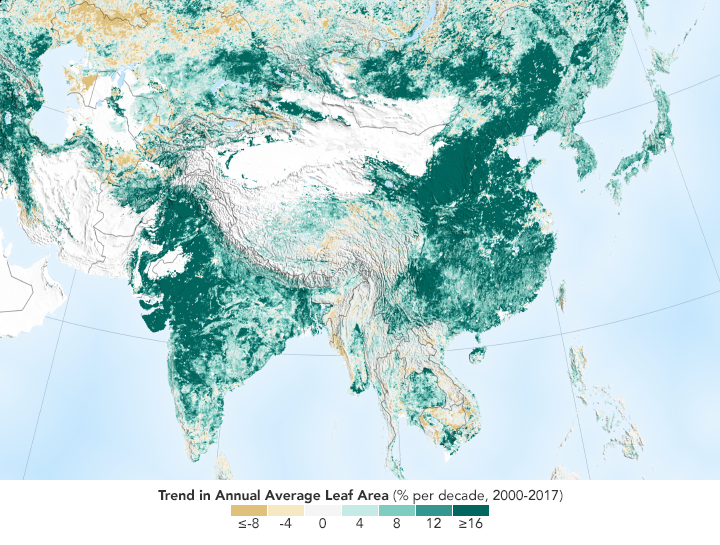
One striking finding from the study was that dust over the northwest Pacific Ocean, near China, decreased by about two percent per year over the study period. Dust also decreased up to five percent per year over the Gobi Desert, which spans southern Mongolia and northern central China.

Song and Zhang hypothesize that climate change is partly responsible, because it is already making parts of China wetter and warmer. The Chinese “great green wall” initiative to plant more trees could also be a factor.

These shifts have increased vegetation and decreased the amount of dust taken up from this region, which previously was extremely arid. How the localized decrease in dust will affect dust’s global distribution, and whether the change will be a net negative or positive, is still unknown—but those are the kinds of questions that researchers can ask using the new methods Song and Zhang are employing.

Song has a personal connection to changes in the Gobi Desert, too. While completing her master’s degree in Beijing, “We traveled several hours by bus to Mongolia to plant trees,” she says. “So it’s especially interesting to me to see how dust has changed in that area, possibly as a result of changes in vegetation.”

Computer-generated map of southern Asia, colored from dark green to tan based on how much the vegetation level has changed from 2000 - 2017. Dark green patches in eastern China and western India.
An analysis of data from NASA satellites shows that China and India have become greener over the last two decades. Image courtesy of NASA.

Pushing the limits

Taking an even broader view, Song’s new study confirms what other studies have found: that the results from the two methods for detecting dust (by shape and by size) do not exactly match up. Having such large datasets from this study will aid the effort to better under these models’ limitations. The study’s datasets (one for each method) “may also be used to evaluate the dust simulations in global climate models,” write the study’s authors.

Moving forward, dust distribution is likely to continue to change as ecosystems and weather patterns shift. But with the huge new datasets this study generated, scientists will have a head start on understanding how those changes are likely to affect communities around the world.

“We plan to keep working with this data to learn more,” Song says, “and we hope other researchers will, too, so we can learn as much as possible and better understand dust’s role in our climate.”

Group of five people sits at a conference table. Large screen on the wall shows satellite imagery of Earth.
Zhang’s research group during a lab meeting. From left to right: Chamara Raja, Qianqian Song, Olivia Norman, Kevin Zheng, Zhibo Zhang. Photo by Marlayna Demond ’11 for UMBC.

Header image: Qianqian Song presents at a lab meeting. Photo by Marlayna Demond ’11 for UMBC.

Scientists may be underestimating Arctic ecosystem changes, new UMBC research shows

The Arctic climate is changing, and it’s important to understand how. But scientists may be consistently misinterpreting a common metric used to determine how Arctic ecosystems are shifting in response to climate change. A new paper in Ecological Applications by Fred Huemmrich, research scientist at UMBC’s Joint Center for Earth Systems Technology, shows that researchers may not appreciate the limitations of the Normalized Difference Vegetation Index (NDVI), leading to inaccurate interpretations, and likely an overall underestimate, of Arctic change.

NDVI is “one of the clearest indicators we have of ecological change related to climate change in tundra and boreal forest regions,” Huemmrich says. And yet, “there are limitations to what NDVI can tell us about ecological change.”

Dead or alive?

One of NDVI’s main advantages is that it can be determined using data collected by satellites. That’s particularly beneficial for Arctic research, because collecting data on the ground is difficult in remote areas and harsh conditions. 

By looking at light reflected from the surface, NDVI can tell you how much of the surface is covered with plants versus non-living substances like rocks and ice. Plants absorb a lot of visible light (for photosynthesis), but still reflect infrared light. Non-living substances reflect about the same amount of infrared and visible light.

So, “NDVI highlights the difference between reflectance in visible light and the infrared,” Huemmrich explains. “And if it’s small, you’re looking at things that aren’t green. And if it’s big, you’re looking at things that are green. That’s it. And it works.”

Man in hooded winter coat with green tundra, gray sky, and tripod in background.
Fred Huemmrich conducts research in the Arctic tundra on a cold, blustery day. Photo courtesy Fred Huemmrich.

The wrong question

But there’s a catch. Based on Huemmirch’s research, NDVI “saturates” at higher levels of plant cover. So, while NDVI is excellent at reporting a change from 20 percent to 40 percent plant cover, it may not show a change from 70 percent to 90 percent plant cover. It also may not show changes from one type of plant cover to another, such as from a scrub landscape to a woodland, if the total plant cover remains the same.

Many studies have not accounted for these limitations, Huemmrich says, leading researchers to ask questions about why ecosystems in certain regions of the Arctic are responding differently to similar levels of climate change. To Huemmrich, that’s the wrong question.

“To me, it suggests that there very well may be more ecological change going on at high latitudes than we are perceiving, if we’re leaning on NDVI as the metric we’re using to detect these changes,” Huemmrich says.

Time to reevaluate

As a graduate student in the 1990s, Huemmrich studied NDVI. However, “I never dreamed that 25 years later, people would still be using NDVI.” Yet, seeing how today’s climate scientists still rely heavily on NDVI, and may not consider its limitations, concerned him and drove him to publish his latest paper.

Huemmrich believes many analyses may need to be reconsidered based on his publication. For example, at the transition between tundra and forest, NDVI has shown little change. However, “It’s not that things aren’t changing at the tree line,” Huemmrich says, “it’s just that NDVI isn’t very sensitive to those changes. So what’s happening at the tree line probably needs to be reevaluated.”

Because NDVI works well in some situations and poorly in others, “What you really need to do is know what your starting point is for this change,” he says. If the ecosystem under study begins below 50 percent plant cover, NDVI could be very helpful. But if total plant cover is already above 50 percent, NDVI may not be the most useful metric.

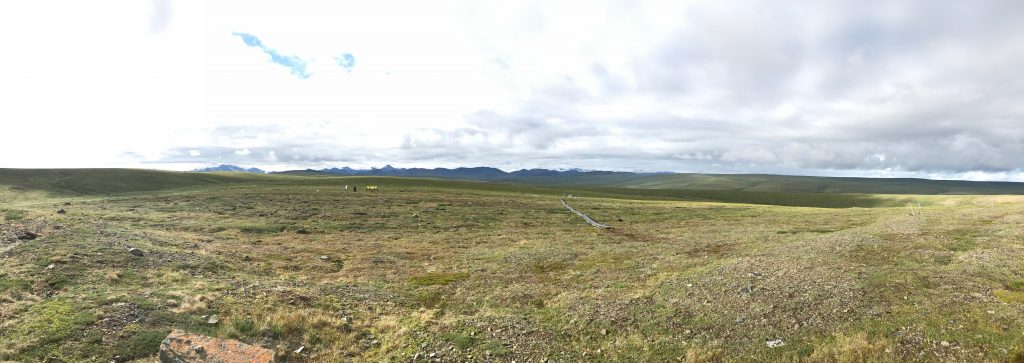
Flat green tundra with mountains in far distance. Skinny trail winds across tundra; research equipment barely visible at a distance.
One of the remote locations in the Arctic where Fred Huemmrich’s research takes place. Photo courtesy Fred Huemmrich.

Crucial changes

Huemmrich is an investigator on NASA’s Arctic-Boreal Vulnerability Experiment (ABoVE), which looks at ecosystem change at high latitudes. His project specifically is investigating Arctic “greening” (an increase in plant cover over time), which is heavily reliant on metrics like NDVI. With about 300 leading investigators, and over 1,000 people involved in ABoVE overall, it’s critical that these researchers understand when it’s useful to apply metrics like NDVI, and when to use other metrics.

The Arctic is changing. Those changes affect local wildlife populations and the Indigenous communities that often rely on them. Arctic climate change also affects major environmental shifts around the world, from rising seas to global wind patterns. Using the right metrics in the right way to study these ecosystems is crucial to understanding Arctic climate, Huemmerich notes, because that understanding can affect policy to protect the planet.  

Header image: Boreal forest meets the alpine tundra ecosystem in Rocky Mountain National Park. Photo by Tim Lumley, used under CC BY-NC-ND 2.0.

NASA awards $72 million for new UMBC-led Earth science research partnership

NASA has announced a major award of $72 million over three years for the new Goddard Earth Sciences Technology and Research (GESTAR) II center. UMBC serves as the lead for a national consortium and will receive over $38 million. Morgan State University serves as the primary partner. Colorado State University, Arizona State University, and Pennsylvania State University are also close partners in the program, as are Northrop Grumman Corporation, Earth Resources Technology, Inc., and the non-profit Southeastern Universities Research Association.

“This award is a massive win for UMBC, for the University System, and—with Morgan State as a key partner—for Maryland as a whole,” says Jay Perman, chancellor of the University System of Maryland. “The sheer size of the award, supporting the work of over a hundred researchers and students, demonstrates NASA’s faith in UMBC as consortium leader.” 

“And,” Perman adds, “I know the entire UMBC community welcomes an even tighter connection to Goddard and an even more prominent role in answering some of the biggest questions in earth and atmospheric science.”

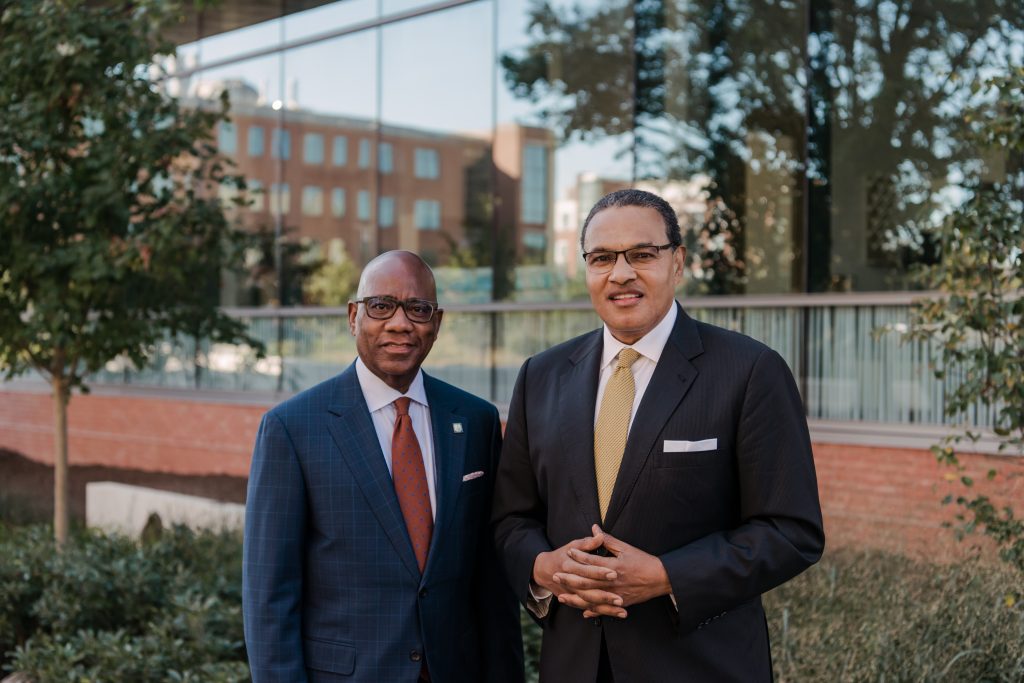
David K. Wilson (left) and Freeman A. Hrabowski.

Connecting colleagues and students

The GESTAR II consortium will support over 120 researchers, creating extensive opportunities for breakthroughs in earth and atmospheric science research. Participants will carry out observational, experimental, and theoretical research in support of NASA strategic earth science mission objectives.The large scale of this work will also enable students at all levels to contribute to the research.

“I am absolutely delighted that this new cooperative GESTAR II award will further strengthen and expand the mutually beneficial partnership between NASA Goddard and UMBC, which was first launched a quarter-century ago,” says Karl Steiner, UMBC’s vice president for research. “Together with our partner institutions, especially Morgan State University, we are looking forward to the exciting scientific and educational opportunities that lie ahead.”

“Morgan brings more than a decade of experience working with NASA, and we look forward to partnering with UMBC and other collaborators in GESTAR II to produce cutting-edge, world-class Earth science in support of our national space program,” adds Willie E. May, vice president for research and economic development at Morgan State. “We are also very excited about what this partnership will mean for our students—more exposure, new educational pursuits, and access to longer-term employment opportunities.” 

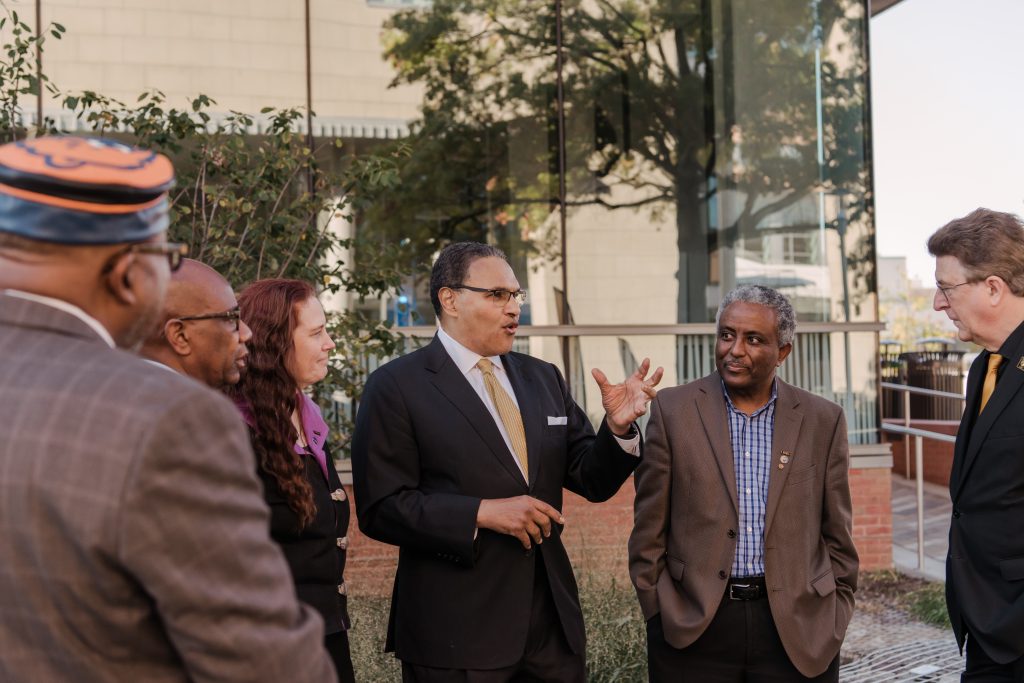
Left to right: Willie E. May, David K. Wilson, Margo Young, Freeman A. Hrabowski, Belay Demoz, Karl Steiner. May and Wilson are from Morgan State U.

Reaching beyond

Like UMBC’s Joint Center for Earth Systems Technology (JCET), GESTAR II will create opportunities for undergraduate and graduate students to conduct research with and be mentored by NASA scientists and engineers. Some of these researchers might also teach courses or offer workshops to students from participating institutions. 

This builds on the work of scientists like Belay Demoz, director of JCET and the incoming director of GESTAR II. Demoz has been recognized for his ongoing commitment to mentoring students from all backgrounds in climate science. His scientific and mentoring work is driven by his early life in Eritrea, which was struggling with drought and other climate-induced challenges that continue today.

“So much of what we are able to do at UMBC is tied to the dreams of our current and future students to reach beyond ourselves,” says Keith J Bowman, dean of UMBC’s College of Engineering and Information Technology. “UMBC’s NASA centers help drive our aspirations as a university to have an impact that reaches beyond our campus, beyond our state, and even beyond our planet.”

Belay Demoz, director of JCET and incoming director of GESTAR II. Photo by Marlayna Demond ’11 for UMBC.

Advancing high-impact research

This fall, funding for JCET will sunset after two-and-a-half highly productive decades. The new GESTAR II award will enable ongoing projects to continue, while also creating opportunities for expansion under a new structure.

JCET-supported researchers have examined ice shelf collapse, air quality, humans’ role in climate change, how boreal forests are responding to rising temperatures, and more. JCET also supported scientists and engineers who launched UMBC’s first CubeSat, the Hyper-Angular Rainbow Polarimeter (HARP), named AIAA Small Satellite Mission of the Year in 2020. 

Many of these investigators’ work will continue through GESTAR II. Demoz describes the consortium partners as “powerhouses in earth science research and administration.”

“The collaboration between Morgan and UMBC serves as a model for how two research universities, operating in a highly competitive space, can join in common purpose, pooling intellectual capital, resources, and expertise for the greater advancement of earth science and technology,” says David K. Wilson, president of Morgan State.

President David K. Wilson and Vice President Willie E. May of Morgan State. Photo by Marlayna Demond ’11 for UMBC.

NASA’s next generation

Bringing together students and researchers from UMBC, Morgan State, NASA, and other institutions creates the opportunity for innovation and major advances in earth science. It also creates a pipeline of students from a wide range of backgrounds who are prepared to pursue careers at NASA and elsewhere, using the skills they’ve gained through learning from and with NASA team members. 

“GESTAR II embodies UMBC’s collaborative, multidisciplinary approach to research and highlights the importance of research partnerships,” says Bill LaCourse, dean of UMBC’s College of Natural and Mathematical Sciences. “Only through inclusive excellence, which GESTAR II exemplifies, can we hope to unravel the mysteries of the universe and understand the world around us.”

“I am deeply grateful to everyone, especially our colleagues at Morgan State, who helped make this new partnership a reality,” says Freeman Hrabowski, president of UMBC. “I am looking forward to seeing what breakthroughs in earth science will come from the collaborative work of the scientists, engineers, and students who participate in GESTAR II.”

Left to right: Belay Demoz, Freeman A. Hrabowski, Margo Young, and Karl Steiner. Photo by Marlayna Demond ’11 for UMBC.

Banner image: UMBC and Morgan State colleagues gather to celebrate the new GESTAR II award outside UMBC’s Interdisciplinary Life Sciences Building. From left to right: Willie E. May, Daniel Laughlin, David K. Wilson, Margo Young, Freeman A. Hrabowski, Belay Demoz, Karl V. Steiner. Photo by Marlayna Demond ’11 for UMBC.

UMBC’s Reem Hannun to co-lead urban air quality study with NOAA Climate Award

Over time, U.S. environmental regulations have successfully reduced emissions from combustion, such as car engines. That has decreased these emissions’ negative impact on air quality, particularly in urban areas. However, emissions from consumer products such as cleaning supplies, fragrances, inks, adhesives, and more are on the rise, and their effects on air quality are poorly understood. 

Not only are there many more different compounds to investigate, but the compounds’ sources are dispersed. Rather than coming from tailpipes or power plants, these emissions can seep out of homes, building ventilation systems, and anywhere else the products are used.

“There’s a lot of uncertainty around this new class of molecules, and they’ve been shown to contribute more and more to poor air quality than traditional emissions. So, if we want to have a better understanding of air quality, now and as climate continues to change, we really need to be able to understand how the chemistry changes with this new class of emissions,” says Reem Hannun, assistant research scientist with UMBC’s Joint Center for Earth Systems Technology (JCET). “It’s a new, interesting dynamic.”

Reem Hannun on a NASA research plane. Photo courtesy Reem Hannun.

An “airborne” campaign

To improve understanding of these emerging air pollutants, the National Oceanic and Atmospheric Administration has funded a proposal co-led by Hannun and Jen Kaiser, an atmospheric scientist at Georgia Tech, for $550,000. The project is part of NOAA’s Atmospheric Emissions and Reactions Observed from Megacities to Marine Areas (AEROMMA) campaign.

The team will capture measurements of many of the polluting molecules, called volatile chemical products, or VCPs, using specialized instruments flown on research aircraft over several of the country’s largest cities. Hannun and UMBC colleague Jason St. Clair will bring their expertise with the instruments to the project. Kaiser’s team offers expertise in modeling and data analysis.

While previous studies have looked at some of the same specific compounds in isolated areas, “This will be the most spatially comprehensive look at these compounds in cities around the United States,” Hannun says.

Getting the whole picture

In addition to detecting many different emerging VCPs, the campaign, delayed due to the pandemic and now set to launch in 2023, will measure the presence of formaldehyde. Formaldehyde is a particularly pertinent compound to examine, because VCPs and the better-understood class of volatile organic compounds (VOCs) produce formaldehyde as a byproduct when they break down through a series of chemical reactions in the air.

“So it’s really useful, because formaldehyde provides an integrated perspective; it can tell us something about the sum of a diverse array of emitted VCPs and VOCs,” Hannun says. “We can use formaldehyde to kind of simplify this really complex series of chemical reactions.”

The NOAA WP-3D aircraft. The AEROMMA instruments will fly on this plane above several of the largest U.S. cities to collect data about the presence of pollutants in air. Photo by NOAA.

“AEROMMA is an exciting opportunity to better understand the urban air quality impacts of a new class of volatile organic compounds, and I believe our formaldehyde measurements will be a great contribution to the overall project,” adds St. Clair. “I’m looking forward to working with Jen and Reem on this project.” 

Overall, the team is interested in the long-term effects of VCPs on the formation of ozone and particulates—two key indicators of air quality. “The main goal is to get a better understanding of the chemistry,” Hannun says. To do that, it’s important to know what molecules are in the air at a given moment, and also how they break down over time. “Being able to measure things like formaldehyde will ensure our understanding of that chemical processing,” Hannun explains.

Measuring pollution from space

After the researchers collect the data, they will compare the formaldehyde measurements to the measurements of other VCPs and VOCs during the campaign. If it turns out that formaldehyde is, as expected, a useful proxy for the presence of a range of air pollutants, then it can be applied as a scientific indicator in other situations.

As it turns out, satellites in space can measure formaldehyde. “You can’t make these measurements from aircraft all the time, but if we have satellite measurements of formaldehyde, then we can apply our understanding to broader regions across space and time,” Hannun says.

Measuring formaldehyde from space sounds good to Hannun for another reason. “I get a little air sick,” she says, “so I’m always happy to work with the instrument on the ground and then let somebody else fly with it,” she shares.  

Women leading the way

In addition to contributing important science to the field of air quality studies, the AEROMMA project is important for another reason. “This project is co-led by me and Jen Kaiser at Georgia Tech,” Hannun says. “I feel like the field sciences, especially these measurement campaigns, can be really male-dominated, so it’s exciting to be in a woman-led group doing this. I hope that it will encourage more women to do this kind of field work.”

There are other long-term implications. Over time, if the researchers determine that a specific class of VCPs plays a significant role in ozone production, for example, “it could be that in several years this type of work would help put regulations or restrictions on the use of some of these more noxious or deleterious compounds,” Hannun says. And that would allow everyone to breathe a little easier.

Header image: Smog hovers over Los Angeles, one of the U.S. cities with the worst air pollution. Los Angeles is one of the cities the AEROMMA campaign will visit as it collects data about pollutants across the country. Photo by Maciek Lulko, used under CC-BY-NC-2.0.

UMBC’s Yonathan Zohar to lead $10 million partnership to scale land-based salmon aquaculture

The U.S. Department of Agriculture (USDA) has awarded $10 million, the maximum allowable amount, to a set of projects, led by UMBC’s Yonathan Zohar, targeted to solve specific aquaculture challenges.

For decades, Zohar, professor and chair of marine biotechnology, has made steady progress toward making large-scale, sustainable land-based aquaculture—raising fish on land—a reality. Sustainable Aquaculture Systems Supporting Atlantic Salmon, known as SAS2, will address a range of remaining hurdles hindering the success of these emerging aquaculture platforms. SAS2 includes several academic and federal research institutions and nine industry partners from across the U.S., plus partners in Iceland and Norway. 

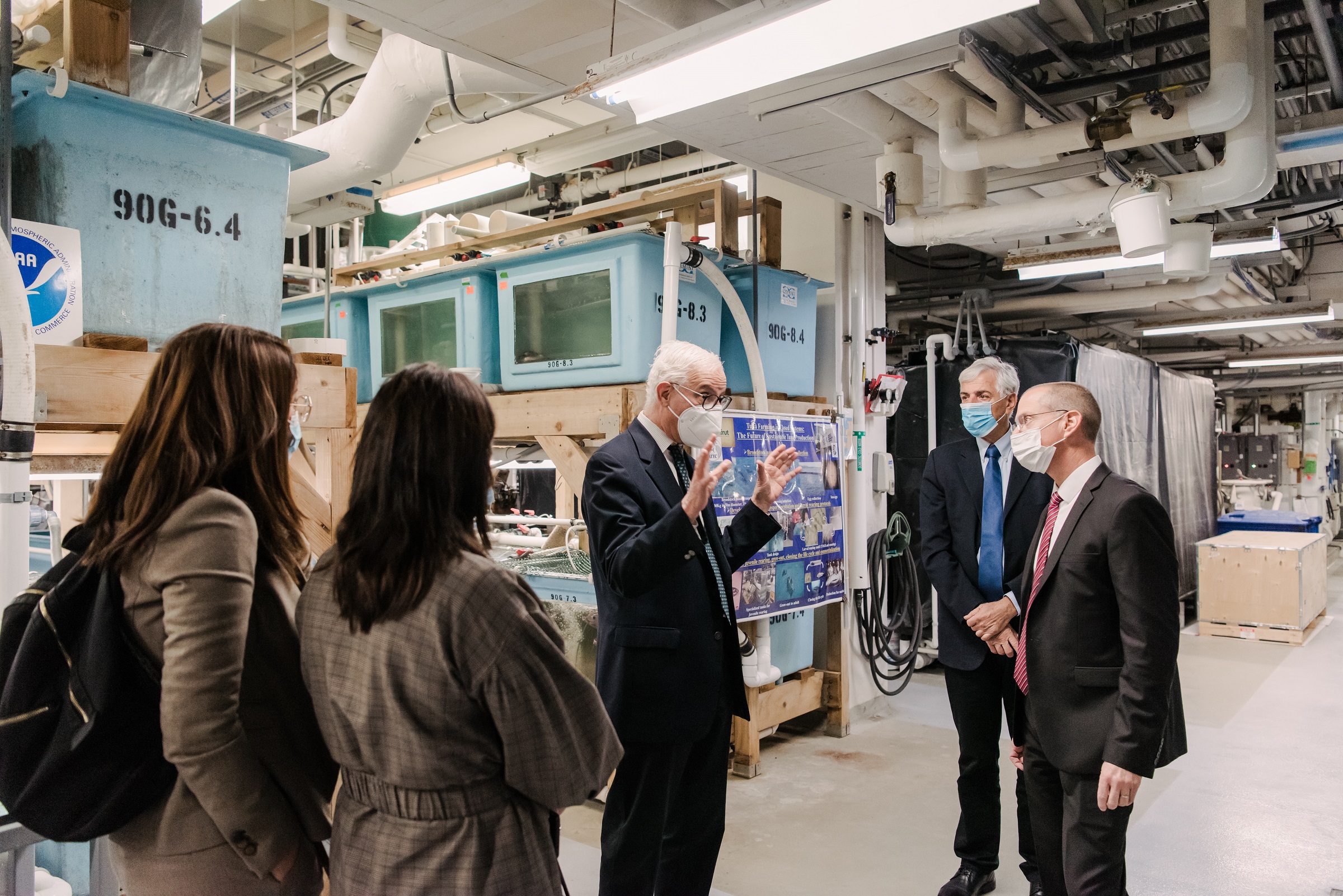
“The mission is to enable an innovative, effective, and sustainable U.S. Atlantic salmon production platform that will transform the U.S. food and aquaculture systems and secure and increase high-quality and affordable seafood production for the world,” says Zohar, director of the Aquaculture Research Center at the Institute of Marine and Environmental Technology (IMET) on Baltimore’s Inner Harbor.

Land-based aquaculture systems are self-contained, avoiding the risks of environmental pollution or farmed fish escaping and interbreeding with wild stocks. They can be built anywhere, reducing the carbon footprint and cost of transporting fish. The water composition (salt and other minerals) can be optimized for different species, based on their natural habitat. Controlled light and temperature cycles ensure optimal year-round fish performance and production and entrain spawners to breed at different times of year, resulting in fish coming to market size year-round. 

As demand for seafood continues to rise, innovative systems like this pave the way for producing a much greater quantity of seafood in a more sustainable way.

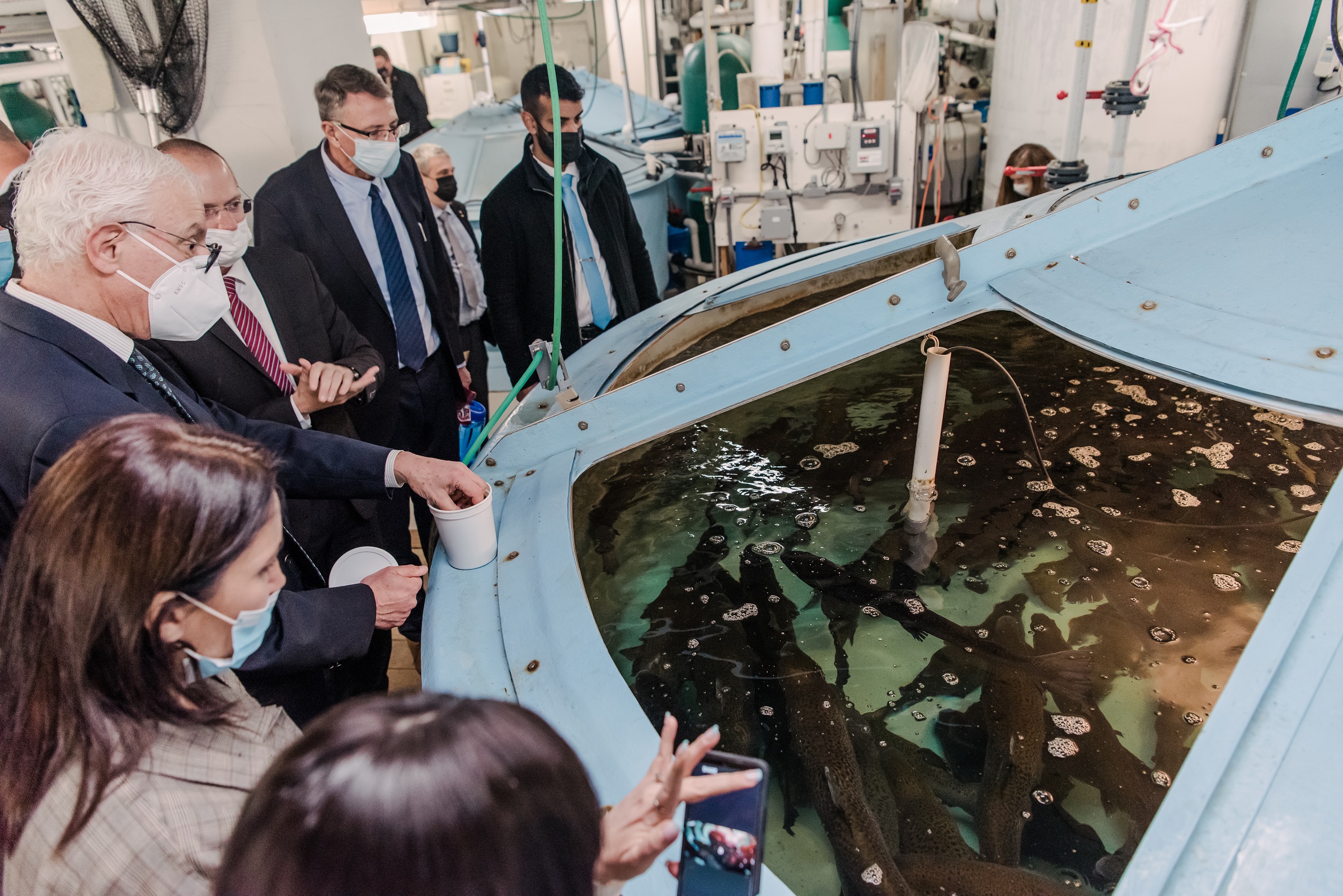
Yonathan Zohar observes a tank at the Aquaculture Research Center, located at the Institute of Marine and Environmental Technology.

Filling the knowledge gaps

SAS2 builds on another Zohar-led project, the Recirculating Aquaculture Salmon Network, or RAS-N. “RAS-N has been developing a prioritized list of the challenges we need to address and where we should invest resources. It asks: What are the gaps in knowledge? What are the main hurdles in technology, biology, and engineering?” Zohar explains. “And now, with SAS2, we’re taking that information and implementing it.”

Two-thirds of the project funding is dedicated to research. The remaining third is split evenly between education/workforce development and extension/community engagement. Professionals from all of these areas are co-directors on the grant.

SAS2 includes 17 objectives, each addressing a particular remaining challenge to the large-scale implementation of land-based salmon aquaculture. For example, one priority is developing a domestic brood stock, so aquaculture facilities in the U.S. aren’t solely dependent on importing salmon eggs from Europe. Another objective is biologically treating the tons of solid waste (fish poop) the facilities produce and converting it to fuel-grade biogas. Others focus on developing environmentally responsible feeds and ensuring optimal fish quality. 

Two people kneeling next to fish tanks
Yonathan Zohar (l) and Jorge Gomezjurado (r) at IMET’s Aquaculture Research Center.

From research to workforce

Also, Zohar says, “Workforce development is a huge bottleneck, because with these facilities popping up like mushrooms, there aren’t enough skilled workers available with the right kind of training.” These huge facilities rely on skilled technicians that can think creatively to troubleshoot problems on the spot. Aquaculture industry leaders, such as George Nardi, vice president for aquaculture services at Innovasea, are partners on the grant to assist with this and other parts of the work.

“I was impressed with the breadth of the workforce development in this proposal—everywhere from high school to university,” Nardi said at a kickoff meeting for SAS2. “My experience tells me that in aquaculture we need a great variety of skillsets to succeed,” he added. “And this project, with the enormous amount of talent surrounding it, is going to help the industry move forward.”

Extending the impact

In addition to UMBC, the other primary academic partner is the University of Maine, whose Aquaculture Research Institute is a leader in aquaculture on the East Coast.

“The Aquaculture Research Institute (ARI) at UMaine is excited to continue working with UMBC and implementing the lessons learned from the RAS-N network,” says Debbie Bouchard, director of the ARI. “Working with other institutions on the grant, we are focusing on integrated workforce development pathways that incorporate not only industry priorities and results from the research objectives, but also diversity and inclusion values that are important to advancing a sustainable RAS industry and rural development.”

https://www.youtube.com/watch?v=YKvuyw-MNTEu0026t=48s

The team’s collaborative and transdisciplinary approach to the project will create opportunities to transform the industry by addressing key bottlenecks that thus far have created challenges in scaling up land-based aquaculture. Both RAS-N and SAS2 “have always been stakeholder-driven,” Zohar says. “We are not in the ivory tower of academia telling businesses ‘you should do this and that.’ Instead, it’s us asking the industry, ‘What do you need to ensure success?’.”

Extension is an important part of the project, too. As aquaculture facilities can take up a significant physical footprint, “One of our objectives is community engagement, being totally transparent and keeping a dialogue going.” That is happening already as AquaCon, another industry partner on the grant, works with Zohar and other colleagues to implement salmon aquaculture facilities on Maryland’s Eastern Shore.

Poised to succeed

Fish in a tank at IMET’s Aquaculture Research Center in Baltimore.

The new $10 million grant is part of a National Institute of Food and Agriculture (NIFA) program, which includes everything from corn to beef. The fact that an aquaculture project was selected and awarded the maximum amount indicates the priority the federal government has placed on innovative, sustainable food production strategies for the future.

“The goals are for it to be transformative, to be collaborative, to be synergistic, and to cross boundaries,” Zohar says. “The USDA program is called sustainable agriculture systems, so it takes a systems approach and goes from basic science to the translational.”

“It’s an exciting time for aquaculture in Maine and the nation,” Bouchard says. “I’m looking forward to seeing all the great things that are going to come out of this over the next five years.”

Banner image: The Institute of Marine and Environmental Technology in Baltimore. All photos by Marlayna Demond ’11 for UMBC.

UMBC to receive $10 million from NASA to support sun and space environment research

UMBC is part of a new consortium that has received $64.1 million from NASA to establish the Partnership for Heliophysics and Space Environment Research (PHaSER) and fund it for the next five years. UMBC will receive $10 million from the award to move forward the next phase of heliophysics research at the university.

Heliophysics researchers study the Sun and how it affects and interacts with the solar system, including its role in space weather. The Catholic University of America leads the PHaSER consortium, which also includes University of Maryland, College Park (UMD); George Mason University; Howard University; and the Universities Space Research Association.

The UMBC arm of PHaSER will replace the Goddard Planetary and Heliophysics Institute (GPHI), a cooperative agreement between NASA, UMD, and UMBC that UMBC has led for the last 10 years. Both GPHI and PHaSER support missions run by the NASA Goddard Space Flight Center’s Heliophysics Science Division (HSD). Recent GPHI research has included identification of a phenomenon known as the Terminator, which helps describe sun cycles and could improve decade-scale weather forecasts.

“The primary purpose of PHaSER is to collaboratively support the HSD in studying plasma processes in our solar system and developing new missions and instruments,” says Jan Merka. He served as GPHI director and will now direct the UMBC arm of PHaSER. “UMBC has a long tradition of working with NASA and HSD,” Merka adds, noting that in the last year alone GPHI funded 30 full-time researchers, 15 of them at UMBC.

GPHI director, and now PHaSER director at UMBC, Jan Merka. Photo by Marlayna Demond ’11 for UMBC.

All hands on deck

“The mission of the heliophysics division is to study the transport of energy, in the form of particles and radiation from the sun through interplanetary space and its effects on Earth’s atmosphere and ionosphere,” says Bob Robinson, the director of PHaSER and research professor of physics at Catholic University. PHaSER will support that mission through a multi-pronged approach targeting a range of initiatives.

For example, PHaSER’s goals include nurturing early-career and underrepresented researchers. Specific programs designed to do that will be a hallmark of the new center, including student internships and funding for postdocs. PHaSER support will also help sustain and strengthen partnerships across institutions and with NASA researchers. It will fund visiting scientists and sabbaticals for established faculty, and offer conference hosting and organization.

“PHaSER represents a network as much as a partnership, and we will leverage the many linkages the member institutions have to help move HSD scientific and technical projects forward,” the group said in its proposal. 

“Cooperative agreements like GPHI and PHaSER enable closer connections between NASA and universities, which simplifies sharing ideas and performing joint research and technology development,” Merka adds. He emphasizes, “Another significant benefit is connecting students with research opportunities and mentors in heliophysics.”

The new partnership will enable institutions to hire more researchers in specialty heliophysics fields. Plus, in addition to supporting researchers, the PhaSER proposal calls for staff at NASA and the partner institutions to be directly engaged in planning, technology development, and implementation for PHaSER projects. 

By supporting heliophysics researchers, students, and staff, PHaSER will empower people at all career levels and from all backgrounds to contribute new knowledge about the Sun and how it affects processes in the solar system.

This image shows some of the ways that space weather can affect technologies such as airplanes, GPS systems, and the power grid. Credit: NASA

Tradition of partnership

The strength of UMBC’s relationship with NASA goes beyond GPHI and PHaSER. The Joint Center for Earth Systems Technology (JCET), a similar partnership housed at UMBC, recently celebrated its 25th anniversary. And a third partnership, the Center for Space Science and Technology (CSST), recently received a funding renewal and enhancement

JCET scientists, engineers, and statisticians conduct research on Earth and its atmosphere, while CSST supports researchers who study distant celestial bodies and phenomena. Both centers are housed at UMBC, which is one of the top 100 public universities in the U.S. for NASA funding.

“We are very proud of this new multi-institutional partnership with NASA Goddard,” says Karl Steiner, vice president for research at UMBC. “The new PHaSER program will not only continue to enhance our heliophysics research capability, but also provide unique opportunities for UMBC faculty and students to work in this important field.”

Banner image: A terminator event, a phenomenon discovered by GPHI researcher Robert Leamon, on the Sun in 2011. The three different colors (added by researchers) represent three temperatures. Photo courtesy of NASA Solar Dynamics Observatory.

UMBC’s Matthew Baker gets to the root of how trees cool cities

Extreme heat is on the rise, and people in urban areas with minimal tree canopy are especially susceptible to its harmful effects. Urban tree planting projects have proliferated in recent years, because trees are associated with lower urban temperatures, are relatively low-cost, and offer numerous benefits beyond cooling. A new study in Environmental Research Letters describes nuances of how trees affect temperature in cities. The research findings could have a major public impact by helping urban planners reap the greatest benefits from tree planting efforts and protect their most vulnerable residents.

“Urban heat is a big deal, and tree canopy can help,” says Matthew Baker, second author on the study and a professor of geography and environmental systems at UMBC. Trees can shade heat-trapping surfaces, such as roads, roofs, and sidewalks. Transpiration from trees is also important to consider, but has gotten less attention. In transpiration, trees release water through their leaves that cools the air when it evaporates. 

Both shading and transpiration are important contributors to cooling-by-trees, but they offer the greatest benefits in different conditions. “Different kinds of canopy do different kinds of work,” explains Baker, who also serves as associate dean for faculty affairs in the College of Arts, Humanities, and Social Sciences at UMBC. For example, trees above paved surfaces function differently than those above unpaved surfaces. 

The new paper, which was funded by the National Science Foundation’s Geography and Spatial Sciences program, found that all the differences the researchers examined affect the role that trees play in cooling. Understanding which kinds of canopy could help the greatest number of residents most during heat events could improve quality of life in cities—and even save lives.

Pixelated aerial image of Washington, DC with shades of green and brown representing percentage of canopy cover.
A figure from the paper by Matthew Baker and lead author Michael Alonzo visualizes the distribution of canopy cover in Washington, DC.

Canopy type matters

Baker and colleagues, including lead author Michael Alonzo at American University, analyzed more than 70,000 air temperature measurements collected on a hot summer day in 2018 in Washington, DC. They collected data using sensors attached to vehicles in the pre-dawn hours, during afternoon peak heat, and in the evening along different routes throughout the city.  

In addition to looking at the effect of time of day, the researchers separated “hard canopy” (tree canopy above impervious surfaces, such as streets or rooftops) and “soft canopy” (tree canopy above unpaved surfaces, such as in yards or parks). They further divided soft canopy into patches (larger canopies found in large parks and forests) and “distributed” canopy (such as individual trees spread out among backyards or at a ball field).  

Overall, and in agreement with previous studies, total tree canopy reduced temperature at every time tested. The amount of cooling increased linearly as the percentage of canopy cover in a location increased. For example, with 50 percent tree cover, the cooling effect was about twice as large as at 25 percent tree cover. The greatest overall effect was in the afternoon, when trees reduced the temperature by 1.8 degrees Celsius (3.2 degrees Fahrenheit). 

Cyclist heading down a bike path with forest on either side.
An example of a forest patch, or clump. Clumped canopy demonstrated the ability to retain its lower temperatures even in afternoon heat. Photo by Michael Alonzo.

Cooler nights thanks to soft canopy

While the overall findings seem clear, once the researchers separated the different kinds of canopy, it got more complicated. Baker says, “The big story is that all tree canopy does not behave the same way, and soft canopy is more effective by far.”

For example, Baker notes that soft canopy seemed to do a better job cooling in the evening (more than 3 degrees Celsius) than in the afternoon. The authors suspect that’s because some trees shut off transpiration during peak heat to conserve water, and then start transpiring again in the evening. The evening bump could also be a side effect of the distribution of soft canopy throughout the city. 

Hard canopy offered a slight cooling benefit (0.2 degrees Celsius) in the afternoon, even at less than 25 percent coverage, whereas soft canopy offered no apparent benefit at such a small amount of coverage. However, hard canopy created a very slight warming effect overnight, likely by trapping heat rising from hard surfaces.   

A neighborhood street of single family homes.
Trees whose crowns hang over pavement or rooftops are examples of hard canopy. Photo by Michael Alonzo.

Missing the forest for the trees

Larger patches and more distributed forms of soft canopy also offer different benefits, but both produce significant cooling effects. Clumped patches were better at retaining their cooling effect in the peak afternoon heat, when distributed canopy was less effective. By contrast, distributed canopy cooling approached the effect of larger patches in the pre-dawn and evening, possibly because, with long shadows from low sun angles, distributed trees shade more of their surroundings.

Overall, “if you can increase the soft canopy, you are much more likely to reduce temperatures,” Baker says. Clumped soft canopy might be the most effective overall for cooling, because it retains its temperature reduction throughout peak heat and its cooling effects can extend to nearby areas beyond the clump’s boundary. 

However, Baker also notes that distributed canopy is more accessible for many urban residents, who can more easily plant or maintain trees in yards than find the space for a microforest, so distinguishing the likely benefits of different kinds of canopy is important. “Of course” he says, “not everyone who needs the benefits of trees has a yard.”

Still, he emphasizes, “the benefits of a forest go well beyond the trees,” so “you can’t replace a forest with street trees.”

Strategies for the future

Urban tree-planting programs have the right idea, Baker suggests, because urban heat risk is almost certain to get worse and trees work to cool urban neighborhoods. But to make those efforts as effective as possible, more knowledge is needed about the relative benefits of different kinds of tree canopy. 

Findings like those in this new research “affect how we might strategize future planting and woodland management,” Baker says. More nuanced understanding can help tree-planting programs, community groups, and individual residents make decisions about how to invest limited resources—in planting more street trees, yard trees, or forested tracts, but especially by protecting existing forest patches in and out of urban parks.

Header image: Matthew Baker at UMBC. Photo by Marlayna Demond ’11 for UMBC.

UMBC’s Mercedes Burns to explore spider glues and silks with new $900K NSF grant

How many ways are there to make a sticky protein? That’s the overarching question driving new research by Mercedes Burns, assistant professor of biological sciences, and Sarah Stellwagen, a postdoc at UNC Charlotte and former postdoc at UMBC.

Burns and Stellwagen study arachnids, a diverse group of invertebrate animals that includes spiders. Materials scientists have long envied the strong, flexible, and sometimes sticky silks the eight-legged critters produce, but spider silks have so far proven difficult to replicate effectively in a laboratory. That’s partly because the genes responsible for producing the silk proteins are so long that typical DNA sequencing methods are insufficient for gene discovery. Additionally, spinning synthetic silk protein into fiber isn’t scalable yet.

“That’s been a major reason why no one’s been able to make their own spider silk,” Burns says. With $900,000 in funding from a new National Science Foundation grant, Burns and Stellwagen will explore sticky substances used to capture prey by arachnids and a few other animals, including glowworms (the larval stage of a type of fly) and velvet worms (a group of ancient, worm-like invertebrates found across the Southern Hemisphere).

The substances their non-spider study organisms produce “are sticky like spider silk glues, but maybe their genetic architecture is easier for us to duplicate,” Burns says. “That’s one of the long term goals: Can we make a synthetic glue, based on these same principles, with more efficacy than we’ve been able to do with spider silks?” This glue could have medical or industrial applications, she notes.

Two women researchers in lab coats holding daddy longlegs.
Mercedes Burns, right, and Sarah Stellwagen handle daddy long legs (scientific name Opiliones) in Burns’s lab.

How to make a sticky protein

Burns and Stellwagen will study the sticky silks produced by velvet worms, glowworms, spiders, and harvesters (also known as daddy longlegs). Many people may lump them all into the “creepy-crawly” category, but they actually diverged hundreds of millions of years ago. Yet they all use sticky substances to capture prey. “So what we want to know is, ‘Is there one way to make a sticky protein, or are there many different ways to make sticky proteins?’” Burns says.

For each of their study species, they will compare the sequences of the genes responsible for the sticky stuff. Then they’ll compare the substances’ function by measuring just how sticky it is and under what conditions it performs best, such as a particular humidity or temperature. Finally, they’ll consider the structure of the proteins themselves, with a special focus on whether sugar compounds bound to the backbone of the protein play an important role in its function.

“By comparing those characteristics among different groups, we hope to understand what the necessary components of sticky biomaterial prey capture proteins are,” Burns says.

“The results of the study will provide opportunities for further research,” Stellwagen adds. “There are many other species from the groups we are studying here, so projects comparing glues more broadly within species groups is one area for expansion later on, or even diving deeper into the biomechanics across groups by including more test conditions.”

The spider gaucho

Burns and Stellwagen have continued to collaborate on other projects since Stellwagen moved from UMBC to UNC Charlotte last year. Just this week, they published a new paper in Integrative and Comparative Biology on the glue genes in the bolas spider. 

Rather than depositing droplets of glue around a web, like orb-weaving spiders, the bolas spider hangs one huge droplet of glue at the end of a long thread of silk. The spider releases chemicals mimicking female moths, luring in male moths. It then uses tiny hairs to sense vibrations in the air as a male moth approaches. At the right moment, it swings its glue bolas like a lasso and, “if they hit the moth,” Burns explains, “they reel it in really, really quick and dispatch it with their venom.”

The first—again

Stellwagen and Burns are the first to sequence the glue gene for this species. While genetic sequencing has become commonplace in recent years, spider glue genes are so long and so repetitive that the duo had to employ a special process called “long-read sequencing” to produce results. In 2019, Stellwagen became the first to sequence any spider species’ glue genes, which also required long-read sequencing, and the bolas spider gene was much longer still. 

The work funded by the new grant will fill an important gap in spider silk research. “We don’t have anyone studying the intersection between the function and primary elements of the gene sequence for spider silk, so that’s pretty exciting,” Burns says. “From there we can understand more about how these genes evolved.”

Is it necessary to have a long, repetitive gene to make a sticky protein, for example? Burns thinks that’s a possibility. Maybe those repetitive sections help the protein fold onto itself in a way that allows it to be strong and flexible.

“I’m thrilled our project was selected for funding, not only because we’re so passionate and excited about the research, but because at this career stage, it’s life changing,” Stellwagen says. “This gives us an opportunity to prove ourselves and set ourselves up for long term success.”

Two young women in a science lab.
Sarah Stellwagen (left) and Mercedes Burns in Burns’s laboratory.

“Spider Camp”

Another exciting outcome of the grant is funding for undergraduates to attend “Spider Camp,” a two-week intensive summer field experience for undergraduates, graduates, and enthusiasts at the Highlands Biological Station in western North Carolina that Stellwagen co-instructs. Burns will introduce new material on Opiliones (the scientific name for daddy longlegs). The Appalachians are a center of diversity for this group of arachnids that Burns focuses on in her other projects. The region is rich in other arachnid life as well.

By giving UMBC students a chance to participate in an engaging field experience, Burns hopes to help diversify the field of arachnology. “We want to make classes like that available to students who might otherwise never take a field course,” she says.

The work Burns and Stellwagen do will open doors for further research—perhaps one day completed by those who attend Spider Camp. “There’s a lot of interesting evolutionary questions that come from this,” Burns says. “I enjoy trying to figure out how species that are lesser known address the challenges of life.”

Header image: Sarah Stellwagen (left) and Mercedes Burns. All photos by Marlayna Demond ’11 for UMBC.

UMBC graduates more Black students who go on to earn doctorates in natural sciences and engineering than any other U.S. college

As a trifecta of crises upended life in 2020, the need for a diverse scientific and medical community grew ever more clear. George Floyd’s murder elicited worldwide protests against racial injustice. COVID-19 affected all of our lives and had an outsize impact on Black and brown communities. And COVID-19’s economic fallout only exacerbated extreme wealth inequality. 

At the same time, while some Black and brown people were reluctant to take the vaccine because of a negative history with the medical establishment, there was no one better than Kizzmekia Corbett ’08, M16, biological sciences and sociology, to reach out to “vaccine inquisitive” folks, as she describes them. Corbett rose to fame in 2020 as the lead of the NIH team developing the Moderna vaccine and as the first Black woman in the world to create a vaccine.

A young black woman wearing a lavender dress, smiling and standing in a lab with microscopes.
Kizzmekia Corbett, who led the team that developed the Moderna COVID-19 vaccine, talks to CNN in UMBC’s Interdisciplinary Life Sciences Building in April 2021. Photo by Marlayna Demond ’11 for UMBC.

Representation matters

It is in this context that UMBC President Freeman Hrabowski and Peter Henderson, senior advisor to the president, published their latest article in Issues in Science and Technology, “Nothing succeeds like success, which addresses the persistent and urgent need to diversify the group of professionals in STEMM (science, technology, engineering, mathematics, and medicine).  

“When we have greater diversity of representation, we also have greater diversity of information, knowledge, lived experience, and perspectives—each of which enhances discovery and innovation,” Hrabowski and Henderson write. “When the science and engineering community looks like the United States, we find greater trust in and support for that community across groups in the population.”

The Meyerhoff Scholars Program at UMBC, and its more than a dozen replications elsewhere, have made great strides in supporting the success of underrepresented students in STEMM. Hrabowski and Henderson argue that the U.S. should frame the need for a diverse scientific workforce as a national priority and invest in it accordingly. Programs like the Meyerhoff Scholars that have proven their ability to move the needle, they write, should be short-listed for that investment, because “nothing succeeds like success.”

Impressive outcomes

“According to NSF data, UMBC is the number one baccalaureate institution for African American undergraduates who go on to earn Ph.D.s in the natural sciences and engineering, as well as doctorates in the life sciences, mathematics, and computer science,” Hrabowski and Henderson report. And, “according to the Association of American Medical Colleges, UMBC is the number one baccalaureate institution for African American undergraduates who go on to earn M.D./Ph.D.s.”

At the same time, “Over the past 30 years, our six-year completion rate [at UMBC for all students] has doubled, and the gap in completion rates between white and Black students has disappeared,” they write.

At UMBC, more than 1,400 undergraduate Meyerhoff Scholars, all of whom are committed to diversity in STEMM, have earned their undergraduate degrees. More than 800 of those have earned advanced degrees, and 300 more are currently completing graduate programs at top institutions across the country.

A diverse group of people standing along a stairwell.
Meyerhoff Scholars at an annual dinner. Photo by Marlayna Demond ’11 for UMBC.

A role model

And yet, this powerful example of progress exists in a nation that has seen minimal growth, and, in some fields, a backslide in minority participation in STEMM in the last decade, Hrabowski and Henderson explain. But programs like Meyerhoff have shown that big change is possible, and how to make it happen.

For example, for over 30 years the program has offered academic, social, and financial support. UMBC instructors have also invested time in completing significant course redesigns that shift the focus from “weeding out” to promoting success, and end up helping all students. More recently, an increased focus on faculty diversity has taken shape and begun to have an impact. Those efforts have led to impressive outcomes and a profound culture shift.

The Meyerhoff Scholars program has inspired several other student success initiatives at UMBC that offer various forms of support for students, including a cohort model that enhances a sense of belonging. For example, STEM BUILD is an NIH-funded program designed to help diversify the biomedical sciences. Programs in other fields, such as the Sondheim Public Affairs Scholars and the Linehan Artist Scholars, also follow some of the same principles. 

Other institutions have taken note. Programs at Pennsylvania State University and University of North Carolina at Chapel Hill have replicated the principles of the Meyerhoff Scholars with great success. UC San Diego and UC Berkeley have begun their own replication efforts. And programs at other institutions with similar principles, such as University of Florida and the historically Black Howard University, have also seen dramatic change in their graduation rates for underrepresented students in science, technology, engineering, and math.

A student conducts research at UC San Diego, which launched a replication of the Meyerhoff Scholars, called the Pathways to STEM (PATHS), in 2019. Photo by UCSD Jacobs School of Engineering, CC-BY-2.0 license.

Investing in the future

In early 2021, a group of scientists wrote in Science recommending the formation of a new National Science and Engineering Diversity Initiative (NSEDI). They suggested NSEDI should allocate $10 billion per year for several years to improve diversity in science. “These and any other funds that target increasing diversity should be allocated judiciously,” Hrabowski and Henderson argue. “Financial resources should flow to institutions that most successfully contribute to greater diversity—regardless of institutional type.”

In the end, “producing scientists is about more than increasing the numbers. It is about changing attitudes and transforming the lives of people,” Hrabowski and Henderson write. “It is about showing our society what is possible when we invest in the talent of all our youth.”

As the pandemic, widening economic inequality, and rising demands for racial justice demonstrate, there is still much work to be done. “The message is clear,” Hrabowski and Henderson declare. “Investing in young people, replicating best practices of effective programs, and committing substantially more money to support Black and minority scientists can indeed move the needle and also tackle fundamental scientific and public health problems for humankind.”

Banner image: Scores of Meyerhoff Scholar alumni and current students with President Hrabowski (seated front, left) and Robert Meyerhoff (seated front, right). Photo by Marlayna Demond ’11 for UMBC.

Learn more about the Meyerhoff Scholars Program Ripple Effect.

Hurricanes, well-being, and AI: START Awards set up UMBC researchers for success

Soon, Steve Guimond and his students will begin exploring a new angle of his hurricane research. They want to better understand the fundamental physics that drives hurricanes. Specifically, they want to know how small disturbances in a hurricane’s wind flow, similar to a strong gust on a windy day, may affect its overall structure and intensity. The findings could have implications for hurricane forecasting.

A new, $682,000 National Science Foundation (NSF) grant in collaboration with the New Jersey Institute of Technology will fund the team’s work, which primarily involves developing, running, and analyzing complex numerical models on supercomputers. However, Guimond might never have received the grant if he hadn’t received a UMBC Strategic Award for Research Transitions (START) first.

In 2018, the NSF rejected a related proposal from Guimond, who is an associate research professor with UMBC’s physics department and the Joint Center for Earth Systems Technology, a partnership with NASA. The proposal outlined a broad research program using two different methods to learn more about hurricanes: remote sensing and numerical modeling. “The START funding helped us evaluate those two sides of the project,” he says.

The START program funded initial research that was carried out by Guimond, Devin Protzko ’20, physics and mathematics, and Badrul Hasan, a Ph.D. student in mechanical engineering. They gathered preliminary data showing that the modeling path had significant potential, so they wrote a fresh NSF proposal with a narrower focus. It won approval. The small START grant, Guimond says, “was key to helping us identify the most fruitful path for follow-on funding from NSF.”

A simulation of a “large eddy,” an instance of turbulence, in a rapidly intensifying hurricane. Running this kind of simulation is part of Steve Guimond’s research. Animation courtesy Steve Guimond.

Turbulence in focus

The NSF proposal will support work to understand the role of turbulence in how or whether hurricanes intensify. Guimond’s team will also look at the value of using numerical hurricane models with very high resolution. High resolution is important because a hurricane’s “gusts” appear and disappear very quickly. They also generally take up very little physical space. Because they’re so ephemeral, you can’t simulate them precisely or accurately with current models. And if you can’t simulate them, you can’t figure out their role in overall hurricane development. High resolution models would make those simulations possible, which can feed back into improved forecasts in the future.

The fact that Guimond has the chance to do this work exemplifies START’s goal. The program, funded by UMBC’s Office of the Vice President for Research, offers a maximum of $25,000 to UMBC faculty who wish to pursue new avenues of research. The hope is that the funds will put them in a stronger position for much larger external grants from places like NSF—exactly what happened for Guimond.

Steve Guimond. Courtesy Steve Guimond.

A first step

A new cohort of UMBC faculty will receive START funding this summer. Lira Yoon, associate professor of psychology, hopes to follow a similar path to Guimond. Yoon will collect initial data on how Asian Americans regulate their emotions in response to overt racism, and how or whether the strategies they practice affect their well-being. This work is particularly relevant given the sharp rise in anti-Asian discrimination during the pandemic. Yoon is also working on a project to help long-term care workers better manage their stress, another group impacted heavily by the pandemic.

“I’m eager to start a new line of research examining the effects of racial discrimination on psychological well-being, particularly in Asian Americans,” Yoon shares. “Although the ultimate solution to the problems resulting from racial discrimination lies at the policy and systems levels, understanding mechanisms operating at an individual level could help mitigate the adverse effects of discrimination.”

“This project will be the first step in that direction,” she says, “and it will provide preliminary data to secure external funding for future larger-scale research.”

Headshot of woman wearing glasses, cream blazer and pink shirt
Lira Yoon. Photo courtesy Lira Yoon.

Real-world impact

Maryam Rahnemoonfar, information systems, is another member of the new START cohort. Her team is developing algorithms for use on drones flying over affected areas after natural disasters. The goal is for the drones to relay important information about conditions on the ground in real time. Her team has created a unique dataset, called FloodNet, that can train the algorithms to recognize disaster impacts—for example, roads that are flooded or blocked by debris. 

With a previous AI for Earth grant from Microsoft, more than 20 students at all levels in Rahnemoonfar’s research group spent more than a thousand hours creating the FloodNet dataset. Input from first responders and the Federal Emergency Management Administration (FEMA) guided their work, plus mentoring from faculty and more advanced students. Team members labeled each pixel in images to teach the artificial intelligence (AI) system what a flooded road or damaged building looks like. 

“It was a very difficult and challenging task, but we are the first in the world to prepare this sophisticated dataset,” Rahnemoonfar says.

Already, German authorities have requested (and been granted) access to the FloodNet set of labeled images to help them respond to recent catastrophic flooding in the country. The FloodNet dataset is the first and only dataset of its kind that can be used for training AI systems in the wake of natural disasters. 

Portrait of a middle-aged woman with curly shoulder-length hair, wearing a red shirt with print.
Maryam Rahnemoonfar. Courtesy Maryam Rahnemoonfar.

Saving time, saving lives

With the new START funding, Rahnemoonfar’s team hopes to improve the algorithm that evaluates how much damage buildings have sustained, on a scale from none to total destruction. Rahnemoonfar also hopes to build an interface where a person can ask the AI system a verbal question and get a useful answer. Her team is developing this ability for data already collected, “but when a new hurricane happens, we hope that while a drone is flying you can ask and get answers to these questions in real time,” she says.

To save time—of the essence during disaster response—Rahnemoonfar’s graduate students are working on adding a layer to the algorithms that would allow the AI to learn on its own, with a minimal training dataset. 

“Now that we have developed this AI system, for any new hurricane that happens, we don’t need to label data again,” she says. “With the algorithm that we are developing, with very few labeled images we can get insights for any new hurricane.” 

A ripple effect

The START program has a ripple effect beyond UMBC faculty. Many of the awardees involve students in their work, enhancing the students’ UMBC experience and helping set them up for success later on. Students in Guimond’s group, for example, get first-hand experience with NASA scientists and facilities.

Also, by helping researchers hone their projects and, as a result, future proposals, START increases their chance of success with applying for larger grants. Like Guimond, Rahnemoonfar is already looking to use the START support to lead to bigger research awards.

“The START program enables UMBC faculty members (and with them, UMBC students) to move in new directions with their scholarly work,” shares Don Engel, associate vice president for research. “We are proud of the success past recipients have found in turning their proposed ideas into longer-term initiatives.”

Banner image: Hurricane Matthew bears down on Haiti in 2016. Image by NASA Goddard Space Flight Center.

Major UMBC stream restoration will enhance ecosystems, stormwater management, and the community experience

A high-potential green space on the edge of UMBC’s main campus will see big changes in the coming months. A new $1 million grant from the Chesapeake and Atlantic Coastal Bays Trust Fund, combined with about $1.4 million of university investment, will fund a major stream restoration on campus. The stream is a small tributary of the West Branch Herbert Run, and it flows through campus by the Chesapeake Employers Insurance Arena and bwtech@UMBC. The stream is part of the Patapsco River and Chesapeake Bay watersheds.

“This project will not only create and enhance wetland and stream habitats and functions, it will also provide recreational enhancements such as walking trails with stream access and connection to other existing trails,” says Lenn Caron, associate vice president of facilities management. 

Additionally, he notes, “the restored stream will elevate UMBC’s aesthetic appeal and provide a pleasant natural environment for members of the campus and local community for recreation, exercise and watershed education.”

Restoring Herbert Run is part of UMBC’s Institutional Management Plan, a stormwater master plan put in place in 2014. The plan empowers UMBC to “make decisions that serve the campus’s interests on a broader scale—on a watershed basis,” rather than addressing stormwater requirements for new construction projects in isolation, explains Larry Hennessey, associate director of design and construction services and the lead on the restoration work. “This is the outcome of many years of stormwater planning.”

Man standing outside next to garden with planting beds.
Larry Hennessey at UMBC’s community garden. Photo courtesy Larry Hennessey.

Recreating a healthy stream

The need for the restoration is a result of decades of growth at UMBC and in the surrounding community. In a forest, soil absorbs and filters a large percentage of precipitation exactly where it falls, leaving only a small portion to flow into nearby streams. However, development leads to an increase in surfaces that water can’t penetrate, like concrete and building roofs. This generates more runoff that enters streams. Because the natural stream channel didn’t form to handle that much water, the increased runoff quickly erodes the stream banks.

As the bank erodes, “the stream channel becomes so deep that it’s no longer connected to the floodplain,” Hennessey says. The water can’t spread out and seep into adjacent land, so it flows with greater speed and force through the stream, worsening erosion. “It becomes a self-perpetuating problem,” Hennessey says.

The restoration project will “reconnect the stream with the floodplain by raising the streambed and adding natural features in the stream to slow down the flow,” Hennessey explains. “By spreading the water out, when you do get a big storm event, the impacts won’t be concentrated in a small area. The stream will function the way it was intended to function.”

Stream with vertical banks several feet high.
The West Branch Herbert Run on campus prior to the restoration. The height of the bank indicates extensive erosion that separates the stream from the natural floodplain. Photo courtesy Larry Hennessey.

Welcoming visitors—wild and human

Additional benefits of the project abound. Eroded, fast-flowing streams don’t support nearly as much wildlife as healthy streams connected to the floodplain. While it may alarm some observers that the stream restoration involves removing trees, “Lower portions of the trees are left in the stream to create deeper pools and riffles,” Hennessey says. These microhabitats attract animals like frogs, dragonflies, crayfish, and even herons. “This is going to significantly improve our ecosystem,” he explains.

The restoration will also enhance the experience of Herbert Run for humans. The Herbert Run Greenway walking path traverses the Conservation and Environmental Research Area (CERA) and follows the stream as it meanders across the southeast quadrant of campus. 

Along the portion of the stream to be restored, concrete stairs lead down to a frequently submerged concrete walkway, and the land beside the stream is clogged with invasive plants. Once the project is finished, however, a healthier streamside and new nature trail dotted with informational signage will greet visitors in this section of the greenway.

Outdoor group photo with many full trash bags and buckets full of bottles and items picked out from the river.
Larry Hennessey (rear, blue shirt) with students from the Environmental Task Force, a UMBC student organization that he advises, after one of their stream clean-ups. Photo courtesy Larry Hennessey.

New tech, new strategies

The campus implemented its first stormwater management facilities decades ago by installing ponds near some buildings to collect stormwater runoff. The ponds prevented a rush of fast-flowing water into streams during storms, slowing erosion. These projects focused on stormwater quantity, but did little to address the quality of the runoff. The runoff would deposit sediment in streams, causing more problems.

This challenge is far from unique to UMBC. “The entire Chesapeake Bay is filled with plumes of sediment after a rain event, because this is happening everywhere,” Hennessey says. “The ponds were a good first step, but they didn’t really solve the problem. We still had detrimental effects of the stormwater runoff coming out of the ponds.”

Over time, as technology and understanding of the damage caused by runoff increased, the strategies changed. New projects, like UMBC’s Interdisciplinary Life Sciences Building, include bioretention facilities that both slow the flow of water to streams and use a special medium underground to effectively filter out sediment and other harmful compounds.

Campus buildings and walkways interspersed with native plantings.
Plantings in the Commons Plaza, adjacent to the Interdisciplinary Life Sciences Building, are the aboveground element of a bioretention facility to remediate runoff generated by the building. Photo by Marlayna Demond ’11 for UMBC.
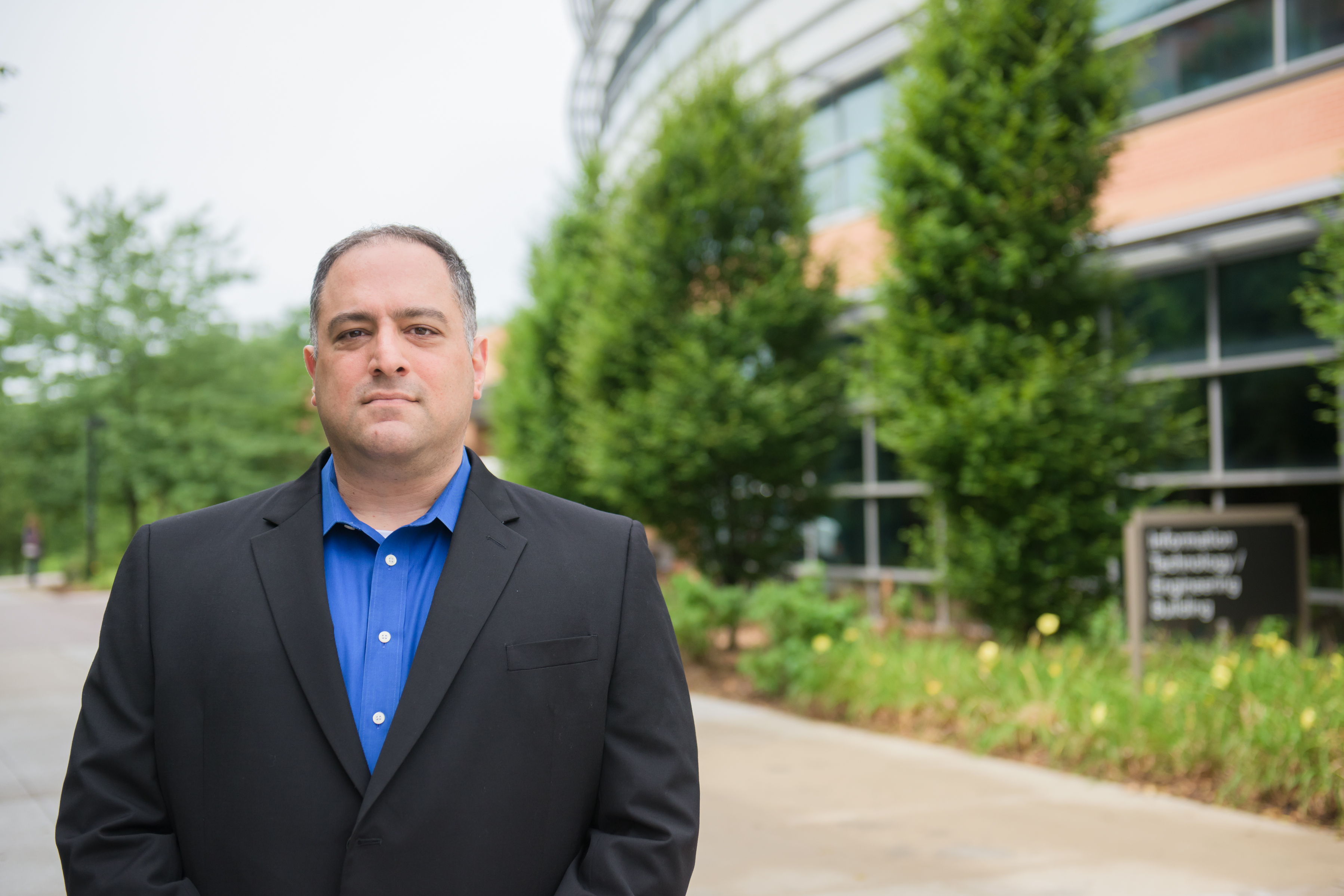
A commitment to sustainability

Hennessey has been with UMBC since 2007 and has a deep personal commitment to landscape stewardship. Previous projects he’s been involved with included landscape conversions, such as from a lawn to a no-mow pollinator meadow, and improving the functionality of older stormwater management installations, like the ponds.
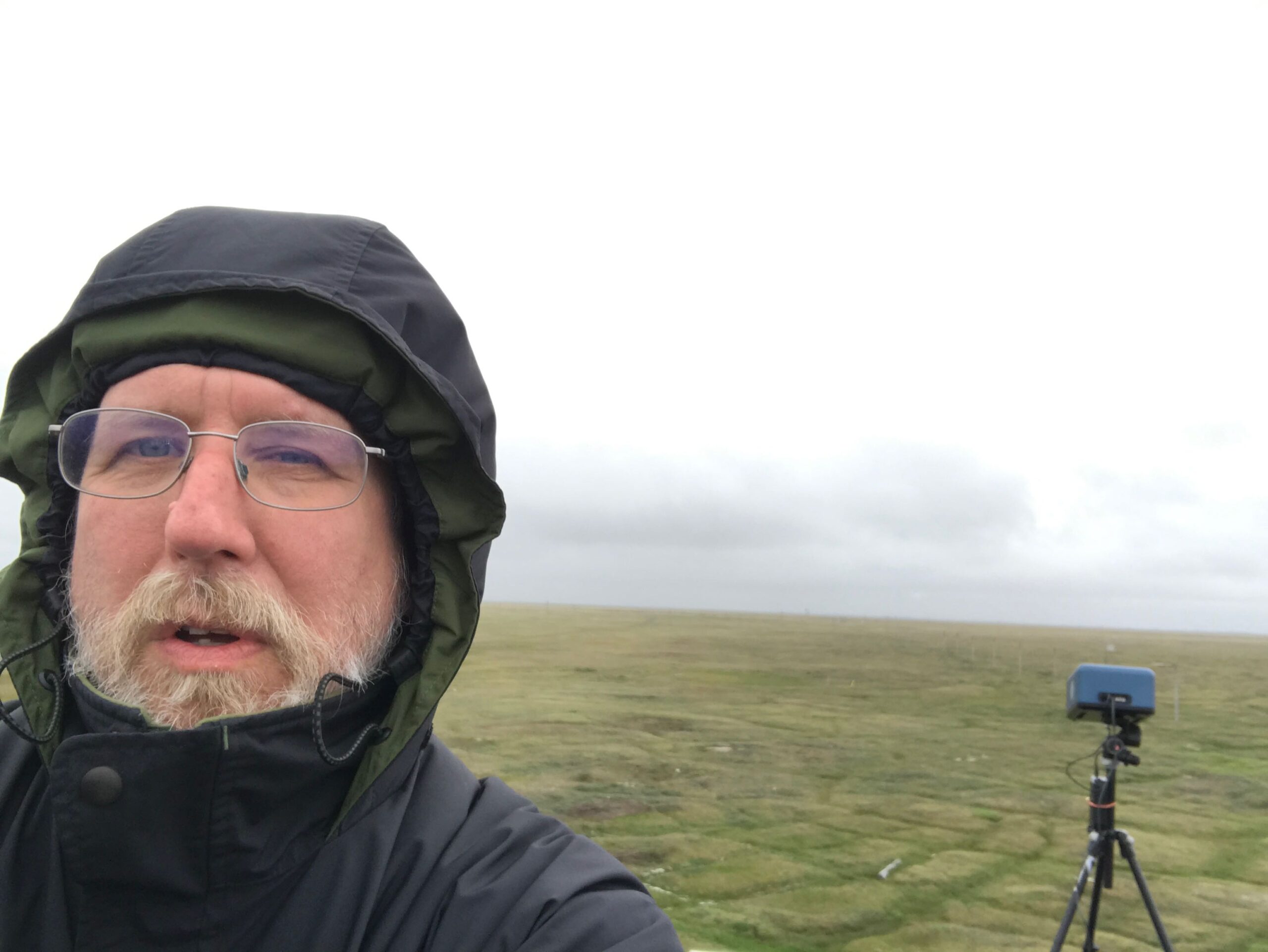
He is excited to see this new project launch after almost a decade of planning. There was some question as to whether the project as originally designed would come to fruition due to funding constraints, but the grant from Chesapeake and Atlantic Coastal Bays Trust Fund removed that barrier.

The project “highlights our goal of continuous improvement, both visually and functionally,” Caron notes. Simpler options, like street-sweeping, might have met environmental requirements, but would not have yielded the same long-term benefits. The decision to pursue a stream restoration on campus, Caron says, “demonstrates our commitment to environmental sustainability.”

Banner image: The UMBC Library Pond and adjacent vegetation, upgraded in 2014, serve as a stormwater management facility on campus. Photo by Marlayna Demond ’11 for UMBC.