All posts by: Sarah Hansen, M.S. '15


UMBC’s Lisa Kelly receives NSF grant to develop a safer, greener chemical production method

At some point in its development, every drug, high-tech piece of clothing, and synthetic building material was touched by a chemist. However, getting the atoms attached to each other in just the right way to treat infection, keep you dry in the woods, or construct your home often requires extreme measures. Harsh chemicals and dangerous byproducts from those manufacturing processes have the potential to cause environmental damage and impact the health of lab workers.

Lisa Kelly, associate professor of chemistry and biochemistry at UMBC, is developing techniques to make some of those same chemicals in much safer ways. The National Science Foundation has funded her with $450,000 for three years to further this work, which also has biomedical applications.

“The approach that we propose will induce chemical reactions that would otherwise need a lot of harsh reagents and organic solvents, and just a lot of nasty stuff,” Kelly says. “This is a greener route.”

Radical reactions

The technique Kelly is using can be very helpful for inducing the formation of strong chemical bonds between two molecules, when their interaction would typically be much weaker. 

The first step is to chemically attach a special compound to one of the two molecules you want to connect. Shining UV light on the compound causes it to release a single atom with a negative electric charge, called a radical. Because it is charged, that atom will react strongly with molecules around it. In this case, the radical initiates the formation of a strong bond between the two molecules you want to connect. The only byproduct of the reaction is carbon dioxide, and it can be carried out in water, so it’s much safer than existing methods.

This process can be used for a variety of purposes. For example, you can induce strong bonds between a drug and its target to better understand the drug’s mechanism. This essentially freezes their fleeting interaction in time, giving a scientist the chance to observe it. 

“It’s a photochemical tool to be able to visualize where the drug actually bound,” Kelly says. “That lets you say, ‘This drug is so powerful because it binds here and this one is less powerful because it binds here.’” That kind of insight could lead to more effective pharmaceuticals.

This technique can also be used in a more general biological context, to better understand how an enzyme and its target protein interact. And it could increase the efficiency and safety of generating polymers—long chains of molecules—used in various industries, like adhesives or flame retardants. It could also be used to add molecules to surfaces to give them desirable properties.

Adding to the biological toolbox

With the NSF funding, Kelly’s lab will look at how efficiently different compounds can create radicals, and what kinds of reactions the radicals are best at initiating. She’s hoping that their findings will be useful for researchers in a range of fields, including medicine. “They could take the information that we’ve disseminated and then use it in their bigger biological toolbox,” Kelly says.

Kelly is also involved with a startup in Utah using a similar technique to create a natural alternative to the metal stents that treat heart disease. Staining the artery with the special compounds and then exposing them to light creates a rigid structure that avoids the need for a traditional stent. The product is currently undergoing FDA approval.

“We’re able to give guidance to the drug discovery companies based on our insight into the chemical mechanisms,” Kelly says. “That’s what’s really exciting to me: We can actually come up with practical information to help guide better drugs and structural biology tools.”

Creating opportunities for students

Kelly is also excited about how her new funding will impact UMBC students. “Part of the grant support is not just doing the lab work, but also disseminating it, so my team and I can travel to present the work at national conferences,” she says. “It’s really important to me to be able to bring graduate students with me when I go to meetings and have them share the same sort of networking opportunities that I benefited from.”

Kelly has cultivated rich connections within the photochemistry community, a field she chose intentionally. “It struck me as a way to be able to do everything that I was interested in without having to be this or this or that,” she says. “It was a multidisciplinary, practical field that’s served me well in my career.” And now, she’s introducing UMBC graduate students to this unique field and how scientists can bridge multiple disciplines to impact society.

As a photochemist, “It’s not good enough for me to make something and show that it does something cool,” Kelly says. “I want to map out all the driving forces that control it, and when I understand that, then I can make the process happen better.” 

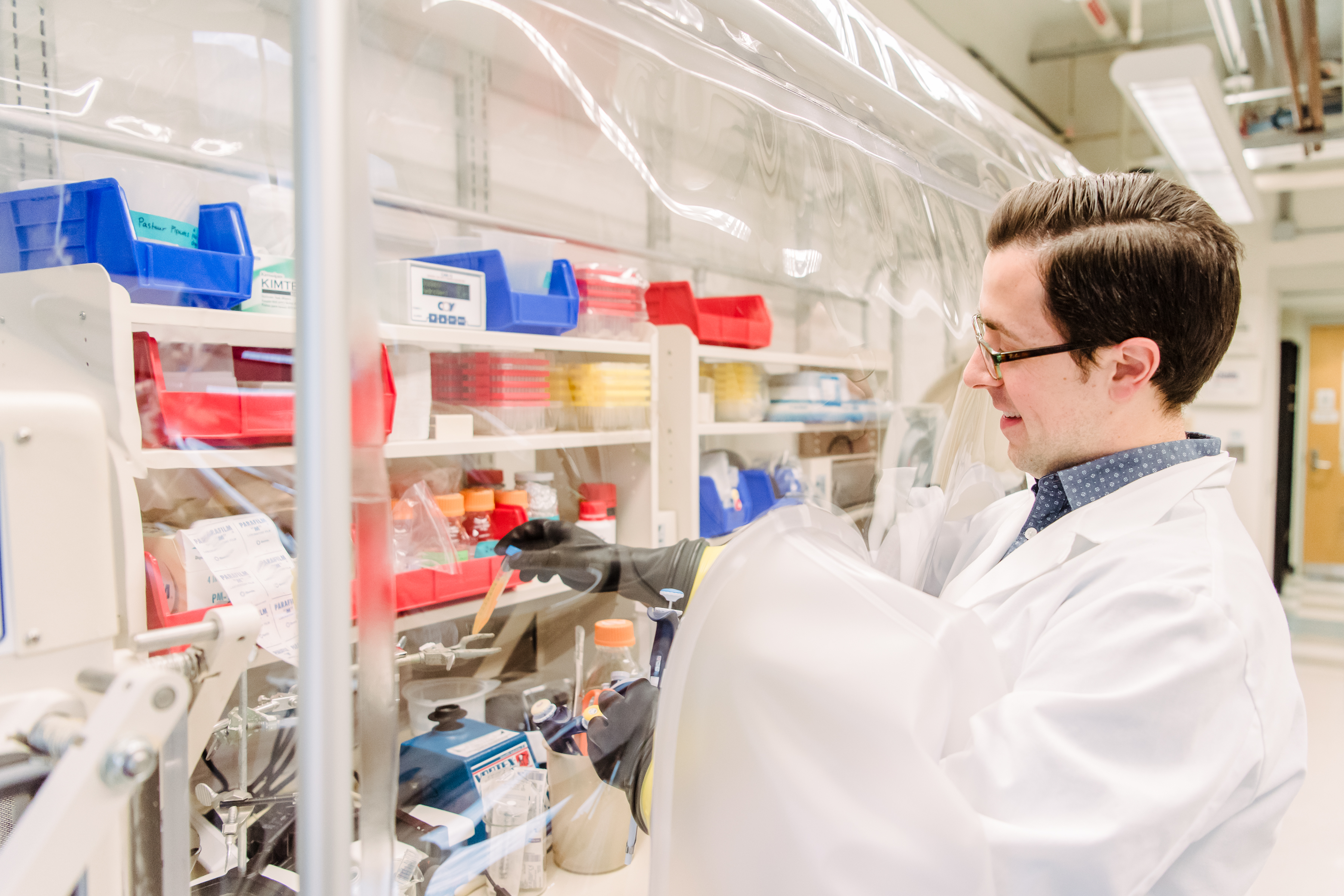
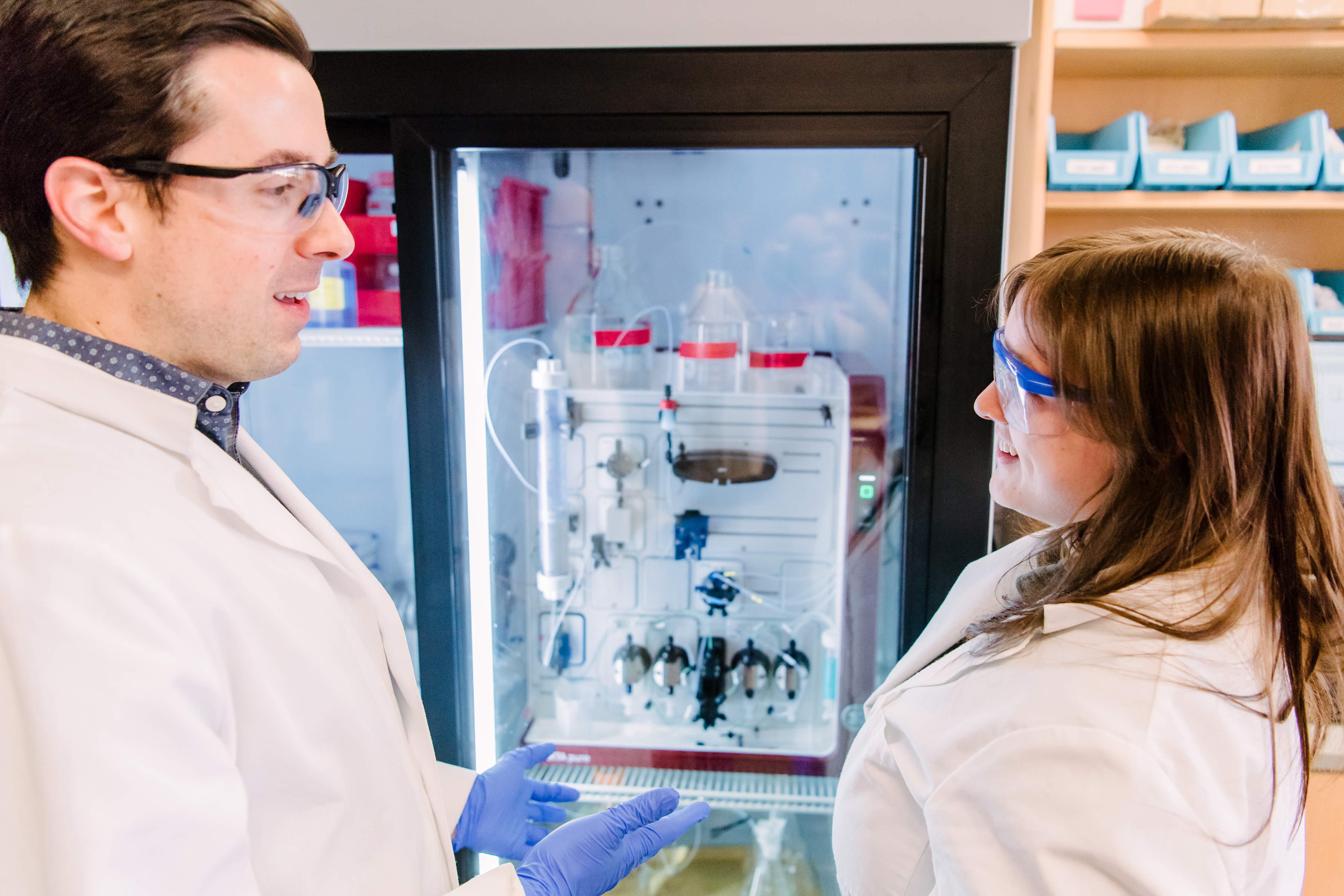
Banner image: Lisa Kelly, right, Ryan Grant, center, and Gabriella Pozza work with the laser setup in Kelly’s lab. All photos by Marlayna Demond ’11 for UMBC. 

Team led by UMBC’s Mehdi Benna is the first to map a planet’s global wind patterns, and they weren’t Earth’s

Today, a paper published in Science documents for the first time the global wind circulation patterns in the upper atmosphere of a planet, 120 to 300 kilometers above the surface. The findings are based on local observations, rather than indirect measurements, unlike many prior measurements taken on Earth’s upper atmosphere. But it didn’t happen on Earth: it happened on Mars. On top of that, all the data came from an instrument and a spacecraft that weren’t originally designed to collect wind measurements. 

In 2016, Mehdi Benna and his colleagues proposed to the Mars Atmosphere and Volatile EvolutioN (MAVEN) project team that they remotely reprogram the MAVEN spacecraft and its Natural Gas and Ion Mass Spectrometer (NGIMS) instrument to do a unique experiment. They wanted to see if parts of the instrument that were normally stationary could “swing back and forth like a windshield wiper fast enough,” to enable the tool to gather a new kind of data. 

Initially, the MAVEN project team was reluctant to implement the modifications Benna and his colleagues requested. After all, MAVEN and NGIMS had been orbiting Mars since 2013, and they were working quite well collecting information about the composition of the Mars atmosphere. Why put all that at risk? Benna and his colleagues argued that this project would collect new kinds of data that could shape our understanding of the upper atmosphere on Mars, inform similar studies on Earth, and help us better understand planetary climate. 

Benna, a planetary scientist operating out of the NASA Goddard Space Flight Center with the UMBC Center for Space Sciences Technology (CSST), came up with the windshield-wiper idea while brainstorming how to create an instrument that could collect information about global circulation patterns in Earth’s upper atmosphere. It occurred to him that, together, MAVEN and NGIMS could do the same thing on Mars—and they were already in space.

With some persistence and a lot of preliminary analyses, Benna and his colleagues convinced the MAVEN mission leadership to give their idea a try, after Lockheed Martin, the spacecraft manufacturer,  determined the modifications might be possible without damaging the satellite. “It’s a clever reengineering in flight of how to operate the spacecraft and the instrument,” Benna says. “And by doing both—the spacecraft doing something it was not designed to and the instrument doing something it was not designed to do—we made the wind measurements possible.”

Ripple effect

The new paper was completed in collaboration with Yuni Lee, also of UMBC’s CSST, and colleagues from the University of Michigan, George Mason University, and NASA. It is based on data collected two days per month for two years from 2016 to 2018. Some results were expected, and others were big surprises. “The refreshing thing is that the patterns that we observed in the upper atmosphere match globally what one would predict from models,” says Benna. “The physics works.”

Overall, the average circulation patterns from season to season were very stable on Mars. This is like saying that on the East Coast of the United States, throughout the year, weather systems generally flow from the West to the East in a predictable way. 

One surprise came when the team analyzed the shorter-term variability of winds in the upper atmosphere, which was greater than anticipated. “On Mars, the average circulation is steady, but if you take a snapshot at any given time, the winds are highly variable,” Benna says. More work is needed to determine why these contrasting patterns exist.

A second surprise was that the wind hundreds of kilometers above the planet’s surface still contained information about landforms below, like mountains, canyons, and basins. As the air mass flows over those features, “it creates waves—ripple effects—that flow up to the upper atmosphere” and can be detected by MAVEN and NGIMS, Benna explains. “On Earth, we see the same kind of waves, but not at such high altitudes. That was the big surprise, that these can go up to 280 kilometers high.”

Benna and colleagues have two hypotheses for why the waves, called “orthographic waves,” last so long unchanged. For one, the atmosphere on Mars is much thinner than it is on Earth, so the waves can travel farther unimpeded, like ripples traveling farther in water than in molasses. Also, the average difference between geographic peaks and valleys is much greater on Mars than it is on Earth. It’s not uncommon for mountains to be 20 kilometers tall on Mars, whereas Mt. Everest is not quite nine kilometers tall, and most terrestrial mountains are much shorter. 

“The topography of Mars is driving this in a more pronounced way than it is on Earth,” Benna says.

Forging ahead

Continuing to analyze the data from this study may help scientists figure out whether the same basic processes are in action on Earth’s upper atmosphere. Ironically, “We had to go take these measurements on Mars to eventually understand the same phenomenon on Earth,” Benna says. “Ultimately the results will help us understand the climate of Mars. What is its state and how is it evolving?”

But the team isn’t satisfied with the current data set. “We want to keep measuring. We have two years of data, but we’re not stopping there,” Benna says. Even with the data set they already have, “We have many years of modeling and analysis ahead of us.” It’s a trove of information that can be examined in ways not yet imagined, to learn even more about how planets work.

Banner image: The MAVEN spacecraft orbits Mars (artist’s concept), courtesy of NASA.

Climate Shift

From Eritrea to UMBC, this physicist is cultivating a diverse generation of climate scientists. 

It’s a nearly cloudless afternoon at UMBC in early October. A group of physics students and their two faculty advisors, Belay Demoz and Ruben Delgado, make their way to the roof of the physics building to continue their conversation about atmospheric research. Earlier, gathered in a small, dimmed lecture hall, the students engaged their advisors and each other in robust discussions about their research while practicing their presentation skills.

In that session, Amanze Ejiogu ’22, physics, had the chance to explain his findings on the Bay Breeze. Rather than an adult beverage, it refers to breezes coming in off the Chesapeake Bay that redirect back to land air masses (and the pollutants they contain) that would otherwise blow offshore. 

The Bay Breeze effect is a complicated phenomenon. Many factors contribute to it, from precipitation to wind speed to the overall quality of the air. Understanding it is a multidisciplinary effort, requiring chemistry, fluid dynamics, statistics, and meteorology skills. That’s exactly the kind of challenge that Demoz, physics professor and director of UMBC’s Joint Center for Earth Systems Technology (JCET), likes to help his students tackle.

After Ejiogu’s presentation, Demoz asks questions. His elbow leaning casually against a railing, he breaks into a grin—he is in his element. Of a certain result, he asks, “Is that expected?” And a minute later, “That’s for you to figure out,” his Eritrean accent inflecting his speech.
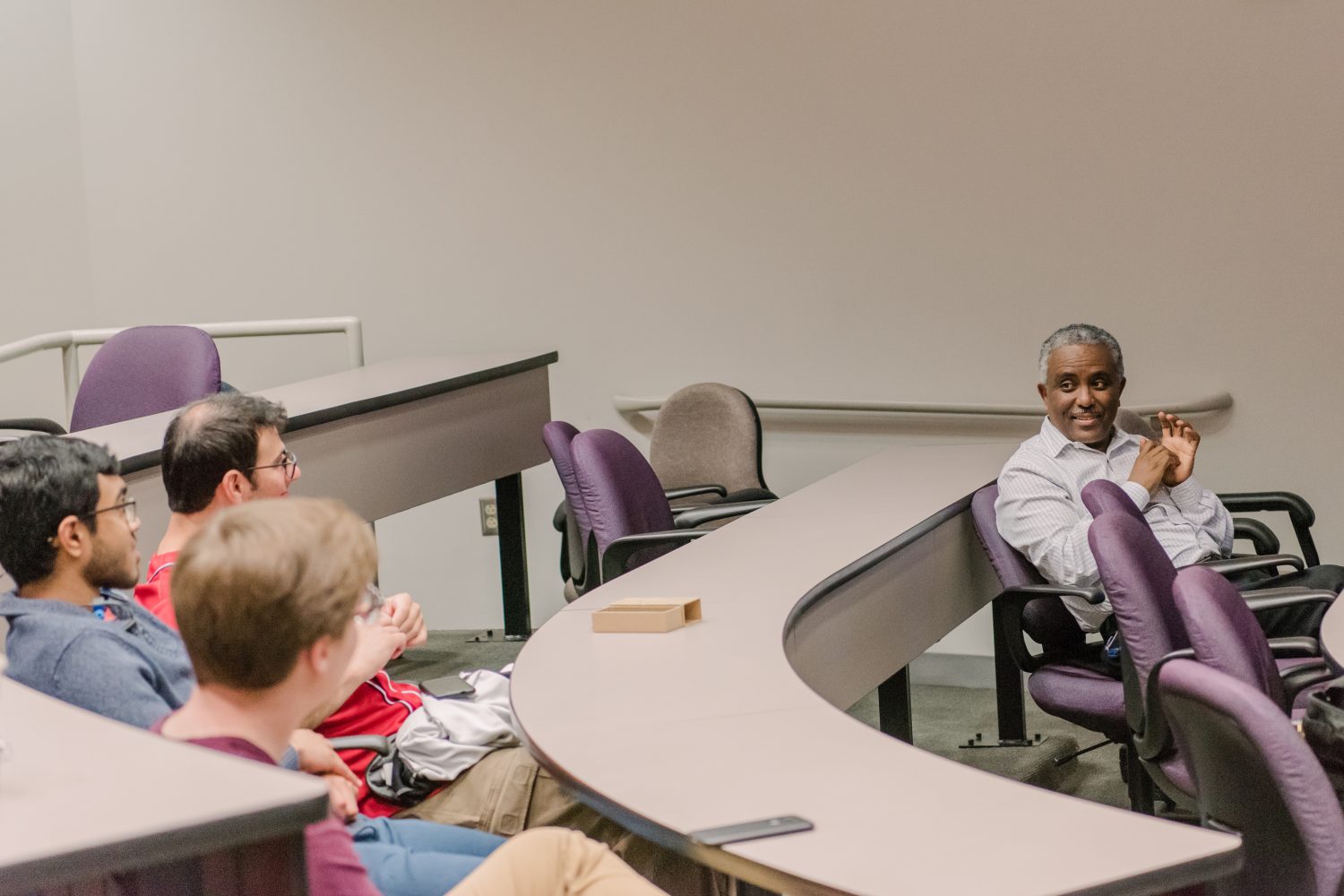
Demoz engages his students in robust discussions about their research. Photo by Marlayna Demond '11.

Climate change and other environmental issues like air and water quality disproportionately affect people of color. Today, Demoz sees his role at UMBC as empowering students, especially students from underrepresented backgrounds, to take ownership of their research and contribute to their communities. Eventually, he hopes his graduates will also become mentors and advocates for their own students and colleagues—behaviors he models for them every day.

This wasn’t always Demoz’s idea of what his life’s work would be. After a challenging childhood in what is now the East African country of Eritrea, Demoz came to the United States for graduate school in the 1980s. His original goal was to learn how to seed clouds—to bring rain to his drought-stricken homeland. He’s still doing climate research, but his focus has shifted. His experiences as a youth in Eritrea and his years as an African in the United States have shaped who he has become and what he seeks to achieve.

Graduates from all backgrounds have left Demoz’s lab and taken roles at places like NASA, the National Oceanic and Atmospheric Administration (NOAA), the Environmental Protection Agency (EPA), and other research institutions. These alumni create a ripple effect that will continue to enhance diversity in atmospheric research and answer questions that have the potential to change the lives of people around the globe, in part because of Belay Demoz.

Maurice Roots, a graduate student in atmospheric physics, has already felt the effects of Demoz’s efforts. Roots, who graduated from Hampton University, only applied to UMBC for graduate school because Demoz approached him at a conference. “Belay has a great set of stories to tell,” Roots says. “His journey shows that perseverance is possible.”   

A changing homeland

“It’s where the desert and the green are always fighting.”

That’s how Demoz describes the location of Eritrea. It’s a small African country on the Red Sea, sandwiched between Sudan and Ethiopia, right where the Sahara Desert and the jungles of central Africa meet. Many people there are subsistence farmers, including generations of the physicist’s family.

It used to be that when drought or floods hit, Eritrean farmers moved to where the grass was literally greener. But that changed after their land was colonized by the Italians and later the British. Strict political borders limited movement. “Once you put a wall, that valve of mitigating drought disappears,” Demoz says.

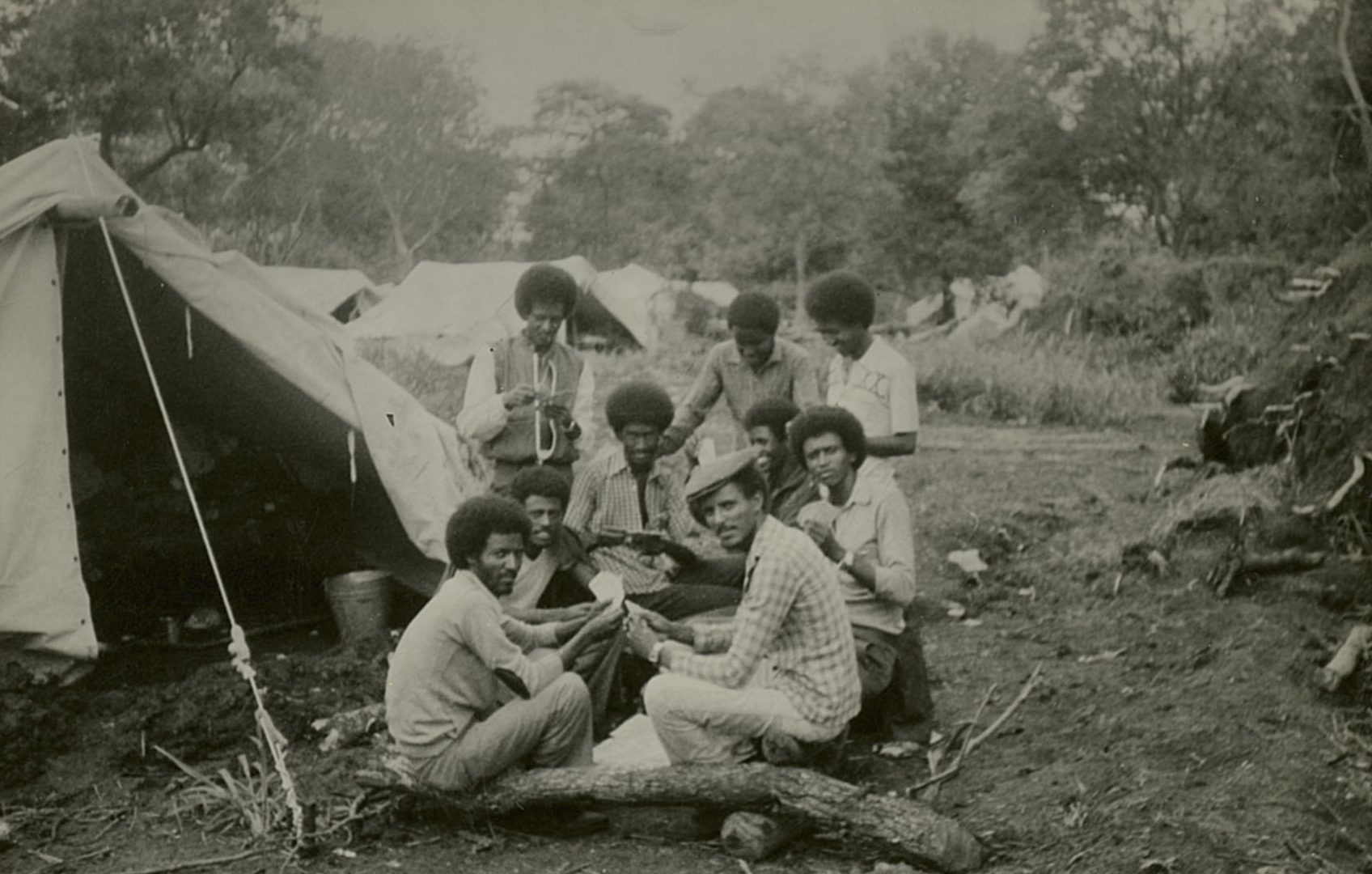
His childhood and youth in Eritrea, in the 1960s and ’70s, was one of the most volatile times for the region, when an internal resistance movement was fighting Ethiopia to gain independence. “My time was a time of coups, a time of drought, a time of war,” Demoz says. “Those are the times when a lot of heartache happened.”

Many people died because they weren’t allowed to migrate. Their crops failed in the drought, and some starved. Some died when they attempted to migrate and met violence along the way. Demoz’s older brother and many of his friends perished fighting in the resistance.

An unlikely advocate

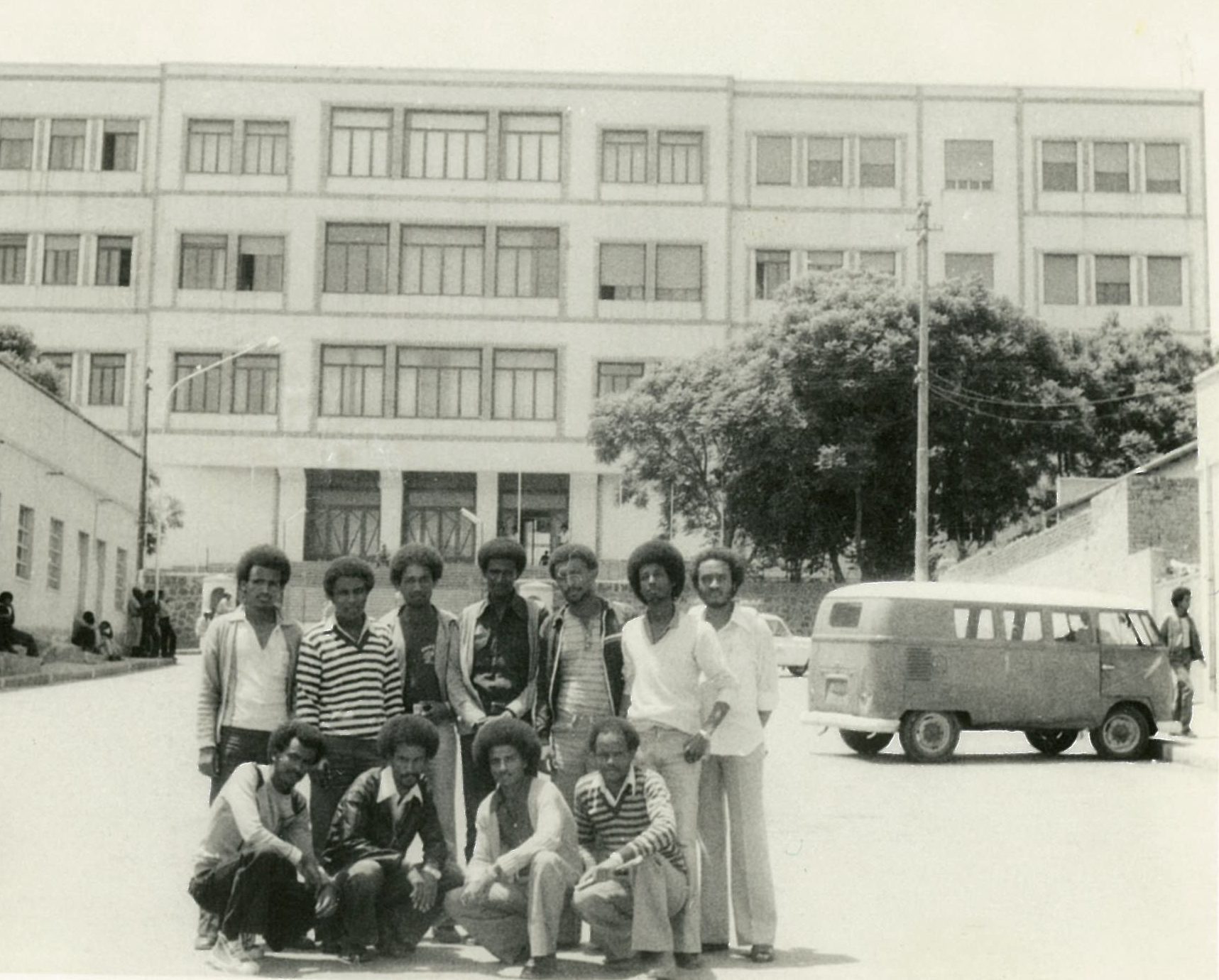
Belay Demoz knew the challenges his people were facing. So in 1980, when he finished high school and was assigned to study physics as an undergraduate at the University of Asmara in what was to become Eritrea, he knew he wanted to find a way to use his education to make things better for his family.

At first, he struggled. He failed his first three exams. And then the first of several major turning points in his life happened, the first time help came from where he least expected it. 

Demoz and his roommate frequently played soccer together. Both were highly talented but knew there was no career for them in the sport. So, after Demoz failed his third physics exam, his roommate decided it was time for an intervention.

“You can play soccer so well, but you’re going to let physics twist you?” he asked Demoz. “No, you study with me.” So he did. And by the next semester, Demoz was at the top of his class. “Part of me was afraid,” Demoz admits. Why? His roommate had recently been released from prison on a murder conviction. But “if I didn’t find him, I don’t think I would have made it.”

As his undergraduate career was coming to a close in 1984, another severe drought hit Eritrea. Demoz wanted to do something, but he didn’t know how his nuclear physics degree could help the situation. Then, he learned about cloud seeding in a Physics Today article.

In the 1980s, cloud seeding seemed like the next big revolution in weather modification. In order for clouds to produce rain, the water molecules they contain need to condense into liquid form. That happens around tiny solid particles inside the cloud. Cloud seeding adds these particles, creating more opportunities for raindrops to form.

“That’s when I switched from nuclear to atmospheric physics,” Demoz says. “I wanted to help make it rain.”

He applied and was accepted to the atmospheric physics program at the University of Nevada, Reno, but to leave Eritrea, he had to promise that he would come back. Without the required funds to guarantee that promise, his parents had to put their family home on the line so that he could study in the U.S.

“I was given $50 and a plane ticket,” Demoz remembers. “My dad didn’t blink. He just said, ‘Go. We will find a way.’”

Peaks and valleys

In Nevada, everything was new and different. “At 22, it was my first time to see snow,” Demoz says. And not just through his dorm room window—his courses and research involved spending ample time in the Sierra Nevada Mountains. After replacing his dress shoes with snow boots and skis, Demoz began to learn his way around the mountains.

In addition to the new climate, there were other steep learning curves for Demoz in graduate school. One of the core courses required computer programming skills. One day, Professor Jim Telford—Demoz refers to him as a “cloud giant”—called Demoz into his office.

Telford devised the stochastic rain theory when he was a master’s student in the 1960s, which describes why and predicts when clouds will produce rain. Today there is still no better theory. Demoz describes him as an arrogant, brilliant Australian scientist, who also went to great lengths to ensure his students’ success. Demoz remembers their first conversation going something like this:

“You must be pretty good in programming,” Telford says.

“No, I’m not.” Demoz replies.

“Well, have you used a computer?” Telford asks. 

“No.” 

“Have you touched a computer?” 

“No.” 

As Demoz recalls, Telford roared with laughter and rushed to another room to share with a colleague the ridiculousness of a Ph.D. student in physics who had never touched a computer.

“At this point, I’m thinking, I’m doomed!” Demoz remembers. “But there’s something inside me saying, I am an Eritrean, and others are fighting for independence. There’s something instilled in me. And so I stood there.” And instead of throwing him out, Telford agreed to give Demoz a crash course in computing.
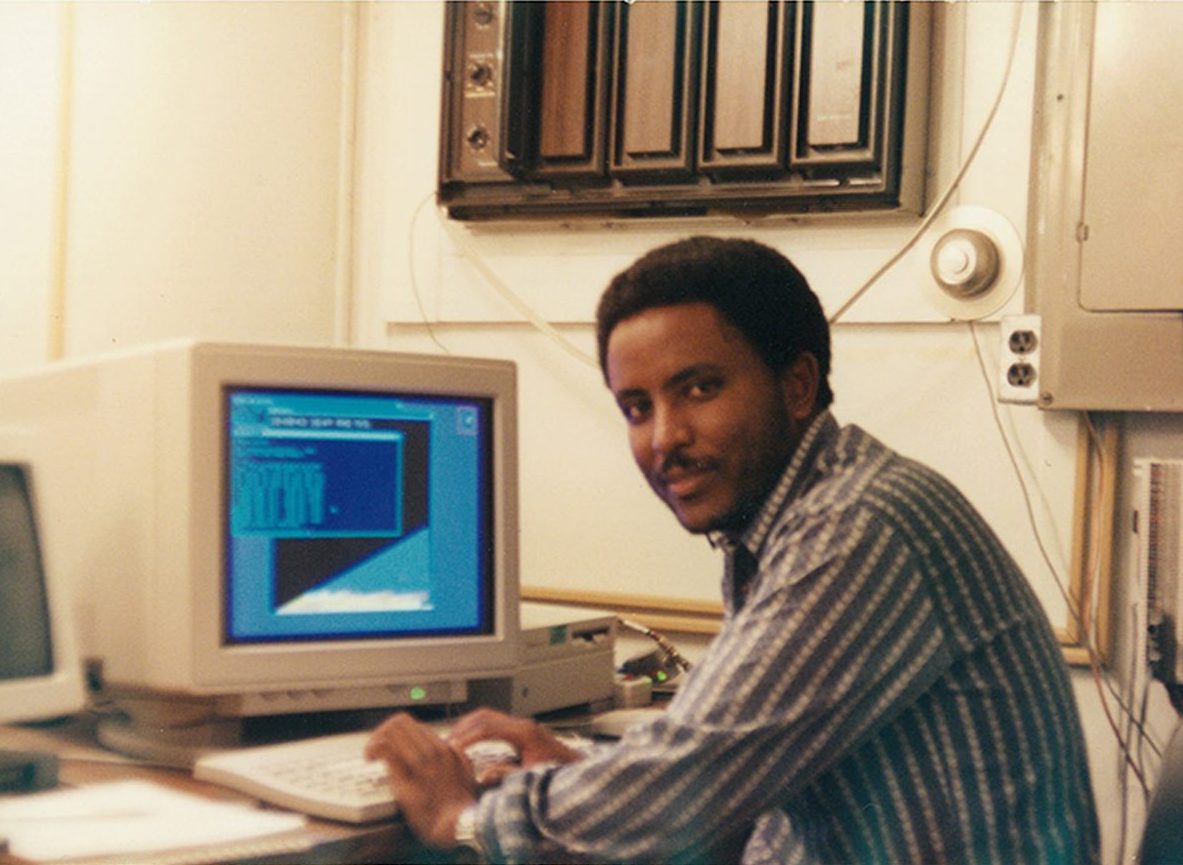
Demoz in grad school, after mastering the necessary computing skills. Photo courtesy of Demoz.

For two weeks, Demoz sat with a clunky 1985 desktop and a pile of Fortran books in Telford’s office, learning how to program. Today, Demoz tells his students, “If you cannot compute, you cannot compete. Everyone who has achieved something in our field is good in programming.” But his experience with Telford was about more than programming. It was about a mentor making a special effort to help a student succeed. Belay carries that memory with him today and strives to pay it forward to his own students.

In addition to learning all about clouds and weather modification, and completing a dissertation titled, “Sierra Nevada Winter Storms Using Microwave Radiometry, Ice Crystal, and Isotopic Techniques,” Demoz learned something else important in Reno—what it felt like to be black in the United States, especially in higher education and especially in physics. 
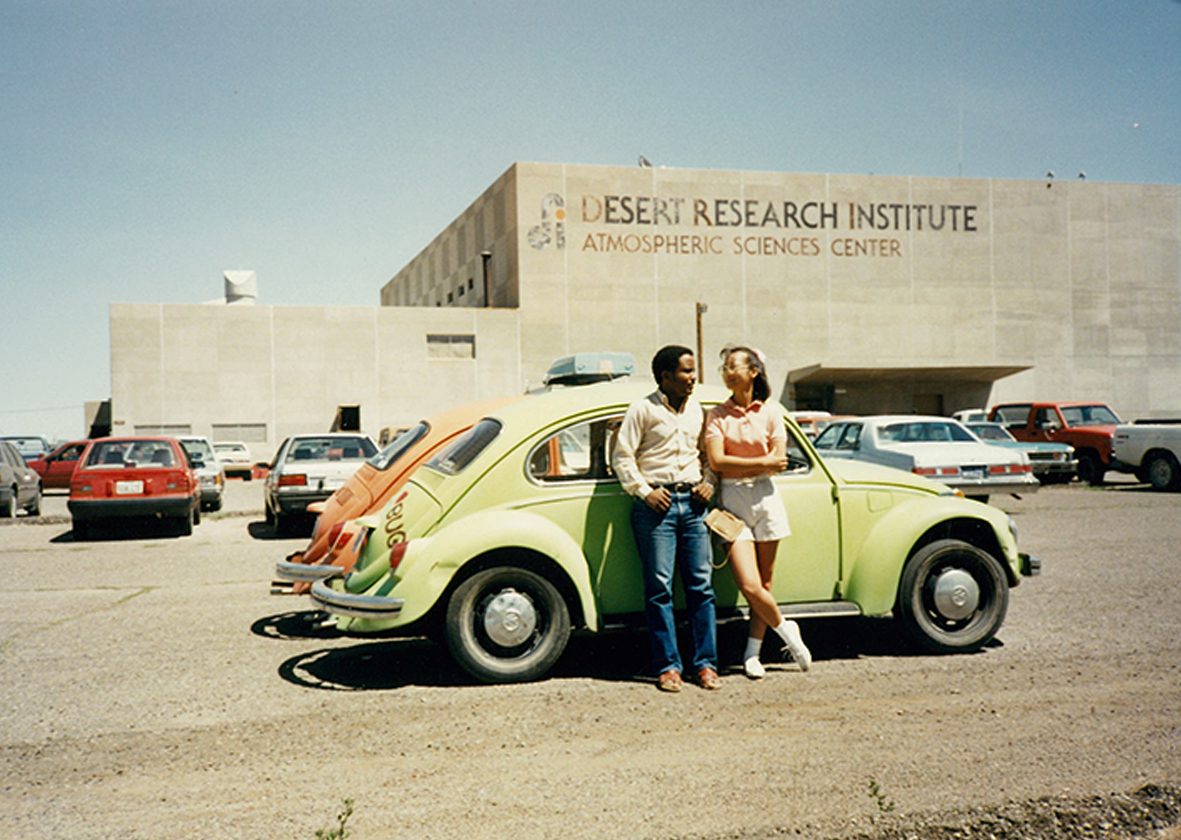
In front of the Desert Research Institute circa 1991 with a fellow graduate student. Photo courtesy of Demoz.

He noticed it right away in his courses (he was the only black person) and in the city. “It takes a toll,” he says. “Reno had a very tough police force.” He was stopped on many occasions as he drove home late from doing research in the mountains, seemingly for nothing. “I tend to be an outlier,” he reflects. “You don’t see a lot of black people doing cloud seeding and working with snow.”

Only later would he find out that the graduate program had accepted him as a “test case”—he was the first African accepted to the program and the first to graduate with a Ph.D. He remembers John Hallett (another “cloud giant” and another of Demoz’s important mentors) telling him, years later, “We wanted to see if those schools [in East Africa] were any good. That’s why we admitted you.” That, of course, didn’t sit well with Demoz and stayed with him as his future in physics unfolded.

Shifting the landscape

Once he finished his Ph.D., Demoz pursued postdoctoral studies at the University of Illinois in cloud chemistry. In 1997, UMBC finally entered his experience. He completed a second postdoc with UMBC at the NASA Goddard Space Flight Center in Greenbelt, Maryland.

Demoz continued his work at NASA after his postdoc ended. Then, another life-changing moment: He got a call from Howard University to help create a new atmospheric research center there in 2006. “The whole reason I studied this field was to go back and seed clouds,” Demoz reflects. “That wasn’t happening, but I realized, there is plenty to be done here.” So Demoz jumped at the chance to contribute to the historically black university while continuing his research program at NASA. 

“It was around that time that I started to be conscious of my status as a minority in the field,” Demoz remembers. “It bothered me, being one of the only ones.”

At a conference around then, Demoz and a handful of other atmospheric researchers of color met in the lobby. “And we asked, OK, what is our part?” Their first step was to join efforts in developing the Howard research center together. 

In 2005, Demoz was awarded a NASA Administrators Fellowship—a two-year sabbatical during which recipients are expected to build up a program at a minority-serving institution. The fellowship allowed Demoz to focus full time on building up the research center in Beltsville, which is administered by NOAA. When the two years were up, Demoz didn’t go back to his research program at NASA, choosing instead to commit himself permanently to the work of increasing the success of minorities in atmospheric science.

“Most people thought I was crazy because NASA is a stable job for life,” Demoz says. “But thinking about all the support that I had growing up, I decided my place was there.”

Building the pipeline 

Over the next several years, Demoz and colleagues built up the NOAA Center for Atmospheric Science (NCAS) at Howard University’s campus in Beltsville, Maryland. The NCAS is a “super-site” among the Global Climate Observing System (GCOS) Reference Upper Air Network (GRUAN), a set of sites worldwide that looks at air and cloud chemistry.  People around the world rely on the data it collects and the analyses the Beltsville researchers (including many students) conduct for their own work. The Beltsville GRUAN site contributes powerfully to science and also to increasing the diversity of scientists. It is the only GRUAN site in the world operated by a university, which is a source of pride for Demoz.

Students who’ve studied at the GRUAN site from Howard, UMBC, and elsewhere—many of them from underrepresented backgrounds—have gone on to careers at preeminent government and private research organizations. “You can involve students no matter how specialized and difficult your science is,” Demoz says. “The Beltsville site has made quite a number of important scientific advances and also brought diversity to the federal agencies.”

At the same time, the small group of African and African-American climate researchers who had met at the conference in the early 1990s started to formalize their lobby conversations into an official event at other meetings. “It paid off. We used to meet in a bar in the hotel lobby at the American Meteorological Society conferences. Right now, Colour of Weather is perhaps the biggest minority-focused group in atmospheric sciences, and it is what we started,” Demoz says with pride. “It’s held in a ballroom. I look at that and I think, I didn’t go back to Eritrea and seed clouds, but I’m making a difference here.”

Bringing a meaningful vision to life 

With his experience at NASA and as a professor of physics at Howard, and his commitment to mentoring students from all backgrounds, Demoz was a perfect fit to serve as the next director of UMBC’s JCET, a partnership with NASA formed in 1995, when the position opened up in 2014. 

As JCET director, Demoz has clear ideas about what he wants to accomplish. “If I can get a really strong, diverse graduate program here, that would be great. And I think that’s possible here.” In addition to recruiting and mentoring students from diverse backgrounds, Demoz says continuing to diversify the faculty is also a worthy goal. The UMBC physics department is already off to a strong start, with faculty members from Brazil, Eritrea, China, Hungary, Greece, and Puerto Rico.

Students are noticing the changes Demoz has modeled. “He really cares about his students and wants them to succeed,” adds Kylie Hoffman, a third-year graduate student. “He wants to help you do what you want to do.” 
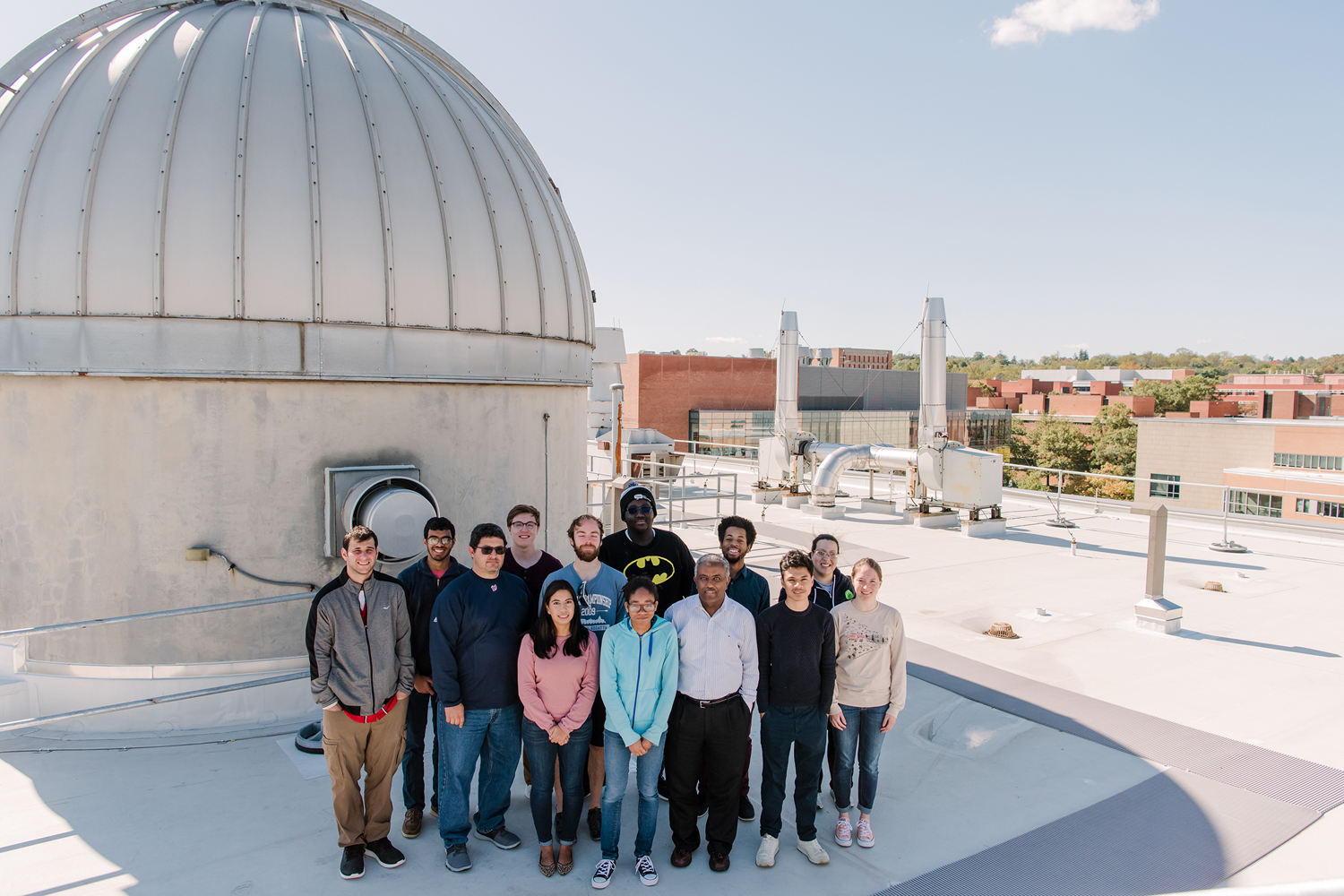
Demoz with a group of his students on top of the physics building. Photo by Marlayna Demond 11.

He supports graduate and undergraduate students alike. After giving his presentation at the lab meeting, sophomore Amanze Ejiogu expected that “a seasoned atmospheric science veteran would pull it apart like cotton candy,” he says. But Demoz didn’t. “He was very respectful and asked genuine, thoughtful questions that will help me take my research forward.”

“Belay has been a great mentor for teaching lessons that are never covered in a classroom,” says Brian Carroll, a fifth-year Ph.D. candidate. “I’m proud to be part of such a diverse research group,” Carroll adds. “Thanks to my experiences with the group, I will pursue and highlight diversity in my own workplaces and the community at large as I progress in my own career.”

When asked about Demoz’s mentoring, Maurice Roots is more straightforward: “He’s good at it,” Roots replied. “So I’m taking notes.”

Demoz himself benefited from support and mentoring—sometimes from unlikely places. “Help will come from the place you least expect it, so be open,” Demoz says, maybe remembering the time a convicted murderer got him through his nuclear physics degree or an arrogant scientist made sure he was ready for programming class. Or maybe even the time he got the green light from Howard University to start the Beltsville Climate program or the call from UMBC to apply for the JCET directorship. 

It’s all part of Demoz’s story. Now he’s taken it as his mission to help students create their own stories, with a strong start at UMBC. 

“By seeing us,” he says, “I hope that students say, ‘I belong here.’”

*****

Header image: Demoz meets with students on top of the physics building. Photo by Marlayna Demond ’11. 

UMBC’s Aaron Smith examines molecular role of iron in human health with $1.5M in new grants

UMBC’s Aaron Smith is now thinking “bigger picture” about how his lab’s research can support human health at the molecular level thanks to $1.5 million in new research funding. 

Smith, assistant professor of chemistry and biochemistry, focuses on how biological systems take up and process iron. Last winter he received a significant grant for research on developing new antibiotic targets. Now, he’s earned a prestigious $500,000 National Science Foundation CAREER Award and $1 million from the National Institute of General Medical Sciences, a division of the NIH. The work he and his students are doing is at the molecular level, but it has implications for everything from cardiovascular disease to embryonic development.

Opening the molecular toolbox

Smith’s bioinorganic chemistry lab works to understand how metals function in biological systems, with a particular focus on iron. While it may be strange to think about metals functioning in our bodies, they are critical. “For biological systems to expand the types of chemistry that they can do, they need metal ions,” Smith says. “Metals open up the toolbox for the protein to be able to accomplish so much more.” 

The NSF and NIH funding will allow Smith’s lab to increase understanding of how iron is involved in adding molecules to proteins after they are made. This process is known as post-translational modification. 

Post-translational modifications are incredibly important,” Smith says. Even the most complex organisms don’t have more than a few tens of thousands of genes that provide instructions for unique proteins, but proteins perform many times that many functions in the body. Post-translational modification “really diversifies the number of functions that proteins can serve,” Smith says. 

Smith’s lab is studying a specific post-translational modification called arginylation. An enzyme known as ATE1 carries out arginylation, by attaching the amino acid arginine to proteins. Then, “the arginine functions as a molecular flag that says, ‘I should be degraded,’” Smith explains. The ability to break down the right proteins, and then use their building blocks to rebuild other cellular materials, is crucial for the healthy functioning of our bodies over time.

“ATE1 is very impactful, but we don’t know a lot about how it does what it does,” Smith says. Even the structure of ATE1 is unknown, as well as the mechanism by which it adds arginine to proteins. Smith says his lab has an idea, “but my guess is it’s going to be much more complex when we figure this out.”

Smith’s research niche: the atomic level

Research on arginylation is increasing rapidly, and Smith believes his lab has a particular role to play. Most labs are looking at arginylation at the cellular level and up, asking questions like how it affects different processes in a cell or even an entire organism. But Smith is taking things to another level by studying the atomic structure of individual ATE1 enzymes and the proteins they interact with. 

“We think that we fit in very nicely in this research space,” Smith says, “We’re filling a niche that remains really uncovered at this point.”

Smith’s group is looking at how ATE1 is regulated, such as how it knows which proteins to add arginine to or how it responds to changes in the cell. They’ve already gotten some promising results related to iron’s role in regulating ATE1. And they’re getting close to revealing the enzyme’s complete molecular structure, which would provide big clues into how it works. The NIH and NSF funding will help answer these questions.

Once the structure and mechanism are in hand, it will be time to explore applications. For example, “Could we think about then making this protein a target for therapeutic development?” Smith asks. “Given how important it is in these various cellular processes, if we understood better the structure and the mechanism, we could think about ways to develop small molecules that could help with diseases associated with arginylation.”

Representation in research

In addition to aiding the progress of his research, Smith is excited that both grants will allow him to expose more students to bioinorganic chemistry. His CAREER Award proposal “has an additional education component that’s about specifically trying to leverage the diversity efforts already going on here at UMBC, and to help increase diversity in bioinorganic chemistry.”

To that end, Smith will introduce all of the first-year chemistry courses at UMBC to bioinorganic chemistry. He’s also developing a new upper-level elective on bioinorganic chemistry. Smith hopes that by taking the course, students may then “consider going into a research career for a field that they didn’t even know existed, that helps tackle some of the most important chemical transformations on the planet.”

“I’m proud to think that my lab reflects the diversity that we see on UMBC’s campus, and I’m happy to continue moving forward with that,” Smith shares. “It’s important to have a lab that reflects this university and the country, to benefit from a broad range of perspectives and to train the researchers of tomorrow.”

This new funding will significantly expand the opportunities available to Smith and his students, and it’s reshaping how they think about the work. Having strong funding “affords you the ability to imagine more,” he says, “to think bigger picture about different avenues you might pursue.” Now, Smith and his students will be dreaming big as they steward this new research funding to better understand arginylation, metal transport, and their roles in human health.

Banner image: Aaron Smith works with his students in the lab. From left to right: graduate students Alexandrea Sestok, Verna Van, and Nathan Max. All photos by Marlayna Demond ’11 for UMBC.

We have liftoff! UMBC-developed mini satellite launched into space to study climate, air quality

In the early morning hours of  Saturday, November 2, a few hundred guests at the NASA Wallops Flight Facility gathered at the VIP launch viewing site—a grassy pad near a large tent. Sitting on metal bleachers and in camping chairs, they gazed upward. The NASA Antares rocket and Northrop Grumman’s Cygnus capsule stared back at them from two miles away, more than 14 stories high and loaded with supplies for the International Space Station (ISS). Also on board were more than 30 “cubesats”—small satellites no bigger than large loaves of bread—all of them containing scientific instruments their makers hoped would contribute to a better understanding of our world.

One cubesat, the Hyper-Angular Rainbow Polarimeter (HARP), has been a labor of love for a small group of dedicated UMBC scientists and engineers for the last five years. There were times when they weren’t sure if HARP would ever get to space, but the big moment had finally arrived. Today, HARP was headed up. Way up.

Around 9:55 a.m., the crowd quieted. Their thoughtful silence spoke to years of late nights, early mornings, sighs and tears, hugs and high-fives. They thought back to team meetings with frantic napkin scribbling, spacecraft models made of children’s toys when an idea struck at home, and big dreams.

UMBC’s Roberto Borda, one of the core engineers for HARP, stood at the front of the viewing area, his arms around his wife. “It’s happening, it’s happening!” he whispered excitedly in her ear. Other team members stood nearby with their spouses, children, and friends.

The crowd collectively held its breath and squinted across open fields at the rocket, which was backed almost directly by the low morning sun. And then, finally, it got loud. Really loud. The silent guests watched as Antares and Cygnus roared to life, 440,000 pounds of oxygen fueling eight massive explosions generating upwards of a million pounds of thrust.

At exactly 9:59:37, right on schedule, the rocket burst from its restraints and bolted upward into the sky. Cheers erupted, and the nervous tension dissipated as the rocket rose ever higher. Within four minutes, it was 100 miles above the Earth, headed to the space station at 17,000 miles per hour.

A few minutes later, champagne bottles popped and the celebration began.

Observing particles in Earth’s atmosphere

The HARP satellite’s unique sensors will collect new kinds of information about clouds and tiny particles in Earth’s atmosphere, such as wildfire smoke, desert dust, and human-generated pollutants. These particles, collectively known as aerosols, have a multitude of effects on the global climate and the health of organisms. For example, rain droplets condense around the particles, so they play a role in global precipitation. The particles can also reflect light away from Earth as well as trap energy inside Earth’s atmosphere, which both affect climate. And pollutants can lead to various respiratory ailments in humans and other animals.

With its innovative design, HARP is able to observe the particles from many angles at once to give scientists a more comprehensive view of what’s going on in the atmosphere. The new data will equip scientists with information they need to better understand climate and air quality concerns. 

“HARP is really a technology demonstration mission,” explains Vanderlei Martins, the lead researcher on HARP and director of UMBC’s Earth and Space Institute, “but our goal is to also do some science with the data.”

The team is comprised of engineers, physicists, and mathematicians. “As an engineer, I’m looking to develop technology that can make the science happen,” says Dominik Cieslak, an assistant research scientist with the Joint Center for Earth Systems Technology (JCET), a UMBC partnership with NASA. Other team members are developing algorithms to effectively analyze the data that will eventually be arriving in huge quantities. Cieslak notes that the data could be used in new ways for years to come as researchers develop new algorithms and computing power continues to grow.

Awaiting “first light”

“We’re going to celebrate every step,” Martins said on the morning of the rocket launch. He is careful to note that the launch is just one step—a particularly exciting one—in a still-lengthy sequence. Only when the satellite is orbiting Earth and sending back data will he and his team know if HARP is working the way they intended.

Cieslak shared Martins’ cautious optimism. “There are many ways for things to go wrong,” he said, “but there is only one way for everything to go right.”

To increase the likelihood of things going right, the team tested HARP many times on two different kinds of aircraft that fly at high and low altitudes, to ensure the instrument is working properly. But still, says Borda, “It’s a different beast going in a plane versus going to space.”

On Monday, November 4, the Cygnus capsule made it safely to the ISS. Another step completed. In about a month, astronauts will launch it and its cubesat companions into space. If that goes smoothly, the satellite will stabilize and enter low-Earth orbit. Then, Earth-bound instrumentation will need to successfully establish a connection with the satellite for transferring data. 

If that succeeds, the team will anxiously await the first images from the satellite, which Martins refers to as “first light.” “I’ll really really celebrate when we get the first light,” Martins says.

An important day

Despite the additional steps to come, the launch “is a big milestone,” says Brent McBride ’14, physics, a current Ph.D. student in atmospheric physics. With the setbacks the project has experienced over five years, to arrive at launch day “is a wonderful thing.”

“We’re all really invested in the spacecraft and the work that will come out of it,” says Ryan Martineau, from the Utah State University Space Dynamics Laboratory, which partnered with UMBC on HARP, and “there’s still more to do.”

Karl Steiner, UMBC’s vice president for research, was thrilled to witness his first NASA rocket launch, especially after being inspired by the moon landing and Apollo missions as a child. “To have seen Vanderlei and his team work on this as long as I’ve known them, and know the amount of work and sacrifice they’ve put in, the chance to be with them on this important day…” He trailed off, brimming with emotion. “It’s a very special day for the team and for UMBC.”

At a pizza party after the launch, the team members reminisced about the time they’ve spent together—some as many as 15 years on other projects and five years on HARP—as the excitement of making it to this next big step began to sink in.

“Life can surprise you. Even five years ago I couldn’t have imagined I’d be here today. So keep dreaming,” said Cieslak. “Keep dreaming.” 

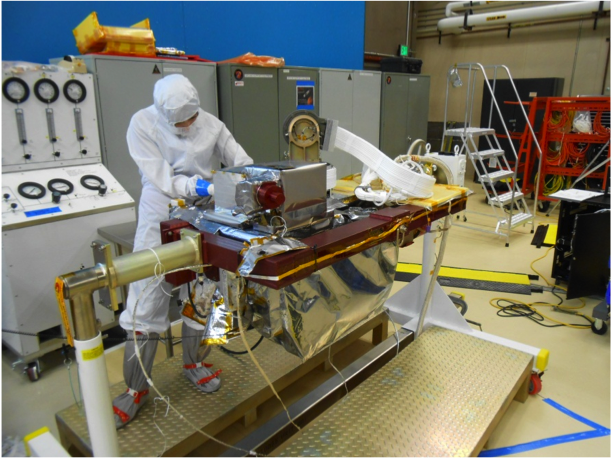
Banner image: Vanderlei Martins, Roberto Borda, and Dominik Cieslak with HARP at UMBC. Photo by Marlayna Demond ’11 for UMBC.

UMBC expands offerings at The Universities at Shady Grove to grow Maryland’s STEM workforce

UMBC students like Jackelyn Flores are increasingly taking advantage of high-impact programs at The Universities at Shady Grove (USG), a Montgomery County campus UMBC shares with eight other Maryland public universities. Opportunities for her and other UMBC-Shady Grove students are expanding even further today with the opening of a new Biomedical Sciences and Engineering (BSE) Education Facility on the popular campus.

Flores ’21 is one of the first students to pursue UMBC’s new degree in translational life sciences technology (TSLT), launched at Shady Grove this fall. Fascinated by biotechnology, she completed her associate’s degree in the field at Montgomery College (MC) while working full-time in the cell therapy department at Lonza, a biotech company near Frederick, Maryland. She’s now enhancing her biomedical sciences knowledge and lab skills through the UMBC program, in a region with particularly high demand for biotech professionals. 

Access to state-of-the-art science

At USG, UMBC offers both the new TLST bachelor’s degree and a master’s of professional studies in biotechnology that relaunched exclusively at USG last year. Three new teaching labs in the BSE will greatly increase opportunities for students in these programs to develop their skills with state-of-the-art lab equipment, from liquid chromatography to bioreactors to high-end microscopes.

“Because it’s top-notch equipment, this is what they’ll see when they go work at a biotech company,” says Annica Wayman ’99, mechanical engineering, M6, associate dean for Shady Grove affairs in UMBC’s College of Natural and Mathematical Sciences (CNMS). “They’ll be more prepared for those jobs because they’ll already be familiar with the equipment.”

The fact that many disciplines will offer courses in the building will also help students prepare for the workforce. “This building symbolizes an opportunity to bring the disciplines together to address societal problems,” Wayman says, “and to discover how they can work together to address the biggest challenges.”

Wayman hopes the building will be a resource for companies in the area, whether that means project-based courses where students tackle real industry needs, or startups renting time on the equipment for their own projects. These connections would benefit students, too, who will get the chance to work more closely with biotech professionals while completing their degrees. 

Blazing a trail in student training

The path that Jackelyn Flores took from Montgomery College to UMBC is one purposefully designed through a collaboration between the two institutions. “CNMS is a trailblazer in keeping our education programs up to date with the rapid pace of science and technology development, and in making sure students have the skills the biotech industry needs now,” Wayman says. “We also work closely with MC so the program pairs well with their very hands-on biotech program. We created this program to build on that.”

As she prepared to transfer from MC to UMBC, Flores found a supportive community that gave her the information and resources she needed to be successful. “UMBC offered plenty of open house sessions where I was able to meet directly with UMBC staff who answered all of my questions, and UMBC staff maintained active communication throughout the application process,” she says. “It was extremely reassuring to know that the school cared and was offering so much help.”

“The program at Montgomery College did an amazing job in helping me develop the lab skills necessary for the industry,” Flores says. “The TLST program is enhancing my lab and critical thinking skills while also reinforcing my knowledge of the biomedical industry.”

Growing Maryland’s STEM workforce

UMBC plans to continue to grow its already robust STEM presence at USG. Beyond offering TLST at the undergraduate level, UMBC offers graduate programs in biotechnology, cybersecurity, data science, geographic information systems, and technical management. Additional STEM programs matching the needs of local employers are on the horizon. Complementing all of these are popular programs in psychology, social work, political science, and history.

“One of the goals of CNMS and UMBC being at Shady Grove is to contribute to workforce development for the state, particularly in STEM,” Wayman says, “The new building provides USG and UMBC the opportunity to greatly expand training students and develop the workforce in high-demand STEM careers.”

It’s working for Flores. “The BSE will open doors for students to network and become involved in the industry while establishing critical connections,” she says, like the one she has with Lonza. “I can’t wait to see what the rest of the TLST program has to offer.”

Banner image: The entryway to the new Biomedical Sciences and Engineering Facility at The Universities at Shady Grove. The new space will facilitate growth in STEM programs offered by UMBC and other institutions at USG. Photo courtesy Universities at Shady Grove.

UMBC spotlights the power of collaboration and community in opening of new science building, GRIT-X talks

During the height of UMBC Homecoming festivities on October 12, the university community and supporters from across Maryland gathered to celebrate the opening of UMBC’s Interdisciplinary Life Sciences Building (ILSB). “With the addition of this incredible, world-class facility, the state of Maryland will continue to lead the way,” Governor Larry Hogan told the crowd, speaking from behind a festive ribbon twisted in the form of a double helix . “And UMBC will continue to push the boundaries, achieve significant breakthroughs, and shine as a national and global leader in innovation.”  

Vision for the future

When thinking about how this building came to be, Bill LaCourse, dean of the College of Natural and Mathematical Sciences, sees convergence—people and ideas coming together from different directions to create something new and meaningful—as the central concept.

“Already there are research teams working in this building on such complex issues as age-related disease, environmental degradation, and health disparities,” he notes. Why these topics? Solutions to our most complex challenges “are found through a convergence of talent and effort,” bringing together the perspectives of people from different fields and backgrounds, he shared at the opening event. This is what the new building is designed to achieve.

The ILSB is a physical space where people from all over UMBC converge to learn and discover, and it was developed with that goal in mind. “This was a shared effort,” LaCourse said. “This building belongs to everybody on this campus.”

But the benefits of the building will extend far beyond those who study, experiment, and collaborate inside it. “The vision is that we prepare the citizens of this state for the workforce, so everybody has a better life,” shared UMBC President Freeman Hrabowski. “This building will lead to so many people in science, in engineering, and in medicine, saving lives. And it’s that vision I want everyone to think about.”

Alumni leaders reflect

In addition to Governor Hogan, several local and state leaders, who are also UMBC alumni, joined in to celebrate what the new building represents: UMBC’s investment in inclusive, problem-oriented, team-based approaches to teaching and research that will also support economic and workforce development in the state. 

Baltimore County Executive John “Johnny O.” Olszewski, Ph.D. ’17, public policy, lauded the numerous and diverse UMBC graduates who go on to own local STEM-oriented businesses and employ other Marylanders. “UMBC is a special place, and I couldn’t be prouder to have a degree from this incredible institution,” he added.

Maryland Speaker of the House Adrienne Jones ’76, psychology, also expressed her appreciation for UMBC. “UMBC is really setting the bar high in terms of science, and I commend you for what you continue to do,” she shared. “I’m proud to be an alumna.” 

Alumni delegates Mark Chang ’99, psychology, and Charles Sydnor III ’00, policy sciences, also attended. Senate President Mike Miller gave remarks, as did Ken Skrzesz, executive director of the Maryland Arts Council, which supported the construction of the ILSB’s public art installation.

Environment for growth

Following the ribbon-cutting ceremony, the ILSB opened for building tours and hands-on, family-friendly science activities in the teaching labs, including making slime and using microscopes. The building also hosted an active learning demonstration in a tech-enabled classroom and UMBC’s fourth annual GRIT-X talks.

Nine GRIT-X speakers shared their stories of discovery, creativity, collaboration, and perseverance with a standing-room-only crowd in the ILSB. They included two alumni, six faculty members, and one graduate student, representing all three UMBC colleges.

Crystal Watkins-Johannson ’95, M3, biological sciences, reflected on how her experience at UMBC shaped her future. Today, she combines her expertise in neuroscience with her passion for education and patient care as director of the memory clinic in the Sheppard Pratt Health System and assistant professor of psychiatry and behavioral sciences at Johns Hopkins University.

“I’d always felt like I was different, but when I came to UMBC for the accepted Meyerhoff Scholars weekend, everyone around me had accomplished just as much as I had,” Watkins-Johannson shared. “It really inspired me that I was going to have an environment that would allow me to grow, think about new ideas, and propel me to the next step.” 

Today, she uses the grit she internalized at UMBC to help her patients with memory loss. “I’m able to help other people look at memory loss and persevere through it,” she says.

Empowering experiences

Fellow alumnus Premal Shah ’98, biochemistry and molecular biology, earned his Ph.D. in biochemistry and molecular biophysics at Caltech, and then launched a career as a socially-conscious entrepreneur. In 2018, he co-founded Citizen, a company that helps people access their healthcare data for free. The goal is to improve health outcomes by empowering people to take a more active role in their healthcare.

Like Watkins-Johannson, Shah’s UMBC experience was pivotal in his development. “I want to emphasize that I’ve been fortunate enough to have very good people in my life,” he shared at GRIT-X. “People who have taken an interest in me, people who have cared about me, people who’ve shown me the difference between right and wrong—and therefore I’ve been able to achieve what I have in my career.”

Other speakers included Kevin Omland, professor of biological sciences; Tinoosh Mohsenin, associate professor of computer science and electrical engineering; Lisa Moren, professor of visual arts; Mustafa Al-Adhami, Ph.D. ’20, mechanical engineering; Greg Szeto, assistant professor of chemical, biochemical, and environmental engineering; Carolyn Forestiere, associate professor of political science; and Yonathan Zohar, professor of marine biotechnology. Their talks covered a range of topics including the value of study abroad experiences, sustainable aquaculture, artificial intelligence, and the need for diversity among scientists.

At the ribbon-cutting, President Hrabowski reflected on the broad and impactful work members of the UMBC community have already accomplished, and which the ILSB will continue to support for current and future Retrievers.

Whether it’s changing the world through research or training the next generation, “When you have a great goal, it’s important to build a large and diverse community,” to work toward that goal, Hrabowski said. “This building is really teaching us the power of convergence.”

Banner image: Supporters gather outside the ILSB in advance of the ribbon-cutting ceremony. All photos by Marlayna Demond ’11 for UMBC unless otherwise noted. 

UMBC receives $2.8M from NSF for master’s program to prepare a diverse environmental science workforce

An interdisciplinary team of UMBC professors has received $2.8 million from the National Science Foundation to create a new master’s program focused on developing a more diverse environmental science workforce. The program, called the Interdisciplinary Consortium for Applied Research in Ecology and Evolution (ICARE), is funded by a highly competitive NSF Research Traineeship (NRT) grant.

Student projects through the program will focus on environmental issues faced by the Baltimore Harbor and the surrounding region. To ensure students are developing research projects with tangible impacts, they will collaborate with partners in all levels of government as well as non-profit and community organizations focused on the environment. 

Tamra Mendelson at a research field site. Photo courtesy Tamra Mendelson.

The ICARE NRT also creates new opportunities to build a more diverse environmental workforce. “The primary mission of UMBC is inclusive excellence, and our NRT applies that mission to the environmental sciences,” says Tamra Mendelson, professor of biological sciences and the lead on the project. “Our main objectives are to bring a diversity of backgrounds to the environmental workforce and to improve the way that scientific research is applied to environmental problems.”

Baltimore in focus

UMBC is known for its links to Baltimore City, and ICARE’s deliberate focus on the Baltimore Harbor and its surroundings builds on that connection. “The students’ thesis projects need to be tied directly to solving problems in the Baltimore Harbor, which is in the spirit of what UMBC does,” says Chris Swan, professor of geography and environmental systems.

Lee Blaney and Daniel Ocasio ’17, chemical engineering, working in UMBC’s Engineering Building.

The challenges the region is facing reflect environmental challenges the country and planet are facing on a larger scale, from shifting weather patterns, to air pollution and heat island effects, to water quality concerns. 

“The health of the Baltimore Harbor is improving, and I am hopeful that the work of ICARE will bolster ongoing efforts to make the Baltimore Harbor a model for the whole country,” says Lee Blaney, associate professor of chemical, biochemical, and environmental engineering. “It is my hope that the research focus on the Baltimore Harbor will set up ICARE and UMBC to make lasting, sustainable, and positive impacts in our city.” 

Colleen Burge in her lab at the Institute of Marine and Environmental Technology.

For faculty who live in the city, the new program is personal. “As a UMBC employee who lives in Baltimore and works at the Institute of Marine and Environmental Technology in Baltimore’s Inner Harbor, I am especially looking forward to the opportunity to train students who can impact the quality of the environment in Baltimore,” shares Colleen Burge, assistant professor of marine biotechnology. “I’m extremely hopeful that this program will attract local students who will be trained to be the next generation of scientists in their communities.”

researchers in a lab

From left to right: Postdoc Sarah Stellwagen, Ph.D. student Tyler Brown, assistant professor Mercedes Burns, and two undergraduate students check out a harvestman, a type of arachnid related to spiders, in a research lab in the Interdisciplinary Life Sciences Building (ILSB).

“As part of developing the ICARE NRT proposal, we identified a number of stakeholders in and around Baltimore City that have a strong interest in better understanding and improving the community,” adds Mercedes Burns, assistant professor of biological sciences, “and since I live in the city, I consider myself a beneficiary, too.” 

Many of UMBC’s students come from the region, so this program is also an opportunity for them to make a difference to a resource that is at the center of city life, both literally and figuratively. “Baltimore’s harbor is really integral to the fabric of the city,” says Kevin Omland, professor of biological sciences, “the same way that the Chesapeake Bay is embedded in the culture of the state of Maryland.”

Direct career development

The unique structure of the program will create opportunities that students might not find in a more traditional master’s program. “We provide a degree program that allows students to get real-world experience in environmental problems, by partnering with government agencies, nonprofits, industry, and community stakeholders,” shares Mendelson. 

Students are required to have someone from outside UMBC—in fact, outside any academic institution—on their master’s thesis committee. In that way, “The program is a catalyst for partnerships,” Swan says.  

Maggie Holland, associate professor of geography and environmental systems, agrees. “We have been able to involve partner organizations working actively in the city from the very beginning of our planning for this program,” she says. “It’s thrilling to think that we can continue to deepen those collaborations and extend the network over the next several years.  Their involvement is part of what will help us to innovate and adapt graduate student training as we move forward.”

Two researchers in conversation in a lab

Maggie Holland (right) and Chris Swan in an ILSB lab.

The environment needs everyone

Creating a master’s program that serves as a direct pathway to environmental careers, and funding students to participate (which is rare in master’s programs), opens the door to a wider range of people who want to pursue this line of work, but who may not be in a position to commit to a five-plus year Ph.D. program or an unfunded master’s degree.  

“I’m excited to help diversify environmental science through this program,” shares Burns, “as I think the perspectives of people of color are desperately needed in this field.”

“Big picture, the planet is being challenged in huge ways. So it’s totally a situation of needing all hands on deck,” Omland says. “We think this is a really good way to help broaden the kinds of people who are able to make contributions to basic research and applied action. Ultimately, some of these people might end up working for environmental non-profits, on the policy end, or in other capacities.”

Kevin Omland and Sheridan Danquah ’20, biological sciences.

This program builds on successes UMBC has had in diversifying other fields. “UMBC has done a singularly outstanding job preparing underrepresented students for careers in the biomedical sciences,” Mendelson says. “We’re thrilled to apply these best practices to the environmental sciences and tackle some of the biggest problems facing our city, nation, and planet.”

Now, everyone involved is excited to get to work designing new courses, cultivating partnerships, and, overall, making a difference in Baltimore and beyond. In short, “We’re super jazzed about this,” says Swan. “It’s something we can be really proud of.”

Banner image: Mercedes Burns (left), Maggie Holland (center), and Chris Swan are all part of the ICARE NRT project. All photos by Marlayna Demond ’11 for UMBC unless otherwise noted.

New UMBC study shows powerful effects of road salt and urban infrastructure on waterways

Increasing development worldwide, driven by urbanization and a growing human population, is having significant effects on our waterways. Baltimore is no exception to this trend. Because of its location on the Chesapeake Bay and its proximity to the Patapsco and Gwynns Falls rivers, Baltimore, like many coastal urban areas, has an outsize effect on water quality in the region.

Matthew Baker, professor of geography and environmental systems, has just published new results in Water Resources Research on the relationship between urbanization and water chemistry in Baltimore. At a basic level, his findings were not surprising: as urbanization increases, water chemistry changes in a way that diminishes biodiversity in streams and threatens human health. However, when he looked a little deeper, Baker says, “We found it was more complex than we thought.”

Going to extremes

Baker, Matt Schley ‘13, environmental science, and their industry colleague Joseph Sexton used two 30-year data sets to tease out the complex relationship between urbanization and water chemistry. 

One data set included maps of impervious surface within 12 local watersheds developed annually from satellite images collected from 1985 to 2015. Using the annual information, the authors were able to track urbanization in each watershed through time. 

Baker and his collaborators compared that information with another 30-year data set collected by the Maryland Department of Natural Resources that measured the monthly specific conductivity in the same dozen watersheds. Conductivity is a proxy for the amount of dissolved solids in the water, because most dissolve as conductive ions.

The team wasn’t surprised to find that as impervious surfaces expanded, more dissolved material ended up in streams and rivers. Instead of rainwater soaking into the ground and being filtered by plants, it would flow quickly into waterways, picking up contaminants from asphalt and concrete along the way. However, that wasn’t the full story.

“What really ticks up is the variability,” says Baker. In the watersheds that urbanized the most during the study period, short-term changes in water chemistry became much more extreme.

This is one clue as to why aquatic organisms may be struggling. “Because unlike invertebrates such as worms, snails, and crustaceans, many aquatic insects are adapted to a very narrow range of water chemistry,” Baker says, “they’re not able to withstand the erratic changes.”

A big villain

The researcher’s findings pointed to a particular culprit: road salt. Wintertime conductivity values spiked in more urbanized watersheds, and the spikes were markedly worse in years with extreme winter weather events, when more road salt was applied.

“When watersheds become increasingly connected to streams through storm sewers, road salting and other kinds of salt accumulation have a much more immediate and more extreme impact,” says Baker. And for highly developed areas with a lot of impervious cover, the impact lasts, because it accumulates through time. 

“Once you get above a certain level of development, you start to see the signal of a particular winter event show up in a stream and then echo for up to a year,” Baker explains. When an area surpasses around 12 percent impervious cover, he notes, sensitive insects are almost totally eliminated—insects that are essential for an ecosystem to thrive.

“We definitely have to lower the amount of road salt we’ve been applying, and we’re seeing some signs of that now,” Baker says, pointing to recent changes in the way the Maryland State Highway Administration preps for winter storms. “The problem is, many others have yet to adjust,” such as local jurisdictions and private landowners, he adds.

Winter salt truck being loaded

Even with less than five percent impervious cover—a relatively small amount of development—Baker’s results show there’s still a chemical signal in the water that may be enough to harm sensitive species. Only at higher levels of development, where the road salt effect is more pronounced, do hardier species also suffer.

“So road salt is a big villain here, but it’s the big villain of getting rid of more tolerant organisms,” Baker says. “There’s something else contributing to the elimination of sensitive organisms from dilute waters.” 

Baker says weathering infrastructure, such as concrete culverts, may be to blame. “We need to pay closer attention to the materials we’re using in and on infrastructure,” he says, “because it’s the constant leaching of those materials that seems closely associated with species loss at lower levels of development.”

Doing things differently

The winter spikes also suggest that the way data is collected to study water chemistry and its effects on aquatic life may be inadequate. 

Invertebrate and water chemistry data tend to be collected together in the spring. According to the long-term data set, streams that were saltier in the spring were also saltier in winter, but a small change in spring conductivity translated to a huge change in winter concentrations. So, Baker says, “Measuring water quality in the spring is a misleading way of appreciating how bad it can be at other times of the year.” 

Overall, “monitoring efforts need to be expanded,” says Schley, who today is a hydrologist for the U.S. National Park Service—a career path he credits in part to his experience working with Baker on this research. “The results of the study suggest that more continuous monitoring efforts would be a welcome change,” particularly if data were collected across a broad range of locations, he says. “Understanding trends in stream chemistry on a site-by-site basis would allow for more effective management of our critical stream ecosystems.”

Although there are certainly challenges ahead for documenting and mitigating the detrimental effects of urbanization on waterways, the new results provide powerful information that policymakers can use to inform their decisions affecting the environment, such as salt usage and regulating new development. 

Baker and his colleagues are currently working on describing relationships between salts and aquatic life in greater detail to make the potential consequences of policy decisions clearer. They hope to inspire more scientifically-informed policies and planning throughout the region. 

Image: Matthew Baker; photo by Marlayna Demond ’11 for UMBC.

UMBC’s Sander Goossens determines structure of Mercury’s core as part of NASA team

UMBC’s Sander Goossens designed and implemented code that’s helping NASA scientists better understand the evolution of planets, starting with Mercury.

He’s part of a research team applying sophisticated new computer programs to data collected by NASA’s MESSENGER mission, which orbited Mercury between 2011 and 2015. They’ve “put together a self-consistent model of the interior of Mercury,” including its inner core, outer core, mantle, and other layers, explains Goossens, associate research scientist at UMBC’s Center for Space Science and Technology.

The study initially sought to confirm scientists’ understanding of Mercury’s gravity and spin. Instruments on the MESSENGER satellite detected variations in the planet’s density as they passed over its surface, to better understand its gravity. By tracking MESSENGER’s location compared to the planet’s surface, the scientists were also able to precisely locate its poles, which determine the axis along which the planet rotates.

Instruments on Earth had suggested measurements for Mercury’s spin state—the combination of how long it takes the planet to rotate on its axis (how long each day is on the planet), and the orientation of that axis. The Earth-based measurements confirmed that the relationship between Mercury’s angles of rotation and orbit were very close to an equilibrium state, but couldn’t say for sure if the planet’s spin was exactly in equilbrium. So when Goossens and his team’s new analysis of the MESSENGER data showed that the planet is exactly in the equilibrium state, “We thought, ‘Wow, this is really good!'”, Goossens says. “To be able to confirm it really is in that state was pretty exciting.”

Taking it further

Confirming Mercury’s spin and gravity opened up an opportunity to take the study to the next level. Goossens says that the team decided to “interpret the data to see if there was anything we could say about the planet’s deep interior that people hadn’t been able to say before, because the measurements weren’t good enough.”

To do that, Goossens had to design new code to analyze the data in a fresh way and get at the underlying core structure of Mercury. The team was particularly curious to know how much molten metal was in the planet’s core, which contributes to its magnetic field and influences how it spins.

“We had to use information from different disciplines to do this, then put that all together into a computer program,” Goossens explains.

Before this study, scientists already knew that Mercury’s core occupied 85 percent of the planet’s total volume, and that the core was at least partly molten metal, as opposed to solid. The new analysis determined that the core was about 52 percent solid. Earth’s core is only about one-third solid.

Data makes the difference

Learning more about Mercury “gives you a clue about the evolution of the planet,” Goossens says. Much of the study of outer space is limited by the data we are able to collect on planets, other bodies, and events that happen extraordinarily far from Earth. So adding just one more set of observations can powerfully inform future work.

This project is also special to Goossens because of his connection to MESSENGER. He joined the NASA team in 2011, just as the MESSENGER mission was embarking on its journey to Mercury. “We have a long history of working with the MESSENGER data,” he says.

Goossens is now excited for future work that builds on previous research and takes advantage of the new findings and the new code. For example, the method has been applied to Mars before, and in fact some of the efforts of Goossens’ team were based on that work. Now, Goossens would love to see the method applied to new, more accurate Mars data coming in from the InSight lander, a mission currently on the surface of Mars.

“Getting clues to Mercury’s structure will help people modeling the evolution of planets,” Goossens says. “It will give them better constraints to test their models and see what kind of predictions they can now make.”

Banner image: An artist’s depiction of the MESSENGER spacecraft approaching Mercury. Credit: NASA.

National Institute on Aging funds UMBC’s Erin Green to investigate how cells do “quality control” as we age

As we get older, our body systems just don’t work quite like they used to. Why this happens is still somewhat murky. Erin Green, assistant professor of biological sciences, has just received a two-year, $500,000 exploratory grant from the National Institute on Aging to help unravel one piece of the aging puzzle.

Green and her team study how adding a small group of atoms called a methyl group—three hydrogen atoms bound to a carbon atom—to certain proteins affects how the cell functions. The new grant will allow her to focus on a specific protein, an enzyme called Set6, that adds methyl groups to other proteins. Based on preliminary data, Green believes Set6 adds methyl groups to proteins involved in the body’s ability to do “quality control” when it produces proteins. 

When a protein is made, it starts as a string of building blocks called amino acids. Then, with the help of a set of enzymes, the protein folds into a three-dimensional shape that allows it to do its job. Usually, the folding process goes off without a hitch. And if there is a problem, usually a misfolded protein is quickly destroyed by the cell. But as we age, proteins are misfolded more often, at the same time that the mechanisms for protein destruction start to fail. That means more problem proteins build up in the cell. In severe cases, this can lead to diseases like Alzheimer’s and Parkinson’s.

A lot to learn

Green’s team conducts its research in budding yeast. Yeast is a valuable study organism because it’s one of the simplest eukaryotes, a type of organism whose cells have the same fundamental characteristics as human cells. They’re easy to work with, and they still have enough in common with humans to provide useful information.

“Genetic and biochemical manipulation in yeast is all very easy and available,” Green says. “We can combine information from many different tests to get a much more comprehensive look at the molecular role of these proteins in a faster, easier, cheaper way.” Some of those tests will be conducted by Green’s collaborators at Stanford University in California and the Van Andel Institute in Michigan.

Set6, the methyl group-adding enzyme that’s the focus of the new grant, is in a group of enzymes called the SMYD family. There are two SMYD proteins in yeast and five in humans. One of the yeast proteins has been studied extensively by Green’s group and others, but little is known about Set6.

Deepika Jaiswal, a postdoc in Green’s lab, has been studying Set6 since 2016. “I started working on Set6 when there was no strong information about what it does in the cell,” she says. It is her work that has started to reveal the role of Set6. “It has been a long journey, but it’s satisfying to see it going in the right direction.”

“Because Set6 is so closely linked to the same family of enzymes in humans, we thought we could take advantage of the fact that there’s still a lot to learn,” Green adds, “and hopefully break open a broader understanding in the field of what its role is, especially in the context of protein quality control.” 

Uncharted territory

Green will employ several techniques to gain a better understanding of the role Set6 plays in protein quality control. She wants to find out exactly which other proteins it adds methyl groups to, and also learn more about when in the protein production process Set6 is adding the methyl groups. Initial data suggest that it’s very early in the protein production and folding process. 

Since much of what she’ll be exploring is uncharted territory with Set6, Green expects occasional setbacks. However, she’s optimistic that the endeavor will provide valuable insights into the role of Set6. The results could eventually have implications for pharmaceutical development, particularly for the SMYD family of enzymes. Today, companies are exploring possible targets for therapies without fully understanding their functions. Knowing more about proteins like Set6 could point them toward new targets, or help them avoid heading down dead ends.

“It may not work exactly how we think, but I think at the end we’ll learn something about this particular enzyme family,” Green says, “and uncover more of its biological role in the protein quality control pathway.”

Banner image: Erin Green in the lab. Photo by Marlayna Demond ’11 for UMBC.

UMBC’s Minjoung Kyoung to help develop first 4D map of a cell’s metabolic pathways

Scientists understand many of the body’s processes, like breaking down sugars and generating energy for the cell, pretty well. They know what chemical reactions are involved, what molecules they produce, and in what order everything happens. Complex maps even exist of how the different processes interact with one another. There’s a problem, though: the maps are two-dimensional, and cells are three-dimensional. Add the element of time, and you’re up to four dimensions.

Minjoung Kyoung, assistant professor of chemistry and biochemistry, has never been satisfied with 2D maps of 4D processes. “I’ve always been interested in how proteins are working in the real system, in real time, in real action,” she says.

To address the limits of current understanding, Kyoung and her graduate student, Erin Kennedy, ordered parts to build an innovative type of microscope, found in just a few labs around the world. This new tool gave them the rare ability to look at entire living cells at exquisite resolution, as they change in real time. Finally, they could move forward with constructing  a 4D map of cellular metabolic pathways.

Kyoung’s preliminary results with the new instrument are promising. Now, with a five-year, $1.6 million grant from the National Institutes of Health, she’s poised to make serious breakthroughs in how we understand the functional relationship between metabolic pathways. Her first targets will include essential basic processes like glucose metabolism (sugar breakdown) and cellular respiration (energy production for the cell, which relies on glucose). Both are fundamental to diseases like diabetes, cancer, and obesity.

Anticipating disease

One thing Kyoung’s early results suggested is that the enzymes important for breaking down glucose and for generating energy are physically close together in the cell—but only when both pathways are functioning normally. “So when they are functionally linked, they are spatially related,” Kyoung says. Her continuing research will try to determine how and why that happens, by looking very carefully at what’s going on in whole cells at various time points and under different cellular conditions.

Kyoung also finds the glucose pathway itself to be fascinating. It takes place in the cytoplasm, the watery fluid that fills cells. But somehow, the enzymes required to break down glucose form dense clusters, which Kyoung has dubbed “condensates,” even though the clusters don’t have a formal boundary. “The fundamental mechanism for how these condensates are reversibly assembled and disassembled is one of the specific aims that we’re going to study,” Kyoung says.

The enzymes for the cellular energy pathway also cluster, but they are enclosed inside mitochondria, a structure surrounded by a membrane. A single cell can contain from zero to thousands of mitochondria, depending on the cell’s job. Kyoung explains, “Mitochondria are very important for various metabolic diseases—cancer, diabetes, obesity, and so on. How these mitochondria relate to glucose metabolism is the most important part. So, by understanding them, I truly believe that we can get much, much closer to understanding how these diseases are caused, thus promoting therapeutic intervention.”

“My dream is to be able to predict disease before symptoms occur,” she shares. “That would be the best.”

Ready for a challenge

Getting to the point of recognizing disease before symptoms are apparent won’t be easy. The imaging techniques Kyoung, Kennedy, new graduate student Tao Zhang, and UMBC collaborator Songon An, associate professor of chemistry and biochemistry, are employing are so new, and so difficult, Kyoung anticipates many challenges.  

“There is no previous data whatsoever. There is no technical approach whatsoever. There is no approach to data analysis whatsoever,” says Kyoung. She describes being at this cutting edge as both exciting and intimidating. To even successfully collect useful data, “many things have to go right,” Kyoung says.

To see what they want to see inside the cells, such as a particular enzyme, Kyoung’s team will need to tag it with a fluorescent protein, a process that is successful in 50 to 60 percent of cells. That’s not a problem when you use a conventional microscope, because you can see lots of cells at once. But the microscope that enables observing living cells with the resolution Kyoung needs can only see a few cells at a time. So finding the tagged cells has been the first challenge.

After the images are collected, a complex mathematical process called “deconvolution” removes the distortion that the microscope’s light beam itself generates in the images. That takes several hours for a single cell. And then they can actually analyze the images to see which enzymes are where, when. This process takes several days for one cell. Only at that point do they know if the experiment worked.

And, “Because no one has done this type of research before, we have to figure out how we are going to validate our results, too,” Kyoung says. “There is no precedent.” Despite all these challenges, Kyoung is excited to get to work. She believes the kinds of relationships they’ve started to see between glucose metabolism and mitochondria are only the tip of the iceberg as far as spatial relationships between metabolic pathways in the cell.

“Just a start”

“This is just a start. So far we have focused on these two metabolic pathways, but I believe this phenomenon is not limited to just these two,” Kyoung says. “So I envision that this will be the beginning for a big 4D map of all the metabolic networks.”

Kyoung and her team have significant funding from NIH to support their work, the microscope they need to do it, a healthy sense of optimism, and a commitment to helping answer some of the fundamental questions surrounding emerging epidemics like cancers, diabetes and obesity. With the key elements in place, they are bound to make breakthroughs that move the needle on tackling some of today’s most challenging diseases.

Banner image: Minjoung Kyoung and her UMBC lab group. From left to right: Keynon Bell, Minjoung Kyoung, Erin Kennedy, Manuel Huerta-Alvarado, and Tao Zhang. Photo by Marlayna Demond ’11 for UMBC.