All posts by: Sarah Hansen, M.S. '15


UMBC’s Chris Swan contributes to landmark global stream ecology study

A single leaf dropping into a stream has just a tiny impact, but, together, the billions of leaves that drop into waterways every year help keep global ecosystems going. How this works and why it’s so important are two questions addressed in a massive, new study in Science Advances co-authored by UMBC’s Chris Swan and over 150 researchers across all seven continents.

Leaves are mostly made of carbon, a primary building block for all living things. As leaves fall, organisms that live in or near rivers and streams are “supported by this pulse of carbon,” either directly or indirectly, says Swan, professor of geography and environmental systems.

“At any one point in time there’s not a lot of carbon there,” Swan explains, “but rivers serve as the plumbing system of the planet when it comes to how much carbon flows through.” So what factors drive how all that carbon is processed?

The new landmark study reveals how environmental factors drive the flow of carbon through the world’s waterways. “The study looked across the globe to learn what drives the rate of carbon decay in rivers and streams,” Swan says. “How is it transformed into energy as it travels up through the food web or transported downstream?”

Shifting patterns

The researchers first determined the overall carbon flow in waterways “across all continents and across a serious range of latitudes,” Swan says. They found that temperature was the biggest driver of carbon flow.

“That’s important because of climate change,” Swan says. “This study suggests that if temperature goes up, the rate at which carbon degrades will also go up.” This means that temperature change could reshape how carbon flows “either up the food chain or downstream.”

For example, bacteria, fungi, and aquatic invertebrates (like crayfish) are all responsible for breaking down some of the carbon in rivers. With climate change, “Bacteria and fungi that consume carbon are probably going to be more responsible for degrading it than invertebrates, because invertebrates aren’t able to evolve as fast” to adapt to the changing temperature, Swan explains. As some species succeed and others struggle, that could eventually lead to shifts in the makeup of aquatic ecosystems.

Development and dead zones

Increasing human development near waterways may also play an important role in carbon flow. Development “snips off” the smallest streams, but it’s at those abundant small streams where there’s an “intimate connection between streams and the forest,” Swan says. Those small streams are “part of the water purification process,” he explains.

Without as many small streams to break down the carbon, it ends up on pavement and runs off into larger streams and rivers. That creates higher than normal carbon concentrations, which can lead to low-oxygen “dead zones” in those larger waterways that are dangerous, even lethal, to aquatic life.

The value of partnership

The results of this study provide an important baseline for research on carbon flow in waterways moving forward. The experimental design at each site was simple, “but to manage and deploy it across the globe to all seven continents was a Herculean task that could only be done with a network of colleagues,” says Swan. “The key here is true partnerships and global coverage.”

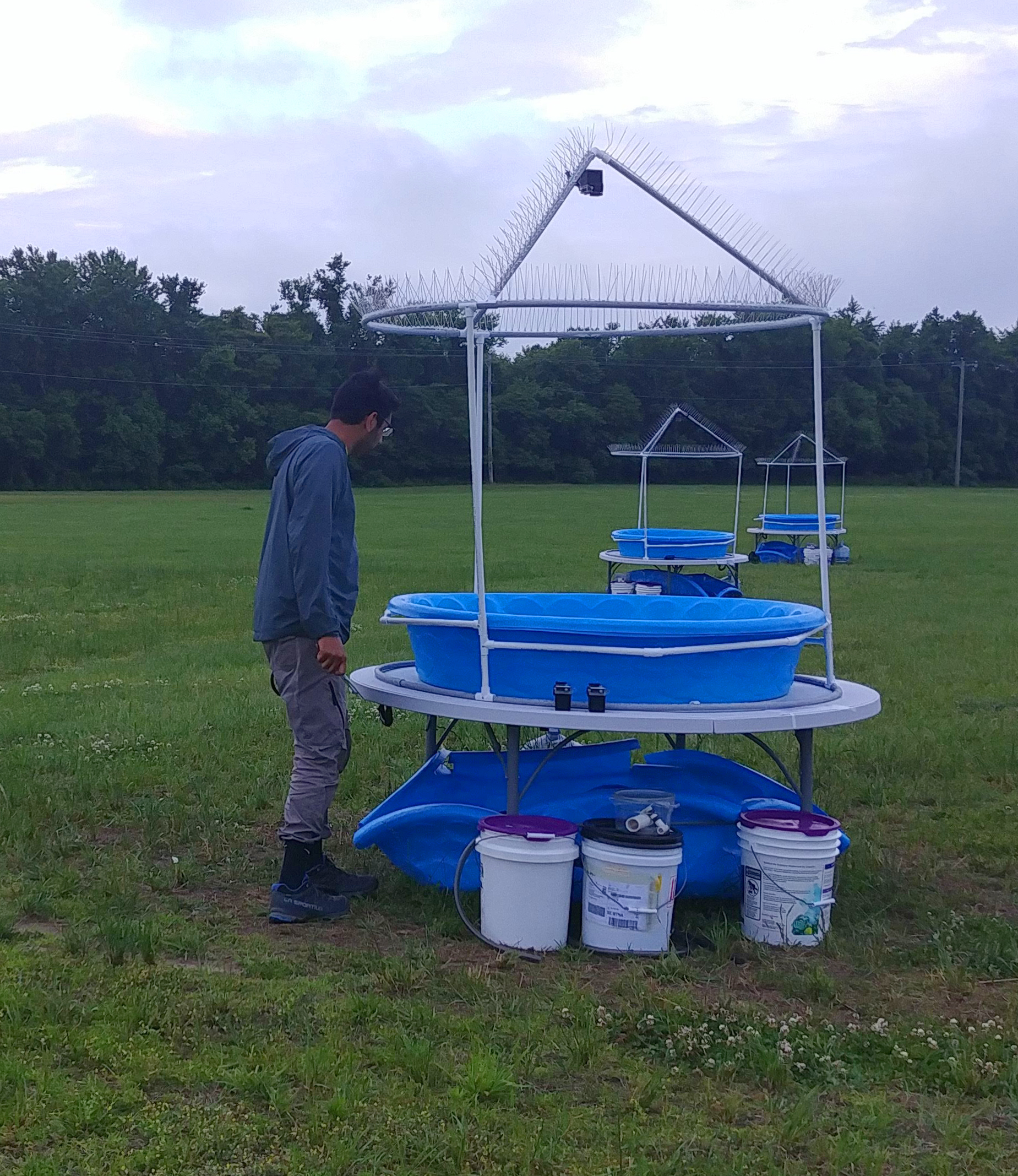
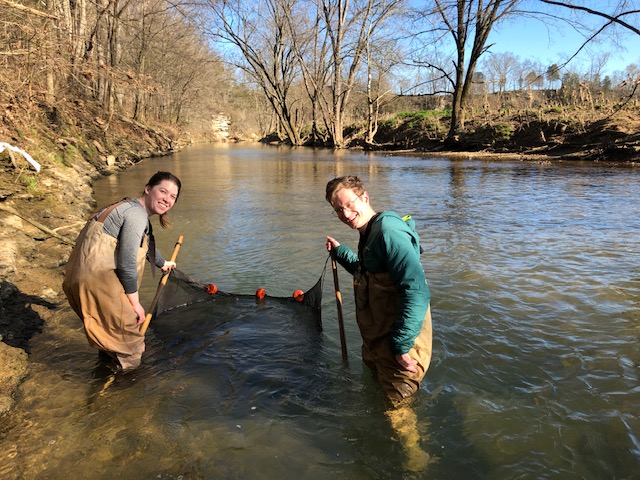
To come to their conclusions, the scientists all used the same protocol: They each placed identical cotton squares provided by the lead author, Scott Tiegs at Oakland University, in a nearby stream. Then they carefully measured variables like the temperature, chemical makeup, flow rate, and width of the stream, plus the percentage canopy cover (how shaded the stream is). Everyone sent their cotton squares back to Tiegs, and he measured the cotton’s integrity at the end of the experiment.

Leaf chemistry can play a significant role in how quickly leaves decay—oak leaves are very slow, and ash leaves are fast, for example. But by using the cotton squares instead of real leaves, “we held all of that leaf chemistry constant and just looked at the environmental drivers,” Swan says.

“What I’m most proud about is being part of a group that was able to document the patterns on such a large scale using a consistent approach,” Swan says. Because of its extensive scope and scale, Swan expects the paper to be used in classrooms for a long time to come. As a benchmark study, it could teach generations of ecology students the fundamentals of carbon processing in waterways.

“The study is a lesson in stream ecology,” Swan says, “but the bigger lesson is that if you have partnerships you can do big things, and come up with big patterns.”

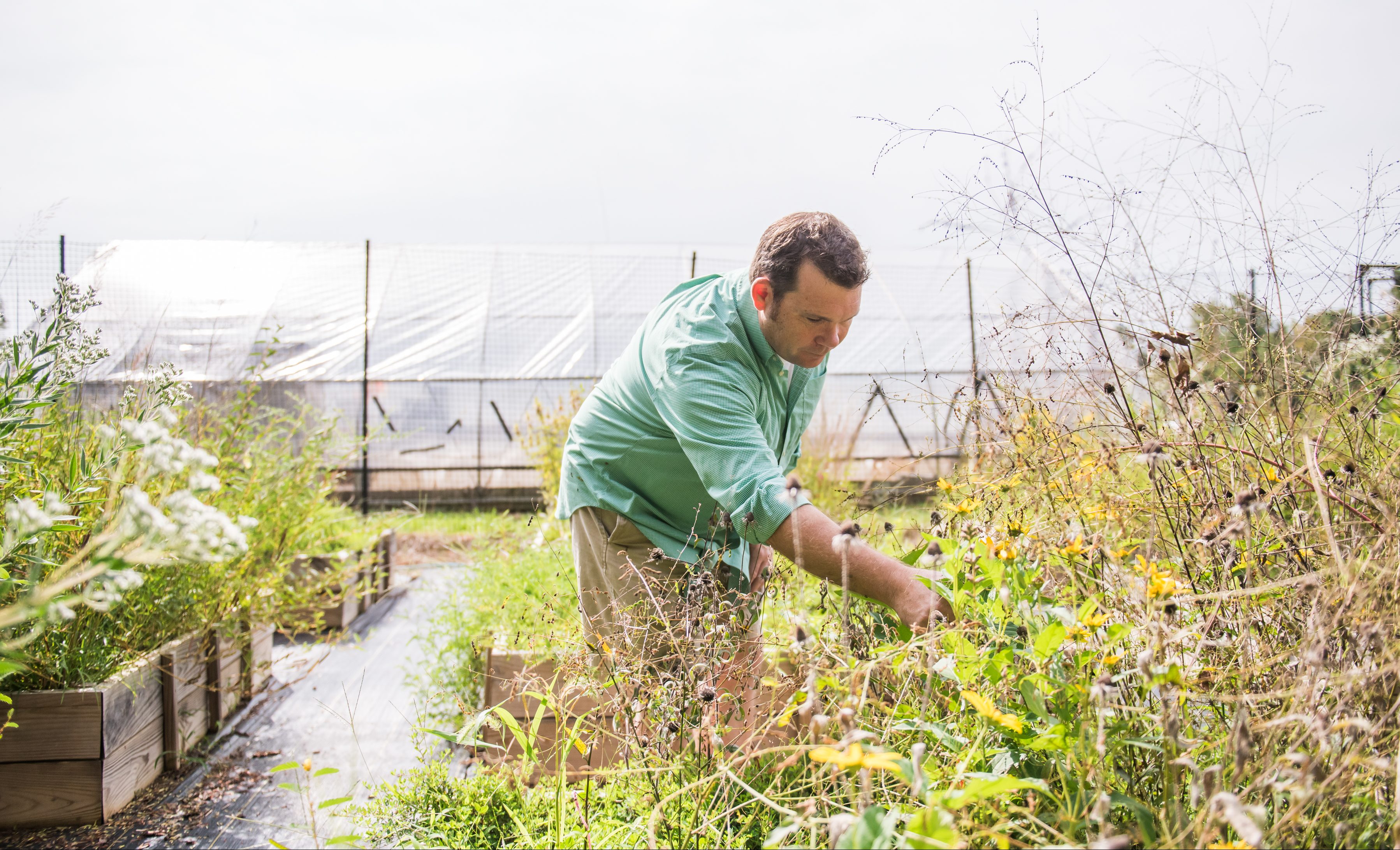
Image: Chris Swan. Photos by Marlayna Demond ’11 for UMBC.

Letitia Dzirasa to serve as Baltimore City health commissioner

Letitia Dzirasa ’03, M11, biological sciences, has been appointed by Mayor Catherine Pugh to serve as Baltimore’s next health commissioner. She will be the city’s first African American woman in the role, and preside over the health department’s annual budget of $150 million and about 800 employees.

Dzirasa always knew she wanted to have a career serving others. Her new position, which she will assume March 11, will enable her to support the health and well-being of city residents on a large scale.

“We are so proud of Letitia’s new appointment,” shares Keith Harmon, director of the Meyerhoff Scholars Program. As an undergraduate Meyerhoff Scholar at UMBC, Dzirasa conducted public health research at Johns Hopkins University. “Even then, she was interested in work that shed light on and positively impacted the health outcomes of certain populations,” Harmon says.

Commitment to populations in need

Dzirasa’s past roles speak to her commitment to improving health through innovative solutions. She most recently served as health innovation officer at Fearless Solutions, a software company she co-founded with her husband, Delali Dzirasa ’04, computer engineering. Fearless develops software solutions in the healthcare and government sectors that have a positive social impact. In 2016, the company created tools for Baltimore City to track health trends, discover risk factors, and overall help the health department more effectively allocate resources to work toward better health for all Baltimoreans.

Previously, Dzirasa worked as a pediatrician in Odenton, Maryland at a practice that primarily serves military families. She also served as the medical director of school-based health for the Baltimore Medical System, a non-profit that serves uninsured and underinsured patients.

Support leads to strength

Although it has been a lifetime calling, “UMBC was where I began to understand just how important it was to serve others,” Dzirasa shares. She says the late LaMont Toliver, former director of the Meyerhoff Scholars Program, played a significant role in strengthening her passion for this work and supported her on her journey through UMBC and beyond.

Dzirasa reflects, “To have someone who believed in me so much…was huge in pushing me to excel.”

“As I’ve grown in my career, I’ve begun to understand just how blessed I was to be afforded the opportunity to attend college and pursue my dreams,” Dzirasa says. “As I was fortunate, it is my responsibility to reach back and help others, especially those most under-resourced.”

Taking on tough challenges

As health commissioner, Dzirasa plans to focus her efforts on preventing violence (especially among youth), addressing obesity and food deserts, and tackling the opioid epidemic. She also understands that social factors play a large role in one’s health, and addressing the root causes of health challenges is critical to reducing health disparities in Baltimore.

“Her experiences have given her keen insights into the needs of individuals—including those with the least resources and the greatest needs,” says President Freeman Hrabowski. “I have known Dr. Dzirasa for almost 20 years. She is an individual of strong character, and she is deeply motivated to ensure all Baltimore residents have equitable access to care. I am delighted that she will be the city’s next health commissioner.”

Banner image: Letitia Dzirasa; photo courtesy Letitia Dzirasa.

UMBC chosen to host AAAS science and faith dialogue project

UMBC is one of six universities nationwide selected to host the “Engaging Scientists in the Science and Religion Dialogue” project, administered by the American Association for the Advancement of Science (AAAS). UMBC’s “Engaging Scientists” events will be held March 25 – 26, 2019, and will be open to the entire UMBC community.

The centerpiece will be a science engagement and communication workshop, run by staff of the AAAS Dialogue on Science, Ethics, and Religion (DoSER) program. The interactive, three-hour workshop will focus on how STEM graduate students, established scientists, and science educators can engage with diverse (and especially with religious) communities about science in both formal and informal settings.

“An individual’s cultural background and worldview (which, for most Americans, includes faith) informs their perceptions of the role of science in society, and their opinions about a range of science and technology issues,” says Robert O’Malley, project director at DoSER. The DoSER program “offers scientists, educators, and communicators a range of evidence-based strategies, toolkits, and resources for engagement” with people of diverse religious backgrounds, he explains.

Springboard for conversation

Talking about faith and science is not always easy, nor does it come naturally to all scientists, even if they are people of faith themselves. “Some people see science and faith in harmony, but for others the two are discordant,” says Bill LaCourse, dean of the College of Natural and Mathematical Sciences, the program’s on-campus sponsor. He notes that this can set the stage for conflict, silence, and misunderstanding, which can only be resolved through dialogue.

To promote this dialogue, the organizers are developing a range of events for the UMBC community. On March 25, in addition to the workshop there will be a public panel featuring scientists and science communicators from a range of faith traditions, and an open-house style event where anyone can leave a written or video message recording their thoughts on the topic.

Partners from all three UMBC colleges are joining in the project. They will organize companion events for people to explore their thoughts on this topic more deeply within their on-campus communities.

A final component of the event is a Public Engagement Contest. Graduate students, postdocs, faculty, and staff who attend the workshop are eligible to enter the contest with a community partner outside of UMBC. DoSER will award $1,000 to up to four ongoing or proposed projects that demonstrate commitment to engaging with religious publics about science and technology. Entries are due April 15, giving participants time to be inspired by and reflect on the Engaging Scientists events. In addition to UMBC, other participating universities include Stanford University, Vanderbilt University, Texas State University, Indiana University, and Howard University.

More than one way to truth

Dean LaCourse and the UMBC co-organizers hope the March events will serve as a springboard to launch further discussion around science and faith and make the topic a more explicit part of UMBC’s mission to foster inclusive excellence.

Some scientists of faith may be reluctant to discuss their religious lives in an academic setting, LaCourse says. Yet some of the world’s greatest scientists have practiced some manner of religious faith without finding it in conflict with their work.

“20th century scholarship converged on the idea that no one approach to finding truth is sufficient or superior,” says Steve Freeland, director of UMBC’s Individualized Study Program and a Christian astrobiologist who has spoken internationally on the topic of science and faith.

“This gives all of us reasons for humility as we seek truth in our different ways,” Freeland says. “UMBC is blessed with such diversity in every imaginable dimension that it is an exciting place to experience a scholarly exploration of the interface between science and faith.”

That rich diversity creates many opportunities for UMBC community members to interact with people whose views differ from their own. “The path to acceptance of differing views starts with dialogue, which may be difficult without the proper words,” LaCourse says. “This program is a unique opportunity to help our campus begin the conversation.”

See more details about all UMBC Engaging Scientists events and register for the workshop and panel here.

Image: Faculty attending an interdisciplinary UMBC research forum on aging in May 2017. Photo by Marlayna Demond ’11 for UMBC.
UMBC scientists tackle persistent hurdles in the aquaculture industry with new NOAA grant

As consumer demand for fish continues to grow worldwide, scientists are working to address some of aquaculture’s most persistent challenges. “There are a few bottlenecks and hurdles that the industry needs to address,” says Yonathan Zohar, professor and chair of marine biotechnology at UMBC. He and Ten-Tsao Wong, assistant professor of marine biotechnology, are working to address two of those hurdles: fish escaping from net pens and dying of disease.

Wong and Zohar recently received $670,000 of a $740,000, three-year grant from the National Oceanic and Atmospheric Administration to support their research. The remaining $70,000 will support the Maryland Sea Grant’s outreach and education efforts related to improving aquaculture.

Identifying the hurdles

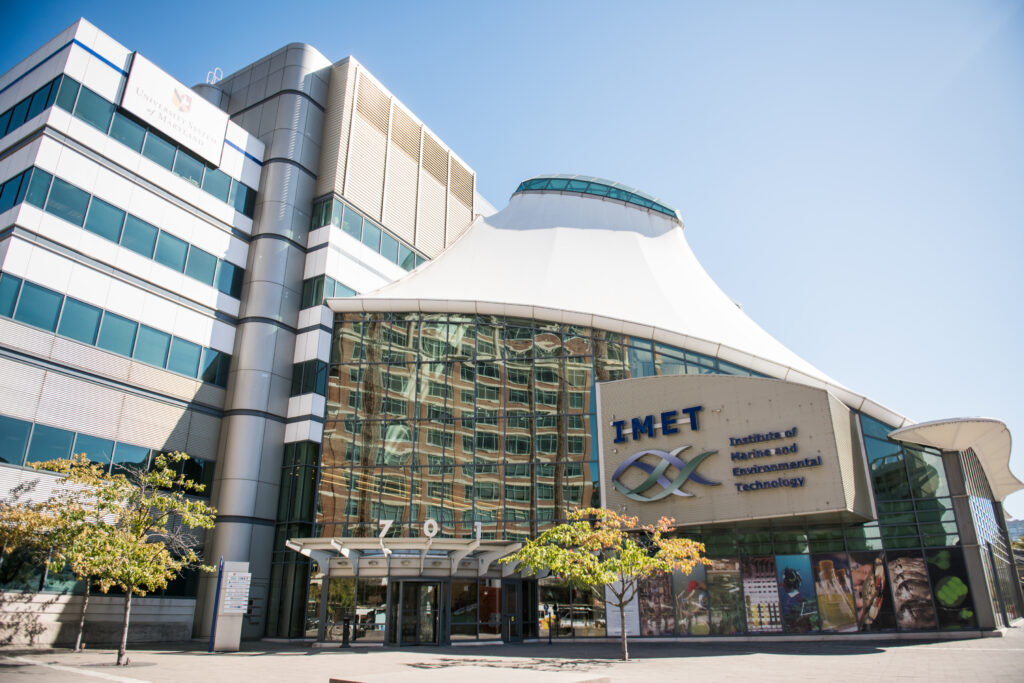
UMBC faculty at the Institute of Marine and Environmental Technology, a multi-institution facility on Baltimore’s Inner Harbor, are perhaps best known for their groundbreaking work raising marine fish on land. Their current NOAA-supported research has a different focus—tackling challenges in offshore aquaculture, where fish are grown in net pens in the open ocean.

Farmed fish are bred for traits that benefit farmers and consumers, so they end up having a different and much less diverse genetic makeup than their wild cousins. If farmed fish escape from the pens and mate with wild fish, “It changes the gene pool and the nature of the wild stocks,” Zohar explains, “and it can lead to the displacement or disappearance of the wild stocks.”

In addition, some of the most popular commercial fish, such as salmon, reach reproductive maturity before they reach market size. Once reproductively mature, a fish’s growth rate slows because some of its energy is diverted toward developing reproductive organs, and therefore away from growing muscle. On top of that, reproductively mature fish tend to produce lower-quality meat, making them less valuable on the market. They also have weakened immune systems, so they’re more susceptible to disease. This is a major issue when fish are raised at high-density in pens exposed to potential pathogens in the ocean.

In response to these problems, Zohar and Wong have invented a technique to grow  fish that cannot reproduce. This would solve the escape problem, because if sterile fish escape a net pen, they won’t be able to mate with wild fish, so they can’t alter the wild population’s gene pool. And sterile fish address the reduced performance of reproductively mature fish, too, because without their energy going toward developing reproductive organs, they don’t suffer from a slower growth rate, muscle deterioration and disease the way fertile fish do.

Solutions, a step at a time

Some methods do currently exist to produce sterile fish, but they aren’t very practical for the rapidly expanding aquaculture industry. For example, scientists can produce triploid fish—fish with three, instead of two, copies of every chromosome. These fish only grow well in absolutely perfect conditions. Also, modifying the number of fish chromosomes may present regulatory hurdles and can repel potential consumers.

“Everybody has been looking for another way to develop reproductively sterile fish,” Zohar says.

Rather than altering a fish’s genetic code, Wong and Zohar created a new method that prevents a fish embryo from producing a particular protein necessary to develop reproductive organs. The process temporarily silences the gene that codes for this protein, called deadend, during a critical one-to-two week window of development. The gene’s sequence remains unaltered, however, so the fish isn’t a GMO.

Previously, this new method was found to be effective, but required every fish to be injected individually with the silencing compound. “If you consider the industrial scale, injection is way too much work to do,” Wong says. With this in mind, Wong and Zohar set off to improve their approach.

The future of aquaculture

In Wong and Zohar’s new method, fish embryos are bathed in a solution containing the silencing compound at the critical time during development. They have found the solution to be much faster, cheaper, and simpler than the injection method. Because the solution is applied well before producers place fish in net pens, it also doesn’t risk exposing wild populations to the silencing compound.

Previous testing showed that the technique works in zebrafish, a small freshwater fish commonly used in research. Now it has also been implemented in the commercially important Atlantic salmon and rainbow trout. The main goal of the current work is to optimize the process. In previous experiments, 84 percent of rainbow trout that received the treatment grew up to be sterile. Wong and Zohar would like to see that number climb.

They are also partnering with the USDA to conduct a performance study of sterile fish, testing whether or not they grow faster than fertile ones. “It will help us to prove the case that these fish are going to be more cost-effective,” Wong explains.

“We have done so much already,” Wong says, “and in three years’ time, we hope it’s going to be an optimized commercial protocol.” That would be a win for the aquaculture industry, oceans, and fish consumers worldwide.

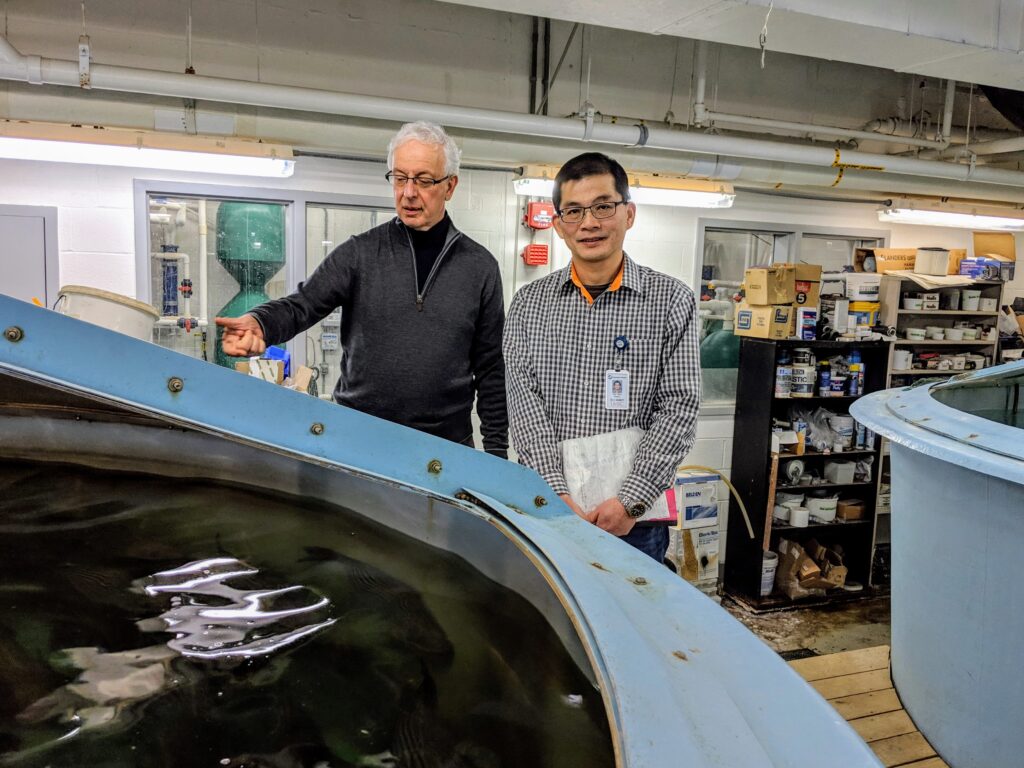
Image: Ten-Tsao Wong (left) and Yonathan Zohar at the Aquaculture Research Center. Trays for incubating salmon eggs are on the left. Photo by Gary Jones.

UMBC’s Ivan Erill finds resistance to modern drug in ancient bacteria

“The drug you design ten years from now may already be obsolete,” Ivan Erill says. In a new study in Frontiers in Microbiology, Erill and colleagues describe how bacteria that existed hundreds of millions of years ago were already resistant to an antibacterial drug not invented until the 1930s. Once farmers began using the new class of drugs in agriculture, resistance spread quickly. As the bacteria were exposed to the drugs on a large scale in soils and waterways, antibiotic-resistant strains began appearing in hospitals within a decade.

How is this all possible? Antibiotic resistance has much deeper roots than most people realize, Erill explains. Many antibiotics used to treat bacterial infections today are based on molecules bacteria naturally produce to out-compete their neighbors. “Your competitors are not just going to stand by,” says Erill, professor of biological sciences, “so over millions of years they are going to develop resistance. That’s a given.”

But the drugs featured in this research are not natural antibiotics. They are synthetic compounds produced by humans. “With synthetic drugs, that’s a different picture altogether,” Erill says. “It’s not a given that you would find resistance.” That’s why the research team was surprised when they did—hundreds of millions of years before the drugs were invented.

Tracking down the source

The synthetic antibacterial drugs in question, called sulfonamides, target an enzyme involved in a pathway necessary for DNA synthesis. If an organism can’t replicate its DNA, it can’t reproduce, so its population quickly dwindles to nothing. The bacteria that are resistant to sulfonamides have modified genes for the target enzyme, called sul genes (for sulfonamide resistance). These genes allow the bacteria to continue reproducing in the presence of the drug, which means the antibiotic won’t work on them.

Most sulfonamide-resistant bacteria have sul genes in what are called mobile elements—small segments of DNA that can easily jump from one individual or species to another. Erill and colleagues used computational tools to figure out which bacteria species had sulfonamide-resistance genes in their chromosomes instead of in mobile elements, indicating that they were the original sources of the resistance. They showed that two groups of bacteria harbor chromosomal sul-like genes.  

“You can use algorithms to reconstruct the most likely evolutionary history that explains the development of sulfonamide resistance,” Erill says. Those algorithms allowed the researchers to confirm that the resistance existed 500 to 600 million years ago. To further verify their results, the researchers inserted copies of the chromosomal sul-like genes into bacterial cells in the lab. When exposed to sulfonamides, the cells grew just fine, confirming that the genes confer resistance.

Pure chance

The question remains, though: “How can you explain that bacteria 500 million years ago were resistant to a substance that didn’t yet exist?” asks Erill. While there is an small chance some organism was producing a sulfonamide-like compound hundreds of millions of years ago and resistance evolved in response to that pressure, Erill and his team put forth a different argument.

“There is an enormous amount of bacterial genetic diversity,” Erill says. Miquel Sanchez, a Ph.D. student at the Universitat Autònoma de Barcelona and the first author on the paper, adds, “Resistant variants of the antibacterial target could be present in the global genetic pool even before microbes are exposed to them.”

So, the reason these two bacterial groups were resistant to a compound that had never existed? Erill says, “We argue that this is just pure chance.”

Rogue bacteria

This research has big implications for the development and use of future antibiotics. If scientists develop a new antibiotic, “it is well possible that there might be one bacterium in the world that is already resistant,” Erill says. With conservative use of the antibiotic in human patients, though, it’s unlikely that particular bacterium would ever be exposed to the antibiotic and spread its resistance.

But, “if you overuse the drug, especially in an agricultural setting, where the drug slowly permeates into the soil, waterways, and underground water reservoirs,” you’re exposing “this huge population of bacteria that otherwise would never be bothered by antibiotics or synthetic drugs,” Erill says. And, based on the team’s analysis, if the one bacterium that is already resistant is exposed to the drug, “this variant that is resistant will jump to other species in a matter of years.”

“For me, it’s especially a warning against using antibiotics in farm settings,” Erill says. New drugs are typically tested using disease-causing bacterial species, “but maybe that’s not enough,” he says. “Maybe you should do broader testing, especially on the non-usual suspects, like soil bacteria.”

Erill also says the new finding points toward using combination therapies more often. A bacterium in nature might harbor a chance resistance to one compound it’s never encountered, but it’s unlikely to be resistant to two. If doctors use two drugs at once, it is likely that one of the drugs will kill the bacteria, preventing it from spreading its resistance to the other drug.

These new research findings could affect how well superbugs are kept at bay and the effectiveness of new antibiotic treatments. Whether the agricultural industry and drug developers heed the team’s advice remains to be seen.

Image: From left to right, the authors of the paper: Ivan Erill, Pilar Cortés, Jordi Barbé, and Miquel Sánchez-Osuna. Photo by Ángela Martínez Mateos.

UMBC biologist Phyllis Robinson recognized for research, advocacy, and mentorship

UMBC has named Phyllis Robinson, professor of biological sciences, the Robert and Jane Meyerhoff Chair of Biological Sciences. The three-year appointment honors Robinson for her exceptional contributions to her research field, commitment to addressing gender equity issues in STEM fields, and dedication to mentoring students and faculty at all levels.

Robinson is an international leader in the field of vision science. She sees the visual system as “a wonderful way to look at signaling in biological systems and an entrée into the nervous system and neurobiology.”

Robinson examines the visual system from “molecules to behavior,” and her lab incorporates techniques from biochemistry, molecular biology, and physiology. She has published dozens of peer-reviewed papers, presented her work all over the world, and garnered millions of dollars of research support from the NIH and other sources.

Tireless advocate

Robinson is also a tireless advocate for women and other underrepresented people in STEM. In 2000, in response to an MIT report on resource discrepancies between men and women in STEM, she co-founded UMBC’s Women in Science and Engineering (WISE) group. What started as a monthly gathering for women faculty to connect has grown into a rich mentoring network. WISE now offers workshops to faculty members and graduate students on topics from leadership development to eating healthfully on a hectic schedule.

The WISE group tapped into a need on campus and spurred further efforts to support women in STEM. Robinson served as co-PI on the UMBC NSF ADVANCE Grant, which is nationally recognized as a model for institutional transformation programs. Between its inception in 2003 and 2018, the number of tenured and tenure-track women faculty members in STEM disciplines at UMBC increased 60 percent, from 30 to 48, and the number of women who are full professors more than doubled.

Patrice McDermott, Vice Provost for Faculty Affairs, and Phyllis Robinson.

Because of Robinson’s efforts, “I am now the proud colleague of five highly-qualified junior women faculty,” says Rachel Brewster, professor of biological sciences. “Their presence in the department is a source of inspiration for our large female undergraduate and graduate population.”

Marie desJardins is now dean of the College of Organizational, Computational, and Information Sciences at Simmons College and was previously a professor of computer science at UMBC. She comments that Robinson’s invitation to join an ADVANCE leadership cohort “helped me to cement my goals as an academic leader.”

“As a university, we’re committed to supporting everybody,” Robinson says. “We’re not perfect, but there is a commitment to underrepresented minorities and women in STEM.”

Robinson was honored by the UMBC President’s Commission on Women in 2012 and recently received the 2018 Marilyn E. Demorest Faculty Advancement Award for her advocacy work at UMBC.

Science and social justice

Robinson is a dedicated mentor to dozens of graduate and undergraduate students from all backgrounds. In 2017, she succeeded Lasse Lindahl, professor of biological sciences, as program director of MARC*USTAR at UMBC—an NIH-funded undergraduate scholars program that connects students from groups underrepresented in the biomedical sciences with valuable research opportunities. UMBC’s program has already supported over 100 UMBC alumni who have earned Ph.D. or M.D./Ph.D. degrees.

Like her advocacy for diverse STEM faculty, Robinson’s work as a mentor for students goes back decades. She was previously honored for excellence in mentoring by the University System of Maryland Board of Regents in 2002 and by the Leadership Alliance in 2006.

Phyllis Robinson and the members of her lab.

At UMBC, “I’ve been able to do my science and also put energy into the social justice aspects of the world that are important to me,” Robinson says. “One doesn’t exclude the other.”

Dean of the College of Natural and Mathematical Sciences William LaCourse is grateful for Robinson’s efforts over the course of her career at UMBC. “Professor Robinson’s professionalism is equally matched by her passion for research, her gift for mentoring, and her compassion for others,” he says. “Over the past 26 years, she has provided exceptional service to the university through her tireless leadership and advocacy for others.”

Robinson reflects that the UMBC environment helped make it all possible. “I’ve enjoyed working at UMBC,” she says, “because as a fairly young university, if you put energy into something you can really have an effect here.” Robinson certainly has.

Banner image: Phyllis Robinson speaks at the 2018 Presidential Faculty Staff Awards, where she received the Marilyn E. Demorest Faculty Advancement Award. Photo by Marlayna Demond ’11 for UMBC. 
UMBC’s Aaron Smith works toward developing new antibiotic targets with NIH grant

With antibiotic resistance on the rise, it’s critical that researchers develop new ways to stop bacteria that cause diseases like food poisoning, sepsis, pneumonia, or tuberculosis. “We have to think about more strategic and clever ways of attacking bugs,” says Aaron Smith, assistant professor of chemistry and biochemistry at UMBC. “One way is to work on identifying and characterizing additional targets that we can consider for antibiotic development.”

Potential new targets include the systems that allow bacteria to grow and to reproduce. This includes systems bacteria use regularly to take up essential nutrients from their surroundings, such as the soil or an animal host.

Smith’s lab focuses on how biological systems take up and process iron, and he’s just received a two-year grant from the National Institute of Dental and Craniofacial Research, a division of the National Institutes of Health, to explore how the bacterium Porphyromonas gingivalis takes up reduced iron, a specific form of the element. P. gingivalis is responsible for gingivitis, a gum disease and one of the most common infections worldwide.

Virtually no living thing can survive without iron: It’s critical for DNA synthesis and other metabolic processes that “help drive the chemistry and survival on our planet,” Smith says. Plus, the way bacteria take up reduced iron is very similar across all species—unravel the way one species does it, and you’re much closer to understanding them all.

Students and Aaron Smith working in a chemistry lab.

Bound for discovery

Virtually all bacteria use something called the Feo system to take up iron. In many bacteria, it consists of three proteins: FeoA, FeoB, and FeoC. FeoA and FeoC play supporting roles, while FeoB is the “gatekeeper that sits in the cell membrane and transports reduced iron to the inside of the cell,” explains Smith. However, there is evidence that without FeoA, FeoB can’t do its job nearly as well.

“Despite the fact that it’s a small protein, FeoA appears to have a really big role in iron uptake,” Smith says. “We’re interested in understanding how FeoA and FeoB are interplaying with one another, and how that might drive or regulate the reduced iron uptake process. If we can understand how that process works, then we can think about ways to disrupt that process.” That could lead the way to new antibiotics.

In the last six months, the lab made a breakthrough by solving the atomic structure of the FeoA protein in a different bacterium. The structure reveals a strong candidate for the exact site on the FeoA protein where it binds to FeoB. Previous research has indicated where the binding site is on FeoB. One of the goals of the new grant is to confirm these binding sites in P. gingivalis.  

Creative techniques

Smith and his team will use crystallography, a technique that freezes compounds in time, allowing researchers to determine and examine their unique molecular structure. Through this technique, they’ll  examine FeoA and FeoB at different stages of their reaction with one another. “We think that will reveal the atomic level interactions,” Smith explains. “Ideally, we’d like to see the entire process at atomic-level resolution.”

Smith is hoping the crystallography work will identify which amino acids (the building blocks of proteins) in FeoA are critical for its proper interaction with FeoB. To further test those ideas, they’ll genetically modify the bacterium at the indicated amino acids and see if it can still survive on reduced iron. “Those results could give us a really strong insight as to whether iron uptake might be a viable target for disruption,” Smith says.

The lab also plans to collaborate with Robert Ernst, professor of microbial pathogenesis at the Maryland School of Dentistry in Baltimore. The grant will support training for graduate students in the Chemistry-Biology Interface program, a joint venture between UMBC and the University of Maryland, Baltimore funded by the NIH.

Smith’s students will spend time in Ernst’s lab to learn techniques for the genetic modification experiments. “It really expands the scope of what we can test,” Smith says. “Instead of it just being of intellectual interest to biochemists, it adds in a level of biology that’s really essential.”

The results of the work will be broadly applicable to a wide range of bacteria, but studying P. gingivalis specifically has opened Smith’s eyes to the importance of oral health.“When you look at how your oral health is linked to lifelong health,” and conditions from stomach ulcers to cardiovascular disease, “it’s quite incredible,” Smith says. “Oral health really trickles down into every aspect of your life.”

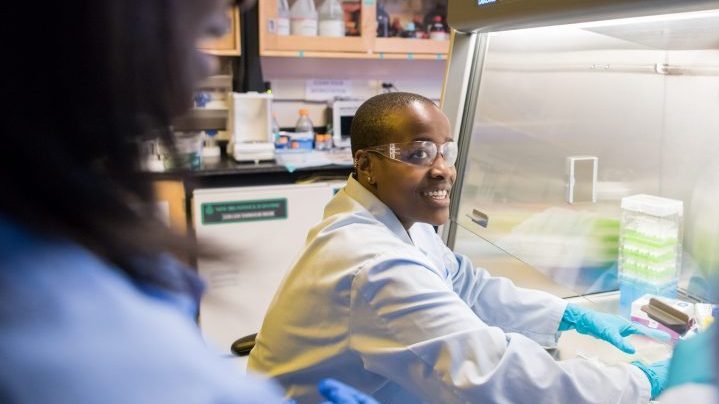
Banner image: Aaron Smith in his lab. All photos by Marlayna Demond ’11 for UMBC.

UMBC’s Amy Lien helps NASA unravel the mystery of an unusual blast from across the universe

A brief and unusual flash spotted on June 16, 2018  has puzzled astronomers and astrophysicists across the globe. The event, called AT2018cow and nicknamed “the Cow,” defies many of the models scientists use to explain similar outbursts, prompting multiple hypotheses about its source.

Amy Lien, an assistant research scientist in UMBC’s Center for Space Sciences Technology, is on a team of researchers working with NASA’s Neil Gehrels Swift Observatory to develop one theory about the blast’s source. Their model describes a monster black hole shredding a passing star.

“We’ve never seen anything exactly like the Cow,” Lien says, “which is very exciting.”

Spotting the Cow

The Cow occurred in the vicinity of a star-forming galaxy known as CGCG 137-068, located in the constellation Hercules, about 200 million light-years away. That’s 2,000 times the distance from one edge of the Milky Way galaxy to the other.

The Cow was first observed by a ground-based telescope in Hawaii, and the initial observations interpreted it as a potential supernova. Astronomers are quite interested in supernovae, so other telescopes around the world were quickly pointed in its direction to learn more. All three instruments on the Swift Observatory observed the patch of sky where the Cow was spotted for at least 60 days after the initial sighting.

Lien and four other research teams shared their groups’ different interpretations during a panel discussion on January 10 at the American Astronomical Society (AAS) meeting in Seattle.

Explosions in the sky

“Explosions in the sky happen all the time,” explains Lien, “so at the beginning people didn’t think this was anything different.” But after more observations came in from Swift and elsewhere, the scientists started to think, “This one looks very weird,” Lien remembers. “It doesn’t match well with anything we know.”

The explanation Lien’s team settled on is an event called a tidal disruption. “When a star gets too close to a black hole, it will get stretched and torn apart by the tidal force in a similar way that causes tides on Earth,” explains Lien. However, because the black hole has an extremely strong gravitational force, instead of just an ebbing tide, “you see the whole star get stretched and shredded,” she says.

Lien and her colleagues think the shredded star was a white dwarf: a hot, roughly Earth-sized object that represents the final state of stars like our Sun. They also calculated that the black hole’s mass ranges from 100,000 to a million times the Sun’s. It’s unusual to see black holes of this scale outside the center of a galaxy, but it’s possible the Cow occurred in a nearby satellite galaxy or a globular star cluster, which tend to contain a higher proportion of white dwarfs than average galaxies.

When the star was torn apart, the Swift team theorizes, its debris formed a hot, opaque sphere as it was sucked into the black hole. Because the sphere is so dense, it expands very quickly (at nearly 10 percent the speed of light) and creates a “cocoon” layer around itself, which then flies away at extremely high speed.

The whole process of tearing, compacting, and flying away “generates a lot of energy,” says Lien, “and some of it is released as light, almost like a huge light bulb.” That could explain the light coming from the Cow.

Exciting unknowns

Swift, which orbits Earth about 340 miles above the surface, observed the Cow with all three of its instruments, which detect UV rays, x-rays, and gamma rays. Data from these instruments helped the scientists determine the temperature of the Cow, which is approximately four times the temperature of the Sun and consistent with a tidal disruption.

The rate at which the Cow’s brightness decreased during the observation period and its extremely high temperature added to the team’s convictions. But there are still elements that are less likely based on their hypothesis.

“You’re always asking, ‘What about this feature that doesn’t fit well with our model?’” Lien says. While that can be frustrating at times, she says, “That’s actually part of why I became an astronomer. It’s the unknowns that excite me.”

It would be helpful to observe another similar event, which would give researchers more information as they try to reach agreement on the Cow’s cause. With the number of telescopes rising worldwide and the increasingly collaborative nature of space research, “We are definitely more ready than even ten years ago to spot this kind of phenomenon,” Lien says. “Now we’re just waiting for the next one.”

A paper on the Swift findings, which Lien co-authored and presented at the AAS discussion, has been accepted by the Monthly Notices of the Royal Astronomical Society.

UMBC’s Colleen Burge helps show oyster aquaculture can limit disease in wild oysters

The potential spread of disease from farmed oysters to wild oysters is a frequent concern for oyster producers and consumers alike. Contrary to common perceptions, new UMBC research in Aquaculture Environment Interactions has found that properly managed oyster aquaculture operations can actually help limit the spread of disease among wild oysters.

“This is another line of evidence saying that oyster aquaculture can be a good thing,” says Colleen Burge, assistant professor of marine biotechnology at UMBC, and a co-author on the study.

“The established way of thinking is that disease spreads from aquaculture, but in fact aquaculture may limit disease in nearby wild populations,” adds Tal Ben-Horin, a postdoctoral fellow at the University of Rhode Island and the lead author on the study.

Creative conversations

At a workshop funded by the NSF as part of the Ecology of Infectious Marine Disease Research Coordination Network, Burge co-led a session on disease transmission among sea creatures. Prior to the workshop, Ben-Horin began working on mathematical models to examine the interactions between farmed oysters, wild oysters, and the common oyster disease Dermo.

Once at the workshop, Ben-Horin, Burge, and others further explored how best to refine Ben-Horin’s models. “It was exciting to be in the room, talking to experts, bouncing around ideas about different biological systems,” Burge says.

Burge is accustomed to working with researchers from different backgrounds, because her lab is located at the Institute of Marine and Environmental Technology, a facility on Baltimore’s Inner Harbor that houses researchers from UMBC, University of Maryland Center for Environmental Science, and University of Maryland, Baltimore.

One of the results of the NSF-sponsored workshop was her new paper. Burge and colleagues from Rutgers University, the U.S. Department of Agriculture, and the Virginia Institute of Marine Science contributed their expertise regarding oyster biology and the ecology of the oysters’ environment, and Ben-Horin used that input to inform the model.

Oyster aquaculture boom a boon?

According to Burge, disease is a major factor in limiting wild oyster populations. Dermo, one of the most prevalent oyster diseases, is caused by a single-celled parasite that occurs naturally in the environment and proliferates in the tissue of host oysters. When infected oysters die, their decaying tissue spreads the parasite to other oysters. But it takes two to three years for the parasite to kill the oysters, and as long as the oysters are harvested before that time, the the spread of the parasite (which is harmless to humans) is limited.

This new research suggests that it’s time to “start thinking about oyster aquaculture as being a sink for disease, rather than a source,” says Burge. She adds that the study “furthers the idea that you can plant a large number of oysters in aquaculture, and it won’t (from a Dermo disease perspective) negatively affect the wild oysters if you harvest them early enough.”

That’s important, because “oyster aquaculture is growing in Maryland right now,” Burge says. In addition, conservation groups are using oyster reef restoration as a tool to improve the Chesapeake Bay’s water quality and ecosystem health overall.

“This paper suggests this growing aquaculture industry could actually support restoration efforts and also the wild fisheries,” Burge says. That is, as long as aquaculturists employ proper management techniques. Oyster farms that grow their product on the bottom surface of the Chesapeake Bay or other bodies of water are unlikely to recover all of their oysters, increasing rather than reducing the spread of the disease, explains Ben-Horin. Growing the oysters in cages or bags above the bottom solves that problem.

It’s all connected

Beyond this new study, Burge’s research more broadly explores how oysters and other bivalves work as some of nature’s most efficient water filters. She examines how they filter out pathogens that affect a range of species. In addition to supporting the current work led by Ben-Horin, she recently received funding to investigate how oysters filter out an eelgrass pathogen from water.

Eelgrass populations have been on the rise in the Bay in recent years, which is a good sign for overall Bay health. “Eelgrass is a foundational species and can provide structure for lots of different animals to live in, including fish, scallops, and other invertebrates,” Burge says. In addition, it’s been shown to moderate the water’s acidity in its immediate vicinity, possibly counteracting the negative effects of ocean acidification.

Eelgrass might even affect oysters and their diseases. “Sometimes ecosystem-level effects are overlooked, but,” Ben-Horin says regarding the new research, “in this case they’re front and center.” He reflects, “Everything that happens in the water is connected.”

All photos by Marlayna Demond ’11 for UMBC.

Three generations, thousands of miles: Scientists unlock the mystery of a dragonfly’s migration

Thanks to photos and films featuring clouds of stunning orange and black monarch butterflies flying across North America, many people today are familiar with how monarchs migrate. The migration patterns of other insects, however, remain more mysterious, for both the public and scientists alike. A new paper in Biology Letters describes a dragonfly’s full life cycle for the first time, in compelling detail.

The researchers explain how the common green darner—a large, abundant dragonfly found across North America—takes three generations to complete its annual cycle. One generation migrates north in spring, the second south in fall, and the third is resident in the southern part of the species’ range over winter. These insects have a wingspan of just 7.5 cm (3 inches), but they migrate an average of over 600 km (373 miles), with some individuals covering more than 2,500 km (1,553 miles).

“We know that a lot of insects migrate, but we have full life history and full migration data for only a couple. This is the first dragonfly in the Western Hemisphere for which we know this,” says Colin Studds, assistant professor of geography and environmental systems at UMBC and senior author on the paper. “We’ve solved the first piece of a big mystery.”

The common green darner is indeed very common, and not currently a threatened species. Understanding their life cycle is important, though, because of the global context. “There are massive insect declines going on around the world,” says Peter Marra, director of the Smithsonian Migratory Bird Center and second author on the paper, “so understanding these complex biological phenomena is essential to determine why different populations might be declining.”

Insects are a critical driver of food webs, so figuring out why their populations are falling dramatically is important for the future success of a wide range of species, from rodents to raptors.

The research team used a combination of data sets, including 21 years of citizen science data, more than 800 dragonfly wing specimens from museums going back 140 years, and specimens caught in the wild. Collaborators Kent McFarland and Sara Zahendra of the Vermont Center for Ecostudies spent nearly two years collecting dragonflies from Florida to Ontario, Canada, and working with museums to get permission to analyze their specimens.

The team’s creative analysis included looking at the prevalence of different forms of hydrogen in the dragonflies. The ratio of three forms of hydrogen in the atmosphere shifts with latitude. Dragonflies pick up an imprint of the hydrogen ratio at their birthplace, so a scientist can determine where a dragonfly came from by looking at how much of each hydrogen type is present in a tiny piece of the dragonfly’s wing. That information enabled the team to discern the three-generation migration system.

The citizen science data—information collected by members of the general public—helped the scientists learn what factors cue the dragonflies to migrate or to emerge as flying adults after their aquatic juvenile stage. It turns out temperature plays a big role: the dragonflies both emerge and initiate migration at around 9 degrees Celsius (48 degrees Fahrenheit).

“With climate change we could see dragonflies migrating north earlier and staying later in the fall, which could alter their entire biology and life history,” says Michael Hallworth, postdoctoral fellow at the Smithsonian Migratory Bird Center and first author on the paper. Studds adds, “Climate change is a threat to all kinds of migration systems, and this could be one of them.”

Studds emphasizes that this discovery is the beginning of a long path toward better understanding insect migrations. Revealing the three-generation process, with two migratory generations and one resident, was, itself, “remarkable,” he says. “How it actually happens is a tremendous new mystery that brings together ecology and evolution,” Studds reflects, “and there’s a lot more to understand.”

Image: A common green darner in flight. Photo by Mark Chappell.

From lab to museum, new UMBC grads show the powerful impact of original research

“I just had this feeling that there had to be more to this story,” says Nicolle “Niki” Konkel ’18, on the striking lack of women in her art history textbooks. So, with the support of faculty mentors, in her senior year she embarked on research that has opened new doors in the art world.

Student passion guided by faculty support is part of the fabric of UMBC. Konkel’s experience is one exciting example of how this winning combination can make possible big breakthroughs.

Hearing marginalized voices

Konkel is an art history and museum studies major who came to UMBC after attending Frederick Community College. While at FCC, She worked 30 hours a week in addition to her studies to fund her first trip to the Netherlands, a voyage that shaped her career goals. Now, she is contributing to a new branch of art history research on women of the De Stijl, an early 20th-century avant garde Dutch art movement.

“There’s so much still to learn, and that fuels my passion to go to graduate school and continue this research,” she says. “When marginalized voices can be heard and placed more within the mainstream, I think that’s so important.”

De Steil art book with geometric cover

DE STIJL “6 decades book.” Photo by de stijl, CC BY 2.0.

This fall, Konkel was also able to gain professional experience as an curatorial  intern at the Smithsonian National Museum of American History. She was part of the curatorial team for an entertainment exhibit that will be on display for two decades.

Konkel says the support of her mentors helped make it all possible, especially her senior thesis mentor, visual arts professor Kathy O’Dell. All of the professors “are so invested in us here. They care a lot about my growth and what I’m going to do afterward,” Konkel says. “They want to help you channel your passion.”

Confidence boost

Alexis Waller ’18, biological sciences, has had similarly powerful experiences with research and mentorship. UMBC STEM BUILD, an NIH-funded initiative to increase diversity in the biomedical workforce, “showed me what research actually was,” Waller says. Before UMBC, she shares, “I’d never been inside a lab.” Now? “I just love being in the lab setting and doing hands-on research.”

In her first year, Waller presented at the UMBC Undergraduate Research Symposium with BUILD. With support from Laura Ott, the active learning coordinator for STEM BUILD, Waller joined Michael Summers’s lab in 2016. The lab’s research focuses on how the HIV-1 retrovirus assembles copies of itself within infected cells, so that the copies can emerge to infect other cells.

In addition to Summers, postdoc Pengfei Ding provides direct research mentorship to Waller. “He has always been very patient and encouraged me to ask questions,” Waller says.

Researchers at work in a wet lab

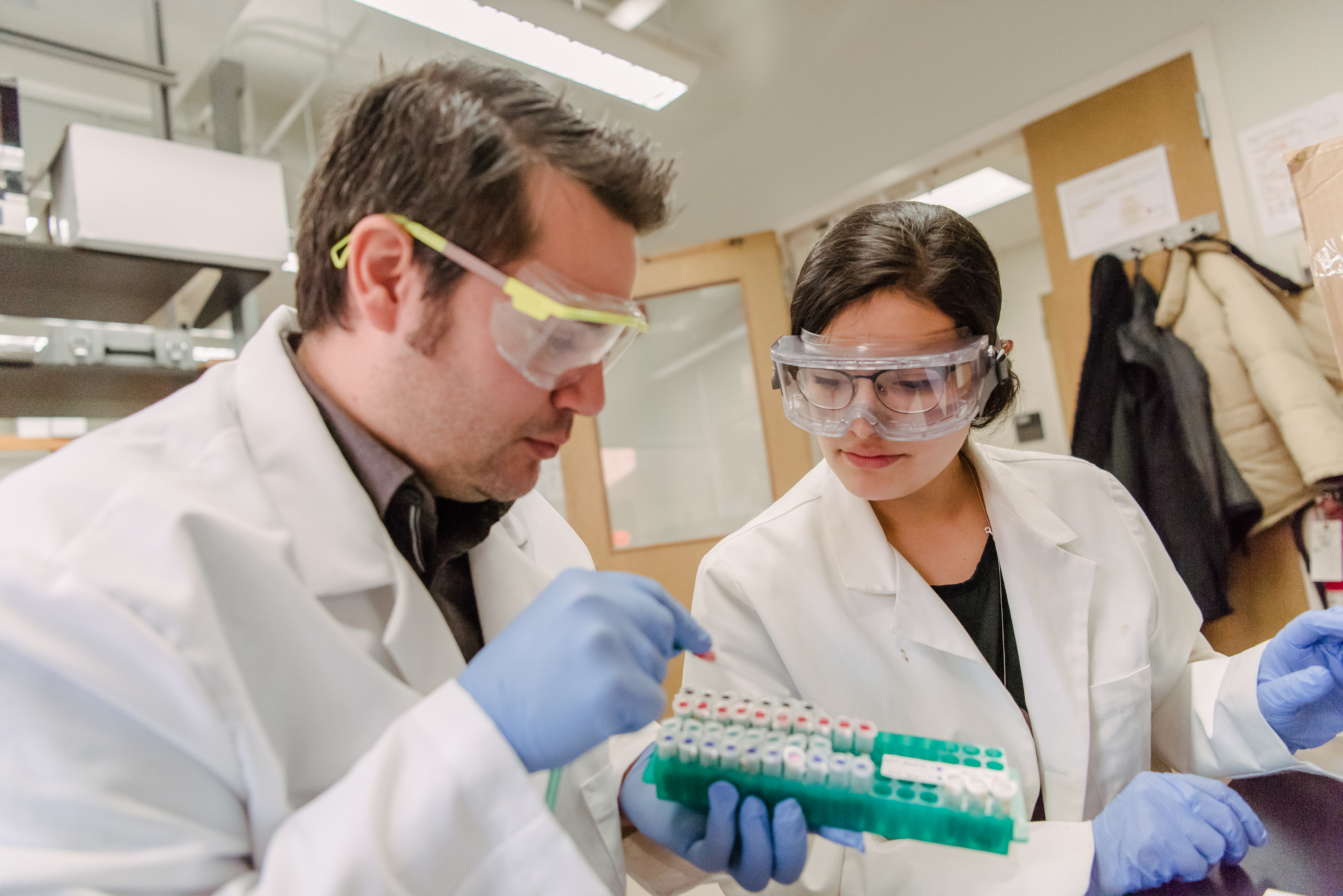
Alexis Waller ’18, right, and her mentor Pengfei Ding at work in Michael Summers’s biochemistry lab. Photo by Marlayna Demond ’11 for UMBC.
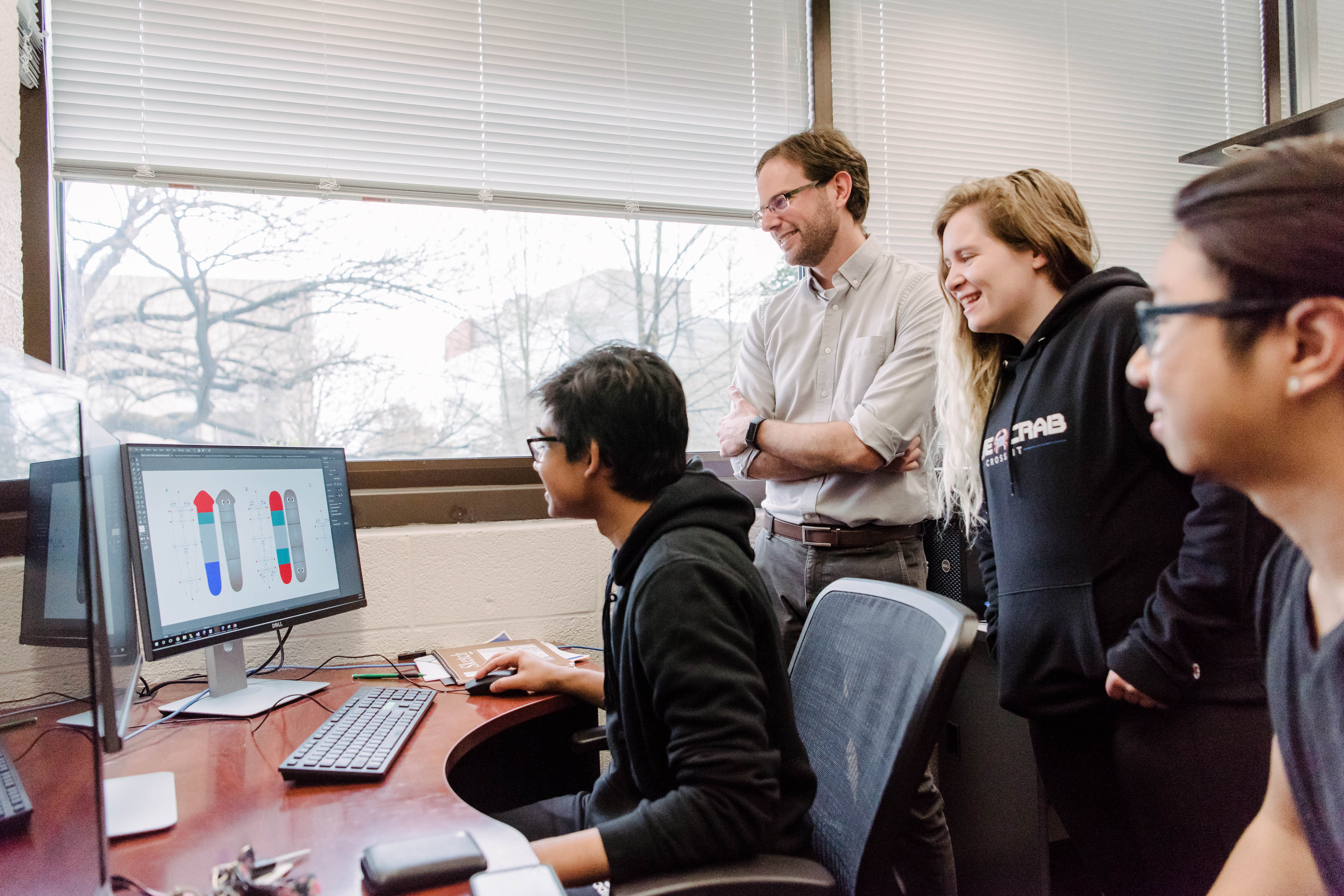
Waller started out in a shadowing role in the lab, but says, “as I’ve gotten more confident and knowledgeable, the more responsibility I’ve been given.”

Now a MARC U*STAR Scholar, Waller is continuing work on her team’s project studying a step in the replication of HIV. By contributing to a better understanding of that step, she’s helping provide the knowledge necessary for other scientists to develop treatments to block HIV replication, preventing spread of the infection.

After graduation, Waller will continue to work in the Summers lab as a research assistant while she applies to Ph.D. programs in microbiology. “Being a part of BUILD and MARC, and working in the Summers lab, has all led to me deciding to pursue a Ph.D.,” she says.

Bench to bedside

Like Waller, Abby Cruz ‘18 is also a biological sciences major and a MARC U*STAR Scholar. When she came to UMBC, she believed science was a solitary pursuit, but that changed after she joined Fernando Vonhoff’s biology lab. “I look forward to going to lab because of the collaboration with other people,” she says.

Two researchers examining a lab notebook

Abby Cruz ’18, left, and her mentor Fernando Vonhoff discuss an experimental protocol. Photo by Marlayna Demond ’11 for UMBC.
Cruz has been looking at whether certain genes may be associated with human motor neuron diseases, such as ALS, using fruit flies as a model. Scientists at Yale University will use her results to inform their study of motor neuron disease in human cells.

She also works part time in a neurology clinic, where she interacts directly with patients. “I love it,” she says. “It’s what gets me up every day—that I’m part of a community where I can see the research and the clinical side go hand in hand.”

Cruz reached out to Vonhoff just before she joined UMBC from Howard Community College in 2016, and he’s been a supporter ever since. “If it wasn’t for Dr. Vonhoff I wouldn’t have been able to do everything I did,” she says. “If you’re willing to try and put in the effort, his attitude is, ‘Let’s make it happen.’”

Abby Cruz ’18 and her mentor Fernando Vonhoff check on a vial of fruit flies, their study organism. Photo by Marlayna Demond ’11 for UMBC.
Before starting work in the lab, Cruz was planning on medical school. Now she’s looking toward an M.D./Ph.D. or D.O./Ph.D. (doctor of osteopathic medicine). “Focusing on that connection between the research and the clinic has really solidified my future goals,” she says.

Bridging cultures

When Julian Tash ’18 approached Constantine Vaporis, history professor and former director of UMBC’s Asian studies program, after an art history class one day, he expected a helpful conversation about his career goals. He came away with a game-changing connection to Robert Mintz, the curator of Japanese art at the Walters Art Museum in Baltimore.

Tash, a Humanities Scholar, had noticed Asian art was given less attention than Western art in his high school courses. His further exposure at UMBC to the rich traditions found in Asian art, however, inspired him to pursue a double major in Asian studies and history. With Vaporis’s support, he began an internship at the Walters.

Cataloguing Buddhist statuary at the Walters got Tash “interested in the question of how to connect museum visitors with these statues, when they don’t have a background in the culture in which the objects were produced,” he shares. That interest led to a project he pursued with guidance from Vaporis and visual arts professor Preminda Jacob.

Male student reading in library

Julian Tash ’18 says most of his research, when he isn’t doing fieldwork, involves a lot of reading in the library. Photo by Marlayna Demond ’11 for UMBC.
Tash received funding from a UMBC Undergraduate Research Award and a Bridging Scholarship from the American Association of Teachers of Japanese to travel throughout Japan and in the U.S. to explore how Buddhist statues are displayed in their native context compared to in American museums. His resulting research paper, which has been selected for publication in the UMBC Review, recommends that U.S. museums use technology to help visitors see more clearly how the statues appear in their original contexts, in Japanese temples.

Tash has already shared his research with curators at the Metropolitan Museum of Art, British Museum, and Freer and Sackler Galleries. He has also presented other work at the Bard Conference on Asia and the Environment, with research partner Jennifer Christhilf ’19, geography and environmental systems. That project was a new direction for Tash, exploring the impacts of dam construction projects in China and downstream countries such as Vietnam and Cambodia.

Student and mentor at research poster

Julian Tash ’18 and one of his mentors, Julie Rosenthal, stand by his research poster about dam removals on the Mekong River in China. Photo by Marlayna Demond ’11 for UMBC.

“Working with someone in the sciences is really emblematic of UMBC, because we’re bringing it all together, in a way that’s vitally important to this region,” says Tash. “That was a great experience and it got me thinking about the intersection of the humanities and policy.”

Although he’s graduating, collaborations Tash has helped build will continue at UMBC, including a Perspectives on Asia conference that will be co-sponsored by Johns Hopkins University.

Tash has applied for a Fulbright Fellowship to conduct research in Taiwan as well as graduate programs.

Like Konkel, Cruz, and Waller, when Tash reflects on his UMBC experience, it all comes back to mentorship and support. “Even though these professors all have really busy schedules, I would go to them with an idea, and even if it wasn’t in their immediate area of study, they all made such phenomenal efforts to support me,” he shares.

“UMBC put the resources in front of me,” Tash says. “I just thought, I could do all these things—I just have to try to pursue them.”

December commencement ceremonies will be livestreamed through both the UMBC Commencement website and UMBC Facebook page. Share well wishes for our grads using #UMBCgrad and #UMBCproud.

Banner image: Alexis Waller ’18 and her mentor, Pengfei Ding, at work in the lab. Photo by Marlayna Demond ’11 for UMBC.
UMBC launches PROMISE Academy with USM partners, to support diverse faculty in the biomedical sciences

UMBC is one of a handful of universities across the country to receive new funding from the National Science Foundation (NSF) for a specialized program to support faculty diversity in the biomedical sciences.

The new initiative, the PROMISE Academy, is an extension of Maryland’s nationally-regarded PROMISE AGEP program, which UMBC co-leads with University of Maryland, College Park and University of Maryland, Baltimore. The Promise Academy serves all schools within the University System of Maryland. The legacy PROMISE AGEP initiative offers community, academic and emotional support, and professional development opportunities to graduate students, postdoctoral fellows, and faculty across the state.

The new PROMISE Academy is officially titled, “The AGEP Alliance State System Model to Transform the Hiring Practices and Career Success of Tenure Track Historically Underrepresented Minority Faculty in Biomedical Sciences.” This new AGEP will draw on the expertise of universities around the nation and evidence-based best practices to recruit and retain a diverse group of faculty members in STEM fields.

UMBC’s partners in this work include the University of Maryland, College Park; University of Maryland, Baltimore; Towson University; and Salisbury University. The PROMISE Academy joins other new, faculty-focused NSF-funded Alliance for Graduate Education and the Professoriate (AGEP) programs based at UC Berkeley, Georgia Tech, Tuskegee University, and Stony Brook University.

On November 27, leaders from the Maryland partner institutions and other universities around the country met for the PROMISE Academy Inaugural Leadership Meeting. The meeting was held at the Universities at Shady Grove, a consortium of University System of Maryland (USM) institutions located in Montgomery County.

“The PROMISE Academy represents the best of what our institutions can do collectively to enhance the power of the broader University System of Maryland,” said JoAnn Boughman, senior vice chancellor for academic and student affairs at USM. “It is gratifying to maximize the power of what we like to call ‘system-ness’ in working toward such an important goal in STEM education.”

At the meeting, Provost Philip Rous and Dean Bill LaCourse presented the Natural Sciences Pre-professoriate Fellowship Program in UMBC’s College of Natural and Mathematical Sciences, an example of the type of initiative the AGEP encourages. The program offers postdoctoral fellows an appointment of up to two years, during which they receive support in preparing for tenure-track assistant professor positions at UMBC. In addition to being strong scholars, the applicants must be committed to diversity in higher education.

Renetta Garrison Tull is an international leader in STEM diversity who kicked off the inaugural meeting. Tull is associate vice provost of strategic initiatives at UMBC and USM’s director of graduate and professional pipeline development.

“With so many top programs supporting the success of diverse students and faculty, UMBC has a strong foundation on which to build. We are proud to collaborate with our USM alliance partners in this system-wide endeavor,” Tull said.

She looks forward to working with colleagues “to develop, implement, study, evaluate, and disseminate models for faculty diversity that can be replicated and scaled by other institutions nationwide.”

Banner image: UMBC’s Biological Sciences Building and Library Pond. Photo by Marlayna Demond ’11 for UMBC.