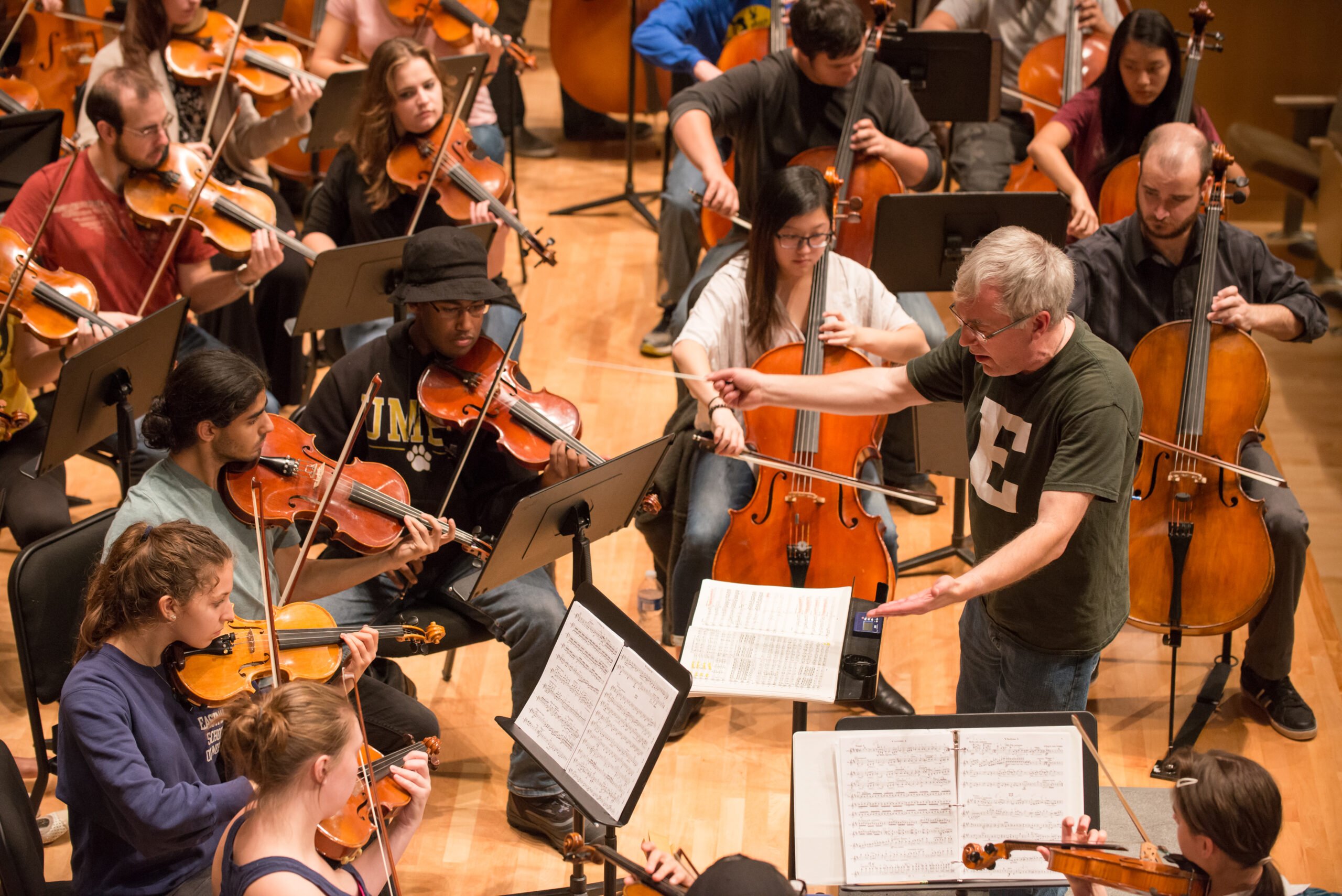
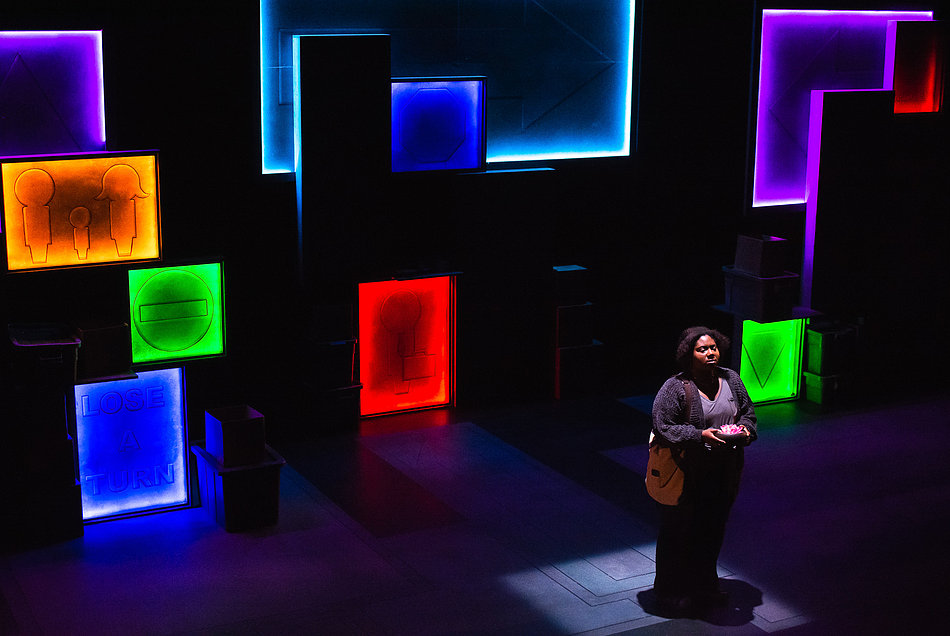
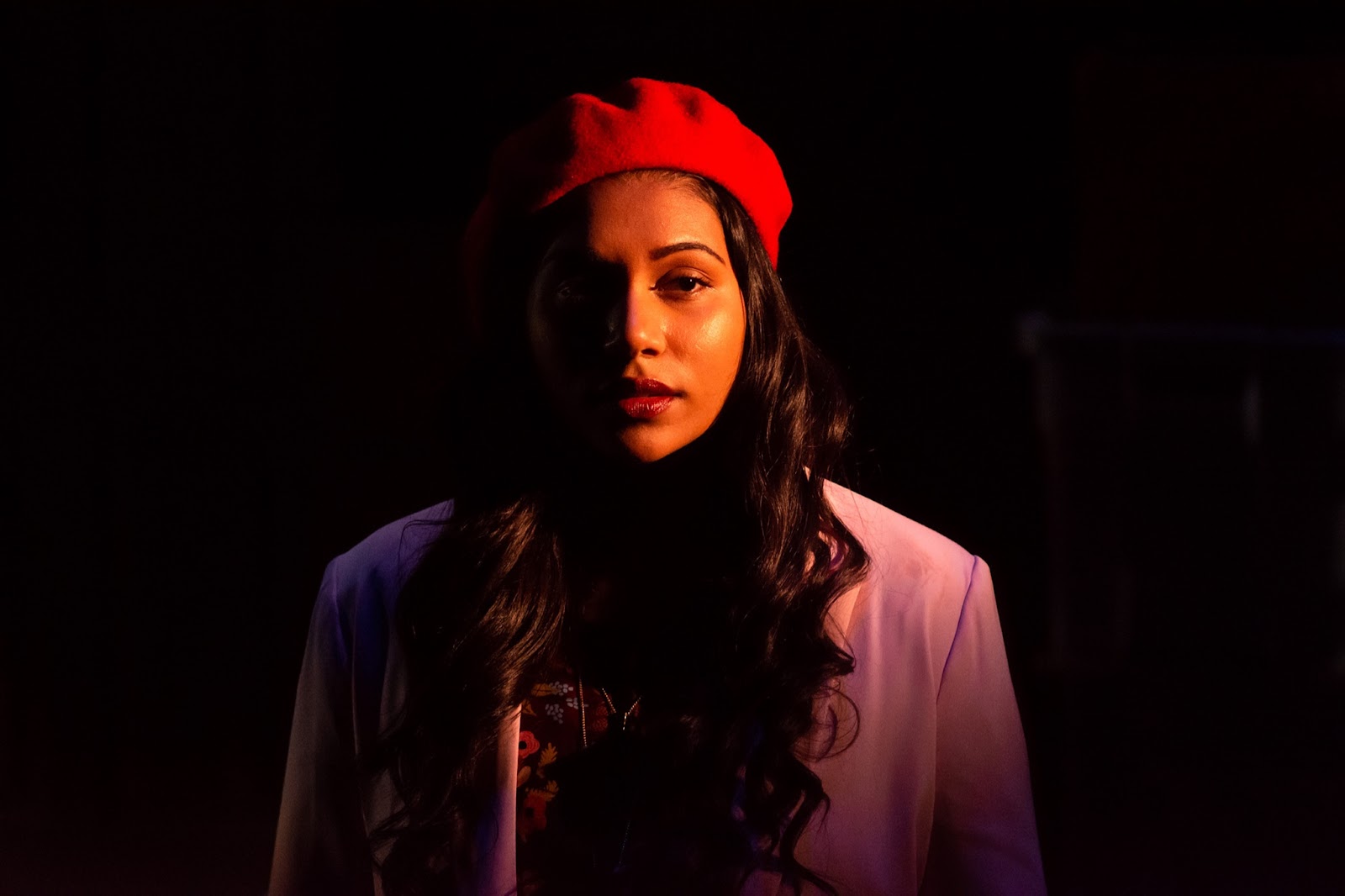
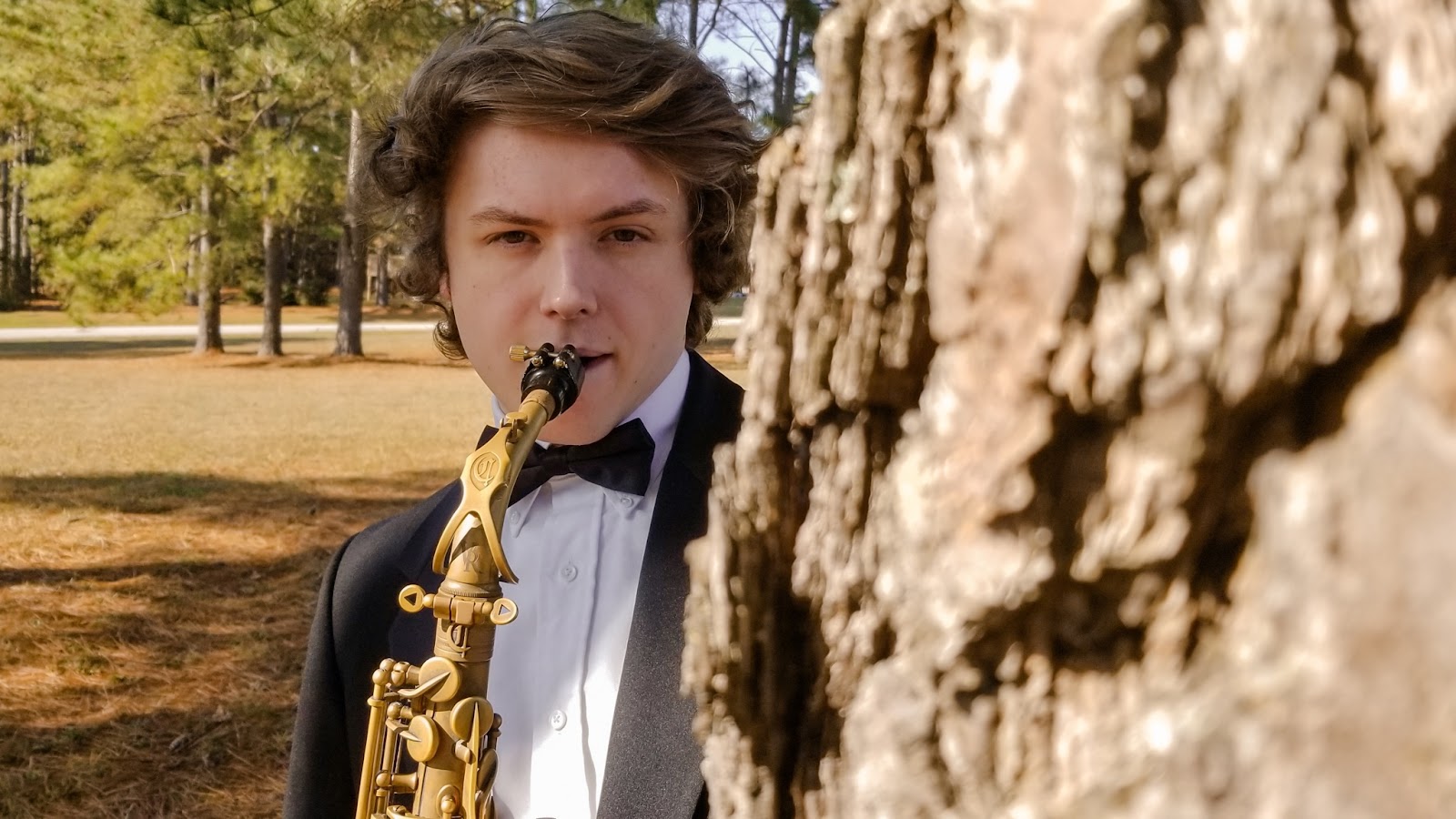
From October 18 through 21, Livewire, UMBC’s annual festival exploring the music of our times, takes center stage in Linehan Concert Hall. This year, Livewire investigates the power of music to transform. A recital by pianist Idith Meshulam Korman and her collaborator Reese Todd Basile opens the festival with an intimate view of how music has delivered hope and possibilities in a correctional facility; on Saturday, the Decoda ensemble will perform songs and music written by incarcerated musicians.
“We’re asking some challenging questions,” says Airi Yoshioka, professor of music and violinist, who serves as director of this year’s Livewire festival. “What is the role of music in our society? What are the inherent powers that lie within music to transform our lives?” At times, Livewire’s exploration of the transformative power of music is more subtle and layered, ranging from personal journeys through Covid to challenges of political instability.
Student, alumni and faculty collaborations and premieres
UMBC faculty, students, and alumni are featured throughout the festival, especially on Thursday, October 19, when the Ruckus faculty ensemble performs, and on Saturday, October 21, when UMBC’s music students present a concert of their own, as both performers and composers. Livewire includes premieres of works by music alumni Kathryn Blake ’21 and Karena Ingram ’16, a premiere by faculty member Linda Dusman, and premieres of works by student composers D’Juan Moreland and Aaron Statham. The music of Vittoria Tchotche, an exchange student from Piacenza Conservatory in Italy, is also featured.
While many college and university music programs across the country focus primarily on the music of the 17th, 18th, and 19th centuries, faculty at UMBC have embraced the exploration of the music of the 20th and 21st centuries. UMBC’s faculty have been advocates of new music for decades, stretching well beyond the inaugural Livewire festival in 2010.
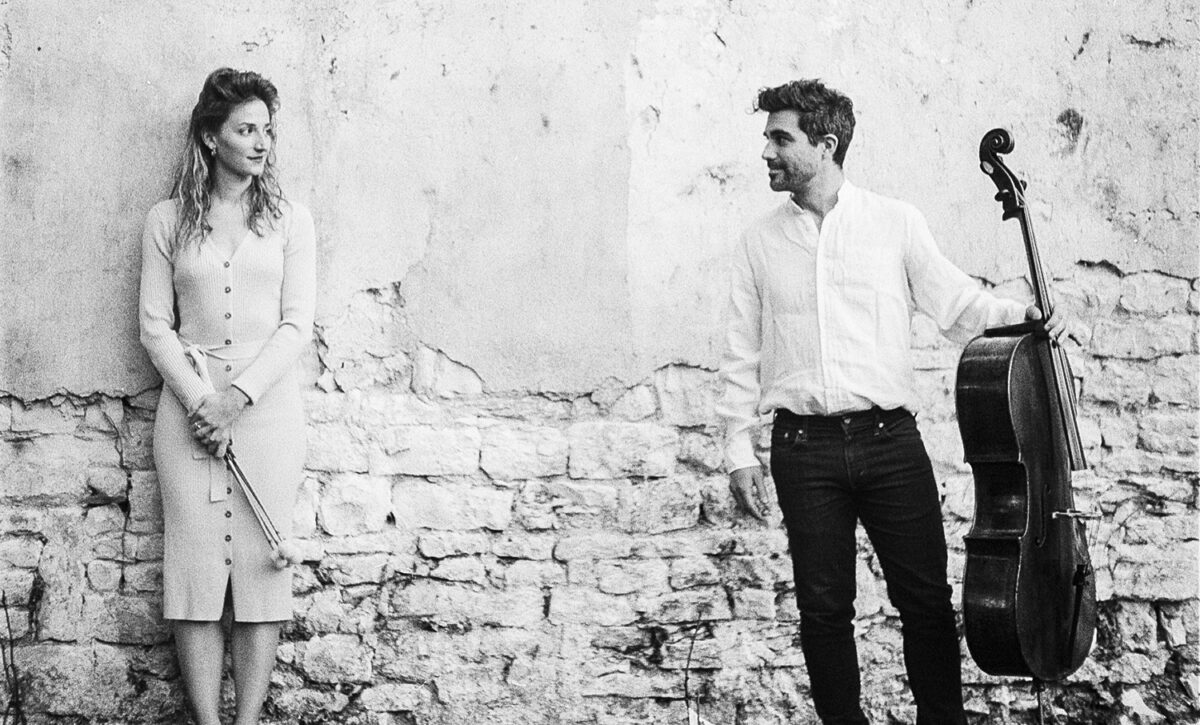
The Stick&Bow duo performs on Saturday, October 18.
Six concerts over four days
The complete concert line-up includes three evening and three daytime performances:
Financial support for Livewire has been provided by the Center for Innovation, Research, and Creativity in the Arts (CIRCA), with additional funding from the College of Arts, Humanities and Social Sciences, the Office of the Provost, the Linehan Fund for Excellence in the Arts, and an Alumni Engagement Grant.
Header image: the Decoda ensemble performs on Friday, October 20.
Kayla Tomas ‘23, information systems, maintained a challenging schedule during her undergraduate years. There were days she rose early, studied, and attended classes in the morning and afternoon, headed to volleyball practice in the late afternoon, paused a half hour for dinner, and then dashed off to lead a dance class in the evening. “It was the support of my friends, my family, and the mentors here at UMBC that made it easier,” she says.
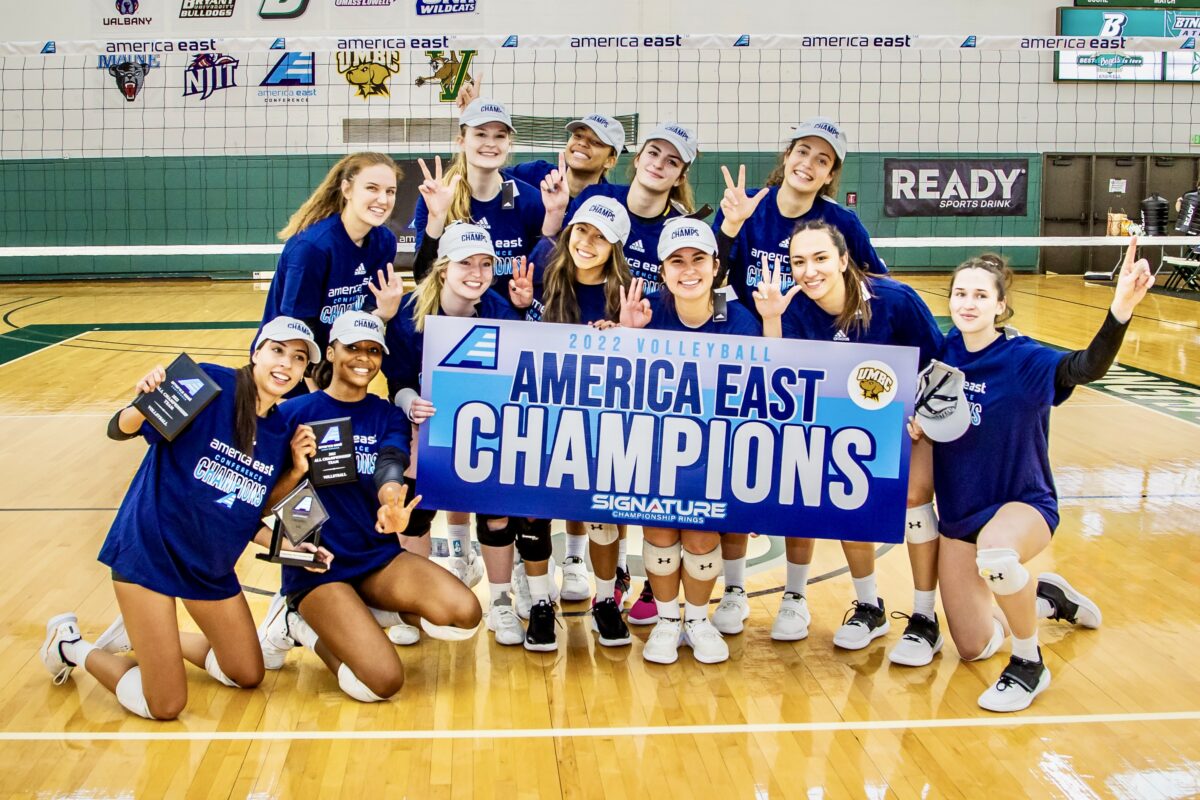
Despite the challenges of a hectic schedule, she wouldn’t have it any other way, given what she gained from each opportunity. As a student athlete, Tomas says that one of her best undergraduate experiences was being on the Division I women’s volleyball team that won the America East Title three years in a row.
“The friendships I made, the breakthroughs I experienced, and the challenges I faced, made me a stronger individual, and this couldn’t have happened without an amazing group of girls I had the privilege in sharing the court with,” Tomas says.
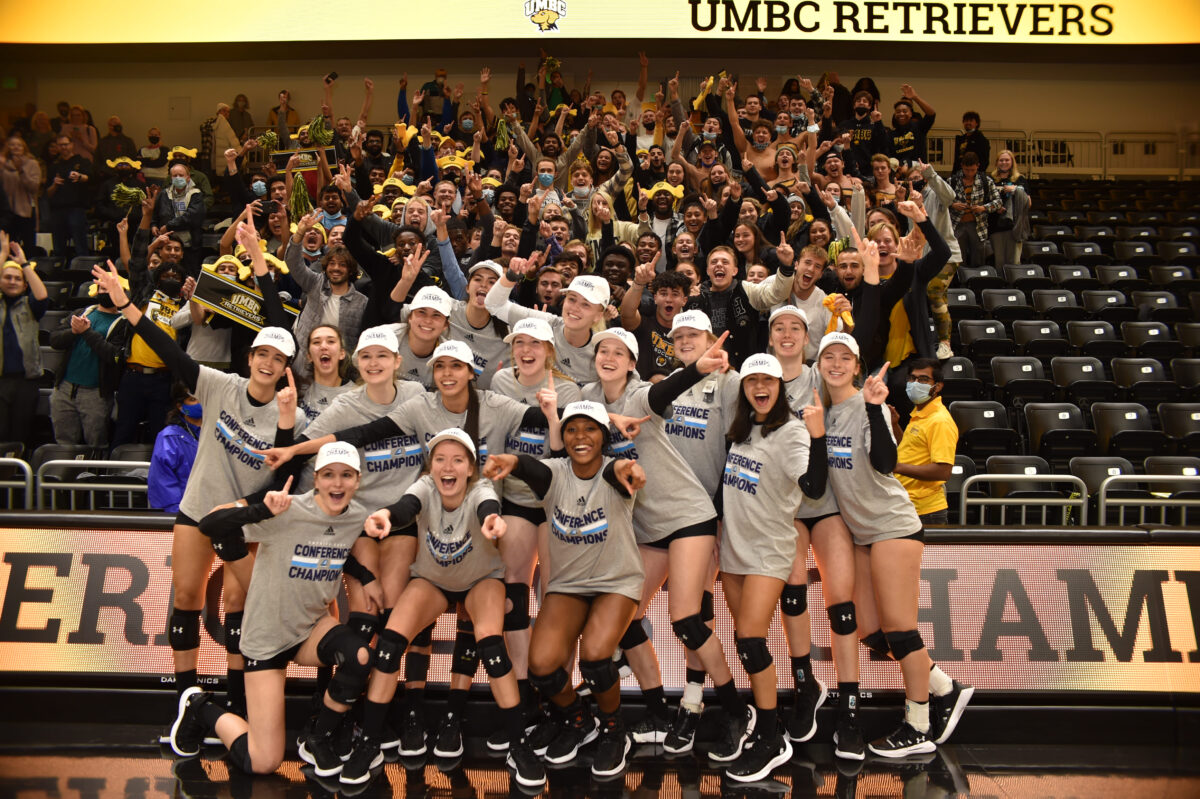
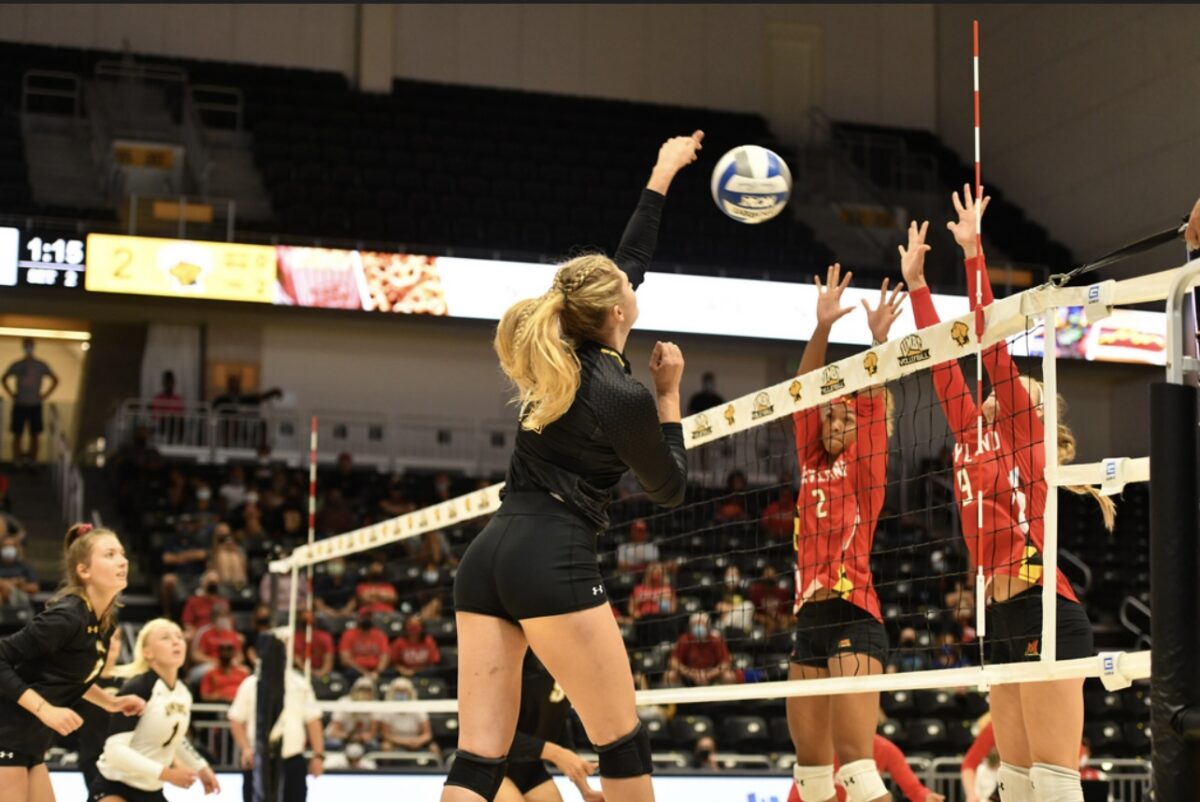
Kayla Tomas and her teammates celebrate a Division I women’s volleyball championship. (Image courtesy of Kayla Tomas)
“One person I really have to give credit and thanks to, and someone I will continue to maintain a connection with, is Erica D’Eramo, assistant director at CWIT,” Tomas shares. “She has helped me a lot. We have one-on-one meetings, and if I have a question that I can’t figure out, she always knows who to direct me to. But it doesn’t even have to be about school—it can be about just how I’m doing emotionally, mentally, or physically.”
Tomas has also received support from UMBC alumni through the Alumni Endowed Scholarship. “Receiving that award was such a proud moment, because I knew these scholarships are very competitive.” she shares. “They saw a young woman’s drive to make a difference, to support her community.”
Creating a new student group
Beyond her academic work and competition on the volleyball court, dance has played a major role in Tomas’s UMBC experience. She had enjoyed dancing from a young age, and while at UMBC began to attend dance classes and workshops in the Baltimore-Washington area. She noticed the lack of Latin dancing on campus and she knew of other students who shared the same passion, “and so I did something about it,” she says.
Tomas started to offer evening Latin dance classes in the Public Policy Building. “That was a lot of fun, seeing my friends support me,” she says, “and also support dance genres of different cultures.”
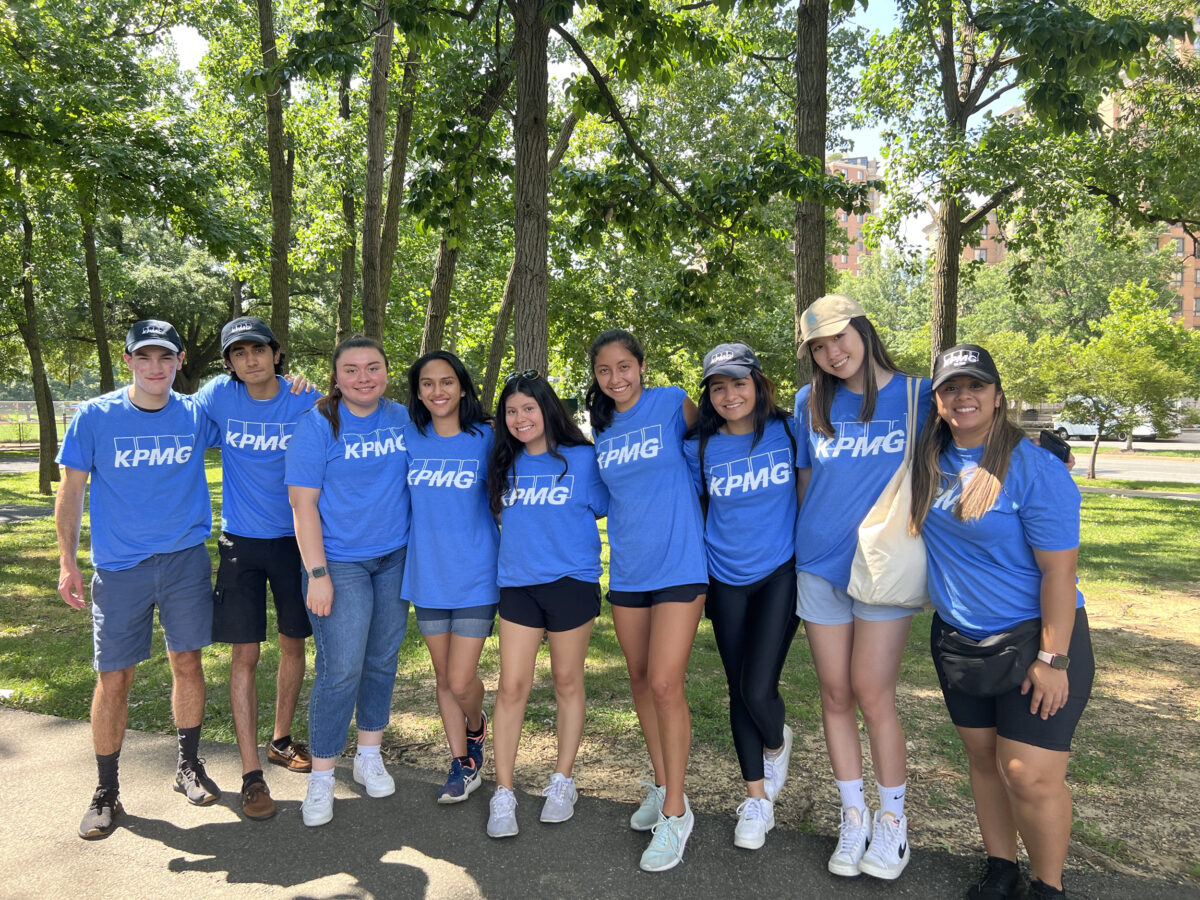
Kayla Tomas (fourth from right) poses with future colleagues at KPMG, where she will work as a cybersecurity consultant after graduation. (Image courtesy of Kayla Tomas)
“So many students here at UMBC are self-motivated” to try new things, observes Tomas. “They’re go-getters—that’s their mentality. And I love it because it rubs off on me, and I’m sure on other people.”
Emerging as a leader
The experiences of other graduating students mirror those of Tomas. When she began her undergraduate studies at UMBC in 2019, Sianna Serio ’23, computer science, had only one thought in mind: to focus on her academic studies. But within a short period of time, she became involved with the Resident Students Association, began to work for Residential Life, and gave President Valerie Sheares Ashby her first tour of campus.
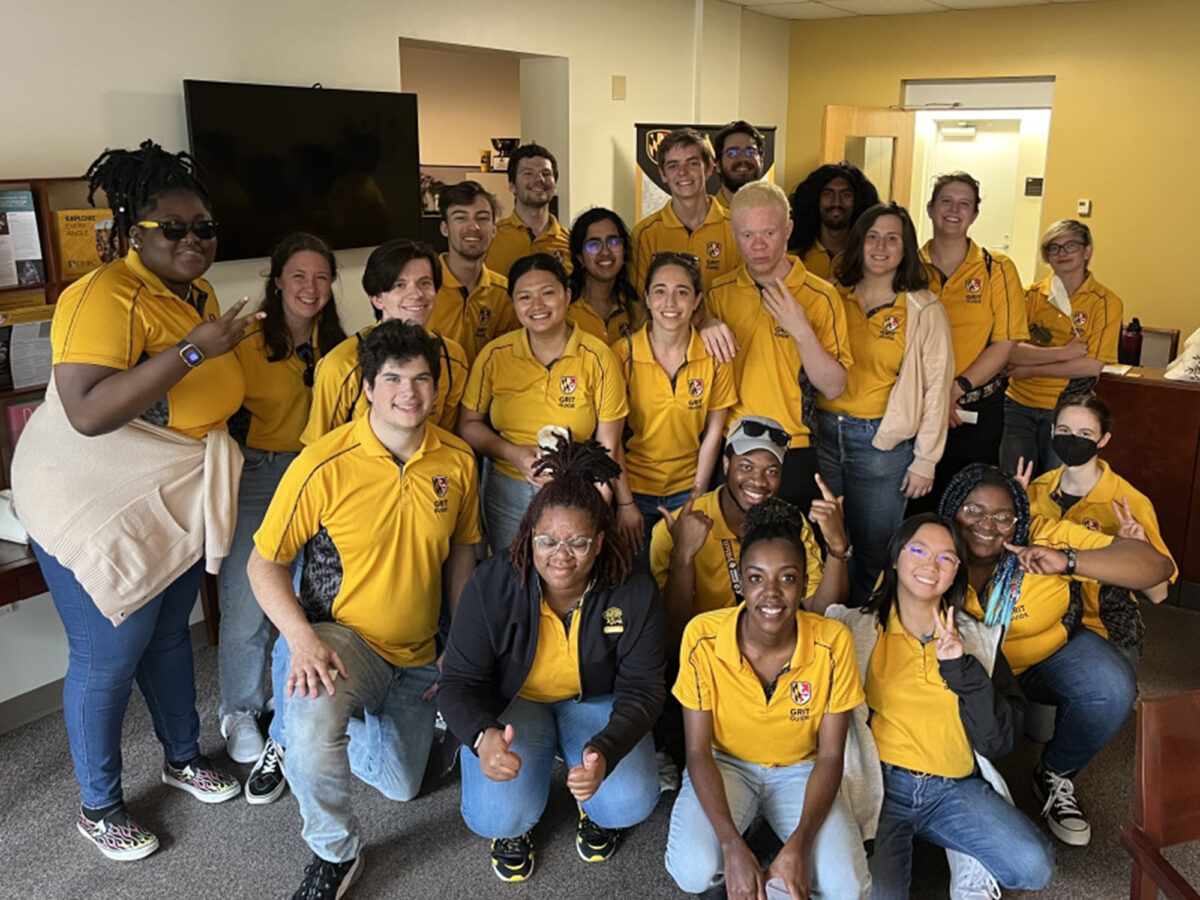
Sianna Serio (lower right corner, in black jacket) celebrates with Grit Guides for UMBC’s Just for Juniors event. (Image courtesy of Sianna Serio)
In her four years on campus, Serio participated in the Society of Women Engineers, Sign of Life, First Generation Network and the UMBC Crafters club. She credits faculty, staff and students alike for keeping her going, saying, “When you’re super focused on doing everything at once, sometimes you don’t get a chance to reflect on how that’s impacting you. My mentors did a really great job of providing support and checking in on me.”
Coaches support a student researcher
Emily Ferketic ’23, physics, enjoyed the remarkable distinction of having a paper published in a peer-reviewed journal under the mentorship of Sebastian Deffner, associate professor of physics. “He saw potential in me that I didn’t see in myself,” she shares.
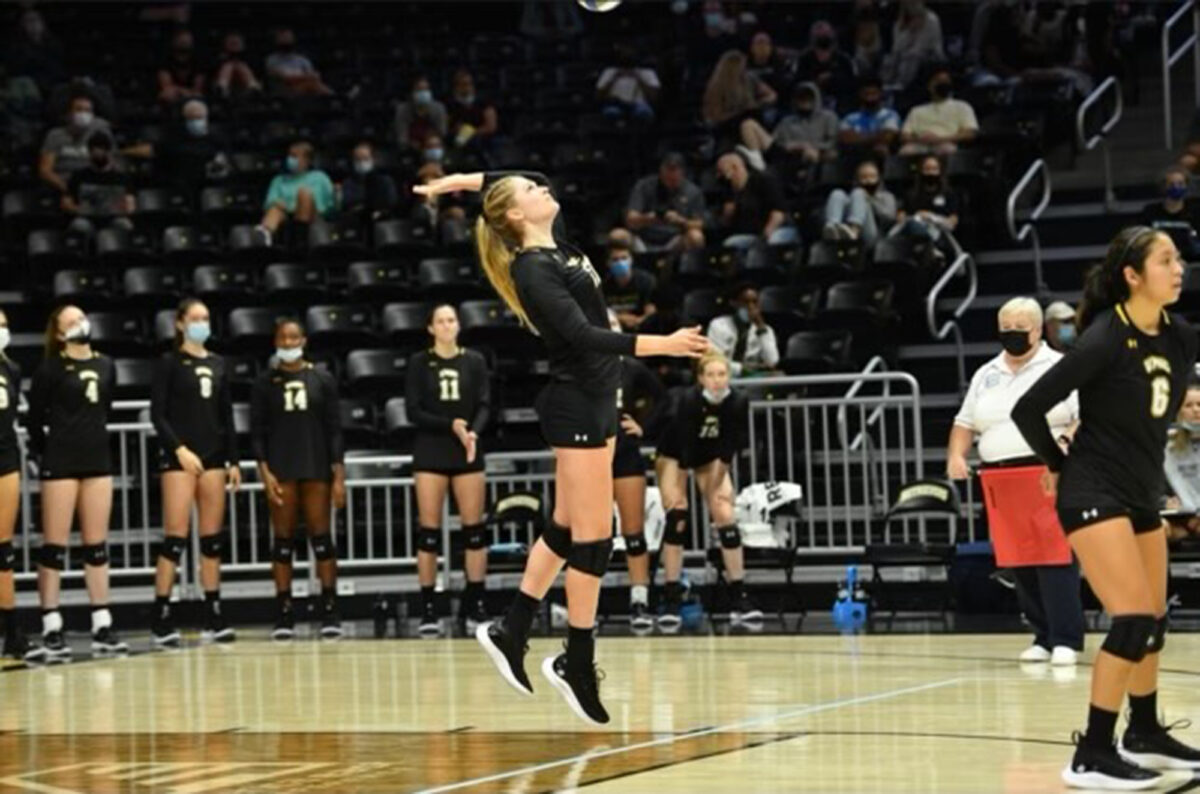
Emily Ferketic on the volleyball court. (Image courtesy of Emily Ferketic)
Despite her rigorous academic schedule, she also excelled on the volleyball court, becoming captain of UMBC’s Division 1 team. In 2021, she won the coveted America East Elite 18 award. Her coaches, too, have been especially engaged. “A few weeks ago, I was presenting my research at Undergraduate Research and Achievement Day. All of my coaches showed up, not only to support me, but also to learn about the work I’ve been doing when I’m not in the gym,” she shares.
A diverse, supportive community
Students who complete double majors face especially challenging demands. Avni Patel ’23, biological sciences and gender, women’s and sexuality studies, achieved academic excellence in both fields of study and also became a community leader at UMBC, revitalizing the Hindu Students Council. “The best part of my UMBC experience was finding a diverse community of peers and mentors where I was appreciated and encouraged to reach my full potential,” she says.
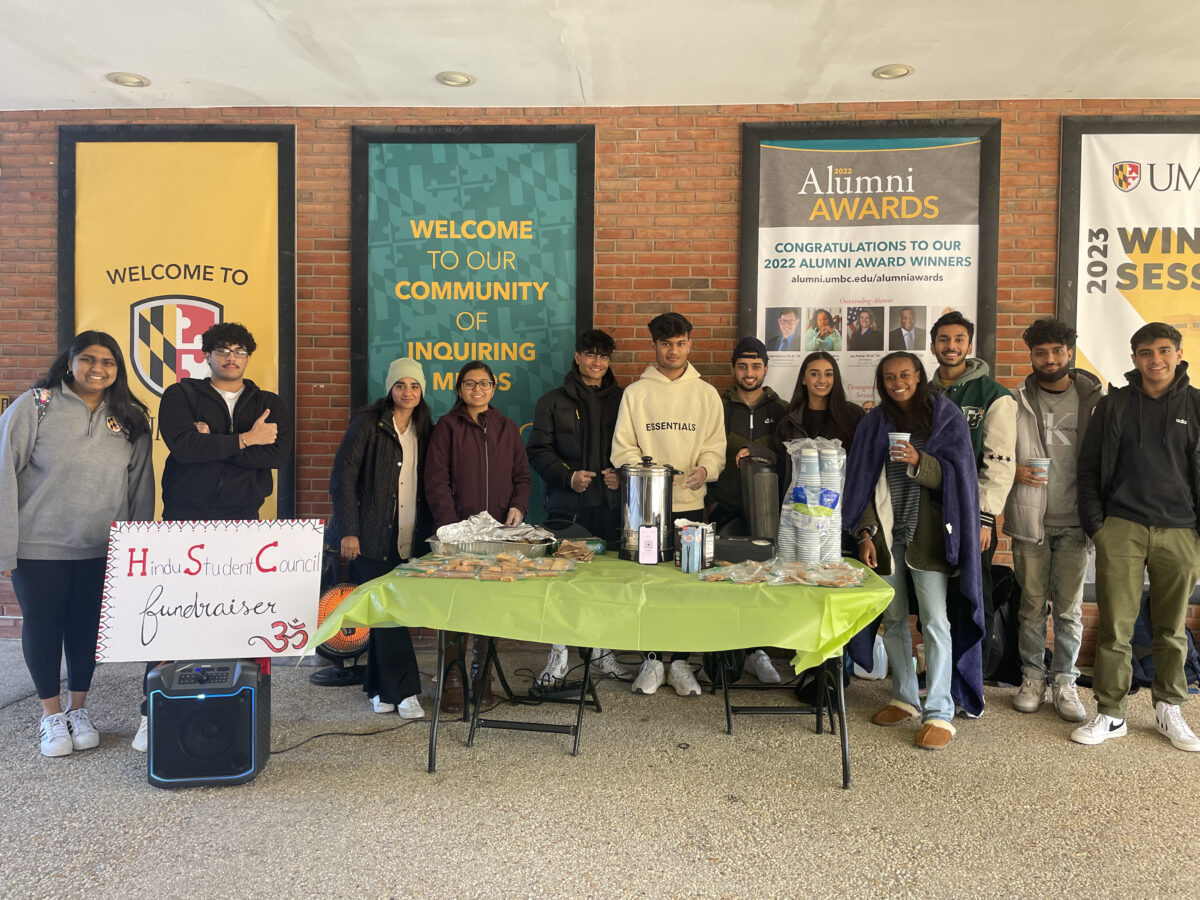
Avni Patel (fifth from right) with members of the Hindu Student Association at a fundraiser. (Image courtesy of Avni Patel)
One theme strongly resonates through the experiences of all these students: the UMBC community values the whole person. Whether a student is focusing on academic work, participating in student organizations, competing as an athlete, or engaging with any number of other activities, the university’s culture of mentoring and support is there to help them succeed.
Degrees: B.S., Physics Hometown: Pittsburgh, PA Post-grad plans: Ph.D. in Theoretical Physics from UMBC
As a scholar athlete, Emily Ferketic has excelled in both the research lab and on the volleyball court. Ferketic is a physics major who participated in the quantum thermodynamics research group with Sebastian Deffner, associate professor of physics.
A key mentor, Deffner helped guide Ferketic through the process of writing and submitting the article “Boosting thermodynamic performance by bending space-time,” which examines how to unlock the mysteries of black holes. It was published this January in the journal Europhysics Letters. She plans to continue working with Deffner for her Ph.D., focusing on quantum thermodynamics and shortcuts to adiabaticity.
While completing this intensive academic work, Ferketic also shined as a student athlete on UMBC’s Division 1 women’s volleyball team for four years. In 2021, she was named the America East Elite 18 Award winner, which recognizes the top performing student-athlete in the America East championships, and she later became captain of her team. She credits volleyball for teaching her valuable communication skills and discipline, and she has also developed connections with international teammates from around the world.
Has there been a mentor or fellow student who influenced your time at UMBC?
“Sebastian Deffner has been my mentor for about a year and a half (since the beginning of my junior year). I was taking his PHYS 303 class called Thermodynamics and Statistical Mechanics and I ended up doing well and really liking it. Given that, he invited me to audit some of his research group’s weekly meetings and, shortly after, I joined. We began working on my first research project and had my first professional paper published a little over a year later. He saw potential in me that I didn’t see myself, and I certainly wouldn’t have the success I do today if it weren’t for him. Now I am staying at UMBC for my Ph.D. as his research assistant.”
What has been the best part of your UMBC experience?
“My best UMBC experience was hosting President Sheares Ashby’s inauguration dinner. President Sheares Ashby personally asked Chris Slaughter ’23, M31 computer engineering, and me to host a dinner the night prior to her inauguration. I was exceptionally honored she asked me to represent the student body. In addition to the extraordinary experience, it also connected me to people I never thought I would have the privilege to meet.”
Degrees: B.S., Information Systems Hometown: Silver Spring, MD Post-grad plans: Cybersecurity Consultant for KPMG
Kayla Tomas cites UMBC’s Center for Women in Technology (CWIT) Scholars Program for empowering her and giving her a sense of community, especially as a Latina woman in STEM. In CWIT Scholars, a merit-based scholarship for talented undergraduates in computing and other technical fields, she developed friendships, found mentorship, and was able to create a close network of colleagues.
A star athlete, Tomas played on the women’s Division 1 volleyball team all four years of her time at UMBC, and helped guide the team to championships in three consecutive years. She participated as a member of the Hispanic Latino Student Union, and started her own Latin dance team. As a Grit Guide, she gave more than 50 tours of campus.
UMBC’s alumni community has celebrated and supported Tomas through one of the university’s coveted Alumni Endowed Scholarships, awarded to six students each year through support from UMBC’s Alumni Association.
The UMBC women’s volleyball team celebrates its 2022 America East Championship.
Has there been a mentor or fellow student who influenced your time at UMBC?
“Gina Ralston, a coordinator in admissions and orientation, was a staff mentor who influenced my time at UMBC. She continuously reassured me of how much of a positive impact I have. Gina was my boss when I worked as a Grit Guide. She made me feel appreciated and seen. I loved this job because I got to share my knowledge with younger students who are new to this process, maybe even women looking to be in STEM.”
What has been the best part of your UMBC experience?
“The best part of my UMBC experience would have to be winning the America East title in volleyball three years in a row. So much hard work, time, and dedication went into training, and it truly paid off. The friendships I made, the breakthroughs I experienced, and the challenges I faced, made me into a stronger individual and this couldn’t have happened without an amazing group of teammates. It has always been a dream of mine to play collegiate volleyball at the highest level and I achieved that. Seeing my family at every home and away game always put a smile on my face. They are my rock and have been through the highs and lows with me.”
Degrees: B.S., Computer Science Hometown: Bel Air, MD Post-grad plans: Fulbright Scholarship to teach English in Slovakia
One of Sianna Serio’s most memorable UMBC experiences was giving a campus tour to UMBC President Valerie Sheares Ashby during her first day as the university’s new leader. Serio was ideally suited for the job, having worked for Residential Life as a resident assistant and for the Office of Undergraduate Admissions and Orientation as team lead for UMBC’s orientation peer ambassadors and as team lead for the Grit Guides, training and managing the rest of the campus tour guide team.
Prior to Serio’s first full semester at UMBC, she traveled to the University of Bristol to participate in the first Dawg Days: Abroad program, studying comparative politics. So, it was there in Bristol, England, that she first connected with the UMBC community. Since then, she has been involved in many UMBC student organizations, including the Society of Women Engineers, Sign of Life, First Generation Network and the UMBC Crafters club.
The Center for Women in Technology (CWIT) has been the academic focal point for Serio during her time at UMBC. She has been a CWIT Affiliate from the start, applied to live on the CWIT Living Learning Community floor for her first academic year, and volunteered for several events for prospective students. Last academic year, she served as a CWIT Peer Mentor for three incoming first-year students majoring in computer science. With her experience and enjoyment as a mentor, she became the CWIT Peer Mentoring Program student lead for 2022–2023 and has hosted several successful events for the 94 members of the program.
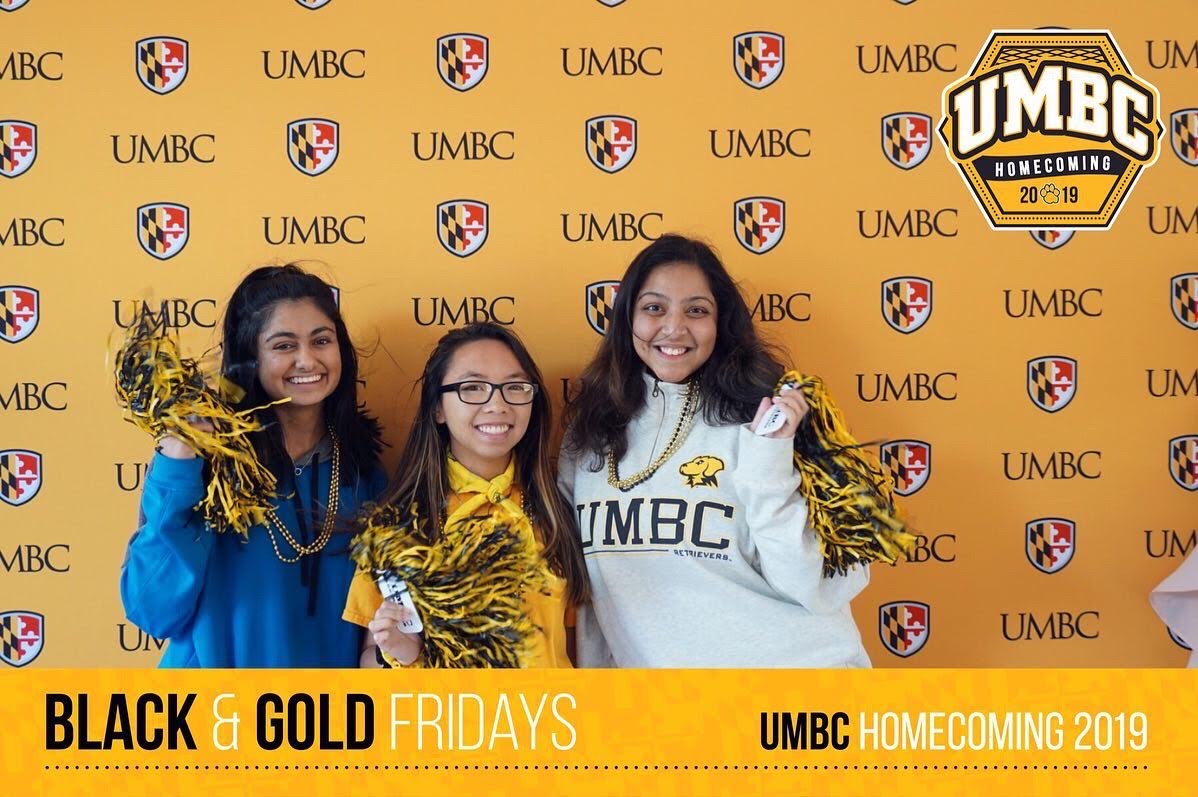
Serio (center) enjoying the 2019 Homecoming with friends.
Has there been a mentor or fellow student who influenced your time at UMBC?
“Naomi Corns was a student a year above me who strongly influenced my first two years at UMBC. We originally met through a sociology class. While we weren’t the same major, we had a lot in common in personality and drive. After getting to know each other both inside and outside the classroom, she was one of the people to recommend me to be a resident assistant and she inspired me to become an active member of the UMBC community. She had also been an orientation peer ambassador while at UMBC, which I pursued as well. If it wasn’t for her leading by example and showing her support, I don’t think I would have been where I am today as a part of UMBC or as a student.”
What has been the best part of your UMBC experience?
“Everyone gets to choose how they want to show up everyday and the mark they want to make, and UMBC students are given so many opportunities to do so. When I came to UMBC, I had no intention of getting involved and putting myself out there. But after seeing so many opportunities laid out in front of me after just a few weeks on UMBC’s campus, it was almost impossible for me to avoid. I was constantly encouraged by the people around and me and I have grown in every aspect of my life.”
Degrees: B.S., Biological Sciences; B.A., Gender, Women’s, and Sexuality Studies Hometown: Ellicott City, MD Post-grad plans: Medical school
Avni Patel has completed a demanding double major in biological sciences and gender, women’s, and sexuality studies while also emerging as a leader among her peers, with a focus on building community. She has served as secretary of the Hindu Students Council (HSC), as a member of the UMBC Red Cross, and as vice president of the UMBC Global Brigades, the campus chapter of the world’s largest student-led global health and sustainable development organization.
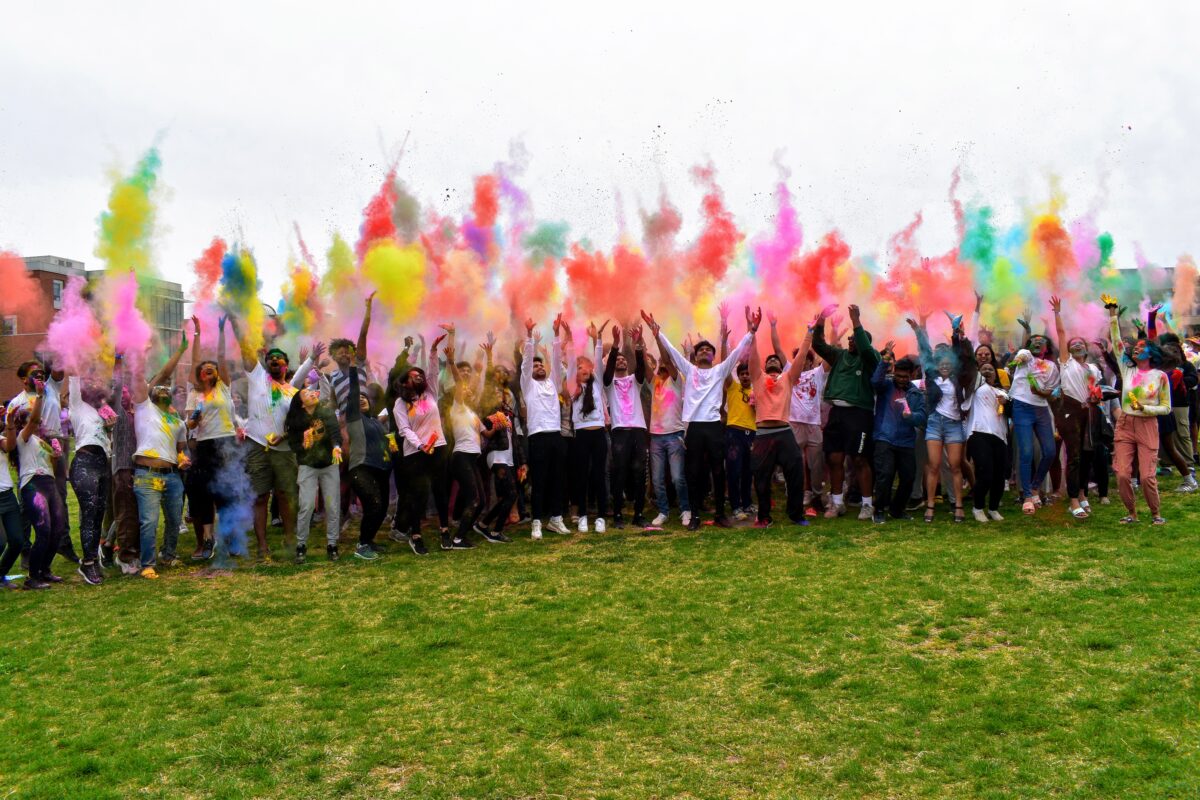
Her executive leadership with HSC has been particularly meaningful. Wanting to create a sense of community with other Hindu students and students from different backgrounds on campus, Patel worked with student colleagues to revive the dormant organization. She cites her experiences with HSC as giving her key leadership and problem-solving skills. After numerous fundraisers, meetings, and networking, the HSC held a spring 2023 Holi celebration (the Festival of Colors), attracting more than 700 attendees from across the campus community.
In addition to undergraduate research in the biological sciences lab of Jeff Leips, Patel served as a learning assistant for introductory chemistry classes and as an exam proctor for courses in biological sciences and chemistry.
The Hindu Students Council 2023 Holi Celebration on Erickson Field
Has there been a mentor or fellow student who influenced your time at UMBC?
“Dr. Jeff Leips and Dr. Kathryn Kein have been major influences and supporters. In my first year, Dr. Leips took the time out to explain certain concepts to me and ensure that he answered any questions I had. The year after, he served as a mentor and I joined his genetics research lab, where he offered me guidance on my research. Dr. Kein has been my professor for multiple gender, women’s and sexuality studies courses and my advisor in the program as well. Today, she is not just my professor, she is my mentor. She has always advocated for me and provided support for my capstone research project and future endeavors.”
What has been the best part of your UMBC experience?
“The best part of my UMBC experience was finding a diverse community of peers and mentors where I was appreciated and encouraged to reach my full potential. Being able to be involved in different organizations and experiences at UMBC allowed me to immerse myself in an environment that was academically and socially nourishing. One of the things I appreciate the most about UMBC is its commitment to diversity. As someone who did not grow up with people that looked like me, UMBC was a breath of fresh air. I was able to form relationships and connect with so many different people.”
The Eileen J. Garrett Parapsychology Foundation Collection contains more than 12,000 volumes and more than 100 periodicals, including rare books on and early journals devoted to psychical research. The collection emphasizes the literature of contemporary parapsychology and those publications that approach the subject from objective and analytical points of view.
The library also maintains strong sections on the history of psychical research and parapsychology, including early Spiritualism, mysticism and relevant philosophical works, as well as on mediumship, apparitions, hauntings, poltergeists, near-death and out-of-body experiences, experimental research on extrasensory perception, psychokinesis and precognition. A number of relevant encyclopedias, doctoral dissertations on parapsychological topics, introductory textbooks, and biographies of researchers, psychics and mediums are also on hand.
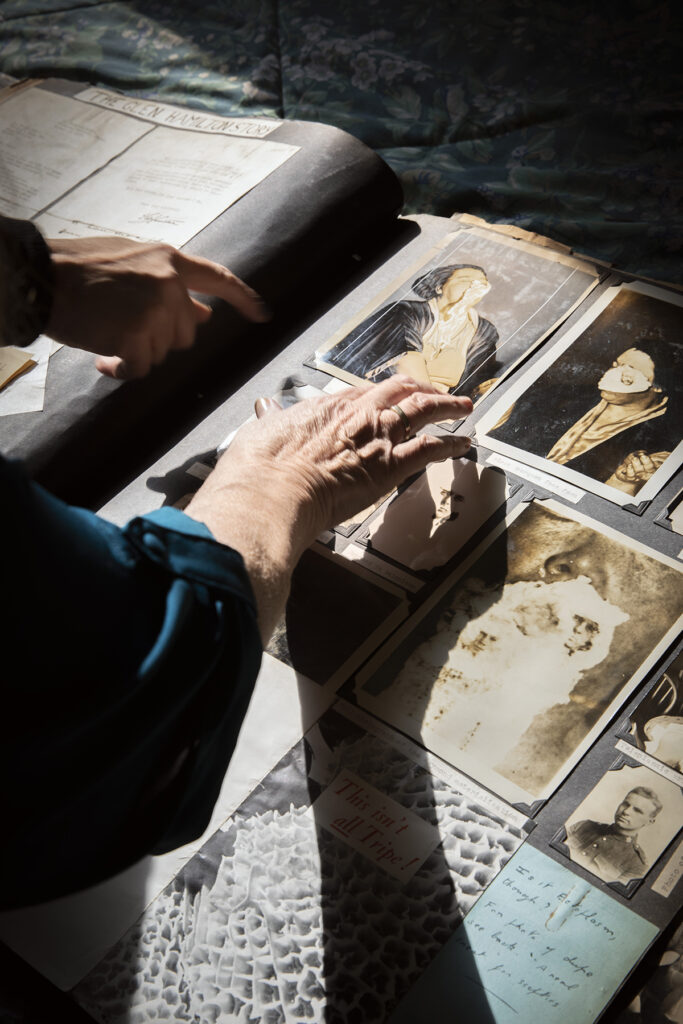
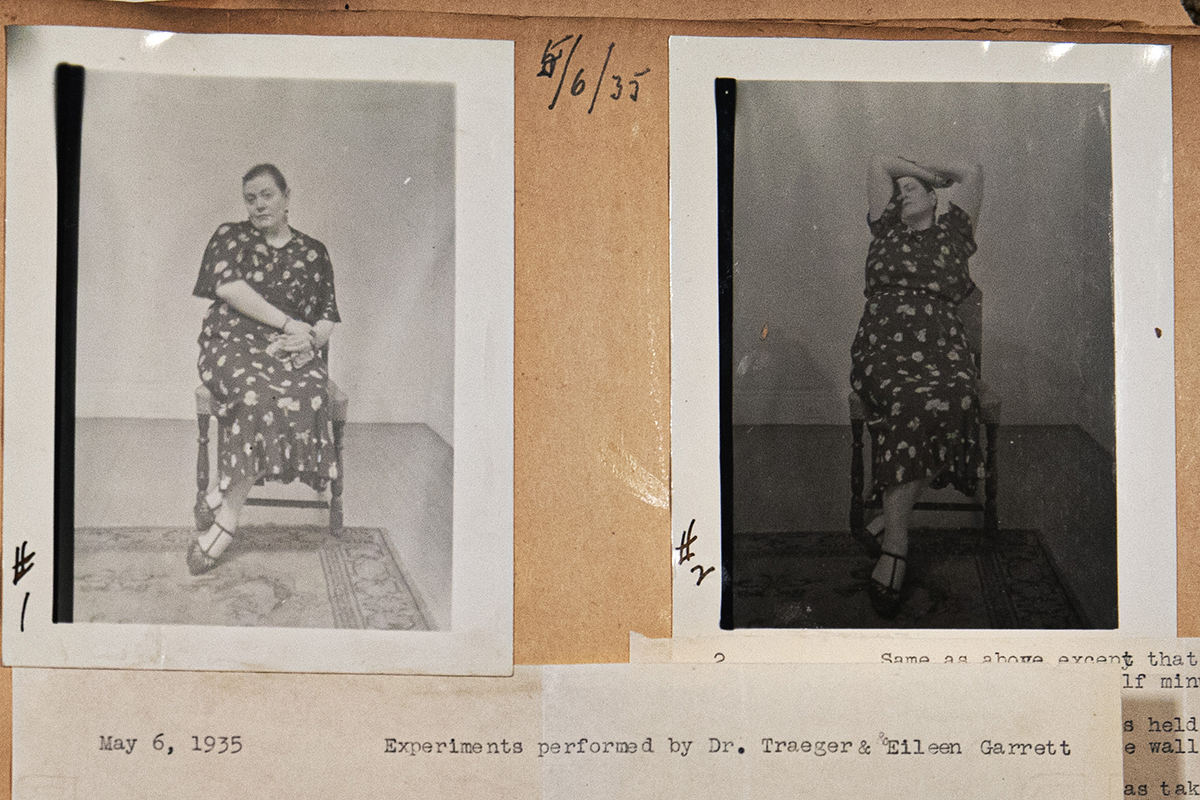
The archival collections comprise the history and proceedings of the Parapsychology Foundation and its annual conferences and publications, as well as field work, research notes, and manuscripts from prominent parapsychologists. Among the people and topics included in the collection are: the Bindelof séance phenomena, research files of psychic researcher Hereward Carrington, the poltergeist investigations and personal scrapbook of Nandor Fodor, scrapbooks compiled by Eileen J. Garrett, records pertaining to the R101 Airship crash, and spirit recordings captured by Hans Holzer.
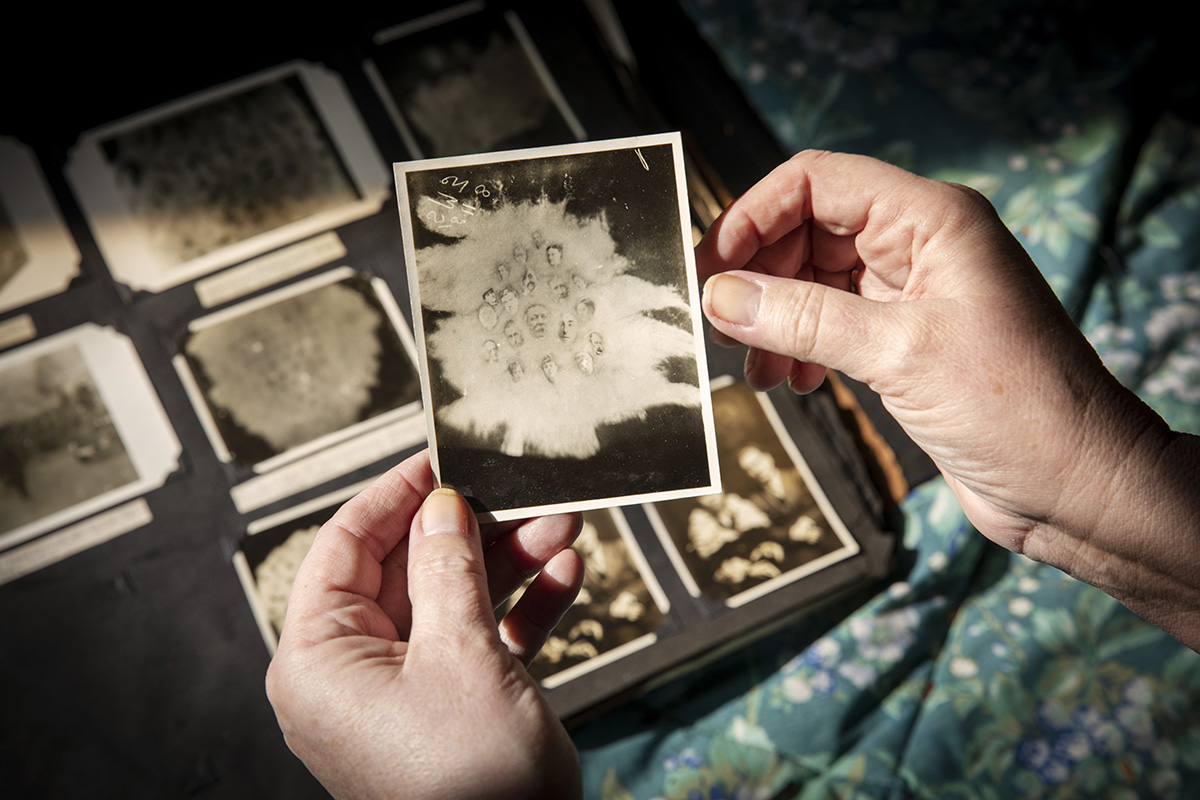
The collection features original manuscripts by Harry Price and others pertaining to the infamous Borley Rectory case, popularly known as the most haunted house in England. It also contains Montague Ullman and Stanley Krippner’s dream telepathy research and many other subjects. Audio visual materials include over 600 audio and video recordings of conferences and lectures, spirit photographs, glass slides, target images, psychokinetic objects, and an ESP testing machine.
The Parapsychology Foundation’s rich history
The non-profit Parapsychology Foundation provides a worldwide forum supporting the scientific investigation of psychic phenomena. The Foundation gives grants; publishes pamphlets, monographs, conference proceedings, and the International Journal of Parapsychology; hosts the Perspectives Lecture Series; conducts an outreach program; and publishes books on the subject through its imprint, Helix Press.
Materials from the Eileen J. Garrett Parapsychology Foundation Collection. (Image courtesy of Shannon Taggart)
The Parapsychology Foundation was founded by trance medium and research advocate Eileen J. Garrett and congresswoman Hon. Frances P. Bolton in 1951 to encourage and support impartial scientific inquiry into psychical aspects of human nature such as telepathy, clairvoyance, precognition, and psychokinesis.
A participant in some of the groundbreaking psychic experiments of the 1920s and 1930s, Garrett understood that psychical research was ignored by a large segment of the academic community. She knew that practical aid for scholars and scientists working in this area, now known as parapsychology, would not be available from most universities nor from other foundations. The Parapsychology Foundation, as envisioned by Garrett, fulfilled this need by providing a worldwide forum for the support of scientific exploration of psychic phenomena.
Establishing a new home for the collection
The Foundation recently decided to transfer its library to an American institution that would be willing to care for, interpret, and provide public access to the Foundation’s collection of scholarly materials. UMBC Special Collections was awarded this major gift thanks to its demonstrated commitment to preservation and accessibility.
Parapsychology Foundation president Lisette Coly states, “While bittersweet to relinquish the care of our library into the most capable hands of UMBC Special Collections, we are confident and excited that it has found a perfect harbor for its continuation and growth. Lovingly maintained throughout our 72 years of existence, we are assured of its preservation and growth as a valued resource disseminating quality information concerning a complex and often misunderstood subject. We eagerly look forward to future collaboration.”
“We are thrilled to bring this important collection to UMBC,” says curator and head of UMBC Special Collections Beth Saunders. “I believe that the Garrett Collection is exemplary of the spirit of free intellectual inquiry that our materials are intended to support.”
Saunders notes, “The collection includes materials relevant to a wide range of academic disciplines including anthropology, art history, sociology, philosophy, psychology, and physics, and addresses fundamental concerns of human experience.”
Materials from the Eileen J. Garrett Parapsychology Foundation Collection. (Image courtesy of Shannon Taggart)
Jule Eisenbud was heavily involved with psychoanalysis and psychology and was a clinical faculty member at the University of Colorado, and an honored member of the American Society for Psychical Research and Parapsychology Foundation. Eisenbud met his main subject, Ted Serios, in 1964 in Chicago. At the time, Serios was an unemployed bellhop who claimed that he had the ability to put images on film with his mind. Although initially skeptical of Serios, a significant number of successful experiments under tightly controlled conditions convinced Eisenbud that Serios’s talent was legitimate.
Ted Serios’s ability, which came to be known as “thoughtography,” gained national attention with his appearance on “The Tonight Show” with Johnny Carson. The Eisenbud Collection includes over 2,000 photographs and is the subject of a forthcoming exhibition organized by Emily Cullen, curator of exhibitions at UMBC’s Albin O. Kuhn Library Gallery, for The Image Centre at Toronto Metropolitan University, as well as a book to be published by Atelier Éditions, both in 2023.
Saunders envisions similar opportunities for the Eileen J. Garrett Parapsychology Foundation Collection. “We plan to focus first on making the collection accessible by cataloging the books and serials and creating a Finding Aid for the archival documents. We also plan to publish detailed research guides to aid scholars in discovery of relevant materials. In the future, there are a number of digitization projects that would make the highest research value materials more widely available, and I’d like to work with students to curate an exhibition from the collection in the Library Gallery.”
Materials from the Eileen J. Garrett Parapsychology Foundation Collection. (Image courtesy of Shannon Taggart)
UMBC’s Special Collections
The Special Collections department collects materials of enduring historical and cultural value—housing, preserving, and making accessible materials that are original, rare, unique, fragile, and archival. The collections and staff support UMBC’s research and educational mission and its dedication to cultural and ethnic diversity, social responsibility, and lifelong learning. Topical collecting areas are particularly emphasized within the fields of photography, the history of the biological sciences, the Baltimore Sun newspaper, science fiction literature and popular culture, parapsychology, alternative presses, UMBC history and records, and Maryland manuscript, photograph, and newspaper collections.
Saunders notes that Special Collections will continue to work with the Parapsychology Foundation to grow the collections and encourage its scholarly use. The Parapsychology Foundation hopes to administer library grants that will fund researchers visiting the Garrett Collection at UMBC. The organizations would also like to host joint public programs and academic symposia on topics related to the collection in the future.
For the past year, UMBC’s Timothy Nohe, professor of visual arts, has served as a Fellow of the American Council on Education (ACE), the preeminent national program for cultivating leaders in higher education.
Since its inception in 1965, the ACE Fellows Program has strengthened institutions in American higher education by identifying and preparing more than 2,000 faculty, staff, and administrators for senior positions in college and university leadership through its distinctive and intensive nominator-driven, cohort-based mentorship model. More than 80 percent of past Fellows have gone on to serve as chief executive officers, chief academic officers, other cabinet-level positions, or deans following their fellowship.
The program combines leadership retreats, interactive learning opportunities, visits to campuses and other higher education-related organizations, and an extended placement at another higher education institution. This combination of elements works to condense what would otherwise be years of on-the-job experience and skills development into a single year.
“Long a leader in shared governance and arts research, Tim Nohe is admired across UMBC for his accomplishments and particularly for his values,” says Provost Philip Rous. “He has extended UMBC’s tradition of strong faculty leaders participating in this prestigious national program. And as a practicing artist, he has brought an important, distinctive perspective to his ACE fellowship cohort.”
Residency at Franklin & Marshall
Nohe was one of only thirty-eight ACE Fellows selected from across the nation in 2020, through a rigorous nomination and review process.
Because of the pandemic, his entire fellowship cohort was delayed by one year, but he used that time to expand his understanding of issues in higher education. When the program relaunched for 2021–22, ACE matched Nohe with Franklin & Marshall College in Lancaster, Pennsylvania as the site for his fellowship experience.
During the placement, Fellows observe and work with the host institution’s president and other senior officers, attend decision-making meetings, and focus on issues of interest. Fellows also conduct projects of pressing concern for their home institution, with the goal of implementing their findings when they return after their fellowship year.
Nohe explored issues around faculty governance, internationalization, diversity, equity and inclusion, and leadership while at Franklin & Marshall. He appreciates the combination of autonomy and open door access to senior leaders and faculty that he experienced there.
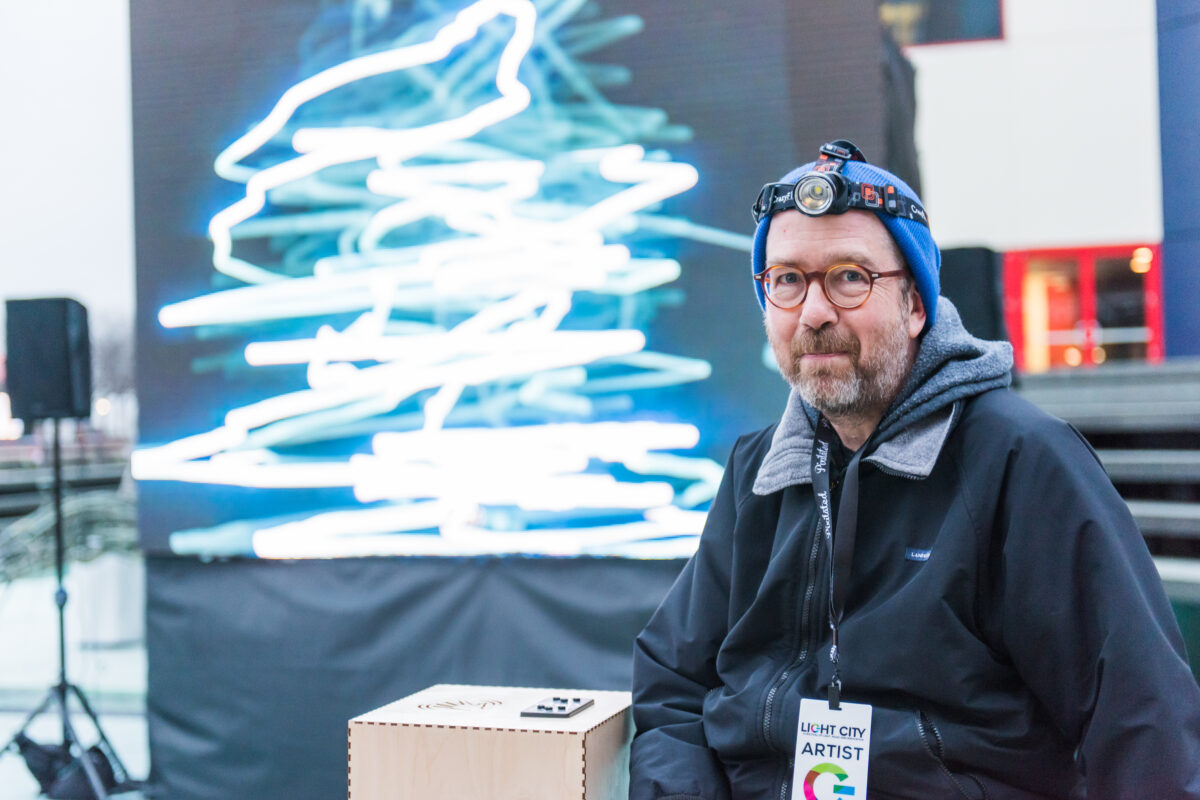
Timothy Nohe poses with interactive artwork he developed for the 2017 Light City festival. (Marlayna Demond ’11/UMBC)
“At Franklin & Marshall, I’ve gained perspectives on enabling students to secure their futures, exploring topics from wellness to maintaining college access and affordability,” he notes. “As Fellows, we learn to see the broad national landscape.”
At the same time, Nohe was able to share experiences and insight, developed over years at UMBC, with campus leaders and Franklin & Marshall.
Returning to UMBC with new-found insight
At the conclusion of the fellowship year, ACE Fellows return to their home institutions with new knowledge and skills. They also join a robust network of peers across the country and abroad—current and emerging higher ed leaders who are committed to tackling challenges in the field.
In pursuing this fellowship, Nohe says, “It was important to me to obtain a broader overview that would make me a stronger leader on campus.” He had already begun to see “a broader picture of higher ed” through founding and leading CIRCA at UMBC. But, he says, “I wanted to position myself to foster higher education in a very challenging time.” The ACE Fellowship gave him the broader perspective he was seeking.
Nohe cites his background in the arts as an important facet of his ACE Fellowship experience. “Artists have superpowers to reach across disciplines, and I’ve been really grateful as a past director of CIRCA to see that happen—how much synergy is developed,” he says. “In my work as an ACE Fellow, I’ve seen higher education leaders taking an interest in breaking down academic silos.”
“UMBC cares about the broader good of higher education,” Nohe shares, “and clearly Franklin & Marshall believes in it as well.” Now, he looks forward to returning to the UMBC community with new skills that can help lead the university on its path forward.
UMBC’s Postdoctoral Fellowship for Faculty Diversity received over 500 applications this year, despite a pandemic that moved the entire process online for the first time. Emerging from that incredibly talented applicant pool was Tahir Hemphill, visual arts, who came to UMBC this fall as the inaugural Fellow for Faculty Diversity in the Visual Arts. This new track is specifically designed to support creative and artistic practitioners.
Hemphill is one of two Postdoctoral Fellows for Faculty Diversity to join UMBC’s College of Arts, Humanities, and Social Sciences this fall. He has developed a multifaceted practice as a creative technologist, multimedia artist, and design researcher. He uses his varied backgrounds in engineering and the arts to create graphic designs and projects that inform audiences about the world in which they live.
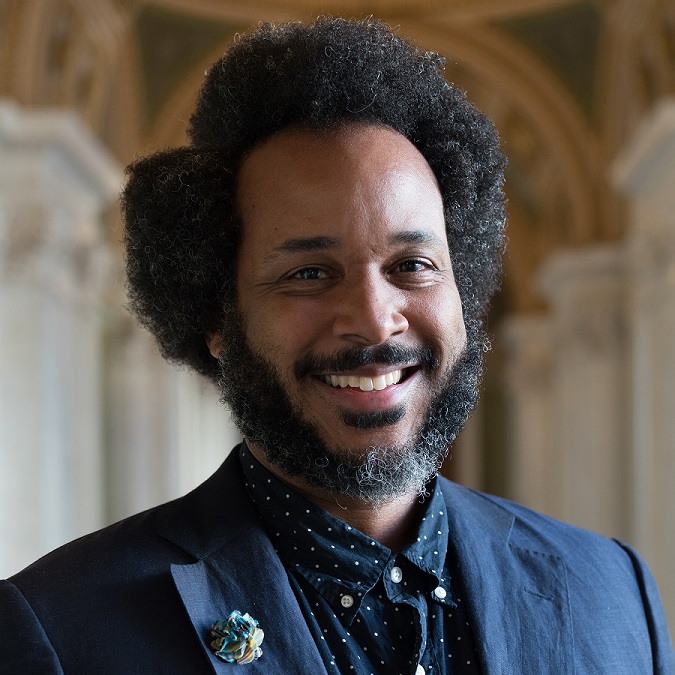
Tahir Hemphill, inaugural Fellow for Faculty Diversity in the Visual Arts. Photo courtesy of Tahir Hemphill.
“I was groomed to be an electrical engineer,” Hemphill says. “So the physical sciences—chemistry, math, physics—play an important role in how I see, view, and understand the world.” Much of his current work utilizes computational analysis to explore what is usually unseeable in the semantic structures within large bodies of archival text, working especially within the world of hip-hop.
Developing his focus
Coming of age in the 1980s, Hemphill divided his time between practicing various elements of hip-hop culture and exploring cyberspace via a dial-up modem. A fundamental affinity between hip-hop culture and hacking would define the trajectory of his professional and creative life.
Starting in middle school, he accessed engineering-oriented opportunities to build and create, acquiring tech knowledge and skills. At the same time, hip-hop’s “golden era” informed his perspectives on popular culture and politics. He has synthesized the theoretical frameworks behind these two educational influences into his current creative endeavors.
Over the past 20 years, as an artist who works with technology, Hemphill has found inspiration in scientific work that pushes investigation to artistic limits and artistic work that pushes repetition towards scientific method. His reverence for the scientific method as well as his irreverent tinkering with it fuel this productive tension between art and technology.
A distinctive career path
Hemphill arrived at UMBC with broad experience in higher education, commercial design, and the non-profit sector. After earning a B.A. in Spanish language from Morehouse College, a strategic planning certificate from Miami Ad School, and a M.S. in communications design from the Pratt Institute, he went on to receive a Creative Research Fellowship at Carnegie Mellon University and a Hiphop Archive Fellowship at the W.E.B. Du Bois Institute for African and African American Research at Harvard University.
He has served as the Harissios Papamarkou Chair in Education at the John W. Kluge Center at the Library of Congress, and as Behavioral Science Resident at the Rockefeller Foundation Bellagio Center.
In the commercial sector, artist residencies at Spotify and Autodesk Pier 9 have recognized his creative work. He’s also received grants from the National Endowment for the Arts and the Saul Zaentz Innovation Fund. Additionally, the Talk to Me exhibition at the Museum of Modern Art in New York features his work.
Hip-hop as a lens on culture
In recent years, Hemphill’s work has concentrated on the intersection of hip-hop and data, manifested especially by the Rap Research Lab, a creative technology studio he founded to explore rap as a cultural indicator. The lab uses a hip-hop framework to develop new ways for people to engage with data and culture.
“Hip-hop is the most influential art form in the world today,” asserts Hemphill. “Whenever there’s an uprising in a country, there’s been a hip-hop song that goes along with it. People around the world tend to tap into the part that was for expressing opinions, revolution, going against the status quo.”
A Mapper’s Delight
In a recent presentation through UMBC’s Center for Innovation, Research, and Creativity in the Arts (CIRCA), Hemphill shared details on A Mapper’s Delight, an interactive virtual and augmented reality tool.
“It’s a sculptural data visualization,” Hemphill says, “and it’s built on a semantic relationship of hundreds of thousands of rap lyrics. It shows how…rappers cover the globe with their lyrics with references to cities, neighborhoods, regions.” He shares that “it looks at the geography of language and hip-hop, and creating language as political exercise.”
“All the projects, all the products that we build, sit on top of the rap almanac, and that’s a database of transcription and linguistic analysis—lyrics from about a million rap songs from 1979 to current day,” says Hemphill. A Mapper’s Delight analyzes those songs through algorithms. Once source material is in the database, “you can do a search for ‘power,’ and find every rapper that raps about power, where in the world they rap about power, when they rapped about power, the context,” he explains.
A Mapper’s Delight has added content in around 30 languages in the past year, says Hemphill, “so it’s truly a big data hip-hop cultural project.”
Mercedez Dunn, sociology, anthropology, and public health, is also a 2021-22 Postdoctoral Fellow for Faculty Diversity at UMBC. Learn about her work in this profile.
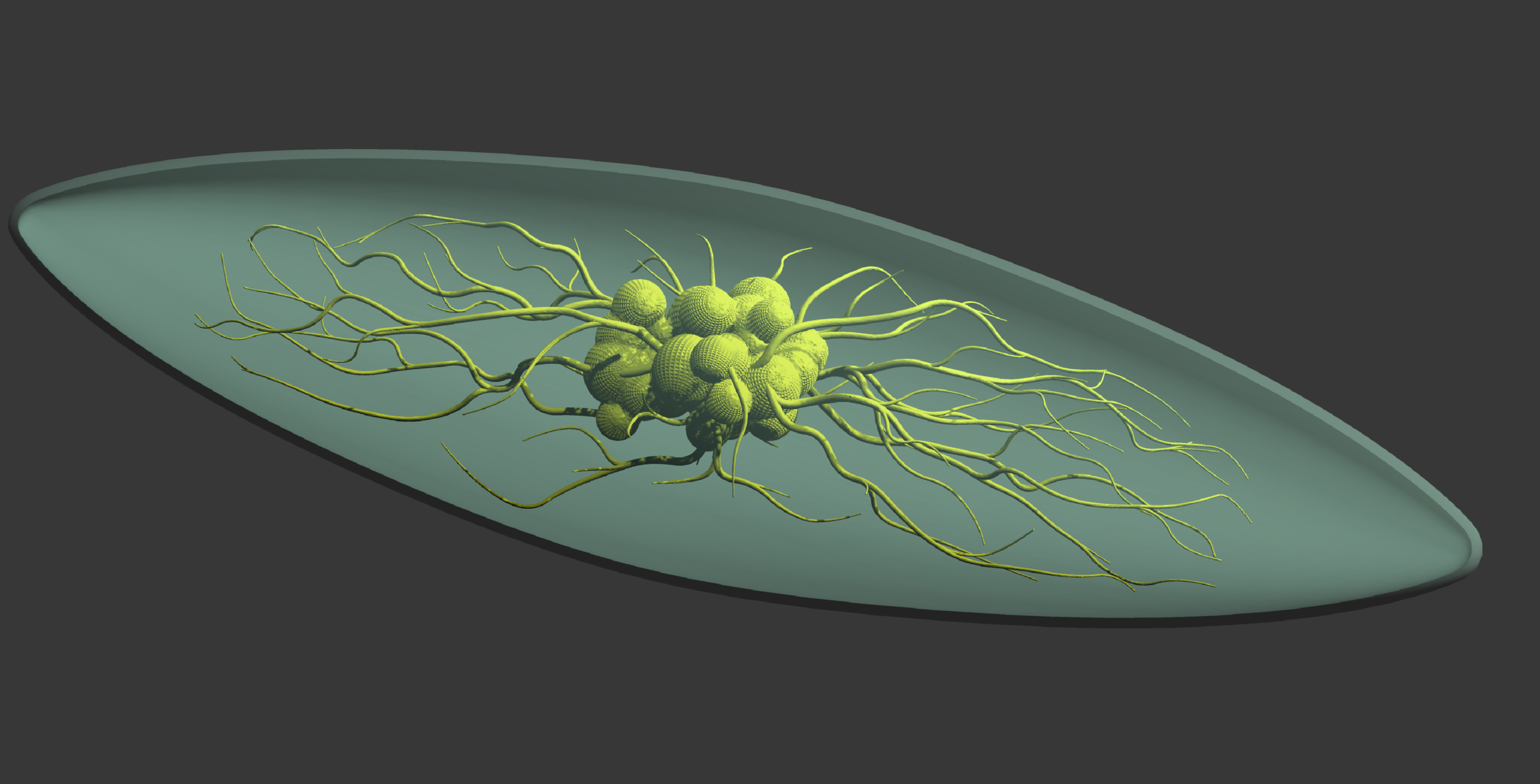
The waters of the Chesapeake Bay teem with microscopic organisms—swimming single-celled plankton known as dinoflagellates. But how can we peer into the depths to see them?
That’s the question driving a new creative project led by Lisa Moren, professor of visual arts at UMBC and artist-in-residence at the University of Maryland Center for Environmental Science’s Institute of Marine and Environmental Technology (IMET), and IMET associate research professor Tsvetan Bachvaroff.
Dinoflagellate image from Under the Bay courtesy of Lisa Moren.
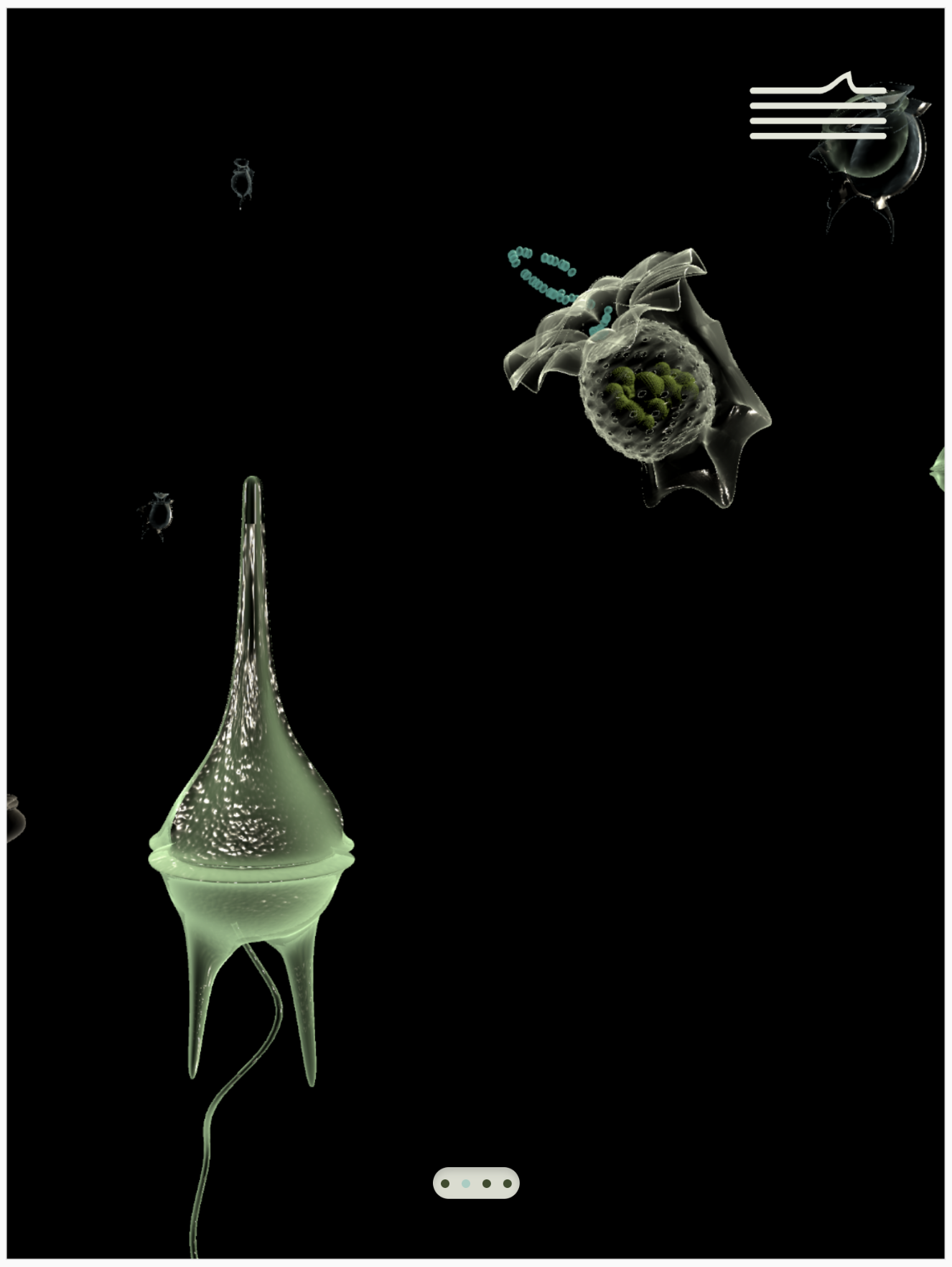
Moren and Bachvaroff have developed “Under the Bay,” an augmented reality app that allows users a glimpse into the lives of the dinoflagellates. Bringing the project to life are close collaborators Marc Olano, associate professor of computer science and director UMBC’s game development track, and Baltimore-based composer Dan Deacon.
Screen shot from Under the Bay courtesy of Lisa Moren.
This project brings together experts from divergent fields, whose work generally takes very different forms, to create something fully unique. Moren, a multi-disciplinary artist, works with emerging media, public space and works-on-paper. Bachvaroff’s research focuses on the evolution and biology of dinoflagellates, which are often associated with “red tides” or harmful algal blooms. Olano is known for innovations in game design, while Deacon is known globally for electronic music involving large-scale audience interaction.
Public demonstration
In a first public demonstration of Under the Bay on October 9, from 1 to 4 p.m., participants will download the project app and hold their phones over water in the Inner Harbor near IMET (701 East Pratt Street). Dozens of animated microorganisms, typically too small for the human eye to see, will appear on their screens—beautiful, large, and vibrantly changing in color.
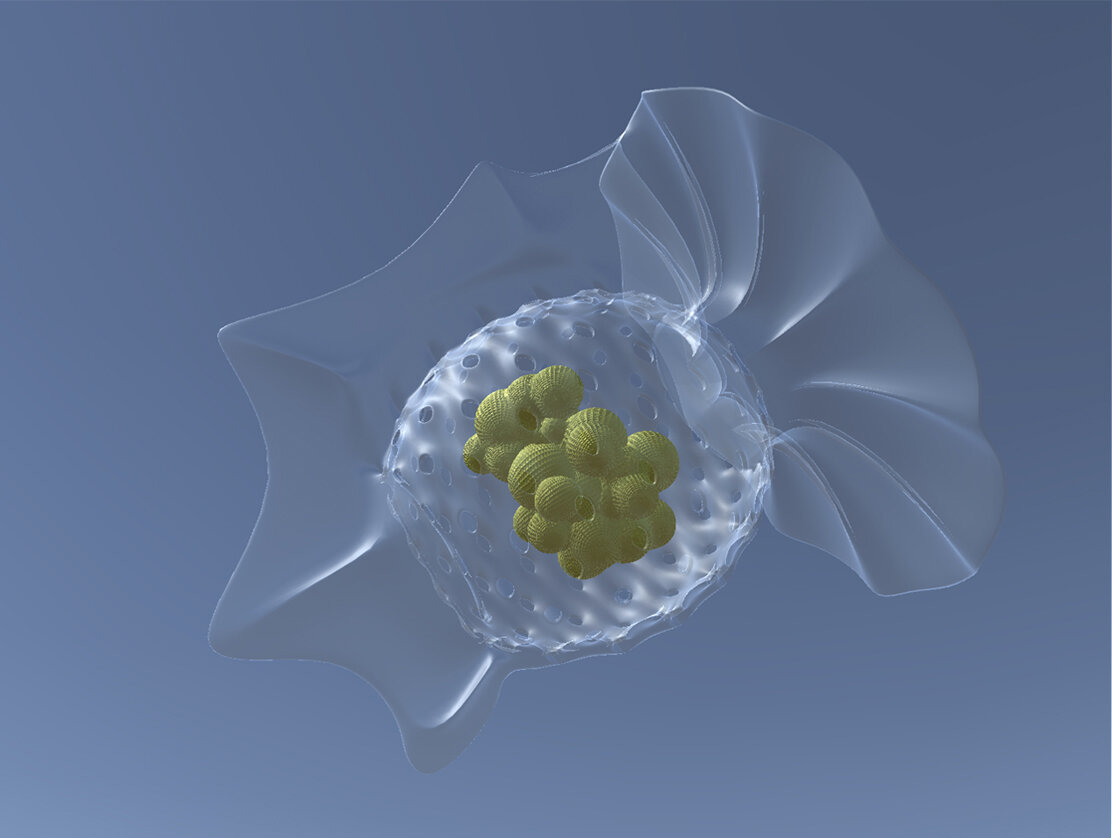
Dinoflagellate image from Under the Bay courtesy of Lisa Moren.
Under the Bay’s screen animations will change color when conditions in the Bay change, while stories and music will connect memory, science, and anecdotal observation. When the Bay water is healthy, the organisms appear swimming and billowing over their field of view like happy jellyfish. When the water is unhealthy, the organisms become shriveled like discarded plastic bags in the water.
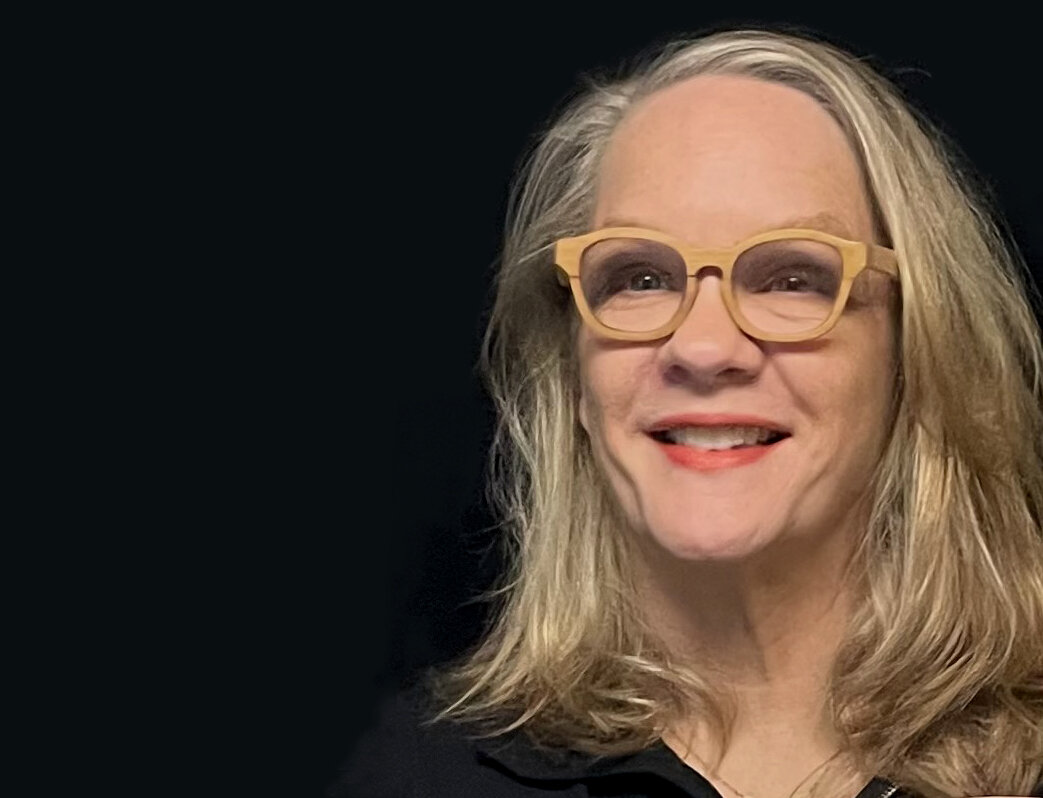
Under the Bay co-creator Lisa Moren. Image courtesy of Lisa Moren.
“Under the Bay will tell a unique story for every user, changing over time, over seasons, but always from the viewpoint of the water itself,” says Moren. “The microscopic dinoflagellate species represented in augmented reality are hundreds of millions of years old, and because they are at the very bottom of the food chain, they are important to all marine life.”
Live sensors in the Chesapeake Bay direct how the organisms appear and how their stories are told. In addition to undulating forms and color, originally composed music by Deacon will change in pitch and tempo based on the water conditions. Stories will describe the amazing survival strategies of these unicellular creatures that make their own light, food and energy when water conditions are favorable. When severe oxygen deprivation occurs in the water, voiceover stories of survival become choppy, fragmented, even choking.
The app will also provide users with basic information about Chesapeake Bay health, including oxygen levels, salinity, and temperatures. Users will be able to select past dates to compare the health of the Bay at various times.
Dinoflagellate image from Under the Bay courtesy of Lisa Moren.
The eight audio stories created for Under the Bay, including music by Dan Deacon, are also available as separate podcasts. The podcasts present the original stories, which will be heard in the app in modified versions based on the changing conditions of the Bay.
The narrators of the stories describe the Chesapeake Bay from multiple perspectives, sharing personal observation intertwined with scientific knowledge, unpacking recent political events, and advocating for diversity. Some episodes invoke evocative imagery of microbes as faeries and the planet as a living organism that inhales and exhales. Other occasional topics include cryonics, meditation, the origins of the Internet, monuments, protests, U.S. elections, and algae blooms, all conveying a world out of balance.
Worldwide launch
Following the public demonstration and alpha test on October 9, Moren anticipates exhibiting a beta version of Under the Bay at UMBC’s Center for Art, Design and Visual Culture in January and February 2022, and then the final version at an additional art exhibition in downtown Baltimore in March and April 2022. With the launch of Under the Bay for iOS and Android devices in March 2022, the app will be freely available worldwide.
Development of Under the Bay has been supported by the Saul Zaentz Innovation Fund at The Johns Hopkins University and by the Robert W. Deutsch Foundation.
Header image: Institute of Marine and Environmental Technology. Image courtesy of IMET.
When conductor Robert Gerle raised his arms and gave the downbeat to the Overture to Die Meistersinger by Richard Wagner on December 11, 1972, he might not have predicted that the orchestra in front of him—now known as the UMBC Symphony—would become such an important part of UMBC’s culture. The program, which was presented in what then was known as Gymnasium One, continued with Bartók’s The Miraculous Mandarin and Beethoven’s Piano Concerto No. 1.
Gerle, a noted violinist who had taught at Ohio State and Peabody, had been enticed to UMBC—in an era when the nascent department of music didn’t even offer a degree—by the opportunity of starting a string program and building an orchestra. To get enough players on the stage, Gerle’s solution was to engage community members and UMBC students, and so the UMBC Community Orchestra, as it was then known, came into existence.
Gerle conducting in a photo of a 1972 issue of The Retriever.
“In addition to all of these wonderful musical journeys in the orchestra, it was a place to make lasting friendships,” recalls Ronald Mutchnik ’80, music. “Years later, I came back to visit and there was Gerle rehearsing Dvořák’s ‘New World’ Symphony with many of the same people—such was the loyalty he and the symphony engendered.”
When trumpeter Wayne Cameron, who was then conducting UMBC’s wind ensemble as well as the Frederick Symphony, heard of Gerle’s retirement, he approached the department to ask about taking on the orchestra. Time passed, and Cameron, hearing nothing, assumed he had been passed over. Shortly before the start of the fall semester he asked the department chair who had been selected. The chair replied incredulously and said, “Didn’t you hear? We picked you!”
Cameron renamed the UMBC Symphony and increased the number of players from about 55 to about 70. He also broadened the scope of repertoire, introducing more American, contemporary, and lesser-known works. “Conducting the UMBC Symphony was a distinct privilege,” he recalls. “To work with so many talented students and community members was a special delight.”
When Cameron stepped down in 2001, UMBC’s overall enrollment had more than doubled from Gerle’s era, and the symphony’s new conductor, clarinetist, and faculty member E. Michael Richards, opened up more opportunities for student participation. As a result, the number of community players decreased.
Richard Sigwald’03, music—who played trumpet with the symphony during Richards’ entire tenure of two decades—says, “He challenged students and community members to work together to create an extremely rewarding performance experience. He was extremely passionate when conducting as it was the only time I ever heard him raise his voice. If the brass weren’t at the volume he desired, he would storm off the podium and tell us that he could ‘play louder than all of us on his clarinet.’ Once we performed more to his liking, he would return to the podium and quip my favorite line of his, ‘I’m not angry, I’m excited!'”
Richards conducting a rehearsal in the Linehan Concert Hall in 2017. Photo by Marlayna Demond ’11.
Violinist Michelle Ko ’10, music, echoes many of Sigwald’s thoughts. “Maestro Richards is so knowledgeable and passionate about the compositions, and it was magical to watch him lead the orchestra.” Ko continues, “Richards had an invaluable impact on my artistic growth and career success.”
A highlight of Richards’ years came in 2016, when the symphony performed Stravinsky’s Firebird suite during UMBC’s 50th Anniversary celebrations, with fireworks going off overhead. Richards jokes that he thought his back was getting singed from the fireballs going off near the stage.
Although retired, Richards looks forward to continuing being part of the university community. In the meantime, the Department of Music has opened a search for a visiting lecturer in orchestral studies to ensure the leadership of the Symphony transitions to experienced and capable hands.
***** Header image: E. Michael Richards conducting the UMBC Symphony at the Linehan Concert Hall in 2018. Photo by Marlayna Demond ’11.
The past pandemic year saw arts communities unable to connect with audiences in traditional ways. Usually reliant on people gathering together to experience their work, creators and performers were thrust online. Some artistic experiences were rendered impossible, but the challenging situation didn’t slow the creative efforts of visual and performing artists of UMBC’s Class of 2021.
Lighting up the stage
“The pandemic took a toll on my ability to create and share my artwork,” shares Seth Kolbe ’21, theatre, who will graduate with a focus on design and production. “As a theatre technician, there are very few opportunities to showcase my talents outside of shows or projects.”
During the pandemic, Kolbe honed his leadership skills, serving as vice president of both the Theatre Council of Majors (TheatreCOM) and the department’s United States Institute for Theatre Technology chapter. Through the work of these two student organizations, he helped facilitate a closer bond between members of the department and helped support the creation of new policies to assist future students. In recognition of his efforts, the department awarded him the Theatre Student Honors Award.
The set for the Department of Theatre production Hunting and Gathering, on which Seth Kolbe worked as head electrician. (Photo by Arionna Gonsalves ’19 for UMBC.)
Among Kolbe’s favorite classes were stage management, projection design, sound design, lighting design, rigging and welding, and scene design. During his four years at UMBC, he contributed to numerous theatrical productions, including Twelfth Night, The Turn of the Screw, Machinal, She Like Girls, Dead Man’s Cell Phone, Anon(ymous), Hunting and Gathering, Girls on a Dirt Pile, and Everybody.
Kolbe also gained skills working with the Annapolis Shakespeare Company and as a member of UMBC Retriever Robotics.
Like many UMBC students in the arts, Kolbe feels strongly about social justice, a particular focus of his leadership work over the past year. “I would like my art to make a difference in the world and in small ways it is already doing so,” he says. “I will continue to support underrepresented groups and use my privilege as white male to act against the inequality present in both this art form and our society.”
Kolbe shares, “My immediate future plans are to continue freelance stagehand and design work in the region before attending graduate school for my MFA.” Eventually, he hopes to teach theatre design and production.
Promoting empathy and connectivity
Kolbe’s theatre colleague Caitlyn Hooper ’21 will graduate with a BFA in acting. She notes that the pandemic “completely changed” how acting students were learning. “We were acting to our laptop cameras, a tough loss. But everyone found new ways to be creative, and I was so inspired by that creativity. I found a deeper connection to the research side of theatre, including the history of theatre and theatrical intimacy studies.”
Hooper joined UMBC as a freshman in 2017, and was cast in numerous productions on stage, including Everybody, Hunting and Gathering, Gwyneth, Dead Man’s Cell Phone, and Far Away. In addition to her acting studies, she worked in the scene shop beginning in her sophomore year and gained knowledge about technical production and carpentry.
Caitlyn Hooper acting in the 2019 UMBC Theatre production of Hunting and Gathering by Brooke Berman, directed by Susan Stroupe. (Photo by Arionna Gonsalves ’19 for UMBC.)
The concern for equity and social justice factors significantly in Hooper’s work. “As a theatre artist, I’m passionate about creating work that promotes empathy and connectivity,” she says. “I’m inspired by Black theatre activists’ anti-racist work currently restructuring how we do theatre, and I’m committed to equality and justice of marginalized people.”
As president of TheatreCOM during her senior year, she advocated for equitable theatre practices within the department, and, like Kolbe, was a recipient of the Theatre Student Honors Award.
Hooper completed research focused on theatrical intimacy, mentored by Susan Stroupe. She presented her work at UMBC’s popular Undergraduate Research and Creative Achievement Day (URCAD) in 2021 and also published it in UMBC Review. She’s passionate about pursuing a career focused on theatrical intimacy and she plans to apply for a Fulbright award to gain a cross-cultural perspective on theatrical intimacy in another county.
For the immediate future, Hooper plans to return to the stage in local and regional productions. Longer-term, she plans to earn an MFA in acting or performance studies and pursue a career in higher education. She hopes to focus on consent-based practices and anti-racist action in theatrical education in order to make theatre more equitable and ethical.
One student, many interests
Meyerhoff Scholar and U-RISE Trainee Peter Bailer ’21 has equally pursued his interests in the arts and sciences at UMBC, and this week will graduate with a degree in biochemistry and molecular biology and a degree in music composition.
“Music is an essential part of my life; it is both my creative outlet and a powerful medium through which I can express myself,” he shares. “I feel that my experiences with music at UMBC have helped make me a holistic and well-rounded student. From analysis to creative problem solving, my music major has sharpened many skills relevant towards any career, but especially a career in research.”
On the science side of his interests, Bailer has worked in Erin Green’s lab, focused on examining a yeast protein through sequencing data and published structures of related organisms.
He participated in several summer research internships as an undergraduate. At the University of Virginia, he studied the toxicity and structure of peptides that have the potential to become new antimicrobial therapeutics. At the University of Pennsylvania he studied the nature of how a human mutator enzyme discriminates between DNA and RNA for potential gene editing applications. Bailer won a Chemistry and Biochemistry Faculty Award for Excellence for both academic and research performance.
Photo of Peter Bailer by CJ Escobar ’21, music.
In music, Bailer has studied composition with Linda Dusman and Greg Kalember. His music reflects influences from the Romantic era, jazz, late impressionism, and contemporary classical music. He was commissioned by Jonathan Sotelo ’20 to write the percussion trio An Evolution of Congruence, and a marimba work entitled Pebbles. His recent saxophone sextet, The Lost Woods, was premiered by saxophonist and UMBC faculty member Matt Belzer in 2021, and Cognitive Dissonance was premiered by the Washington, D.C. new music ensemble Balance Campaign, also in 2021.
Bailer has performed with the UMBC Saxophone Ensemble, the UMBC New Music Ensemble, and was lead alto in the UMBC Jazz Ensemble. As a senior he received the Academic Achievement Award in Music.
Getting creative with creativity
“The pandemic had major impacts on my ability to create as a composer and musician,” says Bailer. “As a musician, I was no longer able to perform or create with others, and that really reduced my creativity throughout this pandemic.”
Bailer explains, “I was supposed to have my senior composition recital last spring. This ultimately had to be pushed back to this semester, resulting in a combination of some live performances and a lot of pre-recorded versions of pieces.” On the positive side, he notes that extra time at home provided an opportunity for him to study more techniques in music technology that will help his career in the long term.
“Following graduation, I will attend the University of Pennsylvania to pursue a Ph.D. in biochemistry and molecular biophysics,” says Bailer. “While pursuing this, I hope to continue practicing and growing as a composer, and I aspire to be performing ground-breaking research while continuing to compose for years to come.”
Finding a new voice
“As a musician, the pandemic forced me to make a big shift in my creative process,” says Kathryn “Katie” Blake ’21, a Linehan Artist Scholar who will graduate with a bachelor’s in music composition. “As a composer, I had to find quirky ways to inspire myself in my writings, because the isolation and being in the same environment for months on end is mentally taxing.”
“The dramatic change of being surrounded by creative musicians to being alone changed the way I approached composing,” says Blake. “Before, I’d constantly be asking my friends to try a little passage, or show me a technique—we would bounce ideas off each other. The isolation really made me focus and find the exact sounds I wanted in my pieces, and the exact sounds that my pieces needed.”
But Blake found strength in unexpected ways, adding, “I also transitioned to composing for the digital medium, as it is an easy form of artistic communication at the moment. I really honed in on my skills with electroacoustic works, and I found a voice in that sound realm that can only be accomplished by electroacoustic composition.”
Performances past and future
During Blake’s undergraduate studies, her compositions have been premiered by the Bergamot String Quartet, percussionist Jonathan Sotelo ’20, the Balance Campaign ensemble, and the Strata Trio. The 2019 Fresh Inc. Festival, District New Music Coalition’s 2020 fall conference, and T1International’s “Change Through Creativity” Project in 2020 all featured her work.
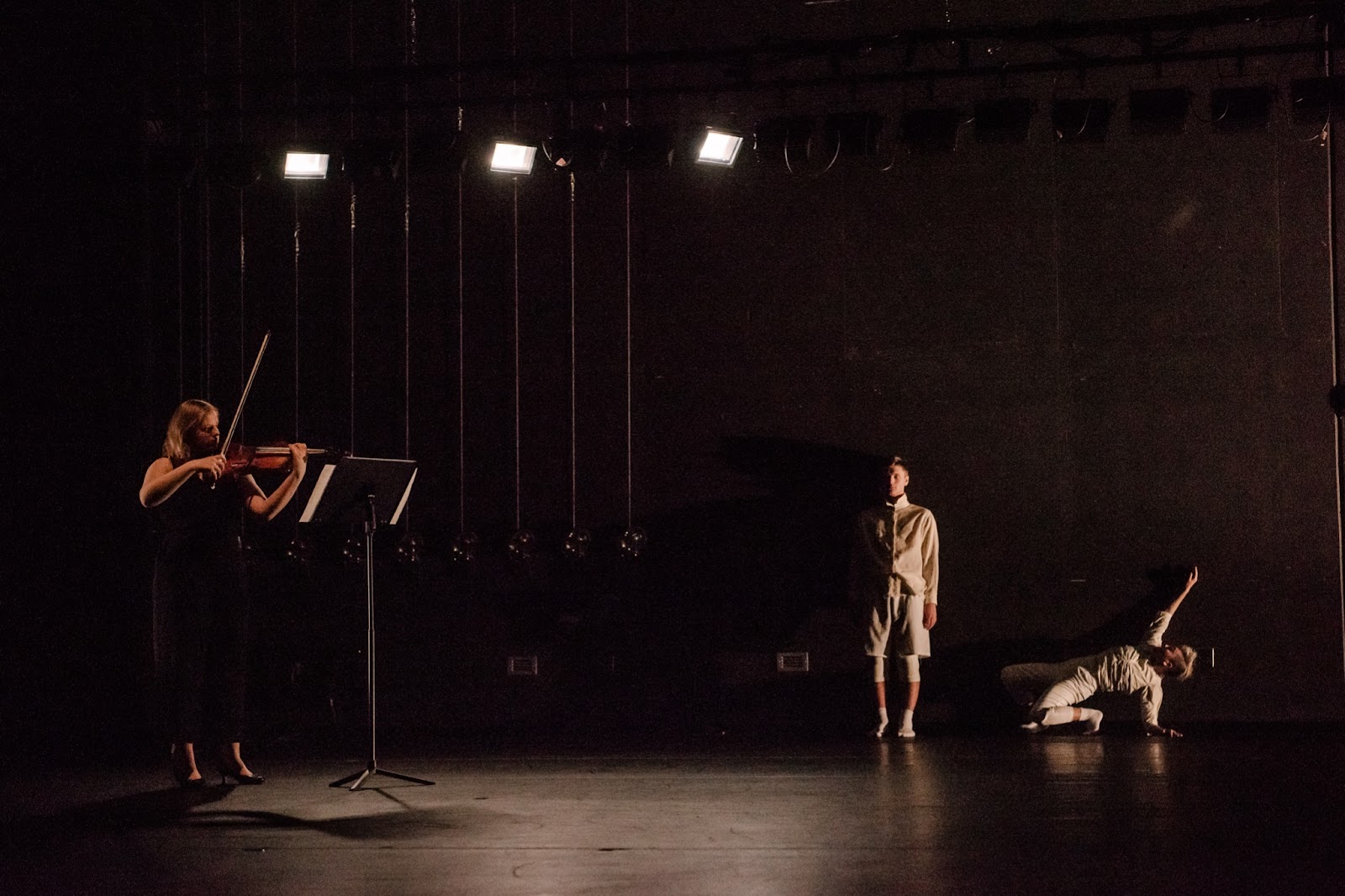
Katie Blake ’21, left, performs with Deven Fuller ’22, dance, and Emily Godfrey ’20, dance, in In To And Out Of by Ann Sofie Clemmensen. (Photo by Marlayna Demond ’11 for UMBC.)
Also active as a violist, Blake has performed with the UMBC Symphony Orchestra and in the UMBC Chamber Players. She premiered string quartets by Donte Speaks, Jr. and Eliza Triolo ’19, music. Featuring a role as both violist and composer, she was honored in fall 2019 to work with UMBC choreographer Ann Sofie Clemmensen, whose dance In To And Out Of was featured at the Kennedy Center. She has composed music for animator William Kraft ’21, visual arts, filmmaker Kelvin Thompson ’20, visual arts, and choreographers Teresa Whittemore ’20, dance and Kayla Massey ’22, dance. Like Bailer, she received the Academic Achievement Award in Music.
Outside of composing, Blake has interests in health advocacy, social justice, psychology, and mental health, and has found ways to connect her interests. “I do feel a large part of myself as an artist is to make a change,” she states. “Currently, I’ve had a focus on diabetes and insulin advocacy, tying my experience as a diabetic into my work. I have already delved into the insulin crisis with my work, but I plan to do so much more.”
Blake plans to pursue a master’s and then a D.M.A. in music composition, and looks forward to a career in higher education. “Composing and creating is what gave me the spark to keep going when I was younger,” she says, “and I want to help others find that spark as well.”
Transformation in quarantine
“My thesis show was totally transformed by quarantine,” shares Rahne Alexander M.F.A. ’21, intermedia and digital arts, of her recent participation in the spring M.F.A. visual arts thesis exhibition, Home Bodies. “What was intended to be a live performance transformed into an online experience, which set off a kind of domino effect on the various aspects of the project.” For instance, Alexander explains, “instead of creating a talk show set in the gallery, I recreated my home studio in which I produced the show, and ultimately I think that overall, my work was better as a result.”
The content of the show was also impacted by its shifting context, Alexander reflects. “A significant part of this piece was a meditation on the way that multiple sclerosis caused my mother to transform her own art practices, and the parallels I have experienced in my own career,” she says. “Quarantine really brought those parallel conditions into excruciatingly clear focus, in ways I’ll be considering for a long while.”
Alexander is already an accomplished essayist, contributing to anthologies such as the Lambda Literary Award-winning Take Me There: Transand Genderqueer Erotica and the Lambda-nominated Resilience Anthology. Her first book of collected essays, Heretic to Housewife, was published by Neon Hemlock in 2019.
While at UMBC, Rahne has exhibited artworks both regionally and internationally. Her video art screened as part of the International Conference of Chinese Computer Human Interaction at Xiamen University, and at the Baltimore Museum of Art’s Necessity of Tomorrow(s) Screening Room. In 2020, her painted scroll triptych “I Am the End of the Patriarchy and So Can You” was commissioned by ‘sindikit and Tephra Institute of Contemporary Art for the Mary B. Howard Invitational: An Excellent Thought About a Quality Idea. These scrolls have subsequently shown at The Shed Space and as part of Spark IV: A New World? at Maryland Art Place.
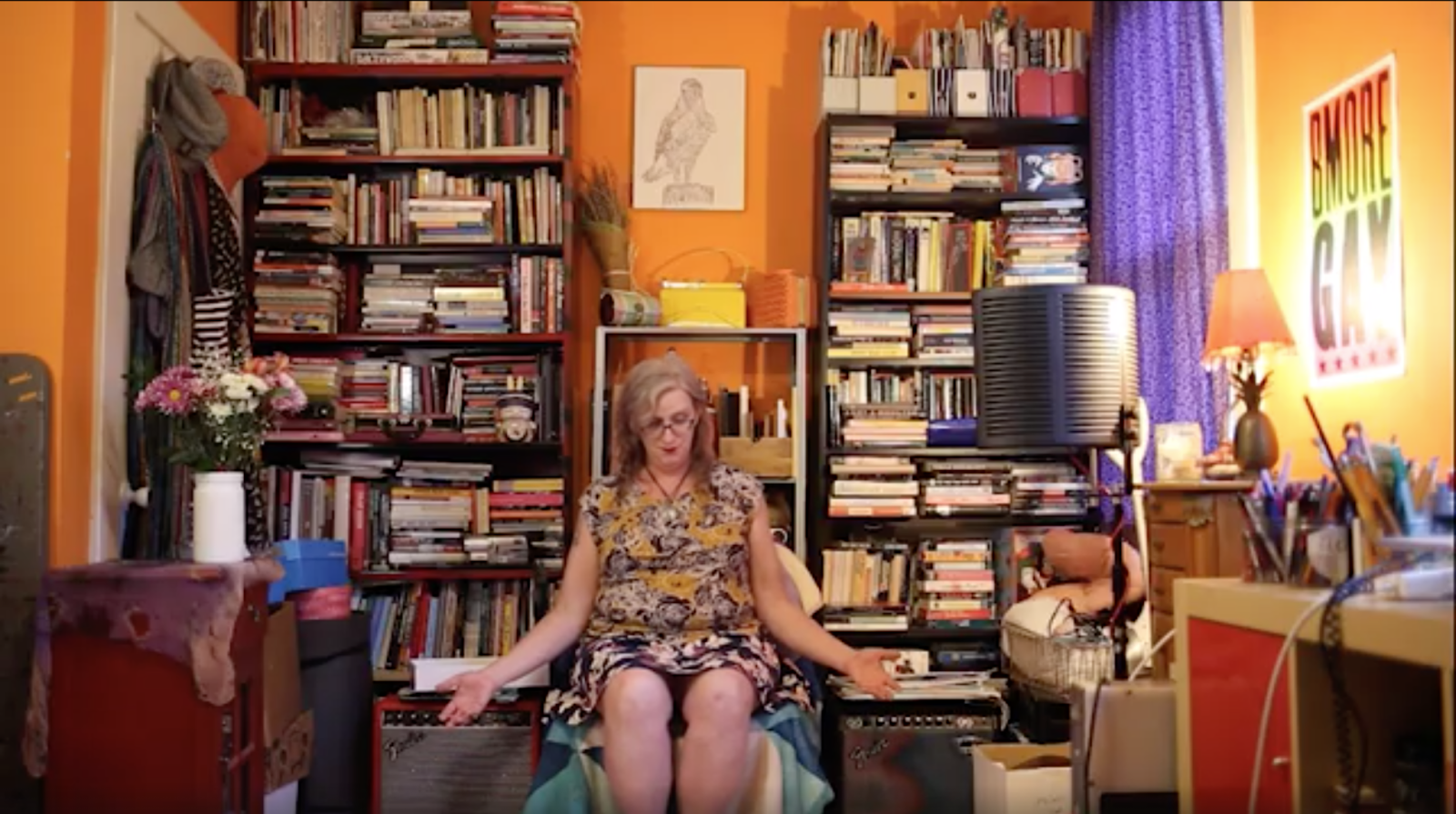
Rahne Alexander in her work Sick Transit, an exemplativist femmage, comprising a series of autobiographical monologic performances meditating on mobility, maternity, gender, feminism, and systems of healthcare in the relationship between two artists: the transsexual daughter of a devout Mormon who lived with multiple sclerosis for more than 30 years. (Image courtesy of Rahne Alexander.)
A leader and community connector
Also active in arts administration and advocacy, Alexander has been a leader at the Transmodern Festival and the Maryland Film Festival, where she served five years in charge of operations and development. She has since lent her organizational and development assistance to several groups, including the Baltimore Office of Promotion and the Arts, FORCE: Upsetting Rape Culture, Venus Theater, Wide Angle Youth Media, and Single Carrot Theatre.
“My work has always been about making connections between people, often with the specific political goal of destigmatizing trans and queer identities. I work to get audiences to reconsider their assumptions and epistemologies,” says Alexander.
“Trans people make up such a small minority of the population, yet there is this continued push to diminish and deny our civil rights. We can’t really secure those rights without the support of the majority, so a large part of my mission as an artist has been to make connections and open dialogue,” she notes. “And the same holds true for all marginalized people—disability rights, Indigenous rights, the rights of queer people and Black people and Brown people. As the saying goes, none of us are free until we are all free, and I see my work as a part of that larger project.”
Alexander will continue working as an artist. She currently has work on display at Spark IV: A New World? and she will be on the faculty at this summer’s Tulsa Glitterary Writer’s Conference.
Banner Image: Cailtlyn Hooper and other theatre students in the 2018 production of Dead Man’s Cell Phone by Sarah Ruhl, directed by Nyalls Hartman, for which Seth Kolbe served as assistant head electrician. Photo by Raquel Hammer ’20 for UMBC.