All posts by: Magazine Editor


Andrasik ’05, Psych, Publishes Book On Gluten-Free Eating in Afghanistan

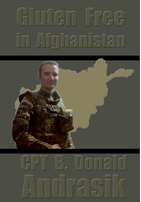
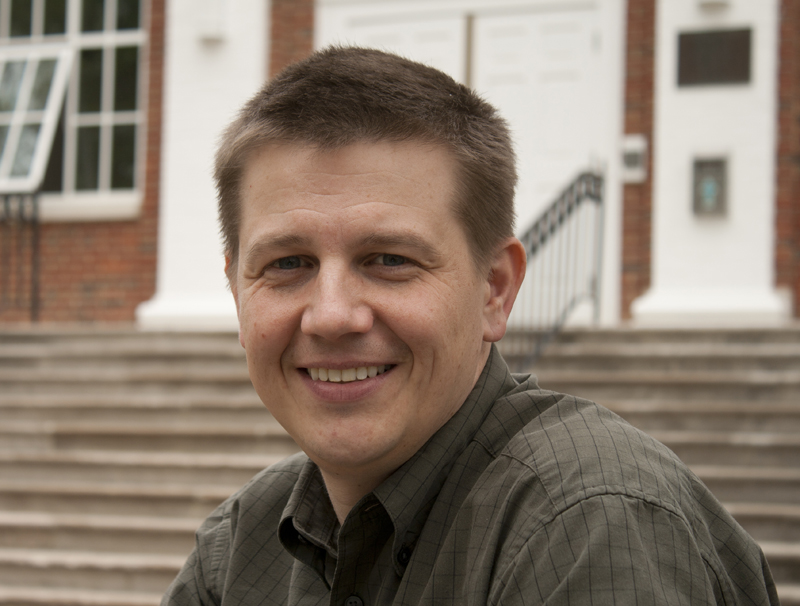
glutenCaptain B. Donald Andrasik ’05, psychology, has published a book on his experience eating gluten-free while deployed in Afghanistan with the United States Army.

“I hope to draw attention to our service members who need these accommodations to thrive. Being at war and on a gluten free diet is a distinct hardship, and if you know what you are getting into you understand there’s no easy meal,” he explained in a press release for “Gluten Free in Afghanistan.”

Andrasik started a gluten free diet at 15 years old, after having symptoms related to celiac disease. He currently works as a logistics officer with a unit based in Havre de Grace, Md., in the Maryland National Guard.

Read more about the book here.

Aranmolate ’05, M.S. ’06, Nominated for Book Award

sheg_interview

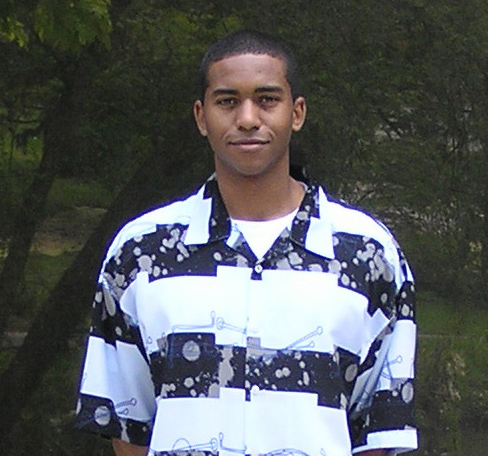
By day, Sheg Aranmolate is finishing his medical degree at the University of Tennessee Health Sciences Center. By night, he has written two books — the latter of which, a novel entitled Bountiful Famine, recently was nominated for the International IMPAC Dublin Literary Award.

We recently asked the native Nigerian, who graduated from UMBC in 2005 with a bachelor’s in biochemistry and molecular biology, and 2006 with a master’s in applied molecular biology, a few questions about his UMBC experiences and what it’s like juggling a writing career with the challenges of medical school.

Q:  Can you tell us a little about how you found out about the IMPAC nomination, and what it means to you?

A:  I would love to say that I was working down the street one day and I saw a billboard ad informing me of my nomination or that I overheard my nomination on the radio as I was driving to the gym. However, I must confess that I actually found out about my nomination for the International IMPAC Dublin Literary award via an email that was forwarded to me from my publisher.  My excitement and gratitude to be nominated for one of the world’s richest and most prestigious literary awards is beyond words. The IMPAC award is similar to the Grammy’s for music and the Oscar’s for film, and because nominees for the award are selected by librarians all over the globe, and more amazing to be one of the youngest authors at age 29 (John McGregor was 26 when nominated in 2002) and for my debut novel to be nominated for this award, all I can say is that I’m very grateful and thrilled about the possibly of winning the 100,000.00 euro prize. On a psychological point of view, being the only Nigerian on the list and having being selected by a library in Czech Republic, the nomination as boosted my confidence as a writer and further compelled me to write more novels in the future. I can now say with pride (not the malignant type of pride) that I’m an award nominated novelist and perhaps internationally recognized.

Q:  How do you balance your creative life with the busy life of a medical student?

A:  I personally believe that every one of us is creative in one way or the other, and I further believe that creativity should be a way of life and that being said, it should come as easy as, say,  tying your shoes or brushing your teeth, well that’s if you like brushing your teeth. On a serious note, I see creativity and imagining as a way for me to escape the sometimes harsh realities of the world that we live in. As a result, at time when I get stressed out as a medical student or overwhelmed by the suffering of patients’ in my care, I use writing, sketching, painting or photography as an outlet to relieve stress.

Q:  What, in particular, inspired you to write Bountiful Famine?

A:  This is a very interesting question because growing up as a child, I don’t want to say that I had some type of dyslexia, but I was always a slow reader as a child or maybe I just never developed reading quickly. I used to imagine a lot of things that I saw and so I would imagine my own stories and imagined how books ended from the cover. But then, I was fortunate enough to be on a television show called Oprah’s Big Give, which was a national television show where she selected 10 people from around the country to make a difference in the communities and to show the power of giving and philanthropy. I was 23 when I was picked for that show and I saw that as a platform for me to inspire others. I have always had the zeal to inspire people and so after that the show, I wrote my first book iACTUATE — a book on my personal philosophies about life. After the publication of my first book, I came to realize that story telling is a better way to inspire people because they get to paint a picture for themselves rather than having the author tell them what to do or how to think. This, I must say, is the main reason why I wrote Bountiful Famine. It was a way for me to show some of my experiences and to show people that pain and suffering are universal to every human being and to show that love exists even in the worse conditions; humanity still prevails even when society fails.

Q:  What activities did you participate in at UMBC? Do you feel like your UMBC experience helped you achieve your writing and academic goals? If so, how?

A:  One thing that I can proudly say is that I participated in several activities while in UMBC and these activities greatly and positively shaped me to the man that I am today. Does this sound too cliché? Humor aside! While I was in UMBC, I worked as Maintenance Assistant and also as a Residential Assistant for the Residential Life. During my tenure, I learned the importance of hard work, and the values of professionalism and integrity. I also learned to become a more compassionate leader towards the residents that were under my watch. I worked for 3 years in research under the guidance of Dr. Bieberich in the Department of Biology at UMBC, where I learned the basics of research science and the importance and impact of cancer on our society. I was a part-time (unpaid) writer for the Retriever Weekly newspaper, where I pioneered a biweekly column on fitness, wellness and inspiration – famously or perhaps infamously titled “The Fitness Guru.” This was the inception of my aspirations to become a writer because I saw firsthand how my words acted as a powerful tool that inspired many of my readers to change for the better. On a lighter note, I was UMBC’s Homecoming Prince for the year of 2004, I believe, and I remember vividly the excitement that I felt when I was crowned and when I received the $75.00 gift card to Arundel Mills mall for a shopping spree. This was an oh, so, prestigious recognition, you have no idea. I have many other activities that I participated in while at UMBC and due to space limitation and because I don’t want to bore with every single detail, I will refrain for now and spare you the agony (just kidding). Overall, I must say that UMBC was great to me, and as an international student from Nigeria, UMBC was more that I could have asked for from an institution for higher learning – it was a place where young boys and girls were turned into young men and women respectively.

Q:  What’s next for you as a writer? And what are your goals for after med school?

A:  As far as my writing career goes, I’m currently jotting down some super-fresh ideas, I mean very super fresh ideas, for a new psychological thriller plot and I’m flirting with the idea of writing another novel in the near future. From a medicine standpoint, I presently have a keen interest in surgery because like writing, surgery employs the use of the surgeon’s imagination and also because of the subtle differences between humans, no two surgeries are the same. My overall goal and plan in medicine is to use my skills and knowledge to make the world a better place for generations to come. Perhaps, I might conduct some missionary-type trips to under-developed regions in the world and maybe even get involved with international NGO’s. I like to keep an open mind and let the ever changing world to be beacon to my future accomplishments.

FY12 Donor Roll Now Online

The donor roll for FY12 — which covers giving from July 1, 2011 through June 30, 2012 — is now available online. In addition to a listing of all donors, the donor roll also includes listings of:

  • The Hilltop Society
  • The 1966 Society
  • Consecutive Years of Giving (5-9, 10-14, 15-19, 20+)
  • 1st Time Donors

Thank you to everyone who supported UMBC in FY12! View the donor roll here.

Marohl ’01, Geog, to Captain Baltimore Bombers

marohlDan Marohl ’01, geography and environmental systems, has been chosen as a captain and co-captain of Baltimore Bombers lacrosse by his teammates, the Baltimore Sun reports.

Read the Baltimore Sun story here.

Marohl, who plays forward for the Bombers, previously played with the Ottawa Rebel and the Philadelphia Wings of the National Lacrosse League, as well as the Minnesota Swarm, the Sun writes. Formed in 2012, the Baltimore Bombers will compete this year as part of the North American Lacrosse League.

A member of UMBC’s Athletic Hall of Fame, Marohl was a two-time All American for UMBC in 1999 and 2000 and UMBC’s Outstanding Male Athlete in 2000. He also competed in the North-South All Star game in ’00 and is a member of UMBC’s Lacrosse’s All-Time team. The Edgewater, Md. native is currently fifth on all-time scoring list with 103 goals (11^th ) and 89 assists (third). He competed at both attack and midfield and led UMBC in goal-scoring with 34 as a freshman in 1997. Marohl was a member of the 1998 and 1999 NCAA Division I playoff teams. He produced a pair of 50-point seasons, and was just one of four UMBC Division I players to reach that mark. His brother Steve Marohl ’93, history, is also a member of the UMBC Athletic Hall of Fame for lacrosse.

New Bird Clark ’06, Psych, Interviewed by Orioles 101

1046Former UMBC baseball standout and newly-drafted Baltimore Oriole pitcher  Zach Clark ’06, psychology, was interviewed this week by the blog Orioles 101.

Read the interview here.

Clark, who pitched and was a designated hitter for the Retrievers, spent seven years in the Orioles farm system, most recently with the Bowie Baysox, before being added to the Orioles roster in November of last year.

News-Post Profiles Second-Career Educator Stovall ’04, Ph.D., PubPol

mike_stovallWhen Michael Stovall ’04, Ph.D., public policy, came to UMBC as a graduate student in 1996, he wasn’t just looking for a change of pace. He was ready to change his life.

A recent article in the Frederick News-Post chronicles Stovall’s second career as chair of the Business & Social  Sciences Department at Carroll Community College, where he helped develop an Aging Studies program that has lead to a number of transfers to UMBC’s Aging Services program, he said.

Read the Frederick News-Post’s story, “Teacher Thankful for a Chance at a Second Act” here.

Stovall came to UMBC to study public policy after years of working in government and community-based jobs in Frederick. He quickly grew to love the field of aging, and with the encouragement of his professors chose to focus his dissertation on “Innovations in Senior Centers in Maryland.”

“I  had the good fortune of taking Soc/Anthro courses with Kevin Eckert and Leslie Morgan who are both respected experts in the field of aging which got me interested in the field of aging/gerontology,” he told UMBC.

Stovall presented his dissertation research at the National Society on Aging/American Society on Aging Conference in Philadelphia in 2005 and started teaching sociology at Carroll Community College in the fall of 2005. He currently teaches and serves as chair of the Business & Social  Sciences Department there.

“My favorite thing about teaching at CCC is the variety of students that come to a community college,” said Stovall. “It is the diversity of students and the different paths they take that bring them here. I feel that my experiences as an older student at UMBC and my years of working with a variety of government and community services enable me to communicate effectively with all kinds of students. I still find each class to be an adventure, and in every class I learn more from my students than they learn from me.”

Career Q&A: Dr. Melanie D. Harrison ’11, Ph.D., MEES

Every so often, we’ll chat with an alum about what they do and how they got there. Today, we’re talking with Dr. Melanie D. Harrison ’11, Ph.D., Marine and Estuarine Environmental Science, who works as a water quality specialist with NOAA, and who recently was elected by the membership of the American Geophysical Union, the premier professional organization in the earth sciences, as one of two Early Career Scientists on the AGU Council.
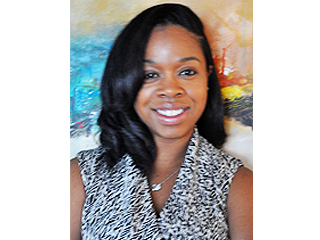
melanie_picName: Dr. Melanie D. Harrison
Current title: Water Quality Specialist
Employer: Department of Commerce, National Oceanic and Atmospheric Administration (NOAA), NOAA Fisheries

Q: What path brought you to UMBC’s Ph.D. program in Marine, Estuarine, and Environmental Sciences?

A: As an undergraduate at Johnson C. Smith University in Charlotte, NC, I had dreams of becoming a medical doctor. However, I soon realized that I faint at the site of blood and cannot cut a straight line in a stick of butter.  So I quickly began to look for other avenues of interest in the field of science, took a botany course my first year and fell in love with environmental science!

In the summer of 2005, I participated in a National Science Foundation (NSF) program called Research Experiences for Undergraduates (REU) at the Cary Institute of Ecosystem Studies in Millbrook, NY, where I met my former doctoral advisor Dr. Peter Groffman.  His personal and professional mentorship led me, in the fall of 2006, to the doctoral program at UMBC focused on Water in the Urban Environment, in the Marine Estuarine and Environmental Science (MEES) Program as an Integrative Research Education Graduate Trainee (IGERT), a program also found by NSF.

Q: What was your experience here like?

A: My first year attending UMBC was a bit of an adjustment for me academically and socially. I quickly found support through close connections with other IGERT students, as well as mentor-mentee support from professors and many of the programs devoted to helping Ph.D.’s complete their doctoral degree at UMBC.  The campus staff provided support for students and I found the diverse learning environment to be complimentary to my personal and academic needs. Throughout my tenure at UMBC, I found the academic rigor and integrity of the university’s academic leaders to be a much needed and welcomed challenge for me. I was motivated and focused on completing my doctorate, I met others who were just as focused as I was, and I loved it!

The research environment at UMBC fosters innovation and collaboration within and outside the university setting, to address real-world environmental issues in the urban environment.  I was able to engage with stakeholders (local and federal) who were interested in the research I was conducting and having that dialogue was imperative to understanding the implications of my research in a real-world context.

Q: What lead you to focus your dissertation on restoration actions in urban watersheds as a strategy to reduce nitrogen loading in urban storm water runoff?

A: As an REU, I spent the summer of 2005 traveling back and forth to Baltimore, conducting research related to reducing nitrogen pollution in urban restored streams, primarily from urban storm water runoff and leaky septic systems for the BES Long-term Ecological Research (LTER). I was amazed at the number of stream restorations that were conducted, but how so few were engineered to resemble a ‘natural’ stream environment. I began to wonder if these systems really were improving water quality and if so by how much; and “were there other features on the landscape such as wetlands that might also play an important role in the nitrogen removal process in urban landscapes”? From then on I was hooked and it seemed a natural progression for me to study urban aquatic ecology. A year later, I returned to UMBC as a doctoral student to study nitrogen removal in urban wetlands and stream ecosystems.

Q: Tell us a little bit about what you do with NOAA Fisheries. What exactly is a “water quality specialist”?

A: In general, a water quality specialist is responsible for safeguarding all aspects of water quality through scientific analysis and the setting of targets and standards in response to specific legislation. At NOAA Fisheries my work is multifaceted; I am involved in regulation and compliance, providing solutions to water quality problems associated with the impacts to listed species, primarily salmon and steelhead, under the Endangered Species Act (ESA). My work can vary depending on the water quality issues; for example, I may visit sites of concern, for potential sources of pollution or contamination; identify sources of complaints about discharge operations; provide citizens, planners, emergency managers and other decision makers with technical assistance when necessary; liaison with stakeholders and representatives from regulatory authorities; investigate reasons for lapses in water quality and suggest changes or solutions to those problems; and finally conducting research, data interpretation, and analysis related to water quality and setting up field surveys.

Q: What do you like most about your job?

Working at NOAA is all about Science, Stewardship and Service.  Because my work is very interdisciplinary, I have been able to use my research background to help inform policy, practice and implementation associated with water quality issues as it pertains to the conservation and recovery of ESA listed species. I thoroughly enjoy this aspect of my work as it allows me to have the breadth and depth that I need to effectively communicate at many different levels. My job also, provides a platform for me to continue to conduct research that is applicable to solving real-world environmental problems.

Q: What would you say to students interested in pursuing a career of this sort?

A: Having a career as a water quality specialist may seem like a specialized position, but the work is very interdisplinary and encompasses various fields of science to cultivate the specialty. Of all areas of environmental studies, this area is rapidly developing. It is also one of the most diverse areas in terms of disciplines. My words of advice for students who are interested in pursuing a career in water quality are to (1) always think interdisciplinarily and seek out ways to increase your understanding across and within disciplines to increase your knowledge base, (2) network with others who are in the field, (3) ask questions and capitalize on opportunities (intern, volunteer, collaborations, etc.), and finally (4) keep an open mind about being a specialist; don’t limit your opportunities. The world needs highly adaptable professionals with excellent skills in organization, planning, communication, and critical thinking. Remember, diversity spurs innovation, so be creative and design your own career path.

* * * *

Want to tell UMBC alumni about your cool career? Contact Jenny O’Grady at jogrady@umbc.edu.

Happy Holidays from UMBC!

Here’s wishing our wonderful alumni a safe and happy holiday season, and a brilliant new year! We look forward to seeing you in 2013!

Saper, LLC, Named Bearman Family Chair in Entrepreneurship

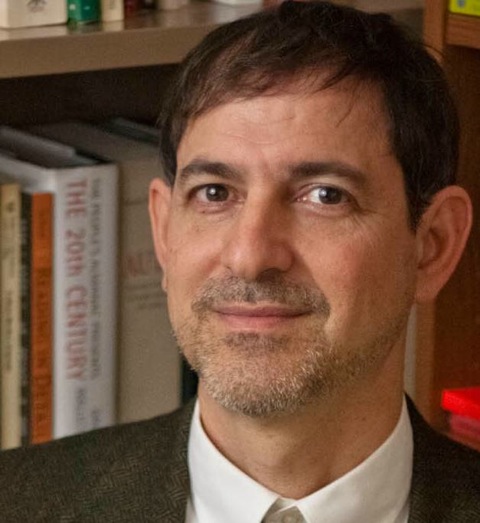
SaperCraig Saper, professor and chair of Language, Literacy, and Culture (LLC), has been named the Bearman Family Chair in Entrepreneurship.

“Dr. Saper is a scholar of large achievement and great energy, whose talents and interests make him a superb choice for the Bearman Family Chair in Entrepreneurship,” said John Jeffries, dean of the college of arts, humanities, and social sciences (CAHSS).

The Bearman Family Chair in Entrepreneurship was established by The Herbert Bearman Foundation to acknowledge and honor the contributions of Dr. Arlene Bearman to the UMBC community. This chair recognizes and supports outstanding teaching skills, an interest in entrepreneurship, and a strong record of scholarship in entrepreneurial studies or a field related to entrepreneurship.

Read about other endowed scholarships and chairs at UMBC.

“Since arriving on campus, Dr. Saper has been a whirlwind of research and teaching activity deeply anchored in commitments to social entrepreneurship,” said Bev Bickel, associate professor and former chair of LLC.

This three-year endowed position will provide Saper with funding to integrate entrepreneurship concepts into classroom instruction, advising, and scholarship. Saper will also work with the Alex. Brown Center for Entrepreneurship and Kauffman grant activities, and with the Administrative and Managerial Sciences program.

“My research is deeply anchored in commitments to social entrepreneurship that I have been studying throughout my career,” said Saper.  His recently-released book, Intimate Bureaucracies, examines social entrepreneurship during the creation of the SoHo neighborhood of Manhattan in the 1960s-1980s.

Saper is planning two projects during the course of his Bearman chairmanship.  The first will examine the social entrepreneurship involved in the building of shared memorials and monuments. His research will focus on the entrepreneurs who organized and made the memorials possible.

Saper’s second project will explore the possibility of establishing a digital e-press at UMBC, which is he doing in collaboration with colleagues in the Library, the English department, the media and communication studies program and LLC as part of the campus’s larger Digital Humanities efforts.

“I’m interested in being a participant-observer of this group-entrepreneurial effort that works within, and for, UMBC’s institutional structure and the larger demands of academia and legitimate scholarship,” he said.

But Saper’s objective as the Bearman Family Chair isn’t just to achieve his research goals – it’s to offer a new vision of what entrepreneurship can mean.

“Hopefully, at the end of my term I will have promoted a progressive model of entrepreneurship that offers an alternative to Ayn Rand’s outlaw heroes. In the new model, entrepreneurs are part of communities working cooperatively for public space, public schools and the public good not renegades and raiders,” he said.

This article originally appeared in UMBC Insights.


Eberly ’06, Ph.D. Public Policy, “Go-To Guy” For Political Analysis

eberly

Todd Eberly ’06, Ph.D. public policy, is living his dream, teaching political science to the students of St. Mary’s College — and acting as a “go-to-guy” for those seeking political analysis, MarylandReporter.com reports.

“Other kids liked sports or what have you. I just never did,” Eberly said. “I cared about politics. I followed that the way other folks would follow a football season or a baseball season.  … I am curious to see who’s winning, who’s losing and what strategy they are employing.”

Read the full story at MarylandReporter.com.

In addition to being quoted regularly in various local media, in 2011 Eberly was named one of the top influencers of Maryland politics by Campaigns and Elections Magazine.

Eberly got an early taste for politics while helping his uncle Robert Eberly during his campaign for court clerk in Pennsylvania, the story says. After earning his undergraduate degree from Clarion University, Eberly started working in analysis for healthcare companies in the Washington, D.C., area and wound up earning his Ph.D. at UMBC’s Hilltop Institute. He began teaching at St. Mary’s in 2007.

Kinde ’05, BioSci, on Forbes “30 Under 30” List for Transforming Health & Science

OLYMPUS DIGITAL CAMERAIsaac Kinde ’05, biological sciences, has been named to Forbes magazine’s “30 Under 30: The Rising Stars Transforming Science And Health” list, a group of young scientists who “reflect the way that the health care landscape is transforming for the better, opening up to revolutionary new ideas and new approaches.” Kinde is currently an M.D./Ph.D. candidate at the Johns Hopkins University.

Forbes reports that: “Kinde is developing techniques to improve the accuracy of DNA sequencing technology and demonstrating that it might be used to detect cancers arising from the colon, pancreas, and ovaries in a simple, noninvasive manner. Already, several patents have been applied for and he’s been published in Science Translational Medicine, Nature and other journals.”

See the Forbes listing here.


A member of the 13th cohort of Meyerhoff Scholars and a member of the Honors College, Kinde helped conduct significant research as a student. During his time as a Howard Hughes Medical Institute Scholar, he helped conduct HIV research, which he presented at UMBC’s 2005 Undergraduate Research and Creative Achievement Day. He contributed to two articles on his research published in the Journal of Molecular Biology and the Proceedings of the National Academy of Sciences. Kinde was also a researcher in one of the University of California, San Francisco’s medical laboratories. He was awarded a Pfizer Undergraduate Summer Research Fellowship and received the Faculty Award of Excellence in the Biological Sciences. He was also a Minority Access to Research Careers Scholar, a member of UMBC’s Institutional Review Board and president of the Golden Key International Honor Society, as well as a member of Phi Beta Kappa. Kinde received two first place awards for presentations at biomedical and chemical and biological sciences conferences. His community service activities included St. Vincent’s Children Center Reading Days and the Kaplan Test Drive.

CSEE Alums Miner ’06, Ph.D. ’10, and Shook ’09, Publish Book

UMBC Computer Science Alumni Donald Miner ’06, Ph.D. ’10, and Adam Shook ’09 (M.S. expected ’13) have written a book on the popular MapReduce paradigm that has revolutionized the way collections of computers are used to process large amounts of data in parallel. Their book, MapReduce Design Patterns Building Effective Algorithms and Analytics for Hadoop and Other Systems, was published by O’Reilly Media in December.

“Adam and I were teaching Hadoop classes and we saw a gap: students would pick up on how hadoop worked mechanically, but struggled to understand how to solve problems with it,” explains Donald, who now works as a Solutions Architect at EMC Greenplum. “This book is intended for people who have a basic understanding of Hadoop, but want to start solving their problems effectively.”

Adam and Donald met in fall 2008 during an Artificial Intelligence class at UMBC. Donald, a Ph.D. student working with Dr. Marie desJardins on machine learning and multiagent systems research, was teaching the class. Adam, an undergraduate Computer Science student, was taking the class. Later, the pair ended up working together at ClearEdge IT Solutions.

“We worked well together and our skills and interests complemented each other well, so when I had the opportunity to write this book I knew it would be a much better book doing it with him than doing it alone,” says Donald.

Now Adam works with big data technologies like Hadoop, Accumulo, Pig, and ZooKeeper as a Software Engineer at ClearEdge IT Solutions. He is working towards his Master’s in Computer Science at UMBC under Dr. Tim Finin. His research deals with developing an efficient in-memory distributed database for Semantic Web applications.

“I don’t know how I do it,” says Adam about working full time, being in graduate school, and writing a book. “Caffeine helps.” He plans on finishing up his degree in 2013.

In the meantime, Adam and Donald have started working on Mapreducepatterns.com. Still in its infancy, the website is meant to be a Wikipedia style site where the Hadoop community can rally around a well-defined set of standard MapReduce design patters.

– by Anissa Elmerraji ’11

This story originally appeared on the CSEE website.