All posts by: Magazine Editor


Greek Alums Celebrate 25th Anniversary

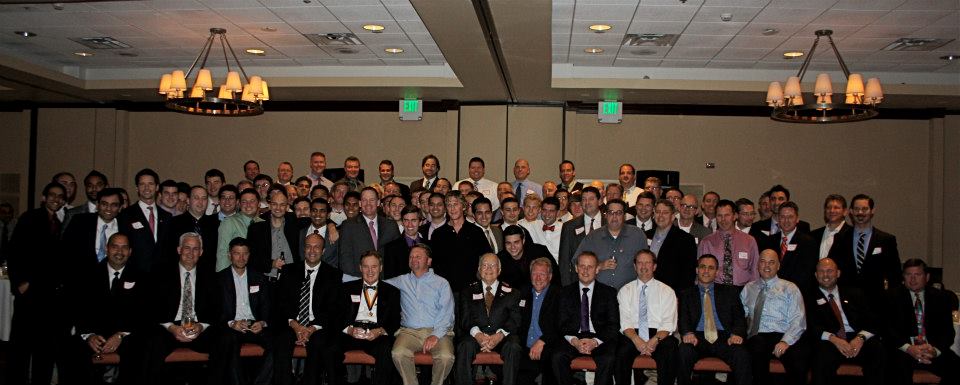
Alumni representing a multiple Greek organizations gathered last month during Homecoming to celebrate the 25th anniversary of UMBC’s chapter of Sigma Alpha Epsilon Fraternity. Nearly 100 SAE alumni and active members attended the event at the Sheraton in Columbia on October 13, said Jim Lotfi ’89, visual and performing arts, who advises the student fraternity.

In addition to recognizing some of the group’s founding brothers, Hugh Clifton Carr, III ’89 and Shawn Walker ’99 were presented with the “Order of the Lion” for outstanding Alumni service to the fraternity, Lotfi said.

“I was very happy to see so many Alumni attend the reunion,” he said. “Many attendees hadn’t seen each other since graduation but we had conversations as if we had seen each other yesterday. The bonds we developed in the fraternity have lasted all these years.”

SAE was granted its charter at UMBC on October 10, 1987. Currently there are 29 active members on campus. Its mission, Lotfi said, is to promote the highest standards of friendship, scholarship, and service for our members based upon the ideals set forth by our Founders and as specifically enunciated in our creed, “The True Gentleman.” Visit the SAE site.

Alumni Association Scholarship Q&A: Savita, Class of 2013

Throughout the year, we will be introducing you to the winners of this year’s Alumni Association Scholarships, which are supported by alumni gifts. Today, we meet information systems major Savita Moses ’13.

Name: Savita Moses ’13
Major: Information Systems
Scholarship: Alumni Association Scholarship

Q: Why did you decide to come to UMBC?
A: I was a part of a Pre-College Program offered by University of Maryland, College Park and we went on many college tours throughout the area. UMBC was one of the places we visited and toured. I fell in love with the campus as soon as I stepped onto it; I felt right at home. I had some friends that went here, so I began researching the university and talking to them about it. It seemed like everything I wanted in a college and so I made the decision to come here. I haven’t regretted my decision at all. My experience at UMBC has been outstanding.

Q: What has been the most amazing discovery you’ve made so far as a student here?
A: I have had numerous opportunities to develop and practice my leadership skills through extracurricular activities, through course team-based projects, and through internships that I have received via UMBC. Through various activities that I have participated in within those aspects, I have made the discovery of the outgoing, effective, and engaging leader I can be.

Q: Tell us about a class or club that has really opened your mind (and why).
A: Being heavily involved in the Student Government Association (SGA) during the first few years of my college experience was eye-opening. I got the first-hand opportunity to see and be a part of the impact that students can have on their campus. UMBC truly encourages civic engagement and encourages students to believe that they can make a difference. Realizing this dramatically increased my respect and involvement at UMBC.

Q: What do you hope to do after graduation, and why?
A: I hope to complete my Master’s degree in Information Systems and work full time for a well known company/agency. I want to pursue a Master’s degree because it fits my goal of being a life-long learner. I desire to build my knowledge and be the best person I can be. Pursuing a Master’s degree would help me do just that. I want to work for a well known company so that I can positively contribute to the society I live in. I’d love to use my experiences and my knowledge for the betterment of society and I’d love the opportunity to continue my growth and development in the
company that I work for.

Q: What would you say to the alumni who contributed to your scholarship?
A: I want to say THANK YOU!!!! Your financial contributions have not gone unnoticed. Paying for college can be and has been difficult, especially in the current state of the economy. I am extremely, extremely grateful for your assistance in furthering my education at this wonderful university. Again, THANK YOU! I would hug the contributors if I could. 🙂

Q: Besides the Alumni Association scholarship, do you currently receive any other scholarships?
A: I receive a $200 scholarship every semester from the state of Maryland for
a Senatorial Scholarship.

Q: How important is it to you as a student to get scholarship support?
A: My parents and I work extremely hard to be able to pay my college tuition. To receive such scholarship support was alleviating and a wonderful feeling. Having supporters like you encourage students like myself to keep going and to keep learning.

Online Tool: Calculate the Cost of a Semester

Attending college these days is expensive. You’ve got tuition, room and board, books and computers to buy — and that’s not even counting late night pizza runs!

Even at a state school like UMBC, students find themselves struggling to keep up with bills. In Fall 2011, for example, 62% of undergraduate students applied for financial aid; 80% of those demonstrated some level of financial need. On average, the percentage of need that was met of students who were awarded any need-based aid was 60%. You don’t need to be a math genius to see that many students still need our help.

UMBC’s Office of Financial Aid provides a tool where students (and alums!) can calculate the cost of an undergraduate or graduate semester. Try it out, and you’ll see the hard numbers so many of our students face.

A couple of years ago, we made a silly video with UMBC’s Mama’s Boys to show how quickly a semester’s costs can add up! Watch below and help support our students today.

Remembering Scott Hannon ’86, ’90 MS Phys

TO: The UMBC Community

FROM: Larrabee Strow, Research Professor of Physics, and Sergio DeSouza Machado, Research Assistant Professor of Physics

We are deeply saddened to report that Scott Hannon ’86, ’90 MS physics, passed away last Thursday night after a nearly two-year battle with cancer. Scott remained at UMBC for 22 years as a Research Assistant in the Physics Department/Joint Center for Earth Systems Technology. Scott was continuously involved with the development of new meteorological and climate satellites while at UMBC.  In particular, Scott developed radiative transfer algorithms that were highly regarded throughout the meteorological community and are in continuous, operational use at both NOAA and NASA. We have shared more about Scott’s life and legacy here.

Private services were held for Scott, and condolences may be sent to the Hannon family at 6614 Jacks Court, Mount Airy, MD 21771.

Are You a Roving Retriever?

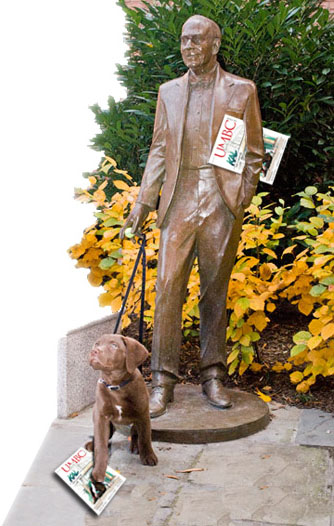
UMBC’s alumni live and travel all over the world doing fun, amazing things! And UMBC Magazine wants to showcase this.

That’s where the Roving Retriever project comes in. Next time you travel to an interesting place, take a copy of UMBC Magazine with you and snap a photo of yourself with it. Send the photo to jogrady@umbc.edu along with information about who’s in the photo and where you are, and we’ll feature you on the UMBC Magazine Facebook page!

Take a look today…we’ve already got a couple! Where will our Retrievers go next?

Memorial Planned Friday for Soltesz ’72, Early SGA President

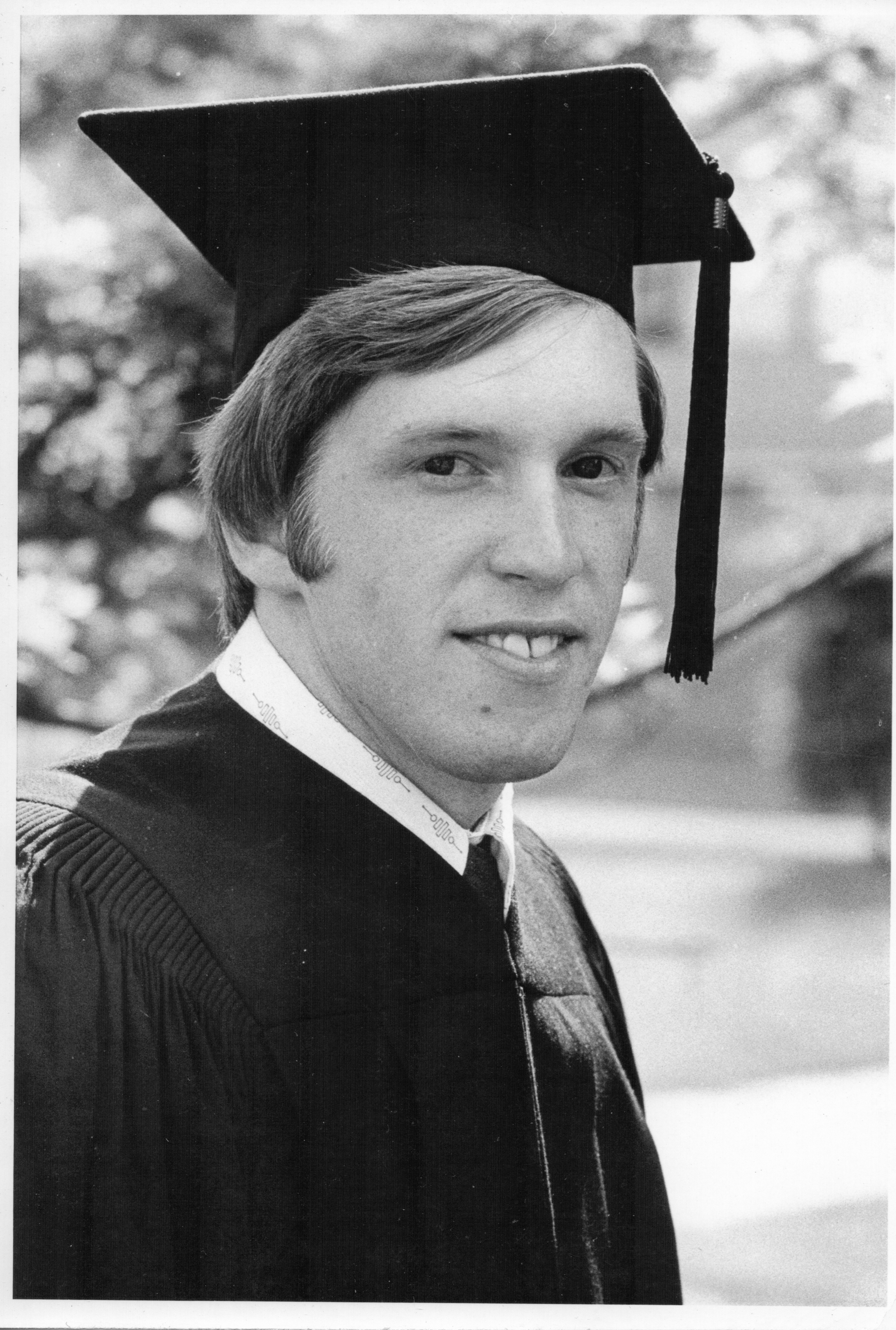
William R. Soltesz ’72, financial economics and mathematics, one of UMBC’s early Student Government Association presidents, passed away on September 13 at his home in New Jersey. He was 62 years old.

Soltesz, who grew up in Catonsville, served as president of the SGA from 1970 to 1971, and “was pivotal in working with faculty and students to keep the university open during a time when many other fledgling universities closed due to student riots and political pressures related to the Vietnam War,” his obituary reports.

Read an essay about these times at UMBC by Soltesz’s classmate, former Retriever Weekly editor Manus O’Donnell ’72, English, here.

Soltesz later received his M.B.A. from Loyola University in Baltimore, and served as vice president or chief financial officer for several Fortune 500 companies, including Alexander and Alexander and Sara Lee’s Shasta Beverages Division in Baltimore. At the time of his passing, Bill had served as the C.F.O. of Budd Van Lines in Somerset, NJ for over 20 years. He served on the Chester Borough (N.J.) Zoning Board and enjoyed swimming, the study of foreign culture and history through extensive world travel, and studying the American Revolutionary and Civil Wars.

Soltesz’s daughter, Tracy Soltesz ’01, political science, recalls that her father was especially touched by the teaching of Dr. John M.Titchener, emeritus professor of philosophy, who worked with Soltesz closely on various SGA initiatives throughout his tenure. Soltesz is also survived by a son, two brothers, and two grandchildren.

Interment will be this Friday, November 9, at 2:30 p.m. at the Lake View Memorial Park, 2724 Liberty Road, Sykesville, MD, 21784. A memorial reception will be held afterwards from 4 to 6 p.m. at The Rumor Mill Fusion Bar & Restaurant at 8069 Tiber Alley, Ellicott City, MD, 21043. Alumni and friends are welcome to attend and share stories. For questions, please email kesrya@gmail.com.

VIDEO: Simmons ’04, MPP, on Excitement of Hrabowski Fund for Innovation

If you’re on campus regularly, it’s easy to see the excitement building this semester about both the 20th anniversary of Dr. Freeman Hrabowski’s presidency here and the launch of the Hrabowski Fund for Innovation, a fund created by Dr. Hrabowski to promote new thinking in the classroom.

We’re equally excited to share this video (below), featuring Vice President of Institutional Advancement Greg Simmons, a 2004 graduate of UMBC’s master’s of public policy program, as he talks about the fund, Dr. Hrabowski’s legacy, and how we can all help keep UMBC strong. Enjoy!

[youtube http://www.youtube.com/watch?v=YNSn7tQR1GQ]

Support the Hrabowski Fund for Innovation by clicking here.

Faculty and Staff Support the UMBC Community

UMBC faculty and staff give their all to the university each and every day simply by doing their jobs well. The launch of this year’s Faculty/Staff Campaign is another important way of showing that you care — and supporting the UMBC community beyond your individual reach.

Even modest gifts add up to help students, faculty and staff succeed. We do great things at UMBC, and every little bit helps us continue to make a difference. Furthermore, our gifts are put to good use; when you make a gift to UMBC, 100% of that gift goes directly to the area that you’ve chosen.

Here are a few stand-out points about the Faculty/Staff Campaign:

  • Last year, 216 members of UMBC’s faculty and staff donated over $136,000 to the university.
  • Faculty and staff supported a wide range of initiatives – ranging from the University’s Greatest Need to athletics, student affairs and departmental related funds.
  • Our faculty and staff donors contribute to UMBC in a number of ways – through gifts-in-kind, planned giving, payroll deduction, and outright gifts.
  • Faculty and staff support of the university is a great indicator of how much the UMBC community believes in the mission and vision of the university.
  • So far in FY13, there have been 116 contributions from faculty and staff members for $17,129.68.

One great way to make your gift is by signing up for payroll deduction before Friday, November 16. If you would like to make your gift by payroll deduction, please use the form that was sent to you via interoffice mail. If you have questions or need a new form, please contact Dayna Carpenter, Annual Giving Coordinator, at dayna@umbc.edu or ext. 5-3377.

If you prefer to make your gift by credit card, you can do so quickly and easily online at www.umbc.edu/giving. Remember that gifts received before December 31, 2012, can be counted as a charitable contribution for the 2012 tax year; however, please note that gifts made by payroll deduction will fall into the 2013 tax year.

Grigoryan ’02, CompSci/BioChem, Teaching at Dartmouth

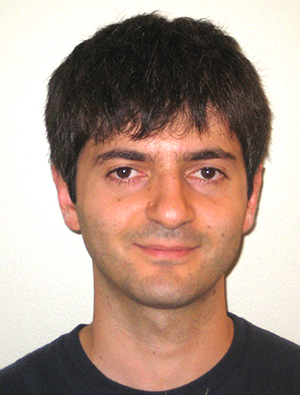
A Computational Biologist and Dartmouth professor, Alumnus Gevorg Grigoryan says his undergraduate research at UMBC was crucial to his success.

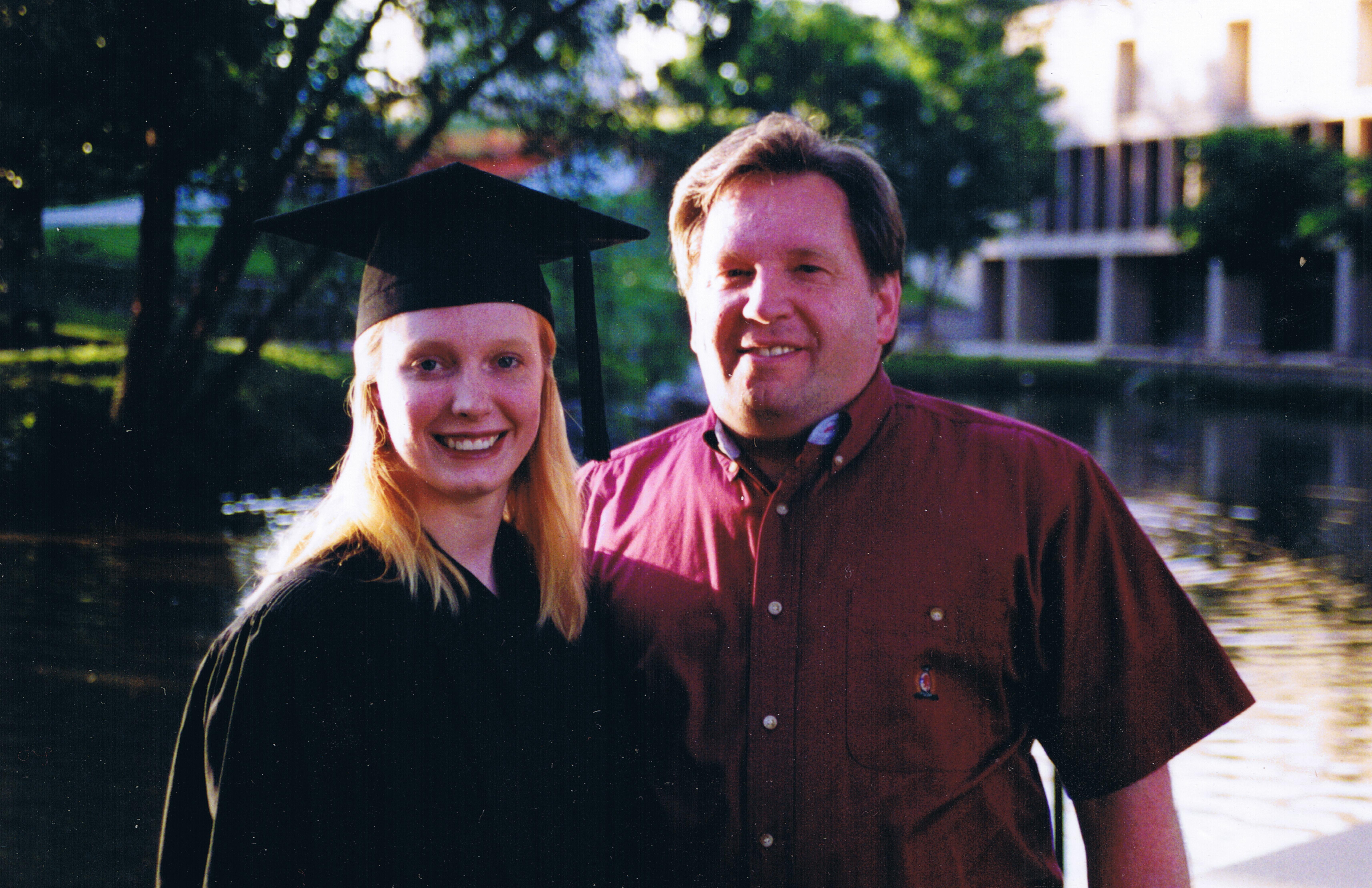
Kids typically see college as a chance to get away from their parents. That wasn’t the case with alumnus Gevorg Grigoryan ’02, Computer Science and Biochemistry, who did research with his dad in UMBC’s Computational Photonics Lab as an undergraduate. In 2000, the pair co-authored a paper proposing a new visualization technique for wave transmissions that uses color to represent amplitude and phase information.

Now an assistant professor of Computer Science and an adjunct assistant professor of Biology at Dartmouth College, Grigoryan stresses the importance of doing research early on. As an undergraduate, he worked in not one, but three, different research labs at UMBC: the Computational Photonics Lab, the VANGOGH Lab, and Dr. Daniel Fabris’ Mass Spectrometry lab.

“It was very easy for an undergrad to get involved in research [at UMBC],” says Grigoryan. “It’s not like that everywhere.”

Working in labs gave Grigoryan essential experience that shaped his career path. When it was time to pick a major, he knew that he wanted to do research like his dad, Vladimir Grigoryan, a Physicist who was working as a Research Scientist at UMBC at the time.

Grigoryan switched from Physics to an ambitious double major in Computer Science and Biochemistry when a professor told him about the emerging, interdisciplinary field of Computational Biology. Combining the principles of biology with computing techniques, the new field dealt with simulating and studying biological systems on the computer.

After graduating from UMBC in 2002, Grigoryan went to MIT for his Ph.D. in Computational Biology under Dr. Amy E. Keating. Later he completed his Post Doc at the University of Pennsylvania Medical School under William DeGrado. His research has focused on examining proteins in order to 1) understand their structure, and to 2) use that understanding to design new proteins that can do things like cure disease.

The analysis and design of proteins is what’s being done in Grigoryan’s research lab at Dartmouth. Specifically, Grigoryan and his students are looking at how protein structure dictates protein-protein recognition and the structural mechanisms of information transformation by allostery. In an interesting twist, Grigoryan now has undergraduate research assistants of his own.

As for collaborations with his dad, Grigoryan says that these days, formal collaborations are hard because of distance; Grigoryan works on molding minds in New Hampshire while his dad works at Ciena Corporation in Maryland. Nevertheless, that doesn’t stop them from having heated scientific discussions over the phone, he says.

This story first appeared on UMBC’s Computer Science and Electrical Engineering department website.

Gates Foundation Grants $2.6 Million to Ensure Transfer Student Success in STEM Fields

UMBC is pleased to announce today a $2.6 million grant from the Bill & Melinda Gates Foundation to build a national model for ensuring more transfer students earn degrees in science, technology, engineering and math. Anne Arundel Community College, the Community College of Baltimore County, Howard Community College and Montgomery College will work with UMBC on the “STEM Transfer Student Success Initiative.”

Sarah Gantz of the Baltimore Business Journal wrote:

“Transfer students account for about 38 percent of UMBC’s new students in STEM fields and largely come from the initiative’s partner community colleges.

“How they succeed depends quite a lot on the transition and this is one of the really important issues of why a standard bridging model doesn’t work,” said Philip Rous, provost at UMBC.”

The foundation’s grant will allow UMBC and its community college partners to:
Better align their STEM curricula, reducing lost credits and the need for students to retake courses. Improve academic and career advising, heavily utilizing online tools.
Create programs, such as peer mentoring and transfer seminars, to better support students during the transition from a two-year to four-year college. Develop a robust “Transfer STEM Scholar Pathway” that lays out a clear program of study, from community college to university to graduation. Disseminate guiding principles and best practices to the national higher education community.

Alexandra Tilsley of Inside Higher Education wrote:

“Transfer students in STEM fields face the any community college transfer might face: courses that don’t line up, credits that don’t transfer, trouble adjusting to the class size or format, a lack of a community feeling. Those problems, however, are often more acute for STEM students. After all, 500-person lecture classes are more common in science departments, and requirements are often more stringent in those fields, too; an engineering student who takes the wrong class in his first year at community college will likely have a harder time finishing a bachelor of science degree in four years than an English student would have with a bachelor of arts.

“There are all sorts of differences,” said Bill LaCourse, dean of the College of Natural and Mathematical Sciences at UMBC. “And yes, we have students coming from high school, but there are all kinds of first-year programs. Transfer students … come in not knowing exactly what to do because we never gave them the grounding to understand what it takes or what it entails.”

Supported by a three-year grant from the Gates Foundation, this project will not only serve as a national model, but also stands to directly benefit more than 1,000 Maryland students in the next few years and thousands more in years to come.”

In less than ten years, jobs requiring postsecondary education or training will account for more than 60 percent of all new jobs in the United States, and demand for workers in the STEM fields will be particularly acute. Accordingly, Maryland has set a goal of raising the proportion of the state’s adults with college degrees to 55 percent by 2025, with an added emphasis on STEM degrees. The state’s goal mirrors a national one supported through the work of the Bill & Melinda Gates Foundation.

The STEM Transfer Student Success Initiative recognizes that shaping the transfer process to better support students is crucial to meeting the nation’s education goals. The initiative builds on the Gates Foundation’s existing postsecondary work, as well as UMBC’s longstanding commitment to helping students of all backgrounds succeed in the sciences. The university’s highly-successful Meyerhoff Scholars Program, for example, serves as a national model for sending students on to earn Ph.D.’s in the STEM fields.

This post originally appeared in UMBC Insights.

Clark ’06, Psych, Added to Orioles Roster

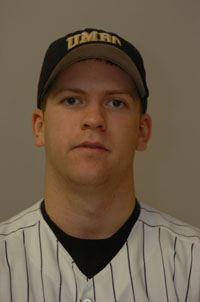
Former UMBC baseball standout Zach Clark ’06, psychology, has been added to the Baltimore Orioles’ roster, the Baltimore Sun reported yesterday.

Clark, who pitched and was a designated hitter for the Retrievers, has spent seven years in the Orioles farm system, most recently with the Bowie Baysox.

Read the Baltimore Sun story here.

He was profiled in a recent UMBC Magazine story here.

Read more about Clark in two recent news releases from UMBC Athletics:

Siebert ’93, CompSci, Featured in Salon

The U.S. State Department counts Arabic as flat out one of the most difficult languages to learn. For Loren Siebert ’93, computer science, however, the study of a language that started as a hobby has blossomed into a career that blends both tech and teaching skills.

The founder of LinguaStep, an online language learning service praised by students for being both speedy and effective, was featured in Salon last week as part of a story explaining how Siebert has partnered with the U.S. military to develop language programs for soldiers serving in Iraq.

On a lark, the story says, Siebert decided to take lessons in Arabic at the University of California, Berkeley. He found the language beautiful, but incredibly challenging. Finding little in the way of online resources for learning Arabic, he began to develop a software to fill the teaching gap. In 2006, he launched LinguaStep.

“Arabic is a language of memorization,” [Siebert] said. “You just have to drill the words into your head, which unfortunately takes a lot of time.” He thought, “How can I maximize the number of words I learn in the minimum amount of time?”

Read the full story here.