All posts by: Magazine Editor


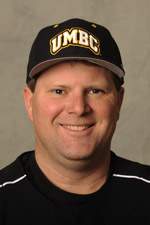
Bob Mumma '94, Econ, Named New Head Baseball Coach

UMBC has named 1994 economics alumnus Bob Mumma the new head coach for baseball. Mumma, who was drafted by the White Sox following his graduation from UMBC, has served as assistant coach to the team for the last 15 seasons. He was inducted into UMBC Athletics’ Hall of Fame in 1997.

Mumma succeeds John Jancuska, who had coached the men since 1978.

Read the full press release here.

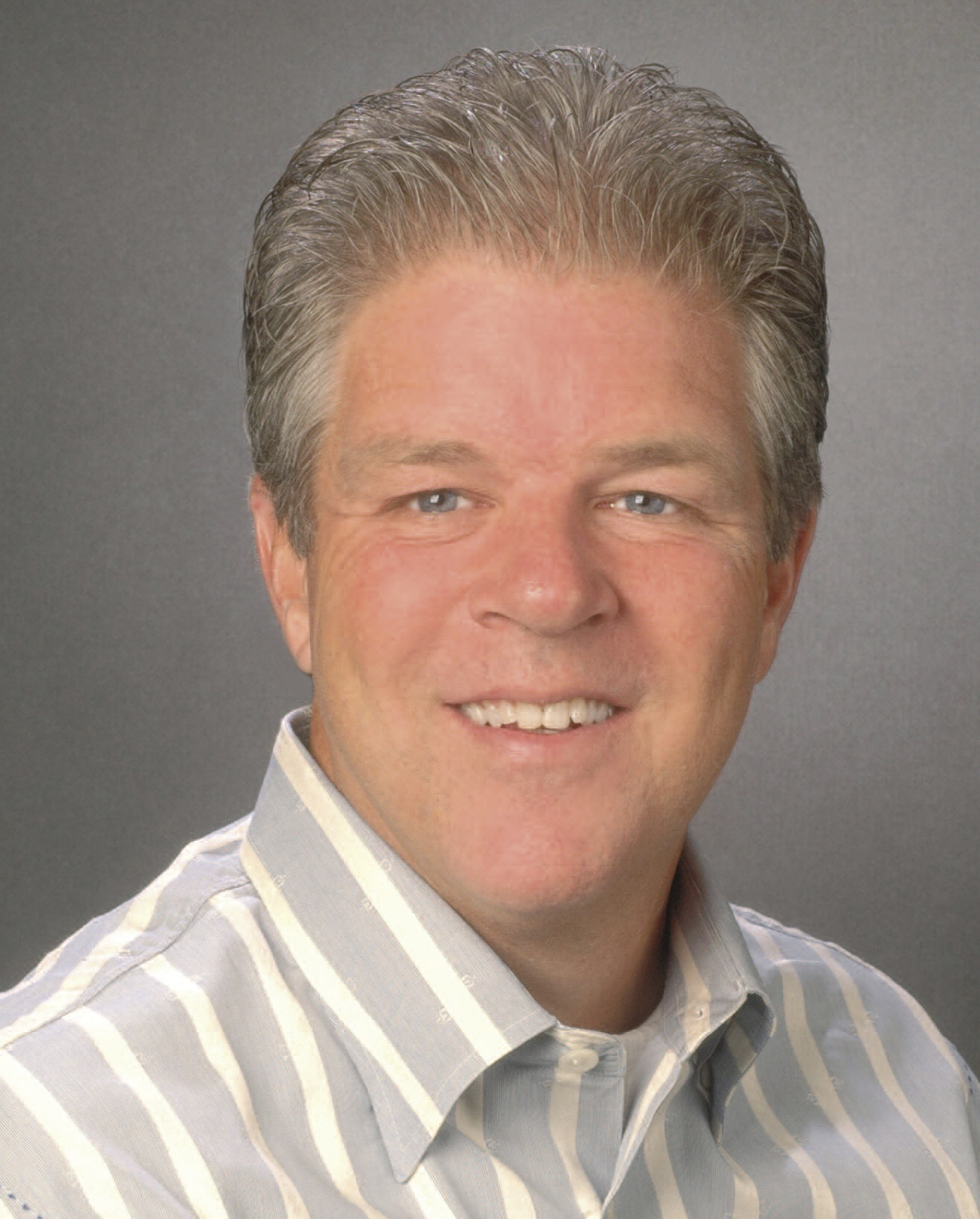
Gib Mason '95 to teach entrepreneurship course at UMBC

Via the Alex. Brown Center for Entrepreneurship:

In the spirit of entrepreneurship itself, the Alex. Brown Center is pleased to announce a new minor in Entrepreneurship and Innovation this fall. This new minor will not be housed under any one major, allowing any student to declare it and any faculty member to incorporate it in their curriculum. Faculty Fellow Bill LaCourse says the initial spark for the minor was to “infuse entrepreneurship into the university, looking for methodology and pathways that don’t disrupt the system.” He goes on to explain that everyone at UMBC is an entrepreneur – everyone here is in the “business of education,” from learning and teaching to grant writing and research.

Two new entrepreneurship courses will be introduced this fall. Both courses will give students a good entrepreneurial mind set and skill set that will be invaluable to them as they head into their own disciplines. Entrepreneurial Mindset, taught by guest instructor and serial entrepreneur Gib Mason ’95, will give students the tools necessary to apply entrepreneurial thinking to their studies, work and life. Through case studies, texts, projects, magazines and blogs, students will explore what it means to think like an entrepreneur, and how they can establish and leverage an entrepreneurial mindset to achieve career success. Mason says, “I am a very passionate person. My hope is that I can instill in the folks that take the class a passion behind one’s ideas and desires.” He is excited to return to a campus he knows very well and to “unlock the entrepreneurship in all of us.”

Learn more…

Alumni Documentary Wins Film Festival

“Lift Up,” a new documentary on post-quake Haiti co-directed by Huguens Jean ’12, Ph.D., electrical engineering, and Phillip Knowlton ’03, visual arts, will have its film festival premiere this Sunday, June 5, 5:30 p.m., at the 2011 DC Caribbean Film Festival.

The creators of “Lift Up” also recently announced that the film received the Best Documentary Directing Award at the 2011 Amsterdam Film Festival. The juried festival received entries from over 20 countries this year.

Held at the AFI Silver Theatre and Cultural Center in Silver Spring, MD, the DC Caribbean Film Festival is co-presented with the Caribbean Association of World Bank and IMF Staff (CAI), Caribbean Professional Network (CPN), Institute of Caribbean Studies (ICS) and TransAfrica Forum. “Like” the film on Facebook to access future screening details.

Family of Alumnus Missing in Libya Seeks Help of Congress

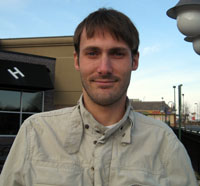
The family of missing UMBC alumnus Matthew Van Dyke ’02, political science, has sought the aid of Rep. C.A. Dutch Ruppersberger in raising the profile of his case. Van Dyke, 31, who has not been heard from since March 13, is believed to have gone missing with several fellow journalists while traveling in Libya.

During a press conference at Van Dyke’s mother’s home yesterday, Ruppersberger told the Baltimore Sun he planned to introduce a resolution about the missing journalist on the House floor.

Read the full Baltimore Sun story here.

View coverage on WJZ-TV.

Read an April story about the search in the Atlantic magazine.

Up on the Roof – Summer 2011

UMBC President Freeman A. Hrabowski, III takes your questions.

Q. UMBC has been in the news as a new hub for the cybersecurity market. Do you see it as a growth industry for the BWI corridor, and for Maryland in general? And what are “secret” (or not so secret) weapons in UMBC’s arsenal to compete in this field and attract the best talent?

— Joab Jackson ’90

A. I think we’re becoming a model for building the cybersecurity workforce. A model for the nation.

The opening of the Northrop Grumman Cync Program here on campus is a great example. This program is part of our Cyber Incubator, and it will be helping young companies to build their capacity to solve cybersecurity problems. Our country more and more understands that we have to protect our intelligence and our broad societal computing security. All of us have to be concerned about the privacy of information.

Another exciting thing about the Northrop Grumman project is that it is in our research park – bwtech@UMBC – and UMBC is heavily connected with the National Security Agency (NSA). Over 700 of our graduates work at the NSA. And so we are becoming a magnet for cybersecurity companies. We have actually recruited 16 such companies in under two years, and continue to grow in our research park with that effort.

A number of our faculty in computer science at UMBC have been talking about cybersecurity issues for years. We received a major grant – $7.5 million dollars – from the Department of Defense about five years ago. We received that with other universities around the country but we were the lead partner. So we have been working in this space for some time. We are tied to the national infrastructure in this area. This is not new for us. We have become a destination.

The word for it is synergy. When you have national agencies and universities and school systems coming together to build a workforce capacity in cybersecurity and research strength, it becomes a major initiative for the entire state.

Q. At commencement, you always make a point of revisiting UMBC founding president Albin O. Kuhn’s charge to the members of the first graduating class at UMBC: “If you bring to the future the same personal qualities and personal commitment you have brought to this campus as students, good and important things will happen to each of you, as well as to those around you … and the university community will be proud to have played a part in your life.” Why?

— Richard Byrne’86

A. It is fascinating to see how fortunate our graduates are. I laugh sometimes with our students when they want me to feel sorry for them. Last night I was with some seniors, and Keilan Freeman, one of our seniors, was frustrated because he had to decide about graduate school in mechanical engineering between Stanford University and the University of Michigan. And I said to him: You want me to feel sorry for you?

The great news is that I can easily call up UMBC alumni who are graduate students at both institutions – and alumni who have graduated with Ph.D.s from both institutions. So that he could also call them and compare what they had to say.

And I think that is what Albin O. Kuhn was saying: people who have worked hard at UMBC are well-prepared for the workforce. They are well prepared for the next level. And I think he said it so beautifully, that it helps students who are graduating feel more secure about their future. If you can make it at UMBC, you can make it anywhere. That’s his point, and that’s my point.

Have a question for Dr. Hrabowski? Please visit retrievernet.umbc.edu/askthepresident

To You – Summer 2011

A university can offer up a lot of drama: joys and terrors, dark mysteries and the quest to unravel or unlock them.

The issue that you have in your hands is chock-full of such drama. There is drama in the most literal sense: the amazing journey taken by students, faculty and staff in UMBC’s Theatre Department to the John F. Kennedy Center for the Performing Arts in Washington, D.C.

Led by associate professor Eve Muson, the department took its Fall 2010 production of Lynn Nottage’s smart and provocative play Las Meninas all the way to selection as one of only four university productions in the final round of the American College Theatre Festival. (Just think of it as the “Final Four” of U.S. college and university theatre.)

Careful planning got the cast and crew of Las Meninas to the Kennedy Center, but that didn’t mean that there weren’t thrills and (near) spills in a one-day load-in, set construction, rehearsal and performance. But you’ll need to read the story to find out how the Las Meninas gang made it work – and just how Muson’s vision of the play will live on in the forthcoming professional production of Las Meninas she will direct at Columbia’s RepStage next year.

Another drama detailed in this issue’s story by Elizabeth Heubeck ’91 is darker and more destructive, yet it also celebrates the role that historians and cultural scholars can play in reclaiming memory. When Suzanne Ostrand-Rosenberg – a professor of biological sciences and the Robert and Jane Meyerhoff Chair of Biochemistry – found a box of letters kept by her mother from Nazi-era Germany, the discovery led not only to a nearly decade-long search for her family’s history, but also an illuminating new work of scholarship on the Holocaust by Rebecca Boehling, a UMBC professor of history and director of the James T. and Virginia M. Dresher Center for the Humanities, and Uta Larkey, a professor of German and modern languages at Goucher College.

Nature has its dramas as well – and few of them are as powerful and destructive as hurricanes. So UMBC Magazine asked longtime USA Today weather writer Jack Williams to talk with Jeffrey Halverson – an associate professor of geography and environmental systems and a researcher at Joint Center for Earth Systems Technology (JCET) – who is one of America’s preeminent hurricane trackers. Halverson’s work not only sheds light on how these most impressive storms form and intensify, but his findings may help scientists and local governments take actions that will save lives when hurricanes do inevitably sweep through our area.

— Richard Byrne ’86

The News – Summer 2011

PUTTIN’ ON A HARD HAT

The progress on the construction of Phase I of UMBC’s new Performing Arts and Humanities Building is impressive when seen from the outside. But put on a hard hat and get into the guts of the new building that will open in Fall 2012 and that progress is even more apparent.

Already, one can see the shape of the new 275 seat theater – with high-ceilinged passageways between the scenery workshop and the stage to make set construction easier. The elegant curved lines of the James T. and Virginia M. Dresher Center for the Humanities – which overlook one of the new building’s lobbies – are also clearly discernible.

Outlines of new classrooms on the top floors are also taking shape. And did we mention the views? The building’s perch at the north end of campus offers up sweeping vistas south and west to Baltimore and the Key Bridge.

But the best news about the Performing Arts and Humanities Building, however, isn’t that Phase I is going so swimmingly. It’s that lawmakers gathered in the recently-concluded session of Maryland’s Legislature decided to close a proposed two-year gap in funding for Phase II of the building – including new concert and dance venues – and allow the university to begin construction of the final wing in 2013.

“It is clear that our governor and other state officials understand how important this project is for our campus,” says UMBC President Freeman A. Hrabowski III. “And the leadership of our alumna, House Speaker Pro Tem Adrienne Jones ’76, was pivotal in ensuring in the building’s completion in 2015.”

— Richard Byrne ’86

COMING HOME TO HELP

UMBC’s reputation as a magnet for adult and returning students attracts many who have served in our nation’s military. In Fall 2010, for instance, 219 Maryland veterans receiving GI Bill education benefits were studying at UMBC.

And UMBC’s outreach to veterans is expanding. A new initiative – The Maryland Campus Compact for Student Veterans – was signed by UMBC President Freeman A. Hrabowski, III, in January. It committed UMBC and other state colleges and universities to centralize efforts to guide student veterans through all facets of university life and provide more training across campus in issues affecting veterans.

The compact was spearheaded by Maryland Lt. Governor Anthony G. Brown – a colonel in the Army Reserves, a graduate of the Reserved Officer Training Corps (ROTC) and the nation’s highest ranking elected official to have served a tour of duty in Iraq.

The agreement formalized outreach efforts that were already under way. In February 2010, the university’s division of student affairs established a Vets 2 Vets program in its off-campus student affairs office, offering support services, networking opportunities and referrals to a wide network of resources on-and-off-campus. UMBC’s Vets 2 Vets program will also offer an orientation session for new veterans on campus in early August.

“The UMBC community is proud to welcome returning veterans to campus,” said Hrabowski after signing the compact. “We know the transition back to the classroom can be challenging, and we are committed to supporting student veterans with access to the information and services they need to be successful.”

— Richard Byrne ’86

NET GAIN FOR ALUMNI

If you’re an alumna or alumnus who’s already plugged into getting UMBC information via email, you’ve likely discovered that our online community – Retriever Net – has a brand new face.

The makeover began over a year ago, when we asked alumni what they wanted from a web community. Among the priorities that emerged from the feedback were more campus news, more notice about alumni events and easier ways to reconnect with former classmates. Alumni also wanted a fresher look and greater clarity in the website.

The Retriever Net redesign addressed all those priorities and desires – linking alumni directly to events on campus and to news from faculty and students. Plus the site makes it easier to find information about alumni events, discounts and other benefits of being a UMBC graduate. The range of things you can now do via Retriever Net includes:

• Submit class notes with photos that will be published online and in the magazine
• Search a password-protected alumni directory
• Update your personal information and even upload a photo
• Send messages to old classmates
• Browse an up-to-date calendar of alumni events
• Use your new login to access both Retriever Net and myUMBC, the central campus web portal

But don’t take our word for it! Check out the new Retriever Net and tell us what you think! Fill out our user survey by July 31 at http://alumni.umbc.edu/sitefeedback and you may win a $15 Amazon gift card!

— Meredith Purvis

EXCELLING BY EXAMPLE

The TIAA-CREF Theodore M. Hesburgh Award for Leadership Excellence is among the highest awards for academic leadership. Named after the former University of Notre Dame president who guided that institution to national preeminence, the annual prize recognizes the personal leadership that a university or college president has provided for the greater good of society.

In 2011, a distinguished panel of judges singled out the work of UMBC President Freeman A. Hrabowski, III, for the prize, which he received at the American Council on Education (ACE) annual meeting in Washington, D.C., in March.

Stephanie Bell-Rose, head of the TIAA-CREF Institute, which sponsors the prize, observed that “Dr. Hrabowski’s leadership at UMBC and commitment to underrepresented groups in science and engineering has had a powerful impact on both the Maryland system and on higher education as a whole. The Hesburgh award honors those higher education leaders who demonstrate innovative thinking, a positive impact on both higher education and society and a willingness to collaborate both within and outside the university, all of which are embodied by Dr. Hrabowski’s work.”

UMBC’s president used the occasion to urge greater innovation within the academy as a critical element in helping the nation face an unprecedented set of challenges. “It takes all of us in the academy to build our institutions and prepare the next generation of leaders,” Hrabowski said. “Higher education is more important now than ever before for both our nation and humankind. I am honored to accept this award on behalf of my UMBC colleagues and students, and to have our work associated with the example of extraordinary leadership provided by Father Hesburgh.”

— Richard Byrne ’86

Storm Stalker

Hurricanes are powerful – and they also hold great mysteries. UMBC researcher Jeffrey Halverson uses the latest technology in collaboration with NASA to unlock those secrets and make potential storm victims safer.

By Jack Williams

Hurricanes as strong as the infamous Hurricane Katrina which ravaged New Orleans and the coast of the Gulf of Mexico in 2005 rarely hit the Delmarva area. But as Hurricane Isabel showed in 2003, a hurricane – even a storm that is weakening – can cause serious damage to our region.

Isabel’s power pushed water up the Chesapeake Bay to flood Fells Point and the Inner Harbor in Baltimore. It also damaged many buildings at the U.S. Naval Academy and in other parts of Annapolis. The cost of Isabel’s flooding and wind in Maryland and Washington, D.C. was estimated at $945 million – but fortunately only one death was reported.

Hurricanes such as Isabel and Katrina now cost the United States an average of $10 to $11 billion a year, and yet the population of coastal areas frequented by hurricanes continues to grow. And while Katrina was the deadliest and most expensive U.S. hurricane ever, a wide variety of storms have attracted close attention from hurricane researchers.

Some of that research is being done in the Joint Center for Earth Systems Technology (JCET), where associate director and UMBC associate professor of geography and environmental systems Jeffrey Halverson works with colleagues from NASA to tackle questions about hurricanes that could help save lives.

JCET is a joint effort between UMBC and NASA’s Goddard Space Flight Center, and the center’s researchers have the advantage of possessing some of the latest technology available to help guide their search for

answers. One of the most pressing questions that Halverson and his colleagues are trying to solve is what information forecasters need to better predict when a hurricane will intensify quickly and become that much more dangerous.

Since the 1950s, scientists have learned enough to enable forecasters to do a much better job of predicting where a hurricane is likely to go. But Halverson observes that “there has not been much progress in forecasting intensity changes.”

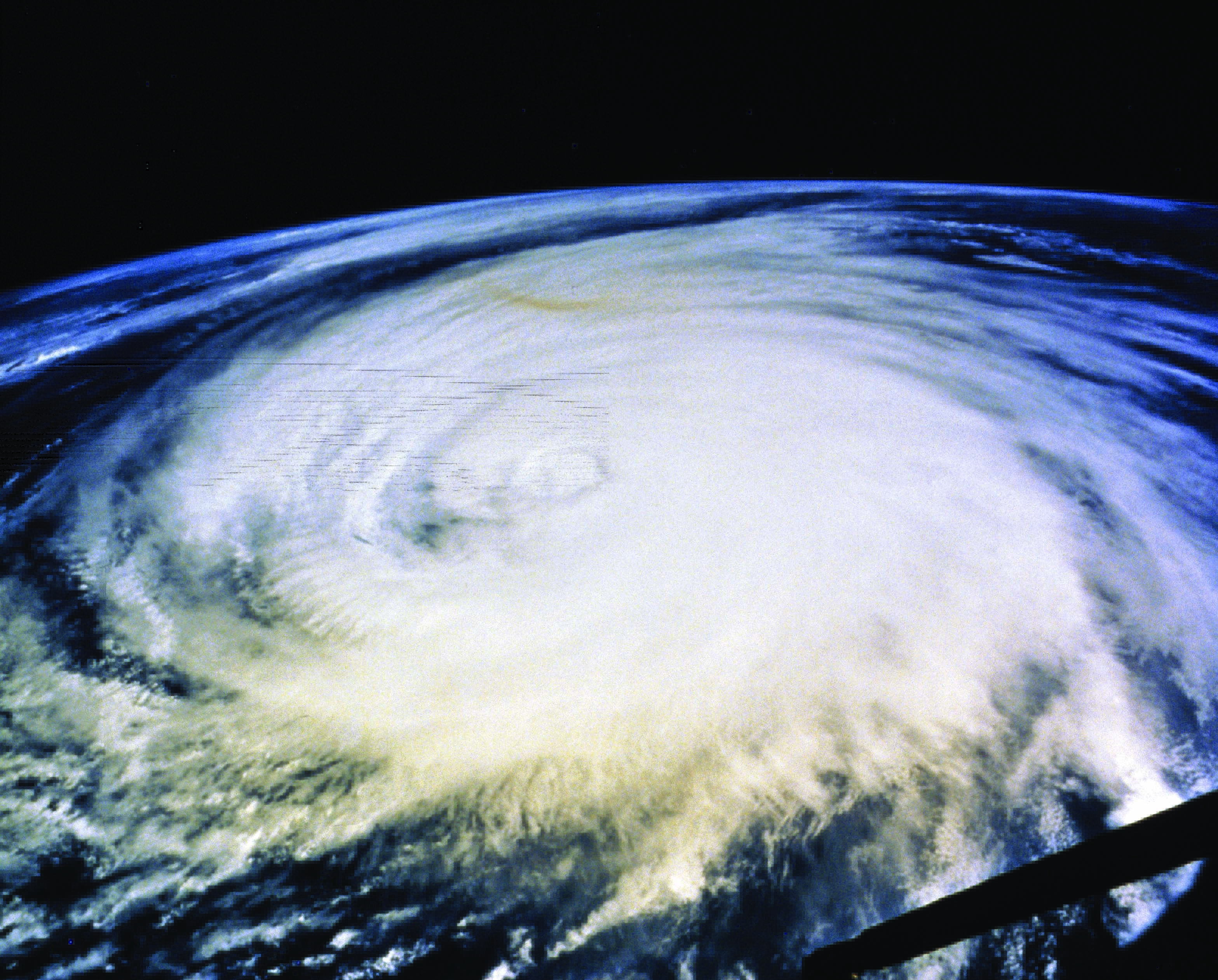
Hurricane Wilma’s ferocious journey over the Caribbean Sea in October 2005 illustrates just what can happen when storms suddenly gain power. In a mere 24 hours, Wilma strengthened from a 69 mph tropical storm to a 172 mph Category 5 hurricane. Fortunately, Wilma’s winds then weakened to 150 mph before the storm hit the Mexican island of Cozumel and then Cancun two days after reaching peak strength, and those precious 48 hours gave local governments time to move thousands of residents and tourists out of harm’s way.

The nightmare for hurricane forecasters is a storm like Wilma that kills hundreds of people after strengthening with little or no warning, leaving government officials and residents in a populated area only hours – instead of days – of warning.

In order to help forecasters better predict when a hurricane will intensify in an explosive fashion, scientists such as Halverson need to learn exactly what happens before a storm begins to grow into a monster, how to detect precursors to intensification, and then update forecasting computer models to handle the new data.

“The storm speaks to us in code that we’re trying to understand,” Halverson says.

Scientists armed with technology have already cracked some of the code. Global-scale winds at levels of up to 30,000 feet steer a hurricane across the ocean and land, and forecasts that track storms have improved as scientists learned more about how hurricanes interact with these winds. Forecasts of how winds will change

during a hurricane’s life have also improved. Indeed, many outside factors – especially the temperature of the ocean over which a hurricane is moving and the speeds and directions of global-scale winds around it – help determine when a hurricane will weaken or strengthen.

Scientists still need to learn more about what happens inside a storm that’s about to intensify. This part of the code is difficult because a hurricane is a cauldron of rising and sinking air moving in horizontal and vertical swirls ranging in size from inches across to the hundred-miles or larger diameter of wind spiraling into the storm. Water is changing among its vapor, liquid and ice phases to warm or cool rising and falling air. The moving air and changing temperatures are all interacting in ways that aren’t always clear.

“There is a lot of the physics we don’t understand,” Halverson admits. “We are trying to adapt new technologies to answer these questions.”

Up Up And Away

One way to get closer to the physics of hurricanes is to get physically closer to them – close enough to measure. Often the best way to research bad weather is in an airplane.

Halverson began conducting weather research from airplanes even before earning his Ph.D. in environmental science from the University of Virginia in 1995.

From November 1993 to February 1994, he worked aboard a NASA DC-8 research airplane as the scientist in charge of the cylindrical packages of instruments called dropsondes – sometimes described as “Pringles cans with microprocessors and parachutes.” After being dropped from an airplane, a dropsonde radios back data on temperatures, humidity and air pressure as it falls to the ocean. (In recent years, dropsondes have also been fitted with GPS receivers and have added wind speed and direction data to the data they send back as they descend.)

In addition to his time spent on that NASA DC-8 and on other airplanes, Halverson has also conducted weather research on ships, and worked in the jungles of the Solomon Islands in the South Pacific studying El Niño – the chain of ocean-atmospheric events that can affect weather around the globe – which begins with a cooling of the same western tropical Pacific Ocean where Halverson and other scientists conducted their 1993-94 research.

That project is a model for how meteorological research has been conducted since the 1950s. Groups of scientists begin by observing the weather with sophisticated instruments and then use the data to form hypotheses. Halverson adds that computer models and satellite monitoring have also become an important part of the process.

Halverson’s scientific career boasts a direct link to Bob and Joanne Simpson, the pioneers of airborne hurricane research and computer weather models. Halverson did postdoctoral work with Joanne Simpson at NASA in the mid-to-late-1990s, and has also worked on projects with Bob Simpson.

In an April 2005 talk given at an Explorers Club dinner in Washington, D.C., Halverson acknowledged the Simpsons in the audience, observing that Bob Simpson’s invention of hurricane-research flying “led to a great deal of what scientists know about hurricanes that no one knew before the 1950s. All of the brilliant research started with getting eyeballs into storms.” He also noted that Joanne Simpson was not only the first woman to earn a Ph.D. in meteorology, but also the first person to develop a computer model of what happens in a cumulus cloud.

These days, Halverson is pushing the Simpsons’ legacy of innovation into the future. He is now a project scientist for the next big step in airborne hurricane research: sending the unmanned NASA Global Hawk airplane above the tops of hurricanes to help study their formation and intensification. He says 2010 “was the first time we flew the Global Hawk… it will revolutionize what we know about hurricanes… it’s the first time we’ll have a view from 65,000 feet over 25 hours. This will transform hurricane flying from reconnaissance to surveillance.”

The Global Hawk’s ability to stay in or above a storm longer than previous airplanes used for research is what is transforming the process from reconnaissance to surveillance. It is the latest tool for researchers in a wide range of airplanes used for big projects, including NASA’s DC-8, an ER-2 (NASA’s version of the U-2 spy plane), two WB-57s (a 1950s bomber now carrying research instruments), and the National Oceanic and Atmospheric Administration (NOAA)’s two WP-3 turboprops.

All of these airplanes maneuver inside or above a storm at the same time, but at different altitudes, to capture a more complete picture of what’s happening. The NOAA WP-3s slice through a hurricane’s eye 5,000 to 10,000 feet above the ocean, while the DC-8 flies at 40,000 feet on top of the storm and the ER-2 or the WB-57s soar high above the top. Depending on how far a storm is from the airplanes’ land bases, they all might be able to spend only the same two or three hours in a storm with the rest of their six- to ten-hour trips flying to and from the storm.

The Global Hawk, on the other hand, can stay in the air as long as 25 hours with its pilots at computers back at the missions base who work in shifts to keep the Hawk flying.

Halverson was a mission scientist for a NASA experiment in August and September 2010 that used the Global Hawk. It examined the formation and strengthening of storms in the Gulf of Mexico and western Atlantic Ocean. One Global Hawk flight included 20 passes over the eye of Hurricane Carl. NASA’s DC-8, a WB-57 and the Global Hawk also flew together on several data-collection flights.

“This has the possibility of reinventing what we do” says Halverson, who’ll be working with the Hawk as a member of the science team for NASA’s “Hurricane and Severe Storms Sentinel” mission from 2012 to 2014 to study hurricane genesis and intensity changes.
Few But Deadly: Why?

The “genesis” part of NASA’s “Hurricane and Severe Storms Sentinel” mission is a continuing quest to answer a question that Joanne Simpson and her colleagues asked more than 50 years ago: “Why are there so few hurricanes?”

The essential conditions needed for a tropical storm to form and grow into a 74 mph or faster hurricane for hurricane formation – including 80-degree-plus ocean water that’s at least 150 feet deep – are present for half of each year over many parts of the tropical Atlantic Ocean, the Caribbean Sea and the Gulf of Mexico.

Each year, 80 to 90 minor disturbances dubbed “easterly waves” move off Africa and traverse the Atlantic Ocean, but only a mere 10 to 12 of these actually spawn hurricanes. The easterly waves also offer no obvious clues that this is going to happen.

In the new mission, researchers will use two Global Hawks operating from NASA’s Wallops Island Flight Facility on the Virginia coast near Chincoteague during the 2012 through 2014 Atlantic hurricane seasons.

Those easterly waves are a key question for researchers. “Is there something about a seedling that makes it develop?” Halverson asks. “Is there something coming off Africa that gives it a head start?”

Halverson and other researchers believe that the answers to these questions and to why hurricanes sometimes intensify as quickly as Hurricane Wilma did are probably related. And that’s where the Global Hawk may provide new clues to formation and intensification. “If you’re not out there over time,” Halverson observes, “you miss what could be important parts of what happens to cause a hurricane to form or strengthen. With two Hawks, each flying for 25 hours, one can be going out to a storm as the other is coming in. We won’t miss a thing.”

Halverson adds that one of the lures of scholarship is sharing his work not only with other scientists through technical articles for scientific journals, but also with the general public.

“I enjoy enchanting others with science,” he says. And his radio and television interviews for the National Geographic Channel, the Discovery Channel and the Voice of America have been key avenues in doing so. Baltimore area television stations frequently call on Halverson for brief interviews when a hurricane is in the news.

Halverson has written a monthly column for Weatherwise Magazine – a publication targeted at general readers interested in the weather – for seven years. He also wrote the foreword and scientific sections of Stefan Bechtel’s 2006 book Roar of the Heavens: Surviving Hurricane Camille, about the 1969 hurricane that killed 143 people on the Gulf of Mexico’s coast when it came ashore, and 113 more in Virginia, most in Nelson County, where 30 inches of rain on the mountains caused flash floods.

Halverson is also developing a digital museum exhibit on the meteorology of the Hurricane Camille flood in Nelson County for the county’s historical society. It explains in images and words non-scientists can understand how Camille, which was then a tropical depression with winds less than 39 mph, dumped enough rain to cause a level of erosion on some mountains that would normally take over 1,000 years to occur.

In trying to bring weather’s secrets to the wider masses, Halverson says his model is the late astronomer Carl Sagan, who helped popularize science through articles, books and the classic 1980 PBS series Cosmos: A Personal Voyage.

“[Sagan] was one of my heroes,” Halverson says. “I’m part of the generation of kids he inspired. If I can do that, it will be a great service.”

Images courtesy of NASA

Retracing Memory

UMBC professor of biology Suzanne Ostrand-Rosenberg found a box of faded letters that led her deep into her family’s history­–and led scholars to fascinating new findings in Holocaust studies.

By Elizabeth Heubeck ’91

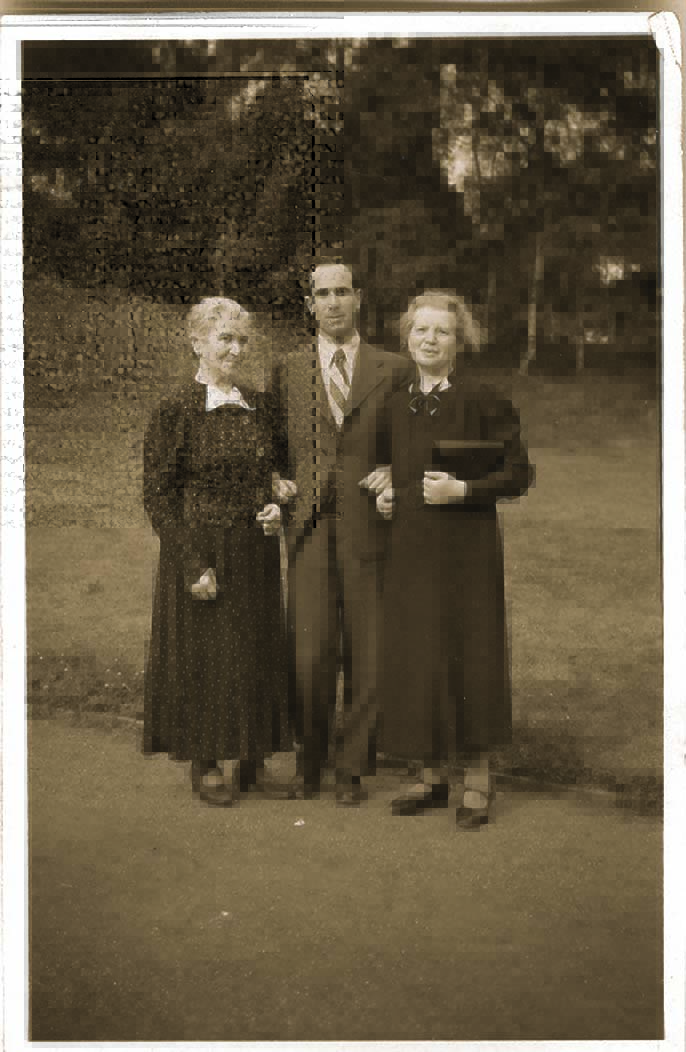
Suzanne Ostrand-Rosenberg’s mother Marianne came of age as a German Jew during the rise of Nazism and the beginnings of the Holocaust. But she said very little to her daughter about her family’s history during that trying period.

“Growing up in a house where you sort of knew something happened, though it was never discussed—it’s as if those years never happened,” says Ostrand-Rosenberg, who is now a professor of biological sciences and the Robert and Jane Meyerhoff Chair of Biochemistry at UMBC. Her voice trails off as she excuses herself to wipe away some tears.

But Marianne Steinberg Ostrand did have a story to tell her daughter (and others) about those difficult years. As Ostrand-Rosenberg cleaned out her parents’ home in Columbia a few years ago, sifting through drawers, cabinets, and closets and taking stock of a lifetime’s worth of family memorabilia, she spotted a worn brown cardboard box emblazoned with old-style German writing.

The box contained a stack of about 200 wartime letters written by family members, many of them from her grandmother, great aunt and great uncle to her mother. Most of them were dated between 1938 and 1941, after Ostrand-Rosenberg’s mother had left Germany and come to the United States.

More discoveries emerged as Ostrand-Rosenberg dug deeper. “Each day I’d find a whole new stash,” she says.

That correspondence and other documents are now seeing the light of day in a new book, Life and Loss in the Shadows of the Holocaust (Cambridge University Press), co-authored by Rebecca Boehling, a UMBC professor of history and director of the James T. and Virginia M. Dresher Center for the Humanities, and Uta Larkey, an associate professor of German Studies at Goucher College.

Though the story of Ostrand-Rosenberg’s family shares a great deal in common with other narratives of the persecution, exile and attempted extermination of Europe’s Jews in that era, it also holds many surprises and adds new shadings and nuances to the historical record of Nazi Germany and its Jewish population. (See “Between the Lines”)

And as the two humanities scholars helped to tease out the rich narrative contained in the biology professor’s family letters (and also in other family letters, diaries, and interviews with living relatives), the three women formed a close and unexpected relationship—with one another, and with the subjects of the book.

“I think [Boehling and Larkey] know more about my family than I do,” observes Ostrand-Rosenberg.

A Box of Letters

The first brown cardboard box of letters that she found held as many questions as answers about Ostrand-Rosenberg’s family history. But her family’s circumstances left her largely in the dark. Her 91-year-old father was preparing to move to a retirement community mere months after her mother had been placed in an Alzheimer’s care facility.

Feeling somewhat overwhelmed by her discovery, Ostrand-Rosenberg shared her findings with colleagues. Phyllis Robinson, a fellow professor of biology, knew Boehling from her work on UMBC’s Gender and Women Studies Coordinating Committee and suggested the historian as a possible resource. Boehling’s areas of academic research include the Holocaust, and she has written a book – A Question of Priorities: Democratic Reforms and Economic Recovery in Postwar Germany (Berghahn) – on the American occupation of Germany.

When Ostrand-Rosenberg and Boehling talked about the letters, it turned out to be fortuitous timing. Deborah Gayle ’02, M.A. historical studies, a trained archivist studying with Boehling, was seeking a meaningful thesis project. Gayle organized the initial set of over 100 letters, photocopied them on acid-free paper and then entered them into a database. To complete her historical studies master’s project, Gayle also prepared a narrative based on the English-language letters and her research on the Holocaust with input from Ostrand-Rosenberg.

Gayle’s work on the letters gave Ostrand-Rosenberg something tangible to share with cousins as far away as Chile and Israel. “When Sue shared the letters with her cousins, they decided they really wanted more,” Boehling recalls.

The cousins also dug out family letters in their possession from the same time period, and the aggregation of family information made Boehling consider writing a book based on the letters. But as she was deeply entrenched in a new study on denazification in postwar Germany, she hesitated to take on another book project by herself.

Enter Uta Larkey. Her husband, Edward Larkey, a professor of modern languages and linguistics at UMBC, had briefly attended graduate school with Boehling. The two scholars lost contact but later found themselves as colleagues at UMBC in 1989, at which point they co-organized a conference on German unification at the university and later team-taught a seminar on culture in Nazi Germany. Occasionally, Boehling socialized with Uta, a native of the former East Germany.

During one of those informal get-togethers, Boehling shared her interest in the letters. “When I talked to Uta about a possible book project, I was thinking out loud. She was starting to do Holocaust storytelling,” Boehling says. “We decided to do it [the book] together.”

Correspondence Course

Co-authorship on the project made sense, given that both women shared a professional interest in the Holocaust. But they did come to the project with different research perspectives and skills.

“Uta came to this project as a non-historian,” recalls Boehling. “She was teaching a Holocaust film and culture course. As a historian, I was learning to be a more creative writer, as she was learning to be more of a historian.”

Blending talents took time, but Boehling and Larkey worked carefully to create a book that would present the family’s personal history within its historical context.

“The voice [of the book] came together through many revisions. After quite a while, we could hear each other’s voice,” Larkey says. The materials from which the authors worked grew significantly as they dove into the project. The authors gleaned information from family diaries and journals; conducted interviews with living relatives; and re-traced the family’s footsteps in Altenessen, the German suburb of Essen where Ostrand-Rosenberg’s mother lived until she immigrated to the United States.

But the letters – personal, eloquent, and hand-written, sometimes several pages long – remained at the heart of the enterprise. “These were not just quick, email-type things. These were real letters,” says Ostrand-Rosenberg.

The vast majority of the letters were written between 1938, when Ostrand-Rosenberg’s mother emigrated from Germany, and 1947. There were scores of letters between her parents and correspondence between Ostrand-Rosenberg’s mother and her grandmother, Selma Kaufmann, her grandmother’s sister, Henny Kaufmann, and with her mother’s siblings: Lotti and Kurt.

The letters provide first-hand accounts of how the family was affected by the political unrest that entered their lives with the rise of the Nazi regime. They also detail the family’s fears about World War II and urgent negotiations over obtaining visas for family members to emigrate from Germany during the war. The letters also give insight into Selma and Henny’s experience as two of the first female business owners in a suburb of Essen (it was highly unusual in that era for women to own businesses), as well as the eventual closure of their business as the Nazi regime passed more and more laws discriminating against Germany’s Jews.

Sorting through the massive amount of correspondence was an enormous task. Ostrand-Rosenberg, Boehling, and Larkey copied the letters together, and collectively built upon the database that Deborah Gayle had begun.

“We had some 600 letters to work with,” Boehling recalls. “One spring break, (Uta and I) spent the whole time going through the letters.”

“We stood at the copy machine at UMBC for hours, copying letters,” Larkey recalls.

Not an Ordinary Research Project

The grunt work of collecting, sorting and copying letters – and pursuing their context through other avenues – yielded a useful and unique contribution to Holocaust scholarship. But it also became a richly personal and moving experience for the researchers and for the woman who first set them on the trail of her family history.

“When I would read a particularly emotional letter, I would find myself in tears,” acknowledges Boehling, who grew so close to the book project she said she began having dreams about its subjects.

A number of the letters are indeed heartbreaking, such as this one that Ostrand-Rosenberg’s grandmother Selma wrote to a friend from a so-called “communal camp” in Cologne in 1942:

Now our fate has also been decided. We will have to move into the barracks on 18 February. I am hoping for a little reprieve (Galgenfrist), but all living quarters have to be vacated by the end of the month. You can imagine our mood, I don’t want to say more about that, but hope that now one won’t lose the nerve to survive this time. Only the hope that it will get better for us…

The research project also galvanized and inspired Ostrand-Rosenberg’s family. Gideon Sella, Ostrand-Rosenberg’s first cousin and a photographer in Tel Aviv, photographed Selma’s letters, then ripped them apart and artistically arranged them into an oversized collage.

Larkey felt “overwhelmed” when Sella shared his artwork—both by the powerful statement it made, and by seeing the handwriting that she had worked with so extensively. Fittingly, the cover of the book contains a piece of Sella’s collage.

Ostrand-Rosenberg feels gratitude at having the story that began with a brown cardboard box told at last. “I will be forever indebted to Rebecca and Uta for giving me what happened,” she says. “I never would have known it otherwise.”

Boehling also sees the book not only as a scholarly endeavor, but as a recovery of family memory. “I think the book won’t be just for her [Ostrand-Rosenberg], but for her children and grandchildren, as a way of getting to know that part of the family that none of them ever shared.”

Eat our Words: Shannon Young MFA '08 Part of D.C. Porch Project

Shannon Young, who received her M.F.A. from UMBC in 2008, is one of several area artists included in “Eat Your Words,” the second exhibit presented by the Porch Project in Washington, D.C.

According to the Porch Project site, “Taken together, these artists’ works will help viewers examine their own complex relationships with food, and how the acts of preparing and consuming a meal link us all to each other and the larger world.”

There will be an opening reception for the show on May 21, and an artist discussion on June 4. For more information, click here.

You can see more of Shannon’s work at http://shannyoung.wordpress.com.

Physician and Long-Term Care Exec Scott Rifkin '81, in Baltimore Sun

Scott Rifkin ’81, biological sciences, a physician and long-term care executive, was interviewed by the Baltimore Sun about his company’s acquisition of a retirement community in Pikesville.

The move, says Rifkin, managing partner of Mid-Atlantic Healthcare, is personal: he and his parents still live in the neighborhood surrounding North Oaks retirement community.

See the full story here.

Rifkin was named a UMBC Outstanding Alumnus of the Year in 1995.