All posts by: Kait McCaffrey


Liz Willman uses internships to make childhood vet dreams a reality

“What did you say?” is the phrase most likely to be heard when you’re walking the halls at Baltimore Animal Rescue and Care Shelter (BARCS) and the answer is most likely drowned out by a cacophony of barks, meows, and even some bird chirps. But Liz Willman wouldn’t have it any other way. 

As most animal lovers do at some point in childhood, Willman decided she wanted to be a veterinarian when she grew up. But unlike most kids, it wasn’t just a phase for this rising senior. That passion for pets brought her to UMBC—where she’s pursuing a major in biological sciences on the pre-vet track—and she’s honed her animal care skills as far as Scotland and as close as BARCS, just a few miles down the road from UMBC.

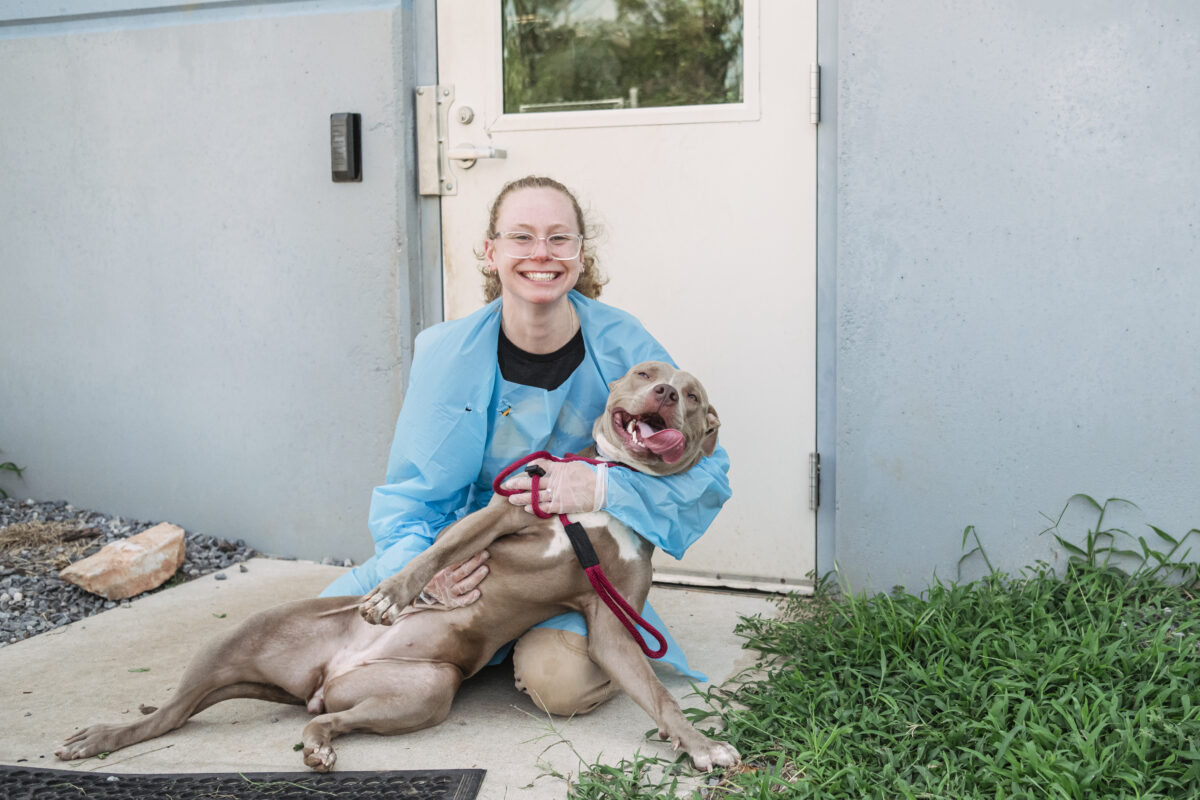
A girl with curly hair wearing a surgical gown and gloves sits down on a sidewalk holding a pitbull mix in her lap while both smile
Willman, in protective gear as to not spread contact germs to the animals, smiles along with one of BARCS’ adoptable dogs. (Marlayna Demond’ 11/UMBC)

Dog days of summer

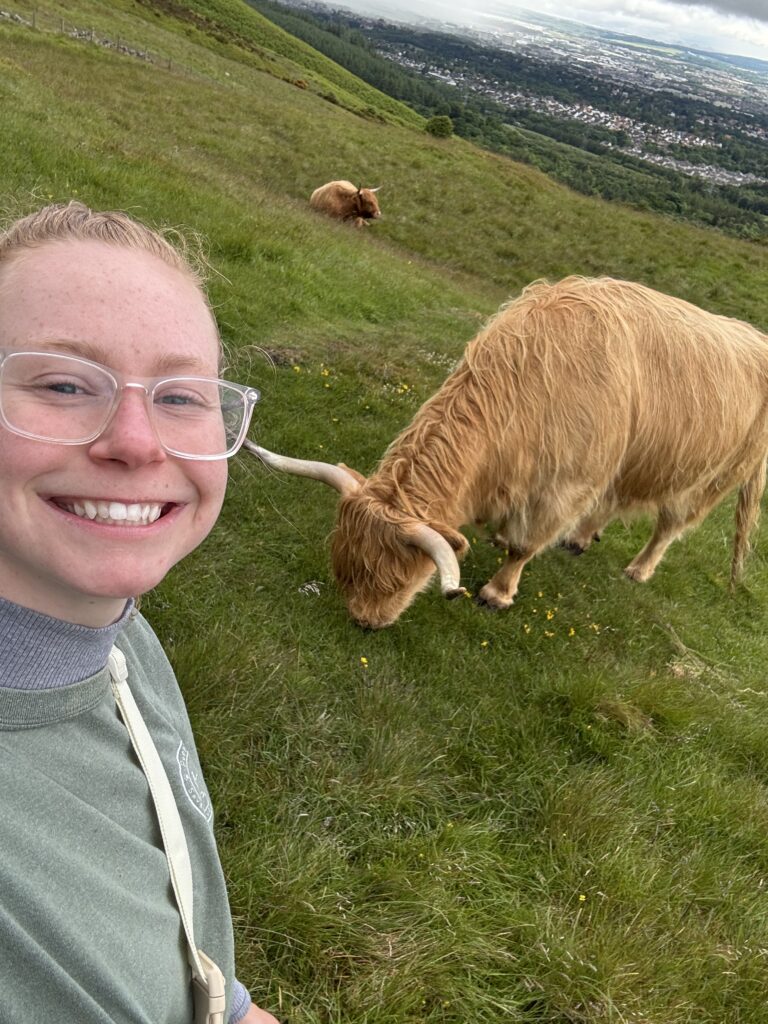
After starting as a volunteer dog walker at BARCS in fall of 2022, Willman accrued experience and staff there asked her to consider moving to the next level of volunteering. But she countered with the request to find an internship opportunity working with their medical professionals. They accepted, and in January 2023, Willman was able to start getting  hands-on experience in her field. For the last several months, Willman has been continuing her work with BARCS medical staff with one short break to  to work with animals across the pond as well. 

“The best part for me is getting to see an animal come for intake on their first day, and then seeing the progress they make,” she says. 

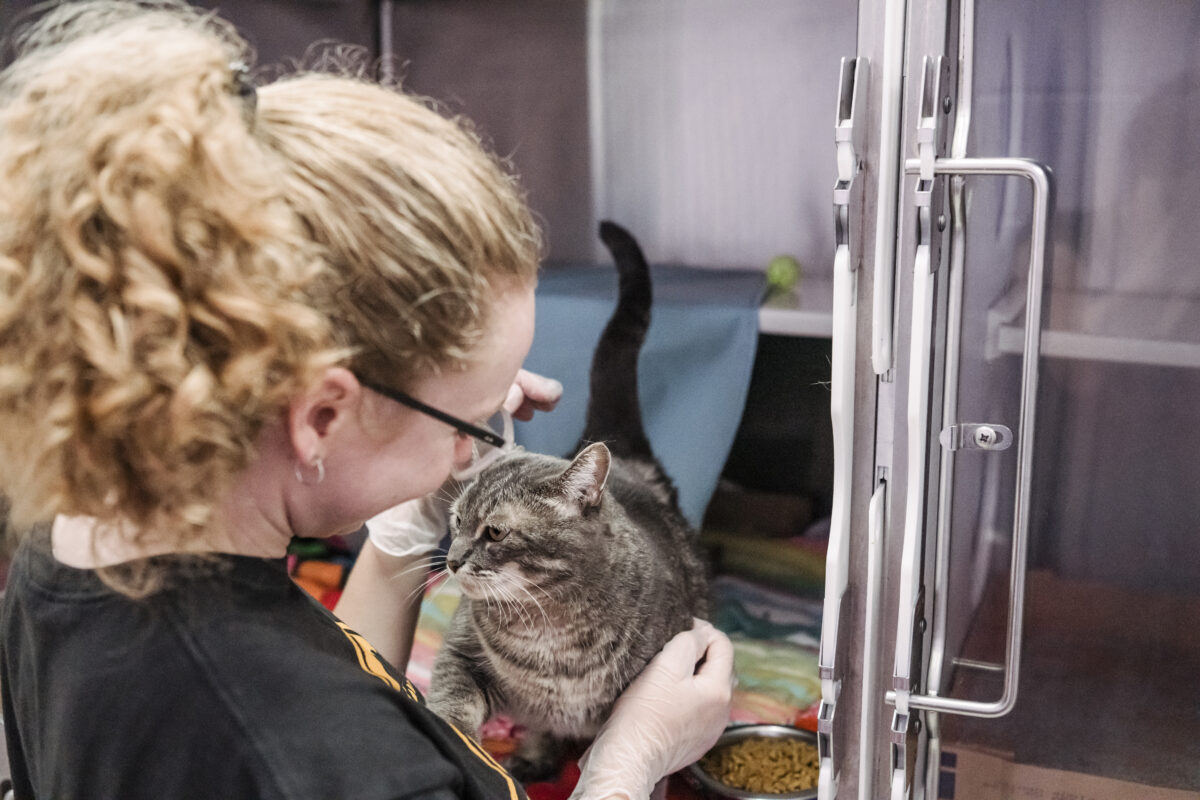
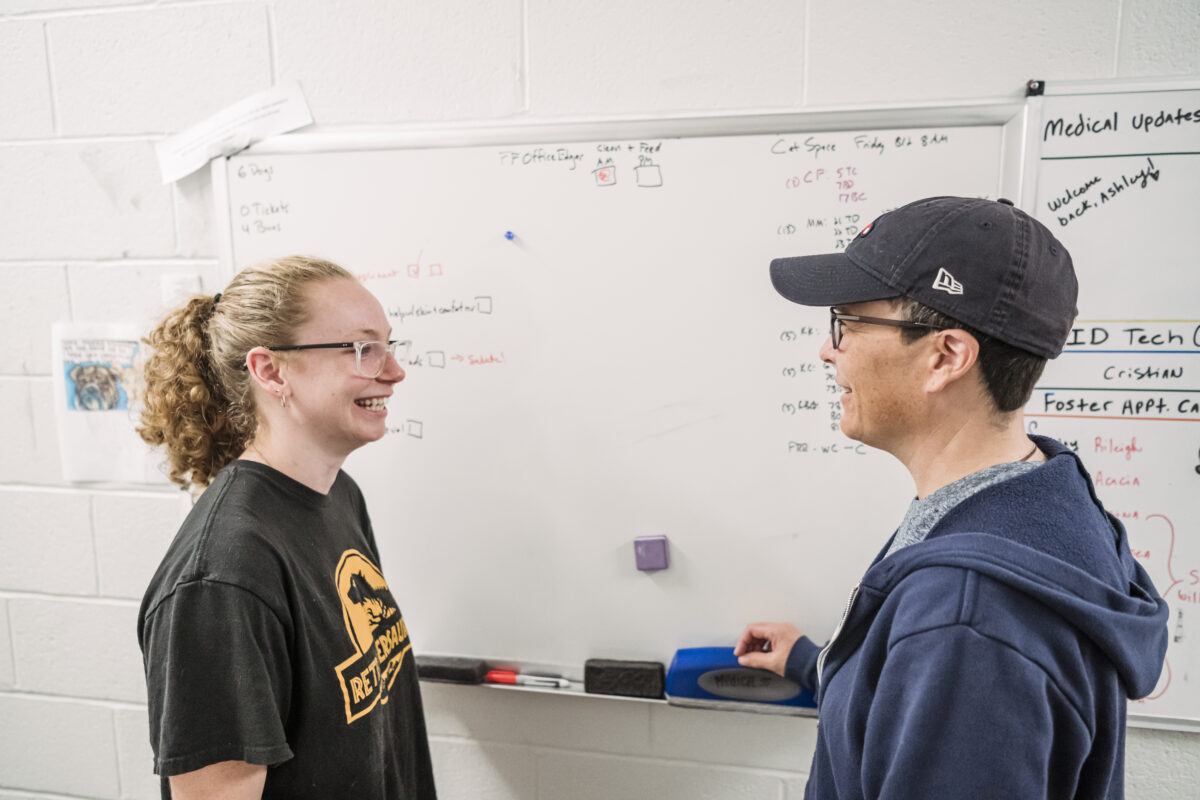
Left: Willman takes a minute to give Ovenmitts (with her extra thumbs!) some love. Right: Willman reviews daily medication and the animal schedules with a BARCS staff member. (Marlayna Demond ’11/UMBC)

Each day, Willman performs a variety of tasks, including distributing medication, checking weights, collecting samples, and more. The staff at BARCS have been especially supportive, taking care to seek out Willman and offer opportunities for hands-on learning. 

“Any time they see something that might interest me, they come find me,” she says. “They know I plan to go on to veterinary school, so they’ve been taking the time to teach me how to do a lot of things vet techs struggle with.” 

Taking to the sky

In addition to her classroom education and work at BARCS, Willman spent six weeks this summer interning with the Scottish National Wildlife Rescue Center. When Willman originally approached UMBC’s education abroad office, trying to find summer trips with a pre-vet focus there wasn’t an existing program, but the office worked with her to find one that would fulfill her requirements. 

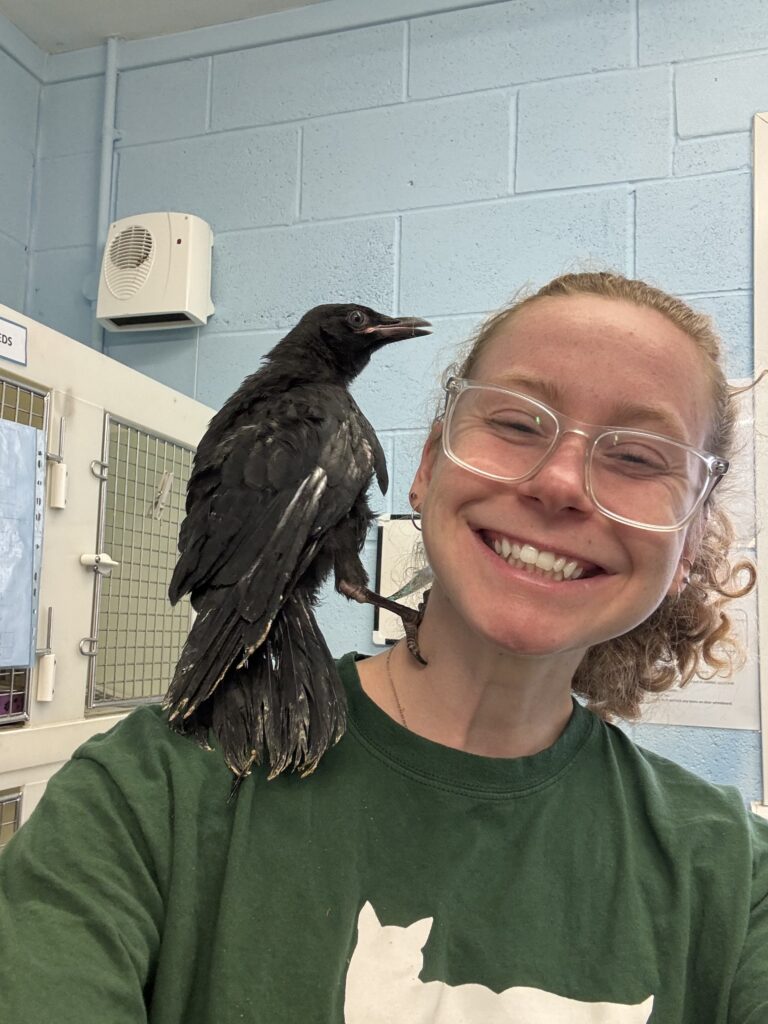
Photos of Willman with the animals she worked with in Scotland, courtesy of Willman.

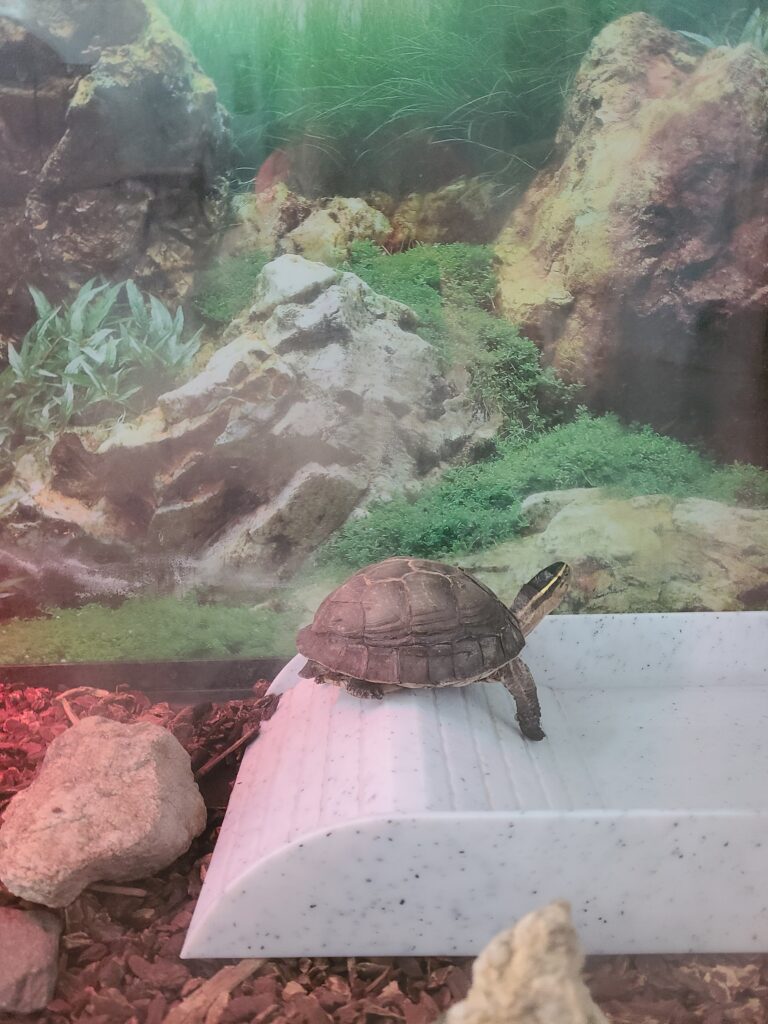
A turtle stands on a platform in a tank in front of a backdrop of the ocean
Rumpelstiltskin the turtle hangs out in his natural habitat. (Photo courtesy of Willman)

During this time abroad, Willman worked to rehabilitate birds that were injured or abandoned by their parents when they were still too young to care for themselves, performing daily exams and helping to build their strength to prepare them to return to the wild. This experience abroad was one with several firsts for Willman, including her first time leaving the country and her first foray into working with wildlife. 

“It wasn’t only a new experience for me to be working with wildlife, but it was also wildlife that you don’t see in the U.S., like finches native to the United Kingdom,” she says. 

Returning to Maryland this summer, Willman had both her work at BARCS and her own family zoo waiting for her. It’s no surprise an interest in caring for animals hits close to home for her—especially considering her family home in the outskirts of Frederick County has goats, sheeps, dogs, pigs, chickens, and even a registered emotional support turtle named Rumpelstiltskin who accompanies Willman to campus. But her internship experiences added an extra boost in confidence.

“It has just really reaffirmed that I’m not just trying to live out my childhood dream,” says Willman. “I’m meant to do this.” 

Incoming Athletics Director Tiffany Tucker brings student-centric leadership to the role

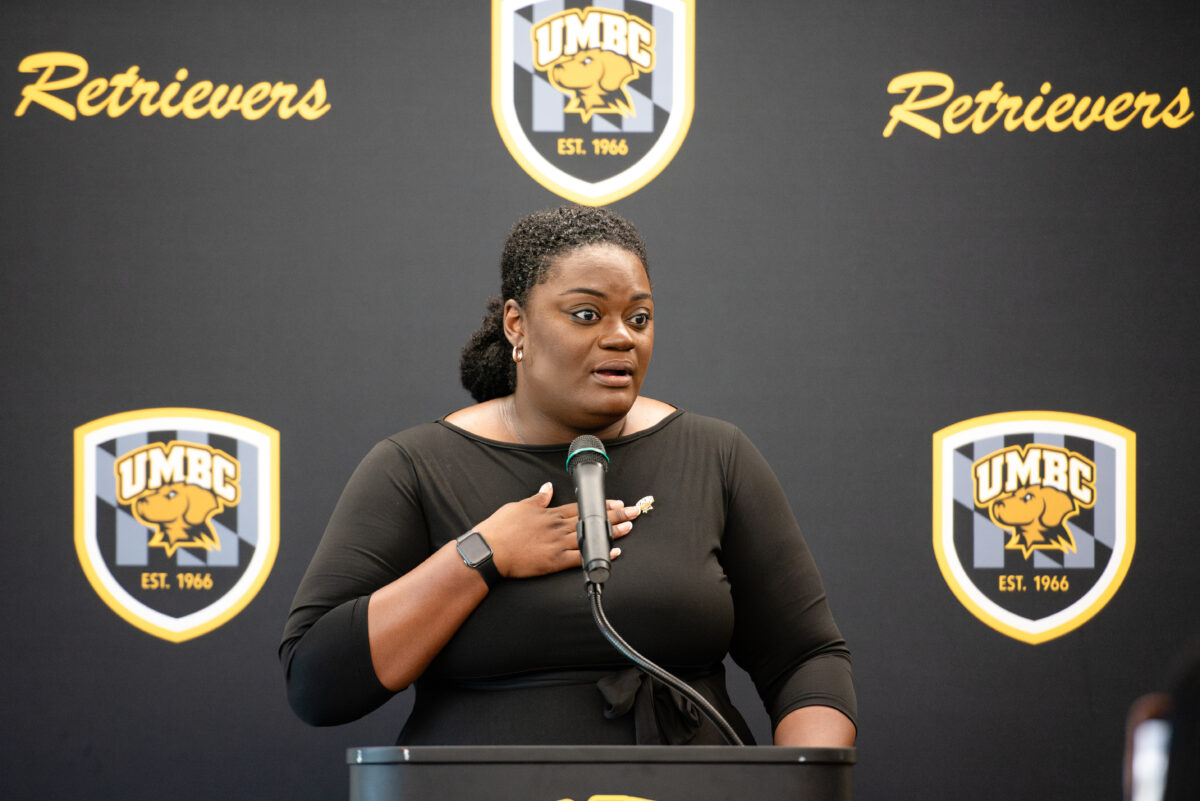
She may be new to Retriever Nation, but it seems like Tiffany D. Tucker won’t have any problem as UMBC’s leader of the pack. Addressing a crowd of student-athletes, administrators, coaches, and staff, at a press conference on July 22, Tucker, UMBC’s newly-appointed director of athletics, physical education, and recreation, made a promise to uphold the values that have become synonymous with the UMBC community.

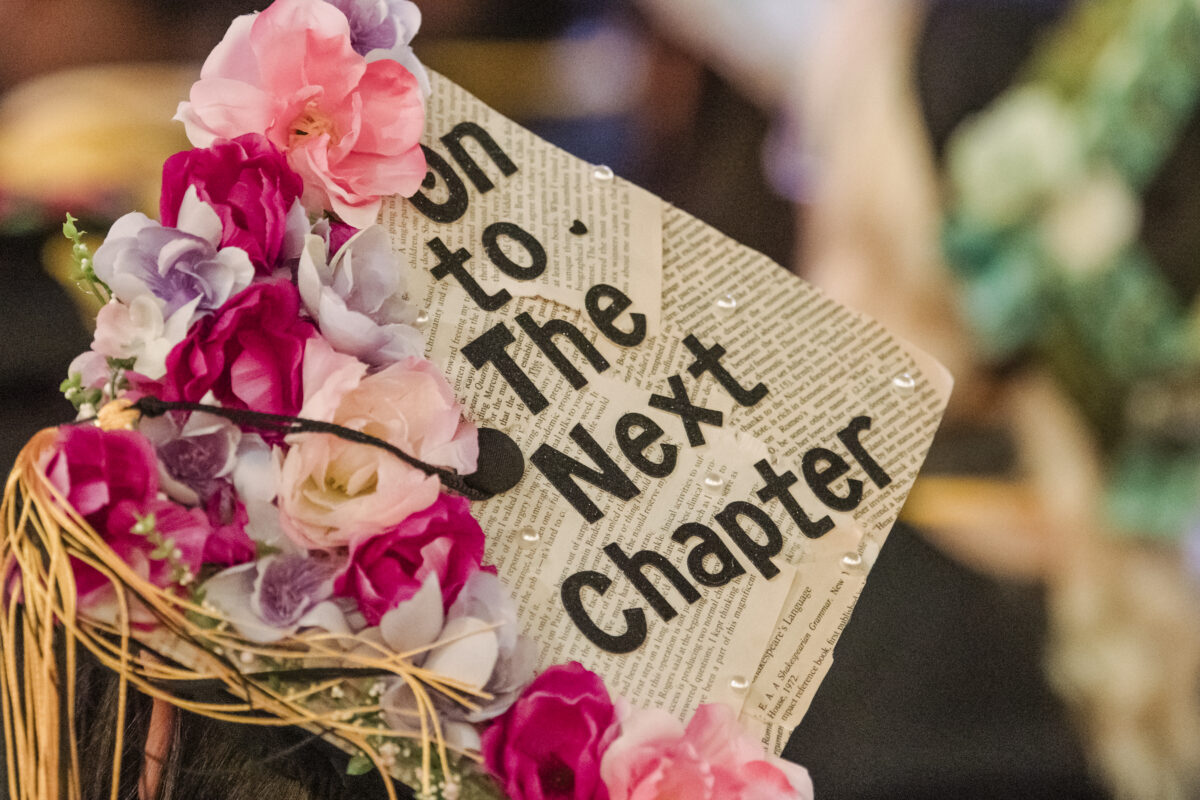
“As we take this journey together, let’s embrace the Retriever spirit—tenacious, innovative, always punching above our weight class. Together, we will write the next chapter of UMBC’s athletic legacy,” she said.

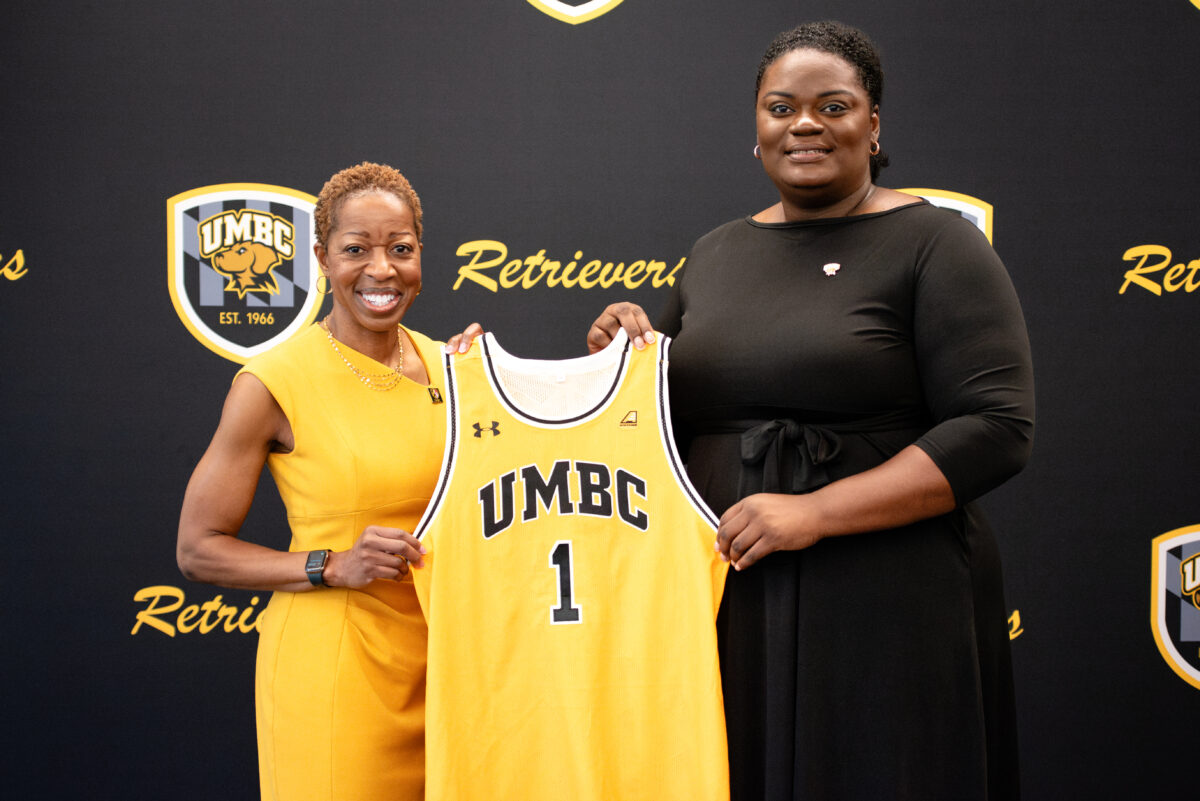
UMBC's president Valerie Sheares Ashby and UMBC's athletic director Tiffany turner stand in front of a UMBC Retrievers step and repeat with a UMBC basketball jersey #1 between them
President Shears Ashby welcomes Tucker to #RetrieverNation with her own jersey. (Photo by Eric Thompson ’12)

When Tucker was announced as UMBC’s sixth athletics director (AD) last week, she began laying the groundwork to leave a lasting legacy of her own. When she officially starts on August 15, she’ll be the first woman and person of color to lead the university’s athletics program. 

“This isn’t just about making history, it’s about creating a new standard where diversity in leadership is the norm, not the exception,” said Tucker.

Seeing the whole student

Tucker joins UMBC from the University of North Carolina Wilmington, where she has served as deputy athletics director since August 2021. Her appointment follows a nationwide search, during which she emerged as a highly-experienced and accomplished athletics administrator. 

“Tiffany’s experience and growing leadership roles would make her a great fit for many AD positions at D1 schools. But let me tell you why she is especially perfect for us,” President Valerie Sheares Ashby said at the press conference. “Here, student-athletes can participate in a Division I program while also reaching the highest levels of academic achievement. Here, we have a diverse student body that excels academically across all subjects. We believe there is no excellence without inclusion, and to be truly inclusive, we know we need to create an environment where everyone can thrive.” 

Tucker knows the mindset of an athlete firsthand. She was a four-year member of the women’s basketball team at the University of North Carolina at Chapel Hill. This experience allows her to understand the unique rigors of performing both academically and athletically. This also means that Tucker knows the value of seeing students as more than just who they are on the field, court, or track. 

“As we nurture our student-athletes, we will focus on their holistic development—not just as competitors, but as scholars, leaders, and engaged citizens,” she said. 

“Our program is in good hands”

Tucker will join an athletics program that has won dozens of America East titles, individual and team honors, and coaching awards. This past academic year, 12 UMBC athletic programs posted perfect Academic Progress Rate (APR) scores in the NCAA Academic Progress Rate Report. Implemented in 2003 as part of an ambitious academic reform effort in Division I, APR holds institutions accountable for the educational progress of their student-athletes through a team-based metric that accounts for the eligibility and retention of each student-athlete for each academic term.

This past season, UMBC volleyball secured their fourth-straight America East championship and returned to the NCAA tournament. Volleyball head coach Kasey Crider looks forward to Tucker taking charge.

“The last couple of months have been tough, without a doubt. To be on the other side of the transition with a leader of Tiffany’s caliber is a big deal,” Crider said. “Our department has demonstrated its resolve and character, and now with her vision and guidance, it feels like we’re on the brink of something pretty special.”

A woman, Tiffany Tucker, stands at a podium in a black dress with a gold UMBC pin, hand to her heart, in front of a UMBC Retrievers step and repeat
Tucker addresses the crowd at a press conference on July 22. (Photo by Eric Thompson ’12)

Just one of the over two dozen student-athletes bedecked in black and gold at Monday’s press conference, volleyball player Aysia Miller ’24, biological sciences, echoed Crider’s excitement.

 “Tiffany’s innovative approach and mindset give me hope that our program is in good hands,” said Miller. “As a student-athlete, it is refreshing to hear someone care so much about our well-being and success.”

Tucker made it clear that students will be her priority when she takes the helm in August. She closed yesterday’s press conference by directly addressing the student-athletes in the room.

“You are the heart and soul of UMBC athletics. Your well-being—physical, mental, and emotional—are paramount. I’m here to support you, challenge you, and celebrate you.” 

Charlotte Keniston, Ph.D. ’24—staff member, student, mentor, and a lifelong learner

For most people, obtaining a Ph.D. is a means to an end—authorship, professorship, a career destination. For Charlotte Keniston, it’s about the journey as a lifelong learner. After joining UMBC as a Peaceworker Fellow, Keniston received her M.F.A. in imaging and digital media in 2014. She continued her work in Baltimore and eventually rejoined the Shriver Center Peaceworker Program as a staff member with the intention to work towards her Ph.D. in language, literacy, and culture (LLC). And she did just that.

Q: What was your journey like to get here?

A: I came to Baltimore in 2011 as a Peaceworker Fellow and got my master’s of fine art in imaging and digital art, now called the intermedia and digital arts program. As a Peaceworker Fellow, I was involved in conversations about how career paths could be used for kind of a broader meaning or bigger impact. I did work in the Baltimore neighborhood Pigtown around food justice and food access when I was a master’s student, and I left my academic program kind of wanting more of those conversations. When I applied to my position in the Shriver Center in 2017, I saw that as a way to continue that meaningful work in Baltimore and give me the chance to pursue a Ph.D. in the LLC program.

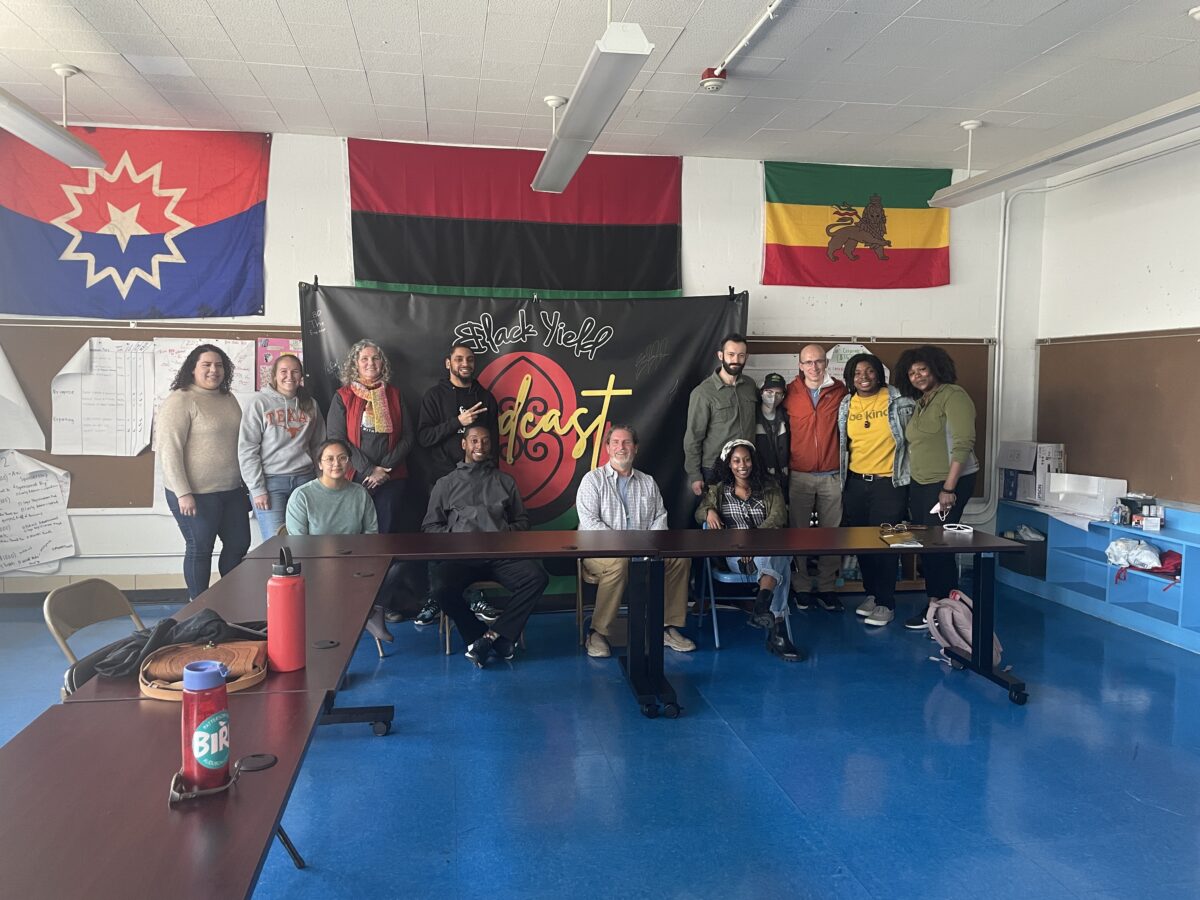
A group of UMBC Peaceworker Fellows in front of flags smiling
Joby Taylor, Ph.D. ’05, LLC, director of the Shriver Center, seated in center, gather with Peaceworker fellows at Black Yield Institute, the location of Keniston’s dissertation research partner. (Photo courtesy of Keniston)

Q: What did the trajectory of the work within your program look like and how did it intersect with your current position?

A: As I went through the LLC program, I started to hone my interest in how universities can work with their surrounding communities to answer pressing questions posed by those communities. My role at the Shriver Center really informed that line of questioning because in my role with the Peaceworker Program, I’m placing graduate students into community-engaged partnerships, and so I’m thinking all the time about how do we steward those partnerships, how do we be good neighbors of our campus community and then our broader communities, and how are we ethical in the work that we do in communities? 

Q: Did you find that your professional approach to your work changed given that you were also a student yourself? 

A: I found lots of ways to connect my job with the research and work that I was doing academically. I worked with an organization called Black Yield Institute in Cherry Hill to do the practical version of my dissertation research, and I brought all the Peaceworker Fellows there one day to work on a library project. It was like I was showing up there as my whole person with my students in tow and with my kids in tow. And then my students, the Fellows that I work with, got a chance to really see the work that I was doing. I actually feel like that made the project a lot stronger. 

I’m placing graduate students into community-engaged partnerships, and so I’m thinking all the time about how do we steward those partnerships, how do we be good neighbors of our campus community and then our broader communities, and how are we ethical in the work that we do in communities?

Charlotte Keniston, Ph.D. '24, M.F.A. '14

Q: Do you think having this unique perspective strengthened your ability to bond with and empathize with your students?

A: It definitely did, and I think it’s nice to just be able to commiserate. When I see the panic in their eyes about the end of the semester, I feel that—so I feel like it can be extra empathetic. I make sure the snacks for our practicum seminar are extra good toward the end of the semester (I know we both need it). We do writing groups together, and they honestly are some of the best voices to say, “You need to take a break—you’re doing too much.” I feel like I have their support as much as they have my support. 

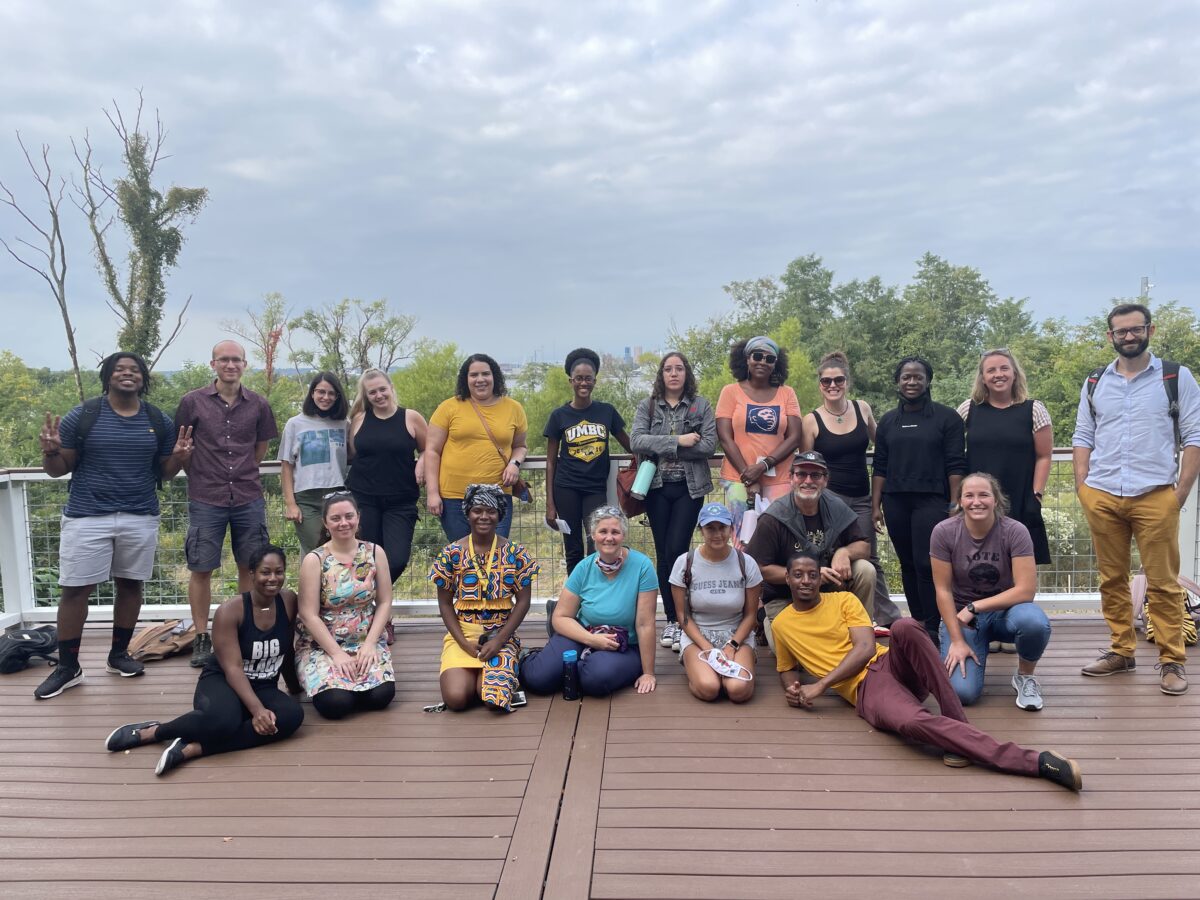
A group of Peaceworker fellows and learners stands on a deck together
Keniston (second from left, standing) with Peaceworker Fellows. (Photo courtesy of Keniston)

Q: Were there individuals on campus specifically who you feel inspired or supported you in ways?

A:  Joby Taylor is my supervisor and he graduated from the LLC program too, so I felt like not only was he kind of walking in front of me, he was also dismantling barriers for me—looking at my calendar and suggesting, “You have a free day in two weeks. You should take that to write.” Or very practically making things work for me and just serving as a really good sounding board.

Q: Do you feel like you were set up for success having mentors that went through the program themselves? 

A: I think I had people who I was kind of holding onto their coattails as they got me to the finish. Ciara Christian, one of the directors in i3b, was that person who was a step or two ahead of me in the program. She got her dissertation two years ahead of me, but we were in the same cohort and she was the person that when I was really stuck with my thinking, I’d come to her for help. And now I have people who are just a step or two behind me, who I’m encouraging and helping them figure it all out. It really feels like LLC fosters that kind of connection between students that we really help each other get to the finish. 

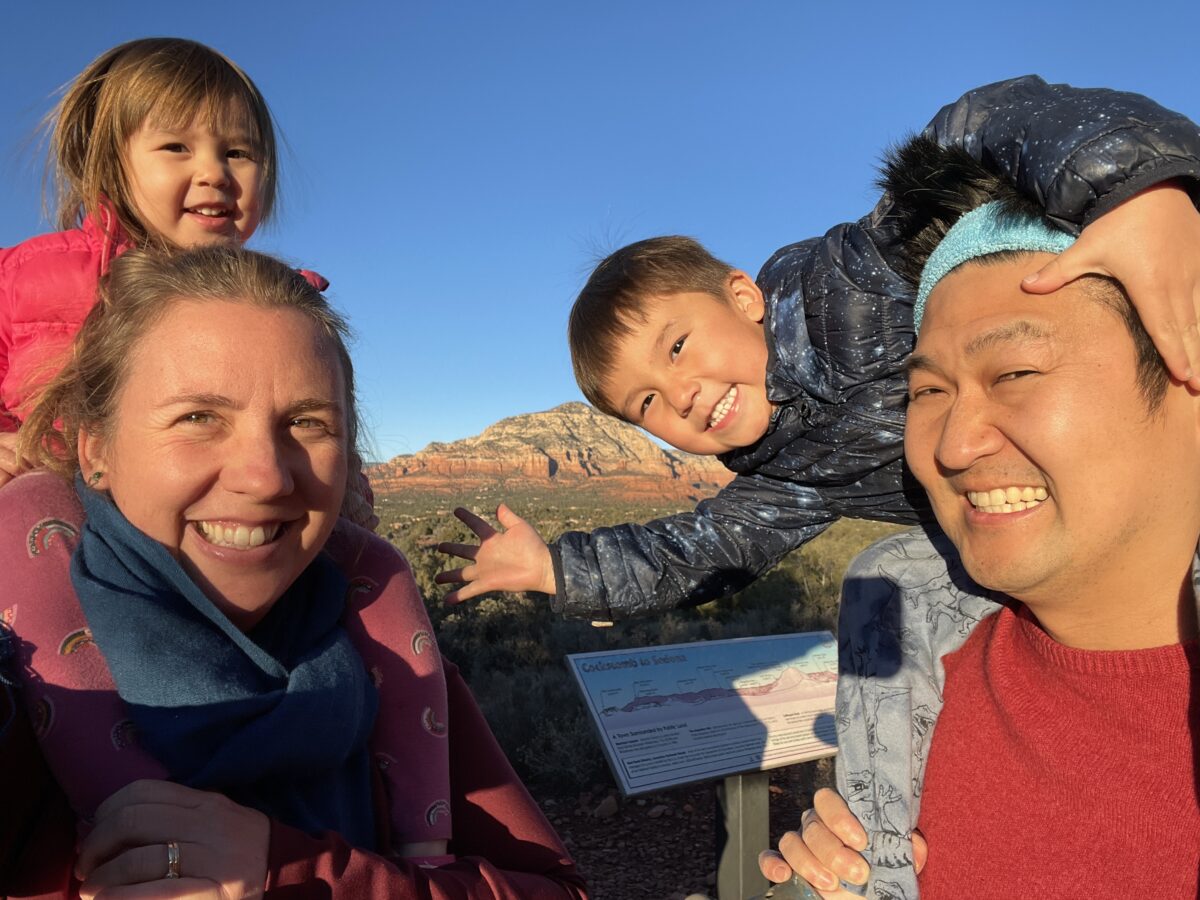
Charlotte Keniston smiles for a selfie outside with her partner and two children
Keniston and her family take a break for a quick selfie. (Photo courtesy of Keniston)

Q: What advice would you give to others considering this program?

A: I think a lot of people say, “Oh, don’t do a Ph.D. unless you want to be a professor.” But I don’t think that’s a necessary requirement. I did not go into this thinking that I wanted to be a professor. I already had my terminal degree. I had the chops to be a professor if I needed to, and I love my staff job. But I still had all these intellectual curiosities that I wanted to explore, and this was the way to do it. 

Going the distance—virtual classrooms allow 300 former students to earn their degrees

The onset of COVID-19 brought a tremendous amount of uncertainty about the way students would learn going forward. But within that challenge, UMBC saw a unique opportunity to open its virtual doors to former students. 

Finish Line began as an outreach program in the fall of 2020, targeting former Retrievers who had 60 or more credits but hadn’t completed their degree before leaving the university. And while these students  might not have had the opportunity to return physically to campus, the sudden availability of a virtual classroom offered them a new pathway to their degree goals. 

The intentional outreach and personalized advising offered through the program has allowed nearly 300 former students to return to UMBC to finish their degrees. 

“The Finish Line program has allowed me and others from my office to exercise some of our most creative academic advising skills to enable former UMBC students to finish degrees they had intended to complete when they first began here,” says Ken Baron, assistant vice provost for academic advising and student success. “We are passionate about degree completion, and each semester, our Finish Line graduates help us recognize and celebrate what makes UMBC special—a place where hard work brings out the best in everyone.”

With the demands that come with everyday life—jobs, families, home responsibilities, operating a restaurant dynasty, etc.—this model allows UMBC to meet students where they are. It acknowledges that most don’t have the luxury of being a full-time student and works to best suit their needs and timeline. 

“We’re proud to have redefined inclusive excellence in a way that honors UMBC’s core values and ethos,” says Baron.

Restaurateur and Retriever Lane Harlan goes back for seconds

Some have dark wood and cozy corners, some have bright, natural light and textured walls—but each of Lane Harlan’s establishments can be looked at like a love letter to the people of Baltimore, thoughtfully decorated with hand-chosen, local pieces and, in some cases, even the decor from her own living room. 

The different vibes, each sumptuous in their own ways, are transporting for patrons. Harlan says that’s intentional. “I want them to feel like they’re elsewhere. They’re not in Baltimore, they’re somewhere else. I think it’s important if you can feel like you’re on an adventure.”

To say Harlan ’21, political science—the highly-accomplished restaurateur who opened W.C. Harlan, Clavel Mescaleria, Fadensonnen, the Coral Wig, and more—is well-known throughout Baltimore would be an understatement. Her acclaim continues to grow after the recent announcement that Clavel is a finalist for a coveted James Beard Award for “Outstanding Bar” (one step and one sip inside the unique taqueria and within a second, you’ll understand why). But while we all know of her success, it may come as a surprise that just like many students, she hit some academic roadblocks along the way. 

The first course

When Harlan joined UMBC as a political science major in 2005, she was already a little different than your average first-year student. Growing up in a military family, she spent her childhood often moving. After graduating high school early, Harlan took her own version of a gap year, traveling to Spain to start her informal education in the hospitality industry. Upon return to Baltimore, she decided to set down roots at UMBC and experience life as an independent adult living in the city. 

Brian Grodsky, political science chair, was one of the professors who helped Harlan connect with her major, especially in his classes about international justice.

“That class made me want to go to school forever. I felt like it was so fascinating and challenging at the same time,” says Harlan. 

A younger version of the same woman, Lane Harlan, stands in a winter coat, slightly smiling and posing for a photo on a bridge in France
Harlan enjoys a trip abroad in France in 2010. (Photo courtesy of Harlan)

Reflecting back on the student he taught nearly 15 years prior, Grodsky remembers Harlan as “one of those students for whom class didn’t just stop when she went home—she was always grappling with issues long after we walked out of the classroom.” 

But if her childhood taught her anything, Harlan knew she still had a lot of the world to explore. “Studying abroad was one of the most important things I did in college. And if I hadn’t gone to UMBC, I wouldn’t have had that opportunity,” says Harlan. 

Harlan spent a year studying abroad in France, learning the restaurant and bar business from the ground up. While she excelled academically in her upper-level courses through UMBC, she struggled with her math requirement. And so, when the opportunity to return to France through a teaching assistantship arose, she jumped at the chance and eventually decided to leave her formal education at UMBC behind. 

Recipe for success

Over the next several years, Harlan worked with partners to build her growing restaurant dynasty, starting with W.C. Harlan, a foreclosed upon former dive bar turned accidental speakeasy. But she harkened back to lessons she learned at UMBC to help her during the exhaustive process. 

Harlan and her two colleagues take a second to stand behind a bar in front of a green painted wall, smelling mezcal
Behind the bar is where the magic happens and Harlan and her colleagues are testing out what they’ll serve patrons at Clavel that night. (Marlayna Demond ’11/UMBC)

“I used my sense of political science in that I was walking around with the petition to the neighbors, getting people to sign, saying that they supported the reopening of the bar, as well as taking it to the neighborhood associations and speaking with the council people,” she says. 

A woman in a white shirt and glasses stands reaching for a small drinking container on a shelf with several rows of the same
Harlan reaches for a functional and pleasingly aesthetic vessel for serving mezcal behind the bar. (Marlayna Demond ’11/UMBC)

After all this success, how is it that Harlan found herself back in the (virtual) UMBC classroom? In short—COVID. 

“In the pandemic, businesses had to close, restaurants became carry-out operations, and suddenly there was more time in my life,” says Harlan. “I started to think about my time at UMBC, and I felt like I didn’t have closure from that period.” 

Through UMBC’s Finish Line Program, Harlan re-enrolled and found herself again coming face to face with her one-time nemesis—the math requirement. She hired a tutor to come to Clavel once a week to help her study and go over homework. And though she admits it was difficult getting back into the swing of academia after so many years away, she persisted and completed her degree. 

“I texted a photo of my diploma to my parents, and I said, ‘Dad, hang it on your wall! Be proud of me,’” she jokes. “But really, the reason I wanted to finish also was because everyone in life, you have many chapters, and I might want to have another chapter. And I knew I couldn’t do that without my undergraduate degree.” 

While Harlan spends her free time traveling the world and even expanding her business ventures globally, she’s not going anywhere any time soon. “I love Baltimore. I can’t imagine my restaurants anywhere else, actually. I think Baltimore is filled with artists and opportunities and people who do things and they own them.”

The best is yet to come for 2023 graduates

“It is in times of great conflict and great challenge that higher education’s purpose is most revealed.”

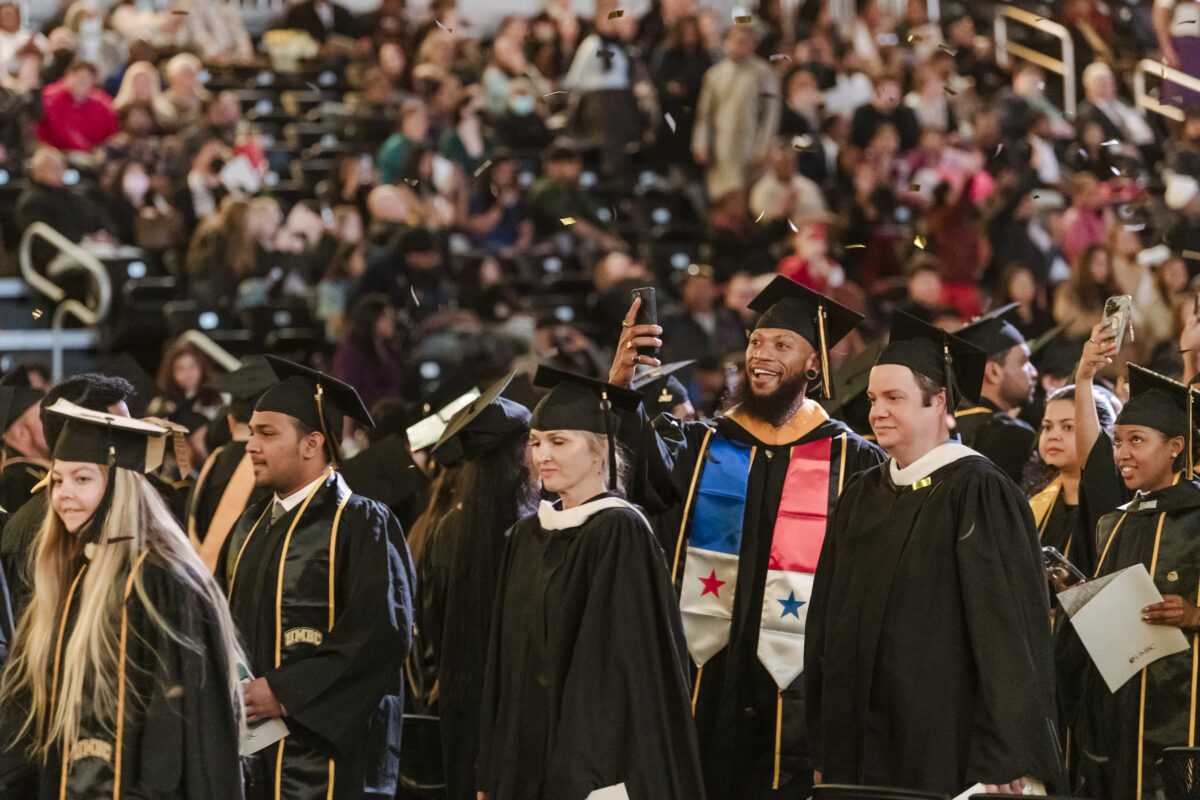
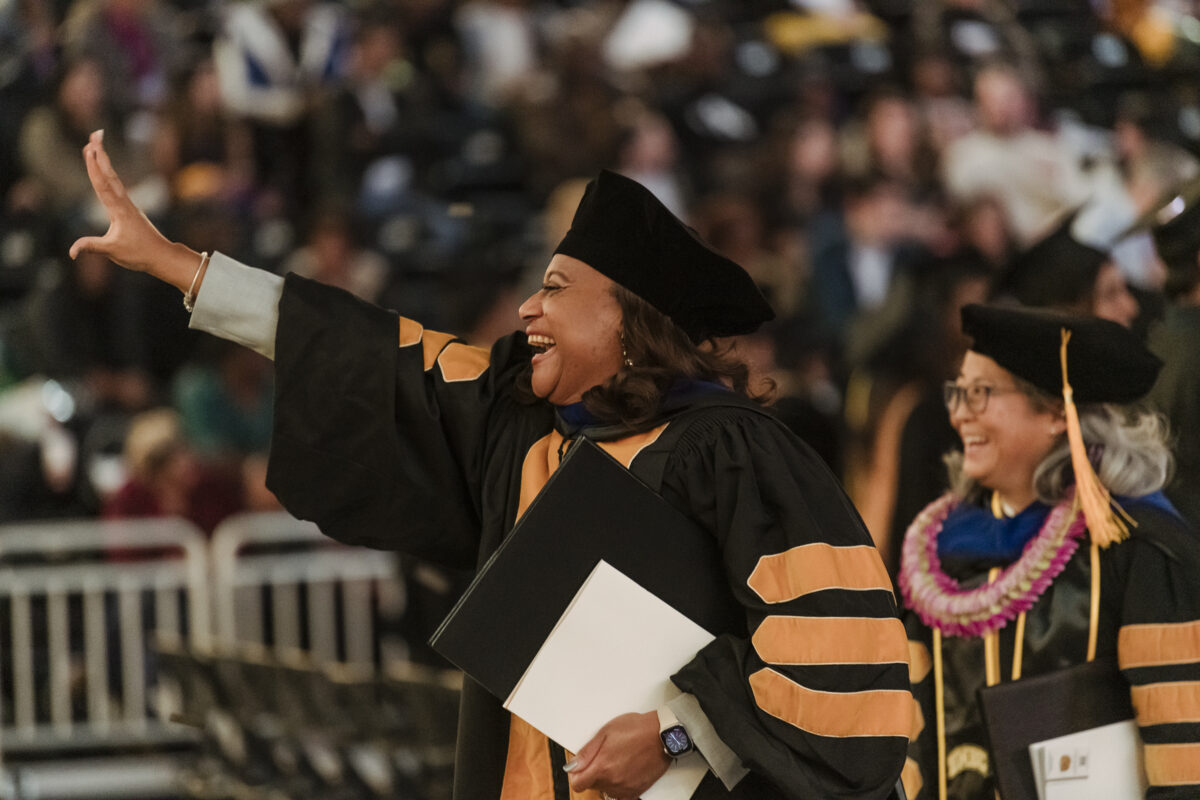
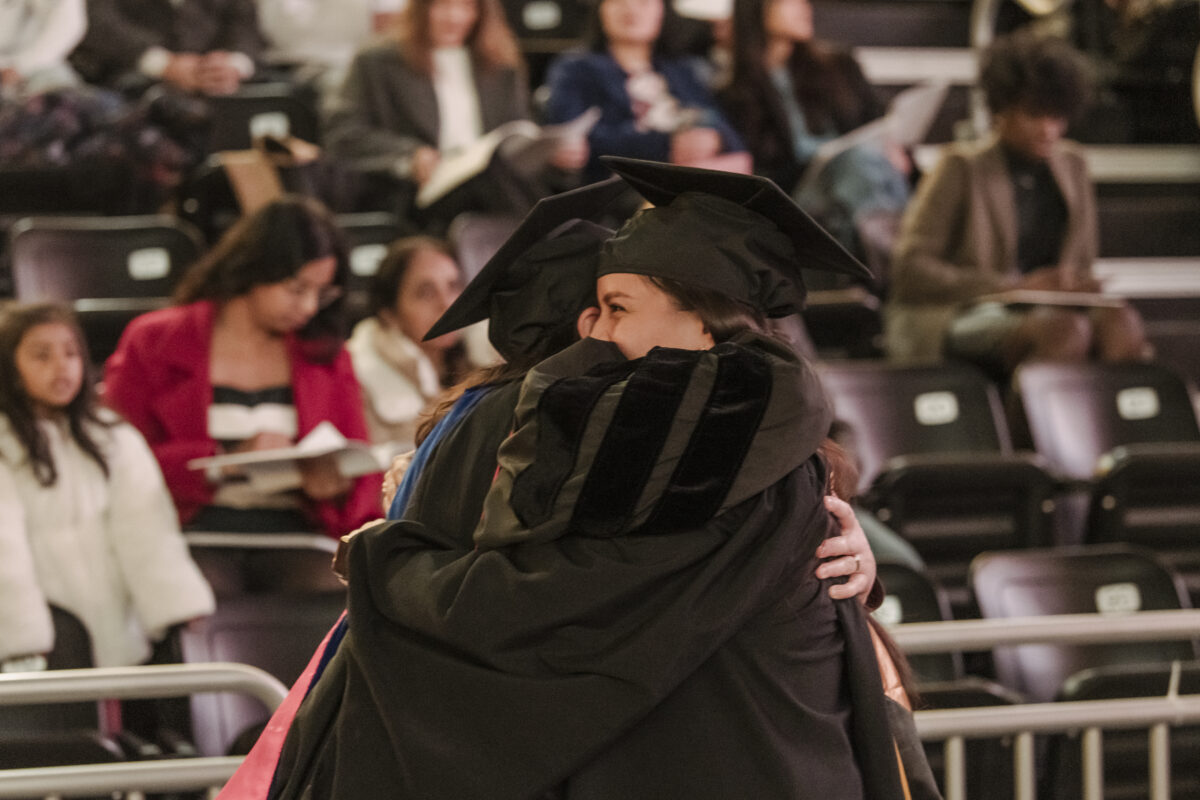
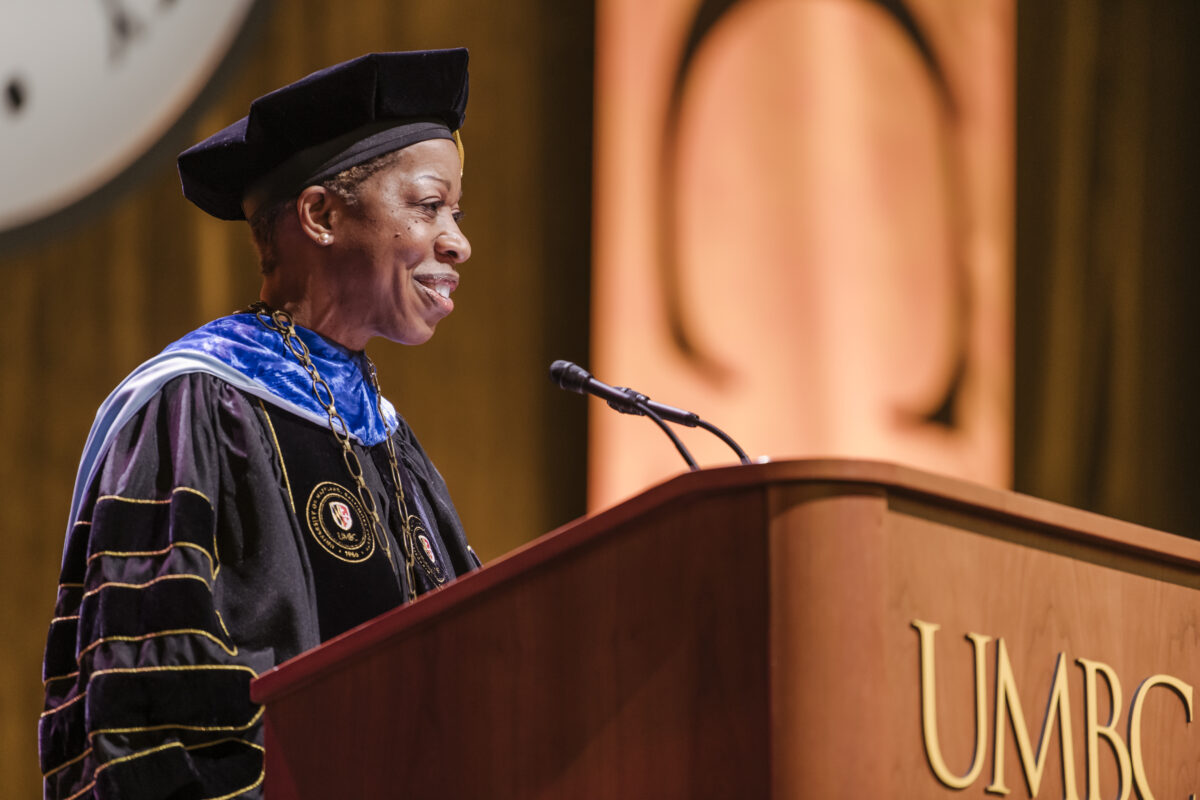
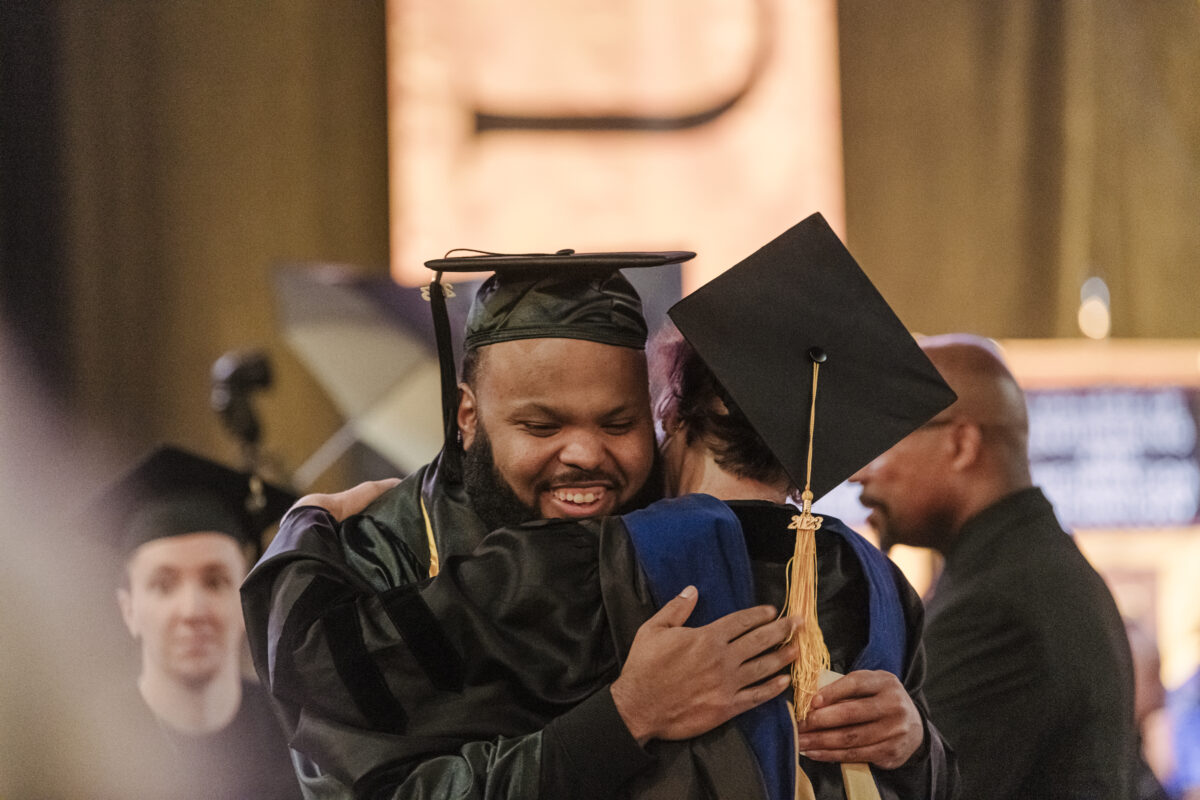
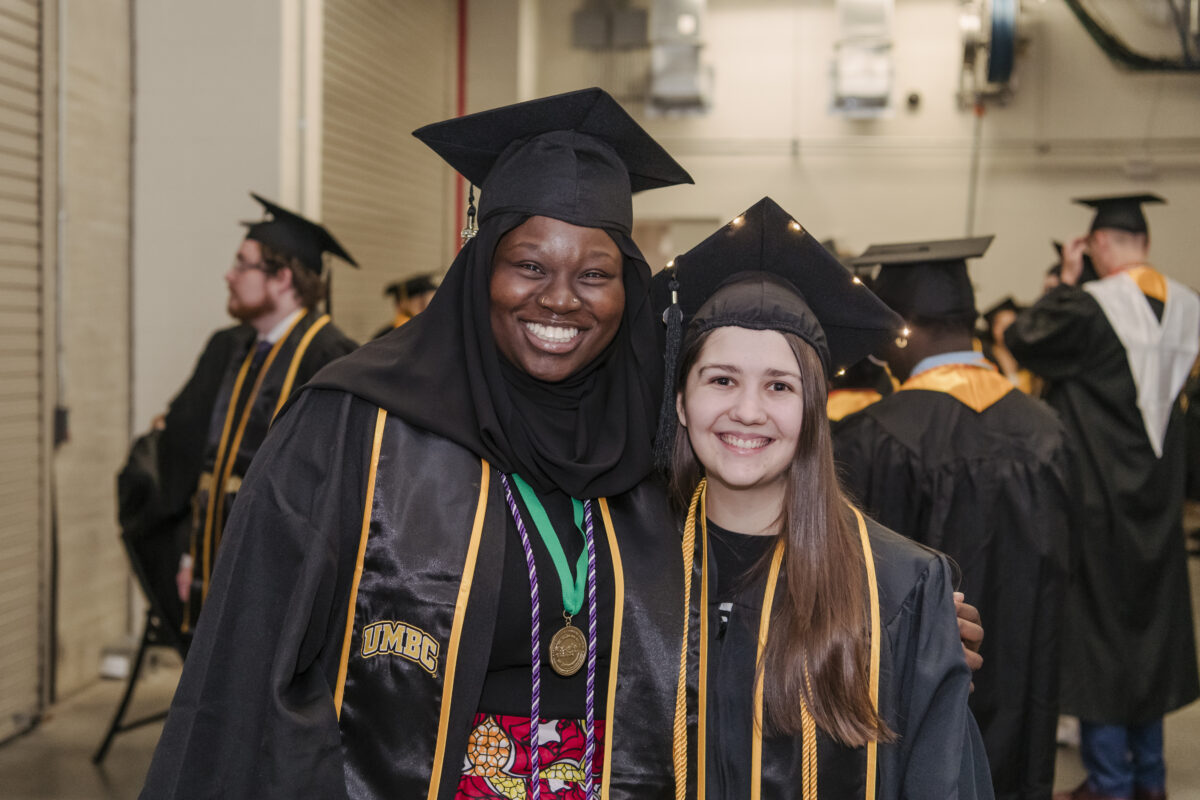
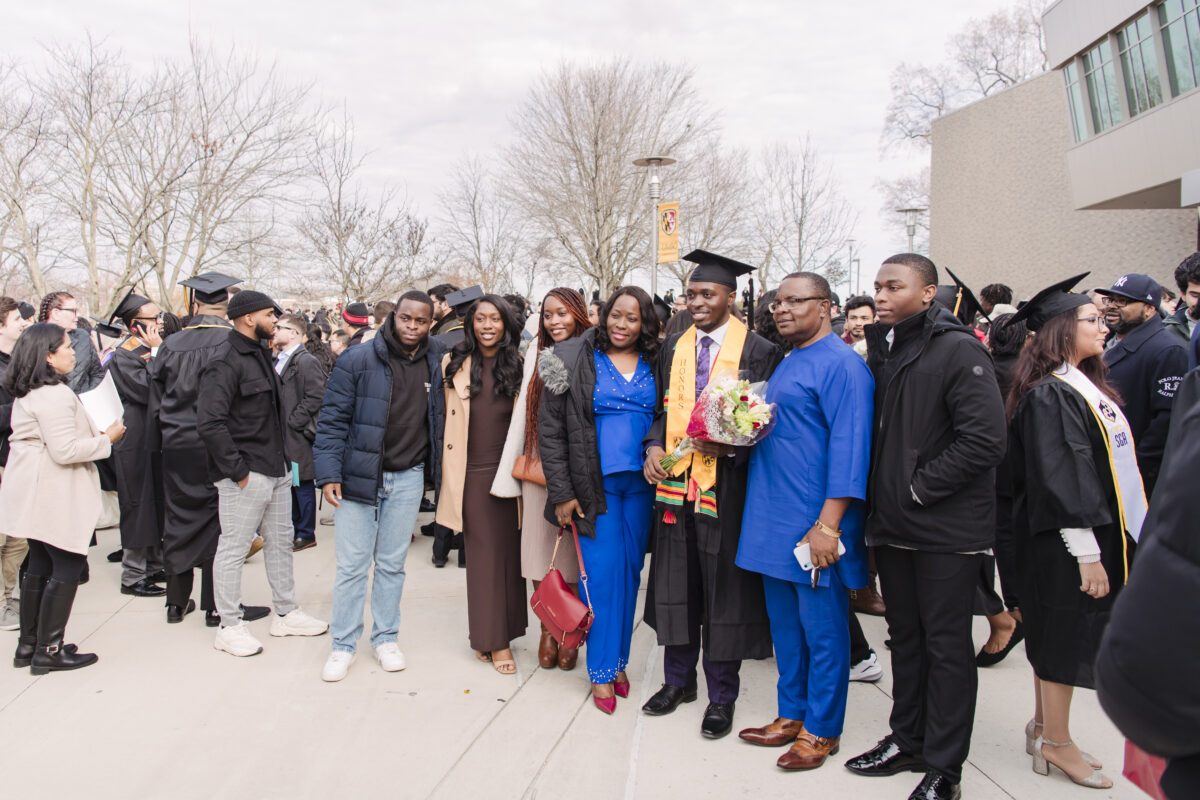
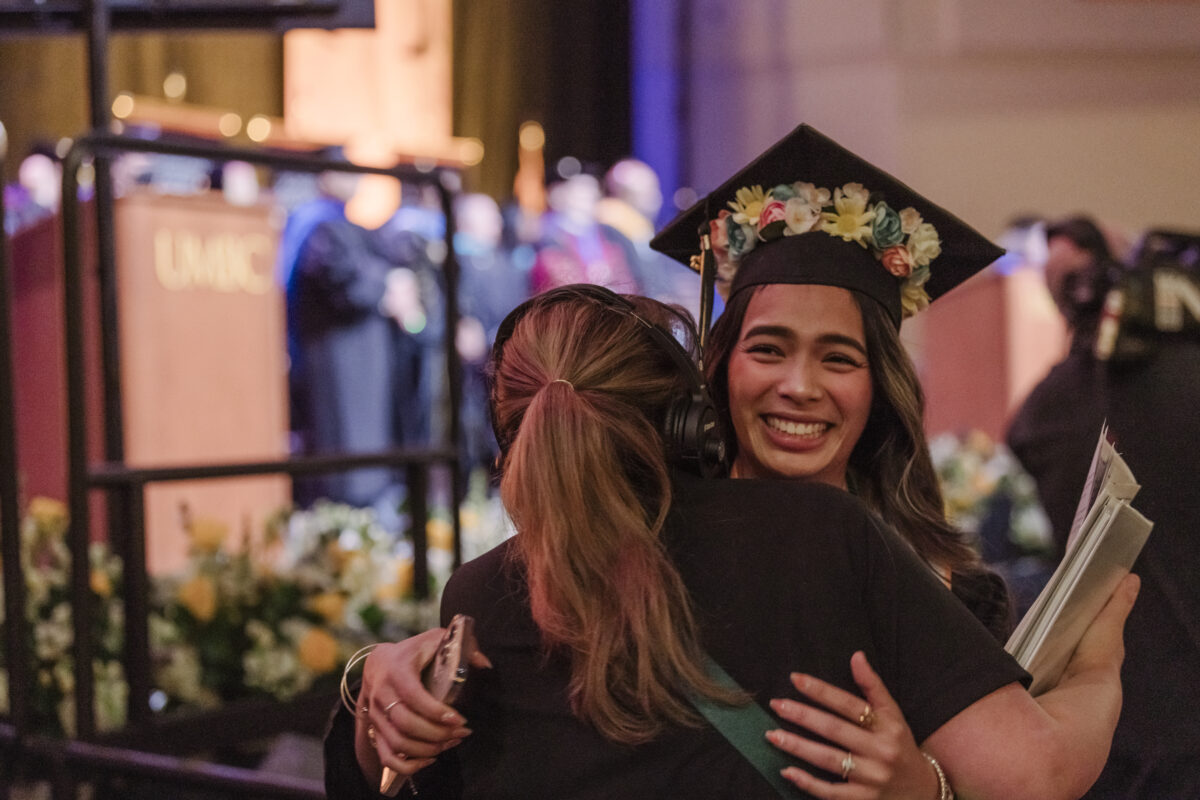
UMBC president Valerie Sheares Ashby addressed the crowd at the 2023 winter Commencement ceremonies by acknowledging the turbulence of this past year and noting the importance of the degrees this year’s graduates received. Then nearly 1,000 Retrievers donned robes and mortarboards and made their way across the Chesapeake Employers Insurance Arena stage this week to become the latest members of the UMBC alumni community.

Representing the University System of Maryland’s Board of Regents, Anwer Hasan offered advice to the graduates saying, “As you go forward, take what you’ve learned and use it for good. Give back to the community and the world. Build that brighter future for yourselves and for others.”

Congratulations to the class of 2023, we know the best is yet to come! Both the graduate and undergraduate ceremonies can be found on YouTube.

All photos by Marlayna Demond ’11 for UMBC.

UMBC volleyball wins fourth-consecutive America East championship

They may say the best things come in threes, but that’s not good enough for UMBC volleyball. Over the weekend, the number one-seeded Retrievers captured their fourth-straight America East championship. After outright winning the season title, they went on to topple Bryant University in the America East semifinals, and they sealed their victory with a sweep of third-seeded Binghamton University on Saturday. 

“Winning four straight championships in college sports is really tough, regardless of sport or league,” said head coach Kasey Crider. “More than anything, this past weekend was the standard for what America East volleyball can and should be, in performance and environment.”

Volleyball honors

In only his second year with UMBC, Crider and his team continue to carry on what’s become a tradition of success with the Retrievers. He and his coaching staff received Co-Coaching Staff of the Year accolades, sharing the honor with Bryant University.

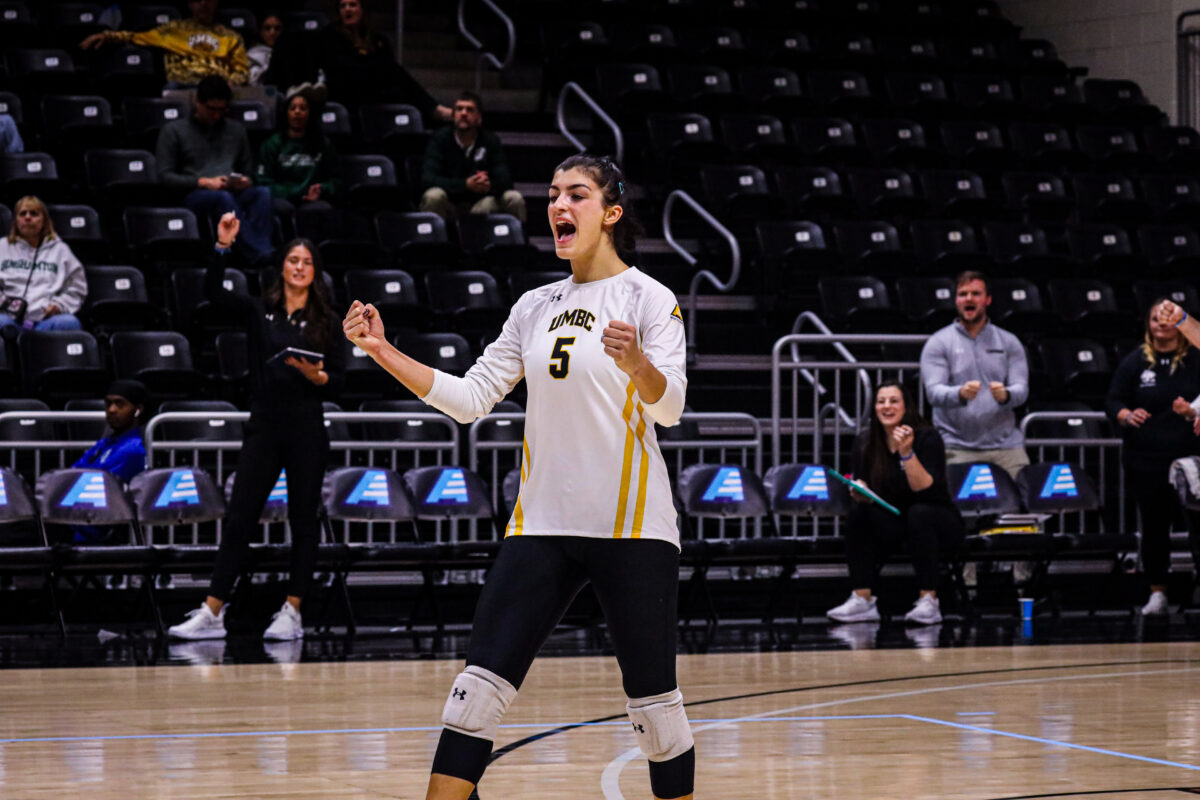
Mia Bilusic ’25, biochemistry, and Kamani Conteh ’23, media and communication studies, repeated as All-Conference First Team selections. 

A female volleyball player on the court wearing number 5 has her firsts raised triumphantly.
Bilusic celebrates another UMBC win. Photo courtesy of the America East.

“Our 3-0 sweeps over Bryant and Binghamton were not an accident, but an entire season of preparing for this weekend,” says Bilusic of the team’s success.

First-year student Hannah Howard, financial economics, was named Libero of the Year and several returning Retrievers collected honors. Mila Ilieva ‘25, biochemistry, was named the Championship’s Most Outstanding Player for the second consecutive season.

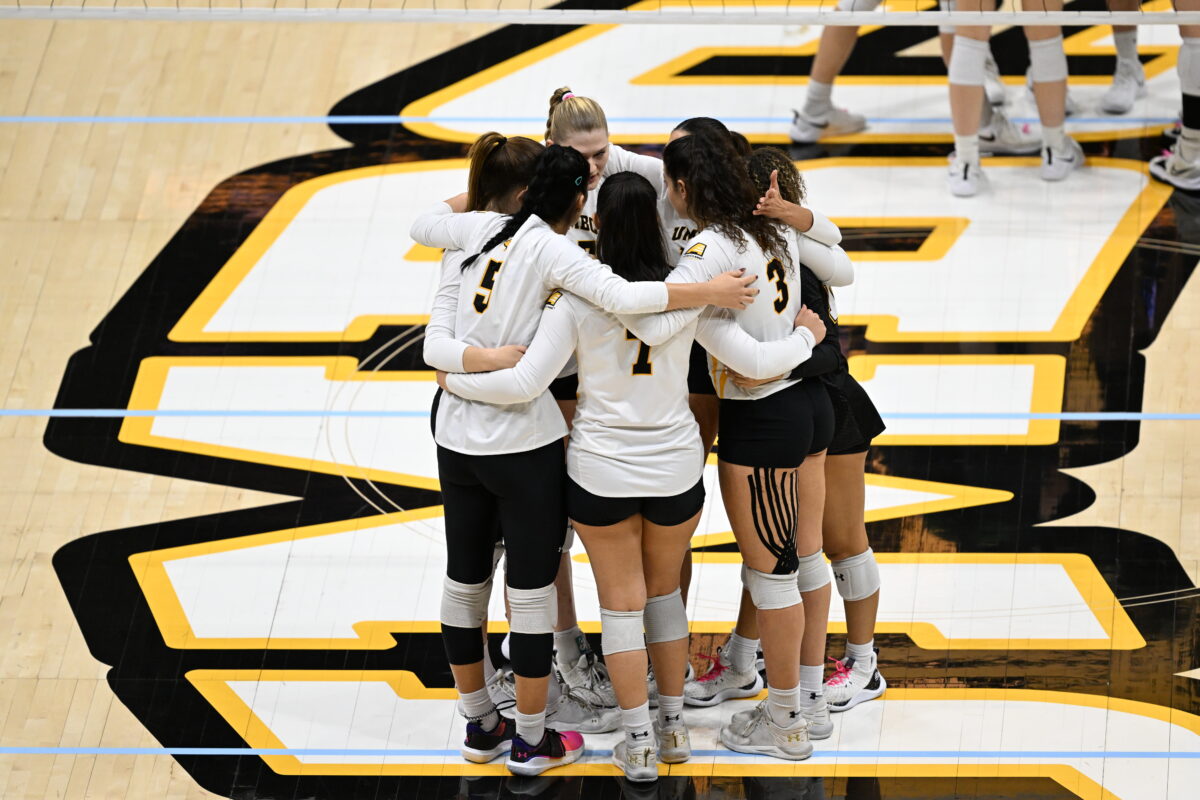
A group of volleyball players huddle up on the UMBC court
UMBC Retrievers huddle up during the America East title game. Photo courtesy of Gail Burton.

“This team is really like no other. I would say we play hard not only because we love the sport, but also because we want to play for each other,” says Conteh. 

On November 26, UMBC will learn where and who they’ll play in the first round of the NCAA tournament. Follow UMBC Athletics on social media for updates and information about a watch party. 

Biology department members create an experiment of note—a band called Fever Dream

Before you let your imagination run wild, we’re going to go ahead and temper whatever expectations you may have upon hearing the phrase “biology band.” Nobody is banging on a centrifuge in lieu of drums. Test tubes aren’t lined up as a makeshift xylophone. The final rock flourish is not a shattering of beakers. In fact, when the band members of Fever Dream get together, they leave biology in the lab and concentrate on what matters—the music. 

“We are incredibly lucky to be able to do important research on the topics that we are interested in while at the same time being able to share our knowledge through teaching and mentoring students,” says Jeff Leips, professor of biological sciences.
“But our department also definitely embodies the motto of ‘work hard, play hard.’” 

a man plays a teal guitar and another man plays the drums
Leips on the guitar and fellow biological sciences faculty member Steve Caruso on the drums. (Marlayna Demond ’11/UMBC)

“I’ve been involved with music my whole life and was actively looking for opportunities just like this, so it came at a perfect time,” said Michelle Moyer, M.S. ’22, a current biological sciences doctoral candidate. “I’m blown away by how much the idea has developed into a true passion project for all of us.”

The concept of a departmental band started simply enough. In his capacity as chair of the biology department “Fun Committee,” Leips asked around at his lab to see if anyone played an instrument and would be willing to play during their end-of-year departmental party. Leips joined the UMBC community in 2001 and this annual event has become one of his favorite traditions. The same year that Leips came to UMBC, he bought his first guitar.

Meet the band

Over the years, Leips has continued to gather a new musical cohort every few semesters with minimal practices and a one-time-only performance. While the revolving door of students each year allowed for new and exciting instruments to add to their sound, retention and growth were issues.

Last spring, Leips put out a call to see who would be interested in standing up a more permanent band, and soon his guitar and ukulele were joined by vocals, percussion, keys, and more.

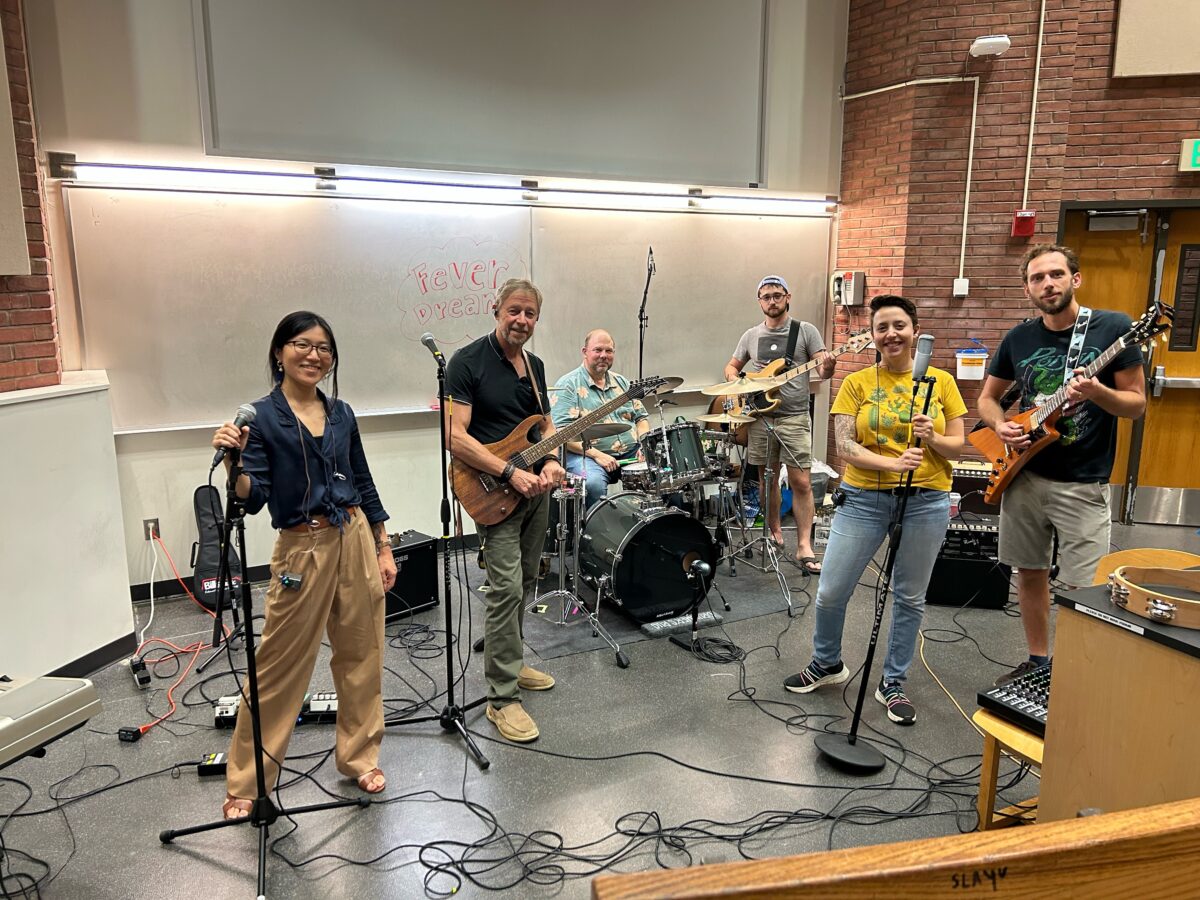
Fever Dream is currently made up of biological sciences faculty member, Steve Caruso ’94, Ph.D. ’02, biology, on drums; Michelle Moyer, M.S. ’22 and a current biology doctoral candidate, on vocals and percussion; Ph.D. student Anthony Rosenthal ’20, biochemistry and molecular biology, on bass and harmonica; biochemistry doctoral candidate Winny Sun on keyboards and contributing vocals; Ryan Bacon ’23, biology doctoral candidate, on lead guitar; and Jeff Leips on guitar and vocals.

Fever Dream, the band of biology department members, practices in a lecture hall
Left to right: Sun, Leips, Caruso, Rosenthal, Moyer, and Bacon. Photo courtesy of Chase Andre.

“I know Dr. Leips has previously labeled me as lead guitar, but I feel that might overpromise on my skill set! But it’s been a lot of fun,” says Ryan Bacon ’23, biology doctoral candidate, of his involvement.

While the group may have come together as a hodgepodge, their dedication was clear from the outset. “Anthony said he was just learning guitar, so I suggested that he learn bass. He borrowed the bass from our drummer and started playing and actually got pretty good, pretty fast,” said Leips.

In addition to jumping in feet first to learn how to actually play the instruments, the members of Fever Dream have also put in the time—upping their practice schedule to two nights a week, three hours per session—to make their ultimate goal of playing a show a reality. 

The group works together to choose songs they think will speak to their skillset, with classics like “Piano Man” (with the added bonus of highlighting Rosenthal’s harmonica skills) and hits from Tom Petty and The Doors. But the students also become the teachers, introducing Leips to music he’s never heard of from bands like alt-J. The band is looking forward to showcasing their sound at a few biology department gatherings this semester and they’re kicking around the idea of potentially branching out to local venues.

It was all a (fever) dream

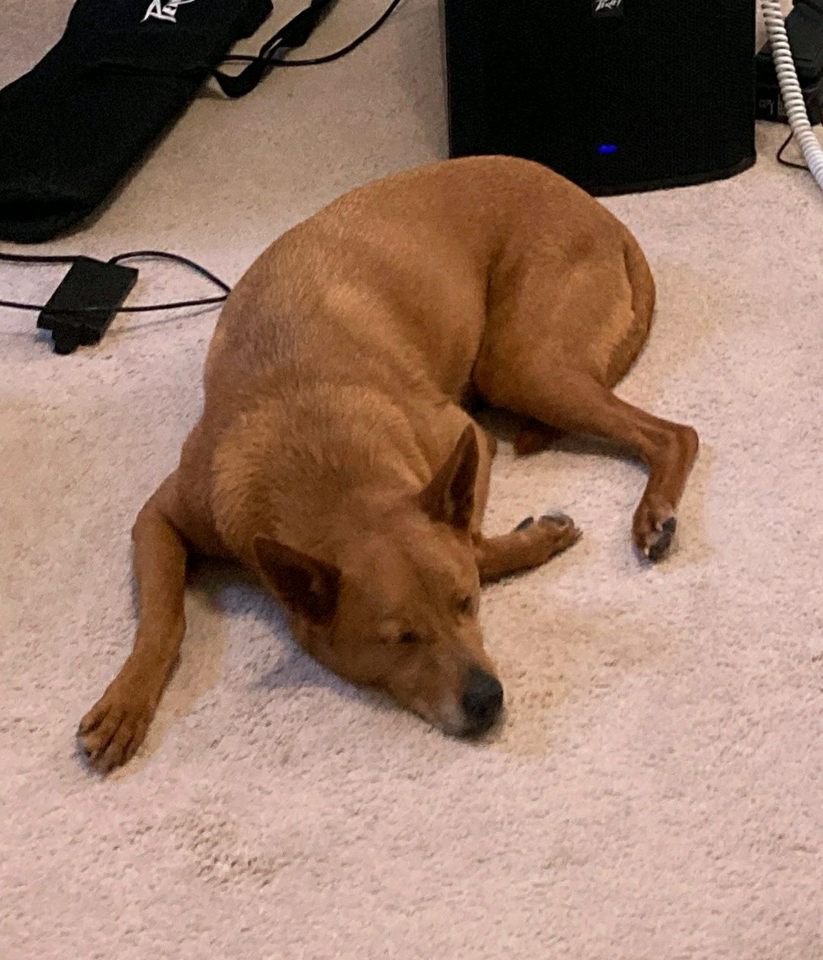
picture of a brown dog sleeping
Leips’ dog, Chiku, dreaming in front of the sound system. Photo courtesy of Leips.

And to answer your burning question—why the name Fever Dream? It’s both a bittersweet tribute to a dedicated fan and an explanation of their musical selections, which are “all over the place,” says Leips. When Leips first got his PA system, his dog Chiku would stand listening at the door. “If I made a mistake, she would look at me like she knew,” muses Leips.

After sharing a photo of Chiku visibly dreaming in front of the PA system, Leips’ pup became the band’s unofficial mascot. And when she sadly died, the group decided to make it permanent, inking her on their band shirts and settling into their official name. 

Ultimately, the group is just glad to have found each other and have an outlet for their passion.

“When Jeff invited me to join a low-stakes, fun-oriented band, it seemed like a great idea,” said Caruso, who studies phage biology. “I’ve learned that while I really like playing the drums, I love playing with other people. Making music with people is just a wonderful kind of thing that people need to do to understand.”

Welcoming new campus leaders

Renique Kersh might not have been able to spend her first few days physically on campus, but the new vice president for student affairs wanted her students and colleagues to know they were on her mind. So, in late August, as she juggled dropping her sons off at school and navigating a move from Boston, Kersh sent along photos as a travel diary on social media so that the UMBC community could take this journey with her. 

“To say it’s been a blur is an understatement, but as I shared with my team, I am all in,” said Kersh, previously the vice president for student affairs at Simmons University in Boston, Massachusetts. 

It was a return home for Kersh, who began her career at UMBC two decades ago as a community director in Residential Life. Kersh cherished that time and she reflected on the experience saying, “I truly believe that this is a very special place.”

Of Kersh’s appointment as vice president, UMBC President Valerie Sheares Ashby says, “She will bring to UMBC deep and broad expertise in student affairs and student development as well as exceptional leadership capacities and a richness of experience in higher education that spans student engagement and academic affairs.” 

To connect even more closely with the UMBC community, Kersh hosts “Coffee Chats” every Wednesday where individuals can sign up for a 30-minute one-on-one conversation with the vice president. 

“I’m here to do serious work. I’m here to do important work, work that can never be done in a silo but requires the energy, expertise, and insight of everyone in this room,” she said while addressing the crowd at UMBC’s 2023 Fall Opening Meeting. 

In mid-August, David P. Dauwalder joined UMBC as the interim provost. Throughout his career, he has served as provost at several institutions, both public and private, including Central Connecticut State University; Woodbury University; University of New Haven; California State University, Stanislaus; and Central Washington University. 

“I’ve come here to help this institution continue to move forward and to prepare for the long-term leader that you’re going to hire,” says Dauwalder. 

Although he’s here temporarily, the wealth of experience Dauwalder brings to the position will benefit the community in regards to his anticipated work with operational assessments, enrollment planning, and more. 

“All of this I look at as being in the context of this university becoming a 21st century model of an R1 and student-success-centered university,” says Dauwalder. 

In addition to new leadership under Tanyka M. Barber, vice president for institutional equity and chief diversity officer, the recently-created Division of Institutional Equity now includes the renamed Office of Equity and Civil Rights. Barber says, “This new name unequivocally reflects the university’s commitment to ensuring civil rights protections for everyone within our UMBC community.” 

Barber plans to focus on inclusive excellence and the use of restorative practices to help the Division for Institutional Equity succeed. 

“This work is personal for me. I wanted to work for an institution that was genuinely committed to diversity, equity, and inclusion and belonging,” says Barber.

School’s in Session

The feel of a pen as it clicks open and closed, pointed for note taking (or probably more likely the feel of an electronic stylus). The sound of pages rustling in a notebook during the first class of the day (or more likely the sound of keys clacking on a laptop). The smell of a new textbook as it opens for the first time (or probably more likely still the laptop thing). No matter what it looks like, the start of a new school year is officially here! This year, UMBC welcomes a pack of over 3,800 new Retrievers as they embark on the black and gold journey of a lifetime. 

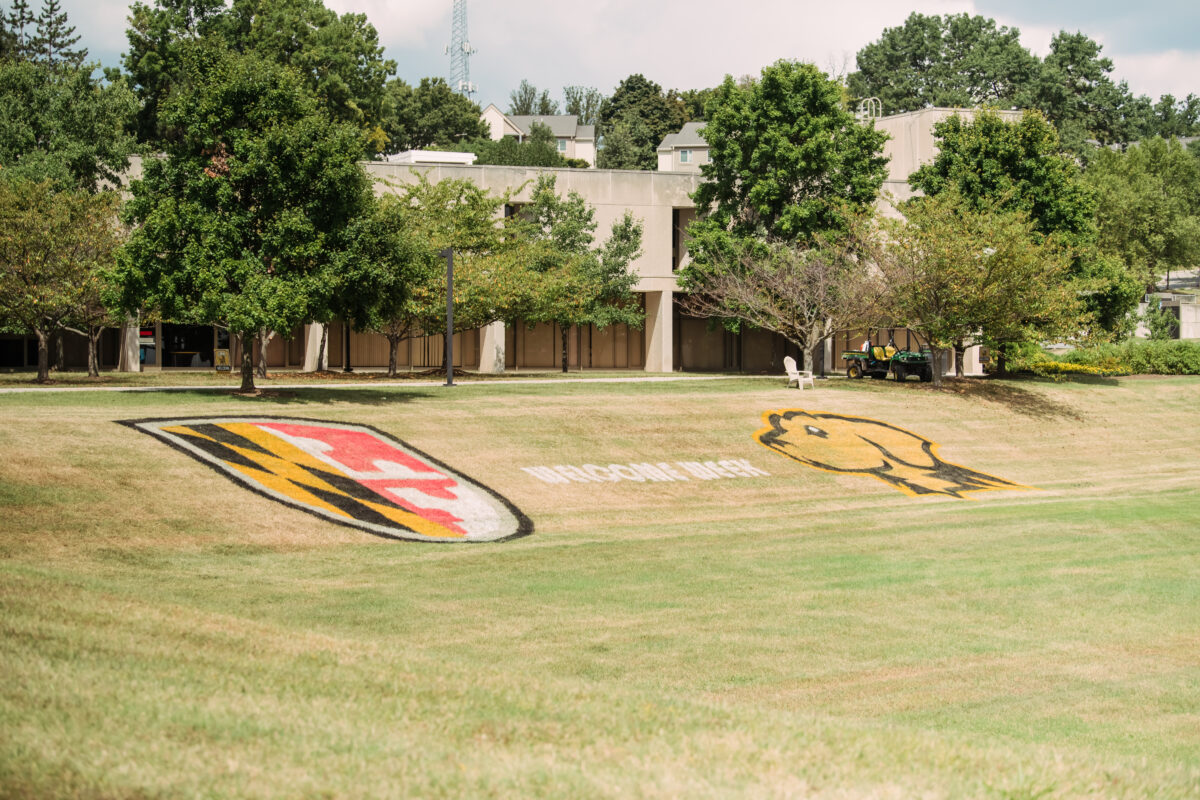
Large grassy field with UMBC logo and UMBC mascot spray painted on ground with text "Welcome Week"

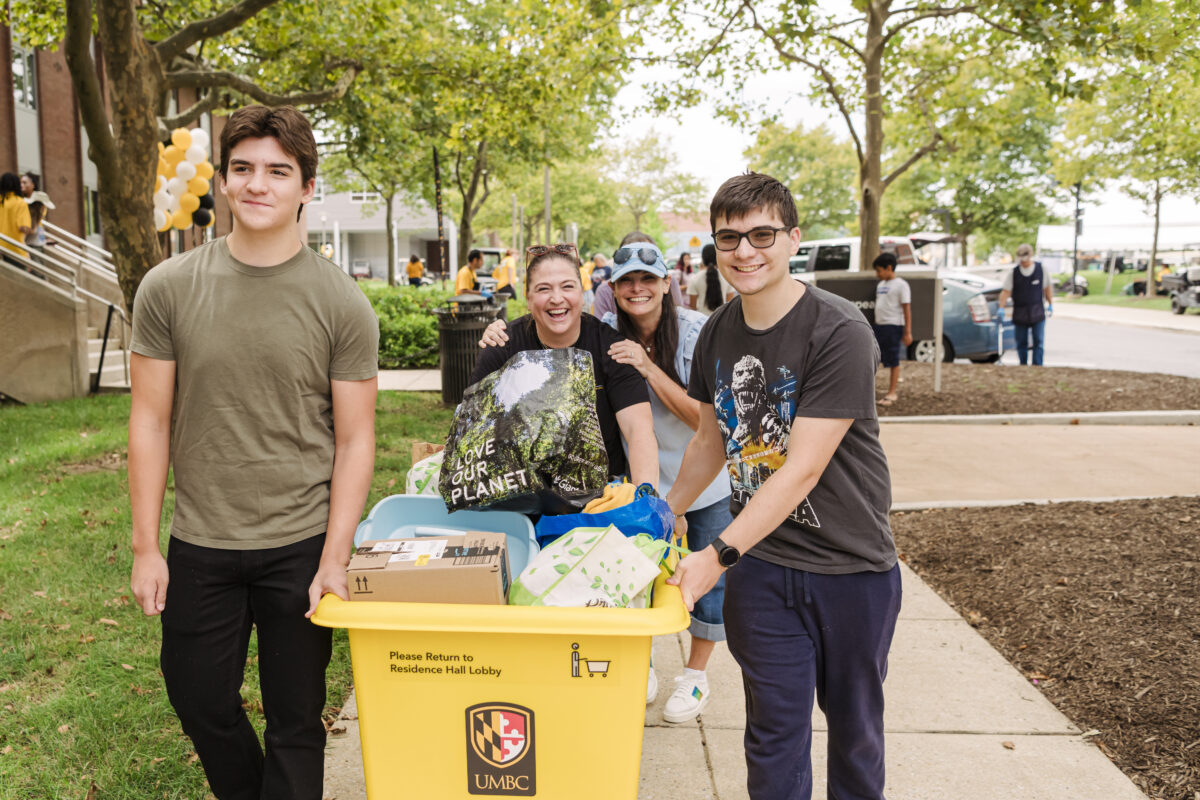
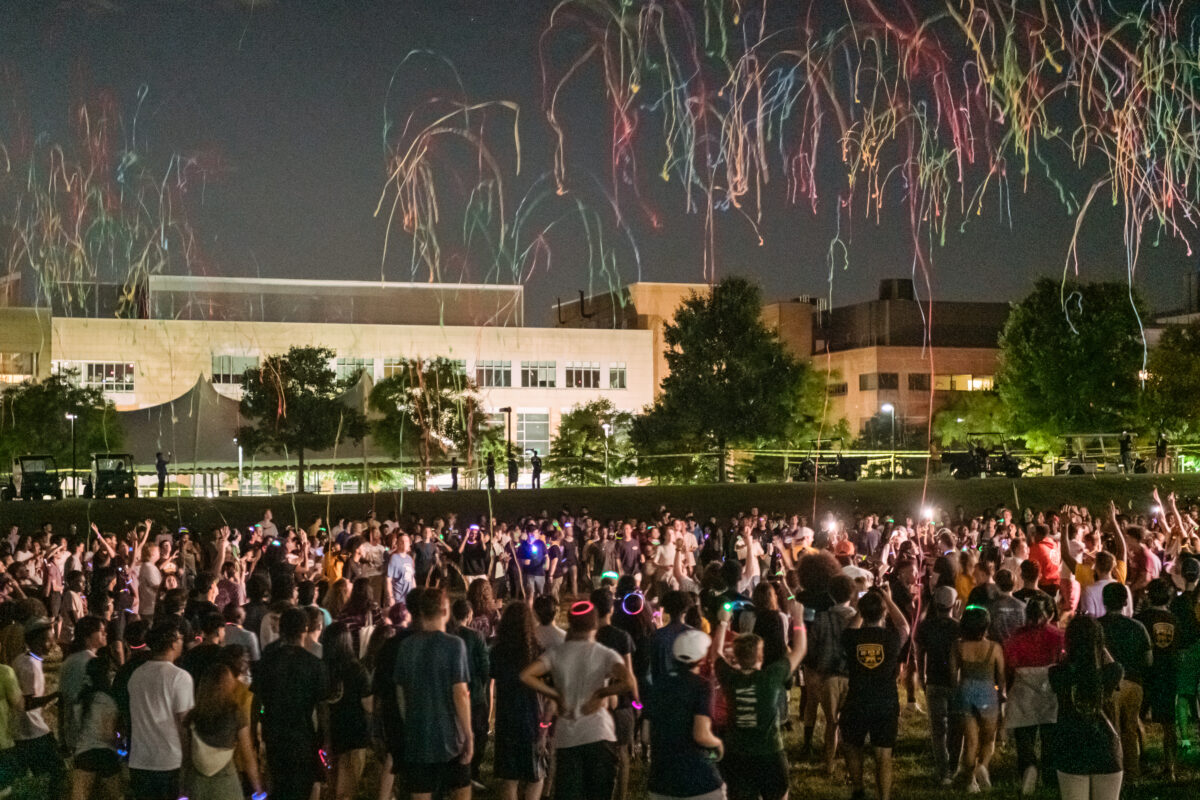
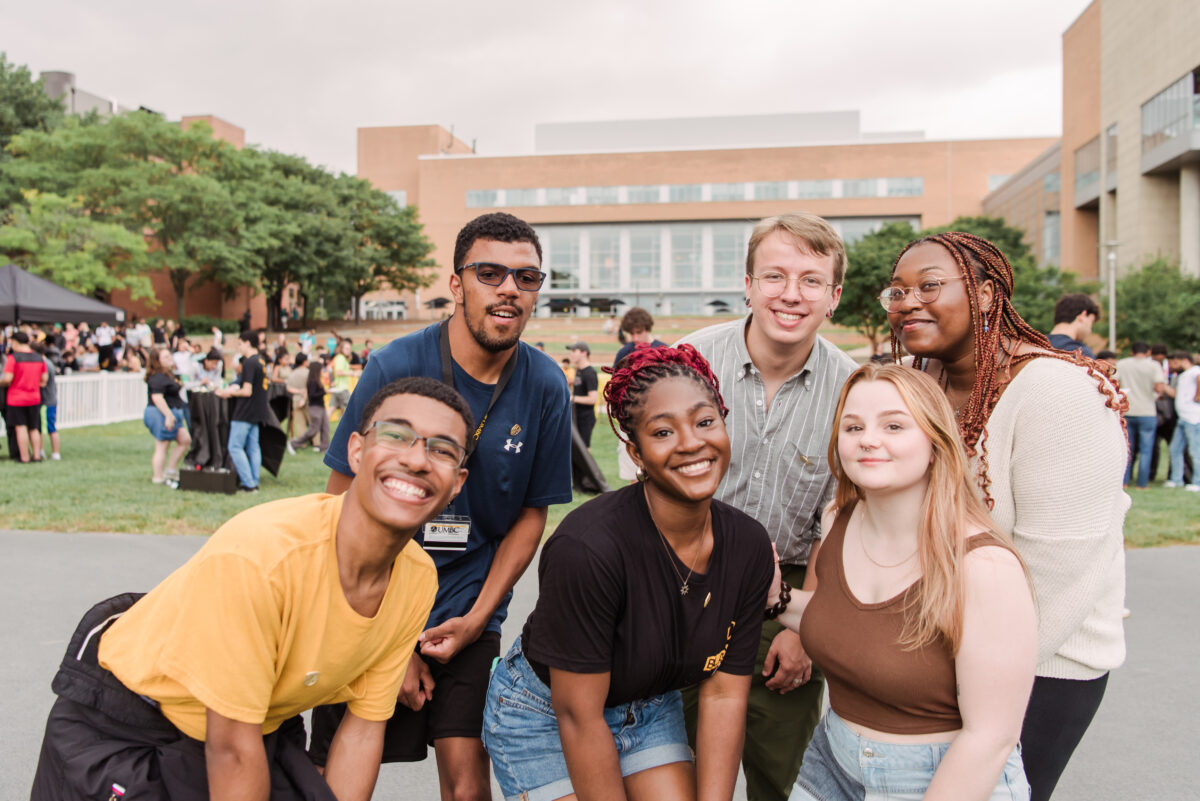
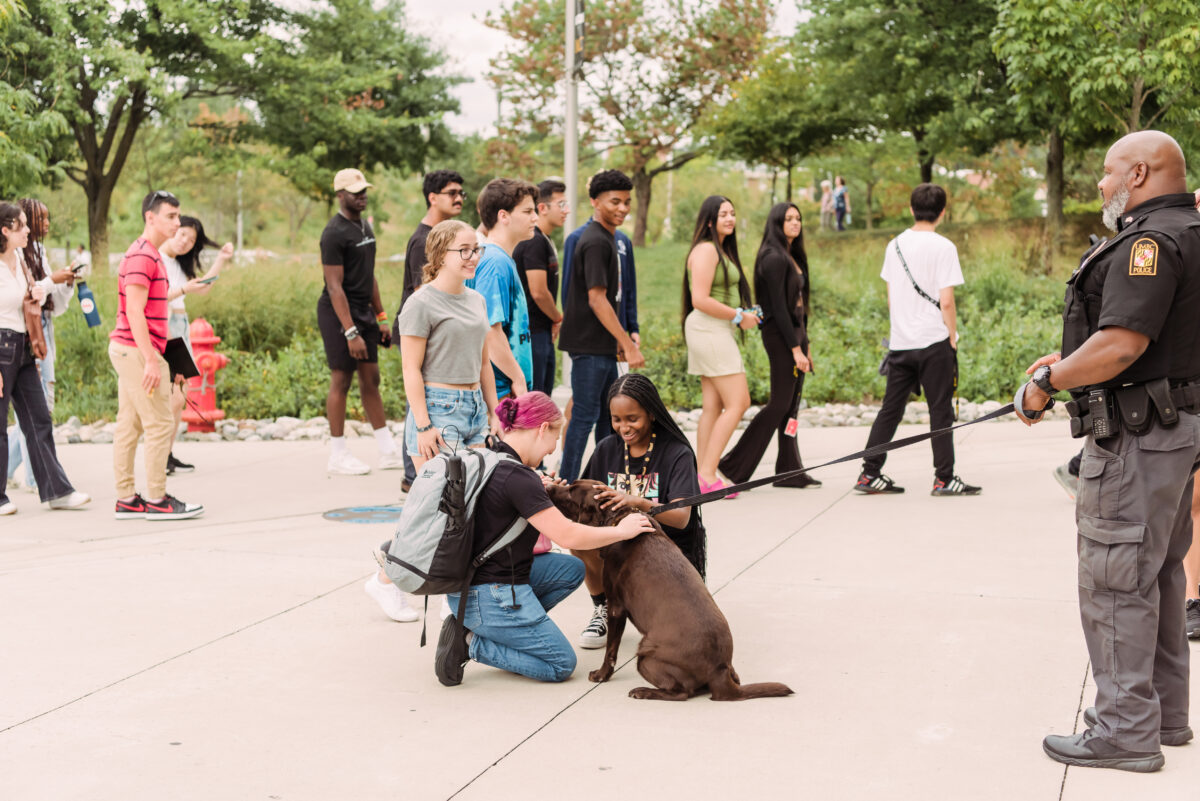
Last weekend, new Retrievers bundled up their belongings and arrived on campus to unpack in their new home. Once clothes were in drawers, posters were hung, and minifridges were stocked, students and families headed to Retriever Fest to learn more about campus resources and departments…and maybe pet a farm animal or two. After saying goodbye to families, students settled into their rooms and then got to know one another over games and a fireworks display. 

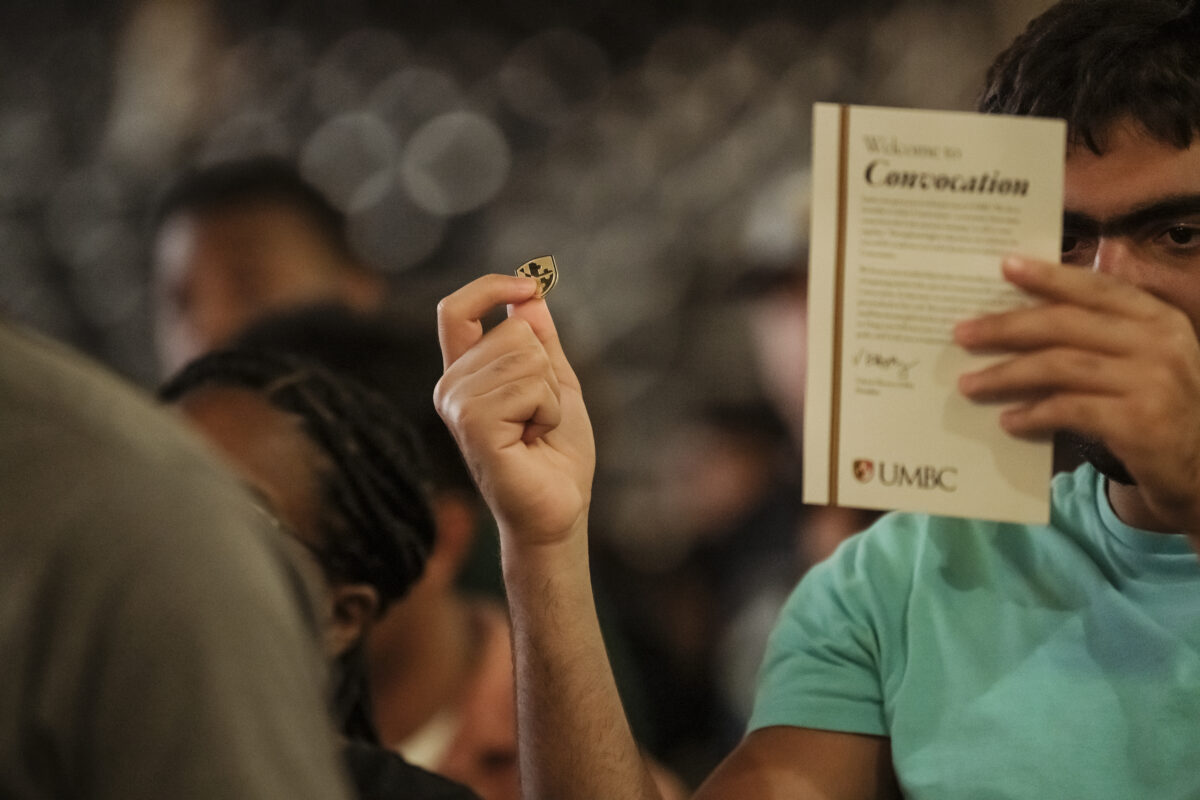
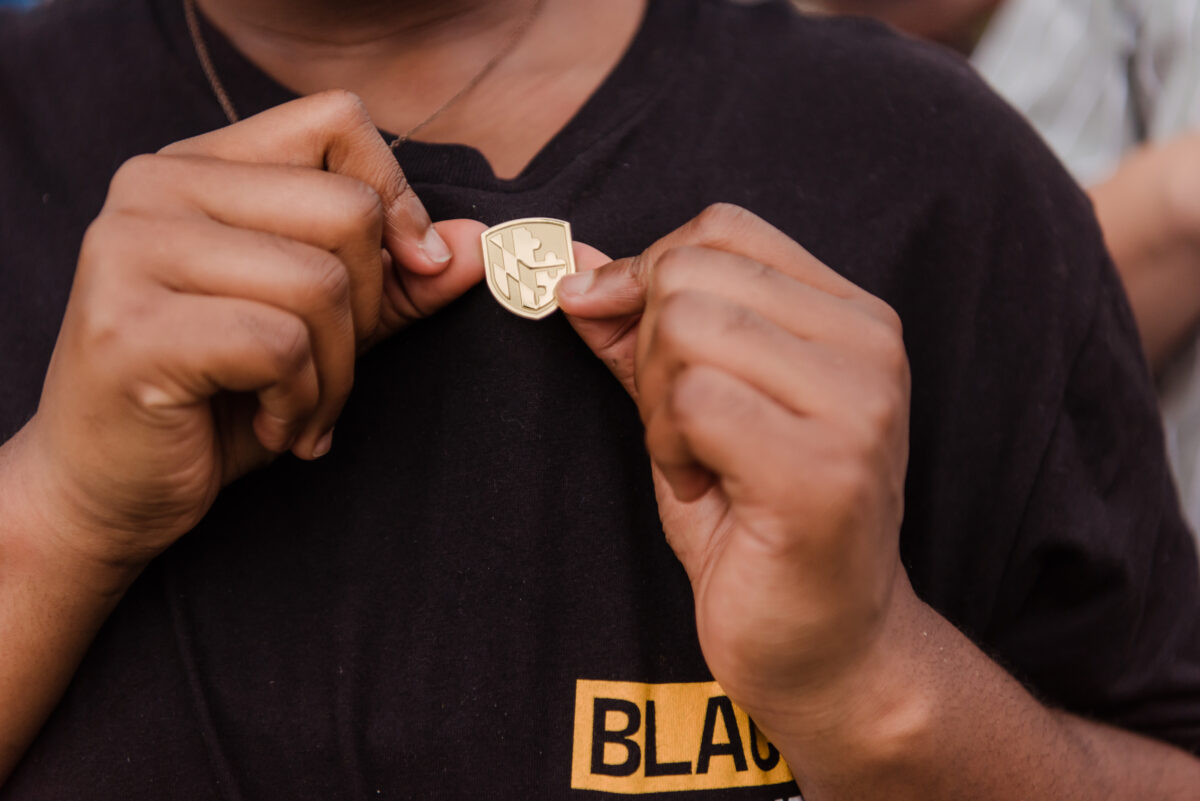
During Convocation on Tuesday, new Retrievers received a UMBC pin, officially signifying the start of their UMBC career. Incoming UMBC Student Government Association (SGA) president Musa Jafri ’24, political science, assured the attendees saying, “I know being a new student can be overwhelming at times. Remember that it is okay to ask for help. You are part of this community, and we want you to know that you belong here, and we want you to succeed.” 

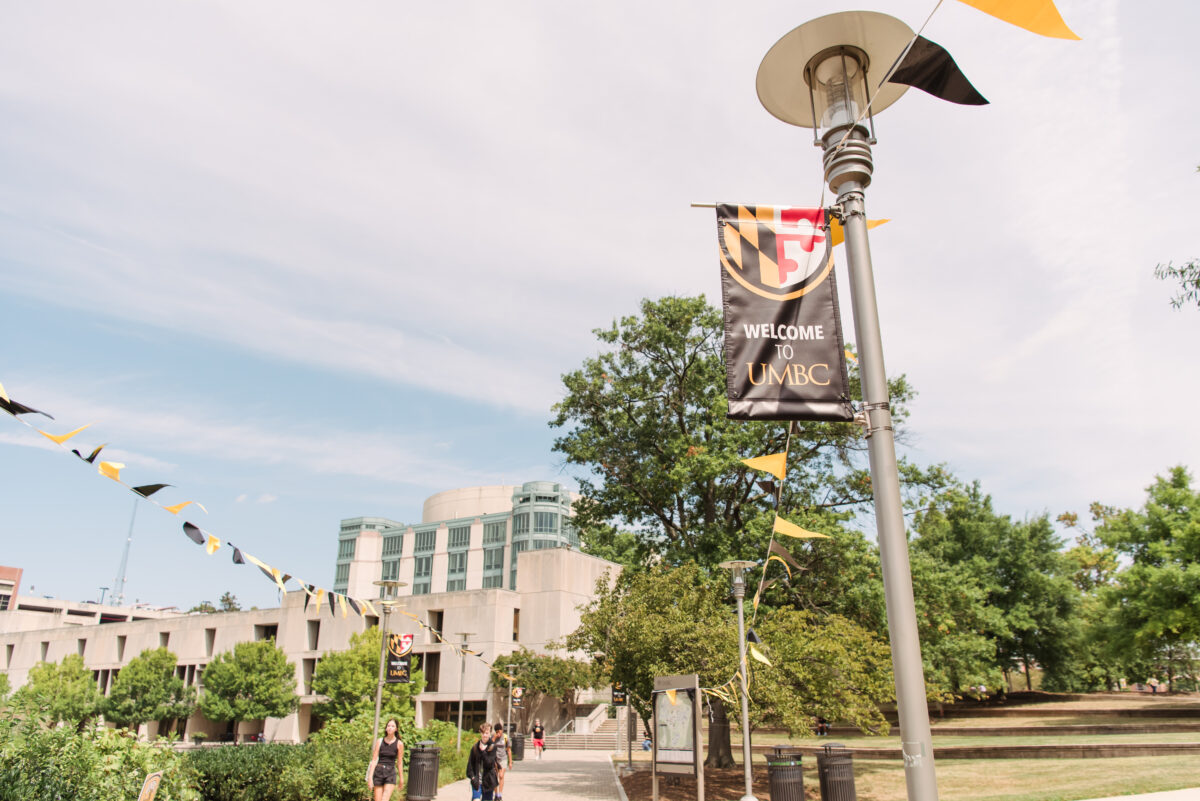
As the first day of classes dawned on Wednesday, the entire campus came to life with new and returning students filling sidewalks, classrooms, and the Starbucks line (the real sign that school is officially back in session).

All across campus, hugs were exchanged, summer vacations were rehashed, and plans for the upcoming year began to form.

We can’t wait to see what comes next!

All photos courtesy of Marlayna Demond ’11 for UMBC.

Grin and Bear It

When asked to describe the cinematic masterpiece that is Cocaine Bear, Scott Seiss ’16, media and communication studies, didn’t mince any words to deliver his thoughts on the hit film based on true events.

“I think ‘cocaine’ and ‘bear,’ just those two words pretty much sum it up. A wild rollercoaster ride of gore and jokes.”

What started as a Facebook message to then-agentless Seiss’ spam folder with the suspicious but apt subject line “COCAINE” has led to a debut on the silver screen and launched this Retriever from Dundalk onto the national comedy stage.

in a still from the Cocaine Bear movie, a paramedic turns around from an ambulance, blood is on his white shirt
Seiss, a Dundalk native, plays an ill-fated paramedic named Tom. Photo courtesy Pat Redmond / Universal Pictures

Bear for now, dog for life

Seiss, who plays the ill-fated paramedic Tom in Elizabeth Banks’ recent romp, Cocaine Bear, credits much of his comedic career to the opportunities and support he got while attending UMBC.

“There were a lot of things that came from UMBC that I think really just helped me along the comedy journey and gave me a lot of confidence and experience and skills that I might not have necessarily had going somewhere else,” says Seiss.

At this point in his career, there are a few places you may have seen Seiss—on stage performing with Dog-Collar Comedy Troupe (he was a part of the founding group at UMBC 10 years ago), on TikTok with his viral “Angry Ikea Guy” series, or opening for the likes of Patton Oswalt (on tour in 2022) or for Bo Burnham at UMBC in 2014. (At the time he thought, “Well, I’ve peaked. This is the coolest thing I’ll ever get to do in comedy.”)

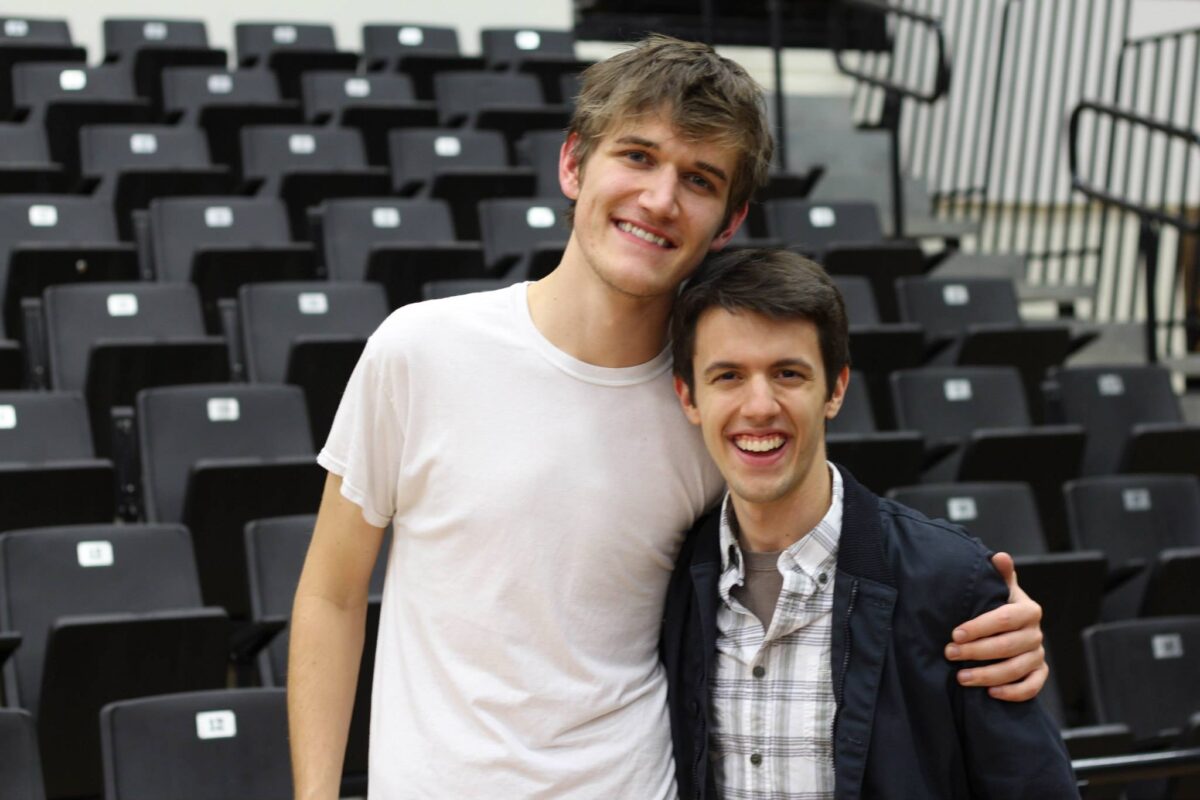
two guys stand side hugging in front of stadium bleachers
Seiss, right, with Bo Burnham at UMBC in 2014. Photo courtesy of Seiss.

Seiss got his start on UMBC’s Flat Tuesdays stage and then started bouncing around Baltimore to begin his stand-up journey. He eventually moved to New Jersey, pursued stand up in New York every night, and then the pandemic happened. That’s when he turned to TikTok. Drawing on his own experiences in customer service, Seiss soon amassed a massive following and, once a compilation video of his hits started making the rounds, Hollywood took notice.

Seiss explains, “Elizabeth Banks and her husband and producing partner Max Handelman saw the videos and loved them, thought they were funny, and they were like, ‘We got to see this guy screaming for his life.’”

Retriever skills on the silver screen

They got their money’s worth from Seiss’ shouts. On set, he says, “I had to do one day of all screaming, where I was just screaming and getting attacked.” He credits Lynn Watson, theatre, for his vocal technique. “I did all the stuff that she had taught me, the Fitzmaurice diaphragmatic breathing, tremors, all this kind of stuff, to be able to project and scream. I never lost my voice.”

In fact, Seiss often thought of advice he got from UMBC while filming. “Eve Muson, who is the best acting professor of all time, is also the best acting coach of all time. It was always her voice in my head when I was acting. I could just hear her saying, ‘Don’t pretend to be afraid of the bear, be afraid of the bear.’ That was one of her go-tos: don’t pretend, actually do it,” says Seiss. “So, every time I did a take on Cocaine Bear, I would just go back and I’d go, ‘Oh my God, would Eve have liked that?’ That was my barometer for if it was good.”

It’s a mutual admiration for Muson. “I loved working with Scott when he was a student here at UMBC. He was my assistant director for our epic production of Rhinoceros. Scott was our chief script doctor—every night I would send him home with notes to update this classic work of political theatre,” said Muson, who has been at UMBC since 2009. “Every day he’d come in with really funny gags and jokes for the actors to try out. I’m delighted (but hardly surprised) that Scott’s considerable comedic talents are being recognized by his TikTok following and now the film industry.”

three people stand smiling together with a sign that says Dog Collar Comedy Troupe
Seiss during his Dog-Collar Comedy days. Photo courtesy of Seiss.

The mentorship he received from the UMBC faculty played a huge part in his success. “Jason Loviglio from media and communications is just incredible. He really encouraged me when it came to comedy, specifically,” remembers Seiss.

Seiss also attributes some of his comedy prowess to his peers, including the other performers in UMBC’s Dog-Collar Comedy Troupe. “It was just nice being around such a creative and funny and supportive group of people who just wanted to push each other and try to be as funny as possible,” says Seiss.

Sitting down to write for stand up

Cocaine Bear may have wrapped, but fans looking for more can catch him in Randall Park’s directorial debut, Shortcomings, which premiered at Sundance earlier this year. He’s also working on new content for his stand-up tour.

“My writing style is pretty chaotic. Sometimes I’ll sit down and try to go through some sort of free-write exercise to pull an idea out, and then sometimes it’s just like you’re walking around, you get an idea,” says Seiss.

For any budding creatives looking to break into the business, Seiss says, “The most important thing is that you have to make your own stuff and you have to show people that you can do it before they will start letting you.”

Well, that and always check your spam messages on Facebook (proceed with caution).

Not goodbye but see you later—Welcoming the Class of 2023 to our alumni community

UMBC’s class of 2023 took the mantra “strength in numbers” to heart as nearly 2,000 graduates crossed the stage during this year’s spring Commencement ceremonies. We can’t confirm it but for those in attendance, it felt like the applause and cheers may have registered on the Richter scale. Each ceremony was unique, just like our graduates, but there were several common themes among the speakers, including the reminder that the journey is just beginning for these Retrievers. 

When in doubt, turn to Rocky

Valedictorian for the College of Arts, Humanities, and Social Sciences; School of Social Work; and Erickson School of Aging Studies morning ceremony, Zinedine Partipilo Cornielles23, financial economics and mathematics, shared that inspiration can come from the most unlikely sources…including Rocky Balboa, the fictional boxing legend. Cornielles recently rewatched the series with his roommates and reflected on the struggles Rocky faced.

Class of 2023 valedictorian for the College of Arts, Humanities, and Social Sciences; School of Social Work; and Erickson School of Aging Studies morning ceremony, Zinedine Partipilo Cornielles, speaks on the graduation stage.
Valedictorian for the College of Arts, Humanities, and Social Sciences; School of Social Work; and Erickson School of Aging Studies morning ceremony, Zinedine Partipilo Cornielles ’23, speaks at Commencement.

“Life is not always about winning. It’s about overcoming adversity and challenges as we all have throughout our lives and throughout this journey,” said Cornielles, addressing his classmates. “It’s about standing up again after falling down, and I know that each and everyone of us has been able to get back on our feet—regardless of the number of times we’ve fallen before—because you are here.”

During the afternoon ceremony for the College of Natural and Mathematical Sciences; College of Engineering and Information Technology; and Division of Undergraduate Academic Affairs, valedictorian Christopher Slaughter ’23, computer engineering, revealed his inspiration comes from UMBC itself.

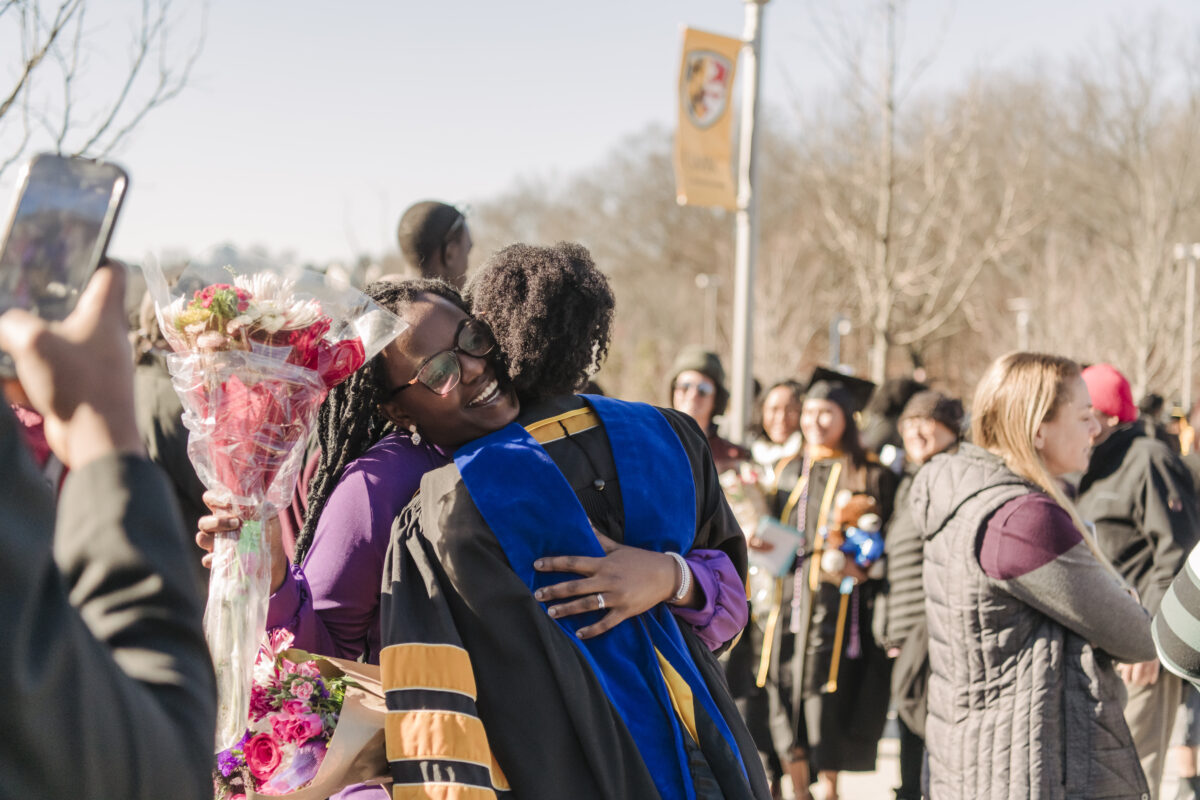
A graduating student is hugged and congratulated.
Valedictorian of the College of Natural and Mathematical Sciences; College of Engineering and Information Technology; and Division of Undergraduate Academic Affairs Christopher Slaughter ’23 shares a moment with a mentor.

“Although our journey began here at UMBC where we were unaware of our futures, we quickly learned the magic of this place…a place where we do not defer our dreams, but where we seed them, tend them, and watch them grow,” said the Meyerhoff Scholar. 

Slaughter, UMBC’s fifth Gates Cambridge Scholarship recipient and a 2022 Goldwater Scholarship recipient, took the opportunity to shout out his own UMBC role models like Naomi Mburu ’18, chemical engineering, UMBC’s first Rhodes Scholar

Sliding into home (away from home)

UMBC baseball couldn’t make it to the Chesapeake Employers Insurance Arena to celebrate commencement with their friends and classmates, but Athletics staff and coaches made sure graduating students could still celebrate with their team.

The Retrievers were on the road in Binghamton, gearing up to compete in the America East playoffs, so they traded an arena for a conference room. Thanks to help from Binghamton, the team hosted their own celebration, complete with stoles and certificates.

“We invited any and all team parents who made the trip up to use the time to talk about the graduating players and what they’ve meant to the program,” explains Daniel Bowen, athletic academic advisor. “The ceremony took less than half an hour, but we think it’s pretty timeless to get to show your appreciation for guys who have been working hard on the field and in the classroom for years.”

This was just the luck the team needed, going on to defeat Binghamton Thursday afternoon and advancing to the winners bracket to take on Maine last week. 

Becoming who you are

For many graduates, the road to Commencement was long and winding. But this year’s speakers reminded students that the journey is what matters.

Keith T. Elder, Ph.D. ’02, health policy and policy sciences, provost and executive vice president of Mississippi College, addressed the graduates saying, “Know all lived experiences are not pleasant and some are indeed painful, but those experiences helped shape you and mold you into what you are today and what you are becoming.”

Keith Elder speaks at Commencement from behind a podium that says UMBC
Keith T. Elder, Ph.D. ’02, health policy and policy sciences, provost and executive vice president of Mississippi College, addresses the graduates.

Elder is a 2022 UMBC Alumni Award winner for Outstanding Alumnus in Social and Behavioral Sciences. 

Graduate student Grant Clifton came to UMBC to obtain his Teaching English to Speakers of Other Languages (TESOL) master’s degree and credits the Shriver Peaceworker Program for helping him on his journey. 

“I learned so much and grew significantly as a person, thanks to the program. I don’t think I would have been as successful or would have made as much personal growth if I had not been part of the Shriver Peaceworker Program,” said Clifton.

This year’s honorary degree recipient was Paula T. Hammond. Hammond is an Institute Professor at the Massachusetts Institute of Technology, head of the department of chemical engineering, and a member of MIT’s Koch Institute for Integrative Cancer Research.

Paula T. Hammond, an Institute Professor at the Massachusetts Institute of Technology, received an honorary degree.

She stressed that it doesn’t matter what field you pursue, just that you bring yourself to the conversation. 

“Science is a game that does not benefit from narrow solution sets, and difficult problems are best tackled when there are many minds at the table trying to solve them. Please remember that we need to hear YOUR voice,” said Hammond. 

UMBC President Dr. Valerie Sheares Ashby speaks during commencement.
UMBC President Dr. Valerie Sheares Ashby speaks during Commencement.

And President Valerie Sheares Ashby assured students that the best is yet to come saying, “I just heard something that I believe is true of each one of you—you are going to change the world.”

Congratulations to the Class of 2023! Please continue to share your messages of congratulations on social media using #UMBCgrad. Captioned versions of all three ceremonies can be found on UMBCtube. Read more about this remarkable class on the UMBC News site.