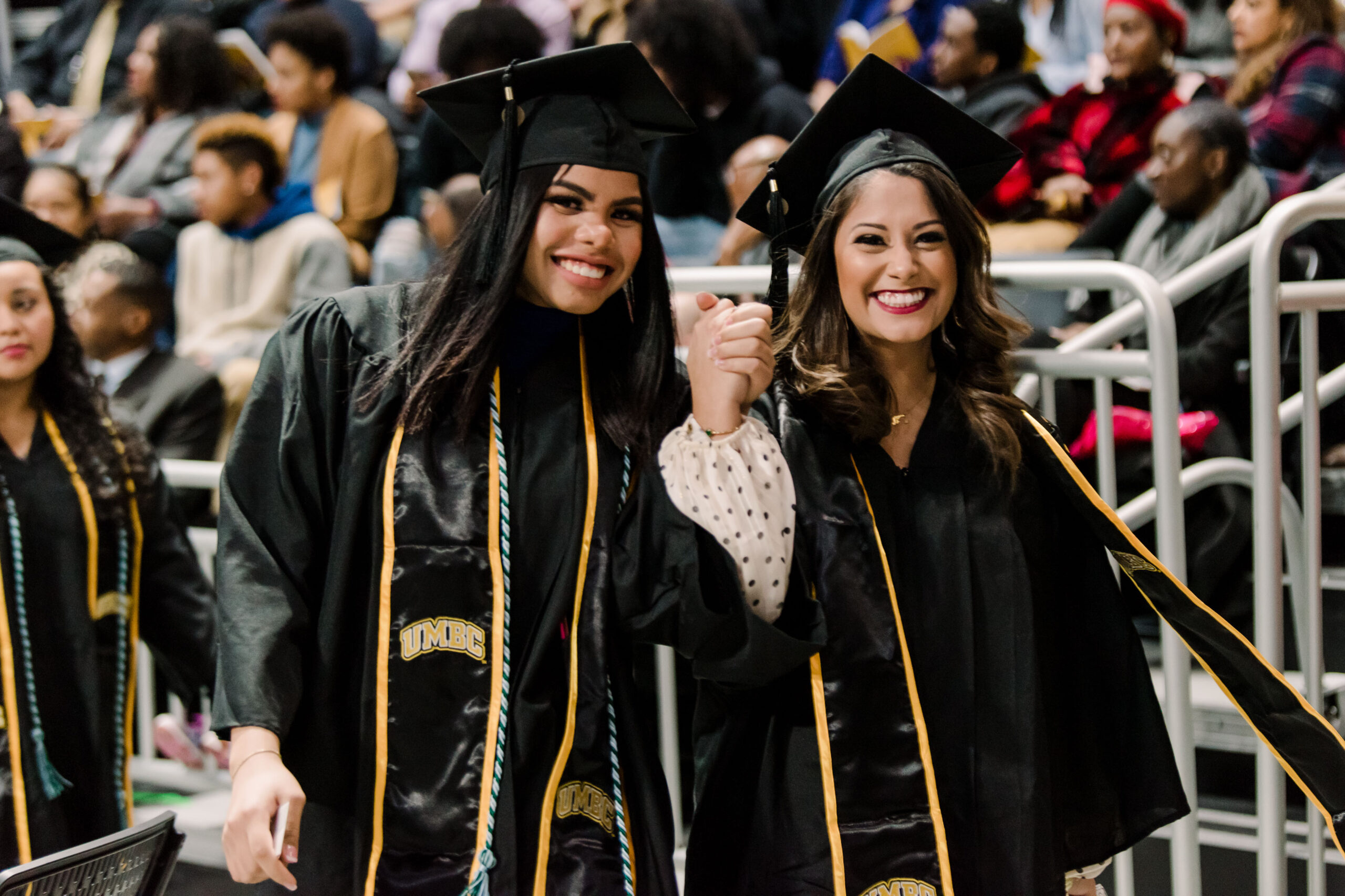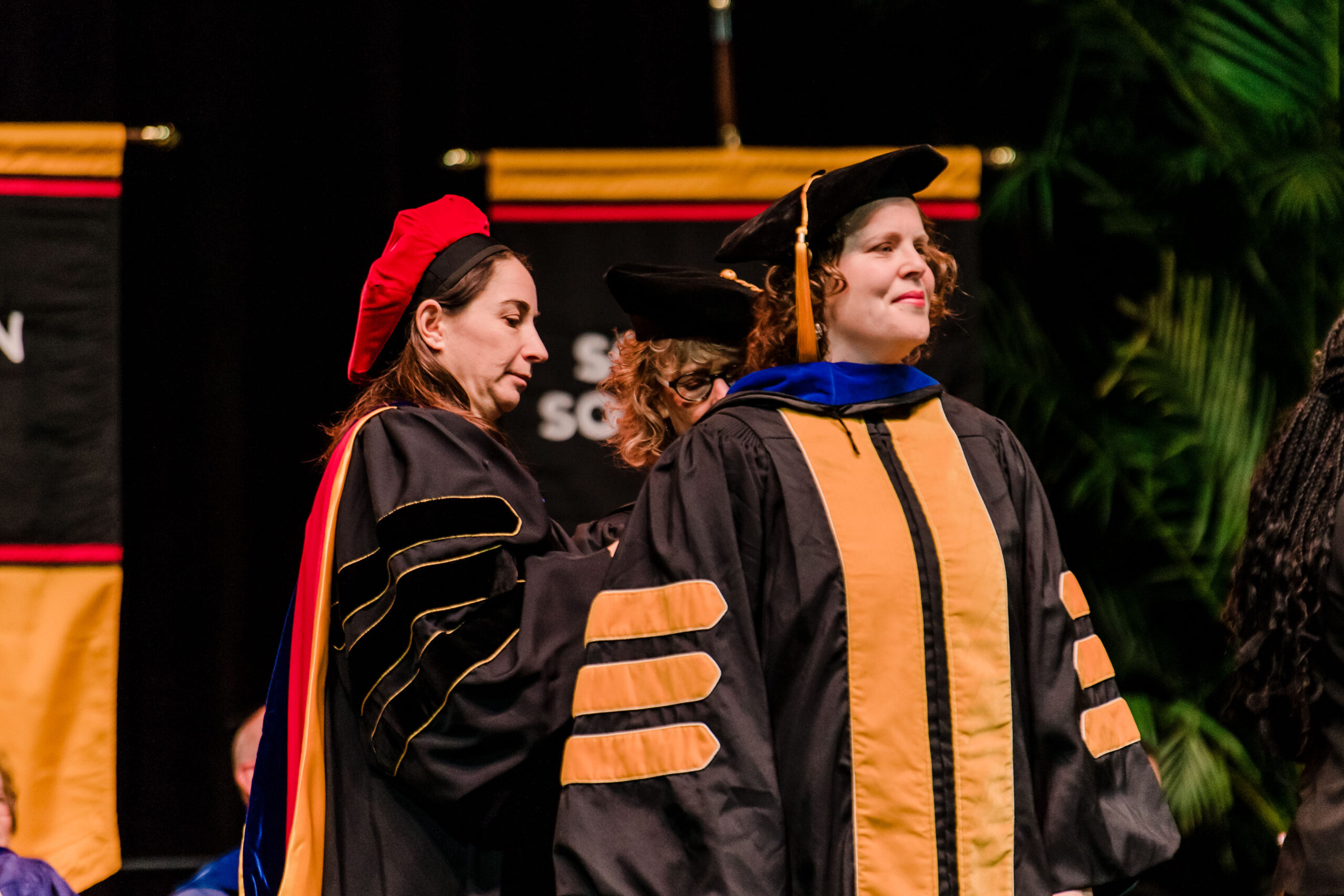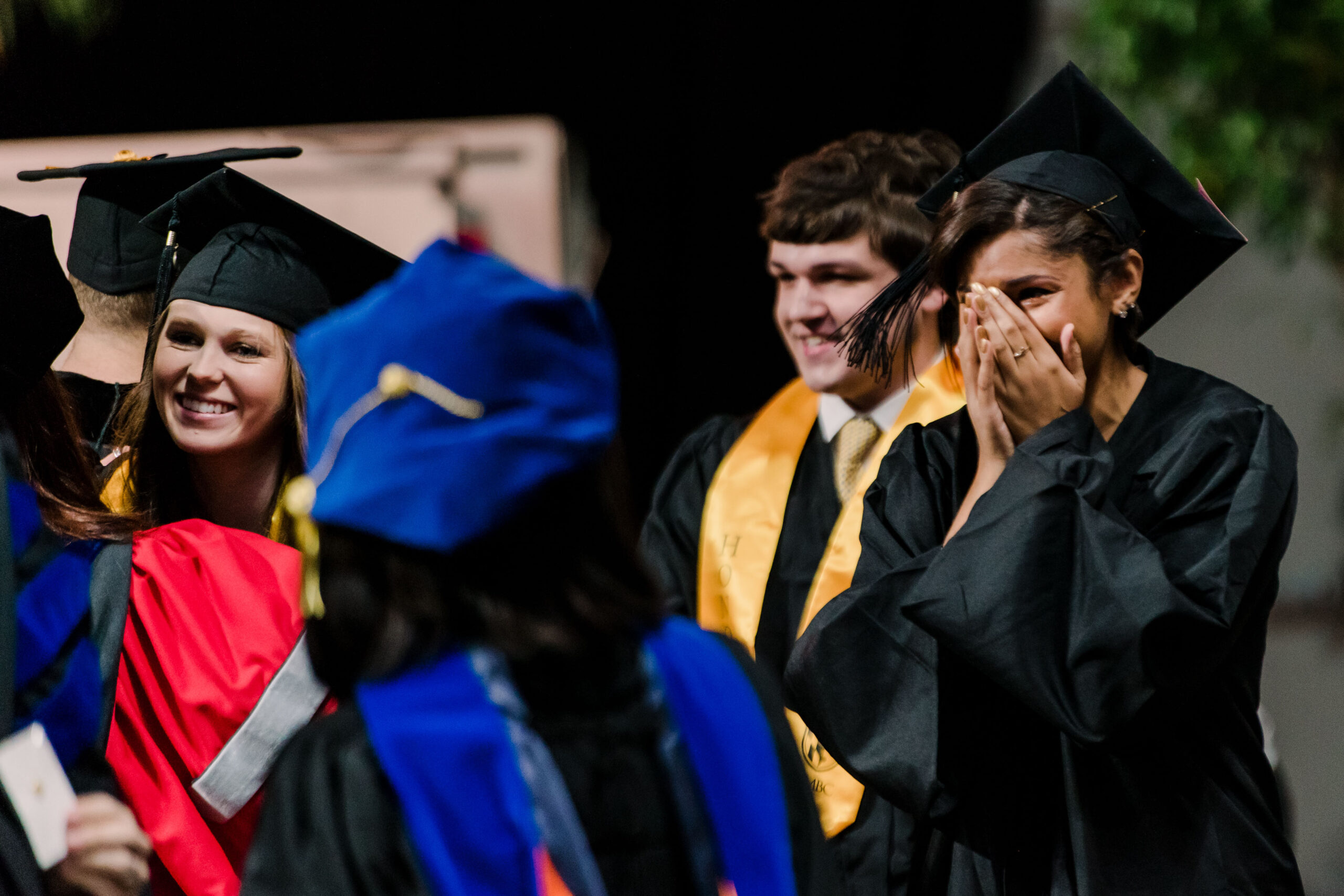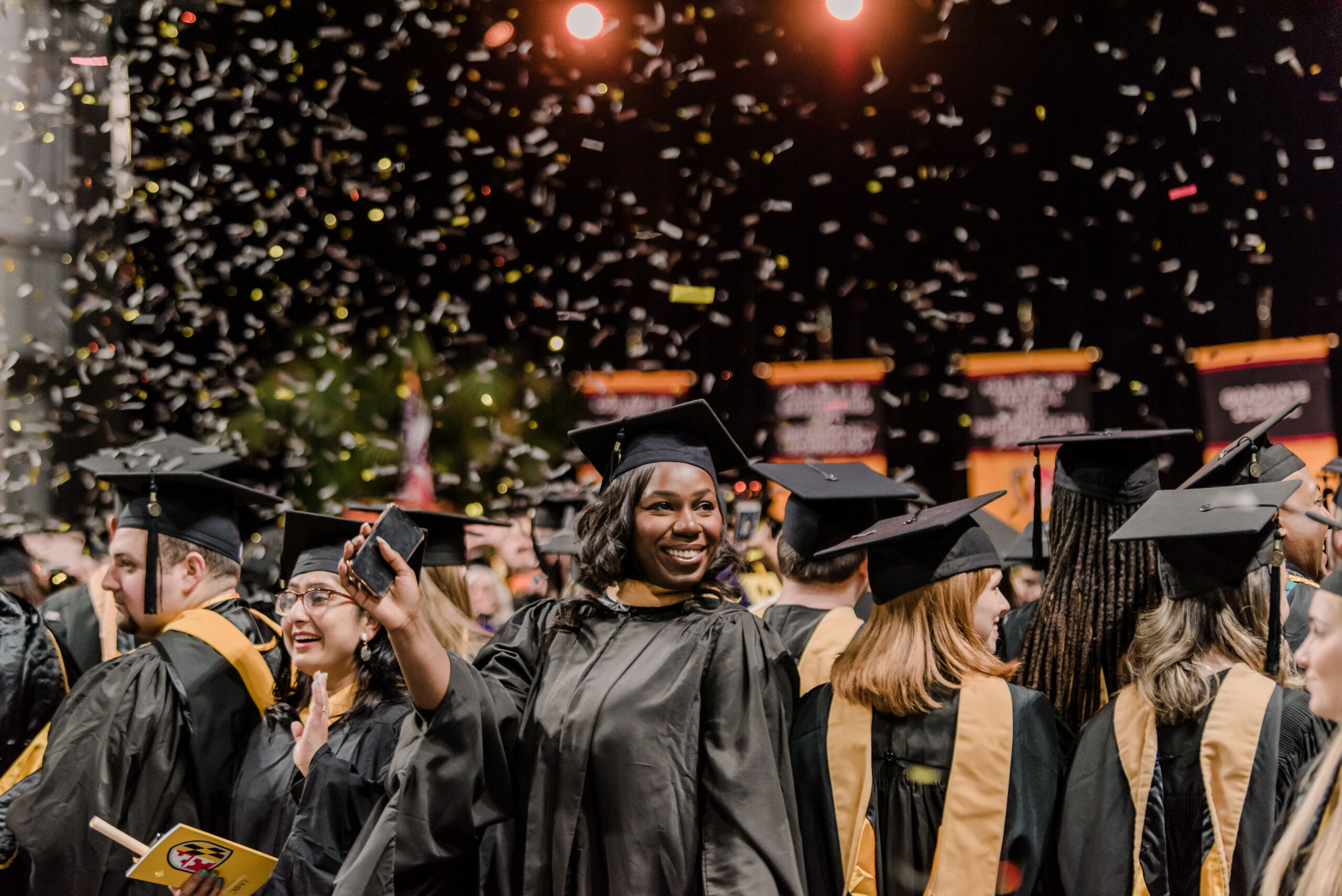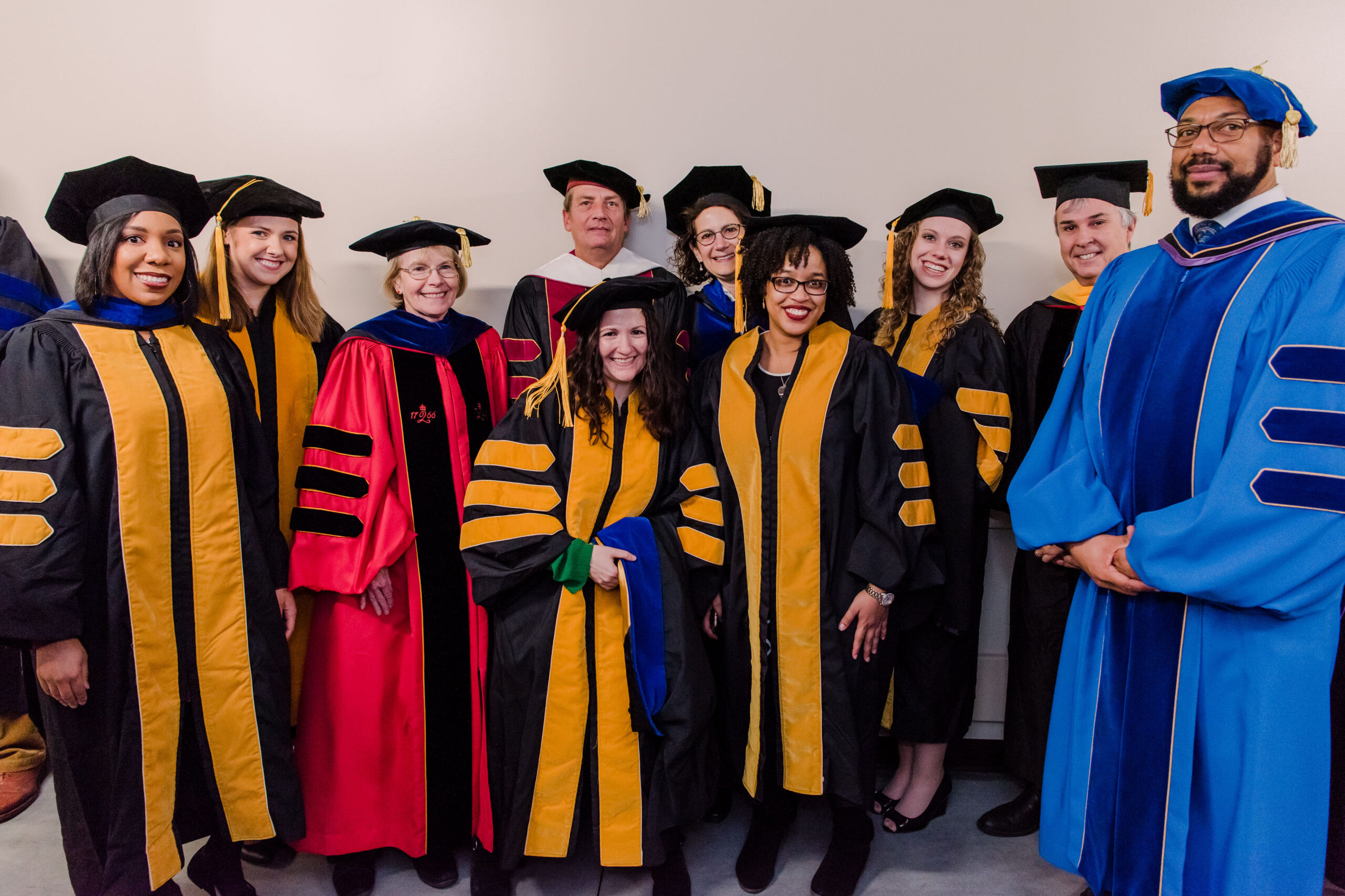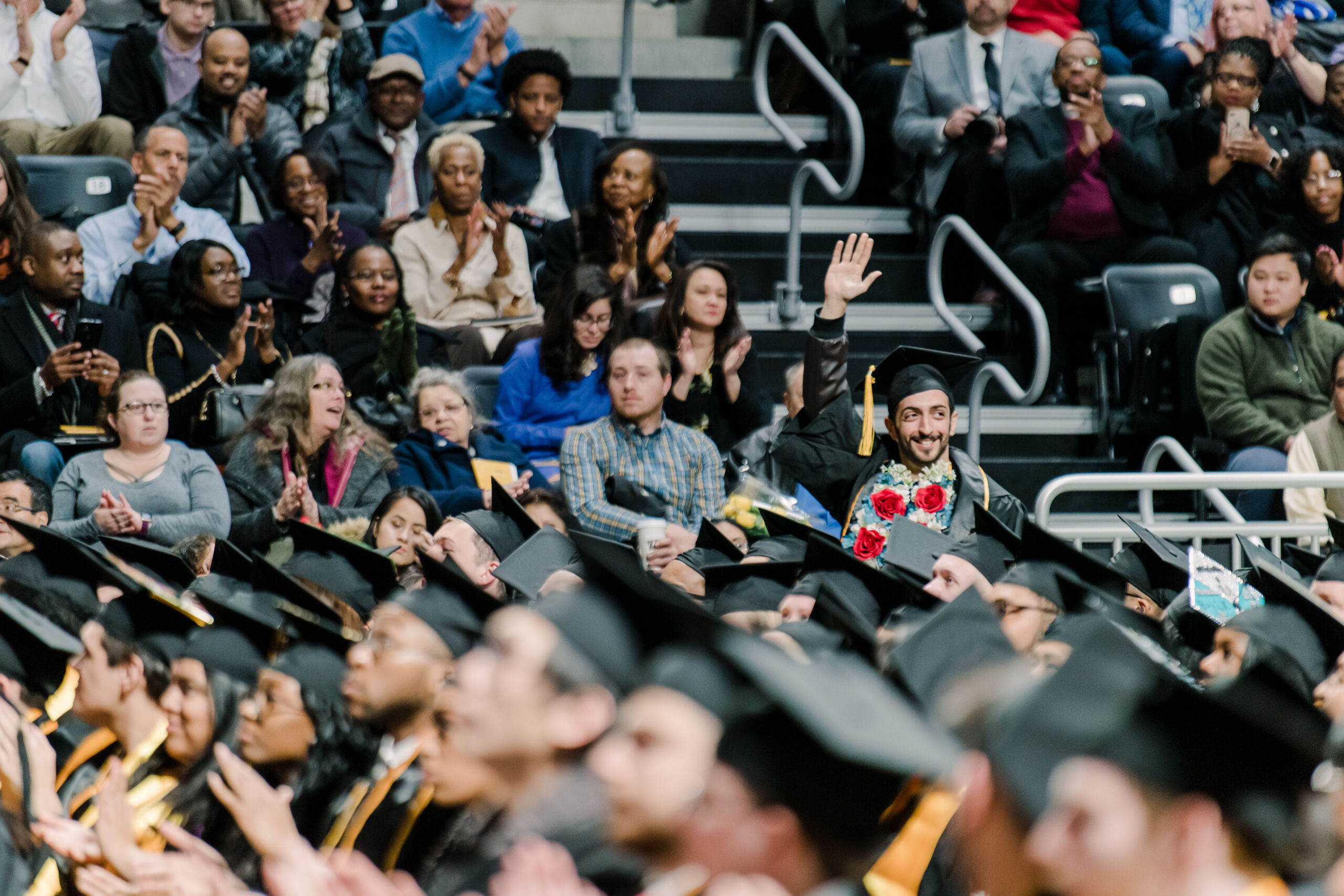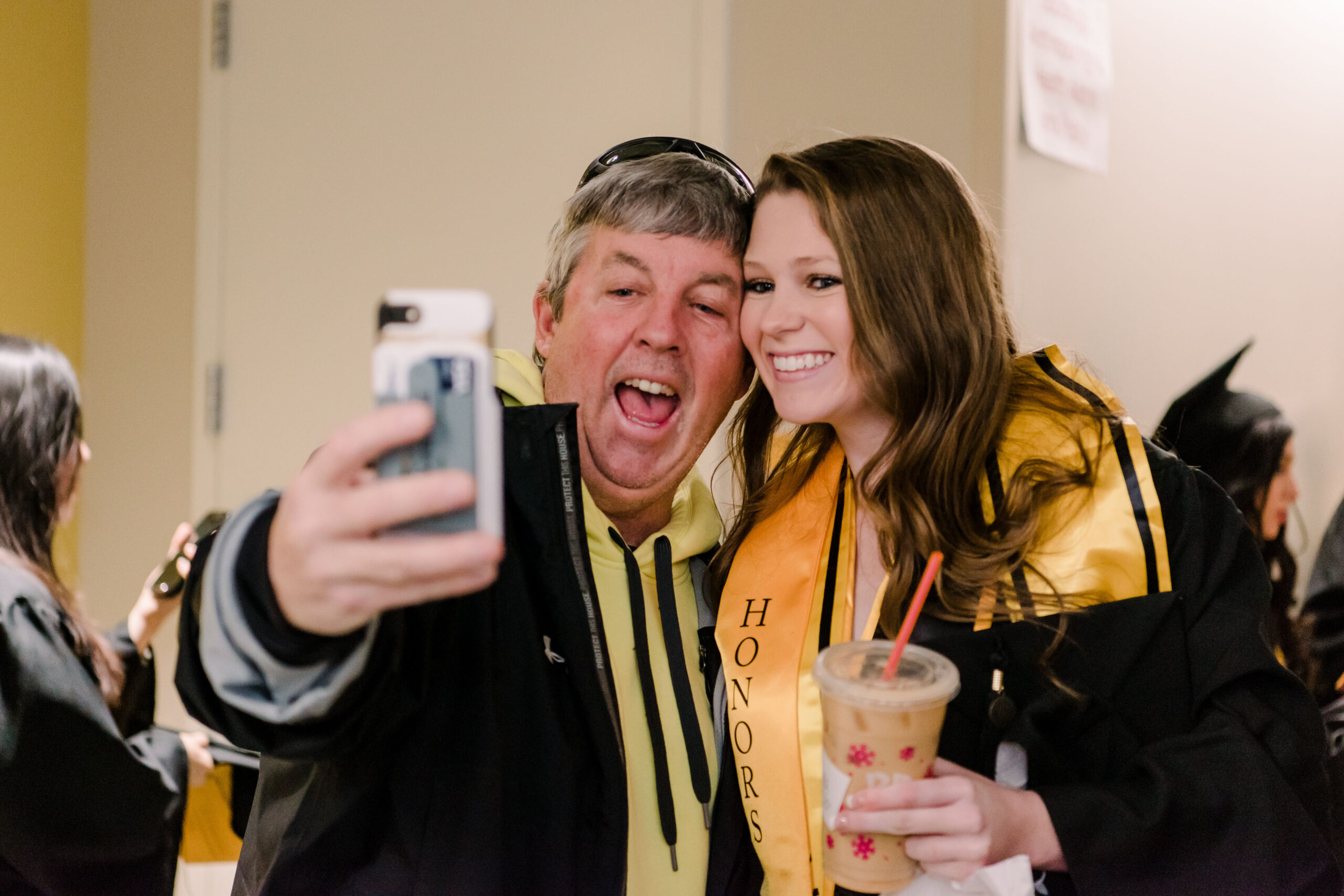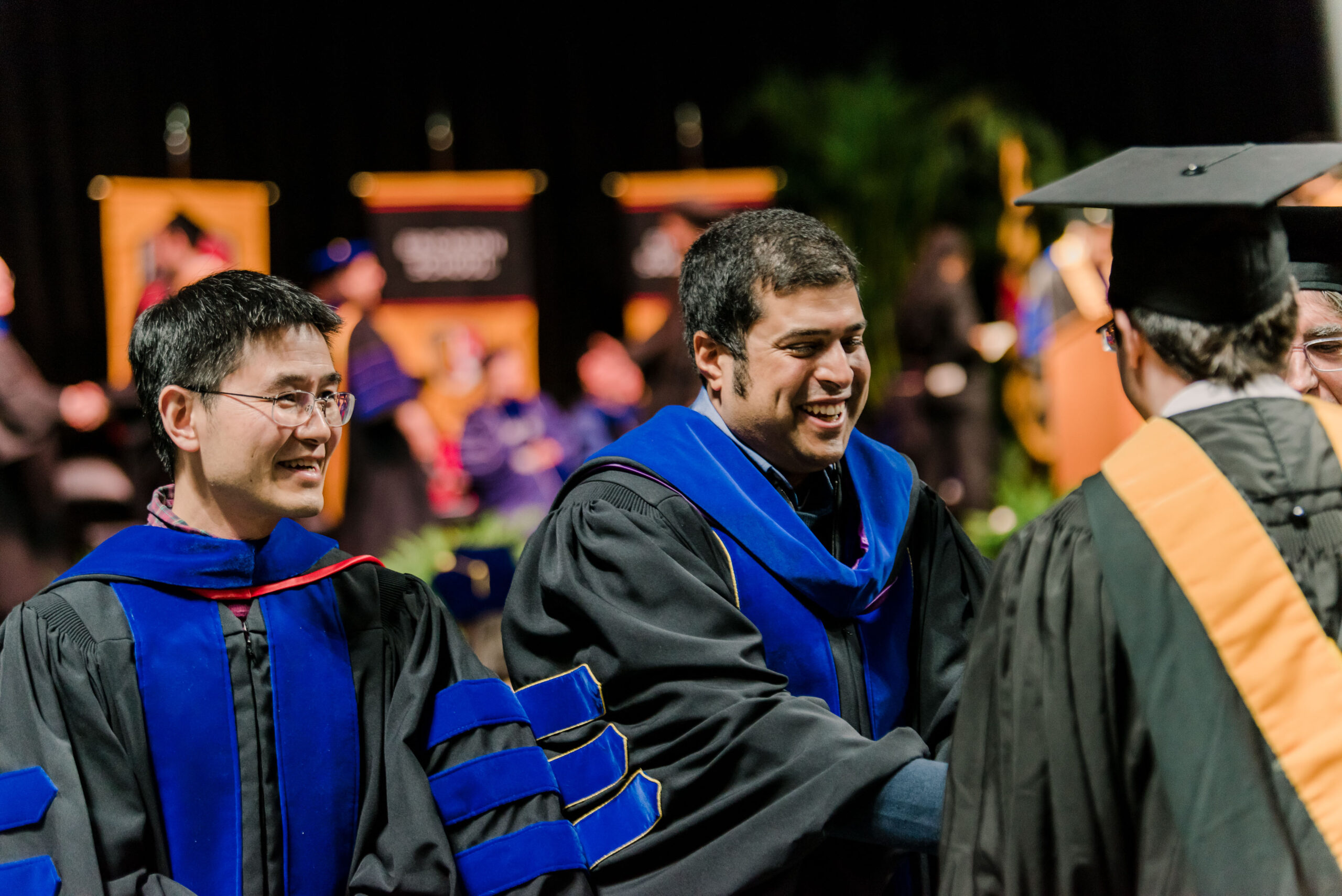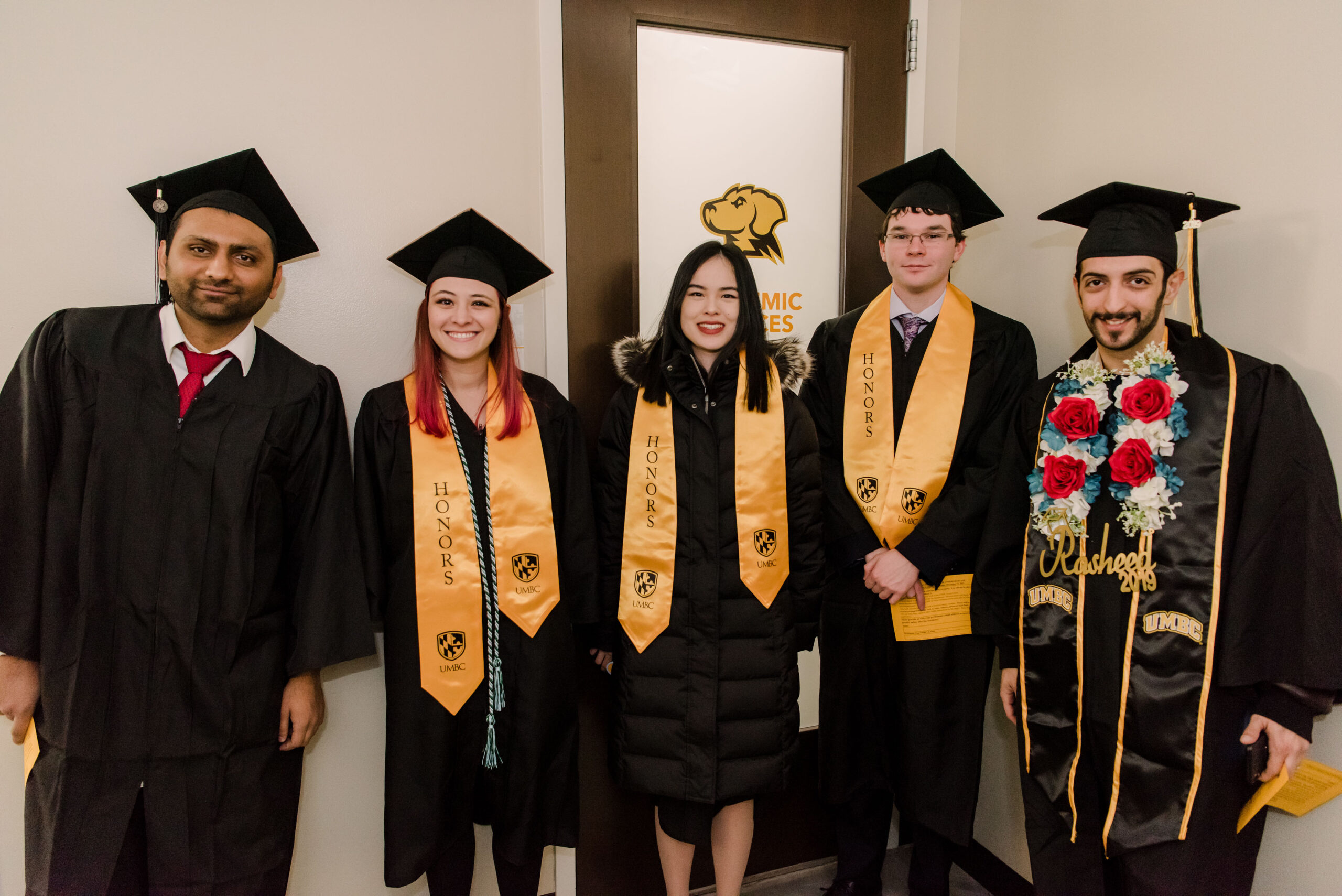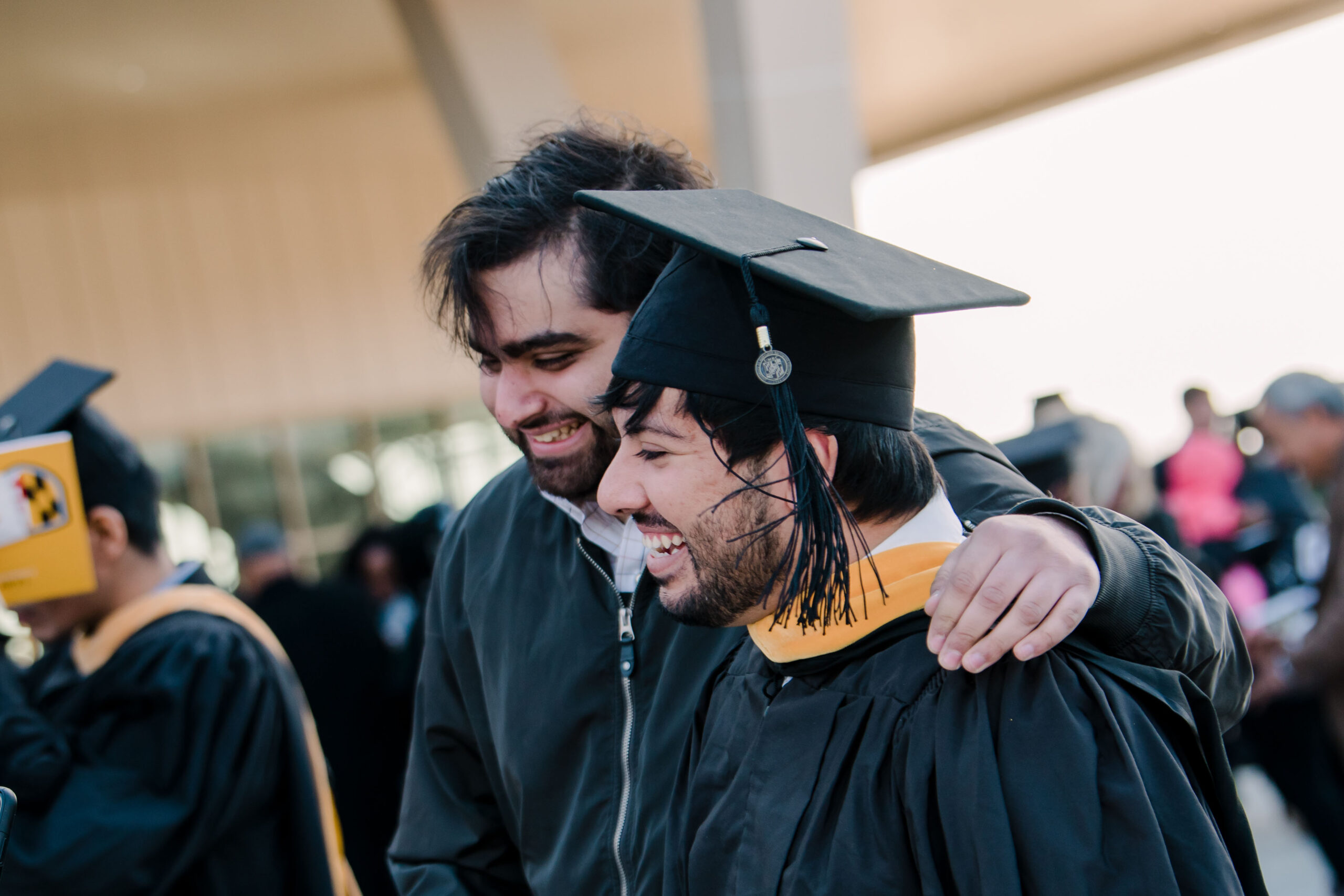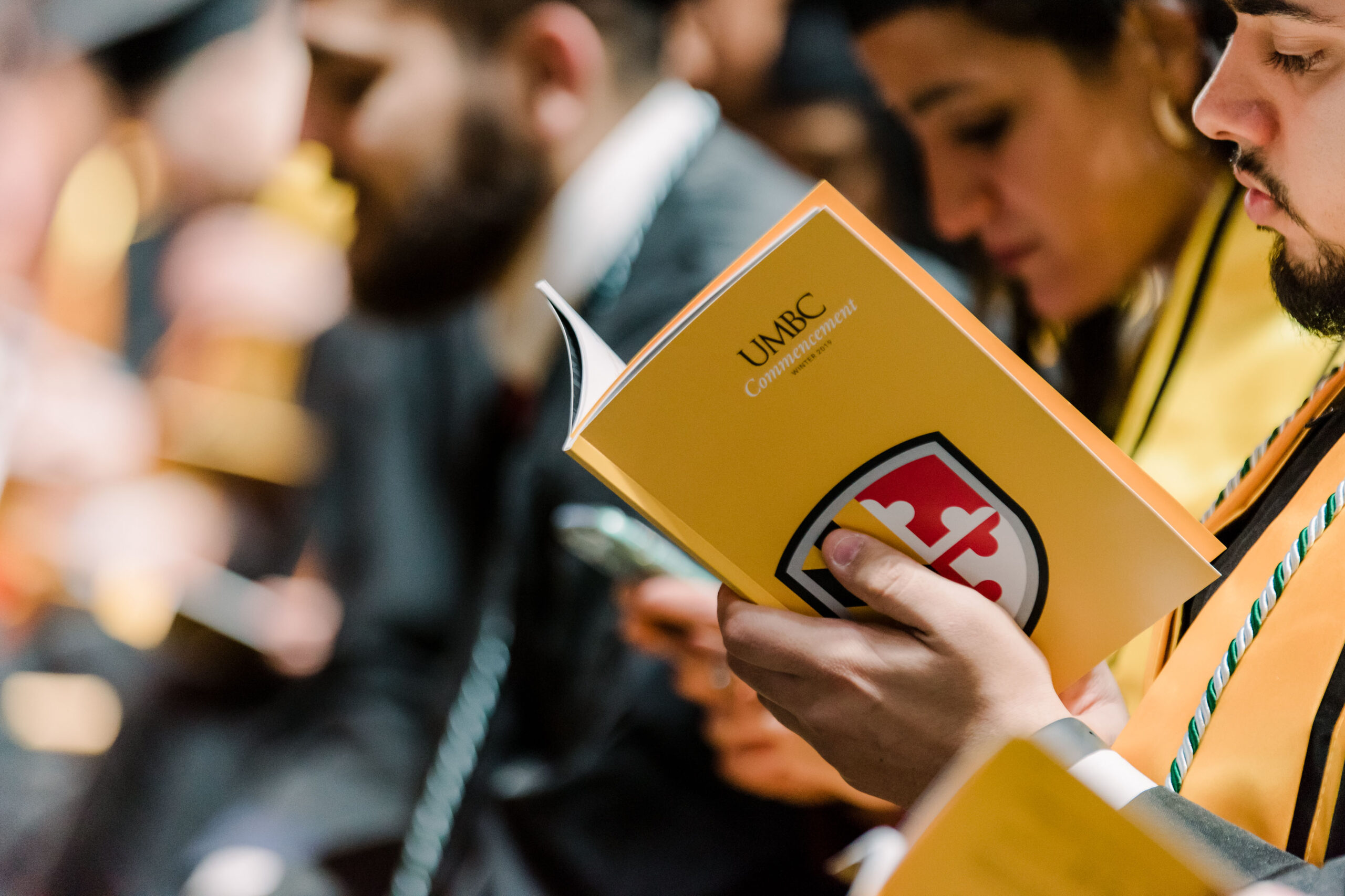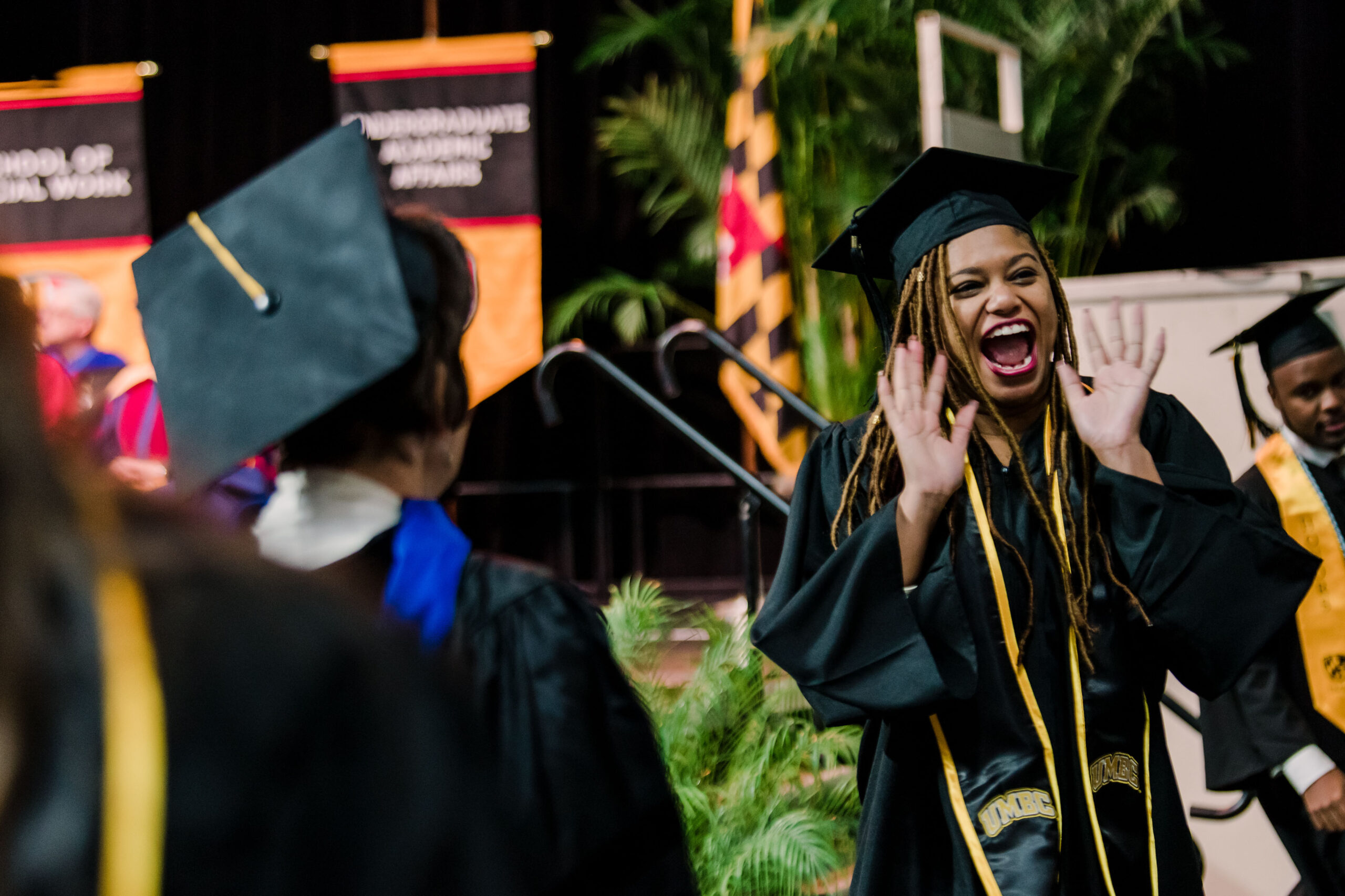
Commencement may be over, but the confetti lasts forever. This December, we celebrated the achievements and accomplishments of the class of 2019. President Freeman Hrabowski addressed the magnitude of the occasion saying, “Today, graduates, this is a time for dreams fulfilled.”
Some of our graduates called UMBC “home” from day one, and some found us in their second act. Some pursued their passions, and some found new ones entirely. Some relied on a tight-knit family structure, and some leaned on community support. But all of our graduates are bringing the knowledge they gained at UMBC to their futures. We can’t wait to see what’s next for these members of #RetrieverNation!
Graduates and those cheering them on can share memories, well wishes, and photos through #UMBCgrad, and view UMBC’s Facebook page, Instagram, and Twitter accounts for coverage of the festivities. Videos with captioning from both ceremonies can be found on UMBC’s YouTube page.
Imagine packing your bags and traveling 6,000 miles from home to spend four years in a country you’ve never visited. That’s exactly what Hania Moro ‘19, financial economics, did when she made the decision to travel from Egypt to UMBC in 2015 to start her collegiate career, and she hasn’t regretted it for a second. Ahead of graduation, Moro and fellow Retrievers Randy Deinlein and Collin David have shared their UMBC stories—unique paths and exceptional achievements thanks to a combination of personal grit and supportive community.
Jumping in feet first
Moro knew that swimming was going to be a major factor in her college decision process. At the suggestion of an a Egyptian friend at UMBC, she reached out to Chad Cradock ’97, psychology, head coach of UMBC swimming and diving. Cradock immediately followed up and Moro instantly knew “that’s the coach I’m gonna be with.”
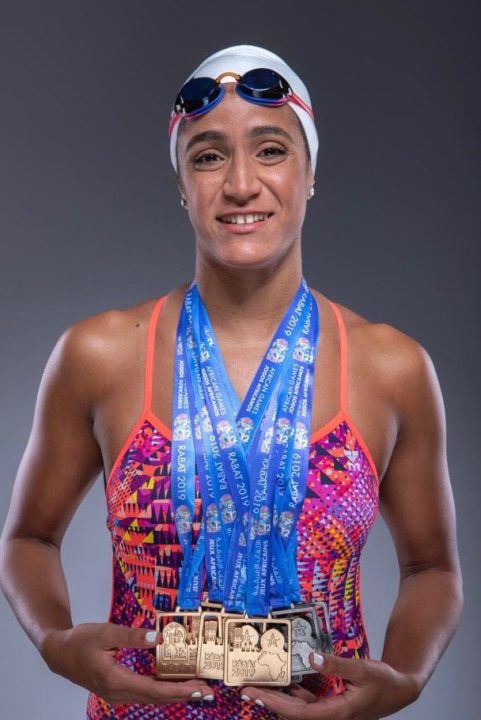
Moro shares her medals with friends.
UMBC News: What has been most memorable about your time at UMBC? Moro: Swimming took up most of my time. I was the team captain last year. I went to the World Championships twice. I was an African Game Gold Medalist in four different events. I broke my national records two times. I love the team, I love swimming with the team. When I graduate, I’m going to continue training [for the Olympics] here at UMBC with Chad. I can’t train with anyone else in the world. I wake up every day knowing that I need to work so hard to get to where I want to be.
Moro shares her medals with friends.
UMBC News: What was your experience like arriving on campus and meeting your teammates? Moro: I’d never been on a recruiting trip. I didn’t know what the campus was like, what the team was like. I was leaving my family and everything I knew. I figured I would just do it and hope for the best. I traveled for 18 hours—18 hours of tears. Chad picked me up from the airport and he’s just the nicest guy. He welcomed me and made me feel like I belong here. When I first arrived on move-in day, 70 of my teammates were waiting for me. They moved me in and made me feel like I was home. And I just felt like I have a family. Two days in America and I’m already very comfortable and I have 70 friends, not just one. This is my place now.
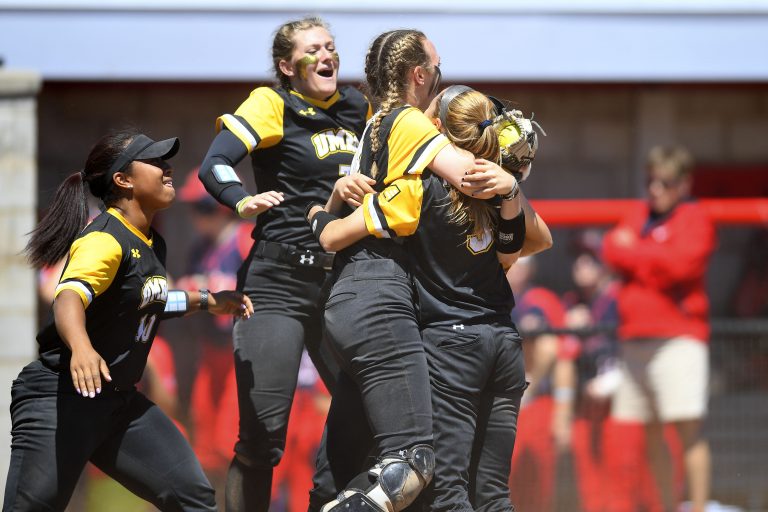
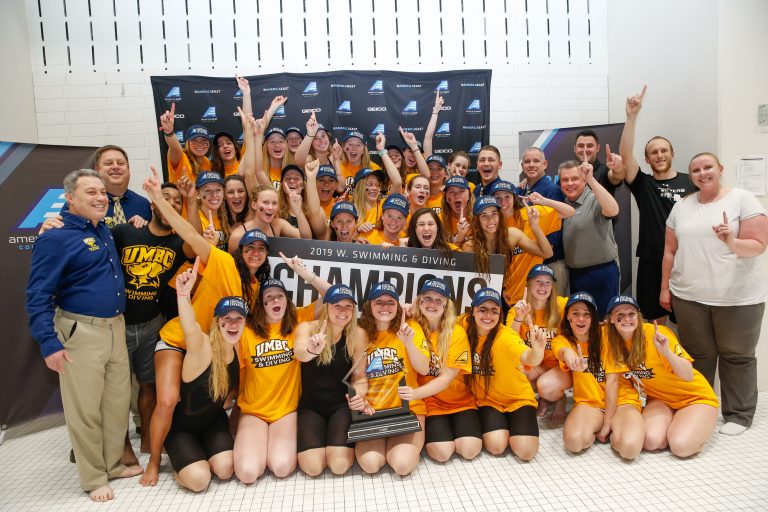
UMBC’s swimming and diving team celebrates an America East win. Photo courtesy of Greg M. Cooper, America East.
UMBC News: How did your UMBC experience change you? Moro: It definitely changed me as a person. I learned a lot of leadership skills. I look at things differently. I also learned to listen a lot—to listen instead of just talking. Chad taught me that it’s not about you, it’s about the team and about the community and what you can give everyone around you. I would swim my races and think, “I want to win this race not for me, but for my team.”
Moro shows off her hardware.
What’s next for Moro? She’s pursuing her Olympic dreams, and she’s already well on her way to making them come true. At the recent United States Open Swimming Championships, Moro set a pair of Egyptian national records. She also has her sights set on someday starting her own business. Inspired by an entrepreneurship class with Gib Mason, Moro has started to develop a plan to open a coffee and bagel shop in Egypt.
“The benefit comes from helping others”
Randy Deinlein is used to taking risks. He served in the United States Air Force for over four years, and has explored a range of paths in the time since then. So it may come as a surprise that Deinlein had some uncertainty about starting his UMBC journey. While he had worries about adjusting to college as a returning student, he quickly channeled his energy and sense of mission into building connections and making a difference on campus. In his time at UMBC, he has been an S-STEM Scholar, Grand Challenge Scholar, member of Engineers Without Borders and the Honors College, and service coordinator for the Tau Beta Pi Engineering Honors Society. He also completed three internships to prepare for the next steps in his career.
UMBC News: What was the adjustment like when you arrived on campus—connecting with the UMBC community? Deinlein: As a veteran, I don’t think the transition was difficult. We’re instilled with this value of having a mission, kind of like a goal. When we have a mission, it’s very easy to just do those steps to get towards it. But as an adult learner, I think that was hard for me…just feeling older and out of place and like I wouldn’t be able to relate to a lot of these young people. And I found I actually relate to a lot of them. I’m so impressed by all of their attitudes and their views of life because it’s nowhere near where I was when I was their age.
UMBC News: What activities have you been involved with at UMBC? Deinlein: I helped to start the RetrieVets and served as the president. Veterans come here and see it as a kind of mission, but we’re not taught the benefits of being involved in the community. When you’re involved with group organizations and the community, you’re able to grow and challenge yourself in new experiences. The benefit comes from helping others. That’s what I wanted for a veteran organization.
Deinlein poses with classmates Noelle Ray ‘19, M.S. ‘21, mechanical engineering, and Chelsie Marsh ‘23, mechanical engineering, with a bathroom seat adapter they created for a senior engineering capstone project.
UMBC News: How did your UMBC experience impact you? Deinlein: It helped me move into the unknown and helped me be okay with challenging myself and doing things I don’t know how to do. I learned how to fail and fail fast…fail forward, as they say. I learned how to reflect on myself and what I have and haven’t done and every experience that I find important to myself, and how to grow from that. The UMBC community and the students, they are very supportive and open-minded. They’re diverse and interdisciplinary and outgoing. Deinlein will graduate with a mechanical engineering degree and an entrepreneurship minor and has applied for a Fulbright Scholarship at the Lappeenranta University of Technology in Finland for a master’s in Global Management of Innovation and Technology.
Orchestrating his future
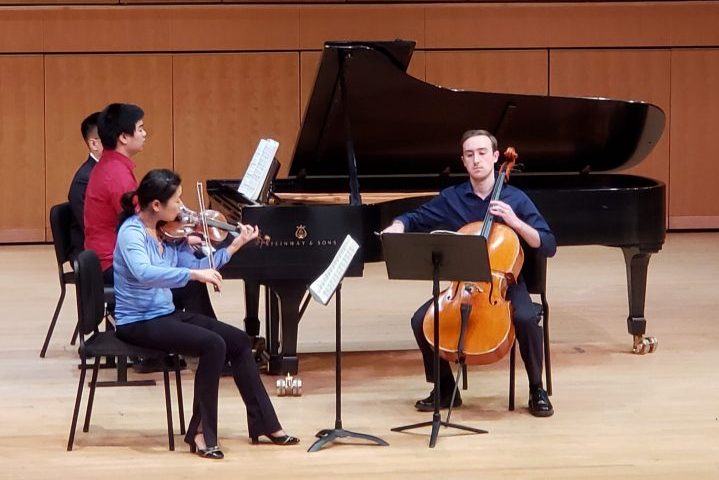
Collin David does not believe in downtime. The Carroll County native plays cello, French horn, guitar, piano, and clarinet. And also teaches private lessons. And takes lessons himself. And teaches gymnastics. And composes musical pieces. And maybe sleeps at some point, though that has not yet been confirmed. After transferring from Carroll Community College, David enrolled in UMBC’s music composition track, a small, close-knit program that afforded him numerous opportunities to pursue his passions. UMBC News: Why did you choose UMBC? David: One of the reasons I chose UMBC was that I didn’t have to specialize. I applied to College Park and Shenandoah to do cello performance, but then I wouldn’t be able to take horn lessons or do the other stuff I wanted to do. Being a well-rounded musician is, I think, more important than being a specialist in one area.
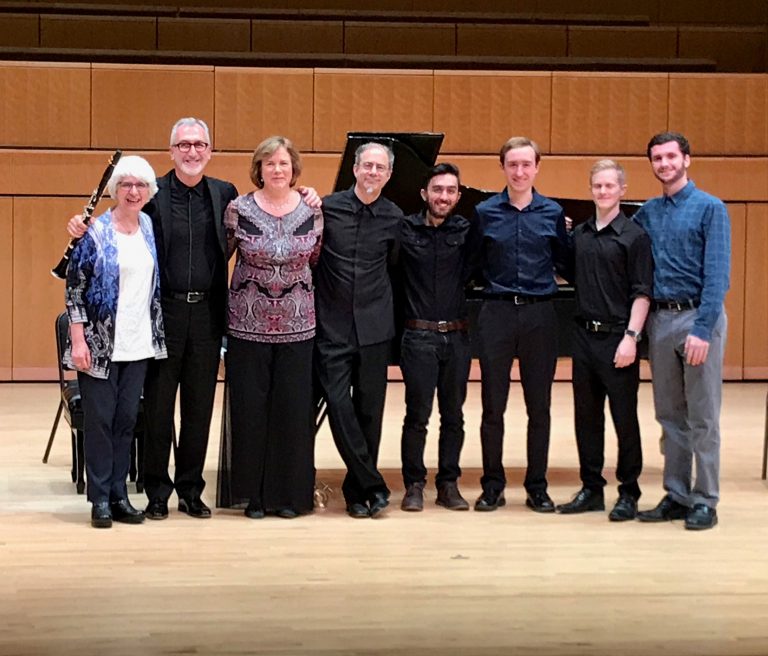
David with members of UMBC’s music department.
UMBC News: Is there a faculty member who has served as a mentor on your UMBC path? David: Dr. [Linda] Dusman. She’ll always help when needed, and it’s basically like her connections are my connections. She sends emails to students when she sees opportunities that would be a good fit. She sent me one in particular about the São Paulo Contemporary Composers Festival. I got in and had a great experience. I was able to go to Brazil for a week and was lucky enough to have my orchestra piece played. Only myself and one other musician were undergraduate students. The [music] department in general is very close-knit. Speaking about professors, they’ve definitely gone far and above what I would’ve expected. They’re personable and there’s not so much of a gap between the students and professors. I think that’s important.
David with members of UMBC’s music department.
UMBC News: What is something you had an opportunity to explore at UMBC that you didn’t expect to? David: I’ve been looking into astronomy. It has always been a hobby of mine, so for the first time, I took a 100-level astronomy class because I needed a science. I figured, “Hey, this will be fun.” But the pieces I’m writing now are influenced by that. I was also able to do frisbee and mountain biking, in addition to all of my musical things.
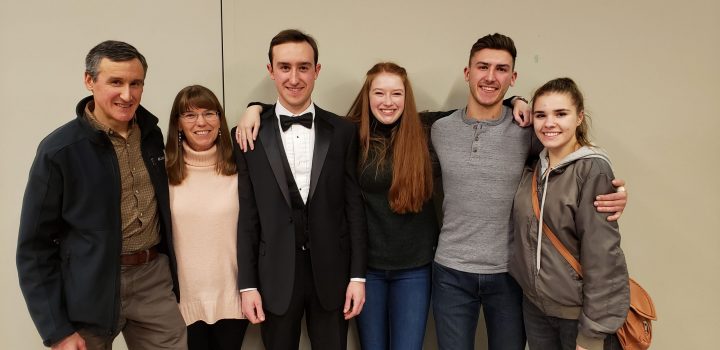
David with family and friends following a performance.
UMBC News: What three words or phrases would you use to describe UMBC? David: It’s definitely welcoming. I think there are many opportunities here for people, regardless of what you’re doing. And is there a word for rigorous but fun at the same time? Third word…I would say exploratory. I think especially in the music department, you’re encouraged to explore areas that are outside of your comfort zone. And that definitely happened for me. I think when I came here I was writing music, but not that forward-thinking. In my two years here I’ve drastically been able to shift styles. After David graduates, he will interview for master’s and doctoral programs, with the goal of composing for movies, video games and other contemporary formats. Like Moro and Deinlein, he feels driven to create his own unique path forward.
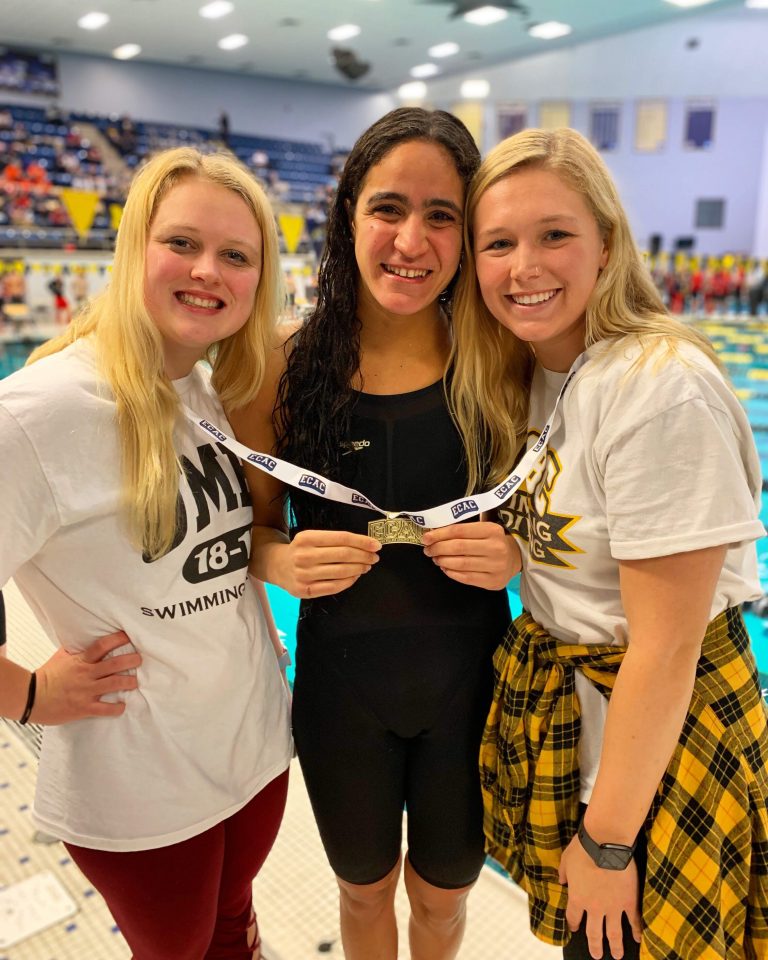
December commencement ceremonies will be livestreamed through both the UMBC Commencement websiteandUMBC Facebook page. Share well wishes for our grads using #UMBCgrad and #UMBCproud. Banner image: Hania Moro ’19 (right) holds the America East trophy with teammates Britt Driscoll ’19, biochemistry and molecular biology (left), and Natlie Davis ’19, biological sciences. Photo courtesy of Greg Cooper, America East. All other photos provided by students featured in piece unless otherwise noted.
With Dan Eiskant ’19, media and communication studies
Faster than a speeding bullet! More powerful than a locomotive! Able to leap tall buildings at a singlebound! It’s…a Mama’s Boy?
Most of us are guilty of saying “I could do that” while watching feats of strength on TV from the comfort of the couch (possibly with a snack in hand). But Dan Eiskant’19, media and communication studies, took the challenge head-on and started his journey to become the next American Ninja Warrior.
American Ninja Warrior is a competition where athletes race against the clock to conquer various obstacles. At each qualifying stage, the playing field is whittled down and competitors (often with larger-than-life personas) advance as they complete increasingly grueling courses. The pinnacle for any American Ninja Warrior is making it the final stage—a rope climb. But this is not your gym class rope climb. Competitors must claw their way to the top of a 75-foot rope within 30 seconds to take home the cash prize and bragging rights. So how do you even begin to train for something like this? We decided to ask the expert.
Tools of the Trade1. Determination and humility
2. Several gym memberships
3. Ability to rest
4. Vocal fans to cheer you on
5. Camera to capture these gravity-defying feats
Step 1 – Find someone who will catch you when you fall
Even though American Ninja Warrior is a solo competition, it’s impossible to do well without support from the sidelines. “It’s important to surround yourself with friends who will encourage you and push you to be your very best,” says Eiskant, whose entourage includes some pint-sized fans and campus crooners.
Eiskant works at a local Ninja gym teaching school-aged kids the ropes…and jumps…and climbs. “When I came back after the episode aired, I had a bunch of my students coming up saying they watched me on TV and they were so excited,” he says. “I love helping them develop these techniques early on because they’re good at it! They have no fear.”
In addition to this legion of little fans, Eiskant relies heavily the friends he made as part of UMBC’s all-male a capella group, the Mama’s Boys. On air, the group joined Eiskant at the starting line, sending him off with their own rendition of “Danny Boy.”
“I actually had stage fright before I joined the group and they helped me get over that, so getting to sing with them like we normally do, but at the starting line of the qualifiers, just helped me get rid of all of my nerves,” says Eiskant.
Step 2 – Make the world your jungle gym
A lot of hard work goes a little way when it comes to training for American Ninja Warrior. Eiskant is in the gym up to six days a week training and the end result is running a course that sometimes is the length of a commercial break. But you still have to give it your all to get there, and that means thinking outside the box for fitness.
“More so than grip strength and finger strength, it’s a mental game,” explains Eiskant. “Rock climbing provides a lot of real-time problem solving skills that you don’t get in other workouts. It helps when you’re tackling a course you’re not familiar with.”
Since competitors don’t see the course until they get to qualifying, Eiskant suggests that ANW-hopefuls check out different gyms, pursue other athletic hobbies, and familiarize themselves with various challenges to improve their odds on the ever-changing course.
Step 3 – Sing for your supper
Now that you have the skills to run up a nearly vertical Warped Wall and propel your body up a Salmon Ladder, what do you do with them? Time to put it all in action and apply for American Ninja Warrior.
Eiskant has been a fan of the show since he was 15, but the rules require all contestants to be a certain age. He took his cues and started working out with an eye toward landing on a spot. He started rock climbing with a group and, once he turned 21, he felt like he was ready to compete.
It’s a highly selective process to be chosen to run on American Ninja Warrior. All hopefuls have to fill out an extensive questionnaire and submit a video showing their personality and what sets them apart. Eiskant kept it in the family and leaned on the Mama’s Boys to help out.
“I focused on my music and singing and being part of the Mama’s Boys. You have to be interesting and engaging and be sure you have a story to tell.”
Step 4 – Don’t let the odds deter you
Anyone applying for American Ninja Warrior has to be prepared for failure. Only a handful of athletes advance each during the final stage and only two have walked away with the million dollar prize.
Eiskant was one of the lucky ones selected the very first year he submitted in 2018 to run in Philadelphia. Even though he was eliminated, he tried out again and had his run featured in our own Baltimore backyard in 2019. He advanced to city finals and fell short but hasn’t let that discourage him.
“Watching everyone compete, you realize this person is no better than me just because they can do that. Anything can happen, you just have to keep pushing at it,” he reflects.
The Ninja community is a supportive one and Eiskant emphasizes that, even though it’s a competition, “it’s more like a family environment. Everyone is just helping each other be better versions of themselves.”
In fact, Eiskant has been so encouraging and determined, he’s even inspired someone very close to him to try out next year—his dad.
*****
If you missed it, catch Dan’s episode online now or check out the teaser clip below!
U.S. News & World Report has again named UMBC one of the best universities worldwide, with UMBC appearing as one of the top 150 U.S. institutions on the 2020 global list. Thirteen areas of achievement are used to determine this ranking, including global research reputation, regional research reputation, journal citations, and books published. Full methodology can be found here. UMBC performed particularly well in international collaboration and faculty research impact.
The ranking highlights UMBC’s international leadership in geosciences and space science. Recently, the NASA-funded satellite that UMBC’s Vanderlei Martins, physics, developed in collaboration with the Space Dynamics Laboratory launched from NASA’s Wallops Flight Facility to the International Space Station. From there it will be released into Earth orbit.
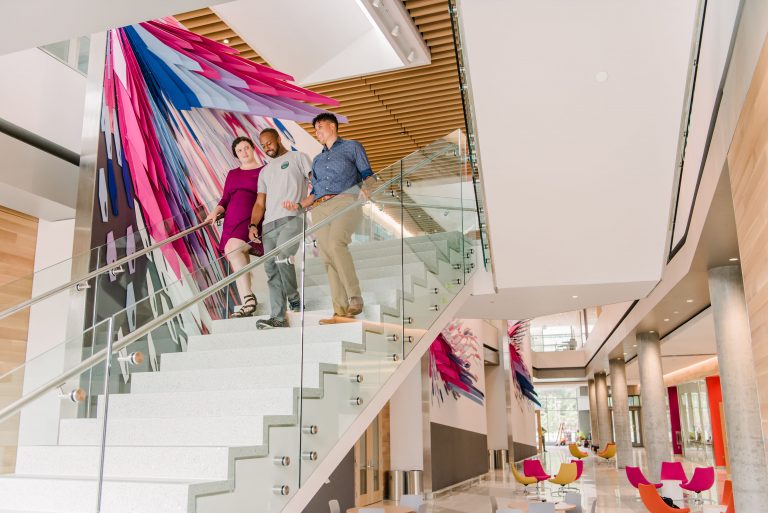
Banner image: Exterior of UMBC’s new Interdisciplinary Life Sciences Building. Photo by Marlayna Demond ’11 for UMBC.
Most students come to college armed with the essential adult knowledge—make a dentist appointment every six months, don’t lose your social security card, and never wash a red sock with your whites. But Tim Dunn, UMBC’s executive chef, and Adam Sachs, UMBC’s dietitian, think we can do a little bit better. Enter: UMBC’s new Teaching Kitchen.
“Most students don’t have great cooking skills, so we want to help them out and teach them about how to construct a meal,” says Dunn.
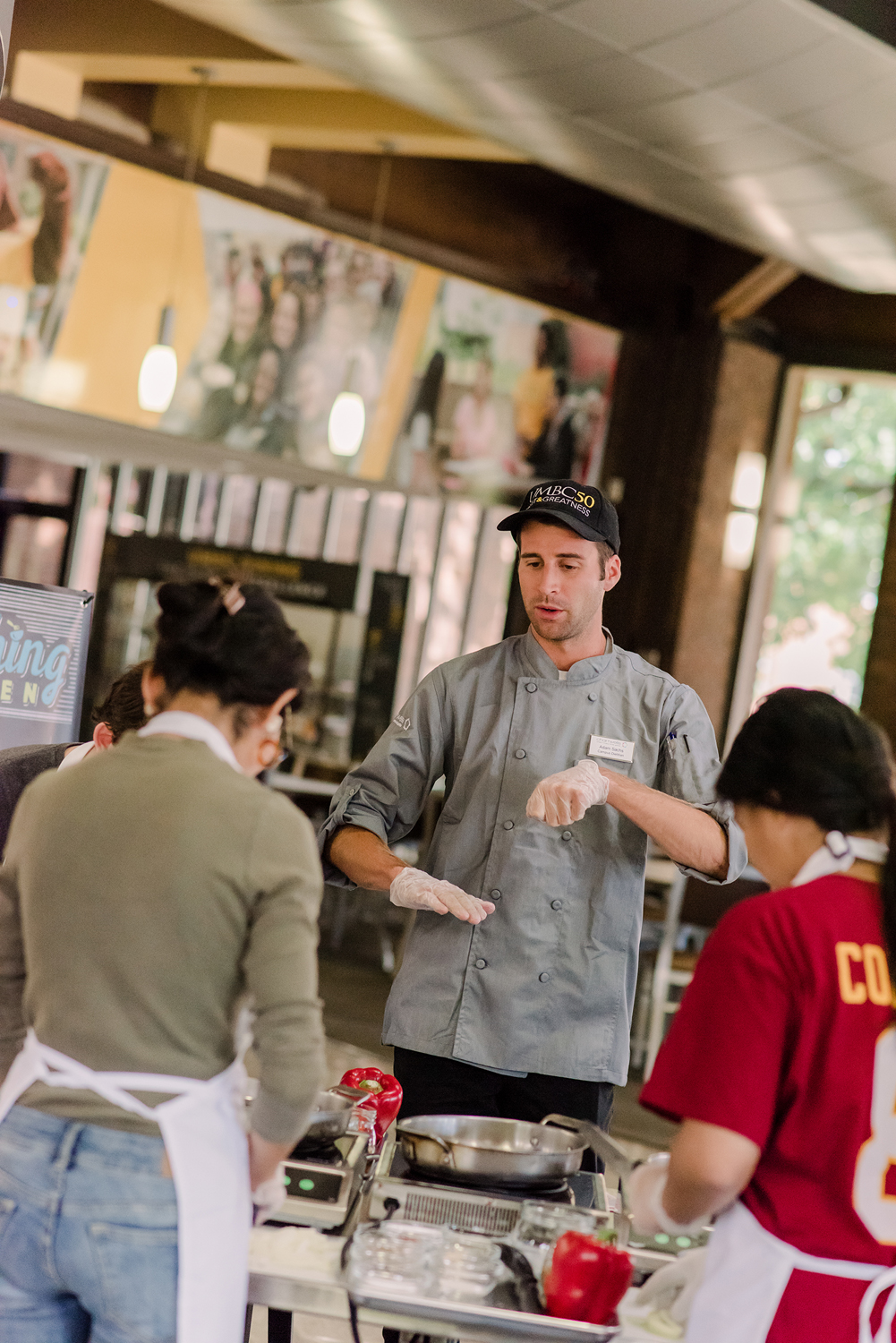
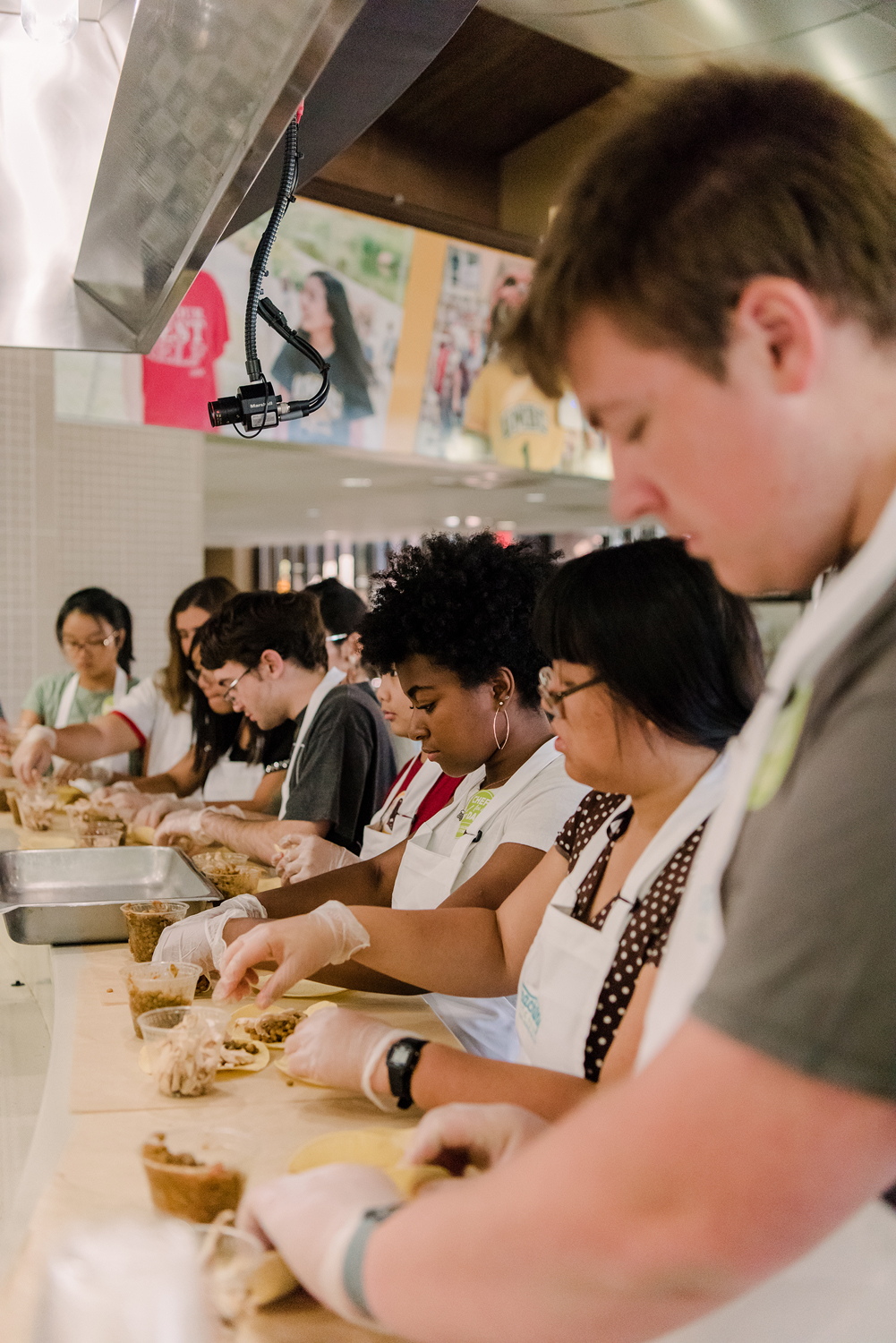
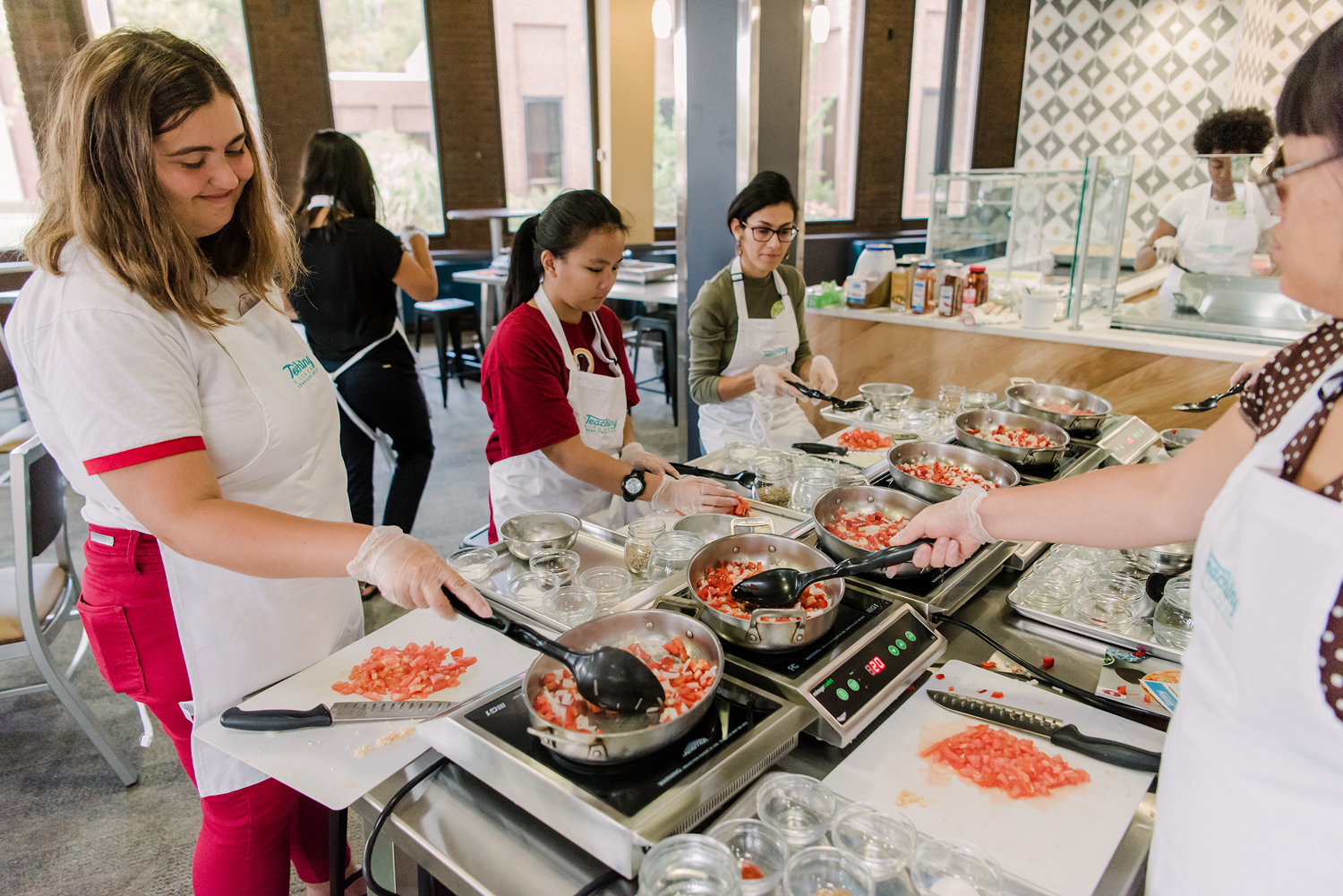
As part of a required Chartwells higher education initiative, UMBC spent the summer of 2019 making updates to True Grit’s Dining Hall to incorporate a Teaching Kitchen. Equipped with cameras and screens, the new addition aims to give students the skills they need to up their culinary game. Students are able to see the chef preparing meals in front of them, utilizing the screens to concentrate on the up-close action of chopping, dicing, and slicing. The scene is set with blazing lights and individual cooking stations so each student has the ability to put their own spin on the recipe.
“The method of using TVs to show the students the cooking process in real time was really helpful. I found it way more effective than if we were just being given verbal directions,” says Johanna Alonso ’20, English, of her first Teaching Kitchen experience. “We were able to look at what the chefs were doing—like how they were cutting the onion and garlic—and imitate it.”
The first meal students prepared at the inaugural Teaching Kitchen in September was chicken and lentil enchiladas. While the entree was fairly simple to create, students were able to produce a meal that both looked and felt more intensive. This was an introduction to lentils for some students, and the nutritional value and cooking process was a valuable kitchen skill.
“We want to help students create meals that are easy to cook, but also well-rounded and full of nutrients,” explains Sachs.
Easy to cook and nutritional value are definitely factors that Sachs and Dunn look at when deciding their menu for the Teaching Kitchens. But they also want to incorporate seasonal favorites and support local vendors. The October menu includes a pumpkin salsa, the designated campus superfood and a fall favorite.
Sachs and Dunn both went to culinary school at Johnson & Wales University in Rhode Island, so perhaps their close partnership was destined for success.
“During the Teaching Kitchen, it’s a lot of going back and forth. I talk about what ingredients we’re using and what the nutritional benefits are, and Tim demonstrates prep techniques and the execution,” Sachs explains. “We are helping students in real time as things constantly change.”
The duo doesn’t expect that students will show up ready to make their “Top Chef” appearance. To lay a proper foundation, they start with the basics—knife skills and technique.
As the program grows, Sachs and Dunn hope to add cooking competitions, visits from professionals in the food industry, and integration with various campus organizations. Students who were part of the pioneer Teaching Kitchen walked away eager to put their newly learned skills to the test— and like any good UMBC student, they’re even prepared to share.
“I’d definitely make these enchiladas for my roommates sometime. And really, I want to try to make some of the other recipes in the cookbook they gave us. I’m already looking forward to the next one,” says Alonso.
****
Sign up for the next Teaching Kitchen workshop on November 13.
Decades after the start of the internship boom, internships continue to be invaluable for both undergraduate and graduate students. As UMBC students demonstrate, gaining real-world experience and networking within an area of interest can have a lasting impact when it comes time to search for a full-time position.
“Most employers use internships as a recruiting tool to find their future full-time employees,” says Christine Routzahn, director of the Career Center. “Nearly 60 percent of our recent graduates who were employed at graduation indicated that they accepted full-time offers with an organization that they interned or worked for while at UMBC.”
These students were able to use the skills and tools they acquired as interns to transition to full-time positions after their UMBC graduation. Many took advantage of the opportunities afforded by UMBC’s Career Center to secure their positions. According to Susan Plitt, associate director of the UMBC Career Center, “Nearly 800 employers visited the UMBC campus last year to connect with our students. Each semester, we coordinate career and internship fairs to aid in making these connections.”
This year’s Fall Career and Internship Fair on September 25 will host 160 organizations, many of whom are seeking summer 2020 interns, from first-year undergraduates to advanced graduate students.
Here, six recent UMBC alumni share how they used campus resources and connections to secure full-time positions and move forward in their career, with advice for today’s UMBC students.
#1 Don’t worry if it doesn’t go according to plan
Jordyn McKenzie ‘19 thought she was coming to UMBC with it all figured out. She’d earn a degree in biology, then pursue a career in the field. A graduate of North Hagerstown High School in Maryland, McKenzie focused on taking STEM courses at UMBC, but over time she found her passion shifting.
After switching to a major in media and communication studies at the end of her first year, McKenzie wasted no time in working towards her new career goals. She completed three internships by the start of her senior year, including one with a local news station in her hometown.
Jordyn McKenzie ‘19, media and communication studies, poses behind the news desk at Fox45.
“That experience provided me the knowledge and courage I needed to continue pursuing television,” says McKenzie. Then, when it came time to establish connections for her post-graduation career, she says,“I did what most UMBC students do in times of career-related problems—I turned to the Career Center.”
After polishing her resume and getting advice from the Career Center, McKenzie attended UMBC’s Fall Internship and Career Fair in 2018 and sought out WBFF Fox45. This meeting led to an internship with BMORE Lifestyle, a lifestyle show that’s part of the WBFF corporation. As McKenzie geared up to graduate in spring 2019, a production assistant position opened at Fox45—perfect timing for her next move.
McKenzie’s current position requires a cool head, strong communication skills, and the ability to wake up before sunrise without hitting the snooze button. The morning news show she works on runs from 4:30 to 10 a.m. throughout the week. McKenzie is charged with keeping anchors aware of upcoming camera shots, running the teleprompter, and communicating with the control room.
The Career Center was an enormous help to McKenzie as she prepared to make the transition from intern to employee. “The support I was given throughout the entire process was incredible, and I am so lucky to have had such a smooth transition,” she says.
McKenzie walking the red carpet at the Chesapeake Bay Emmy Awards before Fox45 took home 22 Emmy awards.
In addition to receiving professional guidance from the Career Center, McKenzie also served as their social media intern, where she connected closely with her mentor Caroline Bodnar, assistant director for career development in the UMBC Career Center.
“Mentor, to me, doesn’t necessarily mean someone you work alongside or shadow. I think it’s someone you go to in times of need,” reflects McKenzie. “Caroline is someone that I leaned on throughout my time at UMBC. She helped me navigate my way through career and intern ups and downs and provided meaningful advice.”
Baltimore County Executive Johnny Olszewski, Jr., Ph.D. ’17, public policy, snapped a photo with McKenzie before his morning segment.
“I’ve spent some time reflecting on my experiences as a Retriever. When I’m asked, ‘If you could do it all again, would you?,’ my answer is ‘yes’ every time,” McKenzie shares. “UMBC truly became a home to me.”
#2 Distinguish yourself by getting involved
Mamadou Diallo ‘19, mechanical engineering, took advantage of numerous professional organizations while at UMBC to help prepare himself for his future career. He was an active member of the National Society of Black Engineers, the American Society of Mechanical Engineers, and was a Mechanical Engineering S-STEM Scholar. When he began connecting with employers, this high level of involvement helped distinguish him among other candidates.
“My advice to other students is to be involved in extracurricular activities. After being hired [for my internship], I spoke with one of the recruiters as to why I was selected out of the many applicants. She replied that my involvement outside of the classroom were what stood out the most,” says Diallo.
To find this dream internship, Diallo didn’t have to go any farther than the Retriever Activity Center (RAC). At the annual Career Fair, he met with representatives from Regal Beloit and followed up through UMBCworks to secure his internship, which later led to a full-time engineering position.
Mamadou Diallo ‘19, mechanical engineering, poses for a headshot.
As an engineering design and applications intern for a manufacturer of electric motors, Diallo worked to best meet the needs of customers. This included making recommendations to ensure pricing was fair and accurate, and tools continued to meet industry standards.
Diallo was able to boost workflow efficiencies at the company. Thanks to his strong track record as an intern, he was hired as a full-time application engineer prior to graduating from UMBC this past spring. “UMBC was invaluable in helping me to secure my internship and career,” says Diallo. “The Career Center helped me work on my resume and practice my interviewing skills, and reverse interviews allowed me to interview alumni and learn so many valuable lessons from them.”
#3 Pursue your passions
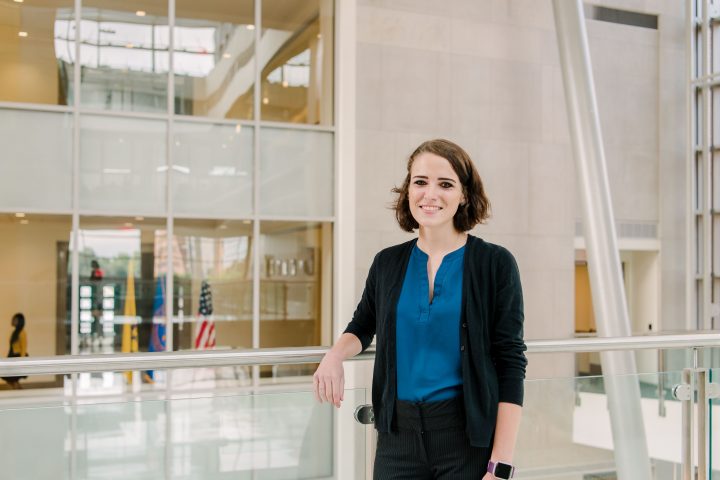
A long way from her hometown of Albuquerque, New Mexico, Shannon Cole ‘18, biological sciences, works at the U.S. Food and Drug Administration (FDA) in Silver Spring, Maryland. As an Oak Ridge Institute for Science and Education (ORISE) fellow for the Center for Drug Evaluation and Research (CDER) Patient-Focused Drug Development (PFDD) program, she works to ensure that patients’ voices are heard throughout the processes of developing and evaluating medical products.
As a UMBC student, Cole had a strong interest in public health, which led to internships with the Red Cross, the Institute of Fluorescence, and the ORISE program at the FDA.
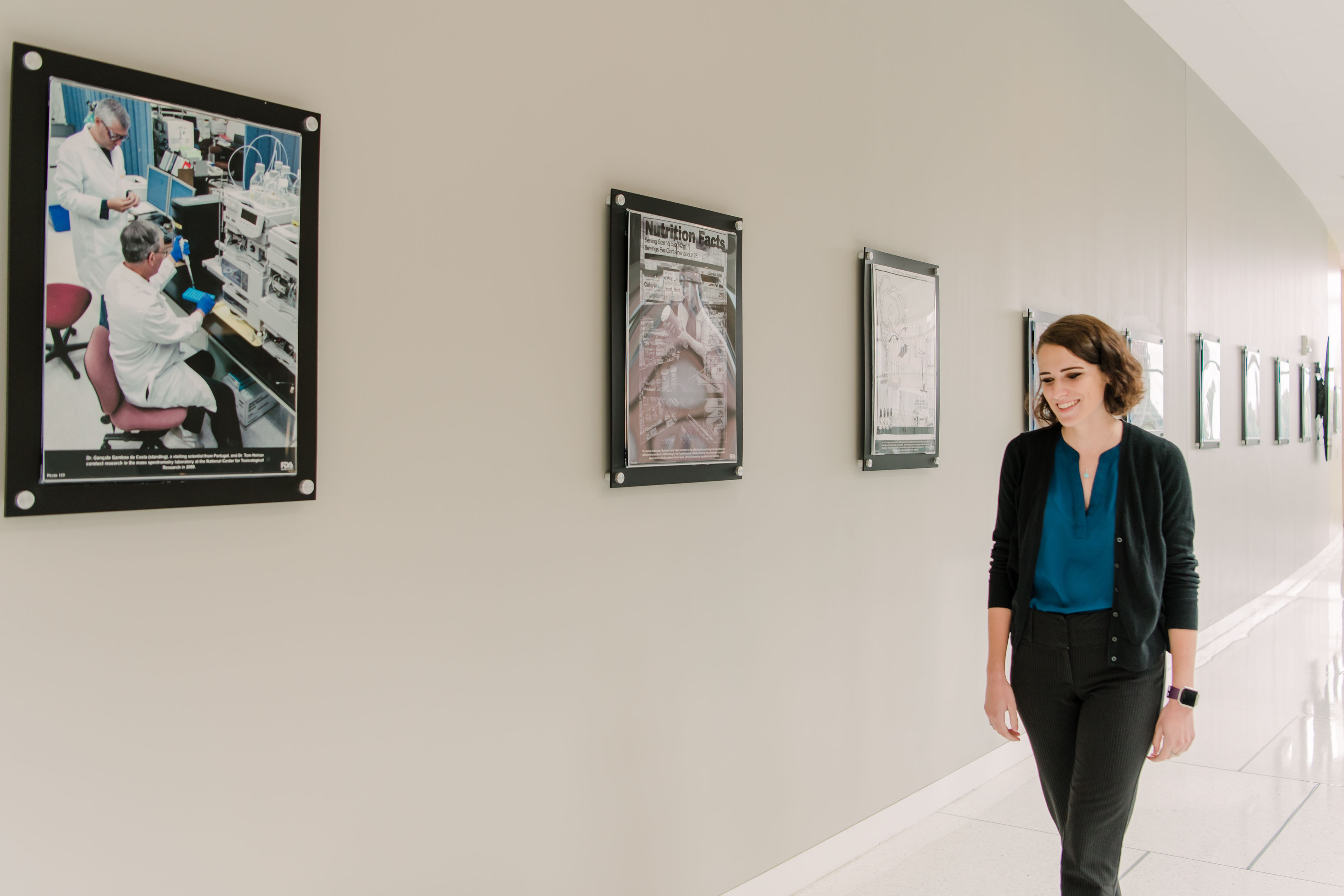
Shannon Cole walks the halls of the FDA amidst historical advertisements through the years. Photo by Marlayna Demond ‘11.
While she was working to advance her career with multiple internships, Cole was also greatly involved at UMBC. She was a Sondheim Public Affairs Scholar, a member of the Honors College, a Global Brigades participant, and a mentor with the Refugee Youth Project’s College JUMP program, among others activities.
Cole took advantage of UMBCworks and the Career Fair to make connections and find internship and job opportunities. She also sought help from her professors and mentors. “Jodi Kelber-Kaye, associate director of the UMBC Honors College, put me in touch with a contact from the FDA before I even knew about the ORISE internship,” explains Cole.
Cole taking a break from her work at the FDA. Photo by Marlayna Demond ‘11.
This contact would later help Cole transition to her current position. Utilizing UMBC’s Career Center, she was able to confirm that her resume was polished and professional, and she was presenting the best version of herself in interviews.
“The people I was fortunate enough to interact with regularly gave me helpful advice and access to resources that ultimately allowed me to tie all of these experiences together,” says Cole.
#4 Take advantage of the Career Fair
When Erin Patrice ‘19 was deciding where to go to college, she chose to follow in her older brother’s footsteps. Well, more accurately, she decided to run in them.
Older brother Randolph graduated from UMBC in 2015 as a financial economics major and an accomplished sprinter. Patrice followed the same path with the same major and the same love of running. Patrice’s twin sister Kara also continued the family tradition, attending UMBC and pursuing biology while running.
Patrice feels her decision was an easy one, saying, “I chose UMBC because I wanted to attend a school that could create a strong base for me, academically and athletically, to build from.”
Just like Patrice knew what she wanted out of her college experience, she also knew what she was looking for in an internship. “When I started my internship search, I was looking for an experience that would allow me to collaborate with individuals my age, and provide me with an environment where I could constantly be tested,” she says.
Erin Patrice ‘19, financial economics, at her Morgan Stanley job.
After networking at the Career and Internship Fair and uploading her resume through UMBCworks, Patrice secured a summer internship in fixed income derivative confirmation operations with Morgan Stanley. After completing the internship, Patrice was offered a full-time position as a trading operations analyst upon graduation.
Patrice credits the lessons she learned from both athletics and academics for her career success. “The skills I acquired while learning to handle athletics and the rigorous course load made my transition into working full-time very smooth,” says Patrice. “I was able to prioritize my duties easily and allocate my time efficiently.”
#5 Continue your work outside the classroom
As a computer science major, Chris Mills ‘19 figured out how to stand out from the crowd when vying for a position with one of the biggest names in technology: Google.
“I think what set me apart from other students (especially ones applying from big name schools such as MIT) was the amount of programming outside of class I did,” he explains. “HackUMBC played a large part in my practical proficiency, allowing me to create a product from scratch, to utilize other people’s libraries, and to work with other teammates on a singular project.”
Mills attended on-campus career fairs and spoke with recruiters on-site to find an internship that best suited his interests. His goal was to work in a well-established business in the technology industry with a strong work/life balance and positive workplace culture. He was offered a position as a software engineer intern at Google for summer 2017 and returned the following summer to continue his work.
Chris Mills ‘19 working on his research for Google.
The coursework Mills completed while at UMBC benefited him greatly in his position at Google, he says. “In many of my required courses, the class lectures gave a good foundation of the theoretical knowledge, while the projects/homework showed practical applications that can and will be used in a software engineer’s career,” he explains.
Since Mills completed two Google internships, he was able to bypass the traditional interview process and start full-time at Google this past summer, immediately after graduation. Mills now works with the Google shopping team as a software engineer building solutions to reduce both latency and space of shopping data that is served to users.
#6 Build relationships with those around you
It was love at first sight when Priyanka Ranade ’18, M.S. ’19, information systems, joined the UMBC community.
“As soon as I stepped foot onto UMBC’s campus, I could see that it replicated the world I wished to see around me,” says Ranade. “The level of diversity, sense of community, as well as UMBC’s clear repertoire of grit and support showed me right away that this was the community I wanted to learn in.”
McKenzie walking the red carpet at the Chesapeake Bay Emmy Awards before Fox45 took home 22 Emmy awards.
Ranade found an incredibly strong support system in her campus mentors: Anupam Joshi, chair and professor of computer science and electrical engineering; Karuna Joshi, information systems; and Cindy Greenwood, assistant director of the Cyber Scholars program. Ranade actually discovered her internship through an on-campus event through the Center for Women in Technology, a partnership with the Cyber Scholars Program.
“I knew I wanted to learn about cybersecurity issues beyond the undergraduate classroom level,” she says. She actively sought out opportunities through networking, which led to an internship at Northrop Grumman. “Northrop Grumman gave me a big picture idea of cyber and allowed me to spend time in different parts of the company, as well as hear the experiences and journeys of other employees,” Ranade explains.
To prepare for her interview, Ranade had her resume reviewed by UMBC’s Career Center and took advantage of mock interview opportunities to be fully prepared. After a successful summer as a cyber strategy intern, Ranade’s manager recommended her to the Pathways Program, one of three rotational programs at Northrop Grumman.
Ranade with mentor Lauren Mazzoli Zavala ‘15, computer science, M.S. ‘17, computer science. Photo by Marlayna Demond ‘11.
Ranade currently works in research and development doing machine learning work for military systems at Northrop Grumman. She credits the relationship-building skills she developed at UMBC for her success. “Out of the many lessons UMBC has taught me, the most prominent one is the strong combination of sincerity in your work as well as fruitful relationships. Relationships are key in building your career,” says Ranade. “Sharpening your skills is one thing, but having mentors who see your potential and guide you to greater heights than you could imagine is key.”
Banner image: Shannon Cole at the U.S. Food and Drug Administration. Photo by Marlayna Demond ’11 for UMBC. All other photos supplied by alumni unless otherwise noted.
Most new students can’t wait to get their college careers started. This group of dedicated Retrievers really couldn’t wait. Through UMBC’s new Dawg Days Abroad program, nearly 30 incoming students had the chance to travel to Bristol, England as part of a two-week international excursion. Students were able to gain college credits and start making lasting memories before classes even began.
Developing the pilot program, navigating piles of paperwork, coordinating travel logistics, and wrangling a few dozen college students in a foreign country…seems easy, right? Caylie Middleton ‘08, associate director of international education, told us just how this exciting new adventure unfolded.
This is the first time UMBC has offered a program like this. What was the process for getting Dawg Days Abroad off the ground?
This program has been in the works for about three years and has been a personal dream of mine. I’ve always wanted to reach newly-admitted students because oftentimes once students come to our office, they don’t have as much time to think about studying abroad amidst their other responsibilities and priorities.
Dawg Days Abroad is a really rare type of study abroad program that few universities in the United States offer. To start, I met with campus partners such as Admissions, the Office Academic Engagement and Transition Programs, and potential faculty leaders. I also had to start to identify external providers to map our logistic support and explore possible locations for the program.
Once everyone was on board with the program, we identified the faculty whose courses would be the best fit for potential students. Then we had to narrow down the location options to one that fit within our anticipated budget.
That’s all the easy part. The hard part comes when you start to promote the program. We had to get enough students to make our minimum enrollment. We were aiming for at least 20 students and we ended up with 29.
This program had many moving pieces and so many different parties involved. I couldn’t have done it without the collaborative effort of everyone who was a part of it.
You mentioned that not many universities are doing this type of program. What makes it so unique?
This is a study abroad program that UMBC students complete before they start their first semester on campus. Most students don’t study abroad until their junior year, so Dawg Days students got international experience well before most others.
During their two weeks abroad, students earn four credits and get a chance to complete research, which makes this program particularly unique and valuable. Students have guided instruction on selecting a research topic and mentor, creating a poster presentation, and presenting a poster in a professional setting. Those four credits also include a one-credit “Introduction to an Honors University” component, which I taught to help students develop the skills to become successful Retrievers.
Our goals for this program are to give the students a snapshot and head start into university life and the potential they can reach. We want students to get an international and intercultural experience, form a group of friends before they start their time on campus, develop relationships with mentor on UMBC staff, and learn about the resources available to them.
The big question: What did students actually do while they were abroad?
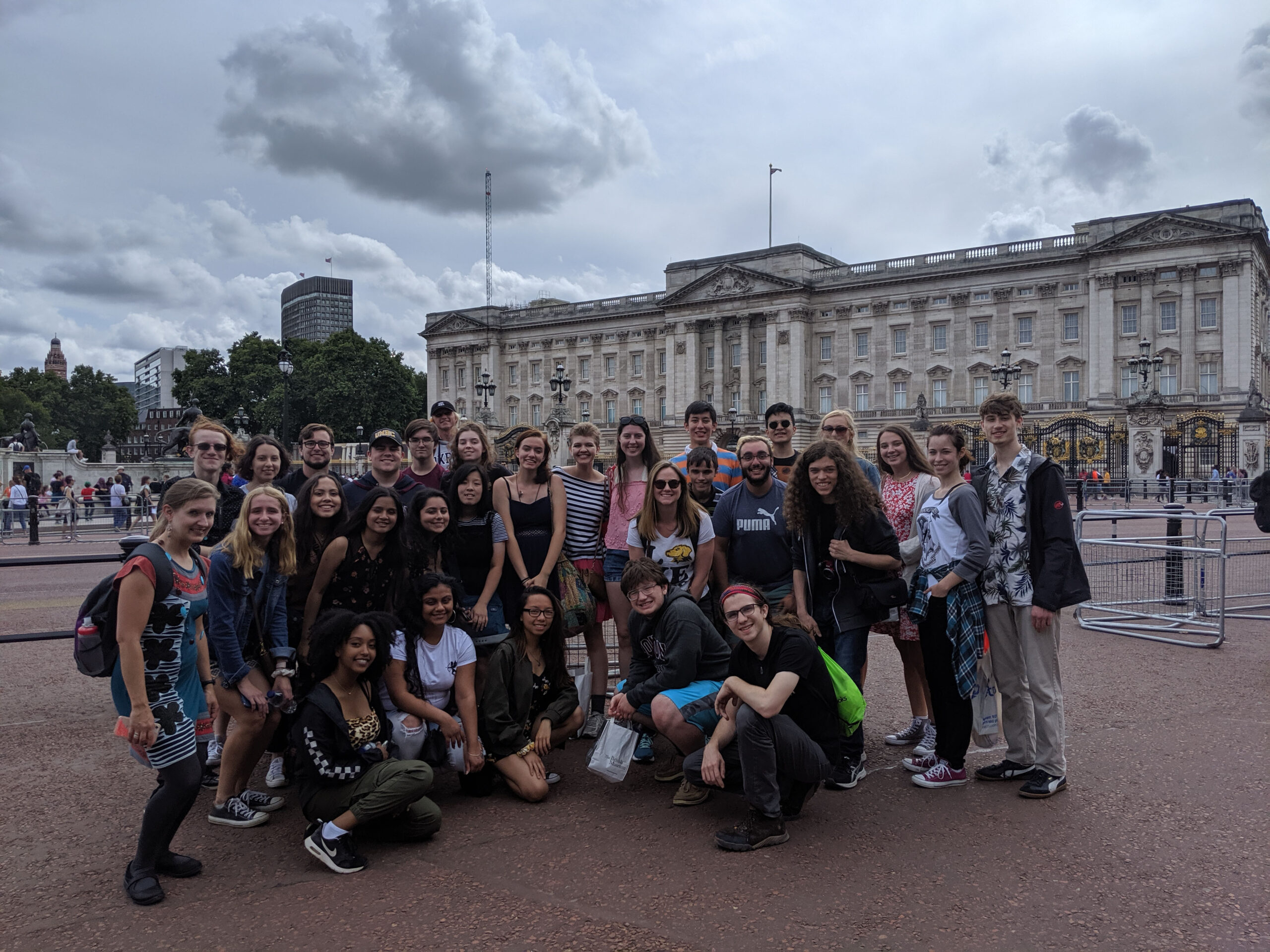
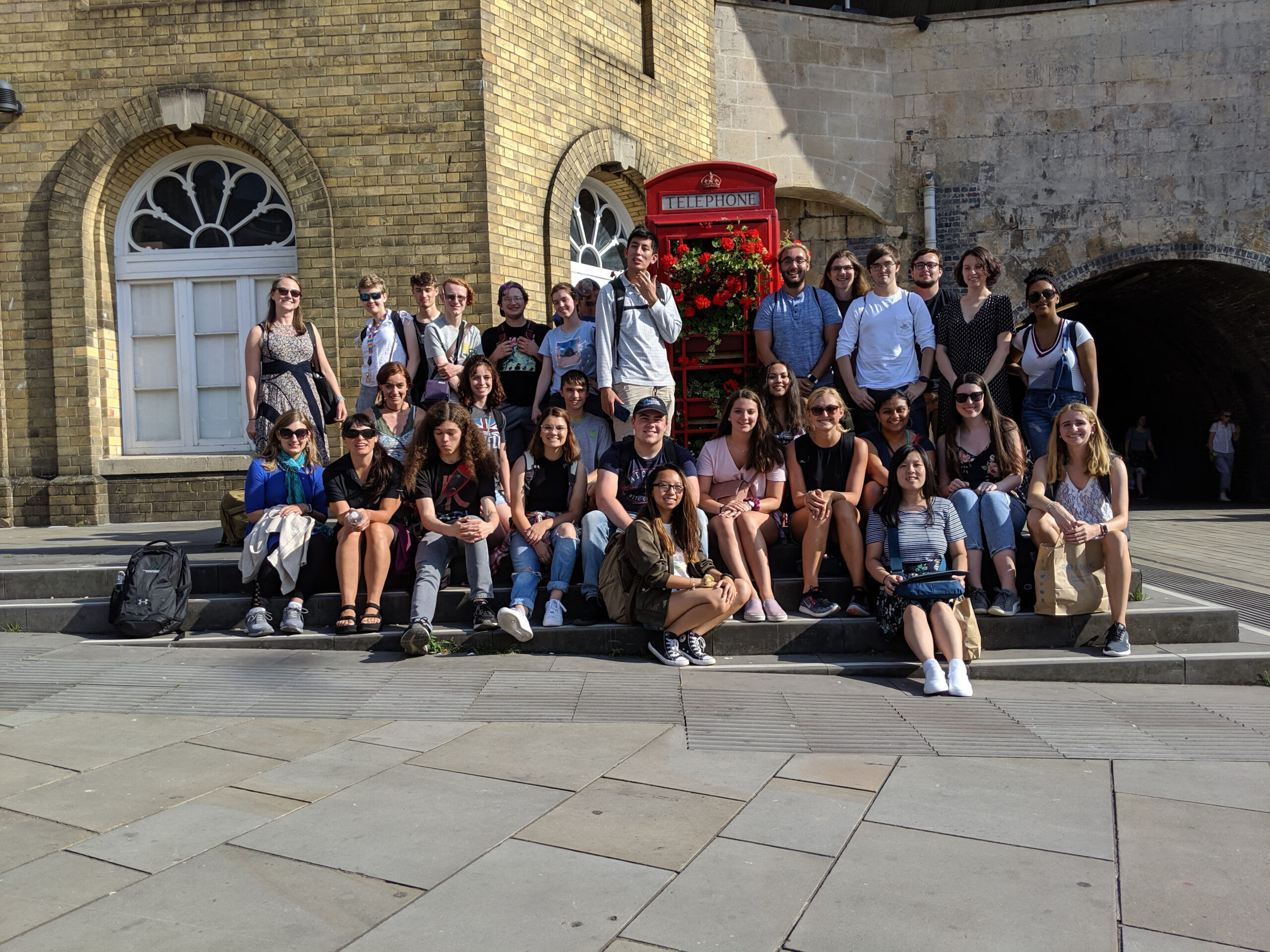
The program started with a day and a half on campus so students could develop some rapport with each other, get the pre-departure safety information, and do introductory coursework. We all left together to go to the airport and then flew together to London.
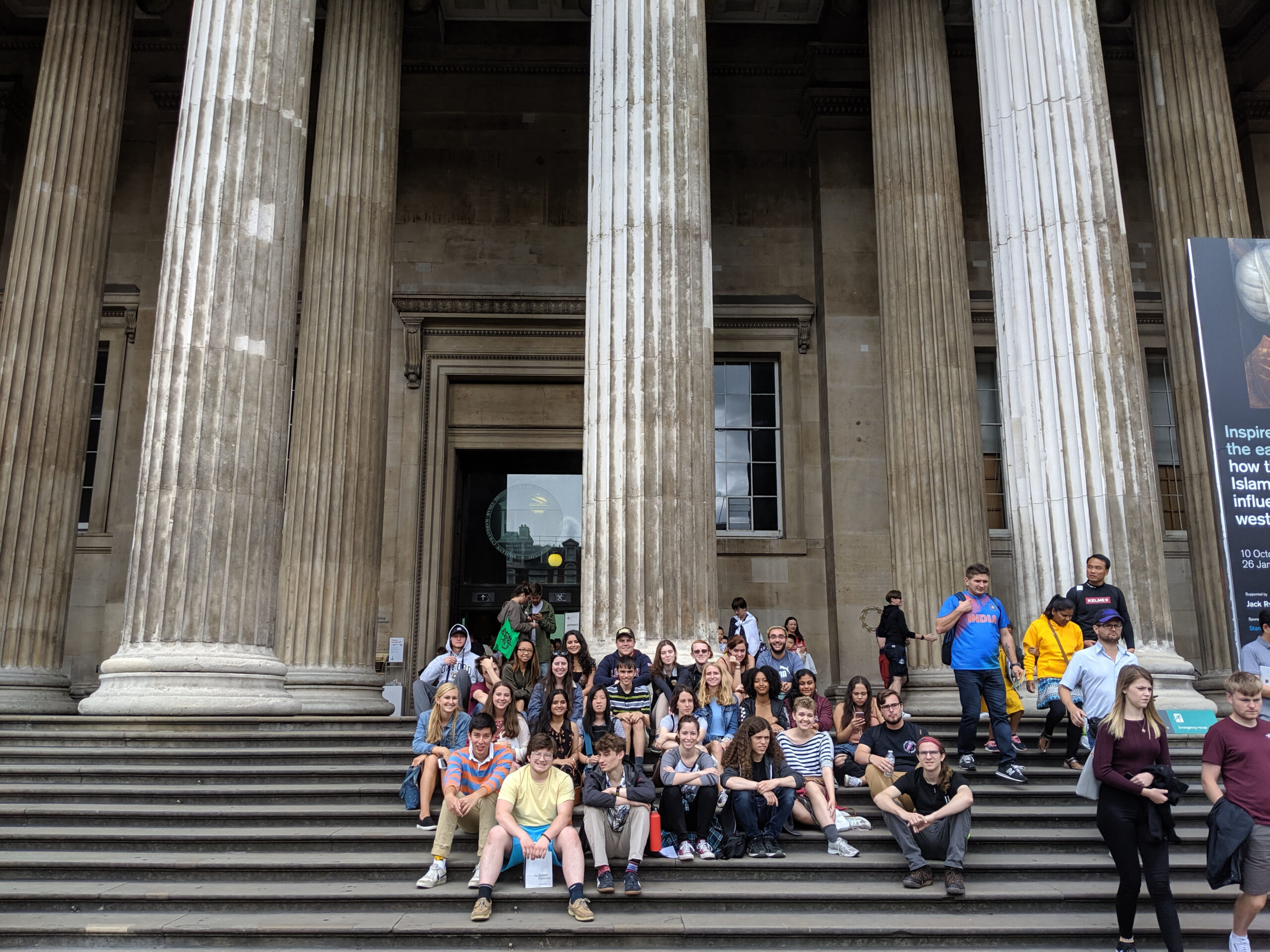
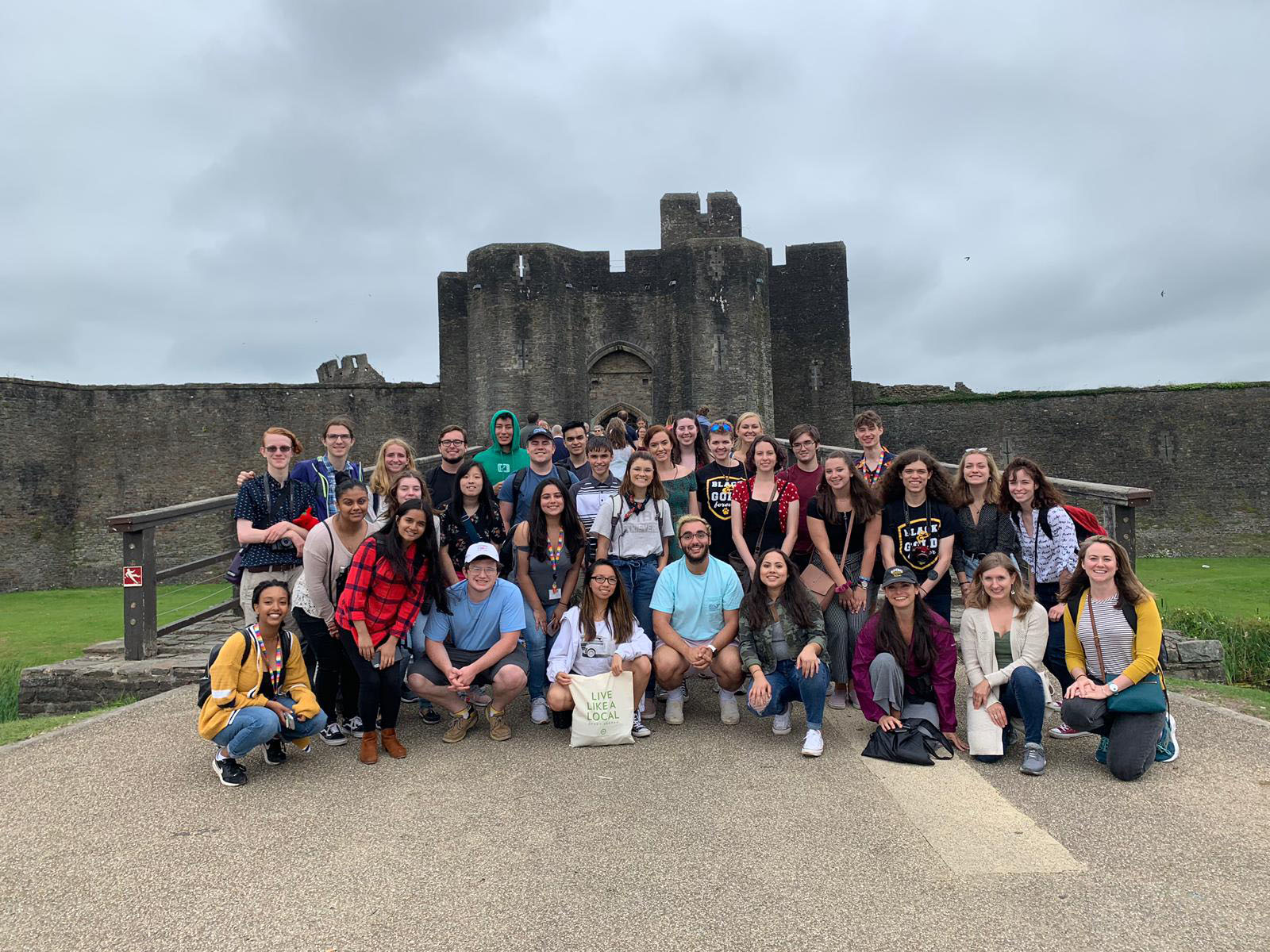
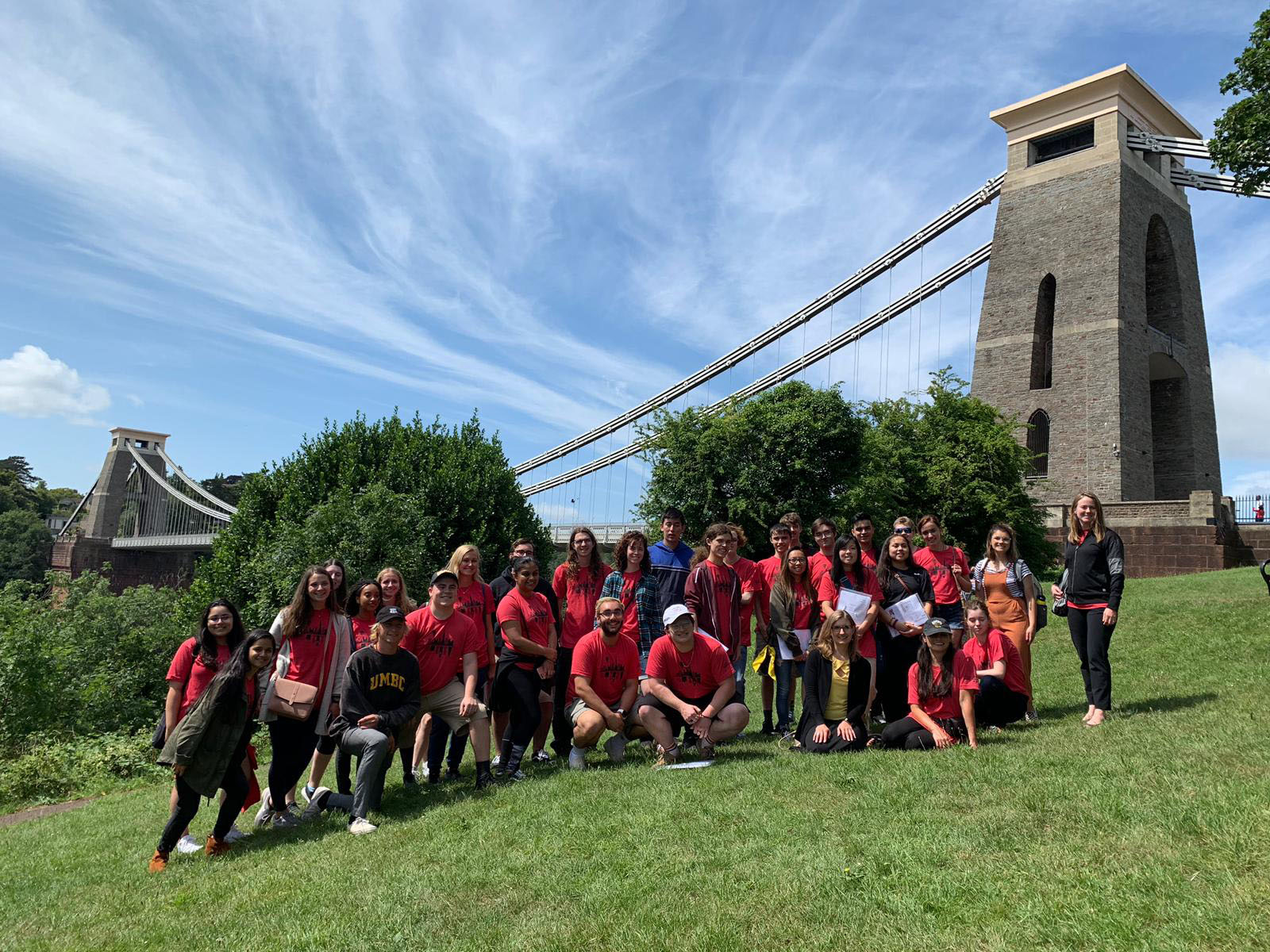
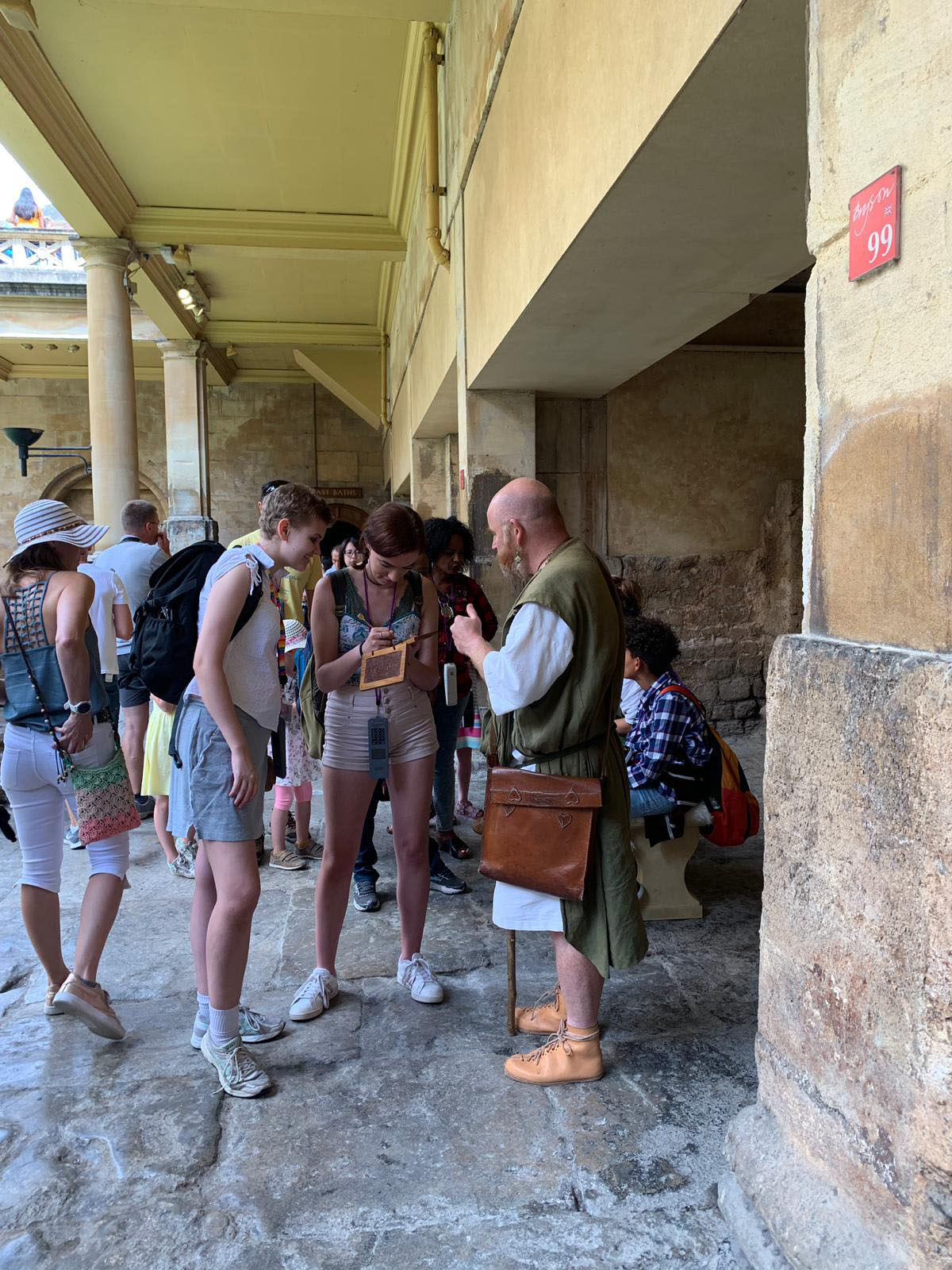
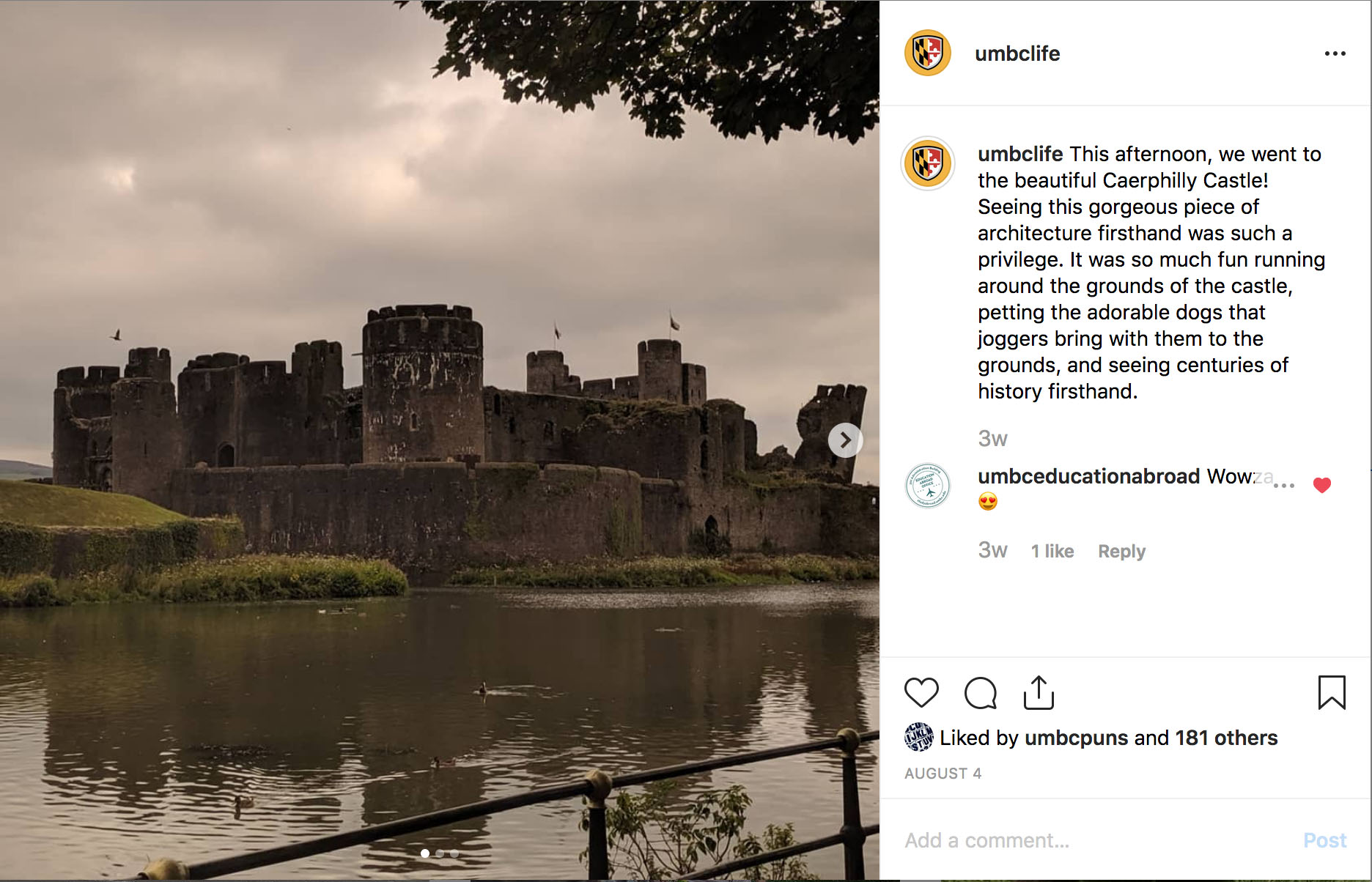
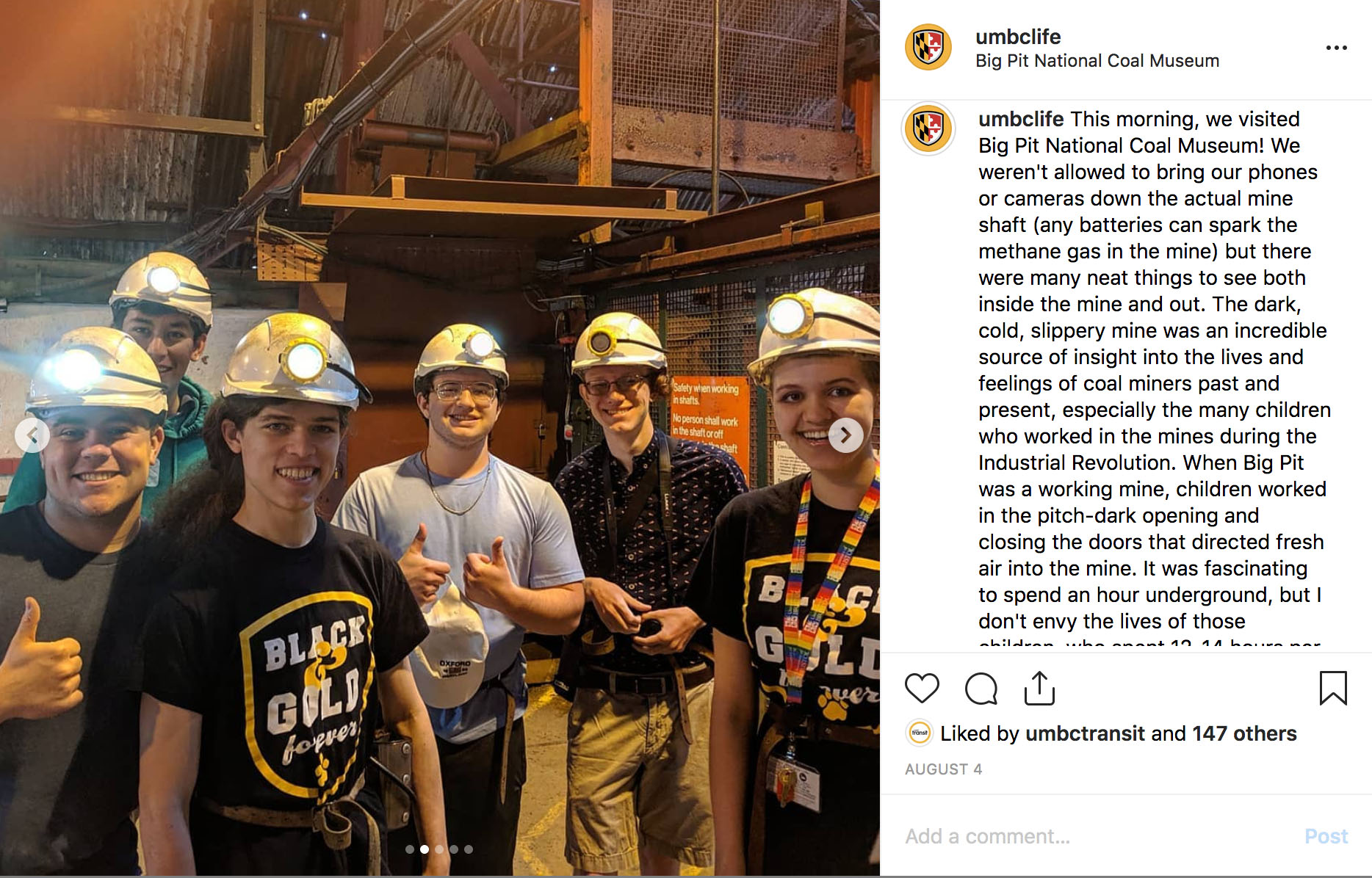
Once we arrived, we spent the majority of the time in Bristol, a city about two hours west of London. From there, students attended class daily and we enjoyed excursions every few days. We visited Bath to see the Roman Baths, went into the Welsh countryside, saw the Big Pit National Coal Museum, and explored social and political history on a tour of a coal mine. We did get to see a few traditional English castles while we were in the neighborhood, but most of our activities tied directly to the course content.
Other excursions included The National Gallery in London, the British Museum (to see the Rosetta Stone and explore representations of Orientalism), the National Assembly for Wales, and the Palestine Museum and Cultural Centre in Bristol. The students’ days were packed with activities and classes.
After such a successful first venture, what are your hopes for the future of the program?
Seeing this program come to fruition was so exciting. My next steps are to continue to improve and run it for the next few years. In the long term, I hope we can offer a few different pre-freshman/transfer study abroad programs in different locations for students to choose from. I believe this experience is so beneficial for both the students and our university. At least two students who participated who said they chose UMBC because we offered this study abroad program. It’s a great way to introduce future Retrievers to the fun and fascinating experiences they can access as a UMBC student.
UMBC is once again featured in the Princeton Review guide, The Best 385 Colleges, for 2020. This is widely considered one of the leading guides for prospective undergraduate students in North America.
The University profile specifically recognizes the dedication of UMBC’s professors. Students commented that the University’s faculty “have a knack for inspiring the students” and “UMBC is a place where professors aren’t just talking heads.”
This reflects UMBC’s culture of fostering mentoring relationships between faculty and students. “Being a mentor is the most impactful thing we can do with our time,” says Greg Szeto, assistant professor of chemical, biochemical, and environmental engineering. “We help provide a safe environment where students can explore their interests…and determine what the right path is for their future.”
“The inclusion of UMBC in the most recent Princeton Review best colleges guide affirms our faculty and staff’s dedication and commitment to providing the highest quality of education for our students,” says Katharine Cole, vice provost and dean of undergraduate academic affairs. “We are extremely proud to receive recognition for the outstanding holistic educational experience we provide.”
Students also commend UMBC on a continued commitment to an inclusive and supportive campus community. Retrievers note that the emphasis on diversity “enriches our school and everyone gets to know everyone despite culture or ethnicity.”
UMBC has also just been named to the Best College Values list for 2019 by Kiplinger’s Personal Finance, ranking among the nation’s top 100 public universities for best value.
UMBC has again been named one of the top universities in the world for 2019-2020. Rankings released this week by the Center for World University Rankings (CWUR) place UMBC in the top 3.3% of universities worldwide, as well as among the top 170 U.S. universities. “As this ranking shows, UMBC is truly a world-class university. Our researchers not only make a positive impact within our state and nation, but around the globe as well,” says David Di Maria, associate vice provost for international education. The CWUR evaluated twenty thousand universities based on four distinct areas. These include: quality of education (number of alumni who have won major international awards), alumni employment (number of alumni who have held CEO positions at top companies), quality of faculty (number of faculty who have won major international awards), and research performance (research output, high-quality publications, influence, and citations). In a change from previous years, the measures of learning environment and research are now given equal weight. “I am pleased that the impact of our faculty research continues to be recognized on the national and global scale. As one of the top 170 U.S. institutions in this CWUR review, we find ourselves in good company with many other well-known institutions,” says Karl Steiner, vice president of research. Steiner notes, “With the opening of our new Interdisciplinary Life Sciences Building, we will be able to significantly enhance our footprint and impact in interdisciplinary life sciences, while continuing to expand our other programs in cybersecurity, artificial intelligence, and environmental sciences. This is complemented by impactful UMBC scholarship in the public humanities and public policy.”
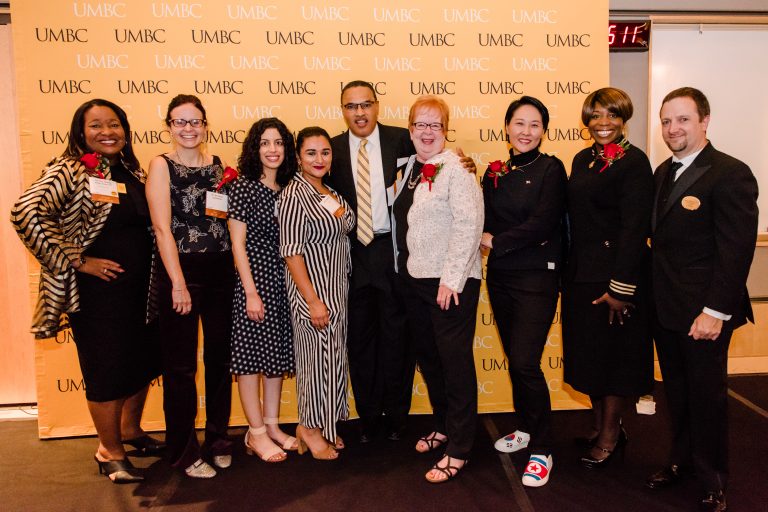
UMBC’s 2018 Alumni Award winners.
UMBC’s ranking also speaks to the achievements of alumni, and the strong foundation they developed and opportunities they accessed during their time at UMBC. “UMBC continues to produce alumni who are leaders in all facets of society, including civic leaders and CEOs of some of the world’s top companies,” says Stanyell Odom, director of alumni engagement. “We are proud of our alumni. The grit—hard work, courage, and commitment—they exude in their work across different fields has such a powerful impact on our nation and the world.” All photos by Marlayna Demond ’11 for UMBC.
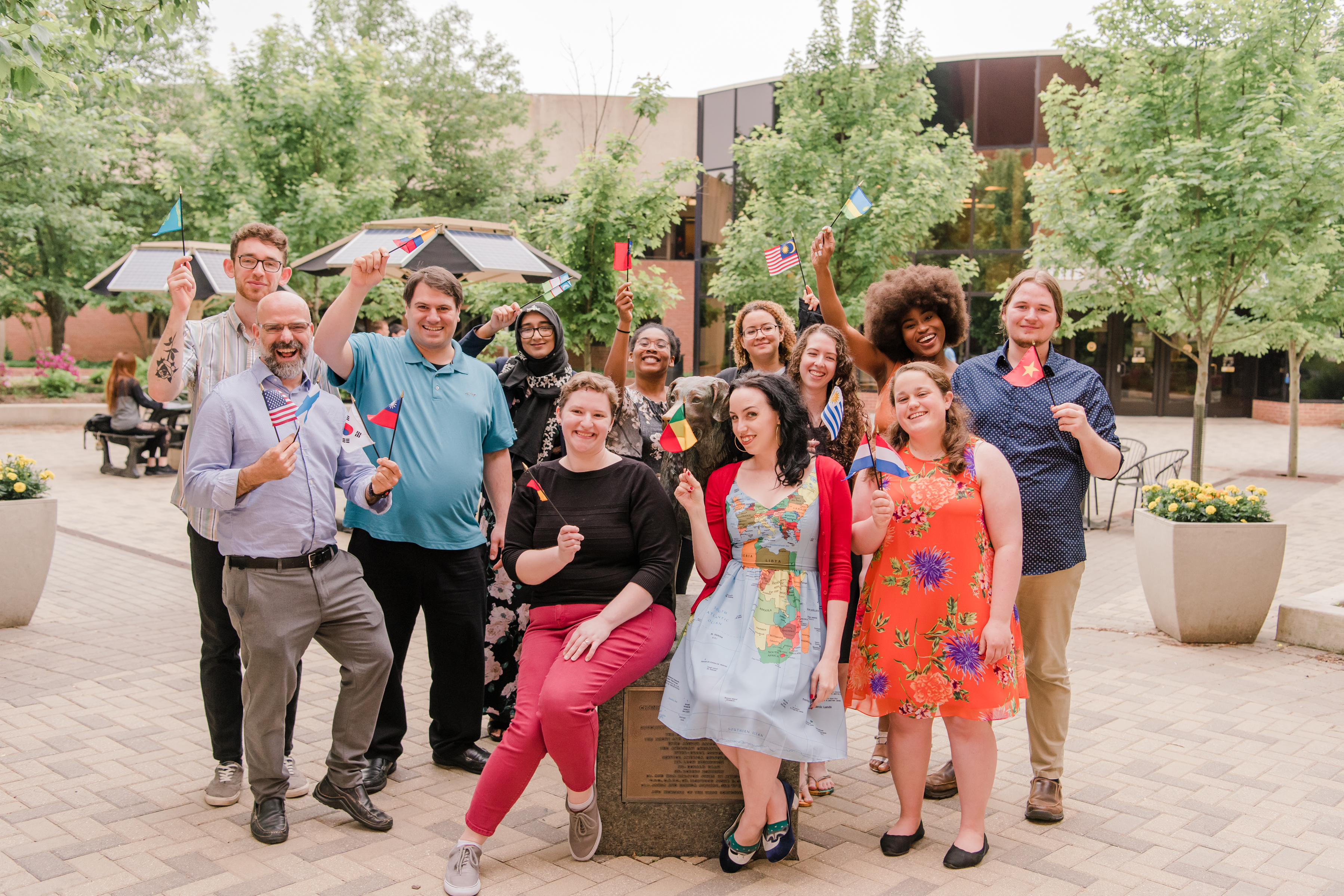
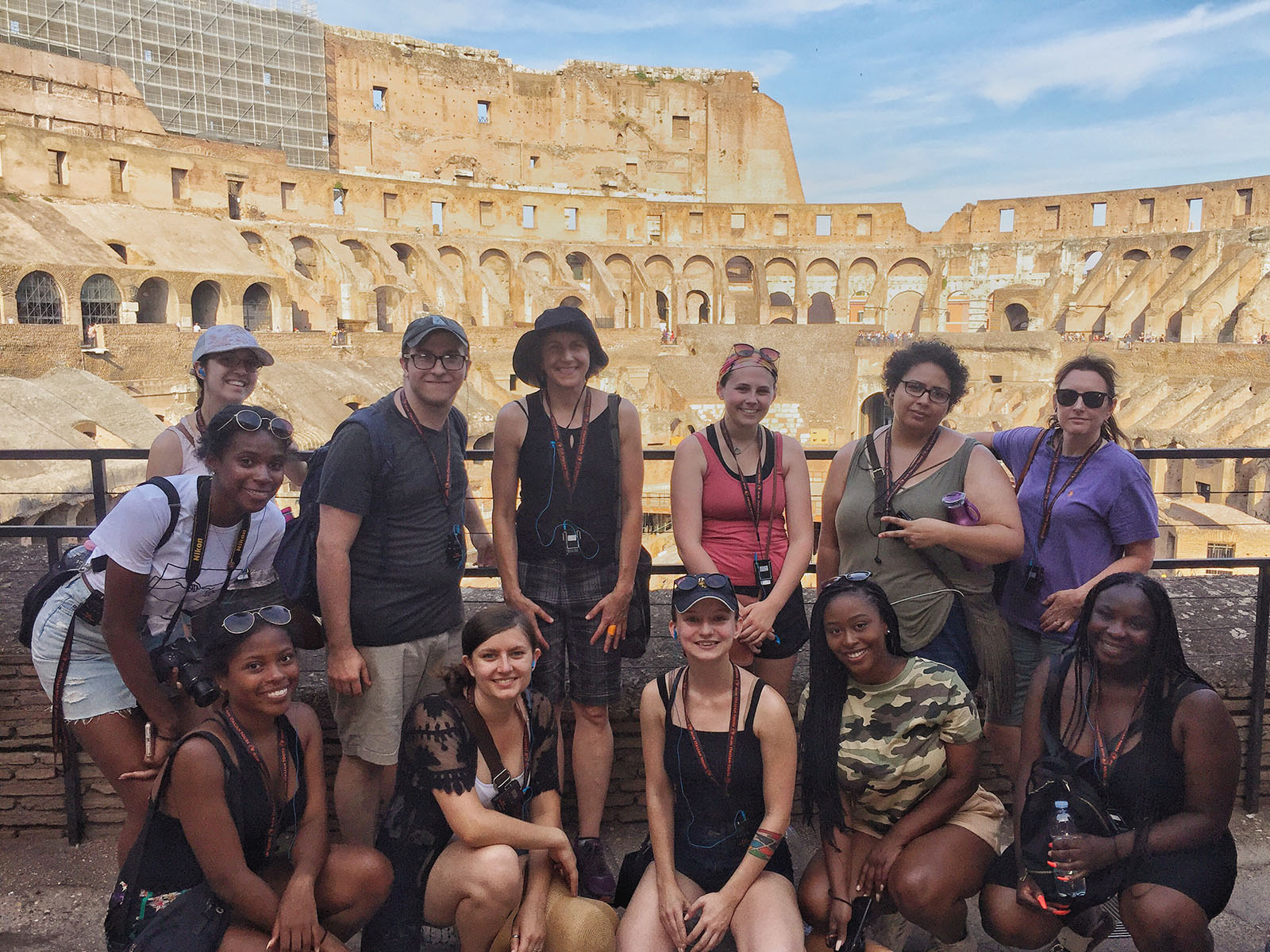
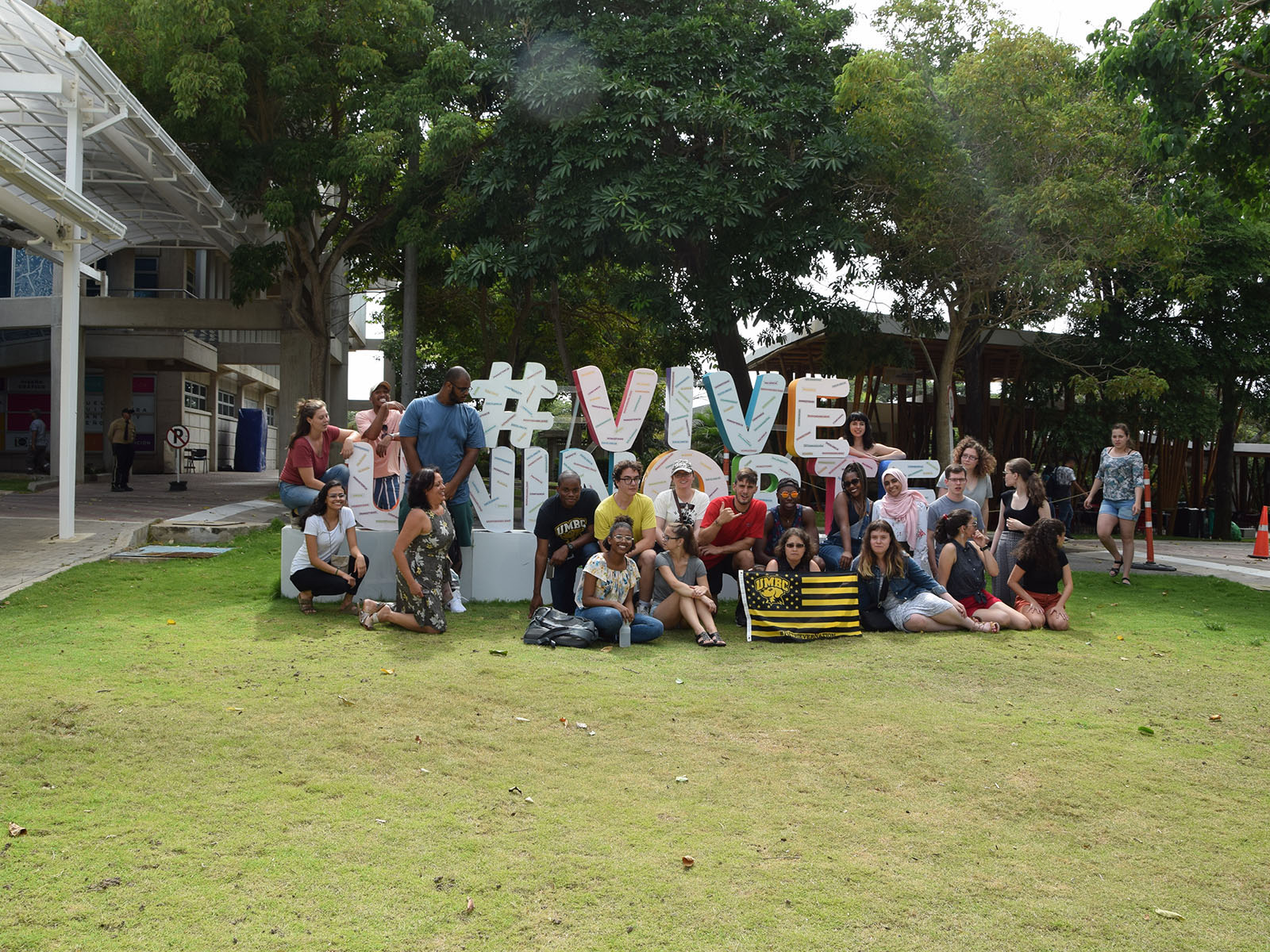
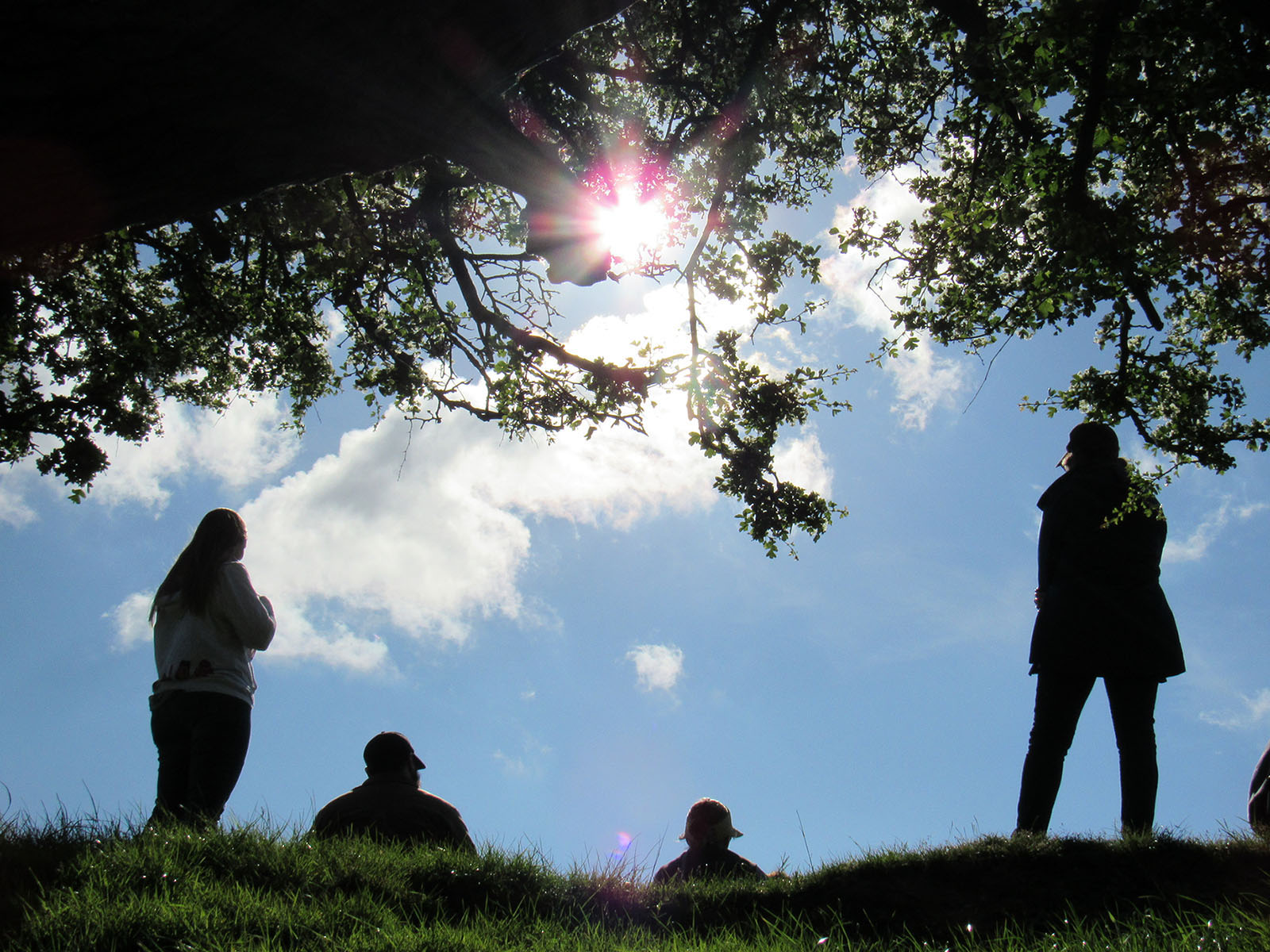
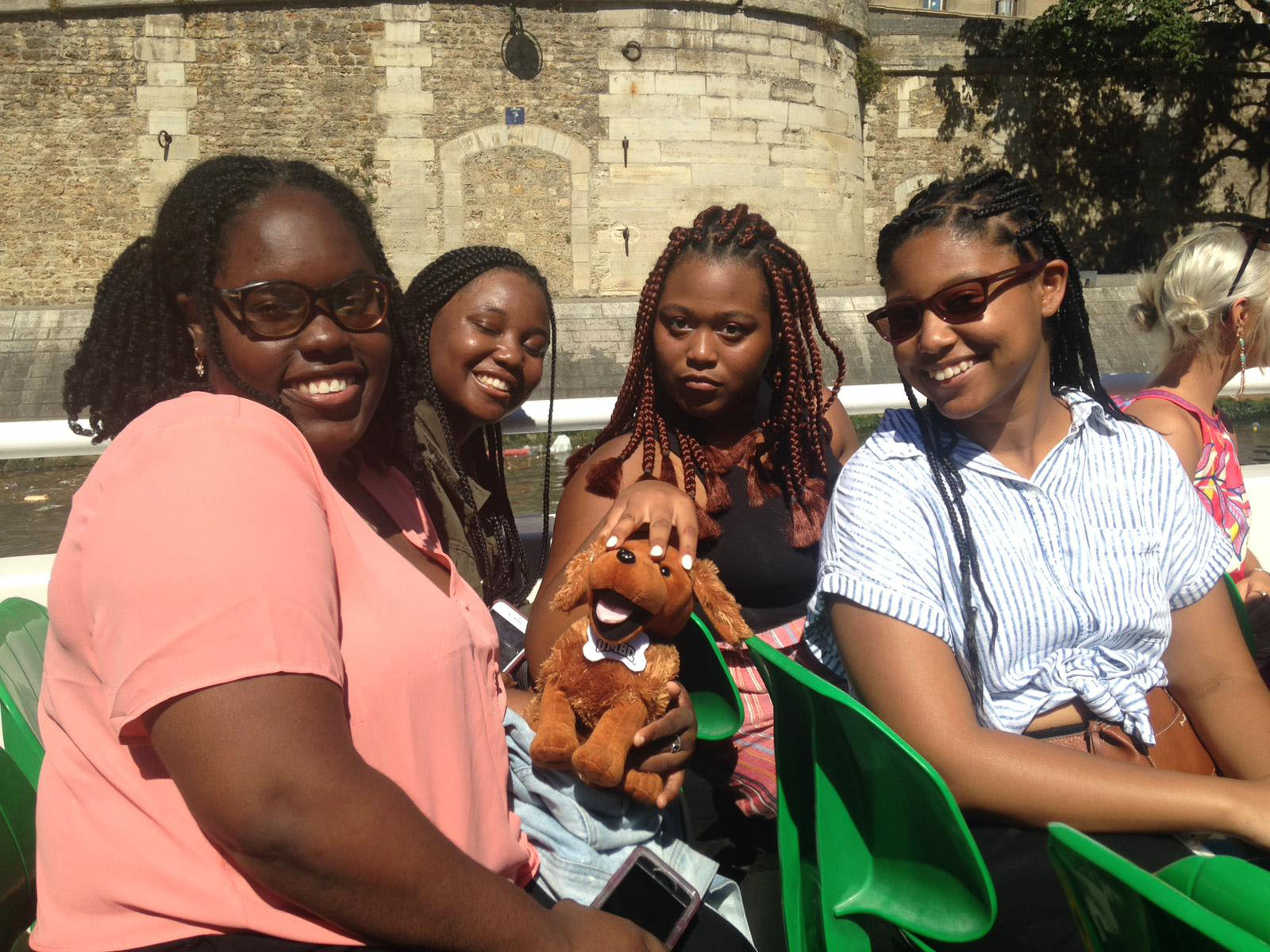
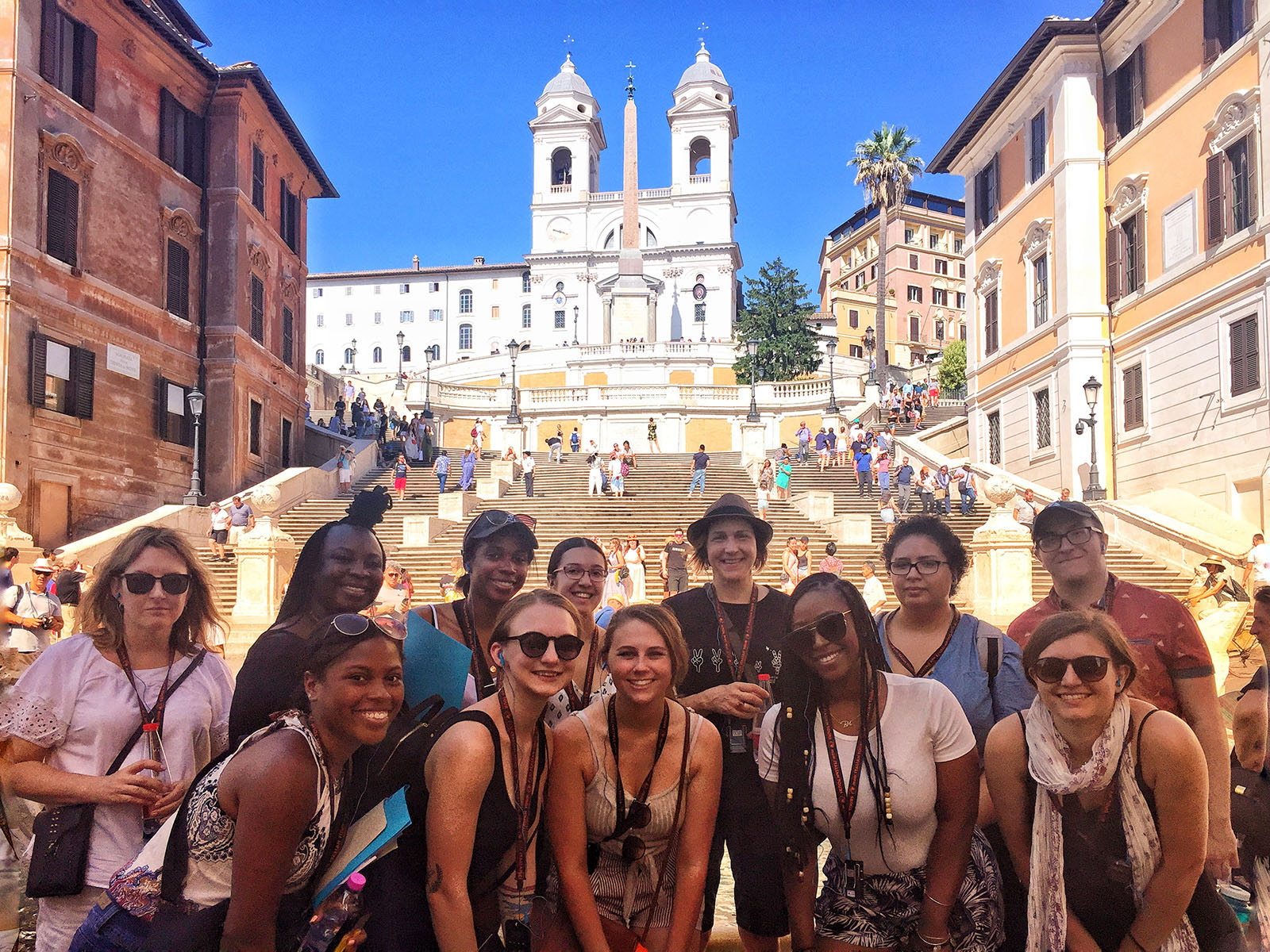
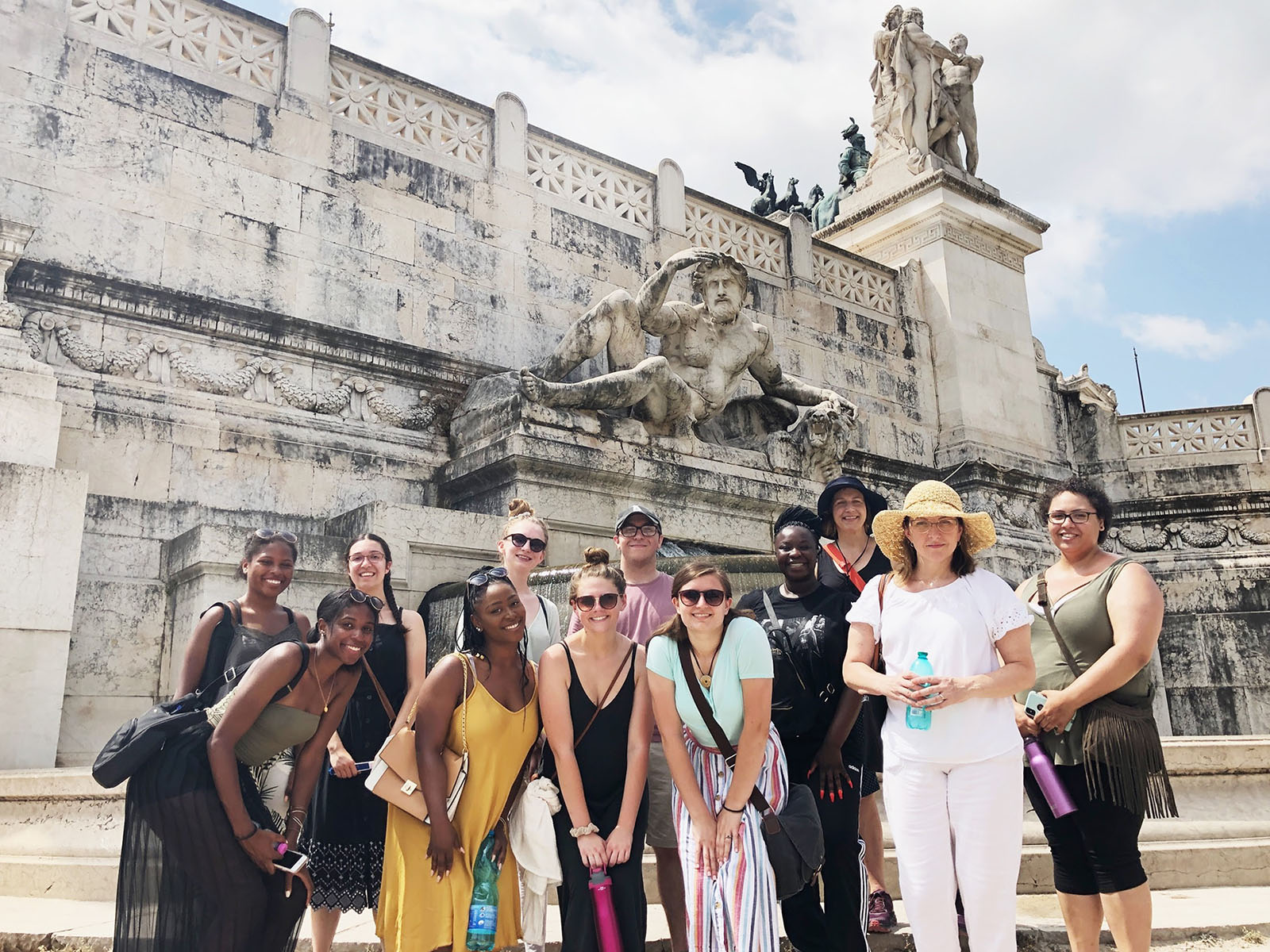
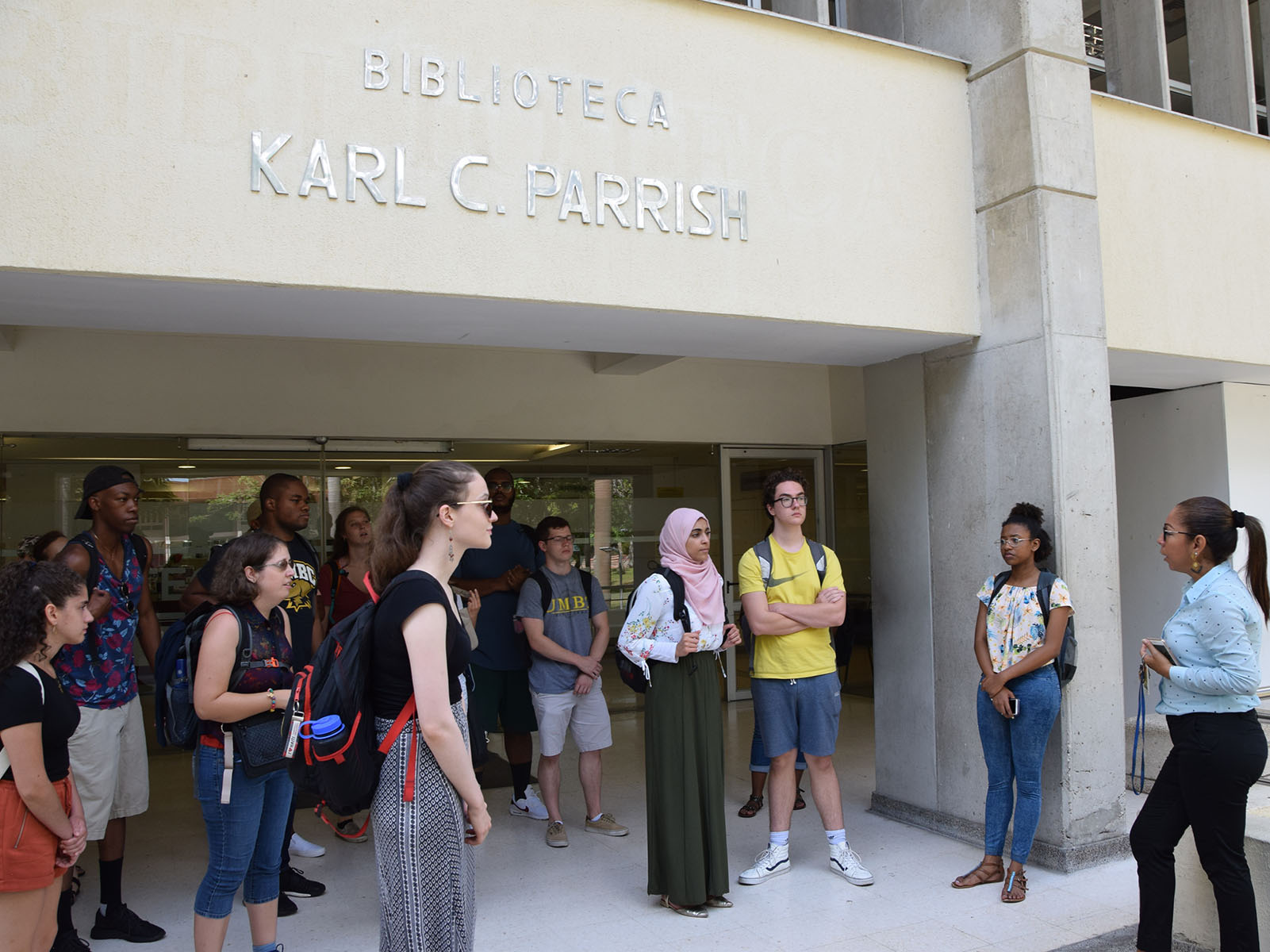
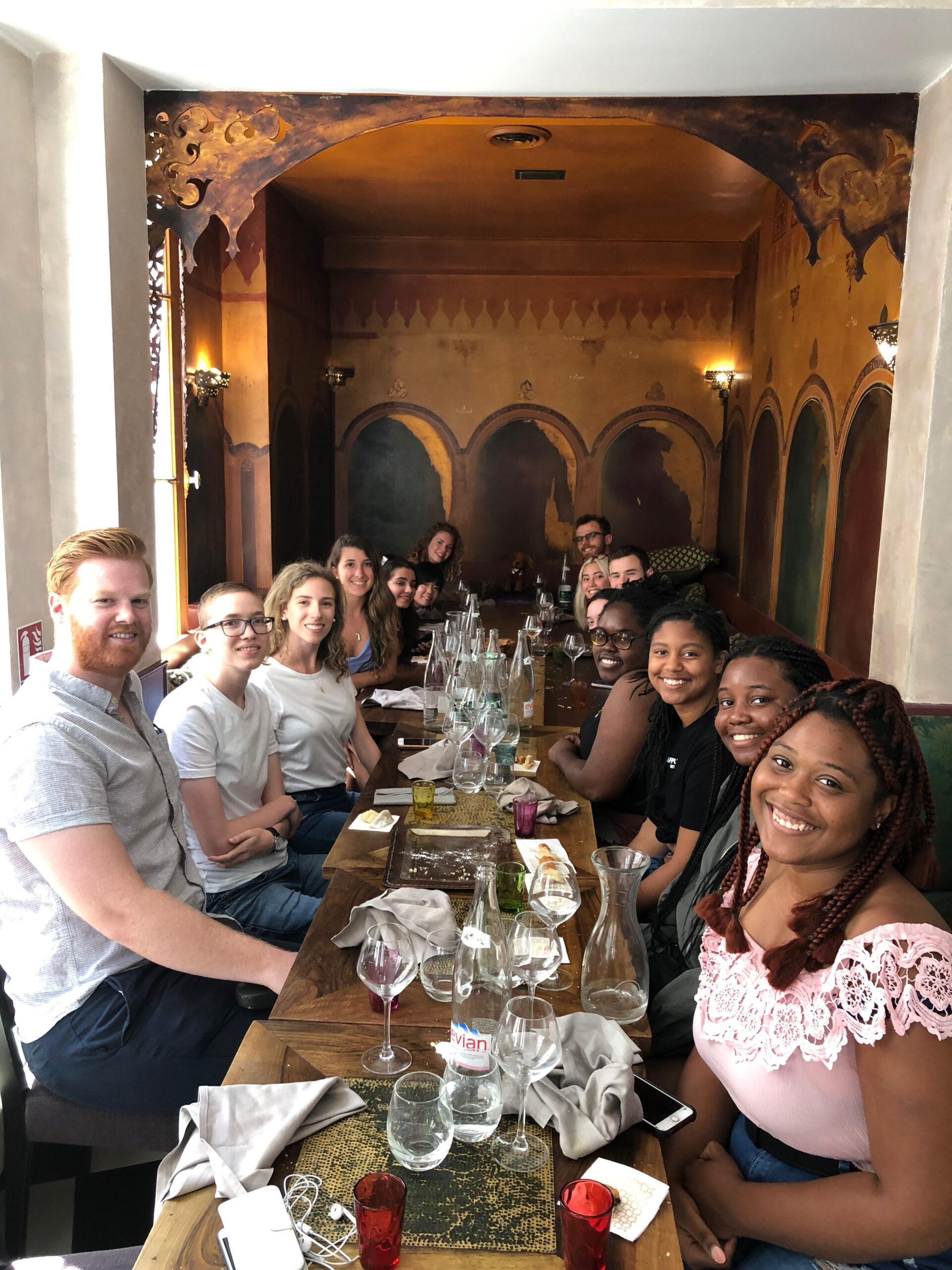
Nothing ruins a summer day like the invasion of bees, mosquitoes, and ants. Luckily, our UMBC students encountered a very different kind of bug this summer – the travel bug. UMBC’s Education Abroad Office coordinated five faculty-led trips this summer to explore Wales, Spain, France, Italy, and Colombia. While abroad, students had the opportunity to gain college credits, while also immersing themselves in a new culture. Even though they conveniently forgot to send us a postcard, they were kind enough to share some photos from their adventures.
In addition to these summer study abroad opportunities, this is the first year UMBC is offering Dawg Days Abroad. This program, facilitated by UMBC Education Abroad and the Office of Undergraduate Admissions, gives new Retrievers the chance to go abroad before classes even begin. Nearly 30 students are traveling to Bristol, England for two weeks as part of their orientation programming. Check our their social media ambassador’s blog here and visit the UMBC and Education Abroad Instagram accounts to be part of the fun!
Photos courtesy of Sam Hertl ’22, Pauline Rozario ’20, Olubusola Opesanmi ’19, Bria Hamlett ’21, and Caylie Middleton ’08.
According to the recent QS World University Rankings 2020, UMBC is one of the top 500 universities in the world overall and among the best of the best in a key measure of faculty scholarship.
This new ranking recognizes UMBC as a state, national, and global leader in the area of citations per faculty member. In this category, UMBC is #48 globally, #17 overall in North America and #1 in the state of Maryland.
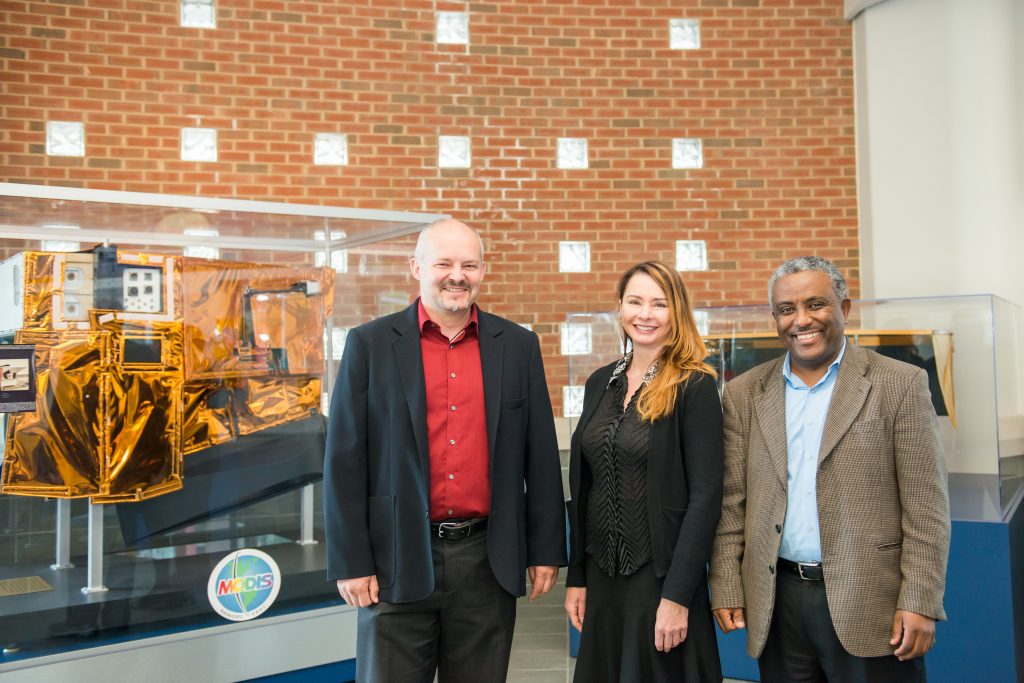
The directors of UMBC’s NASA partner centers (l-r): Jan Merka (Goddard Planetary Heliophysics Institute), Jane Turner (Center for Space Science and Technology), and Belay Demoz (Joint Center for Earth Systems Technology).
UMBC’s strength in scholarship
The World University Rankings list is produced annually by the British firm Quacquarelli Symonds (QS). It was initially developed through a collaboration with Times Higher Education. In recent years it has been recognized as one of the most widely-read global university rankings.
To inform its competitive World University Rankings list, QS takes into account six metrics: academic reputation, employer reputation, faculty/student ratio, citations per faculty, international faculty ratio, and international student ratio.
Deepa Madan, assistant professor of mechanical engineering, with her student Karla Negrete.
In addition to recognizing UMBC’s particular strength in citations per faculty, the report also categorizes UMBC’s research output as “very high.”
“I share with our colleagues in the pride that their publications are so highly cited,” says Karl Steiner, vice president of research. “This is a welcome indicator that UMBC’s scholarly work is widely recognized and has a growing and long-lasting impact on the broader scientific community.”
Quickly rising to prominence
In addition to the newly announced QS ranking, Times Higher Education has again recognized UMBC as one of the world’s top young universities as part of the Golden Age University Rankings. This year, UMBC ranks #86 on the list—one of 12 U.S. universities in the world’s top 100.
This list highlights visionary institutions that have quickly risen to prominence on the world stage—over decades rather than centuries. It specifically includes institutions established 1945 – 1967.
“UMBC’s continued recognition as a Times Higher Ed Golden Age University is affirming, indeed. It speaks to what we, as members of this community, know and experience about UMBC on a daily basis—that this is a vibrant, dynamic, exciting and forward-moving place,” says Yvette Mozie-Ross ’88, vice provost for enrollment management.
UMBC is the only school represented from the state of Maryland.
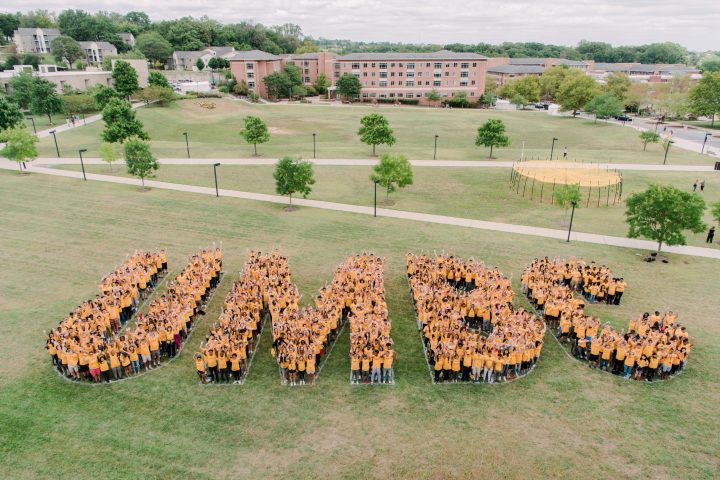
Banner image: UMBC campus in the spring. All photos by Marlayna Demond ’11 for UMBC.
Commencement 2019—around 2,000 brilliant graduates destined to change the world, droves of mentors whose support made everything possible, and one tornado warning that tried to rain on our parade. But as is the UMBC way, we weathered the storm.
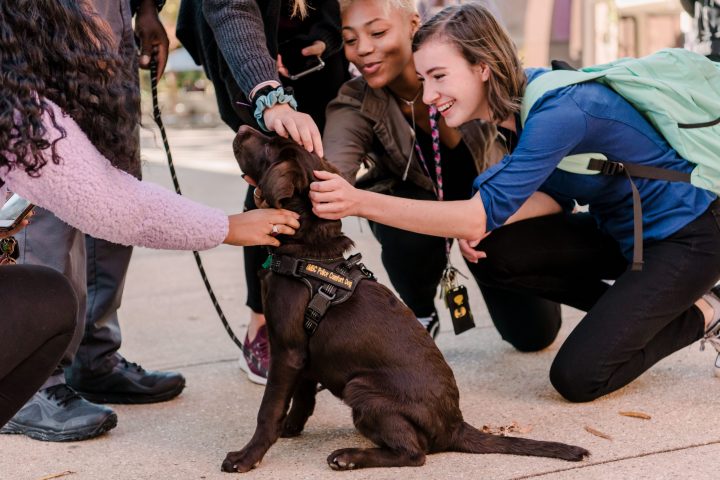
This year’s spring commencement exercises featured memorable special guests. Distinguished speakers included Baltimore County Executive John A. Olszewski, Jr., Ph.D. ’17, public policy; Baltimore Symphony Orchestra Music Director Marin Alsop, and National Institute on Drug Abuse Director Nora Volkow. And don’t forget a special appearance by the world’s most photogenic service dog, Chief.
UMBC’s new graduates boast a Rhodes Scholar finalist and a co-founder of the Sadie T.M. Alexander Conference, the nation’s first conference for Black women economists. And a record 14 new and recent UMBC grads were just named Fulbright Scholars. But even with all they’ve already achieved, we know the best is yet to come for these leaders.
Linda Wiratan, biochemistry and molecular biology, and Samiksha Manjani, political science, represented the Class of 2019 as valedictorians. Their inspiring messages focused on the importance of working together to enact real change in the world.
Congratulations, UMBC graduates!
Graduates and those cheering them on can share memories, well wishes, and photos through #UMBCgrad. View UMBC’s Facebook page, Instagram, and Twitter accounts for coverage of the festivities. Videos can be found on UMBC’s YouTube page.