All posts by: Megan Hanks Mastrola


UMBC IT leaders honored for supporting student success through innovative data analytics

Three UMBC information technology (IT) leaders have received the Blackboard Catalyst Award for Leading Change in recognition of their work implementing technologies on campus in innovative ways. Vice President of IT Jack Suess ‘81, mathematics, M.S. ‘95, operations analysis; Associate Vice President of IT John Fritz Ph.D.‘16, language, literacy, and culture; and Director of Business Intelligence Kevin Joseph ‘87, computer science and information systems, formally received the award at a special event on July 26, 2017.

Each year, Blackboard, Inc., presents a range of awards to leaders at academic institutions across the country. The Catalyst Award for Leading Change is presented to educational institutions that have implemented educational technology strategies campuswide in novel ways to support the needs of their faculty, students, and staff.

This award illustrates what can happen when customers and vendors partner on a common goal like student success,” explains Fritz.

Using Blackboard tools and technology, UMBC has created one of the most robust data warehouse in higher education. Joseph led the development of the UMBC data warehouse, called REX, which combines systems from across the university. He explains that REX was built using the Blackboard Analytics platform, noting that it “integrates academic, faculty, and administrative data from systems throughout UMBC and allows authorized faculty, staff, and institutional researchers to report and analyze University data to help turn data into insight.”

“The award shows how the collaborative spirit of UMBC is helping to improve the success of our students,” says Joseph.

Fritz notes that Blackboard also helped the team expand their work in important ways. “We piloted an approach to learning analytics that Blackboard refined and scaled in ways we never could. In turn, this freed us up to dive deeper and share our lessons learned about student engagement, faculty course design and the use of of a learning management system (LMS) as a diagnostic and early warning tool, not just a way to deliver content like the syllabus,” he explains.

In a recent article in EduCause Review, Fritz describes how UMBC analyzed data on an existing learning management system to help the instructor utilize a Blackboard tool more effectively in his course, and then applied their findings in a broader way to help more faculty and students across the university.

Fritz worked with a tool called “adaptive release,” which allows an instructor to set conditions students must meet to access course content” to ensure each student is prepared for increasingly challenging material. He identified which faculty used this particular tool, analyzed quantitative data to determine who was using the tool most effectively, and then examined in greater detail the top cases to determine why adaptive release was particularly effective in certain courses. He explained that UMBC now uses this approach to identify other tools that are particularly effective in supporting student learning.

Read “Moving the Heart and Head: Implications for Learning Analytics Research” in EduCause Review.

Banner image: Jack Suess, John Fritz, and Kevin Joseph. Photo by Marlayna Demond ’11 for UMBC.

UMBC Ph.D. candidate Kavita Krishnaswamy receives Google and Microsoft awards for robotics research

Kavita Krishnaswamy ’07, computer science and mathematics, Ph.D. ’18, computer science, has been named both a 2017 Microsoft Fellow and recipient of the Google Lime Scholarship. These prestigious honors recognize emerging scholars in computing who are dedicated to increasing diversity in the field, and Krishnawamy’s awards will support her Ph.D. research on “Smart Algorithms via Knowledge Management of Safe Physical Human-Robotic Care.”

“I am very humbled, honored, and grateful to Google Lime and Microsoft for providing me with this enriching experience and lifetime opportunity to serve society by advancing the field of human-robot interaction,” Krishnaswamy says.

The Google Lime Scholarship seeks to promote greater access to knowledge for people with visible and invisible disabilities. It was established through a partnership between Google and Lime Connect, a nonprofit focused on breaking stereotypes about disability and encouraging companies to recognize the importance and value of employing people with disabilities.

The program encourages students with disabilities to pursue their passions in computing and technology, and to become leaders in those fields. As part of the fellowship program, Krishnaswamy will receive scholarship funding and will participate in the 2017 Google Scholars’ Retreat.

Through the Microsoft Fellowship, Krishnaswamy will receive funding to support her Ph.D. research and will participate in the Microsoft Research workshop held in fall 2017. Her research currently focuses on building a teleoperated mobile robotic prototype, in addition to creating an accessible robotic interface, that seniors and people with disabilities will be able to control by repositioning their arms and legs. Tim Oates, professor of computer science and electrical engineering, is Krishnaswamy’s Ph.D. advisor.

“Our goal is to explore the intersection between providing physical care and robotics, and how it is possible to translate safe patient handling and mobility guidelines into smart human-robotic interaction algorithms,” Krishnaswamy explains. “As assistive robotics become more mainstream, these best practices can improve safety in direct physical care in the process of repositioning the human body with a mobile robotic arm.”

Krishnaswamy is excited about the possible new directions her research can now explore, thanks to support from these awards. “The resources will provide me with a solid and steady foundation to cultivate new technical expertise and professional skills to successfully continue my dissertation research in robotics, and to broaden my knowledge in the field,” she says.

Krishnaswamy has been recognized internationally as an emerging leader in robotics and accessibility design throughout her graduate studies. She is a former Ford Foundation Predoctoral Fellow, and a National Science Foundation Graduate Research Fellow. In 2015, she was named to Robohub’s “25 Women in Robotics You Need to Know About” list.

Read The Baltimore Sun article to learn more about Krishnaswamy’s research.  The article was also published in The Washington Post.

Banner image: Photo of Kavita Krishnaswamy, exploring UMBC via robot, by Britney Clause ’11.

2017 Maryland Incubator Company of the Year Awards recognize three bwtech@UMBC startups

Each year, Maryland Incubator Company of the Year (ICOY) Awards recognize the achievements of current and past incubator companies in the state. In 2017, three bwtech@UMBCincubator companies at won their respective award categories, bringing bwtech@UMBC’s total ICOY winners to two twenty since the award program begin in 2002. The honorees, as well as several award nominees from bwtech@UMBC, were recognized at a special awards ceremony held at the American Visionary Art Museum in Baltimore.

“We are thrilled that three of our bwtech@UMBC companies were recognized for their outstanding efforts by winning Incubator Company of the Year awards in their respective industry categories,” says Jennifer Reynolds, director of venture creation at bwtech@UMBC. “These awards represent the incredible effort and drive that our entrepreneurs have, and we are honored and humbled to play a part in their success.”

Fearless Solutions, a software company that primarily develops applications to presents content visually, won the award for best service/consulting company category. Delali Dzirasa ‘04, computer engineering, president and CEO of Fearless Solutions, headquartered in the Spark Coworking Space in Baltimore with additional office space in bwtech, reflected on how meaningful the award was for him, noting:

“We work hard to build software that has an impact on our community, partly because our community has helped so much in getting us to where we are today. It’s incredibly humbling to be recognized alongside so many other outstanding companies, and we’re really grateful for all of the support that we’ve received from both bwtech@UMBC and Spark—we wouldn’t be here without them!”

FZata, a company that develops therapeutic and preventive medicines using antibody technology, won the best life sciences company category. The company is currently developing a compound to fight against Clostridium difficile, a bacteria that disrupts normal, healthy colons and can be very challenging to treat, even in highly advanced medical care facilities. In the U.S., C. diff causes more than half a million infections, and nearly 30,000 deaths, each year.

Zhiyong Yang, co-founder and CEO of FZata, reflects, “Ever since the launch in bwtech@UMBC in November 2015, FZata has earned quite a few significant government grants, including a very recent $5.8M RO1 grant, which represents the recognition from our scientific peers. Now being selected as Best Life Sciences Company reflects the recognition from our business peers,” says Yang. “It is a great honor to us.”

Leverage, a software company that specializes in developing new technologies that can impact society, won the best software company category. Eric Conn ‘85, computer science, co-founder and CEO of Leverage, says that the support from bwtech@UMBC has played a large part in the success of the company, and he calls the ICOY award “validation of the hard work that our entire team has put in for nearly three years now.”

Our Internet of Things (IoT) software platform and companion educational website ‘IoT For All’ are quickly becoming the preferred tools for IoT projects large and small,” says Conn. “Automation and artificial intelligence (AI) are already having a large impact on people’s lives and we hope to strike the right balance between the efficiencies that technology can bring and the preservation of satisfying, high-paying jobs for future generations.”

Since 2002, more than a dozen incubator companies at bwtech@UMBC had won awards at the Maryland Incubator Company of the Year Awards.

In June, Mike Wagner ‘97, information systems management, ‘98, computer science, vice president of WaveStrike, was recently recognized by Ernst & Young at the annual Entrepreneur of the Year Maryland Awards. He was recognized as an entrepreneur in the technology services category for WaveStrike, a software engineering company that develops systems that protect national security.

Read “These startups won Maryland Incubator Company of the Year Awards” in Technical.ly Baltimore, and “EY honors Entrepreneur of the Year Maryland winners” in Baltimore Business Journal. 

UMBC’s Greg Szeto works to better predict patient responses to immunotherapy

As a Washington Post article highlighted, some doctors are now using immunotherapy—stimulating the body’s own immune response to tackle disease in targeted ways—to treat cancer patients who are not responding to traditional chemotherapies, and increasingly in place of chemotherapies or in combination with them. The Food and Drug Administration recently received unanimous recommendation from an advisory committee that a new class of immunotherapy, a “living drug,” be approved for use in children and young adults with leukemia. “The treatment takes cells from a patient’s body, modifies the genes, and then infuses those modified cells back into the person who has cancer,” explains NPR.

The Multiple Myeloma Research Foundation awarded UMBC’s Greg Szeto, assistant professor of chemical, biochemical and environmental engineering, a $75,000 research fellow grant to continue his work on immunotherapy. Specifically, Szeto is developing experimental tests and computational models that could help physicians more accurately predict how individual patients with multiple myeloma will respond to a similar type of immunotherapy. Szeto’s preliminary work with collaborator Ivan Borrello, associate professor of oncology at Johns Hopkins Sidney Kimmel Comprehensive Cancer Center, correctly predicted clinical outcome in more than 80% of multiple myeloma patients from a prior immunotherapy clinical trial using “living drugs.”

“A major hurdle for the field is determining who will benefit from which immunotherapies, and making that determination as early as possible,” explains Szeto. “Though a long way off, the rewards of pursuing such research are key insights for better understanding how existing and emerging therapies work, enhancing the connections between STEM disciplines, and in the long run increasing patient quality of life and the ability of doctors and patients to make informed care decisions.”

In previous research, Szeto found that combining multiple immunotherapy agents can improve responses in mice treated for melanoma, and computational models could help predict and dissect these responses. A paper he coauthored with collaborators including Michael Zhang Ph.D. ’23, chemical engineering, who worked with Szeto as a research tech at MIT, appeared in Nature Medicine last year and indicated that combinations of immunotherapy agents can enable immune cells to more effectively infiltrate and reduce the size of the tumor. This size reduction was predicted by fusing experimental tests with computational models. Currently, Szeto is working to define when and how to test different samples to get the best predictive models.

Because treatments are tailored to individual patients based on a broad range of factors, understanding and assessing their function can be incredibly complex, and it can be challenging to replicate successful treatments across patients. Szeto hopes to help researchers develop more predictable treatment regimens that can use knowledge about individual patients, but with a firmer sense of when particular schedules of medication and dosage levels should be used, and what impact they are likely to have.

“There really hasn’t been any approval for this ‘living drug’ approach before, so what recently happened is a major milestone,” he says, adding that “it paves the way for approval of other drugs within this class, similar to those we are studying with Dr. Borrello.”

Image: Greg Szeto. Photo by Marlayna Demond ’11 for UMBC.
New iCyberCenter will help international cyber companies establish U.S. presence at bwtech@UMBC

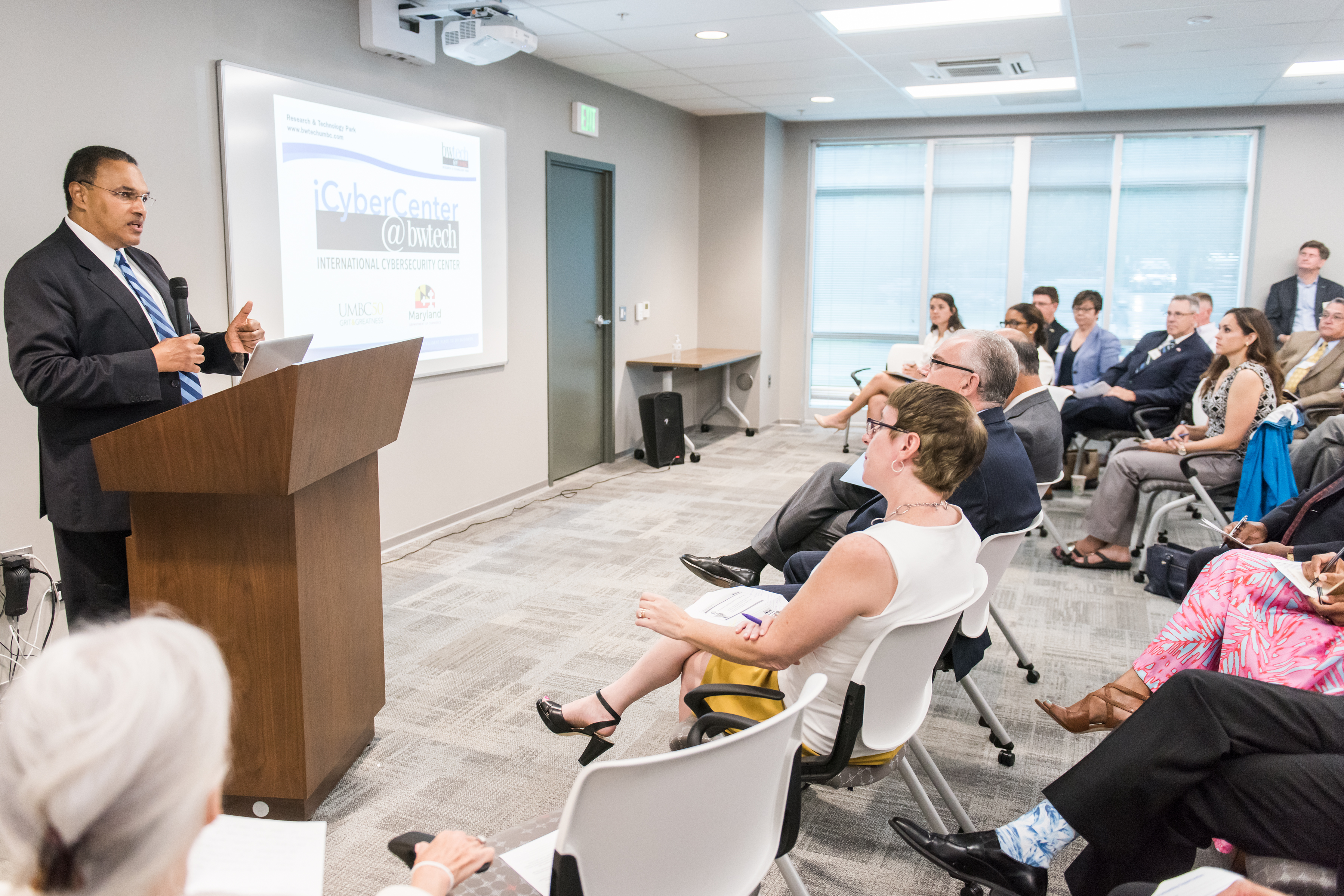
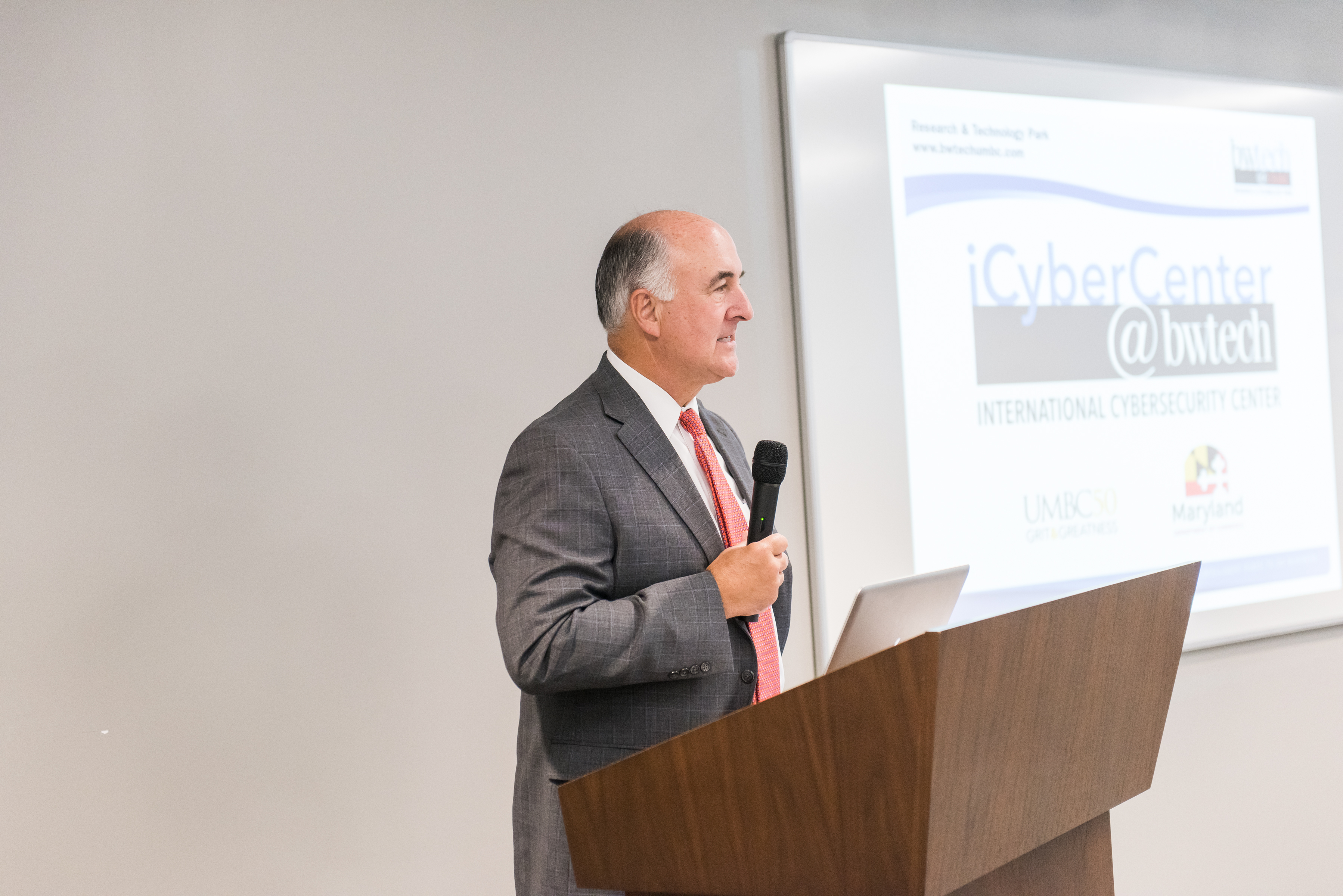
The bwtech@UMBC research and technology park has officially launched the iCyberCenter@bwtech to support companies from the United Kingdom and other nations as they establish themselves in Maryland. Maryland Governor Larry Hogan initially announced plans for the iCyberCenter@bwtech, as a collaboration of UMBC and the Maryland Department of Commerce, during a trade mission to the United Kingdom in mid-June, prior to the formal U.S. launch event on July 6, 2017, at bwtech@UMBC.

The iCyberCenter@bwtech will offer an intensive training program for the executives of select international companies seeking to connect with the U.S. market. The first executive training session will be held September 11 – 15, 2017, and organizers anticipate running three such sessions annually, with each including 6-8 entrepreneurs. Through the program, participants will increase their understanding of the U.S. cyber market and develop custom market entry plans for their businesses.

Companies accepted into the program will also benefit from the 12-month U.S. Market Entry Incubator Program, which will offer support while they launch their U.S. operations. Participants in the year-long support program will have access to mentorship from industry experts, and will engage in trainings, events, and networking opportunities.

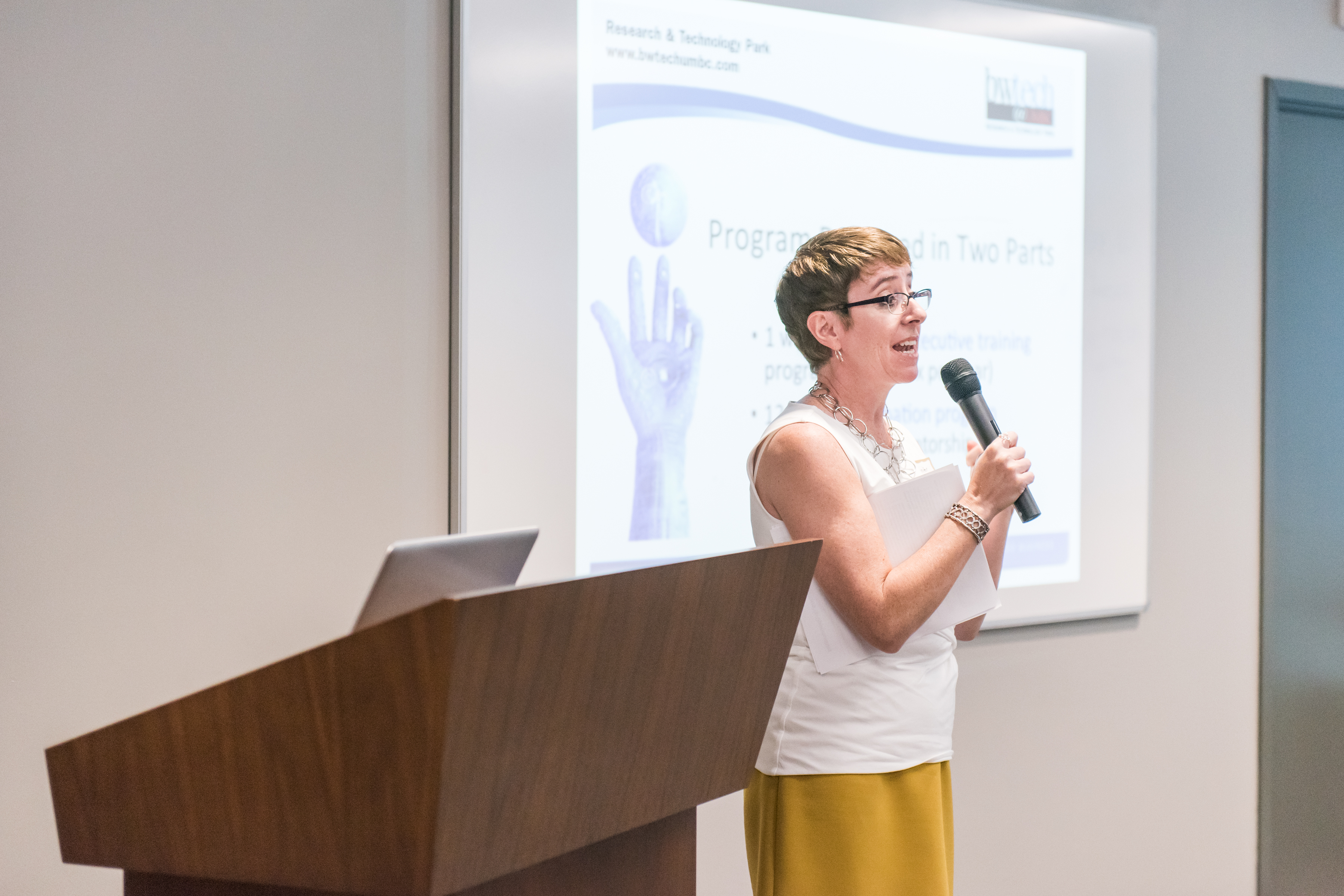
Jennifer Reynolds, bwtech’s director of venture creation, and Andy Williams, most recently the United Kingdom’s first cyber trade envoy to the U.S., will lead the iCyberCenter, with Williams serving as CEO. Reynolds is focused on developing the right supports to meet the needs of incoming companies, noting, “There is not a one-size-fits-all for getting into the U.S. market in cybersecurity.” Williams sees his role as educating people about why “there is no better place for an overseas company to develop a U.S. presence than Maryland.”

Ellen Hemmerly, executive director of bwtech@UMBC, sees the iCyberCenter as an economic development engine. She notes that, in addition to helping to create at least 100 permanent jobs over the next several years, it “will support Maryland’s desire to increase foreign direct investment in the state” by boosting the state’s international visibility as a home for cybersecurity leaders. “We believe the economic impact of the iCyberCenter will be significant…and secure Maryland’s place in cybersecurity innovation in the world,” she explained at the launch event.

The creation of the iCyberCenter@bwtech will further develop UMBC’s cybersecurity ecosystem, and will continue to build Maryland’s reputation as a leader in the cyber industry,” said UMBC President Freeman Hrabowski in an early announcement about the iCyberCenter@bwtech. At the launch, he further emphasized the tremendous potential he sees in the new center, noting, “The opportunities for business development are limitless when thinking about this industry and international partnerships.”

Quite simply, Maryland Secretary of Commerce Mike Gill told the crowd, “this is a big deal” as an economic development opportunity, and as a chance to show the international business and tech communities that UMBC “stands for excellence, innovation, and grit.”

When it comes down to it, said Williams, “We have a hunger here to get things done, but we also have a community.” He sees UMBC’s combination of support, talent, knowledge, and drive as essential to the success of the iCyberCenter@bwtech itself.

Read more coverage of the iCyberCenter@bwtech in The Baltimore Sun, the Baltimore Business Journal, Technical.ly Baltimore, and Southern Maryland Online. Another article appeared in The Baltimore Sun in October 2017.

Header image features Andy Williams speaking at the iCyberCenter launch. All photos by Marlayna Demond ’11 for UMBC.

American Democracy Project honors UMBC’s Philip Rous for leadership in civic engagement

The Civic Learning and Democratic Engagement Meeting (CLDE17) held in Baltimore this month offered an opportunity for students, faculty, and staff from colleges and universities across the nation to discuss forward-looking community-building and civic engagement strategies. UMBC participants played a major role in organizing and presenting numerous sessions, tours, and special events held during the meeting, which was cosponsored by the American Democracy Project (ADP), The Democracy Commitment, and the student affairs administrators group NASPA. Additionally, UMBC’s Craig Berger, coordinator of student life for campus and civic engagement, served as the chair of the ADP’s own annual meeting, held as part of the larger gathering.

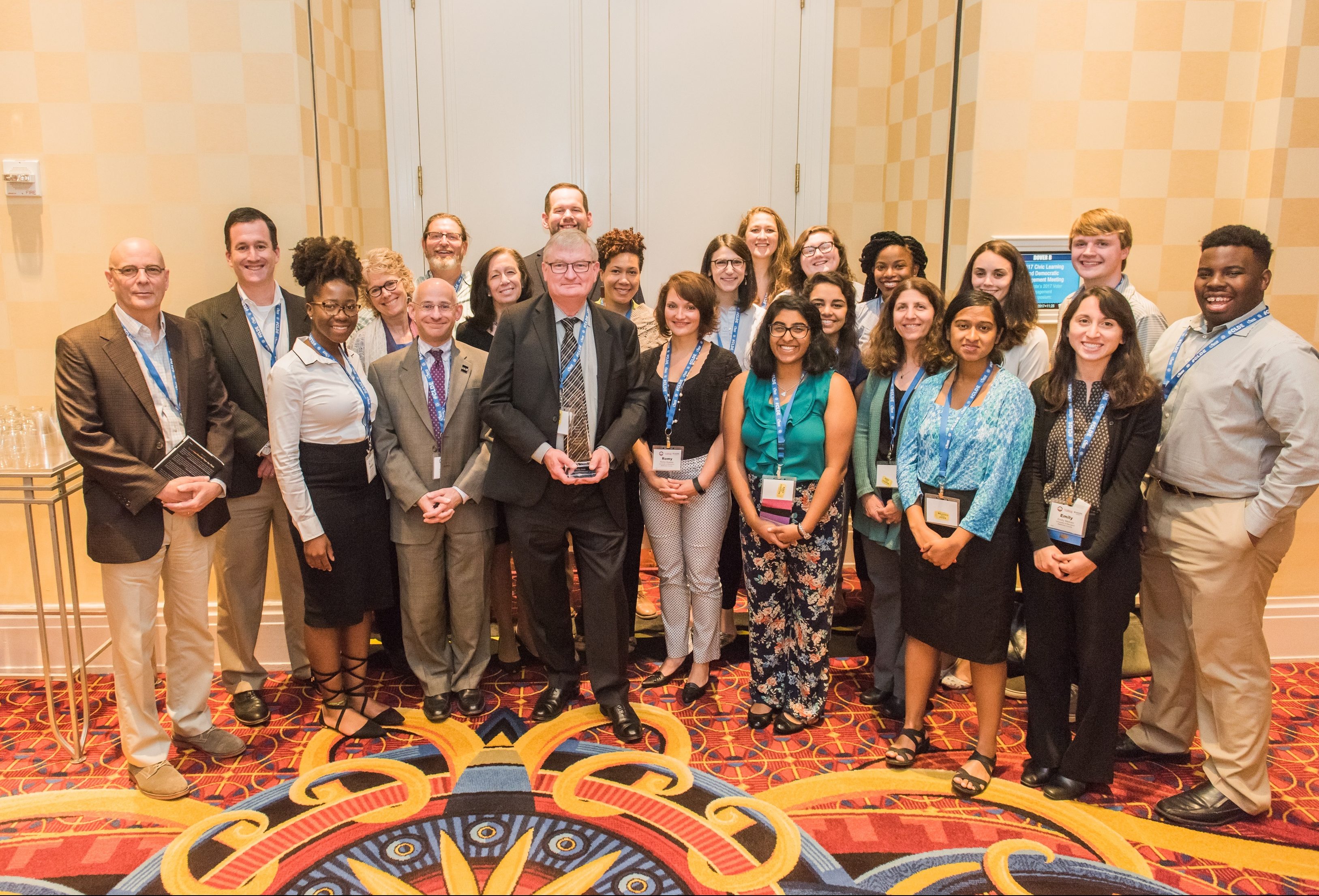
During that annual meeting, the ADP honored Philip Rous, UMBC’s provost and senior vice president for academic affairs, with the William M. Plater Award for Leadership in Civic Engagement. This meaningful award recognizes the commitment of a provost to advancing civic engagement on their campus.

Michael Vaughan, provost at Weber State University, presented Rous with the award in recognition of his support for creating new courses at UMBC that foster civic engagement and help students rethink their power to envision and enact change in the world. Vaughan mentioned, for example, a mechanical engineering class that partnered with Baltimore City to identify failing water pipes and a class on race, poverty, and gender where UMBC students helped local refugee high school students prepare for the college admissions process.

Upon accepting the award, Rous shared with the crowd a story from his days as a student at Cambridge University, to explain his approach as UMBC provost. He noted that the entrance of Cambridge University is a very large wooden door, which itself contains a smaller wooden door, and said, “As you step through that door, it is as if you step into a completely different world.” On one side of the door he found the world was quiet, beautiful, and secluded, and on the other side it was the opposite, creating the immediate effect of excluding the broader city from the Cambridge experience and isolating the university from the dynamism of the city. As a university leader, Rous reflected, he wanted to challenge such barriers.

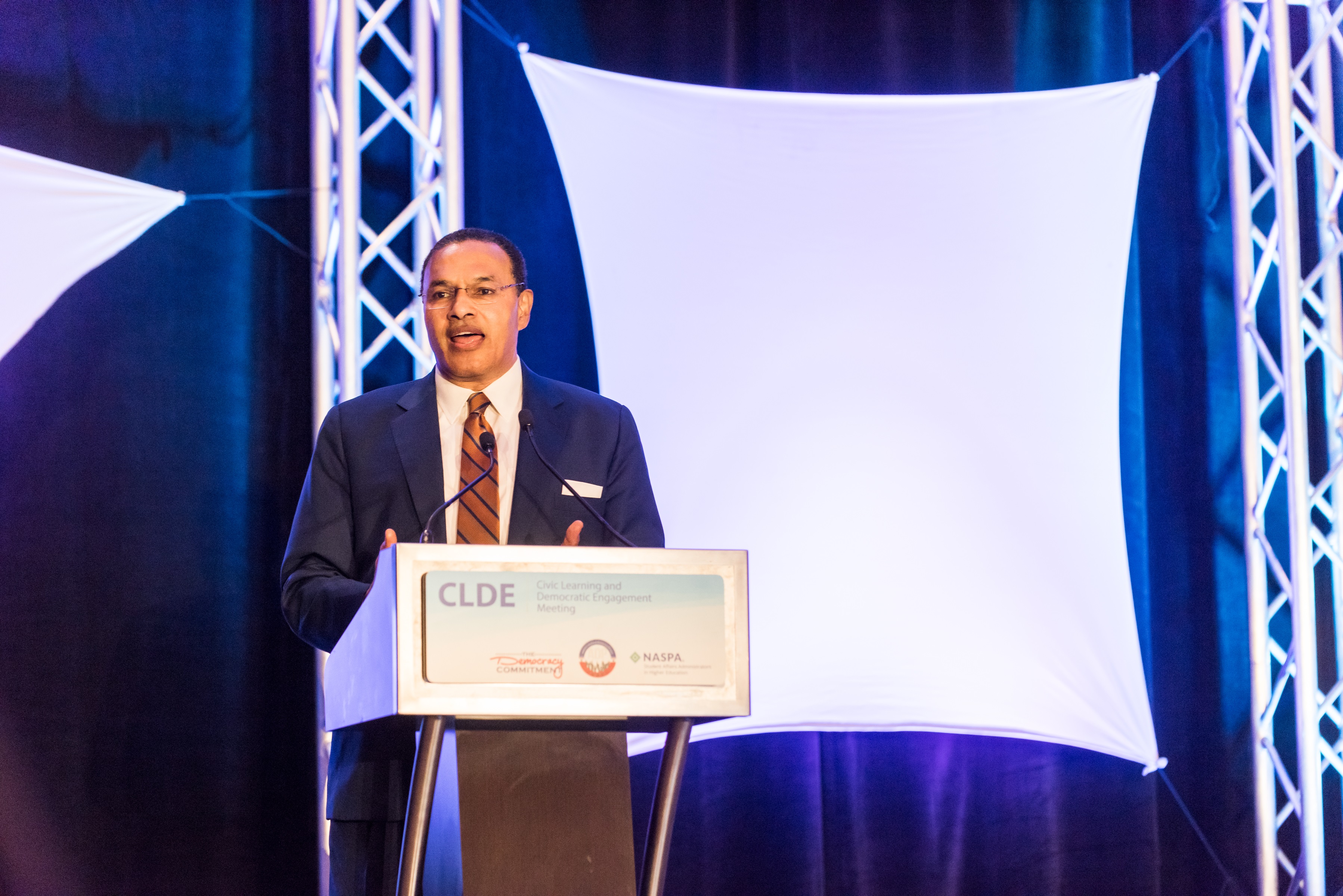
President Freeman Hrabowski delivered the opening remarks during the CLDE17 plenary session, discussing the importance of involving everyone on campus in shaping community. “Any institution that is truly about ethos, inquiry, and looking at agency and action will want the entire institution to be involved,” said Hrabowski. “To make a difference in communities, it is so important to have faculty, staff, students, and academic and student affairs all on the same page and understanding that we are in this together.”

David Hoffman, assistant director of student life for civic agency, facilitated the session “Our Stories Can Light the Way Forward,” focused on collecting and documenting stories from community engagement efforts to empower participants. Collin Sullivan ‘19, information systems; Manisha Vepa ‘19, fine arts; and Berger led the roundtable discussion “Ethos Matters: Creating Empowering Messages and Environments.”

Romy Hübler ‘09, modern languages and linguistics, M.A. ‘11, intercultural communication, and Ph.D. ‘15, language, literacy and culture, who now serves as UMBC’s coordinator of student life for student organizations and involvement, worked with Jason Loviglio, associate professor of media and communication studies, to lead Tell Me What Collective Action Looks Like. This discussion session focused on how educators can help students feel inspired to take action as engaged citizens.

Emily Melluso ‘17, biological sciences, shared her experiences during the session “Cultivating College Campus Leaders: A Story of Collaboration with U.S. Holocaust Memorial Museum and Citizen University.” Corinne Janet, coordinator of student life for leadership; Simon Stacey, interim vice provost and dean of undergraduate education; Berger; Hoffman; and Hübler facilitated the methods-focused session “Congruent Democratic Pedagogies: Teaching Democracy as a Way of Life.”

In addition to kicking off the meeting, UMBC community members also brought it to a productive conclusion, with Hoffman and Vepa presenting for the closing plenary session “The Theory of Our Work, Today and Tomorrow; What’s Next?”

UMBC is a leading member of the ADP, which was founded in 2003 through a collaboration between the American Association of State Colleges and Universities and The New York Times. Through innovative initiatives, ADP member institutions work to provide students with the skills and opportunities needed to put their ideas into action, on and off campus.

Banner image: Dr. Rous accepting the William M. Plater Award for Leadership in Civic Engagement at the 2017 Civic Learning and Democratic Engagement Meeting in Baltimore. All photos by Marlayna Demond ’11 for UMBC.

UMBC computer scientists explain how AI can help translate legalese before online users click “agree”

Every day, people interact with large amounts of text online, including legal documents they might quickly skim and sign without full, careful review. In an article recently published in The Conversation, Karuna Joshi, research associate professor of computer science and electrical engineering, and Tim Finin, professor of computer science and electrical engineering, explain how artificial intelligence (AI) is helping to summarize lengthy and complex legalese  so people can more easily understand terms of service and similar agreements before they click “accept” to access a new app or online service.

The legal documents that Joshi and Finin are working to summarizeterms of service, privacy policies, and user agreementsoften accompany new online services, contests, apps, and subscriptions. “As computer science researchers, we are working on ways artificial intelligence algorithms could digest these massive texts and extract their meaning, presenting it in terms regular people can understand,” they explain.

Through their research, Joshi and Finin ask computers to break down the terms and conditions that regular users “agree” to or “accept.” To process the text, Joshi and Finin employ a range of AI technologies, including machine learning, knowledge representation, speech recognition, and human language comprehension.

Joshi and Finin have found that in many of the privacy policies people are prompted to review and accept online, there are sections that do not actually apply to the consumer or service provider. These sections of the agreements might, for example,  “include rules for third parties…that people might not even know are involved in data storage or retrieval,” they note.

After examining these documents, the software Joshi and Finin have developed pinpoints specific items that people should be aware of when they are granting their consent or agreementwhat they describe as “key information specifying the legal rights, obligations and prohibitions identified in the document.” In other words, the software takes in all that complex legal language, and then  then presents just the most essential information in “clear, direct, human-readable statements,” making it much more feasible for users to understand what they are consenting to before they click “agree.”

Read “Teaching machines to understand — and summarize — text” in The Conversation to learn more about Joshi and Finan’s approach to making online legal documents more accessible through AI.

Banner image: Karuna Joshi. Photo by Marlayna Demond ’11 for UMBC. 
UMBC announces largest-ever group of Postdoctoral Fellows for Faculty Diversity

UMBC’s newest Postdoctoral Fellows for Faculty Diversity will soon begin a two-year experience focused on growing their research and refining their teaching skills through professional development opportunities and working closely with faculty mentors, in preparation for possible tenure-track faculty positions at UMBC.

The fourth cohort of fellows—the largest in program history—includes Lisa Cassell, philosophy; René Esparza, American studies; Christine Hawn, geography and environmental systems; Erika Fountain, psychology; Adanna Jones, dance; Camee Maddox-Wingfield, sociology and anthropology; and Noor Zaidi, history.

“UMBC is fortunate to have been able to attract a group of such outstanding young scholars whom we now welcome as members of our community,” says Philip Rous, provost and senior vice president for academic affairs. “These fellows represent the best of UMBC and our commitment to attracting scholars from diverse backgrounds and perspectives to further advance our shared values of inclusive excellence through world-class scholarship and a distinctive educational experience for all of our students.”

As a Maryland native who earned her Ph.D. at the University of Florida, Maddox-Wingfield knew that she wanted to return to the University System of Maryland for the next step in her career. “This postdoctoral fellowship opportunity will mark a major milestone in my career trajectory,” she shares. “It is my goal to complete a book manuscript based on my dissertation field research, and gain pedagogical skills that will make me a more effective instructor and mentor to students.”

Fountain explained that UMBC’s commitment to diversity is a reason why she chose to join the program for 2017 – 19. “I believe being part of a community that embraces different perspectives is essential to producing top quality research. I look forward to working with the outstanding mentors at UMBC and furthering my research on issues related to juvenile justice,” she said.

Esparza shared in Fountain’s excitement to develop his research in a supportive community that values diversity. “I am enthusiastic about sharing my passion for teaching and commitment to community engaged scholarship through the Postdoctoral Fellowship for Faculty Diversity Program, in hopes of fulfilling UMBC’s mission to prepare students for a multicultural, global society,” he reflected.  

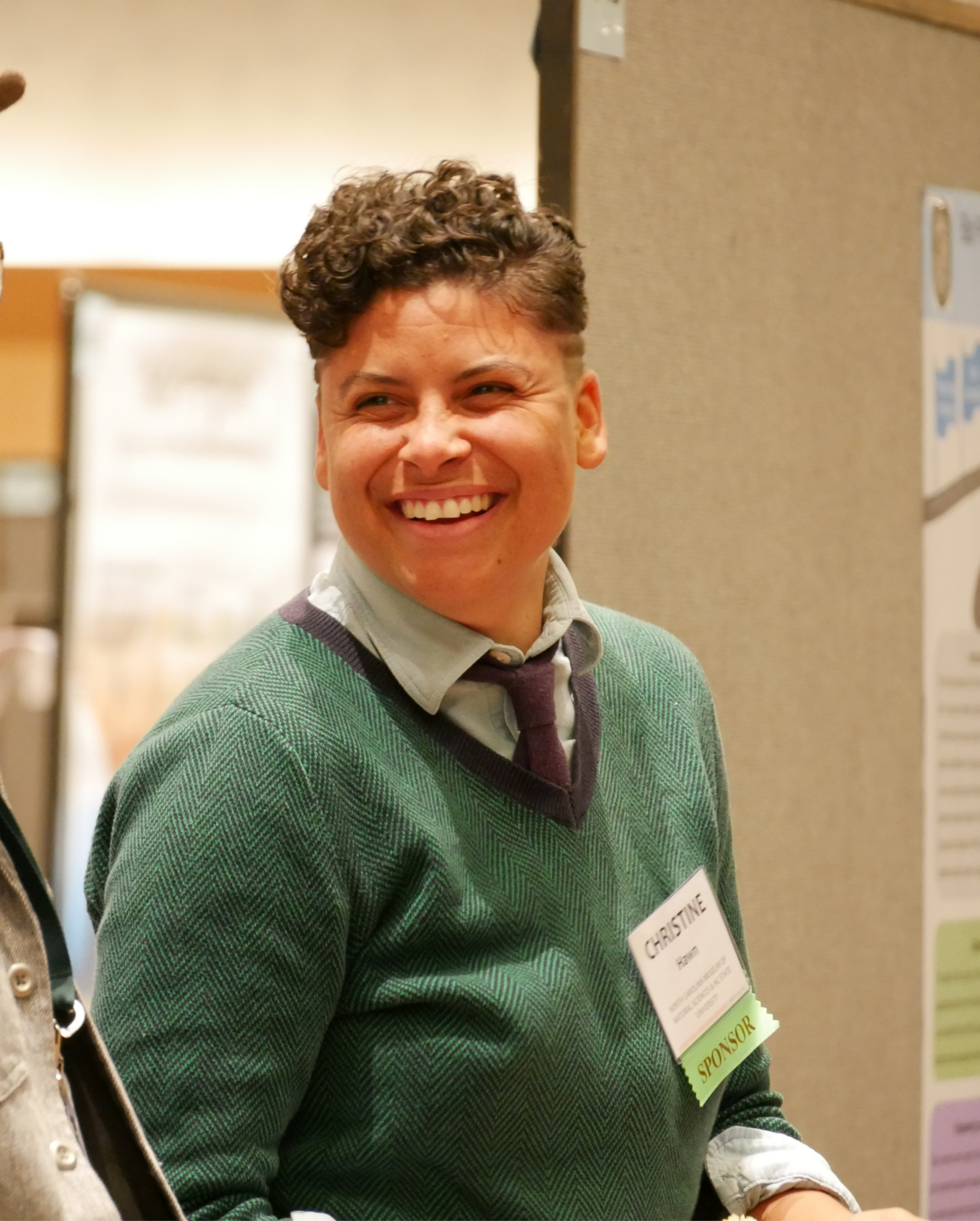
Christine Hawn. Photo by Marilu Lopez Fretts.

Hawn agrees, noting, “I’m looking forward to having the time, mentorship, and resources necessary to build my own research program. Because this fellowship is centered around diversity, I’m taking the opportunity to develop sound ecological research that is informed by my identities.”

In addition to continuing to publish and present her research, Cassel is particularly interested in the teaching opportunities the fellowship provides. She says, “I’m looking forward to developing new courses for the philosophy department—courses that I’ve always wanted to teach, and that I’ll finally have the opportunity to teach, at UMBC.”

Jones is looking forward to working with her two mentors Carol Hess, dance, and Kimberly Moffitt, American studies. “Ultimately, this fellowship offers me the time to complete my book proposal, as well as get critical feedback on my research-based choreography,” she says.

Adanna Jones. Photo courtesy of Adanna Jones.

This year, UMBC’s College of Natural and Mathematical Sciences also launched a program designed to fulfill the same needs as the university-wide Postdoctoral Fellows for Faculty Diversity program, but with a specific focus on career trajectories in the natural sciences.

UMBC’s new Natural Sciences Pre-professoriate Fellowship program offers fellows an appointment of up to two years, during which scaffolding is in place to prepare the pre-professoriate fellows for tenure-track assistant professor positions at UMBC. In addition to being strong scholars, the program stipulates that applicants must be committed to diversity in the academy. Fellows receive research and teaching guidance from a faculty mentor, work on a collaborative research project, teach one class per semester, mentor students in the STEM BUILD program, and participate in the Active Learning, Inquiry Teaching Certificate program.

The first two scholars to accept appointments through the program, Fernando Vonhoff and Mercedes Burns, will join UMBC’s biological sciences department this fall. Vonhoff is currently a postdoctoral research associate in molecular, cellular and developmental biology at Yale University, and Burns is a National Science Foundation postdoctoral fellow in biology at San Diego State University.

Phil Farabaugh, professor and chair of biological sciences, is tremendously excited about the high quality of fellowship applications received. He explained that in addition to having strong research credentials, the dozens of candidates who applied have demonstrated a longstanding commitment to diversity in the sciences, including “a lot of work with undergraduates and younger kids in reaching out to underrepresented populations,” work the department hopes the selected fellows will extend at UMBC.

These initiatives are part of a broader effort by UMBC to build and steward a faculty that reflects and effectively meets the needs of the university’s highly diverse student body. Also included in this effort is the successful ADVANCE program to increase the number of women faculty members.

Read more about the Postdoctoral Fellows for Faculty Diversity program, including information about previous cohorts.

Banner image: Camee Maddox-Wingfield. Photo by Marlayna Demond ’11 for UMBC.
Helena Mentis examines how activity trackers can inform treatment plans for patients with Parkinson’s disease

Helena Mentis, assistant professor of information systems and 2016 recipient of a prestigious NSF CAREER Award, is seeing results in new research using activity trackers and other motion sensors to assess movement and inform treatment for patients with Parkinson’s disease, based in the finding that daily walking has been shown to benefit such patients.

Mentis, Lisa M. Shulman, director of the University of Maryland Parkinson Disease and Movement Disorders Center, and their collaborators have recently shared their findings through articles in notable research publications as well as presentations at the Conference of Human Factors in Computing Systems in Denver, CO.

In “Co-Interpreting Movement with Sensors and Assessing Parkinson’s Patients’ Deep Brain Stimulation Programming,” published in Human-Computing Interaction, Mentis, Shulman and their co-authors explain how they designed and developed a sensor using Leap Motion devices to track and assess the movement of patients with Parkinson’s disease during Deep Brain Stimulation. They noted the movement in their upper limbs during follow-up appointments. They found that the sensors can help assess movement, but sometimes the sensors can interfere with how physicians assess movement by the patient. Mentis and her collaborators found that the way the sensor data is presented can impact how the data is interpreted and used to make decisions regarding treatment.

Mentis presented a paper “Crafting a View of Self-Tracking Data in the Clinical Visit” at the Association for Computing Machinery Special Interest Group on Computer-Human Interaction Conference on Human Factors in Computing Systems (CHI 2017). The paper, published by the Association for Computing Machinerydetails what happened when Mentis and her collaborators provided Fitbit activity trackers to Parkinson’s patients for a month prior to a follow-up meeting with a neurologist. The study found that the Fitbit provided clear activity data and easy to read charts that could inform patient-physician conversations during follow-up visits, leading to an active shared decision-making process about the role of exercise in treatment plans. Anita Komlodi, associate professor of information systems, Shulman and other collaborators co-authored the paper. 

Image: Helena Mentis. Photo by Marlayna Demond ’11 for UMBC.
bwtech@UMBC to expand economic impact through RISE Zone designation

The bwtech@UMBC research and technology park has formally received Regional Institution Strategic Enterprise (RISE) Zone designation from the Maryland Department of Commerce. This designation supports existing companies, new companies, and UMBC faculty interested in commercializing their work. The RISE Zone program provides tax credits for qualifying businesses in specific geographic areas with strong connections to institutions of higher education, non-profit organizations affiliated federal agencies, and regional higher education centers.

UMBC’s Greg Simmons, vice president of institutional advancement, told Technical.ly Baltimore that the program will enable the university to consider expanding the bwtech@UMBC research park, which could help grow the cyber and life sciences companies. “I think it’s really clear that the state is trying to provide resources to universities and entrepreneurs to really strengthen and grow the economy,” Simmons told reporter Stephen Babcock.

President Freeman Hrabowski explained, “a RISE Zone designation will allow us to continue to attract partners to assist with additional research park development.” He described the designation as “a critical asset in the university’s technology commercialization efforts.”

bwtech@UMBC will maintain the RISE Zone designation for five years, and at that time will be eligible to apply to renew the designation for an additional five years. Based on current legislation, each county and municipality in Maryland can have three RISE Zones at any given time.

Read more coverage of the RISE Zone designation in Technical.ly Baltimore, the Baltimore Business Journal, The Baltimore Sun, and The Daily Record.

Image: the entrance to bwtech@UMBC. Photo by Marlayna Demond ’11 for UMBC. 
Hackathon inspires participants to “Innovate Good” through technology

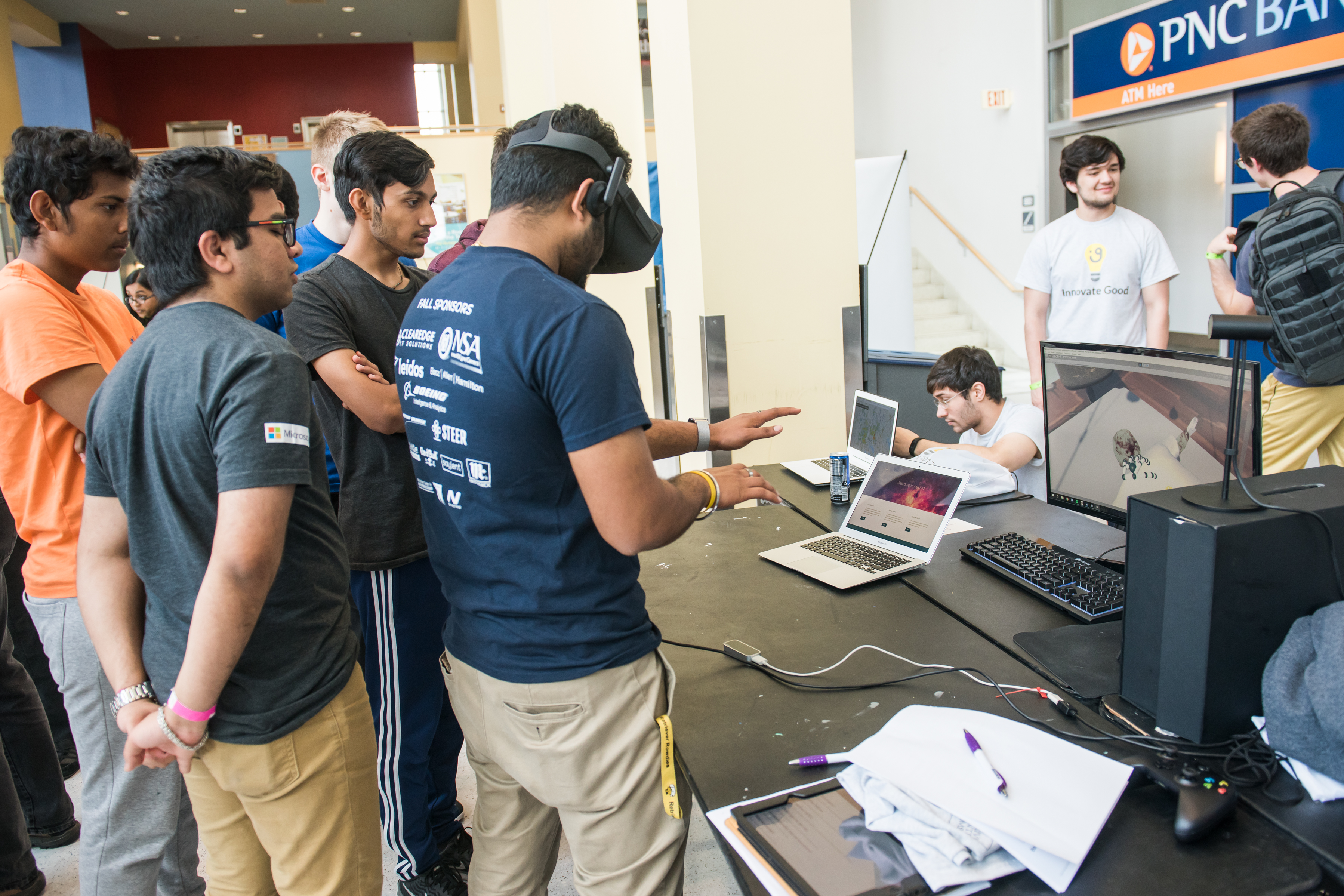
Ahead of final exams this spring, nearly 200 students gathered at UMBC  for “Innovate Good,” a hackathon co-hosted by HackUMBC and The Shriver Center, UMBC’s hub for service-learning, civic engagement, and community-based service delivery. During the 24-hour tech innovation marathon, students collaborated to build mobile, web, and hardware projects focused on solving problems and creating positive social outcomes. Four overarching categories inspired participants in their tech development: health and environment, housing, legal and justice, and education.

Collaborating with The Shriver Center to host the hackathon was an exciting experience, says Celeste Wong ‘18, computer science, co-president of HackUMBC. “There were different aspects to the hackathon we had to think about and work through since we’ve never done a social good Hackathon,” she explained. “In the end it was very rewarding to see students who are passionate about different areas of social justice. Seeing the participants demo and explain their projects really showcased their passion and heart for others at our school and in our community.”

Rick Forno, assistant director for UMBC’s Center for Cybersecurity and director of the Cybersecurity Graduate Program, serves as faculty advisor of the HackUMBC student organization. “Hackathons like HackUMBC are diverse, high-energy events that bring together novices, experts, and mentors to share and apply their knowledge, skills, and personal enthusiasm toward exploring the world of technology and/or developing innovative solutions with technology,” he says. He was delighted at the success of this first themed HackUMBC event in bringing together participants with diverse interests, experiences, and perspectives.

Hannah Schmitz, program coordinator of public service scholars programs in The Shriver Center, agreed, sharing,  “So often we see a divide between ‘techie’ and ‘non-techie’ students. The Shriver Center and HackUMBC designed ‘Innovate Good’ to bridge that divide, bringing students together to harness their skills and experiences to co-create interdisciplinary solutions to social challenges.” She explained, “Participants had a chance to collaborate with students with varying disciplinary perspectives, and had an opportunity to learn from, work with, and teach each other.”

An “expo” portion toward the end of the event gave participants an the opportunity to share the hacks that they developed with their peers and receive feedback from faculty judges.

“It’s our hope that each participant walked away with new skill sets and a deepened interest in using their talents to make an impact in their community,” says Schmitz.

For more information about upcoming hackathons at UMBC, visit the HackUMBC website.

Header image: Students presenting their hacks at the “expo” portion of the hackathon. All photos by Marlayna Demond ’11 for UMBC. 

Global leaders in research and industry to address UMBC’s Class of 2017

UMBC will welcome two alumni—known today as global leaders in their fields—as commencement speakers at this spring’s undergraduate and graduate commencement ceremonies.

On Wednesday, May 24, Dr. Ralph D. Semmel, ‘92, computer science, will speak at the graduate commencement ceremony. Semmel is the director of the Johns Hopkins University Applied Physics Laboratory (APL), which conducts research and development for the U.S. Department of Defense, NASA, and the intelligence community. He oversees the scientific and technological contributions of APL staff on national and global levels.

“We are absolutely delighted to have Dr. Semmel back on campus to share his story with our graduates,” says Karl V. Steiner, vice president for research.

UMBC physics professors Jim Franson and Todd Pittman both launched their careers at APL, and UMBC and APL have continued to develop meaningful connections throughout the years. “A growing number of our former students now have exciting and impactful careers at APL,” Steiner notes. “The close proximity of our two institutions makes us perfect partners for future collaborations.”

Before his current role, Semmel founded APL’s Applied Information Sciences Department and Infocentric Operations Business Area and served in numerous other research and leadership roles at APL, Wang Laboratories, the MITRE Corporation and the U.S. Army. He has also served on a number of boards, panels, and committees at federal science and technology organizations.

Stephanie C. Hill ‘86, computer science and economics, will speak to the Class of 2017 at UMBC’s undergraduate commencement ceremony on Thursday, May 25. She is the vice president and general manager of Lockheed Martin’s Cyber, Ships and Advanced Technologies (CSAT) line for Rotary and Missions Systems.

After graduating from UMBC, Hill became a software engineer at Lockheed Martin. Since then, she has held a wide range of senior leadership positions at the company in information systems, civil business, electronic systems, and sensors business.

“Stephanie Hill is such a great choice for undergraduate commencement speaker. As a female African American computer scientist who has had an incredibly successful career in technology leadership, she embodies UMBC’s commitments to diversity, civic engagement, social responsibility, and lifelong learning,” says Marie desJardins, associate dean in the College of Engineering and Information Technology and professor of computer science.

“She is also an outspoken proponent of STEM education and outreach, and is an inspiring role model for all of our students,” says desJardins.

Several organizations and publications have recognized Hill for her impressive career path and her work to advance STEM education. In 2014, she was included on EBONY Magazine’s Power 100 list, which recognized President Hrabowski in 2016. Locally, Hill was presented with the Greater Baltimore Committee’s President’s Award for supporting the development of minority-owned businesses.

Hill currently serves on the S&P Global Board of Directors and is the chair of the Greater Baltimore Committee. Driven by her passion for STEM education, she is also involved with Project Lead the Way, a national organization that provides STEM teacher training for K-12 educators.

UMBC will honor Hill with a doctorate of public service and Semmel with a doctorate of science.

Community members who aren’t able to attend the ceremonies in person can view them live through the commencement webcast, or follow them on Twitter @UMBC and through #UMBCgrad. Videos of the remarks will also be available online after the ceremonies.