
All posts by: UMBC News Staff


Outstanding Alumnus: Gib Mason ’95

Over the next few weeks we’ll be introducing you to this year’s Alumni Award winners. The UMBC Alumni Association proudly honors distinguished alumni and faculty for their accomplishments and dedication to UMBC. Today we’re talking with Gib Mason ‘95, economics, about his career working as the Chief Operating Officer and Director of the Center for Leadership and Innovation by improving the UMBC Training Centers.

gib-masonName: Gib Mason ’95, economics
Job Title: Chief Operating Officer & Director of the Center for Leadership and Innovation, UMBC Training Centers
Award Category: Distinguished Service

Q: Why did you choose to attend UMBC, and how do you continue to be involved with the university?

It had been a decade since I had left my first foray into the University setting, and I was looking for a place to finish my education. I was interested in learning more about economics in order to better support my business. My decision to attend UMBC started as a skill building opportunity, but ultimately led to a five-year relationship that drove me to sit for the CPA exam as a result. My current involvement with UMBC is multi-faceted. I serve as a board member for the Alex. Brown Entrepreneurship Center, where I partnered with faculty fellows to develop the Minor for Entrepreneurship and Innovation. I presently teach and develop curriculum for both the FYS and ENTR program, and act as a faculty advisor within the INDS program. I have also facilitated strategic planning for multiple departments within UMBC. In addition, I provide leadership development training for all members of the UMBC community.

Q: Is there a particular class or professor at UMBC who really inspired you?

Elizabeth Gerkin taught my very first class (Accounting 101) and in turn, inspired me to extend my stay at UMBC. Brad Humphreys was another inspiration for me. He was an economics professor who provided me with a much broader perspective of the influence and impact of finance on communities. My experience at UMBC is what inspired me to want to teach and complete a Master’s degree.

Q: Please tell us a little about the trajectory of your career and what you are working on now.

There are three concepts that encapsulate my career trajectory: entrepreneurship, opportunity, and passion. Entrepreneurial pursuits, belief in the opportunities in organizations for growth and change and development, and underlying under that is a rabid passion for what I get the opportunity to do. Currently, I’m working on putting UMBC’s Training Centers in a position to live into its fullest potential. Really, that’s about developing the people of our organization, which will allow us to increase our reach and the reputation of the University. Within my work for our Center for Leadership and Innovation, I also have the opportunity to enable other organizations to live into their fullest potential.

Q: What has been the greatest success in your career? The greatest challenge?

The greatest success of my career was the rolling up of the B4students foundation into Big Brothers and Sisters. The greatest challenge has been balancing the dichotomy of being both a CPA and an MSOD. My career has a lot of breadth, with significant depth in two very different areas. It’s a healthy challenge – I fight with myself all the time.

Q: What are your proudest personal achievements?

My service to youth over a 30 year period, including 25 years of coaching little league baseball and basketball, 17 years of board service for Big Brothers and Big Sisters, the development of the B4students foundation, and the last 8 years focused on the development of undergraduates at UMBC.
Check out the other Alumni Award winners.

[PHOTOS] Update: Performing Arts and Humanities Building

The new Performing Arts and Humanities
Building,
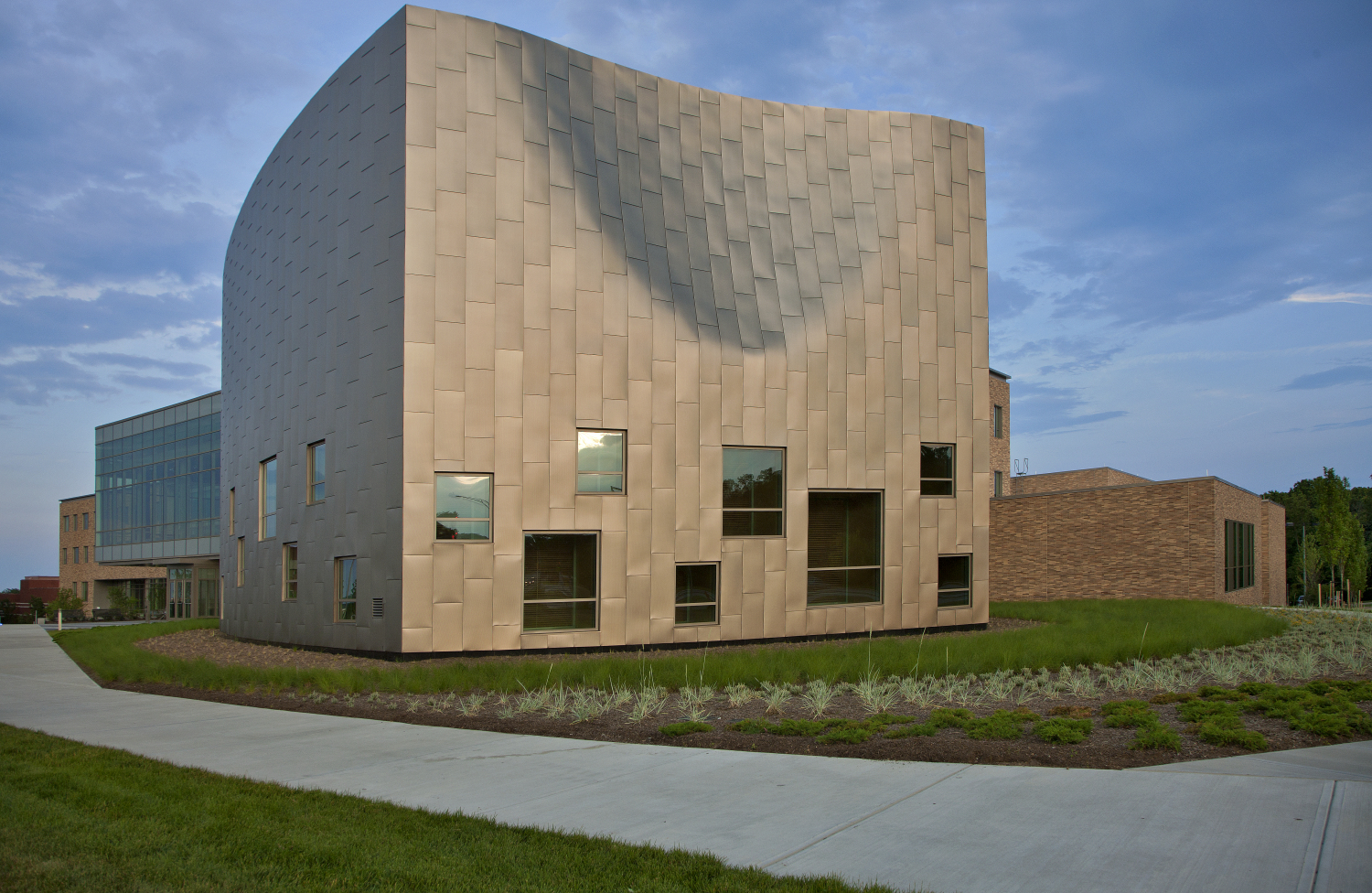
or PAHB, aptly named for the 20627_N324_mediumdepartments it houses, opens this fall to the UMBC campus and community. The construction was completed in two phases: the first section was home to the Department of English, the Dresher Center for Humanities, the Department of Theatre, the Linehan Artist Scholars Program, and the Humanities Scholars Program, and the second included the Department of Dance, Music, Philosophy, and Ancient Studies. However, the focus of the building now rests on the many theatres, performance halls, and sound studios.

Performance Spaces

There are five main performance halls in the PAHB: the Proscenium Theatre, the Black Box theatre (used mainly for more experimental performances), the Dance Cube, the Music Box, and the Concert Hall. The previous theatre, located in the Fine Arts building, only reached 16 feet in height; the new Proscenium Theatre now stands at 20 feet tall, and can seat up to 275 spectators. In three of the four halls, the seating can be moved to create a more open performance or a more intimate setting, and with state of the art lighting systems, the light can be adjusted accordingly.

The Concert Hall, the largest space in the building, was designed for music performances and has special air duct systems designed to eliminate all noise. The setting of the hall can also be changed from a large venue to a class-sized setting, simply by turning the performers around and opening a hidden section of seating. Every aspect of this building was designed to create performance friendly spaces, while also offering a new and distinctive campus landmark.

Behind the Scenes

As for those who work behind-the-scenes, there are brand-new costume design facilities, catwalks and lighting structures, music technology rooms, and conference rooms created to enhance learning and provide hands-on experience. Students in the music fields can now enjoy a new recording studio, as well as many sound-proofed walls throughout the building.

Give Back to the Performing Arts

With the opening of the PAHB quickly approaching and the first performance scheduled for mid-October, alumni are encouraged to show their support of the performing arts by naming a seat in either the Proscenium Theatre or the Concert Hall. All gifts will directly benefit the arts and humanities at UMBC now and for future generations.

Save your seat today!

Tom Cronin, Biology, Washington Post on Camouflage

In a recent story the Washington Post wrote about what animals, specifically octopus, cuttlefish, and squid otherwise known as cephalopods can teach us about camouflage.

The ability of humans to camouflage themselves is very important in military applications.

UMBC biology professor, Tom Cronin, is quoted as saying:

Military applications will come first, predicts Thomas Cronin, a biologist at the University of Maryland Baltimore County who is part of the research community with octopus-to-gadget ambitions. “When a machine or person moves to a different environment or background, these camouflage systems could automatically reduce the level of detectability to any imaging system,” he says.


Outstanding Alumnus: Isaac Kinde ’05

Over the next few weeks we’ll be introducing you to this year’s Alumni Award winners. The UMBC Alumni Association proudly honors distinguished alumni and faculty for their accomplishments and dedication to UMBC. Today we’re talking witIsaac - Kinde_Alumni_Award_Recipienth Isaac Kinde ‘05, biological science, about his research with cancer diagnostics. 
Name: Isaac Kinde ’05, biological science
Title: M.D./Ph.D. Candidate, The Johns Hopkins University School of Medicine
Award Category: Rising Star

Q: Please tell us a little about why you chose to attend UMBC and what, if any, involvement you have with the university currently.

The Meyerhoff Program was the most important reason why I chose to attend UMBC as a California native. Its immersive scientific experience was attractive, but I was even more excited about the opportunity to be closely surrounded by like-minded peers. The engagement of the faculty, staff, and administration further inspired confidence in my decision. I now return yearly to help interview candidates for the Meyerhoff Program.

Q: Is there a particular class or professor at UMBC who really inspired you?

Working with my research mentor, Dr. Michael Summers, was transformative. It was then I recognized that the best way to learn science was to do science. Having no prior research experience, I remember his patience and commitment to mentorship being central to my persistence in the lab. Equally memorable was how much fun I had. The group skiing trips, picnics, and mountain biking outings were great ways to bond with my colleagues and blow off steam. As a direct result of his mentorship, I ended up applying to combined M.D. /Ph.D. programs instead of solely pursuing my M.D.

Q: Please tell us a little about the trajectory of your career and what you are working on now:

My doctoral research produced novel cancer diagnostics based on improvements in DNA sequencing technology. Example applications include a prototype screening test for ovarian and endometrial cancer from Pap smear specimens, a noninvasive method of monitoring bladder cancers from urine, and a revelation in the development of treatment resistance from analyzing the blood of patients with colon cancer. With the help of my mentors and collaborators, I have published descriptions of these technologies and applications in leading scientific journals and submitted several patent applications detailing the inventions. Encouragingly, this work has attracted considerable attention from industry, spurring partnerships to facilitate its commercialization. The ultimate goal is to bring meaningful cancer diagnostic tests to the clinic – where the real difference to patients’ lives can be realized.

Q: What has been the greatest success in your career? The greatest challenge?

My greatest challenge led to my greatest success. When I began the graduate school portion of my training program, I joined a team working on applying new technologies to detect cancers at early, highly curable stages. We repeatedly identified the wrong technology to accomplish our goal, but the potential impact of finding the right technology kept us going. Three years later we created the technology we needed – a method that significantly improved the accuracy of commercial next- generation DNA sequencers. It wasn’t an easy process but the benefits of our technology have made the effort worthwhile. We’re now developing this technology for use in the earlier detection and optimal management of several cancers.

Check out the other Alumni Award winners.

Meet the Alumni Leadership: Ken Pittman ’80

Name: Kenneth L. Pittman ‘80, economics, CFP®, ChFC®, CLU®
Employer: PNC Wealth Management
Alumni leadership role: President of the UMBC Alumni Association Board of Directors

Q: Where are you from originally?
Annapolis, MD

Q: What’s your favorite UMBC memory?
Meeting my (future) wife at Dr. Peake’s Halloween Party

Q: Why are you involved in an alumni board or chapter?
If you are not part of the solution, you are part of the problem.

Q: Do you have a favorite hobby or pastime?
Power boating and scuba diving.

Q: If you were an Olympian, what would be your sport/activity of choice?
Decathlon.

Read more about the Alumni Association!

Outstanding Alumnus: Michael Adelstein ’96

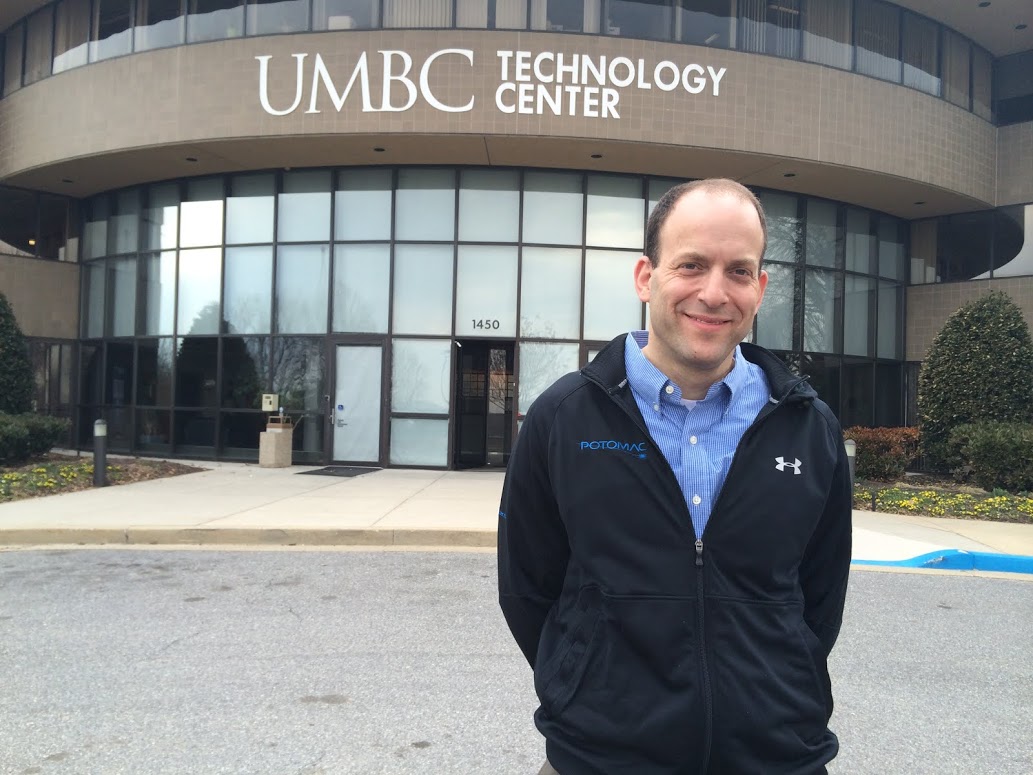
Over the next few weeks we’ll be introducing you to this year’s Alumni Award winners. The UMBC Alumni Association proudly honors distinguished alumni and faculty for their accomplishments and dedication to UMBC. Today we’re talking with Michael Adelstein ‘96, biochemistry and molecular biology, about his career as CEO of Potomac Photonics, Inc. 

MikeAdelsteinName: Michael Adelstein ’96, biochemistry and molecular biology

Job Title: CEO, Potomac Photonics, Inc.
Award Category: Natural and Mathematical Sciences

Q: Why did you choose to attend UMBC, and how do you continue to be involved with the university?

I chose to attend UMBC because I felt it provided the perfect balance of academics, size, and social environment when compared to the other schools that I considered. I had a sense that UMBC was poised for great accomplishments, and the arrival of Dr. Hrabowski was instrumental at solidifying the school as a top tier university. The culture of UMBC is a very dynamic mix of academic excellence, cultural diversity, hard work, and opportunity that truly prepares its students for success.

I continue to be closely aligned with UMBC and its values. Recently, I moved our company to bwtech@UMBC Research and Technology Park to further enhance our partnerships with the faculty and students.

Special thanks to Dr. Tony Farquhar of the Mechanical Engineering Department; Susie Lynch from the UMBC Office of Institutional Advancement; and Ellen Hemmerly, Executive Director of bwtech@UMBC Research and Technology Park and Walt Schultz Director of Facilities and Leasing of bwtech@UMBC Technology and Development Park who have been invaluable in solidifying Potomac’s partnership with UMBC.

Q: Is there a particular class or professor at UMBC who really inspired you?

My coursework at UMBC inspired me to pursue opportunities in science and technology, and set the foundation for my future educational endeavors and career. Most notably, I really enjoyed my chemistry and biology classes, such as Analytical Chemistry and Immunology. Two of my former professors, Dr. William LaCourse and Dr. Suzanne Ostrand-Rosenberg, employed innovative teaching techniques that were engaging and encouraged student participation and debate.  

Q: Please tell us a little about the trajectory of your career and what you are working on now.

During my time at UMBC I spent several summers interning at the National Institutes of Health. I also served six years in the Maryland National Guard as a squad leader for a mortar platoon. In 1997, I joined Potomac Photonics as a sales administrator, and became immediately intrigued and inspired by the micro manufacturing technology emerging for applications in industries such as medical, biotech, electronics, and others. I focused my efforts in developing and implementing a strategy to grow a contract manufacturing unit. This eventually became the primary focus of Potomac and in 2011 I was promoted to President and CEO of the company. One year later, I led a buyout of the company, and in 2013 relocated to bwtech@UMBC Technology and Research Park.

Q: What has been the greatest success in your career? The greatest challenge?

I am very proud of the company that Potomac has become. Currently, we are involved in projects to fabricate devices to treat cancer, diagnose concussions, develop new pharmaceutical drugs, and many others. We also started an Education Manufacturing Initiative which is a program focused on creating a robust partnership with universities in order to develop new products and manufacturing technologies. Our culture is one of continuous learning and opportunity and is modeled very closely after UMBC and its core values.

The greatest challenges moving forward are related to ensuring that Potomac stays true its mission and continues to develop novel micro manufacturing technologies that ensure our partners will be able to build parts with features that are getting smaller in size and more complex in design. Workforce training and education is of particular importance, and we are committed to supporting our employees and institutions committed to this area.

Q: What are your proudest personal achievements?

My proudest personal achievements revolve around my family. I cherish every moment that we spend together and the experiences that we share. My wife is my partner in every way, and her support and courage, even while battling several health issues, has been inspirational. Our children, Jacob, Josh, and Anna, are the light of our lives. We feel blessed to share all of this with our parents who frequently spend time and vacation with us. Finally, I am proud of all my coworkers and employees whose hard work and devotion have been instrumental in making Potomac a success.

Check out the other Alumni Award winners.

UMBC Homecoming Big Prize Poetry Slam (10/10)

The time has arrived once again for one of UMBC’s premiere arts events this year. The annual UMBC Homecoming Big Prize Poetry Slam will be held on Friday, October 10, 2014, from 6:00 PM to 8:00 PM in the Peforming Arts & Humanities Building (PAHB) first-floor atrium. Come enjoy a night of fun and poetry while cheering on the fantastic student and alumni poets as they compete for big prizes, enjoy wonderful free food, and even win door prizes. We look forward to seeing you there!

The event is presented by the English department, Bartleby, and the UMBC Homecoming Committee.

Outstanding Alumna: Dr. Claudia Pearce ’89

Over the next few weeks we’ll be introducing you to this year’s Alumni Award winners. The UMBC Alumni Association proudly honors distinguished alumni and faculty for their accomplishments and dedication to UMBC. Today we’re talking with Dr. Claudia Pearce ‘89, computer science, about her career working with the NSA as Senior Computer Science Authority.

Claudia Pearce-Alumni_Award_Recipients-2014-2786

Name: Dr. Claudia Pearce ’89 M.S., ’94 Ph.D., computer science
Job Title: Senior Computer Science Authority, NSA
Award Category: Engineering and Information Technology

Q: Why did you choose to attend UMBC?

I chose UMBC because of the quality of the computer science program and its central Maryland location. I am currently NSA Technology Directorate’s Senior Executive Academic Liaison (SEAL) for UMBC.

Q: Is there a particular class or professor at UMBC who really inspired you?

Dr. Charles Nicholas, professor of computer science, was my Ph.D. advisor. Since that time, Dr. Nicholas has continued to be a source of knowledge and inspiration that has helped me maintain my technical roots. He was very flexible in my choice of dissertation topic in a novel, unproven area of Information Retrieval using character n-grams to deal with spelling errors, garbles, and multiple languages in text.

Q: Please tell us a little about the trajectory of your career and what you are working on now.

I was in research and development positions for the first two thirds of my career. During that time, I led research and development programs for information retrieval, knowledge representation, and storage, knowledge distillation, and knowledge access and sharing. For the last 10 years I have been responsible for the recruitment, retention, and continued technical health and growth of computer scientists at NSA.

Q: What has been the greatest success in your career? The greatest challenge?

My greatest success was my choice of dissertation topic in a novel, unproven area of information retrieval. This work became the foundation for a series of tools and advances in flexible garble-resistant text retrieval applications.

My greatest challenge was in standing up the office of my current position, NSA/CSS Senior Computer Science Authority. This was a new position and as such, I had to develop the mission and function, goals, and strategic plan for the organization as well as secure the funding and positions to support it. My significant accomplishments in this current position include: (1) the establishment of a computer science development program; (2) the creation and establishment of technical workforce metrics and roadmaps; (3) the creation of new computer science courseware, workshops, and other offerings for the agency’s technical community; and (4) spearheading a university outreach program for computer science.

Q: What are your proudest personal achievements?

I’m an avid quilt maker, and trumpet player. I’ve shown my quilts in juried international competitions and have competed nationally in trumpet competitions. I play trumpet in the Frederick Symphony Orchestra and the Montgomery Village Community Band.

The views and opinions expressed are those of the affiliate and do not reflect those of NSA/CSS.

Check out the other Alumni Award winners.

Outstanding Alumna: Dr. Claudia Pearce '89

Over the next few weeks we’ll be introducing you to this year’s Alumni Award winners. The UMBC Alumni Association proudly honors distinguished alumni and faculty for their accomplishments and dedication to UMBC. Today we’re talking with Dr. Claudia Pearce ‘89, computer science, about her career working with the NSA as Senior Computer Science Authority.
Claudia Pearce-Alumni_Award_Recipients-2014-2786
Name: Dr. Claudia Pearce ’89 M.S., ’94 Ph.D., computer science
Job Title: Senior Computer Science Authority, NSA
Award Category: Engineering and Information Technology
Q: Why did you choose to attend UMBC?
I chose UMBC because of the quality of the computer science program and its central Maryland location. I am currently NSA Technology Directorate’s Senior Executive Academic Liaison (SEAL) for UMBC.
Q: Is there a particular class or professor at UMBC who really inspired you?
Dr. Charles Nicholas, professor of computer science, was my Ph.D. advisor. Since that time, Dr. Nicholas has continued to be a source of knowledge and inspiration that has helped me maintain my technical roots. He was very flexible in my choice of dissertation topic in a novel, unproven area of Information Retrieval using character n-grams to deal with spelling errors, garbles, and multiple languages in text.
Q: Please tell us a little about the trajectory of your career and what you are working on now.
I was in research and development positions for the first two thirds of my career. During that time, I led research and development programs for information retrieval, knowledge representation, and storage, knowledge distillation, and knowledge access and sharing. For the last 10 years I have been responsible for the recruitment, retention, and continued technical health and growth of computer scientists at NSA.
Q: What has been the greatest success in your career? The greatest challenge?
My greatest success was my choice of dissertation topic in a novel, unproven area of information retrieval. This work became the foundation for a series of tools and advances in flexible garble-resistant text retrieval applications.
My greatest challenge was in standing up the office of my current position, NSA/CSS Senior Computer Science Authority. This was a new position and as such, I had to develop the mission and function, goals, and strategic plan for the organization as well as secure the funding and positions to support it. My significant accomplishments in this current position include: (1) the establishment of a computer science development program; (2) the creation and establishment of technical workforce metrics and roadmaps; (3) the creation of new computer science courseware, workshops, and other offerings for the agency’s technical community; and (4) spearheading a university outreach program for computer science.
Q: What are your proudest personal achievements?
I’m an avid quilt maker, and trumpet player. I’ve shown my quilts in juried international competitions and have competed nationally in trumpet competitions. I play trumpet in the Frederick Symphony Orchestra and the Montgomery Village Community Band.
The views and opinions expressed are those of the affiliate and do not reflect those of NSA/CSS.

Check out the other Alumni Award winners.

Round Up: UMBC in the News, 9/19

One of the things that makes UMBC great is how wonderful our alumni, students, faculty, and staff are. Because of these amazing people, UMBC often finds itself “in the news,” so each week, we’ll be sharing with you a round-up of the most newsworthy achievements from our community.

Read more at UMBC Insights!

Thomas Schaller, Political Science, Op-Ed in the Baltimore Sun

In his latest column in the Baltimore Sun, Political Science Professor and Chair Thomas Schaller writes about his views on the American justice system in the wake of the Michael Brown and Ray Rice news stories in recent weeks.

Tom SchallerIn the column, Schaller notes, “we remain far from the perfect union to which our Constitution aspires. To get there, we must demand a justice system that’s blind not only to gender, race and socioeconomic status, but also the advantages conferred to some Americans by virtue of their affiliation with powerful institutions.”

To read the complete op-ed titled, “Yet another social bias: institution-based privilege,” click here.

Felipe Filomeno, Political Science, Participates in United Nations Association Consultation with UMBC Students

Filomeno with students

Felipe Filomeno, an assistant professor of political science, participated in a United Nations Association consultation in Baltimore on Wednesday, September 17 at the Johns Hopkins offices in Fells Point. Filomeno, along with UMBC students and political science majors Aaron Kennett and Benjamin Fosbaugh, participated in a consultation along with representatives of other organizations (local government and NGOs) to provide input for the post-2015 global development agenda of the UN, considering the needs and interests of Baltimore. The meeting will be followed by a broader event to take place at the JHU Homewood Campus on Nov 11, in which Filomeno will serve as a moderator and other UMBC students will also participate.