We use cookies for analytics and, unless you opt out, advertising.
You can opt out of advertising at any time.UMBC uses essential cookies to run this site. With your permission we would also use analytics cookies (to understand how the site is used) and advertising cookies (to measure and target our ads on other platforms). Nothing else loads unless you accept. You can change your choice any time from Cookie Settings in the footer.Privacy Policy
EssentialRequired for the site to work (login, security, your cookie choice). Always on.
Public Policy Professor and Chair Donald Norris was in the news this past week analyzing the race for Maryland governor. As the campaign gains steam, Norris was interviewed by WJZ Channel 13 and the Baltimore Sun.
As more negative campaign ads emerge between Lt. Gov. Anthony Brown and Republican opponent Larry Hogan, Norris told WJZ that, “attack ads we know three or four things about. One of them is they work, which is why candidates and their campaigns use them,” said Norris. He also discussed the ads as a potential way to drive more voter turnout: “I know that both camps are trying to get as much turnout as they can. Whether they’re going to be successful or not, I don’t know,” Norris said.
Norris was interviewed by the Baltimore Sunabout Larry Hogan accusing Anthony Brown of “blatant lies” and “disgraceful” attack ads, saying Hogan’s complaints could backfire: “Anthony Brown is a real likable guy,” said Norris. “Calling him a liar can just inflame his supporters, and that means higher turnout. It also makes [Hogan] look awfully thin-skinned. Politics, after all, is a combat sport.”
In a Baltimore Sunarticle focusing on differences on transportation issues between the two candidates, Norris said Brown and Hogan are “polar opposites” on transportation issues as they vie for the support of Maryland voters. Their divergent views matter because Maryland’s governor has the budgetary authority to decide whether a major transportation project goes forward — or not. “Voters have got a really, really clear choice in this election,” Norris said.
An article published September 13 in the Herald-Mailexamines Question 1 on the November 4 Election Day ballot for Maryland voters. The legislatively referred constitutional amendment seeks to ensure money from the state’s transportation fund will be used for transportation-related bond payments and for the construction and repair of highways. If approved, the measure would prevent money from the transportation fund being transferred to the state’s general fund or any non-transportation projects.
Political Science Professor Roy Meyers was interviewed for the article and discussed his views on the measure: “I think that if the state had a bad year, it should be allowed to transfer money,” Meyers said. “The state should have flexibility during a crisis.”
“During bad times, why should transportation go on spending merrily while spending is cut in other areas?” he asked. Meyers said that he understands the desire to keep faith with Marylanders who are paying the gas tax: “But the best way of doing that is for the state to have a long-run transportation strategy that promotes mobility at an acceptable cost while protecting the environment. The provision in this referendum doesn’t contribute significantly to that goal,” he said.
An article published September 13 in the Washington Postexamines the legacy of Maj. Gen. William Tecumseh Sherman’s March to the Sea during the Civil War. Anne Sarah Rubin, an associate professor of history, was interviewed for the article and provided insight on Sherman’s strategy.
“It’s very much about saying, ‘Here’s the power of the Union army,’ ” said Rubin. Sherman’s purpose, she said, was to convey to the South that “you cannot stop us. You cannot resist us. You just need to give up.” She also commented on Sherman’s background, saying he was “a far cry from any kind of abolitionist.” To read the full article, click here.
Rubin is author of, Through the Heart of Dixie: Sherman’s March and American Memory (UNC Press 2014). In the book, Rubin analyzes stories and myths about Sherman’s March as a lens for examining how Americans’ ways of thinking about the Civil War have changed over time. For more information, click here.
Brown has been awarded the Heldt Prize in the category of Best Book in Slavic/Eastern European/Eurasian Studies from the Association for Women in Slavic Studies. More information about the award, including prior winners, can be found here. Brown won the same prize for her first book, A Biography of No Place: From Ethnic Borderland to Soviet Heartland (Harvard 2004). The prize will be awarded in November.
In addition, Brown is the 2014 recipient of the Western History Association’s Robert G. Athearn Prize for her book Plutopia. This award is given biennially for the best published book on the twentieth century American West. On October 16, Brown is presenting the Robert. G Athearn Lecture at the University of Colorado, Boulder. More information can be found here.
Earlier this year, Brown was awarded the 2014 Ellis W. Hawley Prize from the Organization of American Historians (OAH) for the best book-length historical study of the political economy, politics, or institutions of the United States, in its domestic or international affairs, from the Civil War to the present. She also received the American Society for Environmental History’s George Perkins Marsh Prize for the best book in environmental history.
Here in the Office of Alumni Relations, we spend a lot of time telling stories about and talking with our wonderfully supportive alums. However, we’ve decided to turn the tables and take time to get to know the people behind the scenes – the advancement and alumni relations staff members who are hard at work on behalf of our alumni. Today we’ll be hearing from Shannon Williams, the Fall intern at Alumni & Development Communications.
Name: Shannon Williams Job Title: Intern at Alumni & Development Communications Focus Area: Help out with all tasks necessary in the Alumni House Years at UMBC: 3
Q: Where are you from originally?
Westminster, Maryland
Q: What do you love most about UMBC?
My favorite part of UMBC is how friendly the community is. Everyone is accepting and enjoys getting to know each other’s stories.
Q: What is your favorite thing about your job?
Although I am only an intern, I like to think that I am taking part in helping alumni participate in UMBC events and keeping them updated on ways in which they can help current UMBC students.
Q: Why do you think it’s important to support UMBC?
I feel that it is my job, as well as the job of all other students, to support UMBC so that it gains the recognition it deserves. UMBC is giving me more than I could ask for, so it is only fair that I give back.
Q: What is your favorite hobby or pastime?
I enjoy listening to music and going to shows. I even write reviews for an online blog. I’m hoping to be able to work in the music/entertainment business once I graduate.
Q: If you could visit any place in the world, where would you pick?
I was lucky to have traveled the world a lot during my childhood, but I would love to go to Greece. The culture seems so inviting and the scenery looks beautiful.
Q: What is your favorite movie? 500 Days of Summer. I’m a big fan of both Joseph Gordon-Levitt and Zooey Deschanel.
UMBC’s Office of the Vice President for Research has launched a new website to increase awareness of UMBC’s research activity and to provide enhanced access to campus-wide resources that support research and grant-related activities.
“This new window into the innovative discoveries and creations of the UMBC community will empower students, faculty and staff by ensuring their accomplishments reach a broader audience within the campus community and beyond. It will also act as a consolidated portal to events and resources provided by UMBC to better position all of our scholars to advance their fields of study,” stated Vice President for Research Karl Steiner.
“What is UMBC’s special sauce?” That’s what Susan Singer, director of the National Science Foundation’s Division of Undergraduate Education, pondered aloud when she took the stage on September 16, 2014, at an education workshop co-hosted by the White House and UMBC. How has UMBC so successfully supported students from all backgrounds, while many other universities struggle with lagging retention rates and achievement gaps, particularly in the sciences, technology, engineering and math (STEM)?
Later that morning, Dean Bill LaCourse revealed the UMBC recipe. We’ve succeeded, he shared, through a commitment to inclusion, community of support, stable leadership, recognition of the diverse strengths students bring to the table, and a ”culture of assessment” that elevates programs proven to boost student success.
The workshop, part of the White House’s College Opportunity Initiative, was a dynamic gathering of college and university faculty and administrators, federal officials, and association and foundation staff focused on improving STEM education nationwide. Organized by the White House Domestic Policy Council and White House Office of Science and Technology Policy, the event explored how to improve teaching and learning in STEM courses and classrooms, and successful pathways for students as they move through STEM programs to jobs and graduate school.
President Barack Obama identified improving STEM education as a critical goal of his administration early in his first term and has already implemented several related initiatives. Recently, the President’s Council of Advisors on Science and Technology urged the U.S. to take even more action to educate one million additional undergraduates in STEM over a decade.
In January 2014, the White House sponsored a College Opportunity Summit during which President Obama called for ”an ambitious new agenda aimed at improving college value, removing barriers to innovation and competition, and ensuring that student debt remains affordable.” A key focus of that summit was helping more low-income youth succeed in critical STEM fields. A wide range of foundations, nonprofits, and college and university presidents responded to the president’s call by announcing new steps to boost STEM achievement and broaden participation in these fields.
To build on this momentum, the White House workshop at UMBC provided an opportunity for education leaders to identify, evaluate, and scale-up innovative ways to improve STEM teaching and learning, to make STEM degrees more accessible to diverse students, and to boost degree completion.
Participants highlighted several UMBC programs regarded as national models, including the Meyerhoff Scholars Program and course redesign efforts to improve learning and retention, drawing on the innovative Chemistry Discovery Center as a key example.
UMBC Provost Philip Rous presented on UMBC’s highly successful efforts to remove the achievement gap between students who enter as first-time, full-time freshman and those who transfer to UMBC from community colleges, focusing on the Gates Foundation-funded STEM Transfer Student Success Initiative. He reflected that the challenges UMBC faces aren’t unique, but that at UMBC ”we have taken a very deliberate approach to how we change the culture and norms of the university, and we are very persistent in that.”
As LaCourse suggested, the secret to the secret sauce is that it’s not really a secret after all. It is our honest look in the mirror and commitment to balancing innovative teaching, leading-edge research, and a supportive community that make UMBC a national model.
The White House is planning three additional workshops around the country this fall at Florida International University; the University of Colorado Boulder; and California State University, Northridge.
Watch the introductory and plenary remarks and first panel of the STEM Education Workshop:
Image: UMBC Provost Philip Rous speaks at the White House College Opportunity Initiative workshop held at UMBC on September 16, 2014. Photo by Marlayna Demond ’11 for UMBC.
As guest editor of the spring 2014 issue of Peer Review, Patrice McDermott, vice provost for faculty affairs, coauthored an introductory essay that calls for greater inclusivity in science, technology, engineering and mathematics (STEM).
While the United States seeks to increase the number of STEM workers, the number of women STEM graduates decreased by 39% from 2001 to 2010. In order to reverse this trend, McDermott and co-author Kelly Mack advocate for growing the number of female faculty members, which has been shown to have positive effects on retaining female students. The article states, “We need a fundamental reconsideration of women faculty as a powerful and untapped resource for meeting our goal of achieving a well-prepared and highly diversified STEM workforce, now and in the future.”
Click here to read “The Twenty-First-Century Case for Inclusive Excellence in STEM.” Renetta Tull, associate vice provost for graduate student development and postdoctoral affairs, also contributed to this issue of Peer Review. Click here to learn more.
On September 12, the first Provost’s Teaching and Learning Symposium took place at UMBC. The day showcased panels, poster presentations and a roundtable discussion that explored innovative pedagogy and engaging ideas.
Panel presentations featured talks by faculty involved in visionary programs like BreakingGround, iCubed@UMBC, the Hrabowski Innovation Fund and more. The roundtable discussion concluded the day by offering a space to reflect on how UMBC can continue to innovate and redesign courses to engage students.
Jessica Soto-Pérez, daughter of Antonio Israel Soto and Luz N. Pérez, received her undergraduate degree from the University of Puerto Rico Mayaguez. She was a promising chemical engineering graduate student at the University of Maryland Baltimore County (UMBC) and peer mentor for its National Science Foundation (NSF)-funded Alliance for Graduate Education and the Professoriate (AGEP) program—PROMISE: Maryland’s AGEP.
Jessica’s future plans included returning to her native Puerto Rico to pursue a career as an engineering professor. Unfortunately, she didn’t reach that goal because in 2004, she was tragically killed by her husband.
Tull makes the argument that institutions need to “definitively invite and actively include the family members and friends of graduate students in informative and celebratory events and programs.” She writes:
This practice of “family and friend” inclusion is the legacy of Jessica. It ultimately achieves several purposes including, but not limited to (1) serving as an advising model that faculty and administrators can utilize to both recognize and value the cultural and familial connections of their graduate students, postdoctoral fellows, and colleagues in the STEM disciplines, (2) promoting an understanding of the university experience among those who may not be familiar with academic processes and timelines, (3) reducing feelings of isolation on the part of students and family members, and (4) expanding the opportunities for family members to offer their students the support necessary for degree completion.
Tull will discuss how we can reverse the trend of Hispanic underrepresentation in STEM professions and better prepare Hispanic students for high tech careers. Other event participants include U.S. Representative Tony Cárdenas; Cecilia Muñoz, Assistant to the President and Director of the Domestic Policy Council for the White House; Rafael Bras,Provost and Executive Vice President for Academic Affairs, Georgia Institute of Technology; Alejandra Ceja, Executive Director, White House Initiative on Educational Excellence for Hispanics; and Deborah Santiago, Co-Founder, COO and Vice President for Policy of Excelencia in Education.
Director of UMBC Upward Bound Corris Davis ’98, biology, and academic counselor Brittany Walker spoke to Capital News Service about how Upward Bound is changing to better serve low-income students. Upward Bound, which is celebrating its 50th anniversary this year, teaches low-income high school students skills in leadership, communication and academics.
UMBC Upward Bound supports 140 students from east Baltimore and Baltimore County. Since 2007, the program has trained graduating students to mentor high school students. As a senior in high school, Walker became a peer leader for underclassmen and said the program “[brought] everyone together as one.”
Now, peer leadershp has become a mainstay of the Upward Bound program and Davis presented on UMBC’s experience with it at the Council for Oppotunity in Education’s national conference this week.
Click here to read “As Upward Bound Turns 50, Program at UMBC Evolves to Serve Students.”
It was the middle of the night in November 2013, just after Typhoon Haiyan struck, when Sako Narita ’04, interdisciplinary studies (international emergency health services), received an urgent phone call from Japan with a request: a disaster response team organized by Humanitarian Medical Assistance (HuMA) to help provide aid to the Philippines needed her expertise.
The call did not come as a surprise to Narita, who is currently a master’s student in UMBC’s emergency health services (EHS) department. She had prior experience providing disaster response for the 2011 earthquake and tsunami in her native Japan and a previous typhoon in the Philippines in 2012.
Narita spent ten days in the Philippines after Haiyan struck. She provided needs assessment, assisted patients, negotiated with local and international health and government organizations, set up mobile medical clinics, and did whatever she could to ensure typhoon victims received necessary care.
“Believe it or not, the people were more positive than we expected,” says Narita. “Sometimes people were already moving on – they started a new life and started building new houses. But deep inside, they still are struggling.”








 Q: Where are you from originally?
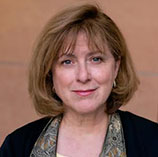 As guest editor of the spring 2014 issue of Peer Review, Patrice McDermott, vice provost for faculty affairs, coauthored an introductory essay that calls for greater inclusivity in science, technology, engineering and mathematics (STEM).
