All posts by: UMBC News Staff


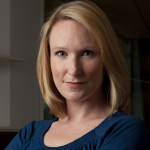
Alyse Altenburg, Sociology, Named 2014 Presidential Management Fellow

Alyse Altenburg, a master’s student in Applied Sociology and a Shriver Center Peaceworker Fellow, has been selected as a Presidential Management Fellow (PMF) for the Class of 2014. Altenburg is the only finalist from UMBC. PMF is a prestigious two-year paid government fellowship sponsored by the Office of Personnel Management for recent graduate students who seek a two-year fellowship in a United States government agency. Following the conclusion of the two year fellowship, PMFs have the opportunity to convert their fellowship into a full-time permanent position.

Alyse was one of 600 finalists out of 7,000 applicants.  She is originally from Portland, Oregon and graduated from Gonzaga University in 2009 with degrees in Sociology and Spanish. She served in Peru with the Peace Corps from 2009-2011, working largely with teen health promoters as a reproductive health educator, specializing in prevention of HIV, STIs and tropical diseases. Altenburg’s interests include criminal justice and social inequality, specifically violent gender crimes and discrimination against women. In the future, she plans to work for the FBI in the criminal investigation division or pursue similar anti-human trafficking cases with the U.N. or State Department.

Michelle Stefano, American Studies, in City Paper

In the latest in a series of articles for the “City Folk” section of City Paper, American Studies Folklorist in Residence Michelle Stefano writes about a former steelworker who recently was awarded a prestigious poetry prize. Stefano’s profile of Afaa Michael Weaver titled, “Working-Class Hero,” was published April 23.

In the column, Stefano traces Weaver’s journey from working at Sparrows Point Steel Mill to becoming a full professor in the English department at Simmons College, where just last month he was awarded the Kingsley Tufts Poetry Award, a $100,000 prize given by Claremont Graduate University each year for an outstanding published collection. She writes, “he says he feels ‘perpetually displaced’: the tension of belonging both to his roots in skilled labor and to the academy.”

To read the full column in City Paper, click here.

Helena Mentis, IS, Co-Edits a New Book on Computing in Healthcare

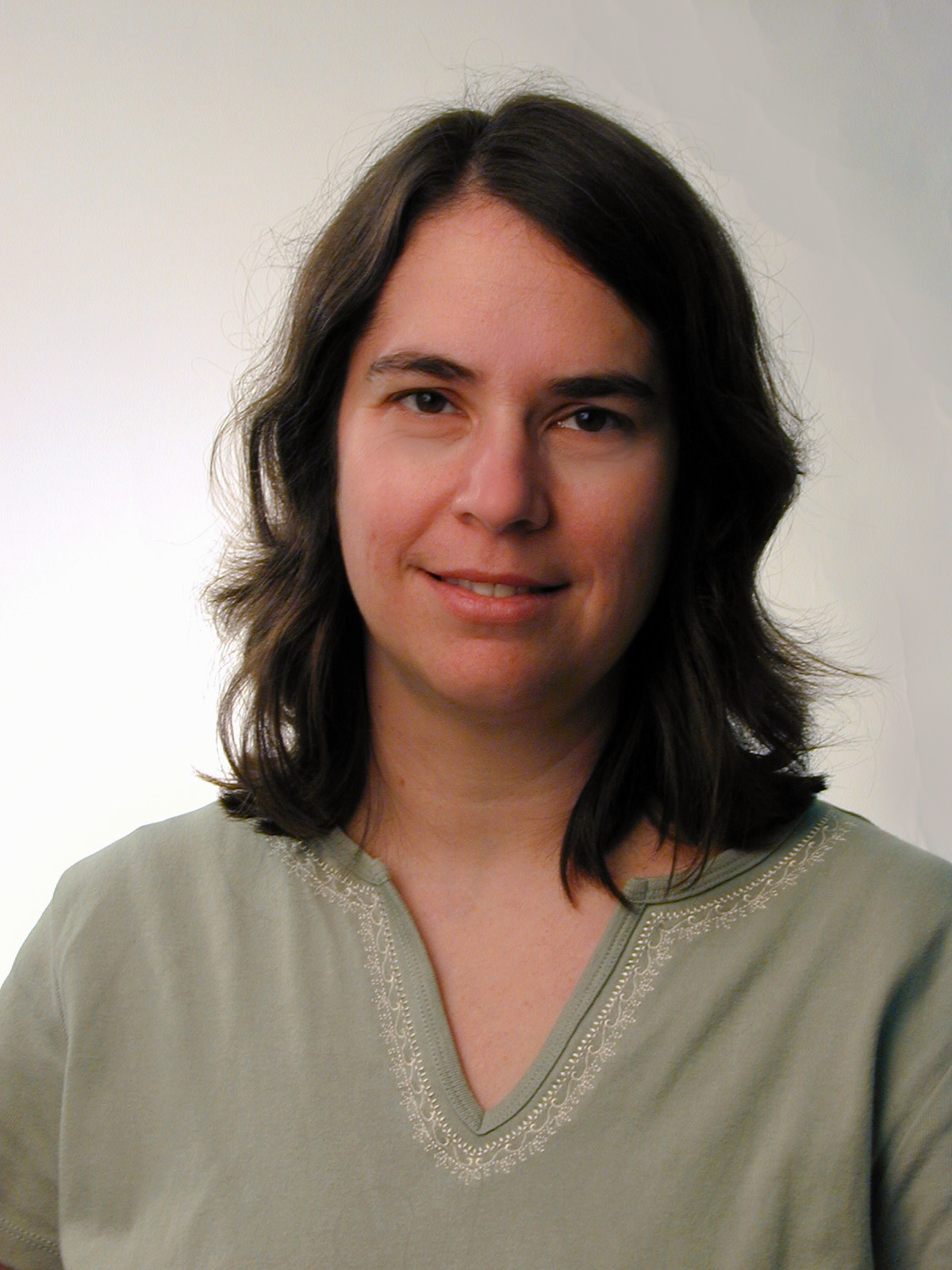
Mentis-150x150The Department of Information Systems is proud to announce the release of a new book co- edited by IS Faculty Helena Mentis, PhD.

The book is a “first of two volumes designed as a collective graduate guidebook for conducting fieldwork in healthcare. This volume brings together the experiences of established researchers who do fieldwork in clinical and non-clinical settings, focusing on how people interact with healthcare technology, in the form of case studies. These case studies are all personal, reflective accounts of challenges faced and lessons learned, which future researchers might also learn from.” “Fieldwork in Healthcare: Case Studies Investigating Human Factors in Computing Systems” is available on Amazon.

Click here to find out more information.

Advancing Excellence: Research, Scholarship and Creative Achievement

This is the second in a series of articles on the four focus areas that are part of UMBC’s strategic planning process.
DSC_1866The primary goal of the Collective Impact in Research, Scholarship, and Creative Achievement focus area is to elevate UMBC as a nationally recognized and regionally relevant research university. The key drivers in achieving this goal are: creating an inclusive environment for faculty and students, developing excellence in new intellectual frontiers, and fostering multidisciplinary and inter-institutional approaches that build research, scholarship and creative achievement across the campus.

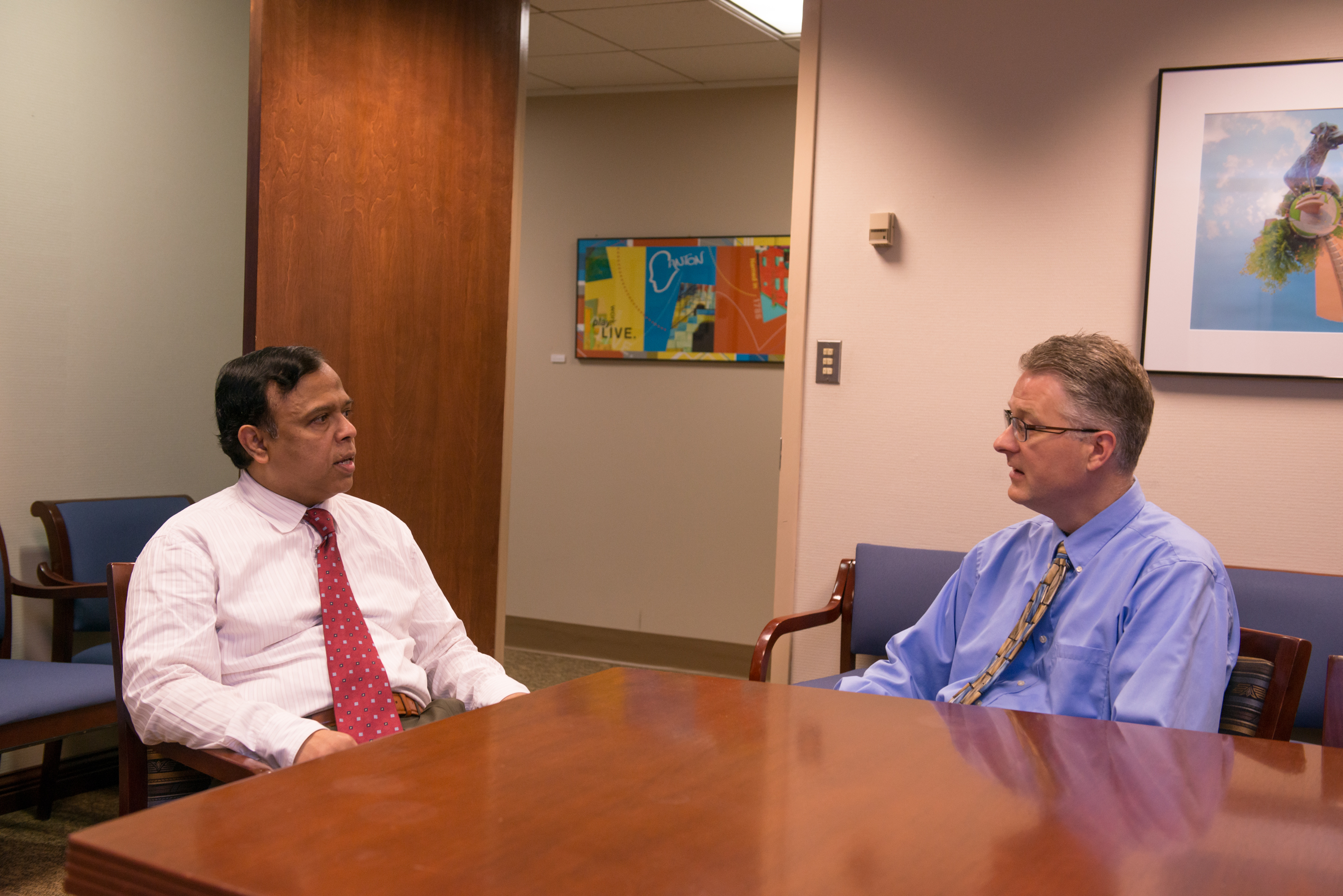
Strategy group co-chairs Aryya Gangopadhyay, professor and chair of information systems, and John Schumacher, associate professor and graduate program director of sociology and anthropology, primarily envision their group as a means to reach out to the entire campus community and make sure all the voices across campus are heard. “It’s important to look at research, scholarship and creative achievement across the colleges and ask ourselves how we want to develop as a university – as UMBC,” says Schumacher.

Group members are charged with engaging the campus community to examine current strengths in research, scholarship and creative achievement; to identify areas that will elevate UMBC’s national prominence in the next five years; to articulate connections with local communities and regional assets; to consider multi- and inter- institutional initiatives; and to develop priorities and metrics to track progress and success.

“We need to create the right environment for people to succeed and grow,” says Gangopadhyay. “People come here because they see a top class research university with great potential and people. The will and expertise are here to go to the next level. We want to examine what needs to get done, what roadblocks exist, what changes need to be made in the infrastructure and how we actualize the creative ideas people have. We’ll be successful if 10 years from now we see a measurable impact in our research, scholarship and creative achievements.”

Both Gangopadhyay and Schumacher believe that promoting research, scholarship and creative achievement across colleges and exploring how interdisciplinarity contributes to addressing important issues are critical to the strategic planning process. “We’re tackling problems of interest to the entire world. In today’s world, we can’t just look to one area for solutions; no one person alone can solve these problems. It’s our intra- and interdisciplinary research that brings solutions,” says Gangopadhyay.

Gangopadhyay and Schumacher add that their university roles and committee participation keep them engaged in campus-wide processes where they hear diverse perspectives from faculty, staff and students, and learn about projects and programs on and off campus. These experiences inform their work as co-chairs. “People on campus want to know what other people are doing,” says Schumacher. “Part of this process is to develop bridges of communication, and to build on these connections to ensure future success. In addition, we want to highlight UMBC’s location in the Baltimore-Washington corridor that provides a rich environment attracting faculty and students, as well as emerging partnerships with government agencies and universities. These connections, and new ones, will help us provide unparalleled experiences for our students to gain practical experience and find fulfilling jobs.”

Following Provost Philip Rous’ lead, Gangopadhyay and Schumacher reiterate the importance of an open and engaged process to articulate UMBC’s collective voice in strategic planning. They are pleased at the overwhelming response to the call for strategy group members, and will use focus groups, town meetings, surveys and other activities to engage with the entire campus over the next year. “This is a very important process,” Gangopadhyay says, “We have an exceptional group of people from across campus working on this focus area, and we will be reaching out to see what everyone thinks.”

Schumacher adds, “We need the whole UMBC community to be involved. We need everyone at the table, everyone’s voice represented, for this to be successful.”

Comments and questions on the Research, Scholarship and Creative Achievement focus area can be sent to gangopad@umbc.edu and jschuma@umbc.edu.

Marie desJardins, CSEE, Named an American Council on Education Fellow

RAPmdesjardinMarie desJardins, computer science and electrical engineering, has been selected as a participant in the American Council on Education’s (ACE) Fellows Program. desJardins was one of just 31 faculty and administrators chosen from across the United States this year.

The ACE Fellows Program is the premier program for “identifying and preparing the next generation of senior leadership for the nation’s colleges and universities.” More than 300 past ACE fellows have served as chief executive officers of colleges or universities and over 1,300 have served as provosts, vice presidents and deans.

During the year-long program, desJardins will work with the president and senior officials at a host institution, while also completing a project of pressing interest to UMBC. Click here to read more about the ACE Fellows Program and here to see the full list of fellows.

Constantine Vaporis, Asian Studies, Op-Ed in Al Jazeera America

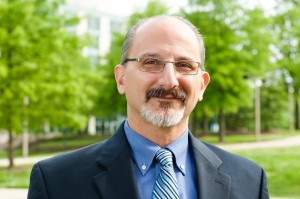
As President Obama begins a week-long visit to Asia, Asian Studies Program Director Constantine Vaporis writes in an Al Jazeera America op-ed that the trip is aimed at reassuring allies in the region that they remain top priorities on his agenda. Vaporis writes adding South Korea and Japan to the itinerary has made the trip even more important as tension between the two countries lingers over the history wars.

vaporis

“The U.S. administration has made clear that it will not act as mediator between the two sides. Nevertheless, Obama has acted assertively to try to prevent a further erosion of relations between them,” Vaporis writes.

As Obama visits Japan, South Korea, the Philippines and Malaysia, Vaporis offers suggestions for the president for how he should approach all four visits, but writes it will be important to keep one overarching theme in mind.

“Obama’s four-nation trip sends an important message about the U.S.’s commitment to Asia. Only through cooperation and mutual respect will these countries meet the regional challenges they face from China and North Korea,” he adds.

To read the full column titled “Obama seeks to rebalance ‘pivot to Asia,'” click here.

Justin Vélez-Hagan, Public Policy, Op-Ed in Fox News Latino

In his latest column published in Fox News Latino, Public Policy Ph.D. student Justin Vélez-Hagan writes historians may view this as Puerto Rico’s “lost decade” if no changes are made to its economic policies. Vélez-Hagan is executive director of the National Puerto Rican Chamber of Commerce. He writes Puerto Rico’s economic woes may be rooted in production.

“Many believe that Puerto Rico’s weak economy is partly attributable to a lack of investment in the production of exports, often considered one of the major factors behind the original ‘lost decade,'” Vélez-Hagan writes.

In the article, Vélez-Hagan also contends that even with its economic struggles, it is unlikely Puerto Rico will go through a substantial economic collapse.

“Although it won’t be bailed out by the IMF or World Bank, its economy still has something the rest of the world envies: the financial backstop of the greatest economic powerhouse that ever existed, one that is unlikely to allow a U.S. territory with nearly four million of its citizens to suffer through a Latin American-style economic collapse,” he adds.

To read the full column in Fox News Latino, click here.

Kimberly Moffitt, American Studies, to Participate in Everyman Theatre Panel (4/26)

On Saturday, April 26, Kimberly Moffitt, an assistant professor of American studies, will participate in a panel at Baltimore’s Everyman Theatre as part of the next Marc Steiner World of the Play discussion. This latest World of the Play discussion is called “Race and Representation: Our Greatest Accomplishment. Our Greatest Shame.” The goal of the event is to examine the impact of racial stereotypes within the entertainment industry and the effect on communities and greater culture.

Kimberly Moffitt will serve on the panel along with Dramaturg and Playwright Jacqueline Lawton and Otis Cortez Ramsey-Zoe, Associate Artistic Director at banished? productions and Lecturer of Theatre Arts at Howard University.

The discussion is scheduled for 5 p.m. For more information on Saturday’s event, click here.

UMBC scientists receive Maryland Innovation grant from TEDCO to advance bioremediation of PCB-contaminated sediments

Professor Kevin Sowers, Professor of Marine Biotechnology at the Institute of Marine and Environmental Technology (IMET), and Professor Upal Ghosh, at the University of Maryland Baltimore County, have received a $100,000 grant from the Maryland Innovation Initiative (MII). The grant will fund research to that will ameliorate the environmental harms of PCB’s. The program is an initiative of the Technology Council of Maryland (TEDCO) created in 1998 to spur commercialization of scientific research in Maryland as part of the state’s efforts to foster economic development through academic research.

Sowers is a global leader in environmental science and has pioneered a method that uses activated carbon pellets seeded with microorganisms that degrade the concentration of polychlorinated biphenyls (PCBs) in sediments. In recent laboratory experiments, the cultures Sowers created resulted in over 80% reduction in the PCB mass after treatment.

“Our hope is that this method for treating PCB’s will have a tangible impact in restoring previously degraded areas – both on land and in bodies of water,” says Sowers. “PCB’s have long been a harmful and largely intransigent pollutant and our work is intended to address serious health impacts these chemicals have on people, animals and the environment.”

Sowers is collaborating in this work with Upal Ghosh, a professor at the Department of Chemical, Biochemical, and Environmental Engineering at UMBC. “The magnitude of PCB sediment contamination and associated water quality problems in the United States is reflected in more than 3,200 state and local advisories that have warned the public about of the health impacts of consuming contaminated fish. These warnings cover 24% of total river miles throughout the United States,” Ghosh says. “The advisories include 100% of the Great Lakes and 35% of all other lakes nationwide.” PCBs are frequently reported as the leading contaminants at impacted sites. Current remediation technologies are expensive, destructive to environmentally sensitive areas, and difficult to coordinate with local activities. The technology proposed by Sowers and Ghosh addresses existing challenges and is especially suitable for environmentally sensitive sites such as wetlands and difficult-to-reach areas under-pier structures in contaminated harbors. This technology advances an in-situ remediation approach using activated carbon that has been recently developed by Ghosh and commercialized through a startup company Sediment Solutions.

The Maryland Innovation Initiative (MII) was created as a partnership between the State of Maryland and five Maryland academic research institutions (Johns Hopkins University, Morgan State University, University of Maryland College Park, University of Maryland Baltimore and University of Maryland Baltimore County.) The program is designed to promote commercialization of research conducted between and among the partnership universities and it leverages each institution’s unique strengths.

“The MII program is critically important to our partner universities and the citizens of Maryland,” noted Russell Hill, IMET Director, “because it facilitates the transformation of basic science into practical and far-reaching applications. We are grateful for TEDCO’s support and foresight in addressing this important environmental issue and are proud of the excellent research being done by Dr. Sowers and Dr. Ghosh.”

TEDCO

The Maryland State Legislature created TEDCO in 1998 to facilitate the transfer and commercialization of technology from Maryland’s research universities and federal labs into the marketplace and to assist in the creation and growth of technology-based businesses in all regions of the State. TEDCO is an independent organization that strives to be Maryland’s leading source for entrepreneurial business assistance and seed funding for the development of startup companies in Maryland’s innovation economy.

INSTITUTE OF MARINE AND ENVIRONMENTAL TECHNOLOGY

Located in Baltimore’s Inner Harbor, the Institute of Marine and Environmental Technology is a strategic alliance involving scientists at the University of Maryland Center for Environmental Science, the University of Maryland Baltimore and the University of Maryland Baltimore County. Scientists are engaged in cutting-edge research in microbiology, molecular genetic analysis and biotechnology, using marine resources to develop new drug therapies, alternative energy and other innovations to improve public health and economic opportunities. IMET also contributes to sustainable marine aquaculture and fisheries in the Chesapeake Bay and other marine ecosystems.


Hearts and Minds: Lisa and Dwayne Price

From the start, Lisa (Dates) Price ’87, information systems and Dwayne Price ’87, information systems, ’87, seemed destined to become a couple.

w14-lisa-dwayneThey met on the first day of freshman orientation. Later, they were assigned to the same orientation team. And though they lived in different dorms freshman year (Dwayne in Patapsco; Lisa in in Susquehanna), they shared a circle of friends and a major.

Lisa acknowledges how her feelings for Dwayne began to change as she got to know him better that first semester. “Probably around October or November, I started to see Dwayne a little bit differently,” she recalls. “My relationship [with a former boyfriend] had gone the way most long distance relationships did. I started doing some reconnaissance to see what Dwayne’s situation might be.”

Though Dwayne was not in a committed relationship, Lisa waited some time before making her feelings known. She chose Valentine’s Day to make her move – sort of. A sorority on campus was selling homemade Valentine’s Cards, so she bought one and sent it to Dwayne, signing it, “Your Secret Admirer.”

Wayne was stumped. He asked his friends (including Lisa) who the secret admirer might be. She played dumb, for a while, but a month or so later, she confessed. That risky move turned out to be the turning point.

Their commitment was tested when Lisa received an opportunity to participate in a co-op through UMBC that extended from the summer through the following semester. It meant the two wouldn’t see each other regularly for several months. “It was part of us building the foundation for the rest of our lives,” Lisa says. (Dwayne later completed a co-op as part of his UMBC experience.)

To make up for lost time together, and lost credits, Lisa and Dwayne spent a summer together on campus, working and taking classes.

“You felt like you owned the campus,” Lisa recalls.

Dwayne concurs: “We had the whole campus to ourselves.”

Two years after graduation, they married. They also both decided to pursue master’s degrees in management information systems.

Over the years, the couple has remained highly involved in UMBC, serving on the alumni board in various capacities and offering advice to prospective students. Their two children – Devin, 20, and Layne, 18 – both attend UMBC.

“No one believes us, but we didn’t push them to go there. They could have gone anywhere they wanted, and they chose UMBC,” says Lisa.

Read the full issue of the Winter 2014 UMBC Magazine.

Lynn Cazabon and Eric Dyer, Visual Arts, Receive Ruby Artist Project Grants

Ruby Artist Project Grants, awarded by the Greater Baltimore Cultural Alliance, are presented to Baltimore area artists in support of projects “that reflect a diversity of talent and creativity in immersive theatre, interactive media experiences, documentary film and musical composition.” This is the first year the GBCA has awarded Ruby Artist Project Grants.

Lynn Cazabon, visual arts, was awarded a prize for Portrait Garden, a project centered upon work with long-term inmates at the Maryland Correctional Institution for Women that will be presented throughout Baltimore-area commercial display spaces.

Eric Dyer, visual arts, was awarded a prize for The Zoetrope Tunnel, a 9-foot tall by 20-foot long working walk-through sculpture whose interior animation will describe the evolution of the bicycle, both in mechanical development as well as in social impact.

These project descriptions, as well as further information about the Ruby Grants, can be found at the GBCA website.

Robert Deluty, Graduate School, Publishes His 44th Book

robertdelutyRobert Deluty, associate dean of the graduate school, has published a new volume of poetry, “Rock Piles and Cathedrals.”

In his review, Ronald Pies writes: “Robert Deluty’s marvelous new collection of poems takes, as its leitmotif, Saint-Exupery’s observation that ‘A rock pile ceases to be a rock pile the moment a single man contemplates it, bearing within him the image of a cathedral.’ This is reminiscent of Michelangelo’s revelation that his art aimed at freeing the ‘inner statue’ from within the rough marble. So, too, with Deluty’s observations, in which he perceives the inner light, concealed within so many of life’s dark moments. Readers will find many penetrating illuminations throughout this volume, revealing Deluty’s remarkable ability to see cathedrals within piles of rocks.”

This volume, as well as all of Dr. Deluty’s other books, may be purchased at the UMBC Bookstore.