All posts by: UMBC News Staff


Round-Up: UMBC In the News, 4/18

One of the things that makes UMBC great is how wonderful our alumni, students, faculty and staff are. Because of these amazing people, UMBC often finds itself “in the news,” so each week, we’ll be sharing with you a round-up of the most newsworthy achievements from our community.

Check out all the other great campus news on Insights Weekly.

UMBC: Big Brainiacs

Big Brainiacs

Engineer Corey Fleischer returns to URCAD to reach the next generation of innovators.

In 2005, an undergraduate researcher named Corey Fleischer ’05, and ’08, M.S., mechanical engineering, presented “Microarchitectured Egg-Box Cores for Sandwich Panels” at UMBC’s Undergraduate Research and Creative Achievement Day (URCAD). If that name sounds familiar, you might recognize Fleischer as the winner of Discovery Channel’s engineering-based reality competition “The Big Brain Theory: Pure Genius.” After graduating, Fleischer went on to become a senior mechanical engineer at Lockheed Martin, earn five patents, and establish the Baltimore Foundery, a not-for-profit space that provides Baltimore innovators with access to industrial grade tools and training to use them.

Now Fleischer is returning to URCAD to inspire the next generation of innovators. As the event’s featured guest speaker, Fleischer will offer a window into his passion for problem-solving and quest for new knowledge. He recently said in an interview with UMBC, “As long as I continue to learn, I’ll be happy.”

Undergraduates who share Fleischer’s excitement for learning, problem-solving and innovative thinking will present their research and creative work at the 18th annual URCAD, to be held on Wednesday, April 23, from 9:30 a.m. to 4:00 p.m.

Diane M. Lee, Vice Provost and Dean of Undergraduate Education, began URCAD with the vision that undergraduates should have an opportunity to engage in the full research experience, including presenting their results.

Janet McGlynn, Director of Communications and Outreach for the Office of Undergraduate Education, explains, “URCAD is the largest of our annual undergraduate research symposia and includes the broadest range of student work. From original choreography to biochemistry and policy analysis to quantum computing, innovative student work is on display. Graduates tell us that their URCAD experience provided valuable preparation for the level of conference participation expected of them in graduate school.”

McGlynn encourages all students, including those who are not yet involved in research, to attend URCAD. “Students who attend URCAD find out what others are doing and gain ideas for their own innovative projects. It can be inspiring to see what others have accomplished right here on this campus,” she says.

This year, the full-day event includes over 50 oral presentations and over 150 poster presentations, plus film screenings and artistic performances. These examples offer a glimpse of the exceptional work that UMBC students will present at URCAD:

• Ke “Coco” Tang ’14, political science, filmed interviews with members of Jordanian civil society to explore their reaction to the Syrian refugee population.

• Fadaka Adebayo ’15, health administration and policy, designed a linguistically and culturally appropriate social marketing toolkit to help older Hispanic and African American adults with type-2 diabetes improve their self-management practices.

• Caleb Williams ’15, dance, and Hannah Korangkool ’15, design, created “I’m Here,” an artistic performance that explores male gender expression and deconstructs definitions of gender and sexuality.

• Cathy Hornback ’14, computer science, and Abdullah Ali ’14, information systems, built an adaptive interface to provide easier access to computers for users who experience difficulty with pointing.

• Amy Rizkallah ’14 and James Han ’14, biological sciences, conducted protein chemical modifications on the amino acid residues of cromatine, a protein found in the venom of the South American rattlesnake, to determine where DNA-crotamine complexes are formed. Their research has potential implications for improving drug design.

A full list of presenters and abstracts can be found on the URCAD website.

(04/18/2014)

6 Reasons to Nominate Someone Great…

There’s really no question that Retrievers are some of the best and brightest in Maryland and around the world. Our alumni are teaching at Harvard and MIT. They’re doctors and researchers at Johns Hopkins and the National Institutes of Health.  They’re leading the charge for non-profits that are changing the world. They’re starting super cool businesses.

And on top of all that, they’re just good, nice people who care about their friends, family and community. But if that’s not enough motivation to start typing now, we’ve put together six more reasons why you should nominate someone you know:

  1. You can brag about how you “knew them when.”
  2. Seriously, can you think of a better way to tell a friend how awesome you think they are?
  3. Good karma. Need we say more?
  4. We have a brand-new faculty award, so you can say thanks to that teacher who changed your life.
  5. Your fellow alums deserve to be recognized for how awesome they are!
  6. You’ll have a great reason to come to the alumni awards to eat tasty snacks and visit with old friends.

Nominate someone today. It’s so worth it.

Visual Arts Faculty and IMDA Candidate in Socially Engaged Art Journal

Visual arts faculty Tom Beck, Tim Nohe and Steve Silberg, and IMDA candidate, Charlotte Keniston were featured in the first edition of Socially Engaged Art Journal (SEAJ).

“Engaging Community: Art and Food In Baltimore City” written by Charlotte Keniston discusses the artists’ work and UMBC thesis project centered upon food deserts in Baltimore; “My Station North” focuses on a collaborative exhibition by Keniston and Nohe, in which they work with children at Baltimore Montessori Public Charter School to document the Station North neighborhood of Baltimore through sound and photography; and “The Hughes Remix Project” written by Beck and Silberg details the development of the new Project archive containing “175 remixed, reinvented, reinterpreted, and reimagined images of Baltimore street scenes, promotional and advertising work, businesses, churches, schools, monuments, factories, machinery, and portraits.”

SEAJ is an online publication that showcases the work of artists whose practice, community art or social design is socially engaged. The first issue is titled “Baltimore.”

Hearts and Minds: Bob and Patti Pfeiff

Bob Pfeiff  ’82, economics, was a quiet, slightly home-sick freshman from rural Southern Maryland. Patti Kattowski ’81, health science and policy and sociology, was a bubbly sophomore from New Jersey. They met and fell in love at UMBC.

Both Bob and Patti lived in the same residence hall on a campus that, in the 70’s, was limited to just three dormitories – which were still called Dorms One, Two, and Three.

“We traveled in the same circles. It was a really tight group of people who lived together in the dorm,” Patti recalls.

w14-patti-bobIn spite of (or perhaps because of) their dramatic personality differences, the two undergraduates were drawn to each other. “Bob was so shy, and I was so out there,” Patti says.


Patti and Bob began to date by the spring of his freshman year. As neither one of them had a car on campus, their social activities were limited to activities on or near campus. “Going home wasn’t an option,” Patti says. “You found your fun.”

That they did. They swam laps together; frequented the ‘party room’ of Dorm Three; watched men’s lacrosse games. (Patti played both field hockey and lacrosse for UMBC.) Occasionally, by bus or borrowed car, they ventured into downtown Baltimore or Georgetown.

“If there was anything happening on campus, a performance of any sort, we went,” Patti says.

In 1981, not long after Bob and Patti graduated from UMBC, they got engaged. For their “honeymoon,” they drove to Pensacola, where Bob reported to Navy flight training after having been commissioned by the U.S. Navy. He then spent ten years as a naval officer, managing weapons and control systems at sea.

After Bob retired from the Navy, the couple settled in Fairfax, VA and raised a son, now 19. Bob has worked for a number of technology companies; currently, he is a senior software architect at Microsoft. Patti has worked in both several industries, including restaurant and real estate. Now, she is employed at a private boys’ school in Bethesda as the headmaster’s executive assistant.

Bob and Patti still recall their undergraduate days as a significant part of their lives together.

“It’s part of our history,” Bob says.

Patti, effervescent as ever, comments: “It’s been a fun ride.”

Read the full issue of the Winter 2014 UMBC Magazine.

Sherri Braxton-Lieber Named Director of Instructional Technology

Dr. Sherri Braxton-Lieber, Special Assistant to the Provost and Director of Course Redesign at Bowie State University (BSU), has accepted UMBC’s Director of Instructional Technology position in the Division of Information Technology. She will start full-time on Tuesday, May 27, and serve as the primary point of contact for DoIT’s instructional technology support efforts.

Piotr Gwiazda, English, Publishes a Review in The Times Literary Supplement

Piotr Gwiazda, Associate Professor of English, has published a review of Beautiful Twentysomethings by Polish writer Marek Hłasko (1934-1969) in the April 4, 2014 issue of The Times Literary Supplement.

Professor Gwiazda describes Beautiful Twentysomethings as “primarily a literary memoir. Hłasko adeptly recreates the world of his fellow writers, poets, critics, actors, film directors — the ‘beautiful twentysomethings’ of his title who, despite the repressive political climate of the 1950s, ‘kept faith that the moment would come when it would be possible to say: ‘No.’” He also notes that the book “shines a spotlight on emigration as a major theme in Polish literature.”

A. Moon ’99 MFA, Imaging and Digital Arts, Named Fulbright Scholar

A. Moon ’99 MFA, Imaging and Digital Arts, multimedia artist and staff member of the Academic Outreach and Engagement Division at Morgan State University, has received a Fulbright Research Award to examine the intersections between contemporary film production in Turkey and practices in the Asian American filmmaking community.

“My research will have two identifiable outcomes, motivated by a need for more open dialogue and cultural exchange, specifically within the area of film, between the U.S. and Turkey: (1) I will organize a screening of work by contemporary Asian American media artists to present in Turkey; and (2) I will curate a program of work by Turkish media artists to screen at venues in the United States.

A cross‐cultural study of Turkish and Asian American film presents the opportunity to examine many topical issues in the field of media studies including global/national identities, cultural memory, and hybridity. Just as Turkey is often described as occupying a peculiar geographic and cultural space that is “neither Eastern, nor Western but both and neither simultaneously” (Arslan, 2011), Asian Americans occupy a similarly interstitial position culturally and racially in contemporary America.”

MFA Thesis Exhibition in City Paper

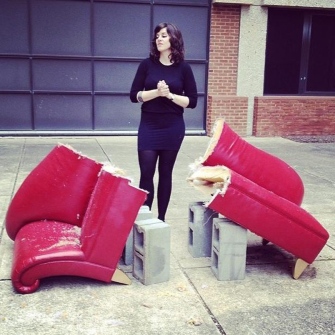
imageThe MFA Thesis Exhibition, now on display in the CADVC, was mentioned in an article by City Paper‘s Baynard Woods last week. The article highlighted UMBC’s well connected Visual Arts faculty, staff and MFA candidates in relation to the Baltimore arts community. Woods also mentions IMDA candidate Lexie Mountain’s performance piece exhibited at the opening, Fred Worden Cuts A Couch In Half With A Chainsaw.

Read “Art Seen” at City Paper‘s website.

Career Q&A: Ting Zhang ’03, M.A., intercultural communications, professor

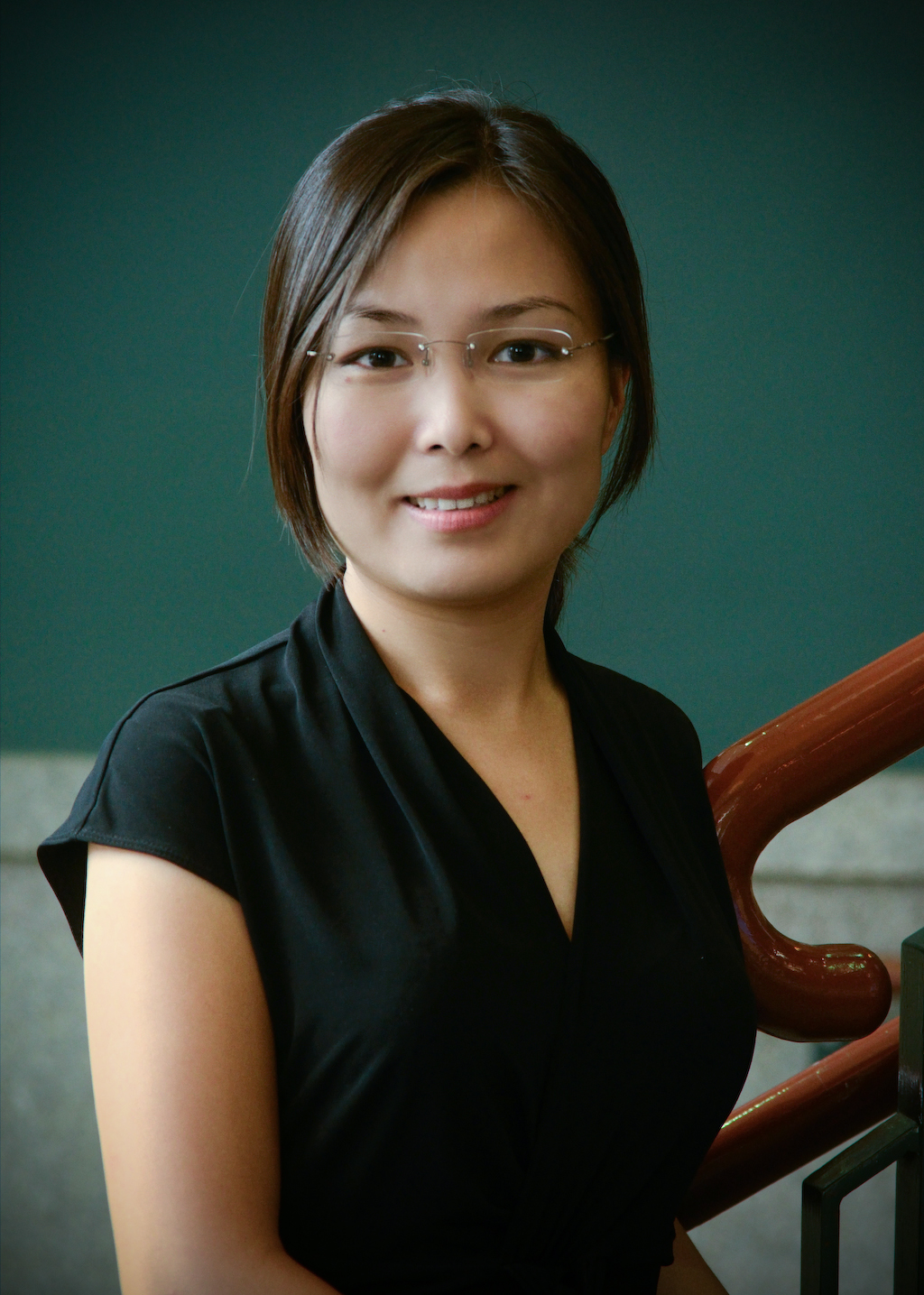
Every so often, we’ll chat with an alum about what they do and how they got there. Today we’re talking with Dr. Ting Zhang ’03, M.A., intercultural communications, about her career as an assistant professor at the University of Baltimore and her research into entrepreneurship, aging and economic growth.

Ting ZhangName: Ting Zhang
Job Title:  Assistant Professor
Employer: University of Baltimore

Q:  Tell us a little about how you wound up at UMBC. What’s your background?

A: UMBC’s unique Intercultural Communication program attracted me. I was a student of English and International Business in China before I came to UMBC.

Q:  What is your focus in your career as an Assistant Professor in the School of Public and International Affairs at the University of Baltimore?

A: I teach quantitative courses to graduate students of Public Administration and I conduct public policy research on the topics related to entrepreneurship, aging and economic growth. I am also a research assistant professor at the Jacob France Institute where I conduct a variety of labor and economic research projects.

Q: Were there any lessons you learned, in particular, at UMBC that you have carried with you into your work?

A: As a student of Intercultural Communication, naturally I was very much aware of culture diversity and fusion between various cultures. This builds my foundation in believing in the importance of diversity in our economy that contributes to my research interests on entrepreneurship, creativity and economic growth and dynamics.

Q: What has been the greatest success in your career?

A: The greatest success I believe is that I have been so lucky to have the great mentors at UMBC, at George Mason University and at my current work at the University of Baltimore. They have offered enormous and selfless guidance to me.

The greatest progress I have made in my career so far, I believe, is publishing my first book (Elderly Entrepreneurship in an Aging US.. Economy) and it was an early academic effort on such a topic. The empirical research was awarded with the fellowship from the Ewing Marion Kauffman Foundation and a paper award in the international Charles Tiebout Prize for Regional Science. The book later on luckily received certain public, media and academic attention.

Q:  Is there a particular class or professor at UMBC who really inspired you?

A: Professor Edward Larkey guided me through my UMBC journey and has kept encouraging me on my progress. He is a great mentor. Professor Fred Pincus also inspired me on the fun from academic research through his teaching.

Q: What advice would you give to students considering UMBC?

UMBC is a very dynamic university with many inspiring professors who have strong academic rigor and who are also caring and approachable. One piece of advice would be to communicate well with the great professors and take advantage of the vast human capital and warm intellectual resources. UMBC is also a great intercultural community. Enjoying the diversity and participating in various multi-cultural activities would be another advice from me.

Career Q&A: Ting Zhang '03, M.A., intercultural communications, professor

Every so often, we’ll chat with an alum about what they do and how they got there. Today we’re talking with Dr. Ting Zhang ’03, M.A., intercultural communications, about her career as an assistant professor at the University of Baltimore and her research into entrepreneurship, aging and economic growth.

Ting ZhangName: Ting Zhang
Job Title:  Assistant Professor
Employer: University of Baltimore

Q:  Tell us a little about how you wound up at UMBC. What’s your background?

A: UMBC’s unique Intercultural Communication program attracted me. I was a student of English and International Business in China before I came to UMBC.

Q:  What is your focus in your career as an Assistant Professor in the School of Public and International Affairs at the University of Baltimore?

A: I teach quantitative courses to graduate students of Public Administration and I conduct public policy research on the topics related to entrepreneurship, aging and economic growth. I am also a research assistant professor at the Jacob France Institute where I conduct a variety of labor and economic research projects.

Q: Were there any lessons you learned, in particular, at UMBC that you have carried with you into your work?

A: As a student of Intercultural Communication, naturally I was very much aware of culture diversity and fusion between various cultures. This builds my foundation in believing in the importance of diversity in our economy that contributes to my research interests on entrepreneurship, creativity and economic growth and dynamics.

Q: What has been the greatest success in your career?

A: The greatest success I believe is that I have been so lucky to have the great mentors at UMBC, at George Mason University and at my current work at the University of Baltimore. They have offered enormous and selfless guidance to me.

The greatest progress I have made in my career so far, I believe, is publishing my first book (Elderly Entrepreneurship in an Aging US.. Economy) and it was an early academic effort on such a topic. The empirical research was awarded with the fellowship from the Ewing Marion Kauffman Foundation and a paper award in the international Charles Tiebout Prize for Regional Science. The book later on luckily received certain public, media and academic attention.

Q:  Is there a particular class or professor at UMBC who really inspired you?

A: Professor Edward Larkey guided me through my UMBC journey and has kept encouraging me on my progress. He is a great mentor. Professor Fred Pincus also inspired me on the fun from academic research through his teaching.

Q: What advice would you give to students considering UMBC?

UMBC is a very dynamic university with many inspiring professors who have strong academic rigor and who are also caring and approachable. One piece of advice would be to communicate well with the great professors and take advantage of the vast human capital and warm intellectual resources. UMBC is also a great intercultural community. Enjoying the diversity and participating in various multi-cultural activities would be another advice from me.

Kate Brown, History, Wins the 2014 Ellis W. Hawley Prize from the Organization of American Historians

On Saturday, April 12 in Atlanta, History Associate Professor Kate Brown was awarded the 2014 Ellis W. Hawley Prize from the Organization of American Historians (OAH) for the best book-length historical study of the political economy, politics, or institutions of the United States, in its domestic or international affairs, from the Civil War to the present.

plutopia

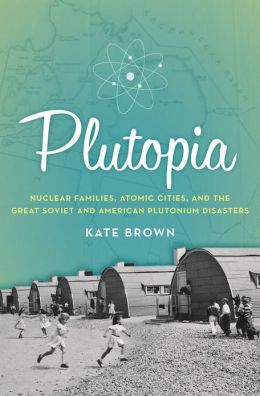
Brown received the award for her book, Plutopia: Nuclear Families, Atomic Cities, and the Great Soviet and American Plutonium Disasters (Oxford University Press, 2013), in which she tells the stories of Hanford, Washington and Ozersk, Russia. The Soviet and American governments created these communities to produce the plutonium that fueled the nuclear arms race during the Cold War.

In a press release announcing the award, OAH stated: “Brown notes that the major accidents at Hanford and Ozersk were largely unknown to the public, in contrast to the recognition today of Chernobyl and Fukushima. But the costs to the well-being of the workers and the environment were arguably far higher. This revelatory history provides a highly readable and deeply researched model of transnational history.”

Last month, Brown was awarded the 2014 George Perkins Marsh Prize from the American Society for Environmental History (ASEH), also for her book, Plutopia.