A new Duke University study finds that contagious yawning is linked more closely to a person’s age than their ability to empathize, and it shows a stronger link to age than tiredness or energy levels.
Psychology Professor Robert Provine was interviewed for a BBC News article about the study and said it was “unique” because it marked the first time a link between ageing and contagious yawning had been demonstrated.
The scientific study of contagious behavior, including yawning and laughing, was conducted in Provine’s lab at UMBC and the new Duke study involved application of his previous methods for examining contagious yawning.
Provine said the findings would “help to get down to the neurological nitty-gritty of contagious behaviors” and mental health disorders such as autism and schizophrenia, adding, “contagious acts such as yawning and laughing remind us that we are often mindless beasts of the herd, not rational beings in full conscious control of our behavior.”
To read the full article on the BBC News website, click here.
In his latest column published in The Baltimore Sun, Political Science Professor Thomas Schaller writes about growing political polarization at the national level at the same time forces are eliminating divided government on the state level.
“The American states have cleaved into red and blue subsets. In all but three — yes, three — of the 49 states with bicameral, partisan state legislatures (Nebraska is unicameral and non-partisan), one party controls both chambers,” Schaller writes.
As the balance of power between parties is becoming more even at the state level, Schaller writes divided government continues to prevail on the national stage.
“The first two years of Mr. Obama’s presidency saw unified Democratic control, but the next four have been divided and the last two almost certainly will be — the same pattern during his Democratic predecessor Bill Clinton’s term.”
To read the full op-ed titled, “Adapting to a politically divided nation,” click here.
The 2014 campaign for Maryland governor is intensifying, and candidates in both parties are moving forward with proposals on taxes and spending as Election Day nears in November.
Public Policy Professor and Chair Donald Norris was interviewed for an article published March 14 in The Baltimore Sunabout the race for governor and the various education expansion and tax cut proposals from candidates on both sides.
“This is campaigning as usual,” Norris said. “Promise, promise, promise in order to win as many votes as you can on these promises — and then worry about it when you get in office.”
To read the full article titled “Candidates make many promises — but how to pay for them?” in The Baltimore Sun, click here.
One of the things that makes UMBC great is how wonderful our alumni, students, faculty and staff are. Because of these amazing people, UMBC often finds itself “in the news,” so each week, we’ll be sharing with you a round-up of the most newsworthy achievements from our community.
The development of Our UMBC: A Strategic Plan for Advancing Excellence is founded upon a broadly inclusive process. Discussions about focus areas for planning began at the 2013 University Retreat and continued through a series of 35 conversations with nearly 800 faculty, staff, students, and alumni this past fall. Based on this campus input, the Strategic Planning Steering Committee has identified four planning focus areas widely viewed as drivers of future success for UMBC: Continue reading “Charge to Strategic Planning Strategy Groups”→
The latest issue of UMBC Magazine is in mailboxes now, and it’s full of great stories like these:
Rooms to Grow — UMBC alumni, professors and students find new spaces and places for innovation.
Launchpad — Professors Amy Hurst and Shaun Kane have created a community that helps open up the world for people with disabilities through assistive technology.
Hearts and Minds — Couples who met at UMBC share their love stories.
We’re also excited to share these alumni stories from the Spring 2014 issue with you:
Changing Communities — A look at alumna Sherece West-Scantlebury ‘07 and her work in public policy and community development.
Forget the Smoking Gun — Gus Russo ‘72 writes about the importance of investigative reporting in the digital
Heaven, Hell and Eisenhower — A conversation with Allan Jirikowic ‘77 about his advocacy for the art and party scene in D.C.
Moving in Place — A peek into the literary life and work of Jill Sisson Quinn ‘97
Graduate student Sako Narita provides disaster response in the Philippines
It was the middle of the night when Sako Narita received an urgent phone call from Japan with a request: a disaster response team headed for the Philippines after Typhoon Haiyan needed her expertise.
The call did not come as a surprise to Narita 04, interdisciplinary studies (international emergency health services), currently a masters student in emergency health services (EHS). She had prior experience providing disaster response for the 2011 earthquake and tsunami in her native Japan and a previous typhoon in the Philippines in 2012. This time, she had to be ready in a matter of days to travel with the Japan-based Humanitarian Medical Assistance (HuMA) disaster response team.
Narita spent ten days in the Philippines in November 2013 providing needs assessment: assisting patients, negotiating with local and international health and government organizations, setting up mobile medical clinics, and doing whatever she could to ensure typhoon victims received the care they needed.
Believe it or not, the people were more positive than we expected. Sometimes people were already moving onthey started a new life and started building new houses, says Narita. But deep inside, they still are struggling.
Negotiating Solutions
In addition to providing needs assessment and medical assistance, a big part of Naritas job was negotiationa skill she has developed through both hands-on experience and her EHS education at UMBC.
The on-the-ground situation during Naritas first mission in the Philippines in 2012 required her to negotiate with local officials to gain access to the disaster site for HuMA. During her more recent trip, she used her negotiation skills again to discuss partnering with an Israeli disaster response team that she previously worked with in Japan.
How did Narita feel prepared to serve in such a critical role? All of my knowledge about disaster response I got at UMBC, she reflects.
As a student from Japan interested in studying medicine and emergency health services, Narita says the decision to come to UMBC was easy given the EHS departments international reputation as a leader in its field.
What makes our program different from every other program is that our focus is on that area of overlap between public health and emergency management, explains Rick Bissell, EHS professor and graduate program director. The graduate program teaches emergency clinical response, management and public health, and prepares students like Narita to meet everyday and disaster-related emergency health needs in both domestic and international situations.
The Whole Person
The EHS department began at UMBC in 1980, following Marylands national leadership in developing a statewide emergency medical services program in the 1970s. The department historically has had strong relationships with agencies such as the Maryland Institute for Emergency Medical Services Systems (MIEMSS) and University of Maryland Shock Trauma Center, as well as several state, county and local emergency health service providers.
Those partners, who have played such an important role in providing training opportunities for EHS students, are now the beneficiaries of the EHS program. Today, alumni serve in a variety of roleslocally and around the globeas physicians, EMS directors and coordinators. Jonathan Bratt is the MIEMSS coordinator for region 5, which covers Montgomery, Prince Georges, Calvert, Charles and St. Marys counties. Christoph Redelsteiner served as chief of EMS for the Vienna, Austria Red Cross before joining the faculty of St. Pölten University of Applied Sciences in Austria. One alumnus, physician Matt Levy, has returned to UMBC to serve as EHS medical director.
We educate the whole person, says Bruce Walz, professor and chair of the EHS department. What weve heard back from employers is that our students know how to think. Theyre not just doing a protocol. They know why theyre doing that protocol, they know why theyre giving that drug and they can make those decisions in the field.
This priority on educating students as whole people is evident in the work of EHS alumni and students like Sako Narita, who is also a national registered paramedic and Maryland emergency medical technician-paramedic. The level of dedication and quality of work the programs graduates are known for propels them to the top of their field, while also having a palpable impact on patients lives and on communities in need.
HuMA could contact me again, Narita says, and I hope they do.
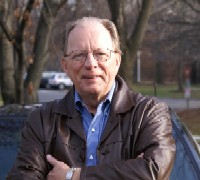
Catonsville resident Gus Russo ’72, political science, is married to the mob. And to U.S. history. He is a writer and investigative reporter specializing in the shadowy netherworld of American crime and politics. Russo has worked on 15 television documentaries for major networks in the United States and elsewhere, and he is the author of seven books – including “Where Were You? America Remembers the JFK Assassination” (Lyons Press, 2013).
The 1960s and 1970s (when I was a student at UMBC) were not just defined by musical revolutions, but also by the tumult of politics and conspiracy – and the frantic efforts by public officials to keep secrets: Who killed JFK, MLK and RFK? Why were we in a senseless and seemingly endless war in Vietnam? Who ordered the Watergate break-in and what were the burglars after in the Democratic National Committee headquarters? What were all those silver discs people thought they saw in the sky?
In the 1980s, I gave up work as a musician to embark upon a journey to find answers to those sorts of questions as an investigative journalist. While it’s often portrayed as a glamorous profession, the skills and tools I employ are the same mundane ones that previous generations of gumshoes have relied upon: developing and working sources, skip-tracing (locating subjects), and obtaining documentary records from courts, real estate transactions, federal archives and law enforcement agencies.
Other than giving faster access to a small percentage of available records, the digital revolution hasn’t changed the work much. Investigative reporters rarely find their best stories online. The real truth (or as close as we can get to it) often lies buried in undigitized repositories of primary source documents, or in the closely guarded memories of the first-hand players and witnesses.
It’s often hard to win the trust of those actors and witnesses to history. It requires patience and perseverance, especially in the areas that most interest me: organized crime and intelligence agencies domestic and foreign. Old school wiseguys and retired spies don’t open up their vaults (or memories) just because you sent a nice email or even snail mail. I’ve sent Christmas presents, birthday presents, get-well cards, and funeral floral arrangements. (When I’m in the middle of a project, I have “Edible Arrangements” on speed dial.) I’ve hopped on countless planes, trains and autos to take someone out to dinner and slowly gain their trust. It often takes many months. In some cases, years.
But more often than not, determination pays off. When I flew to Chicago in 2000 to take ten members of former boss Sam Giancana’s family to dinner in a suburban restaurant infamous for its parking lot whackings, I thought I must have lost my mind. But it worked. The clan introduced me to many of Sam’s still-living friends and associates – a treasure trove of information for my then work-in-progress, The Outfit.
Then there is the paper trail – and the elusive “smoking gun” that everybody wants to find. But the truth is that document trolling is painstaking and boring 99 percent of the time. (I should know: Staff members at the National Archives have told me I’ve spent more hours there over the last 20 years than any other researcher.) And for every useful page, I’ve discarded a thousand others.
It’s also difficult to find the best documents. They certainly aren’t all at the National Archives. I’ve pulled FBI files from garages and attics of retired agents. My eyes have gone blurry pouring over faded real estate quitclaim deeds. I’ve begged Congressional committee chairmen to open up investigative files stored in the Library of Congress before the traditional 50-year lockdown date expires, and appealed FBI and CIA denials more times than I can count. When the FBI tried to tell me they only held 275 pages on the mob’s longtime fixer, Sidney Korshak, I hounded them for two years to obtain the rest of what I intuited they must possess. Eventually I was rewarded with 7,500 pages delivered to my doorstep at no charge. Maybe they felt guilty about the two-year runaround.
There was gold in those files, but there were no “smoking guns.” In fact, that concept should be erased from the minds of budding and seasoned journalists alike. The only “smoking gun” proof is the literal kind: a perpetrator caught holding one of them over the body of a victim. Nothing that dispositive can ever be found after the fact. Any document can be forged, any picture Photoshopped, and any witness mistaken or corrupted.
The seasoned investigative reporter knows that the more sensational the information you have, the more corroboration is needed so that one can arrive, at best, at an approximate truth based on a preponderance of evidence. If you require concrete proofs in your life, I suggest majoring in math. Otherwise you’ll be in for one major disappointment after another.
Serious investigative work – pounding the pavement, working the phones, and poring through over documents – can max out your stamina and your credit card. But it’s the only way I have been able to find answers to the questions that dog me about the shadow powers in our country.
Plus, you make some lasting human connections along the way. (What a concept!) In the week that I wrote this piece, I had phone calls from Sam Giancana’s daughter, Carlos Marcello’s son, the man who found Lee Harvey Oswald hiding in a Dallas theater after the Kennedy assassination, and two members of JFK’s Secret Service detail.
Often when these friends call or we visit in person, I feel sad for a generation that has been led to believe that all information, knowledge and wisdom reside inside in an invisible digital server or the “cloud.” It is a failure of my generation, which created and sold the myth, and it certainly doesn’t bode well for the future of my profession.
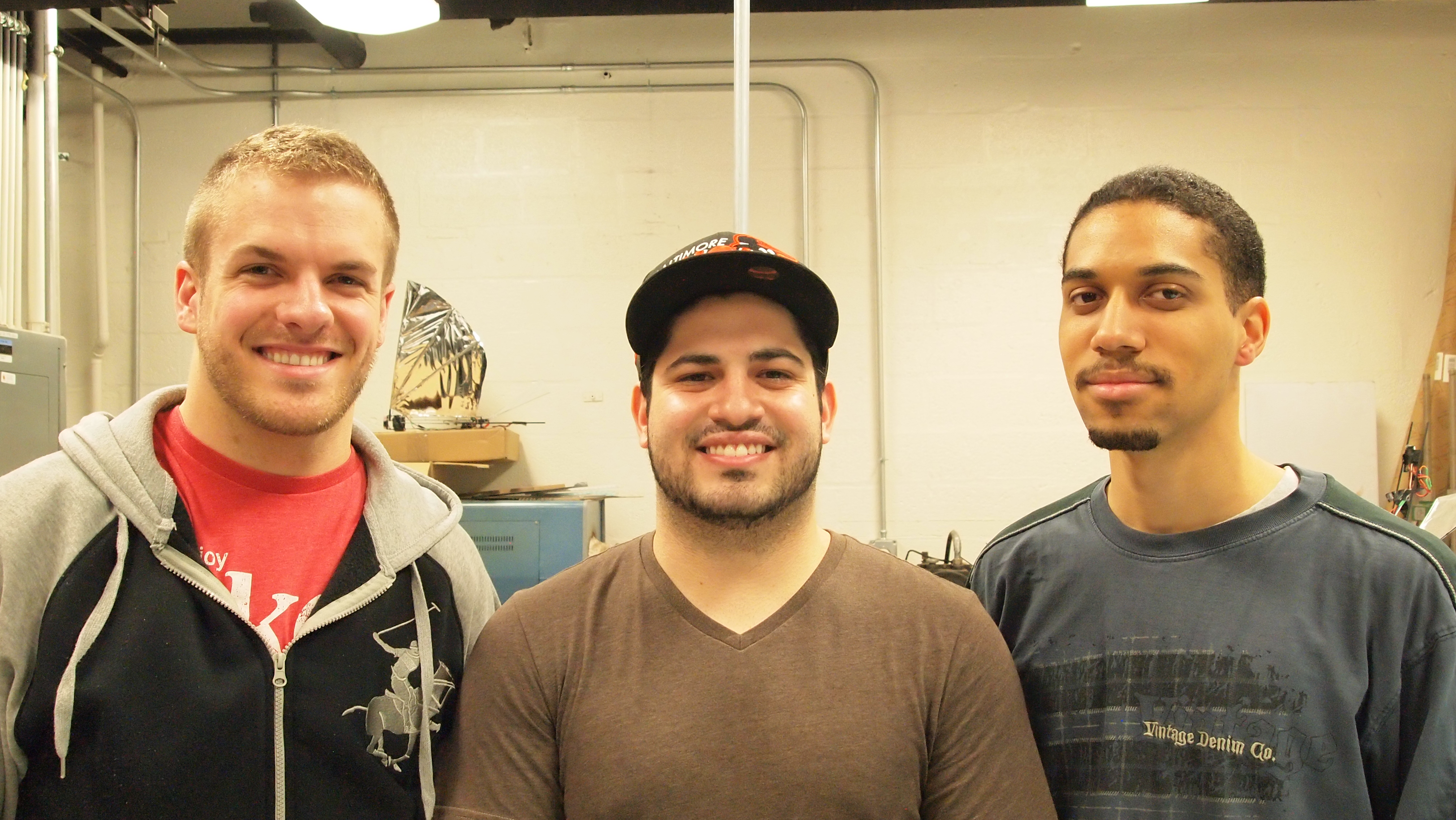
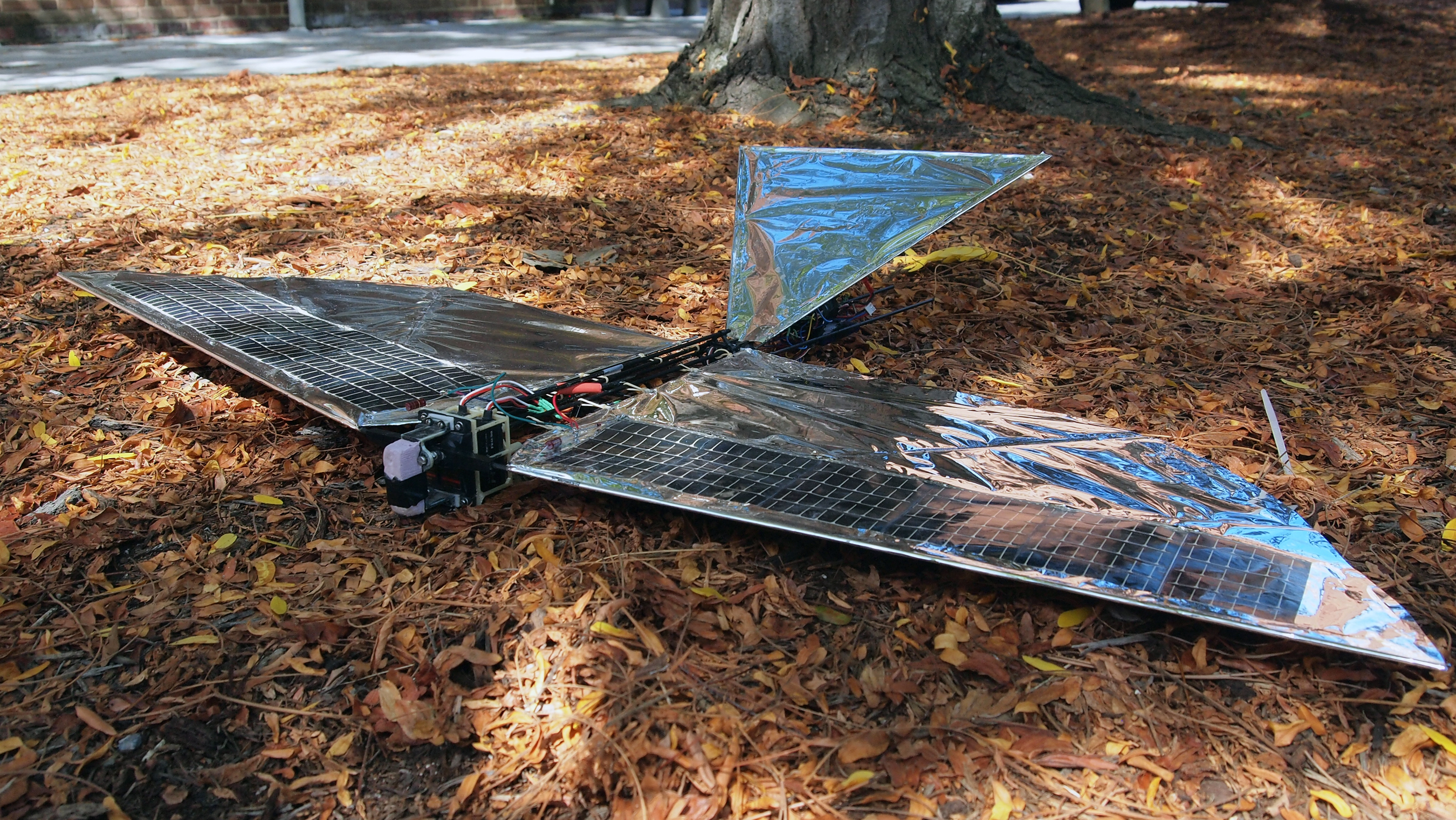
Man has long envied the avian ability of flight. Wings offer the opportunity for flight, yes, but also for exploration and a different point of view. Now, three UMBC alumni are working to borrow that vantage point through the Robo Raven project at the University of Maryland, College Park. We spoke with Meyerhoff alumni Ariel Perez-Rosado ’11, M19, mechanical engineering; Luke Roberts ’12, M20, mechanical engineering; and Alex Holness ’13, M20, mechanical engineering, about their continued connection in graduate school and what it is like to work on this amazing micro air vehicle.
Q: Why did you decide to study robotics?
Ariel: I never really intended to study robotics. I was more interested in materials and structures. However, when I started at College Park, I started working with the wings of a small robotic bird. When it came time to run more experiments I had to rebuild the same robot from scratch. No one else was working on the small bird so I had to figure things out on my own. I slowly started learning what it takes to make a robotic bird. I really enjoyed the project and in order for the project to grow, design changes needed to be made. By the time it came to make Robo Raven I had learned enough robotics to know what we needed to do to make a successful flying robot.
Luke: I decided to study robotics because I wanted to be able to make complete systems that integrated concepts from mechanical engineering, electrical engineering, and computer science and robotics utilizes each of those. I knew it would be challenging, and it definitely is, but I really enjoy what I am working on.
Alex: I have been fond of innovation and technology. Additionally, as cliché as it might be, I liked to build with Legos, K’nex, wooden blocks when I was a child. My parents encouraged and enabled me to explore my curiosities. I became a mechanical engineer because I liked to create things, understand processes and mechanisms, and applicable theoretical concepts. I ultimately decided to be robotics because I experienced a number of other subject topics at internships and didn’t find myself fond of them, and I am able to build things regularly. Robotics covers a variety of topics, which keeps the work interesting. Additionally, it is a cutting-edge field, which does make it viable for a future career.
Q: What inspired this project?
Ariel: Our lab has worked on Micro Air Vehicles for years, but recently the research took a new turn. We wanted to look at controlling each wing independently. This is something that birds do but has not been studied in robotics yet. In order to do this, the wings needed to be powered by independent motors. This means that the wings needed to be larger than ever before and calls for a whole new robot. So basically in an aim to study what actual birds in nature can do, Robo Raven was made.
Q: What are the applications of a project like this?
Luke: There are many applications for this platform. Robo Raven has the potential to be used in the future to monitor farms as a mobile scarecrow or crop inspector, fly at higher altitudes and track weather, or serve as recon for soldiers on the battlefield while looking like a normal bird to the eyes of the enemy. It could also give a push to the FWMAV hobbyist community because of the aerobatics it can perform.
Alex: The project could be used in disaster relief situations, such as gathering video and sensory data (such as chemical sensing). It could also be used in educational programs–bio-inspired robots cover so many disciplines. I remember my best educational experiences being tangible. I am in the process of arranging a visit to my high school to show Robo Raven to a robotics club as a teaching tool.
Q: What’s it like, as alumni of the Meyerhoff Scholars Program, to continue your work together at UMD?
Ariel: It is great to have other Meyerhoff Scholars to work with. I know exactly what they have gone through in terms of classes and experiences. This allows us to hold each other to higher expectations than other students.
Luke: It was really helpful to me that Ariel, whom I already knew, was in the lab when I first got there and helped me get settled in and just have a friend there. I was really excited when I heard Alex was coming because we were in the same cohort and actually roomed together during Summer Bridge. We also worked on a lot of projects together during our undergrad years.
Q: How has your time at UMBC helped you in your work and studies now?
Ariel: UMBC’s Mechanical Engineering Department gave us a great education and foundation in mechanical engineering. The transition from undergraduate school to graduate school was effortless and seemed like an extension of what was already being taught. The Meyerhoff Scholars Program did a great job in preparing us for the research side of graduate school. Thanks to their guidance, I knew what to expect when coming to graduate school. They prepared me and showed me the work ethic necessary to be a good researcher.
Luke: My time at UMBC helped me to learn to push hard, even when classes are ridiculously tough and life is difficult, because there’s a light at the end of the tunnel. I couldn’t see that light very well till the end of undergrad, and now that I’m in grad school and working on this project I see the light more clearly. Sometimes it pops out of my field of vision for a bit but that’s when I put my head down and push on. It comes back.
Alex: The strength of my graduate application and research skills are a result of applying to and completing internships at the admonition of UMBC staff, 5 in total, and, naturally, the academic content I learned at UMBC. UMBC taught me the importance of group collaboration for generating ideas in addition to management of personal assignments and tasks.
We are proud of our alums and their constant achievements. Recently, four of UMBC’s alumni, in particular, have made it in the news and we thought you should know!
Photo by Barbara Haddock Taylor, via the Baltimore Sun.
Greg Cangialosi ’96, English, was recently profiled in the Baltimore Sun’s Take 10 column.The article celebrates Cangialosi’s success on the tech scene, from the 2011 sale of his company, Blue Sky Factory, to his current roles as co-founder of Betamore and CEO of MissionTix. Cangialosi had this to say about his recent success:
“In 1996, right after college [at UMBC] I was a music promoter for about two to three years. I promoted concerts and nightclubs – everything from the 8×10, Lithuanian Hall, Recher Theatre, UMBC – all that kind of stuff. It was a brutal, cutthroat business. I got burned out on it. But that’s where I [gained] my marketing chops. That’s where I learned how to hustle.”
The Sun also talked with Cangialosi about his 10 favorite things, which include his watches, a collection of awesome caps, and tickets to great concerts. Find out the rest of Cangialosi’s favorite things.
Steven Gimbel ’91, philosophy, was recently featured in the Baltimore Jewish Times about his new book, Einstein’s Jewish Science. Gimbel will present his ideas from the book and lead a discussion as part of the Odyssey Program noncredit liberal arts offerings at Johns Hopkins University on March 13 at the Homewood campus.
Gimbel had this to say of about the book: “The big questions now are at the intersections of things, and that’s what Jews have always done. This book began talking with someone in religious studies, but I’ve collaborated with people in physics, in the chemistry department, in health sciences, economics, in our education department. Being Jewish lets you look for insight wherever it is, knowing there are other routes to it.”
Melanie Harrison ’11 Ph.D., Marine Estuarine Environ Science, recently appeared on KQED, an NPR-affiliate station in Northern California, where she discussed her upbringing and how it led to her career as an environmental scientist. Here’s a sneak peek at what she had to say:
“In those Alabama lakes, I learned to swim, bait a hook and catch catfish, bream and bass. I caught my first hook in the jaw, too, and saw my great grandmother clean and cook the fish she had caught for dinner that night. She was a great fisherwoman and gardener and my first teacher in life. She taught me the wonders of nature and the bounty it can produce, and that by doing, you can be whatever you want to be.”
TEDx Talks recently published a talk by Andrew Sherman ’83, political science, on the importance of harvesting intangible assets. Sherman is a Partner in the Washington, D.C., office of Jones Day and a recognized international authority on the legal and strategic aspects of business growth.
In this talk, he challenges us to find ways to better use the many assets that already exist in our communities and companies. You can watch the full TEDx Talk by Sherman below:
Earlier this month, the Montgomery County Council tentatively agreed to new limits on construction in Clarksburg’s Ten Mile Creek watershed. The straw vote of 9 to 0 came in the midst of contentious debate over the future of economic development in the county’s northern edge.
Matthew Baker, an associate professor of geography and environmental systems, was mentioned in the article for previous information he had provided to the council:
“[Baker] told the council on Feb. 11 that streams in excellent health, such as Ten Mile, are especially sensitive to even tiny environmental changes. By the same token, portions of the watershed already somewhat degraded by construction can more easily absorb more development,” the article stated.
“Lowering imperviousness on the Pulte Homes site to six percent would enhance the protection of some of the watershed’s cleanest stream segments, Baker said. A higher cap of 15 percent on the Peterson site was permissible because it was near water already significantly polluted by construction.”
You can read the full article in The Washington Post here.
On Wednesday, March 12, The Marc Steiner Show hosted a national news roundup segment covering a wide range of topics, including discussion of the Conservative Political Action Conference (CPAC) and the death of Jackson, Miss. Mayor Chokwe Lumumba.
Kimberly Moffitt, an assistant professor of American studies, was a guest on the national news roundup panel and weighed in on several topics over the course of the discussion, including news surrounding CPAC.
“There was this rallying around these exciting statements being made, but there wasn’t much depth to it,” Moffitt said. “I think it’s a regurgitation of the same old, same old, as it has been for a number of presidential terms and a number of years. That doesn’t situate itself with just this current administration.”
Other panelists in the discussion included John Nichols, Washington correspondent for The Nation and Richard Vatz, professor of rhetoric and communication at Towson University.
You can listen to the full national news roundup segment here.




 revolutions, but also by the tumult of politics and conspiracy – and the frantic efforts by public officials to keep secrets: Who killed JFK, MLK and RFK? Why were we in a senseless and seemingly endless war in Vietnam? Who ordered the Watergate break-in and what were the burglars after in the Democratic National Committee headquarters? What were all those silver discs people thought they saw in the sky?