All posts by: UMBC News Staff


Round-Up: UMBC in the News, 3/14

One of the things that makes UMBC great is how wonderful our alumni, students, faculty and staff are. Because of these amazing people, UMBC often finds itself “in the news,” so each week, we’ll be sharing with you a round-up of the most newsworthy achievements from our community.

Check out all the other great campus news on Insights Weekly.

Changing Communities: Sherece West-Scantlebury ’07, Ph.D. public policy

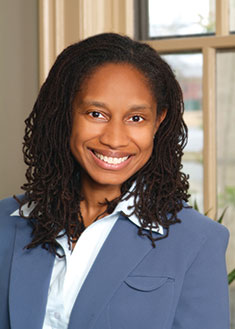
sherece west_mag emailFrom an early age, Sherece West-Scantlebury ’07, Ph.D., public policy recalls being preoccupied by a single question: Why is this community the way it is?

It was a question that first took root in West-Scantlebury’s own childhood in Brooklyn, where she was born to a single teenage mother and lived in public housing. Her family later moved to Baltimore, where they made ends meet on public assistance. In both places, West-Scantlebury recalls witnessing “the usual ills associated with public housing” – drug addiction, alcoholism, domestic violence and abuse. But she also remembers the working people with big dreams who seldom saw those dreams come to fruition.

“I just wanted to know how and why people lived – we lived – that way,” says West-Scantlebury. “It was just always something that drove me.”

Education was the start of her path to find answers. West-Scantlebury earned an undergraduate degree in public administration at Bowie State University, then obtained an Alfred P. Sloan Foundation Policy Institutes grant that led to a master’s degree in public policy from the Gerald R. Ford School at the University of Michigan.

West-Scantlebury wasn’t content with studying policy, however. She pursued a career in the nonprofit sector to help address fundamental social problems through targeted programs and investment in communities.

“I was born with the heart to affect social justice,” she says. “I didn’t choose philanthropy, it chose me.”

West-Scantlebury worked for twelve years as a program associate at Baltimore’s Annie E. Casey Foundation in Baltimore and worked on a doctorate at UMBC.

Even before obtaining her Ph.D., West-Scantlebury was named as president and CEO of the Louisiana-based Carrier Foundation. When Hurricane Katrina hit in 2005, she found herself helping lead (and eventually becoming the CEO) of the Louisiana Recovery Foundation, charged with the fair distribution of donations pouring into the governor’s office.

Two years later, West-Scantlebury was tapped to head the Winthrop Rockefeller Foundation in Little Rock, AR. The foundation’s mission is to improve the lives of all Arkansans by supporting education and economic development programs, and furthering the cause of racial, economic and social justice.

In 2012, the Winthrop Rockefeller Foundation oversaw more than $4.6 million in grants awarded to 65 different groups. West-Scantlebury says the foundation is focused on solving what she calls the “old and difficult problems that keep Arkansas in the bottom five [in the United States] on indicators of children and family well-being. I want us to be number one on those indicators one day.”

West-Scantlebury observes that the faculty staff and students in UMBC’s public policy department were all invested in her success as a nonprofit administrator. “There was great camaraderie, and a determination that we would all complete the program and make great contributions.”

The feeling of accomplishment is mutual, says Donald Norris, chair of the public policy department. Norris nominated West-Scantlebury for UMBC’s 2013 Outstanding Alumna of the Year award in the Social and Behavioral Sciences, which she received at Homecoming last year.

“Sherece’s excellent and effective career in public service and community leadership embodies the best of UMBC and demonstrates the best qualities of her graduate education,” says Norris.

West-Scantlebury has long moved past merely trying to answer her own question about why a community takes its shape. She says she is proud to work for a foundation that supports the demanding but essential long-term changes required to make Arkansas a better place, and help to engineer those changes through grants that target poverty reduction, education and community development.

The keys to success, says West-Scantlebury, are determination, collaboration and patience. “Collective action creates change, but it isn’t fast or easy,” she insists. “It’s about neighbor working with neighbor, but it’s also about sticking with it.”

Want more alumni news? Read the full issue of the Winter 2014 UMBC Magazine.

Marie desJardins, CSEE, Receives NCWIT Undergraduate Research Mentoring Award

RAPmdesjardinThe National Center for Women & Information Technology (NCWIT) has selected Professor Marie desJardins as one of four awardees of the 2014 NCWIT Undergraduate Research Mentoring Award.

The award comes with a gift to UMBC of $5,000, sponsored by AT&T that can be used to further Professor desJardins’s mentoring activities. The award will be presented at the 2014 NCWIT Summit in Newport Beach, California in May 2014.

NCWIT is a non-profit community of more than 500 prominent corporations, academic institutions, government agencies, and non-profits working to increase women’s participation in technology and computing. Their annual NCWIT Undergraduate Research Mentoring Award recognizes U.S. Academic Alliance representatives for their outstanding mentorship, high-quality research opportunities, recruitment of women and minority students, and efforts to encourage and advance undergraduates in computing-related fields.

Thomas Schaller, Political Science, in The Daily Beast

An article published in the politics section of The Daily Beast on March 11 focuses on Maryland State Del. Heather Mizeur and her chances of winning the race for governor. With the Democratic primary nearing in June, the article outlines steps Mizeur and her campaign have taken to spread her message and meet with voters.

Tom Schaller

Many political experts have said Mizeur has a difficult path towards the nomination because her two opponents in the race, Lt. Gov. Anthony Brown and Attorney General Douglas Gansler have greater name recognition and more campaign cash on hand.

Political Science Professor Thomas Schaller was interviewed for the article and said Mizeur has a bright political future even if she is unsuccessful with this year’s gubernatorial campaign.

“Mizeur is a strong candidate with an even stronger future in the party. I expect her to be a statewide nominee at some point down the line,” Schaller said.

“But she’s at least one cycle ahead of her time: Not because she lacks the skills or a natural constituency among Maryland liberals—she has both, in fact. But because, as is almost always the case, statewide Democratic primaries in blue Maryland are crowded affairs and tough to win. And frankly, the difficulties facing House Delegates in their effort to win a Democratic gubernatorial nomination are similar to those of U.S. House members trying to win presidential nominations: Their platform is too small,” he added.

You can the full article in The Daily Beast here.

UMBC Psychology Research Cited in TES Magazine

A study conducted by researchers at UMBC and the University of Maryland, College Park was featured in a recent Times Educational Supplement article in TES Magazine. The article, titled “To help the little darlings out, let their parents in,” focuses on the study which found that two-thirds of parents think their children are brighter and higher-achieving than their classmates.

The research was conducted by Susan Sonnenschein, an associate professor of psychology, Shari Metzger, a graduate student in the Applied Developmental Psychology program and Laura Stapleton, an associate professor of measurement, statistics and evaluation at the University of Maryland, College Park.

The researchers found that parents who work as classroom assistants develop more of a realistic understanding of their children’s abilities and are able to offer them the specific help they need.

“Ensuring that parents are knowledgeable about their children’s academic skills is important if parents are to effectively assist their children at home with schoolwork,” the researchers said in the report. “Parents who are more knowledgeable about their children’s abilities interact more sensitively with their children, and provide more appropriate learning environments.”

The paper was published in the most recent edition of The Journal of Educational Research. You can read the full article in TES Magazine here.

UMBC Postdoctoral Fellow Evelyn Thomas Profiled in SIAM News

Evelyn ThomasEvelyn Thomas, a faculty diversity postdoctoral fellow in mathematics and statistics, is featured in a new profile in SIAM News, a widely read newspaper sponsored by the professional organization Society for Industrial and Applied Mathematics. The profile was written by Mathematics Professor Manil Suri.

The article illustrates the challenges and opportunities Thomas has encountered over the course of her career and describes her motivation for researching her doctoral dissertation.

In the article, Suri also writes about the work Thomas has begun since arriving at UMBC for her postdoc, including starting a new epidemiological project based on the rise of cholera in Haiti after the devastating earthquake of 2010 and continuing work on projects with social engagement.

“I hope to communicate to everyday people that if there are problems they see in their communities: HIV/AIDS, gun violence, racism, sexism, homophobia—anything—a solution does lie within mathematics,” Thomas said.

To read the full profile in SIAM News, click here. For more on the 2013-2015 UMBC faculty diversity postdoctoral fellows, click here.

Tuning in to Female Bird Song

Tuning in to Female Bird Song

New research in Nature Communications reveals female bird song is widespread, challenging Darwin’s conclusions.

Since the days of Darwin, scientists have considered bird song to be an exclusively male trait, resulting from sexual selection. Now a team of researchers from UMBC, the University of Melbourne in Australia, Leiden University in the Netherlands and The Australian National University says that’s not the whole story.

Led by UMBC Ph.D. student Karan Odom in the lab of Kevin Omland, biological sciences, the team completed a survey of birds from around the globe. They focused on early-diverging Australasian lineages, which contribute strongly to what the ancestral songbird might have been like. Of the songbirds surveyed, 71% had female song. The researchers then mapped the traits of female song onto an evolutionary tree. The results of their analysis, now published in Nature Communications, showed that the common ancestor of modern songbirds had female song.

This research doesn’t turn Darwin’s theory of sexual selection on its head, but it does mean there is more to the story than what Darwin proposed. While sexual selection has probably played a major role in the evolution of elaborate bird song, other selection pressures or processes have also probably played a role, especially at the initial stages of its evolution. Most notably, Darwin’s writings do not consider or explain how song could have evolved in both sexes.

“Darwin was from Great Britain. In the spring these brightly colored males show up, and they likely served as his primary reference point for bird song,” says Odom. Both male and female birds sing year-round in many other regions, such as the tropics.

The work of Odom and her team shows that bird song did evolve in both sexes. Because song evolved in both males and females, the reasons for its initial evolution may not have only been sexual selection as proposed by Darwin, but perhaps also social selection in which both males and females may have competed for resources needed for survival and reproduction, as opposed to just ”attracting mates.”

Mike Webster, director of the Macaulay Library at the Cornell Lab of Ornithology, explains, “The standard thinking is that competition for mates has led to the evolution of bright colors and loud songs in males, whereas selection for avoidance of predators has led to females that are cryptically colored and relatively quiet.”

“This study by Odom et al. stands this view on its head by showing that singing females are actually quite widespread, and also that females sang in the ancestor of all modern songbirds,” Webster notes. “This implies that competition for mates may not be the driving force behind the origin of these elaborate vocal traits, and sends us back to the drawing board to look for answers.”

Odom says this research opens the door for exploring alternative evolutionary scenarios and processes that Darwin might not have considered with regard to the evolution of bird song.

Coverage of the study has already appeared in outlets around the world, from Britain’s BBC World Service Newshour (jump to 48:20) and The Times, to Germany’s Der Spiegel, to Australia’s ABC Radio National. Full news coverage is available on UMBC’s Insights blog.

(03/11/2014)

Photo on main Research page: Singing female Superb Fairywren (Malurus cyaneus) by Lindley McKay

Third Annual Scholarship Luncheon

Tomorrow marks the third annual Scholarship Luncheon celebrating donors and their contribution to support our UMBC students. This yearly meet-and-greet event is a great opportunity for donors to get to know the scholarship recipients and understand just how big an impact their gifts have on the UMBC students and community.

A highlight of the event is the opportunity to hear from two special speakers: a donor and a student. This year, donor Ken Pittman ’80, Economics, of PNC Wealth Management will share the story of why he supports UMBC and one of the Linehan Art scholars will share the story of how receiving a scholarship has changed her life and advanced her studies.

More than just a time to express gratitude, however, the scholarship luncheon promotes the possibility of future philanthropy – the students are able to see the faces behind the scholarships and realize that the people giving these gifts are real people with passions just like themselves with a desire to give back to others and their community. It’s heartwarming for the donors to meet the students face to face and students are also touched at the chance to learn the story behind the scholarship.

And even as the luncheon ends and our donors and students go their separate ways, the effects of their meeting often last beyond this day, beyond UMBC and even extend into the personal lives of the donors and recipients. One particular student was so grateful to his donor that he made the effort to follow up and maintain a relationship. Equally, the donors enjoy the chance to see where the students are after graduation: where they are working, what has happened in their lives and what they are working toward in their future.

As we at UMBC see it, this is what philanthropy should be: a lasting legacy and the chance to make new connections. We appreciate all the donors who support our students – you are making a very real mark on our campus and changing lives.

Make your mark today! Support students scholarships.

Meet the Staff: Stanyell Bruce

Here in the Office of Alumni Relations, we spend a lot of time telling stories about and talking with our wonderfully supportive alums. However, we’ve decided to turn the tables and take time to get to know the people behind the scenes — the  advancement and alumni relations staff members who are hard at work on behalf of our alumni. Today we’ll be hearing from Stanyell Bruce, the Director of Alumni Relations.

Namsbruce2e: Stanyell Bruce
Job Title:  Director of Alumni Relations
Focus Area: I oversee the day-to-day operations of the alumni relations office and, along with my team, come up with various ways to engage and connect with UMBC’s over 62,000 amazing alumni.
Years at UMBC: 7.5 years

Q: Where are you from originally?

A: Bronx, NY

Q: What do you love most about UMBC?

A: I love the UMBC story (the little engine that could except on a much grander scale).

Q: What’s your favorite thing about your job?

A: I love meeting alumni and hearing their stories. Depending on when an alum attended UMBC, they have a totally different experience or lens that they look through; no matter the experience, alums are proud to be part of the UMBC story. As a relationship builder and connector, I feel like the work I do has real meaning and will make an impact for years to come.

stan and jonah

Q: What do you like most about yourself?

A: That I can adapt to pretty much any situation. Of course there have been a few times when I was like a deer in headlights, but overall I like the fact that I adapt pretty easily.

Q: If you could be another staff member for a day, who would it be and why?

A: Jim Lord! I would love to know what it feels like to be a design director and 1 – have such creative genes and 2 – get to see my work (and the work of my team) all over this campus.

Q: What is one word you would use to describe your job?

A: Challenging!

Tom Beck, Library Gallery, Interviewed for WYPR’s Maryland Morning

jaffee05-360An interview with Tom Beck, Chief Curator of the Albin O. Kuhn Library Gallery, aired on WYPR’s Maryland Morning this week, in which he discusses the works currently on display in the Library Gallery exhibition, N. Jay Jaffee Photographs from Public to Personal, 1947-1997. Beck talks about the artist’s personal life and work in relation to the photography of his peers, as well as the historical importance of Jaffee’s photographs.

Listen to the interview, “Photographer N. Jay Jaffee Captured the Spontaneous” at WYPR.org.

More information about the exhibition is available at our Arts and Culture Calendar. N. Jay Jaffee Photographs from Public to Personal is on display now through Sunday, March 23 in the AOK Library Gallery.

Marie desJardins, Computer Science and Electrical Engineering, on Voice of America

RAPmdesjardinVoice of America’s International Women’s Day coverage highlights the efforts of leading women in science, technology, engineering and math (STEM) to encourage girls to pursue those fields.

In a video posted on the news site, Marie desJardins, professor of computer science and electrical engineering, says, “Make sure your kids are getting [exposure to STEM] from an early age so they think of themselves as creators of technology and new ideas, not just following the rules.”

See the video and article on Voice of America by clicking here.