All posts by: UMBC News Staff


George Derek Musgrove, History, in The Washington Post

More than 80,000 new voters in Washington, D.C. have registered since 2010, and rapid changes in the city’s demographics are being studied as experts analyze the upcoming Democratic primary in the race for D.C. mayor.

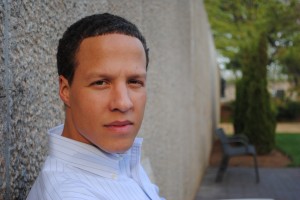
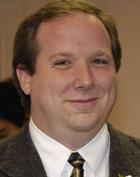
Derek Musgrove

George Derek Musgrove ’97, history, assistant professor of history, was interviewed for a front page story published in The Washington Post on March 9. The article, titled “D.C.’s complexion is changing. Will the next mayor reflect that?“, examines how the upcoming mayoral election could reshape power and politics in the nation’s capital.

“The identity of the city since the ’60s has been ‘Chocolate City,’ ” Musgrove said. “The last thing keeping that identity intact is the mayoralty.” Musgrove, who lives in Washington and is currently writing a book on race and politics in the District, provided insight and historical context on changing political attitudes among residents in the nation’s capital.

“The passing of the civil rights-home rule generation brought us the children of that generation, including [former council members] Kwame Brown, Michael Brown and Tommy Thomas,” Musgrove said, and those sons of prominent civil rights-era political figures in the city, now disgraced former council members, “were miserable — and not just because they were caught stealing, but because they never had a vision for the city.”

In the article, Musgrove also pointed to a younger generation of voters and council members who are focusing more on economic diversity than racial identity. Young voters, too, “have very different notions of politics and race than the older generations did,” Musgrove said. “Young black professionals are willing to give Tommy Wells a fair shake.”

You can read the full article in The Washington Post here.

Ellen Handler Spitz, Honors College, in University of Michigan Press Blog

As Lorrainne Hansberry’s 1959 play, A Raisin in the Sun, opens with Denzel Washington on Broadway, Honors College Professor Ellen Handler Spitz is being recognized for her book which devotes an entire chapter to exploring the play’s significance.

Illuminating Childhood Ellen Handler Spitz

Excerpt’s from Spitz’s book, Illuminating Childhood, Portraits in Film, Fiction, and Drama, are quoted in a University of Michigan Press blog post about the play. “Lorraine Hansberry’s 1959 play, A Raisin in the Sun, was both her first and the first by any playwright of color to astonish Broadway,” Spitz writes in the book. “Crossing boundaries of race, ideology, and class, it puts onstage an unforgettable portrayal of parent-child relations, bridging all gaps, and the maturity of Hansberry’s grasp, at the age of twenty-eight, is breathtaking.”

To read the full blog post and for more on Illuminating Childhood, click here.

New CADVC Outreach Project in the ‘Baltimore Guide’

An outreach project of the Center for Art, Design and Visual Culture, featuring “pop-up arts events” was discussed recently in the Baltimore Guide.

According to Sandra Abbott, CADVC Curator of Collections and Outreach, the “pop-ups” are so named because “they will suddenly appear in unoccupied spaces and then close down shortly thereafter.” The project, a result of a collaboration between the CADVC, the Southeast Community Development Corporation, the Highlandtown Arts District (ha!), and Glitter Thighs (a monthly queer dance party in Baltimore), will promote the potential of empty retail spaces on Eastern Ave.

Read the complete article, “Pop-ups promote the potential”.

UMBC: Med, Red and Dead Program

Med, Red, and Dead: Exploring three seas and a new model of international study

Israel is home to three of the world’s most diverse marine systems – the Mediterranean, Red and Dead Seas. Although found in rare and remarkable proximity, each is distinguished by unique oceanography, biology, flora and fauna, making Israel a particularly extraordinary destination for students of marine and environmental sciences.

This summer, from June 22 to July 6, Yonathan Zohar, chair of UMBC’s Department of Marine Biotechnology, will lead students on an intensive study of the three Israeli seas at the Ruppin Academic Center, in Netanya, Israel, on the Mediterranean coast. Students will be exposed not only to the diverse biology of the three seas, but also to leading marine and environmental scientists from around the world. “Exploring Three Seas: Med, Red and Dead” – which will explore such topics as marine and environmental biology, oceanography, marine and estuarine ecology, microbial ecology, marine flora and fauna, coastal geology and limnology through hands-on field trips and laboratories – is the latest offering from an emerging model of focused, shorter-term study abroad programs at UMBC.

“Exploring Three Seas: Med, Red and Dead” is a part of a long-term research and educational partnership between UMBC and the Ruppin Academic Center’s School of Marine Sciences. Expanding on UMBC’s commitment to marine and biotechnology, faculty from UMBC and the Institute for Marine and Environmental Technology (a joint University System of Maryland research institute) have taught intensive, one-week courses at the Ruppin Academic Center for the past five years. Many of these same faculty members helped to develop the graduate program at the School for Marine Sciences. “This summer program is what we hope to be the beginning of broadening the partnership between Ruppin Academic Center’s School of Marine Sciences and UMBC,” says Zohar.

International study and research are part of the culture at UMBC, allowing students to build their global outlook and cross-cultural skills. Shorter, intensive, professor-led trips, such as Zohar’s are a unique and increasingly popular prototype for study. Rather than the traditional mold of study abroad, which typically focuses on classroom-style learning and touring the regions of a country, these focus more intensely on experiential learning and fieldwork.

“These programs enable students to learn a great deal in a condensed time period – not only about themselves and their academic interests, but also about the world around them,” says Katherine Heird, assistant director of Study Abroad at UMBC. “Because students are accompanied by their UMBC peers, faculty and staff, faculty-led programs are often an easier and less intimidating introduction to living and studying in a foreign country than other, more independent program models.”

UMBC’s International Field Research Program is considered a pioneer of such innovative experiential study programs. Each spring, a small group of students from the Health Administration and Public Policy (HAPP) program spends the semester preparing for a seven-day summer trip to Switzerland, where they conduct individual field research to better understand how culture, policy and practice interact to achieve a sustainable and healthy society.

Thanks to dedicated faculty and funding from the U.S. Department of Education, UMBC is also launching an exciting summer study abroad in Ghana. Tyson King-Meadows, chair of Africana Studies, and Gloria Chuku, associate professor of Africana Studies, will lead “Understanding Culture and Politics in Ghana” from July 6 to August 4. The unique program is specifically designed for educators and will enroll both current K-12 teachers and undergraduate and graduate students interested in teaching careers.

As in other UMBC summer study abroad programs, participants will complete classroom, laboratory and field-based academic study, plus intensive language lessons. They will also experience intercultural exchanges with Ghanaian governmental and non-governmental officials, and guided-sightseeing activities to historical and cultural sites, exploring topics such as the Trans-Atlantic Slave Trade, the African anti-colonialism movement, and Ghana’s experiences with different political systems.

Shorter programs often allow students whose schedules would otherwise not allow full semester travel to experience international and cross-cultural study – and professors are being encouraged to consider this model. Maggie Holland, professor of Geography and Environmental Systems, is traveling with students from across four majors to Costa Rica for an international study in sustainable development and conservation. This innovative study abroad experience will involve a mix of field research and service learning. Over the course of 15 days, students will meet with community groups, engage in service learning, gain experience in field research techniques, participate in focus group discussions and contribute to mapping.

“We feel strongly that our department’s offering of a field course should be designed to offer students a rich experience at relatively low-cost, and with a shorter time commitment than a full semester,” says Holland, who believes that academic, financial and family reasons often prevent students from taking a full semester abroad. “Offering this class as an early summer session course opens the program more broadly to UMBC students, as their perspectives and skills could lend substantially to the overall experience.”

Rising junior and senior undergraduates (BIOL 499) and graduate students (BIOL 601) interested in “Exploring Three Seas: Med, Red and Dead” are encouraged to apply by the deadline of March 10.

Learn More

Download Application

(3/4/2014)

Round-Up: UMBC in the News, 3/7

One of the things that makes UMBC great is how wonderful our alumni, students, faculty and staff are. Because of these amazing people, UMBC often finds itself “in the news,” so each week, we’ll be sharing with you a round-up of the most newsworthy achievements from our community.

Check out all the other great campus news on Insights Weekly.

April Action for Alums!

April will bring warmer weather (fingers crossed!) and plenty of great alumni events and volunteer opportunities like these: 

Admissions Receptions (various dates)

Are you a proud Retriever Believer? There are a variety of ways alumni can volunteer to give back to the UMBC community. One unique opportunity is to attend one of our many spring Admissions Receptions. These events are offered through Alumni Relations and the Admissions Office.

  • Tuesday, April 1, 7 – 9 p.m., UMBC Reception for Academically Talented African-American Students
  • Tuesday, April 15, 7 – 9 p.m., UMBC Reception for Academically Talented Hispanic and Latino Students
  • Tuesday, April 22, 7 – 9 p.m., New Jersey Reception, The Olde Mill Inn, Basking Ridge, NJ
  • Wednesday, April 23, 7 – 9 p.m., New York Reception, Eisenhower Park, Long Island, NY
  • Thursday, April 24, 7 – 9 p.m., Pennsylvania Reception, The Mercer Museum, Doylestown, PA
  • Wednesday, April 30, 7 – 9 p.m., Transfer Student Alliance (TSA) Reception, Albin O. Kuhn Library, 7th floor, UMBC

Get more info and register to volunteer on our website.

career weekCareer Week 2014
April 7 – April 10

Career Week offers an opportunity for students to explore professional options through presentations, workshops and mentoring with alumni and employers and offers alumni an opportunity to volunteer, hire, learn and build personal contacts. Don’t miss a week of events including the annual spring career fair, and seminars such as dress for success, social media and personal branding, financial literacy, and interview skills. Click here to learn more and register.

senior receptionBlack and Latino Senior Reception
Wednesday, April 23, 7 – 9 p.m.

Join the UMBC Chapter of Black and Latino Alumni for a dessert reception celebrating the achievements of the Class of 2014. This event presents a great opportunity to connect with some of our newest alumni. RSVP today.

peabody_event pageWine Tasting & Silent Auction
Friday, April 25, 7 p.m

This is no average trip to the library. Get dressed to the nines and join fellow UMBC alumni and guests for an elegant party in the beautiful and historic George Peabody Library. Located in picturesque Mt. Vernon, the George Peabody Library will be a studied backdrop to an evening filled with jazz, excellent company, refined refreshments and fine wine. Your attendance and participation in the silent auction will benefit the Alumni Association Scholarship for current UMBC students. Psst… early-bird pricing ends today! Buy your tickets now.

Check out our full events calendar.

Career Q&A: Gary Brooks ’79, history, attorney

Every so often, we’ll chat with an alum about what they do and how they got there. Today we’re talking with attorney Gary Brooks ’79, history, about his career in law.

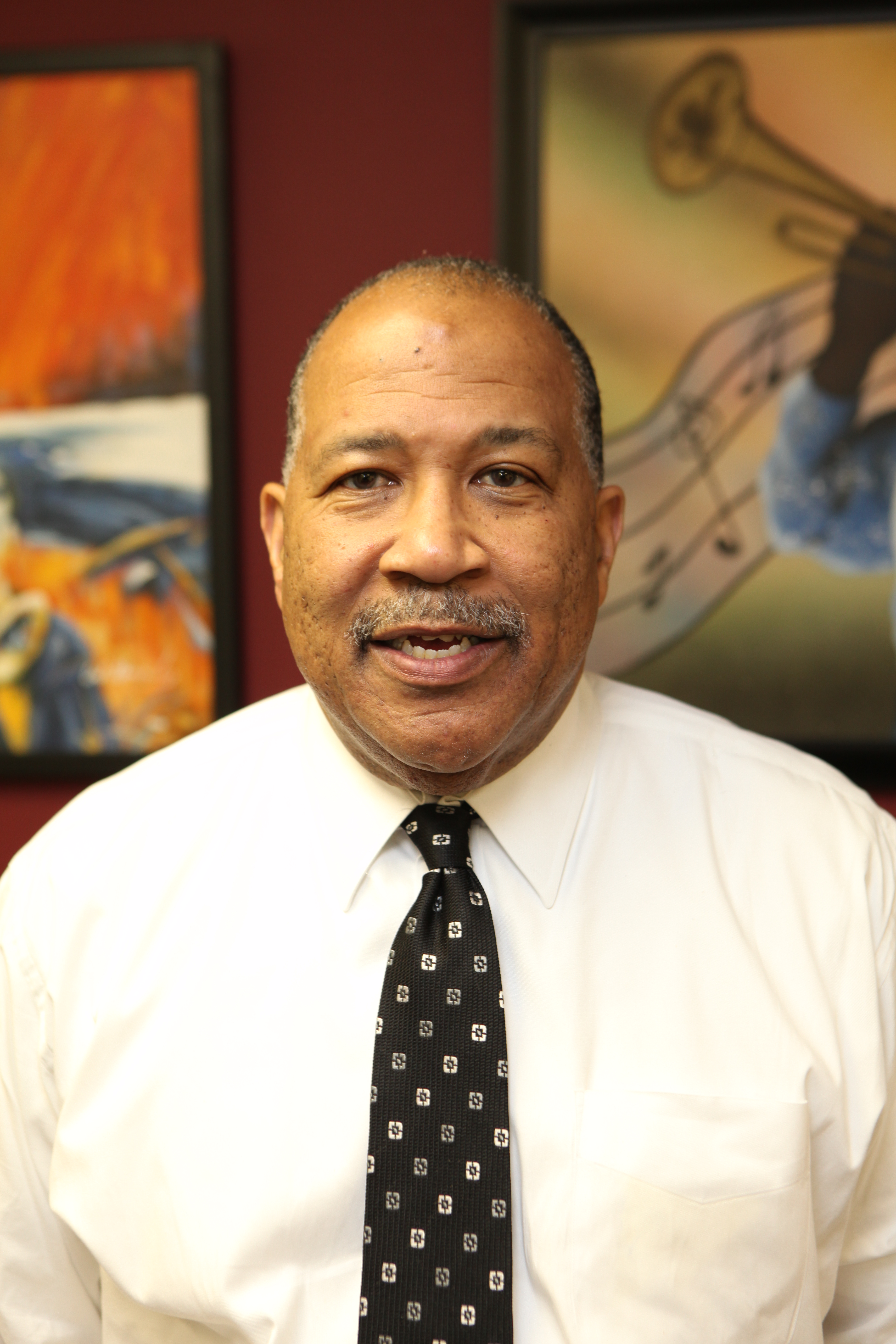
Photo of Gary Brooks, Esq.Name: Gary M. Brooks
Job Title: Attorney
Employer: Law Offices of Gary M. Brooks, LLC

Q:  Tell us a little about how you wound up at UMBC. What’s your background?

I am a 1974 graduate of Baltimore City College and we visited UMBC for an overnight visit with a good friend’s relative. I grew up in East Baltimore. I really liked the modern campus and since my parents were elderly, I wanted to stay in the area.

Q:  Tell us about your career as an attorney. Were there any lessons you learned, in particular, at UMBC that you carried with you into your work?

UMBC significantly helped further develop my writing skills and allowed me to have leadership roles in my fraternity, Phi Beta Sigma Fraternity, Inc. and serve as a SGA Student Life Senator. I attended UMBC during a time of political unrest and attended and helped organize political events. In regards to being an attorney, UMBC is the one of area leaders in producing attorneys and judges in the State of Maryland. My UMBC colleagues have provided some great attorney resources and friends, such as James L. Wiggins ’75. The UMBC legal community has a strong presence and influence on the Maryland community. UMBC also gave me opportunity to teach an upper-level grade course on Blacks and the Criminal Justice system for several years.

Q:  You’re involved with the Maryland Volunteer Legal Services (MVLS). Tell us a little bit about why you do pro bono work and what you’ve learned from those experiences.

In regards to MVLS, I primarily do pro bono legal services for eligible low income bankruptcy clients. My parents and family were strong advocates of community service and assisting others. These services are very helpful in relieving some of the financial stress that the families are shouldering. My early career out of college at St. Ambrose Housing Aid Center, working with and being mentored by Ralph E. Moore, Jr., demonstrated the importance of organizing, community development, fundraising and community service. I am also very involved in the UMBC second General Scholarship Fund. I have also been fortunate to serve as a committee member of Alumni and Friends of UMBC (AFUMBC) along with UMBC alumni Ronald  Hawkins ’79, Joyce Nance Frierson ’79, Daibeth Saunders ’78, Eric Talley ’79 and Warren Wilson ’72. Over the years, AFUMBC has raised funds for the Africana Studies Department and the Second Generation Scholarship Fund.

Q:  Is there a particular class or professor who really inspired you?

My first semester at UMBC was brutal, however, I returned to eventually graduate.  I started taking African American Studies course each semester and it gave me the writing skill set and confidence to perform well in my courses. The fifth floor in the administration building was a place that provided some cultural and political experiences and emotional healing during a period of widespread educational integration. The instructors and staff welcomed the us and treated us as “special” people

Q:  What advice would you give to students considering UMBC?

UMBC provides a superb education and prepares a student well for the professional and business world. Each time I visit UMBC, which is often, I feel very proud to be an alumnus and to let everyone know that I attended such a fine institution. Through the Sigma Beta Club (youth mentoring) and my inner-city youth program, I try to bring as many young Black males to the campus, as possible. Dr. Hrabowski has been very encouraging and supportive with the youth and has given high school students his email address to keep him informed of their progress.

Career Q&A: Gary Brooks '79, history, attorney

Every so often, we’ll chat with an alum about what they do and how they got there. Today we’re talking with attorney Gary Brooks ’79, history, about his career in law.

Photo of Gary Brooks, Esq.Name: Gary M. Brooks
Job Title: Attorney
Employer: Law Offices of Gary M. Brooks, LLC

Q:  Tell us a little about how you wound up at UMBC. What’s your background?

I am a 1974 graduate of Baltimore City College and we visited UMBC for an overnight visit with a good friend’s relative. I grew up in East Baltimore. I really liked the modern campus and since my parents were elderly, I wanted to stay in the area.

Q:  Tell us about your career as an attorney. Were there any lessons you learned, in particular, at UMBC that you carried with you into your work?

UMBC significantly helped further develop my writing skills and allowed me to have leadership roles in my fraternity, Phi Beta Sigma Fraternity, Inc. and serve as a SGA Student Life Senator. I attended UMBC during a time of political unrest and attended and helped organize political events. In regards to being an attorney, UMBC is the one of area leaders in producing attorneys and judges in the State of Maryland. My UMBC colleagues have provided some great attorney resources and friends, such as James L. Wiggins ’75. The UMBC legal community has a strong presence and influence on the Maryland community. UMBC also gave me opportunity to teach an upper-level grade course on Blacks and the Criminal Justice system for several years.

Q:  You’re involved with the Maryland Volunteer Legal Services (MVLS). Tell us a little bit about why you do pro bono work and what you’ve learned from those experiences.

In regards to MVLS, I primarily do pro bono legal services for eligible low income bankruptcy clients. My parents and family were strong advocates of community service and assisting others. These services are very helpful in relieving some of the financial stress that the families are shouldering. My early career out of college at St. Ambrose Housing Aid Center, working with and being mentored by Ralph E. Moore, Jr., demonstrated the importance of organizing, community development, fundraising and community service. I am also very involved in the UMBC second General Scholarship Fund. I have also been fortunate to serve as a committee member of Alumni and Friends of UMBC (AFUMBC) along with UMBC alumni Ronald  Hawkins ’79, Joyce Nance Frierson ’79, Daibeth Saunders ’78, Eric Talley ’79 and Warren Wilson ’72. Over the years, AFUMBC has raised funds for the Africana Studies Department and the Second Generation Scholarship Fund.

Q:  Is there a particular class or professor who really inspired you?

My first semester at UMBC was brutal, however, I returned to eventually graduate.  I started taking African American Studies course each semester and it gave me the writing skill set and confidence to perform well in my courses. The fifth floor in the administration building was a place that provided some cultural and political experiences and emotional healing during a period of widespread educational integration. The instructors and staff welcomed the us and treated us as “special” people

Q:  What advice would you give to students considering UMBC?

UMBC provides a superb education and prepares a student well for the professional and business world. Each time I visit UMBC, which is often, I feel very proud to be an alumnus and to let everyone know that I attended such a fine institution. Through the Sigma Beta Club (youth mentoring) and my inner-city youth program, I try to bring as many young Black males to the campus, as possible. Dr. Hrabowski has been very encouraging and supportive with the youth and has given high school students his email address to keep him informed of their progress.

Karan Odom and Kevin Omland, Biological Sciences, Make Headlines for Bird Song Research

Karan Odom and Kevin Omland, biological sciences, recently made headlines around the world with a Nature Communications article that challenges the assumption that bird song is an exclusively male trait resulting from sexual selection.

Odom, a Ph.D. student in Omland’s lab, led a team of researchers from UMBC, the University of Melbourne in Australia, Leiden University in the Netherlands and the Australian National University in this groundbreaking work. The researchers completed an extensive global study of songbirds and found that 71% of songbirds surveyed had female song. They also mapped the traits of female song onto an evolutionary tree, which revealed that the common ancestor of modern songbirds also had female song.

These findings raise questions about Darwin’s understanding of bird song. Mike Webster, director of the Macaulay Library at the Cornell Lab of Ornithology, explains, “The standard thinking is that competition for mates has led to the evolution of bright colors and loud songs in males, whereas selection for avoidance of predators has led to females that are cryptically colored and relatively quiet. This study by Odom et al. stands this view on its head by showing that singing females are actually quite widespread, and also that females sang in the ancestor of all modern songbirds.”

Odom says this research opens the door for exploring alternative evolutionary scenarios and processes that Darwin might not have considered with regard to the evolution of bird song.

Coverage of the study has already appeared in outlets from the BBC World Service Newshour [jump to 48:20], to Germany’s Der Spiegel, to Australia’s ABC Radio National. Additional news links are included below, and we will continue adding links as new coverage appears.

Additional Coverage:
Female Song Birds Turn Darwin’s Theory Upside Down (WYPR)
Not Just Males: Common Ancestor Of Modern Songbirds Had Female Song (Science 2.0)
Sing a song of bird phylogeny (ScienceNews)
Prominence of Female Birdsong Challenges Evolutionary Theory (Nature World News)
Bird song – it’s not just a male gig (Phys.org)
Birdsong is not all about sexual selection: Female birds sing much more often than previously thought (Science Daily)
Female Song Birds Do Sing And Charles Darwin Got It Wrong (Business Insider)
Delightful duets prove Darwin slightly off-key over birdsong (Canberra Times)
Female birds sing songs as sweetly (Australian Life Scientist)
According to the study of ANU: Female birds song is different from males (Periscope Post)
Darwin wrong about the birds and bees (The Times)
Female birds rival males in bird song: ANU study (Xinhua)
Vogelgesang ist keine Männerdomäne (Die Welt and Berliner Morgenpost)
Bird Song Almost as Common in Female Birds as in Males: Study (Newspoint Africa)
Female birds sing songs: Was Charles Darwin wrong? (Zee News)
Bird song not exclusively male trait, reports say (The Hindu)
Evolution: Female songbirds make themselves heard (Nature Asia)
Keine “Männerdomäne” – Auch Vogelweibchen singen (Schweizerbauer)
Ganz Was Neues: Vogel Weibchen Können Singen (Taz.de)
Viele Vogelweibchen singen (Weser Kurier)
Emanzipierte Vogelweibchen (Achtung, Wolf!)
Vogel tjilpt om gebied te verdedigen (en dus niet om vrouwtjes te lokken) (Volkskrant)
Auch die Weibchen singen (Wiener Zeitung)
A tojók is rendszeresen énekelnek (Index)
Veel vrouwtjesvogels zingen ook (NRC)
Vrouwelijke zangvogels hebben veel meer noten op hun zang dan gedacht (Scientias)
Vrouwelijke zangvogel zingt vaker dan gedacht (NU)
Vrouwtjesvogels zingen veel vaker dan gedacht (University of Leiden)
Vrouwtjesvogels blijken toch te zingen (Wetenschap 24)
Weibchen trällern meist so schön wie Männchen (Deutschlandfunk)

Eugene Schaffer and Jonathan Singer, Education, in Capital News Service

An article published March 4 in Capital News Service examines the Common Core State Standards and how college students studying education and soon entering the world of teaching are preparing for it.

Education Professor and Chair Eugene Schaffer is quoted in the article describing UMBC’s curriculum and the department’s understanding of the need to prepare students for the Common Core:  “We know that the people that graduate this coming spring will be entering the classrooms and will be teaching Common Core,” Schaffer said. “This is a great concern of ours.”

Schaffer also commented on internships that are completed in the classroom by students who work closely with mentors: “When they’re [interning] for a full semester, they’re teaching the skills they have developed, and a lot of that is related to Common Core,” he added.

Associate Professor of Education Jonathan Singer is also quoted in the article when describing education courses at UMBC: “Methods courses have specific lessons geared toward explaining what Common Core is,” Singer said. “They have three or four lesson plans they have to develop in connection to Common Core.”

You can read the full article in Capital News Service by clicking here.

UMBC Training Centers Launches “Lead to Innovate”

UMBC Training Centers’ Center for Leadership & Innovation has introduced Lead to Innovate, a program offering noncredit Certificate Programs in Leadership and Innovation. The program is designed to help improve organizations by allowing leaders to effectively change their organization in a positive way. The Certificate in Leadership, a 10-day program, emphasizes individual and organizational leadership, while the Certificate in Innovation, also a 10-day program, focuses on adopting an innovative framework and building an innovative environment.

UMBC employees are eligible for 50% discount, and tuition reimbursement (with the approval of your manager) for this program. All courses for the program are offered at UMBC Training Centers’ state of the art facility in Columbia, MD. Classes for the program will begin April 21. Click here for more information.

Brian Cullum, Chemistry and Biochemistry, Named SPIE Fellow

Brian Cullum, chemistry and biochemistry, has been elected as an SPIE fellow for his achievements as an innovator in photonics and sensors. SPIE’s announcement of the honor recognizes Cullum specifically for “pioneering research on intracellular SERS nanosensors and optical sensing techniques for both environmental and biological monitoring.”

cullumAs the head of the Center for Translational Nanobioscience, Cullum focuses on developing nanotechnology for biomedical and defense related applications. He also founded and chairs Smart Medical and Physiological Sensor Technology, an annual international conference.

SPIE is the international society for optics and photonics and Fellows are honored for their technical achievements and service to the general optics community.

Congratulations to Brian Cullum on this achievement!