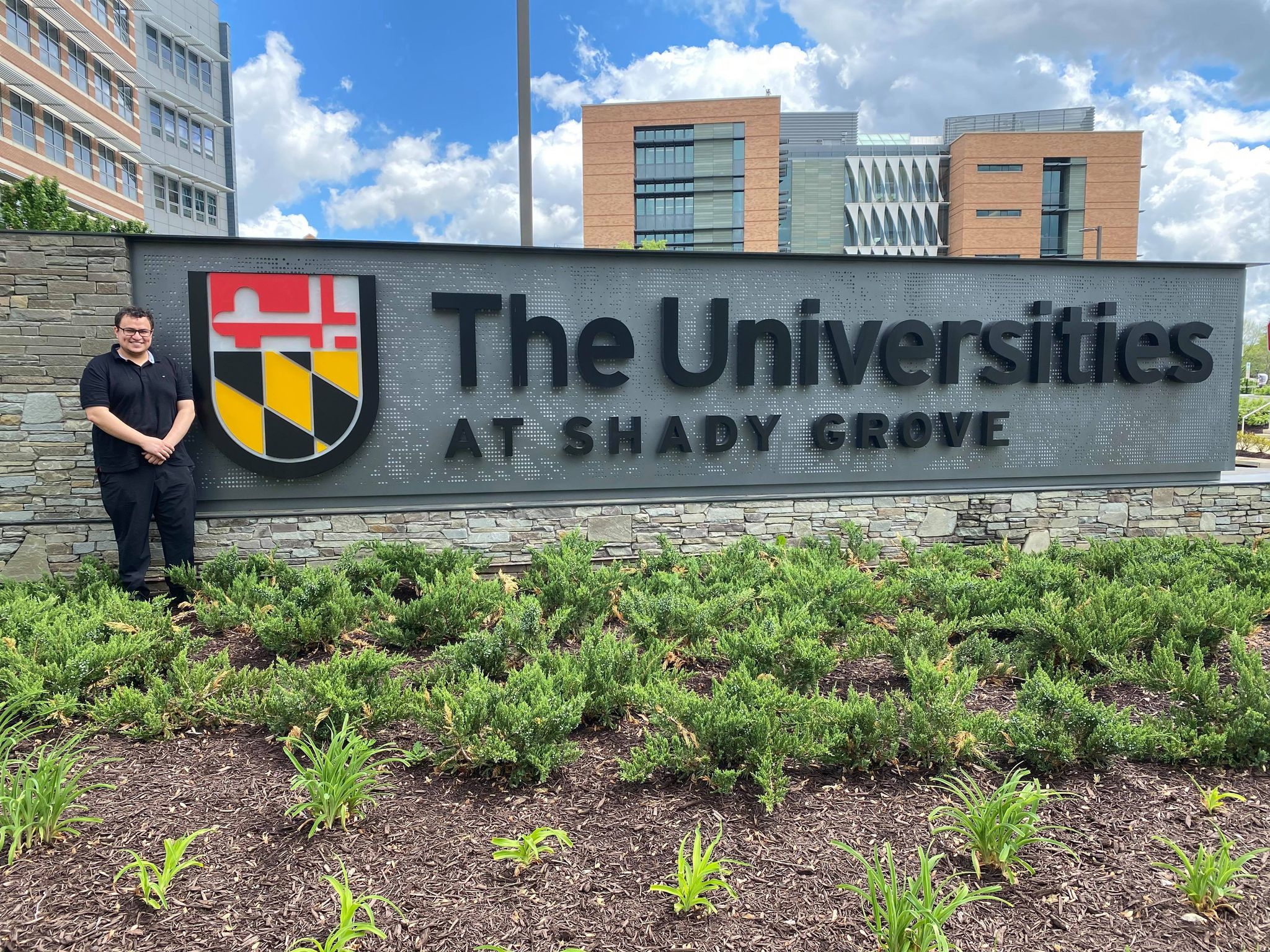
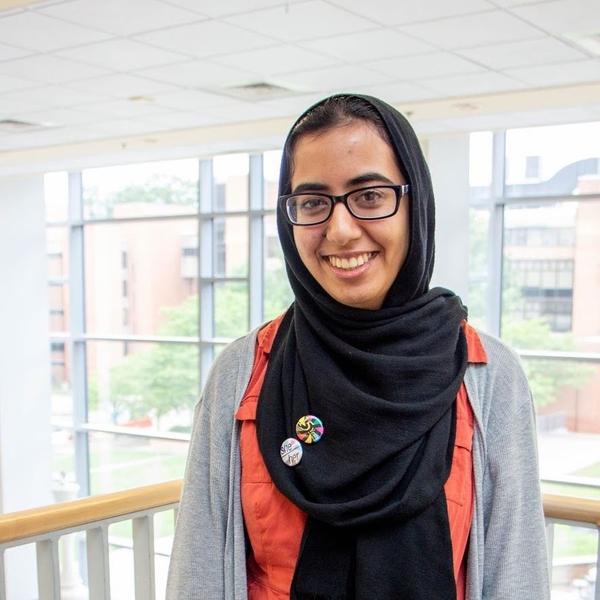
Degree: MPS in Data Science Hometown: Paris, France Plans: Data science consultant at CrossCountry Consulting
“Thanks to the UMBC program and the support of the Career Center and others, I feel well prepared to enter the workforce in the U.S. and to bring [my] unique perspective.”
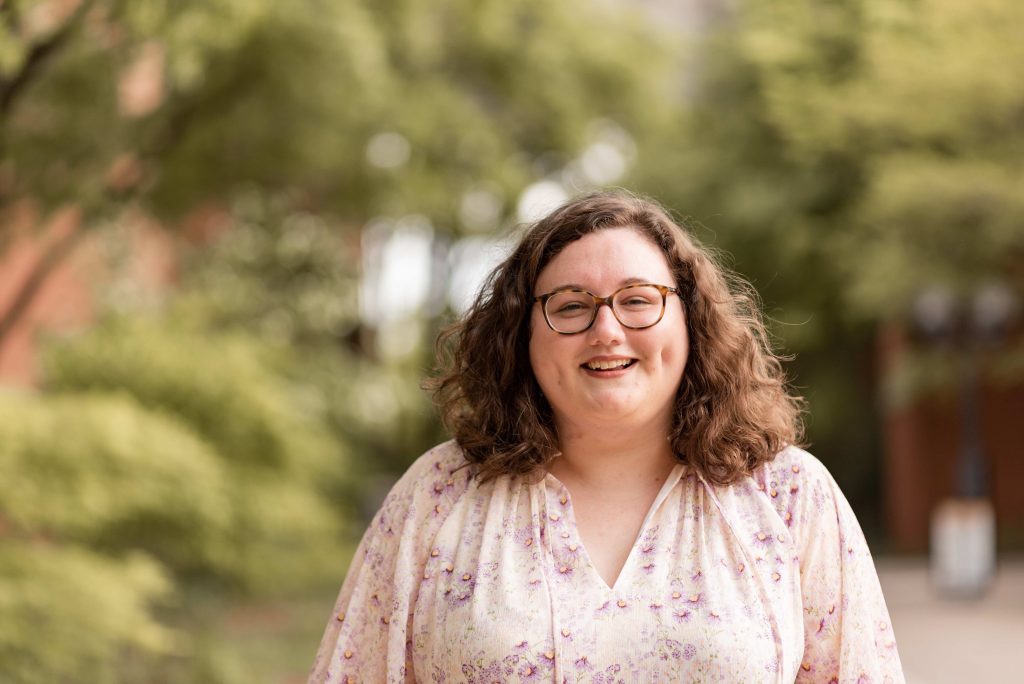
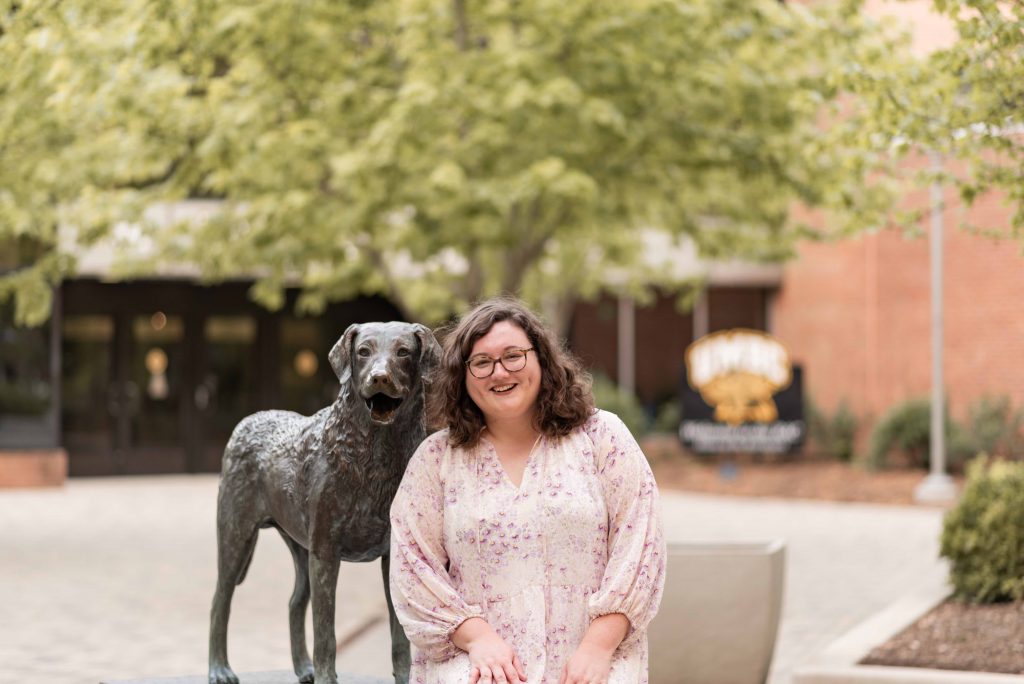
While working at Sodexo, a food services company, Tchuissi Mbu Nyamsi ’22 realized that there were data problems she wanted to solve. “I realized it was something I really wanted to have more knowledge in and I wanted to sharpen my skills,” she says. So she enrolled in UMBC’s master’s program in data science at the Universities at Shady Grove.
Mbu Nyamsi had only recently come to the United States from her home country of France to work at Sodexo, a French company, after having lived in several other countries around the world. “I wanted to experience this entrepreneurship mindset in the U.S. and have a new kind of international experience,” she says.
With her passion for math, knowledge of data science, and intercultural communication skills, Mbu Nyamsi looks forward to working as a consultant in data science. “It’s a big strength,” she notes, “to be able to combine my technical, language, and soft skills.”
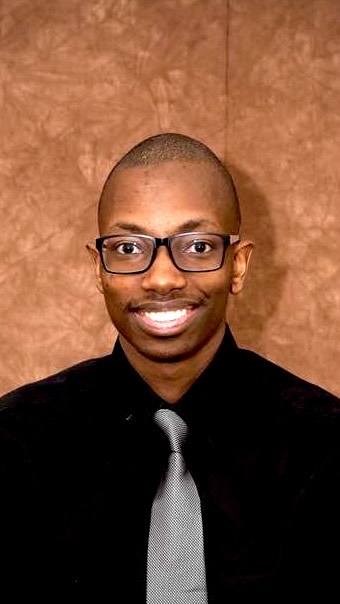
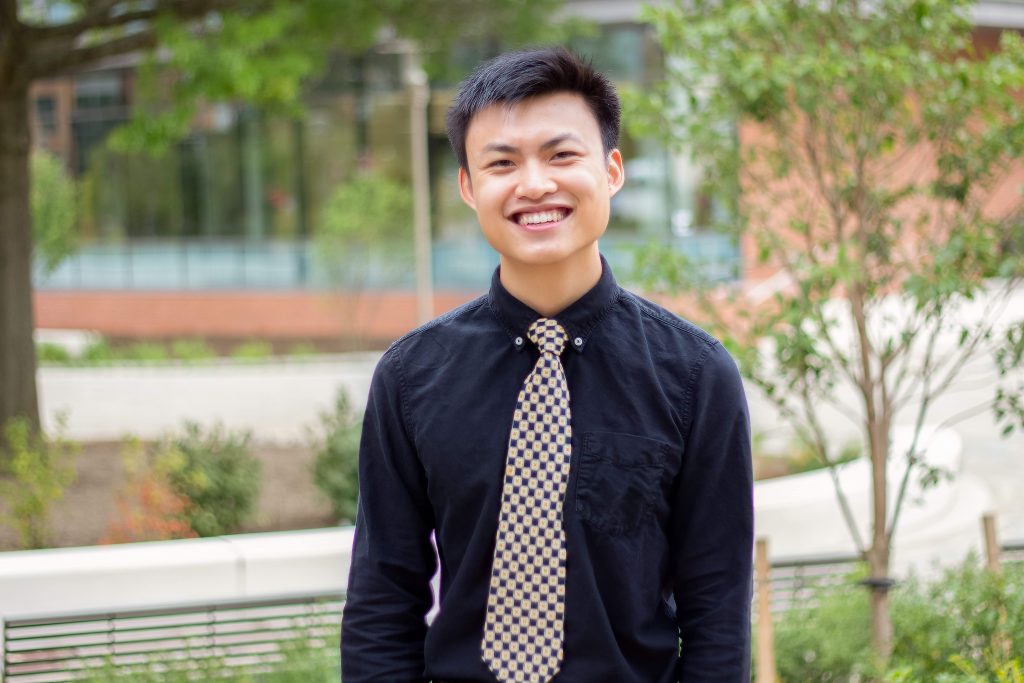
Degree: B.S., Computer Science (Game Development track) Hometown: Olney, MD Plans: Computer scientist, T. Rowe Price
“I see how much drive and passion students have, and it helps me become a more driven and passionate person. So I really just value the people around me in the community who are striving to improve themselves, because it helps me improve as well.”
Gabby Khan ‘22 came to UMBC to study computer science and game development. What she found when she arrived was a warm, supportive community. “Everyone was welcoming and felt responsive, like humans,” she says. “People in administration who I’d call with questions were welcoming and friendly.”
When she ran into challenges in her physics and calculus classes during her first year, Khan sought help from UMBC’s free tutoring resource, now known as the Academic Success Center. After a student mistook her for a tutor and a Center staff member overheard the conversation, she was offered a job. She eventually became a tutor mentor, helping other tutors build their skills.
Gabby Khan in The College Tour video.
Khan approached her Academic Success Center work in the same way she eventually approached being a resident assistant for the Honors College Living Learning Community and a leader in the Honors College Council: as an opportunity to pay forward the kindness and support she received from other members of the UMBC community.
“I feel like whenever you give a sense of excitement or passion to people, they usually do reciprocate it,” she says. “Even if you don’t see it yourself, they’ll find ways to share it with other people.”
Soon after graduation she will join the computer science team at T. Rowe Price.
Story written by David Hoffman, Ph.D. ’13, language, literacy, and culture (LLC), director of the Center for Democracy and Civic Life, and Romy Hübler ’09, modern languages and linguistics, M.A. ’11, intercultural communication, Ph.D. ’15, LLC, assistant director of the Center for Democracy and Civic Life.
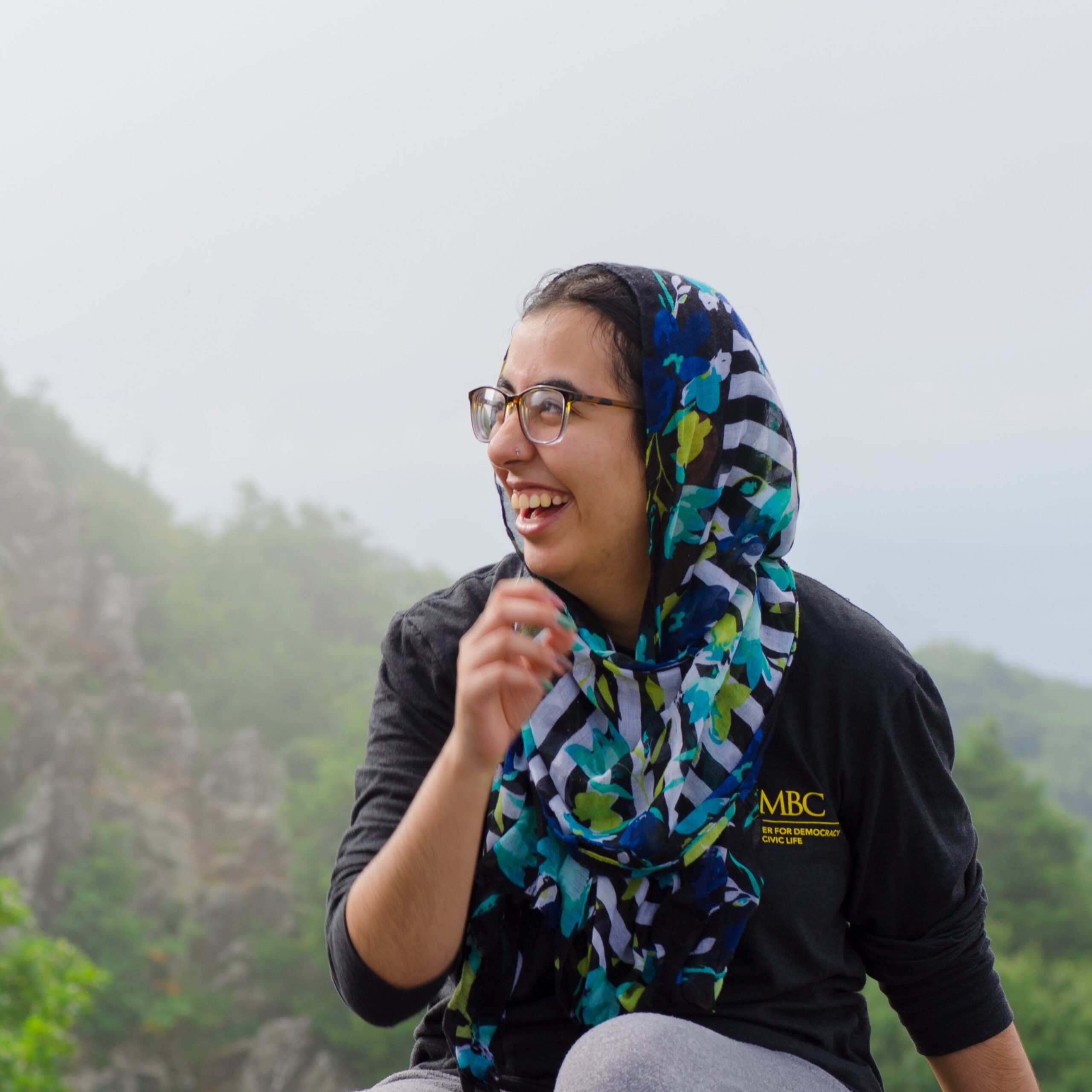
Degree: B.A., Global Studies; B.A. Economics Hometown: Kherson, Ukraine Plans: Work in an intercultural role before graduate school
“Studying at UMBC helped me see the value of intercultural communication and helped me learn from other cultures as well.”
Kateryna Yakusheva ’22, global studies and economics, looks forward to working on the international stage, with an organization like the World Bank or International Monetary Fund. Wherever her career takes her, she knows she wants to help different groups come together to manage risks, address conflicts, and build new futures.
This vision for her future is inspired by her intercultural college experience in the U.S. Yakusheva came to Maryland from Ukraine eight years ago. She has focused on gaining exposure to many different cultures.
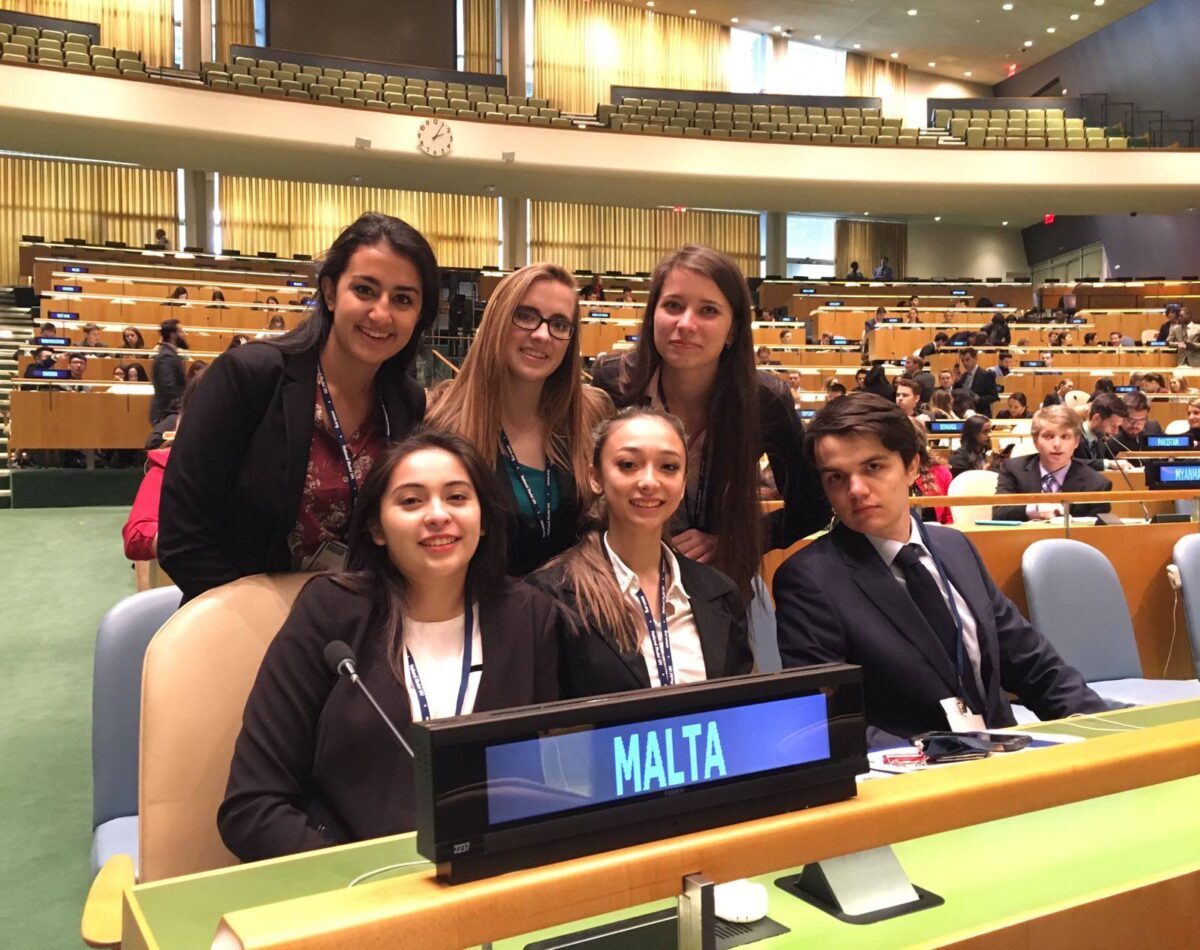
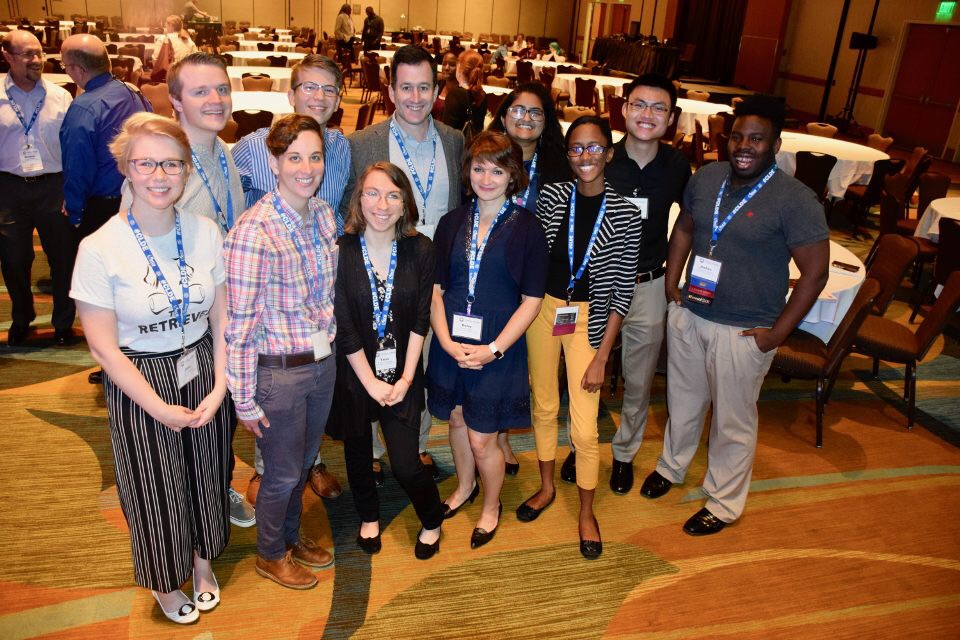
Kateryna Yakusheva (upper row, right) at a National Model United Nations tournament. (Image courtesy of Yakusheva)
While a student at Montgomery College, she was a delegate for the National Model United Nations. After transferring to UMBC she took courses in Chinese, adding to her language skills in Russian, Ukrainian, and French. The Chinese language courses added another dimension to her coursework in global studies. “It really opened my mind to doing things in a different way,” she says.
Yakusheva recommends that everyone get experience with other peoples’ ways of doing things. “There are so many clubs at UMBC where you can contribute and come to learn about other cultures,” she says, so students should “definitely participate in as many activities as they can.”
Degree: B.A., Modern Languages & Linguistics (Spanish and German) Minors: Anthropology and Latin American Studies, certificate in Intercultural Communication Hometown: Ellicott City, MD Plans: M.A., Intercultural Communication at UMBC
“I like that grittiness we have at UMBC—that you chose to be here and everyone is here because they’re just into what they study and want to grow.”
An aspiring polyglot, Caleb Ruck ’22, modern languages and linguistics, collected languages like Pokemon when he was young. No college felt right, however, until the day he toured UMBC. He knew right away that it was where he belonged. “I genuinely think that UMBC is the best possible fit that I could have gotten,” he says, “it has a very deliberate underdog spirit.”
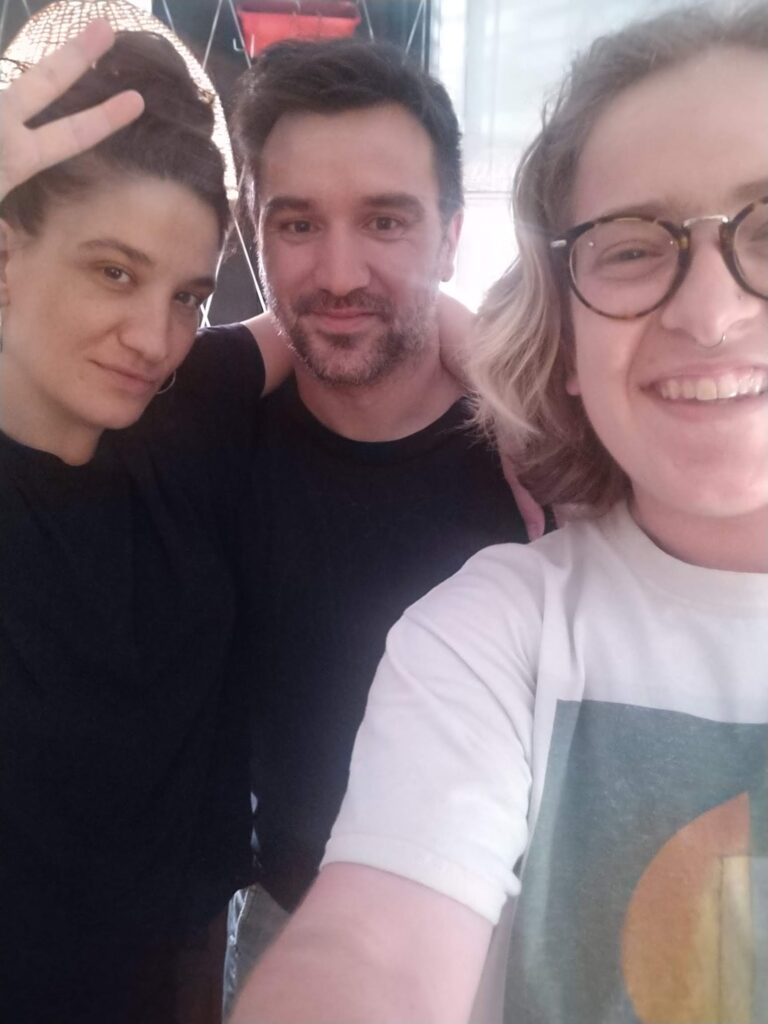
Caleb Ruck with host family in Argentina. (Image courtesy of Ruck)
Soon he began to find that the cultural aspects of language were just as appealing as the mechanics. His advisor Elizabeth Arévalo-Guerrero, who he calls his “main cheerleader,” pointed out that he could earn an intercultural communication certificate with just a few more classes, so he decided to go for it. Ruck delved into how people use language and never looked back.
In Fall 2019 he studied abroad in Argentina, which gave him “a taste of communicating with people who experience the world in a very different way.” Back at UMBC, he went on to do a research project and presentation focused on understanding differences in the perceived prestige of native English-speaking bilinguals versus English language learners on social media.
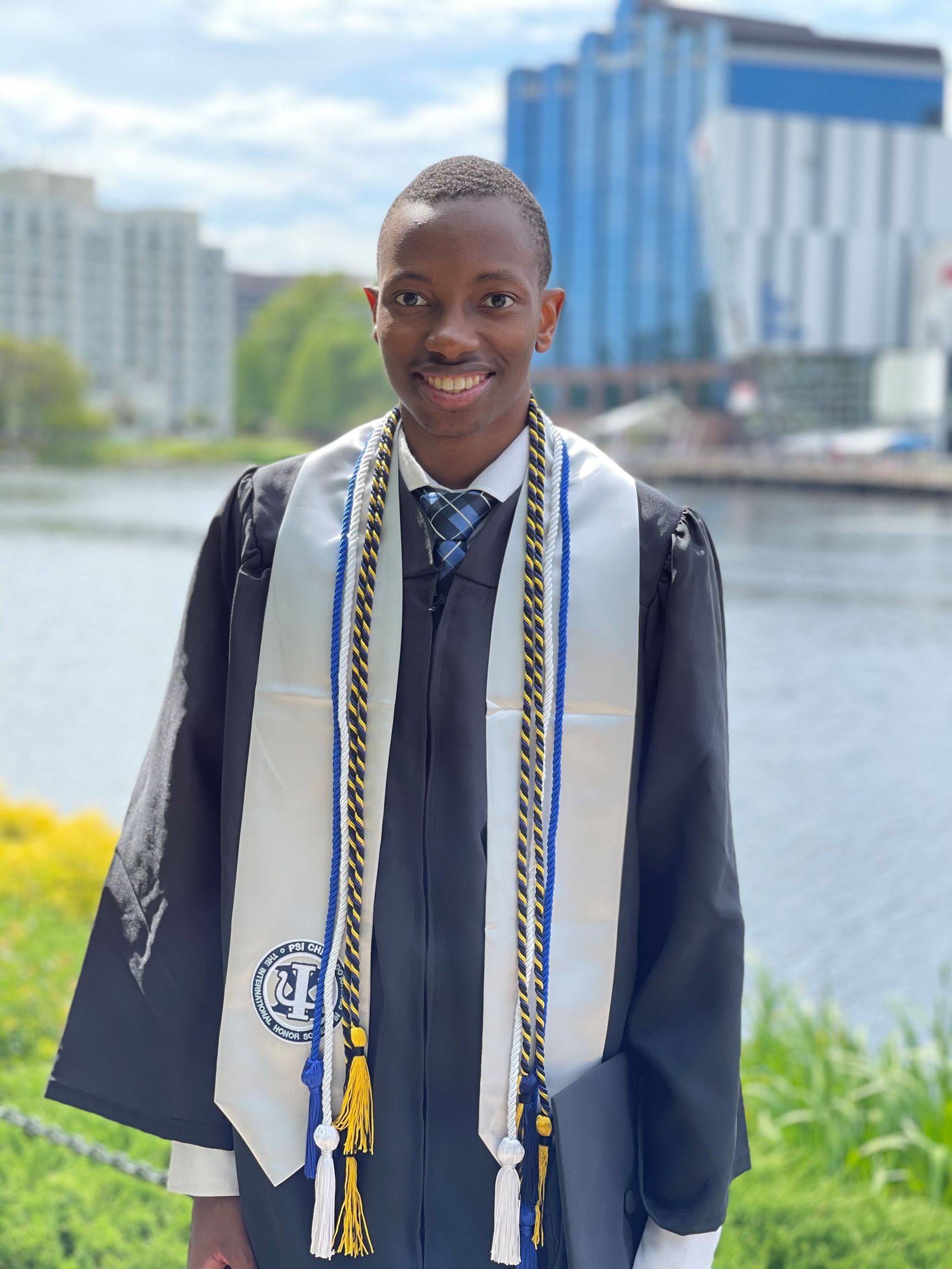
Degree: B.S., Biological Sciences Hometown: Tabriz, Iran Plans: M.S., Applied Molecular Biology at UMBC, followed by dental school
“I knew that if I came to UMBC I wouldn’t be alone, I would join a community of international students.”
As a child in Iran, Nastaran Azar ’22, biological science, was afraid when she saw her grandmother take out her dentures, but her brother’s explanation of what had happened to her grandmother’s original teeth gave Azar a life goal. “Teeth play a really important role in our lives,” she says. She plans to help others take care of theirs when she eventually becomes a dentist.
Before dental school, however, Azar had to get an education in biology. She came to UMBC from Iran, knowing that UMBC has a community of diverse students that would help her feel welcome. She would go on to extend that welcome to others through UMBC’s Global Ambassadors program.
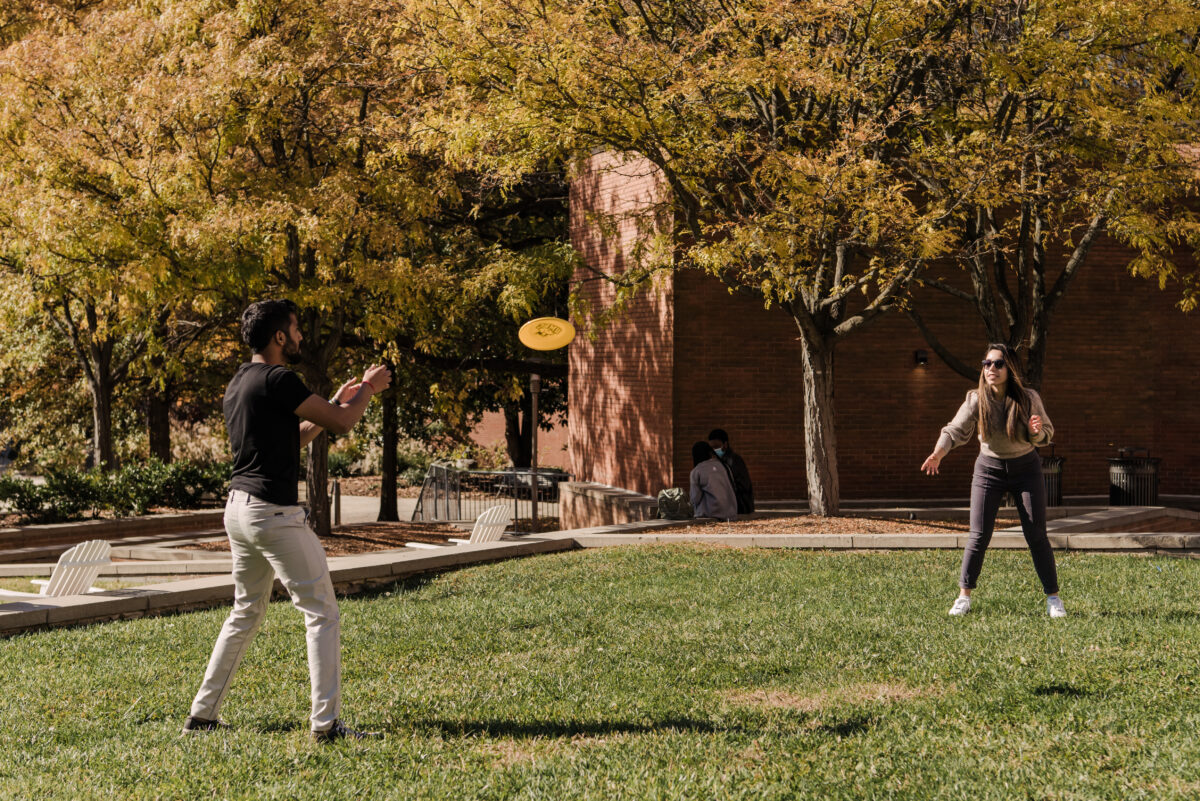
Nastaran Azar playing frisbee on campus. (Image by Marlayna Demond ’11/UMBC)
Beyond enjoying the chance to meet students from all over the world, she was amazed at some of the differences in her academic experience as a student in the U.S. rather than Iran. These differences ranged from more frequent quizzes rather than high-stakes exams to the lab’s abundance of pipettes. “I really enjoyed that we have access to all of the technology and supplies,” says Azar.
She sees her decision to go abroad for college as one of the best choices she has made. “You get a chance to learn much more” when you are in a new environment with all different kinds of people, she says.
Degree: B.A., Individualized Study: Civic Renewal and Creative Expression Hometown: Columbia, MD Plans: Coordinator for Civic Design, UMBC’s Center for Democracy and Civic Life
“The lesson I have learned from STRiVE and from the Center for Democracy and Civic Life’s work, and from all of the people I’ve met at UMBC who have held up undistorted mirrors for me, is that I am worthy as my authentic self. That has radically altered everything I thought I knew about myself and the world, and has profoundly deepened my sense of community, connection, and purpose. And that clarity and sense of belonging are indescribably empowering and healing, even in moments of doubt.”
Tess McRae ‘22, individualized study, grew up hearing stories about her mother’s campus involvement as a UMBC student in the 1980s. She visited the campus several times as a teenager, and says “I was always entranced by how beautiful it was and how clearly I could imagine myself thriving here.”
McRae spent a week at STRiVE, UMBC’s immersive leadership for social impact program, during her first year, and joined the Center for Democracy and Civic Life’s staff when it launched in 2018. For the next four years, she played a leading role in developing and leading the Center’s workshops and programs, weaving in her insights as an artist and as a person familiar with the kind of self-doubt that can inhibit participation in communities and social change projects.
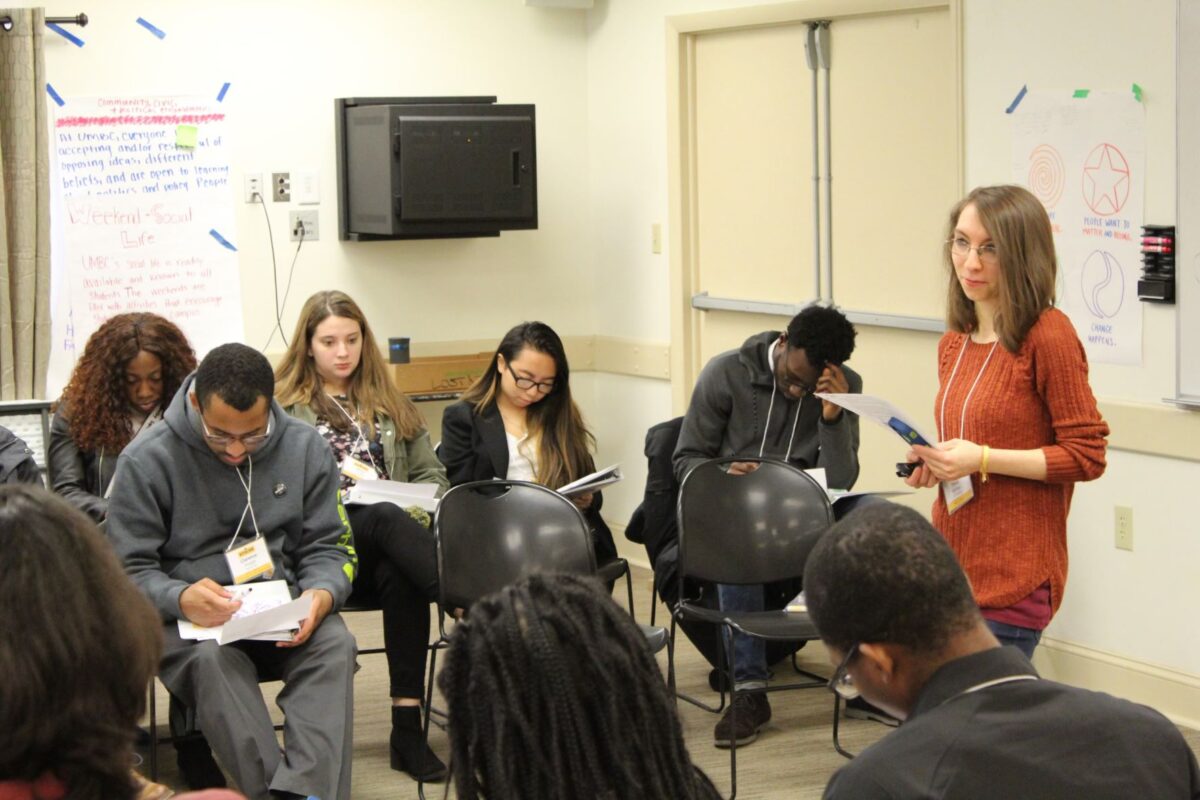
Tess McRae (r, standing) facilitates a session at STRiVE. Image courtesy of McRae.
Along the way, she designed her own major in civic renewal and creative expression and produced the Co-Create UMBC virtual tour. And her paintings of UMBC spaces that have been co-created by students have appeared in exhibits both on campus and at the OCA Mocha coffee shop in nearby Arbutus.
McRae’s immediate post-graduation plan is to work professionally at the intersection of civic engagement and the arts. She aims to “continue co-creating an ethos of agency, self confidence, and communion felt deeply by people around the world” in ways that allow her to indulge and draw on her identity as a poet, visual artist, musician, and aspiring theater-maker.
Story by David Hoffman, Ph.D. ’13, language, literacy, and culture (LLC), director of the Center for Democracy and Civic Life, and Romy Hübler ’09, modern languages and linguistics, M.A. ’11, intercultural communication, Ph.D. ’15, LLC, assistant director of the Center for Democracy and Civic Life.
Forbes lists UMBC among the nation’s top 150 colleges—and top 50 public universities—in new rankings announced this month. UMBC is also among the top three public universities in Maryland on the list, alongside University of Maryland, College Park, and the U.S. Naval Academy.
Historically, Forbes has focused its America’s Top Colleges ranking on how much money students make after college. This year the pandemic motivated the publication to broaden their approach. They expanded their metrics to also include accessibility and affordability. This better recognized the strengths of public universities that pair academic rigor and value.
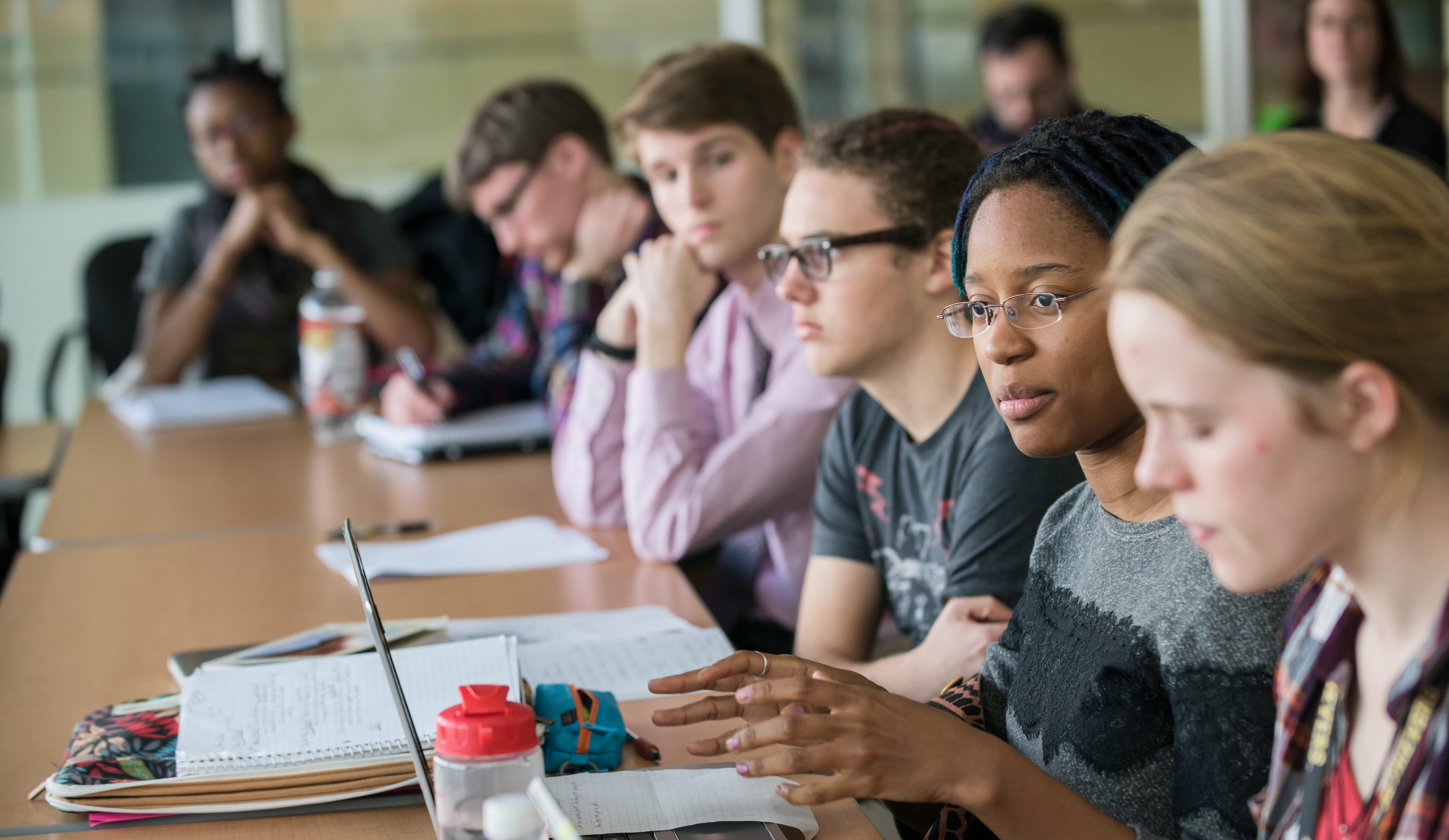
Students attend a seminar in the Dresher Center for the Humanities, 2016.
National model
For the first time, a public university appeared as Forbes’s number one university. The top-ranked school, UC Berkeley, is one of the many leading institutions nationwide that looks to UMBC as a model. In 2019 UC Berkeley implemented the SEED Scholars Honors Program, modeled on UMBC’s gold-standard Meyerhoff Scholars Program, which focuses on increasing diversity in STEM.
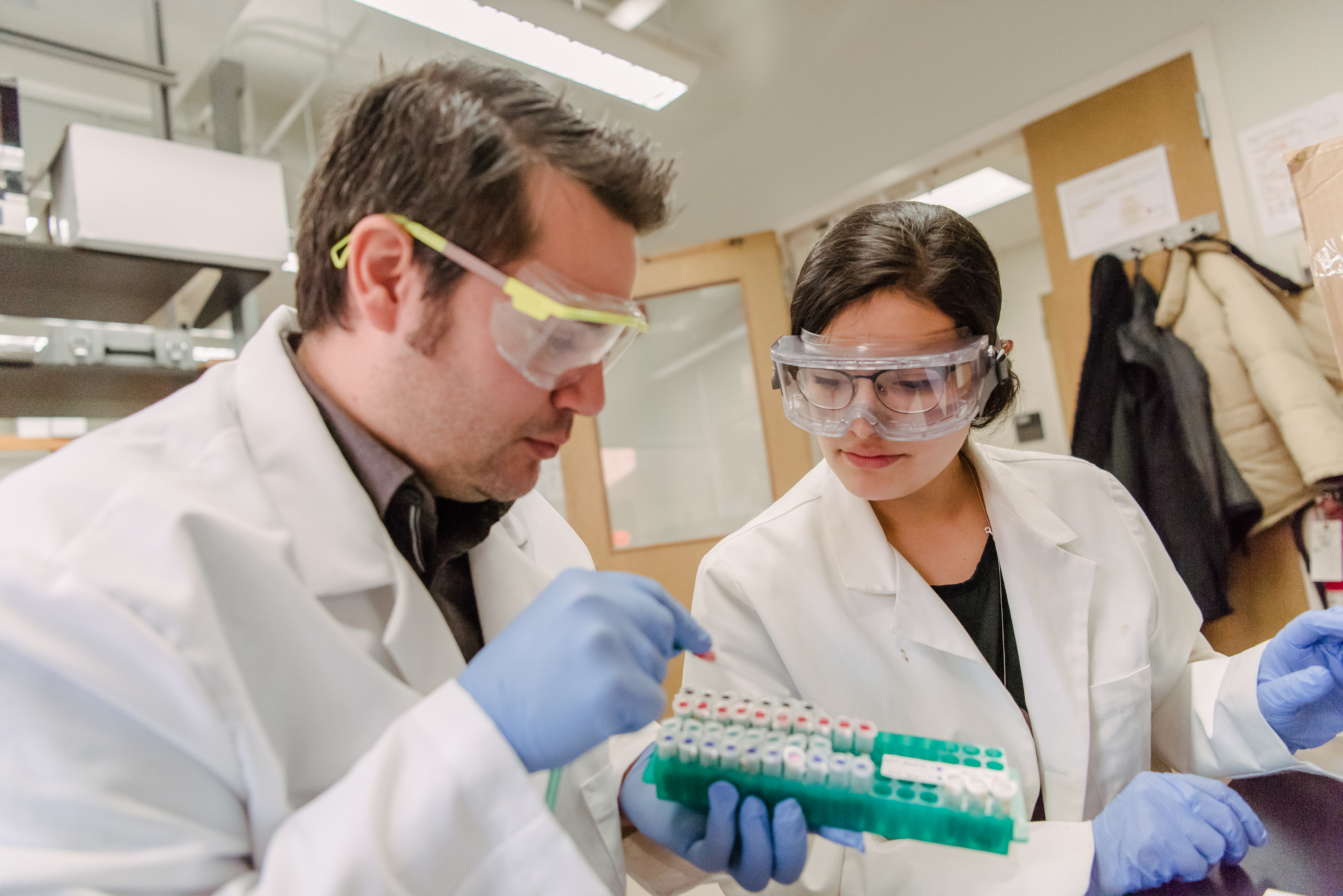
Abby Cruz ‘18, biological sciences, a Meyerhoff affiliate and MARC U*STAR Scholar, works in Fernando Vonhoff’s biology lab.
The success of public universities like UMBC on this year’s America’s Top Colleges list also connects with a point that UMBC President Freeman Hrabowski often emphasizes, about college access and achievement. “We are saying to the country and to young people that you don’t have to be rich to be the very best,” he recently said. “Middle class institutions can produce some of the best thinkers in the world.”
Written by Charis Lawson ’20, English, communications specialist. All photos by Marlayna Demond ’11 for UMBC.
UMBC has seen its share of academic and athletic success across a wide range of fields and sports, but the University recently earned national acclaim in something new: figure skating.
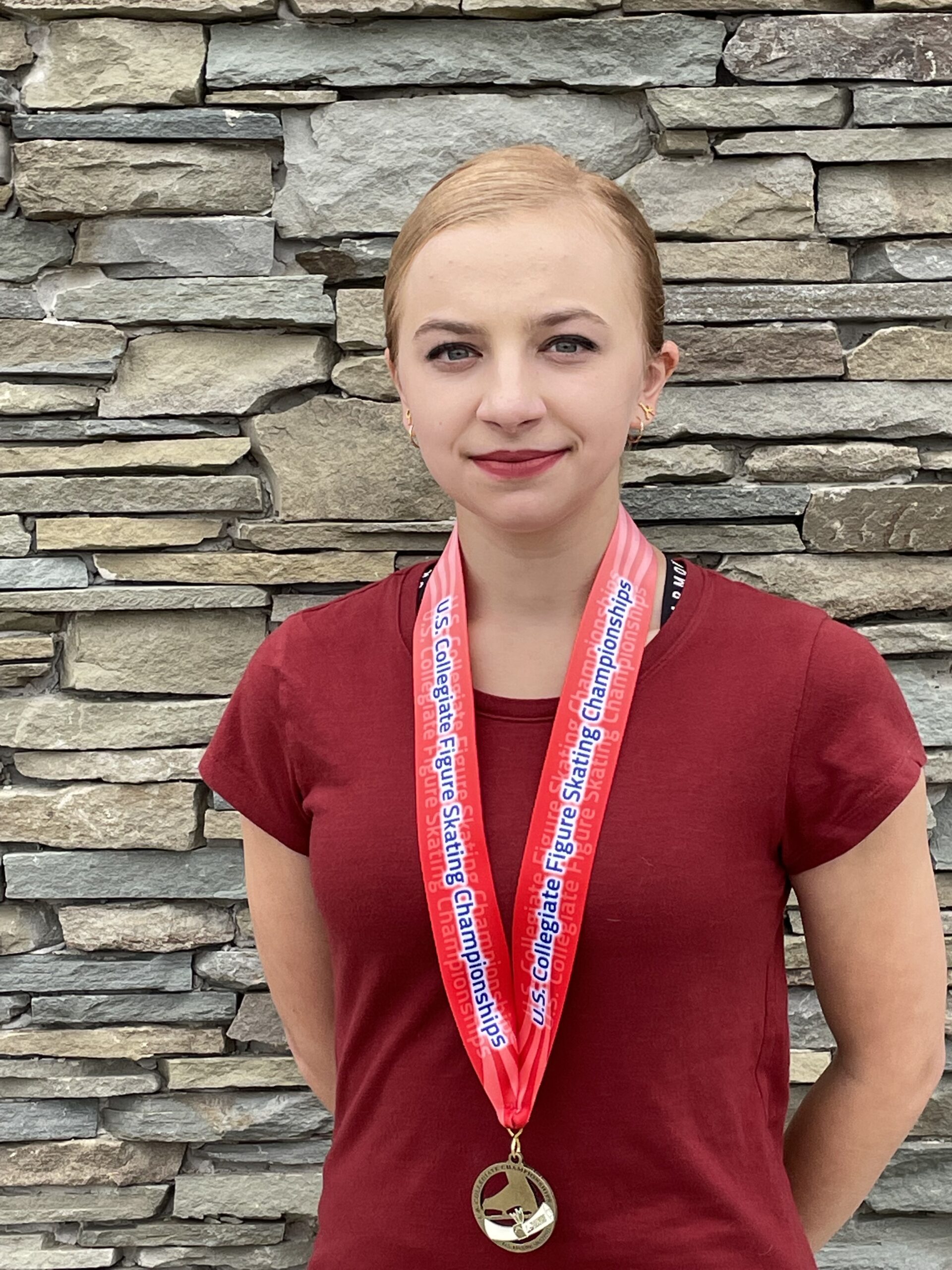
Maya Jones ‘22, psychology, took home the bronze medal for UMBC at the 2021 U.S. Collegiate Figure Skating Championships in Pennsylvania on July 29 (Junior Ladies category). She earned a total of 103.18 points, including 66.55 points in her free skate to “The Dying Swan” by Camille Saint-Saëns. U.S. Figure Skating Fan Zone reports that the program opened with a double Lutz-double toe loop combination and also featured two Level 4 spins.
Maya Jones. Photo courtesy of the Jones Family.
We caught up with Maya to ask her about her performance, how she got into figure skating, and how her passion for athleticism and artistry on the ice connects with her UMBC experience.
Congrats on winning bronze at the 2021 U.S. Collegiate Figure Skating Championships. What was the experience like?
Thank you so much. I’m just extremely happy and grateful to be able to be back on the ice and compete again after pausing on competitions for over one and a half years due to COVID. Being able to put out two clean, well-skated programs, I felt euphoric. Figure skating is a sport that has a huge ratio between practice time and competition time, so to be able to skate well when it matters most, especially after not competing for so long, was an incredible experience.
How did you get into figure skating?
My mom is actually my coach, so she put me on the ice as soon as I could walk. After that I just completely fell in love with the sport. Skating combines artistry with athleticism, and I think that’s what draws me to it the most. It’s a sport that is not only physically challenging, but mentally as well. The sense of achievement that comes from overcoming those physical and mental barriers is unlike anything else I have experienced. Every day of practice is a challenge in one way or the other, and every time I face something new. Sometimes you are able to overcome those challenges and other times you are not, but that’s what keeps it exciting, and the challenges I am able to overcome are what makes me love the sport the most.
What is your practice schedule like?
My practice schedule is all over the place. The specific days and amount of times I skate per week are completely dependent on the amount of schoolwork I have that particular week, so no two weeks are ever the same.
How hard has it been to balance college life with figure skating?
I always plan ahead. I try to set certain times for schoolwork and certain times for practice. Obviously, school comes first, so I haven’t been able to skate as much as I did in high school. Some weeks I’m able to skate four or five times a week, and other times none, but I’m just happy to be able to skate at a competitive level in college.
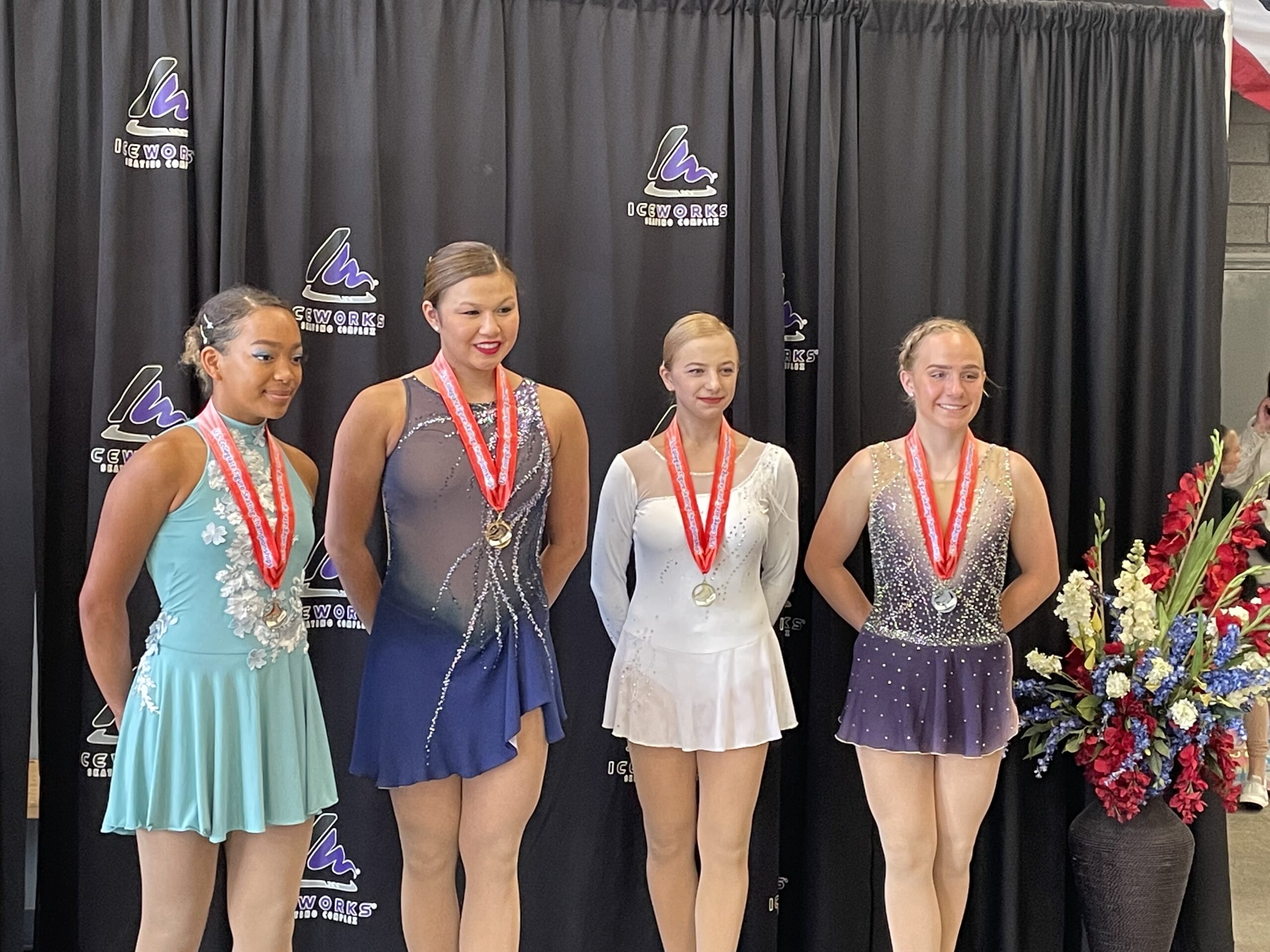
Maya Jones, second from right, and her fellow competitors at the competition. Photo courtesy of the Jones Family.
How did the pandemic affect your training?
When everything shut down due to COVID, I was completely unable to skate for three months which is the longest I’ve ever gone without skating. For the first couple of months back, there wasn’t a lot of ice time available, so I was only able to skate once every week or two. Thankfully, I’ve now been able to resume practicing at my usual amount.
How supportive are the friends you have made at UMBC of your figure skating?
They’re very supportive. I’ve taken a few people to skate on public sessions, which is always very fun.
Why did you choose UMBC?
I chose UMBC because I wanted a top-quality academic experience and I also knew UMBC had strong STEM programs. I’m combining my psychology major with a biology minor, and I have found that UMBC offers strong classes in both fields. I also really liked the atmosphere of the campus. It’s allowed me to form relationships that have had a strong impact on me as a person.
What’s in the future for you?
I’m actually going to audition for Disney on Ice. I’ll be graduating in the fall, so I’m hoping that once I graduate I can have skating as my career for a year or two. After that, I plan to start training to become an airline pilot, which I started exploring as a career after talking with a UMBC friend who is training to become a pilot. I’m confident that UMBC has put me into the right mindset to be able to tackle the challenges that come with the training.
Article by Zach Seidel ’12, M.S. ’15, director of digital media for UMBC Athletics.
Banner image: Ice skates. Photo by Kelli McClintock on Unsplash.com.
From surveillance tools to autonomous machines, countries around the world are ramping up their military artificial intelligence (AI) assets. Such robust technologies are necessary to protect the United States from surprise attacks, which occur these days not only on the ground, but also on the cloud.
Advancing AI-based autonomous systems for military use will be the goal for a team of UMBC researchers that has recently been awarded a $20-million subcontract. UMBC will partner with the University of Maryland, College Park (UMD), and the DEVCOM Army Research Lab (ARL) on the $68-million, five-year endeavor, which ARL is funding. The goal is to strengthen Army AI technology so it is able to meet the demands of today’s national defense.
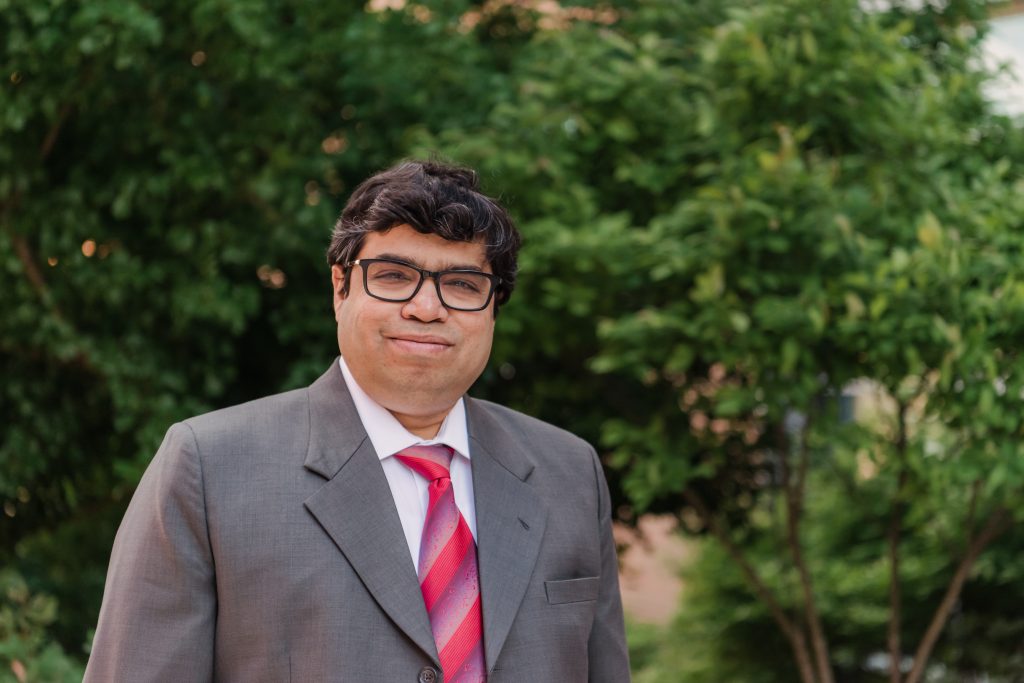
Aryya Gangopadhyay.
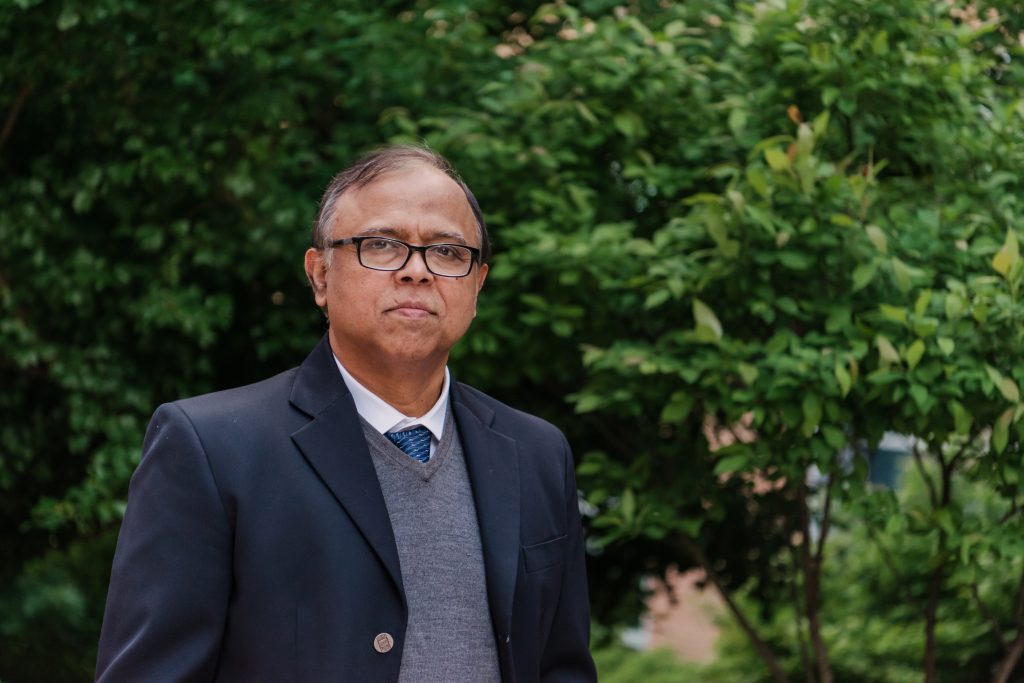
“The question we’re trying to solve is: Can we design and develop tools, techniques, algorithms, software, and hardware that can work autonomously and make their own decisions, but also collectively, interfacing with human decision makers?” says UMBC’s principal investigator Aryya Gangopadhyay, professor of information systems. “The landscape of war is changing, and we must build systems that can make human-like decisions in real time and under real-world pressure.”
Secure, effective, and resilient
The project, AI and Autonomy for Multi-Agent Systems (ArtIAMAS), aims to advance science and technology around three core research areas: collaborative autonomy; harnessing the data revolution; and human-machine teaming. UMBC’s role in the project will center on the second and third research thrusts.
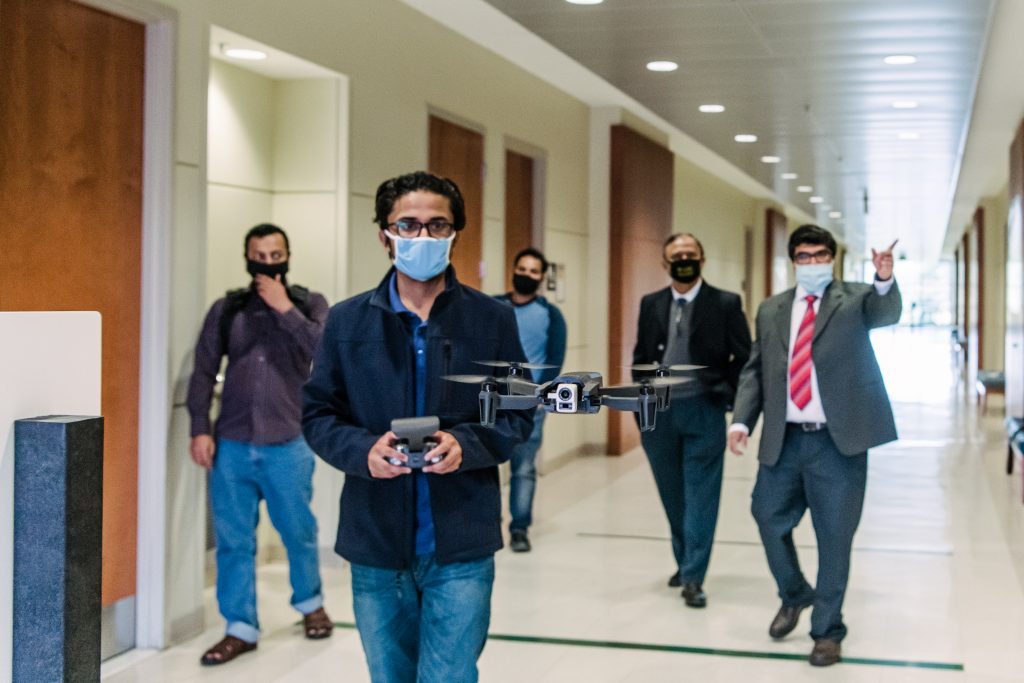
More specifically, the UMBC team will develop solutions for AI-based networking, sensing, and edge computing — which brings data storage and computation closer to a location — for battlefield Internet of Things (IoT). This will allow them to deliver secure, effective, and resilient U.S. Army assets including AI systems related to search-and-rescue, surveillance, robots and machinery, and augmenting humans in performing decision-making tasks.
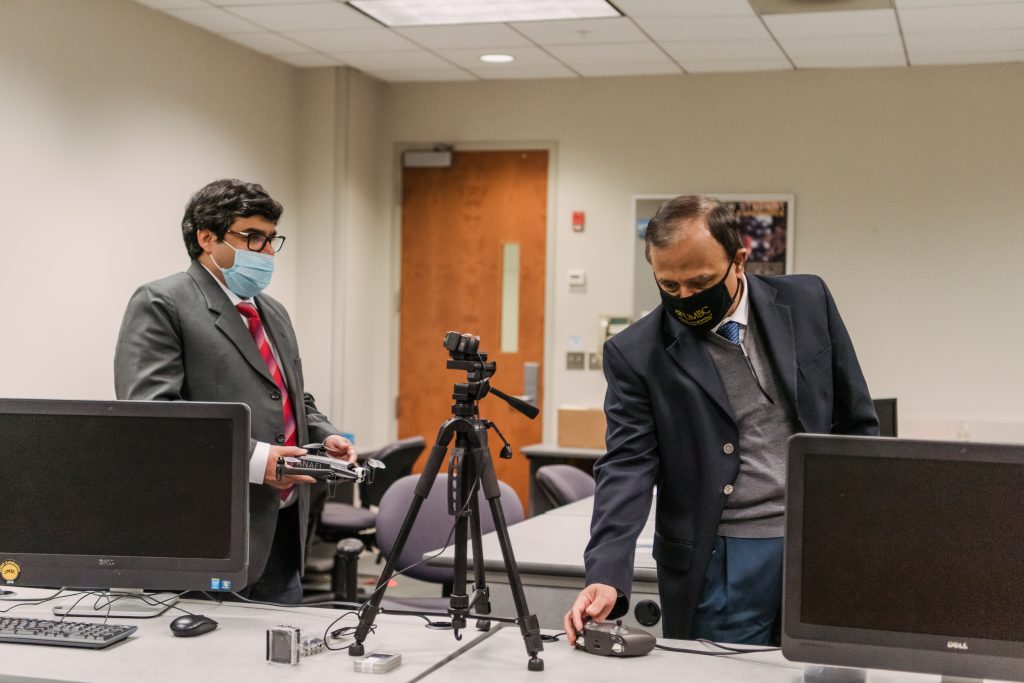
Sensors that will be used for research.
“As one of the research institutions in the University System of Maryland, we are delighted with this exciting next step in our statewide partnership with our colleagues at UMD and at the Army Research Lab,” says Karl V. Steiner, vice president for research at UMBC. “Artificial intelligence is one of the key technologies in the ongoing transition to autonomous systems, both in the defense and civilian sectors, and it does take researchers from a variety of backgrounds to innovate and develop the most promising solutions. This alliance builds on the expertise and commitment of many of our colleagues.”
Today’s conflict landscape
In the battlefield, there are soldiers with body cameras, guns with sensors, as well as ground-based and airborne machines operating in rough and volatile terrains. Retrieving data and making decisions from these multi-model sources can be difficult, especially in challenging networking conditions. Understanding and developing adaptable cross-domain solutions for these environments will be at the forefront of the work of co-principal investigator Nirmalya Roy, associate professor in information systems.
“There may not be time to send data to an army base or the cloud, so some of the processing, computing, and interference may be done on the devices themselves. How do you navigate the available computing resources in-hand and process data on the devices themselves to make an informed decision, and in real time? These are the concepts I’ll be working on,” Roy says.
Nirmalya Roy
With the work set to begin in mid-May 2021, the UMBC team will initially include more than eight researchers from the departments of information systems and computer science and electrical engineering, as well as scientists and engineers from the ARL. The Center for Real-time Distributed Sensing and Autonomy (CARDS) will lead the research being conducted by UMBC faculty.
Eventually, the team will grow to nearly 50 researchers, and future projects will include other University System of Maryland institutions. Together, the group will publish fundamental research and identify similar and cross-cutting research endeavors, improving collective information-sharing.
Aryya Gangopadhyay and Nirmalya Roy with several students.
“The cross-disciplinary nature of this project is well-suited to our College, which brings together computing, engineering, and information systems faculty and student researchers. The project team includes a significant number of the exceptional faculty we have recruited through recent hiring made possible through our state’s support,” says Keith J Bowman, dean of UMBC’s College of Engineering and Information Technology.
Advancing AI research
While the work will undoubtedly improve military AI, it will also enhance AI research in other domains. A goal of the project is to establish a long-term center with a vision of advancing AI-based autonomy.
Nirmalya Roy, left, and Aryya Gangopadhyay working together in the lab.
“This is an opportunity for UMBC to bring together talented researchers from across departments to participate in fundamental, and potentially groundbreaking, research,” says Gangopadhyay. “To make a big impact in the research space, you need long-term, multi-institutional partnerships and collaborations. Working with the University of Maryland, College Park and the Army Research Lab will allow us to collectively advance AI in the military space.”
In addition to Gangopadhyay and Roy, the UMBC team also includes Anupam Joshi, Tinoosh Mohsenin, Dmitri Perkins, Sanjay Purushotham, Maryam Rahnemoonfar, Jianwu Wang, and Ting Zhu. The ArtIAMAS cooperative agreement is led by PI Derek Paley, director of UMD’s Maryland Robotics Center.
Written by B. Rose Huber for UMBC News.
Banner image: Nirmalya Roy, left, and Aryya Gangopadhyay. All photos by Marlayna Demond ’11 for UMBC.
On the back of every UMBC black and gold ID card is a guide to essential emergency resources, including numbers for health, counseling, sexual assault, and suicide prevention helplines. The new card design was the result of student advocacy through UMBC’s Retriever Courage initiative, seeking to better prevent and respond to sexual assault and violence. And the person who suggested that change is Autumn Cook ‘21, M29, chemistry, and gender, women’s, and sexuality studies (GWST), graduating this week.
A Meyerhoff Scholar and Honors College student, Cook has been a tireless advocate for all UMBC students, with a focus on supporting survivors of sexual assault and helping trans students find and build community, in the sciences and at UMBC broadly.
Committing to visibility
“I was the first openly trans Meyerhoff Scholar in the history of the program and I quickly learned that I would have to build my own community of transgender scholars at UMBC,” Cook shares. “Without having any friends like me, I connected and built bridges with people who did. I was lucky enough to find more trans people through both the LBGTQ+ Student Union and its programming, and then through the Women’s Center.”
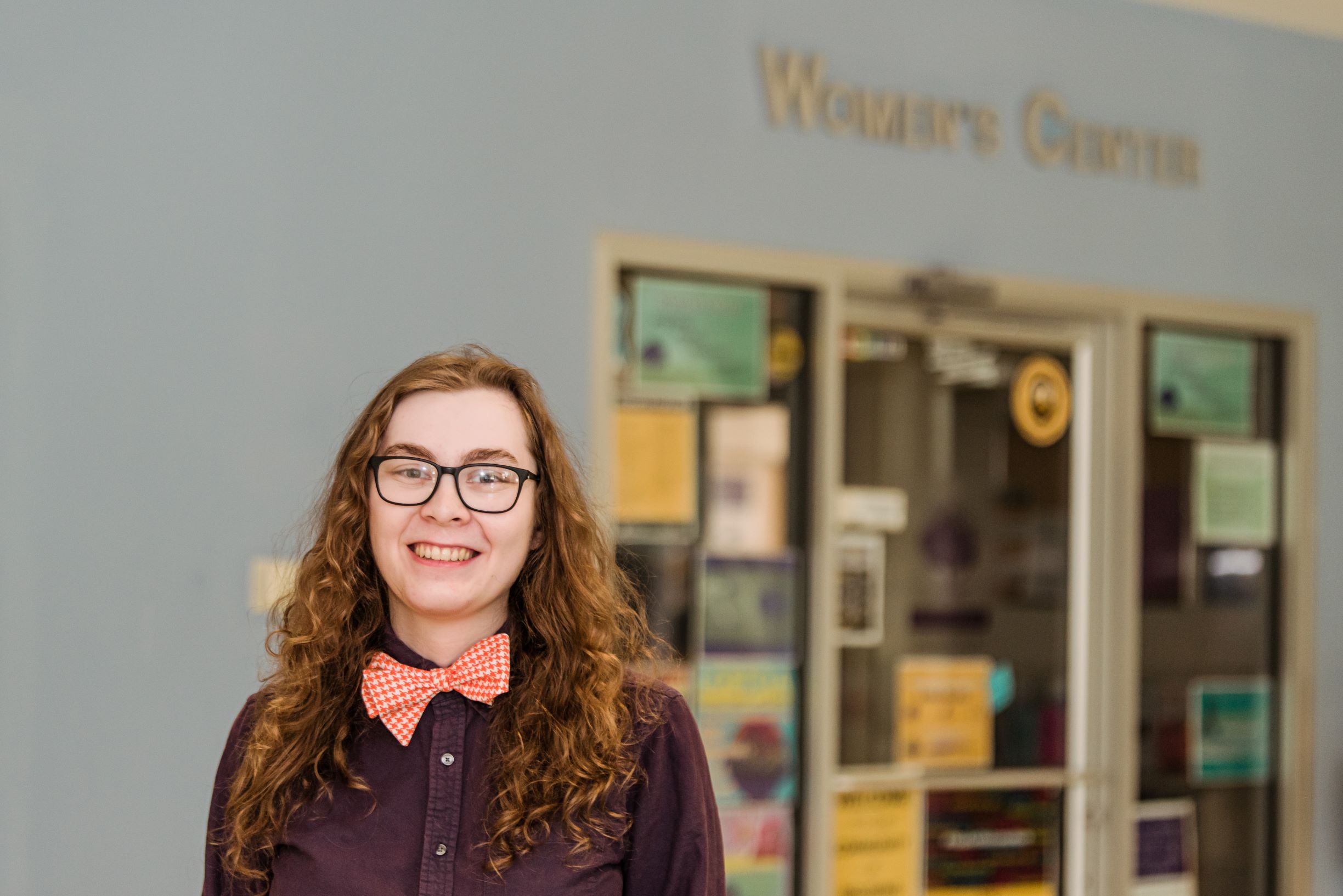
Autumn Cook in front of the Women’s Center. Photo by Marlayna Demond ’11 for UMBC.
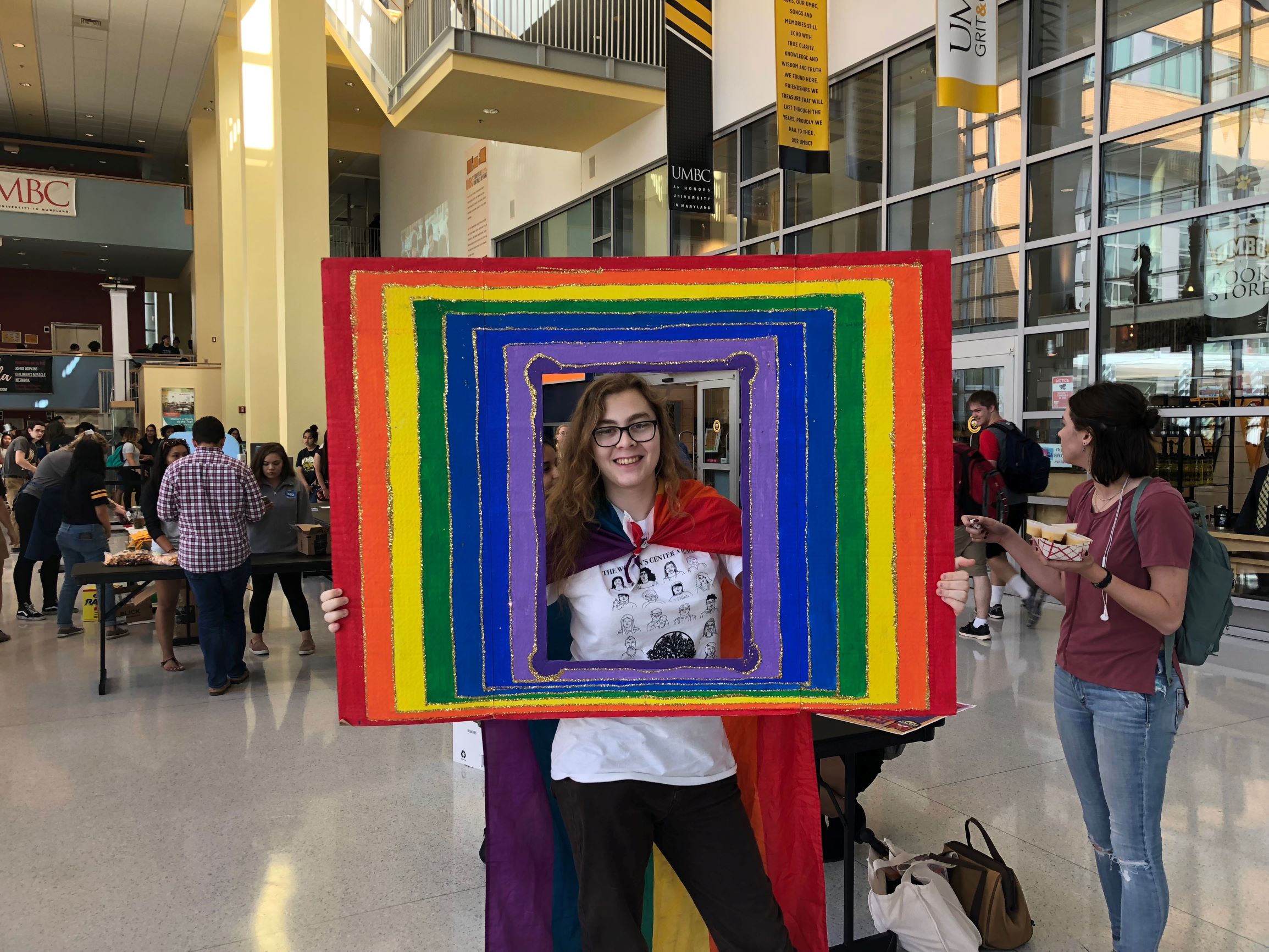
Cook launched the LBGTQ+ Student Union’s weekly trans discussion group, then worked to restart and become a co-facilitator of the Women’s Center’s trans discussion group, Spectrum. “I always make it a priority to be extremely visible because I want to demonstrate to other people that transgender people exist, transgender people can thrive, and transgender people can be successful,” they share.
“I want to potentially be a role model for other transgender people,” says Cook, “to show them that I can do it, therefore so can you.”
Calling for change
Thinking about the impact of the new campus ID design, Cook says, “I’m proud that every UMBC student, faculty, and staff member now carries that card and that it is part of a legacy I’m leaving behind at UMBC.”
Their legacy also extends to other important changes that impact the daily life on campus. For example, Cook joined UMBC community members in calling for updating and expanding all-gender restrooms, including multi-person restrooms. The first multi-person, all-gender restroom opened in Sherman Hall A Wing in June 2019 and more have followed across the campus.
Amelia Meman, assistant director of the Women’s Center and Cook’s supervisor and mentor, says Cook is an asset to campus who will be missed. “As a student heavily involved with the administration in advocating for this project and later ensuring accountability in implementation, Autumn has left an indelible mark on our campus by ensuring access for everyone–affirming all people’s gender diversity.”
Autumn Cook on National Coming Out Day in 2019. Photo by Amelia Meman.
In recognition of their scholarship and advocacy work at UMBC, Cook received two Lavender Awards: LQBTQ+ Scholar of the Year in 2021 and Emerging Student Leader in 2020. As a GWST major, they received the Jo Ann E. Argersinger Academic Achievement Award for GWST in 2020 and 2021.
Helping students succeed in science
Cook also sees important interconnections between their two majors: GWST and chemistry. After graduating from UMBC, they will pursue their Ph.D. in chemistry at University of Illinois, Urbana-Champaign, but they see GWST as foundational in their work to boost inclusion in science.
“I’ll be able to use my degree to push through more advocacy work within the next step of my educational and professional journey,” says Cook. “Whether it’s conducting research after I finish my Ph.D., dictating science policy on a national level, or supporting transgender scientists, I want to continue to fight for my community.”
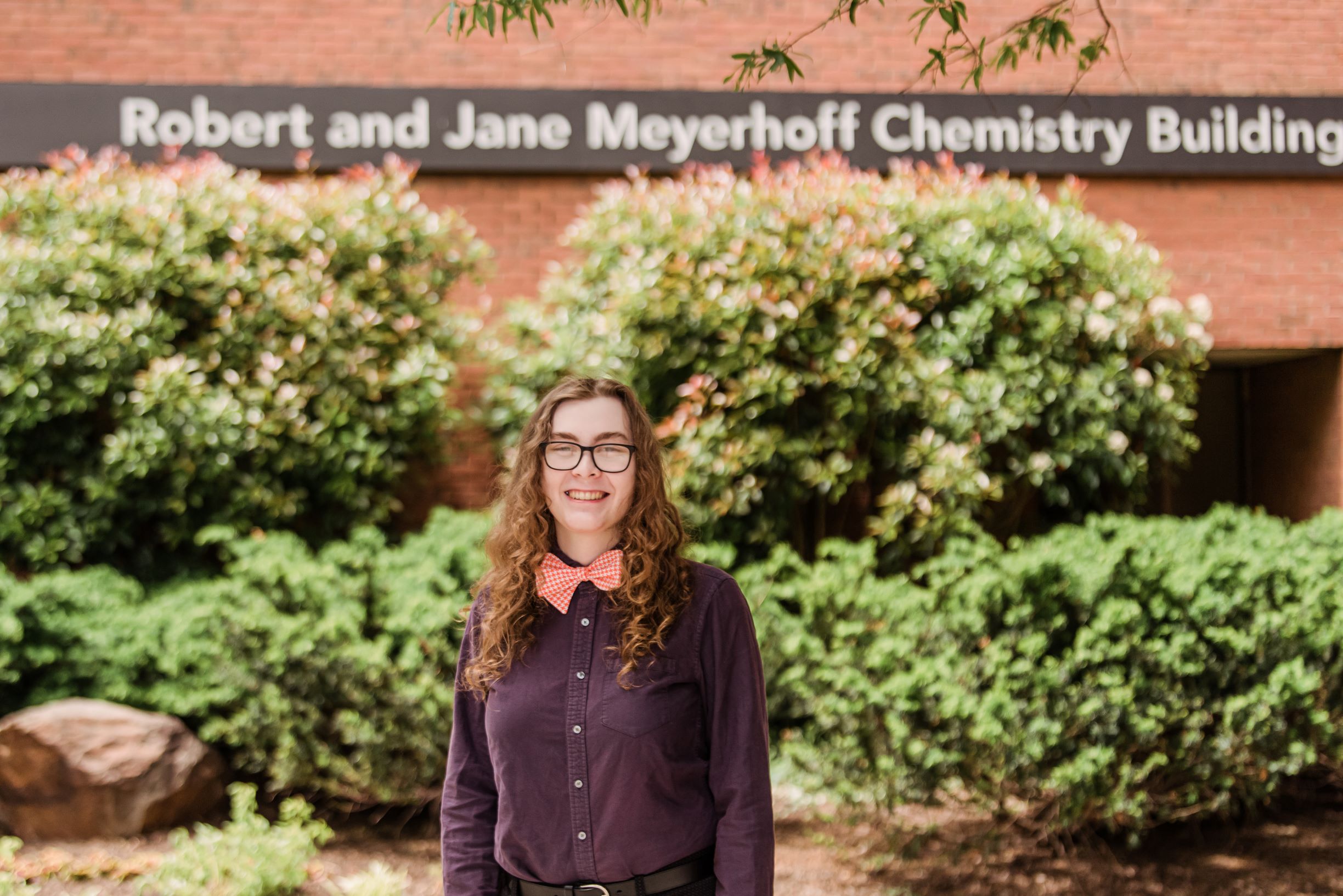
Autumn Cook in front of the Meyerhoff Chemistry Building. Photo by Marlayna Demond ’11 for UMBC.
Cook plans to become a chemistry professor and has already completed research with Joseph Bennett, research assistant professor of chemistry, and became one of the department’s youngest teaching assistants (TAs). They tutored students in the Chemistry Tutorial Center, and for that work, received the 2021 Mittino Award for Service from the chemistry and biochemistry department.
“When I started in chemistry, I struggled a lot. But because of the time and effort other people put into helping me, I was able to grasp the knowledge on a really deep level,” says Cook. “Tutoring and TA’ing was at first a way to pay it back to those people who helped me, but it quickly turned into a passion.”
“Once I realized that teaching chemistry as a professor was what I wanted to do, I made sure to take every opportunity that I could,” they add. “Being able to help students succeed is extremely gratifying and rewarding.”
Finding opportunities to lead
Christian Figueroa ‘21, social work, and Henri Maindidze, ‘21, psychology, say building community for students at UMBC-Shady Grove has been at the heart of their undergraduate experiences.
A first-generation student who transferred from Montgomery College, Figueroa dedicated himself to helping create a culture of belonging at UMBC-Shady Grove. It all started in 2019 when he “took a chance” to run for a leadership role as vice president of UMBC-Shady Grove’s Social Work Student Association (SWSA).
Figueroa says that experience opened more doors and encouraged him to apply for additional opportunities, like representing UMBC on the Universities at Shady Grove (USG) Student Council. He also served on the UMBC-Shady Grove Peer Advisory Team, collaborating with faculty, staff, and current students on recruitment and retention events for transfer students.
Christian Figueroa on the UMBC-Shady Grove campus. Photo courtesy of Figueroa.
After becoming SWSA co-president in 2020, Figueroa gained additional leadership experience and learned the importance of flexibility and creativity in building community during challenging times. When UMBC transitioned to virtual classes during the pandemic, he wanted to provide ways for social work students to stay connected.
Collaborating with co-president Mariandree Paiz ‘21, social work, and clinical instructor Jeanette Hoover (SWSA’s advisor), Figueroa developed community discussions focused on current events, featuring clinical instructor Nicole Belfiore. They also coordinated self-care nights and opportunities for students to do service work.
Serving communities
While committing so much time to leadership and supporting his fellow students, Figueroa took advantage of professional development opportunities offered by USG as well. He was selected to participate in the Montgomery County Department of Health and Human Services (DHHS) Interprofessional Scholar Program, which enables students to collaborate on real-world projects. Figueroa says the experience validated his desire to be a social worker.
After graduation, Figueroa will enter the master of social work program at the University of Maryland, Baltimore with advanced standing, and will specialize in behavioral health. He will serve as an intern with the Montgomery County Crisis Center, one of the sites he worked with as part of his DHHS Fellowship.
Christian Figueroa on the UMBC-Shady Grove campus. Photo courtesy of Figueroa.
“Christian exemplifies our Retriever spirit and UMBC grit,” says Chelsea S. Moyer, director of UMBC-Shady Grove. “He is a committed and engaged student leader exhibiting the social work value of service. He gives generously of his time and talents and is genuinely enthusiastic about and driven to make a difference in the lives of others. Importantly, he serves as both a problem-solver and bridge-builder in helping to create and build an inclusive community at the Universities at Shady Grove.”
Making space for conversations
Maindidze, who received his associate’s degree from Montgomery College, says getting involved in campus life at UMBC-Shady Grove was always a given. Seeing opportunities to create connections to support fellow students, Maindidze took the initiative to make them happen. “As students, we have a unique responsibility to make a difference and we only get a few years to do so,” he says. “It’s important to make this time worthwhile and leave a lasting impact.”
Henri Maindidze. Photo courtesy of Maindidze.
As relationship-building became more challenging because of the pandemic, Maindidze decided to create a conversation space where members could address current issues, share their stories, and celebrate their diverse voices. In August 2020, he launched the Nine Tea podcast, a name combining the nine University System of Maryland institutions that make up USG with the expression “spill the tea.” Featuring topics such as social justice, race relations, and mental health, Nine Tea has already reached around 900 listeners.
Someone to rely on
For his senior year, Maindidze took classes at both UMBC’s main campus and UMBC-Shady Grove. He joined Off-Campus Student Services (OCSS) at the main campus as a Transfer Student Network leader and again looked for ways to build community during COVID-19.
Maindidze hosted events so main campus students could meet their peers at UMBC-Shady Grove and get to know one another, which he hopes will continue. He also mentored incoming transfer students, providing a connection as they navigated a new campus. “It was important to try to reach students and let them know they could rely on me to help them along the way,” he says.
Henri Maindidze. Photo courtesy of Maindidze.
Chloe Terrell, OCSS coordinator for transfer student success, says Maindidze’s mentees shared how helpful he was at guiding them through their first semester at UMBC. “Henri has been a crucial team member in OCSS. He brings a calm yet confident energy to any space he’s in,” says Terrell. “Henri’s work in OCSS will leave a legacy.”
Like Figueroa, Maindidze represented UMBC-Shady Grove as a member of the USG Student Council. He was also on the USG assessment committee and vice president of the UMBC-Shady Grove Psychology Student Association, participating in service projects, study groups, and speaking engagements.
After graduating, Maindidze will pursue his Ph.D. in industrial and organizational psychology at SUNY Albany. He plans to continue creating community-building initiatives and mentoring students. He shares, “I want to create welcoming spaces where I can help students and make sure they have what they need to be successful.”
Featured image: Autumn Cook in graduation regalia on Academic Row, May 2021. Photo by Marlayna Demond ’11 for UMBC.
Article written by Eleanor Lewis, communication specialist in the Division of Student Affairs.
When listeners tune in to the Retriever Tales podcast hosted by Tirzah Khan ‘21, information systems, who is graduating this week, they’ll hear UMBC voices sharing their journeys of finding and creating community. Moving, inspiring, funny, and thought-provoking, the show is a testament to Khan’s own UMBC experience and a broader culture of co-creating community at UMBC.
One key experience kick-started Khan’s growth as a student leader: STRiVE, a leadership for social impact retreat led by the Center for Democracy and Civic Life (CDCL). “Everything began for me when I went to STRiVE during my sophomore year,” she shares. “Before STRiVE, I stuck to myself and didn’t venture outside my comfort zone often. I gained so many insights about myself during the retreat, and I learned to reimagine the world as it could be.”
Tirzah Khan. Photo courtesy of Khan.
After returning from the retreat, Khan says, “I developed the confidence to get involved in other organizations,” like hackUMBC (becoming a design team lead) and the Student Events Board (as vice president for design). Along with STRiVE 2019 members Shrijana Khanal ’21, economics; Sofía Encarnación ’22, economics and mathematics; and Juhi Naik ’21, history and political science, she also founded the TEDxUMBC student organization, launching her work as a community storyteller.
Reimagining the world through stories
When Khan dives into something, she does it in a big way. She committed to UMBC community work through CDCL, serving as a ConnectionCorps intern to create Retriever Tales; helping to coordinate Election Night Extravaganza, an election night returns watch program; and joining other community members in facilitating and organizing “Together Beyond November” post-election discussions. She also participated in initiatives like the fall 2020 Cast Your Whole Vote campaign, featuring events to encourage the UMBC community to recognize voting as just one of many ways to make a difference.
Tirzah Khan. Photo courtesy of Khan.
Khan is passionate about the intersection of graphic design and social impact. She worked as a social media engagement and design intern with the Mosaic: Center for Culture and Diversity, and she has also been active with Retriever Immigrants United and the Women of Color Coalition.
In her final semester, Khan wanted to focus on bringing the UMBC experience to community members who had largely been away from campus for a year due to COVID-19. She brought the Retriever Tales podcast to life, featuring authentic conversations with Retrievers about what brought them to UMBC, what it means to them to be here, and what hopes they have for the UMBC community. Khan shares,“These conversations have truly reshaped my understanding of what it means to be part of a community, and what it means to be part of UMBC’s community.”
“As students we have the opportunity to try and mold UMBC’s future and its impact,” says Khan. “There’s this idea that I think describes UMBC’s culture really well: that we’re all co-creating UMBC. What that means is everyone here has the ability to help shape this institution in some way. We all have both the opportunity and the responsibility to create the UMBC that we want to see together.”
Visible, actionable change
Like Khan, graduating senior and Honors College member Brandon Liu ‘21, biological sciences and visual arts, says STRiVE and CDCL transformed his time at UMBC.
As a first-year student, Liu and friends Ella Hawkins ‘20, biochemistry and molecular biology, and Manny Ali, ‘20, computer engineering, who is hard of hearing, learned UMBC didn’t offer American Sign Language (ASL) classes or clubs, so they co-founded Sign of Life. The club teaches ASL and educates students interested in being more involved in the Deaf community. “This was my first experience collaborating with friends, reaching out to stakeholders, and making a visible, actionable change on something as large as a university campus community,” says Liu.
Brandon Liu. Photo by Alexis Harris ‘19.
Building on that experience, Liu attended the STRiVE retreat in his second year at UMBC. Over the next three years he returned to STRiVE as the campus civic engagement intern, supporting faculty, staff, and student coaches who guided groups of undergraduate student participants.
“The Center’s Alternative Spring Break and STRiVE are the most important experiences I can recommend, especially for those who don’t feel like they have what it takes to make change or think that change doesn’t happen,” says Liu. “STRiVE transformed me from a student that kept my head down and didn’t think I was powerful enough, smart enough, connected enough to make change into someone who knew that coming as I am, I am already valuable and capable of affecting my communities.”
Strength in community
Those around Liu quickly began to see his impact and his potential as a leader. In 2018, he received the Lavender Award for Emerging LGBTQ+ Leader from the Initiatives for Identity, Inclusion, and Belonging. He kept his focus on community leadership and, today, says the agency students have at UMBC is what makes a UMBC education so valuable.
“As assistant speaker of the senate for our Student Government Association (SGA), one of my biggest responsibilities was coordinating undergraduate participation in UMBC’s shared governance committees,” says Liu. “I connected the undergraduate senators with chairs of key university committees, to make sure undergraduate voices were heard in campus decision-making.”
Brandon Liu and other members of UMBC’s delegation at the 2018 Civic Learning and Democratic Engagement Meeting. Photo courtesy of Hoffman.
Seeing fellow students grow in their ownership of the UMBC community and learn to increase student agency on campus was both gratifying and motivating to continue the work, he shares.
“The real strength of UMBC is within the community,” says Liu. “I’ve been able to learn so much more about myself and surround myself with many other genuine, compassionate, caring, and active people. The academic rigor allows students to receive a valuable degree, but the community is what makes UMBC a home.”
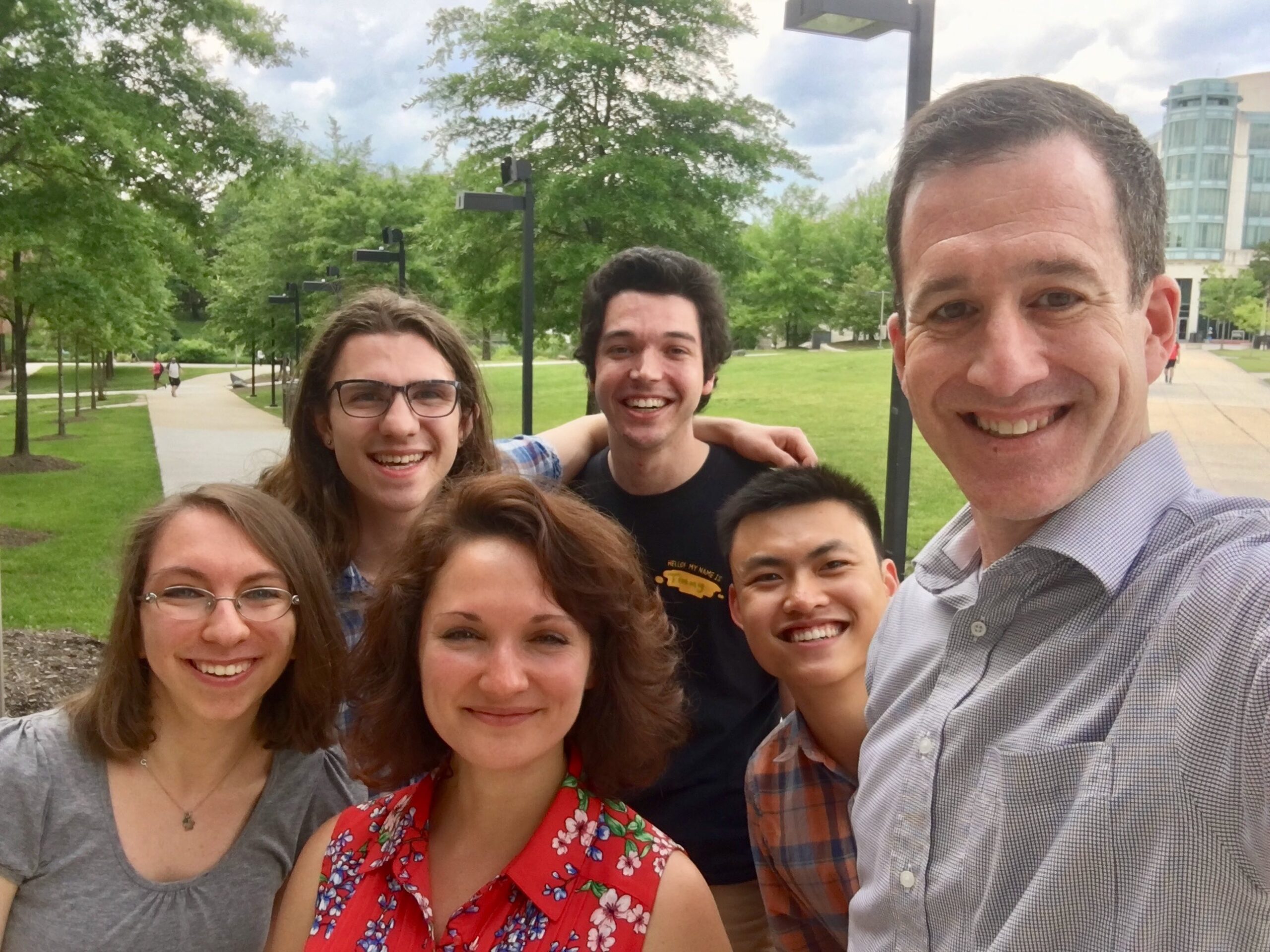
Front row (l-r): Tess McRae, Romy Hübler, Brandon Liu, and David Hoffman. Back row (l-r): Pat Michael and Timothy Farrell. Photo courtesy of Hoffman, 2019.
Liu is graduating as a Sherman STEM Teacher Scholar and will soon begin his master of arts in teaching for secondary biology at UMBC. He shares, “I know that UMBC values the same things I do. And with a master’s in teaching from UMBC I know I’ll be able to take on the responsibility of building and supporting communities in the schools and classrooms where I’ll teach in the future.”
Creating shared spaces
Meghan Lynch ‘18, political science, and M.P.P. ‘21, will soon become a double alumna of UMBC, after earning her master’s in public policy. She says she still thinks about one particular class on civic agency during her undergraduate years, which shaped her UMBC experience, her career path, and her perspective on the world. Her a-ha moment: “I realized that the idea of creating shared spaces and bringing democracy into the classroom was a very concrete way to realize the power we all have in every space,” she says.
Lynch describes UMBC as a place that supports, nurtures, and encourages political engagement in all forms. Creating spaces for community dialogue and mutual support was especially important during COVID-19 and the intense election cycle. As vice president of UMBC’s Graduate Student Association (GSA), Lynch is proud of how the group helped to offer space for dialogue and build community as a co-host for the CDCL’s “Together Beyond November” post-election discussions.
Meghan Lynch. Photo by Poulomi Banerjee ‘16.
“Amidst all the fatigue and difficult news in the world, the Center, SGA, and GSA were able to coordinate very meaningful and well-attended events leading up to and after the election,” says Lynch. “It was clear that the UMBC community wanted to spend time coming together to think about our role in bringing about change and hearing about the issues. I left every one of these events feeling refreshed in a humble and grateful way.”
Resources for success
During the COVID-19 pandemic, Lynch and other GSA officers created a well-being committee, recognizing the importance of students’ mental, physical, and spiritual well-being. “We’ve had an excellent turnout to committee meetings in part because people are looking for a place to reflect on how to help each other,” she says.
“Amidst all the chaos and uncertainty, I’m so proud that GSA has found ways to connect students to the resources they need and serve as a gathering space–even virtually,” Lynch says. “I’m also proud of the strides we are making to ensure that graduate students are intentionally included in programming and other opportunities across campus.”
Creating community, Lynch reflects, “is a way for people from different departments across campus to collectively work towards solutions that benefit all of us.” And every new relationship or new project “starts from just one conversation,” she shares, so “there’s beauty in just talking with people.”
Meghan Lynch and True Grit. Photo by Poulomi Banerjee ‘16.
After graduation, Lynch will teach an introductory political science class at UMBC and serve as the new director for the Catonsville Chamber of Commerce. She says, “I hope to take all of the transformative experiences I’ve had at UMBC beyond Hilltop Circle to help others realize their ability to make their communities better for everyone.”
One person who looks forward to seeing the impact of her work is CDCL Director David Hoffman Ph.D. ‘13, language, literacy, and culture. Hoffman shares that Lynch, Liu, and Khan all “embody the idea that we can bring our whole, unique selves to the work of shaping our communities.” He says, “Their contributions have helped make UMBC even more deeply and visibly what it has been all along: caring, inclusive, and engaged.”
Featured image (l-r): Mariam Abalo-Toga, Roy Prouty, Anjali Dassarma, Brandon Liu, President Freeman Hrabowski, and Lilly Keplinger stand by True Grit, 2018. Photo by Marlayna Demond ’11 for UMBC.
Article written by Eleanor Lewis, communication specialist in the Division of Student Affairs.
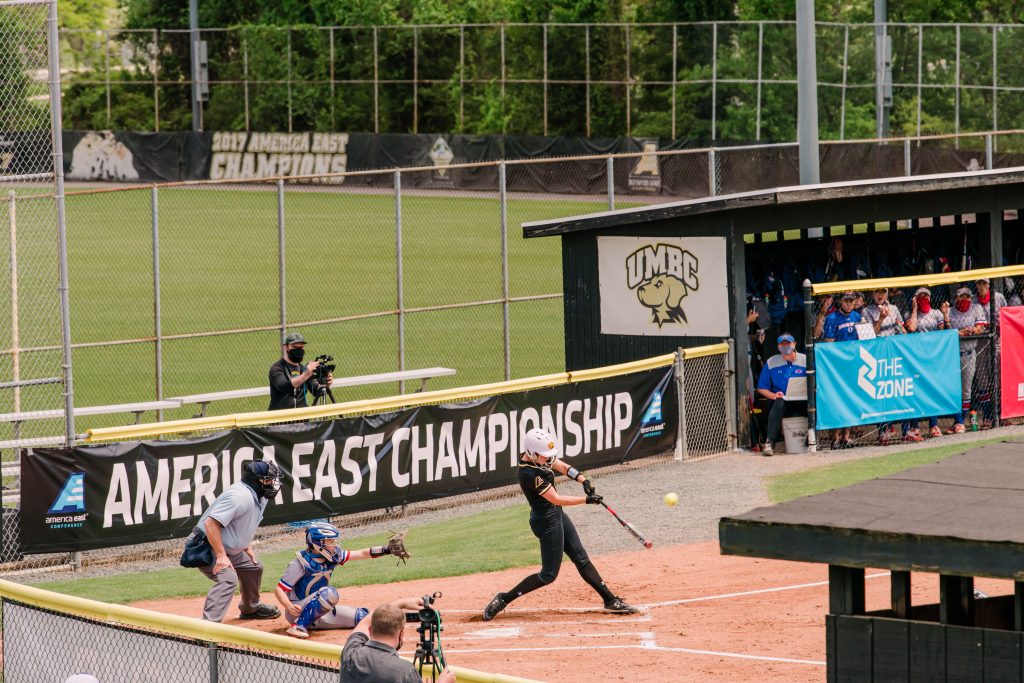
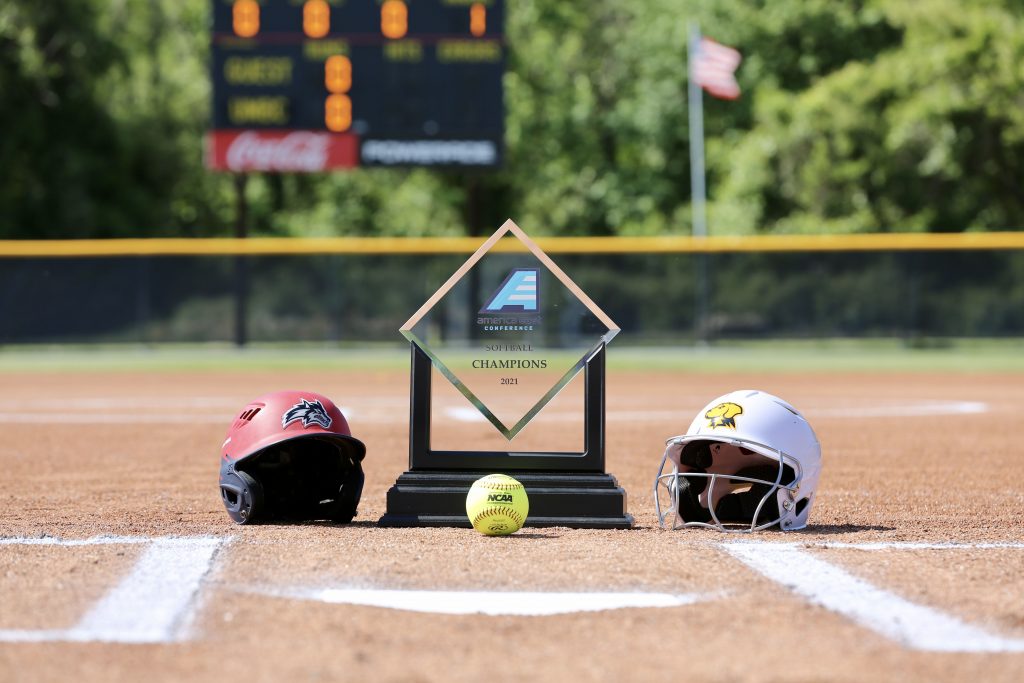
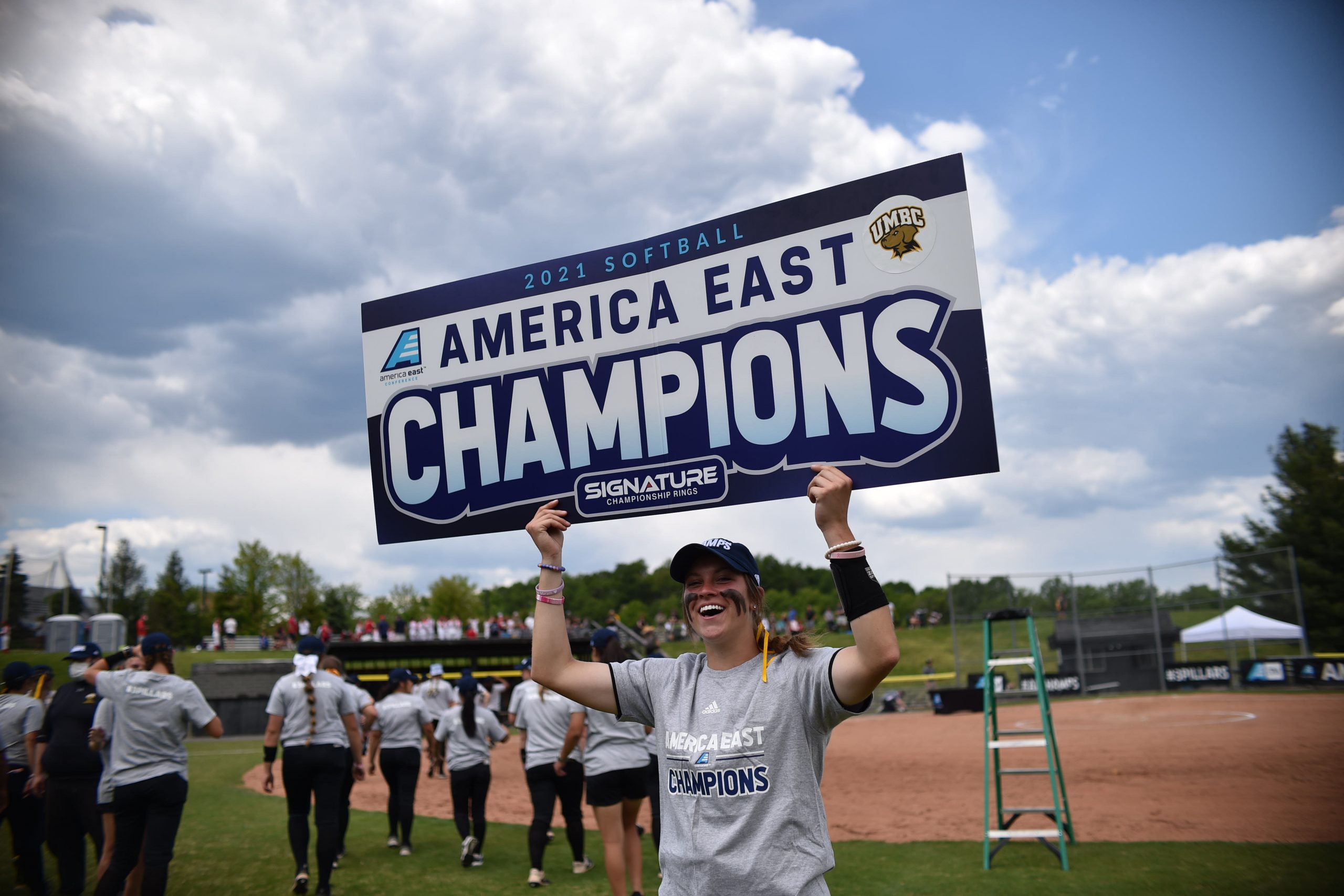
After five scoreless innings, UMBC softball pulled ahead in the bottom of the sixth to successfully defend their 2019 America East title with a 1-0 win over No.3 seed Stony Brook in the 2021 America East Championship this past Saturday.
Sierra Pierce ‘21, design, drove in the winning runs in the Retriever’s final two games. A Second Team All-Conference selection, Pierce earned a spot on the All-Championship Team for the third time and was named the tournament’s Most Outstanding Player.
Shanel Stott ‘23, information systems, hits an RBI triple in the first-round win over UMass Lowell last Thursday.
“I felt honored to be named,” says Pierce of her Most Outstanding Player achievement. “There’s a lot of talent on our team and there were many teammates who deserved to be recognized. It really was a team effort out there.”
Julia Keffler ‘22, media and communications studies, also a Second Team All-Conference selection, was named to the All-Tournament Team thanks to her spectacular showing at the plate and on the base paths.
Return honors
In light of the pandemic and the impact it had on many student-athletes, the NCAA granted athletes an additional year of eligibility to players. Maddie Daigneau ‘21, media and communications studies, was the only senior who elected to return to finish out her senior season. She also earned a spot on the All-Championship Team after batting .333 with a run scored, a stolen base, and stellar play at shortstop.
“I am so thankful to have the opportunity to come back for a fifth year and be a part of the growth of this talented program,” says Daigneau.
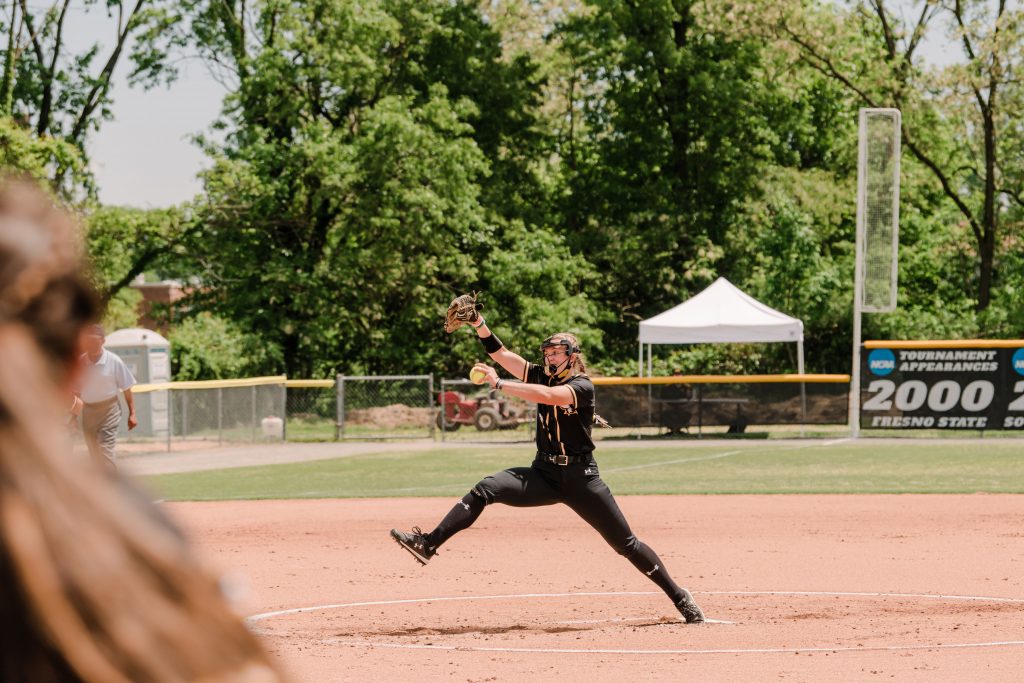
Coppersmith winds up to pitch against UMass Lowell.
Two-time America East Pitcher of the Year Courtney Coppersmith ’22, biochemistry, was the final Retriever to earn All-Championship Team honors, going 3-0 with just one run allowed and 25 strikeouts in three complete games. Coppersmith is the first student-athlete since 2001 to be a repeat America East Pitcher of the year.
Continuing a legacy
The victory earns UMBC its fourth-ever NCAA Tournament bid, and it’s the first of the four to be won at home. It was also the first championship win on campus for a Retrievers team since men’s soccer won the America East title at Retriever Soccer Park in 2014.
Despite returning almost its entire starting lineup from the 2019 championship team, the Retrievers were voted to finish third in the preseason coaches poll. UMBC then went on to go 11-5 in conference play, not only picking up its most conference wins in a season since 2009, but also winning its first-ever America East Regular Season championship, and earning the right to host the tournament.
UMBC comes out victorious in the rematch of the 2019 America East Championship. Photo courtesy of America East.
Head coach Chris Kuhlmeyer became the first Retriever Softball coach to be named America East Coach of the Year, after leading UMBC to its first-ever America East Regular Season title earlier this month.
“This will be a season I will never forget,” says Kuhlmeyer. “From rallying to win the regular-season title, to coming through with two outs in the sixth inning of the conference tournament championship game, there are so many memories I will take away and more to be made.”
The road to Arizona
The Retrievers will travel to Tucson, Arizona to face No.11 Arizona this Friday, May 21, at 8:30 p.m. for the first round of NCAA tournament play. The other two teams in the double-elimination, four-team pod are Villanova and the University of Mississippi.
“Arizona is a great team and one of the most historic programs in our sport. To face off against them in the first round of the regionals is certainly very exciting, but at the same time our Dawgs are not showing up just to say we made it to a regional,” assures Kuhlmeyer. “We’re coming with the mindset we are going to compete and do what we have done all year: fight all the way to the end for a victory, one game at a time.”
Ashley Della Guardia ’24, undergraduate studies, celebrates the America East win. Photo courtesy of America East.
An Arizona native, Daigneau will get to play in front of her family for the first time in her collegiate career.
“It’s the best feeling to play regionals at the place I first started playing softball and being able to play one of my last tournaments there as well,” shares Daigneau. “Arizona was the place that helped me meet all the wonderful people who have been a part of my softball journey. I can’t wait to see them watch our games live this weekend.”
Article written by Zach Seidel, director of athletics digital media. Featured image: UMBC softball poses with their America East trophy. Photo courtesy of America East. All additional photos courtesy of Marlayna Demond ‘11 unless otherwise noted.