All posts by: UMBC News Staff


Strong finish: UMBC student-athletes discuss support and resilience in “one of the toughest years”

Due to the pandemic, the NCAA has offered senior college athletes around the country a waiver to compete for an extra year. Many fourth-year student-athletes at UMBC and around the country will take advantage of this opportunity, but others decided to press forward with making the most of an unusual senior year before shifting gears to the next phase of their lives.

Among that group in Retriever Nation are a pair of lacrosse players, a swimmer, and a diver who will earn undergraduate degrees this month. All four are recognized for outstanding achievements during a very challenging time for student-athletes. And all four share that support from UMBC Athletics staff was instrumental in helping them reach their goals and move forward along their paths. 

From sports to sports journalism

Nick Doyle ‘21, media and communication studies, has been a steady contributor for men’s lacrosse, including during UMBC’s America East championship run and NCAA Tournament win over Marist in 2019. He’s also a voice of UMBC Athletics, both on air and behind the scenes.

Doyle assisted with player interviews on “The Ryan Odom Report,” provided on-air analysis on women’s soccer’s streamed game broadcasts, and led social media takeovers for the men’s lacrosse Instagram account, among other projects. He also wrote game recaps, gained experience behind the camera, shadowed on-air talent, and learned how to construct a sports broadcast. 
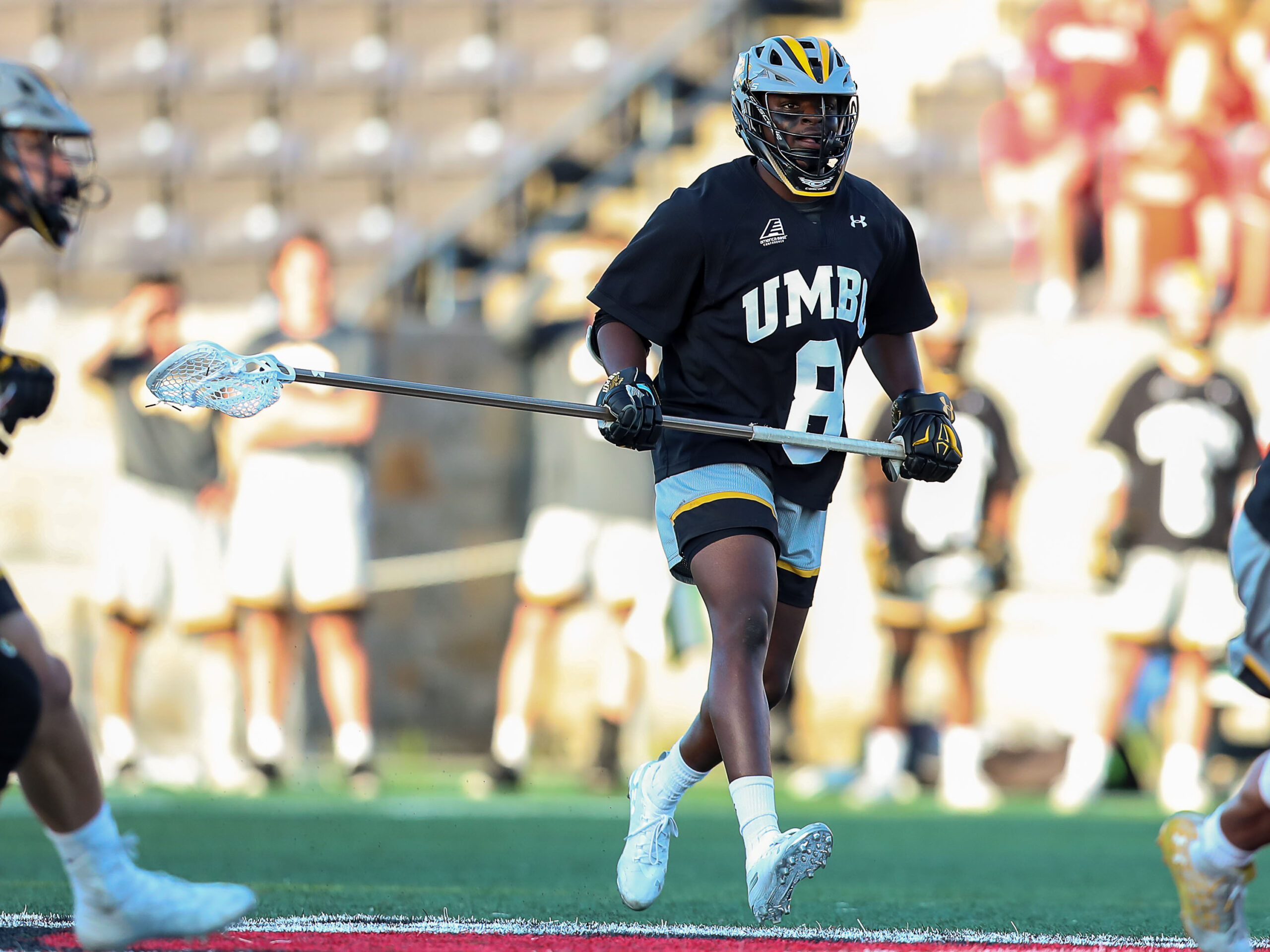
Lacrosse player on a field, wears a uniform reading
UMBC lacrosse player Nick Doyle. Photo by John McCreary for UMBC Athletics.

“UMBC’s partnership with ESPN+ allowed me to receive hands-on experience inside the tech truck with producers, directors, replay personnel, and graphics,” says Doyle. The San Diego native worked for his hometown Padres’ flagship station in the summer of 2019 and put those recap writing skills to good use. 

“UMBC Athletics has been an invaluable source of support, guidance, and confidence for me,” Doyle shares. “Since I introduced myself to Steve Levy [‘85, interdisciplinary studies], he has taken me under his wing and has done an amazing job getting me into positions of opportunity and experience.” 

He also noted that Zach Seidel ‘12, media and communication studies, M.S. ‘15, human-centered computing; Dustin Roddy ‘14, American studies; and Shanna Moser have “all played instrumental roles in advancing my experience at UMBC, not just as a student-athlete, but in sports journalism.”

Doyle will pursue his master’s degree at the University of Maryland, College Park’s Philip Merrill School of Journalism in the fall.

Community leadership

Like Doyle, Cassie Evans ‘21, biological sciences and psychology, is a defender on the lacrosse field. She has started in all 33 UMBC’s women’s lacrosse contests since 2019 and earned America East All-Academic Team honors in 2020 and 2021. She’s also a 4.0 student who earned the UMBC psychology department’s 2020-21 Distinguished Achievement Award. And she got there, she says, thanks to the support of a caring advisor.

Evans serves on the executive board of the Student-Athlete Advisory Committee, for which former UMBC Athletics’ Academic Advisor Kristin Ferris served as staff advisor. “Kristin has always believed in me,” Evans shares. “I always went to her when I was stressed or struggling and she actively worked to create a plan of action that helped me approach problems with ease. She advocated for me in so many settings.”
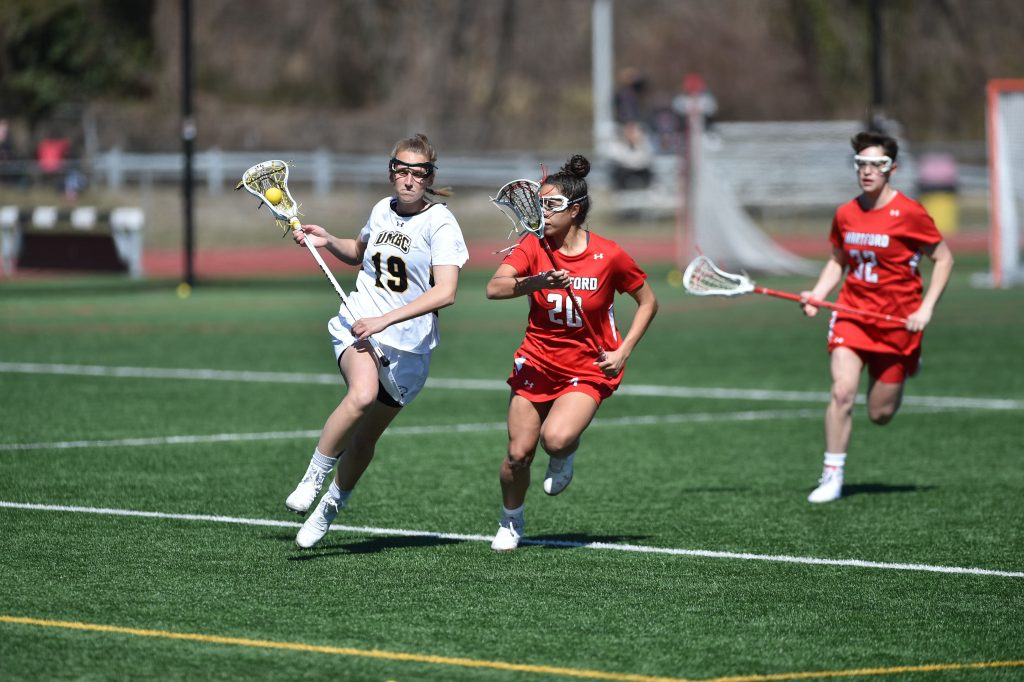
Lacrosse player runs on the field, followed closely by two competitors
UMBC’s Cassie Evans (left) competes against Hartford. Photo by Gail Burton.

Ferris shared that Evans “has been tremendously effective as a community leader despite challenges faced by the COVID-19 pandemic.” In summer 2020, Evans coordinated a virtual 5k that raised over $2,000 for Baltimore’s Living Classrooms organization in support of anti-racism and social justice. She later organized an equipment drive for the Children’s Home, collecting over $3,300 of sports equipment and art supplies for displaced children.

Evans shares that Ferris introduced her to leadership opportunities she didn’t know existed, such as serving as the student-athlete representative on UMBC’s Athletics Policy Committee. Of Ferris, Evans says, “I respect her so much and have learned so much from her. She has taught me through her own actions the importance of work ethic, persistence, reliability, accountability, and determination.”

Currently studying for the MCAT, Evans will continue volunteer work in Baltimore and El Salvador prior to medical school. Her long-term career goal is to support those who do not have access to affordable medical treatment.

Team support

As a men’s swimming team captain for two years, Jeremy Gates ‘21, mechanical engineering, has spent a lot of time thinking about how to support his teammates in connecting with and taking care of each other and competing at a high level during a pandemic. Part of his approach was hosting outdoor, small-group team-building activities that met COVID-19 protocols. Another major piece was being present for other swimmers who needed one-on-one support.

“I have tried to make myself available for my teammates whenever they need it,” says Gates. While he doesn’t always know the perfect thing to say, he shares, “I have found that simply lending an ear as a friend is a good start.” 

Gates also found it was important to reach out to others for support, and to make sure he was managing his own stress. “I am no help to anyone if I don’t take care of myself first,” he says. “The great thing about this team is that there are numerous people I can go to if I need someone to lean on.”

One person that Gates and his teammates leaned on was Brian Amenta, director of strength and conditioning. Amenta, a six-year UMBC veteran, completely revamped all 17 UMBC Athletics’ teams training regimens to meet COVID health and safety guidelines, and understood the pressures Gates was experiencing.

Close-up of swimmer standing outside a pool, wearing swim goggles and a swim cap
UMBC swimmer Jeremy Gates. Photo by Ian Feldmann.

Amenta became a fixture in the lives of Gates and his teammates. Starting in fall 2020, Amenta worked with the team twice each week twice each week at 6 a.m., with dry land training. He provided Gates with a model for working effectively with a large group of student-athletes while supporting team members’ individual needs. 

After graduation, Gates will reconnect with family in California before starting as a systems engineer through Northrop Grumman’s Pathways Program.

“One of the toughest years”

After injury-plagued sophomore and junior campaigns, diver Isabel Rayner ‘21, biological sciences, was looking forward to a strong finish to her UMBC career as team captain. Then came the COVID-19 pandemic. Rayner helped her team feel connected and supported at a time of great uncertainty. The cancellation of a meet in fall 2020, just three days before it was scheduled, was a particularly challenging setback. 
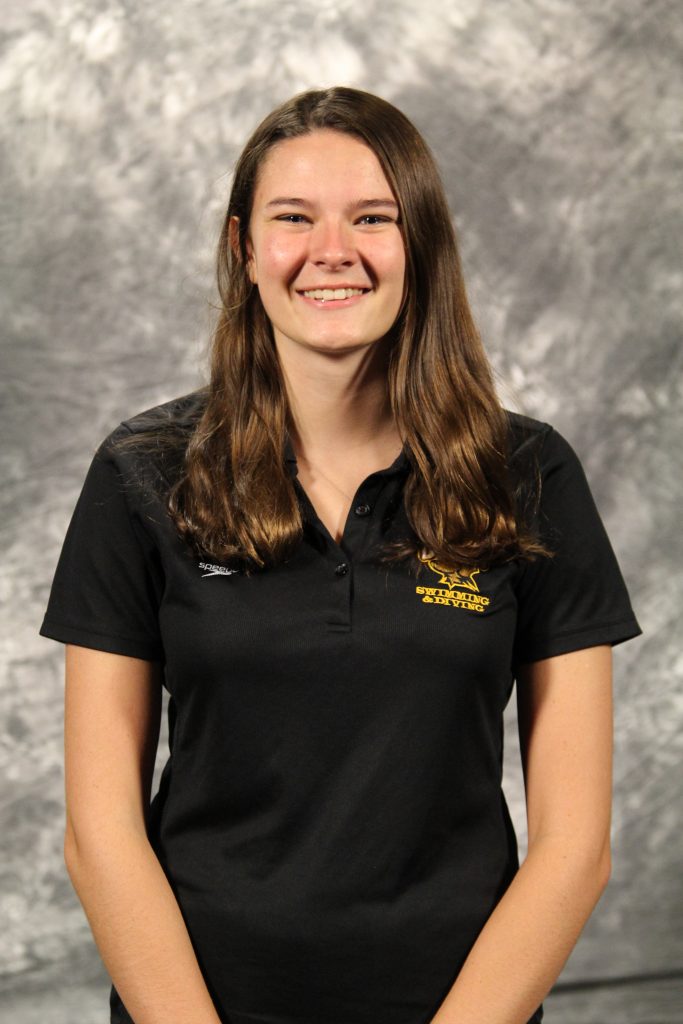
Portrait of smiling young woman in black polo shirt with gray patterned background.
UMBC diver Isabel Rayner. Photo courtesy of UMBC Athletics.

“My biggest goal in being captain is to make everyone feel that there is support all around them,” said Rayner. Her greatest challenge was taking care of herself. “I was so focused on making sure that everyone else was okay that I struggled to find a balance,” she says.

Rayner’s injuries started in her sophomore year—chronic bicep and shoulder strains and a sprained ankle in 2018-19. That same year, athletic trainer Meghan Sullivan (at UMBC since 2011) was assigned to the team. “Meghan has been there for me without fail,” says Rayner. “These injuries were never severe enough to keep me out of diving, but they did require physical therapy. I was in the training room every day with Meghan. And she was always there for emotional support.”

Last season, Rayner suffered a wrist injury when entering the water and was back in the training room daily. She was able to compete in the 2020 championships and climbed the ladder for the final time as a Retriever in an April 2021 meet, placing second on the three-meter board. 

She’s grateful to Sullivan for helping her get to the podium one more time in her senior year. “Meghan has been invaluable to me and others as a support system while we’ve gone through one of the toughest years of our lives,” Rayner says. 

After graduation, Rayner will work as a diving coach prior to graduate school.


Article written by Steve Levy, associate athletic director for athletic communications. Featured image: UMBC lacrosse player Nick Doyle. Photo by John McCreary for UMBC Athletics.
UMBC Mock Trial defeats Yale to win first national championship

Looking out her window at the blue sky on Sunday, UMBC Mock Trial President Sydney Gaskins ‘21, political science, remembers thinking, “What a beautiful day to win a national championship.” But she didn’t quite realize exactly what becoming a champion would feel like. Now, she knows.

On the evening of April 18, UMBC defeated Yale University to win the American Mock Trial Association National Championship for the first time in program history. 

The final round was a nail-biter for Retriever fans tuning in online. Five of the eleven judges voted for UMBC, five went for Yale, and the final judge stated it was a tie. To determine the winner, the judges tallied the scores from all their final round ballots, which put UMBC ahead of Yale, 1,360 to 1,355. The five-point margin was the second-closest winning margin in AMTA National Championship history.

Confident and prepared

Gaskins has been widely recognized as one of the top mock trial competitors in the country. With her on Sunday (over Zoom) was UMBC’s well-rounded, practiced team, whose combined efforts made the victory possible. Team members included Thomas Azari ‘22, political science; Natalie Murray ‘22, biological sciences; Maria Kutishcheva ‘24, political science and Russian; Zinedine Partipilo Cornielles ‘23, political science and financial economics; Lauren Wotring ‘22, political science; and Thomas Kiley ‘21, political science. 

They were assisted by three team members who provided technical support: Sunnah Brooks ‘23, political science; Brinda De Tchappi ‘23, political science; and Poushali Banerjee ’23, health administration and policy.

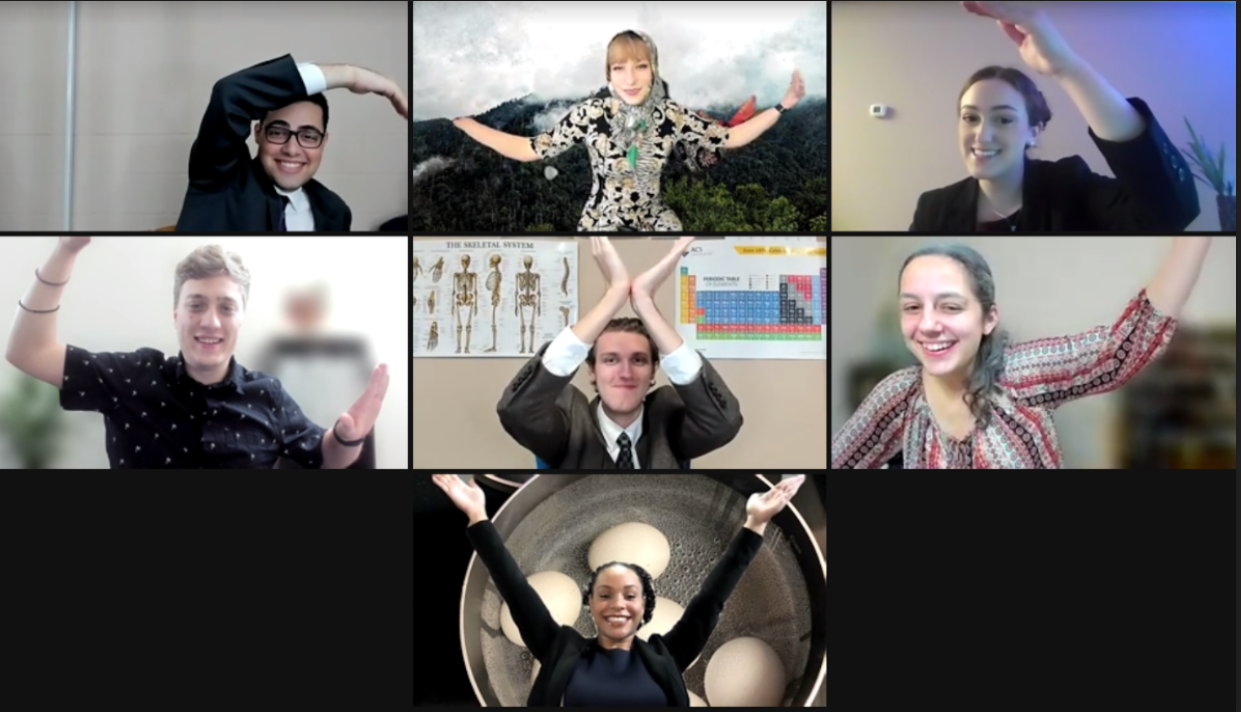
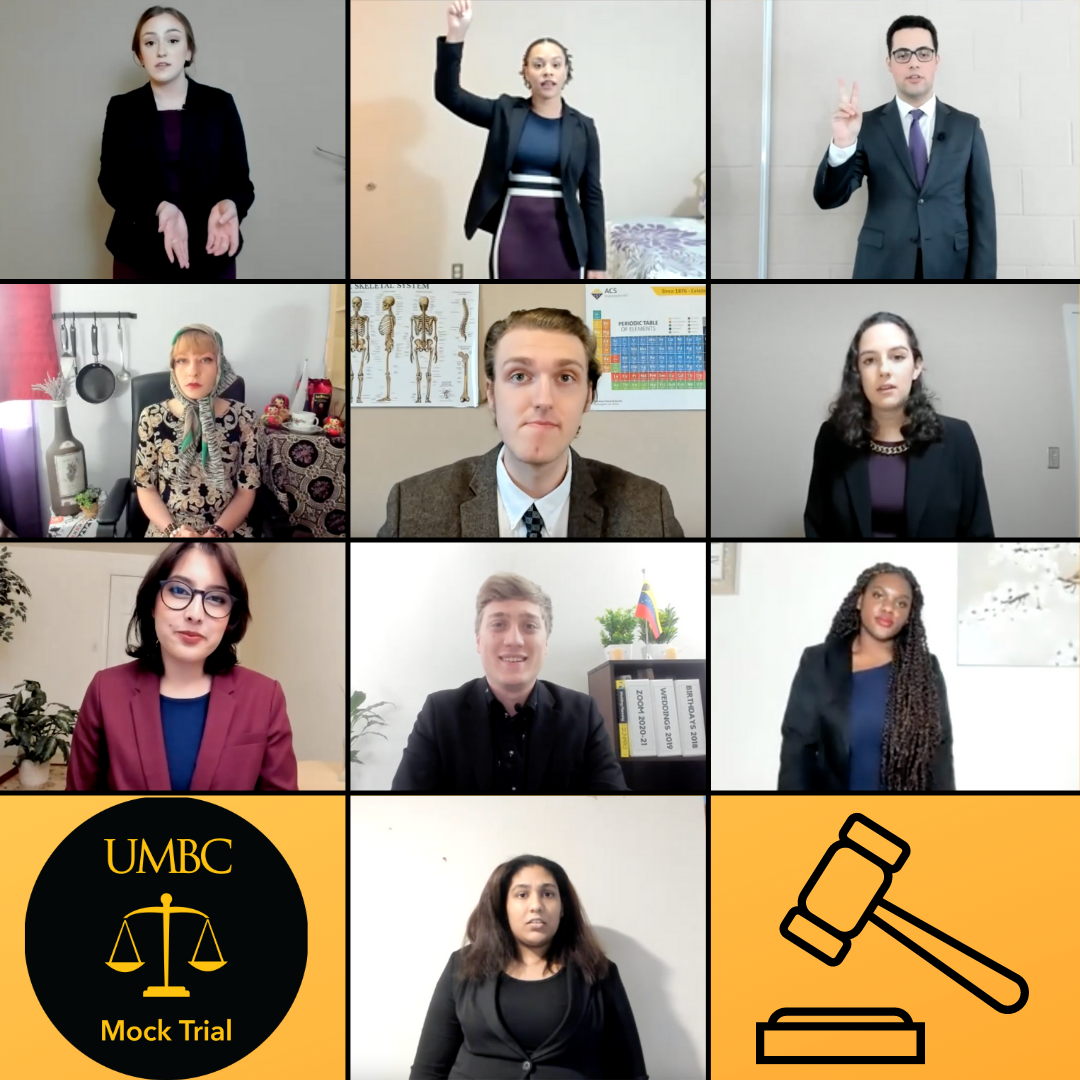
Grid of photos of 10 young adults wearing professional attire, plus a
Screenshot of the UMBC Mock Trial team from the Opening Round Championship Series. Courtesy of UMBC Mock Trial.

“I’m always confident in my team’s ability,” says Azari. “But I was on the edge of my seat.”

The last time UMBC faced Yale was in the fourth round of the National Championships in 2019. UMBC narrowly lost, with the teams splitting the round’s ballots 2-2. Since Yale had more ballots going into the round, they moved on to the National Championship final that year.

UMBC’s win comes after an undefeated regional season and 8.5 wins at the Opening Round Championship Series (ORCS).

“It was one-hundred percent the right time and our time,” says Gaskins, about their win.

Success requires sacrifice

Mock Trial coach Ben Garmoe ‘13, political science, says the team’s national championship title is a dream come true, reflecting hundreds of hours of hard work. UMBC Mock Trial has made it to the national championship competition in three out of the past four seasons. Even knowing they would be competing with 650 teams this year, and that they’d have to rework their approach for a Zoom environment, they had their eye set on the final from the very beginning.

“The team has given up so much to get to this level,” says Garmoe. “It is a testament to their individual character that they’ve decided that they want to be great at this activity and that they’re willing to commit so much time, dedication, and energy to it.”

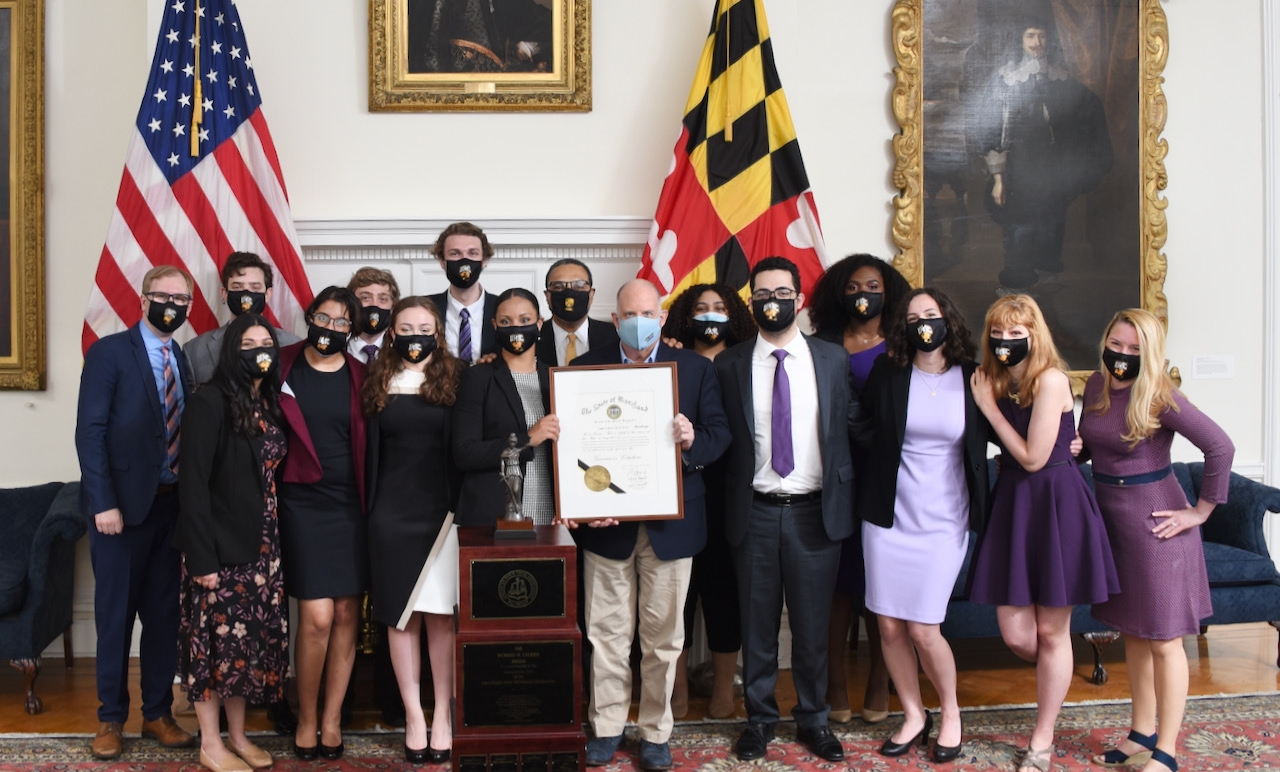
Over a dozen people in business attire, wearing UMBC face masks, stand for a portrait. They hold a framed proclamation. Maryland and US flags stand in the background.
Maryland Governor Larry Hogan (center) congratulates UMBC Mock Trial on winning the 2021 national championship. Photo courtesy of the Office of the Governor.

Their sacrifices paid off by earning the team not just the national title, but also individual honors. Every team member earned all-American titles for competing in the final round of Nationals. Gaskins also earned a double-sided All-American Attorney award for both defense and plaintiff. Azari earned an All-American Attorney award and Murray won an All-American Witness award. 

These awards come after Gaskins earned a double-sided All-National Attorney award and Kiley earned an All-National Witness award at ORCS, the semifinal level competition. The four total all-American titles set a UMBC Mock Trial record for the number of all-American awards earned.

UMBC Mock Trial also earned the Spirit of American Mock Trial Association Award, honoring their commitment to the principles of civility, justice, and fair play.


Community members who wish to support the UMBC Mock Trial team can do so directly through this webform.

Article by Morgan Casey ’22, media and communication studies, for UMBC News. Photo by Marlayna Demond ’11 for UMBC.

URCAD 2021 showcases creativity, resilience of UMBC student researchers

UMBC’s Undergraduate Research and Creative Achievement Day (URCAD) has burst out of the ballroom and onto computer screens around the world. For the second year in a row, the popular undergraduate research forum will be entirely online due to the pandemic, using a video presentation and online discussion tool called VoiceThread. But unlike 2020, no rapid shift is needed. After over a year of largely online learning and research, everyone involved is ready to take full advantage of the virtual medium. 

“This event has gone global,” says April Householder ’95, director of undergraduate research and prestigious scholarships. Being online means URCAD leapt from about 2,500 people attending in person in 2019 to 8,000 virtual visits in 2020. “Viewers were coming in from as far away as the U.K., Korea, and South America,” says Householder. She expects that trend will continue this year.

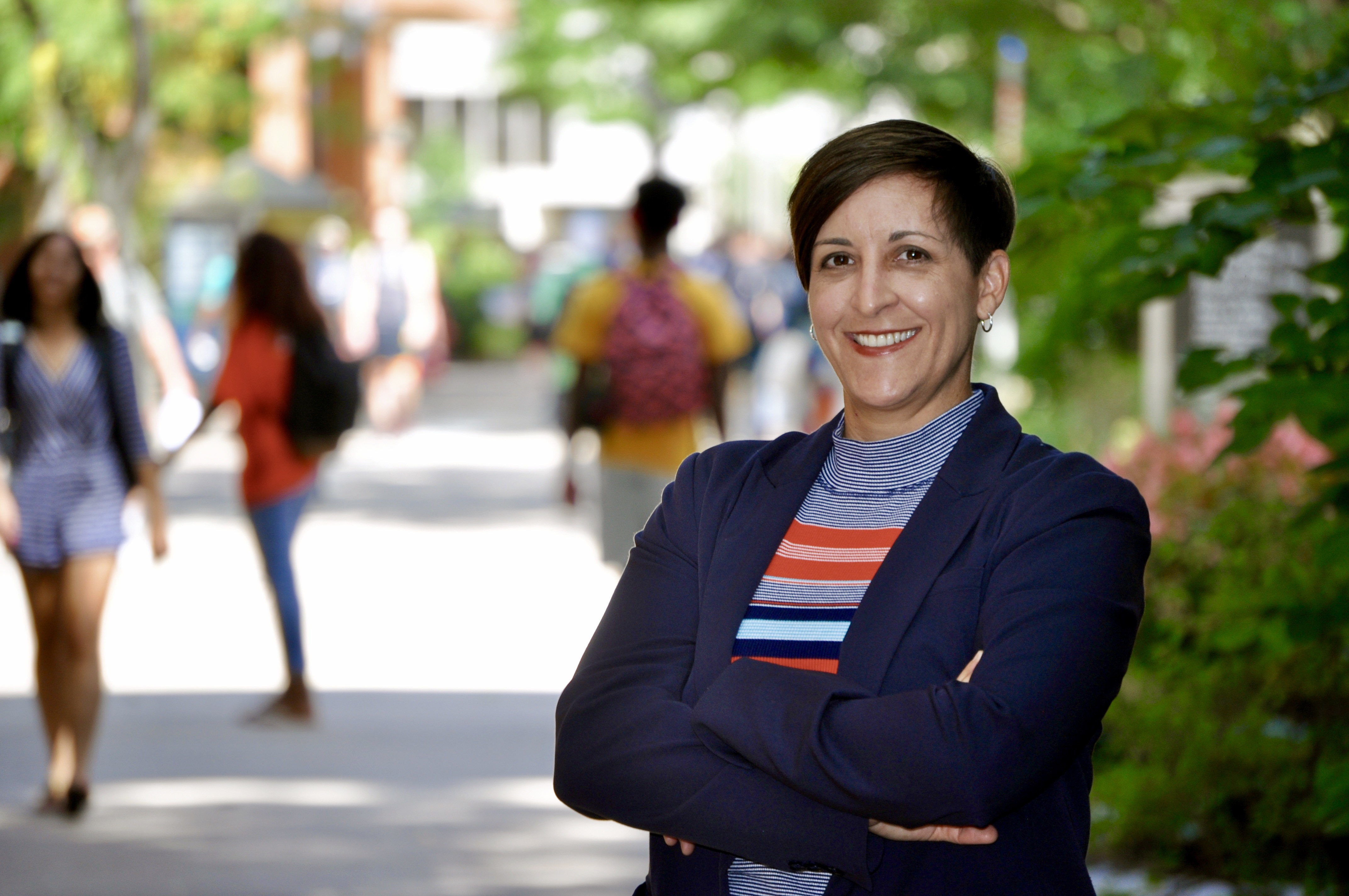
Outdoor portrait of smiling woman in striped shirt and blazer.
April Householder, 2018. Photo by Michael Mower.

Having a full week to explore URCAD this year also means viewers will have ample time to browse the available sessions, rather than “rushing from one thing to another,” says Householder, as they used to do at the in-person event. They’ll be able to explore, at their own pace, research on a vast array of topics, from the effects of anti-Asian discrimination during the COVID-19 pandemic to the Black Lives Matter movement, to cancer treatment, skateboarding culture, and online sneaker sales.

Connecting beyond boundaries

In lieu of face-to-face chats, visitors will be able to participate in online discussions with student presenters. Last year a research group in UMBC’s Asian studies department received feedback from researchers in Korea, says Householder. She hopes that this year, opportunities for these kinds of connections will increase with a new feature that enables users who aren’t from UMBC to comment through URCAD’s VoiceThread interface.

Within the UMBC community itself, Householder hopes students, faculty, and staff will take advantage of the opportunity to explore “things outside their disciplinary box.” Artists, scientists, humanists, social scientists, and engineers can all benefit from each others’ feedback, she explains. 

Constraints generate creativity

Last year, when students had to quickly pivot from in-person presentations to using VoiceThread, “they had to learn an additional skill on the fly,” says Householder. This year, students are more prepared to take full advantage of all that the online format offers. 

Further, due to the constraints of COVID, student researchers have become even more creative in using technology not just to display their research, but to pursue their research at a time when in-person interviews, fieldwork, and traditional performances aren’t possible. Students learned to do interviews online, adjusted their sample sizes, and navigated lab research within physical distancing guidelines. They also responded to the pandemic by examining the changes in society and in themselves.

One advantage of the online format is that the presentations are available to view in perpetuity. “We now have an archive of the event so we can use it as a teaching tool for future generations of URCAD presenters and mentors,” Householder says.

She finds this addition of an expanded archive and URCAD’s global reach to be fitting developments as the event marks its 25th anniversary. To celebrate the milestone, URCAD will feature a special video “fireside chat” with founders Diane Lee, Kathy Sutphin, Elizabeth Pennington, and Janet McGlynn.

Klaudine Wakasa. Image courtesy of Wakasa.

Viewers will also hear a keynote by Klaudine Wakasa ‘08, financial economics, who serves as a strategy advisor for clean technology ecosystems, consulting with international governments.

UMBC students, faculty, staff, and alumni, and the general public, are invited to view these special sessions, and hundreds of available students presentations at urcad.umbc.edu, April 19-25, 2021. Featured below are a few student presentations that give a glimpse into the range of what will be available. Each has been shaped in some way by the COVID-19 pandemic—in topic, approach, or format.

“COVID-19 telehealth and telerehabilation reflections: Understanding the stroke survivor and caregiver perspectives”

Frances Watson ‘21, computer science, conducted research on telehealth and telerehabilitation services during COVID-19 through UMBC’s Bodies in Motion Lab. “I am investigating the stroke survivor and caregiver perspectives to understand how socioeconomic disparities affect this population,” Watson explains. 

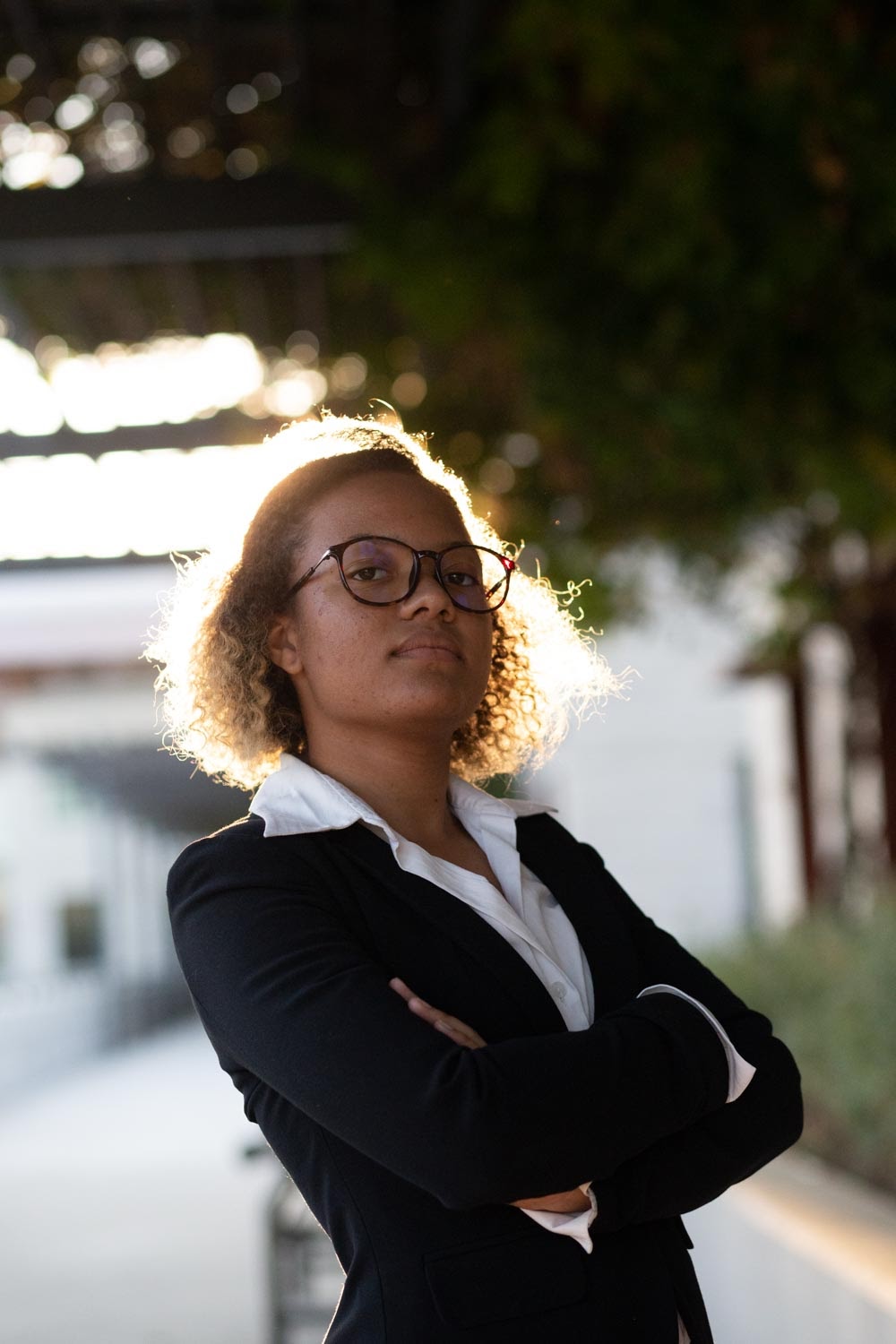
Outdoor portrait of a young black woman wearing a suit and glasses. The sunlight shines behind her.
Frances Watson. Photo courtesy of Watson.

Watson has so far conducted 20 interviews with rehabilitation specialists about their experience with telehealth appointments, alongside her graduate mentor, human-centered computing Ph.D. student Adegboyega Akinsiku. She is also currently interviewing stroke survivors and caregivers.

“The COVID-19 pandemic not only changed how we conduct these interviews, but also the analysis of them,” says Watson. “We conducted and continue to conduct these interviews on teleconferencing platforms such as Cisco Webex and Zoom, allowing us to video-record them. In comparison, when we were in person we would have an audio recording device present. Now we can rewatch the video recordings for our data analysis.” 

The fact that her research technique adjusted to match the format of the telehealth appointments themselves “has proven very useful” in surfacing insights, she says. 

Watson was previously able to gain research experience through the Stanford SURF program. As a Center for Women in Technology Scholar and Undergraduate Research Award (URA) Scholar, she also knows the power of research opportunities in developing an identity and career pathway as a STEM researcher, as well as the value of peer support. This has motivated her leadership on campus, including as Student Government Association president in spring 2020.

“this is it: A poetic response to the anti-Asian racism during the COVID-19 pandemic”

Just after the pandemic started last March, Calista Ogburn ’21, health administration and policy, felt hurt and angry as she heard about rising anti-Asian hate crimes and racism. Then she herself had an upsetting encounter at a Home Depot. “In that moment, standing in the Home Depot aisle next to the grills, I knew I had to write a poetry collection,” she says.

It was a process that involved many nights of tears, processing heavy emotions. “Reliving past experiences of racism and microaggressions in addition to writing responses to news headlines of anti-Asian racism was utterly exhausting,” she says. She wrote around the clock, and after publication she was gratified to learn “how my poetry has supported others during this turbulent time.”

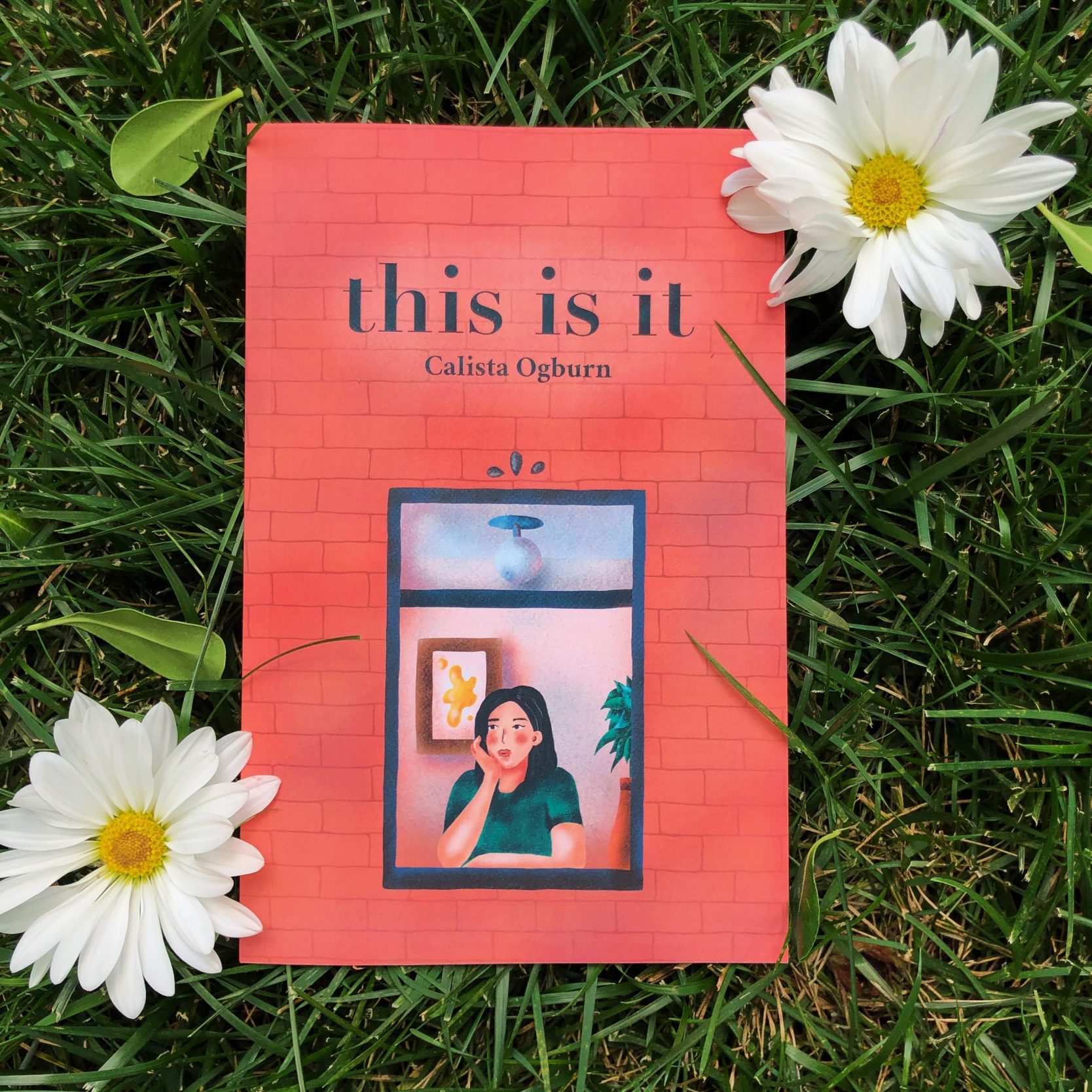
A book sits in the grass, with white flours. The book cover reads
Poetry collection “this is it.” Image courtesy of Ogburn.

Ogburn does not intend to pursue a career in poetry, but she says, “I hope it remains my best friend.” Ogburn will present poetry from her collection “this is it” at URCAD. “My hope,” she previously shared with UMBC Magazine, “is that these poems can touch those who are feeling loss, loneliness, or the combined grief and rage of experiencing racism.”

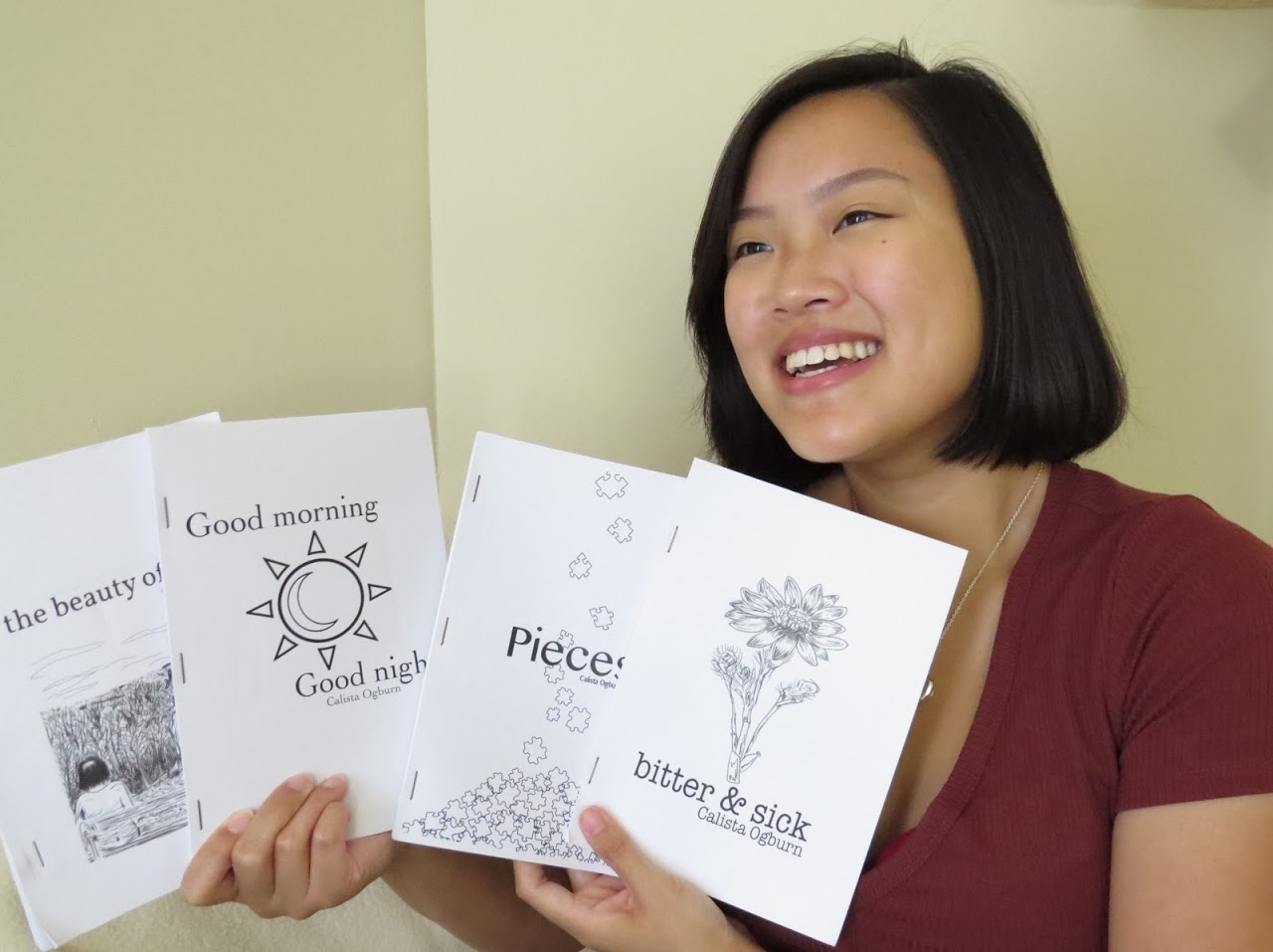
Young Asian woman holds up four small books. She smiles as she shows their covers.
Calista Ogburn poses with her books of poetry. Photo from calista-ogburn.com.

“Modeling radio emission from tidal disruption events”

Omar French ’21, physics and mathematics, came to UMBC to become a theoretical physicist and he will be leaving soon to do just that. He found COVID-19 increased demands on his faculty mentors’ time, requiring him to move forward with his work more independently than before. 

“I’m sure most people can agree that controlling one’s work is much more gratifying than the contrary, but of course, it’s a bit like being in the wilderness,” says French. “It forces you to think for yourself and to be confident in what you’re doing.”

Outdoor portrait of a smiling young man with wavy brown hair, a mustache and beard. He wears a gray sweater and wire-framed glasses.
Omar French. Photo courtesy of French

French’s research on supermassive black holes has yielded insights. “Perhaps the most remarkable technical thing I’ve learned is that the mass of supermassive black holes central to inactive galaxies can be estimated reasonably from measuring only a few factors,” he explains.

After graduating, French will begin a physics Ph.D. program at University of Colorado Boulder. He describes the past year challenging, but also as a period that helped him grow as a scientist more than any other time of his life. As a result, he is heading off to graduate skill with new skills and a critical eye. 

“The obedient body: Researching trained and culturally informed movement biases”

It was during a gender and women’s studies course that URA Scholar Gretta Zinski ’22, dance, read something that rocked her world. She says it was fascinating to learn about how the different social conditioning that men and women experience is reflected in how each gender moves. “The excerpt inspired me to assess my own habits, interests, and biases in an attempt to figure out what were my own thoughts and what I had been taught about my own femininity and beliefs,” she says.

Unfortunately, COVID kept the scope of Zinski’s project smaller than she would have liked, but she was still able to access fascinating findings. “Biases do affect our behavior, which translates into movement,” she says. “The physiological connections between the body and the mind were so interesting to me.” 

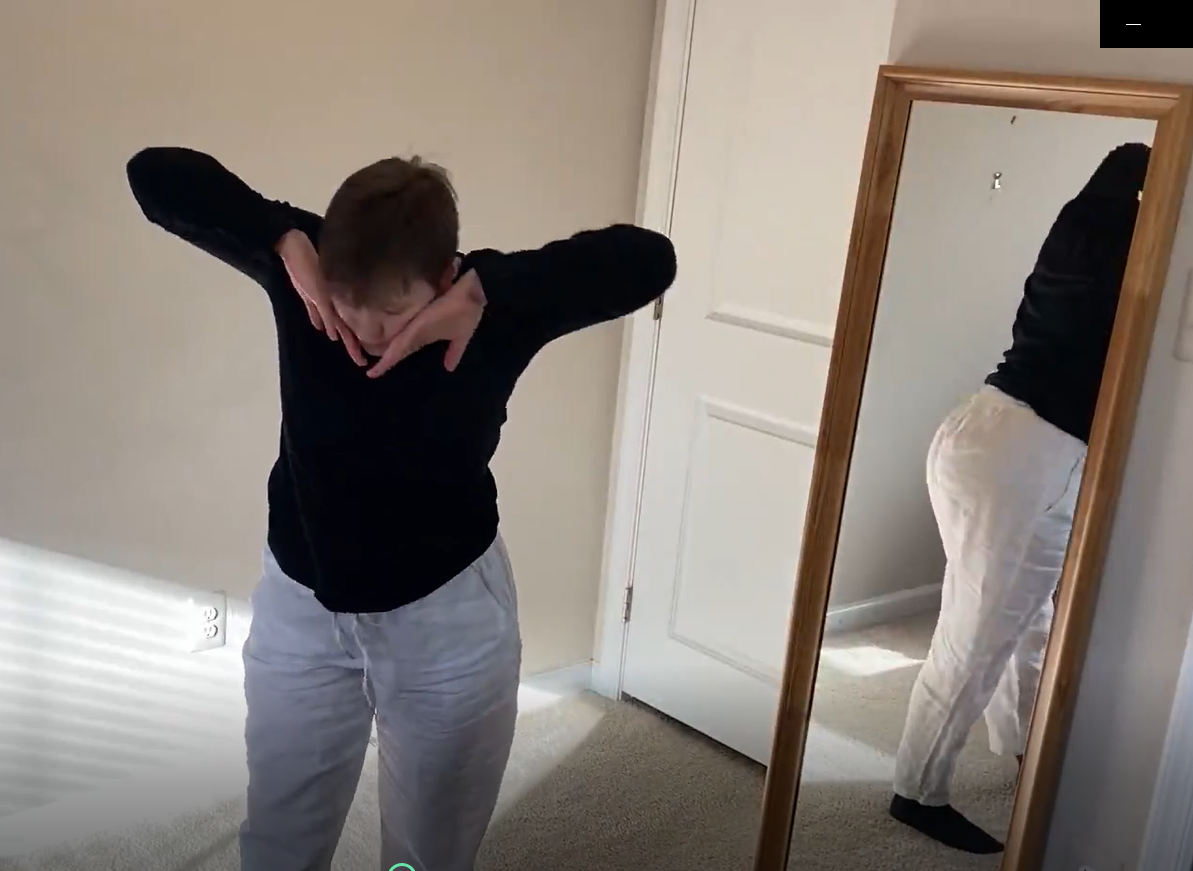
Young white woman with short brown hair touches her face with the backs of her hands in a dance. She wears a black shirt and white pants. She stands in a room with light paint and carpet, with ha mirror behind her.
Still image from Zinski’s dance film project, courtesy of Zinski.

Zinski plans to continue her research and use it to plan bias deconstruction workshops. Of her pandemic research experience, she says, “I learned so much about myself and how to work on my own. This is going to be a very important skill for me and my future career as a self-employed artist.”

“Performing traditional Chinese folk songs”

International travel may have been largely shut down this year, but that didn’t stop URA Scholar Mark Beachy ’21, Asian studies, from exploring China. “When I sing traditional Chinese folk songs I am transported to China and I am experiencing the stories from long ago that are told through the lyrics and music. And it brings me great joy to do that and to share it with others,” he says. 

Portrait of a white man with short, dark hair in a blue shirt and suit jacket. He stands in front of a brick wall.
Mark Beachy. Photo courtesy of Beachy.

Beachy’s URCAD presentation features a video performance of the folk song “Jasmine.” He painstakingly edited together his vocal performance with accompaniment from a pianist in Illinois and a guzheng player in China. Beachy found both musicians online. “When singing traditional Chinese folk songs or any song it is important to connect with the other musicians in order to give the audiences an authentic performance of music that deserves respect,” he says.

Beachy returned to college in his 40s after a career as a professional actor and a writer of musicals, wanting to learn something new. Though not of Chinese descent, he has a passion for Chinese culture, language, and history.

His eventual goal is to teach English to Chinese speakers, and he hopes music can be a helpful teaching tool. “Music is a great way to learn a language,” he says. After graduating, he plans to earn a master’s degree at UMBC in Teaching English as a Second Language. 

“Interpretation of models of care in residential communities for older adults”

“I am passionate about working with an underserved population and providing elders with quality care,” says Sydney Siegel ‘20, management of aging services. Siegel graduated in Fall 2020 from UMBC’s Erickson School and now works in an assisted living community. Her URCAD project is an analysis of models of care that older adults can experience. “The models of care I studied are about enhancing quality of life and quality of care, something I hope all aging services strive for,” she says.

Interviewing older people proved to be a challenge during the COVID-19 pandemic. In addition to many care facilities being inaccessible, staff members caring for older adults were incredibly busy. However, Siegel found ways to complete interviews online. “I made great connections and heard wonderful stories from participants,” she shares. 

Siegel, a URA scholar, credits Erickson School faculty mentor Louise M. Murray with helping her grow in the field. “I definitely felt imposter syndrome when I started the research, but I learned to see my inexperience as a good thing, Siegel says. “Learning is so powerful and I feel grateful to have learned so much.” She looks forward to continuing to use research to inform care she provides for older adults.

“Optimizing in-situ longevity of silver nanoplates”

As a first-year student who started college in the midst of a pandemic, Dariush Aligholizadeh ‘24, biochemistry and computer science, did not have a typical introduction to UMBC. He didn’t want that to affect his ability to get started with research right away, but it was a lot to manage. “I was trying to adjust to college life while also trying to conduct research safely and securely within COVID-19 restrictions,” he says.

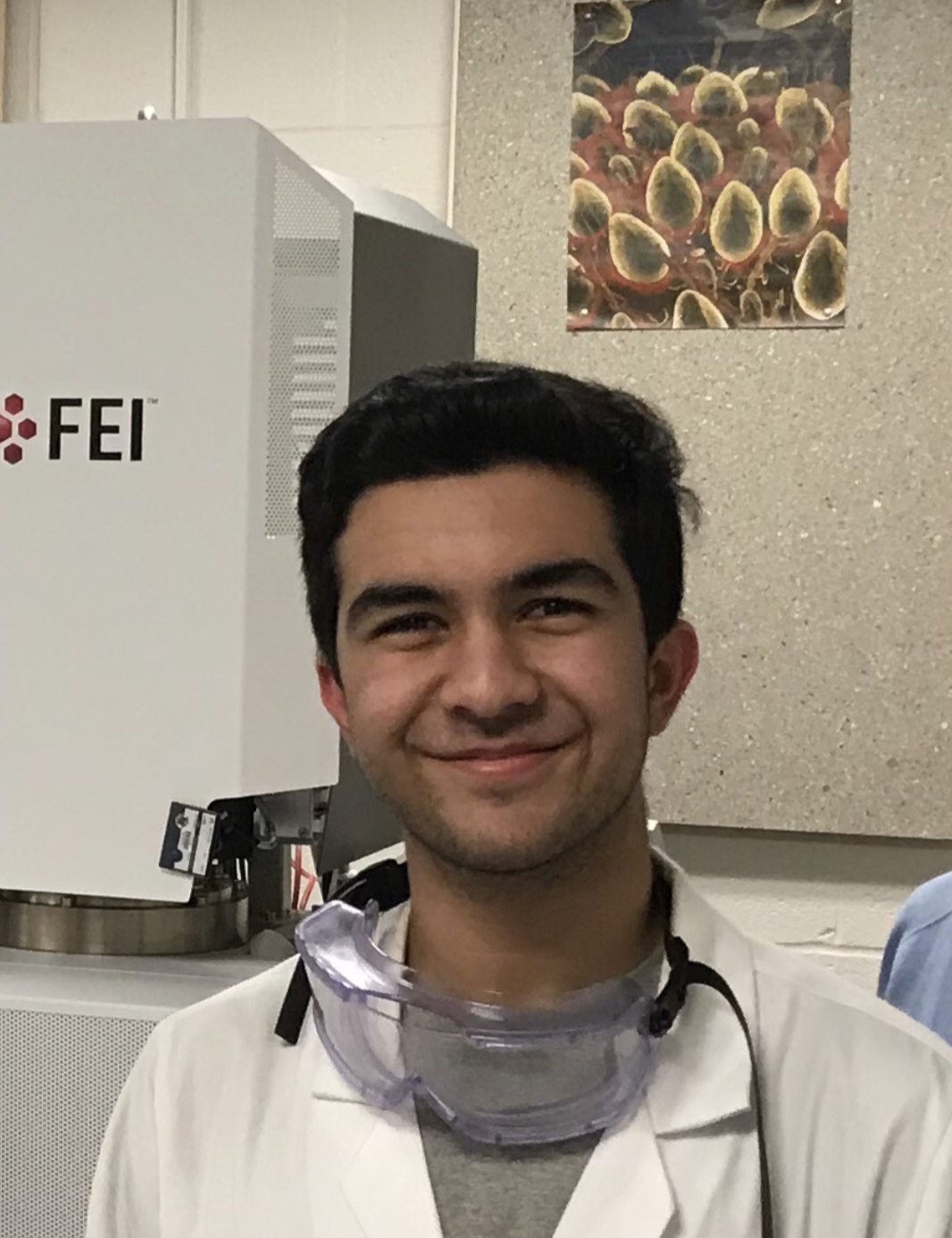
Portrait of young Middle Eastern man, smiling, wearing a lab coat and protective goggles.
Dariush Aligholizadeh. Image courtesy of Aligholizadeh.

Aligholizadeh was able to find a compelling in-person research opportunity in a lab that employed strict physical distancing. His project involved synthesizing silver nanoplates “for their ability to reflect radiation and light to very high degrees.” He explains, “Basically, I make tiny triangles that kill cancer.” And his research experience proved highly gratifying.

“Every aspect of chemistry is in its own way beautiful, and watching these textbook principles come to life in my project is like watching magic happen. I take simple grains of silver salts and they come together in these beautiful sharp triangular structures, almost as if they were put together by hand,” he explains. 

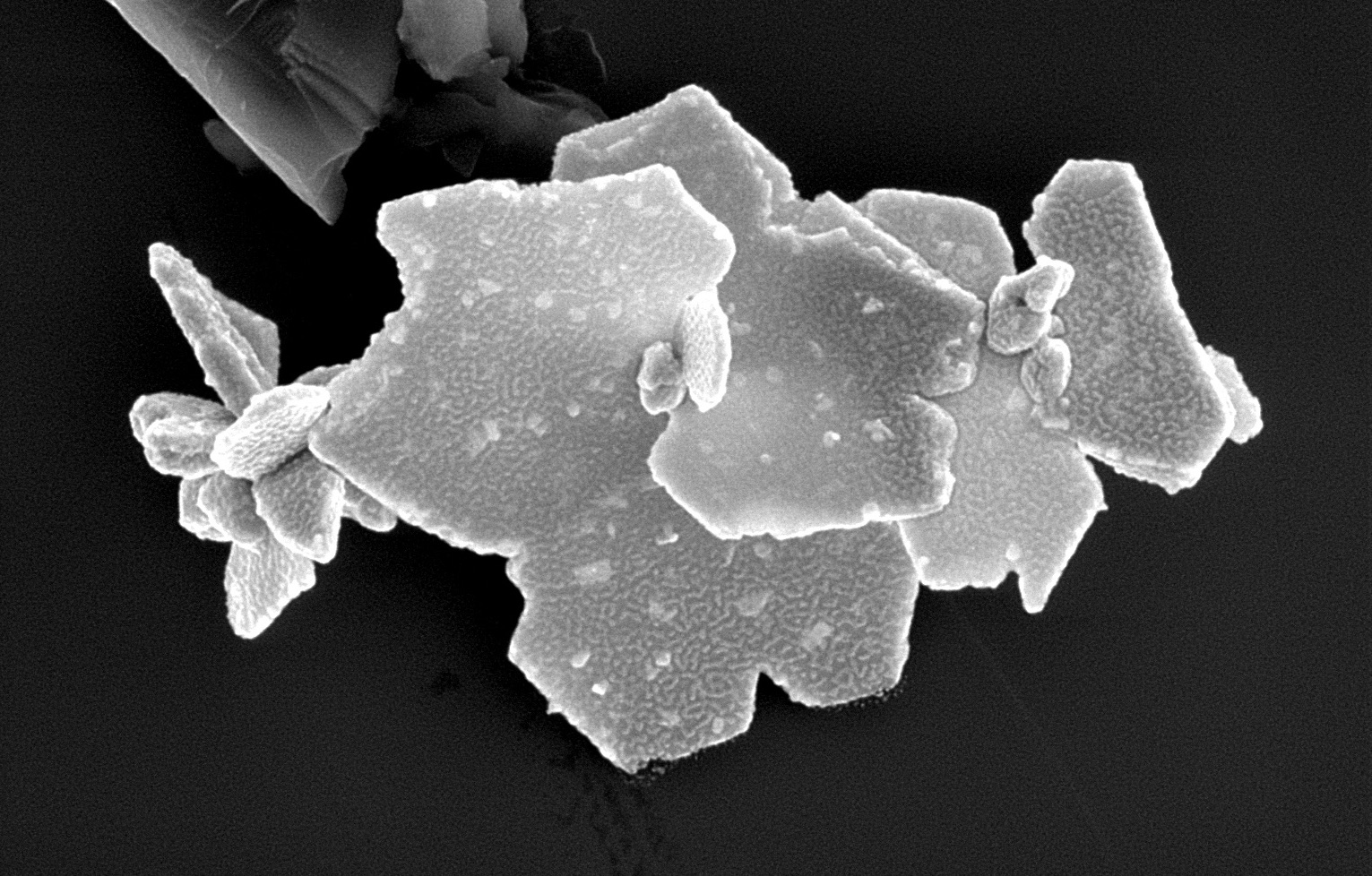
Grayscale microscope image
Electron microscope image of nanoplates. Courtesy of the Devadas Lab.

Aligholizadeh believes his research experience has already improved his skills in calculus, biology, and organic chemistry, and helped solidify his plans to eventually become a medical doctor. He has also found that the challenges of COVID have required him to improve his time-management and online communication skills. Still, he looks forward to learning in-person again when it’s safe to do so.


The UMBC community and general public can see these presentations and many more at urcad.umbc.edu, April 19-25, 2021.

Featured image: Calista Ogburn, 2018. Photo by Marlayna Demond ’11 for UMBC.

Article written by Karen Stysley for UMBC News.

UMBC ranks in the top 100 public universities to receive federal research funding

In the latest Higher Education Research and Development (HERD) survey, UMBC has ranked among the United States’ top 100 public institutions in federal research support.

The annual survey aggregated federal research and development expenditures for fiscal year 2019. UMBC reported more than $80 million in research and development expenditures in 2019, the highest reported amount since 2012.

“It is an area of pride for us to make it into the top 100,” says Karl V. Steiner, vice president for research at UMBC. “We’ve now had year-over-year growth in the last six years. We grew our expenditures by 24 percent during that time—a very significant increase.”

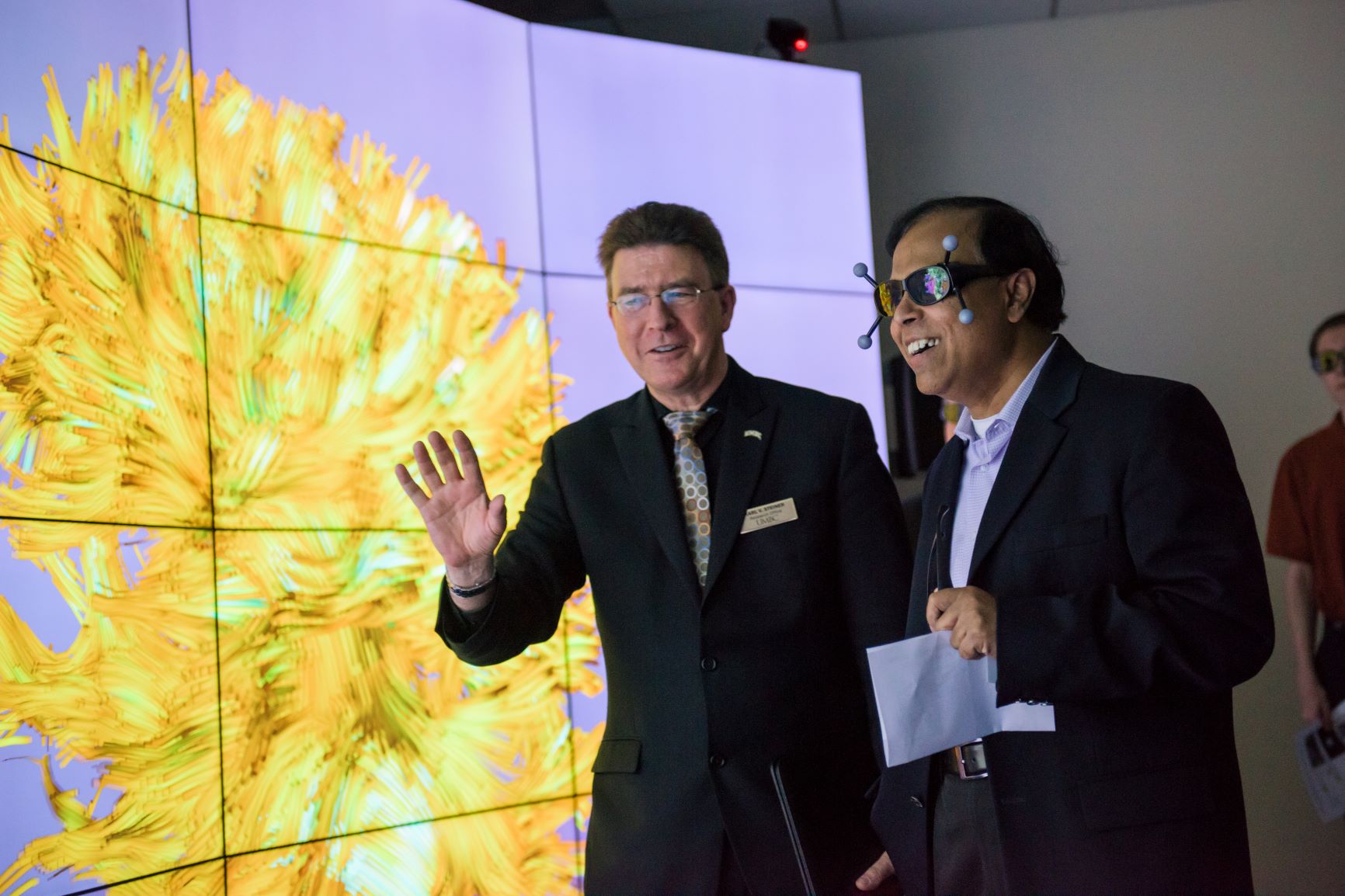
Two men in students stand in front of a brightly lit screen. One gestures while the other wears VR goggles with amazed facial expression.
Karl Steiner (left) and Aryya Gangopadhyay at the Pi Squared opening in 2018.

Within the HERD rankings, UMBC is now #122 in overall research and development expenditures among public institutions, #145 in federal research and development expenditures among all institutions, and #169 overall in expenditures among all institutions. UMBC’s funding sources include NASA, the National Science Foundation (NSF), the Department of Health and Human Services, and many others.

“The expenditures are one key method to get a sense of our faculty and students’ research productivity,” Steiner notes. “These rankings also help us see how UMBC is progressing in meeting our public impact research goals.”

NASA-UMBC connection

UMBC continues to fortify its relationship with NASA, ranking #15 overall in NASA funding (#11 amongst public universities). Currently, more than 170 researchers who are UMBC faculty members and research scientists collaborate with NASA Goddard.

Zhibo Zhang discusses an image collected via satellite with his lab group.

Funding from NASA has contributed to many UMBC-led scientific ventures, including the work of Zhibo Zhang, associate professor of physics. His Aerosol, Cloud, Radiation, Observation, and Simulation (ACROS) research group analyzed data collected from instruments on aircrafts and NASA’s orbiting satellites such as CALIPSO, CloudSat, and MODIS.
They sought to better understand how tiny particles in the atmosphere, such as aerosols and cloud droplets, interact with each other and the radiations from the Sun and Earth, and how these interactions influence our weather and climate systems. 

Group of five people stands in front of a window. They are smiling.
Zhibo Zhang (at right) with students (clockwise from lower left) Qianqian Song, Chamara Raja, Kevin Zheng, and Olivia Norman in 2019.

Explorations in the urban environment

In geosciences, atmospheric, and ocean sciences, UMBC ranked #39 in federal funding. Amongst UMBC’s federally-funded projects is Claire Welty’s study exploring Earth’s “critical zone”—from treetops to weathered bedrock—in urban centers along the Eastern Seaboard. NSF awarded Welty and her team a $4.8 million Critical Zone Collaborative Network grant to execute this project over five years.

Welty is director of UMBC’s Center for Urban Environment Research and Education (CUERE) and a professor of chemical, biochemical, and environmental engineering (CBEE). She is collaborating with Andrew Miller, professor of geography and environmental systems, and researchers in four other East Coast cities.

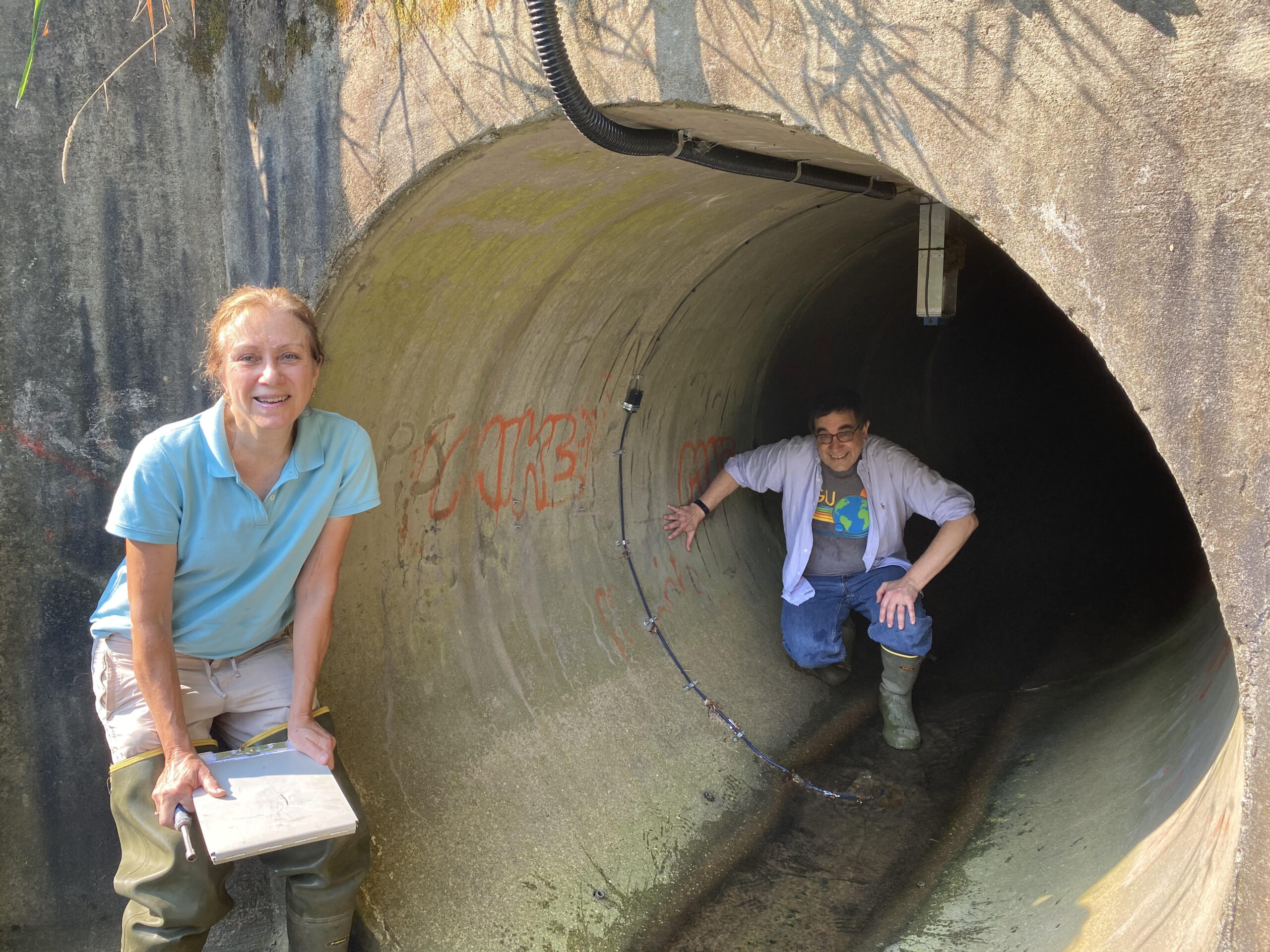
Man and woman in field research attire stand next to and inside a concrete tunnel at a research site.
Claire Welty (left) and Andy Miller (right) at a field site in Catonsville. Photo by Victor Fulda.

Human influence on groundwater is one of the many issues they are exploring. “Groundwater is a hidden resource that feeds streams and rivers. In cities, people are typically not using wells for water consumption but groundwater is part of the hydrologic cycle that affects ecosystems,” Welty explains. “Streams lead to rivers and rivers go to potable water intakes for cities, so it’s all connected.”

Despite the COVID-19 pandemic slowing down many research initiatives, Welty and Miller have continued to move their work forward. The team has begun conducting field research that has included subsurface imaging of project field sites, collecting water samples from each of the targeted sites, and deploying water quality sensors. Welty is expecting to bring her first Ph.D. student onto the research team by this fall.

Interdisciplinary approach to environmental problem-solving

Tamra Mendelson, professor of biological sciences, received a $2.8 million NSF Research Traineeship (NRT) grant in 2019 as principal investigator for the Interdisciplinary Consortium for Applied Research in the Environment (ICARE). The training program is designed to broaden participation in the environmental workforce and empower the next generation of scientists to apply research to environmental problem-solving. 

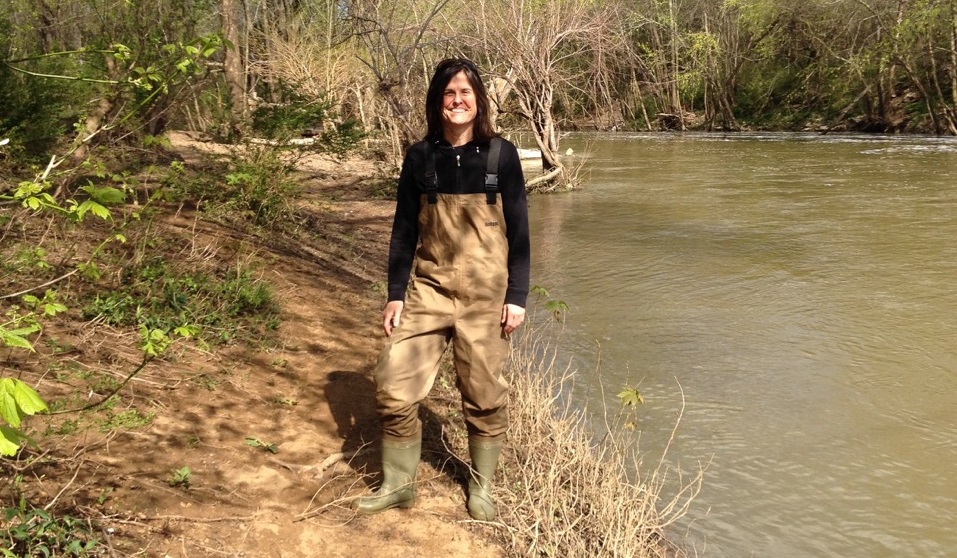
Middle-aged white woman with dark hair stands near water, wearing boots and waterproof overalls.
Tamra Mendelson at a research field site. Photo courtesy Mendelson.

ICARE will focus on the socio-ecological challenges facing the Baltimore Harbor. “The health of the Baltimore Harbor is improving, and I am hopeful that the work of ICARE will bolster ongoing efforts to make the Baltimore Harbor a model for the whole country,” says project partner Lee Blaney, associate professor of CBEE.

“It is my hope that the research focus on the Baltimore Harbor will set up ICARE and UMBC to make lasting, sustainable, and positive impacts in our city,” he notes. 

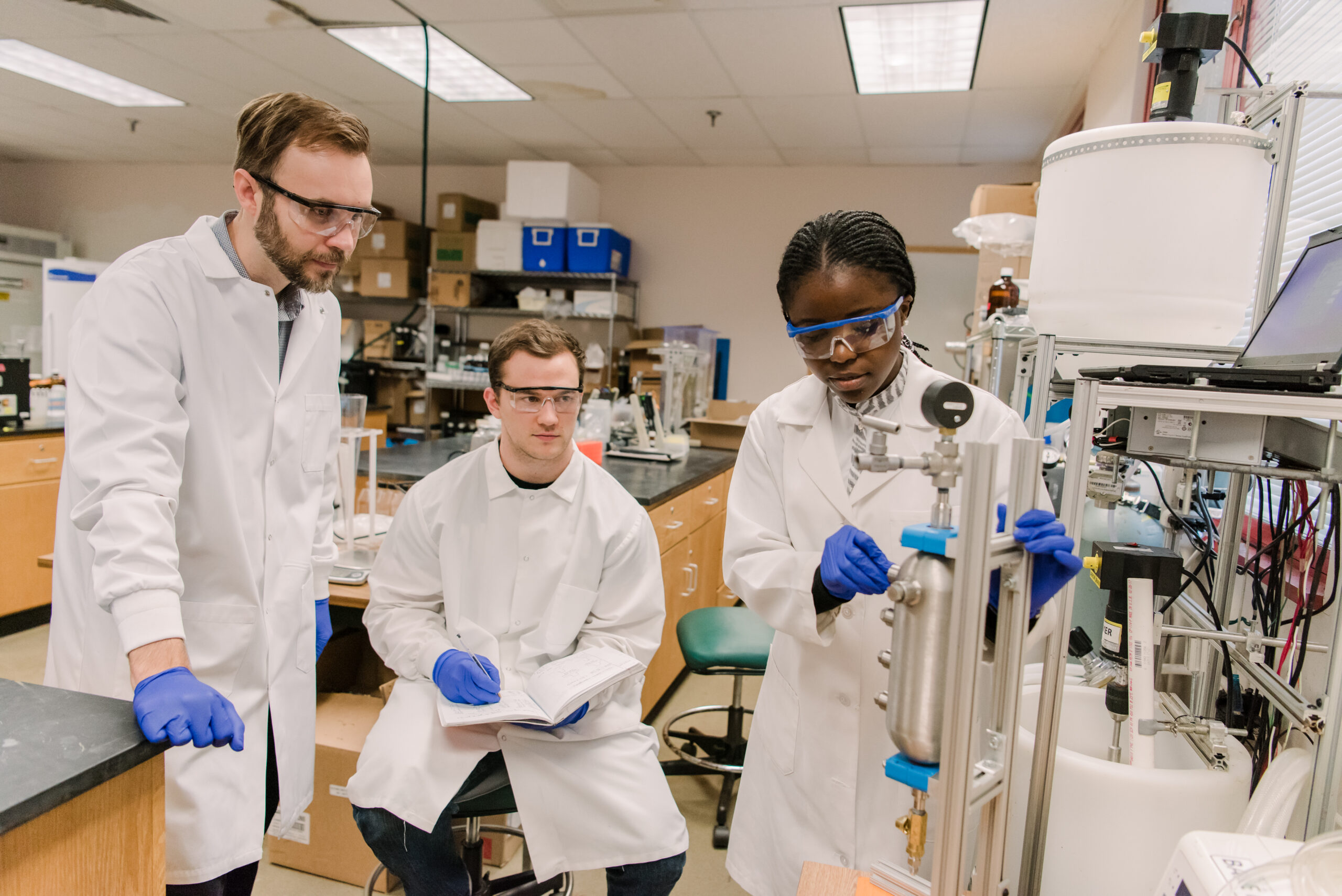
Middle-aged white man stands with a young white man and young Black woman in a lab. They all wear protective goggles and lab coats. The young woman demonstrates research equipment.
Lee Blaney (left) with two students in his lab, 2019.

“ICARE was originally conceived as a way for ecologists and evolutionary biologists on campus to get together. The NRT added this component of engaging the community in our research,” Mendelson explains. 

“At UMBC we are all so invested in this mission of inclusive excellence,” she says. “The racial and ethnic diversity is really low in the environmental sciences, so we wanted to make a difference there as well.”

UMBC partners across five disciplines and three colleges used the time amid the pandemic to organize the program, which will be funded until 2024. Over the next few years, they expect that 30 students will participate. Each student will receive full funding toward a master’s degree. They will also have a chance to collaborate with UMBC faculty, community stakeholders, and scientists and engineers in government, non-profit organizations, and industry careers.

Social science research in action

In the social sciences, UMBC ranks #60 in overall funding sources and #30 in federal funding. Among public universities specifically, UMBC is #37 in overall funding and #20 in federal funding for the social sciences.

Since 2019, the NIH’s National Institute of Aging (NIA) has awarded Laura Girling, director of UMBC’s Center for Aging Studies, more than $750,000 to examine the experiences of people with dementia who live alone in community settings. Recently, Girling has used this funding to research how COVID-19 social distancing guidelines impact people with dementia. She also examines the ethics of including people living with dementia as research participants.

Woman with long blond hair wearing a navy blazer and cream blouse smiles at camera.
Laura Girling, director of UMBCs Center for Aging Studies. Photo courtesy of Girling.

“The social sciences are a hallmark of the UMBC experience, and this is reflected in the funding,” says Steiner. “The excellence and national competitiveness of all of our research programs allows us to grow our research portfolio and pursue more funding for it.”

Photos by Marlayna Demond ’11 for UMBC, unless otherwise noted.

Article written by Adriana Fraser for UMBC.

UMBC researchers work to advance neurotechnology through emerging consortium

The human hand is capable of exquisitely complex, coordinated movements. Ramana Vinjamuri hopes that, in the future, people will be able to control prosthetic hands and exoskeletons just as seamlessly, using signals from their brains. 

Vinjamuri’s research on the interconnections between the brain and the hand is very personal. His mother had a stroke in 2014 and developed paralysis in her right hand. “The very hand that taught me how to draw and how to write is now paralyzed,” he says.

To tackle questions about how the brain signals body movements, Vinjamuri, assistant professor of computer science and electrical engineering (CSEE) and director of Sensorimotor Control Laboratory, is gathering a team of UMBC researchers and corporate and government partners. He received an Industry University Cooperative Research Center (IUCRC) planning grant from the National Science Foundation (NSF) in 2020, and he sees UMBC as perfectly situated to move this kind of high-impact research collaboration forward. 

Portrait of a middle-aged South Asian man. He has a beard and wavy hair, and wears wire-framed glasses and a suit.
Ramana Vinjamuri. Courtesy of Vinjamuri.

While other U.S. universities near urban centers may also have industry partners in their areas, Maryland and Washington, D.C. uniquely host a large number of national institutes and federal agencies, in addition to companies. This includes the NIH, NSF, NASA, and others. And UMBC has a strong track record. The UMBC-led Center for Accelerated Real Time Analytics (CARTA) has already found success as an IUCRC composed of multiple universities, industry partners, and government agencies. 

Vinjamuri is proposing that UMBC join the Building Reliable Advances and Innovation in Neurotechnology (BRAIN) Center, a consortium led by Arizona State University and the University of Houston. His vision is to establish an East Coast BRAIN research hub to develop technologies that can help scientists better understand the nervous system and aid people with disabilities.

Benefits of collaboration

The NSF established the IUCRC program to offer academic researchers a framework for establishing long-term partnerships with industry and government agencies. In addition to providing funding, the program gives graduate students unique research experiences that can set them on a path to high-impact careers. 

“They learn how to work in a team, together with professionals from industry and the government,” says Yelena Yesha, distinguished university professor of CSEE and director of CARTA.

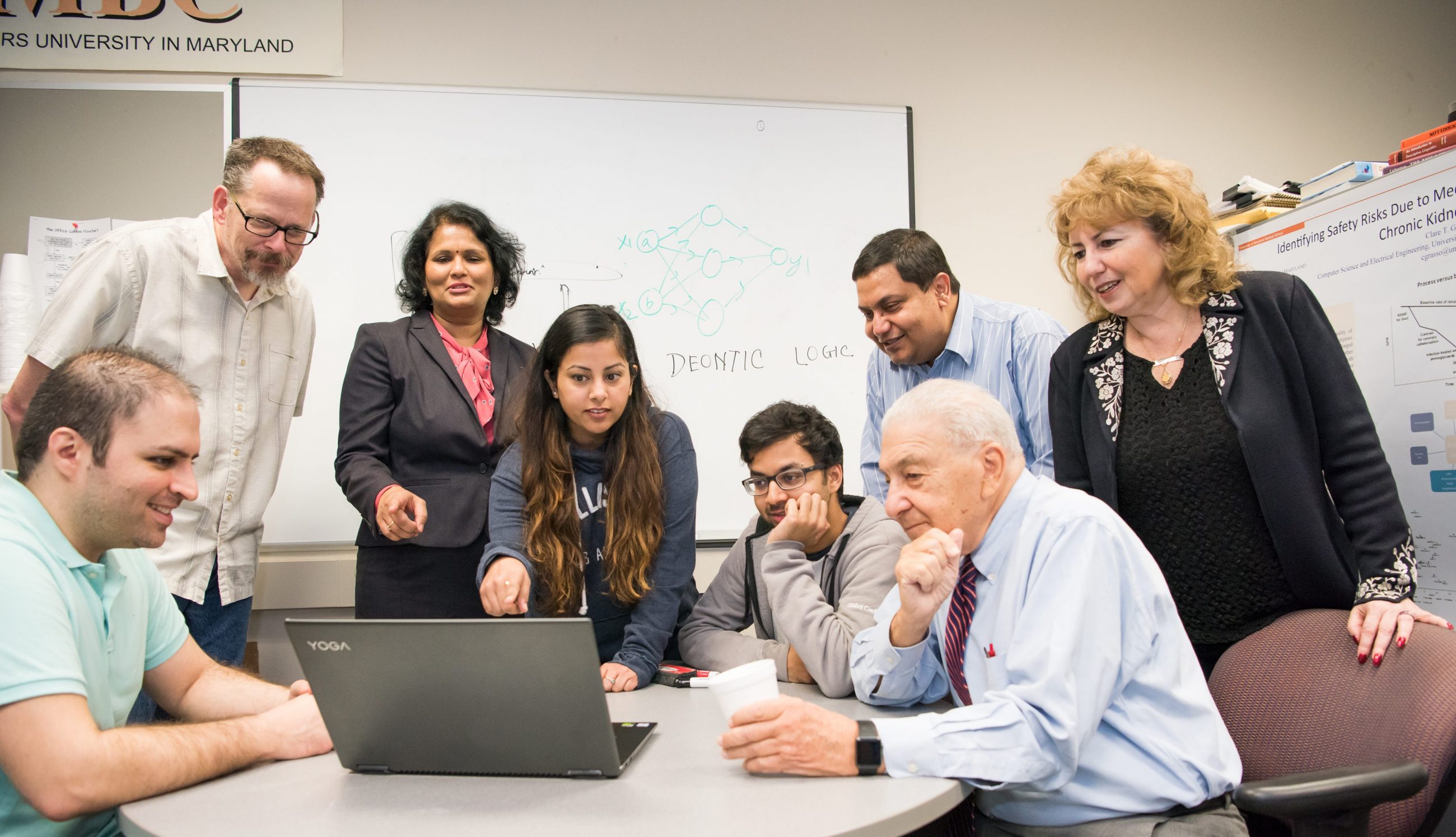
A diverse group of students and professors clusters around a laptop screen in a conference room.
Yelena Yesha, right, with faculty and students who conduct research through CARTA, 2018.

Corporate partners and government agencies also benefit since they gain the expertise of academic researchers. “It’s a win-win,” Vinjamuri says.

Portrait of middle aged white man with mustache and wire-framed glasses. He wears a dark suit with striped tie.
Dean Drake. Photo by Tim Ford for UMBC.

Representatives of each center’s member institutions meet twice a year to make updates to the consortium’s research goals. These meetings provide an opportunity for industry and government partners to highlight their priorities in particular areas, says Dean Drake, associate vice president for research at UMBC.

And the partners have a financial stake in the success of the IUCRC: Each year they pay membership fees that go toward the costs of research. 

From big data to actionable data

UMBC has been the lead university for CARTA, a multi-institution IUCRC, since its inception in 2018. The consortium’s roots are in the Center for Hybrid Multicore Productivity Research (CHMPR), founded in 2009. CHMPR aimed to develop advanced computing technologies to tackle complex problems of national priority, from human health to climate change. As large datasets gained widespread use, the researchers shifted their focus to new areas and CARTA was born.

“Big data by itself is trouble; what is really needed is actionable data,” Yesha says.

CARTA researchers are focused on real-time analytics, or how to interpret large amounts of data to make decisions quickly. For example, one project is exploring the use of blockchain, the distributed technology underlying bitcoin and other cryptocurrencies, to optimize supply chains.

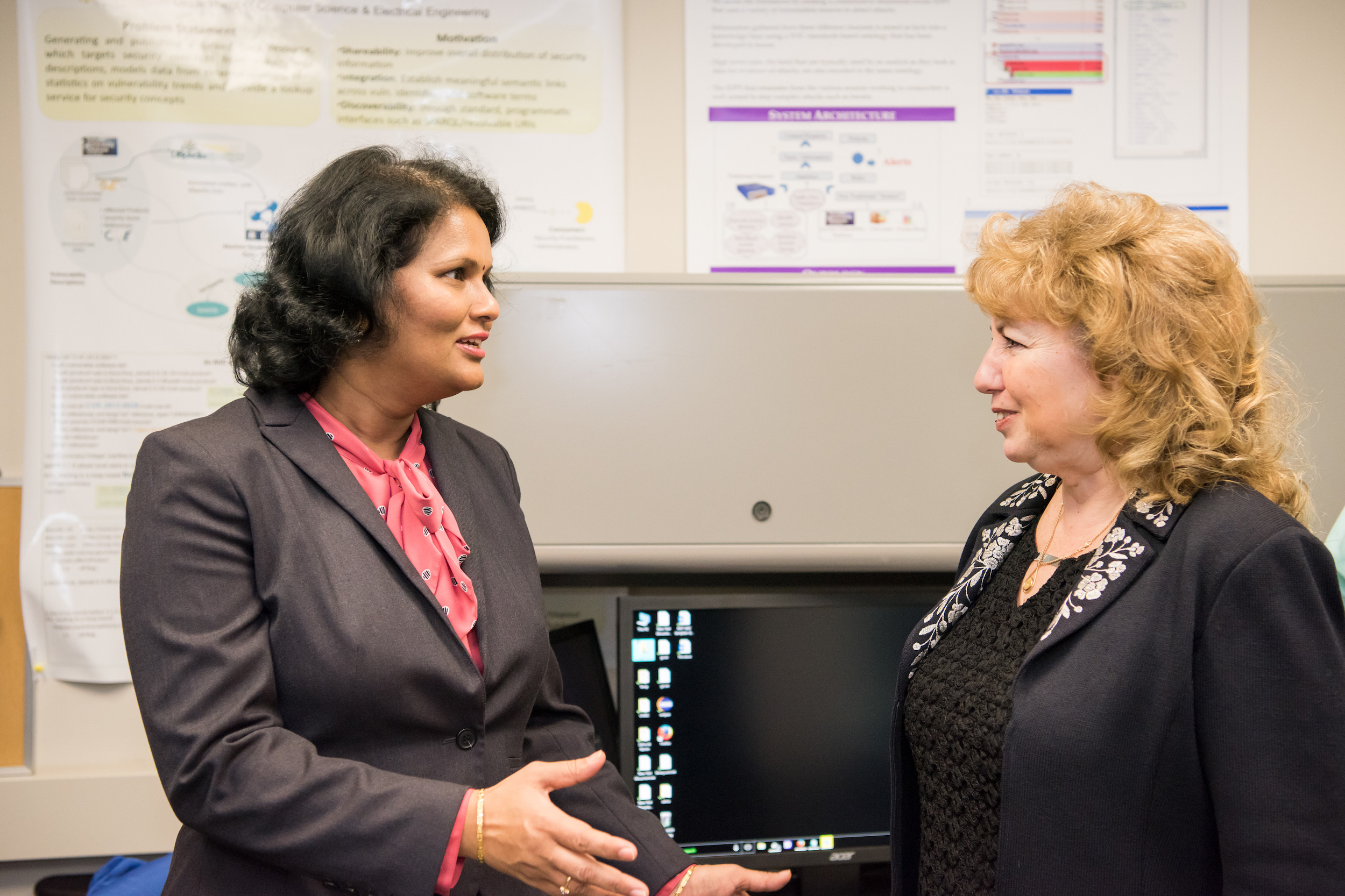
Two women wearing business attire converse in front of academic posters.
Karuna Joshi (left) and Yelena Yesha (right), 2018

In addition to UMBC, CARTA includes higher education partners North Carolina State University, Rutgers University–New Brunswick, Rutgers University–Newark, and Tel Aviv University. Some of UMBC’s industry and government partners are the data management company Seagate Technology, financial services firm Morgan-Stanley, Department of Homeland Security, and NASA. 

“The challenges we examine require a convergence of technologies,” Yesha says. “Having the resources that come from all these different institutions at the table—as well as the brainpower—enables us to tackle these types of problems.”

Advancing neurotechnology

In proposing UMBC as a future BRAIN site, Vinjamuri hopes to connect with medical centers, companies, and government agencies specifically seeking to accelerate neurotechnology research. Neurotechnology is a broad discipline that includes everything from methods for measuring brain activity to tools for analyzing clinical data to human-centered computing, the focus of Vinjamuri’s research. 

The proposed UMBC BRAIN site will have three additional research themes: artificial intelligence, led by Nilanjan Banerjee, professor of CSEE and director of the Mobile, Pervasive, and Sensor Systems Lab; neural signal processing, led by Tülay Adali, distinguished university professor of CSEE and director of the Machine Learning for Signal Processing Lab; and virtual reality, led by Don Engel, assistant professor of CSEE and director of the Assistive Visualization and Artificial Intelligence Lab.

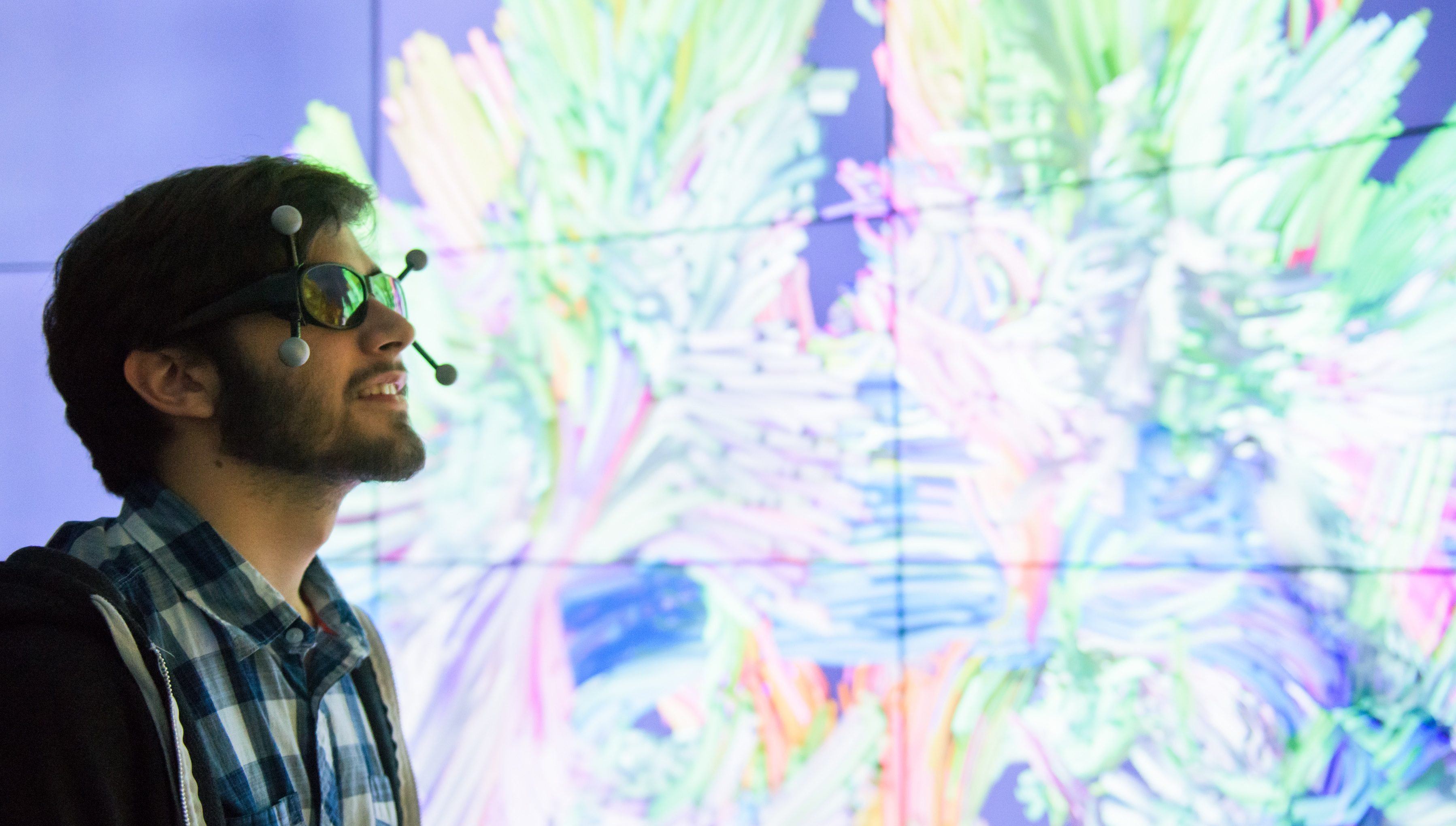
Young man wears VR glasses, standing in front of a glowing wall.
Pi Squared immersive visualization wall, 2016

Due to the coronavirus pandemic, the planning grant timeline has been extended for an additional year. The funds will be used to hold a conference in upcoming fall 2021, to recruit potential industry and government partners for the proposed BRAIN site. Vinjamuri and colleagues will then prepare a formal proposal to join the BRAIN consortium.

“These collaborations across universities, industry, and government are critical to the success of carrying this research out to society,” says Drake, “to meet our most pressing needs.”

Banner image: 3D-Printed Prosthetic Hand, 2013. Photo by M.R.Nuckels. CC by 4.0. All other photos by Marlayna Demond ’11 for UMBC unless otherwise noted.

Article written by Jack J. Lee for UMBC News.

UMBC offers new Research Experiences for Undergraduates in smart computing, big data

Starting out at UMBC, Meyerhoff Scholar Timothy Potteiger wasn’t certain what direction he wanted to take. However, he benefited from UMBC programs that brought the world to his doorstep, inviting universities to pitch him their summer research experiences. One conversation with Washington State University particularly resonated. They spoke about researching smart home sensor technologies to help improve the daily lives of older adults and people with disabilities. 

Potteiger ’14, computer engineering, was drawn to that purpose-driven approach. Little did he know that the program manager for that undergraduate research experience in 2013, Nirmalya Roy, would soon join UMBC’s faculty and expand research opportunities for even more undergraduates.

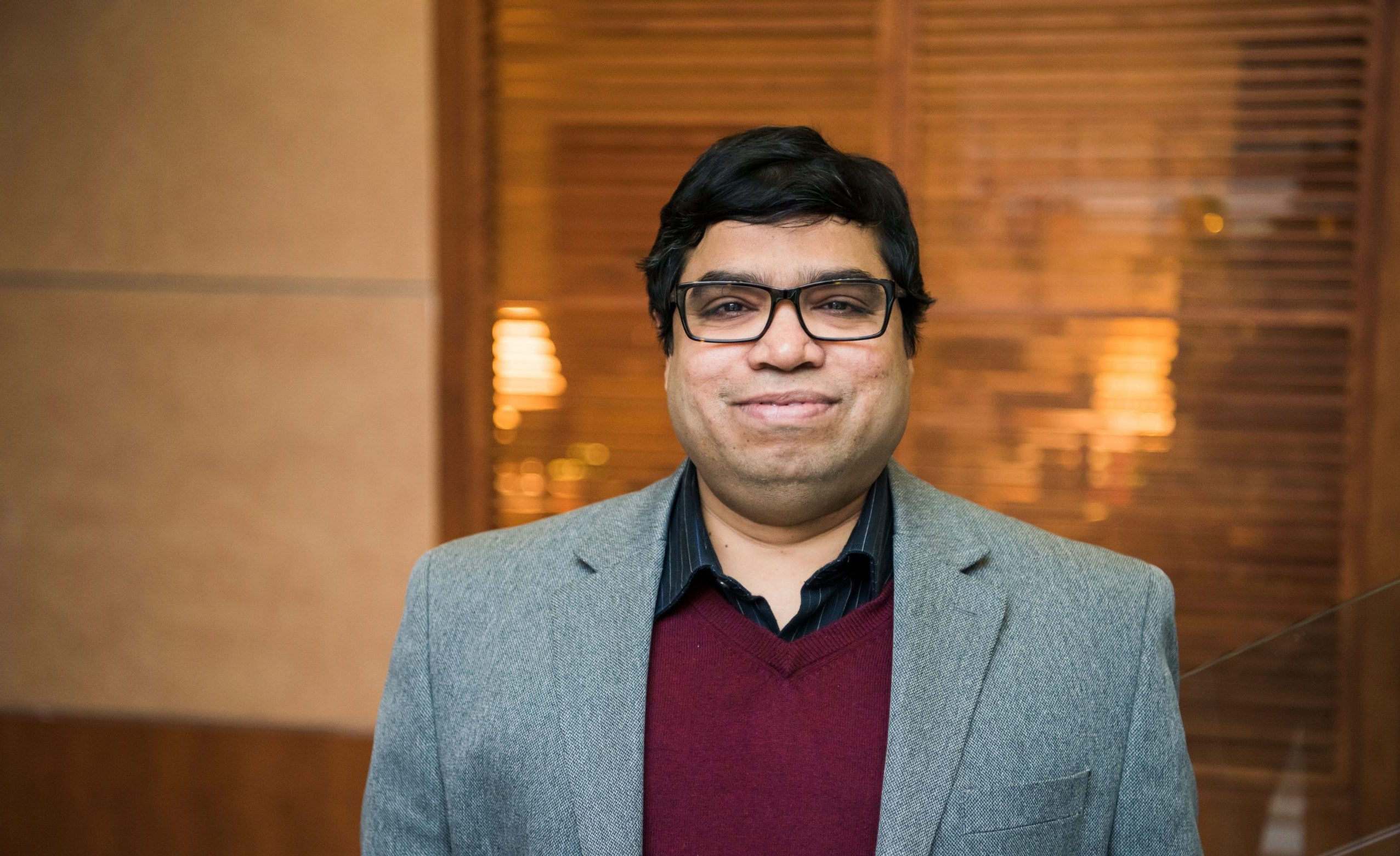
Middle-aged South Asian man smiles in a portrait. He wears black, rectangular classes, a suit jacket and burgundy sweater.
Nirmalya Roy

Research Experiences for Undergraduates (REUs) are critical for students like Potteiger. Roy, now associate professor of information systems at UMBC, is principal investigator leading a new REU in Smart Computing and Communications funded by the National Science Foundation (NSF). The program is accepting applications through March 31 for this summer from students nationwide. 

Potteiger is excited for students to take advantage of this opportunity. “I know Dr. Roy has a good vision on how to actually impact society with research,” he shares.

Transformative experience

The program will bring together ten undergraduate students in a paid 10-week, full-time research experience from June 7 to August 13. While the summer 2021 program will be remote, each student will work closely with a research group and mentor. They will receive guidance from Roy and co-PI Dmitri Perkins, as well as other information systems and computer science and electrical engineering (CSEE) faculty. 

In the final week, the students will have a chance to present their research through UMBC’s popular Summer Undergraduate Research Fest. They will also have the opportunity to develop peer-reviewed articles and continue their research throughout the year with faculty. 

“The idea of this experience is not only to give them exposure to hands-on research problems, but to also help undergraduates with professional development,” says Roy. “Developing a peer network and encouraging them to build confidence talking with professors and researchers in their field will be important for their careers.”

Real-world applications

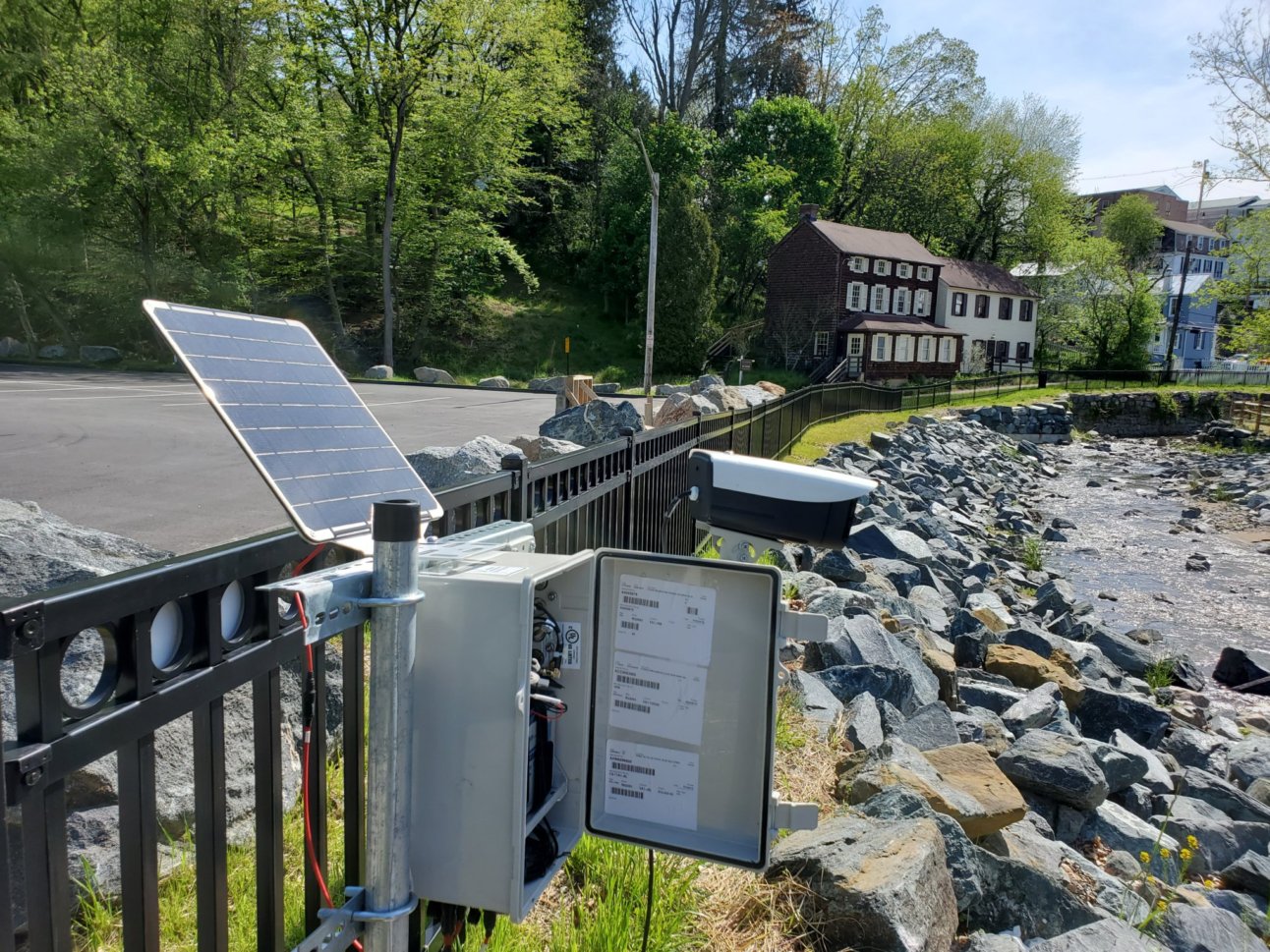
One REU project will tackle privacy protection in COVID-19 contact tracing programs, while another will study a chatbox method for studying cryptocurrency. Roy will also give students the chance to optimize smart home sensors for seniors or work on the FloodBot project, a collaboration with nearby Ellicott City to create an early flood warning system after a 2018 flash flood caused catastrophic damage. 

Box of electronic equipment with a solar power panel. Outdoor photo with road, plants, and homes in the background.
Sensors placed in Ellicott City through the FloodBot project. Photo courtesy of Nirmalya Roy.

Students can also work with Perkins, a CSEE professor, on research into wireless devices capable of “situational awareness,” the ability to switch from one frequency to the next along a limited radio spectrum highway. The interdisciplinary project is crucial to staving off what some experts fear is a looming, massive traffic jam for wireless devices globally.

“The hallmarks of all our projects is that they have community impact,” says Vandana Janeja, chair of information systems.

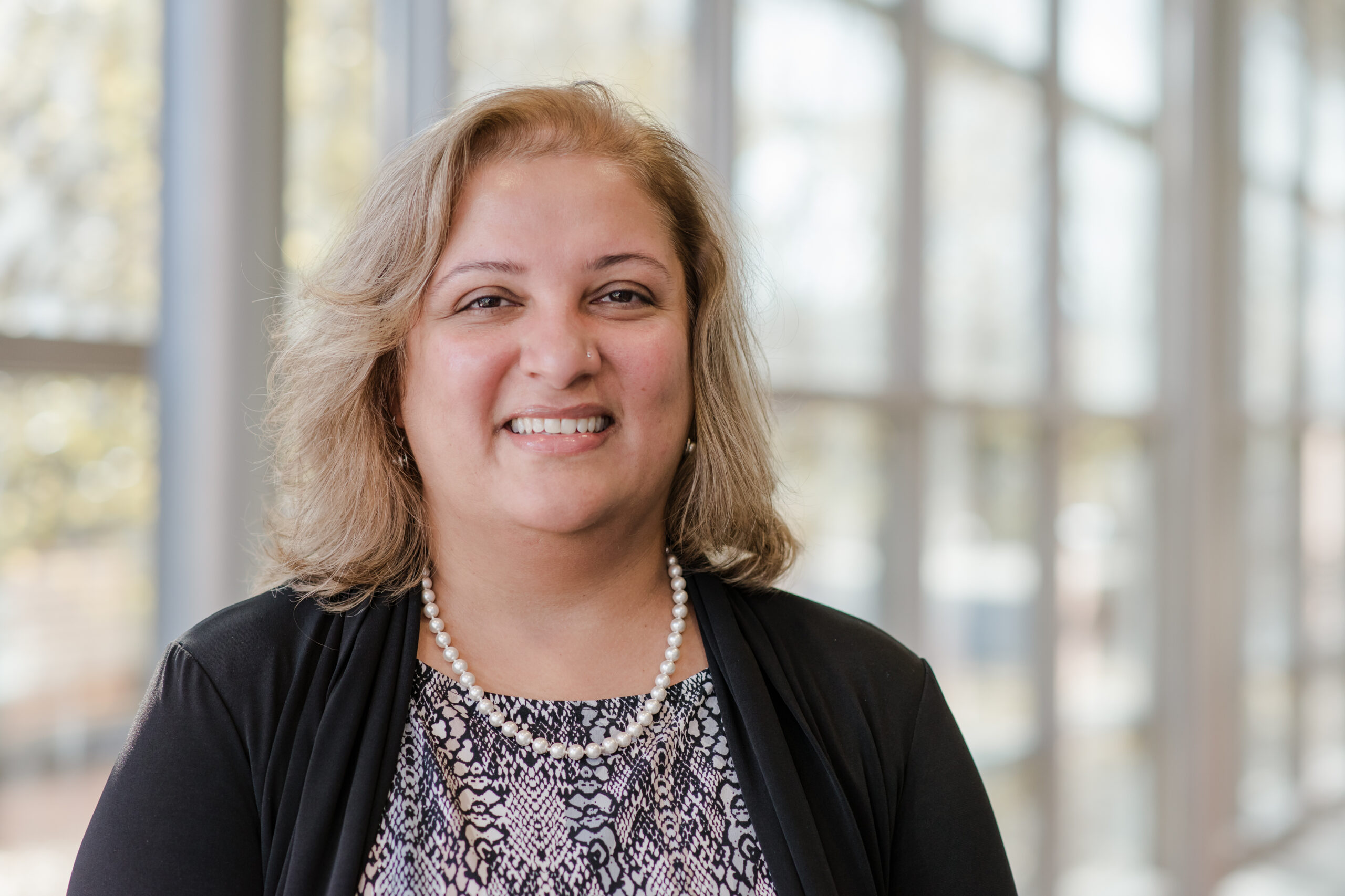
South Asian woman with shoulder-length hair smiles for a portrait, wearing a pearl necklace, black and white print shirt, and black sweater.
Vandana Janeja

Expanding opportunity

Providing undergraduates with real, hands-on research experiences resonates personally with Perkins. He grew up in a no stop-light town in Mississippi and attended Tuskegee University, which had well-regarded academic programs but more limited lab research opportunities at the time. Perkins was able to gain research experience in a broader range of areas by participating in REUs at two other universities. 

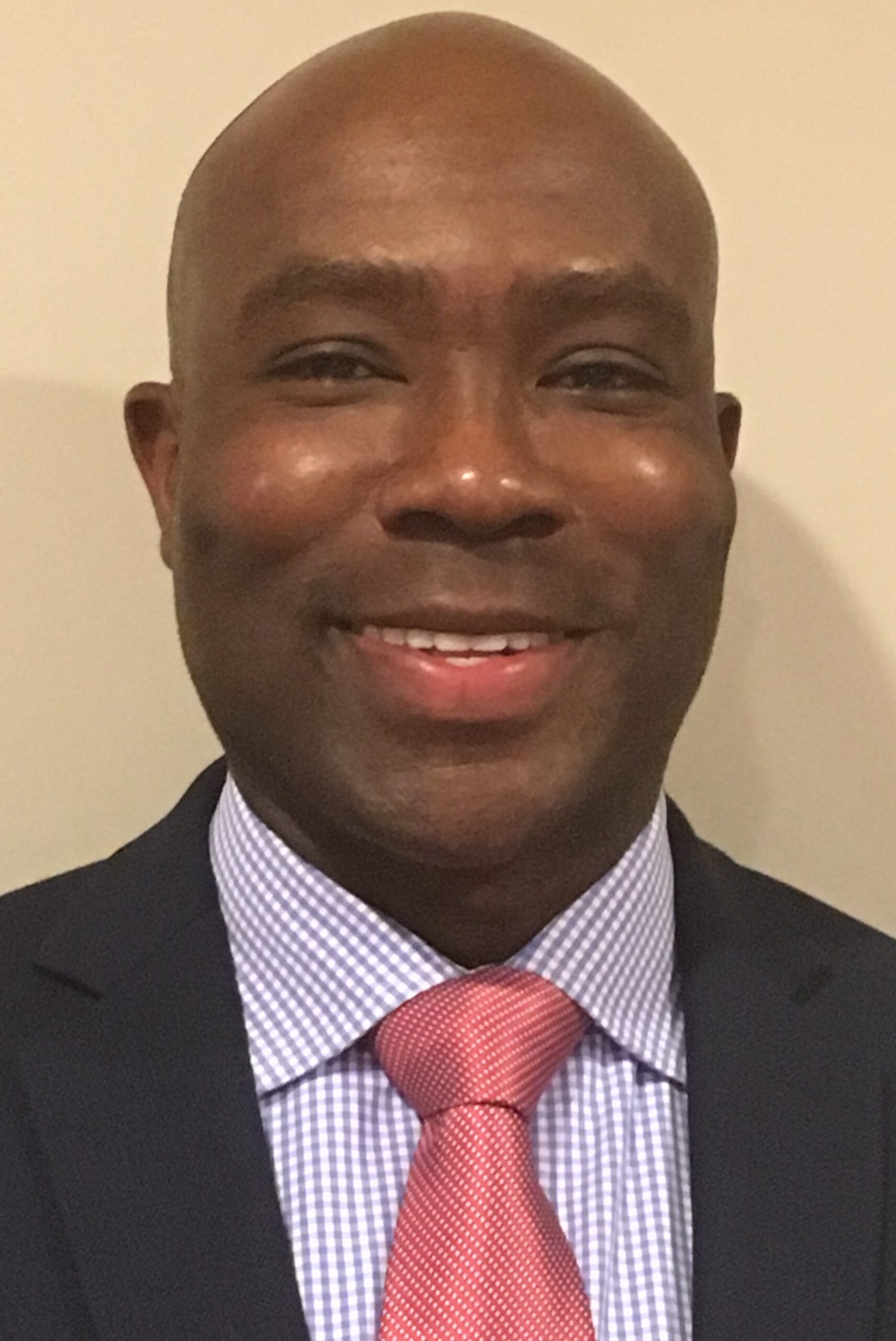
Portrait of smiling middle-aged Black man in suit, striped shirt, and pink tie.
Dmitri Perkins. Photo courtesy of Perkins.

Recognizing that many students come from similar backgrounds where research opportunities may be rare, the REU specifically encourages applicants from community colleges and groups traditionally underrepresented in the STEM fields. 

“With students from traditionally underserved communities, there is often some apprehension or insecurity about pursuing a career in research,” Perkins says. “Once students complete their UMBC summer experience, they will have more information, more understanding of what research looks like, and the knowledge that they can actually do this.”

Unique online experience

Jianwu Wang, information systems, has also joined the wave of faculty from UMBC’s College of Engineering and Information Technology (COEIT) launching new REUs. Wang is assistant professor of data science and director of the Big Data Analytics Lab. With co-PI Matthias Gobbert, professor of mathematics, he’s just received NSF funding to launch an online interdisciplinary Big Data REU.

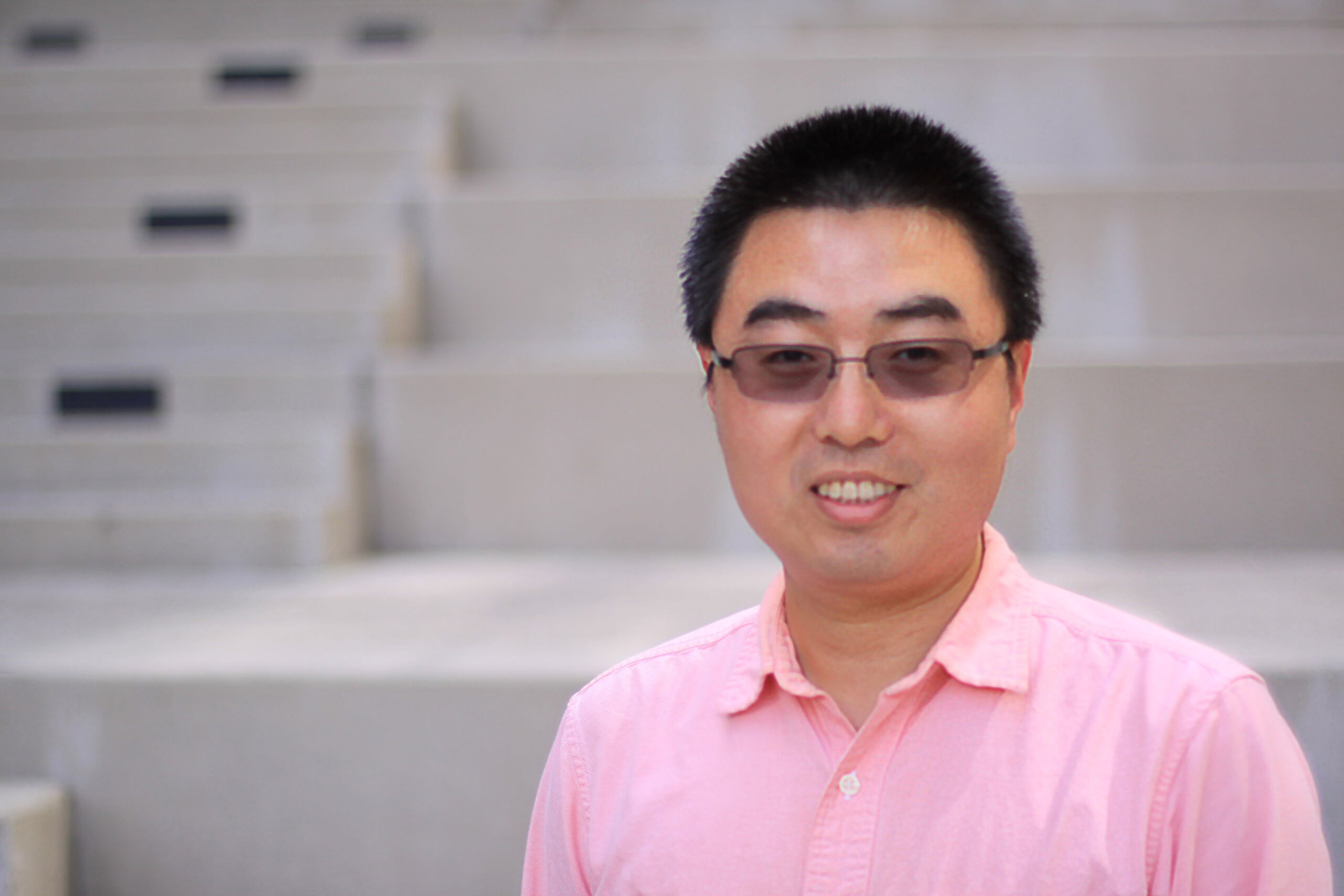
Headshot, Asian man in pink shirt and glasses
Jianwu Wang

They will provide an 8-week summer online research experience to undergraduates from across the country. Students will explore “how to utilize modern data science and high-performance computing techniques to process and analyze big data in many science and engineering disciplines,” Wang explains. This includes fields ranging from atmospheric science to mechanical engineering to medicine. 

“We’ve designed the program to be purely online so it is particularly useful for students in remote areas or who might have health concerns or concerns about travel,” says Wang. “We also want to make sure it is accessible to students with family responsibilities and disabilities, who may not be able to leave their home for an extended period of time.”

Big data research

This program will combine formal instruction, team-based research, and experience disseminating that research. The goal is to ignite students’ interest in “how data science and high-performance computing techniques could help the scientific discovery process” while giving them essential hands-on research skills and preparing them for the workforce.

Students will learn how to identify research questions and conduct research using advanced cyberinfrastructure software technologies and hardware resources. Tentative research themes for summer 2021 research projects include big data and machine learning techniques for sea ice prediction and for medical image classification. 

The summer 2021 program will run June 7 through July 31. Applications are due by April 15, 2021, and the organizers invite undergraduates in all STEM fields to apply. Students who complete the fully-funded program will also be eligible for additional funds to present their research at conferences around the country.

Roy and Wang credit COEIT for encouraging their efforts to launch new REUs. Erin Lavik, associate dean for research and faculty development and professor of chemical, biochemical, and environmental engineering, describes the new programs as “fantastic.” She shares, “This is an exciting chance to connect undergraduates from across the country with unique UMBC student research experiences and our outstanding, innovative faculty.”

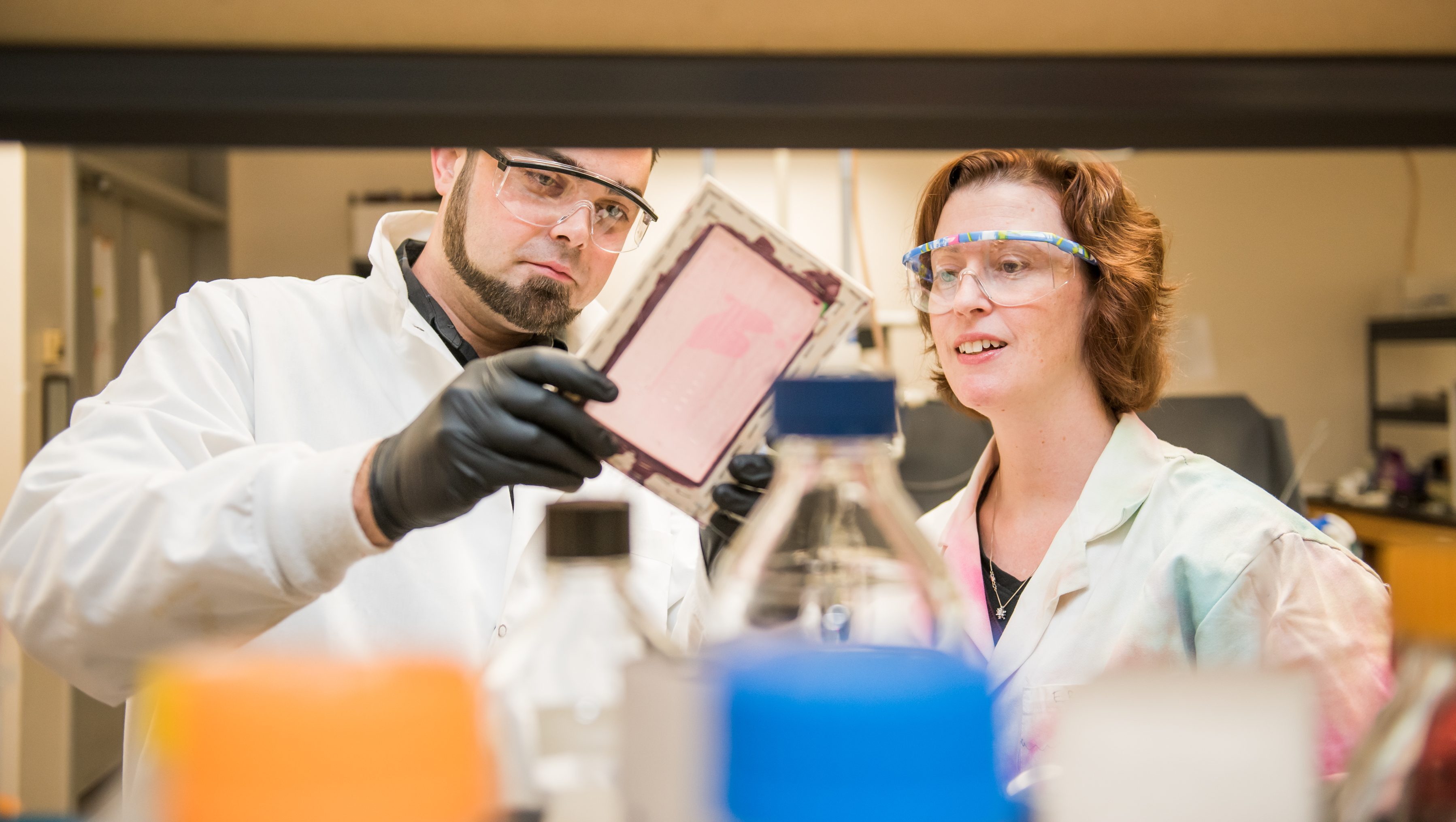
White man and woman look at equipment in a lab. Both wear lab coats and protective glasses.
Graduate student Adam Day (left) works with Erin Lavik (right) in her lab, 2017.

Featured image: Nirmalya Roy with a student in 2018. All photos by Marlayna Demond ’11 for UMBC unless otherwise noted.

Article written by Nick Ford for UMBC News.

UMBC’s James Foulds receives NSF CAREER Award to improve the fairness, robustness of AI

UMBC’s James Foulds was drawn to working in artificial intelligence (AI) and machine learning (ML) by “the possibility to make a direct impact on people’s lives and the health of our society” through advancing technology. He has now earned a National Science Foundation CAREER Award of nearly $550,000 over five years to support his research on improving the fairness and robustness of AI algorithms. 

Foulds, assistant professor of information systems, joined UMBC in 2017. His lab focuses on human-centered approaches to AI fairness, working to address many practical limitations in the field.

Implementing an AI algorithm is often presented as a trade-off, Foulds explains. Do you want the program to be as productive as possible or as fair as possible? Foulds sees this as a false and harmful dichotomy.

Thanks to advances in AI, computers can accomplish tasks that would take a human a lifetime, but technologies built by people also perpetuate people’s biases, Foulds says. These biases can then have real impacts on people’s lives, often disproportionately harming already disadvantaged groups. For example, skewed AI and ML models have informed college admissions, credit card approvals, and recommendations for bail in court rooms. 

The ethics of adopting such systems and ways to mitigate their potential harms have become focal points in Foulds’s work.

Fair AI implementation across applications

Foulds’s research demonstrates that developing an AI algorithm that prioritizes fairness can in fact yield more robust results. Models are often used to make generalizations about a population of interest, which can be helpful. But when a model is developed based on biased data, the prediction can suffer from “overfitting,” where the model describes a relationship between variables that doesn’t actually reflect reality. 

In these cases, the model’s predictions can be misleading, rather than useful, and can cause real harm. A model that underscores fairness could provide more stable generalizations and help to avoid perpetuating or amplifying existing biases and false interpretations.

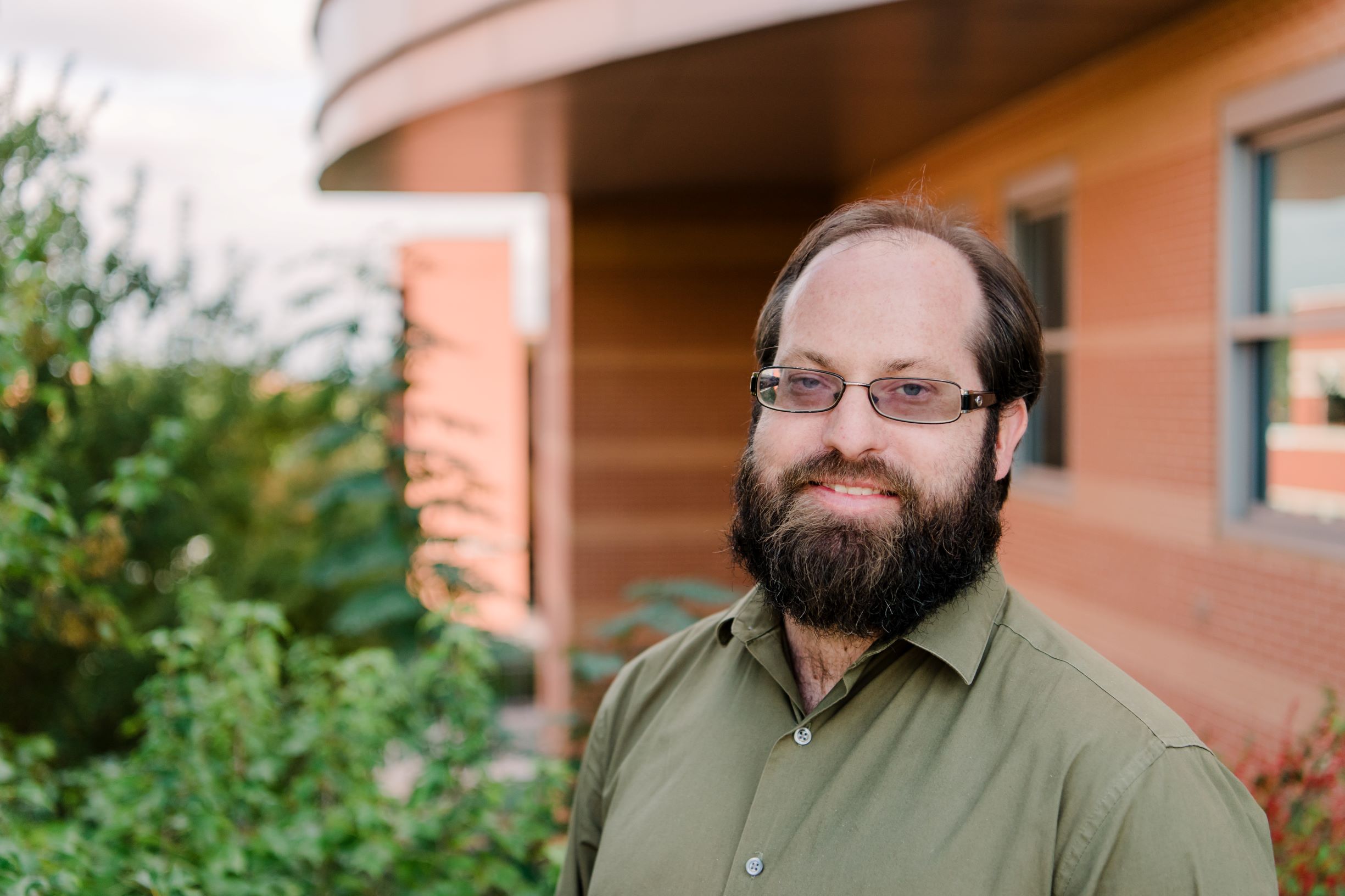
Portrait of a middle-aged white man with full beard. He wears a green dress shirt and wire-framed glasses. He stands in front of a brick building and plants.
James Foulds

Researchers currently quantify fairness in a variety of ways. Through his CAREER Award-supported research, Foulds wants to develop a unifying framework. From there, he will create a user interface to study how people come to a consensus on defining fairness in a given situation.

The project will target decisions or advice based on things like Medicaid waitlist data, career recommendations, and social media usage data. These all have intrinsic biases that can significantly impact trends and outcomes in society, or the way industry addresses specific problems. 

For example, each U.S. state has a different way of determining who receives health coverage through Medicaid. Creating a better model to perform a needs-based ranking of the waitlist for Medicaid coverage could help officials make more informed, equitable decisions about who should receive coverage.

Bringing more people into the conversation

Foulds believes his research will mitigate barriers to responsible and effective deployment of AI technologies by showing that it is possible to develop a discipline-standard model for fairness. He hopes to make his lab a source of user-friendly AI tools for those who want to implement the model in their work.

As an educator, “I want to inspire the students I come into contact with to see how fascinating and exciting (and potentially lucrative) AI, ML, and data science are,” Foulds shares. “And I want to instill in them the importance of ethical thinking in the practice of data science.” 

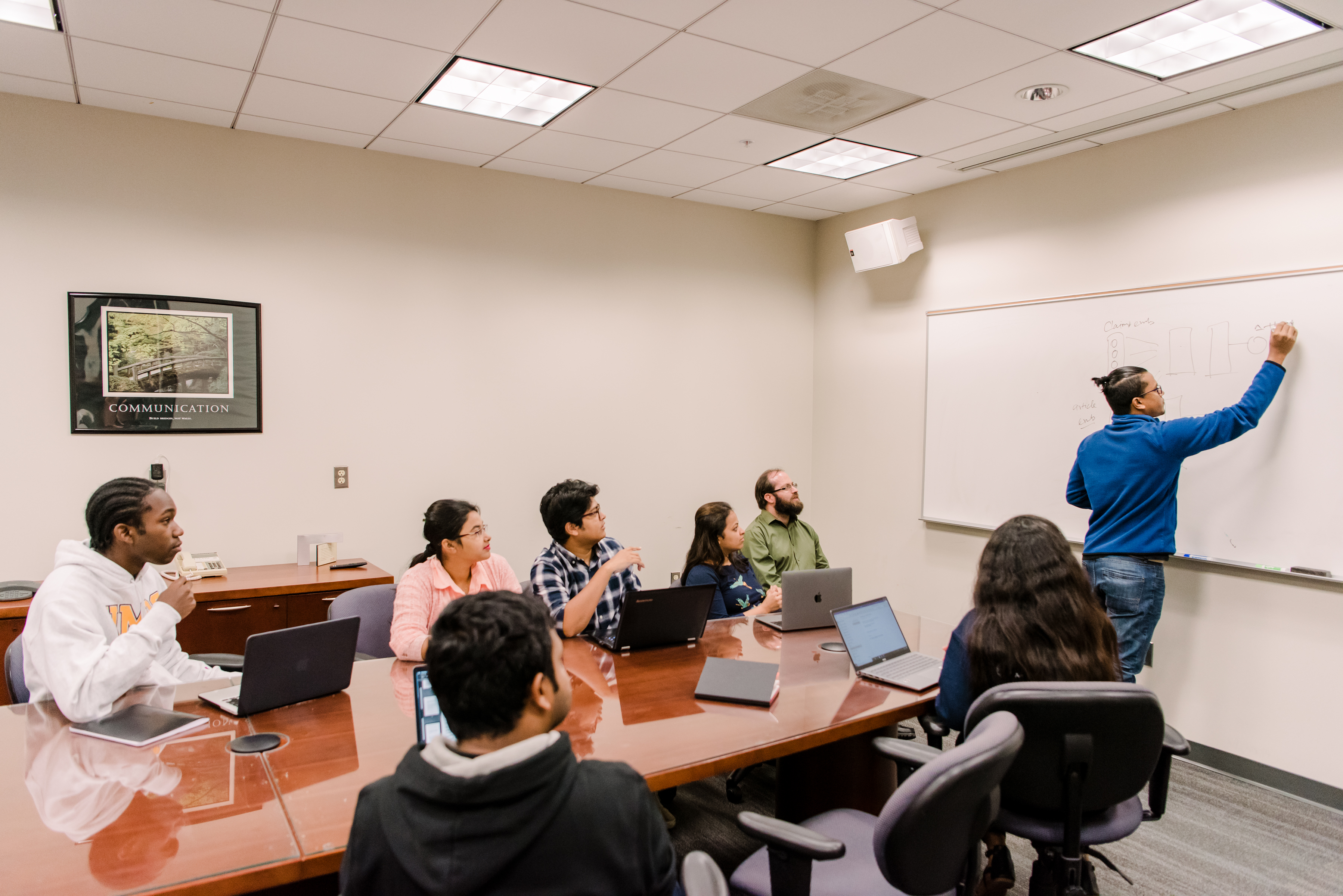
A student writes on a white board. Seven colleagues watch from their seats around a conference table.
James Foulds (third from right) meets with students in his lab in 2019.

Beyond his own courses, he hopes to partner with Baltimore Polytechnic Institute, a local STEM-focused high school, to provide students with exposure to a range of new career options that can have a major societal impact.

Public impact research

In addition to Foulds, UMBC is celebrating the recent CAREER Award of Ramana Vinjamuri, who joined the university’s computer science and electrical engineering faculty in 2020.

Vinjamuri’s project revolves around brain-computer interfaces and understanding the complex relation between the hand and the brain. His goal is to understand how the brain controls the hand and how the hand sends motor and sensory information back to the brain. 

Portrait of a middle-aged South Asian man. He has a beard and wavy hair, and wears wire-framed glasses and a suit.
Ramana Vinjamuri. Courtesy of Vinjamuri.

Vinjamuri hopes to be able to demonstrate how a person might more quickly learn skilled movements (like playing the piano) or relearn lost movements after experiencing a stroke. Like Foulds, he feels energized to tackle big questions with the potential for significant public impact.

Banner image: James Foulds with his students in 2019. Photos by Marlayna Demond ’11 unless otherwise noted.

Story by Travis McKay ’19, chemical engineering, for UMBC News.

UMBC Mock Trial heads to national semifinal as undefeated regional champions

“This year’s team, they’re not afraid of anyone,” says Ben Garmoe ‘13 political science, adjunct professor and head coach of UMBC Mock Trial. “They will go into every round knowing they have a shot.”

UMBC Mock Trial will compete in the semifinals of the American Mock Trial Association’s (AMTA) annual national tournament, March 20 and 21. Garmoe’s confidence in the team is rooted in their strong performance this season, capping years of steady growth into a national powerhouse. 

The team began 2002. Early members included students like Alicia Wilson ‘04 and Aaron Merki ’05, both political science, who went on to prestigious law programs and careers. After a 2009-2010 hiatus, the team came back with a vengeance in 2011. They’ve competed in the semifinals, known as the Opening Round Championship Series (ORCS), every year since 2013, and advanced to the National Championship Tournament (NCT) three out of the past four seasons.

UMBC Mock Trial is currently ranked 24th in the nation. The university’s A Team went 8-0 in regional competition leading up to the semifinals, beating schools like the University of Chicago and the University of California, Irvine.

Previous ORCS were geographically based, but this year’s online format allows UMBC to compete against a national field. Garmoe and the team appreciate the opportunity to go head to head against a wider range of top schools.

Preparing for online competition

To prepare for competition in the new online format, Garmoe took UMBC Mock Trial back to the basics. The differences in competing online and in person forced the team to rethink aspects of their performance. For example, Garmoe explained that making eye contact and holding a judge’s attention work differently in the Zoom environment.

“Over the course of this season, students have paid attention to those little details,” says Garmoe. And adjusting to the needs of a trial through Zoom has helped UMBC gain an advantage, explains Thomas Azari ‘22, political science. 

Anzari is team vice president and recipient of several outstanding attorney honors. “We try to be as human as possible,” he says. “I think the thing that separates us from some other teams is we are both focused and relaxed. We make a joke out of technical issues like forgetting to unmute or mute. You just laugh it off and you move on.”
Screenshot of video call with seven young adults, each in their own box in a grid pattern. They wear professional attire.
Seven members of UMBC Mock Trial’s A Team (l to r, top to bottom): Thomas Azari, Maria Kutishcheva, Lauren Wotring, Zinedine Partipilo Cornielles, Thomas Kiley, Natalie Murray, Sydney Gaskins.

Bringing together top talent

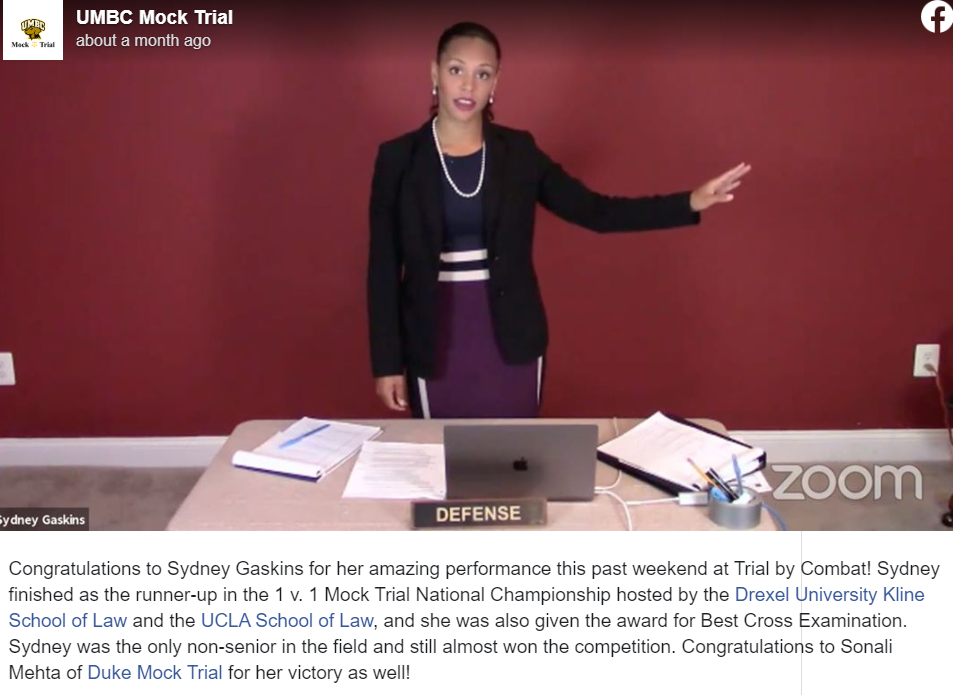
Azari points to UMBC Mock Trial President Sydney Gaskins ‘21, political science, as another key asset to the team. Azari appreciates every opportunity to watch Gaskins compete since she is such a high caliber competitor.

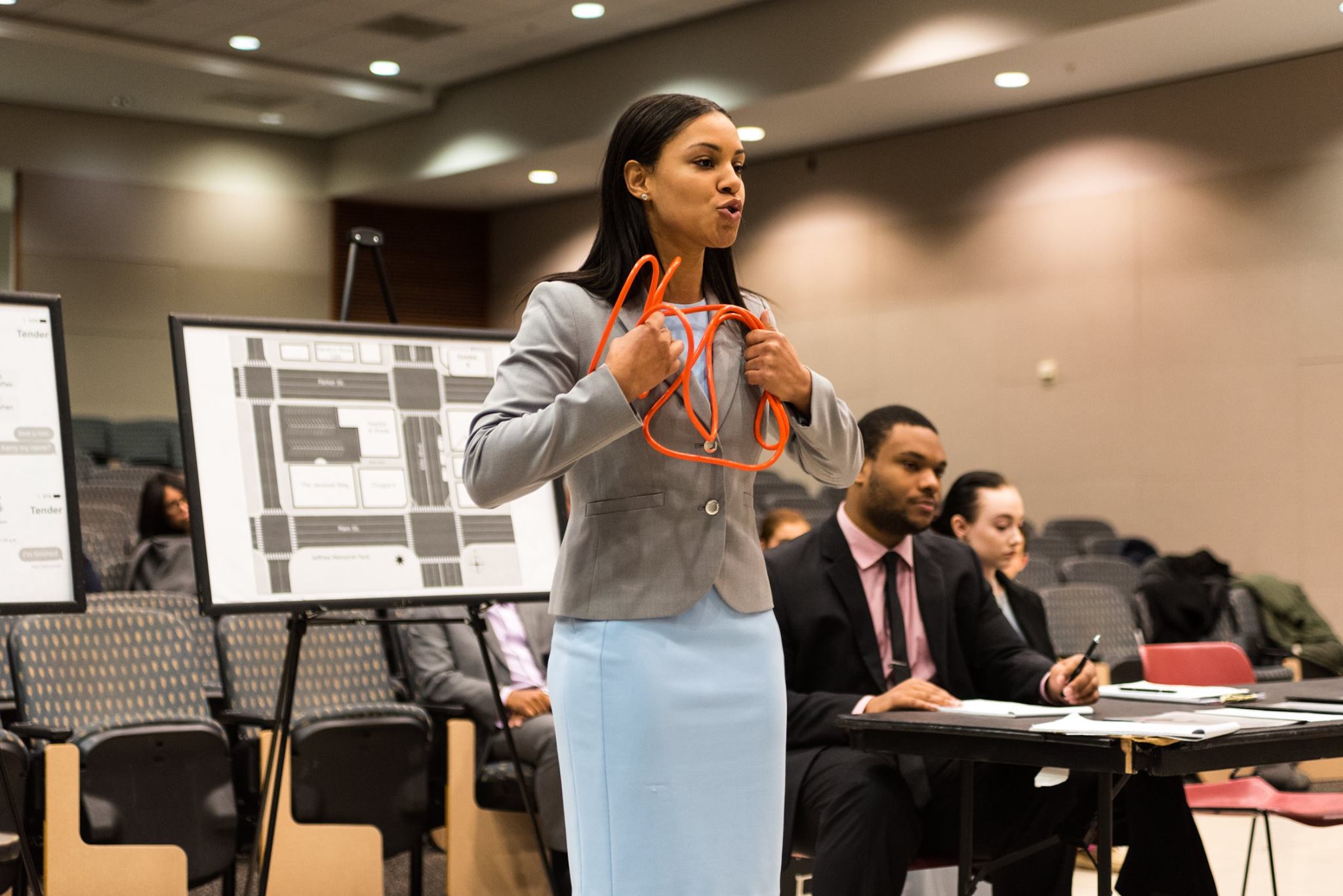
Young woman stands wearing a blue dress and gray blazer, delivering remarks while holding a prop
Sydney Gaskins competes for UMBC Mock Trial in 2019.

Among Gaskins’s dozens of honors is an All-American Attorney award from a prior AMTA National Championship Tournament. She also earned Best Cross Examination honors and was named a finalist in the 2020 Drexel/UCLA Trial by Combat competition. Anzari can’t wait to see what she achieves in her final season of collegiate competition.

UMBC Mock Trial’s four witnesses are also essential to the team’s success. “We have four of the most likable witnesses in the country,” says Azari. 

Two of those witnesses are freshman Maria Kutishcheva, political science and Russian, and sophomore Zinedine Partipilo Cornielles, political science and financial economics. Partipilo Cornielles describes the UMBC Mock Trial team as a family. To him, the team’s sense of connection allows them to play on each others’ strengths and performances.

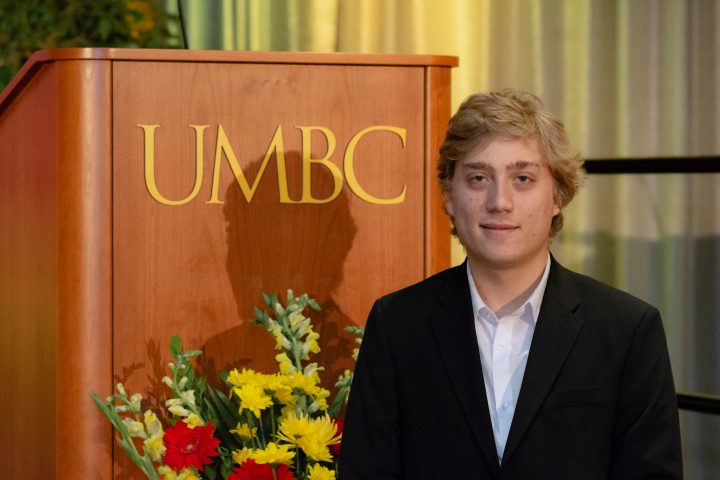
Young man with blonde hair stands in front of podium reading
Zinedine Partipilo Cornielles. Photo by Arionna Gonsalves ’19.

“We act as a unit, as a team,” says Partipilo Cornielles. “We’re all parts of this moving mechanism. The fact that we are a family really helps us and sets us apart from other teams. Some other teams might be too individualistic, but one thing we are really lucky to have is this sense of teamwork.”

Focus on the team

For each member of UMBC Mock Trial, the focus is always on the team. Even in the individual Trial By Combat 2020 competition, Gaskins shared, “The virtual tournament was not only a much needed opportunity to reconnect, but to also make my team proud.”

Screenshot of a Facebook post featuring a young Black woman in a purple dress, blazer, and pearls, She presents remarks in front of a burgundy wall.
Sydney Gaskins competes in Trial by Combat 2020.

Extending that idea, Kutishcheva points to inclusivity and supportiveness as strengths of UMBC Mock Trial. She explains that the team truly cares for one another, and members help each other out beyond team practice. 

Kutishcheva also appreciates the diversity of the team. She has noticed that some universities’ teams don’t reflect the racial diversity and diversity of majors on their campuses. “But UMBC’s diversity is reflected here on our team, and that makes me especially happy,” says Kutishcheva. 

Several young adults stand on steps in front of a building with large pillars. They hold a sign reading
UMBC Mock Trial prior to competing in ORCS in 2019.

“I genuinely believe that this team is a uniquely UMBC story,” says Garmoe—a story of inclusive excellence. “I think, over the last five, six years, what we’ve grown into is a testament to what this school has built itself to be.”


Update 3/22/2021: UMBC Mock Trial has advanced to the AMTA National Championship Tournament, where they will compete April 16-18.


Featured image: UMBC Mock Trial’s 2017 trophies. Photo by Marlayna Demond ’11 for UMBC. All other photos courtesy of UMBC Mock Trial unless otherwise noted.

Article by Morgan Casey ’22, media and communication studies, for UMBC News.

UMBC rapidly expands live online peer tutoring to include computing fields

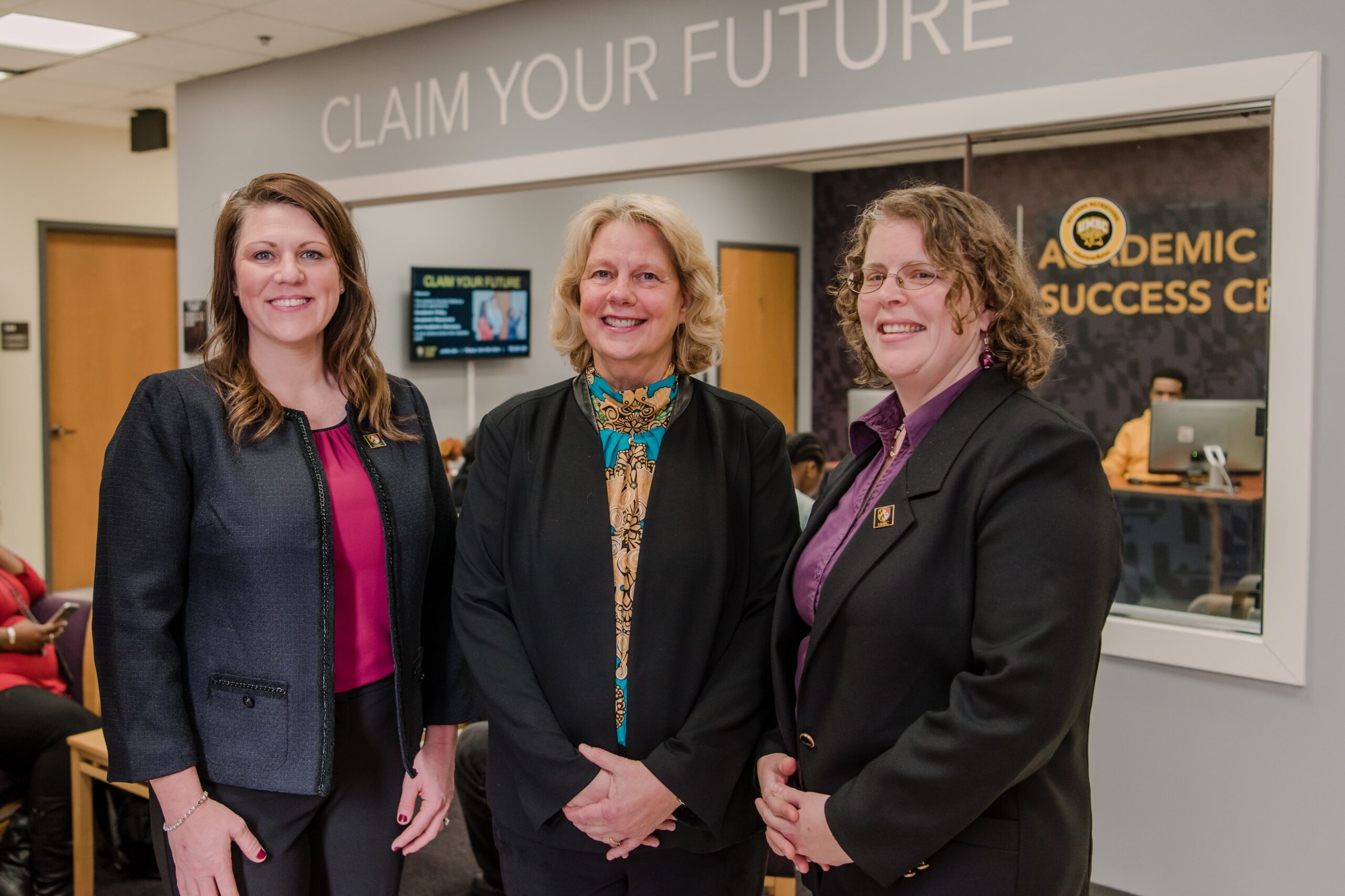
When Amanda Knapp heard last fall from Anupam Joshi, professor and chair of computer science and electrical engineering (CSEE), that his department wanted to offer online tutoring to students in their courses, she was ready to help make it happen. COVID or no COVID, she says, “It just made sense.”

Knapp is associate vice provost and assistant dean of Undergraduate Academic Affairs, and she manages UMBC’s Academic Success Center (ASC). “We already had an established system in place and could provide the administration, training, staffing, and assessment,” she explains. “CSEE provided the funding and identified potential tutors for a variety of computer science courses, and we did the rest.”

Just a few months after the partnership began, it expanded to include courses in the information systems (IS) department. And this semester, tutors are supporting ten IS computing courses.

Three woman in black blazers and dress shirts stand in an office lobby. Behind them a sign reads
Amanda Knapp, Katharine Cole, and Delana Gregg in the Academic Success Center, 2019

In total, the ASC’s new Computing Success Center now offers tutoring for 21 courses from across the College of Engineering and Information Technology (COEIT). And the center continues to grow, supported by COEIT Dean Keith J Bowman and Dean Katharine Cole, Undergraduate Academic Affairs.

Peer tutors help students of any major, from computing fields to the arts and life sciences, learn coding and other computing skills. 

“The ethos of UMBC is to share knowledge and collaborate with others instead of being proprietary,” says Helena Mentis, associate professor of information systems. Mentis is COEIT’s associate dean of academic programs and learning, and one of the College leads on the partnership.

“At the end of the day,” she says, “our goal at UMBC is to ensure that there are multiple pathways for students to get the assistance they need to succeed and remove any barriers for access to help.”

Portrait of smiling woman sitting in front of computer that features medical device imagery.
Helena Mentis

How it works

Students can now visit the website for the new Computing Success Center to access trained and faculty-recommended peer tutors at their convenience. And the tutoring isn’t just a series of online videos—it’s live and interactive.

Portrait of smiling young woman in front of virtual backdrop of an office.
Peer tutor Sumaiyah Mahmoodi ’21, health administration and policy, answers a student question online in front of a virtual background of the Academic Success Center. Photo courtesy of the ASC.

Britney Sarpong ‘21, computer science, taps into tutoring services twice a week for the CMSC 421: Operating Systems course she is taking. “I can easily log in and get help, and it’s usually the same tutor, so she and I have gotten to know each other really well,” she says. 

For the operating systems course, Sarpong is learning C programming, which she likens to learning a foreign language. “I am not familiar at all with the language and terms with C programming,” says Sarpong, “so my tutor explains it in a way that I can understand while I’m working on projects.”

Moving services online

The tutoring offered by the Computing Success Center is just one of the many student support services offered by the ASC that has transitioned online during the COVID-19 pandemic. “This has been essential to enable us to continue serving UMBC students,” says Knapp. 

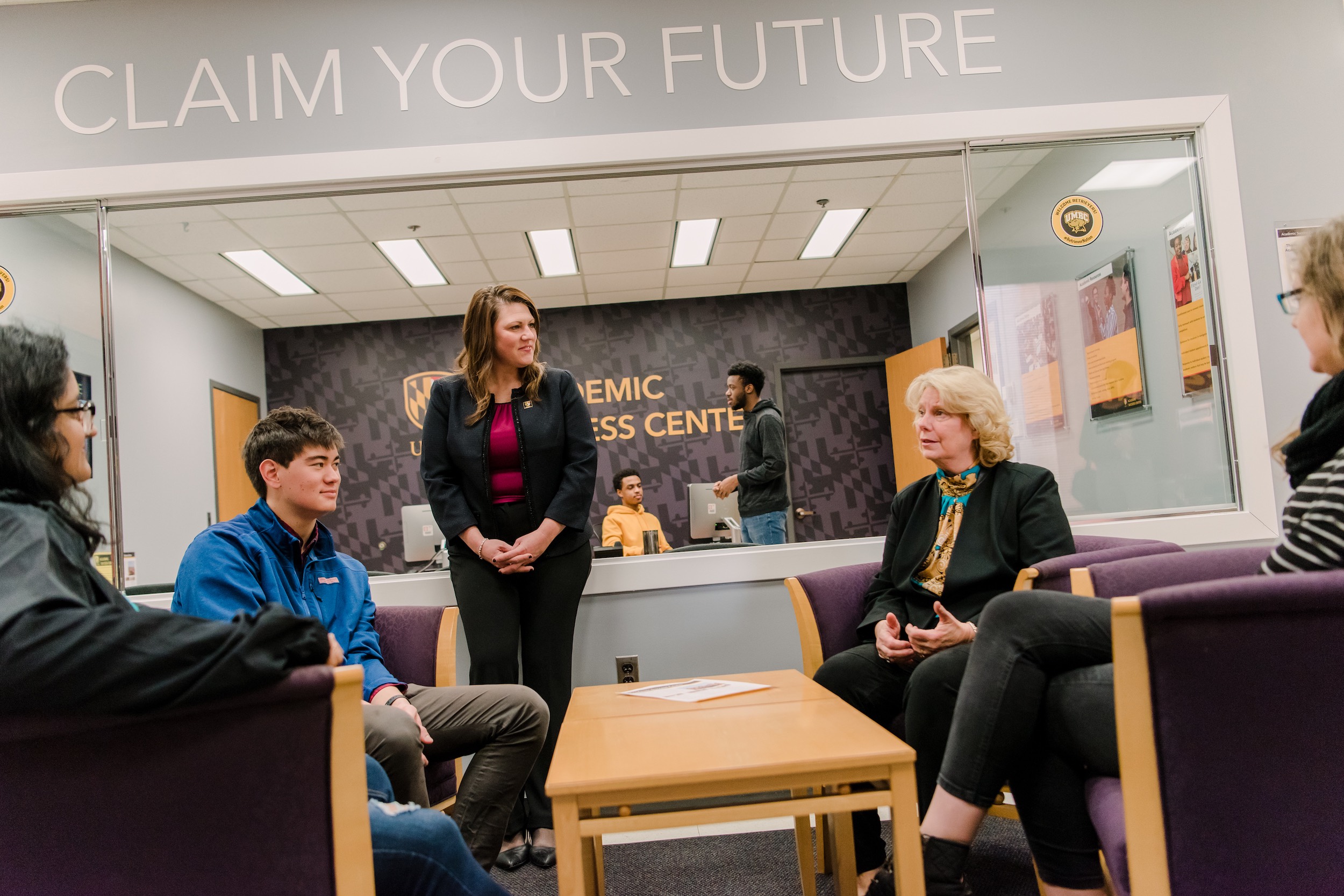
A group of people talks around a table. A sign above them reads
Amanda Knapp (standing) and Katharine Cole (second from right) speak with students in the Academic Success Center in 2019.

The Academic Success Center hires around 200 students to provide peer support each year. In addition to being paid and getting teaching experience, these student tutors also access professional development training. 

Delana Gregg, director of academic learning resources, assessment, and analysis, says that the student tutors are integral to many of the services offered by the ASC. 

“Faculty members recommend a student who excelled in a particular course. Then we train them on the technology and identifying strategies to help fellow students better understand the course content,” says Gregg.

The ASC provides tutoring in a range of formats, from appointment tutoring to drop-in tutoring, in the Computing Success Center, Writing Center, and the Math and Science Tutoring Center. In Fall 2020 alone, students attended over 3,000 tutoring appointments across all formats.

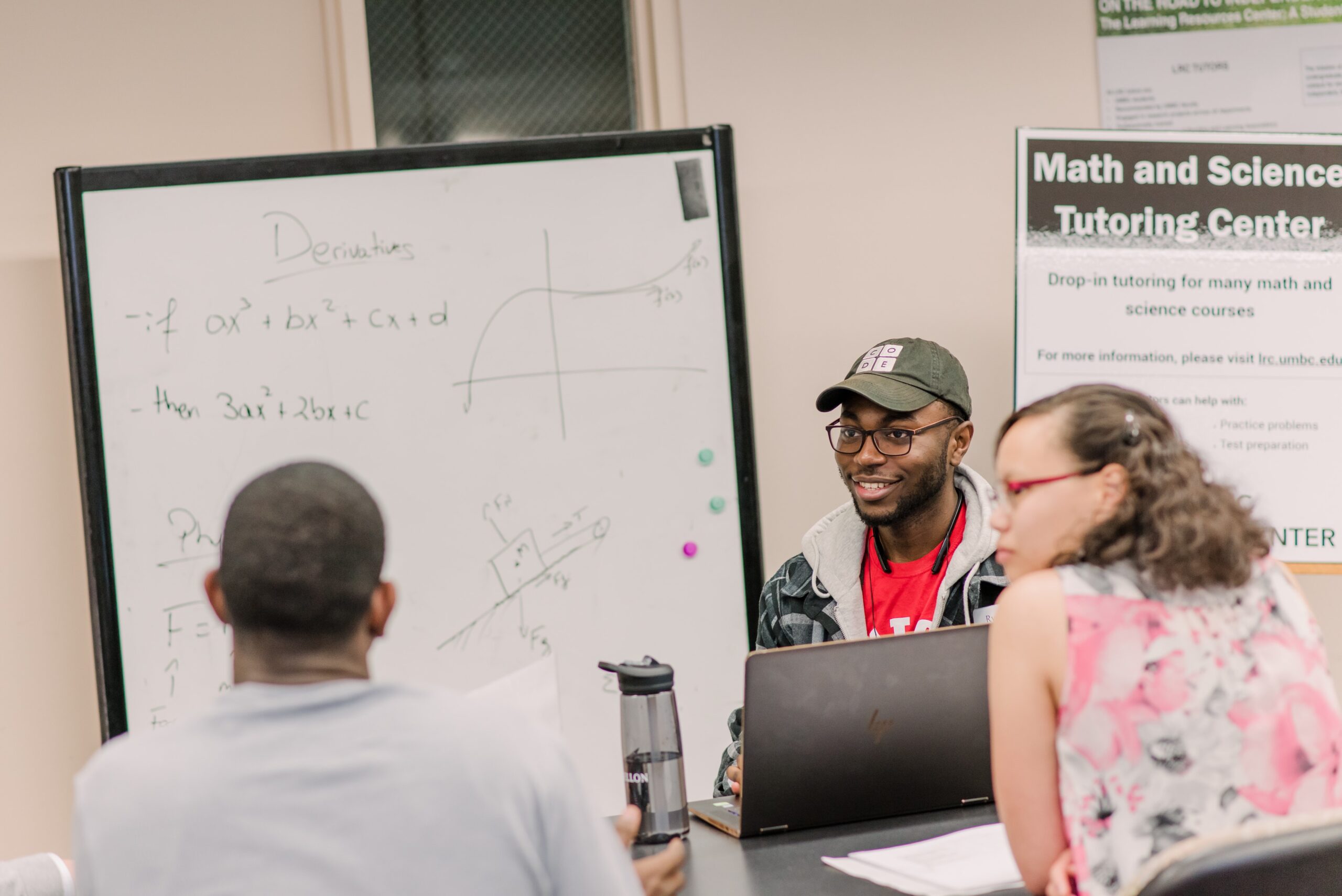
Three students gather around a table, talking, with math equations written on a board. A sign reads
Math and Science Tutoring Center session through UMBC’s Academic Success Center, 2019.

Gregg adds that peer-assisted study sessions (SI PASS) remain the most popular service utilized. “These are for courses that are historically difficult for students, often in the STEM areas,” she says. “SI Pass Leaders are students who have taken a particular course before. They attend the course again, take notes, and then hold weekly study sessions for current students.” 

Emphasizing student success

The ASC also offers online learning resources for time management and study skills and academic alerts from faculty to students who are struggling in a course, to connect them with support. And the center is known for its academic advocates. They provide holistic support for students facing barriers to their academic success. These may include personal, academic, or financial issues.

“Sometimes students are unable to ask for help, are unaware that they are struggling academically, or are dealing with stress. Their stress may involve really complicated and challenging issues like the pandemic or racial inequality,” says Knapp. “We make sure they are cared for and heard.”

Three young professionals stand together, wearing collared shirts and sweaters.
Academic Advocates (l-r) Amanda Sharp, Cliff Saul, and Carlos Williams in 2019.

“UMBC students are very special, and here it’s cool to be smart,” says Gregg. “We have a large percentage of first-generation students who are very motivated to succeed, and the culture on campus emphasizes student success.”

Work like the partnership between COEIT and the Academic Success Center—where faculty and staff identify a problem and quickly partner with students to find a solution—is key to supporting student success. 

Mentis shares, “The collaboration was so welcomed by faculty, department chairs of CSEE and IS, and Dean Bowman. In my time here, I believe it was the fastest initiative ever completed. Everyone said, ‘yes.’”

Banner image: Amanda Knapp speaks with a student in the ASC in 2019. Photos by Marlayna Demond ’11 for UMBC unless otherwise noted.

Article by Gregory J. Alexander for UMBC.

New UMBC-UMB collaborations include research to reduce stress among long-term care workers

A strategic research alliance between UMBC and the University of Maryland, Baltimore (UMB) has selected four new interdisciplinary projects, each a fresh take on a complex challenge. 

The Accelerated Translational Incubator Pilot (ATIP) Program funding this work brings together UMBC’s strengths in areas like cybersecurity, data science, artificial intelligence, statistics, and the social sciences with UMB expertise in medicine, pharmacy, nursing, and dentistry. The two universities have worked together on various shared graduate and research programs over the last decade. This partnership with UMB’s Institute for Clinical and Translational Research (ICTR) was launched in August 2019, and faculty have been quick to jump on the opportunity to pursue novel collaborative research.

“The UMB-ICTR is thrilled to partner with UMBC,” says ICTR Director Stephen N. Davis, chair of medicine at UMB and physician-in-chief at the University of Maryland Medical Center. “The ATIP grant program supports top quality clinical and community-based collaborative projects. The grant applications from UMBC are particularly innovative and exciting, scoring very highly in the review process.”

“All of the ATIP proposals are subject to a very rigorous internal peer review process,” says Karl V. Steiner, vice president for research at UMBC. “Their success is a strong indicator of the quality of the intellectual contributions of our faculty at UMBC.”

Meaningful research relationships

“A key goal for this strategic alliance is to develop meaningful partnerships among researchers at both institutions and to establish teams with complementary expertise,” Steiner explains. 

Since early 2020, UMBC faculty have secured a total of 12 ATIP awards. This most recent round of UMBC grant recipients includes Lujie Karen Chen, information systems; Lira Yoon, psychology; Chein-I Chang, computer science and electrical engineering (CSEE); Yi Huang, mathematics and statistics; and Tinoosh Mohsenin, CSEE. UMB collaborators include Kelly Doran, School of Nursing; Mathangi Gopalakrishnan, School of Pharmacy; and Michael Domanski and Mohammad Sajadi, both of the School of Medicine. 

The four new awards granted in this round focus on a broad range of topics: using machine learning algorithms for transfusion risk assessment, evaluating the effects of serum lipid levels on the progression of renal dysfunction, using a multimodal sensory machine learning framework to diagnose COVID-19, and examining how to predict and manage stress in healthcare workers who work in long-term care facilities. 

These types of sustained partnerships help researchers gain insight into new fields and work with experts with whom they might not have otherwise collaborated, to generate novel findings.

Measuring stress to manage stress

Headshot of woman wearing aqua sweater
UMB’s Kelly Doran

So, what does interdisciplinary research actually look like?

For the long-term care workers pilot project, Chen, Yoon, and Doran combine data science, clinical psychology, and nursing. From May 2021 through April 2022, they will examine workers’ experiences of job stress in long-term care facilities using both physiological and qualitative measures.

The challenges posed by COVID-19 have sharpened the team’s interest in supporting longer-term care workers through research.

Headshot of woman wearing glasses, cream blazer and pink shirt
UMBC’s Lira Yoon

“Their work has always been important, but especially given the pandemic, the importance of their work has really been highlighted,” says Yoon. “It’s a demanding job with high stress, and that’s reflected by high job turnover, which is not good for the clients at long-term care facilities.”

The goal of the project is to better identify stress triggers within moments of them happening. This could enable workers to address their stress before it gets to a higher level where it can negatively impact their health and work. 

Stress monitoring in action

To identify stress on a more moment-to-moment basis, the team plans to use a combination of surveys and sensors to track exact times when workers become stressed in their workday.

Workers will wear the sensors throughout their shifts to measure heart rate and electrodermal activity, and will fill out surveys five to seven times per day. They will also complete end-of-day interviews to identify additional stressors and other critical information not captured by the surveys.

Information from the surveys and interviews will help the researchers to decipher data obtained from the sensors to understand stress triggers.

“Eventually, we want to be able to just use sensor data to be able to tell whether long-term care workers are about to experience stress or not,” Yoon says. With this knowledge, researchers can then design interventions to improve the work environment, Chen explains, to reduce stress triggers and stress experiences.

Once the pilot project is complete, the team hopes to undertake a larger scale study to collect data from multiple long-term healthcare sites. 

Headshot of woman wearing aqua sweater
UMB’s Kelly Doran

This work wouldn’t be possible without all three researchers bringing together their diverse expertise and perspectives. As Doran says, “The collaboration provides a support system for us to build relationships and kind of cross-train each other and build off each other’s ideas.”

“One of the reasons I love doing collaborative research,” she shares, “is because you’re expanding your networks and research to make meaningful differences.”

Article written by Allison Matyus for UMBC News.

Low-cost infant incubator developed at UMBC completes successful clinical trial in India

Innovative technologies don’t have to be expensive or complicated. 

UMBC’s Govind Rao, professor of chemical, biochemical, and environmental engineering and director of the Center for Advanced Sensor Technology, has been developing a low-cost solution to improve the care of babies born prematurely. 

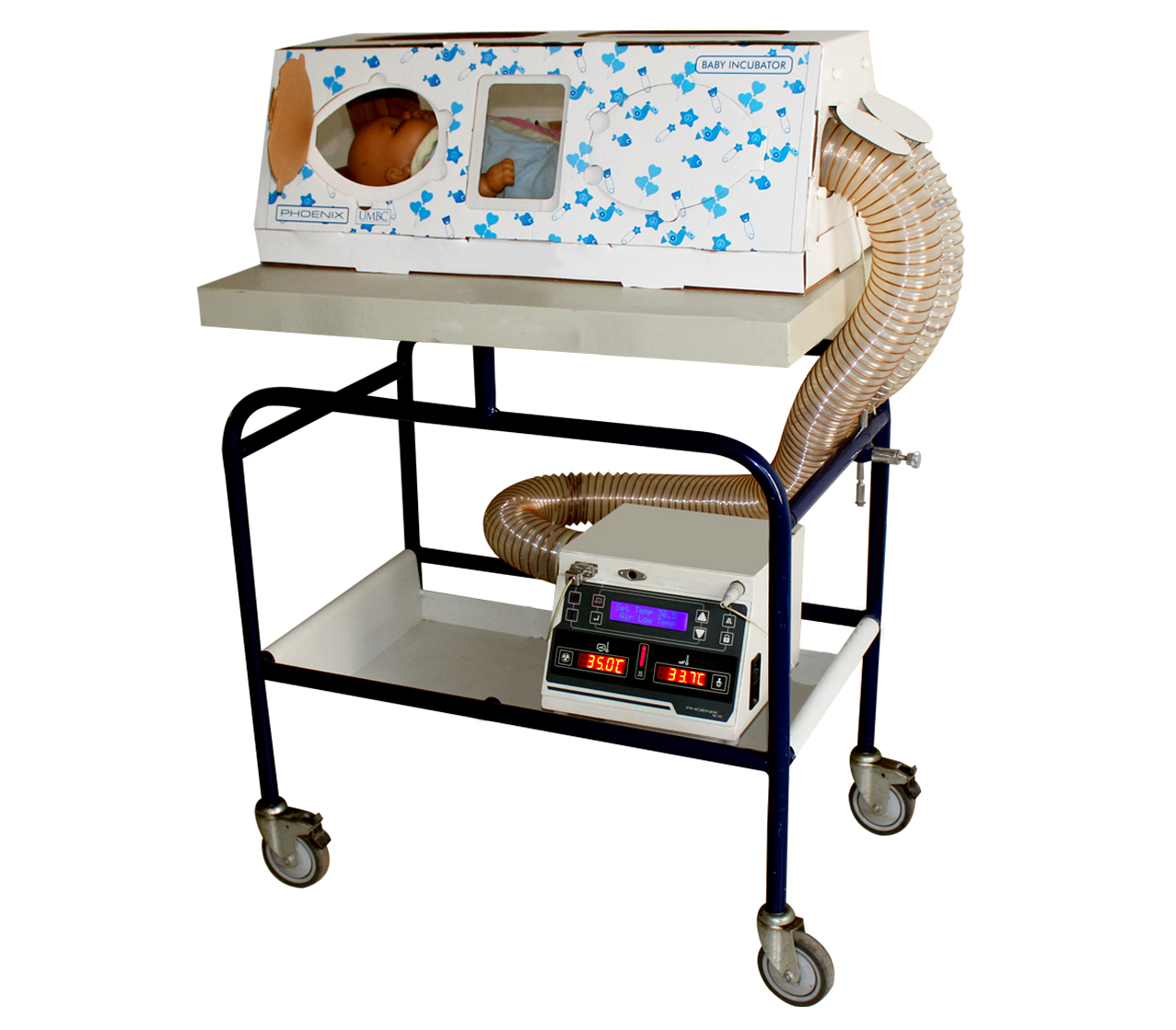
A standard incubator found in a newborn intensive care unit costs between $1,500 and $35,000—beyond the means of many hospitals in low- and middle-income countries. Public impact research initiated by Rao and UMBC students has culminated in the successful clinical trial of an incubator that costs only $200.

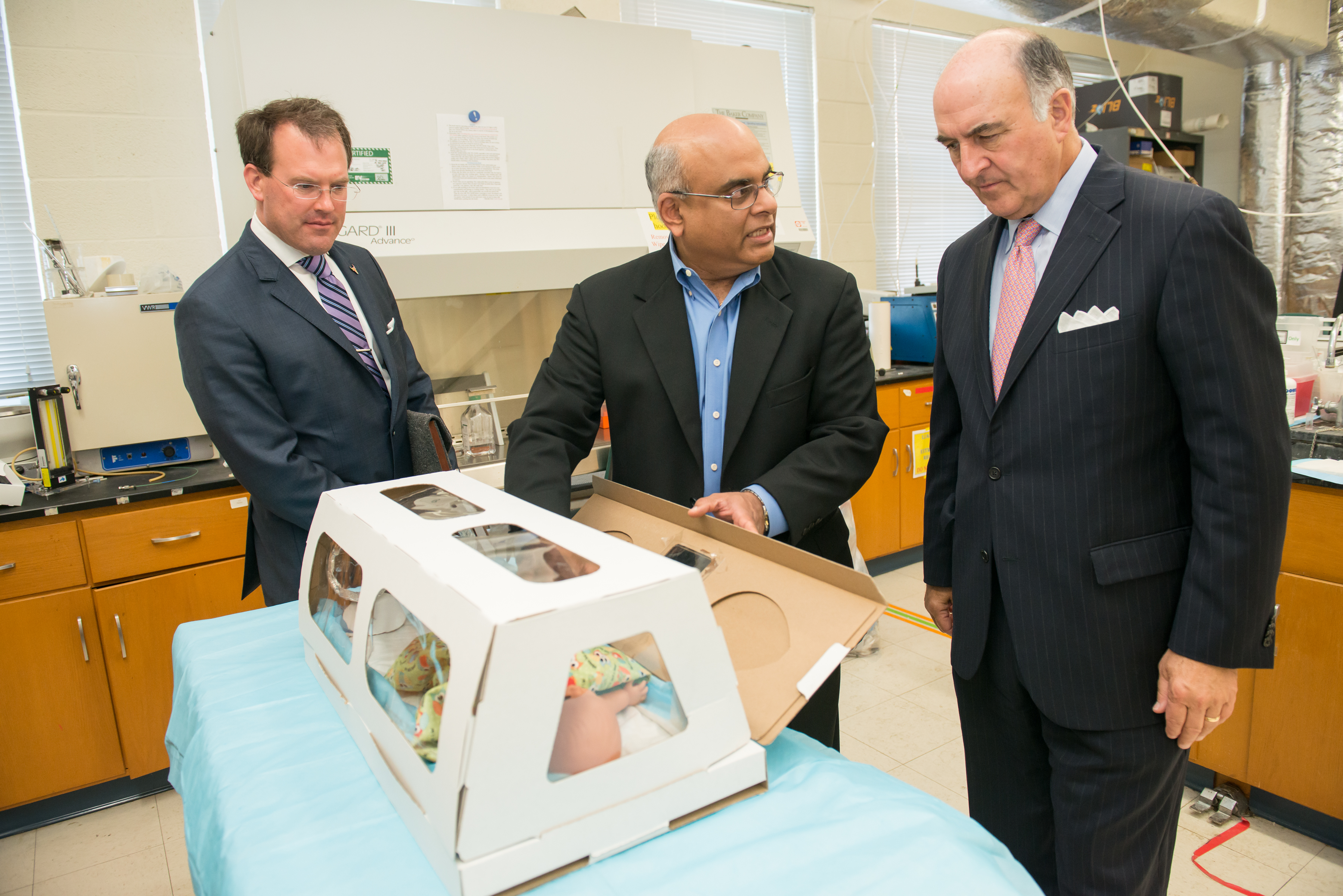
Three men in suits are in a lab gathering around a table looking at a cardboard box with a baby doll inside simulating an incubator.
Govind Rao, center, presents a prototype incubator to then-Maryland Secretary of Commerce Mike Gill in 2017. Photo by Marlayna Demond ’11 for UMBC.

“This will be a game-changer,” says Rajeev Seth, managing trustee of BUDS, a nonprofit that advocates for the health and welfare of children in India. 

Student project beginnings

The low-cost incubator traces its roots to a UMBC course on sensors in 2011. There, Rao asked students to come up with solutions for real-world problems. Kevin Tran ’12, chemical engineering, was part of a team that designed a low-cost infant incubator. He continued on the project that summer. 

“As an engineer, [when] you start something, you can’t leave it half-finished,” Tran says. He and his teammates tested out prototypes built with different materials, like wood and PVC. The team ultimately took a trip to India to visit various healthcare settings and receive feedback on their design.

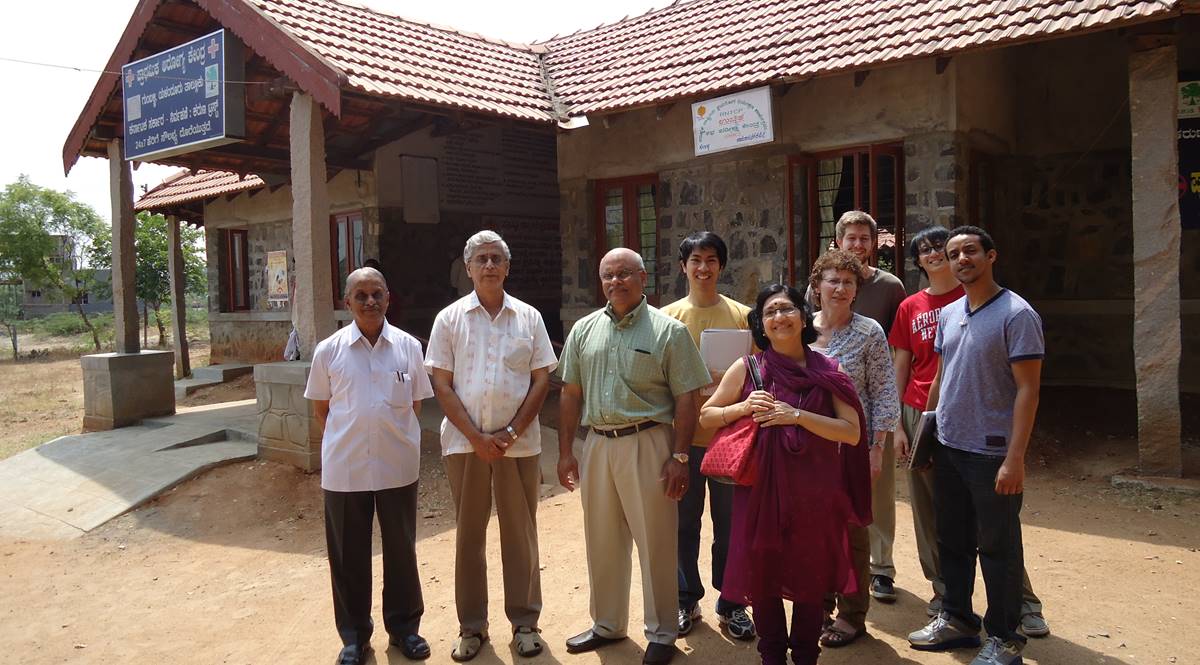
A group of nine people of different ages stand in a group in front of a one floor stone house with terracotta
Govind Rao, third from left, with UMBC students and research partners, during a trip to India. Photo courtesy of Kevin Tran.

The students encountered facilities that faced frequent power outages and lacked resources they’d taken for granted in the U.S. One healthcare center had broken incubators that sat unused, Tran says, because they couldn’t be maintained, even if it was a simple fix.

The team was accompanied by Geetha Mohanram, a retired elementary school teacher who acted as a translator. Mohanram now lives in the U.S. but is from Karnataka, one of the areas the team visited. She bridged the gap between the engineers and the nurses and doctors, not only through fluency with the local dialect, but also because of familiarity with the local culture. This helped the UMBC team access the medical staff’s observations and insights.

Feedback gathered during the trip guided updates to the design, such as smaller dimensions and cardboard construction for single use. The design work culminated in a paper published in the Journal of Laboratory Automation in 2014. It provided recommendations for a prototype suited to a clinical trial.

Cardboard incubator in action

An updated version of the cardboard incubator has now proven successful in a clinical setting. In an EClinicalMedicine study, published by The Lancet, the low-cost incubator maintained the body temperatures of premature babies as well as a more expensive, standard incubator over 48 hours.

The low-cost incubator is made up of a cardboard chamber, designed to be disposed of after use by one infant, and a reusable heating unit. The cardboard packs down flat, so it can be easily transported. It is straightforward to assemble—almost like a pop-up book, Rao says.

Careful monitoring

The clinical trial was a collaborative effort supported by the U.S. Food and Drug Administration. Subawards supported Phoenix Medical Systems, which provided the cardboard incubators, and researchers at Sri Ramachandra Institute of Higher Education and Research (SRIHER), who conducted the study.

The study involved 96 preterm babies, ranging from 32 to 36 weeks old, without health complications. By limiting the clinical trial to babies that were relatively well, the researchers were able to focus on the performance of the incubators, says Ashok Chandrasekaran, associate professor of neonatology at SRIHER. 

The babies spent 48 hours in either a standard or cardboard incubator, with continued monitoring by medical staff. Skin sensors tracked the babies’ temperatures. They raised alarms if temperatures deviated over half a degree Celsius (0.9 degrees Fahrenheit) from 37 degrees Celsius (98.6 degrees Fahrenheit). Nurses also checked the infants using underarm thermometers every four hours and adjusted the incubator temperature as needed.

A black and white rectangular push cart with two levels carries a card board box with small blue flowers on the front of the box. Inside the box is a baby doll. A plastic ribbed tube is inserted into the end of the box that connects to a digital medical monitor box beneath.
A prototype of Rao’s cardboard incubator. Photos courtesy of V. Sashi Kumar.

There were cases where the babies’ temperatures were slightly low with both incubators, as well as several instances of mild hypothermia. But, overall, the performance of the low-cost incubator was on par with the standard incubator.

Avoiding hospital-acquired infections

The surfaces of the low-cost and standard incubators were disinfected daily, but in two cases the standard incubator harbored bacteria responsible for hospital-acquired infections. None of the low-cost incubators were positive for surface bacteria. The disposable nature of the cardboard incubator would also prevent infectious outbreaks, since each chamber would only be used by a single infant. 

“One of the major killers of preterm babies in developing countries is infection,” Chandrasekaran says. “Especially hospital-acquired infections.”

Future studies will assess how well the low-cost incubator performs over longer periods of time and whether premature babies continue to gain weight, says Binu Ninan, director and professor of neonatology at SRIHER. Future iterations of the incubator could include sensors to track babies’ weight and cameras to monitor babies more closely.

“You don’t necessarily need to have very expensive interventions to improve outcomes,” Rao says. “You can come up with something simple that works, that can have a huge impact.”

Banner image: “Happy Foot” by Natesh Ramasamy, Flickr CC BY-NC 2.0.

Article written by Jack J. Lee for UMBC News

UMBC international students build community online during COVID-19

A young woman stands outside learning on a metal rail next to a body of water with buildings behind her. She is wearing a dark grey winter jacket with a red hat.
Kirthana Kolekar.
Photo courtesy of Kolekar.

Graduate student Kirthana Kolekar began volunteering as one of UMBC’s first Global Ambassadors in summer 2020. It was a time of incredible stress. COVID-19 made personal connections challenging, federal policies for international students were in limbo, and her family was thousands of miles away in India. But serving as a resource for UMBC international students living abroad helped her feel a strong sense of purpose.

Then, in the fall, everything changed. Kolekar’s mother suddenly passed away from COVID-19 and she flew from Baltimore to Bidar, India, to be with her family. Through it all, she says, she felt supported by her UMBC community. Faculty, classmates, and fellow ambassadors reached out to offer support, as she had reached out to others before. 

Kolekar ‘21, information systems, says, “They kept asking: ‘How are you doing? Do you need any help?’” And that mentality—proactively being present for a person half-way around the world—is what the Global Ambassador Peer Mentor Program is all about.

Year of rapid growth

UMBC’s Global Ambassador Program began with a few volunteers connecting with fellow students online. In less than a year, it has quickly grown into a fully-fledged, paid leadership opportunity for UMBC international students living in Baltimore to connect with peers around the globe.

Ambassadors provide peer support that transcends borders. They host panels, facilitate webchats, lead presentations, conduct workshops, and guide newly enrolled students, all online. And when, as COVID-19 recedes, more new international students can physically come to campus, they look forward to welcoming them in person.

“The mission of the Ambassador Program is to ensure you feel connected with your peers as soon as you become a part of the UMBC community,” says Natalie Lobb, a UMBC international student support specialist who oversees the program’s day-to-day operations. “It’s important to know that you are never alone, that you always have someone you can lean on.”

‘They are new, just like I was’

A young woman with long black hair wears a grey sweater smiles at the camera with a wall of pink and white flowers.
Nastaran Azar. Photo courtesy of Azar.

Even in a typical year, international students face distinct challenges adjusting to campus life. “Everything was completely different,” says Nastaran Azar, a junior biology major and Global Ambassador, recalling her first semester.

Daily assignments and regular tests at UMBC were a shift from the semesterly exams in Azar’s native Iran. Outside the classroom, she had to navigate getting an apartment, a job, and a driver’s license. 

Azar had two older brothers already living in Baltimore, but she realizes other students often don’t have such connections. “They are new, just like I was—uncomfortable and feeling like they don’t know how to do anything. I hope I can help them all to be comfortable and find friends,” she says. 

A young man with short cropped hair wearing black rimmed glasses and a checkered corral and blue shirt.
Dmitry Pankratov. Photo courtesy of Pankratov.

Ambassador Dmitry Pankratov recalls how jarring it felt to move from Moscow to Maryland five years ago—and that was without COVID-19 closures. “I understand how awful it can be when you have just come to a new place, and you don’t have anyone around,” the data science master’s student says.

Incoming international students have a litany of questions for ambassadors—everything from how to file taxes to where to buy their favorite foods. “What kind of masalas, what are the ranges in prices, what spices do you need to bring from your home country,” Kolekar lists off, before the self-described foodie adds: “The taste slightly differs!”

Given the global pandemic, ordinary challenges quickly become complex. With that reality, receiving outreach has proven instrumental in connecting international students with university life. 

Building relationships

The Global Ambassador Program has found ways to foster community as students study remotely. Many of the ambassadors lead webinars teaching students how to continue engaging in university life. One will focus on the university’s award-winning Bollywood fusion dance team, Adaa. Others spotlight UMBC resources, such as virtual gaming options accessible now and the Gameroom available for students when they eventually come to campus. 

Pankratov has spoken about UMBC’s chess club at past events. He plans to deliver a session about the running club next. He’ll focus on the best trails in Maryland and how UMBC students can keep each other motivated while exercising safely outdoors. 

“We have special training and people who can guide you, because when you’re just starting, it’s very hard to understand your own physical limitations,” Pankratov says. “It’s team building. You talk with people, get acquainted. Even with COVID-19, you can share your pace and time with others.”

Expanding horizons

UMBC already has a global feel, with international students making up nearly eight percent of the overall student body and a quarter of graduate students. The Global Ambassadors Program enables international students to benefit from connecting with fellow UMBC students from around the globe even if they can’t say hello to each other on Academic Row. 

Three young adults smile at camera, holding pennants that read UMBC Retrievers
Students at the Center for Global Engagement 2019 international student orientation. Photo by Marlayna Demond.

Students build trust with one other in the program, Azar says, helping them form homes away from home. They also come to understand themselves and the world in new ways. Kolekar, an aspiring business analyst, says making friends with a diverse set of viewpoints is reframing how she’ll approach her career.

Pankratov marvels at how he has met students from all across the globe, from India and China to Ecuador. “We all have different schools of thought, of literature, and so it just enlightens,” he says. “With this program, I can make friends with people who I never knew existed before.”

Banner image: Flags of the world in the UMBC Commons. Photo by Marlayna Demond ’11 for UMBC.

Article written by Nick Ford for UMBC News.