All posts by: UMBC News Staff


MAP Exhibition Features Nicole King, American Studies, and Stephen Bradley, Visual Arts

Beginning next month, the Maryland Art Place will host the exhibition Oasis Places, featuring the work of five artists, including collaborative work by Nicole King, American Studies, and Stephen Bradley, Visual Arts.

Bradley states that the collaborative, inter-media art piece consists of multiple parts including Place Immersion which, “reframes an industrialized community in Baltimore City called Greater Baybrook by homaging the lost neighborhood and it’s remnants of material culture, including photographic travel archives and field recordings of voices, stories and sounds of the existing place.” The writings of Nicole King are meant to “punctuate the transitional spirit of the [Baybrook] community so similar to other industrialized places in the world.” The result is a hybrid and comprehensive website, MappingBaybrook.org, that makes its debut on the evening of the opening.

Oasis Places opens Thursday, May 9 from 6-9 pm, with a panel discussion from 6-7 pm. The exhibition continues through Saturday, June 22

This work is the culmination of a project which began with the help of a 2010 summer fellowship granted by the Imaging Resource Center. Since then, King and Bradley have continued to work in Baltimore’s Brooklyn-Curtis Bay neighborhoods.

Carlyn Thomas ’13, Visual Arts, First UMBC Art History Student to Curate Exhibition for Thesis

ThomasShow

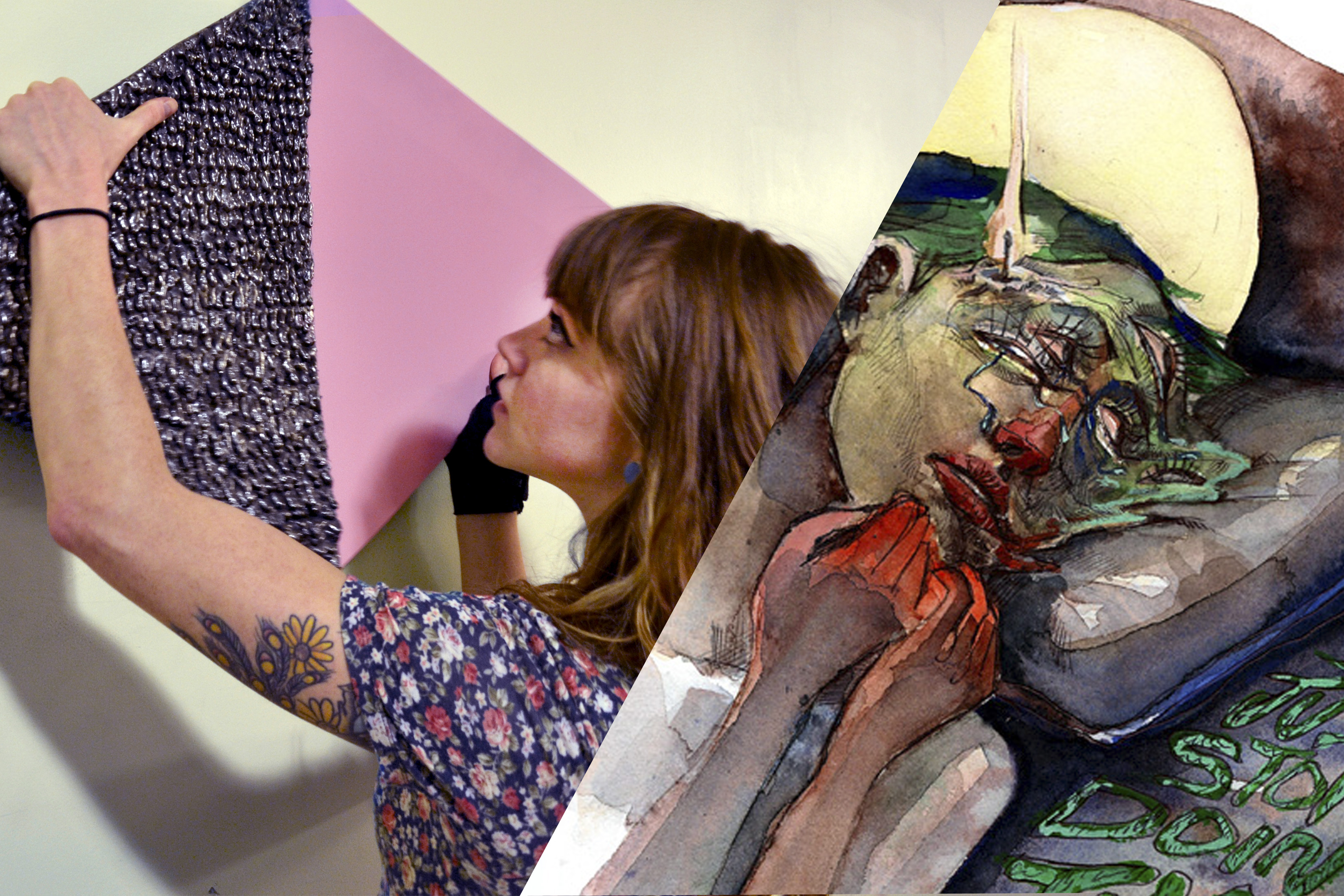
Carlyn Thomas ’13, visual arts, is curating an art exhibition as part of her senior thesis project, and will install the show, Out of Mind, in Gallery 788. She is the first art history & museum studies student to independently curate an exhibition. Out of Mind, features artwork by eight contemporary artists who explore various states of mental distress including depression, self-harm, phobias and bi-polar disorder. Out of Mind will be on display at Gallery 788, located in downtown Baltimore, from May 2-11.

Thomas states that, “the artists featured in Out of Mind share a deep-seated desire to bring public awareness to the subject of human neuroses. Examining ways of coping with these ever-present difficulties these artists aim to strike chords of recognition in viewers about what it is to be human. The artists are rebelling against the fact that for too long these neuroses have been repressed and feared because of the archaic stigmas assigned to them. The works in the show make the point that these neuroses and personal instabilities are everyday realities that are within us all.”

An opening reception at 788, in which Thomas will give a curatorial talk about her thesis, will take place Thursday, May 2 from 7 pm until 11 pm. Gallery 788 is open Thursday and Friday, 3 pm to 7 pm, and on Saturday, Noon to 6 pm.

UMBC Graduate Student to Compete In U.S. Chess Championship

The 2013 U.S. Chess Championship has been scheduled for May 2 to 13 at the Chess Club & Scholastic Center of St. Louis (CCSCSL), and UMBC graduate student, Sabina Foisor, has been invited to compete.

Sabina, an international student from Romania and a Women’s Grandmaster, will be competing in her fifth consecutive U.S. Women’s Championship. She recently competed with the U.S. Women’s Team in the World Team Championships held in Astana, Kazakhstan and helped the UMBC Chess Team finish 3rd in the nation at the Final Four of Collegiate Chess the first weekend in April.

Good luck, Sabina!

Group Exhibition at Goucher College Features Visual Arts Faculty

Untitled (Iceburg 2), photography and digital montage, 2009, Calla Thompson

A group exhibition at Goucher College’s Silber Gallery, Hydroflow, is displaying the work of ten artists including UMBC visual arts faculty, Eric Dyer, Lisa Moren and Calla Thompson.

Hydroflow, centered upon works “that explore the multifaceted aspects of water,” opened April 9 and continues through May 19. A free artists’ reception will take place in the Silber, Friday, May 10 from 6 to 9 pm.

Learn more about Dyer, Moren and Thompsons’ works in the exhibition, at Goucher College’s community news publication In The Loop.

A New Context Featured on WAMU Art Beat

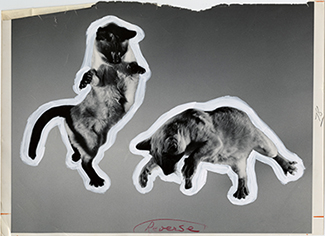
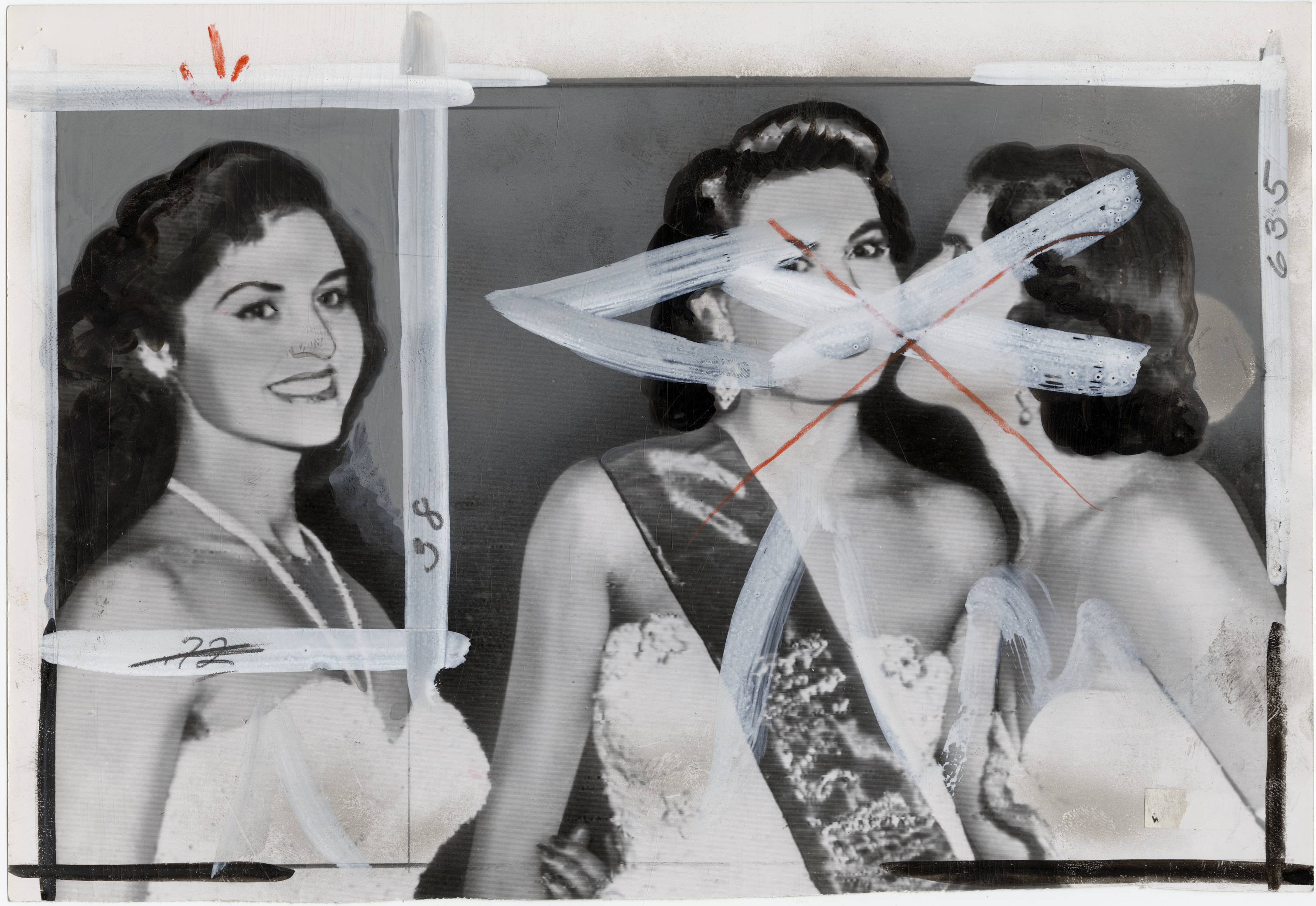
Thumb_Body Language 4This month, the WAMU segment Art Beat with Lauren Landau, a daily update of arts and culture events in the D.C. area, highlighted the exhibition currently running in the Library Gallery, A New Context: Photographs from the Baltimore Sun Revisited.

Listen at WAMU’s website.

A New Context is on display through Friday, May 31.

Amy Bhatt, Gender and Women’s Studies, on KUOW Seattle’s “Weekday with Steve Scher”

Amy Bhatt, assistant professor of gender and women’s studies, was recently a guest on KUOW Seattle’s “Weekday with Steve Scher” program.

Bhatt discussed her new book, Roots and Reflections: South Asians in the Pacific Northwest, in which she and co-author Nalini Iyer draw on oral histories from the South Asian Oral History Project at the University of Washington Libraries, archival material, and popular culture representations to explore the various routes that brought South Asians to the Pacific Northwest, their motivations for leaving their homelands, and their experiences upon arrival.

“We’re interested in thinking about how we can use the stories of contemporary immigrants to shed light on older histories of migration, as well as thinking about contemporary debates about immigration more generally,” Bhatt said.

The interview can be heard here.

Kate Brown, History, on Slate

A segment of associate professor of history Kate Brown’s recent book, “Plutopia: Nuclear Families, Atomic Cities, and the Great Soviet and American Plutonium Disasters,” was reprinted on April 18 in the online magazine “Slate” under the headline “Life in a Real Nuclear Wasteland.”

“In pop culture, irradiated wastelands are fascinating… Part of the fantasy is surviving alone in an abandoned place no longer fit for the living, but the sad fact is that there are irradiated zones that are fully inhabited, and have been since the first years of the nuclear arms race,” Brown writes.  “No one has lived longer on contaminated terrain than people in the village of Muslumovo in the southern Russian Urals located downstream from the Maiak plutonium plant, built in 1948 to produce Soviet bomb cores.”

Brown goes on to describe the conditions in Muslumovo, which often afflicted children: “hydrocephalic children, children with cerebral palsy, missing kidneys, extra fingers, anemia, fatigue, and weak immune systems.”

“[Soviet doctors] determined that radioactive isotopes weaken immune systems and damage organ tissue and arteries, causing illnesses of the circulation and digestive tracts and making people susceptible to conventional diseases long before they succumb to radiation-related,” she writes.

A New Context Reviewed by City Paper

sun01The exhibition currently in the Library Gallery, A New Context: Photographs from the Baltimore Sun Revisited, was featured in a City Paper article today. The favorable review of show, curated from UMBC’s Baltimore Sun Archives, was written by Joe MacLeod.

In the piece, MacLeod explores the exhibition’s ability to highlight a transformation in the responsibility of photography in the news, and comments on how biases of the time, revealed in the edited photographs, influenced reporting. He says of the blatantly prejudiced cropping and its effect on the picture as a whole, “[c]ontext is all, and history changes context and what we decide an image means.”

Read “Fit to Print” at City Paper‘s website.

A New Context continues through Friday, May 31.

UMBC Camerata in the Baltimore Sun

camerata01-sThe UMBC Camerata’s performance last Sunday with the Handel Choir of Baltimore was mentioned yesterday in a Baltimore Sun article by Tim Smith, praising the career of Handel Choir director, Linda O’Neal.

The concert performed, Johannes Brahms’ Ein Deutsches Requiem, was considered by the Baltimore Sun arts critic, Tim Smith, one that “sounded smoothly balanced and articulated with admirable quality.”

Constantine Vaporis, Asian Studies, on PBS Blog

Constantine Vaporis, director of the Asian studies program and professor of history, was featured in a blog post on the PBS blog “The Rundown.”  The post was entitled “For Hundreds of Years, Cherry Blossoms Are Matter of Life and Death.”

Vaporis said that as seppuku (ritual suicide) became a key part of the samurai’s Bushido code, the samurai “identified with the cherry blossom particularly because it fell at the moment of its greatest beauty, an ideal death.”

Manil Suri, Mathematics, on BBC’s “The Forum”

Manil Suri, professor of mathematics, was recently a guest on the BBC World Service program “The Forum” to discuss “Obsessions, new and old, in literature and technology.”  Joining Suri on the show, which was hosted by Bridget Kendall, were internet analyst and cyber-sceptic Evgeny Morozo and Spanish novelist and translator Javier Marias.

Suri discussed his recent novel, “The City of Devi,” in which the main character is obsessed with bringing a pomegranate to her missing husband.

“She feels that having this symbol almost will somehow lead her to her husband. And in a way it does tell her something about her marriage, but in a very unexpected fashion,” he said.

The guests also spoke about our obsession with technology.  “There’s this belief in technology and computers – these are going to really save us from having to think,” Suri said.

From UMBC to the World

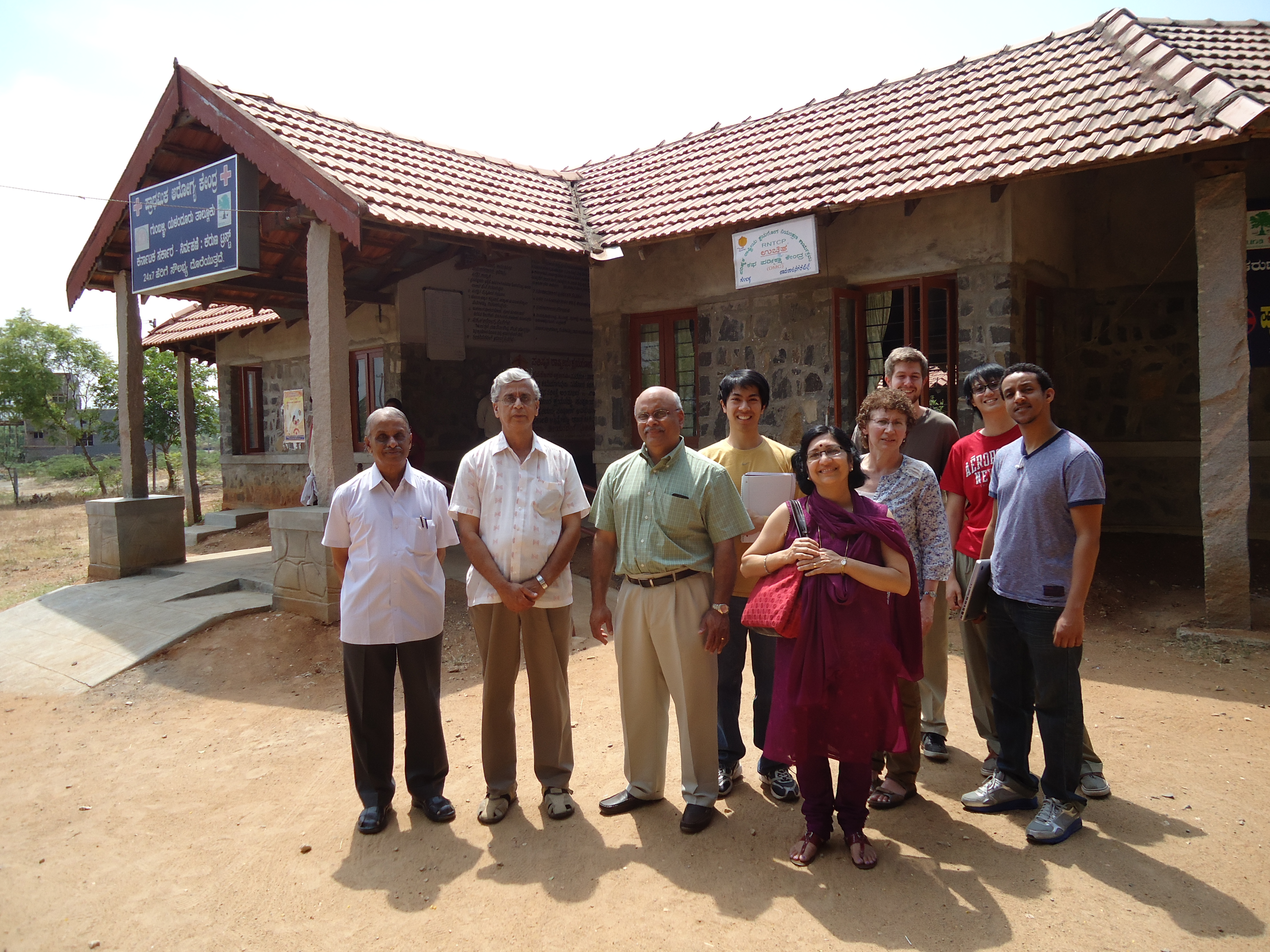
Over Spring Break, a group of Chemical, Biochemical and Environmental Engineering students, Aaron Gibson, Dagmawi Tilahun, Kevin Tran, and Don Wong, led by Professor Govind Rao, and accompanied by Dr. Theresa Good and Ms. Geetha Ram, went to India in order to get end user data for a low cost neonatal incubator the team is developing for use in resource-poor environments.

If you listen to the students, they’ll tell you the project started in Professor Rao’s 2011 Sensors class, a senior elective, where students learned that over 340 neonates die an hour in their first week of life, with 99% of those deaths occurring in low and middle income countries. Most of those deaths could be prevented if appropriate technology were available.

Professor Rao challenged the class to develop incubators that would work in these resource limited environments, where electricity might only be available for 8 hours a day, and salaries might be less than $6 a day. A few students from that class have continued to work with Professor Rao on this project funded by National Collegiate Inventors and Innovators Alliance which has culminated in the trip to India, where students met with rural health care workers in the Mysore region in Southern India, to ensure that they design a low cost incubator that will meet the needs of the local population. They visited several rural health care providers and have now partnered with an incubator manufacturer (Phoenix Medical Systems) and a health care provider (Karuna Trust) to take the concept to reality. Of course, we couldn’t leave India without seeing a few famous wonders of the world – the trip to the Taj Mahal was a gift from Professor Rao to the students and his colleagues. It was breathtaking.

DSC01324