The UMBC men’s soccer program was selected to finish fourth in the 2012 America East Conference race by the league’s eight head coaches.
The Retrievers placed fourth in the conference in 2011, earning a place in the six-team postseason tournament for the third consecutive year. UMBC had played in the league’s title game in both 2009 and 2010, winning the championship and advancing in the NCAA Championships in 2010.
An August 14 piece by Fan Yang, assistant professor of Media and Communications Studies, for FlowTV discussed the opening ceremony of the 2012 Summer Olympics in London.
“How London Responded to Beijing in the 2012 Olympics Opening Ceremony” contrasted the London ceremony with that of the 2008 Olympics in Beijing, noting that the Danny-Boyled production of July 27th “follow[ed] a rather simple strategy: whatever China did, we do the opposite.” These differences ranged from an individualist vs. collective ethos, to a comparatively light-hearted party atmosphere as opposed to 2008’s manifestation of “the [Chinese] Communist Party’s burning desire to be recognized globally” as a great power on the international stage.
Yang also detailed the reactions to the two ceremonies, pointing out that viewers were more ready to criticize China’s cermony, even as London’s contained some of the same issue. Yang concludes:
“Implicit is a commentary on the human cost of China’s rise, a display of mass subject that offers an opening to critique the real productive conditions of the information age. This representation of subjectivity stands in stark contrast to Boyle’s boy-meets-girl-via-cell-phone story. In that new-media-saturated narrative, the society of spectacle operates in full force: machine commodities displace social relations, screens blind players from seeing the game, and class consciousness is fragmented by the hidden codes of the communications network.”
UMBC students Edward Burroughs III ’15, education policy and political science, and David Murray ’14, economics, were featured this week in a Washington Post article: “Three college students running for school board in Prince George’s County.” The piece focuses on Burroughs, Murray and College Park student Raahela Ahmed as they prepare for the November election.
Of the three, Burroughs is the only incumbent, having become Maryland’s youngest elected official in 2010. Regarding his candidacy, Burroughs commented, “I love this county and I truly believe our school system can do better and must be better.”
Murray spoke of the role his UMBC education has played in his candidacy, saying, “I think being in college gives me a great perspective because the most important thing is that we graduate students from our [Prince George’s County School] system and make them ready for college. Unfortunately, we are not doing that like others in the state.”
Ellen Handler Spitz, honors college professor of visal arts, discussed author Betsy Rosenthal’s latest children’s book Looking for Mefor her monthly column in The New Republic.
The book follows its protagonist Edith Paul, the fourth of twelve children born to a working-class Jewish family, as she grows up in Baltimore during the 1930’s. Over the course of the short book, Edith experiences poverty, bigotry, and even death within the family as a sibling succombs to illness.
Spitz noted the Tolstoyan aspects of Rosenthal’s novel, drawing parallels with the seemingly inconsequential decision of a French corporal to re-enlist in War and Peace with the witnessing of Edith’s graduation, a moment in which the girl “learns that, like Tolstoy’s thousandth corporal, she matters.”
UMBC embraces the potential of all students to become innovative problem solvers, resource creators and boundary busters in their fields. Matching students with opportunities to learn through practice is one key way the Shriver Center helps them realize that potential.
This summer, nearly 700 UMBC students enrolled in the Shriver Center’s internship, co-op and research practica at sites across the United States. These experiences go beyond on-the-job skills training. They enable our students to articulate their passions, envision their futures, and break ground on unique professional paths—all while making a visible impact, whether they are at the White House or a Baltimore hospital.
Research Program Coordinator Carly Hunt of Johns Hopkins Bayview Medical Center writes, “Over the past several years, UMBC interns have contributed immensely to our research on psychological and psychosocial recovery following severe burn injury.”
In a 2012 Shriver Center survey, around 90% of respondents said that their placement increased the clarity of their career goals, their self-confidence and their ability to make decisions—essential qualities for effective agents of change in any field. Further, 77% wrote that their leadership skills improved as a direct result of their internship, co-op, or research experience.
UMBC students have applied this leadership in an incredibly diverse range of ways. They have worked with non-profits to lead community service initiatives and spread their organizations’ reach through media campaigns. They have made companies more efficient and effective at serving clients and have offered fresh insight on scientific research. They have broken down preconceptions and cultivated new partnerships.
Timothy Potteiger ’14, computer engineering, writes that his White House internship program “really adopted an entrepreneurial mindset encouraging everyone on the team to be proactive.” He was thrilled to hit the ground running and meet the office’s high expectations.
This is gratifying news for Christine Routzahn, Director of Professional Practice at the Shriver Center. Routzahn says, “Our goal is that all UMBC students engage in applied learning and graduate with the knowledge and experience they need to find empowerment and success in their careers.”
Here we feature student interns from across UMBC who are making tangible impacts on their fields and the world.
Andres Camacho
Interdisciplinary Studies, Spring 2014
Agent of Change, greeNEWit
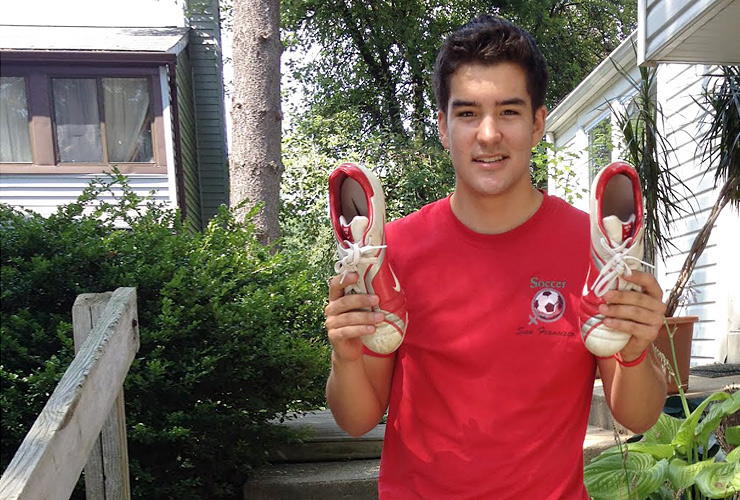
Camacho worked with greeNEWitan energy solutions firm that seeks to reduce energy consumption and promote sustainabilityto help launch the Cleats for Bare Feet and OUR Schools social initiatives. Cleats for Bare Feet collects second-hand athletic shoes and sporting equipment for distribution to children around the globe, from the U.S. to Haiti to Ethiopia. OUR Schools educates K-12 students about their power to influence environmental sustainability.
When you see the smile on the face of an orphaned boy from Ethiopia, when he tries on his new pair of soccer cleats, or you get a third grade class excited about sustainability, it really puts your work into context.
Nia Hampton
Media and Communication Studies, Spring 2014
Fundraising Initiative Intern, Station North Arts and Entertainment District
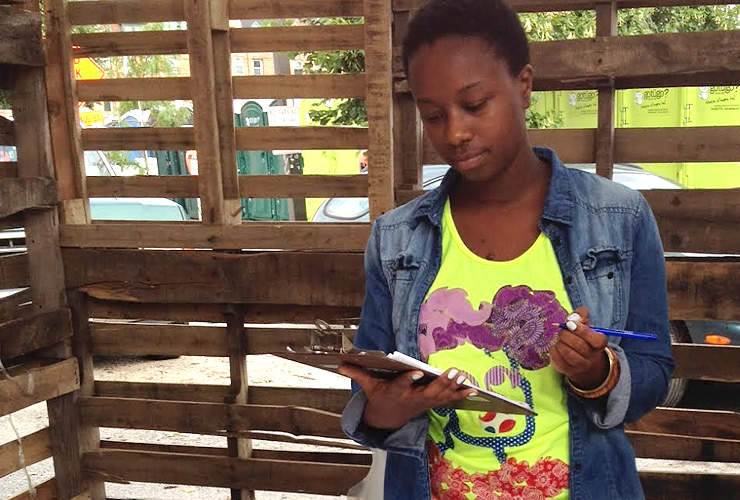
Hampton worked with Baltimores Station North Arts and Entertainment District, supporting their mission to create a place where artists and entertainment venues can flourish within a healthy, economically diverse residential community. She researched grant opportunities and helped plan and execute community arts programming. Hampton is most proud of a grant proposal that seeks to make summer art courses available to local elderly residents.
Ive learned the power of being from the same community youre trying to help. I dont need to go across the country or half-way around the world to make a positive impact, and I can use tools I already have to accomplish great things.
Samantha Hawkins
Anthropology and Interdisciplinary Studies, Spring 2014
Intern, National Geographic Society
As an intern with the Image Collection at National Geographic, Hawkins researched, labeled and catalogued images in preparation for online and print publication. She was challenged with the task of identifying people, locations and animal species from all regions of the world and all eras of history. Her detail-focused research has enabled National Geographic to share with the public powerful photographs that she hopes will inspire people to care more deeply for the world around them.
Ive always loved the idea of changing the world; Ive just never known how or really known anyone that has. My time at National Geographic has changed this perspective entirely. Every day I work with individuals whose mission is to inform others about our planet. Ive learned that every little bit of work helps and that making an impact doesnt come easily. It may take a lot of perseverance and a little luck, but it certainly is possible.
Joshua Kurikeshu
Information Systems and Visual Arts, Fall 2012
Project Lead Intern, General Electric
Kurikeshu interned at GE through the companys Information Technology Leadership Program, where he designed an automated self-service solution for GEs Active Directory group management. His work will help the company operate more efficiently and with greater security, and it will impact all seven GE divisions, from Aviation to Healthcare.
One of the greatest lessons Ive learned was how to take initiative. The ITLP internship has given me the ability to identify a problem and be the change to better the environment around me. It has also taught me how to use my most vital resourcepeople. I now know how networking can shape how much you can learn. The more you network, the more you learn, and the more you can impact the world.
Michael Lofthus
Media and Communications Studies, Spring 2013
Media and Multimedia Specialist Intern, American Friends Service Committee
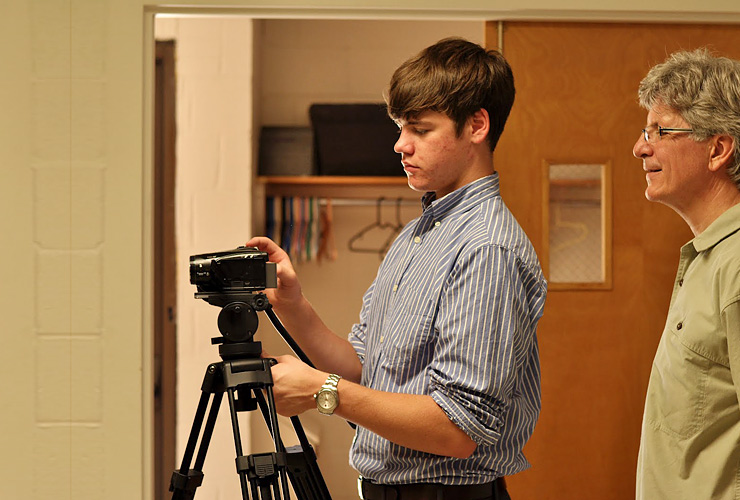
Lofthus worked as a media and multimedia specialist intern for AFSC, a non-profit committed to upholding principles of social justice, nonviolence and humanitarianism in the U.S. and abroad. He generated story ideas and developed and edited content for multimedia projects, outreach events, digital media and print materials, highlighting civil rights learning and youth empowerment programs in Baltimore and Washington D.C.
My experience has taught me never underestimate the power of the individual in a collective effort. With a little direction from the right people, any skill or talent can be harnessed to influence movements on a tremendous scale. In the presence of those who are passionate about their work, anything is possible.
Paulette Mensah
Health Administration and Policy, Fall 2012
Research Assistant, Hopkins Center for Health Disparity Solutions
Mensahs work at the Johns Hopkins Bloomberg School of Public Health focused on inputting and analyzing data for the Cultural Quality Collaborative. Through surveys of staff and patients, the CQC assesses the cultural competency of participating hospitals with the goal of alleviating health disparities. Through this placement, Mensah also attended the International Conference on the Health of the African Diaspora.
I have always been interested in serving minority and limited English proficiency populations, and now I am. When hospitals improve their level of cultural competency, they improve healthcare delivery for their patients and the work environment for their employees. The analysis I have done is already making a difference.
Felix O. Nwogbo, Jr.
Biochemistry and Molecular Biology, Spring 2013
Summer Research Intern, Duke University
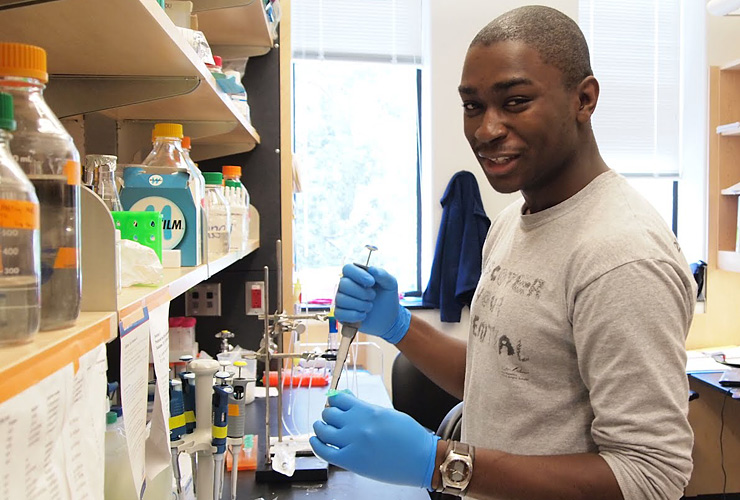
Nwogbo conducted basic science research in the biochemistry lab of Dr. Richard Brennan through Duke Universitys Summer Research Opportunity Program. In addition to learning about structural biology and research protocols, Nwogbo developed problem-solving strategies and new ways of thinking as a laboratory scientist.
Ive learned that experiments dont always go according to plan and you must be able to ask the right questions to figure out what is going on. The work Im doing is basic science, but in the long run it has great potential to become translational research and help millions deal with chronic infections.
Megan Pejsa
Psychology, Spring 2013
Research Assistant, Johns Hopkins Bayview Medical Center
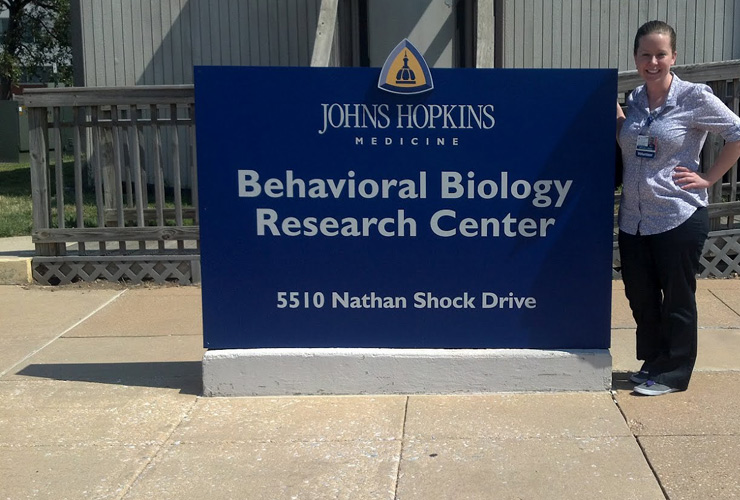
As a research assistant in the burn unit at Johns Hopkins Bayview, Pejsa completed clinical interviews with patients to assess how they were coping in the months following their hospital treatment and discharge. She assessed anxiety-related symptoms at one, six, twelve and 24 months following their burn injury.
The general public may only recognize PTSD in conjunction with veterans of war, but others also experience this anxiety disorder. The raw data I collected will be used to improve interventions for people at-risk of developing PTSD following a severe burn injury so that they have an overall better quality of life.
Manpreet S. Suri
Information Systems, Spring 2014
McNair Summer Research Fellow, UMBC
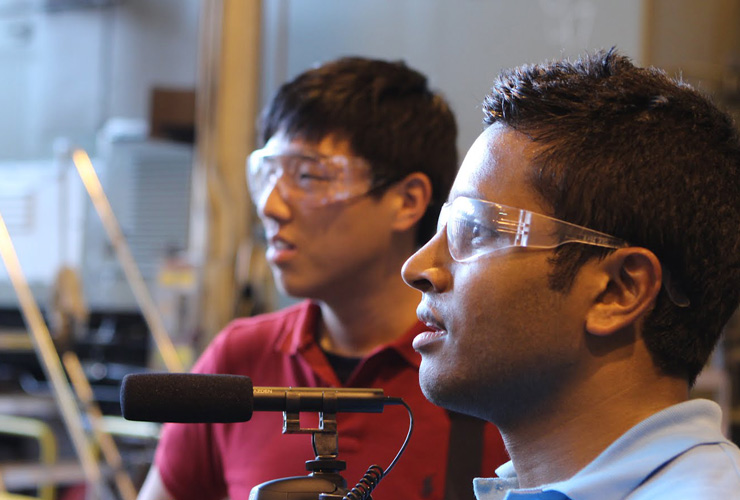
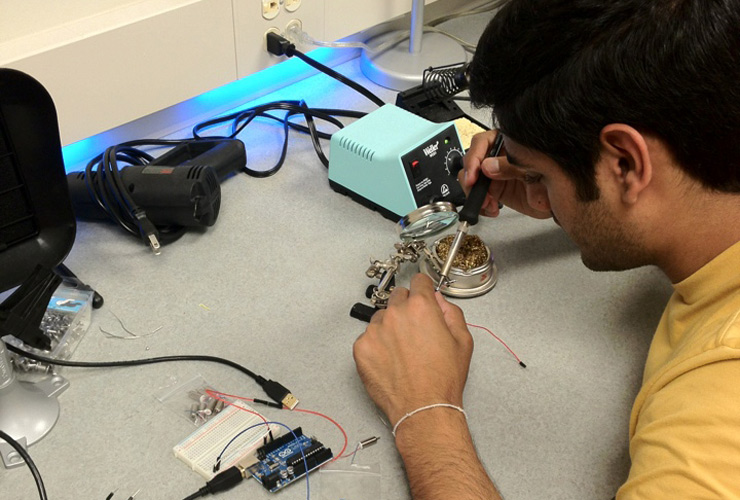
Through the McNair Summer Research Fellowship program, Suri completed an independent research project designing assistive technology for the visually impaired. His experience included writing code, building and programming hardware, designing and printing three-dimensional models, and prototyping a device for this population.
When I realized that there are 285 million visually impaired people in the world, I started to understand that my project was much more far-reaching than I originally anticipated. I have learned that every project we work on is a part of a bigger picture and to never underestimate the impact of our research. Visually impaired people deserve to have the same opportunities as sighted people and it gives me great pleasure to design and build a device that caters to their needs.
Molissa Udevitz
Environmental Studies and Dance, Spring 2015
Squad Leader Intern, Alaska Department of Natural Resources Division of Forestry
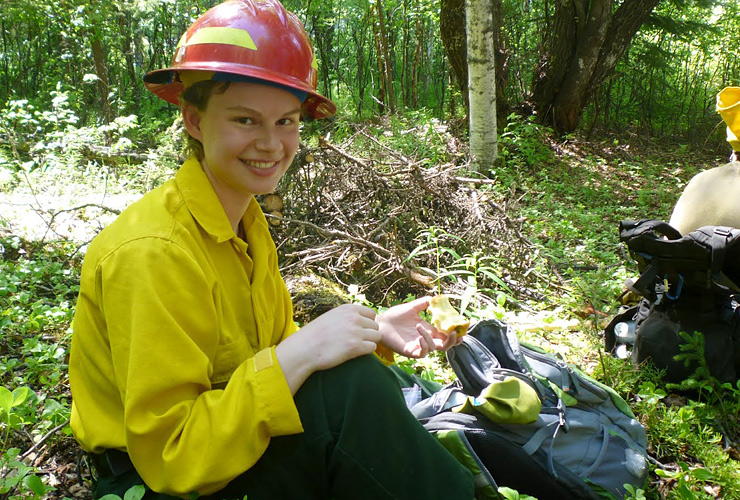
Based in Palmer, Alaska, Udevitz supervised a team of interns in the fieldsurveying and removing invasive plants, making a trail handicap accessible, and restoring stream banks to improve salmon access to spawning grounds. Udevitz also became wildland firefighter certified and collaborated with natural resource management professionals on other projects.
Before this summer, I knew I wanted to help solve the environmental challenges our world faces, but these problems often seem insurmountable. Ive realized that I dont need to come up with a grand solution; I can join this network of people working to protect the environment, and our individual projects combined will have a large, positive impact.
Jennie Williams
American Studies, Spring 2014
Summer Serve Assistant Coordinator and Counselor, United Way of Frederick County
Williams served as an assistant coordinator and counselor for United Way of Frederick Countys new Summer Serve program. There she created opportunities for teen volunteers to do service work through non-profit partnerships and guided them through reflection on their service experiences.
I have contributed to projects that fight for issues I am passionate about: poverty, homelessness, womens health and hunger. Through this internship I have now also met the men and women who are responsible for creating organizations devoted to those causes.
Fahad Zafar
Computer Science (Ph.D.), Fall 2014
Software Engineer, Google
Working at the Googleplex in Mountain View, California was an eye-opening experience for Zafar, who assisted the YouTube editor team with developing new video effects and integrating an external code source into their platform. His tasks ranged from helping to solve large data problems to navigating the subtleties of visual presentation.
Understanding the development life-cycle of software used by millions of peoplewatching all the pieces that solve complex problems come togetherwas truly an unforgettable experience. Working at a company with such a large user base has changed my perspective on practical software development.
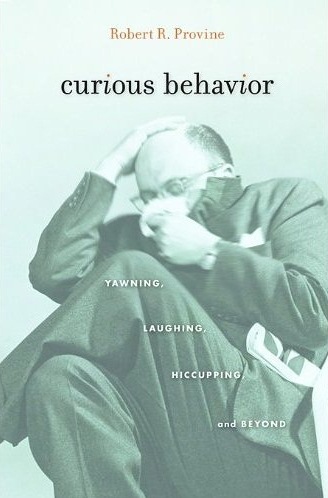
Psychology professor Robert Provine’s latest book Curious Behavior: Yawning, Laughing, Hiccupping, and Beyond, was published this month, and the professor’s exploration of seemingly small, instinctive actions has been covered in a variety of media outlets.
An August 14 New York Times review entitled “Pardon Me! A Fearless Look at Our Bodies’ Mundane Functions” said that the book is both entertaining and engaging, and that, “with its many facts and anecdotes and unexpected stories, it begs you to continue where curiosity leads you, down both the boulevards and the back alleys of science.” This article was reprinted in the independent Kenyan newspaper Daily Nation.
The book was also the subject of an August 12 Boston Globe story, “The professor of burps.” Provine spoke about how he chooses which behaviors to focus on in his research, saying that “if you’re interested in the neuromechanisms of human behavior, you want to look at behaviors that everyone has, everyone does in the same way, are simple, and easy to study.”
Provine also appeared on the radio program The Takeaway with John Hockenberry on August 20th to discuss the “instinctive acts” that humans engage in with various degrees of awareness and the value of researching such behaviors. “It’s easy to overlook the commonplace,” said Provine, “and in my book, I’ve explored those kinds of simple acts that can be pursued by anyone – whether high school science fair students or professional researchers – and provides some important, novel insights into human behavior.”
The book was also reviewed in the August 2nd issue of Nature, which called the book “an exercise in ‘small science’ — some of it speculative, all of it fascinating.” Other reviewers have characterized Provine’s book as “a must-have for any connoisseur of human behavior, whether studying in a classroom or from a barstool” (The Scientist, August 23rd), “charmingly written and profoundly informative” (The Wall Street Journal, August 25th), and “investigations [which] reveal captivating insights into the mundane” (The New Scientist, August 25th). A review in the Chronicle of Higher Education on August 30 said that Provine “tired of inserting electrodes into nerve cells in a laboratory, but wished to retain rigorous approaches in what he calls a “sidewalk neuroscience” mode of inquiry. Cheaply and simply, he observed such subjects as graduate students, for example—to track their behaviors.”
The book has also been excerpted on Salonon August 22nd and in the U.K. Observeron September 1. The Popular Science website also posted a slideshow of “curious behaviors” on September 5.
Provine was also interviewed for NBC’s “Body Odd” blog, in which, in a September 6 piece entitled “How hiccups, yawns and giggles make us human,” he said that his research is “a reminder that we humans, who find ourselves to be conscious and rational, are also beasts of the herd.”
Curious Behavior was also discussed in a September 7 post on the “Brain Pickings” blog, which called Provine’s areas of study “seemingly mundane but, in fact, utterly fascinating phenomena.”
Provine’s work was also the subject of a September 26 story on Slate.com entitled “I Giggle, Therefore I Am.” The author relates Provine’s research to the act of tickling his newborn son, writing that “what’s at work in tickling… is the neurological basis for the separation of self from other” and concluding that“when a baby senses a foreign hand lightly brushing his bare feet, he’s experiencing something that is recognizably other—which means that there’s something that isn’t other, too: There’s himself. Tickling is central to who we are, because it is part of how we establish that there’s a we there.”
Library Journal also reviewed Curious Behavior on September 15, calling it “a delectable presentation for all who love the territory between pop and hardcore science writing” and highly recommending it.
On October 13, Provine discussed Curious Bahavior with host Marty Moss-Coaneon WHYY’s “Radio Times.”
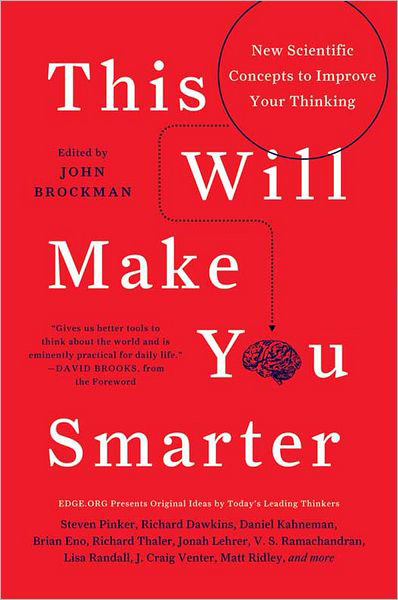
Provine’s work was also noted in the August 2nd New York Times in a review of This Will Make You Smarter: New Scientific Concepts to Improve Your Thinking.The book is the latest in a series by the website Edge.org, which focuses on an annual question posed to today’s leading thinkers. This year’s question was “What scientific concept would improve everybody’s cognitive toolkit? “
This is Provine’s seventh contribution to the series, and his essay is entitled “TANSTAAFL” (“There ain’t no such thing as a free lunch”). It focuses on the fact that everything has its price, a concept relevant to everyday life as well as all sciences.
The article covered not only Hemmerly’s background, family life, as well as her work and research at bwtech@UMBC, but her involvement and thoughts on the greater Catonsville community, as well. Speaking on what she would like to see happen in the area’s future, Hemmerly told Tipper that “Catonsville could have a better mix of retail, more mixed use housing, and more activities on Frederick Road. We could make the business district more attractive than it is. I also would love for Catonsville and UMBC to be better integrated. There is so much potential for both.”
TO: UMBC Faculty and Staff
FROM: Yvette Mozie-Ross, Associate Provost for Enrollment Management
After 32 years of distinguished service to UMBC, Bobbie Shahpazian will retire on August 31, 2012. Bobbie began her career with the Office of Undergraduate Admissions in 1977 as part of an all new admissions staff focused on the recruitment of freshmen, international students and incoming merit scholars. She was soon promoted to Associate Director and after taking a brief sabbatical to travel she rejoined the university as a scholarship counselor. Bobbie worked with the Financial Aid and Scholarships Office through the early 90’s awarding merit scholarships to incoming students. She was promoted to Assistant Director of Scholarships and later to the Associate Director of scholarships where she continues to serve our scholars and their families.
Those who have worked with Bobbie know her as a wonderful colleague and consummate professional. Her deep understanding of the UMBC community has made her an invaluable resource and partner to individuals across the university. Her energy and commitment to the development of our merit scholarship awarding and scholar programs have helped to build UMBC’s strong academic community.
Throughout the years, she has given tirelessly of herself, dedicating her professional career to the University. Her commitment to UMBC, our scholars and their families have significantly supported UMBC’s growth and development. Bobbie has built a distinguished legacy at UMBC that will connect her to the campus long after her retirement.
Please join the Office of Financial Aid and Scholarships at a reception to thank Bobbie and to celebrate her many years of service to the campus. We will gather on Wednesday, September 19th, 10 am – noon in the Library Gallery. Individuals attending are asked to RSVP by Friday, September 8th to Lu Caldwell at lcaldwel@umbc.edu.
If you would like to contribute toward a gift you may contact Stephanie Johnson at x.51517 by Friday, September 8th.
Maryland universities have been leading the way in getting more students to pursue degrees in science, technology, engineering and math, according to an article published August 10 in the Baltimore Business Journal.
Dr. William LaCourse, Dean of Natural and Mathematical Sciences was interviewed about UMBC’s work to expand the STEM fields. The university has seen natural and mathematical sciences growing 28 percent, and engineering and information technology growing 19 percent from fall 2007 to fall 2011. That represents 488 and 411 students, respectively, compared to a growth of 768 students in the arts, humanities and social sciences.
LaCourse told Gantz that growth in the STEM fields means his college will likely have to add sections in courses like first-year chemistry, along with hiring another professor, finding available space and securing more teaching assistants. However, he sees potential, rather than a problem. The additional course sections could be tailored for a particular degree or somehow provide a more personalized experience.
“We are at the stage where we’re reaching some limits,” LaCourse said. “But this is an opportunity.”
Donald F. Norris, professor and chairman of UMBC’s Department of Public Policy, offered his expertise on e-government in the Baltimore Sun‘s August 8 article “State launches online voter registration.” The program’s supporters hope the move will increase the number of eligible voters on the rolls and make registration errors less common, but Norris has his doubts.
“There have been all kinds of attempts to tweak the voting system to increase voter registration,” Norris said. “Nothing seems to work.” He argued that online registration won’t boost turnout in the coming election, and that ultimately voter enthusiasm for candidates is what matters the most.
A recent controversy surrounding the anti-gay marriage comments of Chick-fil-A President and COO Dan Cathy is the subject of the latest Baltimore Sun column by UMBC political science professor Thomas Schaller. In “Chick-fil-A head has a right to speak, not a right to be taken seriously,” Schaller focuses on what he sees as misunderstandings on the part of Cathy’s defenders when it comes to the First Amendment right to free speech.
Schaller suggests that arguing that the backlash against Chick-fil-A constitutes censorship demonstrates ignorance of constitutional and policy matters. He writes, “[t]he First Amendment is no guarantee against being justifiably ignored. And the truth is that many citizens hold foolish, even self-contradictory opinions on a variety of subjects.” Schaller gives examples of where public assumptions and data are out of sync, from the federal budget to health care, arguing that a person’s right to express an opinion does not translate into a guarantee that the opinion be heard or incorporated into policy.







 Donald F. Norris, professor and chairman of UMBC’s Department of Public Policy, offered his expertise on e-government in the Baltimore Sun‘s August 8 article