All posts by: UMBC News Staff


Tyson King-Meadows named APSA Congressional Fellow

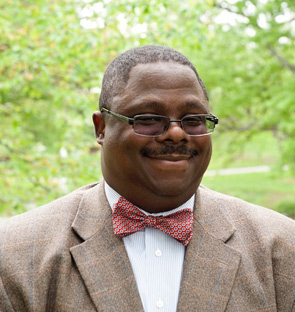
Portrait of Tyson King-Meadows, wearing a suit and bowtie, smiling outside.

The American Political Science Association has selected Tyson King-Meadows, associate professor of political science, for the 2012-2013 class of Congressional Fellows.
The APSA Congressional Fellowship Program is the nation’s oldest and most prestigious congressional fellowship. Fellows gain “hands on” experience with the U.S. legislative process by serving as a legislative assistant to a U.S. Representative or a U.S. Senator, or as a staffer on a congressional committee.
King-Meadows will use the yearlong experience on Capitol Hill to augment his teaching and research on the U.S. Congress. He will also lay the groundwork for his new book project examining post-Reconstruction Era efforts by Congress to curtail deceptive election practices and to standardize election procedures.

Kate Brown, History, on Lecture Tour

Kate Brown, associate professor of history, is giving a series of talks that are taking her across the country.  Brown studies and teaches Russian and Eastern European history, and is an expert on the history of nuclear disasters.  Stops along her tour include:

  • On February 9, she spoke on “The Plutonium Curtain: Plutonium’s role in making model cities and the nuclear security state during the Soviet-American Cold War” at New York University.
  • On April 18, she will give the Sweet Professorship Lecture “Touched: Plutonium’s role in the making of nuclear families and lethal landscapes in the US and USSR” at Michigan State university.
  • On May 14, she will give a talk at Stanford’s Center for East Asian Studies entitled “Business as Usual: Fukushima in light of the great Cold War plutonium disasters.”
  • On May 16, she will discuss “Local Knowledge and the great Soviet and American plutonium disasters” at the Center for Cultural Studies at the University of California, Santa Cruz.
  • On May 17, she will present “Excerpts from ‘Plutopia’” at the University of California, Berkeley, Russian History Circle.

Meredith Oyen, History, to Talk at Temple University

Meredith Oyen, assistant professor of history, will give a talk at the Center for Force and Diplomacy at Temple University on Thursday, March 29.

Oyen’s talk is entitled “Crossing Borders in Sino-American Relations.” Using the stories of Chinese and other migrants and refugees caught in limbo by Cold War politics, she will discuss the role that transnational migration and migrants themselves play in 1950s relations between the People’s Republic of China, Republic of China (on Taiwan), Hong Kong, and the United States

Prior to joining UMBC’s faculty, Oyen was a visiting professor of American Studies at the Johns Hopkins University-Nanjing University Center for Chinese and American Studies.

Kimberly Moffitt, American Studies, and Michelle Scott, History, on the “Marc Steiner Show”

Kimberly Moffitt, assistant professor of American Studies, and Michelle Scott, associate professor of history, were guests on the “Marc Steiner Show” on Monday to discuss the case of Trayvon Martin, a young African American man who was killed by a neighborhood watchman in February.

The conversation turned to the role and perception of black men in society, and Moffitt related the incident to her worries for her own son.

 “There has been a study done that shows that, really interestingly, for young, African-descended boys in this country, around the age of 8 or 9 there’s a shift that happens where we no longer see them as these cute little boys, running around, having fun and enjoying life, but that they then become a threat and seen as a danger to society. So when I think of my 7 year old who is about to turn 8, that becomes a concern as to how people will relate to him,” she said.

Scott related the way black men are seen to the legacy of slavery in America. “You still have the victimized black body, and still that legacy and history, just in the twenty-first century.” She said.

The full interview can be heard here.

Christopher Corbett, English, to Be Featured on CityLit Project Panel (4/14)

The English Department’s Christopher Corbett will be featured Saturday, April 14 at the CityLit Project at Baltimore’s Enoch Pratt Free Library in a panel discussion on the art of writing biography. Corbett is the author of Orphans Preferred: The Twisted Truth and Lasting Legend of the Pony Express (Random House/Broadway Books) and The Poker Bride: The First Chinese in the Wild West (Atlantic Monthly).

http://www.citylitproject.org/index.cfm?page=news&newsid=113

UMBC Student Receives Howard Hughes Medical Institute Gilliam Fellowship

Robert Wardlow, a senior majoring in biochemistry and molecular biology, has received a Gilliam Fellowship from the Howard Hughes Medical Institute (HHMI).

The goal of the Gilliam program, according to HHMI, is to increase the diversity of college and university faculty by supporting the scientists of tomorrow. Students receive $46,500 per year towards Ph.D. study for up to five years at the graduate school of their choice.

While at UMBC Wardlow worked in the lab of Terry Rogers at the University of Maryland Medical School. His research focused on heart cells and a type of stem cell called a mesenchymal stem cell.  The goal of the research he says is to look at the protective properties these stem cells may have over heart cells.

For graduate school he says, he will be enrolling in a combined M.D./Ph.D. program at either Harvard or Johns Hopkins University. His current plan is to focus his clinical training in cardiology with a Ph.D. in biochemistry.

Robert Deluty, Graduate School, Publishes His 35th Book

Robert Deluty, associate dean of the graduate school, has published a new book of poetry, “Unacknowledged Miracles.” In his review, Dr. Richard Berlin writes: “Once again, Robert Deluty’s poems had me hooked from beginning to end. On dazzling display are the characters Deluty embraces with his warm, sly sense of humor—the skinny and obese, professors and hookers, husbands and wives, children and grandparents, and of course, Jews and Gentiles. Deluty’s deft embrace of our shared humanity is his greatest gift. And his ability to share his heartfelt observations through poetry is an ongoing miracle.”

Copies of “Unacknowledged Miracles,” as well as of Deluty’s other books, are on sale at the UMBC Bookstore.

Marie desJardins, Computer Science and Electrical Engineering, Competes in American Crossword Puzzle Tournament

Marie desJardins, computer science and electrical engineering, competed in the American Crossword Puzzle Tournament in Brooklyn last weekend. She placed 44th out of 593 solvers, 22nd (of 568) in the “B” category (solvers who haven’t competed in the A (elite) or B finals), and 5th (of 87) in the Mid-Atlantic. She was the 8th ranked woman in the tournament, and the top-ranked woman in the Mid-Atlantic region. She also earned an “I Beat Dr. Fill” button for outscoring the crossword-solving computer program, “Dr. Fill.”

The tournament page is here: http://www.crosswordtournament.com/

Rankings: http://www.crosswordtournament.com/2012/standings/rank.htm

Dr. Fill: http://www.crosswordtournament.com/articles/bg031112.htm

Rovert Provine, Psychology, in Business Day

“Thing could always be worse,” Robert Provine, professor of psychology, reminds us in an essay published by Business Day.

“We have all heard of the ‘grass is greener’ syndrome. This is its ‘grass is browner’ counterpart, the achievable antidote for broken dreams and bolsterer of the status quo,” he writes.

The essay, “Thing Could Always be Worse,” appeared in Business Day on March 16, and was excerpted from Provine’s answer to the Edge question “What Are You Optimistic About?”

UMBC Selected to Participate in Study on Underrepresented Minorities in STEM Doctoral Programs

Today the Council of Graduate Schools (CGS) announced that UMBC is one of 21 graduate schools selected to participate in a study to examine completion and attrition among underrepresented minorities in STEM doctoral programs. The project, is funded by a grant from the National Science Foundation (NSF.) and will compare data across a diverse set of institutions, including some that have been funded by NSF’s Alliances for Graduate Education and the Professoriate (AGEP) program. The purpose of this research is to better understand the factors that promote successful completion and the policies and practices that hold promise for increasing completion and reducing attrition. Each institution will receive $30,000 in funding to participate.

As part of the study UMBC will:

  • Collect and report completion and attrition data for all underrepresented minority students entering STEM doctoral programs in academic years 1992-93 through 2011-12.
  • Complete and submit data on program characteristics and policies, practices, and interventions that might impact completion and attrition for all STEM Ph.D. programs offered by the institution.
  • Field a web-based student survey, developed by CGS, covering a set of topics addressing completion and attrition in STEM doctoral programs.
  • Host a two-day site visit for CGS project staff to conduct focus groups with students and interviews with graduate deans, faculty, and other university personnel.
  • Highlight the institution’s participation in this effort by taking part in national discussions on the topic of Ph.D. completion (e.g., at CGS Annual Meetings and/or Summer Workshop sessions).

The projected release date of the study’s findings is June, 2014.

UMBC Goes Medieval

UMBC Goes Medieval

As a child, Lauren Bucca loved reading fictional books about medieval times.  As she got older, she devoured historical books on the period, exploring a world populated by real events and people.

So when she came to UMBC, Bucca decided to major in English to study more of the literature from her favorite period.  Last fall, at the start of Bucca’s junior year, a new opportunity opened up: UMBC began offering a minor in medieval and early modern studies. Bucca, of course, signed up.

“It complements my English major very well because I can have a more focused education by studying the period I like best,” she said. “It’s been fascinating to learn how history is interwoven with literature.”

This interdisciplinary minor is a natural complement to UMBC’s course offerings, said Kathryn McKinley, associate professor of English and the program’s director. “Faculty members in these periods have collaborated for a long time,” she said. “This minor is a way of pooling resources for students and enhancing and strengthening their path of study.”

“In the arts, humanities and social sciences, we encourage students to take a multi-disciplinary approach to their studies because it deepens their understanding of a topic,” said John Jeffries, dean of the college of arts, humanities and social sciences.  “This new minor allows students to explore this fascinating and important period from a variety of perspectives.”

“Medieval and early modern studies is an internationally established discipline,” and McKinley said. “UMBC is uniquely situated to have access to archival materials related to the subject.” Just twenty minutes to the north, the Walters Art Museum has one of the largest collections of medieval art and books of hours in the country, and the Folger Shakespeare Library in Washington, D.C., is an invaluable source of material for Shakespeare scholars. “Universities do not always have such outstanding regional resources,” she said.

McKinley recently took advantage of these resources by taking students in her Medieval Dream Visions course, an upper level English course, to the Walters to view medieval manuscripts. “I loved hearing Mr. Will Noel [curator of manuscripts and rare books at the Walters] discuss the manuscripts,” wrote Bucca in response to the trip. “It was incredible to see how meticulously the words were drawn on the pages and the illuminations that were copied from one manuscript to the other.”

The 6-course, 18-credit medieval and early modern studies minor requires students to take two English courses, two history courses and two courses in a discipline of their choice, which might include art, music, modern languages and linguistics, or Asian studies.

Meeting the requirements was not a challenge for Elizabeth Forney ’14, English. “When I signed up for the minor, I had already taken many of the classes required,” she said. “I have yet to take the history classes required but I look forward to them.”

For Forney, and many other students, a minor in medieval and early modern studies is the first step toward more intensive study of the period. “I plan on concentrating on the medieval period in graduate school,” Forney said. “Deciding to take the minor just made sense.” She plans to focus on medieval literature in graduate school and eventually teach high school English and do research.

McKinley said that many students find themselves fascinated with the period. “It’s so distant from modern culture,” she explained. “Students enjoy studying a period in which, for example, genres are much more fluid and alchemy was taken seriously.” She said that courses included in the minor, such as Images of Joan of Arc (ENGL 345) and Art and Society in the Renaissance (HIST 358), are already popular offerings from the departments, and that more courses that fit with the minor are being discussed.

The first medieval and early modern studies minors are expected to graduate in Spring 2012.

(3/13/12)

The Coolest Jobs You Never Knew Existed at UMBC: Ferdinand Maisel, Music Coordinator/Dance Accompanist

[youtube http://www.youtube.com/watch?v=Slni3GRhM0Q]

Before the first note sounds, the dance studio—with its heavy black tape stripes lining the floor—s like an enormous blank page of sheet music. Then, Ferdinand Maisel leans into the keys of the black grand piano in the corner, and suddenly students in sweats and bare feet dot the staff with whole-note pliés and staccato jumps.

Read more at umbc.edu/magazine.