All posts by: UMBC News Staff


Disha Patel ’15 on NPR’s “This I Believe” Website

Disha Patel ’15, English, has an essay posted on NPR’s “This I Believe” website.

“I believe that being a family is about more than sharing blood,” begins Patel, who is currently enrolled in an ENGL 291 course taught by Michael Fallon.

“Family is a word that to most would evoke images of faces that are similar to their own. People who share the same DNA, the same blood type, eye color, hair color, skin color. I on the other hand, see the faces of people, who if it weren’t for a change of geography, I would never had the pleasure of meeting, nor the honor of calling my family,” Patel writes. “Some people say ‘blood is thicker than water.’ I say love is more powerful than blood. Love is what makes a family.”

Her full essay can be read here.

Mechanical Engineering Faculty Member, Marc Zupan, Named Fulbright Scholar

Marc Zupan an associate professor in the department of mechanical engineering has been named a Fulbright Scholar, 2012-2013, to teach and conduct research at the Faculdade de Engenharia da Universidade do Porto (FEUP), Portugal.

Marc Zupan

According to the program’s web site, “The Fulbright program is the flagship international educational exchange program sponsored by the US government.” The goal of the Fulbright program is, “to increase mutual understanding between the people of the United States and the people of other countries.” The majority of the funding comes from an annual appropriation made by the U.S. Congress to the U.S. Department of State, Bureau of Educational and Cultural Affairs.

During his fellowship Zupan will be developing novel course and student assessment tools as well as expanding his already established research collaborations with FEUP faculty.

“The fellowship,” says Zupan, “will allow me to jointly design and implement a trans-national course focused on the novel concepts of Global Engineering.” This course will be integrated into the UMBC undergraduate engineering curriculum with students from UMBC and FEUP interacting and working with each other through-out the course.

Zupan’s research is focused on emerging hybrid materials that are important for structures in the next generation marine, air, and land-based vehicles — materials that are minimum volume, light, durable, and multifunctional.

“This expanded global enterprise in both research and teaching,” says Zupan, “between UMBC and FEUP will help both universities enhance the competitiveness of our graduates and allow us to develop new technologies.”

Matthew Reilly ’13, Social Work and Psychology, in the Chronicle of Higher Education

Matthew Reilly ’13, social work and psychology, took a roundabout route to UMBC: after graduating from Townsend Harris High School in Queens, New York, he worked various jobs and took classes as several universities before enlisting in the army in 2005, with the hopes that it would help him pay for college.

When he was injured in service and sent to Walter Reed Army Medical Center, Reilly discovered a passion that eventually led him to UMBC. When other injured soldiers arrived at the hospital, Reilly was often the one to talk with them and tell them about the services at the hospital. Those experiences eventually led him to pursue dual degrees in psychology and social work at UMBC.

Before coming to UMBC, Reilly earned his an associate degree from Montgomery College.  When he enrolled in 2009, he had a difficult transition.  He says that he had difficulty reading because of his brain injuries, and his patience with other students was short. He tried to strike a balance between playing down his status as a veteran and talking about it.

During Reilly’s last few months at the community college, Esther Schwartz-Mc­Kinzie, a professor of English who had grown interested in veterans’ issues, produced a documentary, In Their Own Words, about student veterans there.  Reilly is one of a dozen veterans featured in the film, and in it he sums up his attitude toward college.

“I have class to go to, I have homework to do, I have reading to do, I have an assignment to do,” he says on screen. “That’s my mission. Those are my goals.”

Reilly is now in his second semester at UMBC, and will graduate with a degree in social work and psychology next spring. He hopes to attend graduate school and pursue a career in psychotherapy.

Reilly’s story appeared in the Chronicle of Higher Education on April 1 in a story entitled “An Ex-Soldier Finds a New Mission.”

K. Jill Barr, Graduate Enrollment Management, Provides Guidance to Qatar University

K. Jill Barr, assistant dean for Graduate Enrollment Management, recently returned from a consulting trip to Qatar University. Barr was asked by the American Bar Association to provide guidance on the development of student services and a career services office for the law school at Qatar University. She will return this fall for a follow-up visit.

Ellen Handler Spitz, Honors College, Visits Serbia

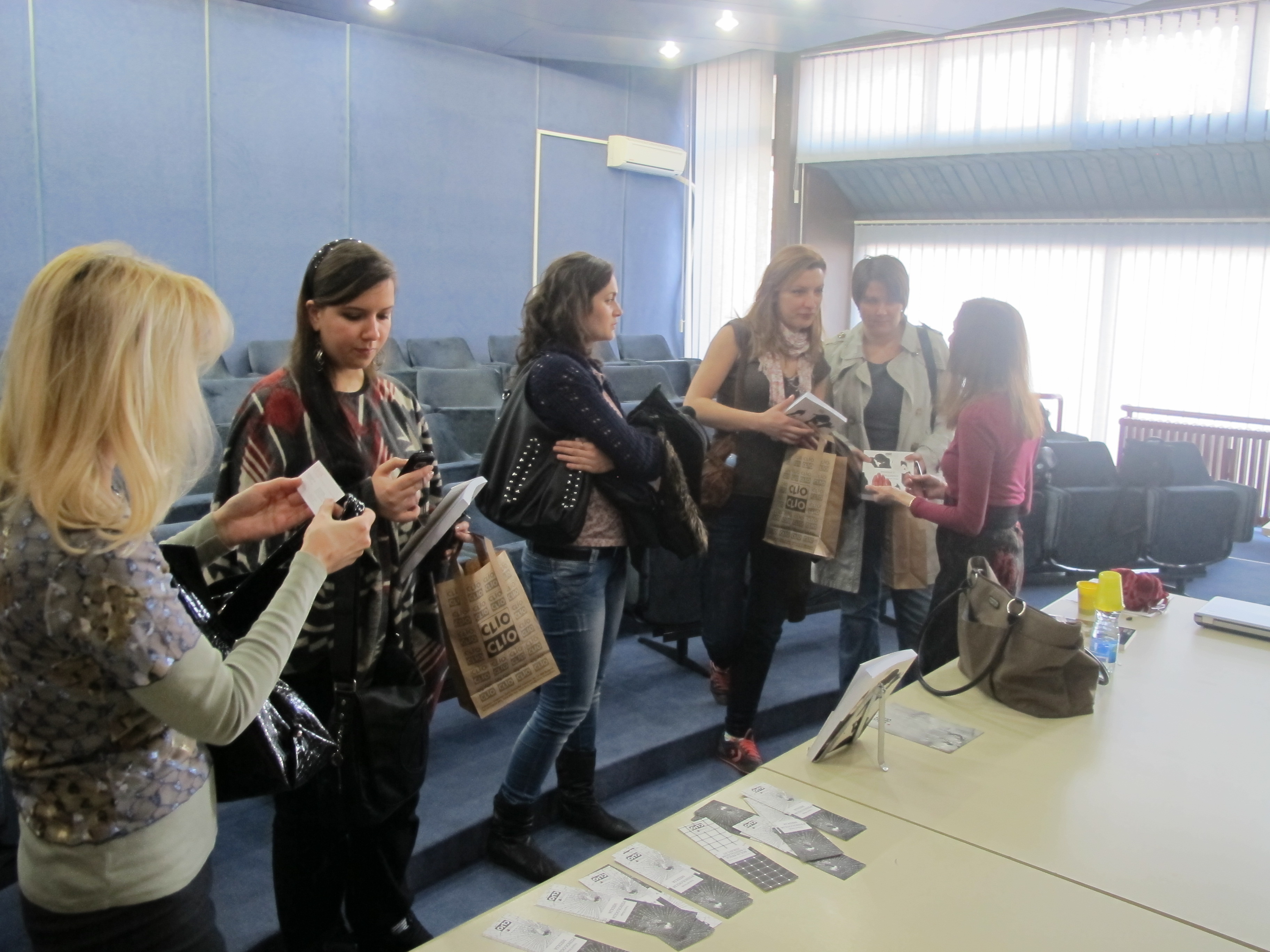
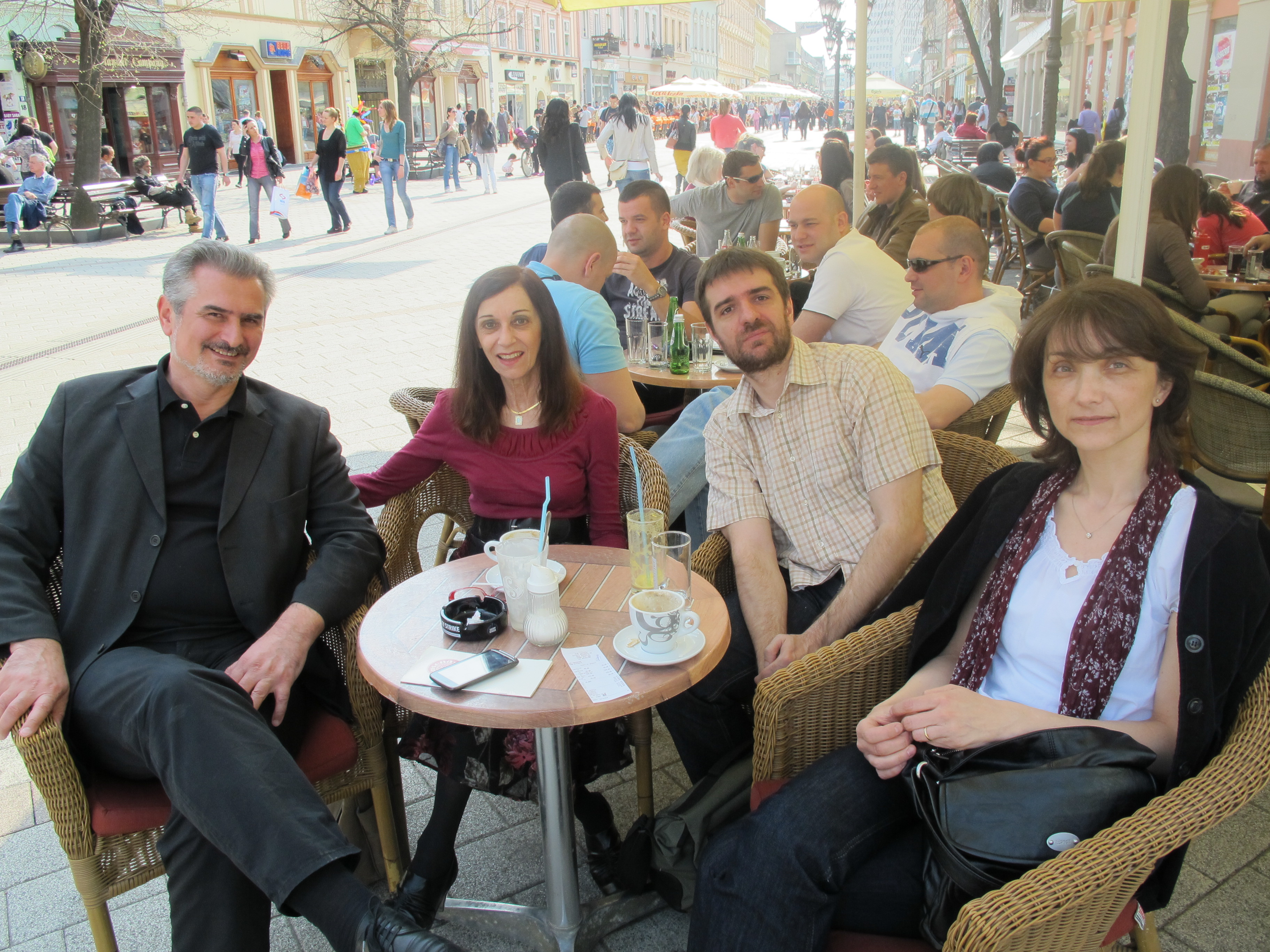
Ellen Handler Spitz, honors college professor of visual arts, recently returned from Belgrade, Serbia, where she spoke on her book “Art and Psyche.”  The book was recently translated to Serbian.

While in Belgrade, Spitz lectured at the Faculty of Philosophy, University of Belgrade; the Faculty of Philosophy, Novi Sad; the Institute for Mental Health, Belgrade; and Kolarac Hall.  The themes of her discussion were art and psychoanalysis, and children, space, and imagination.

Stories about Spitz’s visit appeared in the Serbian press both before and after her visit.  An example of a story can be seen here.

Madeline Hall ’12, GES, in Documentary

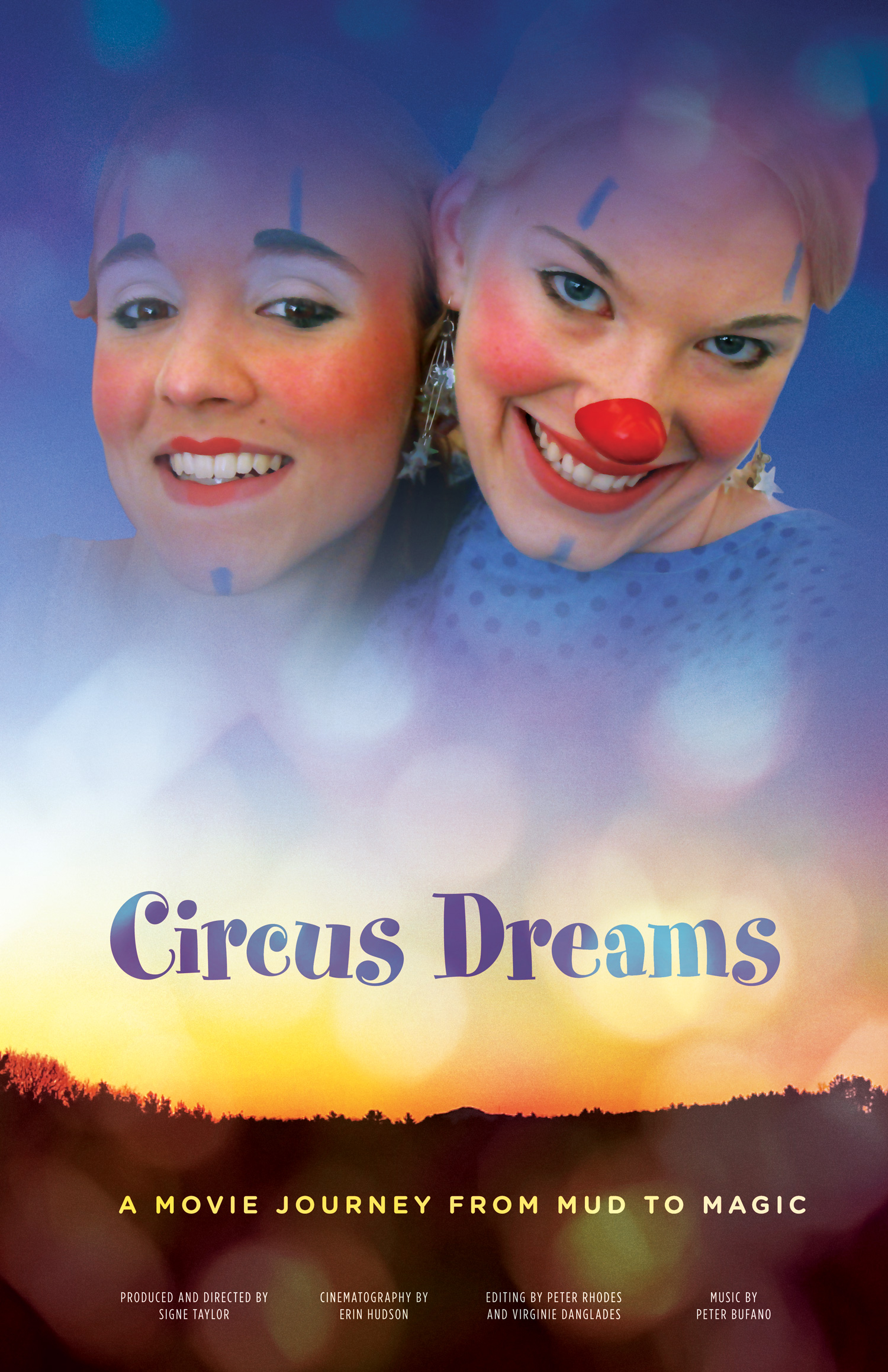
Madeline Hall ’12, geography and environmental systems, is featured in the documentary Circus Dreams, which will air on Maryland Public Television on April 9 at 10 p.m.

Circus Dreams documents a year in the life of Circus Smirkus, one of the best traveling youth circuses in the world. The film immerses viewers into the lives of the 12 to 18 year old performers, capturing their intense work ethic, passion for performance, deep friendships and budding loves.

Hall performed in the circus for two summers, after having spent the previous seven summers at the circus’s summer camp. Since 2005, she has also performed at the Maryland Reniassance Festival. A video of Hall discussing her time with the circus can be seen here.

Kevin Omland, Biology, in Birding

The March issue of Birding features the work of Kevin Omland, an associate professor of biology.

Kevin Omland

The author, Paul Hess writes that, Omland and his colleagues, “take an opposite view from several papers that recommend splitting the Common Raven into two species.”

The new study demonstrates a need for multiple criteria — not only genetic, but also morphological, behavioral and ecological to judge whether a population deserves full-species status.

UMBC Chess, Baltimore Sun and Washington Times

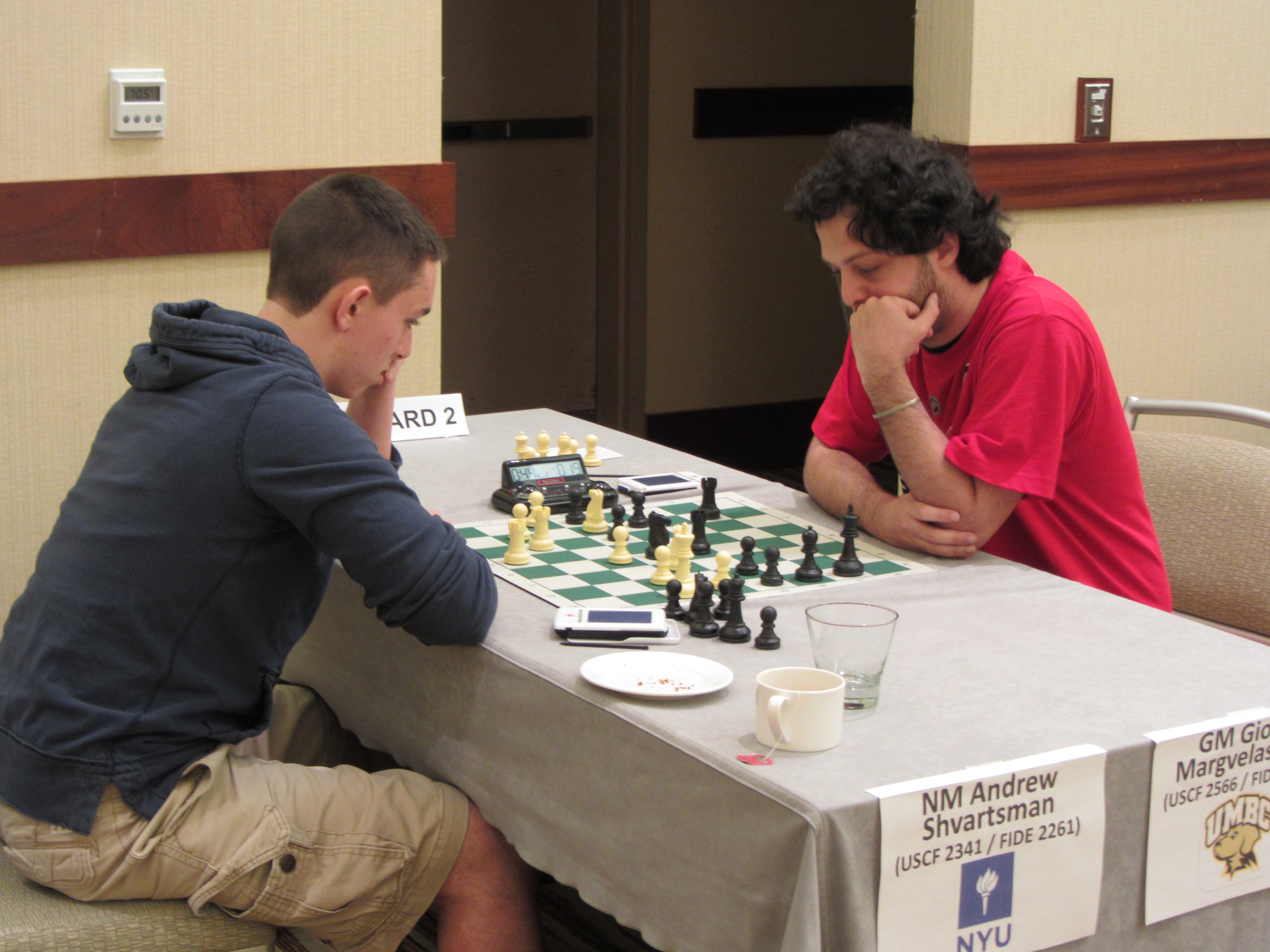
The Baltimore Sun and the Washington Times covered the UMBC chess team this week as they competed in the 2012 President’s Cup.

The team tied with the University of Texas at Dallas for second place, behind Texas Tech and ahead of New York University. The competition, known informally as the Final Four, was held March 30 to April 1 in Herndon, Va., at the Westin Dulles Hotel.

Teams qualified for the match back in December, during the 2011 Pan-Am Intercollegiate Team Chess Championship. In that match UMBC came in second, ahead of Texas Tech and New York University and behind the University of Texas at Dallas. All four teams advanced to the Final Four. In that event, UMBC and UTD both earned 7.5 points, with Texas Tech scoring 8 and NYU 1.

Constantine Vaporis, History and Asian Studies, to Give Talk at Freer Gallery

Constantine Vaporis, professor of history and director of the Asian studies program, will participate in a panel disccusion at the Freer Gallery on Saturday, May 5 as part of the “articulations” series.  The purpose of the series is to “broaden… perspectives on art and culture through conversations from multiple viewpoints.”

The topic of conversation will be “Visual Culture and Social Upheaval: Imaging Change in Late Edo Period Japan.”  The panelists will explore the intersection of pop culture and spiritual concerns in late Edo society with leading scholars. Attendees will discover the reasons behind the acclaim for Kano Kazunobu’s phantasmagoric paintings of Buddha’s legendary disciples and Katsushika Hokusai’s famous print series of Mount Fuji, and learn how the popularity of these iconic images endures in contemporary Japan.

In addition to Vaporis, the panel includes:

  • James C. Dobbins, Fairchild Professor of Religion at Oberlin College
  • Patricia Graham, independent art historian
  • Freer|Sackler curators James Ulak and Ann Yonemura

The event will take place on May 5 at 2 p.m. in the gallery’s Meyer auditorium.

Marie desJardins, Computer Science and Electrical Engineering, in the New York Times

UMBC and Marie desJardins appeared in the New York Times. The article, “Computer Science for the Rest of Us,” describes the idea that all students should learn how to ‘think computationally’ and discusses the growing number of new efforts to teach non-majors how to do that, with or without learning how to program in conventional programming languages like Python or Java.

Marie desJardins, a computer science professor at the University of Maryland, Baltimore County, says her department uses Scratch in its “Introduction to Computers and Programming” course, in which students can try a few basic concepts. About 25 percent of the semester is spent on programming.

Explaining why Scratch is used at the college level, she says that all students arrive on campus having taken high school classes in English, math, biology and so on, but that many have not taken a computer science class.”

Bill Shewbridge, New Media Studio, in Urbanite

Bill Shewbridge, director of UMBC’s New Media Studio, spoke to Urbanite about the role technology plays on campus and in the lives of students.

“There is a tendency to think that students are digital natives,” says Bill Shewbridge, the director of the new media studio at the University of Maryland, Baltimore County (UMBC). “But uploading a picture to Facebook doesn’t make you a producer, much less an informed consumer.”

A television producer-turned-professor, Shewbridge discovered this after embarking on UMBC’s digital storytelling project eight years ago. To tell digital stories—short videos, usually for a particular class, that combine scriptwriting, interviewing, and research—students first needed to be taught video editing, audio recording, and image processing. Now, UMBC offers a multimedia literacy lab, a one-credit course taken concurrently with another class, where students learn those skills.

The article, “The Wired Campus,” appeared March 30 in Urbanite.

Infinite Possibilities for Minority Women in Mathematics

Infinite Possibilities for Minority Women in Mathematics

Leaders across the country have called for the country to produce more scientists, engineers and mathematicians. Yet, despite the fact that minorities comprise the fastest-growing groups in the country, they are the least represented in science and engineering careers.

In mathematics, the disparity is particularly acute for underrepresented minority women. They account for less than 2 percent of all doctoral degrees awarded in mathematics each year, as well as less than 1 percent of incoming freshman majoring in the field.

“Changing those numbers goes beyond ‘the right thing to do,’” says Freeman Hrabowski, president of UMBC. “Minority women account for a growing proportion of college-ready students. Increasing their representation in mathematics is critical if the United States is to remain competitive on a global scale.”

To that end, on March 30 and 31, UMBC will host the fourth Infinite Possibilities Conference (IPC) for minority women in mathematics and statistics. The conference is designed to promote, educate, encourage and support minority women interested in the mathematical sciences.

“It can be very isolating, and easy to feel that you don’t belong in mathematics,” says Tanya Moore, one of the conference founders. “We wanted to give people an opportunity to see women all over the country just like them.”

Sue Minkoff, the local organizing chair for the conference and an associate professor of mathematics and statistics at UMBC, says the event is designed to connect aspiring and early-career mathematicians with mentors and role models, who can address concerns the women may have about differences between themselves and traditional mathematicians.

“IPC provides students at the high school, undergraduate and graduate levels with opportunities to interact with peers and more established female mathematicians in a supportive and collegial atmosphere,” she says.

Hosting the conference also supports UMBC’s overall mission. “We hope that hosting the conference here at UMBC will help us in our continued efforts to recruit minority women in mathematics and statistics at the faculty, graduate and undergraduate levels,” says Nagaraj Neerchal, professor and chair of UMBC’s department of mathematics and statistics.

Erika Camacho, an assistant professor of mathematics at Arizona State University and a slated speaker, says the conference provides a strong sense of community and belonging that is currently missing for women of color in STEM fields at most places. It allows women to become catalysts of change by supporting each other.

The agenda for the 2012 conference includes keynote speakers, research talks, poster sessions and panel discussions, ranging from advice for graduate studies to navigating paths beyond the degree.

The day before the conference, there will be a short course in mathematical biology, funded by the Mathematical Sciences Research Institute collaborative diversity program and organized by the Institute for Math and Its Applications at the University of Minnesota. There will also be a special program for high school students and teachers on Saturday.

(3/29/12)