All posts by: UMBC News Staff


Tahira Mahdi, Ph.D. student, describes how the arts and humanities impact lives in radio interview

In a new “Humanities Connection” segment on WYPR, Tahira Mahdi, a Ph.D. student in human services psychology, examines strategies for how people can evaluate the impact of the arts and humanities on a daily basis.

“The arts and humanities are scholarly fields that study how humans document and process the complexity of the human experience,” she explains in the segment that aired August 11.

Mahdi says that scholars and community workers are often challenged to assess and evaluate the impact of arts and humanities projects on communities and programs through quantitative evidence, but she offered strategies to achieve this through surveys and keeping records of attendance at events. She notes that arts and humanities are not inherently academic pursuits and by definition create change every day, perhaps more effectively measured through qualitative means.

“Qualitative research goes beyond the numbers to provide the depth of the human experience, the how and the why of the impact,” Mahdi explains.

Referencing Lee Boot’s “Art of Transformation” project, Mahdi explores a strategy that examines the less tangible aspects of what makes communities thrive through digital publishing and storytelling as an organizing tool.

“When we think about evaluating the impact of the arts and humanities, we should start by thinking about what life will be like without these everyday studies of ourselves. Some things cannot be quantified, but the impact of the arts and humanities stares us in the face all day, every day,” says Mahdi.

Listen to the complete segment “Evaluating the Arts and Humanities” on the Maryland Humanities Council website.

Image: Tahira Mahdi speaks at the 2015 Imagining America Conference in Baltimore. Photo courtesy Tahira Mahdi. 

New research highlights Dissertation House as an effective support model for minority STEM Ph.D. candidates

A new research article in CBE – Life Sciences Education analyzes 10 years of data that demonstrate one powerful conclusion: UMBC’s Dissertation House Model effectively increases degree completion among minority Ph.D. candidates.

Renetta Tull, associate vice provost for graduate student professional development and postdoctoral affairs, and Janet Rutledge, dean of the Graduate School at UMBC, developed the Dissertation House Model with colleague Wendy Carter-Veale, dissertation coach for the Dissertation House program.

“We’ve learned that providing time, space, support, and community is a winning combination for working on a milestone such as the doctoral dissertation,” says Tull. “One of our mottos is ‘From ABD (all but dissertation) to Ph.D.’”

The program puts that combination to work, and graduation rate data as well as more than 200 personal reflections from participants back up its effectiveness.

Schools can implement Dissertation House in a variety of formats, from multi-day retreats to a few hours in a classroom. The most common structure is several consecutive full days where students set goals and participate in mini-lectures on topics such as time management, public speaking, and avoiding burnout. They also receive one-on-one support from a dissertation coach and have opportunities to meet with their advisor.

At least five hours of each day are spent writing in a group setting, but the program goes far beyond providing a dedicated writing space. Many students form positive, lasting relationships with their peers and mentors through the course of the program—relationships that propel them through challenging moments in their PhD careers.

“We promote career-life balance, health and wellness, and support for peers,” says Tull. “We’ve taken care of babies for students, supported students through sickness and loss, and celebrated all successes.”

Carter-Veale, Tull, Rutledge, and Dissertation House alumna Lenisa Joseph found that participating in Dissertation House increased the likelihood of PhD students graduating by 92%, and increased their likelihood of retention by 64%. Notably, 98% of students who returned surveys said the program helped them make progress on their dissertations and that it was a good use of funding.

“We’re pleased that the model has helped so many students to reach their goals,” says Tull.

Dissertation House is part of The University System of Maryland’s Alliance for Graduate Education and the Professoriate initiative, PROMISE – AGEP, a program of the National Science Foundation. It has already been replicated at other schools around the U.S. and in Puerto Rico.

Read the original research article in CBE – Life Sciences Education: The Dissertation House Model: Doctoral student experiences coping and writing in a shared knowledge community.

Image: Graduate students at work at the University System of Maryland’s Summer Success Institute 2015; Photo by Cheriss May for PROMISE: Maryland’s AGEP.

Secret Society of Science Songwriters creates music videos inspired by UMBC chemistry labs

On a Friday afternoon in early August, a dedicated group of students from Northwest High School in Germantown, Maryland, are hard at work in UMBC’s chemistry building. It’s prime summer break time, but these teenagers are focused on learning essential chemistry concepts to create original songs and music videos explaining science for kids. Their new chemistry songs will feature crystal-clear descriptions of complex scientific research complete with rhyme, rap, multipart harmony, and catchy choruses.

The group, 60 strong, calls itself 4SW, or the Secret Society of Science Songwriters. In 2015, their work won the grand prize and second place at the Weather and Climate Day Contest hosted by the National Aquarium. In 2016, they claimed first place. Their success has earned them invitations to perform on Capitol Hill and at the White House. They’ve won three other contests so far in 2016, and they have a YouTube channel featuring dozens of original videos.

“The club started in a closet in the back of a biology room,” says Rahwa Ghenbot, a rising junior at Northwest. Avi Silber, science teacher at Northwest and 4SW advisor, ran a music studio out of his dorm room in college. When he volunteered with the school’s musical, students recorded backup tracks in his makeshift studio. A couple of them suggested producing songs about his classes, and 4SW was born.

Today, led by 4SW President Kaylyn Battle, they are producing new songs at a rapid pace. Some members are self-described “science nerds” or were struggling with science and seeking a new way to learn scientific concepts. Others were searching for a unique musical outlet or chance to work on video editing and storyboarding.

Ghenbot joined because she happened to be doing homework in Silber’s classroom during meetings. “It started out as a place to hang out,” she says, “but then it became a place where I learned lots of cool skills.”

The songs produced this summer feature research in the labs of Zeev Rosenzweig, professor and chair of chemistry and biochemistry; Michael Summers, Robert E. Meyerhoff Chair for Excellence in Research and Mentoring and University Distinguished Professor of chemistry and biochemistry; and Ryan White, associate professor of chemistry and biochemistry. UMBC’s new SCIART program is also highlighted.

Rosenzweig’s lab works on the development of non-toxic nanomaterials, specifically luminescent quantum dots for bioimaging and drug delivery. Summers’ HIV research focuses on understanding the virus’ structure to develop novel treatments that inhibit replication. White’s lab is developing nanoscale electrochemical sensors to monitor cell-to-cell communication, which has applications in neuroscience. The SCIART program aims to train undergraduate students in the use of science and engineering to identify, authenticate, conserve and restore art work.

Rob Lazenby, a postdoc in the White lab, commented that the students asked great questions, indicating they grasped the challenging topics well. He also noted how well the teams worked together. “I’m so proud of them,” says Florika Macazo, a 2016 Ph.D. graduate from the White lab. “They came up with the song really fast.”

Denise Williams, a graduate student in the Rosenzweig Lab, was inspired by the combination of talent and passion the students brought to UMBC. “They were excited to learn about the relevance of our nanoparticles in everyday life,” she says. Richard Brown, a graduate student in the Rosenzweig Lab, was “impressed with their intelligence, enthusiasm, and willingness to learn about the science behind the environmental impact of nanotechnology.”

Rosenzweig initiated the collaboration. “It is a great way to increase high school students’ interest and passion for science,” he says. “They are learning without realizing they’re learning. The students bring so much energy. It makes me happy.” Rosenzweig and Silber hope this is the start of a long-term collaboration that will eventually include labs from other UMBC departments.

Khalid Elawad, a Johns Hopkins University undergraduate at UMBC for the inaugural SCIART program, says the high school students clearly love what they are doing and are skillfully following through on their mission to “make the world more science-y, one song at a time.”

A playlist of the UMBC videos:

Banner image: 4SW students, UMBC graduate students, Avi Silber, and Zeev Rosenzweig review a track during music production at UMBC August 4; photo by Marlayna Demond for UMBC.

UMBC School of Public Policy alumni advance as leaders in higher education and public health

UMBC proudly announced the establishment of the School of Public Policy in 2014, on the 40th anniversary of the university’s public policy program. As UMBC approaches its 50th anniversary celebration in September, many public policy alumni are now moving into prominent positions in education and public health with several high-level appointments announced in the past few months alone.

Keith Elder

Keith Elder ’02 Ph.D., public policy, was named dean of Samford University’s School of Public Health earlier this year and started in that position in July. He was previously professor and chair of the Department of Health Management and Policy in the College for Public Health and Social Justice at Saint Louis University. Before that, he was a faculty member in the Department of Health Services Policy and Management in Arnold School of Public Health at the University of South Carolina and the Department of Health Services Administration in the School of Health Professions at the University of Alabama at Birmingham.

Elder’s research interests include health policy, healthcare delivery and healthcare processes.

“We have worked together as colleagues since Keith graduated, publishing several articles together,” shares Nancy Miller, professor of public policy, who served as Elder’s advisor for his doctoral work at UMBC. “Keith’s passion for minority men’s health has informed some of my own recent research directions, and it has been exciting to see Keith develop as a leader in public health and policy.”

“Our country and world continue to face numerous health-care challenges that are best addressed by a comprehensive approach that includes effective partnerships with communities, public health organizations, health systems and academic institutions, and a well-trained public health workforce,” said Elder in a news release announcing his new position.

Samuel Brown

Samuel Brown ’97 Ph.D., public policy, was recently appointed director of the Wichita State University (WSU) Hugo Wall School of Public Affairs. He was previously a professor in the School of Public and International Affairs at the University of Baltimore and associate professor of public administration at the University of Nebraska. Brown also served in positions in the private sector and state and federal government prior to his academic career.

“I believe his leadership will make a distinct contribution to WSU’s commitment of service to the community and region,” said WSU President John Bardo in a news release announcing the appointment. “He is a passionate public servant committed to cultivating people and organizations…his visionary leadership style will advance the school’s mission of integrating teaching, research and applied projects.”

Rear Admiral (RADM) Sylvia Trent-Adams ’06 Ph.D., public policy, was recently named to serve as deputy surgeon general and began that role in October 2015. In her new position, Trent-Adams is senior advisor to the surgeon general. She provides advisement and support regarding U.S. Public Health Service (USPHS) Commissioned Corps operations and communicates the best available scientific information to advance the health of the country.

RADM Trent-Adams previously served as deputy associate administrator for the HIV/AIDS Bureau (HAB), Health Resources and Services Administration (HRSA), and assisted in managing a multi-billion dollar program that serves people living with HIV.

In recognition of alumni’s significant contributions to public policy over the years, during UMBC’s 50th anniversary weekend the School of Public Policy will host the alumni panel “We can work it out: Reflections on how public policy impacts our lives.” Elder and Trent-Adams will speak at the event, along with Renny DiPentima ’84, Ph.D.; Laura Bruner ’14, M.P.P.; and Robert Cenname ’08, M.P.P.

The event will be held Friday, September 16, 4-6 p.m. in the Skylight Room of The Commons, and registration is required. For more information, visit the School of Public Policy website.

Images: (Top) UMBC Public Policy Building, photo by Marlayna Demond ’11 for UMBC. Keith Elder, photo courtesy Samford University. Samuel Brown, photo courtesy Wichita State University. 

Summer Undergraduate Research Fest spotlights next generation of scientists

A crowd of more than 250 people gathered to learn from and celebrate emerging scientists at UMBC’s Summer Undergraduate Research Fest (SURF) on August 10, 2016. The program has humble beginnings, but it’s come a long way in 19 years.

“In its first year, we had 10 posters in the engineering building,” says Lasse Lindahl, director of the MARC U*STAR Scholars Program and professor of biological sciences. This year, 131 students presented 84 posters about their work with individual faculty mentors and in 11 different summer research programs, ranging from the National Security Agency Scholars to the new SCIART program.

“SURF’s growth demonstrates the commitment of UMBC to undergraduate research and getting the next generation of researchers prepared,” Lindahl says.

Kayla Sims, a rising sophomore at the STEM magnet high school Baltimore Polytechnic Institute, had never taken chemistry when she dived into research at UMBC’s Molecular Characterization and Analysis Complex (MCAC) this summer as part of the Summer Biomedical Training Program sponsored by UMBC’s College of Natural and Mathematical Sciences (CNMS) and Graduate School. She was nervous, but, “The people at MCAC taught me a lot,” she says. Now she can explain myoglobin digestion optimization like a pro, and she is ready to tackle her first chemistry course this fall.

Anna Opoku-Agyeman ’18, biological sciences, is a MARC*USTAR Scholar and says her summer of research has been “life-changing.” She researched novel therapies for breast cancer to help prevent recurrence. She also developed a clearer sense of her interests in scientific research and policy, and she now hopes to pursue a Ph.D. related to infectious diseases that affect sub-Saharan Africa. A law degree might also be in her future, to enable policy work.

In addition to the two lively poster sessions, six student research teams gave oral presentations to the packed ballroom. Austin Gabel ‘19, biological sciences, conducted research in the lab of Rachel Brewster, associate professor of biological sciences. He discussed his work on developmental arrest in zebrafish embryos with poise, enthusiasm, and clarity. Joel Tyson ‘17, biochemical engineering, explained his pioneering work to develop a minimally-invasive probe that measures brain activity, conducted in the lab of Gymama Slaughter, associate professor of computer science and electrical engineering. Additional projects dealt with topics ranging from climate modeling to nanoscale drug delivery.

Across these diverse areas, the SURF presenters shared a commitment to developing new scientific knowledge through research, both in their future careers and in high-level work during their student years. CNMS dean Bill LaCourse reflected, “To see the joy and the excitement in the students’ faces is a wonderful thing.”

Image: SURF participants from the Summer Biomedical Training Program, with mentor Michael Summers on far left and Kayla Sims on far right; photo Tim Ford.

Music To Market

UMBC professors are navigating the startup economy – and finding harmony between research and commerce.

By Elizabeth Heubeck ’91

UMBC professor of music Linda Dusman found herself sitting next to UMBC President Freeman A. Hrabowski, III at a UMBC Orchestra concert in 2010. Between movements, she whispered snippets of background information about the music to one of the orchestra’s biggest fans.

Because Dusman is a musical composer with a deeply ingrained respect for the traditions of classical concerts, the experience provided a rare “aha” moment. What if there was a way to convey real-time information about the music and its meaning to audience members in an appealing yet unobtrusive way?

“I was looking at it as a way to give audiences the backstory, a fuller palette of information, so they can re-engage with a symphonic piece,” Dusman explains.

Around the same time, Dusman observed how her adolescent son and his friends quickly became enraptured by Apple’s new iPad, which had just come onto the market: “Watching how the entire existence of my son and his friends began to revolve around screens from school to entertainment made me think there has to be a way to harness this for good.”

Fast forward just six years later. Dusman’s notion to marry technology and an enhanced audience experience is now in beta-testing with professional orchestras.

How? Dusman and Eric Smallwood ’03, visual arts, and ’10, MFA, imaging and digital arts, an assistant professor of visual arts, co-founded a startup company called Octava to develop a mobile app that provides smartphone users explanatory text and subtle visual imagery in real time to accompany music at symphony concerts.

Su16-musictomarket-1

Concert goers are usually reminded to turn off their phones. But they might soon be turning on Octava at concerts for a brief text-based explanation of what the composer had in mind when he wrote that dark, moody movement. Background imagery in the app synchronizes with thematic elements of the work as it is performed.

“I look for that nice edge between visuals that adds to the experience without distracting from it,” Smallwood says.

Dusman and Smallwood say that their journey has not always been easy. They were twice passed over for faculty grants, experienced some technological failures, and got negative initial feedback from test audiences. But they credit a $150,000 Maryland Innovation Initiative grant and industry advice they received from experts at UMBC for their app finally hitting its high notes.

The tweaks that the duo made to Octava have won rave reviews from professional symphonies. This summer and fall, they’ll be testing the app at the Baltimore Symphony Orchestra. And Dusman and Smallwood are exploring whether Octava can work in other mediums, including theatre. This summer, they will get feedback from audiences at the Houston Shakespeare Festival.

The Maryland Innovation Initiative and the outreach and advising program (dubbed “site mining”) that aided Octava and its founders are both part of a robust University System of Maryland (USM) initiative to promote faculty entrepreneurship. These efforts – and others – are paying off in a number of research-based startups founded by faculty in offices and laboratories throughout UMBC.

SHIFTING CULTURES

Support for faculty-based entrepreneurship endeavors is rising, especially as funding for traditional research grants has dropped steadily over the past decade or so . Between fiscal years 2003 and 2015, for instance, research grants provided by the National Institutes of Health (NIH) – a key engine of research support – fell by almost 25 percent, primarily due to budget cuts.

Yet this emerging model of encouraging faculty members to find commercial applications for their research as well as publishing it represents a profound shift in academic culture for universities and their research faculty. To accelerate the transition, faculty entrepreneurship is supported by the broad-based Maryland Innovation Initiative launched in 2012 by the USM and run by the Maryland Technology Development Corporation, or TEDCO – an independent organization created by the Maryland state legislature to support the transfer of technology from Maryland’s research universities and laboratories to the marketplace.

The program – budgeted at $5.8 million annually – invests in new technologies developed by faculty members at five of Maryland’s leading academic research institutions: Johns Hopkins University, University of Maryland, College Park, University of Maryland, Baltimore (UMB), Morgan State University, and UMBC.

To date, UMBC faculty members have received more than $1.7 million for a total of twenty projects from the initiative. Out of 21 awards made by the program to UMBC researchers, 13 projects are in a developmental phase (Phase 1) and six projects, including Octava, are in a testing and beta mode (Phase 2).

Two projects have reached Phase 3, in which a company moves from product development toward profitability. One is Tarsier Optics, founded by professor of physics Yanhua Shih, which focuses on development of a high-resolution camera system for surveillance. The other is VakSea, a company in which Vik Vakharia, a professor of marine biotechnology at the Institute of Marine and Environmental Technology (IMET), serves as chief science officer.

Ultimately, the goal behind the initiative is for universities to become a greater piece of Maryland’s economic engine. And UMBC is making great strides toward that goal.

“UMBC is successfully moving technology through the program from the validation phase to company formation,” notes Jennifer Hammaker, director of the Maryland Innovation Initiative. “It doesn’t happen overnight. When you’re changing the culture and educating faculty members, it’s a process.”

MINING FOR POTENTIAL

A key aspect of the initiative is identifying technologies that might be suited to the program and getting the ball rolling. It’s called “site mining” and resources have also been deployed to create opportunities to dig deep into research at UMBC and other schools covered by the initiative.

SU16-musictomarket-2“For years, when faculty members would get tenure, there was no recognition related to commercialization. Everyone focused just on education, research, publications and service. That’s changing,” says David Fink, who is the entrepreneur in residence at the bwtech@UMBC Research & Technology Park. Fink is a site miner at UMBC, and he brings immense experience in founding and working for startup biotech companies to his role as an adviser to the 20 early-stage incubator companies at the university.

Fink also actively seeks out potential entrepreneurial ventures among faculty members at UMBC along with two other dedicated site miners. Once UMBC’s miners identify prospective projects, they serve as mentors to develop the projects, prepare a solid business application, and then act as champions throughout a rigorous review process.

This support is paying off. Fink estimates he’s talked to 60 professors across campus to gauge whether or not their research could be the foundation for a startup.

“We’ve identified about 25 projects we’ve thought were commercially viable,” says Fink. Eight companies have formed with UMBC faculty members as founders, and several more are in development. “That’s probably more than in the university’s entire existence,” he adds.

REALIZING ENTREPRENEURIAL GOALS

When officials at the Maryland Innovation Initiative consider which projects to fund, Hammaker says they weigh the commercial viability and potential marketplace competitiveness of a proposal. She adds that the initiative is also one path for faculty startups to win the support they need to take their project to the next level. “It’s not a one-size-fits-all program,” she observes. “We’re one element of a broader ecosystem that works for some people.”

Indeed, UMBC researchers have found additional resources to pursue entrepreneurship. One resource is Innovation Corps (or I-Corps) – a National Science Foundation-backed program designed to bring university researchers’ discoveries to market.

Mark Marten, a professor of chemical, biochemical and environmental engineering, was recently selected to participate in I-Corps. His startup, MycoInnovation LLC, is working to develop an additive for chicken feed that would be cheaper and safer than antibiotics, which are currently used in the majority of chicken feed to make the animals grow more efficiently. (The startup also received a $100,000 award from the Maryland Innovation Initiative.)

Marten has been at the university for two decades. He describes I-Corps as “entrepreneurial boot camp,” and he credits the program for making it possible for him to even imagine starting a company. “We have a lot to learn,” he adds. “We’re not business people.”

Fink says that the intense, two-month immersion program offered by I-Corps, which draws on the experience of Silicon Valley entrepreneurs, helps professors understand the underpinnings of commercial ventures. “It completely turns around the thinking of academics,” he observes.

The pivot to entrepreneurship in the academy has other effects as well. Faculty who acquire the skills and ability to bring academic knowledge to the marketplace can also shape how students view the role of academic research. And faculty members such as Dusman see a pedagogical aspect to their pursuit of success with projects like Octava.

“I’m now aware of the increasing pressure on higher education to not be an ivory tower,” says Dusman, “and to create, to help students think of themselves as citizens of the world, and to have a positive impact on the world, and to think entrepreneurially.”

Want to be a Pioneer?

Founding UMBC faculty across disciplines reflect on building a new public university.

By Richard Byrne ’86

UMBC opened its doors on September 19, 1966. But as concrete was poured and red bricks were laid, founding chancellor Albin O. Kuhn and founding dean of faculty Homer Schamp were also recruiting faculty members for a new research institution.

In a 1994 oral history interview conducted by Ed Orser, emeritus professor of American studies, Kuhn observed that adventure and ambition were his key selling points to recruits.

“[T]hat was the thing we talked about a lot when we were trying to attract original faculty and staff,” said Kuhn. “’Want to be a pioneer? Come join us. You can develop and help to make it what it will be…. It wasn’t a bad thing to get that kind of person.”

Founding faculty members of UMBC remember that desire to forge new trails and build as a powerful lure.

Su16-pioneer-1

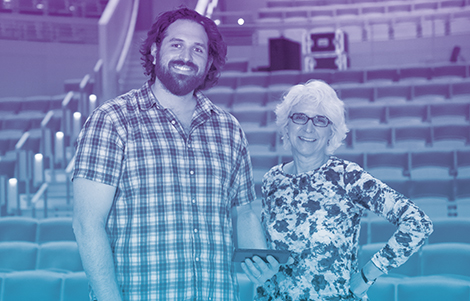
“The thought of coming to a new university was very attractive to me,” says William Rothstein, emeritus professor of sociology, and one of the professors hired for the university’s opening day.

“It was exciting to think about starting a program,” says Walter Sherwin, emeritus professor of ancient studies. “There was no one really over me. It was pretty heady stuff. It was all so exciting that I never thought about the risk.”

And as UMBC grew, it attracted more top-notch young faculty members – many of whom built lengthy careers in research and teaching at what was then the University of Maryland’s newest campus.

“I knew I was coming to a research university,” says Marilyn Demorest, emerita professor of psychology, “because it was the University of Maryland….We were University of Maryland faculty. And we were held to those standards.”

“It Was a Great Experiment”

Kuhn and Schamp initially organized UMBC into clusters: humanities and arts, social sciences, life sciences, and mathematics and physics. It was practicality at work: UMBC was too small to have full-fledged departments.

Finding faculty to meet the demand created by baby boomers also had an impact. Even established universities struggled to fill their professorial ranks in 1966. For many founding professors, UMBC was their first job.

Robert Burchard, emeritus professor of biological sciences, arrived on campus in January 1967, fresh from the Peace Corps, where he had been teaching microbiology in Nigeria and doing research on tsetse flies.

Burchard recalls that creating a new biology curriculum from scratch was invigorating: “It was a great experiment. And we were excited about what we were doing.”

Sherwin recalls that in the early years, offices were assigned by lot, and professors from various disciplines mingled together. “I enjoyed interacting with people outside my area,” he says. “We were in this together, and a lot of the conversation was not specific to discipline, but specific to making things work.”

Charles “Chuck” Peake, emeritus professor of economics, arrived in September 1967. “We had this idea we were going to build something,” he says.

Peake had an office in the “Gray House” that once stood outside Hilltop Circle near today’s athletics fields. He recalls that some classes were held in the Hillcrest Building that overlooked campus. “I remember walking up the hill past apple trees to get to classes,” he says.

The newness of the university, says Rothstein, also meant that “there was nothing to put your feet on. Everything was up for grabs.”
Su16-pioneer-2

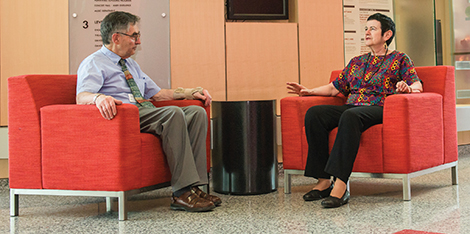
That feeling persisted through the university’s early years. “UMBC was an immense contrast to what I was experiencing in graduate school at Harvard,” says Joan Korenman, emerita professor of English and women’s studies, who arrived in 1969. “It was like a breath of fresh air. Everything was wide open and ready for discussion.”

UMBC asked Korenman if she was interested in a lecturer position in English. But at an interview, she indicated an interest in an assistant professor position. That was the position she was offered. Advancement was quick. Like many of her colleagues, Korenman discovered that the freedom to build had other obligations when she was appointed as an area coordinator soon after her arrival.

“Young faculty were expected to take on more administrative responsibilities,” she recalls.

“We Can Do This!”

Kuhn excelled in securing resources from the University of Maryland and state government. And as new students swelled the university’s enrollment, construction of UMBC’s physical campus was matched by an expansion of the faculty orchestrated by Schamp.

“I remember talking to Kuhn,” says Rothstein. “He told me: ‘I bring the money in, and Homer spends it.’”

Faculty took advantage of the opportunities. Jay Freyman, emeritus associate professor of ancient studies, landed at UMBC in 1968 with a Ph.D. in Classical Studies from the University of Pennsylvania. He says that the atmosphere at UMBC “was the same kind of attraction that someone feels when they go to a startup in Silicon Valley. It’s the ground up. There’s nowhere to go but up. You’re going to make something there that wasn’t there before. We could do some things that were offbeat. We could try things.”

Freyman had ideas about where his discipline was headed – and how he and his colleagues needed to adapt. “We recognized that a traditional ‘classics’ program would not survive. Latin and Greek. Those were the departments that were getting dumped,” he says. “We realized that in order to survive, we had to have a broader appeal than just linguistic and literary. So we incorporated history and archaeology. We were one of the first departments in the country to do this.”

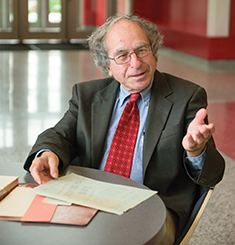
Ancient studies faculty members were also at the forefront of another great UMBC tradition: Study abroad. UMBC faculty had already leapt ahead of many other universities in creating a January session (dubbed the “minimester”). But it was Sherwin, Freyman and their colleague Rudolph Storch, emeritus professor of ancient studies, who organized and led trips to Italy and Greece in the first years of the university.
Su16-pioneer-3

For many of the students of that era, it was a mind-blowing adventure. Sherwin got the idea from a Fulbright fellowship he had at the American Academy in Rome that combined lectures and visits to historic sites. “I came back and told my colleagues, ‘We can do this! We will establish a program abroad.”

UMBC professors didn’t stop at curricular innovations. Burchard’s passion for environmentalism and pedagogy intersected when campus planners turned their gaze to Pig Pen Pond – a body of water that remained from the campus’ days as farmland – and planned to pave over half of it.

“The biology folks looked at that as a good teaching resource,” says Burchard. “I raised hell about it.”

Burchard and others succeeded in saving Pig Pen Pond. Today, it is a key element of the Conservation and Environmental Research Areas [CERA] – and it remains as a locus for campus research.

“Pushing for Quality”

UMBC did have growing pains. The administration and the faculty debated which courses should be required for graduation for a number of years. The denial of tenure to some popular professors hired in UMBC’s early years also elicited student protests.

And though UMBC was the first university founded in Maryland in the post-segregation era, racial disparities in enrollment, employment, and curriculum at UMBC quickly became apparent.

In May 1969, a committee created by Kuhn to achieve “significant integration of minority groups at UMBC” offered an array of proposals to the chancellor, including creation of a department of “Black Studies.” A year later, the university’s Black Student Union and a caucus of black faculty and staff pressed the case for change more urgently, and by the end of 1970, UMBC had hired Elechukwu Njaka from Tuskegee Institute to build a program with the rank of a division within UMBC.

Among the faculty who built the program was Daphne Harrison, emerita professor of Africana studies, and founder of UMBC’s Humanities Forum. “I found that UMBC was quite different from many institutions,” she recalls. “The attitude was that you as a professor are important, but the professor also has to work.”

Harrison taught a wide array of courses, but she says that her insistence on rigorous interrogation of notions received from mass culture was at the heart of the endeavor: “Young people were getting a lot of information but they didn’t know how to vet it. That was one of the things I remember doing with them. You have to know whether or not what you’ve got is real. You have to check to see whether it is accurate.”
Su16-pioneer-4

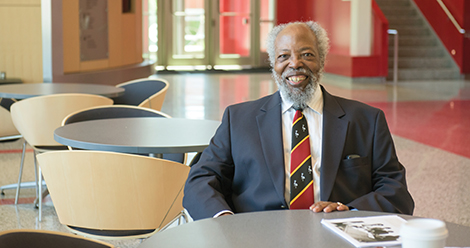
In 1975, UMBC hired Willie Lamousé-Smith from Syracuse University to head the program. A Ghanaian scholar who received his doctorate from the University of Münster, he was lured from a tenured positions in Syracuse’s Afro-American studies program department and as associate director of the East African studies program in its Maxwell School of Citizenship and Public Affairs.

Hiring Lamousé-Smith from a prominent research institution was one signal that UMBC aspired to raise its profile in the humanities. But demanding the best from students and helping them find their place in campus life was equally important to him.

“I do not intend to make people comfortable,” says Lamousé-Smith. “And that is my policy when I am teaching. People have to take their studies seriously. It’s only a short time in the person’s life. And yet the person’s whole future is going to depend and rely upon what that person does in that short period. So if I do not help the person to achieve their highest level, I feel I have not done well.”

Other key academic programs emerged. The late 1960s and 1970s was a busy era in experimental psychology – and psychology quickly became (and remains) one of UMBC’s most popular majors.

Demorest recalls hearing about “that place in Catonsville,” as she finished graduate studies at Johns Hopkins University and post-doctoral work at the University of Pittsburgh. She admits it didn’t sound appealing at first.

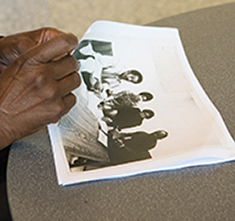
In 1972, however, she was recruited by the late Aron Siegman, a professor of psychology at UMBC. She reluctantly came for an interview and was surprised. “I spent two absolutely glorious days,” she recalls, “being passed from one faculty member to another, talking about every different type of psychology…. So I ended up coming to ‘that place in Catonsville’ really excited about being here.”
Su16-pioneer-5

Psychology launched one of UMBC’s first graduate programs: a community clinical psychology master’s program created in 1974.

Demorest says that the burgeoning quality of UMBC’s faculty in that era later helped her, as vice provost, to recruit others to campus to join her. “I would invite [candidates] to look at the credentials. We were recruited from first-rate institutions from Columbia and Chicago and Hopkins….and so we came in with the standards we were held to, and so those were the standards we held our students to. We didn’t know any different.”

“You Can’t Do That with Just Science”

Psychology was not alone in its prominence. Many founding faculty point to the arrival of the late Martin “Marty” Schwartz as the coordinator of the biology division in 1969 as the beginning of UMBC’s ambitious push to make grant-funded research an engine that would propel the university into maturity and excellence.

“The scientists were clearly the most hard-nosed in terms of academic research,” says Rothstein. “And making UMBC have a name for itself as a quality research institution, the sciences were clearly leading the pack.”

Phillip Sokolove, emeritus professor of biology, arrived in 1974 and found himself in the center of a busy hub of research activity spearheaded by Schwartz.

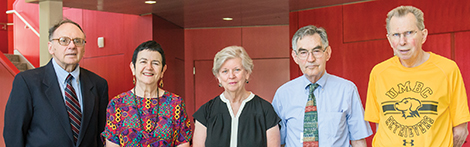
“He was a man with vision,” Sokolove says. “My interaction with him was extremely positive as a young professor. He was quite clear what the nature of the department was, and that we had to become one of the premier research departments on the campus, along with chemistry. Since Swartz was chair of both departments, and of the biochemistry department, he adds, “Schwartz saw them as natural allies.”
Su16-pioneer-6

Sokolove says that Schwartz was driven to get the best from his faculty. “He was able to give his faculty the time to do what they needed to do,” he recalls, “and then pushed them hard to do it. And when somebody came in and couldn’t cut the mustard he was ruthless. Not ruthlessly himself. What he did was turn the faculty into a well-developed jury of peers.”

Lamousé-Smith, who served with Schwartz on UMBC’s Council of Divisional Deans with Schwartz, recalls that he pushed for academic excellence and leadership with equal vigor. Schwartz was a “strong personality” who often played hardball over resources in meetings of academic leadership. “He would chew you up and spit you out and then embrace you and kiss you on the cheek,” Lamousé-Smith says.

“But Marty Schwartz was not just pushing for his own department, but for every department,” Lamousé-Smith continues. “Marty Schwartz, and his impatience, planted the seeds of pushing for excellence at UMBC.”Su16-pioneer-7

UMBC now boasts a strong balance between research and teaching across disciplines. That strength in all areas is part of its founding chancellor’s blueprint. As Kuhn told associate professor of history Joseph Tatarewicz in an oral interview conducted in 2001, UMBC was created at the moment when influential University of California system president Clark Kerr touted America’s universities as a ‘prime instrument of national purpose.”

Kuhn argued that a modern university “can’t do that with just science. You have to do that with understanding people. You have to do it with understanding the real drive that’s involved in the humanities and arts. And when you put it all together, it can be very forceful. Without all of it together, you won’t get there.”

“That place in Catonsville” – as Demorest fondly refers to it now – has come a long way toward fulfilling Kuhn’s vision because of the strength of its founding faculty, and the professors who have followed them to this day.


* * * * *

From the Editor:

The cover of the Summer 2016 issue of UMBC Magazine you may have received in the mail has a significant error for which I would like to personally apologize to our readers.

In our image of professors then and now, the magazine cover mistakenly paired a recent photo of Professor Emeritus of Africana Studies Willie Lamousé-Smith with an archival photo of longtime UMBC professor of Africana Studies Jonathan Peters from the Albin O. Kuhn Library’s collection of university photographs.

Our magazine team has redesigned the magazine cover digitally to pair Professor Lamousé-Smith with a correct image – which we have posted on the magazine website, to our Facebook site, and to our wider UMBC Alumni site. But I did not catch the error before the magazine was sent to the printing press and then on to our readers.

As you will discover both in the “Editor’s Note” to this issue and in the story about the founding faculty of the university (“So You Want to Be a Pioneer? – read below this note), Professor Lamousé-Smith’s wisdom and spirit have played a significant role in UMBC’s rising fortunes as a university through the decades. I have reached out to Professor Lamousé-Smith personally to apologize for this error.

The many contributions and achievements of our faculty and staff are a significant part of what we are celebrating this year in UMBC’s 50th anniversary. It has been part of the mission of UMBC Magazine to tell these stories accurately. In this case, we let our readers down. We hope this note serves both to correct the record and express our regret for the error.

Richard Byrne ’86
Editor, UMBC Magazine


Up on the Roof – Summer 2016

UMBC President Freeman A. Hrabowski, III, takes your questions.

The powerful connection between research and teaching has been a foundation to UMBC’s success. Why is this vital link so important to the university community? What makes this relationship special at UMBC?

– Richard Byrne ’86, English

When I talk with students and parents, or with donors, or with legislators about the uniqueness of UMBC, I invariably address the relationship between research and teaching at the university.

People often want to know why research universities expect their faculty to teach fewer courses than faculty at comprehensive institutions or community colleges. Parents often want to know if research faculty actually work with students, and what advantages there are for undergraduates who attend a research university. Even graduate students want to know: If I come to UMBC for a Ph.D. program, will I have not just the skills but the connections to get the job I want in the academy or in a company or a government agency?

This is what I say to them. First, there is the larger aspect of the research university. Faculty who do research – at a research university, or at a fine liberal arts college – are constantly asking good questions. They read the most up-to-date literature in their fields, and they are able to talk comfortably about the most interesting trends in these fields.

The students of these professors have the benefit of being pulled into fascinating conversations about this work. And as a result, students learn how to ask good questions, how to tackle problems, how to work collaboratively in interpreting data or in understanding the problems that we face in our society. We are creating new knowledge that can help in solving a variety of problems.

What makes the experience at UMBC special is that we are an institution that prides itself on undergraduate research as well as our strengths in graduate research. Undergraduate students get to work side by side with faculty in science labs, or with teams in the social sciences, or on projects in the humanities and the arts.

And whether they are undergraduates or graduates, UMBC students have the opportunity to think about their future in research – and how they can use those skills. They are important skills for those who seek academic positions, and also for those who seek positions at companies such as T. Rowe Price, or jobs at the Social Security Administration. That is the connection between the research and the teaching.

Our research faculty is strong at UMBC. From our beginnings, you had a number of faculty members doing first-rate research with students. I remember talking with Michael Hooker, my predecessor as president, about the fact that we had a number of excellent research faculty here. The problem was that many of our students were not able to take advantage of the high quality of research going on.

So we needed to recruit students who could take advantage of what our research faculty had to offer. But we also needed to look at the environment here. We started programs like the Meyerhoff Scholars Program. We used analytics to understand who was succeeding and who was not and to make changes. This gave us the foundation that we could build on. Because you must have students doing well academically in their course work in order to talk about having students involved in research activities.

We have moved to a different place now. In the 1980s, the average student at UMBC was not involved in research. Today you find that thousands of our students are engaged in research. This is happening across disciplines – from our two undergraduate research journals to students working in labs and publishing in academic journals. It’s a very different environment.

Mike Summers, a professor of chemistry and biochemistry, is one of our most noted researchers. He just became a member of the National Academy of Sciences. That is an immense achievement. But he is also a powerful mentor and teacher. In fact, one of his former students, Victoria D’Souza ’02, Ph.D., biochemistry and molecular biology, recently became a full professor at Harvard University.

This is just one example of this very important key to our success in developing the relationship between research and teaching across the disciplines. We have a large number of our research faculty who are also strong mentors and advisers to students in their research and in their careers. Those qualities in our faculty are why we send such a high percentage of our undergraduates to graduate school, and it is why so many of our graduate students go on to successful careers.

To send a question to President Hrabowski, visit Ask the President.

To You – Summer 2016

Richard Byrne

 My favorite part of this job is telling stories. Writing the story of our founding faculty in this issue is among the most enjoyable tales I’ve told so far. Some highlights for me:

* Listening to Robert Burchard, emeritus professor of biology, talk about launching a research lab in the earliest days of the university, with basic equipment at UMBC and the use of more specialized equipment at USDA labs in Beltsville: “The most important thing in my toolkit was a microscope,” he said. “I was asking interesting questions. I adapted.”

* Talking with Marilyn Demorest, emerita professor of psychology, who was delighted by a question about UMBC students. “We had the thrill of working with some really fine undergraduates,” she said, “who self-selected into our research teams and laboratories.”

* Sharing a table with Phillip Sokolove (who took his Ph.D. at Harvard University) at UMBC’s annual commencement dinner, and watching the emeritus professor of biology beam with pride as UMBC President Freeman A. Hrabowski, III introduced Victoria D’Souza ’02, Ph.D., biochemistry and molecular biology as the first UMBC alumna to be tenured at Harvard University.

* Hearing Walter Sherwin and Jay Freyman – emeritus professors of ancient studies – talk about their collaboration with students and staff in 1969 on a musical (Keep the Peace, Baby) based on their joint translation of Aristophanes’ Lysistrata. “The play was funny as all get out,” says Freyman, recalling that Myrrhina’s seduction of her husband Cinesias to entice him to commit to making peace was done as a striptease.

* Talking with Joan Korenman, emerita professor of English and women’s studies, and founder of the Center for Women in Technology (CWIT). “When I think of what was important to me during my career at UMBC,” she told me. “Women’s studies and information technology, The necessity I felt to combine those. At many universities, I don’t think I could have worked in those areas and done what I did. It says something about UMBC that they were open to all of this.”

* Sitting with Willie Lamousé-Smith, emeritus professor of Africana studies, as he spun stories about academic governance past and present. Lamousé-Smith was tremendously eloquent about the difficult road one must traverse to achieve knowledge: “If you want to put the discipline of learning into yourself, or into somebody, you have to cultivate asceticism in yourself. That is what I try to put into my students. Self-cultivated asceticism. So you can focus and do the work. And that is uncomfortable.”

I invite you to tell us your story at Retriever Stories (retrieverstories.umbc.edu) and I also invite you to return to campus to participate in the 50th Anniversary celebration September 16-19, 2016. See page six of this issue for a full guide to the weekend’s festivities – and check out our 50th anniversary website (50.umbc.edu) for all the events associated with this milestone event.

— Richard Byrne ’86

Marjoleine Kars and Kate Brown win prominent European University Institute fellowships

Marjoleine Kars and Kate Brown, both professors in UMBC’s history department, have been awarded prestigious fellowships to study at the European University Institute (EUI) in Italy for fall 2016.

Kars and Brown are recipients of the Fernand Braduel Senior Fellowships, which “provide a framework for established academics with an international reputation to pursue their research at the EUI. Fellowships last for up to ten months in one of the EUI’s four Departments which in turn invite fellows to participate in departmental activities (seminars, workshops, colloquia, etc.),” according to a description on the EUI website.

During her fellowship, Kars will finish her writing her current book project Freedom Marooned: An Atlantic Slave Rebellion in the Early Modern Dutch Caribbean. She is in the midst of finishing a ten-year research project about a little known but immense eighteenth-century slave rebellion in a Dutch colony in South America (now the Republic of Guyana). Kars has previously written a book about a farmers’ rebellion in pre-revolutionary North Carolina: “Breaking Loose Together”: The Regulator Rebellion in Pre-Revolutionary North Carolina (Chapel Hill: University of North Carolina Press, 2002), and she was a Dresher Center fellow in spring 2015. Read more about her work in the EUI’s announcement of her fellowship.

KateBrown-email

For her Fernand Braduel Fellowship, Kate Brown will work on her research project Circumnavigation: History’s Renovation in the Age of the Anthropocene. Brown is currently working on a research project about the communities circling the Chernobyl Zone. Earlier this year, Brown was named a 2016 Andrew Carnegie Fellow and she has received significant recognition for her 2013 book Plutopia: Nuclear Families in Atomic Cities and the Great Soviet and American Plutonium Disasters (Oxford 2013). Read more about Brown’s work and research in the EUI announcement.

As part of their residencies, Kars and Brown will also participate in the EUI’s Summer School in Comparative and Transnational History: Theories, Methodology and Case Studies. Kars will present Caribbean Slave Rebellions, Transnational History, and Nationalism and Brown’s talk is titled Soft Bodies: the child centered communities at ground zero of American and Soviet nuclear complexes. 

Learn more about the European University Institute and its prestigious fellowships and research programs on the EUI website.

Images: Marjoleine Kars and Kate Brown. Photos by Marlayna Demond ’11 for UMBC. 

During Rio games, John Rennie Short argues underestimated costs pose major challenges for Olympic host cities

As the 2016 Summer Olympics opened in Rio, John Rennie Short, professor of public policy, published an evocative commentary in The Conversation outlining challenges Olympic host cities face in organizing such a massive, resource- and infrastructure-intensive event.

In his article “On rocky road to Rio, the biggest loser may be the glory of hosting Olympics,” Short, who is an expert on urban issues, traced the history of the Summer Olympics, which have been held since 1896. He explained that the increasing size of the games and growing global coverage have contributed to the creation of underlying structural problems.

John Rennie Short

“The IOC often touts hosting the Olympics as a force for good, and there are the positive examples of Barcelona and Sydney. But for many cities, hosting the Olympic Games means taking on expensive projects where the costs are always underestimated, the benefits always overestimated and the legacy is obsolete athletic venues,” wrote Short. “Rio presents the worst-case scenario of costly overruns and inadequate infrastructure.”

Professor Short also described the rising costs of hosting the games and that potential host cities have backed out of consideration due to the potential lasting financial impact.

“The IOC maintains this power though the bidding process whereby cities have to compete to host the games. The arrangement favors the IOC as it forces cities to try to outdo each other,” he explained.

Short was also recently interviewed by Slate and The Atlantic about his proposal to establish a permanent host site for the Olympic Games designed to alleviate many of the problems he described in his article in The Conversation. 

For complete media coverage, read below.

On rocky road to Rio, the biggest loser may be the glory of hosting Olympics (The Conversation)
The Olympics should be in Vancouver. Winter and Summer. Every Two Years. Forever. (Slate) 
What if the Olympics were always held in the same city? (The Atlantic)

Images: Olympic Rings at St. Pancras Railway Station, London, 2011. Photo by David Holt, CC by-SA 2.0. John Rennie Short, photo by Marlayna Demond ’11 for UMBC. 

UMBC scientist launches company to commercialize new oral vaccine to save fish industry millions

Every year, millions of fish raised in aquaculture die of nervous necrosis virus (NNV). “The disease affects the brain, and the fish lose their vision and balance,” says Vikram Vakharia, professor of marine biotechnology at UMBC. As a result of damage to the nervous system, “the fish just swim in circles,” Vakharia says. His lab is housed at the Institute of Marine and Environmental Technology (IMET) on Baltimore’s Inner Harbor.

In 2013, the Maryland Innovation Initiative (MII) funded Vakharia to develop a vaccine that protects fish from NNV. He successfully developed an effective vaccine, but it had to be injected into each fish individually—a labor-intensive and costly process. Then BioHealth Innovation, a public-private economic development partnership in Maryland, approached Vakharia to develop a market study and business plan. BHI found that farms would prefer an oral vaccine, because it’s much easier to deliver a vaccine via food pellets. That’s what Vakharia tackled next.

He succeeded in the lab, and, along with BioHealth Innovation, formed a company called VakSea, Inc. to convert the lab success into a commercial product. Recently, VakSea licensed the technology from UMBC and will collaborate with Allotropic Tech, Inc. a bwtech@UMBC company that will produce the vaccine product. It will be mixed with food pellets in large quantities for an upcoming clinical trial as part of an MII phase III grant. This moves Vakharia one giant leap forward in tackling a major obstacle facing the $70 billion farmed-fish industry.

“It will be novel to deliver the vaccine orally. A lot of people will be interested,” says Vakharia. NNV is particularly prevalent in East Asia and countries that border the Mediterranean Sea such as Greece, Italy, and Turkey.

Vakharia is continuing to work on new ways to increase the vaccine’s efficacy, and VakSea submitted a Small Business Innovation Research (SBIR) grant to the National Science Foundation that would support that work.

Even with this major advance to combat NNV on the horizon, there are plenty of other diseases that wreak havoc on fish populations globally. “If this works,” Vakharia says, “it opens the door to use this technique with other pathogens.”

Image: At the VakSea license signing. From left to right: Vikram Vakharia (UMBC), Kurt Herzog (BHI), Wendy Martin (UMBC), Ken Malone (BHI), Bob Balcerzak (Allotropic). Photo by Nick Hammond (IMET).