All posts by: UMBC News Staff


Piotr Gwiazda, English, to Read at Walters (3/10)

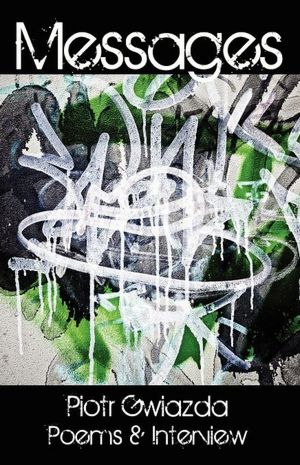
Associate Professor of English Piotr Gwiazda will read from his new book, Messages: Poems & Interview, at the Walters Art Museum on March 10.

Also reading will be Campbell McGrath, the author of ten books of poetry, including Spring Comes to Chicago, Florida Poems, Seven Notebooks, and most recently In the Kingdom of the Sea Monkeys (Ecco Press, 2012).

The reading will take place at the The Walters Art Museum, 600 N Charles St., Baltimore, MD 21201, at 2 p.m. on March 10.  It is free to the public.

Piotr Gwiazda, English, Publishes New Book

Associate Professor of English Piotr Gwiazda has recently released a new book entitled Messages: Poems & Interview.

Much of the book was written during Gwiazda’s residency at the James Merrill House in Stonington, Connecticut in the fall of 2008. Some poems first appeared in Linebreak, Mudlark, Past Simple, Revolutionesque, Vallum, and other journals. In the interview, Gwiazda talks about literary influence, the concept of empire, “the right to illusion,” contemporary US poets, Brecht, poetry and politics, poetry and pedagogy and exophonic writing.

The book is published by Pond Road Press, which publishes poetry books and chapbooks that include author interviews.

Kristin Waters, Office of the Registrar, Runs for Charity

Kristin Waters has set a 2012 challenge of raising $1,834.00 for First Descents, an organization that offers young adult cancer fighters and survivors a free outdoor adventure experience to empower them to defy their cancer and reclaim their lives. Kristin has set out to run 7 marathons in the state of Maryland in 2012; the total distance of 183.4 miles, with hopes of raising $10/mile. Kristin’s first marathon of the year was the 51st Annual George Washington Birthday Marathon on February 19 in which Kristin finished in 4:26:42. Her next marathon will be on March 3. More information on Kristin’s challenge and First Descents can be found here: http://teamfd.firstdescents.org/2011/fd/MDMarathoner/kristin/.

For more information, contact Kristin at kwaters@umbc.edu or ext. 5-8121.

Robert Provine, Psychology, in Documentary

A film shot last spring about the research of Robert Provine, psychology, and his undergraduate researchers aired in France and Germany on Dec 30.  The English version is forthcoming, but the German version can be seen below.

The program is mainly focused on Provine’s research into laughter and his book.  The crew spent about a week in Baltimore and UMBC, shooting material in Provine’s lab, one of my lectures, the Commons, and the American Visionary Arts Museum that had an exhibit featuring his work. Matt Groening of The Simpsons, Patch Adams and others were collaborators in the AVAM show. 

See the German language film here.

Robert Provine, Psychology, in Essay Collection

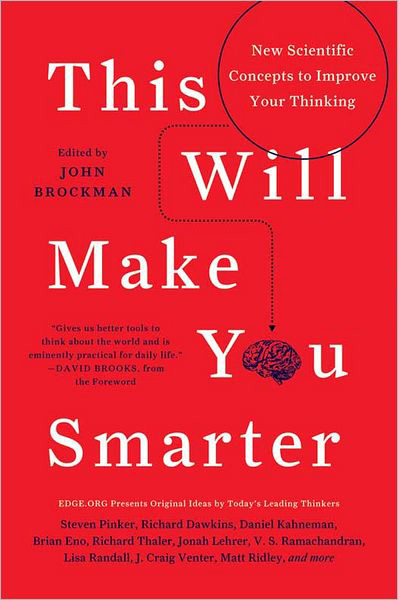
Robert Provine, psychology, has an essay in a newly published collection entitled This Will Make You Smarter. The book is the latest in a series by the website Edge.org, which focuses on an annual question posed to today’s leading thinkers.  This year’s question was “What scientific concept would improve everybody’s cognitive toolkit? “

This is Provine’s seventh contribution to the series, and his essay is entitled “TANSTAAFL” (“There ain’t no such thing as a free lunch”). It focuses on the fact that everything has its price, a concept relevant to everyday life as well as all sciences. The idea of TANSTAAFL borrows from Robert Heinlein’s science fiction classic, “The Moon is a Harsh Mistress.”

Contributors to the book include Daniel Kahneman, Richard Dawkins, Daniel Dennett, Sam Harris, Martin Seligman, Martin Rees, Robert Sapolsky, Steve Pinker, Jaron Lanier, V. S. Ramachandran, Lisa Randall, Brian Eno, J.Crain Venter, David Brooks, and others.  All of the essays can be read here.

Remembering Robert K. Webb

From Marjoleine Kars, Chair of the History Department

I regret to inform the campus that Robert K. Webb died on February 14. Born in 1922, Bob Webb was long the preeminent American scholar of British history, with a glittering array of Guggenheim, NEH, and other fellowships and distinctions. He came to UMBC in 1975, from being editor of the American Historical Review, the nation’s most important journal of history, and before that he had been Professor of History at Columbia University.

Giving his energy, leadership, and commitment, not just his name and stature, to UMBC, he helped shape not only the History Department but also the University. He was chair of the History Department for much of the period from the mid-1970s until his retirement in 1992, served a year as UMBC’s Acting Vice Chancellor for Academic Affairs (now Provost), and was named UMBC’s first Presidential Research Professor. He remained connected to the Department after his retirement, partly through the R.K. Webb Lecture. His obituary in the Washington Post can be found here.

Our New Heroes

Our New Heroes

With a cape draped over his rugby uniform, Jeremy Brickey clutches the complete works of Shakespeare and smiles for a camera. No, this isn’t an embarrassing initiation to the team.  Brickey ’12, English, is posing for the latest round of admissions advertisements based on “UMBC Superheroes” – students who come to UMBC, find their passions, and soar.

What Brickey loves about UMBC is that he is able to simultaneously pursue his interests in rugby, theater and community service, and he wants to spread the word to high school students that they, too, can follow their myriad passions at UMBC. “The ads show the diversity of UMBC in a way that’s not just related to race or culture,” he said. “They break down those stereotypes that students in high school believe, like that you can’t both play sports and be involved in theater.”

That’s exactly the idea. The campaign, which debuted last year, is also designed to show students that “making a difference in the world” isn’t a cliché; there are actual students doing just that. To get that point across, the ads move beyond the typical cameos of students interacting on campus. They feature the students with a prop, such as Brickey’s cape or boxing gloves, against a comic-book background and have a brief explanation of what makes each student “super.” Within the field of university advertising, the ads stand out.

That was part of the point, explains Erin Ouslander ’03, visual arts, the print design specialist who designed the advertisements. “From a distance, you would probably never guess that these ads related to higher education in any way. I really like that element of surprise when you read the copy and realize the ad’s true purpose,” she said.

Nearly all of the work for the campaign—from the research to design to copy writing—was done within UMBC’s Marketing and Creative Services department. Erika Ferrin, director of marketing, said that the department’s research led to the inspiration to portray the students as heroes. “We looked around at what was going on with teenagers, and we found that this superhero thing was really catching on,” she said. “Our campus is so hard to represent in one picture, so we decided to focus on student stories because those stories really tell what kind of students come to UMBC.”

The ads resonated not just with high school students, but with the advertising community as well: the campaign recently earned national and regional gold Circle of Excellence awards for advertising from the Council for Advancement and Support of Education (CASE).

“When you look at advertising, it’s the stuff that pushes the envelope that wins awards,” said Miriam Tillman, assistant vice president for marketing and creative services. “What I am most proud of is that we took a risk—an informed risk, but still a risk—and the institution was willing to back us up.”

After the first round of ads, an essay contest helped to choose this year’s heroes.  The essay asked students to describe their hero, and the marketing staff solicited input from faculty in judging the entries. Out of over a hundred entries, they eventually chose Leslie Weber ’15, psychology and media and communication studies, as the winner.  A victim of bullying who hopes to become a counselor, she wrote “It’s up to me to use the tools given to me from UMBC to be my own hero.”

Weber, Brickey and the rest of the superheroes will be flying, dashing and boxing their way into high schools this spring.

(2/1/12)


Michael Fallon, English, to Read at CityLit Festival

Michael Fallon, senior lecturer of English, will be a featured poet at the ninth annual CityLit Festival. Presented by CityLit Project and Pratt Library, the festival takes place on Saturday, April 14, 2012 from 10 a.m. – 5 p.m. at the Enoch Pratt Central Library.  Fallon’s reading will take place at 12 p.m. in the library’s Poe Room. The festival features panels, readings, book signings, the Maryland Humanities Council’s annual “Letters About Literature” ceremony, and a Literary Marketplace.

Fallon’s recent works have appeared in The American Scholar, The Antietam Review, Sin Fronteras, The Attic, and The Oyez Review. His book Since You have No Body won the 2011 Plan B Press Poetry Chapbook Competition.

Joining Fallon at the festival will be Steve Jobs biographer Walter Isaacson, Guggenheim Foundation president and bestselling poet Edward Hirsch, winner of the prestigious Kingsley Tufts Poetry Award Tom Lux and others.

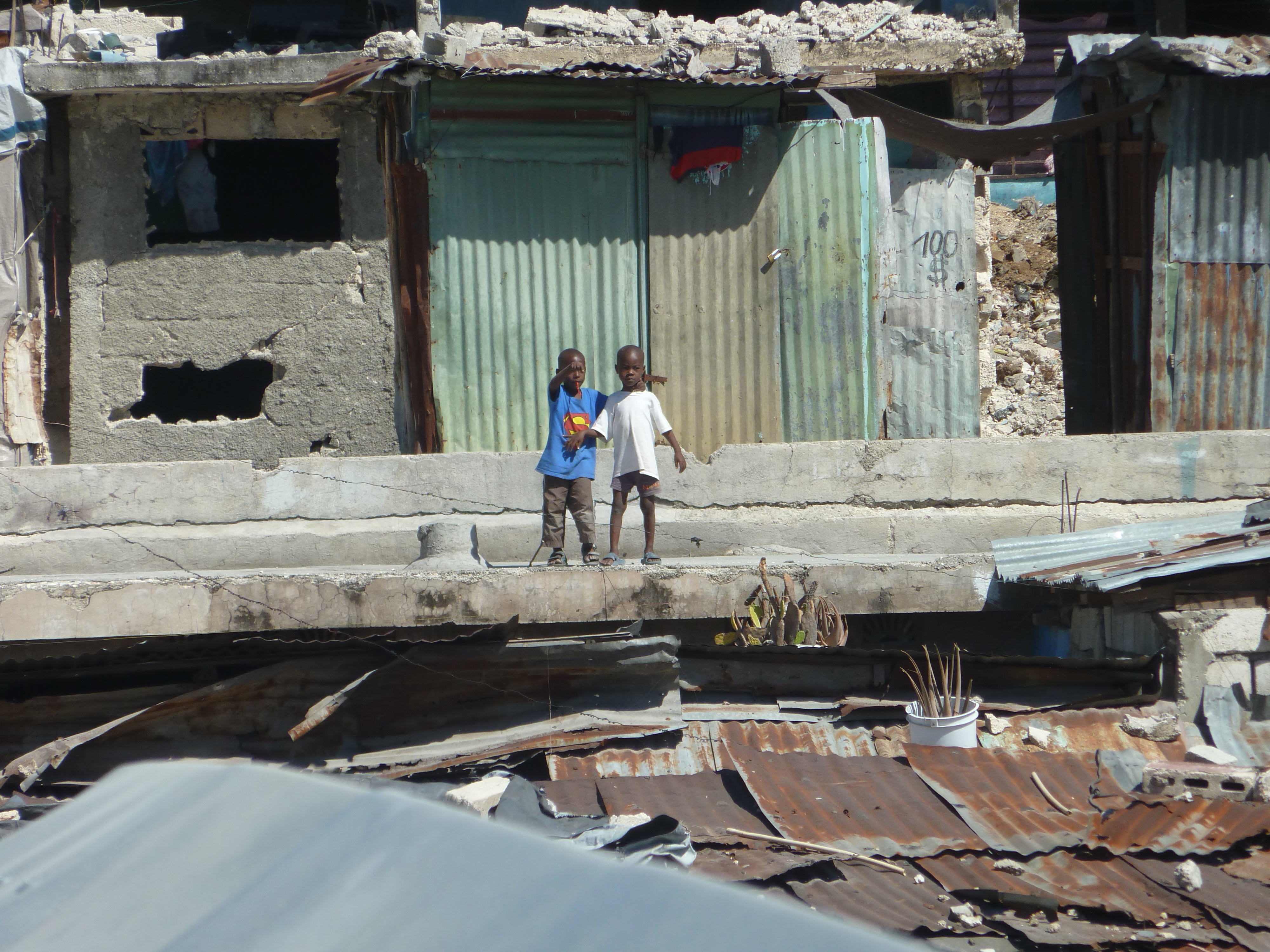
Two Years After the 2010 Haitian Earthquake: Observations by a member of JCET Faculty

Marko H. Bulmer is the Director of the Geophysical Flow Observatory, JCET at UMBC.

On January 4, 2012, I traveled to Haiti to join the Brazilian Military Contingent contributing to the United Nations Stabilization Mission in Haiti (MINUSTAH) mission. The purpose of the trip was to identify lessons from the United Nations Mission relevant to humanitarian emergency response and the use of Military and Civil defense assets to support United Nations humanitarian activities in complex emergencies.

First, a little background, a series of major earthquakes struck Haiti on 12 January 2010 in the area around the capital, Port-au-Prince. The strongest of these was a magnitude 7 that occurred at around 1700 hrs local time. There were over 200,000 fatalities and more than 150,000 people had to be buried in mass graves. Some 105,000 homes were completely destroyed and more than 208,000 damaged. Over 1,300 educational establishments and over 50 hospitals and health centers collapsed or were designated as unusable. Part of the country’s main port was not operational, the President’s Palace, Parliament, the Law Courts, and most of the Ministry and public administration buildings were also all destroyed.

At the time, there was already a UN Mission in Haiti which had been there since 2004 that included 6,700 troops as well as 548 civilian staff, mandated to pacify the country, promote free elections and resume national governance. Ninety six UN peacekeepers died in the earthquake but that UN Mission formed the core around which the Earthquake response was organized. On 19 January 2010 the Security Council passed resolution 1908, which increased the military force to 8,950, with 4,391 police to support the immediate recovery, reconstruction and stability efforts in the country. By the 25 January 2010 the UN Food Cluster had reached over 500,000 of the 2 million in need, with some form of assistance. The UN Shelter Cluster estimated that 800,000 people were living in spontaneous settlements in Port-au-Prince.

I’m a NATO Expert in Civil Protection and specialize in Natural Hazards and Emergency Planning with experience in natural and human-induced disasters from around the world. I’m also trained in Stabilization, which is the process by which underlying tensions that might lead to resurgence in violence and a break-down in law and order are managed and reduced, while efforts are made to support preconditions for successful longer-term development. My work in Haiti encompassed the notion of political transformation and disaster recovery. It focused on construction or reconstruction of the social, administrative, and physical infrastructure in a country prone to hurricanes, floods, landslides and earthquakes.

Simon Peacock, an expert in logistics from the United Kingdom, and I gathered and analyzed civil / military coordination information interacting with Haitian organizations, IGO’s and NGO’s, the Civil functions within MINUSTAH, and at times with Ministers and Ambassadors. Security conditions vary across Haiti, especially in the capital, parts of which can be very volatile. Over 400,000 people still live in camps many of which struggle in meeting basic human needs. Orphanages number in the hundreds, many of which are not officially registered. Gangs continue to be active. Murder, rape and lynching are some of the challenges facing the Haitian National Police (HNP) who are being mentored by United Nations Police and the military. Regional elections are expected to be held later this year and these will require a large security and logistics operation. Medical hazards include malaria and cholera as well as HIV AIDS. In addition, there remains considerable vulnerability to the impacts of natural events.

Delivering appropriate and effective civil / military cooperation in this complex environment requires real commitment and dedication. I saw many outstanding activities and projects and learned a great deal to bring back to UMBC and introduce to the appropriate departments and across the wider academic community.

M. H. K. Bulmer PhD

U.S. Scientists Say Environment Canada’s Cuts Threaten the Future of Science and International Agreements

In August 2011, hundreds of Environment Canada scientists and staff working on environmental monitoring received notice their positions were targeted for elimination. Ray Hoff, Professor of Physics, at UMBC and his colleagues published a commentary this week in the American Geophysical Union’s publication Eos criticizing Environment Canada’s cuts, the first such criticism from U.S. scientists.

Hoff and his colleagues say that research conducted by scientists in Canada has been instrumental in the success of international agreements such as the Montreal Protocol, international legislation that has successfully reduced atmospheric levels of ozone depleting substances.

Other international agreements that may be endangered by the cuts are the Vienna Convention to Protect Ozone Layer, the Ottawa Declaration, Great Lakes Water Quality Agreement, U.S. Canada Air Quality Agreement, and the U.N. Framework Convention on Climate Change.

With the loss of so many scientists who conduct environmental research in this part of the world, say Hoff and his colleagues, it is not clear whether Canada will be able to keep its commitment to these agreements.

Read the commentary
News Coverage

Constantine Vaporis, History and Asian Studies, Contributes to Exhibition

Constantine Vaporis, professor of history and director of the Asian studies program, is a consultant and writer on a new exhibit opening at Washington D.C.’s National Geographic Museum on March 7.  “Samurai: The Warrior Transformed” examines the transformations experienced by Japan’s samurai and is built around material artifacts of samurai culture, including gifts of the same given by the Japanese government to American presidents and mid-nineteenth century portraits of the warriors. A companion exhibit displays images by writer, photographer and geographer Eliza Scidmore, who was instrumental in the gift of the Japanese cherry trees to Washington that adorn the Mall and Tidal Basin.

The exhibit runs through September 3, 2012 was planned to coincide with the National Cherry Blossom Festival, which runs from March 20-April 27. This year marks the the 100th anniversary of the Japanese gift of cherry trees to the U.S.

Students are invited to join the Asian Studies Program, the Honors College and the Humanities Scholars Program for a trip to Washington D.C. on April 7. The group will visit the exhibit and then have free time to visit the mall, other museums and festival. The bus will leave UMBC at 9 a.m. and depart from Washington at 3 pm. A $12 fee covers the cost of transportation to and from Washington and the price of admission to the National Geographic Museum. Students can contact Lisa Whittle to register.

University of Michigan Press Blogs about Ellen Handler Spitz, Honors College

The University of Michigan Press recently posted to their blog about the travels that Ellen Handler Spitz, honors college professor of visual arts, completed this winter. The post, entitled “‘Illuminating Childhood’ author recounts her travels in Czech Republic and India,” is based on Spitz’s recent post to UMBC’s Talking Heads blog. Spitz’s book Illuminating Childhood: Portraits in Fiction, Film, and Drama was published by the press and will be available in paperback this March.