All posts by: UMBC News Staff


Ellen Handler Spitz speaks with pediatricians about connections between early reading and child health

Honors College Professor Ellen Handler Spitz addressed dozens of pediatricians at a special lecture on early reading and child health at the Pediatric Academic Societies Meeting last week. The 7,000-member organization held its 2016 annual convention in Baltimore, April 30-May 3.

The group Spitz presented to studies the ways in which dialogic reading between parents and children activates the brain and promotes growth in the early years of development. The program Reach Out and Read is a key unit of the Literacy Development Programs in Primary Care, which falls under the umbrella of the distinguished, research-based Pediatric Academic Societies.

Professor Spitz gave an illustrated lecture in the form of a collage of approaches to reading picture books to young children. Among other topics, she discussed the evolution of the primer and spoke about how books help children to channel and modulate strong feelings. She stressed the conversational aspects of reading and at one point screened images of President Barack Obama and First Lady Michelle Obama reading Maurice Sendak’s Where the Wild Things Are to children on the White House lawn.  An extensive, energetic discussion between Spitz and the audience followed the talk.

“In the Honors College I teach literature and the arts to so many gifted undergraduates who go on to medical school,” explains Spitz, on one of the many connections between literature and medicine. “More and more people are grasping how central the humanities are to good medical practice, to establishing trust, and to the fostering of cultural understanding.”

Read more about the Pediatric Academic Societies meeting.

Image:  President Obama reads “Where the Wild Things Are” by Maurice Sendak on the Story Time Stage at the 2012 White House Easter Egg Roll Monday, April 9, 2012 in Washington, D.C. U.S. Department of Agriculture photo, CC by 2.0

UMBC to have strong presence at the 2016 Latin American Studies Association Conference

The Latin American Studies Association (LASA) is the largest professional association in the world for individuals and institutions engaged in the study of Latin America. This year, several UMBC faculty across disciplines will present their research at the 2016 LASA Conference.

The conference, which takes place in New York City from May 27 to May 30, celebrates the 50th anniversary of the association and will feature guest speakers Ricardo Lagos, former president of Chile, and Fernando Henrique Cardoso, the former president of Brazil.

UMBC faculty from modern languages, linguistics, and intercultural communication (MLLI), political science and global studies, and gender and women’s studies, are organizing panels and presenting papers at the conference.

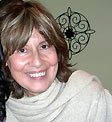
sara_poggioSara Poggio, associate professor, MLLI, is chair of the International Migrations Section of LASA and organizer of the section’s pre-conference “New York as a Global City: A Critical Perspective.” She will also present her paper “The experience of immigrant children in the United States: theoretical and methodological challenges” as part of the panel “Retos metodológicos en la etnografía de la infancia/juventud en contextos migratorios.” In addition, Poggio will be the discussant of the panel “Three Challenges to Brain Drain Theory from a Latin American Perspective: Feminization of Skilled Migration, Medical Migration and Methodological Nationalism” and chair of the panel “Understanding immigration and immigrants through the lens of time.”

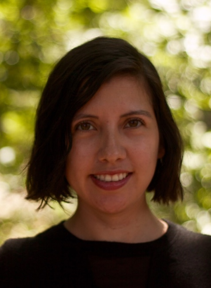
Tania LizarazoTania Lizarazo, assistant professor, MLLI and global studies, is organizer of the panel “Manufacturing violence and its aftermath: militarization and memorialization in Latin America.” As part of the panel, she will be presenting her paper “Digital Utopias: Post-Conflict Archives in Colombia.”

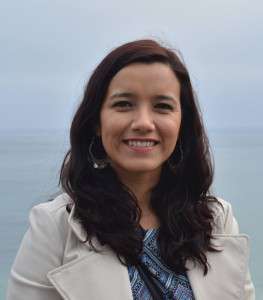
Thania MunozThania Muñoz Díaz, assistant professor of Spanish, Latin American and Latino studies, MLLI, will present a paper titled, “Zombies, Immigrants, Detectives, and the Latin American writer in the United States: memoria narrativa in Norte (2011) by Edmundo Paz Soldán” in the panel “Siglo nuevo, ficciones nuevas.” She will also participate in the pre-conference of the International Migrations Section of LASA with the paper: “Narrative Memory and Latin American Migration in New York.”

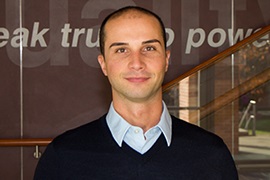
Felipe FilomenoFelipe Filomeno, assistant professor, political science and global studies, is organizer and chair of the panel “Globalizing cities, migration and the state in Latin America.” As part of this panel, he will be presenting his paper “Global Cities and Local Immigration Policy in Latin America.”

VivianaMacmanus-emailViviana MacManus, assistant professor, gender and women’s studies, will present a paper titled “Disposable Bodies of Neoliberalism: Immigration, Gender and The Politics of Representation in Transnational Documentary.”

For more information, visit the Latin American Studies Association website.

Header image: Tania Lizarazo presents at a Dresher Center event. Photo by Marlayna Demond ’11 for UMBC.  

Zhibo Zhang wins prestigious International Radiation Commission Young Scientist Award


Zhibo Zhang, assistant professor of physics, has his mind in the clouds. Fortunately, Zhang is an atmospheric physicist focusing on the role clouds play in climate, so his eye on the sky has resulted in important research findings leading to his recognition as a rising star in his field.

The International Radiation Commission (IRC) presented Zhang with its Young Scientist Award at the quadrennial IRC symposium in Auckland, Australia, April 17–21. This prestigious recognition is given to only one scientist every four years who “has made recent noteworthy contributions to radiation studies and is regarded as having great potential to become a leading radiation scientist in the future.”

Zhang received his Ph.D. in atmospheric physics from Texas A&M University in 2008 and joined the Goddard Earth Sciences and Technology Center at UMBC in January 2009, before starting at UMBC’s Joint Center for Earth Systems Technology in 2011. After just a short time at UMBC, he took on the role of graduate program director for atmospheric physics and was promoted to associate professor. In 2013 he received a NASA New Investigator Program Award in Earth Science.

Zhang’s work focuses on determining how clouds contribute to climate change in the long term, which is a deceptively difficult question to answer. It requires understanding the “microphysics” of nanoscale cloud droplets as well as the movements of large blocks of clouds tens of thousands of kilometers across. Zhang and his team analyze data from several Earth-orbiting satellites to validate and tweak innovative numerical models they develop to predict the role of clouds in climate.

For example, clouds cover approximately 60 percent of Earth’s surface at any one time and shield the planet from the sun’s radiation, cooling the Earth. However, smoke from fires or other air pollutants can gather above clouds, absorb heat, and prevent it from escaping the atmosphere, contributing to warming. Zhang’s lab examines data from areas where this occurs and develops models for how this phenomenon affects climate. By using many kinds of data, “we begin to put the pieces of the puzzle together,” Zhang says.

“Zhibo is a very talented young faculty member whom the department is proud to have as a member,” says physics department chair Michael Hayden. Zhang introduced curriculum revisions for the atmospheric physics program that were adopted by the faculty, and “his new vision will guide us through the next decade and ensure that the program will continue to grow and prosper,” Hayden says.

Due to its international stature, the benefits of Zhang’s achievement will extend beyond the physics department. “The award will increase my visibility and the visibility of UMBC,” says Zhang, who shares that the environment at UMBC has been perfect for him to pursue his research.  “People really support you and encourage you,” he says. He’s delighted to have “a young and energetic team” working in his lab, all of them with their heads in the clouds.

Michael Summers, HIV researcher and mentor, elected to National Academy of Sciences

Michael Summers, Robert E. Meyerhoff Chair for Excellence in Research and Mentoring and University Distinguished Professor of chemistry and biochemistry, has been elected to membership in the prestigious National Academy of Sciences (NAS). Summers is one of only 84 new members and 21 foreign associates from 14 countries elected this year. Membership is one of the highest honors that a researcher can receive.

Summers’ election is a major milestone for UMBC as the university approaches its 50th anniversary, one that acknowledges Summers’ exceptional contributions to the scientific community and UMBC’s stature as a nationally and internationally recognized research university. This honor also recognizes Summers’ leadership in demonstrating what an inclusive university community committed to both teaching and research can achieve.

“For the Academy to recognize someone who tries to do quality research, but does it in an environment that is inclusive and involves undergraduates makes it so much more special to me,” said Summers. “I feel like it’s a recognition to all of us. There’s no way I’d be in this position if it weren’t for the support of the UMBC community, and especially the students who have worked in my lab, who made the discoveries that made this all possible. It really is a cumulative effort.”

Summers, a Howard Hughes Medical Institute investigator since 1994, focuses on HIV-1, the retrovirus that causes AIDS. His lab’s groundbreaking work has determined the 3D structure of several components of the HIV-1 retrovirus using an imaging technique called nuclear magnetic resonance (NMR) spectroscopy.

“Mike’s spent the last 30 years studying the structure of HIV by developing and using revolutionary NMR methods,” says Zeev Rosenzweig, professor and chair of chemistry and biochemistry at UMBC. “Undoubtedly, these contributions have led to increased understanding of HIV.”

Now Summers’ lab seeks to learn more about how components of the virus interact with each other and other parts of the cell, and how those interactions change when a virus matures to an infectious state. “We’ve developed new ways of inhibiting the virus, providing important insights into how the virus functions and into how new drugs could potentially be developed,” says Summers.

Summers is also known for his deep commitment to training the next generation of leading scientists, from high school through postdoctoral levels. He has received mentoring awards from the White House, AAAS, and many others. Many of his UMBC undergraduates have had the uncommon opportunity to publish their work in high-profile, peer-reviewed journals.

Because of Summers’ mentorship and advocacy, “hundreds of scientists from underrepresented groups completed their degrees at UMBC and other academic institutions and medical schools all over the United States,” says Rosenzweig, “and now they hold leadership positions in academia, government, industry, and other sectors.”

Summers also serves the university beyond research and teaching as program director of grants from the Howard Hughes Medical Institute (HHMI) and the National Institutes of Health (NIH). He also represents the UMBC Meyerhoff Scholars Program—described in Science as the “gold standard for providing a path into academic research” for students from underrepresented groups—to constituents beyond our campus.

“He represents the Meyerhoff program so effectively to the world, demonstrating through his deeds and time that students from all backgrounds can make huge contributions to science if they have the perseverance, determination, and support to succeed,” says David Asai, senior director of science education at HHMI.

Summers has recently been involved in developing a collaborative partnership with the University of North Carolina at Chapel Hill and Pennsylvania State University to adapt UMBC’s Meyerhoff program at those schools, through $7.75 million in support from HHMI. “This work requires hard work, patience, and the ability to navigate around unforeseen barriers,” says Asai.

“Michael Summers represents the best of UMBC,” says President Freeman Hrabowski. “He’s a great researcher, a great teacher, and an amazing human being. We are so proud to call him a member of our community.

Image: Michael Summers with students and a 3D model of a virus. Photo by Marlayna Demond ’11 for UMBC.

Erickson School partners with Chase Brexton LGBT Health Resource Center for digital storytelling project

Students in this semester’s management of aging services first year seminar have been working with seniors who are part of the LGBTQ community to create digital stories about their lives. The class partnered with the Chase Brexton LGBT Health Resource Center and groups of students have been working with seven seniors over the course of the semester.

The completed stories are scheduled to be screened at an event at UMBC on Tuesday, May 3, and they are also expected to be shown at Pride and other events around Baltimore later this year. Students in the class worked with the seniors to gather audio interviews, photos, videos, and other material to produce digital biographies as the seniors reflected on their lives.

Saurabh Saini ’19, computer science, Dorjan Leka ’19, biology, and Hong Kun ’19, computer engineering, worked with Breezy Bishop, who had a distinguished career coaching women’s basketball at Western High School in Baltimore, and has since started a college scholarship fund for students who may not have the financial means to go to college.

The students learned about the various people who influenced her and some of the challenges and discrimination she faced throughout her life.

“Throughout this experience, I’ve learned how to look at things from a different perspective,” says Leka. “Breezy’s story inspires us to work hard in everything that we do.”

“In this class, you’re not dealing with textbooks,” explains Saini. “You’re dealing with life stories, and that’s powerful.”

The seven digital stories will be screened at an event in Sherman 145 at 4 p.m. on Tuesday, May 3. This semester’s course is taught by Erickson School Undergraduate Program Director Galina Madjaroff. In past years, the class has partnered with the Arbutus Senior Center and Charlestown.

Image: Saurabh Saini ’19, computer science, Dorjan Leka ’19, biology, and Hong Kun ’19, computer engineering, work on their digital storytelling project. 

Michele Stites shares research at White House Operation Educate the Educators event

On April 13, The White House hosted an event for educators around the country to highlight and integrate existing knowledge about military-connected K-12 students. During the conference, Michele Stites, an assistant professor of education, shared her research in a working group on ways to better educate teachers to help them support military-connected students and their families.

Stites was invited to the event as the White House recognized her for work to build awareness for military-connected families and research to identify how teachers and therapists can better meet the needs of these children and their families. Stites is an expert in early childhood education and has conducted research on preparing educators to work with students with special needs, military-connected children, and inclusion.

In her working group at the Operation Educate the Educators conference, Stites identified common stressors on military children such as geographic mobility and parental separation and discussed the importance of providing support networks for students when a parent is deployed or when students need to transition between schools.

Stites also stressed the importance of meeting the needs of military-connected students through training for educators about military deployment cycles, lifestyles, and providing information about resources available to military families.

“We need to make sure we are supporting military families and work with teachers to help them better communicate with families, anticipate deployments, and identify what we can do to help,” Stites explains. “We can’t provide all of the answers, but we can help provide resources and be more responsive to families’ needs.”

In additional to panel discussions, Dr. Jill Biden and U.S. Education Secretary John B. King, Jr. addressed educators at the conference, which brought together higher education leaders from institutions such as Tufts University, University of Minnesota, University of Southern California, and Texas A&M University, among many others.

Earlier this year, Stites published research on how early childhood teachers perceive the educational needs of military dependent children in the Early Childhood Education Journal to help illuminate gaps in current scholarship about military-connected children. To learn more about Prof. Stites’ research, visit the education department website.

Image: Michele Stites. Photo credit Heather Crowder.  

UMBC Meyerhoff Scholars and alumni celebrate personal impact of a nationally lauded program

UMBC’s Meyerhoff Scholars Graduation Dinner, held April 13, 2016, served as a meaningful bookend to a life-changing college experience for 66 class of 2016 graduates. The Meyerhoff Scholars Program “is something that has to be lived,” says program director Keith Harmon. “We address the scholar, but we also address the whole person.”

The annual graduation dinner is an opportunity to celebrate the accomplishments of each Meyehoff Scholar and the transformative impacts of the program, described by Science as “the gold standard for providing a path into academic research for groups…now underrepresented in the STEM (science, technology, engineering, and mathematics) fields.”

The program is known for fostering in scholars a sense of perseverance, spirit of community and support, and devotion to excellence and integrity—qualities that they will carry with them throughout their lives and careers—starting on day one of Summer Bridge before freshman year.

Meyerhoff alumni Kafui Dzirasa ’01, chemical engineering, and Erica Childs ’05, mathematics and statistics, spoke at the event, reflecting on their UMBC experiences and sharing their paths since graduation.

Dzirasa received his M.D. and Ph.D. at Duke University and is now an assistant professor of psychiatry and behavioral sciences at Duke. He recently received the Presidential Early Career Award for Scientists and Engineers (PECASE), the highest honor that the U.S. government presents to science and engineering professionals in the early stages of their research careers. A new PBS documentary on bipolar disorder just featured Dzirasa’s research to develop brain stimulation treatments that target disordered neural circuits, as opposed to medications that can have undesirable side effects on other areas of brain function.

Childs earned her Ph.D. at UCLA and now is a research associate at the Johns Hopkins University Bloomberg School of Public Health. She uses her statistics expertise to identify genes that are risk factors for various diseases and develop risk models for cancers.

Harmon sees nurturing the dreams of Meyerhoff Scholars as the heart of the program—concluding every meeting with a reading of Langston Hughes’ “Dreams”—and the program’s focus on mentorship and supportive community has paid off.

“The program has turned my undergraduate career into so much more than four years of classes,” says Julian Sass ’16, mathematics and statistics. “It has turned into a strong foundation for my personal growth and success. The program has changed my life and inspired me to dream bigger.”

Gaurav Luthria ’16, bioinformatics, worked to find his passion among many possible research fields. “Working on various research projects, participating in hackathons, and learning from my professors at UMBC has been invaluable in shaping my career aspirations,” he says.

Randi Williams ’16, computer engineering, particularly appreciated opportunities to develop confidence and leadership as a Meyerhoff Scholar. She says, “UMBC groomed me into a leader, which, as a shy and nerdy freshman, I never imagined I could be.”

As one of few women in computer engineering, Williams relied on her Meyerhoff cohort for support her freshman year. By junior year she was mentoring freshman Meyerhoff Scholars. “It meant a lot to me to give back to other African-American women,” she says.

Williams completed internships at the NASA Jet Propulsion Lab, MIT Media Lab, and tech company Jawbone as an undergraduate. She will next head to MIT for a master’s degree in media arts and sciences. “I don’t think I would be in this position without the academic preparation, networking, internships, and leadership skills that I was able to hone as a Meyerhoff,” she says.
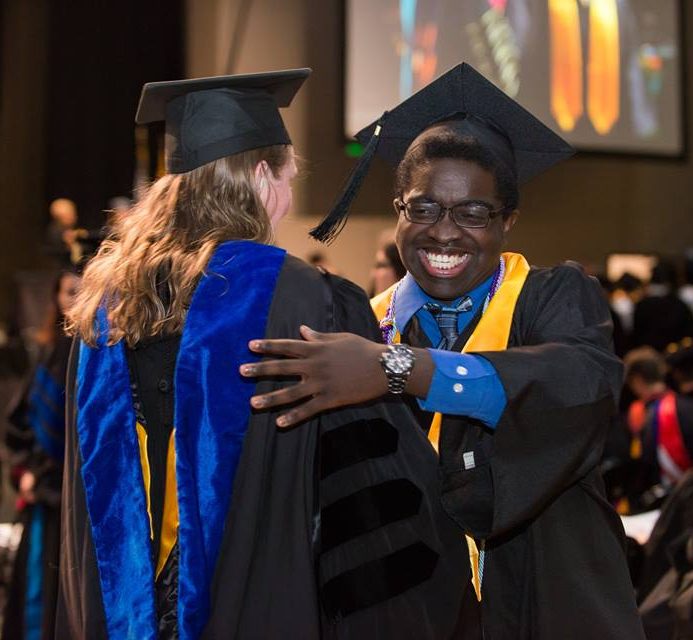
Julian Sass commencement“The focus on research, academic success, and mentoring helped shape me not only as a student, but also as a person,” Sass adds. “We learn during Summer Bridge that we are all accountable for each other’s success, and I internalized that.”

UMBC is now the nation’s #1 producer of African American undergraduates who go on to complete M.D./Ph.D. programs and the Meyerhoff Scholars Program is being adapted at UNC-Chapel Hill and Penn State through a $7.75 million HHMI grant. But for the 66 Meyerhoff graduates of the class of 2016 it’s not about national stature, it’s personal. Harmon wants to make sure that each and every graduate will “hold fast to dreams.”

Header image: Meyerhoff Scholars Class of 2016; photo by Jim Burger.

Other images, top to bottom: Kafui Dzirasa ’01, photo by Les Todd, Duke Photography; Gaurav Luthria, Randi Williams, and Julian Sass, photos by Marlayna Demond ’11 for UMBC.

UMBC faculty provide insight and analysis during Maryland’s primary election

On Tuesday, April 26, hundreds of thousands of voters in Maryland headed to the polls to cast their ballots. The U.S. Senate and presidential races were expected to draw significant attention to the primary election, and more than 125,000 people participated in early voting. As the returns came in on Tuesday, UMBC professors Donald Norris and Kimberly Moffitt provided insight and analysis on races across the state.

Norris, professor and director of the School of Public Policy, joined WJZ-TV’s extensive coverage on primary day and discussed how voter turnout was expected to impact the election and explained how it would be especially important in the Baltimore mayoral and U.S. Senate races.

“Voter turnout is always important, and sometimes it’s more important for some candidates than for others. They have to get their people out to vote. If they don’t, they don’t win,” explained Norris.

After the polls closed, Norris reflected on the results and described what lies ahead for the candidates as they turn toward the general election in November. “I think the citizens have some good choices,” Norris explained.

Norris was also quoted in The Washington Post about the Senate race and The Wall Street Journal about the influx of cash in the race to succeed Rep. Chris Van Hollen in the House.

American Studies Associate Professor Kimberly Moffitt joined WYPR’s election coverage in the week leading up to primary day and also provided analysis as the returns came in on Tuesday night. Leading up to the election, she discussed how the U.S. Senate race was particularly interesting from a media coverage perspective.

“This is an important seat. Mikulski has held this seat for a number of years, and it’s pretty much been her’s and now it’s up for grabs. I do think the need for these two candidates to get cantankerous with each other is about them saying I want this spot because it’s so important to us as a state as a whole,” Moffitt explained.

On election night, Moffitt joined Mileah Kromer, political science professor and director of the Goucher Poll, to provide perspective on the impact of races across the state.

For complete coverage, see below:

Expert Don Norris weighs in ahead of final Maryland primary numbers (WJZ-TV) 
Political expert Don Norris weighs in after a busy Maryland primary (WJZ-TV) 
Lesson from Edwards’s loss: ‘It shouldn’t be about race…We don’t go by gender’ (Washington Post) 
House candidate David Trone spent $12 million to finish second in Maryland primary (The Wall Street Journal) 
How Freddie Gray’s death changed Baltimore, and its election (The Christian Science Monitor) 
Election roundtable: Sizing up the 2016 campaigns (WYPR) 

Image: Photo by Jay Baker, CC by 2.0.  

Biologist Jeff Leips explains model organism research on Capitol Hill in support of federal funding

Federally-funded science researchers have tightened their belts in recent years, as budgets for federal research agencies have decreased in many core areas. Concerned at the prospect of future research funding cuts, particularly for model organism and basic research, the Coalition to Promote Research and Coalition for National Science Funding gathered scientists and representatives of funding agencies to present a Congressional Poster Exhibition and Reception.

Held on April 13, 2016 at the Russell Senate Office Building in Washington, D.C., the event gave legislators and their staff a greater understanding of the value of research currently supported by the federal government and the processes for selecting grant recipients. UMBC biological sciences professor Jeff Leips, a federally-funded scientist who uses the fruitfly (Drosophila) to study traits associated with aging, attended the event to discuss the importance of research using this workhorse model organism.

“Much of what we know of biology comes from model organisms,” Leips says. He explains that fruitflies share about 60 percent of their genes with humans, and about 75 percent of disease-causing genes in humans have a parallel gene in flies, so studying the tiny critters is a cost-effective, practical, and ethical way to learn about human disease. Labs that use model organisms also provide ample opportunities to train the next generation of scientists.

Leips spoke with Senate staffers at the meeting who were “very open to listening,” he says. While some of the onus is on politicians to take time to learn the intended purpose of research in context, Leips suggests, scientists and research institutions “could do more.” He recommends organizing similar events on university campuses and inviting local legislators. He also suggests helping scientists become more aware of how scientific language can have different meanings in a lay context, to prepare them for speaking with the media and general audiences.

To learn more about Jeff Leips’ experience at this event, read his post on the Genetic Society of America‘s blog.

Header image: Jeff Leips at the Congressional Poster Exhibition. Photo by Charles Votaw.

Alumna Zainab Alkebsi admitted to Bar of the U.S. Supreme Court in historic ceremony

On Tuesday, April 19, Zainab Alkebsi ’09, political science, was among 13 members of the Deaf and Hard of Hearing Bar Association (DHHBA) sworn in and admitted to the Bar of the United States Supreme Court.

Zainab Alkebsi. Photo credit NAD.

With Supreme Court Bar admission, Alkebsi will now be able to argue cases before the nation’s highest court. Admission to the Supreme Court is only granted if an attorney is sponsored by two current members of the bar and has been in good standing for at least three years.

The event was the first time that the DHHBA participated in a group swearing-in ceremony, which typically occurs most days the Supreme Court is in session. The 13 attorneys is the largest group of deaf and hard of hearing lawyers to be admitted to the Supreme Court Bar.

“It was incredible to be part of the historic swearing-in ceremony with twelve outstanding deaf and hard of hearing attorneys,” says Alkebsi. “The cherry on top was seeing Chief Justice Roberts grant our motion in American Sign Language, which was a first from the Supreme Court bench! It was a very pleasant surprise and it was very thoughtful of him to acknowledge our group the way he did. I hope that the ceremony has inspired others who are deaf and hard of hearing to pursue a legal career.”

At UMBC, Alkebsi was a political science major and was a member of the Honors College and Sondheim Public Affairs Scholars Program. She is currently policy counsel for the National Association of the Deaf (NAD) and is a graduate of University of Baltimore School of Law.

Read news coverage of the event below:

Supreme Court Chief Justice learned sign language to swear in deaf lawyers (Washington Post) 
A “view” from the Court: Making accommodations for the deaf and hard of hearing (SCOTUS blog) 
Alumna sworn in to Supreme Court Bar with 12 deaf colleagues (UB School of Law updates) 
DHHBA members to be sworn into United States Supreme Court Bar (DHHBA News)

Header Image: U.S. Supreme Court. Photo by Chris Phan, CC by 2.0

Roy Meyers discusses the political likelihood of reforming the federal budget process

Political science professor and federal budgeting expert Roy Meyers has been in the news recently discussing federal budget issues as the U.S. Senate has held hearings on reforming the budget process and an emergency spending bill to combat the Zika virus is being debated in Congress.

Roy Meyers (UMBC)

On April 13, Meyers testified before the U.S. Senate Budget Committee during a hearing on “Budgeting for Outcomes to Maximize Taxpayer Value.” The hearing was the second in a series focused on fixing the budget process and highlighted how outcome-based budgeting could improve congressional budget decisions.

On April 18, Brookings published a brief by Meyers titled “How to make budget process reform politically feasible.” In his paper, Meyers addressed what can be done to overcome barriers to budget reform that are still high.

“For advocates to overcome these barriers, they must describe how reforms will create results that politicians value. The reforms suggested in this report would increase the ability to establish strategic priorities and allocate resources towards those priorities, and that greater capacity would promote fiscal sustainability,” Meyers stated in the introduction.

In a USA Today article about the $1.9 billion emergency spending bill, Meyers commented on rhetoric surrounding the bill and how it is being perceived.

For complete coverage, see below.

April 13 hearing on Fixing Broken Budget Process (United States Senate Committee on the Budget) 
How to make budget process reform politically feasible (Brookings) 
Obama’s $1.9 billion Zika request: ‘Slush fund,’ or needed flexibility? (USA Today) 

Image: U.S. Capitol. Photo by Kevin Burkett, CC by-SA 2.0.

UMBC public historian Denise Meringolo and alumnus Joe Tropea discuss crowdsourcing history on WYPR

A year after the Baltimore Uprising of 2015, UMBC’s Denise Meringolo and alumnus Joe Tropea recently joined WYPR’s “Midday” program to discuss their work to gather and preserve a diverse range of perspectives and experiences from the events of last year.

Meringolo, an associate professor of history and director of public history, and Joe Tropea ’06, history, ’08 M.A., historical studies, are collaborating on a project to archive materials from the Baltimore Uprising through a website that was launched last year. Since the project began, there have been thousands of submissions from community members.

“It’s really the work of public history to be working with communities, not just for them, and not just producing historical interpretations with the eye of having publics read them, but really working with people to develop interpretations that help them think about who they are, what’s going on around them, and how the tools of history can help them arrive at a deeper understanding and achieve their personal goals,” Meringolo explained during the segment.

Meringolo described how the website was launched quickly last year when her students wanted to be responsive to narratives that were being shared in the national news about the events surrounding Freddie Gray’s death. They wanted to find a way to represent the complexity of what was happening and to allow community members to control their own narratives and represent how they were feeling.

Joe Tropea, who is now digital projects coordinator at the Maryland Historical Society, heard about the website and collaborated with Meringolo on the project.

“We sensed the importance of what was going on. It was obvious to us that this was something people will study years from now, so we made a decision to get proactive about it,” Tropea shared.

Listen to the complete segment “Crowdsourcing History” on the WYPR website. Read more about the Preserve the Baltimore Uprising 2015 Archive Project.

Image: Denise Meringolo. Photo by Marlayna Demond ’11 for UMBC.