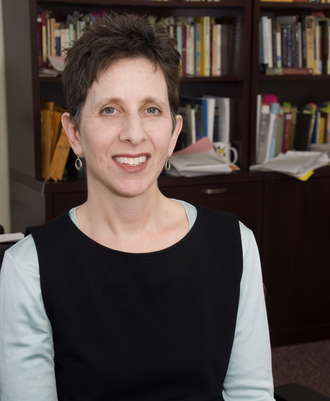
When Freeman Hrabowski was 12 years old, he marched for civil rights in his hometown of Birmingham, Ala., part of the legendary Children’s Crusade of 1963. It was an early lesson in the way a loving community can help empower children to take hold of their own futures.
The president of UMBC recalled that and other lessons from his Birmingham childhood and discussed his latest book, Holding Fast to Dreams, in a wide-ranging podcast conversation with Dan Rodricks of the Baltimore Sun.
Hrabowski noted that UMBC, which he has headed since 1992, was the first Maryland university open from its founding to students of all races. Now UMBC has a highly diverse student body, including students from more than 100 countries, he said.
Rodricks called Hrabowski “a master practitioner of encouragement,” who had “left his mark on UMBC in the area of encouraging students, particularly minorities, in the fields of science and technology.”
Hrabowski acknowledged UMBC’s success in sending students on to graduate study and careers in those areas, while saying that the arts, humanities and social sciences are also important at UMBC.
He challenged the widespread idea that an individual is either good in math and science, on the one hand, or English and history, on the other. Both kinds of study are important, and both can be mastered by those with the determination and support to do so. “What really matters,” he said, “is the approach we take in teaching children”—that high expectations and support are combined with an emphasis on grit in achieving goals.
One of the things that makes UMBC great is how wonderful our alumni, students, faculty, and staff are. Because of these amazing people, UMBC often finds itself “in the news,” so each week, we’ll be sharing with you a round-up of the most newsworthy achievements from our community.
UMBC took center stage as more than 13,000 public health professionals gathered in Chicago for the American Public Health Association (APHA) annual meeting, November 1-4, 2015. President Freeman Hrabowski presented the keynote address, which examined the conference theme “Health in All Policies” and highlighted UMBC’s national leadership in research related to the social and policy dimensions of health.
“You and I together, we have the responsibility of helping the general public [recognize the core importance of] this notion of public health,” President Hrabowski asserted during his opening remarks.
His talk focused on the need to understand and address the social determinants of health, and touched on the impact of UMBC’s interdisciplinary public health and health equity research. In the days that followed, faculty, staff, students and alumni from several UMBC social sciences departments and research centers presented important new insights in their fields.
Kevin Eckert, professor and chair of sociology and anthropology, and acting director of the health administration and policy program (HAPP), observed the connections between discussions of research on the social determinants of health and issues of social justice throughout the conference.
The APHA annual meeting established three central themes for future research in public health. “Health equity” refers to striving for the highest possible standard of health for all people, with special attention given to those at greatest risk of poor health. “Health in all policies” emphasizes that health is an important dimension of nearly all social policy. Through “generation public health,” APHA argues that significant improvements in public health can and should be achieved quickly, in a generation.
“There are social, cultural, and psychological dimensions to future policy directions related to public health,” Eckert explains. “Studying the social determinants of health is a national priority, and UMBC has tremendous strengths in these areas.”
UMBC’s department of sociology and anthropology is known particularly for its research on interventions to improve quality of life and the functional abilities of people with chronic disease and disability, reproductive health, social and economic determinants of fertility, and maternal and child health. The department-based Center for Aging Studies conducts large-scale community research in Maryland, including recent studies on the efficacy of programming at adult day services centers and the subjective experience of diabetes among urban adults.
Researchers in the UMBC School of Public Policy apply an interdisciplinary approach to studying public health and health equity. Drawing from fields such as sociology, psychology, political science, and statistics, faculty investigate a range of issues related to public health and recommend policies to encourage healthier behaviors and prevent poor health outcomes. Projects include examining the environmental impacts of lead poisoning on children and the role of Medicare and Social Security in improving the quality of life for adults with disabilities.
The doctoral program in gerontology, jointly offered by UMBC and the University of Maryland, Baltimore (UMB), provides an interdisciplinary and integrative perspective on the process and experiences of aging.
The APHA meeting highlighted several of these research areas.
Professor Nancy Miller, public policy, participated in a career development roundtable and presented her research related to disability and long-term care health policies among older adult populations. “My work fits closely with the theme of health equity,” explains Miller.
“I have had a longstanding interest in understanding state-level variation in Medicaid support for community-based long-term services and supports, both across states for a given group such as older adults, and within states for multiple groups, such as older adults versus individuals with intellectual and developmental disabilities.”
Charles Cange, visiting lecturer in HAPP, served as a panel moderator and presented five papers within his two research focus areas of post-conflict health and HIV/AIDS prevention in at-risk populations. He shared his research on understanding the impact of the Gulf War on community perceptions of cancer risk in Kuwait and the role of stigma and alienation on HIV treatment in Burkina Faso.
Public policy doctoral student Shariece Johnson received an Excellence in Program Planning Award. She served as program chair for the Community Health Planning and Policy Development section of the APHA.
Jamie Trevitt, assistant professor, and Andrea Kalfoglou, associate professor, both in the HAPP program, also represented UMBC. Kalfoglou participated in discussions on the lack of e-cigarette regulation and manufacturers’ marketing to children. Trevitt’s discussions focused on disparities in prenatal care, contraceptive access and counseling, and birth outcomes.
“In public health, it is important not only to do rigorous research, but to translate findings into policy and towards advocacy,” shares Trevitt. “I always leave this conference very excited to work in this growing field and educate the next generation of public health researchers and practitioners.”
Read more about the robust health policy research and education across disciplines in UMBC’s College of Arts, Humanities, and Social Sciences. Visit the APHA website for more information about the 2015 Annual Meeting, and view President Hrabowski’s complete keynote address in the video below.
Image: UMBC Public Policy Building. Photo by Marlayna Demond ’11 for UMBC.
A message to the UMBC community from Provost Philip Rous:
I am pleased to announce that Shawn Bediako, Associate Professor of Psychology, has been named the inaugural recipient of the Marilyn E. Demorest Award for Faculty Advancement. This annual award is provided through an endowment established by Marilyn E. Demorest, Professor Emerita of Psychology and former Vice Provost for Faculty Affairs, to support the advancement of all UMBC faculty members in their academic careers; to facilitate their professional development; and to recognize their contributions to faculty advancement and success at UMBC.
Dr. Bediako is recognized for his deep commitment to fostering the professional excellence and career advancement of a wide range of faculty and postdoctoral scholars at UMBC and beyond. His mentoring activities emphasize methods that enhance scholarly productivity and support a meaningful work/life balance. Most recently, in collaboration with Claudia Galindo (LLC), Brandy Wallace Harris (SOCY/ANTH), and Angelica Herrera (formerly of SOCY/ANTH), Dr. Bediako created the UMBC Summer Writing Accountability Group (S.W.A.G.) to help participants maintain their work/life balance and increase their research and writing productivity within a supportive community environment. Over the course of 19 weeks, a total of 60 faculty, administrators, and instructional staff collectively logged more than 1,800 hours of writing time toward advancing their manuscripts, book chapters, and monographs.
During his tenure as the Demorest awardee, Dr. Bediako will work closely with the Faculty Development Center (FDC) to offer a series of faculty development workshops during the Spring 2016 semester that will help faculty and instructional staff members:
Learn why and how to align institutional priorities, personal values, and long-term goals
Avoid the time management mistakes that many faculty and instructional staff make
Develop a consistent daily writing routine to increase research and scholarly productivity
Develop a network of support and accountability for academic writing.
Also, Dr. Bediako will consult with Dr. Linda Hodges, Director of the FDC, and other experts on campus to identify the best methods for assessing the effectiveness of the workshops. The evaluation results will be used to determine if this form of professional development should be institutionalized to further promote an intellectual sense of community at UMBC.
Dr. Bediako is a leader in the field of community health psychology and is internationally known for his research on the clinical implications of sickle cell disease stigma and its impact on health-related outcomes. His honors include, among others, the Innovator in Academic Hemoglobinopathies Research Career Development Award from the National Heart, Lung, and Blood Institute of the National Institutes of Health and the Champion Award from the Sickle Cell Disease Association of America. He also is a member of the UMBC Executive Committee on the Recruitment, Retention, and Advancement of Underrepresented Minority Faculty and one of the founders of the UMBC Postdoctoral Fellowship for Faculty Diversity.
“I am deeply honored to be the first recipient of this award. Dr. Demorest’s generous gift will provide an opportunity for me to collaborate with faculty colleagues across campus and find innovative ways to align our personal and professional goals with the institution’s vision” says Dr. Bediako. “I’m particularly excited about the possibility of partnering with our Faculty Development Center to complement their program and services.”
Dr. Demorest admires UMBC for its commitment to academic integrity, to diversity and the overall success of all of its students. “I am very proud of UMBC and what it has accomplished in the last 50 years,” says Dr. Demorest. “[There are] good reasons why we’ve been the number one up-and-coming national university in the country.” With her gift to UMBC, she hopes that this legacy can continue through the next 50 years.
Please join me in congratulating Dr. Bediako on this recognition and supporting his work with the Faculty Development Center.
Image: Shawn Bediako. Photo by Marlayna Demond ’11 for UMBC.
One of the things that makes UMBC great is how wonderful our alumni, students, faculty, and staff are. Because of these amazing people, UMBC often finds itself “in the news,” so each week, we’ll be sharing with you a round-up of the most newsworthy achievements from our community.
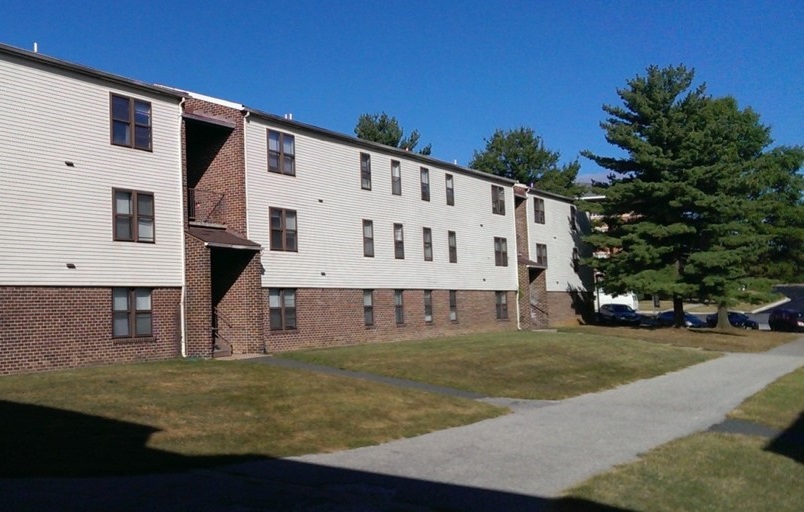
After 35 years on campus, West Hill Apartments are finally getting a makeover! Over the summer, UMBC began work to fully renovate five apartment buildings that house 236 students. West Hill, UMBC’s first campus apartment complex, has been here since 1980, so we’re sure you’ll agree the updates are as welcome as they are striking.
The work on West Hill caps off several years of renovation projects for the campus apartments, and completion is anticipated in summer 2016. Earlier this fall, students moved into the completed halls with work continuing on the newly vacated spaces.
New exterior community gathering spaces will be developed as part of the project, including a small recreation field. The community is supported by the adjoining Residential Community Center, with large communal rooms, meeting spaces and laundry facilities.
When renovations are complete, the buildings will feature:
New siding and windows
Enclosed stairwells that feature key-swipe access.
Each room in each apartment requires key-swipe access
Lifted ceilings
Sensor-activated lighting for increased energy efficiency
A campus message from Provost Philip Rous and Antonio Moreira, Vice Provost for Academic Affairs:
We are delighted to announce the appointment of Patrick Jose Dawson as director of the Albin O. Kuhn Library and Gallery, effective February 1, 2016.
Mr. Dawson joins UMBC from Northern Illinois University (NIU), where for the past seven years he has served as dean of libraries. Prior to his appointment at NIU, he served as associate university librarian for information and research services at the University of California, Santa Barbara (UCSB).
Mr. Dawson’s appointment brings to a conclusion a successful national search that began this past spring. On behalf of the entire campus community we would like to express our gratitude and thanks to all members of the search committee. Their commitment and hard work constitutes an outstanding contribution to the future of the library and UMBC. We also wish to acknowledge the advice and counsel provided by various members of the campus community to the search committee.
Throughout his career, Mr. Dawson has been actively involved in the promotion of innovative and emerging trends and technologies for the improvement of information retrieval and delivery. He has extensive experience working in research university libraries and brings strong skills in strategic planning and budgeting. Mr. Dawson also has a focused area of expertise in Chicano studies. While at UCSB, he served as head of the Colección Tloque Nahuaque, a nationally-recognized resource for comprehensive Chicana/o and Latina/o information and specialized reference services. He has also been active on issues related to library services for Latinos and collection development of Hispanic American materials.
In addition to a master of library science from the University of Arizona, Mr. Dawson has a master of arts in history/Latin American studies and a bachelor of arts in history from the University of New Mexico. He was a member of the Association of Research Libraries (ARL) Leadership and Career Development Program in 1998 and is a fellow in the ARL Research Library Leadership Fellows Program.
Mr. Dawson says he is impressed and inspired by the success of UMBC students in completing degrees and by the percentage of students that go on to graduate education. He also expressed much appreciation for the rich diversity reflected in our student population.
Mr. Dawson will build on the strong legacy of Dr. Larry Wilt, who retired as director on July 1, 2015.
The library is central to teaching and research and an integral part of the UMBC community. We are very fortunate to have someone of Mr. Dawson’s experience and ability to serve as director of our Albin O. Kuhn Library & Gallery. We know he will be a valuable addition to our campus community.
Please join us in welcoming and supporting him.
Image: UMBC Library Pond. Photo by Marlayna Demond ’11 for UMBC.
At a recent symposium held at Uppsala University, Sweden featuring prominent international modernist research, Jessica Berman, director of the Dresher Center for the Humanities and professor of English, presented an invited lecture about her research on transnational movements of people in the development of twentieth century media, with a focus on global radio.
Berman’s talk “Radio Relations and Transnational Listening” examined listening in the early days of radio in India. She argued that the diverse nature of the radio environment that used several languages, particularly in programs sent out over the All India Radio airwaves, helped to create a community among the listeners that resisted the directed messages coming to them from the center of the British Empire.
The talk was part of a symposium with the theme “Intimate Modernism.” The event forms part of a collaboration between the Department of English, Uppsala University, and the School of Critical Studies at the University of Glasgow. For more information about the symposium and other scholars who presented, visit Uppsala University’s English department website. Read more about Jessica Berman’s research.
Image: Jessica Berman speaking at UMBC Dresher Center event. Photo by Marlayna Demond ’11 for UMBC.
In advance of the annual Conference on D.C. Historical Studies, the Washington Post highlighted research by George Derek Musgrove ’97, history, associate professor of history, that identifies four distinct waves of gentrification in Washington, D.C. and reflects residents’ viewpoints of how it has impacted the city.
At the D.C. historical studies conference, Musgrove presented a talk with his colleague Chris Myers Asch at the University of the District of Columbia titled “We Are Headed for Some Bad Trouble: Gentrification and Displacement in Washington, D.C., 1920-2014.” Musgrove and Asch were part of a panel discussion to assess how historical patterns of race- and class-based inequality shape today’s urban landscape in Washington.
The talk was previewed in the Washington Post by columnist John Kelly. In his research, Musgrove identified the first wave of gentrification in 1920s Georgetown: “[Musgrove] said that when gentrification later moved across other neighborhoods, people would say they didn’t want them to end up ‘like Georgetown,’ which was seen as exclusive — and nearly exclusively white.
Poorer white residents moving out of neighborhoods such as Anacostia had ample housing options. But blacks were constrained by segregation and restrictive covenants. Policies such as rent control have allowed some neighborhoods, such as Adams Morgan, to remain diverse,” Musgrove said in the article.
“Our purpose in writing this was to give people an idea of how old gentrification is in the city and, in the process, to give people an idea of why older residents in particular react to it in the way that they do,” he added.
As part of an ongoing partnership with professional development schools, UMBC’s education department and Center for Art, Design and Visual Culture (CADVC) hosted Arbutus Middle School students and teachers on campus October 26 and Nov 2 to learn about environmental art and artists.
During the program, students participated in an instructional session about artists Andy Goldsworthy and Scott Wade, learned about the elements of art, and defined terms such as ephemeral art and reverse graffiti, among other topic areas in environmental art.
Students then learned about the process of creating nature journals, walked over to the Joseph Beuys Sculpture Park, and after completing outdoor observation work, they worked on sketching and journaling activities. The students’ completed art projects will be featured in an exhibition on campus.
“This experience is about more than art,” explains Barbara Bourne, clinical instructor and director of elementary education and arts coordinator in the education department. “In addition to the hands-on activities and the follow-up gallery show, students take their first steps onto a college campus. It’s especially rewarding to watch as they proudly share this campus experience with their parents and siblings, many of whom are visiting a university for the first time themselves.”
“It is important for CADVC’s Educational Outreach Program to partner with professional development schools such as AMS because it allows us to make our gallery exhibitions accessible to K-12 groups and the families of those students. This is our mandate as we are a community art institution as well a gallery for the campus, and we receive Maryland State Arts Council grant funding for this purpose,” shares Sandra Abbott, curator of collections and outreach for the CADVC.
Beginning November 12, the student artwork will be displayed as part of an exhibit titled “Natural Connections: Linking Art and Nature,” UMBC’s K-12 Educational Outreach Exhibition, Fall 2015. The exhibit runs until December 17 and is open to the public in the hall gallery on the first floor of the Fine Arts Building.
Following the November 10 Republican presidential debate on Fox Business Network, Kimberly Moffitt, an associate professor of American studies, was a guest on the Baltimore Sun’s “Roughly Speaking” podcast to provide reaction and analysis. Other guests on the podcast hosted by Dan Rodricks included Melissa Deckman, chair and professor of political science at Washington College, and Peter Jensen from the Baltimore Sun editorial board.
The segment covered a range of topics, including how candidates received more equal air time than prior debates and were given a chance to cover differences in several significant policy issues.
“There has been so much attention drawn to the two front runners that often times it appeared that Trump and Carson were receiving a lot more air time,” Moffitt observed. “In this particular debate, it seemed that there was a cross section of being able to hear the different voices and also to hear about those divides in terms of immigration, higher education, and whole notion of the family…those pieces I had not heard before, and it was simply because we had the opportunity to hear from so many of the candidates.”
Also this past week, Moffitt joined ABC 2 Baltimore on November 12 for a segment on the role of social media in college protests. She discussed how social media can promote both positive and negative outcomes.
“What we see social media doing is helping to advance student activism and movements across the country, but it also has its negative side affects, especially what we see with people responding to these student activists,” explained Moffitt.
Watch the full segment on ABC 2’s “In Focus” program.
Image: Kimberly Moffitt speaks with students in her class. Photo by Marlayna Demond ’11.
The Marc Steiner Show aired a special two-hour broadcast November 2 that was a recording of UMBC’s Critical Social Justice Week keynote panel “Baltimore in Action: Always Rising.” Marc Steiner moderated the panel which featured several prominent social justice activists and leaders from across Baltimore to discuss a range of issues currently impacting the city. Topics discussed included the city’s rich history of social justice and activism and the power of community organizing in addressing challenges.
Guests on the panel included Rev. Dr. Heber Brown, III, pastor of Pleasant Hope Baptist Church and executive director of Orita’s Cross Freedom School; Dr. Marisela B. Gomez, physician, community activist and author of Race, Class, Power, and Organizing in East Baltimore: Rebuilding Abandoned Communities in America; Tawanda Jones, activist and sister of Tyrone West, who was killed by Baltimore police in July 2013; Jacqueline Robarge, founder and director of Power Inside, a project of Fusion Partnerships; and Kwame Rose, social activist and hip-hop artist.
Critical Social Justice: Baltimore 365 was held October 19-23 at UMBC. The initiative was coordinated by the Women’s Center with Student Life’s Mosaic: Center for Culture and Diversity. Critical Social Justice Week aims to explore social justice in both theory and practice from academic, activist, and artistic perspectives. This year’s event explored ways to cultivate deep and lasting commitments to Baltimore City.





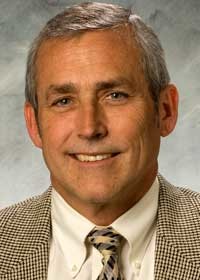 Mr. Dawson joins UMBC from Northern Illinois University (NIU), where for the past seven years he has served as dean of libraries. Prior to his appointment at NIU, he served as associate university librarian for information and research services at the University of California, Santa Barbara (UCSB).