All posts by: UMBC News Staff


Kimberly Moffitt analyzes the Freddie Gray case and upcoming local elections on The Marc Steiner Show

Kimberly Moffitt, an associate professor of American studies, was a guest on WEAA’s The Marc Steiner Show on November 30 to discuss several local and national topics in the news. Moffitt, who is a frequent guest host on the program, participated in roundtable discussions on topics ranging from local elections to media coverage surrounding the shooting at a Colorado Planned Parenthood clinic last week.

In the local news roundtable portion of the program, Moffitt joined Luke Broadwater, a Baltimore Sun reporter, A. Rod Womack, author of Redwood and former owner of the Redwood Grill in Baltimore, and Richard Vatz, professor of rhetoric and communication at Towson University’s Department of Instructional Leadership and Professional Development. The panelists covered voter participation in the 2014 election, Gov. Larry Hogan’s approval rating and governing style, and the trial of police Baltimore Police Officer William Porter in the Freddie Gray case, among other topics.

In the national roundtable segment, Moffitt provided perspective as a media studies scholar on the national media coverage of the shooting at the Colorado Springs Planned Parenthood clinic. She joined Phil Tran, a political consultant, and Edward Wyckoff Williams, a contributing editor at The Root and political contributor and special correspondent with Al Jazeera America for the discussion.

Listen to the complete Marc Steiner Show podcasts below:

Local news roundtable: Local elections and the Freddie Gray case
National news roundtable: Planned Parenthood shooting

Image: Kimberly Moffitt in her office. Photo by Marlayna Demond ’11 for UMBC. 

Paws of Glory

Retrieving the Greatest Moments of UMBC Athletics History

By Richard Byrne ’86 and Steve Levy ‘85

Athletics has been an essential part of the UMBC experience since the founding of the university. So narrowing down almost five decades of history – and shining a spotlight on a few of the iconic athletes of UMBC history – is not an easy task.

Our guiding principles in what we did include aimed at inclusiveness. We tried to find the moment that spoke to each varsity sport played at UMBC, with equal weight to men’s and women’s teams.

You can read more about the athletes we’ve chosen at our website. And we know didn’t capture every great moment. Not by a long shot. So we want you to share your own with us online as well. Let’s keep the celebration of Retriever athletics going!

1966

UMBC plays its very first intercollegiate game on November 4 – a spirited 4-1 loss by the men’s soccer squad to the University of Maryland, College Park

1974

Men’s baseball standout Mel Hammel ’76, history, pitches the first UMBC no-hitter in a 20-0 win over Coppin State.

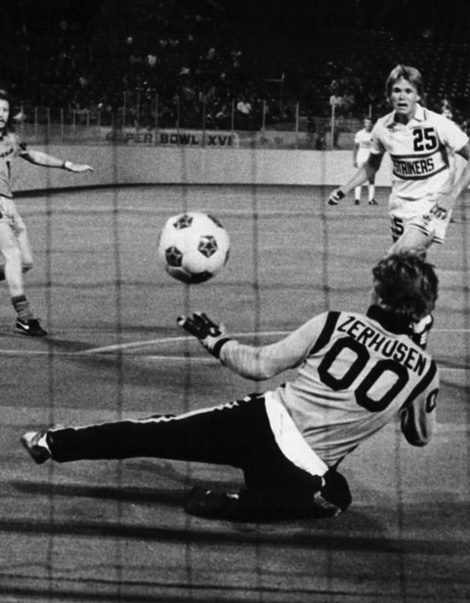
f14-FT-ATHL-zerhusen2STEVE ZERHUSEN ’78

A standout at goalkeeper for UMBC men’s soccer teams of the mid-to-late 1970s, Zerhusen later played professionally for the Fort Lauderdale Strikers of the pioneering North American Soccer League. As a Retriever, he recorded 372 saves and 22 shutouts.

Favorite moment? My favorite moment was the first game in my sophomore season (1976) against the University of Baltimore – who were defending national champions. It was a scoreless 90 minutes of regulation where I would say we had the better of the action. Late in the game, (current UMBC men’s soccer coach) Pete Caringi – who was an All-American senior for University of Baltimore and a dangerous finisher – came in one-on-one on a through ball. I came out of the goal and met him at the top of the box. He tried to go to my right, but I dove and grabbed the ball. Then with two minutes left in overtime, a UMBC freshman, Ricky Roberts, scored the game winner. It was a tremendous confidence booster for a young team. Image: Ft. Lauderdale Strikers at Detroit Express (NASL)

1975

f14-FT-ATHL-1977soccerUMBC men’s cross country team goes 10-0 and wins the Mason-Dixon conference title.

1977

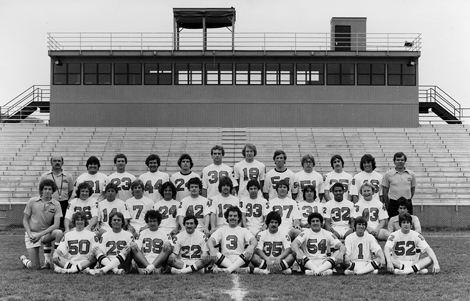
The men’s soccer team becomes the first UMBC team to compete in a postseason NCAA tournament.

f14-FT-ATHL-zerrlaut2

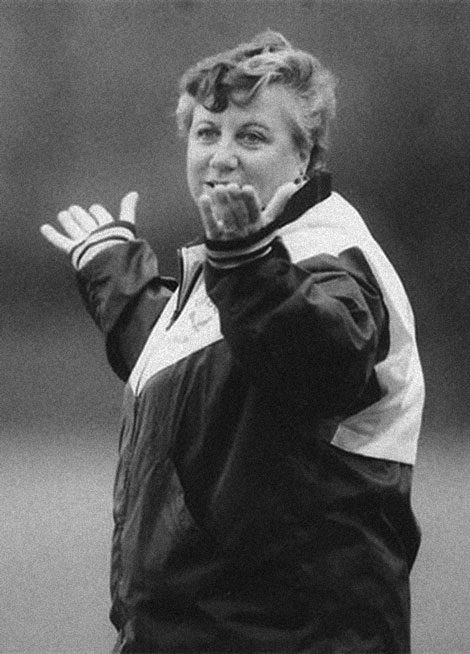
KATHY ZERRLAUT

Few people have the broader and deeper perspective on UMBC’s athletics program and its history than Kathy Zerrlaut – who came to UMBC to coach volleyball and lacrosse in 1973. Zerrlaut spent the next 41 years at the university, with 850 total games as a coach in both sports. She also played a key role in the development of the program for more than two decades in the post of senior associate athletic director and compliance officer at UMBC.

Favorite moment? As a coach, I would have to say my lacrosse team winning the ECAC tournament as a Division II program in 1984. The NCAA had not yet offered a championship in women’s lacrosse, so this was big.

Greatest achievement? I’d say my most significant achievement was compliance-oriented. We were the first division one program to be certified by the NCAA. We always prided ourselves on having no major violations.

What’s special about being part of UMBC athletics? The makeup of the athletic department team. I worked with (longtime UMBC athletic director) Charles Brown, who was committed to the success of the entire program. Women’s athletics started to progress in the 24 years of Dr. Brown’s tenure, due to his efforts and also to the support of Dr. Susan Kitchen. Our administrative group clicked, we had cohesion and the same goal – the welfare of the student-athletes.

1979

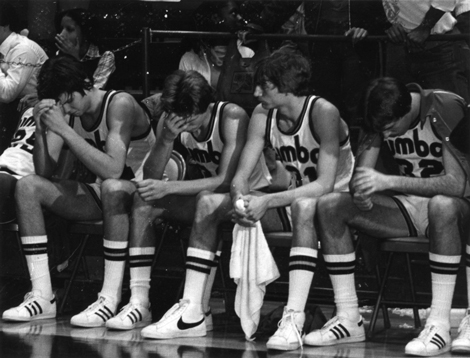
f14-FT-ATHL_basketball-lossThe Retriever men’s basketball squad – ranked number six in the nation – advances to the NCAA Division II tournament quarterfinals, losing at home to Naismith Memorial Basketball Hall of Fame coach John Chaney’s Cheyney State team.

1980

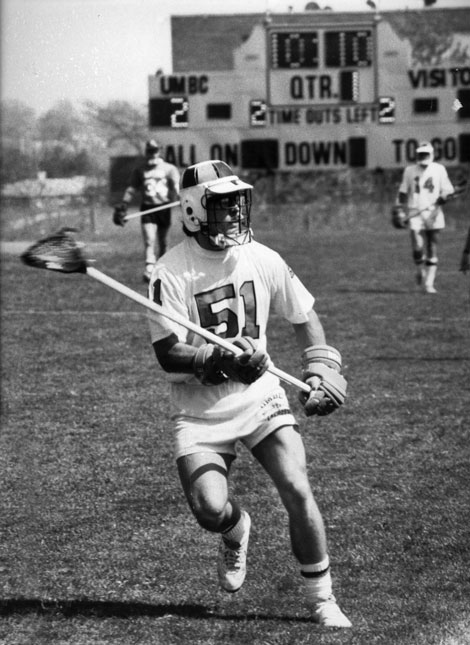
f14-FT-ATHL-1980laxnationalchampteaamUMBC men’s lacrosse team wins the university’s only national championship, beating Adelphi for the NCAA Division II crown.

f14-FT-ATHL-mcgeeney

GEORGE MCGEENEY ’ 82

As a defender for the men’s lacrosse team, McGeeney was a First Team All-American at UMBC in 1982. He later played for Team USA in the World Games of 1986 and 1990 and also played professional indoor lacrosse for the Baltimore Thunder of the National Lacrosse League.

Favorite Moment? I had the good fortune of graduating from UMBC and winning the William C. Schmeisser award as the top defenseman in Division 1 lacrosse on the same weekend, as well as being named captain of the South team in the North-South All Star Game. I was fortunate to have great teammates and a great coach in Dick Watts that pushed me hard to be the best player I could be.

What was special about being a UMBC student -athlete? There were no shortcuts and the ability to balance playing division one lacrosse and working toward my economics degree was challenging but very rewarding. What was most special was the faculty and staff , in particular my advisor Michael Bradley – a great teacher, person, and supporter of UMBC lacrosse and athletics.

f14-FT-ATHL-tammy-mccarthy

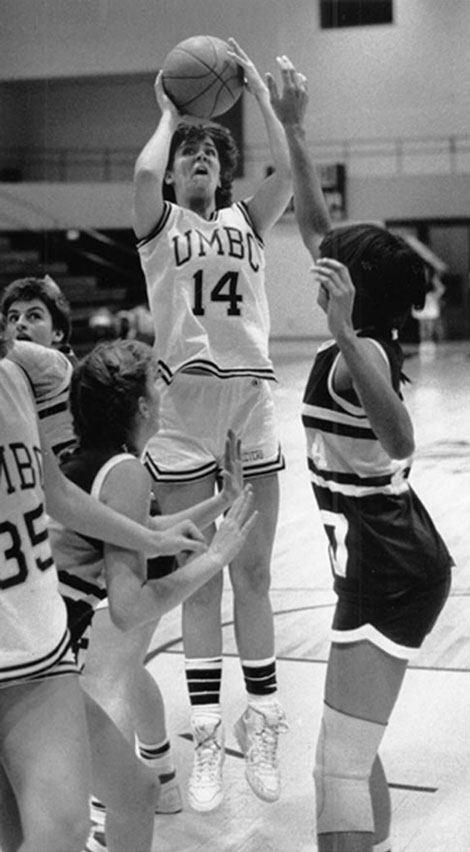
TAMMY MCCARTHY ’87

As an All-American guard at UMBC in the mid-to-late 1980s, McCarthy was one of the university’s basketball greats, and she continues to hold university records for most points scored and scoring average, and remains second in total rebounds.

Favorite moment? Every time the ball tipped off.. so every season… every game!

Greatest achievement? Being named to the District II All American Team and continuing to hold the UMBC women’s all -time leading scorer record.

What’s special about being a UMBC student-athlete? I formed lasting friendships that I treasure today.

1993

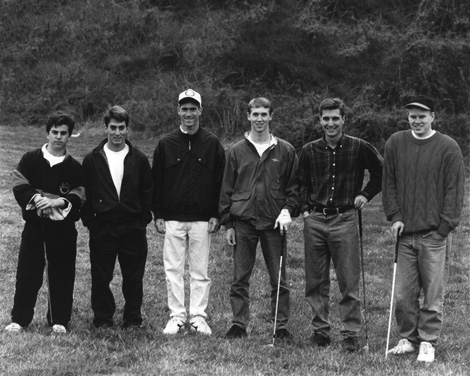
f14-FT-ATHL-golfMike Meyer ’95, interdisciplinary studies, wins Eastern College Athletic Conference golf championship.

1995

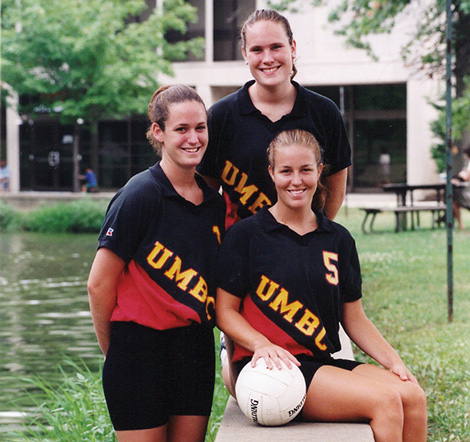
f14-FT-ATHL-volleyball2UMBC women’s volleyball team wins the Big South conference title.

FT-ATHL-davidbobbDAVID BOBB ’97

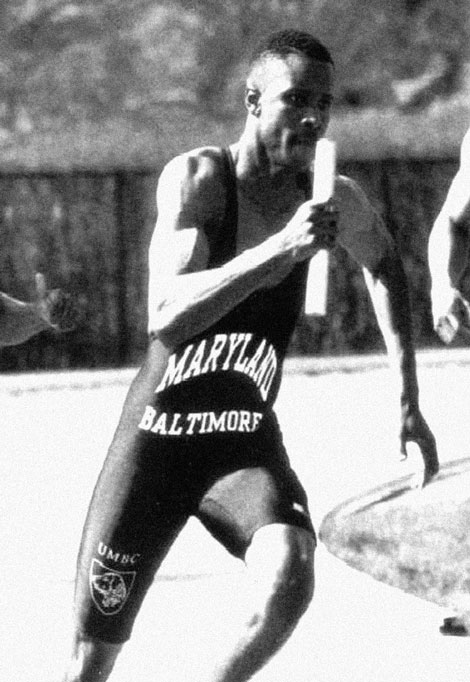
As a track and field standout at UMBC, Dave Bobb garnered more individual honors than any other Retriever athlete. He was the top American-born sprinter in the United States in 1997, Bobb is currently the university’s men’s track and field coach.

Favorite moment? When UMBC’s outdoor track was built in 1997.

Greatest achievement? When the UMBC men’s track and field program was ranked 18th in country. As far as individual achievements, I placed third in the 55 meter dash and third in the 200 meters at the 1996 NCAA Division I indoor championships.

What’s special about being a UMBC student-athlete? The friends I made when I was a student-athlete and the memories with my team are very special to me.

1998

UMBC women’s tennis wins the second of two consecutive conference championships, and qualify for their first-ever NCAA Tournament.

1999

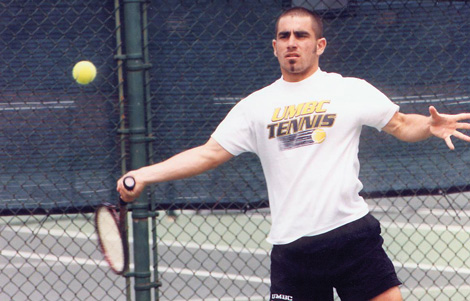
f14-FT-ATHL-oscar-lopez2Men’s tennis standout Oscar Lopez ’00, and M.S. ’02, mechanical engineering, becomes the first UMBC Division I athlete to garner First Team Academic All American honors.

2002

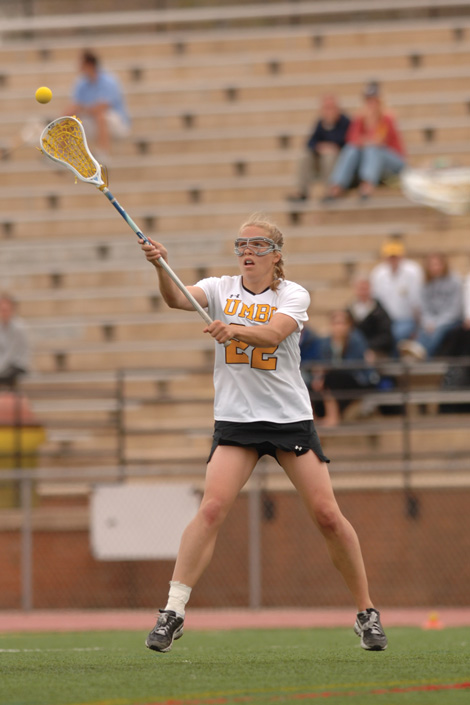
UMBC women’s lacrosse team makes its first NCAA tournament appearance.

2002

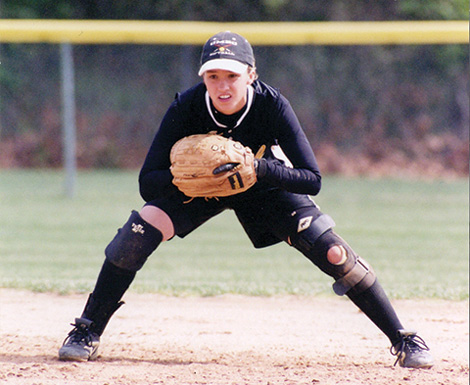
f14-FT-ATHL-2002softballvecchioHOFWomen’s softball squad beats Liberty, 7-1, in the 2002 NCAA Tournament.

2004

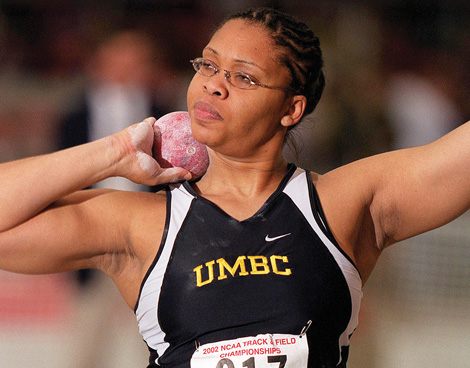
f14-FT-ATHL-borel(2)Women’s track and field phenom Cleopatra Borel’ 02, interdisciplinary studies, competes in the 2004 Olympic Games in Athens, placing 10th in the world in the shot put.

f14-FT-ATHL-kellyfiorani2KELLY FIORANI MARRIOTT ’06

As a standout player in women’s lacrosse who also excelled in the classroom, Marriott is third on the all-time scoring list at UMBC. She also lettered for two seasons in women’s soccer, making her a double threat for Retriever athletics.

What was special about being a UMBC student athlete? What wasn’t special? UMBC is often overlooked as a mainstream competitor. The potential to make a name for yourself is unmatched. The student-athletes are smart and driven, and our community of athletes was tight-knit and small enough that we all knew each other and could support one another – whether it was in our sport or in the classroom. UMBC’s athletics department dedicates time to each individual and each team, and no one sport was favored over another. Athletes can get lost or fall off the map at some of the larger schools. Women’s sports are often considered less important in our nation’s leading division one programs, but that was never the case at UMBC. When I walked in to the RAC whether it be for treatment, to catch a basketball game, or to meet my coach, I always felt I was more than just a number. I was a successful, student-athlete, and people respected me for that. I am proud to have been a student at UMBC. I am proud to have been an athlete there. It’s a special place.

2004

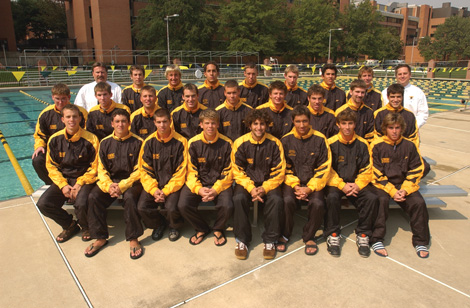
f14-FT-ATHL-swimmingUMBC men’s swimming team wins its first America East championship title.

2007

f14-FT-ATHL-2007womensbb

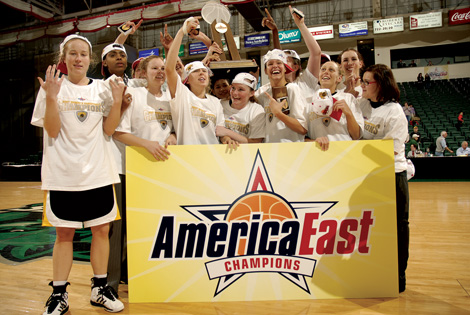
UMBC women’s basketball team earns its first NCAA tournament bid.

f14-FT-ATHL-Jay_Greene2JASON GREENE ’09

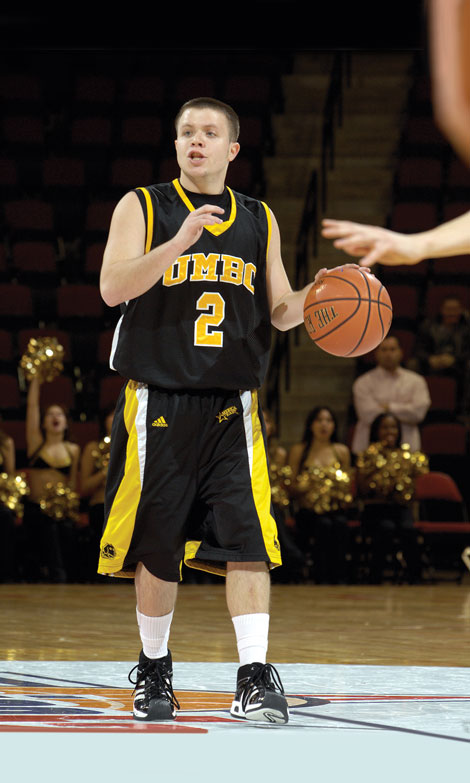
The sparkplug for the UMBC men’s basketball team’s memorable run to the NCAA tournament in 2008, Greene holds school records for most games played, most minutes, and most assists. He is currently an assistant coach for the team.

Favorite moment? Being able to celebrate the 2008 Championship in the RAC with my teammates, family, and friends! A dream made into a reality. Ever since I was a kid, I envisioned myself jumping on top of a scorer’s table celebrating on our way to the NCAA Tournament. No one can ever take that moment away from us.

Greatest achievement? Walking across the stage on graduation day with my family in the stands. It was a very proud moment! As an athlete, it was being a part of history as a member of the first UMBC men’s basketball team ever to reach the NCAA Tournament. Being on a Sports Illustrated cover and in USA Today front centerfold wasn’t too bad either!

2012

Retrievers men’s soccer team advances to the second round of the NCAA tournament for the second time in two years.

2013

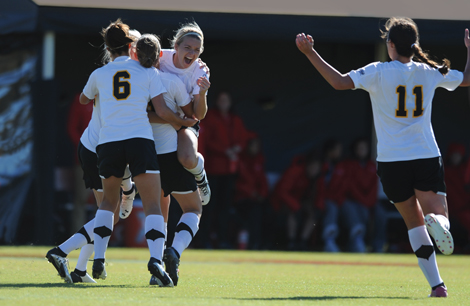
f14-FT-ATHL-ALEXA-soccer-celebration2UMBC women’s soccer team caps a stunning reversal from last place in the conference to first place in a single season with a bid to the NCAA tournament

2014

Women’s swimming standout Emily Escobedo ’17 wins a spot in the NCAA Championships.

Finding a Voice

Biologists at UMBC were on the hunt for female songbirds. The world sat up and took notice when they found them.

By Joel N. Shurkin
Illustrations by David Plunkert

Once upon a time – 60 million years ago or so in Australia – a small, perhaps brightly feathered descendant of the recently extinct dinosaurs opened its beak and produced a melodic set of notes. And while it is impossible to know if the creature was startled by the sound it produced (more likely the change was subtle), that moment was the prelude to all bird song.

Kevin E. Omland, professor of biological science at UMBC, and Karan Odom, a doctoral student in Omland’s lab, are among the scientists taking a closer look at bird song – and reshaping the contours of received knowledge about it that dates back to Charles Darwin’s observations and beyond.

It’s a deliciously complicated problem. While scientists have known for a while that songbirds first evolved in Australia, Omland and Odom have used that fact to disprove a theory of Darwin’s and a common myth about birds: Unlike what most people think, female songbirds sing just as much as male birds do, and may also be just as colorful.

A recent paper with Odom as lead author and Omland as one of the co-authors, detailed the wide extent of female bird song, and garnered media coverage around the world, including the BBC World Service and Australian radio.

“This is not a well-studied area. They are looking at a question that has not been looked at a lot,” explains Michael Webster, a researcher at Cornell’s prestigious ornithology department.

Bird and Dinosaur Combonation Illustration Bird song emerged from descendants of recently-extinct dinosaurs.

Humans have been fascinated by bird song for as long as they have had ears to take it in. And for almost 200 years, theories about bird song would suggest that the proto-songbird who made that first distinctive chirp was male.

The notion of mute, dull females and gloriously colored males in part goes back to Darwin’s observation of Galapagos finches during his second voyage on the HMS Beagle. In The Origin of Species, he later wrote: “Female birds, by selecting, during thousands of generations the most melodious or beautiful males, according to their standard of beauty, might produce a marked effect.”

It was an easy assumption for Darwin to make: songbirds in his native England generally behaved that way as well. In other words, the males competed for females by trying to be the most beautiful and songful, and the females selected on that basis – sexual selection. Think of strutting male peacocks or birds of paradise doing hilariously elaborate dances, for example.

Omland, Odom and their colleagues and students say that this is an incomplete explanation. Darwin and everyone else had it wrong, and why they did so is a matter of geography, not biology.

“A lot of the research on bird songs has been done in North America and Europe,” Odom says “where you see brightly colored males and they are singing and they are singing for a short period of time because they have to breed quickly and migrate.”

In the tropics, it turns out, that isn’t true, she says. What most of temperate zone ornithology was studying was not typical of the world’s birds, particularly songbirds.

In most parts of the world, like the Amazon, the Congo, the rain forests of New Guinea, the observer cannot tell the difference in coloration between the males and females. Female birds are just as likely to sing as male birds and can defend territory just as male birds of some species do.

Omland’s research shows that bird song in fact depends on where the birds were and the kind of life the birds lead. Even birds like the orioles – with whom we live with happily in the Maryland area – have species that vary in behavior, depending upon where they are and their life style.

Odom, a Florida native, studies a species of fancy orioles called Troupials in Puerto Rico for her dissertation. Undergraduates from UMBC and the University of Puerto Rico work on another species, the Puerto Rican Oriole. Back in Maryland, Omland specializes in the Baltimore and Orchard variety of oriole.

Orioles who live in Maryland in the summer follow Darwin’s pattern. The gender rules are quite distinct. They live here for only a few months and then migrate south to Latin America before the snows come. It is easy to spot a female: She is yellow-brown and she does not sing a complex song. The males are the typically black and orange. But orioles dwelling in Puerto Rico – same genus, Icterus – have a different life style.

Ornithologists think singing is a way of declaring presence and defending territory. When you are a migratory bird, time is of the essence and the singing helps with defense.

The Maryland orioles have a time problem: They have to attract mates, reproduce and then leave before winter comes, Omland says. The males arrive first. In songbirds, it is the females that build the nests. So the males need to grab the attention of the females as quickly as possible. Their clock is ticking, so the males tend to use coloration and song to attract mates. That is the sexual selection that Darwin found in his research.

If you live a more sedentary life in the tropics, it is less crucial, or at least it plays out in a different way. Female birds in the tropics play a larger role in the competition for resources. They may even be defending mates. There also is more competition among females in the tropics.

In Troupials that Odom studies, males and females look the same, behave the same way, and males and females sound the same. Usually it is the males who do the “dawn chorus,” and the females who do most of the daytime singing.

Orioles Illustration Orioles who live in Maryland in summer follow Darwin’s pattern.

To do her research on Troupials, Odom sets up camp in a dry forest, mostly distinguished by tall grasses and cacti and sharp-leaved plants worth avoiding.

On a typical research day, Odom and her team get up at 4 a.m. and go out in the field by 5 a.m. to be ready for six hours of observation. By late morning, it’s too hot to work so the researchers go inside, rest and have lunch.

In the afternoon, they follow the birds to wherever they “want to take us” and catch some with traps. Oranges are the main lure. Orioles love oranges. The birds are sexed and then banded by gender, and then let loose unharmed. Females get pink bands, plus an aluminum one for identification.

Odom is studying how these Troupial orioles use their songs. Why are they singing? Do they have different songs? They can sing in chorus or have a “sing out,” with one bird singing, followed by another, as if they are planting stakes in the ground to delineate territory, or simply making an existential declaration, “I sing therefore I am.”

The orioles she studied have such stability and routine that she identifies them by where their nests are located. There is a “greenhouse pair,” and a “visitor center pair.” They can all be found in a 100-to-200 meter square area.

Once Omland came to visit and Odom’s camp and asked to see a particular family and she told him to stand by a certain tree and they would show up. They did.

The birds don’t migrate, and they live together for years. In those species, both males and females are colorful, and both sing. The only way scientists can tell the difference in gender is through DNA analysis. How the birds tell the difference is unknown, Omland says. Other species of orioles in the tropics are also like that.

“Both sexes in the tropics are very progressive,” Omland jokes. “Both sexes wash the dishes. Both sexes defend the territory.”

In 2009, Omland and an international group of ornithologists published a paper suggesting that the changes over time had occurred in females, at least in orioles. The difference in the genders happened because the females evolved through time. The males were always brightly colored and always sang. A remaining question for scientists is why the females changed.

Darwin Illustration Darwin’s observation on bird song drew an incomplete picture.

The question of how many species of birds have females who sing was particularly interesting. Is what UMBC researchers and other ornithologists found in Puerto Rico typical in the rest of the tropical world?

Odom and her colleagues did a massive study to find out. The results, published in Nature Communication last summer, made headlines in newspapers and magazine worldwide, including Germany, Holland, China, South Africa and Great Britain.

“Some of the reasoning for our study is that people have known for a while that songbirds came from Australasia and that in that area and just in the tropics in general, a lot of females sing,” Odom says. Birds like Australian magpies and butcherbirds sing, sometimes standing around in choruses where everybody sings.

Odom and company took the Handbook of the Birds of the World, a 16-volume set printed in Spain, covering every known living species of birds. Every section contained what ornithologists knew about that species. They also took other publications that described bird species.

In an exhaustive review of the texts, Odom and her colleagues found 323 species in which the females was either known to be able to sing or specifically not. To the surprise of most scientists, in 71 percent of these species, the females could sing, far more than anyone expected.

Then they used a phylogenetic tree, which follows genetic attributes of organisms to trace the evolution of the birds back to their common ancestors, and discovered that the common ancestor of the songbirds had female singers.

“No, it’s not rare and it’s not some recent anomaly, and is probably how songs first evolved. It turns the entire field of bird song on its head and that was really, really surprising,” Omland says. The results were not expected, he continues, but the conclusion was much clearer than they thought they would find.

Those conclusions were also a surprise to fellow ornithologists.

“That’s not anything we realized until the folks at [UMBC] did their work,” Cornell’s Webster says. “Both males and females sang. If you asked somebody a year ago about the ancestral songbird they’d say the males sang and the females didn’t. Now we know.”

Now Omland and Odom and other UMBC researchers are turning to the questions that aren’t answered by their pioneering work.

“One of the things not emphasized in our study is that for the majority of species, we still don’t know if females sing,” Omland said.

They are working on it.

Starting at Sparrows Point, humanities research amplifies voices and histories of Baltimore communities

For 125 years, Baltimore’s Sparrows Point Steel Mill employed tens of thousands of steel workers and was a center of community life in the region. At one point the mill was the world’s largest steel producer, but after peaking in the 1960s it began a gradual decline, permanently closing its doors in 2012. Since then, UMBC students and faculty have worked to safeguard the heritage of the mill community and to amplify the voices and stories of Sparrows Point. This work has served as the springboard for a larger, ongoing project to preserve Baltimore history in neighborhoods across the city.

The project started in late 2012 after the mill and its surrounding neighborhoods were honored with a Maryland Traditions award as a vital place of enduring importance in the industrial heritage and story of Maryland. As part of the ongoing project, Michelle Stefano, visiting assistant professor of American studies, Bill Shewbridge, professor of the practice of media and communication studies, and their students have recorded interviews with Sparrows Point workers and community members.

“Through this process, we’re not giving them voice, we’re giving them an opportunity to amplify their voices and to have them heard by a wide audience,” explains Shewbridge. “We don’t talk about empathy being a learning outcome, but it really helps the students see beyond their own selves. They’re having very intimate conversations with people about their lives.”

What started out as a collection of interviews has transformed into a documentary in response to feedback from the community, to contextualize the individual steelworker stories and to build a broader narrative about what life was like at Sparrows Point.

“We realized that we were sitting on this big body of data, and we found there were common stories being told: the women’s rights movement and Civil Rights Movement, unionization,” says Stefano. “All these larger stories were playing out at Sparrows Point. We realized that we were speaking to broader issues of deindustrialization in the United States and the human side of industrial decline.”

The final cut of the documentary Mill Stories: Remembering Sparrows Point premiered at the Creative Alliance in Baltimore in April 2014. In the months that followed, Stefano and Shewbridge screened the film at several international and domestic film festivals, with future screenings planned in Italy (January 2016) and Bethlehem, Pennsylvania (April 2016).

 Baltimore Traces

The Mill Stories documentary is one piece of a much larger, ongoing collaborative project with students and faculty across the humanities at UMBC and the Center for Emerging Media, a Baltimore non-profit founded by radio host Marc Steiner. Baltimore Traces builds on Mill Stories and the Mapping Baybrook project, led by faculty Nicole King, American studies, and Steve Bradley, visual arts. It produces audio and video oral histories focused on Baltimore residents and neighborhoods, and it has continued to expand thanks to a Hrabowski Innovation Fund award and Maryland Humanities Council grant.

As part of the ongoing work, Shewbridge and Stefano are now jointly teaching the humanities seminar “Documenting Culture in Baltimore.” Through the course, first-year Humanities Scholars have learned how to create short digital ethnographies exploring micro-cultures in Baltimore City, focusing on community icons like the Trinacria Italian Deli, Krug Iron Works, and Faidley Seafood.

“It goes beyond anything you can learn by just reading about it,” explains Humanities Scholar Lane Kennedy ’19, American studies and gender and women’s studies. “Getting that face-to-face interaction is a very unique way to learn about the histories of these places, and it gives it that personality that you can only get by talking with people in person.”

Humanities Scholar Alex Armbruster ’19 shares, “It allows me to see patterns of development, how industry changed, and how cultural communities have interacted with each other across time.”

This appreciation for people’s experiences and the cultural history of places is what drives projects like Mill Stories.

“This is at its core a project about culture. It’s a vehicle to talk to these broader social, economic, and political issues. We always separate culture from these other contexts and forces, and yet it is such an integral part,” says Stefano. “Look at the power of focusing on culture and its human impact.”

Image: UMBC students and faculty at Krug Iron Works in Baltimore. Photo by Bill Shewbridge. 

Event Roundup: December 2015

12308698624_f718772bef_z.jpgWelcome back! We hope you had a restful holiday weekend. There are plenty of great alumni events coming up in the next month, so take a look here!
CAREER WEBINARS

  • Impressions: The Power of Personal Branding. Wednesday, December 2, 8-9 p.m. Coyte Cooper will give you tips on how to tweak and leverage your brand by listening to those with whom you interact, and understand who you are better to create a more authentic brand. Register here!
  • Dream Job Revolution! Get the Job You Want. Wednesday, December 9, 8-9 p.m. Author, success coach, and entrepreneur Mitch Matthews has spent the last 10 years interviewing people who have their dream jobs, and he’s here to share their wisdom with all of you. Register here!
  • How to Think Like Leonardo da Vinci. Wednesday, December 16, 8-9 p.m. Join Michael Gelb to learn more about harnessing your creative potential and unique intelligence through the Seven da Vincian Principles, from curiosity to “connessione.” Register here!
  • What Color is Your Parachute? For Retirement. Wednesday, December 23, 8-9 p.m. Nearing retirement? Wondering what the next steps are to create a happy, secure future? Let John E. Nelson give you some guidance! Register here!

ATHLETICS EVENTS

  • Men’s Lacrosse Holiday Dinner. Wednesday, December 16, 7 p.m. Join men’s lacrosse at Dalesio’s in Little Italy for buffet appetizers, a plated dinner, and dessert. Tickets are $75 ($60 fair market value). Registration and more info here!

Visit the Alumni Association website to update your contact information, submit class notes, and keep up with our calendar!

Jason Loviglio comments on boosting diversity in podcasting in National Journal

National Journal article published November 23 examines why, even with the recent boom in podcasts, people of color are underrepresented among podcasters. Radio expert Jason Loviglio, associate professor and chair of media and communication studies, attended the 2015 Podcast Movement in Texas earlier this year and commented on a lack of diversity among podcasters at the conference.

“It felt very main­stream white,” said Loviglio in the National Journal article. “What I saw at the con­fer­ence did seem like the obstacles, or re­quire­ments, or trends, or cul­ture of pod­cast­ing at that mo­ment had the po­ten­tial to mar­gin­al­ize minor­it­ies and people who lack cap­it­al for some of these things.”

Because podcasts are still a recent phenomenon, Loviglio commented in the article that he expects diversity among podcast hosts and producers will increase as time goes on and more podcasts are developed.

“If it does be­come something big then there will be very cre­at­ive ways that dif­fer­ent com­munit­ies in the coun­try and around the world change it to make it work.”

Read “Four essential podcasts that will help you break into tech” in National Journal. For more information about Loviglio’s experience at the Podcast Movement last summer, read this previous UMBC news story.

Image: Jason Loviglio (far right) speaks at College of Arts, Humanities, and Social Sciences faculty event. Photo by Marlayna Demond ’11 for UMBC. 

From the Alumni Association to you…

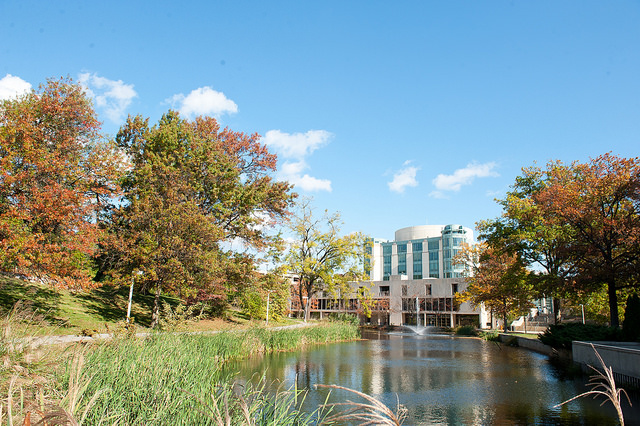
12662631454_73fd5871b4_zWe here at the Alumni Association want to wish you and yours a very happy Thanksgiving! It’s a time of year to reconnect with loved ones and reflect on what we’re truly thankful for. In our case, we’re thankful for our expanding campus (complete with a refilled Library Pond), our wonderful staff and faculty, and, of course, alumni like you. Have a wonderful holiday season!
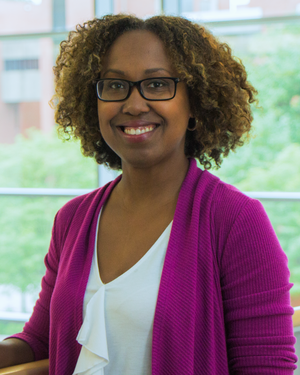
Photo Credit: Marlayna Demond ’11. (We should mention this photo is two years old, but trust us, the pond does have water again.)

Grad student Liz Winters ’13 featured on Maryland Public Television’s Ways to Pay for College program

A recent program produced by Maryland Public Television about college affordability featured UMBC student Liz Winters ’13, psychology, and current master’s student in industrial and organizational psychology. The program “Ways to Pay for College” guided viewers through the many options of funding higher education. Several financial experts and student success stories were featured during the program which aired November 21 and 23 on Maryland Public Television.

https://youtu.be/Zsn23C-n6Us

Liz Winters (story begins at 33:50 in the video above) described her path in finding ways to finance her education at UMBC. After she served in the military for 12 years, she returned to school and needed to explore options to cover her costs for tuition, living expenses, and daycare for her children. She used the Post-9/11 GI Bill but still needed to fund her remaining expenses.

“One of the strategies I had in funding my way through college was to talk to people,” Winters shared. “I didn’t know how to navigate this on my own, so I started networking on campus. I started finding my places on campus that I felt comfortable with and started asking the staff and the faculty that were sitting in those areas to really help me find my way through college and develop my career path.”

As a student, Winters worked closely with the Women’s Center and developed a close relationship with Jess Myers, director of the Women’s Center, who worked with Liz to find the Charlotte W. Newcombe Scholarship. The scholarship is for women over 25-years-old who are returning to school to obtain an undergraduate degree.

“Liz has never been afraid to ask for help,” explained Myers in the segment. “I think so often non-traditional students will be afraid to make waves, but instead Liz really asked for help. She sought out the Women’s Center…piecing it together, I was able to realize that a scholarship that we provide would be a really good fit for her and her family.”

“I was really excited to know that his scholarship was actually perfect for me,” said Winters. “I could use it for daycare for my children, I could use it for gas money, for all the extra little things that go along with funding your education. For me, finding scholarships that addressed what I needed…the more I looked, the more I realized that this scholarship was looking to fill those gaps that I needed to be filled.”

For more about the “Ways to Pay for College” program, visit the Maryland Public Television website.

Image: UMBC campus. Photo by Marlayna Demond ’11 for UMBC. 

Constantine Vaporis presents research at University of Pennsylvania Center for Integrated Study of Japan inauguration

In conjunction with the inauguration of University of Pennsylvania’s new Center for the Integrated Study of Japan, Constantine Vaporis presented an invited talk that focused on his research about travel in Early Modern Japan and what it revealed about healing, discovery, and political obligation and coercion, among other elements of life during that time period.

Vaporis, professor of history and director of the Asian studies program, teaches Japanese and East Asian history and has received numerous fellowships for research in Japanese history including a Fulbright Scholar’s Award and an NEH Fellowship for College Teachers. He is author of Breaking Barriers: Travel and the State in Early Modern Japan; Tour of Duty: Samurai, Military Service in Edo and the Culture of Early Modern Japan; Nihonjin to sankin kôtai [The Japanese and Alternate Attendance]; and Voices of Early Modern JapanContemporary Accounts of Daily Life during the Age of the Shoguns.

Vaporis’ lecture “The Edo Man and the Satsuma Sweet Potato: Early Modern Travel through a Japanese prism,” highlighted how travel established connections between citizens and the state during the early modern era of 1600-1868 unlike few other institutions of the time. His talk explored the contours of the elements that defined travel during that time period with an eye to their global context. Following the lecture, Vaporis engaged with the audience in an active Q & A session about his research. To learn more about his work, visit the UMBC history department website.

Image: Constantine Vaporis. Photo by Marlayna Demond ’11 for UMBC. 

F. Chris Curran writes Baltimore Sun op-ed about educational opportunity in Baltimore City

Following up on the recent release of several education assessments for the state of Maryland, F. Chris Curran, an assistant professor in the School of Public Policy, wrote a Baltimore Sun op-ed that examined the state of education in Baltimore City Public Schools and available educational opportunities for students.

“This month saw the release of several national education assessments that paint a less than optimistic picture of the state of education in Maryland. These results shake us and make headlines because they question our state’s prominence as a high performer in education. The reality, however, is that for many of the state’s residents, particularly those in Baltimore, questioning the educational system’s success is nothing new. Changes in the state’s average performance mean little for those trapped in consistently underperforming schools,” Curran wrote.

In his column, Curran called for more policies to improve schools so that the quality of education provided to students is equal regardless of the region of the state in which they live.

“We need policies that link the fates of children in the suburbs to those in the city. We need policies that provide incentives and structures so that remaining in the public city schools is attractive even for those with the ability to go elsewhere,” he wrote. “The recent attention to the state’s performance on educational assessments is an opportunity to recognize that we require a concerted effort by not just parents but state policymakers, local district leaders, and the general populace. Educational success cannot only be defined by the success of a few or success on average, but must also include opportunity and success for all children, regardless of the ZIP code into which they are born.”

Read Curran’s op-ed “Improve Baltimore schools to attract families,” published November 20 in the Baltimore Sun.

F. Chris Curran has research interests in education policy, early childhood education, school discipline and safety, teacher labor markets, and politics of education. Read more about his work on the School of Public Policy website.

Image: Baltimore skyline from I-95. Photo by Marlayna Demond ’11.

Marjoleine Kars reveals the untold story of the Atlantic Slave Rebellion in the Dutch Caribbean

Note: This story was updated on March 22, 2016.

From 1763-1764, nearly 5,000 enslaved people in the Dutch colony of Berbice in South America rebelled. In studying the history of the rebellion on the surface, one might think it fits the pattern of many New World slave revolts. But as Marjoleine Kars discovered, an examination of the judicial records provides a much closer look into the internal dynamics of the rebellion.

Kars, associate professor and chair of history, is currently finishing a book about the slave rebellion in Berbice. She recently published a paper based on her research in the February 2016 edition of American Historical Review titled “Dodging Rebellion: Politics and Rebellion in the Berbice Slave Uprising of 1763.”

In November 2015, Kars appeared on WYPR’s Humanities Connection in advance of her Humanities Forum talk at UMBC.

“Even though the rebellion appeared massive to the Dutch, it was in fact the work of a determined minority who forced participation of their fellow slaves,” shared Kars in the segment that aired November 19 on WYPR. “In actuality, many enslaved people in Berbice were neither purposeful rebels nor active collaborators, nor did they take one position and stick with it. Rather, as one would expect in a lengthy, dangerous, and ever-changing insurgency, people moved along the political spectrum, changing their positions and loyalties, sometimes multiple times, as survival demanded.”

By focusing on the internal dynamics of the rebellion, Kars argued that it also exposes the importance of gender. While examining the rebellion from a distance, one might assume it appears men and women shared a great deal in the rebellion, however closer research reveals their experiences powerfully diverged.

Because not all of the insurgency agreed on what freedom actually meant, Kars stated that the untold story of the Atlantic Slave Rebellion in the Dutch Caribbean teaches us about the dynamics of other famous rebellions such as the American and French Revolutions.

Listen to the full segment on WYPR.

Kars has previously written a book about a farmers’ rebellion in pre-revolutionary North Carolina: “Breaking Loose Together”: The Regulator Rebellion in Pre-Revolutionary North Carolina (Chapel Hill: University of North Carolina Press, 2002), and she was a Dresher Center fellow in spring 2015.

Image: Marjoleine Kars. Photo by Marlayna Demond ’11 for UMBC.

Lisa Gray in WYPR conversation on race, activism, and free speech in learning communities

Lisa Gray

In a radio appearance and in remarks to a newspaper, Lisa Gray, assistant director of student life for cultural and spiritual diversity, offered a vision for how college students can broach difficult topics of race without diminishing one another. Gray was featured in a Maryland Daily Record article on recent student demands for diversity at Towson University, and she was one of five guests on WYPR’s Midday show exploring “Student Activism, Race, and Free Speech”

On Midday, Gray explained the import of the slighting remarks or gestures termed “microaggressions” by likening them to paper cuts. One paper cut is trivial, she said, but 1,000 paper cuts can result in a hemorrhage. The goal on a campus, she said, should to protect free speech on a topic like microaggressions and at the same time to create “a space where everybody is valued and everybody is allowed a voice.”

In the Daily Record article, Gray elaborated on the idea of such a space.  At UMBC, she said, the administration is encouraging students to talk about race and microaggressions in “brave spaces,” where participants can broach tough topics respectfully, but without the presumption of comfort.

“It’s a great concept that’s starting to take hold,” Gray said.

Image: UMBC Library in Summer 2015. Photo by Marlayna Demond for UMBC.