All posts by: UMBC News Staff


New solar-powered charging tables on campus

The campus has finished installation of its innovative and sustainable solar-powered charging stations. These off-the-grid power systems serve as solar-powered tables, where community members can charge their devices while working or relaxing outside. In addition to providing sustainable, wire-free power, components of the stations are made from recycled plastics.

The tables are located in the Admin Plaza, Commons Plaza, and Harbor Hall courtyard area. The tables were made available through a partnership with the student “Prove It” program, Facilities Management, The Commons, and Residential Life.

Billy Heavner Named to CoSIDA Academic All-District Team

UMBC junior goalkeeper Billy Heavner has been named to the College Sports Information Directors of America (CoSIDA) Academic All-District Men’s Soccer Team, as the organization announced all of its men’s and women’s regional recipients.

Heavner earned First Team All-District honors for District 2. First-team Academic All-District™ honorees advance to the CoSIDA Academic All-America® Team ballot, where first-, second- and third-team All-America honorees will be selected later this month.

John Rennie Short weighs costs and benefits of new “urban resurgence” in cities across the globe

On United Nations’ World Cities Day, School of Public Policy Professor John Rennie Short published a column in The Conversation about what he calls the “Third Revolution,” or urban resurgence of cities around the world and its uneven impacts on social and economic progress. He wrote that while some cities are seeing strong population growth, others are failing to attract new investment.

John Rennie Short“Industrial cities such as Baltimore or Detroit, unable to replace the defunct industrial and manufacturing jobs, continue to lose population and fail to attract investment. And housing affordability in the most desirable cities is a worrisome trend that threatens to exacerbate social inequalities,” Short explained.

In his column, Short also pointed to the decline of household sizes and the attraction of cities with more job opportunities and amenities, but balanced with economic costs: “Because we are now expected to do more in less time, time itself becomes more highly valued, adding to cities’ allure. The city is being turned inside out as the poor are displaced to the suburbs to spend more of their time commuting while the wealthier can devote more of their time to work and leisure such as visiting the gym.”

Even with many cities experiencing growth, Short wrote that there are many negative economic impacts to go along with it, especially as home prices and rents continue to climb: “The most obvious is the displacement of the poor from central cities, the suburbanization of poverty and the creation of cities divided by class and income as the rich take over the central city and the poor and middle-income are displaced to the suburbs…We should be building cities that are productive, competitive, sustainable, livable and fair. On World Cities Day, we should commit to building a more humane city.”

Read “Cities are booming but progress is uneven and, to some, too costly” in The Conversation.

Image: Baltimore Inner Harbor. Photo by Marlayna Demond ’11. 

Kimberly Moffitt moderates GOP presidential debate panel on Marc Steiner Show

Following the October 28 Republican presidential debate on CNBC, Kimberly Moffitt, an associate professor of American studies, moderated a panel on WEAA’s The Marc Steiner Show analyzing the performance of the candidates and how it affected the campaign for the Republican nomination.

Panelists included Eugene Craig III, a grassroots activist and 3rd Vice-Chair of the Maryland Republican State Party, Catalina Byrd, media consultant and political strategist, and Charles Ellison, political strategist and Host of The Ellison Report, new on WEAA 88.9FM.

Moffitt led the discussion on a host of issues, including key takeaways from the debate, which candidates gained momentum, the line of questioning and approach of the debate moderators, polling, and key issues in the campaign such as economic policy and taxes. Moffitt is a frequent guest host and panelist on The Marc Steiner Show.

Listen to the complete segment on The Marc Steiner Show.

Image: Kimberly Moffitt in her office. Photo by Marlayna Demond ’11 for UMBC.

Christy Chapin analyzes evolution of American health care system over 20th century

Christy Chapin, an assistant professor of history, recently joined the Harvard University podcast This Week in Health Law for a discussion about the history of health care in the United States. Chapin is author of the new book Ensuring America’s Health: The Public Creation of the Corporate Health Care System, which was published earlier this year by Cambridge University Press.

Ensuring America's HealthThe wide-ranging interview covered several topics including how many ideas to save costs today are similar to ideas presented in the decades spanning the 20th century, what health policy would look like if it were better informed by history, and the validity of the conventional wisdom on the post World War II rise of employer-sponsored health insurance.

“People often connect the employer provision almost solely to World War II wage and price controls saying it really took off then because employers wanted to attract scarce labor. They had wage controls, and they could at least offer these benefits,” Chapin explained in the podcast. “But in reading other historians…they took issue with that. I went back and looked at the statistics and found that you do see some growth in health insurance during World War II, but nothing unusual.”

Chapin noted that a lot of the growth was due to the benefit that employers received from the government in the indirect form of subsidization.

Listen to the complete interview on Harvard’s This Week in Health Law website.

President Hrabowski speaks at Southwest Baltimore Economic Forum

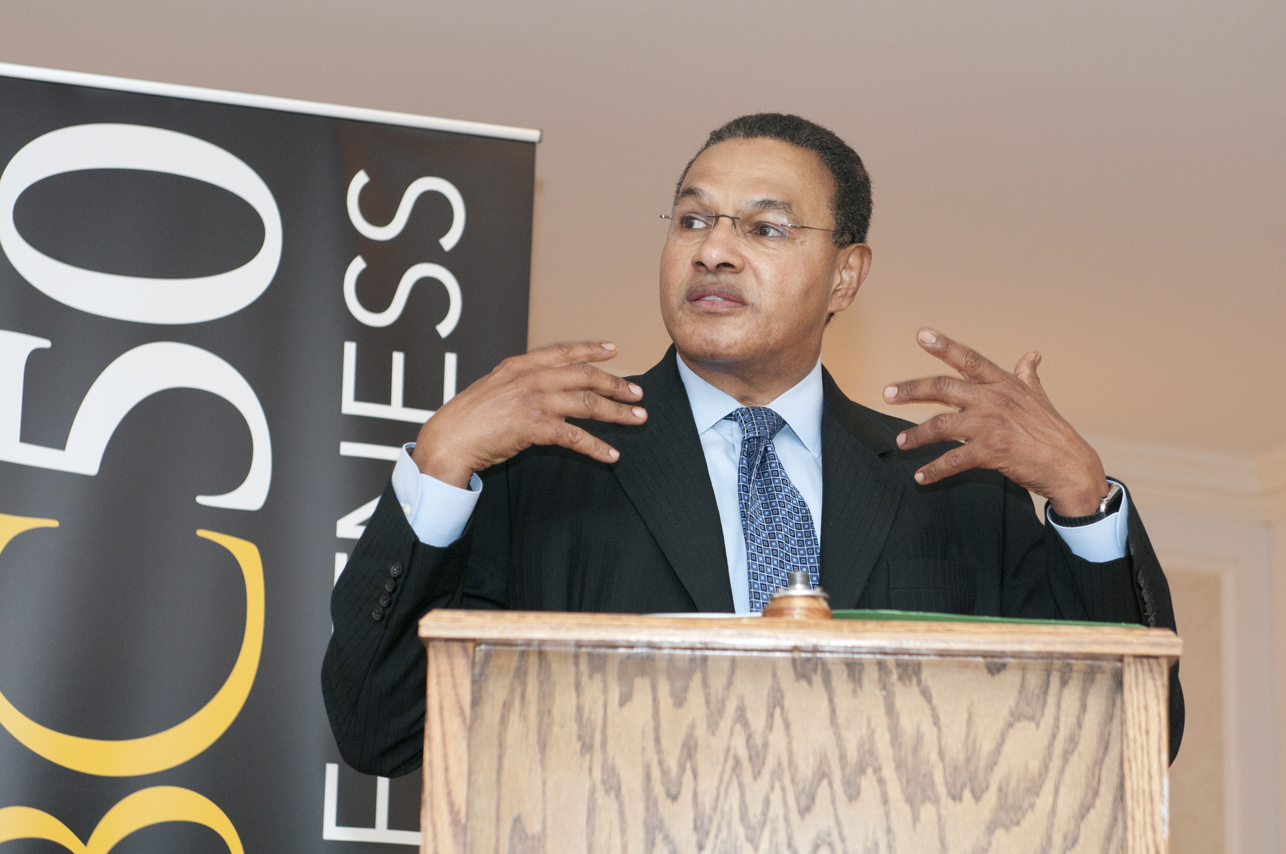
President Freeman Hrabowski was the featured speaker at the October gathering of the Southwest Baltimore Economic Forum.

063_FHrabowskiIn his remarks on Oct. 26, the president pointed to the many ties between the communities of southwest Baltimore County and the campus and urged residents to “think about UMBC as your institution.” He noted that about 4,000 undergraduates live on campus and another almost 1,500 students and university employees live in the Catonsville and Arbutus zip codes of 21227 and 21228.

Acknowledging the work of the Neighbor Relations Group, which brings together UMBC officials and community leaders, the president said that the university is focused on being a good neighbor. He also highlighted the contributions of UMBC’s research park, bwtech@UMBC, to the local and state economy. The companies leasing at the park employ some 1,200 people and generate about $500 million annual in business sales and income, he said.

The forum brings together business and community leaders to hear a political or institutional official speak about issues relevant to the economy of the southwest Baltimore region. Other speakers have included Baltimore County Executive Kevin Kamenetz and state Sen. Edward Kasemeyer.

The talk and the subsequent question-and-answer period were covered by The Catonsville Times.

UMBC TESOL associate director wins 2015 TESOL International Association research grant

The TESOL International Association has announced the recipients of its 2015 research mini-grants, and UMBC’s Heidi Faust is the winner of a grant to research English teacher professional development through professional learning communities (PLCs).

Heidi FaustThe project, titled “Sustaining Professional Development through Professional Learning Communities: A Case Study of the Impact on Teacher Identity and Practice at a Peruvian Binational Center,” will investigate the impact of professional learning communities on English language teachers as the global demand for access to English increases and more teachers are transitioning from teaching English to adults to younger learners.

“Without knowledge to manage the developmental, behavioral, and cognitive demands of young learners, such teachers may experience high levels of frustration and likewise work very hard with limited results. They may not identify as English teachers of young learners and may lack the stamina to stay in the classroom with young learners,” a press release announcing the award stated.

As part of the project, Faust, an instructor in the education department, LLC doctoral student, and associate director of TESOL professional training programs at UMBC, will use archival course data, surveys, and analysis of teacher reflective journals to examine the sustainability of PLCs in enhancing the professional development and identity of teachers.

In addition to her work at UMBC, Faust currently coordinates online professional development for English teachers and learners from more than 100 countries. She is an English language specialist for the U.S. Department of State and the 2015–2016 Chair of the Intercultural Communication Interest Section. Read more on the TESOL International Association website.

Alumni with Grit and Greatness

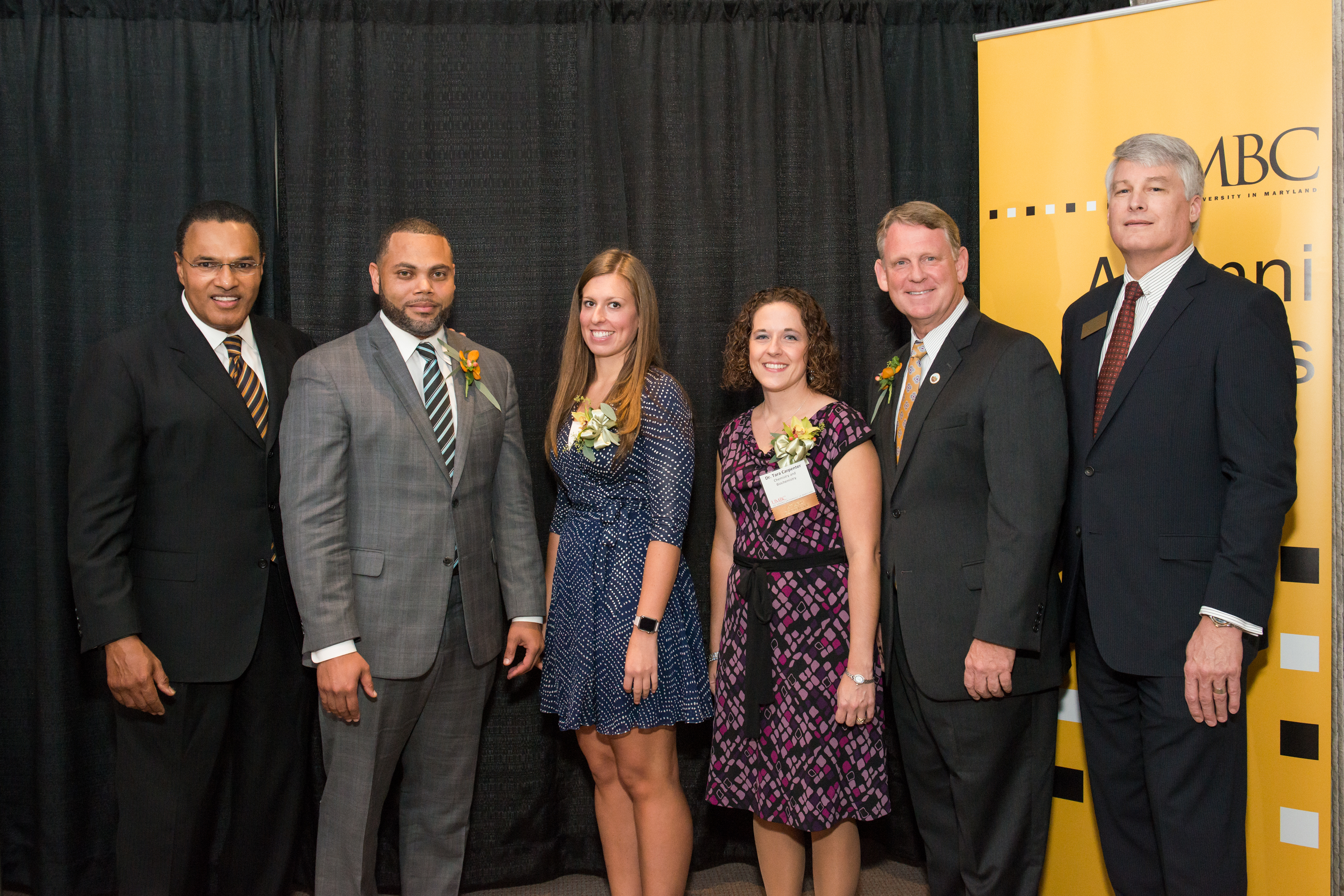
UMBC alumni and faculty greeted each other with beaming smiles and excited chatter at this year’s Alumni Awards Ceremony, held on October 8, 2015. Among bright arrangements of orange roses and green orchids, caterers weaved through the crowd as everyone reconnected before finding their seats for an emotional program honoring the achievements of alumni and the faculty, staff, and other community members who shaped their time at UMBC.

As President Freeman Hrabowski kicked off the event, he offered advice to alumni back at UMBC for the first time in a few years, who might not recognize the campus after its tremendous growth. “Don’t feel old,” Hrabowski suggested, “just feel…vintage.”

22032997146_935f53445f_o

It was an evening for storytelling—sharing memories of courage, creativity, commitment, and grit.

This year’s honorees included Distinguished Service Award winner Howard County Executive Allan Kittleman ’81, political science, a former state senator who worked across party lines to support marriage equality for same-sex couples.

As a child, Nicole DeBlase ’06, financial economics, had dreamed of dancing on Broadway. Through her studies at UMBC she found a new path to New York, where she is now a star on Wall Street as a Morgan Stanley executive.

Andre Gudger ’99, information systems, who currently serves in the Obama administration, received the Engineering and IT Award. Gruger was previously chairman and CEO of Solvern Innovations, which he grew to 1,300 employees in eight years.

Natural and Mathematical Sciences Award winner Yoon-Ho Kim ’01, Ph.D. physics, wrote his doctoral dissertation on quantum teleportation. Professor Todd Pittman, M.S. ’92, Ph.D. ’96, physics, who accepted the award in Kim’s absence, told the audience that his work is “almost as Star Trek as it sounds.”

Bryan Kelly ’92, economics, winner of the Social and Behavioral Sciences award, was honored as a business leader with a distinctive personal commitment to his community, as evidenced by his tangible support and mentorship of others.

The Visual and Performing Arts awardee, Lisa Urkevich ’86, music, received honors for her work as a global leader in ethnomusicology research and teaching whose work in the Arabian Peninsula transcends cultural difference.

22046758092_82a046d1b5_o

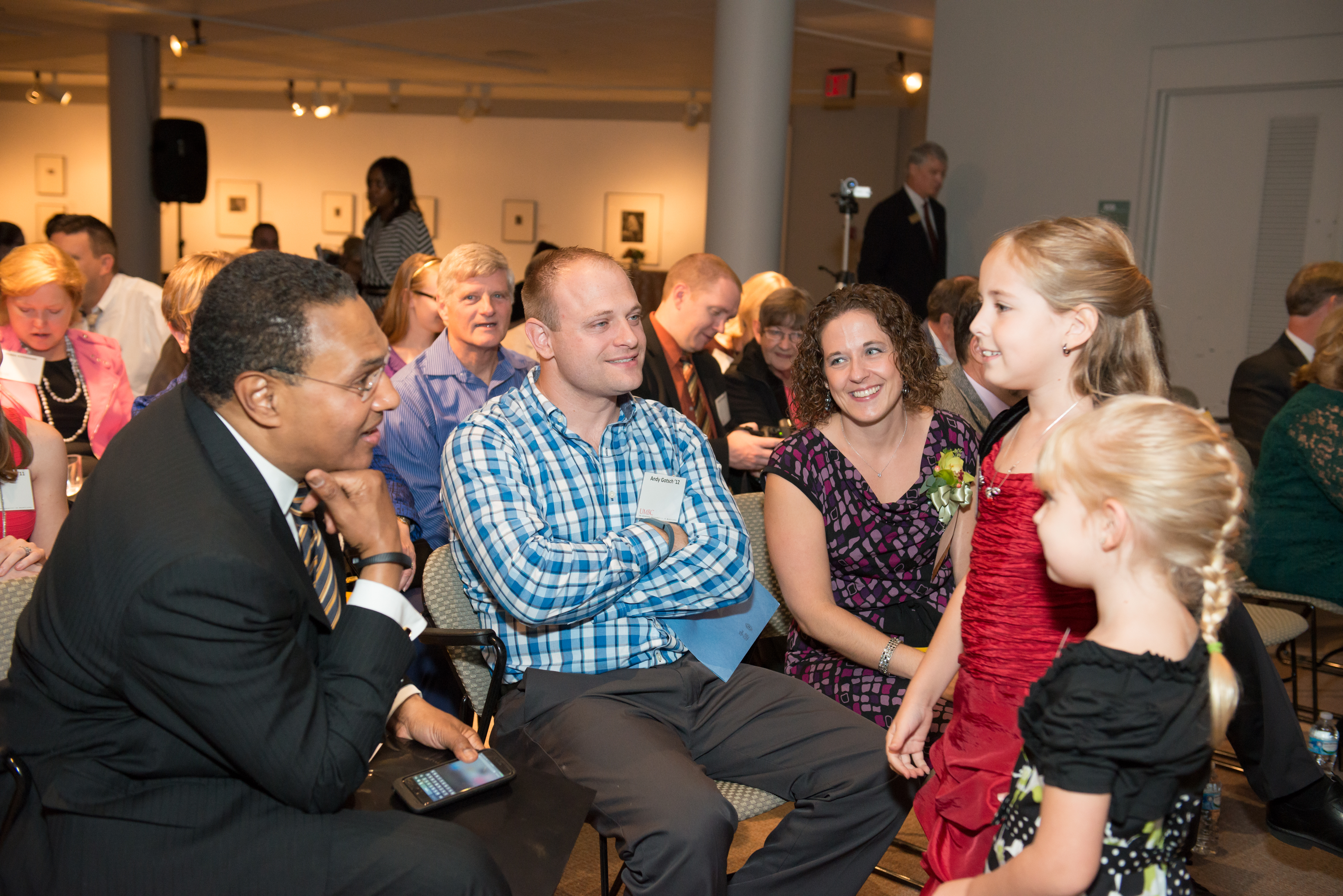
Andy Gotsch ’12, chemical engineering, told a particularly moving personal story in presenting this year’s Outstanding Faculty Award. He shared the tremendous, lasting impact Tara Carpenter, senior lecturer in chemistry and biochemistry, has had on his life. Gotsch failed Carpenter’s Chemistry 101 course twice and was looking at a third failure, despite his putting in hours of extra study time. Carpenter urged Gotsch to be evaluated for test anxiety and connected him with supportive resources that eventually enabled him to pass the class and go on to earn a chemical engineering degree.

As the crowd cheered, Carpenter accepted the award with tears in her eyes, telling Gotsch, “I’m so proud of you.”

Photos by Marlayna Demond ’11

See more photos from the event.

Career Q&A: Alexander Bush ’09, Political Science

Every once in a while, we’ll chat with an alum about what they do and how they got there. Recently, we caught up with Alexander Bush ’09, political science, a former Humanities Scholar who went on to law school at Pepperdine University in California. In addition to his full-time job as a personal injury attorney in Baltimore, Bush co-hosts Baltimore Barristers, a radio call-in show about legal issues.
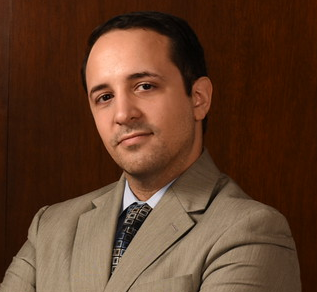
profile photoNAME: Alexander A. Bush
JOB TITLE/EMPLOYER: Co-host of the Baltimore Barristers radio show on CBS 1300 AM and Associate Attorney at Ingerman & Horwitz LLP
MAJOR/MINOR: major in History, minors in Political Science and French
GRAD YEAR: 2009

How did you decide to go to law school? What has the trajectory of your law career been, leading up to “Baltimore Barristers”?

I’ve learned the importance of career flexibility. My plan at Pepperdine Law was to do death-penalty defense. While I was very pleased that Maryland ended the death penalty soon after my graduation, it did keep me from getting a permanent position with the Public Defender’s Aggravated Homicide Division.

Fortunately, a diploma from UMBC, with its ever increasing reputation and rankings, helped me in the job market.  Since then I [have] accepted a position at Ingerman & Horwitz, the state’s largest workers’ compensation firm, located in Baltimore City. I still get to handle criminal defense cases, but now I specialize in personal injury.

My co-host, Stephen Caramenico, and I came up with the idea for a radio show only about two months ago. We were fortunate to find an opening on 1300AM Tuesdays at 7pm. It has been a challenge balancing a heavy caseload and all the work that goes into the show, but I’m really enjoying it.

As a lawyer, what made you decide to do a radio show? Did you have any experience with the medium prior to breaking into that realm?

My current position as a litigation attorney gets me lots of trial experience, but I also wanted to find a way to incorporate politics and public policy into what I do. Since [my] co-host and I started the Baltimore Barristers in September, we’ve had two state delegates on to discuss proposed changes in the law, and a county council chairman to discuss the future of marijuana dispensaries.

It’s also a good career move given how competitive my field is. You can be the most skilled lawyer in the city, but if no one knows your name, you won’t get any clients.

I had no background in radio before this. It has been quite the learning experience. I’ve been lucky to have a great producer at CBS 1300 AM. I’ve yet to have any major technical slip-up or (my greatest fear) use any fine-inducing salty language on air, so I am feeling confident.

Since CBS 1300AM is mostly a sports talk station, my co-host and I have embraced our sports fan audience with stories on whether fantasy sports sites like FanDuel and DraftKings are gambling (the answer: maybe), Deflategate, and more.

What is it like to answer people’s legal questions?

The first step in doing it empathetically is understanding the vast difference between the public’s perception of the law and what the law actually says. Most of us have our own sense of basic fairness and just assume that’s how the law works. I think having a Master’s in Alternative Dispute Resolution [from Pepperdine’s nationally-recognized Straus Institute] helps me to build rapport and trust with someone even while I’m telling them something they really don’t want to hear about the law.

On the radio, I make it clear that there is no attorney-client relationship (and obviously no confidentiality) in on-air advice. I’ve had to tell callers not to give me any identifying information on the air, and then have spoken to them privately after the show.

What about your experience at UMBC stands out the most to you?

The Humanities Scholars program has had a great positive impact on my life. It provided me with a small, supportive community and was the impetus for a lot of great experiences like study abroad, funded research, and a living-learning community dorm. But it was more than just the program[.] [The] whole culture of UMBC worked for me. Being a nerd (in my case, a history and law nerd) is cool here.

I also had a number of great professors with whom I’ve been lucky to have lasting relationships, but especially Dr. George LaNoue, who taught my constitutional law courses and gave me a lot of great advice while applying to law schools. While I was at Pepperdine, Dr. LaNoue and I co-authored a paper on 1st Amendment issues with internal review boards, which we presented at a conference at Cambridge in the UK.

Knowing what you know now, what would you tell a brand new UMBC student?

There are a lot of opportunities to take advantage of, so start planning early. Give yourself time in the beginning to try new experiences, but once you’ve found what you like, go for it!

For me, it was a study abroad in Cameroon and France that I was able to tie into research in the UK, which then led to presenting my research at URCAD. That was a great experience, especially for an undergrad who wouldn’t usually have an opportunity like that.

You can listen to past Baltimore Barristers podcasts here.

W.E.B. Du Bois Lecture: Linked fates and great expectations

Dinaw Mengestu, Paris, 06/2007 © Mathieu Zazzo

W.E.B. Du Bois Lecture 
Dinaw Mengestu, MacArthur Fellow, acclaimed novelist, and professor of English, Brooklyn College
Wednesday, November 11 | 7 pm
Performing Arts and Humanities Building, Earl and Darielle Linehan Concert Hall

An Ethiopian-American novelist who has garnered widespread critical acclaim for his intimate depictions of the immigrant experience in America, Dinaw Mengestu was named a “20 under 40” writer by The New Yorker and received the National Book Award Foundation’s “5 under 35” Award for his debut novel, The Beautiful Things That Heaven Bears. This novel tells the story of Sepha Stephanos, who fled the Ethiopian Revolution and immigrated to the United States where he owns a failing grocery store and struggles with feelings of isolation and nostalgia.

Mengestu was the recipient of the 2006 fellowship in fiction from the New York Foundation for the Arts, the 2008 Lannan Literary Fellowship, and received the 2012 MacArthur Foundation Genius Award. Dinaw Mengestu is the author of three novels, The Beautiful Things That Heaven Bears, How to Read the Air, and All Our Names. His latest novel, All Our Names, is an unforgettable love story about a searing affair between an American woman and an African man in 1970s.

Mengestu currently teaches at Georgetown University and Brooklyn College. He is a graduate of Georgetown University and Columbia University’s MFA program in fiction. His fiction and journalism have been widely published.

Sponsored by the Africana Studies Department and co-sponsored by the Dresher Center for the Humanities; the English Department; the Office of the Dean of the College of Arts, Humanities, and Social Sciences; the Division of Undergraduate Academic Affairs; and the Office of Undergraduate Education.

Keeping Up With the Doyles

For a university that’s only turning 50 next year, UMBC has already developed some pretty significant stories. The Doyle family story, which begins with the Fab Four graduating class of 1970 and continued through the founding of the Honors College and Freeman Hrabowski’s presidency, is one of the oldest. For this family, college provided much more than an education.

unnamed (1)“It Was Magical From the Beginning” – Ed and Sharyn’s Story

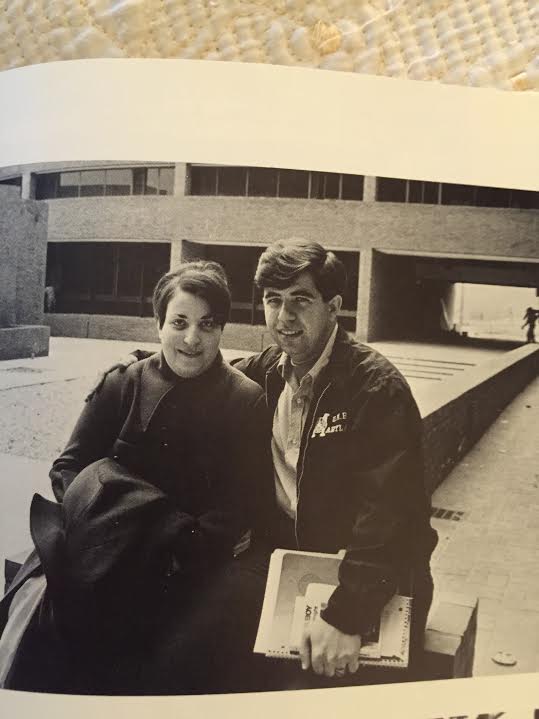
Ed ’70, psychology, and Sharyn Doyle ’70, psychology, met through a mutual friend at the end of their junior year back in 1969, when UMBC was barely in its infancy, and married in November of 1970. Back then, the school was only a couple of academic buildings set upon a wide circle of farmland, and the psychology department, which graduated them both, only had one professor.

“I have a warm spot in my heart [for UMBC],” says Ed. He graduated from college despite his severe dyslexia “which was a huge deal” back in 1970. As a senior taking freshman English, Ed read his first book – Emile Zola’s L’Assommoir –  all the way through in the halls of the Albin O. Kuhn Library, taking up to a half hour per page.

“I would spend days and hours in the UMBC library,” he says. “I wanted to achieve my degree and my coming life with Sharyn.”

“[UMBC was] a very positive environment for me,” he says now.

They both remember UMBC as a place where it was cool to be smart, something many cite as the reason they came or stayed here. “That was there from the beginning,” says Ed.

Ed and Sharyn both went on to have interesting and varied careers. Sharyn earned an education certificate along with her psychology degree, and spent 36 years with the Anne Arundel County school system, working her way up the ladder from student teacher to principal before moving into human resources and testing research. Today, she travels to schools across the country as an independent HR consultant.

Ed started off working with juveniles before making a complete career change, after 22 years, to computers. He was entirely self-taught, and managed the payroll for state Medicaid, the one job, he says, in which “you cannot make an error.” He is now retired, and in addition to spending time with family, he volunteers at the Baltimore County Senior Center, where Sharyn also sits on the board.

Their 45-year union has seen many challenges, health issues chief among them, but it’s one that has ultimately withstood those challenges, growing and changing along with the school where they met.

IMG_8641“This Place Seems to Get Along” – Damian and Jen’s Story

As the university grew, so did the Doyle family. Ed and Sharyn’s son Damian Doyle ’99, computer science, was born in 1977. Damian, who was one of the inaugural members of the Honors College, is the Director of Enterprise Infrastructure and Support for UMBC’s IT department. He is married to Jen Doyle ’93, English, whom he met while they both worked at the Catonsville library.

Damian chose UMBC over Hopkins not because both his parents went here (though there was, in their words, no pressure), but because he felt like an individual here. When he visited as a high school student, the head of the Honors College talked with him, and one of the computer science professors pulled him aside to show him the research he was working on. He walked away from that experience with the impression that UMBC was a school invested in the success of all of its students.

“It felt much more intimate, much more personal,” he says.

Today, he works with undergrads frequently as part of his job, and continues to admire UMBC students’ willingness to learn and grow.

“It’s been really cool…to watch [Dr. Hrabowski] put [UMBC] on the map,” Jen, who now works for the Remax New Beginnings real estate office, says in agreement. “It’s been really neat to see it turn into something magnificent.”

The Next Generation?

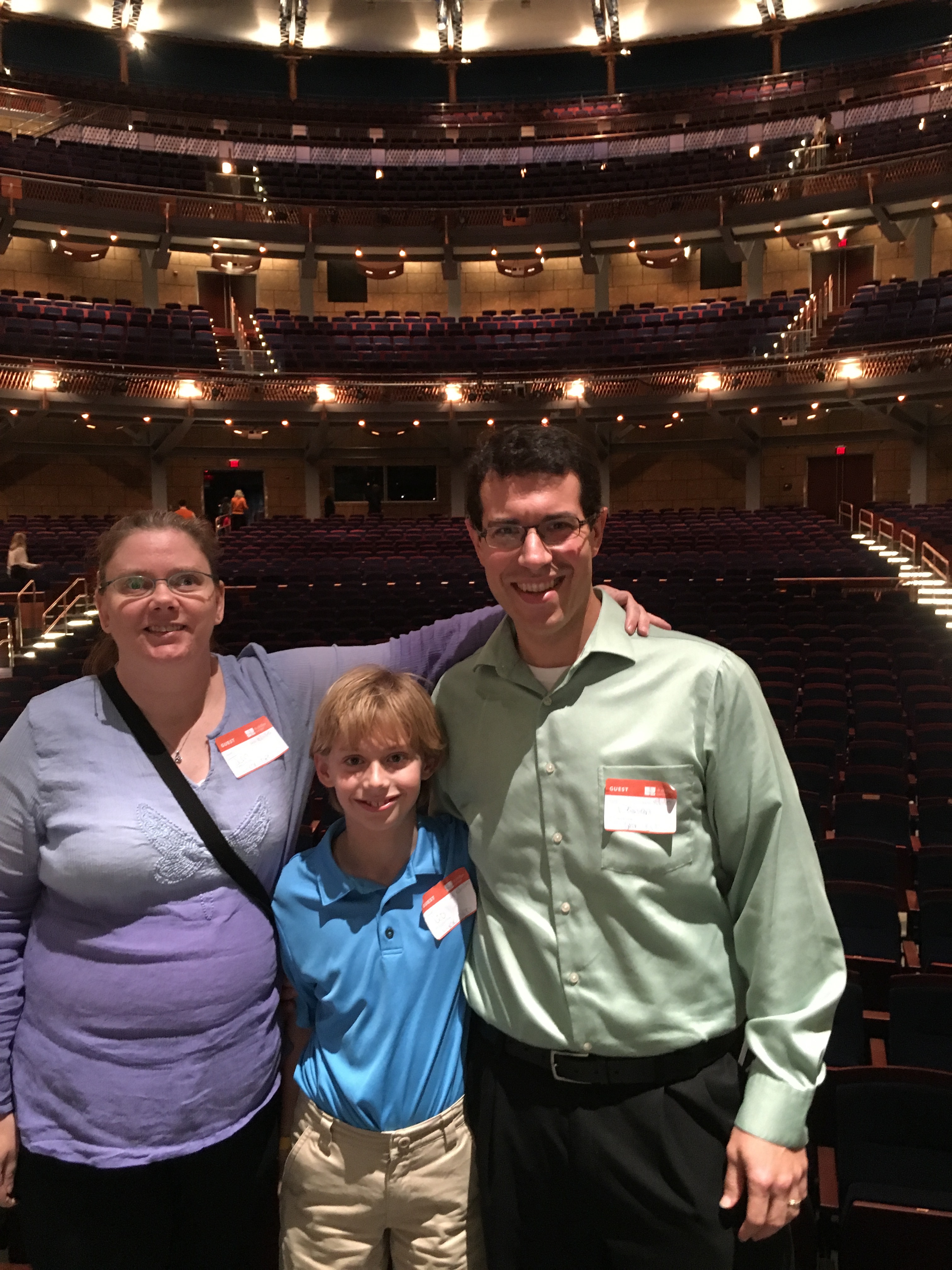
It all started here for this UMBC family, and Sharyn says she hopes her grandson Leo, who will turn 10 later this year, can continue that legacy into the future.

No pressure, though.

Julia Celtnieks ’13

Photos provided by the Doyle family.

2015 Provost’s Teaching and Learning Symposium emphasizes student learning assessment

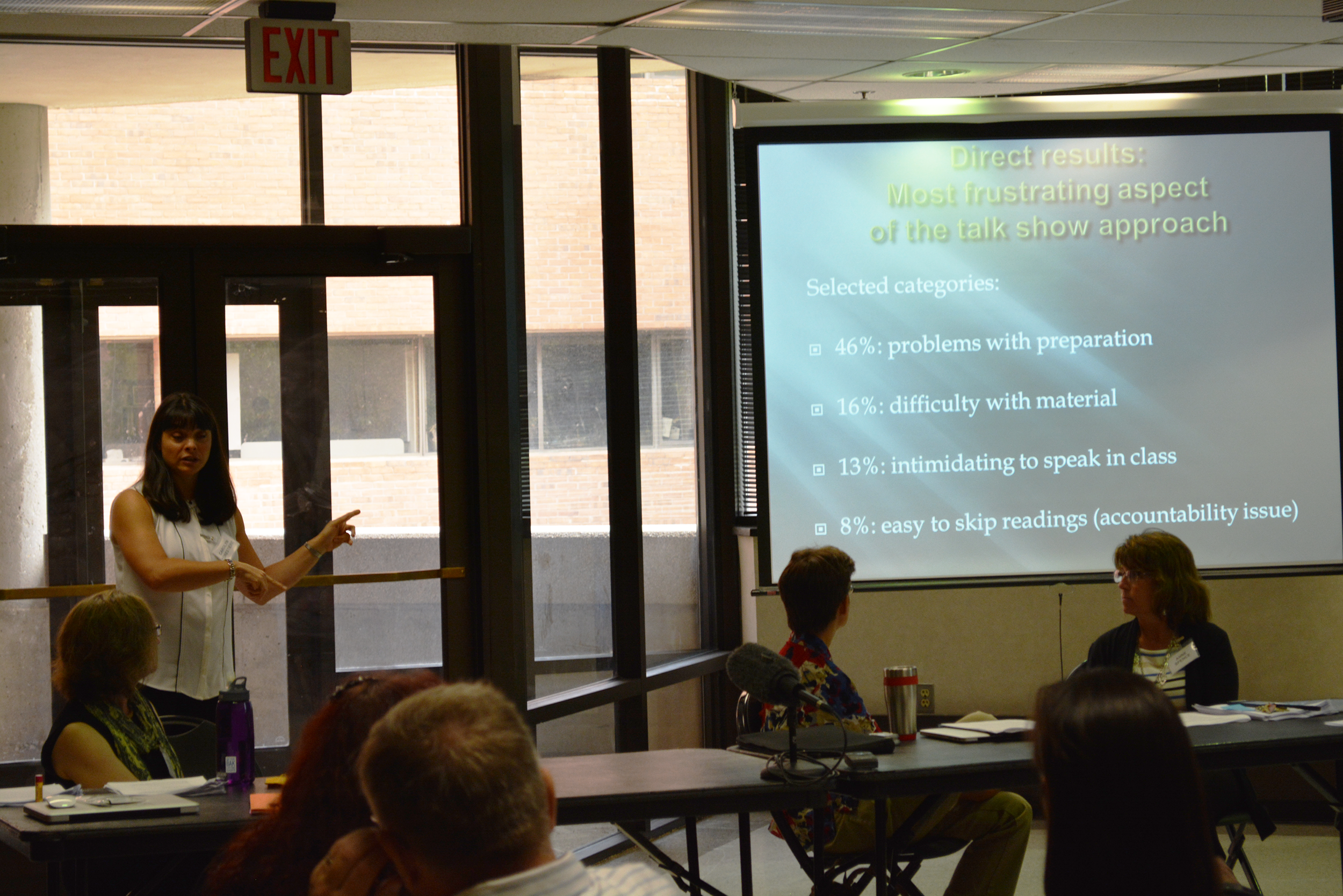
presentations-symposium-2015The second annual Provost’s Teaching and Learning Symposium, held in late September, 2015, marks a continued effort to spur student learning and pedagogical innovation and assessment through collaborations with faculty and staff.
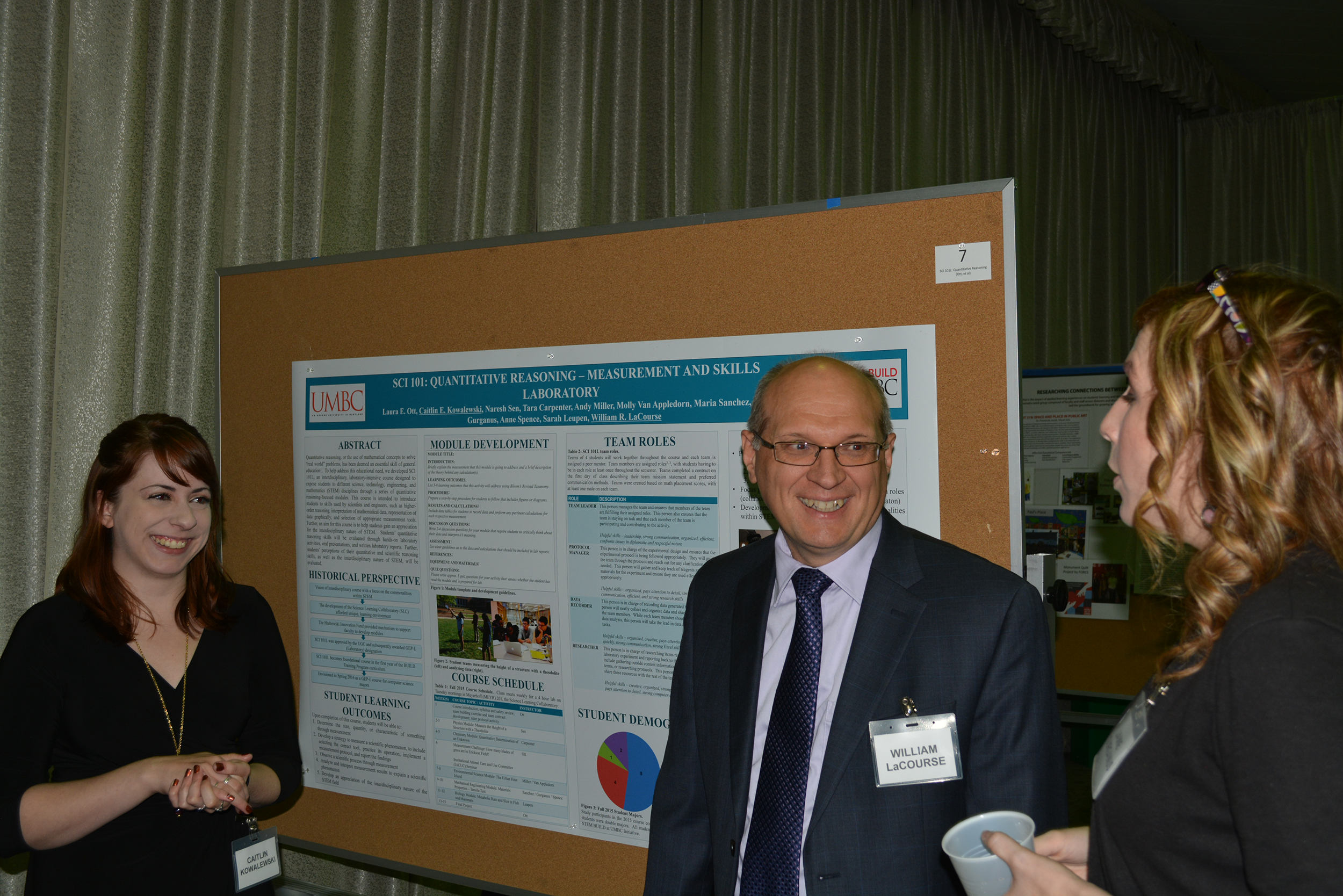
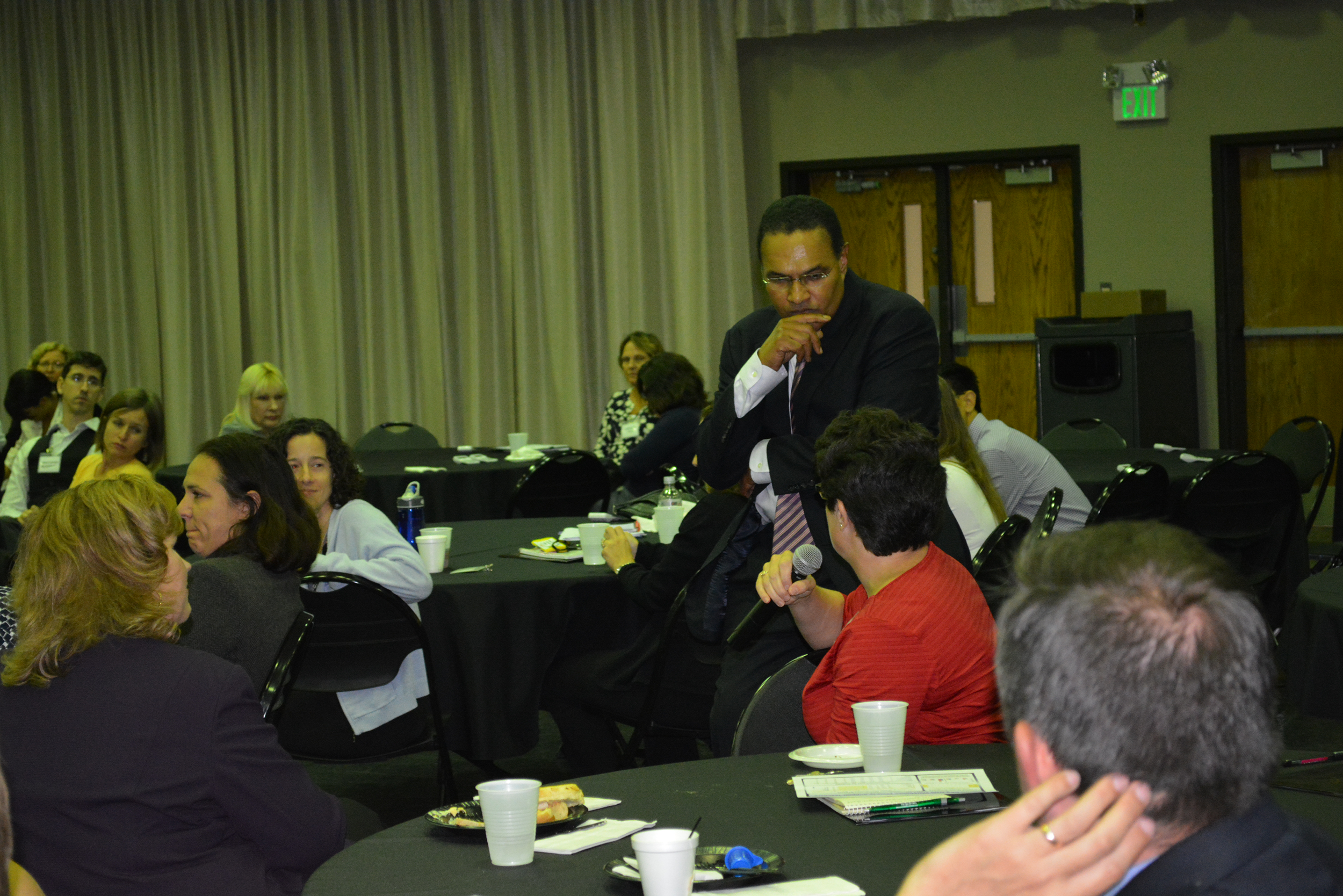
The symposium, supported by the Hrabowski Innovation Fund initiative which acknowledges faculty and staff creativity and innovation in education, brought together nearly 100 faculty, staff, and graduate students to explore ways the UMBC community is actively engaging students in and out of the classroom through the implementation of creative ideas, technologies, and curricula.

posters-symposium-2015

Conversations in various breakout sessions were led by faculty and staff involved in existing programs and initiatives designed to positively change student learning outcomes and assessment. Some of the new ideas addressed during the half-day event included teaching hybrid courses, understanding the value of applied learning, and creating customized direct measures to evaluate student learning. Participants also heard from the Hrabowski Innovation Fund 2013-14 winners, who provided an overview of their grant programs and shared updates on their progress.

This year’s symposium also featured “SpeedGeeking,” a fast-paced, creative way for attendees to share a useful or innovative idea in small group conversations. Poster presentations were also available, where participants could review, in greater detail, many of the existing grant programs established from the Hrabowski Innovation Fund.

freeman-symposium-2015

The event concluded with an open group dialogue with Dr. Hrabowski, where he shared his thoughts on the work of the institution and the importance of challenging ourselves, and our colleagues and partners, to continue developing innovative ways to advance higher education.

The Provost’s Teaching and Learning Symposium is organized by the Faculty Development Center, which supports faculty and instructors in their teaching role by providing a comprehensive program of services and resources.

Faculty and staff interested in sharing ideas for creative sessions for future symposiums should contact Linda Hodges at lhodges@umbc.edu.