All posts by: UMBC News Staff


Renetta Tull selected as one of three finalists for GEDC Airbus Diversity Award

Renetta Tull, associate vice provost for graduate student development and postdoctoral affairs, has been selected as one of three finalists for the GEDC Airbus Diversity Award. Dr. Tull has been invited to present her work and ideas to a jury of experts at the annual GEDC conference in Adelaide, Australia on November 30, 2015.

Dr. Tull has been recognized for her work on initiatives to drive inclusiveness and diversity in the STEM fields, including her leadership with the PROMISE Alliance for Graduate Education and the Professoriate (AGEP), a program aimed at increasing the numbers of future engineering faculty from underrepresented groups.

Learn more about Renetta Tull’s work and #ThinkBigDiversity through her blog, and watch the GEDC Airbus Group video announcing the finalists:

tull-finalist

The finalists have been selected for their proven demonstration of initiatives that have the potential to be replicated in other areas nationally and internationally, as well as for their passion for engineering and creating positive change in the industry. The three finalists were selected out of a total of 29 candidates from 13 countries.

The Global Engineering Deans Council (GEDC) is an international network of engineering deans working to advance engineering education, research and service. The organization notes, “The importance of diversity and inclusion in the engineering education community is a consistent theme in the GEDC’s conversations on improving the quality of engineering and engineering education.” Airbus Group is a global leader in aeronautics, space and related services, and is a corporate member of the GEDC.

UMBC researchers collaborate to improve sustainability, with impacts in Maryland and across the nation

Local sustainability researchers and thought leaders took center stage on October 16, 2015, at a forum for urban sustainability in Baltimore, hosted by UMBC’s School of Public Policy. The forum was designed to examine how collaborations among government agencies, companies, and nonprofits can improve sustainability policies and programs. It also emphasized how a broad range of perspectives is needed to effectively assess and address environmental concerns.

This isn’t news to Claire Welty, professor of chemical, biochemical, and environmental engineering and director of UMBC’s Center for Urban Environmental Research and Education. Welty is the associate director of research for the Urban Water Innovation Network (UWIN), recently created through a $12 million commitment from the National Science Foundation (NSF).

Global climate change and extreme events can impact water security and be costly to economies. Through UWIN, UMBC and 13 other academic institutions and key partners, including Princeton University and the University of Pennsylvania, will address challenges that threaten urban water systems in the United States. Led by Colorado State University, UWIN will create solutions to help communities increase resilience in their water systems and boost preparedness for responding to water crises.

The research completed by UMBC and other UWIN partners will produce sustainability blueprints for cities of various sizes, detailing the likely effects and tradeoffs of potential solutions to urban water problems. This will serve as a guide for actions urban centers can take to improve their water security.

UMBC’s strong research and education programs focusing on stormwater management, water quality control, and urban biodiversity will serve as major assets for UWIN. In addition to Welty, Andrew Miller and Christopher Swan, both professors of geography and environmental systems, will play an active role in the collaboration.

NSF also recently announced a major $20 million award to expand the Center for Sustainable Nanotechnology (CSN), which uses fundamental chemistry to explore how modern nanomaterials interact with the environment and living organisms. Zeev Rosenzweig, professor and chair of chemistry and biochemistry at UMBC, is leading UMBC’s participation in the CSN, which includes 13 faculty from research institutions across the United States.

Nanotechnology involves the use of materials at the smallest scale, including the manipulation of individual atoms and molecules. There are hundreds of products that use nanoscale technologies in various ways, including beer bottles, car wax, electric and hybrid car batteries, and even Kindle devices, but there are still many concerning unknowns when it comes to how tiny particles interact with biological systems.

“This research center will greatly impact society by preparing next generation nanomaterials that retain high function, while being safer for human health and the environment,” said Rosenzweig.

Each of these projects demonstrates the need for collaboration across disciplines and institutions to develop optimal solutions for environmental problems. Faculty, staff, and students across UMBC are participating in this work in innumerable ways, from the Maryland Green Prisons Initiative, to reducing phosphorus loads in Maryland’s waterways, to constructing new buildings on campus that have been recognized for leadership in energy and environmental design.

In just one week, a UMBC research forum on climate change and the environment will bring together faculty from all three colleges for discussions that may inspire even greater collaboration.

At the recent urban sustainability forum in Baltimore, researcher Eric Zeemering shared, “I think it’s very important that we need to discuss strategies beyond ‘green.’” Zeemering told the crowd that when it comes to developing partnerships to tackle sustainability issues, “Baltimore can continue to be a model for the rest of the nation.”

Image: Zeev Rosenzweig, professor and chair of chemistry and biochemistry, is leading UMBC’s participation in the Center for Sustainable Nanotechnology. Photo by Marlayna Demond ’11.

Roundup: UMBC in the News

One of the things that makes UMBC great is how wonderful our alumni, students, faculty, and staff are. Because of these amazing people, UMBC often finds itself “in the news,” so each week, we’ll be sharing with you a round-up of the most newsworthy achievements from our community.

For more newsmaking moments and campus updates, check out UMBC Insights!

Dennis Coates weighs costs and benefits of public subsidies for sports franchises in OC Register op-ed

As several NFL franchises are competing to relocate to the Los Angeles area, Dennis Coates, a professor of economics, argues that facts do not support the claim that professional football would be an economic goldmine for Southern California. Coates wrote an op-ed published in The Orange County Register in which he argued public subsidies for professional sports franchises do not always provide the economic boom that officials hope for.

Dennis CoatesIn the column, Coates referenced a study he did with a colleague that was recently updated to examine the economic impact of professional sports teams in major cities across the country: “Our findings were clear: Professional sports had no positive impact on an area’s economy, and actually harmed residents’ per capita incomes,” Coates wrote.

Coates argued that the public should closely examine whether a stadium and professional franchise investment will produce a real return for citizens.

“Now, as then, the data disprove the claim that a city can use stadium and arena construction, or the attraction or retention of a professional sports franchise, to enhance the income of its citizens,” he explained. “In the economics of both sports and public policy, resources are scarce and must be put to their best use. Not all subsidies will make the cut.”

Read “Pro sports great, just not for local economy” in the Orange County Register.

Update 10/27: Coates appeared on WTOP to discuss to impact of spending taxpayer dollars on pro sports stadiums. 

Matt Levy, EHS medical director, receives Silver Medal of Valor from Howard County Fire and Rescue Services

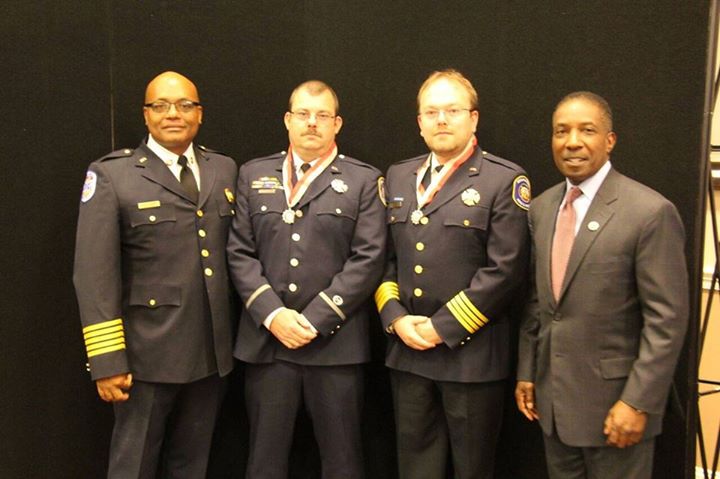
Pictured left to right are Fire Chief/Paramedic John Butler, Lt./Paramedic Will Huber (also received the award), Medical Director Matt Levy, Howard County Chief Administrative Officer Lonnie Robbins

Dr. Matt Levy ’00, emergency health services, and ’08 M.S., emergency health services, was recently honored for his work in responding to the Columbia Mall shooting in January 2014. Dr. Levy received the Silver Medal of Valor from Howard County Fire and Rescue Services for his role as the second tactical medic to arrive on scene that day, and then transitioned to being the on-scene medical director.

The award was given for entering a dangerous environment that had the potential for a continued direct threat in the immediate aftermath of a shooting. Levy supported the SWAT team’s mission to identify and assess for additional threats on scene and was ready to initiate treatment as part of the medic embedded with the tactical team. As additional resources arrived, Dr. Levy transitioned his role to being the on-scene medical director for the duration of the emergency response.

The award was given during a ceremony Wednesday, October 14 in Clarksville. In addition to being an alumnus, Dr. Levy is currently the medical director of UMBC’s emergency health services department. Read more about the Howard County Fire and Rescue Services awards in the Baltimore Sun.

President Hrabowski emphasizes the importance of inclusiveness, interdisciplinarity in STEM fields

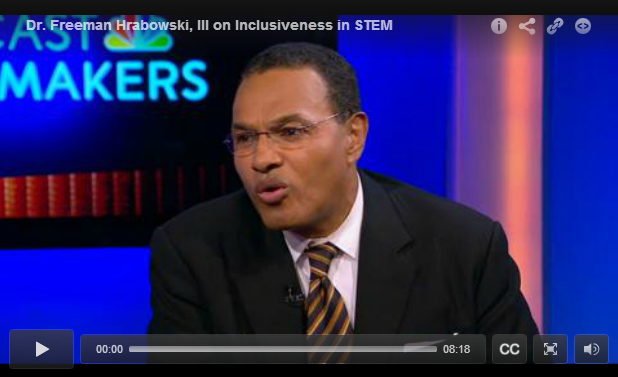
In a recent interview with Comcast Newsmakers, President Freeman Hrabowski acknowledged that, while the number of jobs in STEM-related fields is growing, minority representation within these fields still lags.

“There are far too few Americans, in general, who love math or who are in STEM fields,” said Dr. Hrabowski, when asked about his successful career as an African-American with a math and science background. According to a 2010 study by the National Academies Committee chaired by Dr. Hrabowski, only 5 percent of 24 year-olds of all races hold STEM degrees—and only 2-3 percent of minorities.

During the interview, Dr. Hrabowski pointed to the need for students to understand that, despite racial and ethnic disparities, success in STEM fields requires a well-rounded experience that extends beyond technical training.

“We want young people to understand that the more they do—and the more they take advantage of the opportunities in learning to read and think critically and solve problems—the better they can be in STEM,” said Hrabowski. “I cannot emphasize enough the importance of reading and thinking skills and giving children a chance to solve problems and talk about problem-solving of all types.”

Some tactics that bridge this gap, says Dr. Hrabowski, include working with children at an early age and using real-world problems to teach the value of math, science, reading, and thinking skills.

Dr. Hrabowski also identified competitiveness as a principle concern hindering growth in STEM. “If you think about how we solve problems in our country [and] in the world, people work in groups,” he said. Dr. Hrabowski also emphasized the notion of community as a core value at UMBC and how integral it is to learning and growing.

Above all, Dr. Hrabowski believes we must create a nurturing environment that teaches others to believe in themselves: “There’s nothing more important than a sense of self.”

comcast-newsmakers

School of Public Policy hosts forum on Urban Sustainability in Baltimore

Many local governments around the country are redesigning and rethinking policies and programs to become more sustainable. Baltimore has been a model for other cities by promoting collaboration among city government, local businesses, non-government organizations, and other groups to address sustainability concerns.

UMBC’s School of Public Policy hosted a forum on urban sustainability in Baltimore at the Columbus Center on October 16, 2015 to examine Baltimore’s efforts to become a more sustainable city and to discuss the networks of government, for-profit and nonprofit organizations that have developed around the city’s sustainability goals.

Eric Zeemering, an associate professor in the department of public administration at Northern Illinois University, moderated the forum and discussed his research on the economy, environment, and community in Baltimore. Zeemering was an assistant professor of public policy at UMBC from 2011-2014 and published the book Collaborative Strategies for Sustainable Cities last year, which examines how Baltimore has defined sustainability and created policy networks beyond local government to achieve sustainability goals.

“I think it’s very important that we need to discuss strategies beyond green,” Zeemering said during his remarks. “Baltimore can continue to be a model for the rest of the nation in this area in the development of partnerships.”

Following Zeemering’s presentation, Alice Kennedy, the sustainability coordinator for the city of Baltimore, provided the background and history of the city’s sustainability office, which was created in 2008. She shared how Baltimore has made great strides in adopting effective sustainability polices through public and private partnerships, and how the office has grown in staffing and capacity in the seven years it has been in existence.

The forum’s third presenter, Tom Sadowski ’89, political science, president and CEO of the Economic Alliance of Greater Baltimore, talked about the close “win-win” relationship between sound economic policy and sustainability efforts in the city that have developed in recent years.

“Think about the complimentary assets that exist in this region. There is no reason why we cannot have one of the top performing economies in the country, if not, the world, and have the most green, sustainable, and responsible practices in place at the same time,” Sadowski explained.

The event was sponsored by the School of Public Policy, Center for Urban Environmental Research and Education (CUERE), UMBC Sustainability Matters, and the Department of Geography and Environmental Systems. Read more about the Public Policy Forum Series at UMBC. Hear more about Zeemering’s sustainability research in Baltimore below. Also, view the complete video of the forum event.

Image: Eric Zeemering speaks during UMBC’s School of Public Policy Forum on Urban Sustainability. 

Ting Zhu receives NSF grant to develop localization and mapping techniques

CSEE professor Ting Zhu received an award from the National Science Foundation to develop improved techniques for identifying a person’s location in dynamically changing environments. The award of $250,000 will support the three-year research project, Real-Time Indoor and Outdoor Simultaneous Localization and Mapping.

Location-based service was ranked number one for the top technology trends by a recent survey in Time magazine, with potential applications in the area of location-based advertising, recommendation, navigation, asset recovery, and gaming. While many companies are working to improve location-based services, most existing indoor and outdoor maps are relatively static. In reality, many indoor and outdoor environments are highly dynamic, raising the need for novel techniques and systems to improve simultaneous localization, mapping, and navigation in modern cities. Dr. Zhu’s project introduces a holistic approach for providing real-time, light-weight, and accurate relative positioning to detect peers in both indoor and outdoor environments.

Laila Shishineh receives USM Women’s Forum staff award

Congratulations to Laila Shishineh, Assistant Director of FYE in the Office of Undergraduate Education, for receiving the USM Women’s Forum Award for Professional Development. The USM Women’s Forum Professional Staff Development Award provides funding to eligible staff members currently employed at USM institutions for a minimum of five (5)  years cumulative service.

The USMWF wishes to encourage and enable staff to pursue training and/or professional development activities to enhance current job skills and/or seek career advancement opportunities. Funding can be used for non-credit courses and conferences. The USMWF was impressed by Laila’s commitment to her role at UMBC and being an advocate for staff through her many involvements on campus. Congratulations to Laila!

A Word from Our Partners at Meyer & Associates

PrintDid you know…?

The UMBC Alumni Association sponsors an Alumni Insurance Program as a service to our graduates. The program offers a variety of attractively priced insurance products, most of which are available to alumni, students, faculty and staff, as well as their spouses, domestic partners, parents, children, and siblings:

  • Auto, Home & Renters Insurance  Special rates are available to alumni and family members living in the same household. 
  • Health Insurance  ACA-compliant coverage is available through our private health insurance exchange.  Short-term coverage is also available for those with a temporary need.
  • Life Insurance  Long-term protection with great rates and fantastic features. Coverage is available from $10,000 to $50 million.
  • Long Term Care Insurance  Protect your assets from serious erosion while allowing access to quality care in the most appropriate and desirable setting.
  • Travel Insurance  Travel Medical and Trip Protection coverage is available for individuals or groups, for personal or business travel.
  • Pet Insurance Simple, customizable dog and cat insurance plans are available.
  • Identity Theft Protection Protect yourself and your family against identity theft with a comprehensive solution you can count on.
  • Special Event Insurance Liability coverage up to $2 million is available for events lasting from a few hours to as much as 10 days.
  • Advisory Services A licensed insurance professional is available, at no charge, to answer questions and provide customized guidance.


For more information visit http://meyerandassoc.com/umbc or contact our program administrator (Meyer and Associates) at 800-635-7801.

Roundup: UMBC in the News

One of the things that makes UMBC great is how wonderful our alumni, students, faculty, and staff are. Because of these amazing people, UMBC often finds itself “in the news,” so each week, we’ll be sharing with you a round-up of the most newsworthy achievements from our community.

NASA renews partnership with UMBC’s JCET for $46 million over five years

The Joint Center for Earth Systems Technology (JCET) partnership, which just celebrated twenty years at UMBC, has renewed its cooperative agreement with the NASA Goddard Space Flight Center, bringing up to $46 million to JCET and UMBC over the next five years.

JCET was formed in 1995 as an innovative collaboration between the Earth Sciences Division of the NASA Goddard Space Flight Center and UMBC. Belay Demoz, physics, joined JCET as director in 2014. Danita Eichenlaub serves as administrative director.

“The work that goes on in JCET is an exceptional example of UMBC’s commitment to strengthening education and research through national partnerships,” says Karl Steiner, vice president for research.

For twenty years JCET has brought leading scientists to UMBC in research areas that align with NASA’s Earth science interests, such as climate and radiation, atmospheric chemistry and dynamics, and solar system sciences, including geophysics. UMBC is now ranked among the world’s top universities for geosciences (2015 Performance Ranking of Scientific Papers for World Universities).

Among JCET researchers making waves internationally is Jay Herman, a senior research scientist whose work recently made news with the launch of the Deep Space Climate Observatory (DSCOVR). Herman serves as an instrument scientist for this NASA-NOAA-Air Force mission, which will look at the Earth and solar wind from 932,000 miles away.

On the NASA Goddard campus, JCET is recognized as an often emulated model of a well-run university center that works seamlessly with a government laboratory. “Still,” says Demoz, “JCET remains distinctive among these leading research centers in its fundamental commitment to graduate and undergraduate education.” JCET researchers frequently teach and mentor UMBC students, and JCET scientists who have benefited from this dual focus on teaching and research have gone on to become leaders in their fields.

The center has contributed substantially to both undergraduate and graduate teaching through courses and seminars across disciplines, including the departments of physics, geography and environmental systems, chemistry and biochemistry, and mathematics and statistics. JCET faculty led the formation of UMBC’s internationally recognized atmospheric physics program, and graduate students in JCET work both at UMBC an on-site at NASA Goddard.

The Plains Elevated Convection at Night (PECAN) project, which wrapped up a marathon field campaign this July, is just one example of a compelling initiative with both important research and educational impacts.

Night time storms producing tornadoes, thunder, lightning, strong winds, and hail are notoriously difficult to predict. Through PECAN, scientists from 14 universities and eight research labs studied evening precipitation and convection in the plains to improve predictions of whether storms will stay elevated or make their way down to the surface. Demoz and JCET scientists Ruben Delgado, Kevin Vermeesch, and Brian Carroll, a graduate student in physics, participated in the field research, as well as two UMBC undergraduate interns. Since the team’s return, several UMBC undergraduates have focused on analyzing the resulting data. Their findings could lead to improved storm predictions, providing invaluable information for communities at risk of severe weather.

“With a proven track record of successful partnerships like PECAN,” says Demoz, “JCET is paving the way for groundbreaking UMBC collaborations with NASA and other agencies, shaping the future of Earth sciences.”

Image: Dust storm over the Canary Islands. Photo by NASA