All posts by: UMBC News Staff


Amy Bhatt, Gender and Women’s Studies, Discusses Her Research on Immigrant Tech Communities in the Seattle Times

Amy BhattIn an in-depth Seattle Times story about the difficulty in finding employment that women in immigrant tech communities experience, Amy Bhatt, an assistant professor of gender and women’s studies, was quoted in the article and provided perspective on many of the harsh realities that women in such communities encounter.

“It’s very challenging for many of the women who come here as spouses,” said Bhatt, who did her Ph.D. research at the University of Washington on high-tech immigrant communities in the Seattle area. “They are a highly educated group of women, trained in fields like engineering and computer science, coming to what they think is the land of opportunity and equality. They come here and they’re relegated to the status of being a housewife. For some, there’s real anxiety and depression.”

Bhatt researches global studies of gender, families and social reproduction, contemporary and historical ethnic formation, and globalization and transnational migration. She is co-author of Roots and Reflections: South Asians in the Pacific Northwest

Robert Provine, Psychology, Explains the Science of Laughter

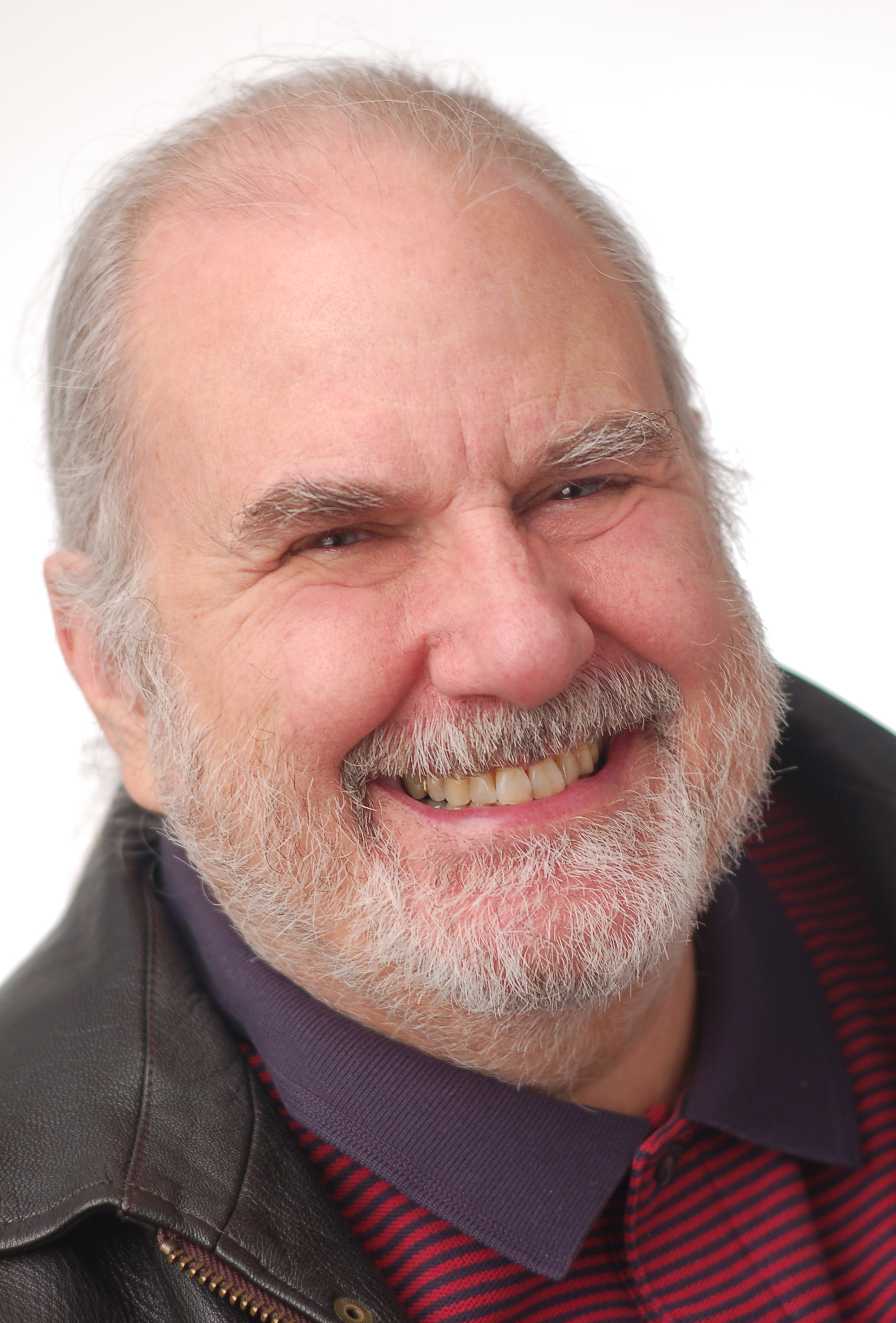
Robert ProvinePsychology Research Professor and Professor Emeritus Robert Provine recently conducted two interviews with podcast programs to explain his research on neglected human instincts such as laughter, hiccuping, and sneezing.

On WBUR’s “You’re the Expert,” a program that brings together comedians and academics in which panelists learn more about research topics of broad interest, Provine appeared at DC Improv Comedy Club to record the segment in front of a live audience. The podcast addressed a wide range of topics, and Provine talked about his research process in trying to get people to laugh.

“The key ingredient to get people to laugh is not a joke. It’s about having other people around. It’s about relationships,” he noted. Listen to the full segment on WBUR.

In another podcast titled “Here We Are,” which is hosted by comedian Shane Mauss as he interviews science experts to gain a better understanding of human behavior, he talked with Provine about his research and the difference between laughter and humor.

“Historically, humor and laughter have been pretty much treated as the same thing. I separated them out and focused on laughter in part because I didn’t know what to do with humor. As a neuroscientist coming to the study of human behavior, I wanted to have something that I could describe in detail and analyze the neuro-mechanisms involved in it,” Provine said. Listen to the full segment on Here We Are’s website.

Christy Chapin, History, Publishes New Book About the History of the American Health Care System

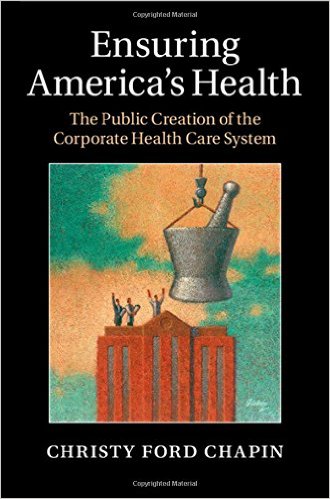
Christy ChapinChristy Chapin, an assistant professor of history, recently published a new book which traces how private and public interests merged to place insurance companies at the center of the U.S. healthcare system. The book, Ensuring America’s Health: The Public Creation of the Corporate Health Care Systemwas published earlier this year by Cambridge University Press.

“Christy Chapin’s Ensuring America’s Health changes the scholarly conversation about the history of our health care system. It explains how both public and private forces created Medicare in 1965 and how the ‘insurance company model’ of health care finance has prevailed ever since. This book is the best treatment we have of the historical dimensions of our current health care crisis and will prove to be an indispensable resource for historians and policy makers,” stated Edward Berkowitz of George Washington University in a review.

Ensuring America's HealthChapin’s research interests include political, business, economic history, and capitalism studies and she is a scholar of twentieth-century political history. She recently wrote a blog post in Public Seminar which discusses the history of health care financing and said of her new book: “It’s a story about insurance company power and how, among other problems, this corporate dominance has fueled high health care costs.”

In another column posted on the History News Network website, Chapin noted that it’s important to look back to the early twentieth century to understand rising health care costs and insurance company mergers, writing “AMA leaders spent decades attacking health care financing experiments that they believed would evolve into corporations. They worried that doctors would be pulled into large bureaucratic organizations under the supervision of non-physicians.  Consequently, AMA officials fought both health insurance and group practice – any market form that might develop into a corporation.”

Read more about Professor Chapin’s work on the history department website.

Jason Loviglio, Media and Communication Studies, Analyzes Podcast Movement 2015 in Antenna

Last month, more than 1,000 podcasters gathered in Texas for the second annual “Podcast Movement” to discuss the latest in the industry. Jason Loviglio, associate professor and chair of media and communication studies, published a first-hand account of his experience at the conference in Antenna, a popular media and cultural studies blog.

Jason Loviglio imageLoviglio, who is an expert in media history and radio studies, wrote in great detail about the various conference sessions which ranged from an awards session presented by the “Academy of Podcasting” to the keynote address by Sarah Koenig of the overwhelmingly popular podcast Serial.

“Koenig’s talk was exquisitely produced and disarmingly personal. After nearly a year, she still manages to seem genuinely staggered by the podcast’s runaway success. And yet somehow she knows exactly which sorts of behind-the-scenes tidbits about the reporting, production, and post-fame spin-control we’re desperate to hear,” Loviglio wrote.

Loviglio noted that Koenig took the time to explain the importance of collaboration in creating successful podcasts, which many view as a highly individual process. “Koenig credited producer Julie Snyder with providing some of the most important improvements draft to draft, a valuable lesson about the importance of collaboration, another point often lost in the highly individualistic, ‘bootstraps’ narratives and underfunded business model of the business podcasters.”

Read “What I Learned at Podcast Movement 2015” on the Antenna website.

Social Sciences Forum: We are Subjects of History: Indigenous Communities’ Fight for Autonomy and Human Rights in Chiapas and Beyond (9/24)

We are subjects of historySocial Sciences Forum
Guadalupe Moshan Álvarez, principal attorney, Fray Bartolomé Human Rights Center, San Cristobal de las Casas, Chiapas, Mexico
Bárbara Suárez Galeano, Interpreter, Autonomous University of Social Movements, Centro Autónomo de Albany Park, Chicago

Thursday, September 24 | 4:30 p.m.
Albin O. Kuhn Library Gallery  

Mexico is at a critical moment: the forced disappearance of 43 Ayotzinapa rural teachers and college students set off a tidal wave of indignation and massive protests. In the context of a war on drugs that has left more than 25,000 disappeared, Guadalupe Moshan Álvarez will speak on the human rights situation in Chiapas, Mexico, FrayBa’s work, and the role of international solidarity.

Co-sponsored by the Department of Modern Languages, Linguistics, and Intercultural Communication; the Department Sociology and Anthropology; the Language, Literacy & Culture Program; the Global Studies Program and the Department of Political Science.

Fall 2015 Big Prize Poetry Slam (10/9)

Poetry Slam 2015Fall 2015 Big Prize Poetry Slam
Friday, October 9, 2015
6:00 PM – 7:00 PM
Performing Arts & Humanities Building : Atrium

Slam BIG and win BIG at the fourth annual Poetry Slam hosted by the English Department this year on October 9 from 6:00 to 8:00 PM in the Performing Arts & Humanities Building Atrium. You will not want to miss this momentous event. A first prize of two hundred dollars will go to the winner of this dazzling, high-energy slam. There are second and third place prizes too for students and alumni sharing their original work, scored by an expert panel of judges from across campus.

To participate in the slam, submit a print and video version of original poetry no more than five minutes long to HomecomingSlam@gmail.com by September 21, 2015. Entries will be judged on their poetic effects, compelling content, and performance.

Last year, the atrium was packed and the seats were filled for good food, good poetry, and good conversation. So come join us for what will prove another exciting event sponsored by the English Department, UMBC’s creative arts journal Bartleby, and the UMBC Homecoming Committee.

Humanities Forum: Dear White People: Film Screening and Conversation (9/24)

Dear White PeopleHumanities Forum
Kimberly Moffitt, Dresher Center fellow and associate professor of American studies, UMBC
Damon Turner, adjunct professor in Africana studies, UMBC and PhD Candidate in African American history, Morgan State University
Thursday, September 24 | 7 pm
Performing Arts & Humanities Building : Rm. 132

The film Dear White People follows the lives of four black students at an Ivy League college. Director and writer Justin Simien says, “My film is about identity. It’s about the difference between how the mass culture responds to a person because of their race and who that person understands themselves to truly be. All explored through the microcosm of a success-oriented Ivy League college.” After the screening, join us for a public conversation with featured speakers, Kimberly Moffitt and Damon Turner.

Sponsored by the Dresher Center for the Humanities; the Africana Studies Department; the American Studies Department; and the Student Life’s Mosaic: Center for Culture and Diversity.

Fall 2015 Medieval and Early Modern Studies Lecture (9/24)

Shannon McSheffreyDigital Humanities and Imagining Medieval Women’s Lives: Putting Marriage and Sex on the Internet
Shannon McSheffrey, Professor, Department of History, Concordia University, Montreal
Thursday, September 24 | 4:00 pm
University Center Room 312

Dr. Shannon McSheffrey  (Ph. D, Toronto), Professor, Department of History, Concordia University, Montreal, will speak on her research on women in late medieval London, including her work in digital humanities. She manages a database relating to the late medieval London Consistory court which can be accessed here.

Professor McSheffrey’s research interests center around gender roles, law, civic culture, marriage, literacy, heresy, and popular religion in late medieval England. She has published a number of scholarly articles and four books, Gender and Heresy: Women and Men in Lollard Communities, 1420-1530(University of Pennsylvania Press, 1995); Love and Marriage in Late Medieval London (Medieval Institute Publications, 1995); Lollards of Coventry 1486-1522 (co-authored with Norman Tanner), Camden Fifth Series, vol. 23 (Cambridge University Press, 2003); Marriage, Sex, and Civic Culture in Late Medieval London (University of Pennsylvania Press, 2006). She has won several awards for her research and teaching and was elected a fellow of the Royal Historical Society of the U.K. in 2002. Professor McSheffrey’s current research focuses on how late medieval Londoners used law, legal records, and legal archives.

Sponsored by the UMBC Medieval and Early Modern Studies Minor and the College of Arts, Humanities, and Social Sciences. 

Social Sciences Forum: Constitution and Citizenship Day Lecture: Counter-Stories: Protecting Civil Rights and Civil Liberties in Wartime (9/15)

Mark GraberSocial Sciences Forum
Mark Graber, Jacob A. France Professor of Constitutionalism, University of Maryland Francis King Carey School of Law 
Tuesday, September 15 | 4:30 p.m.
Albin O. Kuhn Library Gallery 

Mark Graber examines the problems of how and why the U.S. has often enacted restrictive policies during wartime, and how military conflicts and tensions influence civil liberties and civil rights in the United States. Graber argues that the same factors explain why some rights are restricted, why some rights are expanded, and why some rights are protected during particular wars. These factors also continue to influence contemporary responses to military conflict.

Sponsored by the Department of Political Science. 

Humanities Forum: Harvest of Empire: The Untold Story of Latinos in America (9/17)

Eduardo LopezHumanities Forum
Eduardo López, television producer, journalist and documentarian
Thursday, September 17 | 5:30 pm
New location: Performing Arts and Humanities Building Room 132

The rapid growth of the nation’s Latino community has sparked heated national debate over immigration, yet the reality is that many of us know little about the Latin American roots of migration. In this talk, based on his award-winning documentary, Harvest of Empire, Eduardo López examines the direct connection between the long history of U.S. intervention in Latin America and the immigration crisis we face today, unveiling a moving human story that is largely unknown to the great majority of citizens in the U.S.

Sponsored by the Dresher Center for the Humanities; Latino/Hispanic Faculty Association; the Modern Languages, Linguistics, and Intercultural Communication Department; the American Studies Department; and the Media and Communication Studies Department. 

Social Sciences Forum: Surnames and Social Mobility: Why So Much Persistence of Status Across Generations? (9/8)

Gregory ClarkSocial Sciences Forum
Gregory Clark, professor of economics, University of California-Davis 
Wednesday, September 9 | 4 p.m.
Albin O. Kuhn Library 7th Floor 

How much of our fate is tied to the status of our parents and grandparents? Using a novel technique–tracking family names over generations to measure social mobility across countries and periods—renowned economic historian Gregory Clark argues that social mobility rates are lower than conventionally estimated, do not vary across societies, and are resistant to social policies.

Sponsored by the Department of Economics. 

Anupam Joshi, Cybersecurity, Analyzes Wearable Tech Data Safety in Nature

Wearable electronics, which includes devices like fitness trackers and smart watches, is a rapidly growing industry that promises to connect the real and digital lives of consumers. As the technology evolves, researchers have been challenged to improve the safety and quality of data transfer to and from wearable electronics. Anupam Joshi, cybersecurity, spoke to Nature about the security concerns raised by this emerging technology.

joshi“With wearables… we truly are entering into a new era, and we have to start thinking of these issues,” Joshi declared. He shared how UMBC’s Center for Cybersecurity is working on privacy issues related to wearable technology by creating an app to block out the faces of people who have requested privacy from Google Glass photographs. However, the technology could only reliably provide privacy if manufacturers implement it with dedicated hard ware, Joshi said. “Let’s say that Google was to build in a feature like this into every Google Glass so that it would automatically obey these kinds of commands — then it would work.”

Read “What could derail the wearables revolution?” in Nature.