


All posts by: UMBC News Staff


Career Q&A: Robert Bennett ’12, Ancient Studies and History

Every so often, we’ll chat with an alum about what they do and how they got there. Today we’re talking with Robert Bennett ‘12, Ancient Studies and History, about his work as the executive director of the William Brinton 1704 House and Historic site. 

Name: Robert Bennettrobert bennett
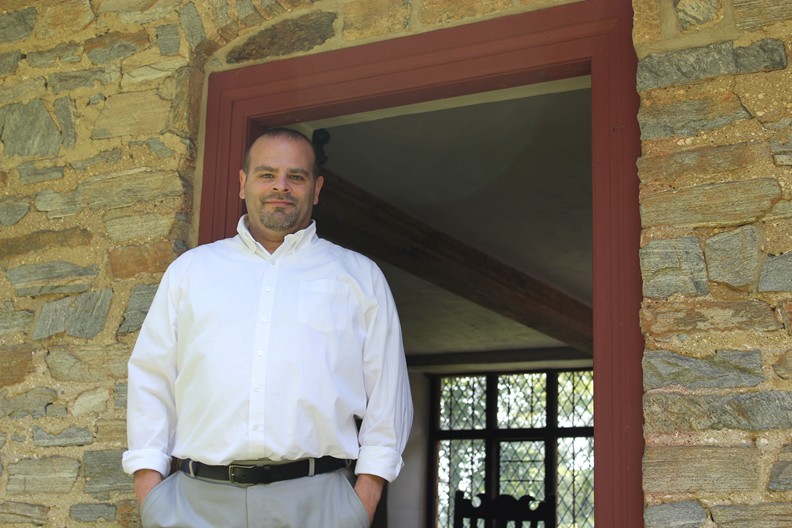
Job Title: Executive director of the William Brinton 1704 House and Historic site
Major(s): Ancient Studies and History
Grad year: 2012

Q: What drew you to UMBC for your studies?

I was originally drawn to UMBC’s Ancient Studies department because of its well-rounded curricula, which focused not only on Classical languages, but also ancient history and archaeology. However, UMBC was approximately 70 miles from my home, and, being a non-traditional student, living on campus was not an option for me. Eventually, through the efforts of a professor at my local community college, I was offered a full scholarship by President Hrabowski that made my long daily commute financially feasible. It was an absolutely life-changing moment.

Q: Can you recall any professors or advisors at UMBC who inspired you?

It would be near impossible to list all of the faculty who inspired me, so I’ll mention only a few. President Hrabowski always made time for me, and would speak to me whenever and wherever he saw me. Ancient Studies faculty such as Dr. Marilyn Goldberg and Dr. Jay Freyman were instrumental in advising me as well as helping me through difficult times. In the History department, Dr. James Grubb and Dr. Joseph Tatarewicz encouraged me to get a second BA in History. Dr. Simon Stacey, Dr. Anna Shields, and Dr. Ellen Spitz provided direction and guidance.

Q: Can you explain a little about the research paper you had to write for your history class, and how it opened the doors to your career path?

I was instructed to write a paper concerning some historical event in my family’s history. Unfortunately, I knew next to nothing about my family, and what I did know only went one or two generations deep. My girlfriend (now wife) suggested using my newly acquired historical skills to research my father’s line and, when I did, I found that I was descended from some of the first English settlers of Pennsylvania! I wrote about how this discovery changed my perspective concerning what it meant to have deep roots and the connection to a place. Through my research, I discovered that the descendants of one of the branches of this family owned and operated an historic house museum in West Chester, PA. I visited the house, told the Executive Director about my paper, and she asked to read it. She was retiring soon, so she sent the paper to the board of directors. The board asked to meet me, and, upon the former director’s retirement, offered me the job!

Q: What has been your greatest achievement in your career as Executive Director? Your greatest challenge?

My greatest achievement thus far has been to increase visitation and admissions by 75%. An enlarged social media presence, as well as good word of mouth, have contributed to this increase; but I believe it is really due to the personal connection to the house I possess and am able to convey to my visitors. My greatest challenge has been to keep the museum relevant to succeeding generations whose values are shaped by a changing historical landscape.

Q: What do you enjoy most about your profession?

To put it simply: making history come to life.

Q: Is there any advice you’d like to give to students at UMBC?

When I was offered my scholarship to UMBC, I was asked by family and friends what I would study. After telling them that I would major in Ancient Studies and History, most asked why I would not study something with more earning potential and employability. The answer I gave is the advice I would give: One must do what one loves.

Supporting Academic Success of Youth in Juvenile Justice Settings (2/25)

Support JJ FlyerThe White House Initiative on Educational Excellence for African Americans will host “Supporting Academic Success of Youth in Juvenile Justice Settings” at UMBC on February 25, 2015, in partnership with the Choice Program at UMBC and the Office for Civil Rights at the U.S. Department of Education.

Speakers from the US Department of Education, Maryland Department of Juvenile Services, The Choice Program at UMBC, and the University of Maryland School of Social Work will discuss how to support the development and success of young people in the juvenile justice system.

Community members who are interested in attending the event can RSVP here.

Renetta Tull, Graduate School, Featured in “Women in Data”

RenettaRenetta Tull, associate vice provost for graduate education and postdoctoral affairs, is featured on the cover of Women in Data: Cutting-Edge Practitioners and Their Views on Critical Skills, Background, and Education. The report includes interviews with 15 women about their success, motivation and views on opportunities available to women in tech fields.

In her interview, Tull focuses on the need for early exposure to computing careers. She says, “Women can be more involved with computing fields, and certainly, opportunities for ubiquitous computing limit restrictions for engagement. However, women need to know that they are invited to the table; they need to see images that show that they are not excluded and they need regular and continuous access to computing environments early, within the K–12 years…”

Click here to learn more about Women in Data and download a free copy of the report.

Erle Ellis, Accidental Discovery

erle_ellis_2012

Erle Ellis, associate professor of geography and environmental systems was taking a walk down the beach when he found a smooth object. Thinking it was some relic of years of ocean polishing he put it in his pocket only to discover a trash heap a short distance away.

Triggered by his accidental discovery, Ellis measured on a global scale how much of Earth has been changed by humans. Using satellite data, he concluded that at least two thirds of the land surface have already been modified for agriculture, cities, mining and other human purposes. The oceans have also become an arena of human intervention: much of the sea floor has been ploughed over at least once through bottom trawling. Many species of fish have shrunk in size due to overfishing. And it’s the oceans where the effects of billions of tons of greenhouse gases added to the atmosphere have the most tangible effects. The seas are soaking up a lot of the extra heat, and CO2 makes seawater more acidic, endangering coral reefs and algae built with chalky substances.

Ellis’ anecdote kicks off an opinion piece, Touched by Nature,  in Geographical written by Christian Schwagerl, a Berlin-based author, journalist and biologist writing extensively on the Anthropocene.

Schwagerl’s take-home message?

The Anthropocene idea is an urgent call to develop better future fossils than melted garbage.

Read more about the Anthropocene
When did the Anthropocene begin? A mid-twentieth century boundary level is stratigraphically optimal

The Daily Record names alumni to 2015 Influential Marylanders list

Two weeks ago, The Daily Record released its 2015 Influential Marylanders honorees list, and we are proud to announce that five UMBC alumni were named.

Congratulations to Stephanie Hill ’86, computer science and economics; Laura Howell ’86, political science; Lily Bengfort ’93, English; Rob Deford ’93, geography; and Greg Cangialosi ’96, English.

A reception for the honorees will take place on March 26 at The Grand Lodge in Cockeysville. For more information on the event, click here.


Campus Strategic Planning Interactive Gallery, Feb. 9

UMBCThe Strategic Planning Steering Committee invites faculty, students, staff, and alumni to an informal, interactive gallery on Monday, February 9, 2:30-4:30 p.m., in the UC Ballroom. Participants will have the opportunity to speak with leaders of the strategy groups focused on Innovative Curriculum and Pedagogy; The Student Experience; Collective Impact in Research, Scholarship and Creative Achievement; Community and Extended Connection; and the Foundations Work Group.

Participants are invited to tour posters documenting the early planning work and discuss the research and emerging themes with strategy and foundations group members. Participants may also provide feedback through online polling and comment opportunities at the gallery event. Light refreshments will be served.

In addition to the upcoming gallery, we encourage you to review the strategic planning mid-year interim reports describing strategy and foundations group work to date, key findings, and emerging themes, which are now available to the campus community for review and comment.

Your experiences and perspective shared through the fall campus survey and the feedback collected from your comments online and at the interactive gallery event will inform development of final recommendations due to the Strategic Planning Steering Committee in mid-April.

We look forward to your participation in the planning process.

Gib Mason, Training Centers, Discusses Entrepreneurship in the Baltimore Business Journal

gib-masonToday the Baltimore Business Journal features a new interview with Gib Mason, chief operating officer of UMBC Training Centers, focusing on his experiences both as an educator and entrepreneur.

In the interview, Mason shares lessons he learned working as the chief operating officer at Big Bang, a Baltimore sportswear company that popularized foldable wraparound ear warmers. He also discusses his passion for teaching about entrepreneurship, and how he helps students understand the essential role of failure in entrepreneurship. “Be open to the perspective of the people around you,” he advises. “Don’t ever believe you have it all figured out.”

Click here to read “How UMBC professor Gib Mason nurtures fledgling entrepreneurs” in the Baltimore Business Journal (subscription required).

Dwight Polk, Emergency Health Services, on EMS1.com

Dwight PolkDwight Polk, paramedic program director and senior lecturer of emergency health services, recently presented at the Arrowhead EMS Conference in Duluth, Minn. about exploring the psychological impact of line of duty deaths (LODD) on EMS organizations. Polk regularly teaches and presents at regional and state EMS conferences around the country.

The editor of EMS1.com, a news service for EMS professionals, wrote an article analyzing Polk’s presentation in discussing the inevitability of planning and preparing for a line of duty death in the profession. The article mentioned several key takeaways from Polk’s presentation, including having updated emergency contact forms, protection of evidence in LODDs, engaging the news media as a partner, and using an authorized spokesperson to speak on behalf of the department, among other topics.

Polk serves as a mental health professional for two CISM teams and is a CIT trainer for the Howard County Police Department. He is the co-author of two textbooks; “Pre-Hospital Behavior Emergencies and Crisis Response”  and “Law Enforcement Responder: Principles of Emergency Medicine, Rescue and Force Protection.”

To read the full article on EMS1.com, click here.

Donald Norris, Public Policy, in the Baltimore Sun and Washington Post

Donald Norris UMBCIn the days surrounding Maryland Gov. Larry Hogan’s State of the State address, Donald Norris provided analysis on what to expect for the remainder of the legislative session. Norris, professor and director of UMBC’s School of Public Policy, discussed GOP fundraising, the relationship between the governor and legislature, and ongoing discussions over the budget.

Norris was interviewed for several articles in the Baltimore Sun and Washington Post. To read complete coverage, click below:

A GOP governor means new challenges for longtime Md. Senate President Mike Miller (Washington Post)
As budget battle heats up in Annapolis, Democrats rally around school funding (Washington Post)
Hogan, GOP have raised over $2 million since his victory (Baltimore Sun)
Democrats say most of Hogan’s agenda won’t pass (Baltimore Sun)

10th Annual Wine Tasting & Silent Auction Scholarship Fundraiser (4/24)

alumIsn’t life grand!

Join fellow UMBC colleagues, alumni, and guests for an elegant evening filled with jazz, excellent company, delicious food, and fine wine. Your attendance and participation in the silent auction will benefit the Alumni Association Scholarship for current UMBC students. For more information about the event and to register for tickets, click here.

If you are interested in becoming an event sponsor or donating items for the silent auction, please contact Jessica El-Zeftawy ’08, ’12 in the Office of Alumni Relations at jbard1@umbc.edu or by calling 410-455-1678.

Please note: early-bird pricing ends February 28.

Critical Social Justice Presents Franchesca Ramsey on “Social Media For Social Change” (2/18)

CSJ-2015-General-Flyer-e1418248437290*Due to the weather, this event has been rescheduled for Wednesday, February 18 at 7.30 p.m. in the UC Ballroom. 

Best known for her viral parody video of racial microaggressions, Shit White Girls Say…to Black Girls, comedian and vlogger Franchesca Ramsey discusses her approach to harnessing the power of social media across multiple platforms in order to engage in meaningful dialogues about social justice. Inspired by her interactions with other prominent social justice bloggers, Ramsey critiques the toxic “call-out culture” that pervades many social justice communities and explores alternative approaches to demanding accountability in online spaces. Her poignant video, How Slut Shaming Becomes Victim Blaming, which centers on her analysis of rape culture and its impact on the literal and metaphorical safe space for women and sexual assault survivors, provides the touch point for examining the role of vulnerability and raw affect in social justice work. Ramsey further explores the possibilities and challenges presented by using new media to talk about contentious issues like race, feminism, and body politics.

She will join us for Critical Social Justice on Wednesday, Feb. 18th at 7:30pm in the UC Ballroom to help promote our theme of Creating Brave Spaces during the week of Feb 16-20th.

Sponsored by the Women’s Center, Student Life’s Mosaic Center, and the Dresher Center for the Humanities (as part of the Spring 2015 Humanities Forum). For information on Critical Social Justice week and its sponsors: critsocjustice.wordpress.com

Dr. Tom Cronin Presents “Visual Ecology: The Unexpected Abilities of Animal Eyes” (3/9)

croninMonday, March 9, 2015, 4 p.m.: “Visual Ecology: The Unexpected Abilities of Animal Eyes,” a presentation by Dr. Tom Cronin in the Library Gallery

Humans are visual creatures. We’re also introspective and curious, a combination that makes us all by nature amateur visual ecologists (even if we don’t know it, or even what it means!) Since vision dominates how we experience our world, we naturally wonder how other animals see their own worlds. When a cat is entranced by images of fish on a television screen, does it see colors? Does it think they are real fish? What is it experiencing? When a wasp flies up and stares us in the face, just what is it seeing? These questions have probably been asked for as long as our species have been around.

Professor Cronin’s studies of vision have included animals ranging from the tiny plankton, through many marine creatures, to whooping cranes and even whales. In his talk, he will focus mainly on his favorite animals of all, the fearsome “mantis shrimps,” known for their abilities to break aquarium walls and impale human flesh. Their eyes are some of the strangest in nature, seeing things that humans can only duplicate with high-tech imagery.

• A reception, sponsored by the Libby Kuhn Endowment Fund, will follow the program.
• Co-Sponsored by the Friends of the Library & Gallery and the College of Natural and Mathematical Sciences

For more information on this event and other Friends of the Library & Gallery events, click here.